Jayeom Seasoned Bean Sprouts

Jayeom Seasoned Bean Sprouts

Quick answer

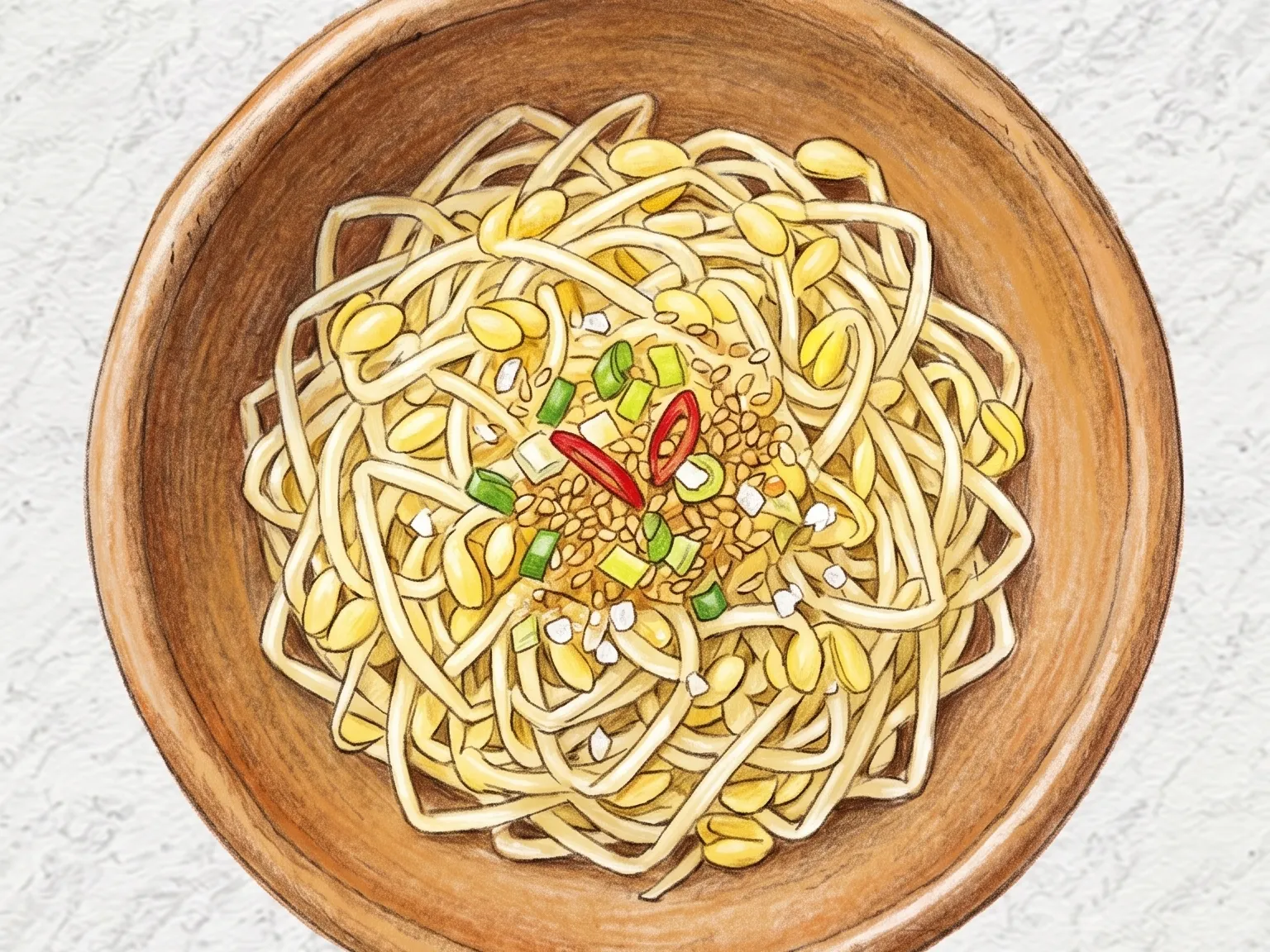
Jayeom seasoned bean sprouts is a simple Korean side dish that highlights the clean flavor of bean sprouts using traditional Jayeom salt.

What makes this special

  • Bean sprouts boiled lid-on, seasoned with jayeom, a mineral-rich traditional salt, in just four ingredients.
  • Jayeom salt's mineral depth seasons with less quantity than refined salt
  • Lid-on 3-4 minute boil preserves the snap of the sprout's head and tail
Total time
10 min
Level
Easy
Servings
2 servings
Ingredients
6
Calories
45 kcal
Protein
3 g

Key ingredients

Bean sproutsJayeom (Traditional salt)Minced green onionMinced garlicSesame oil

Core cooking flow

  1. 1 Pick out loose skins and any damaged pieces from 300 g bean sprouts, then ri...
  2. 2 Pour in half a cup of water, about 100 ml, cover the pot, and set it over medium heat.
  3. 3 Drain the sprouts in a strainer and rinse quickly with cold water to stop carryover cooking.

Jayeom seasoned bean sprouts is a simple Korean side dish that highlights the clean flavor of bean sprouts using traditional Jayeom salt. The cleaned bean sprouts are placed in a pot with a small amount of water and boiled under a closed lid for three to four minutes to keep them crisp. The sprouts are immediately rinsed in cold water to stop the cooking process and gently squeezed to remove excess water. The seasoning process begins by tossing the sprouts with Jayeom first, which is a mineral-rich traditional salt that provides a deep umami flavor with less saltiness than refined salt. Minced green onion, minced garlic, sesame oil, and ground sesame are then added and mixed gently with the fingertips to preserve the texture. This minimal seasoning allows the natural flavor of the sprouts to stand out.

Prep 5min Cook 5min 2 servings
Recipes by ingredient → green onion garlic sesame oil

Instructions

Read the steps as a cooking flow: prep, heat, seasoning, doneness control, and finish.

6 steps
  1. 1
    Step

    Pick out loose skins and any damaged pieces from 300 g bean sprouts, then rinse two or three times in cold water.

    Shake off excess water and spread the sprouts evenly in the pot so they steam at the same rate.

  2. 2
    Control

    Pour in half a cup of water, about 100 ml, cover the pot, and set it over medium heat.

    Once steam builds, cook only 3 to 4 minutes, just until the sprouts smell fresh and are lightly tender.

  3. 3
    Season

    Drain the sprouts in a strainer and rinse quickly with cold water to stop carryover cooking.

    Press gently by hand, without crushing the heads, until excess moisture is removed and the seasoning will not turn watery.

  4. 4
    Season

    Place the drained sprouts in a mixing bowl and add 0.5 teaspoon Jayeom first.

    Toss from the bottom upward several times so the salt reaches the thicker stems before sesame oil coats the surface.

  5. 5
    Prep

    Add 1 tablespoon minced green onion, 0.5 teaspoon minced garlic, and 1 tablespoon sesame oil.

    Mix lightly with your fingertips instead of squeezing hard, keeping the sprouts crisp while distributing the garlic and oil evenly.

  6. 6
    Season

    Sprinkle 1 teaspoon ground sesame over the sprouts and toss once more.

    Taste before serving, and if it is bland, add only a tiny extra pinch of Jayeom because its umami makes the seasoning noticeable quickly.

After the steps

Pick a recipe that fits this dish.

Continue with shared ingredients, meal pairings, or a similar method.

Recipes That Go Well With This

More Side dishes →

Based on shared ingredients and meal pairing

Korean Steamed Soybean Sprouts
Shared ingredient: bean sprouts Steamed

Korean Steamed Soybean Sprouts

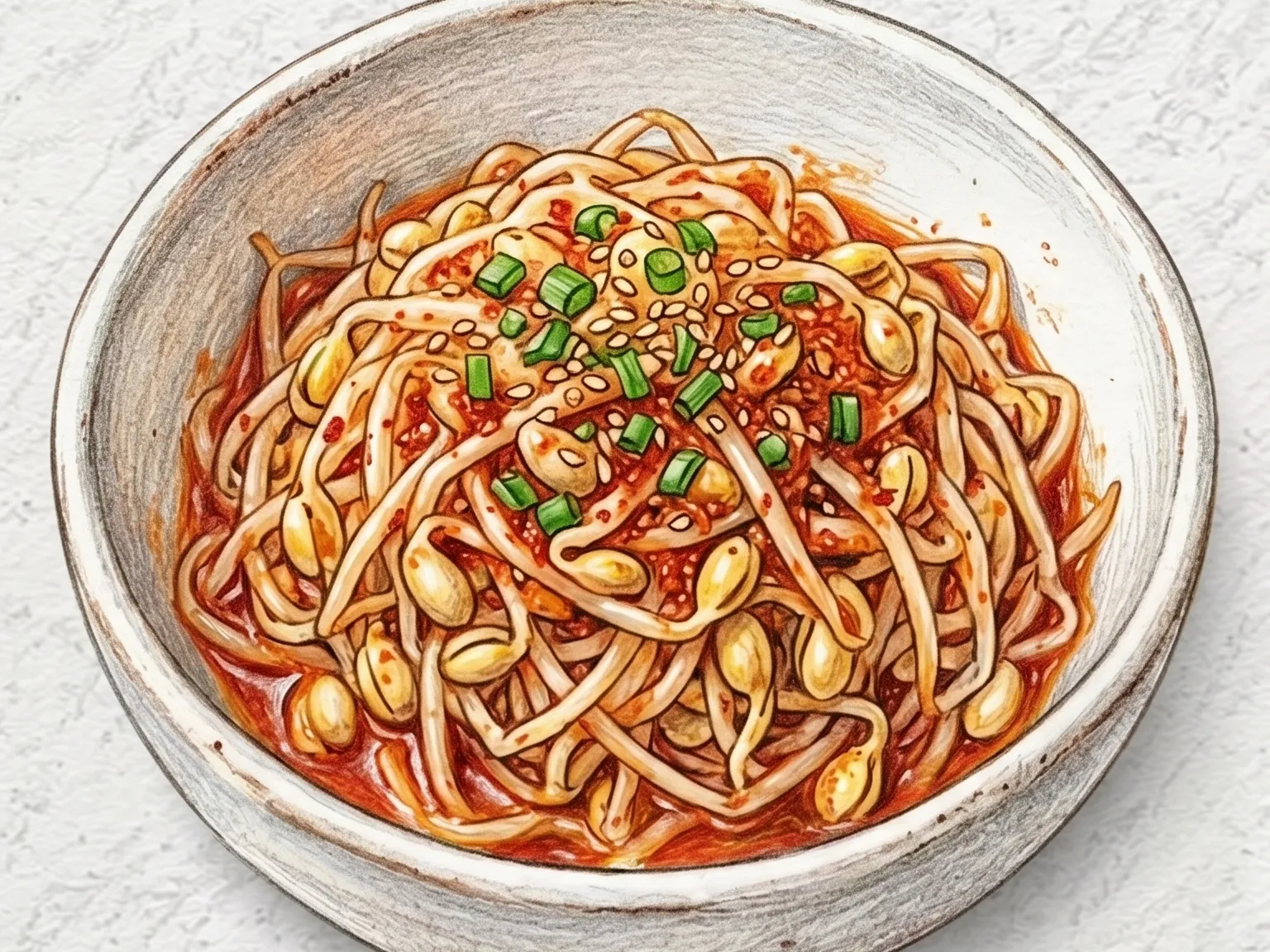
Kongnamul-jjim is a traditional Korean side dish centered on steamed soy bean sprouts. The preparation involves layering fresh bean sprouts with a mixture of red chili flakes, soy sauce, and finely minced garlic before placing them in a pot. A critical aspect of the cooking process is keeping the lid tightly closed from the beginning until the sprouts are fully cooked. This sealed environment creates a build-up of steam that is essential for maintaining the natural crispness of the sprouts while ensuring that the savory and spicy seasoning permeates each individual strand. The resulting flavor profile features a sharp heat from the red pepper that complements the clean and refreshing qualities of the bean sprouts, resulting in a light and clear finish. To finish the dish, a generous drizzle of sesame oil and a handful of sliced scallions are added to provide a fragrant, toasted aroma and a layer of savory depth. Because the primary ingredients are inexpensive and the entire process from preparation to plating takes less than fifteen minutes, this dish serves as a dependable addition to any meal when the table requires an extra side dish on short notice. For a different aromatic profile, perilla oil can be substituted for sesame oil to introduce an earthy and more herbaceous scent. Individuals seeking a more intense level of spice can add sliced Cheongyang chilies during the cooking stage to elevate the heat.

Korean Perilla Soybean Sprout Namul
Shared ingredient: bean sprouts Side dishes

Korean Perilla Soybean Sprout Namul

Kongnamul, soybean sprouts, are among the most consumed vegetables in Korea, and this perilla-dressed version adds a nutty, full-bodied depth that the plain sesame oil variety lacks. The sprouts are steamed with the lid sealed for five minutes, which drives off the raw bean smell while keeping the heads firm and crunchy. Tossed with perilla powder, soup soy sauce, garlic, and sesame oil while still warm, the powder absorbs the moisture and dissolves into a pale coating that makes each sprout feel creamy on the tongue. Chopped scallion contributes a sharp, grassy contrast that balances the richness, and resting the finished dish for five minutes before serving lets the seasoning penetrate evenly so the flavor comes together more completely.

Refreshing Spicy Mulhoe Broth
Serve together Soups

Refreshing Spicy Mulhoe Broth

Refreshing Spicy Mulhoe Broth is a Korean cold soup base for raw fish dishes. This recipe combines red pepper paste, red pepper powder, vinegar, sugar, plum syrup, and minced garlic. The mixture of six tablespoons of vinegar and two of plum syrup provides a double acidity that blocks fishy notes from seafood. Adding one hundred milliliters of lemon-lime soda introduces carbonation that lifts a bright, airy note in the broth. Alternatively, using pear juice instead of soda offers a sophisticated sweetness. To prepare, mix the paste first to remove dry pockets, stir in water, and add the soda last to preserve carbonation. Chill the broth for at least two hours or ferment it for a day to deepen the flavor. Serving it semi-frozen as a slushy lets the ice dilute the seasoning gradually as sashimi thaws.

Korean Seasoned Mung Bean Jelly Salad
Similar recipe Side dishes

Korean Seasoned Mung Bean Jelly Salad

Cheongpo muk - mung bean jelly - is made by dissolving starch in water, boiling it until thick, then leaving it to set into a translucent, firm block. It has appeared in Joseon-era palace banquet records as a traditional food. The jelly is blanched briefly, cut into matchstick strips, and tossed with julienned cucumber and carrot. A dressing of soy sauce, vinegar, and sugar gives a clean, sharp edge. The jelly itself is nearly flavorless, functioning as a cool, slippery carrier for the seasoning. The crunch of the vegetables contrasts with the smooth jelly, and the vinegar keeps the whole dish light. Gentle tossing is essential to avoid breaking the blocks apart. Served well-chilled, this is a classic Korean summer banchan.

Serve with this

Salt-Grilled Pork Dwitgogi
Grilled Easy

Salt-Grilled Pork Dwitgogi

This dish features pork dwitgogi, a selection of assorted pork cuts valued for a springy and chewy texture compared to standard pork belly. The meat is prepared by applying soju to eliminate gamey odors and patting it dry to ensure a clean sear. The cooking process starts by searing the pork in a preheated heavy pan on high heat to seal in the juices. Once the meat is partially cooked, sea salt and crushed black pepper are added to distribute the seasoning evenly. Garlic cloves and green onions are then cooked directly in the rendered pork fat, infusing the meat with their aromas. Grilling continues until the pork is golden brown and springy. The completed dish is traditionally served hot alongside boiled meljeot, a salted anchovy sauce that provides a deep, savory element to the roasted pork.

🔥 Trending Now ⚡ Quick
Prep 10min Cook 20min 4 servings
Korean Oi Dubu Bokkeum (Cucumber Tofu Stir-fry)
Stir-fry Easy

Korean Oi Dubu Bokkeum (Cucumber Tofu Stir-fry)

Oi-dubu-bokkeum stir-fries half-moon cucumber slices and cubed firm tofu with soup soy sauce, garlic, and a light touch of Korean chili flakes. The tofu is pan-fried to golden first to prevent crumbling, then set aside while garlic and onion build flavor in the same pan. Cucumber goes in for just 90 seconds - long enough to warm through but short enough to stay crisp and juicy. The tofu returns for a final toss with sesame oil, creating a dish defined by the contrast between cool, crunchy cucumber and warm, soft tofu under a clean soy-based seasoning.

🥗 Light & Healthy 🏠 Everyday
Prep 10min Cook 8min 2 servings

Similar recipes

Korean Soybean Sprout Cold Salad
Side dishes Easy

Korean Soybean Sprout Cold Salad

Kongnamul-naengchae is a chilled Korean salad of boiled soybean sprouts and vegetables tossed in mustard dressing - conceptually distinct from regular kongnamul-muchim because it is designed to be served cold. The mustard sauce defines the dish: mustard powder (or tube mustard) mixed with vinegar, sugar, and salt creates a sharp, nose-tingling heat alongside a sweet-sour brightness. Prepared mustard needs five to ten minutes of resting after hydration for the allyl isothiocyanate compound to fully develop its pungency. Julienned cucumber and carrot release moisture, so they should be briefly salted or patted dry to prevent diluting the sauce. Chilling for at least ten minutes before serving maximizes the refreshing effect, and cold temperatures actually sharpen the mustard's bite. This banchan excels as a palate cleanser alongside fatty main dishes like samgyeopsal or bulgogi.

🏠 Everyday 🍱 Lunchbox
Prep 15min Cook 6min 4 servings
Korean Potato Salad (Creamy Mashed Potato Ham Cucumber)
Side dishes Easy

Korean Potato Salad (Creamy Mashed Potato Ham Cucumber)

Korean potato salad arrived through Japan's yoshoku tradition but developed its own distinct identity in Korean home kitchens. Potatoes are boiled until tender and mashed while still hot, but not to a perfectly smooth consistency - leaving some lumps gives the salad a dual texture of creamy mashed potato and soft, intact chunks that hold together when eaten. Diced ham is pan-seared briefly to render out excess fat before being incorporated, preventing the finished salad from becoming greasy. Cucumber is salted and squeezed to remove water, which keeps the salad from turning watery as it sits. Boiled carrot is mixed in for color and a mild sweetness. The dressing is mayonnaise adjusted with sugar and salt, resulting in a distinctly sweet-creamy profile that is noticeably different from Western versions of the dish. Chilling the assembled salad for at least one hour before serving allows the seasoning to equalize throughout the mixture, improving the flavor considerably compared to eating it straight away. The salad is served as a banchan alongside rice, and it is also commonly spread inside sandwiches.

🏠 Everyday 🍱 Lunchbox
Prep 20min Cook 15min 4 servings
Bean Sprout Bulgur Seaweed Salad
Salads Medium

Bean Sprout Bulgur Seaweed Salad

Bulgur wheat brings a plump, nutty chew that pairs naturally with briefly blanched bean sprouts, building a hearty Korean grain salad with satisfying texture and substance. The dressing - soy sauce, apple cider vinegar, sesame oil, and minced garlic - mirrors the classic Korean namul seasoning profile exactly, tying grain and vegetable together without anything feeling out of place. Julienned carrot contributes sweetness and color, while thinly sliced scallion sharpens the finish with a mild, lingering onion bite. Roasted seaweed flakes are folded in just before serving to preserve their crunch and the oceanic salinity plays off the earthy grain in a pairing that reads as distinctly Korean. Bean sprouts should be rinsed in cold water immediately after blanching to keep their snap intact.

🥗 Light & Healthy 🏠 Everyday
Prep 15min Cook 12min 2 servings

Tips

Jayeom has more umami than regular salt, making it tasty with minimal seasoning.
Be careful not to overcook the sprouts or they will become tough.

Nutrition (per serving)

Calories
45
kcal
Protein
3
g
Carbs
4
g
Fat
2
g