Fuzhu (Dried Bean Curd) Mala Xiang Guo
Quick answer
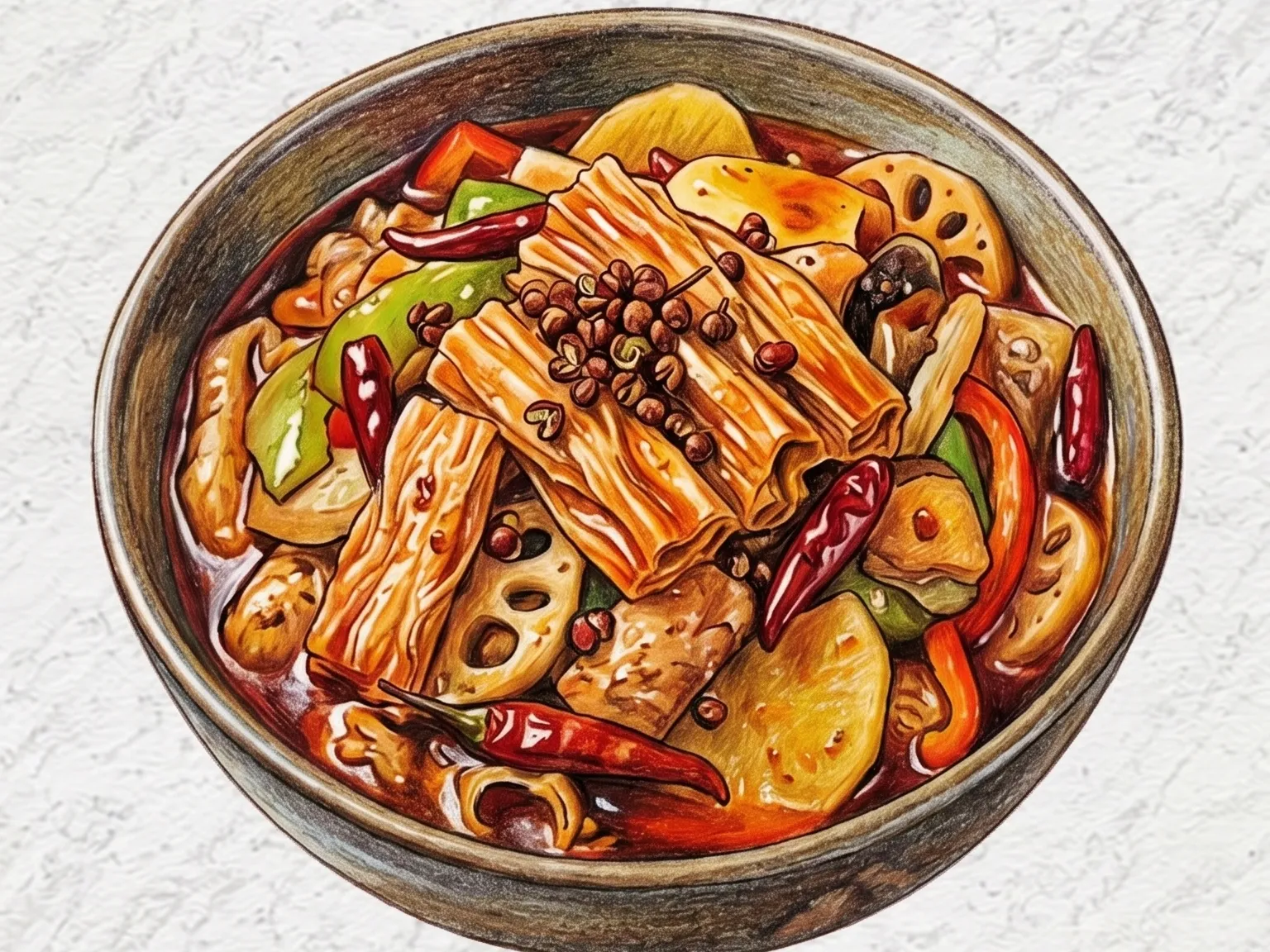
An addictive stir-fry dish featuring chewy fuzhu and numbing mala sauce.
What makes this special
- Fuzhu Mala Xiang Guo stir-fry highlights rehydrated bean curd skin and numbing chili sauce.
- Rehydrated fuzhu soaks up sauce with a springy sponge-like chew
- Dried chilies and mala sauce deliver numbing heat in layers
Key ingredients
Core cooking flow
- 1 Soak 100g dried fuzhu in lukewarm water (40°C) for at least 2 hours until fu...
- 2 Rinse 2 heads bok choy, 3 napa cabbage leaves, and 100g bean sprouts under c...
- 3 Heat a wok over high heat, add 2 tbsp oil, then stir-fry 1 tbsp minced garli...
An addictive stir-fry dish featuring chewy fuzhu and numbing mala sauce.
Instructions
Read the steps as a cooking flow: prep, heat, seasoning, doneness control, and finish.
- 1Prep
Soak 100g dried fuzhu in lukewarm water (40°C) for at least 2 hours until fully rehydrated and pliable, then cut into 5cm bite-sized pieces.
- 2Prep
Rinse 2 heads bok choy, 3 napa cabbage leaves, and 100g bean sprouts under cold running water, then cut into bite-sized pieces.
Separate firm stalks from tender leaves.
- 3Control
Heat a wok over high heat, add 2 tbsp oil, then stir-fry 1 tbsp minced garlic and 5 dried chilies for 30 seconds until the oil is fragrant and the chilies begin to darken.
- 4Control
Add 200g thinly sliced pork belly and stir-fry over high heat for 2 to 3 minutes until the surface is golden and the fat has fully rendered out.
- 5Control
Add rehydrated fuzhu, cabbage stalks, and bok choy stalks, then pour in 80g mala xiang guo sauce.
Stir-fry vigorously over high heat for 2 minutes until the sauce coats every piece evenly.
- 6Finish
Add bean sprouts and all leafy greens, then toss quickly for no more than 30 seconds until just wilted.
Remove from heat immediately and serve in a bowl while hot.
After the steps
Pick the next recipe from here.
Continue with a similar dish, a pairing, or the same category.
Tips
Nutrition (per serving)
Recipes to Cook Together
More Asian →Serve with this
Yu Sheng Prosperity Salad
Yu sheng prosperity salad arranges thinly sliced sashimi-grade salmon and finely julienned daikon, carrot, and cucumber in a ring on a large platter, dressed with plum sauce, lemon juice, and sesame oil, then tossed vigorously just before eating. The salmon must be sashimi-grade for food safety, and patting it dry before slicing thin allows the sweet-tart plum sauce to cling more effectively to the fish surface. Cutting all vegetables as finely as possible maximizes the surface area in contact with the dressing, ensuring every chopstick-full carries the full spectrum of flavors. Keeping the prepared vegetables chilled maintains the freshness of the raw fish once assembled. Sesame seeds sprinkled on top add a nutty aroma that layers over the fruity plum sauce, completing the festive character of the dish.
Taiwanese Beef Noodle Soup
Taiwanese beef noodle soup slow-braises beef brisket in a soy-based broth seasoned with doubanjiang, star anise, cinnamon, and Sichuan peppercorns. The minimum 90-minute simmer renders the meat fork-tender while building a deeply layered broth. Thick wheat noodles are served in the finished broth, soaking up its concentrated flavor. Spice level is adjustable by varying the amount of doubanjiang. Common garnishes include pickled mustard greens and blanched bok choy, adding brightness to the rich bowl.
Tomato Egg Rice Bowl (Stir-fried Tomatoes with Soft Scrambled Eggs)
Ripe tomatoes are cut into wedges and stir-fried over high heat until they release their juices and form a natural, tangy sauce. Beaten eggs are poured in and gently folded so they stay soft and barely set, mingling with the tomato pulp. A small amount of sugar and soy sauce brings the sweet-tart balance into focus. Spooned over hot rice, the sauce soaks into the grains and the whole bowl comes together in under ten minutes, drawing on the simplicity of Chinese home cooking.
Korean Five-Grain Sweet Rice Punch
Ogok-sikhye is a traditional Korean grain punch made by saccharifying a mix of cooked sweet rice, barley, millet, and foxtail millet in barley malt extract at 60 to 65 degrees Celsius for one hour. The malt powder is soaked in lukewarm water for 20 minutes, kneaded by hand, and strained through a cloth to yield a clear, enzyme-rich liquid -- this is the working ingredient that converts the grain starches into natural sugars during the slow saccharification. Temperature control is central to the process: below 60 degrees the enzymes slow down, and above 70 degrees they denature and die, so maintaining the right range throughout the hour-long rest determines whether the conversion succeeds. As saccharification progresses, the rice grains hollow out and float to the surface; these are skimmed off, rinsed separately, and later floated back into the finished punch to add a soft, chewable element to each cup. After sweetening with sugar and chilling completely in the refrigerator, the drink is served cold with pine nuts floating on top. The combination of multiple grains produces a more layered, complex sweetness than single-grain sikhye, and the overnight rest in the refrigerator smooths the flavor into something more cohesive.
Similar recipes
Clove-Scented Lu Shui Braised Pork Ribs
A Taiwanese-style braised pork rib recipe infused with the deep aroma of cloves.
Hokkien Lor Mee (Braised Gravy Noodles)
Hokkien lor mee is a thick-gravy noodle dish from the Chinese communities of Singapore and Malaysia, built on chicken stock seasoned with dark soy sauce and five-spice powder. The dark soy gives the broth its deep mahogany color and intense saltiness, while five-spice, with its blend of star anise and cinnamon, layers in aromatic complexity. A cornstarch slurry is added gradually to thicken the broth to a glossy, almost sauce-like consistency that coats the yellow noodles completely. Bean sprouts are blanched for just one minute to retain their crunch, and halved boiled eggs provide a creamy element. The traditional finishing touch is raw minced garlic and a splash of black vinegar, both of which cut through the heavy gravy and keep each spoonful from becoming monotonous.
Kung Pao Chicken
Kung pao chicken is one of the defining dishes of Sichuan cuisine, built around diced chicken, roasted peanuts, and dried chilies in a sauce that hits spicy, sweet, sour, and numbing at the same time. The chicken is cut into small cubes and given a brief marinade of soy sauce and cornstarch, which seals moisture in and creates a light coating that takes on color quickly in a screaming-hot wok. Dried red chilies and Sichuan peppercorns are fried in oil as the very first step, pulling their heat and the distinctive mala tingling sensation into the fat before anything else goes in. This flavored oil becomes the foundation the entire dish is built on. Soy sauce, black vinegar, and sugar are added at the end and reduced into a glossy glaze that coats every surface. Roasted peanuts go in last so they stay crunchy, and chopped scallion brings a clean, fresh finish. The interplay of sharp chili heat, tongue-numbing peppercorn, tangy vinegar, and toasty peanut in a single bite is what carries this dish beyond Sichuan into kitchens worldwide.
Mala Biang Biang Noodles (Wide Numbing Chili Oil Noodles)
Mala biangbiang noodles consist of wide, thick strands that are coated in a complex sauce made from chili oil, doubanjiang, soy sauce, and black vinegar. This combination provides a specific type of heat that numbs the palate while simultaneously delivering spice. To achieve the authentic numbing character that defines mala, whole Sichuan peppercorns are briefly warmed in oil over a low heat. This controlled heating process is designed to release the numbing compounds from the spice without scorching the husks, a technical step that distinguishes genuine mala flavor from the simple heat of red chilies. The sauce is constructed in multiple layers by stacking the fermented saltiness of the doubanjiang with the deep and mellow acidity of the black vinegar. These ingredients work together to produce a seasoning profile with distinct depth rather than a single note of spiciness. For the preparation of the noodles, the broad strands are boiled for one minute less than the time indicated on the package. This ensures the dough remains elastic and chewy throughout the eating process. Because the noodles have such a large surface area, it is necessary to toss them aggressively in the sauce to ensure the seasoning is worked thoroughly into the wide surfaces of every strand. While the noodles are cooking, bok choy is blanched for forty seconds in the same boiling water. This vegetable adds a crisp and clean green element to the bowl, which serves to offset the richness of the oiled noodles. To finish the dish, a final drizzle of chili oil is applied over the top of the bowl just before it is served to intensify the aroma of the spices.
Jianbing (Chinese Savory Breakfast Crepe)
Jianbing is a northern Chinese street breakfast crepe assembled on a flat griddle within minutes. A thin batter of mung bean flour and wheat flour is spread into a wide circle, then an egg is cracked directly on top and smeared across the surface while still liquid. Chopped scallion is scattered over the egg before the crepe is flipped briefly to set the other side. Sweet bean sauce and chili sauce are brushed on, followed by fresh cilantro and a crispy fried wonton sheet that provides the signature crunch. The mung bean flour gives the batter a distinctive nutty flavor and slightly crisp edge that plain wheat flour cannot replicate. The whole assembly is folded into a neat rectangle meant to be eaten by hand. Timing is critical for the wonton cracker, which should be added last to prevent sogginess, creating a layered contrast of soft crepe, runny egg, sharp sauce, and shattering crunch.
Yu Xiang Eggplant (Sichuan Spicy Garlic Pork Eggplant)
Yu Xiang Qiezi is a Sichuan-style eggplant stir-fry with ground pork, doubanjiang, black vinegar, and sugar. The eggplant is pre-fried to firm it up so it holds its shape in the sauce, while the pork and doubanjiang create a spicy, aromatic oil base. Soy sauce, vinegar, and sugar layer sweet and sour notes over the heat, producing the characteristic Yu Xiang flavor profile. Garlic and ginger add fragrance, and the eggplant absorbs the sauce deeply so every bite releases a concentrated burst of seasoning.