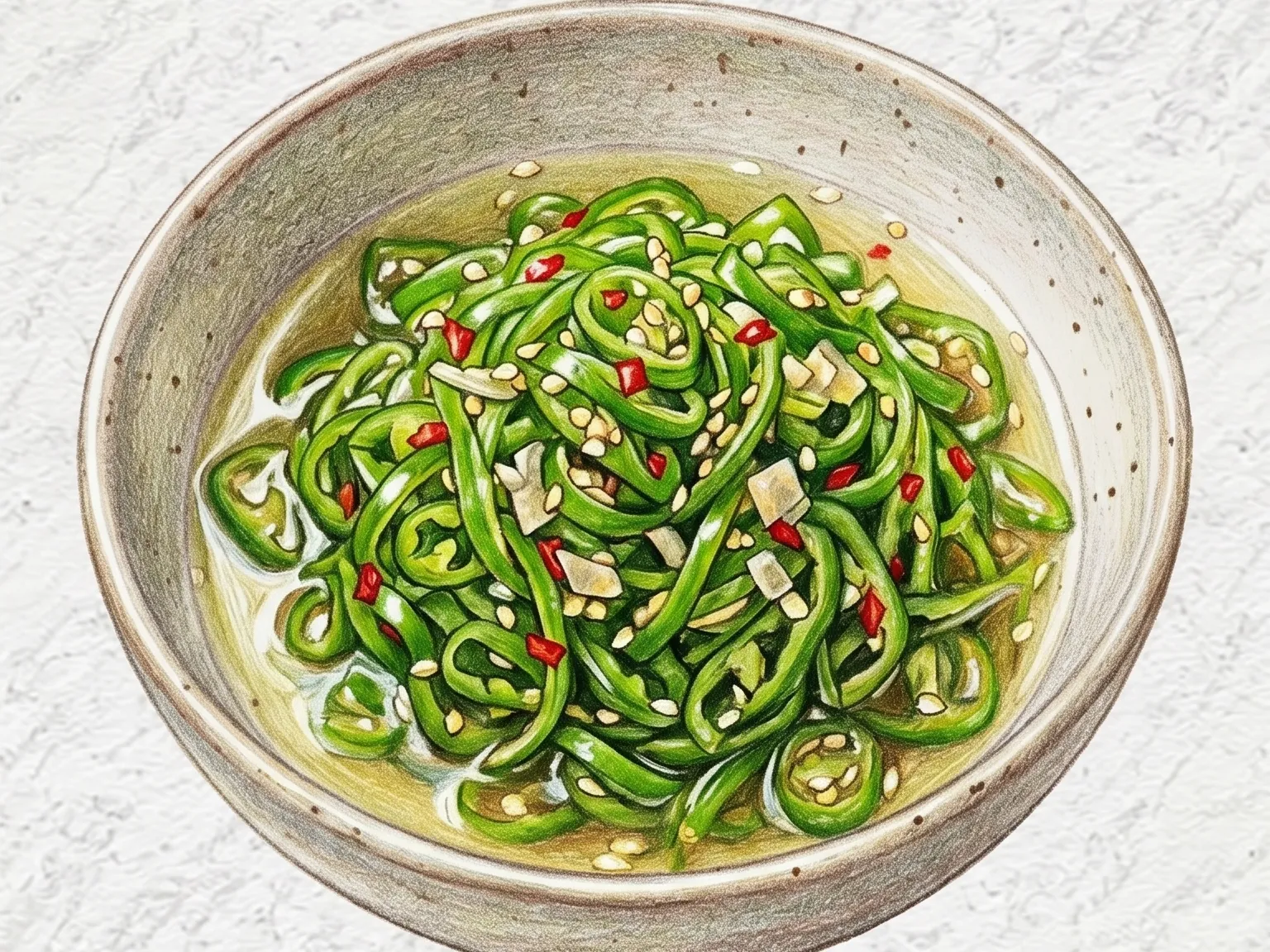
Shredded Chili Pickle

Shredded Chili Pickle

Quick answer

Shredded chili pickle is a spicy and sour side dish that pairs exceptionally well with grilled meat dishes.

What makes this special

  • Shredded cheongyang and green chili in equal-ratio soy-vinegar brine; seed removal keeps the liquid clean.
  • Cheongyang and cucumber pepper mix balances heat with crisp freshness
  • Equal-ratio brine of soy, vinegar, sugar, and water gives clean pickled flavor
Total time
20 min
Level
Easy
Servings
4 servings
Ingredients
6
Calories
85 kcal
Protein
1 g

Key ingredients

Cheongyang chiliGreen chiliSoy sauceVinegarSugar

Core cooking flow

  1. 1 Rinse 10 Cheongyang chilies and 10 green chilies under cold water, then dry them very well.
  2. 2 Split the chilies lengthwise and slice them into even 2-3 mm strips.
  3. 3 Add 1 cup each of soy sauce, vinegar, sugar, and water to a pot and set it over medium heat.

Shredded chili pickle is a spicy and sour side dish that pairs exceptionally well with grilled meat dishes. This recipe combines hot Cheongyang chilies and mild, crunchy cucumber peppers to balance the heat level and texture. The chilies are washed, dried, and cleaned of their seeds to eliminate any bitter taste. Slicing them into thin strips of two to three millimeters ensures that the brine penetrates quickly and evenly. The pickle liquid is made by boiling equal parts of soy sauce, vinegar, sugar, and water. Once boiled, the brine is cooled for ten to fifteen minutes to release the steam before being poured over the shredded chilies in an airtight container. The mixture is left at room temperature for four to six hours to cool, then sealed and kept in the refrigerator to be served from the next day.

Prep 15min Cook 5min 4 servings

Instructions

Read the steps as a cooking flow: prep, heat, seasoning, doneness control, and finish.

6 steps
  1. 1
    Step

    Rinse 10 Cheongyang chilies and 10 green chilies under cold water, then dry them very well.

    Remove the stems and scrape out as many seeds as possible so the pickle tastes clean, not muddy.

  2. 2
    Prep

    Split the chilies lengthwise and slice them into even 2-3 mm strips.

    Keep the thickness consistent so the brine soaks in at the same speed and the heat level stays balanced in each bite.

  3. 3
    Control

    Add 1 cup each of soy sauce, vinegar, sugar, and water to a pot and set it over medium heat.

    Stir from the bottom so the sugar dissolves fully and does not stick or scorch.

  4. 4
    Heat

    When the brine bubbles steadily, boil it for only about 30 seconds, then turn off the heat.

    Let it stand for 10-15 minutes so steam escapes and it is hot but not harshly boiling.

  5. 5
    Step

    Pack the chili strips into an airtight container and pour the slightly cooled brine evenly over them.

    Press any floating pieces down with a spoon so every strip stays submerged and pickles evenly.

  6. 6
    Finish

    Leave the container uncovered at room temperature for 4-6 hours so the chilies cool and absorb flavor.

    Once cooled, seal and refrigerate, then serve from the next day with grilled meat dishes.

After the steps

Pick a recipe that fits this dish.

Continue with shared ingredients, meal pairings, or a similar method.

Recipes That Go Well With This

More Side dishes →

Based on shared ingredients and meal pairing

Korean Cheongyang Gochu Doenjang Jangajji (Doenjang Pickled Cheongyang Peppers)
Shared ingredient: cheongyang chili Kimchi

Korean Cheongyang Gochu Doenjang Jangajji (Doenjang Pickled Cheongyang Peppers)

Cheongyang chili peppers are pricked all over with a fork so the brine can reach the interior of each pod rather than sitting on the surface. Kelp is simmered with soy sauce to establish a concentrated umami base, then the heat is cut and doenjang is dissolved into the hot liquid, which layers the nutty, fermented depth of fermented soybean paste over the saltiness of the soy. Rice syrup softens the sharp, raw heat of the chilies so it does not dominate the other flavors, and vinegar sharpens and clarifies the overall profile. The chilies are pressed fully under the brine and left in the refrigerator to mature. After one day the seasoning begins to penetrate toward the core, and by day three the doenjang flavor has fully saturated each pepper. At that point, a single pepper placed on a mouthful of hot rice delivers a compact burst of salty, funky depth and the lingering heat that makes this pickle a classic Korean table condiment.

Korean Soy Pickled Cucumber
Shared ingredient: cheongyang chili Kimchi

Korean Soy Pickled Cucumber

Oi jangajji is a Korean soy-pickled cucumber made by slicing cucumbers into one-centimeter rounds, lightly salting them to draw out surface moisture, then packing them into a sterilized jar with whole garlic cloves and green chilies before pouring over a boiling brine of soy sauce, water, vinegar, and sugar. The hot liquid partially cooks the cucumber surface while leaving the center firmly crisp, and two days of cold fermentation allows the sweet, salty, sour brine to penetrate all the way through. The green chilies leave a faint heat at the back of each bite, and the whole garlic cloves release their aroma gradually into the brine as they soften over the resting period, adding a layer of complexity beyond a straightforward soy pickle. Reboiling the spent brine and pouring it back over the cucumbers once extends the crunch considerably, turning this into a practical side dish that holds up well for more than a week in the refrigerator. It works alongside a bowl of rice, next to a hearty soup, or as a sharp palate-waker on a hot summer day when appetite runs low.

Refreshing Spicy Mulhoe Broth
Serve together Soups

Refreshing Spicy Mulhoe Broth

Refreshing Spicy Mulhoe Broth is a Korean cold soup base for raw fish dishes. This recipe combines red pepper paste, red pepper powder, vinegar, sugar, plum syrup, and minced garlic. The mixture of six tablespoons of vinegar and two of plum syrup provides a double acidity that blocks fishy notes from seafood. Adding one hundred milliliters of lemon-lime soda introduces carbonation that lifts a bright, airy note in the broth. Alternatively, using pear juice instead of soda offers a sophisticated sweetness. To prepare, mix the paste first to remove dry pockets, stir in water, and add the soda last to preserve carbonation. Chill the broth for at least two hours or ferment it for a day to deepen the flavor. Serving it semi-frozen as a slushy lets the ice dilute the seasoning gradually as sashimi thaws.

Korean Pickled Shishito Peppers
Similar recipe Kimchi

Korean Pickled Shishito Peppers

Kkwarigochu jangajji is a Korean pickled shishito pepper side dish made by pricking each pepper all over with a toothpick, blanching briefly in salted boiling water for thirty to sixty seconds, and submerging them with sliced garlic and optional cheongyang chili in a brine of soy sauce, vinegar, and sugar brought to a boil. Pricking the peppers before blanching ensures the brine penetrates evenly through the hollow interior, eliminating any difference in seasoning between the skin and the flesh inside. Blanching for only thirty seconds to one minute wilts the peppers just enough to make them pliable while keeping a firm, springy bite and their natural mild heat. Pouring the brine hot, then letting the jar cool before refrigerating, helps the peppers hold their green color rather than browning. Vinegar cuts through the saltiness of the soy sauce and prevents the pickle from tasting heavy, while sugar smooths the sharpness into a balanced, clean finish. Ready after at least one day of refrigeration and keeps well for over a week, making it a reliable banchan to have on hand when the weeknight table needs one more dish.

Serve with this

Grilled Chicken Heart Skewers
Grilled Easy

Grilled Chicken Heart Skewers

Grilled Chicken Heart Skewers are a popular street-style dish characterized by a chewy texture and a sweet, savory glaze. Preparing this dish requires splitting the chicken hearts in half to thoroughly remove any blood clots and membranes, which prevents gamey odors. For a cleaner flavor, the hearts can be soaked in milk for ten minutes before rinsing. The cleaned pieces are threaded onto skewers with small gaps in between to ensure heat distributes evenly. Grilling begins on a preheated pan without moving the skewers for the first two minutes. Once the underside turns golden, they are flipped and brushed repeatedly with a marinade made of soy sauce, oligosaccharide, minced garlic, and mirin. Finishing the skewers with sesame oil and black pepper highlights the natural richness of the meat.

🔥 Trending Now ⚡ Quick
Prep 20min Cook 10min 2 servings
Korean Steamed Tofu with Soy Sauce
Steamed Easy

Korean Steamed Tofu with Soy Sauce

Dubu-jjim is firm tofu steamed and topped with a seasoning sauce of soy sauce, gochugaru, chopped green onion, garlic, and sesame oil. Cutting the tofu into thick slabs before steaming lets heat penetrate evenly, producing pieces with slight resistance on the outside and a silky interior. The soy and chili sauce drizzled over the warm tofu seeps into each slice, delivering salty and mildly spicy flavors throughout. Sesame oil and seeds finish with a toasted aroma. Cooked without any added oil, it is a clean, protein-rich banchan that fits well on a vegetarian spread. Lightly salting the tofu before steaming draws out excess moisture, which allows the seasoning sauce to absorb more deeply and firms up the texture.

🥗 Light & Healthy 🏠 Everyday
Prep 8min Cook 10min 2 servings
Korean Beurokolli Saeu Bokkeum (Broccoli Shrimp Stir-fry)
Stir-fry Easy

Korean Beurokolli Saeu Bokkeum (Broccoli Shrimp Stir-fry)

Peeled and deveined shrimp are seasoned with cooking wine and pepper, then stir-fried over high heat alongside blanched broccoli. The shrimp reach their ideal texture the instant they turn pink; cooking any further causes the proteins to contract and the flesh to toughen. Blanching the broccoli briefly beforehand means it releases less water once it hits the pan, keeping the sauce concentrated and clinging to the ingredients rather than pooling at the bottom. Soy sauce and oyster sauce form the savory backbone, while sliced garlic infused into the oil at the start builds a fragrant base that runs through every mouthful. Bell pepper adds a crisp snap and a vivid color. The whole dish takes under fifteen minutes and delivers a full plate of protein and vitamin C in a light, satisfying format. Served over steamed rice, it works just as well as a rice bowl.

🥗 Light & Healthy 🏠 Everyday
Prep 10min Cook 10min 2 servings

Similar recipes

Korean Soy-Pickled Green Chili Peppers
Kimchi Easy

Korean Soy-Pickled Green Chili Peppers

Gochu soy jangajji is a traditional Korean pickle made by packing whole green chili peppers tightly into a glass jar, then pouring a freshly boiled brine of soy sauce, rice vinegar, sugar, and water directly over them while still steaming hot. The heat from the brine lightly cooks the outer skin of each pepper, nudging the raw sharpness down by one level while the flesh inside stays firm and crisp, so every bite delivers a clean hit of soy saltiness alongside the chili's lingering heat. Sliced onion tucked into the jar contributes a gentle background sweetness that balances the brine, and whole garlic cloves build an additional aromatic layer that deepens over the days of pickling. On the second day after packing, the brine is drained off, brought back to a full boil, and poured over the peppers again - this second-boil method eliminates residual bacteria and extends refrigerator life to a full month, making it a practical staple that can be made once and served throughout the week.

🍱 Lunchbox 🏠 Everyday
Prep 15min Cook 8min 4 servings
Korean Green Chili Kimchi
Kimchi Easy

Korean Green Chili Kimchi

Gochu kimchi is a spicy Korean kimchi made with whole or halved green chili peppers that are salted, then dressed in gochugaru, salted shrimp, anchovy fish sauce, and garlic before a short fermentation period. The thick pepper walls retain a firm crunch through salting and fermentation, and the seeds clustered inside deliver a concentrated burst of heat when bitten into. Salted shrimp brings immediate umami even without extended aging, and the pepper's own grassy sweetness supports the seasoning in place of added sugar. Salting the peppers for thirty to forty minutes with coarse salt draws out moisture without making them overly salty, which keeps the finished kimchi well-balanced. Served alongside grilled pork belly or bossam, this kimchi acts as a sharp, refreshing counterpoint that cuts through the richness of fatty meats.

🍱 Lunchbox 🏠 Everyday
Prep 25min 4 servings
Korean Pepper Leaf Soy Pickle
Kimchi Easy

Korean Pepper Leaf Soy Pickle

Gochuip jangajji is a Korean soy pickle made from pepper leaves, a summer byproduct of chili cultivation, washed and submerged in a boiled brine of soy sauce, vinegar, and sugar. Unlike the chili fruit, pepper leaves carry almost no heat. What they bring instead is a grassy, mildly bitter fragrance that blends naturally with the savory and sour notes of the brine. Boiling the pickling liquid first and letting it cool before pouring it over the leaves preserves some of their texture while ensuring even seasoning throughout. Garlic and cheongyang chili contribute a sharp, pungent edge to the liquid, and the thin leaves absorb the brine fully within a single day. Over time, the pickling liquid penetrates deeper and the umami grows more pronounced. Laying one leaf over rice and folding it into a small parcel combines the roles of banchan and ssam in a single, compact bite.

🍱 Lunchbox 🏠 Everyday
Prep 15min Cook 12min 4 servings

Tips

Remove as many seeds as possible for a cleaner taste.
You can add onion or garlic slices according to your preference.

Nutrition (per serving)

Calories
85
kcal
Protein
1
g
Carbs
18
g
Fat
0
g