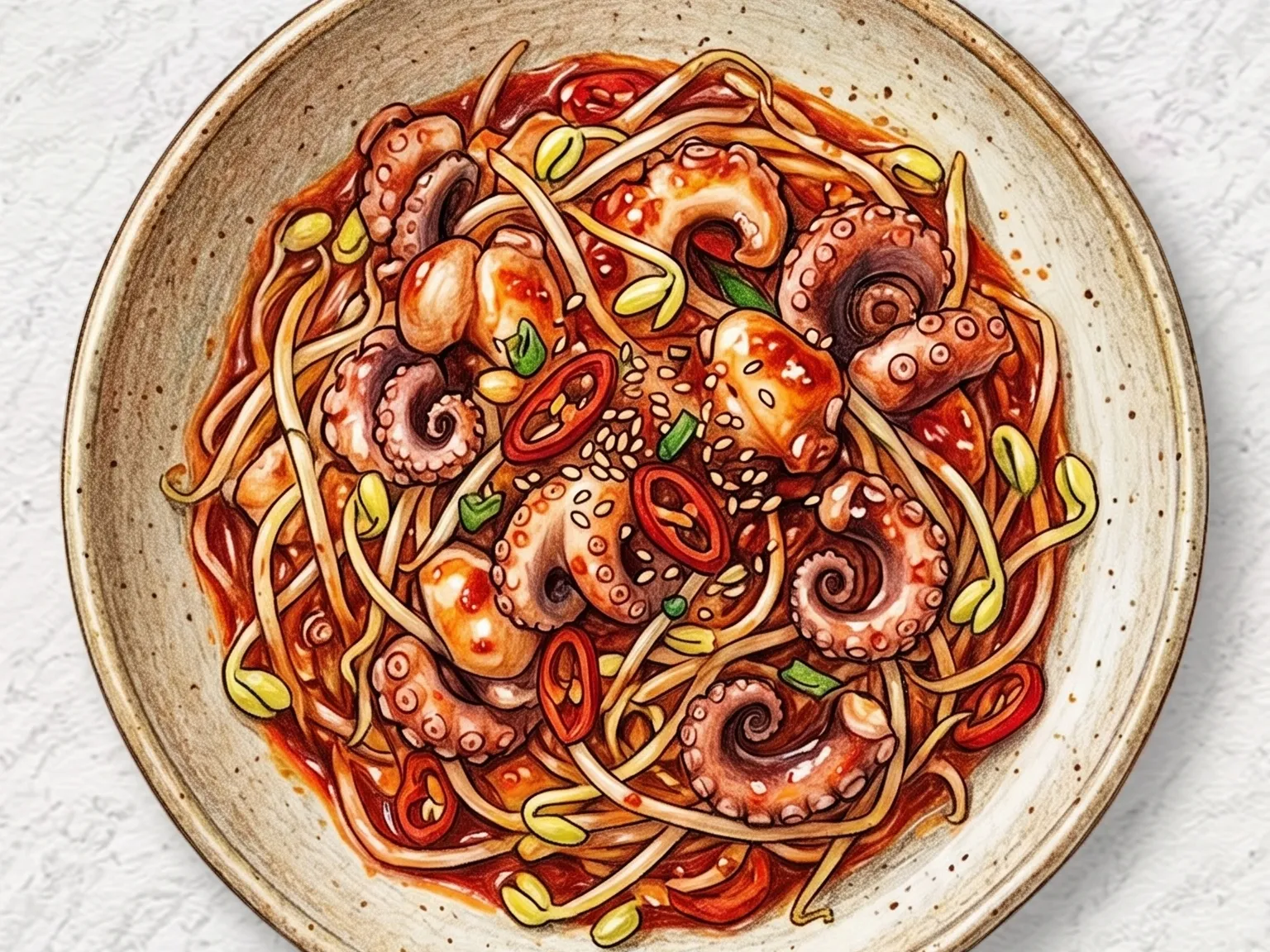
Spicy Live Webfoot Octopus with Bean Sprouts
Quick answer
A spicy and savory recipe featuring tender live webfoot octopus and crunchy bean sprouts.
- Webfoot octopus and bean sprouts are quickly stir-fried to maintain a crisp and tender balance.
- 20-second blanch seals in the octopus and prevents waterlogging the sauce
Key ingredients
Core cooking flow
- 1 Remove the internal organs, eyes, and beak from the live webfoot octopus, th...
- 2 Blanch the octopus in boiling water for 20 seconds, rinse in cold water, dra...
- 3 Mix red chili powder, soy sauce, red chili paste, sugar, minced garlic, and...
A spicy and savory recipe featuring tender live webfoot octopus and crunchy bean sprouts.
What Makes This Special
- Webfoot octopus and bean sprouts are quickly stir-fried to maintain a crisp and tender balance.
- 20-second blanch seals in the octopus and prevents waterlogging the sauce
- Gochujang plus gochugaru double chili layer balanced by a hit of sugar
- Head and tentacle suction cups give contrasting textures in one bite
Instructions
- 1
Remove the internal organs, eyes, and beak from the live webfoot octopus, then scrub with flour or sea salt and rinse thoroughly.
- 2
Blanch the octopus in boiling water for 20 seconds, rinse in cold water, drain, and cut into bite-sized pieces to prevent excess water during stir-frying.
- 3
Mix red chili powder, soy sauce, red chili paste, sugar, minced garlic, and cooking wine to create the spicy sauce.
- 4
Heat oil in a pan, sauté sliced onion and green onion until fragrant, then add washed bean sprouts and stir-fry until slightly wilted.
- 5
Add the blanched octopus and sauce to the pan, then stir-fry quickly over high heat to prevent moisture from drawing out.
- 6
Add diagonally sliced Cheongyang chili peppers, toss once more, and turn off the heat.
- 7
Finish by drizzling sesame oil and sprinkling sesame seeds for a nutty aroma.
Tips
Nutrition (per serving)
Recipes to Cook Together
More Stir-fry →Serve with this
Refreshing Spicy Mulhoe Broth
A golden ratio recipe for a refreshing, spicy, and sweet-and-sour Mulhoe broth.
Shredded Chili Pickle
Spicy and sour shredded chili pickles, perfect for grilled meats.
Diet Konjac Fried Rice
A light and delicious konjac fried rice to enjoy without calorie worries.
Country-style Soybean Paste Stew
A traditional stew featuring the deep, earthy flavor of country-style fermented soybean paste.
Similar recipes
Korean Spicy Webfoot Octopus & Pork Belly Stir-fry
Jjukkumi-samgyeop-bokkeum combines chewy baby octopus and thick pork belly slices in a spicy stir-fry. The pork belly is first grilled until golden to render its fat, then the octopus and gochujang-based sauce are added for a fast, high-heat toss. Pork richness and the octopus's clean ocean flavor merge inside the chili seasoning, with onions and scallions adding sweetness. It is typically served sizzling on a hot plate, and diners often finish with fried rice made in the remaining sauce. Because baby octopus toughens rapidly with heat, adding it only after the pork is nearly cooked and pulling the pan off the heat within one to two minutes is the single most important step for keeping its signature chewy texture intact.
Korean Grilled Webfoot Octopus
Cleaned webfoot octopus is tossed in a marinade of gochujang, chili flakes, soy sauce, and sugar for ten minutes, then seared on high heat for just three to four minutes. Webfoot octopus has thicker tentacles than nakji and a more resilient chew, which makes it particularly well suited to this type of spicy, high-heat preparation. The short cooking time is not a shortcut -- it is the point. Overcooking webfoot octopus makes it rubbery and dry, and the difference between three minutes and five minutes is the difference between tender-chewy and tough. High heat is equally important: the goal is to sear, not steam, so the pan must be very hot and the pieces should not be crowded. Where the glaze catches on the pan surface and scorches slightly, it leaves behind charred bits that coat the octopus with a smoky depth the marinade alone cannot provide. Green onion added in the final seconds cuts through the heat with a sharp, fresh note. Just before the main harvest season in spring, webfoot octopus carries roe that adds a rich, creamy nuttiness to each bite, and this is when Korean cooks consider the ingredient at its peak. The cooked pieces wrap well in perilla leaves and are also popular as a fried rice finisher.
Nakgopsae (Octopus, Intestine, and Shrimp Stew)
A spicy Busan-style stew with a perfect harmony of octopus, intestines, and shrimp.
Korean Freshwater Crab Spicy Soup
Freshwater crabs are halved, thoroughly cleaned, and simmered in a stock built from radish and doenjang that draws out their intense, briny umami over forty minutes of steady cooking. Gochugaru and cheongyang chili build up layers of fiery heat, while zucchini and radish contribute natural sweetness that tempers the spice. Pressing the soybean paste through a strainer before adding it keeps the broth smooth and clear rather than grainy, and the result is a bold, aromatic stew deeply rooted in Korean regional tradition.
Korean Spicy Webfoot Octopus Stir-Fry
Jjukkumi-bokkeum is a Korean seafood stir-fry made by tossing cleaned small webfoot octopus with vegetables in a bold gochujang and gochugaru sauce over very high heat. Cleaning the octopus properly is essential: the innards inside the head must be removed and the body scrubbed with coarse salt to strip the slippery surface coating. The octopus is marinated ahead in a sauce of gochujang, red pepper flakes, soy sauce, sugar, minced garlic, and sesame oil, allowing the seasoning to penetrate before the heat hits. Onion and scallion go into the hot oiled pan first to develop their sweetness, then the marinated octopus is added and stir-fried on maximum heat for no more than two minutes. Keeping the cooking time short is non-negotiable: jjukkumi turns rubbery and tough if it stays over heat too long, and a chewy, springy texture is what separates a well-made version from an overcooked one. The intense heat of gochujang and coarsely ground red pepper defines the character of the dish, while the natural sweetness of onion and scallion rounds the sharp edges of the spice. Spring jjukkumi caught when the roe sacs are full adds a burst of texture when bitten into, which is why the spring season version is considered especially worth seeking out. The dish pairs naturally with steamed rice or as a drinking snack alongside soju.
Braised Live Blue Crab in Soybean Paste
A deeply flavorful dish combining the sweet meat of live blue crab with savory soybean paste.