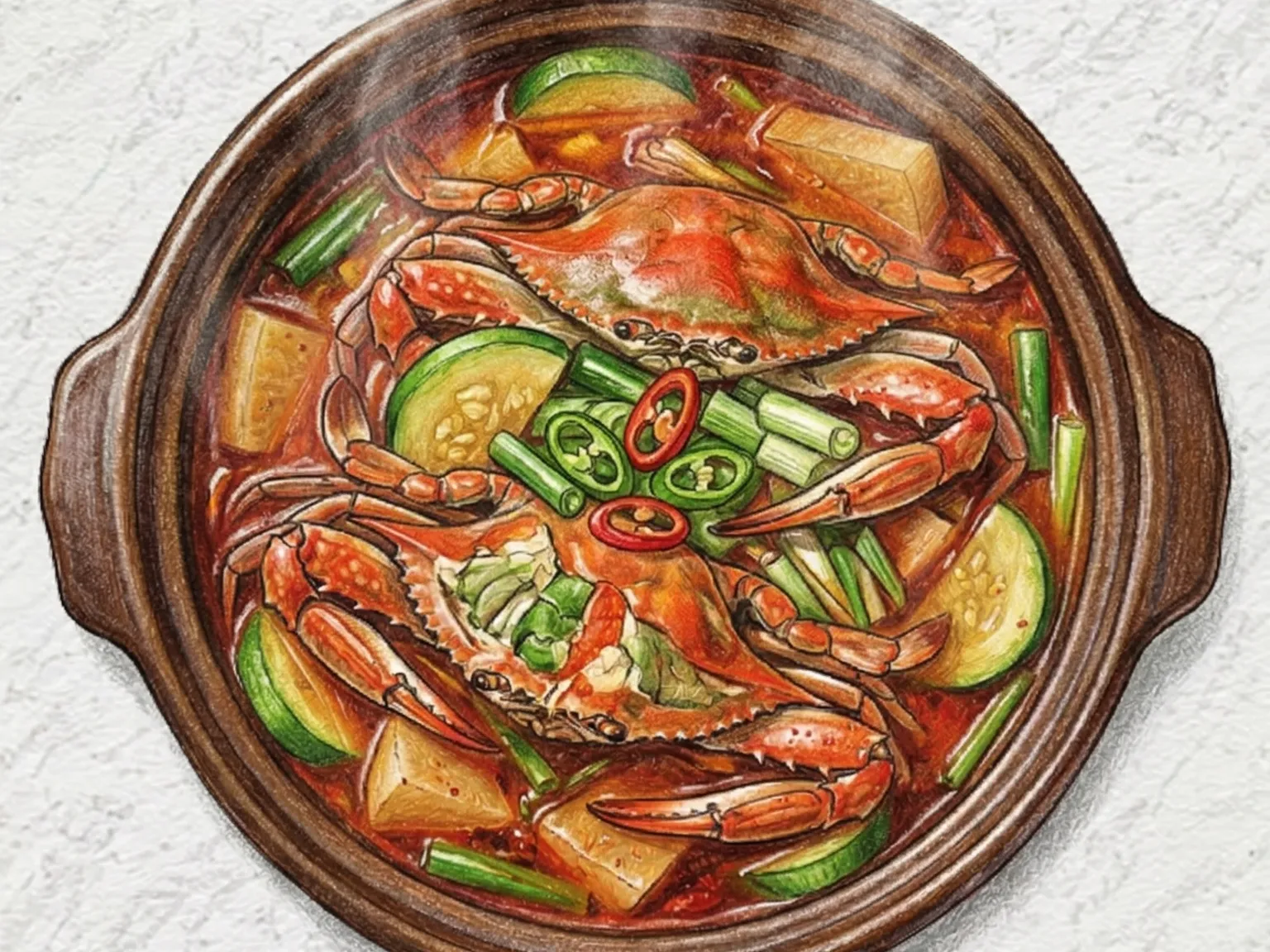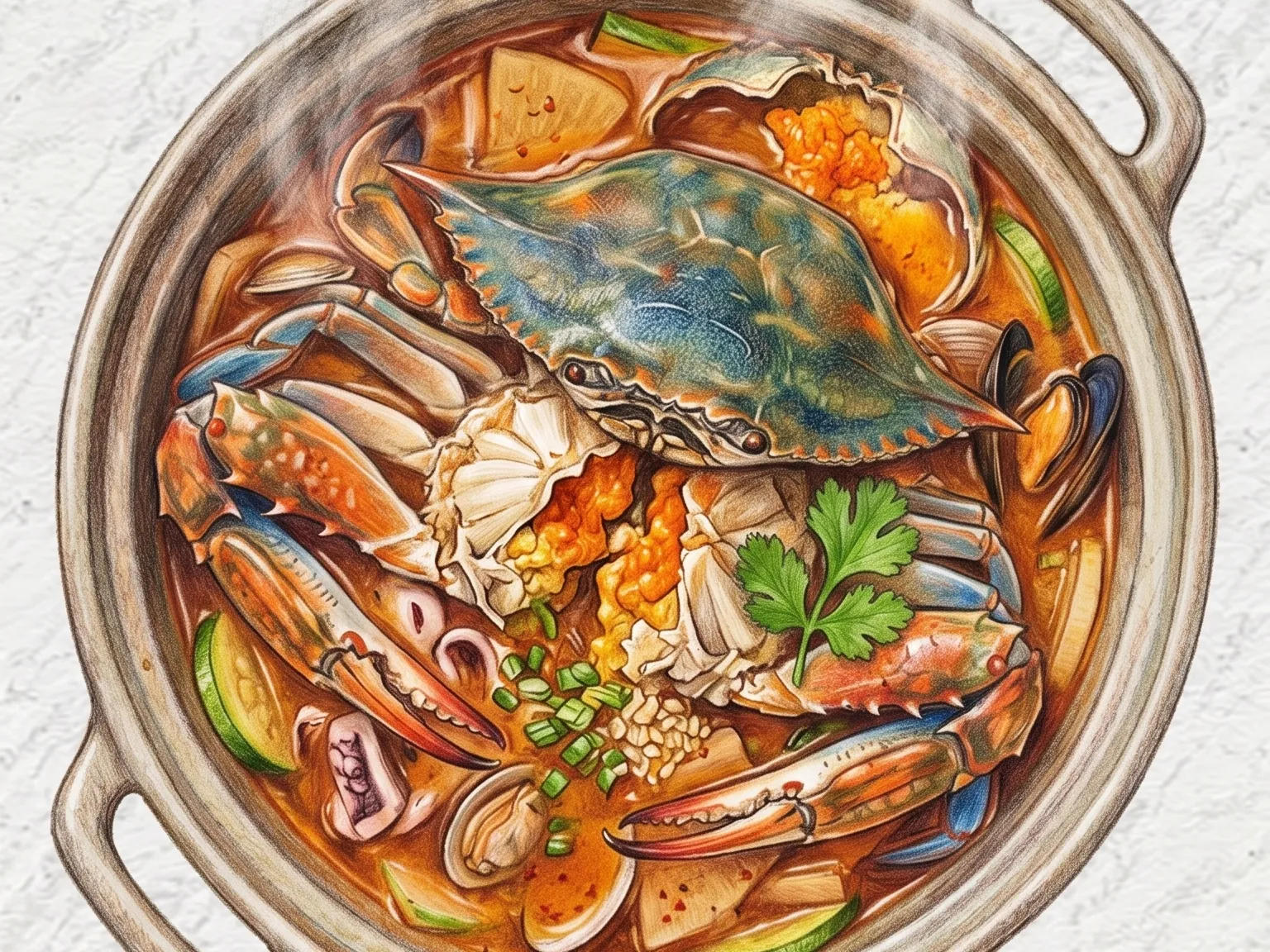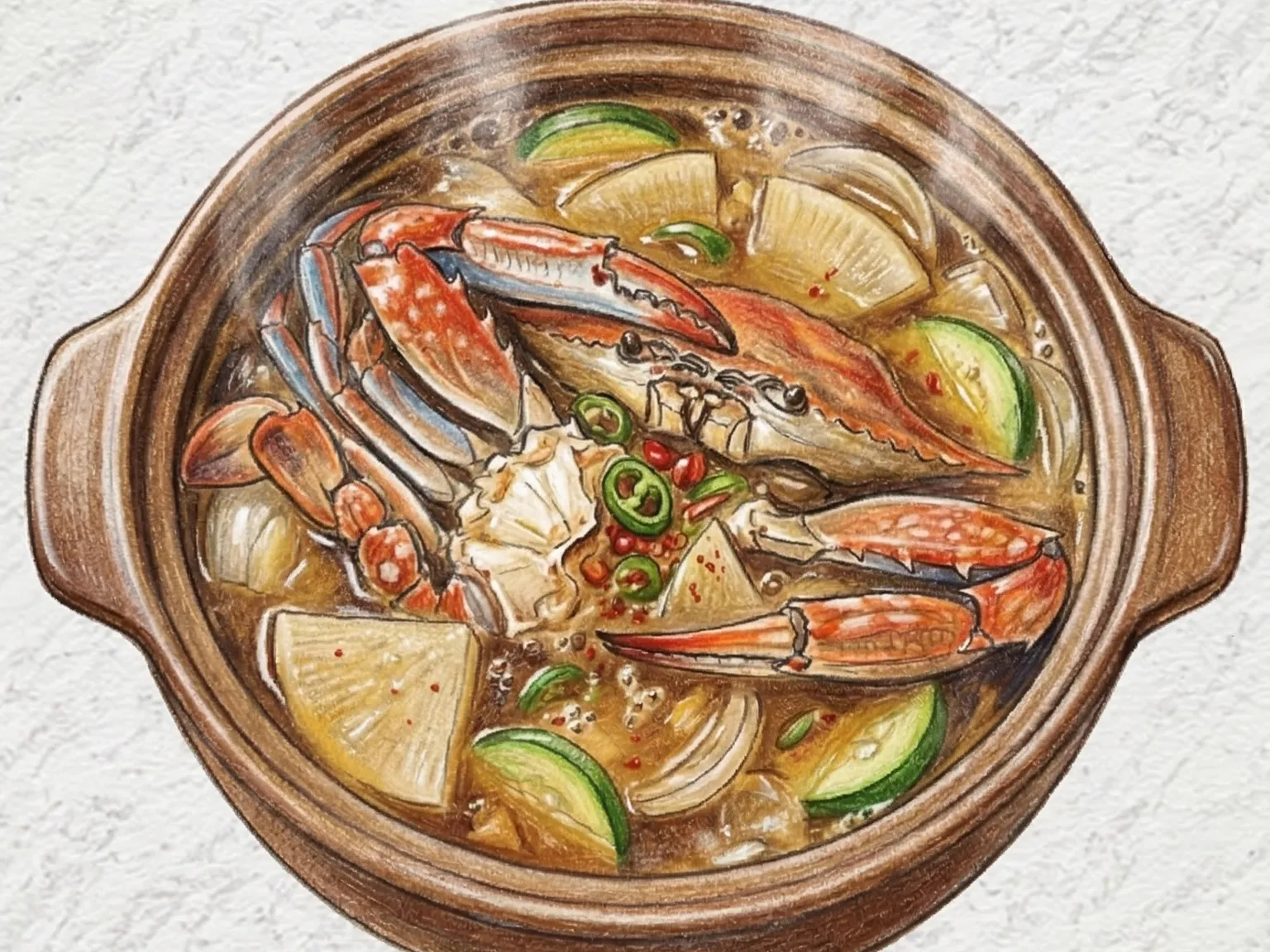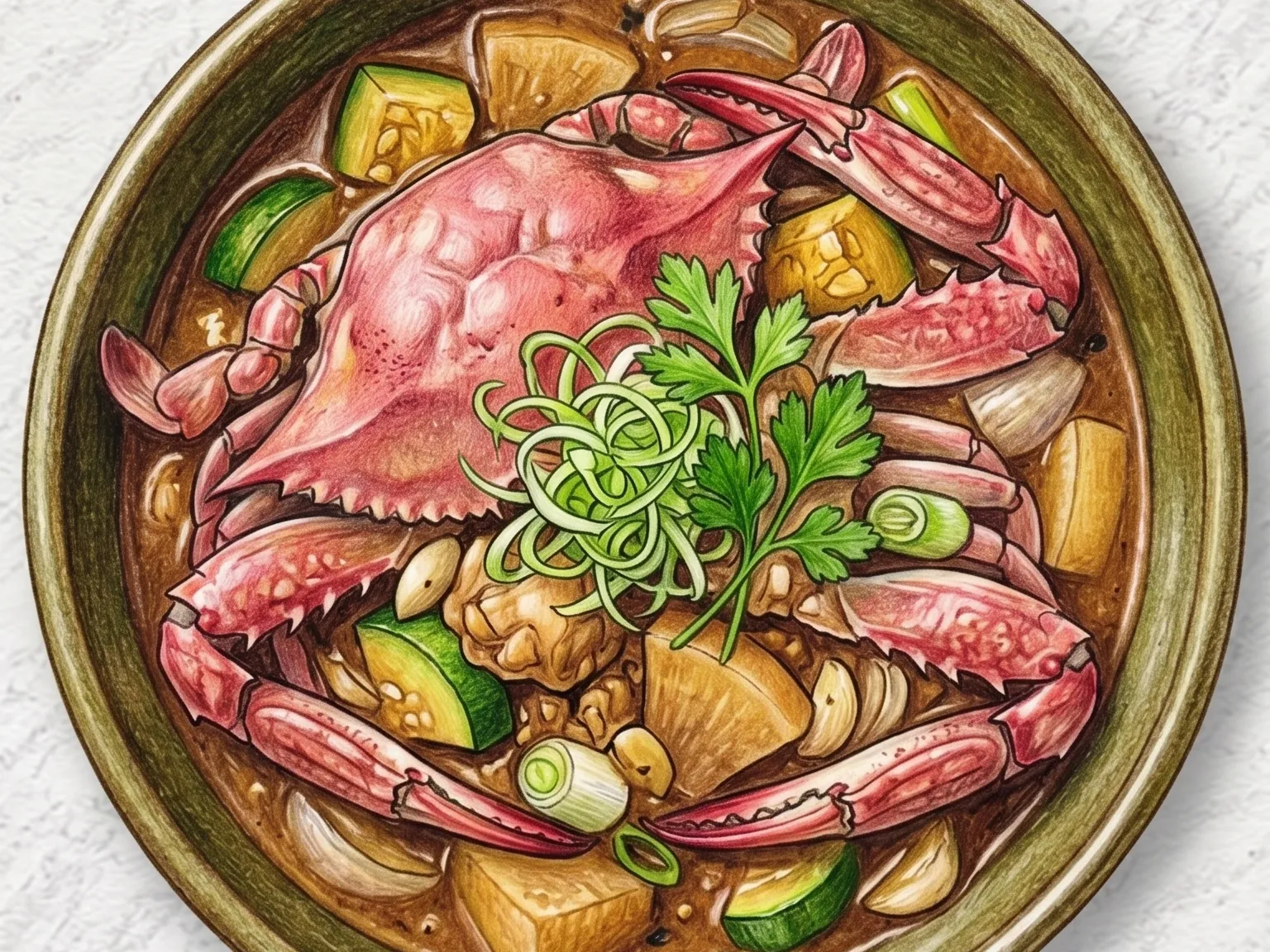
Braised Live Blue Crab in Soybean Paste
Quick answer
This dish features live blue crab braised in a savory broth seasoned with Korean soybean paste.
What makes this special
- Hwal-kkotge-doenjang-jorim braises live blue crab in a savory, strained soybean paste broth.
- Doenjang strained through a sieve dissolves evenly without lumps in the broth
- Radish simmered until translucent first builds a sweet stock foundation
Key ingredients
Core cooking flow
- 1 Scrub 2 live blue crabs just before cooking, then remove the top shells and gills.
- 2 Whisk 2 tbsp soybean paste, 1 tbsp red chili powder, and 1 tbsp minced garlic into 400 ml anchovy stock.
- 3 Spread 100 g thinly sliced radish over the bottom of the pot, then arrange t...
This dish features live blue crab braised in a savory broth seasoned with Korean soybean paste. Preparing the crab immediately before cooking preserves its natural sweetness and fresh qualities. Straining the soybean paste through a sieve allows it to dissolve evenly in the anchovy stock without leaving lumps. Slices of radish are placed at the bottom of the pot to simmer first, creating a sweet foundation for the sauce. The crab pieces are arranged over the radish and simmered with onions, allowing the flavors to penetrate the sweet crab meat. Cheongyang peppers add a sharp, spicy note, while fresh crown daisy is placed on top at the end to lift the rich aroma of the soybean paste with its light herbal fragrance. It is served warm with rice.
Instructions
Read the steps as a cooking flow: prep, heat, seasoning, doneness control, and finish.
- 1Season
Scrub 2 live blue crabs just before cooking, then remove the top shells and gills.
Cut each body in half for easier eating and let excess moisture drain so the seasoning does not become diluted.
- 2Control
Whisk 2 tbsp soybean paste, 1 tbsp red chili powder, and 1 tbsp minced garlic into 400 ml anchovy stock.
If the paste tastes very salty, start with 1.5 tbsp and adjust after simmering.
- 3Season
Spread 100 g thinly sliced radish over the bottom of the pot, then arrange the crab pieces on top without heavy overlap.
Pour the seasoned stock around the edges so the radish starts softening first.
- 4Control
Slice 0.5 onion into thick strips, scatter it over the crab, cover, and braise over medium heat for about 10 minutes.
Once it boils steadily, lower to medium-low to prevent overflow and harsh bubbling.
- 5Control
Uncover and spoon the broth over the crab while simmering on low heat for 5 more minutes.
It is ready when the shells turn red and a chopstick slides into the radish without resistance.
- 6Finish
Slice 2 Cheongyang peppers on the bias, add them, and boil for just 1 minute before turning off the heat.
Place 20 g crown daisy on top at the end so it wilts lightly, then serve with rice.
After the steps
Pick a recipe that fits this dish.
Continue with shared ingredients, meal pairings, or a similar method.
Recipes That Go Well With This
More Steamed →Based on shared ingredients and meal pairing
Korean Spicy Blue Crab Soup
Ggotge-tang is a spicy Korean crab soup built around whole blue crabs that infuse the broth with a concentrated, briny seafood depth. The shells release their marine richness as they crack apart during simmering, forming the structural foundation of the pot. Doenjang dissolved into the broth adds fermented complexity, while gochugaru delivers a persistent heat that compounds with each spoonful. Radish chunks sweeten and clarify the liquid, and zucchini with green onion fill the bowl with color and contrasting texture. Before cooking, the crabs should be scrubbed clean under cold water and cleaned of their sand pouches and gills, which eliminates any off-flavors. Scoring the claws lightly with the back of a knife before the pot goes on the heat makes extracting the claw meat easier at the table. Female crabs in season carry bright orange roe inside the top shell that dissolves into the broth and intensifies its richness. The real reward at the end of the meal is mixing leftover rice directly into the crab's top shell with the residual roe and braising juices, a practice Korean diners regard as the true finish of the meal. Blue crab season peaks in spring and autumn.
Korean Spring Blue Crab Stew
Kkotgetang is a classic Korean spicy crab stew made with 600g of whole blue crab simmered until the shells release their full flavor into the broth. Gochugaru and a touch of doenjang season the liquid with heat and fermented depth, while radish and zucchini turn sweet as they absorb the crab-infused stock. Two Cheongyang chilies push the spice level higher, and green onion adds a fresh finish. Picking the crab meat from the shell while sipping the hot, briny broth is half the enjoyment. Spring blue crabs are prized for their fuller flesh, making that the ideal season to prepare this dish.
Korean Mushroom Japchae (Shiitake Glass Noodle Stir-Fry)
Beoseot japchae replaces beef with shiitake mushrooms as the primary source of savory depth, making it a staple of Buddhist temple cuisine and vegetarian tables alike. Sweet potato noodles are soaked and boiled, then rinsed in cold water immediately to lock in a firm, springy texture. Shiitake, spinach, carrot, and onion are each cooked separately - their moisture levels and heat tolerances differ enough that combining them prematurely flattens every component. Soy sauce, sugar, minced garlic, and sesame oil bring the noodles and vegetables together, and the finished dish rests for ten minutes so the seasoning penetrates the noodles evenly. The result is a japchae where the mushroom carries genuine umami weight without any meat.
Korean Blue Crab Doenjang Pot Rice
Cleaned blue crab sits atop soaked rice in a heavy pot, cooked in anchovy-kelp stock that has been infused with dissolved doenjang. Garlic and vegetables are sauteed first in perilla oil to build an aromatic base before the stock-doenjang mixture is poured in and brought to a boil. The crab goes on top and the pot is covered for five minutes on high heat, fifteen minutes on low, then ten minutes off the heat to rest and steam through. The crab's briny sweetness and the doenjang's fermented, earthy depth soak into every grain of rice during the long, slow cook. Zucchini and shiitake mushrooms add a mild sweetness that tempers the saltiness and rounds out the bowl. One additional minute on low heat after resting creates a golden, nutty nurungji crust at the bottom, a prized texture in Korean pot rice. Doenjang saltiness varies by brand, so tasting the diluted stock before adding rice lets you calibrate without oversalting. A few slices of cheongyang chili on top cut through the fermented richness and add a sharp finishing heat.
Serve with this
Korean Sashimi Rice Bowl (Flounder Sashimi with Cho-Gochujang)
Sliced flounder sashimi sits atop julienned cucumber, lettuce, and perilla leaves over slightly cooled rice, dressed with cho-gochujang just before eating. The rice must not be piping hot because residual heat softens the sashimi and dulls its clean texture, so resting it until just warm is essential. The vinegar tang and chili warmth in cho-gochujang lift the mild fish flavor, while sesame oil and seeds leave a nutty finish on the palate. Keeping the vegetables well chilled before assembly creates a temperature contrast against the warm rice that sharpens every bite. Adding the cho-gochujang right before eating rather than in advance prevents the vegetables from weeping moisture and going limp.
Korean Fermented Flounder Sikhae
Gajami sikhae is a traditional fermented flounder preparation from Korea's East Coast, made by combining salt-cured flounder fillets with julienned radish, cooked glutinous rice, gochugaru, and fish sauce, then sealing the mixture for fermentation at low temperature for a week or more. The glutinous rice starch feeds lactic acid bacteria, producing a mild, rounded acidity that reads quite differently from the sharp, concentrated saltiness of jeotgal. Radish adds moisture and textural contrast. As fermentation progresses, fish proteins break down into deep umami compounds. The resulting sikhae is far less salty than conventional fermented seafood and can be eaten directly over rice. A regional winter banchan associated with Gangwon and Hamgyeong provinces, it grows more sour the longer it ferments.
Similar recipes
Steamed Female Blue Crab with Soy Sauce
This dish features female blue crabs filled with roe steamed in a seasoned soy sauce mixture along with onions and ginger. Cleaning the crabs requires folding back the belly flap to scrub out the gills while keeping the top shell intact. The crabs must be placed belly-up in the pot to prevent the rich roe and tomalley from leaking out during cooking. Sliced onion and ginger are layered at the bottom of the pot to prevent the crabs from scorching and to emit a fragrant steam that eliminates fishy odors. After pouring a mixture of soy sauce, oligosaccharide, rice wine, and water over the crabs, they are steamed for fifteen to twenty minutes on medium heat. Adhering to this precise timing prevents the tender crab meat from dissolving or turning mushy. Spooning the remaining cooking liquid over the crabs yields a glossy finish, topped with thread chili before serving.
Spicy Live Webfoot Octopus with Bean Sprouts
This stir-fry combines live webfoot octopus with crunchy soybean sprouts in a spicy sauce. The octopus is blanched in boiling water for 20 seconds and rinsed in cold water. This step seals the octopus and prevents water from leaking during cooking, ensuring the sauce coats the ingredients without getting watered down. The seasoning combines red chili powder and red chili paste for a double layer of heat, which is balanced by sugar, soy sauce, and minced garlic. Onion and green onion are stir-fried first, followed by the sprouts. Once they soften, the octopus and sauce are added and cooked over high heat for two minutes. Sliced cheongyang chili peppers, sesame oil, and sesame seeds are added at the end, highlighting the contrast between the tender octopus heads, chewy suction cups, and crisp sprouts.
Korean Freshwater Crab Spicy Soup
This spicy freshwater crab soup is a traditional Korean regional dish featuring halved crabs simmered in a rich broth. The preparation starts by scrubbing the crabs and soaking them in light saltwater for five minutes to reduce any muddy odor. A base broth is made by boiling sliced radish and soybean paste, which is strained through a sieve to keep the texture smooth. The crabs are then added and boiled for ten minutes while skimming the foam. A combination of red pepper flakes and Cheongyang chilies builds a double layer of heat, complemented by minced garlic and soup soy sauce. Zucchini, green onions, and chili peppers are added during the final five minutes of cooking, allowing their natural sweetness to balance the spicy broth. Simmering for forty minutes in total extracts the deep, briny flavor of the freshwater crab.