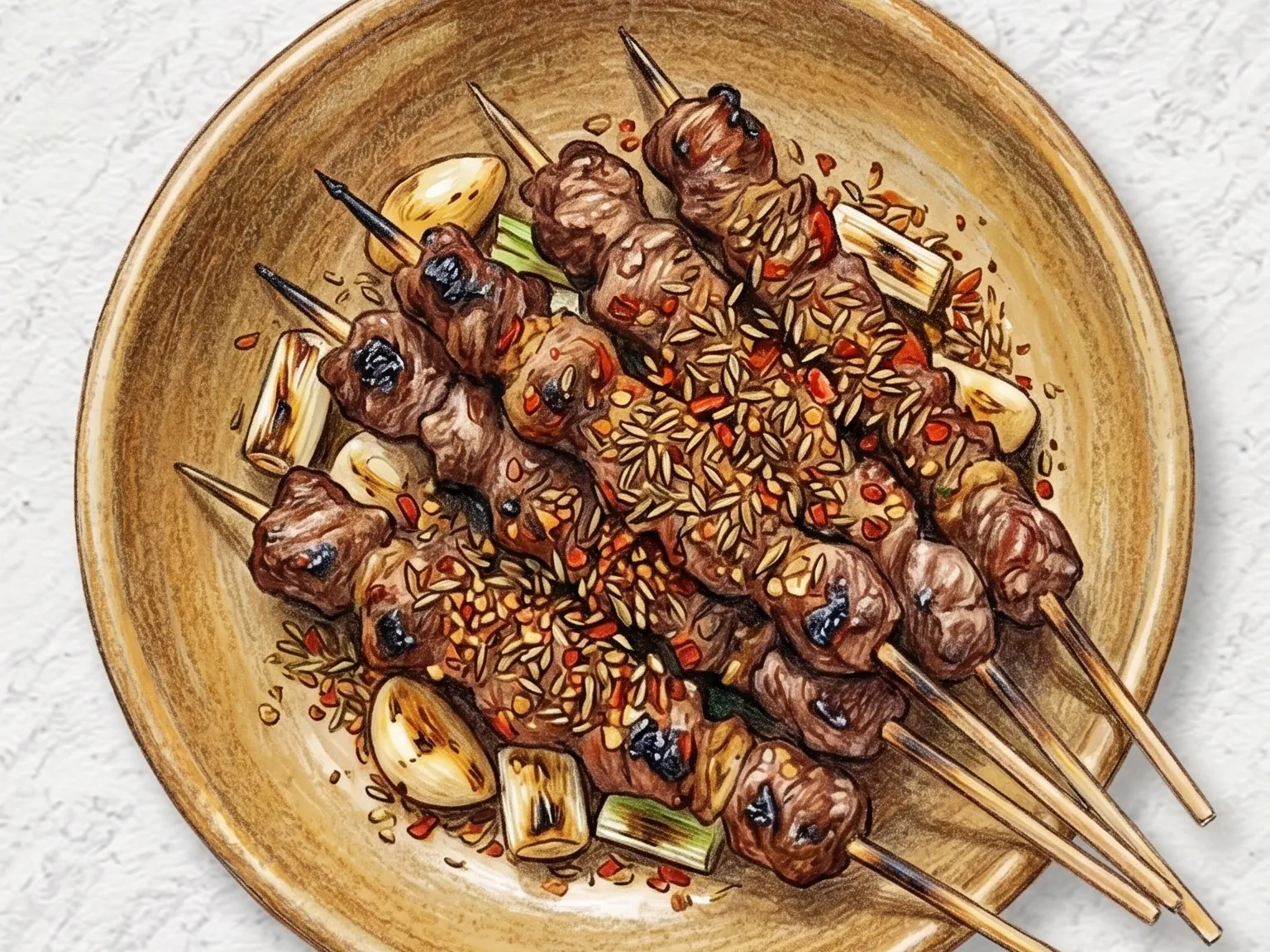
Lamb Skewers (Yangkkochi)
Quick answer
How to make addictive lamb skewers with aromatic cumin at home.
- Aromatic cumin in Yangkkochi lamb skewers is added at the end of grilling to avoid any bitter notes.
- Cumin sprinkled at the end activates its oils without burning bitter
Key ingredients
Core cooking flow
- 1 Cut the lamb into 2cm cubes and pat dry to remove any blood.
- 2 Marinate the meat with cooking wine, salt, pepper, and minced garlic for 20 minutes.
- 3 Thread 5-6 pieces of meat onto each skewer evenly.
How to make addictive lamb skewers with aromatic cumin at home.
What Makes This Special
- Aromatic cumin in Yangkkochi lamb skewers is added at the end of grilling to avoid any bitter notes.
- Cumin sprinkled at the end activates its oils without burning bitter
- 2 cm shoulder cubes char the surface while keeping the center pink
- 20-minute mirin marinade tames gaminess by breaking down surface proteins
Instructions
- 1
Cut the lamb into 2cm cubes and pat dry to remove any blood.
- 2
Marinate the meat with cooking wine, salt, pepper, and minced garlic for 20 minutes.
- 3
Thread 5-6 pieces of meat onto each skewer evenly.
- 4
Lightly oil a pan or grill and cook the skewers, turning frequently until golden brown.
- 5
When the meat is almost cooked, sprinkle with a mixture of cumin and red pepper flakes.
Tips
Nutrition (per serving)
Recipes to Cook Together
More Grilled →Serve with this
Refreshing Spicy Mulhoe Broth
A golden ratio recipe for a refreshing, spicy, and sweet-and-sour Mulhoe broth.
Shredded Chili Pickle
Spicy and sour shredded chili pickles, perfect for grilled meats.
Diet Konjac Fried Rice
A light and delicious konjac fried rice to enjoy without calorie worries.
Authentic Jeolla-style Kimchi
Authentic Southern-style kimchi with rich fish sauce and rice paste for deep umami.
Similar recipes
Korean Beef Skewers (Soy-Glazed Grilled Beef)
Bite-sized beef cubes and chunks of bell pepper and onion are threaded onto wooden skewers in an alternating pattern. The beef marinates for twenty minutes in soy sauce, oligosaccharide syrup, minced garlic, sesame oil, and black pepper before assembly. Grilling over medium-high heat while rotating the skewers lets the marinade reduce into a sticky glaze on the meat, while the vegetables soften and pick up faint char. The result is a hand-held format where each bite delivers soy-seasoned beef alongside lightly smoky, still-crisp vegetables.
Korean Salt-Grilled Pork (Pork Belly and Neck BBQ)
Doejigogi-gui is Korea's salt-grilled pork, made by seasoning thick-cut pork belly or pork neck with nothing but coarse salt and grilling over charcoal or on a cast iron pan. Because no marinade masks the flavor, the quality of the pork itself determines the outcome, and thick-cut belly requires patient cooking over medium heat so the fat layers render fully before the exterior chars -- rushing over high flame leaves the fat chewy and greasy rather than crisp. Blotting excess rendered fat from the pan with paper towels during cooking keeps the meat grilling rather than deep-frying and preserves the smoky char that defines the dish. Garlic slices cooked on the same pan alongside the pork add a mellow roasted note. The classic accompaniments -- sesame oil and salt for dipping, fresh lettuce or perilla leaves for wrapping, a dab of doenjang, and a sliver of cheongyang chili -- create the complete Korean barbecue experience, where a bite of rich pork, crunchy greens, and pungent condiments come together in one mouthful.
Korean Grilled Chicken Skewers
Dak-kkochi-gui is a Korean grilled chicken skewer built on the flavors of street-stall cooking, made by threading bite-sized chicken breast or thigh onto bamboo sticks and painting them with a sauce of gochujang, soy sauce, honey, and minced garlic. Thigh meat is the better choice because its higher fat content keeps each piece juicy over direct heat, while breast will dry out quickly. Applying the glaze in two or three separate coats rather than all at once builds a thick, sticky, caramelized surface. Cutting the chicken into uniform cubes ensures even cooking, and alternating pieces with slices of green onion or bell pepper adds moisture and prevents the meat from tightening up. Turning the skewers frequently over medium heat keeps the sugars in the sauce from scorching while the surface develops an even, deep char. The same result comes out well in an air fryer at 200 degrees Celsius for twelve to fourteen minutes. Gochujang's fermented heat against the sweetness of honey and the smell of searing meat is the unmistakable signature of Korean pojangmacha.
Salt-Grilled Pork Dwitgogi
Chewy and savory grilled pork Dwitgogi, famously kept by butchers for themselves.
Korean Sausage Skewers
Sosiji kkochi are Korean sausage skewers made by scoring Vienna sausages deeply along their length and threading two or three onto wooden sticks, then pan-frying them until golden brown all over. The score marks serve a functional purpose: as the sausages heat, the cuts open up, allowing heat to penetrate to the center more evenly and creating edges that caramelize slightly and turn crisp. A thin film of oil in a medium-heat pan and steady rotation ensures even color across the entire surface, producing a skin that snaps on the outside while the inside stays juicy and springy. Ketchup and mustard are the classic accompaniments, with the tomato sweetness and the sharp, pungent bite of the mustard complementing the salt and fat of the sausage. Threading rice cakes between the sausage pieces transforms the skewer into a sotteok-sotteok style, a widely popular Korean street food variation. The dish comes together in under fifteen minutes and requires no special equipment beyond a pan and wooden skewers, making it a practical choice for a quick snack, a children's side dish, or a lunchbox item that holds up well at room temperature.
Korean Grilled Chicken Heart Skewers
Dak-yeomtong-kkochi starts by soaking trimmed chicken hearts in milk for fifteen minutes to remove any off-flavors, then threading them onto skewers for direct grilling. A glaze of soy sauce, gochujang, sugar, garlic, and cooking wine is applied in stages during grilling, building up a salty-sweet coating with gentle heat. Unlike regular chicken meat, hearts have a firm, springy chew that deepens in nuttiness the more you bite into them. The milk soak combined with garlic and cooking wine in the glaze cleanly removes any organ taste, so the finished skewers carry only the char from the grill and the layered seasoning. A common sight at street stalls and pojangmacha tents, these skewers work equally well as a quick snack eaten on the spot or as drinking food alongside a cold beer.