Korean Black Rice Coconut Smoothie
Quick answer
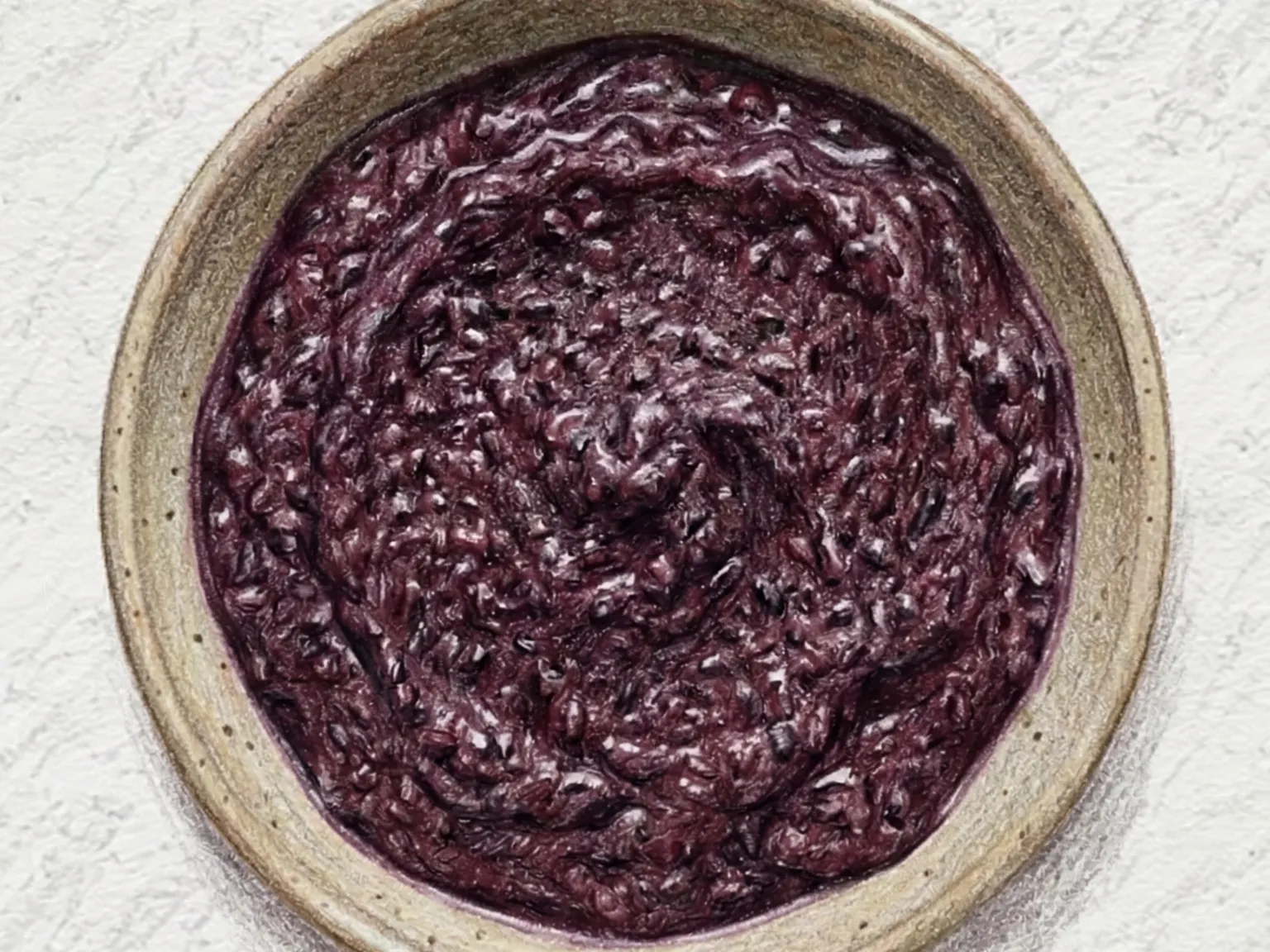
This smoothie is built on cooked black rice, blended with coconut milk, banana, and ice into a thick, grain-forward drink.
What makes this special
- Cooked black rice provides a chewy, starchy texture and deep purple color in this smoothie.
- Black rice anthocyanins give a deep purple impossible in other grain smoothies
- Coconut milk fat wraps around the coarse black rice grain for creaminess
Key ingredients
Core cooking flow
- 1 Rinse 70g black rice under cold water several times until the water runs mostly clear.
- 2 Put the soaked rice and 250ml water in a small pot over low heat.
- 3 Cook for 18 to 20 minutes, until the grains look plump and no hard center remains when pressed.
This smoothie is built on cooked black rice, blended with coconut milk, banana, and ice into a thick, grain-forward drink. The black rice is cooked and cooled before blending, which gives it a chewy, starchy quality that thickens the smoothie from within and contributes a toasty grain flavor that fruit-based smoothies do not have. Anthocyanin pigments in the black rice bran stain the drink a deep purple. Coconut milk brings its fat content to bear on the coarser grain particles, smoothing the texture into something creamy and uniform. Banana adds natural sweetness and a binding thickness that allows the smoothie to come together without added sugar from the start. Date syrup deepens the sweetness further, and blending with ice brings the drink to a cold temperature while loosening the consistency. Toasted coconut chips scattered over the finished smoothie provide a layer of crunch that contrasts with the thick, smooth body below and reinforces the coconut flavor throughout.
Instructions
Read the steps as a cooking flow: prep, heat, seasoning, doneness control, and finish.
- 1Step
Rinse 70g black rice under cold water several times until the water runs mostly clear.
Soak it for 20 minutes, then drain it in a fine mesh sieve for about 3 minutes so extra water does not thin the smoothie.
- 2Control
Put the soaked rice and 250ml water in a small pot over low heat.
When it begins to simmer, stir once across the bottom so the starch does not settle and stick before the grains soften.
- 3Heat
Cook for 18 to 20 minutes, until the grains look plump and no hard center remains when pressed.
Spread the rice out and cool it completely, because warm starch can clump and make blending uneven.
- 4Step
Add the cooled rice, 260ml coconut milk, one peeled banana, and 20g date syrup to the blender.
Keep the coconut milk near the bottom so the blades catch liquid first and the rice blends more evenly.
- 5Step
Add 120g ice and blend on high for about 45 seconds.
Stop when the color is evenly deep purple and the texture is thick but smooth. If it feels gritty, blend in 10 second bursts.
- 6Finish
If the smoothie is too thick to pour, add up to 30ml more coconut milk and blend briefly.
Pour it into chilled glasses, top with 10g toasted coconut chips, and serve while cold and thick.
After the steps
Pick a recipe that fits this dish.
Continue with shared ingredients, meal pairings, or a similar method.
Recipes That Go Well With This
More Drinks →Based on shared ingredients and meal pairing
Korean Banana Misutgaru Smoothie
Banana misutgaru smoothie combines Korea's traditional roasted multigrain powder with banana for a filling, grain-forward drink. Misutgaru is made from roasted barley, glutinous rice, soybeans, and other grains ground into a fine powder; dissolved in liquid, it produces a toasty, earthy flavor that sets it apart from any standard smoothie base. Banana adds natural sweetness and body, while a spoonful of peanut butter deepens the nutty undertone. Honey fine-tunes the sweetness, and blending with ice makes the whole thing cold and thick. The grain fiber from the misutgaru and the potassium from the banana make this a substantial breakfast replacement in a single glass. Increasing the misutgaru proportion thickens the consistency toward something closer to porridge, and swapping in soy milk for regular milk intensifies the grain character.
Korean Wild Soy Grain Smoothie
Deulkkong misut smoothie is a Korean grain-based drink made by blending wild soybean powder and roasted brown rice powder with milk, plain yogurt, and banana. Mixing the dry powders into the liquid first prevents clumps from forming, and briefly freezing the banana beforehand creates a thick, shake-like consistency without any added thickeners. Wild soybean powder contributes a deep, nutty soybean flavor, and roasted brown rice powder adds a toasted, grainy undertone on the finish; the two powders have distinct characters that reinforce each other. Honey adjusts the sweetness, and a pinch of salt sharpens the grain flavors noticeably. Wild soybeans are higher in protein and isoflavones than common cultivated soybeans, making this smoothie substantial enough to serve as a full breakfast.
Gotgam Cream Cheese Roll (Dried Persimmon Rolls)
Gotgam cream cheese roll is a no-cook Korean dessert that requires nothing more than a knife, a bowl, and a refrigerator. Dried persimmons are slit open and flattened into thin sheets, each one acting as the outer wrapper. The filling is cream cheese mixed with honey and fresh lemon juice to balance its natural richness with acidity, and finely chopped walnuts are folded in throughout to add a crunchy, nutty element to every bite. The filling is spread across the opened persimmon, which is then rolled tightly and wrapped in plastic wrap. Twenty minutes in the refrigerator firms the roll enough to slice cleanly. Dipping the knife in warm water and wiping it dry before each cut produces the smoothest cross-sections. The finished slices reveal clearly defined layers: the chewy, caramel-sweet dried persimmon on the outside, the tangy cream cheese in the middle, and flecks of walnut distributed throughout. The combination makes it a natural pairing with wine or a polished addition to a traditional holiday table.
Korean Black Rice Latte (Purple Grain Milk Drink)
Heukmi latte is a grain-based drink made by soaking black rice for at least two hours, boiling it until completely soft, and then blending it smooth with milk. Without adequate soaking, the rice does not cook through evenly, and the blended result will be grainy rather than silky. Glutinous rice flour stirred into the blender adds viscosity, giving the drink a fuller, creamier body that coats the palate as it goes down. Maple syrup contributes a caramel-like sweetness that sits comfortably over the toasted, earthy character of the grain, while vanilla extract rounds out the aromatic range and keeps the flavor from smelling too starchy. A pinch of salt added at the very end prevents the sweetness from dominating and pulls the flavors into balance. The deep purple color comes naturally from the anthocyanin pigments in the black rice bran, making the drink visually striking before the first sip. It can be served warm straight from the blender or refrigerated and enjoyed cold.
Serve with this
Korean Spicy Chicken Skewers
Spicy dak-kkochi threads boneless chicken thigh and green onion segments onto skewers, then grills them while brushing on a gochujang-based glaze in multiple rounds. Chicken thigh meat stays moist throughout cooking due to its higher fat content, and the green onion segments sweeten and caramelize under direct heat, providing a counterbalance to the spicy sauce. The glaze -- gochujang blended with sugar, garlic, and soy sauce -- caramelizes against the hot surface to build a sticky, lacquered coating on each piece. Applying the glaze two or three times during grilling stacks distinct layers of sweet-spicy flavor that gradually penetrate deeper into the meat.
Crispy Seaweed Chips
Crispy and healthy traditional seaweed bugak made at home.
Yaksik (Korean Royal Sweet Glutinous Rice with Jujube)
Yaksik is a traditional Korean sweet rice dish with roots in royal court cuisine. Glutinous rice is mixed with soy sauce, honey, and sesame oil, then steamed with jujubes and chestnuts until each grain absorbs a deep caramel-brown color and a sweet-salty seasoning. The soy sauce provides savory depth while the honey glazes the rice with a gentle sheen and lingering sweetness. Jujubes burst with natural fruity sweetness when bitten, and chestnuts contribute a crumbly, starchy contrast to the chewy rice. A pinch of cinnamon adds warm spice that ties the elements together. Yaksik holds its texture well at room temperature, making it equally suited for packed lunches or make-ahead desserts.
Similar recipes
Korean Five-Grain Sweet Rice Punch
Ogok-sikhye is a traditional Korean grain punch made by saccharifying a mix of cooked sweet rice, barley, millet, and foxtail millet in barley malt extract at 60 to 65 degrees Celsius for one hour. The malt powder is soaked in lukewarm water for 20 minutes, kneaded by hand, and strained through a cloth to yield a clear, enzyme-rich liquid -- this is the working ingredient that converts the grain starches into natural sugars during the slow saccharification. Temperature control is central to the process: below 60 degrees the enzymes slow down, and above 70 degrees they denature and die, so maintaining the right range throughout the hour-long rest determines whether the conversion succeeds. As saccharification progresses, the rice grains hollow out and float to the surface; these are skimmed off, rinsed separately, and later floated back into the finished punch to add a soft, chewable element to each cup. After sweetening with sugar and chilling completely in the refrigerator, the drink is served cold with pine nuts floating on top. The combination of multiple grains produces a more layered, complex sweetness than single-grain sikhye, and the overnight rest in the refrigerator smooths the flavor into something more cohesive.
Black Rice Cream Cheese Tart
Black rice cream cheese tart is a Korean-style baked tart that combines a crisp, buttery shell with a cream cheese filling tinted and flavored with black rice flour. The filling is made by blending cream cheese, sugar, egg, and heavy cream until smooth, then folding in black rice powder, which gives the mixture a pale purple color and a subtle roasted grain character. Baked at a moderate temperature, the filling puffs gently in the oven before settling back into a dense, silky layer as it cools - the texture sits between a cheesecake and a custard tart, smooth and rich but not heavy. The pre-baked tart shell provides a firm, buttery crunch that contrasts the soft filling above. Vanilla extract ties the tangy cream cheese to the earthy black rice notes, rounding out the flavor so neither element dominates.
Korean Geomeun Kong Juk (Black Bean Porridge)
Black beans are soaked for at least four hours, then boiled until the skins wrinkle and the flesh softens through to the center. They are blended with their cooking liquid into a thick, smooth slurry that forms the base of the porridge. This bean puree is combined with separately soaked rice and the mixture is simmered over low heat, stirred regularly to prevent the starch from catching on the bottom of the pot. As the rice breaks down and the starch gelatinizes, the porridge thickens gradually into a smooth, velvety consistency. The anthocyanins in the black bean skins stain the porridge a deep purple-gray, and the flavor is earthy and distinctly nutty, unlike the lighter taste of plain rice porridge. Passing the finished porridge through a sieve removes the bean skins for a cleaner texture. Seasoned with salt alone, it reads as a savory meal; a tablespoon of sugar shifts it toward something gently sweet. Pine nuts and sesame scattered on top layer in additional nuttiness, and the porridge is frequently made as restorative food given the beans nutritional density.