2741 Korean & World Recipes

2741+ Korean recipes, clean and organized. Ingredients to instructions, all at a glance.

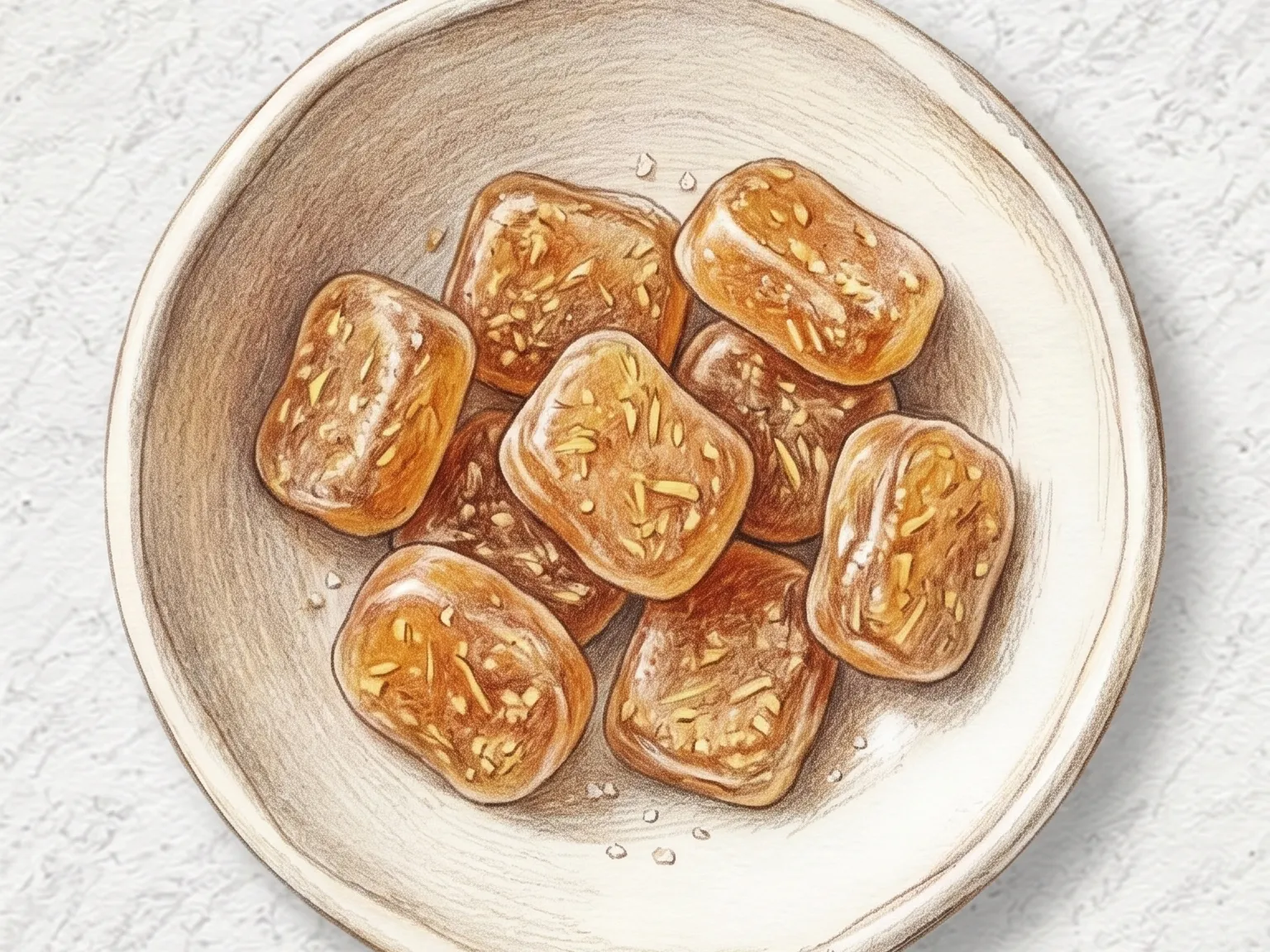
Homemade Ginger Honey Candy
Desserts Medium

Homemade Ginger Honey Candy

A healthy homemade candy carefully brewed with spicy ginger and sweet honey.

  • Homemade ginger honey candy holds spicy sharpness in a glassy sugar base heated to the crack stage.
  • Cooking to 150°C hard-crack stage locks ginger's sharpness in glassy sugar
Total time
45 min
Level
Medium
Servings
4 servings
Ingredients
5
Calories
180 kcal
Protein
0 g

Key ingredients

Ginger juiceHoneySugarWaterPowdered sugar

Core cooking flow

  1. 1 Grate 50g fresh ginger on a fine grater, then squeeze through a fine sieve o...
  2. 2 Combine 150g sugar, 50ml water, 100g honey, and the ginger juice in a heavy-...
  3. 3 Heat to 150C using a candy thermometer; without a thermometer, drop a small...

A healthy homemade candy carefully brewed with spicy ginger and sweet honey.

What Makes This Special

  • Homemade ginger honey candy holds spicy sharpness in a glassy sugar base heated to the crack stage.
  • Cooking to 150°C hard-crack stage locks ginger's sharpness in glassy sugar
  • No-stir technique prevents crystallization that would cloud the candy
  • Honey plus granulated sugar layered sweetness adds depth beyond plain sugar
Prep 15min Cook 30min 4 servings
Recipes by ingredient → honey

Instructions

  1. 1

    Grate 50g fresh ginger on a fine grater, then squeeze through a fine sieve or cheesecloth to extract exactly 50ml of pure ginger juice.

  2. 2

    Combine 150g sugar, 50ml water, 100g honey, and the ginger juice in a heavy-bottomed pot and heat over medium heat without stirring at any point.

  3. 3

    Heat to 150C using a candy thermometer; without a thermometer, drop a small amount into cold water and it should harden instantly into a brittle shard that snaps cleanly.

  4. 4

    Remove from heat and quickly drop small bite-sized portions onto a silicone mold or parchment paper; if the syrup begins to set too quickly, briefly warm it again over low heat to loosen.

  5. 5

    Wait 15 to 20 minutes at room temperature until the candies are completely transparent and hard to the touch.

  6. 6

    Sift 20g powdered sugar evenly over the completely hardened candies to prevent them from sticking together, then store in an airtight container.

Tips

Stirring while boiling can cause sugar crystallization, making the candy cloudy.
Eating one at a time can help with throat health when your bronchial tubes are weak.

Nutrition (per serving)

Calories
180
kcal
Protein
0
g
Carbs
46
g
Fat
0
g

Recipes to Cook Together

More Desserts →

Similar recipes

Saenggang Jeonggwa (Candied Ginger)
Desserts Medium

Saenggang Jeonggwa (Candied Ginger)

Saenggang jeonggwa is a traditional Korean candied ginger prepared by slicing fresh ginger thin, blanching it twice to reduce the raw heat, then simmering the pieces slowly in a glaze of sugar and grain syrup. A ten-minute soak in cold water draws out the sharpest bite first, and two rounds of boiling soften the pungency further while leaving the clean, aromatic core intact. The slices are cooked on low heat until the syrup reduces to a thick, glossy coat on the surface, at which point lemon juice is added to introduce an acidity that keeps the sweetness from becoming cloying. Once dried on a rack and rolled in granulated sugar, the finished pieces carry a crisp, crystalline shell on the outside. On the first bite, the sugar crust shatters, and the chewy, syrup-saturated ginger beneath releases a slow, building warmth that lingers well after the piece is finished.

🎉 Special Occasion 🧒 Kid-Friendly
Prep 15min Cook 45min 4 servings
Honey Ginger Ribbon Cookies
Desserts Medium

Honey Ginger Ribbon Cookies

Maejakgwa are traditional Korean ribbon cookies made from a firm dough of wheat flour, sesame oil, and ginger juice, rolled to 2 mm thickness, slit lengthwise through the center, and twisted through the opening into a knot shape before frying. Slow-frying at 160 degrees Celsius turns them light golden and crisp all the way through without darkening the surface unevenly. A warm coating of honey blended with rice syrup is applied while the cookies are still hot, adding a glossy, sweet shell that sets as it cools. The ginger lends a subtle warm bite that sits behind the nuttiness of sesame oil rather than announcing itself upfront, and a final dusting of pine nut powder contributes a soft, buttery fragrance that completes the layering of flavor. Each piece shatters lightly when bitten, yet the syrup-soaked sections at the twisted edges carry a slight chewiness that gives the cookie a layered texture unusual for a fried dough confection. Maejakgwa appear regularly on ritual food tables at memorial ceremonies and are commonly prepared for Lunar New Year and Chuseok.

🎉 Special Occasion 🧒 Kid-Friendly
Prep 30min Cook 25min 4 servings
Honey Ginger Pastry (Korean Deep-Fried Layered Wheat Honey Cookie)
Desserts Hard

Honey Ginger Pastry (Korean Deep-Fried Layered Wheat Honey Cookie)

Yakgwa is a traditional Korean honey pastry made from wheat flour rubbed with sesame oil, then mixed with rice wine, ginger juice, and rice syrup, folded and rolled repeatedly to build up laminated layers before frying. A two-stage frying method is essential to the texture: first at 140 degrees Celsius to cook the dough through slowly without coloring, then briefly at 170 degrees to develop a golden, crisp exterior over a layered, flaking interior. Soaking the fried pastries in a warm syrup of honey, water, and ground cinnamon for at least two hours allows the sweetness to penetrate deep between the laminated layers, saturating each piece with moist, fragrant honey flavor from edge to center. Ginger juice surfaces gently in the finish, providing just enough warmth to temper the concentrated sweetness and keep the flavor from feeling cloying. The sesame oil rubbed into the dough from the start adds a persistent nutty backbone that ties together the honey, spice, and wheat flavors into the complex, layered profile that defines well-made yakgwa. Pine nuts or jujubes placed as garnish add visual elegance, and the pastry pairs particularly well with Korean teas, where its sweetness finds proper balance.

🎉 Special Occasion 🧒 Kid-Friendly
Prep 35min Cook 30min 4 servings
Korean Honeycomb Candy (Caramel Sugar Disc with Baking Soda Puff)
Desserts Medium

Korean Honeycomb Candy (Caramel Sugar Disc with Baking Soda Puff)

Ppopgi dalgona is a Korean street candy made by melting white sugar in a small ladle over low heat, then stirring in baking soda to trigger a rapid foaming expansion. When the sugar reaches a pale amber stage, the heat is cut and baking soda with a pinch of salt is mixed in quickly: carbon dioxide releases immediately, puffing the molten sugar to two or three times its original volume within seconds. The expanded mixture is poured onto parchment and pressed flat to roughly 5 mm with an oiled plate or press, then stamped with a shape cutter before it sets. Once fully cool and rigid, the candy snaps crisply when tapped - the hallmark texture. The caramel's color at the moment the heat is removed determines the final flavor: pull it too early and the candy stays flat-sweet; let it darken a shade too far and bitterness overtakes the sweetness. The narrow window of pale amber is where the sweet-bitter balance lands correctly.

🧒 Kid-Friendly ⚡ Quick
Prep 5min Cook 10min 2 servings
Korean Kkul Tarae Honey Threads
Street food Hard

Korean Kkul Tarae Honey Threads

Kkul tarae is a traditional Korean confection made by boiling rice syrup, corn syrup, and sugar to between 115 and 125 degrees Celsius, cooling the candy ring, then repeatedly stretching and folding it with dustings of glutinous rice flour until thousands of hair-thin strands form. The finished thread bundle is filled with roasted peanut, almond, and black sesame powders mixed together, rolled up, and cut into bite-sized pieces. Temperature control during candy cooking is critical: below 115 degrees the syrup stays too pliable to hold shape, above 125 it hardens before you can work it. Each stretch-and-fold cycle doubles the strand count and makes the bundle progressively lighter and more cloud-like, so the final texture in the mouth is a slow, silky dissolve rather than a chew. High humidity causes the delicate strands to stick to one another, making rapid work in a dry environment essential. Near Gyeongbokgung Palace and other tourist areas in Seoul, vendors often demonstrate the stretching process live as part of the sale.

🎉 Special Occasion 🧒 Kid-Friendly
Prep 40min Cook 20min 4 servings
Korean Rice Puff Confection
Baking Medium

Korean Rice Puff Confection

Gangjeong is a traditional Korean confection made from puffed glutinous rice bound together with warm grain syrup and pressed into molds to set. The production begins with glutinous rice that is soaked, steamed, dried thoroughly, and then deep-fried until each grain expands into a white, airy puff. The timing of the next step matters: the puffs must be turned through the hot grain syrup quickly, before the syrup cools, so that the coating bonds everything together evenly without sogginess. As the syrup cools, it hardens into a structure that feels solid when pressed but shatters cleanly under the teeth, then dissolves into a gentle sweetness on the tongue. The grain syrup is mild and naturally caramel-like, not aggressively sweet, so the toasted, nutty character of the puffed rice remains the dominant flavor. Black sesame seeds, pine nuts, or peanuts folded in before pressing add layers of nuttiness and a pleasant variation in texture. Brightly colored versions dyed with food coloring are a traditional fixture on Korean holiday tables. An oven-drying method that skips the deep frying step exists for those who want to reduce oil use, though the texture differs slightly. Stored in an airtight container away from humidity, gangjeong keeps its crunch for several days.

🎉 Special Occasion
Prep 20min Cook 15min 4 servings