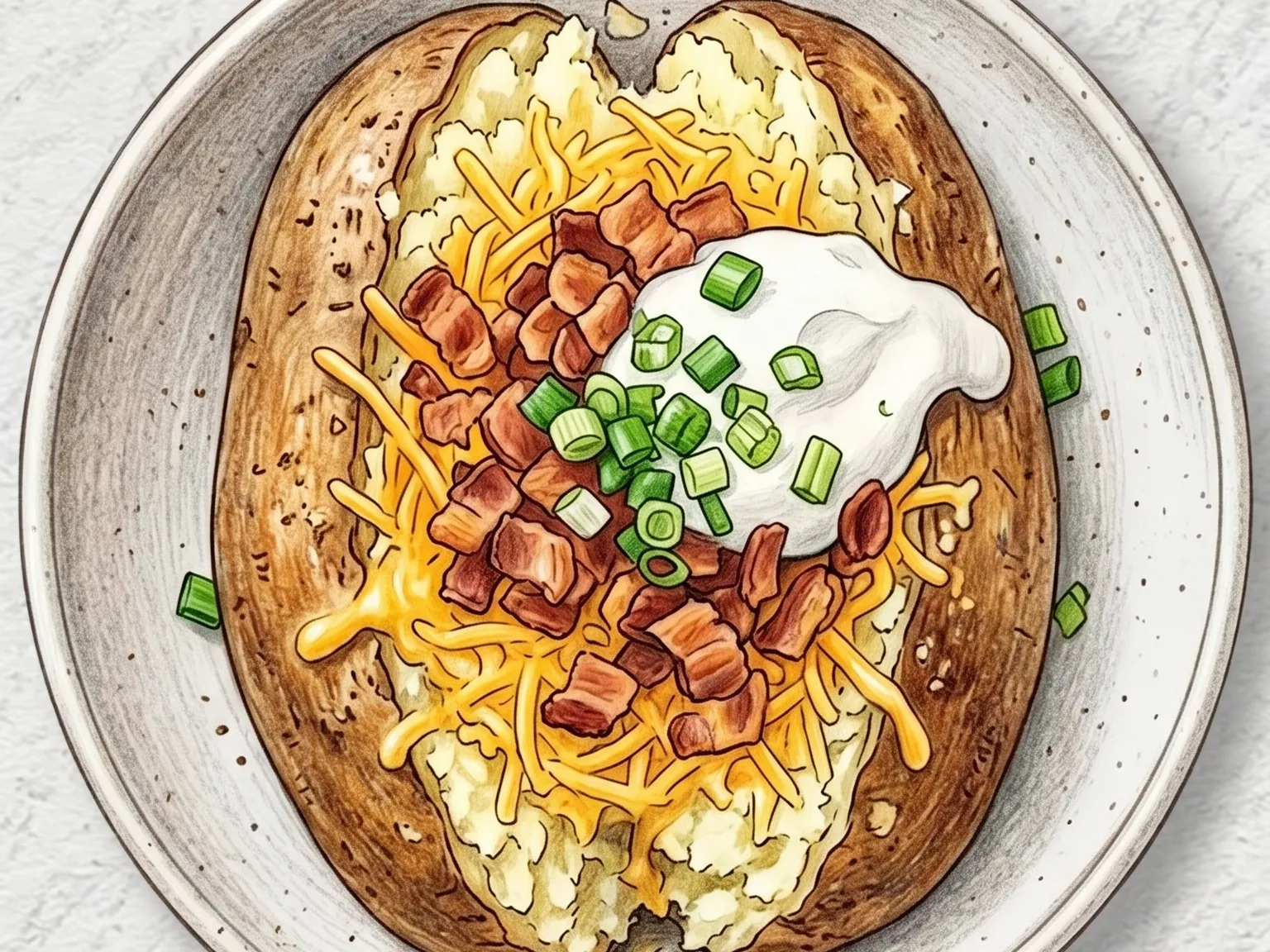
Loaded Baked Potato
Quick answer
Loaded baked potato starts with a russet potato baked whole at 200 degrees Celsius for about 50 minutes until the inside is fluffy and the skin is crisp.
What makes this special
- Salt and butter rubbed on russet skin create a thin, crispy shell for this Loaded Baked Potato.
- Rubbing salt and butter on the skin before baking creates a thin, crispy shell
- Cheddar placed on the hot potato melts from residual heat coating the fluffy interior
Key ingredients
Core cooking flow
- 1 Choose 2 russet potatoes of similar size so they finish together.
- 2 Rub the skins evenly with 1 tablespoon softened butter and 3/4 teaspoon salt.
- 3 Preheat the oven to 200C and place the potatoes on the center rack.
Loaded baked potato starts with a russet potato baked whole at 200 degrees Celsius for about 50 minutes until the inside is fluffy and the skin is crisp. Rubbing the skin with salt and butter before baking and poking holes with a fork ensures even heat penetration and a thin, crunchy shell. The hot potato is split open, the flesh is fluffed with a fork, then piled with shredded cheddar cheese - which melts on contact - crumbled crispy bacon, cold sour cream, and chopped chives. The sour cream's cool tang balances the salty bacon and rich cheese, while the chives add a mild onion freshness. No additional cooking is needed beyond the bake itself, making it equally suited as a side dish or a full meal.
Instructions
Read the steps as a cooking flow: prep, heat, seasoning, doneness control, and finish.
- 1Finish
Choose 2 russet potatoes of similar size so they finish together.
Scrub the skins well, dry them completely, then poke holes all over with a fork so heat can reach the center evenly.
- 2Season
Rub the skins evenly with 1 tablespoon softened butter and 3/4 teaspoon salt.
Coat the surface lightly rather than heavily, then move the potatoes straight to the oven so the salted skin bakes crisp instead of turning damp.
- 3Heat
Preheat the oven to 200C and place the potatoes on the center rack.
Bake for 45 to 50 minutes, until a skewer slides in easily and the skin feels thin, dry, and crisp.
- 4Control
While the potatoes bake, cook 80 g bacon over medium heat so the fat renders slowly.
When the pieces are deeply browned and firm, drain them well, let them cool slightly, then crumble or chop finely.
- 5Step
Split each hot potato lengthwise, holding it with a towel or gloves, then press the ends gently to open it.
Fluff only the flesh with a fork, adding air without tearing the crisp skin.
- 6Finish
Add 90 g cheddar cheese first, directly onto the hot flesh, so it melts from the potato heat.
Top with bacon, 4 tablespoons sour cream, 2 tablespoons chives, and 1/2 teaspoon black pepper, then serve right away.
After the steps
Pick a recipe that fits this dish.
Continue with shared ingredients, meal pairings, or a similar method.
Recipes That Go Well With This
More Western →Based on shared ingredients and meal pairing
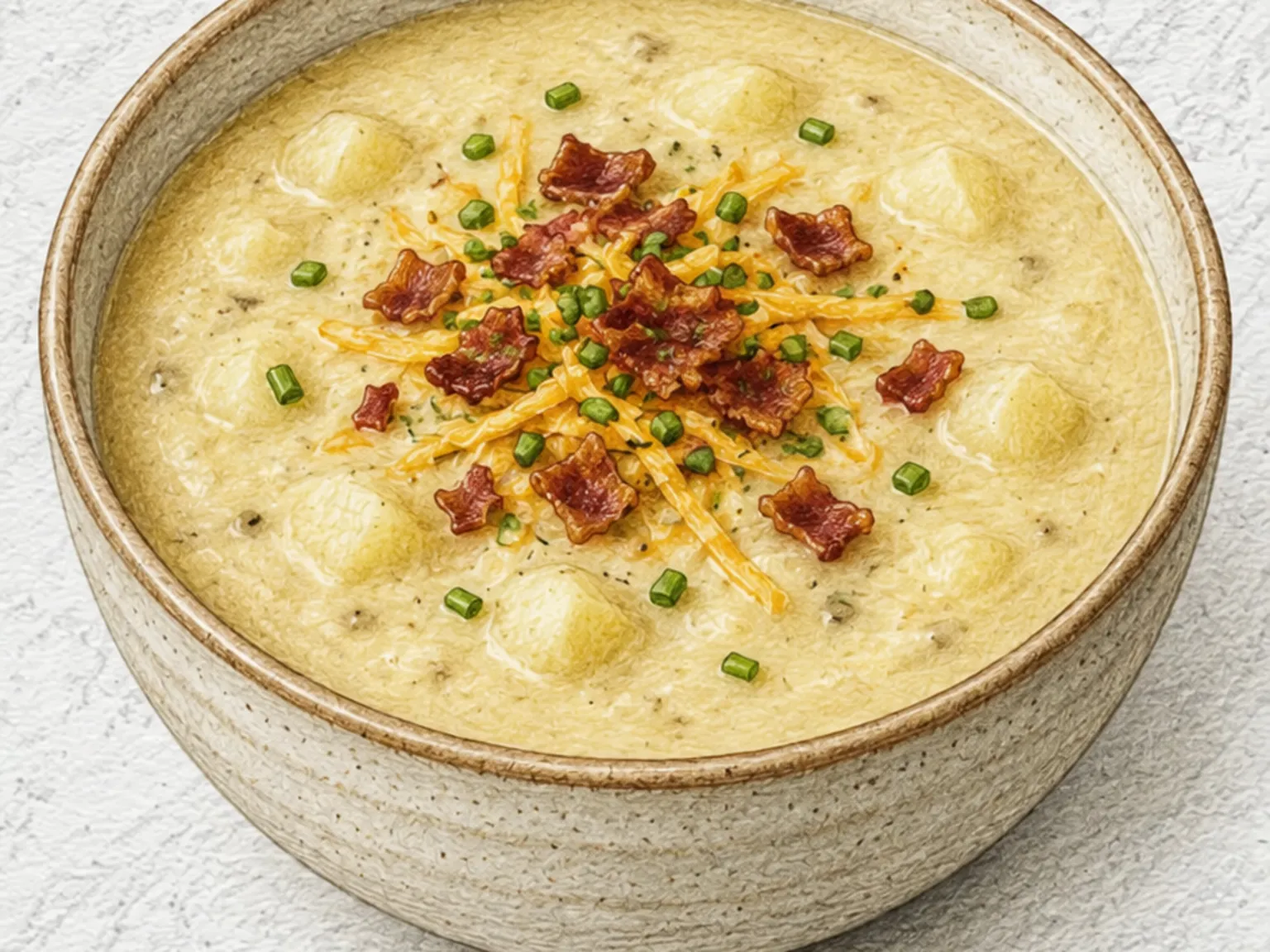
Baked Potato Soup
Baked potato soup is an American comfort food that translates the flavor of a loaded baked potato into a creamy bowl. Potatoes are first boiled or oven-roasted until tender, then partially mashed and simmered in chicken stock with heavy cream. The depth of the soup depends on sweating onions low and slow in butter before the liquid is added. Toppings replicate the classic baked potato format: crispy bacon bits, shredded cheddar, and finely sliced chives, added at serving. Leaving some potato chunks intact rather than fully blending gives the bowl a more varied texture throughout. The soup thickens overnight as the starch settles into the cream base, so portions reheated the next day are noticeably richer than the first serving. Bacon should go on at the last moment to stay crisp.
Green Bean Casserole
Green bean casserole bakes blanched green beans in a mushroom cream sauce, then tops them with crispy fried onions for a contrast of textures that defines this American holiday side dish. Blanching the beans for just three minutes and shocking them in ice water preserves their bright green color and a slight crunch that survives the oven. Sauteing onion and mushrooms in butter, stirring in flour to build a roux, and gradually adding milk produces a smooth cream sauce infused with earthy mushroom flavor. After twenty minutes in the oven, the casserole is pulled out and topped with fried onions, then returned for five more minutes so the onions crisp without burning. The finished dish layers the crunch of the topping against the creamy sauce and tender-crisp beans.
Chicken Quinoa Power Salad
Chicken quinoa power salad brings together pan-seared chicken breast, quinoa simmered for 12 minutes then cooled, romaine lettuce, cucumber, and bell pepper in a single bowl built for a complete, balanced meal. Resting the chicken for three minutes after searing gives the juices time to redistribute inward so every slice stays moist rather than losing liquid at the cut surface. Rinsing the quinoa before cooking removes saponins that leave a bitter residue even after boiling. A dressing of Greek yogurt, lemon juice, and olive oil provides creamy tartness at a low calorie count, and the fermented tang of the yogurt complements the raw vegetables without overpowering them. Bell pepper's natural sweetness adds color and brightness alongside the lean chicken, and the combination of textures - crisp lettuce, tender grain, firm seared meat - makes each forkful more satisfying than its ingredients suggest individually.
Tuna Noodle Casserole
Tuna noodle casserole boils egg noodles one minute short of the package time, sautés onion and mushrooms in butter, builds a cream sauce with flour and milk, folds in drained tuna and half the cheddar cheese, then bakes the mixture topped with the remaining cheese at 190 degrees Celsius for 20 minutes. Undercooking the noodles is intentional - they continue absorbing sauce and softening in the oven, so fully cooked noodles turn mushy by the time the casserole is done. Toasting the flour in butter before adding milk eliminates the raw flour taste and produces a smooth sauce when the milk is poured in gradually. Draining the tuna well keeps the sauce from becoming greasy. Splitting the cheese between the sauce and the topping gives the casserole depth throughout while creating a golden, bubbling gratin crust on the surface.
Serve with this
Citrus Espresso Tonic with Orange
Espresso tonic is a carbonated coffee drink built by slowly pouring espresso over chilled tonic water to form two distinct layers. The tonic must be thoroughly cold to maintain stable carbonation throughout; cooling the espresso for about thirty seconds before pouring it over a spoon produces a clean separation between the two liquids. The quinine bitterness in the tonic water meets the espresso's roast bitterness, creating a balanced interplay rather than one-note sharpness. Orange slices and lemon peel garnish the glass, releasing citrus oils that rise with the bubbles. Specialty espresso with pronounced fruit acidity works particularly well here, harmonizing with the tonic's effervescence and lending natural sweetness without added sugar. Pre-chilling the glass with ice before adding the tonic helps preserve carbonation. The drink gained popularity in Scandinavian coffee culture during the 2010s before spreading worldwide.
Kimchi Bacon Mac and Cheese
Kimchi bacon mac and cheese layers aged kimchi's lactic tang and smoky bacon into a classic American cheddar cheese sauce over elbow macaroni. A butter-flour roux forms the base, with milk whisked in to build a béchamel before cheddar is melted into a thick, clinging sauce. Crisp bacon pieces add salt and crunch throughout, while chopped ripe kimchi introduces fermented acidity that counteracts the richness of the cheese. A pinch of gochugaru runs underneath with mild, warming heat. The tubular macaroni shape traps sauce inside and out, ensuring each forkful carries the full spectrum of creamy, tangy, and smoky flavors.
Real Pineapple Sherbet
This refreshing fruit dessert is prepared by scooping out the flesh of a mini pineapple and using its hollowed shell as a serving vessel. The fruit pulp is blended until smooth to prevent icy lumps, then mixed with sugar, lemon juice, and oligosaccharide syrup to achieve a sweet and tangy flavor. After pouring the mixture back into the shell and covering it with the top lid, it is frozen for at least four hours. Stirring the mixture occasionally during freezing breaks up ice crystals, resulting in a smoother texture. The active bromelain enzyme present in the fresh fruit provides a subtle tingly sensation on the tongue. Serving the sherbet directly inside the pineapple skin minimizes juice loss and keeps the dessert cold. Letting it stand for five minutes before scraping and topping with fresh apple mint leaves makes it ready to serve.
Similar recipes
Chicken and Rice Casserole
Chicken and rice casserole is an American one-dish bake in which seasoned chicken thighs, rinsed rice, sauteed onion and carrot, chicken stock, and heavy cream are layered into a single baking dish and cooked together. Soaking the rice for ten minutes before assembly is a small step that makes a measurable difference: the pre-hydrated grains absorb the cooking liquid more evenly and finish at the same time as the chicken rather than lagging behind. Heavy cream blended into the stock creates a lightly thickened liquid that coats each grain as it swells, producing a rice that stays moist rather than clumping or drying at the edges. Sealing the dish with foil for the first thirty-five minutes traps steam inside, allowing the chicken and rice to cook through together without drying out. The foil comes off for the final ten minutes to let the chicken skin render and crisp. Throughout the bake, fat from the thighs slowly renders and drips down into the rice below, building a savory, roasted depth across the entire dish without any additional sauce. The structure of the recipe accommodates whatever vegetables or herbs are on hand, making it a practical weeknight formula that changes character with each variation.
Peach Cobbler
Sliced peaches are tossed with sugar and lemon juice, spread in a baking dish, and covered with spoonfuls of biscuit batter that bakes into a golden, slightly craggy topping. In the oven, the fruit juices bubble up around the edges and seep into the base of the dough, creating a zone where crisp crust meets soft, fruit-soaked interior. The lemon sharpens the peach flavor and prevents it from tasting flat under all the sugar. If the peaches lack sweetness on their own, an extra tablespoon of sugar in the fruit layer compensates without making the topping heavier. Served warm with a scoop of vanilla ice cream, the contrast between hot cobbler and cold cream is as much a part of the experience as the flavor itself.
Flaky Oven Biscuits
Buttermilk biscuits are built on the tension between cold butter and high oven heat. Cubes of chilled butter are cut into flour until pea-sized pieces remain, and the dough is brought together quickly with buttermilk - just enough mixing to bind, no more. In the oven, the butter melts and releases steam, forcing the dough apart into flaky, irregular layers. The exterior bakes to a golden, slightly crisp shell while the interior stays soft and crumbly. Buttermilk provides a faint tanginess that sharpens the overall flavor and reacts with baking soda to give the biscuits additional lift. Overworking the dough is the most common mistake, as it develops gluten and produces a tough, bread-like result instead of the tender, pull-apart texture that defines a good biscuit. Split while still warm and spread with butter and jam, they are a cornerstone of American Southern breakfast. Lower-protein flour produces a more tender crumb, and keeping the butter frozen until just before use helps maintain the distinct layers throughout baking.