Mortadella Pistachio Sandwich
Quick answer
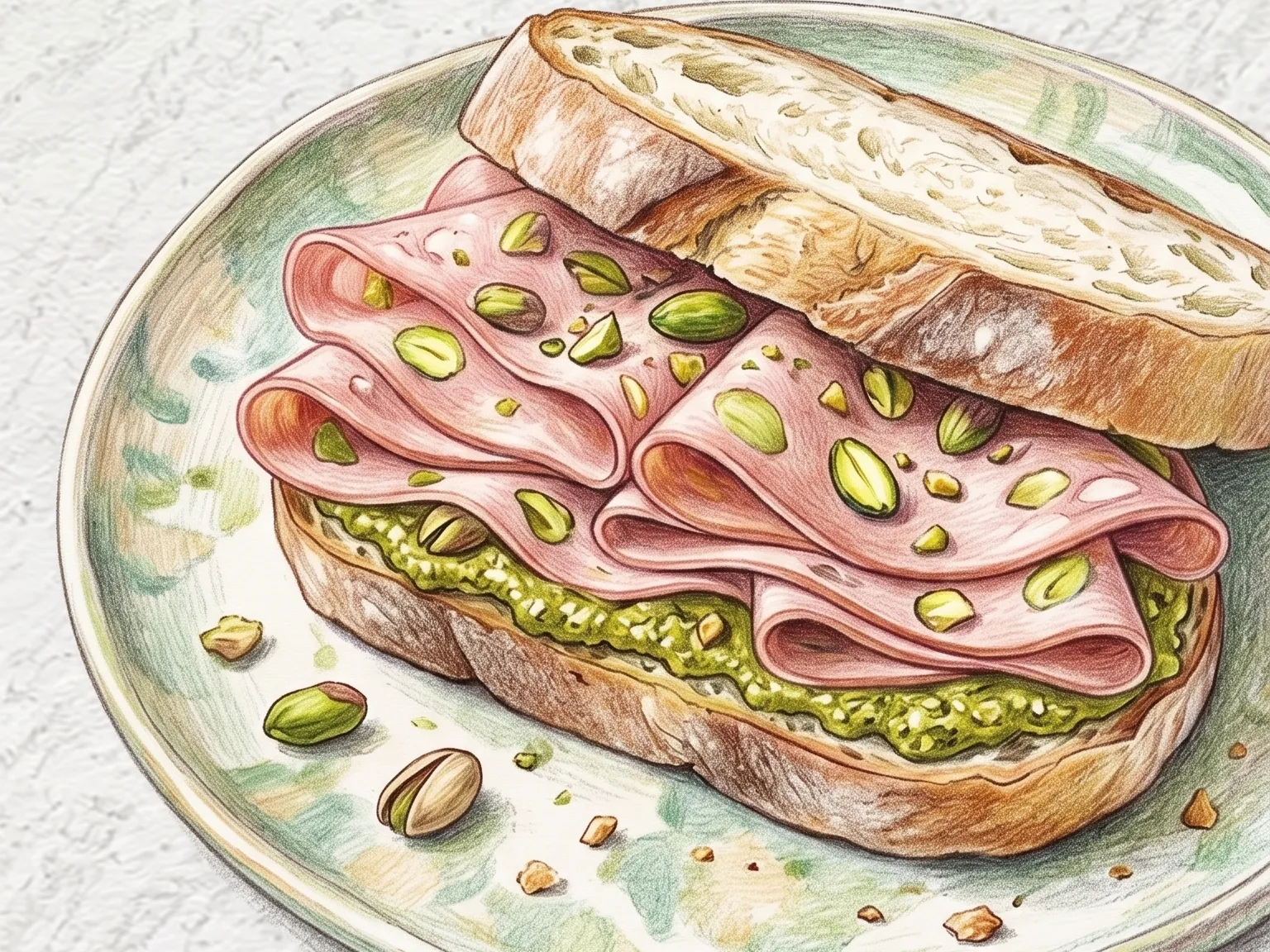
This Italian sandwich features mortadella ham, burrata cheese, and pistachio paste on toasted ciabatta.
What makes this special
- Mortadella Pistachio Sandwich uses nut paste as a base layer on porous, toasted ciabatta bread.
- Pistachio paste soaks into ciabatta's pores as a creamy base layer
- Halved burrata gives chewy shell and pooling inner cream at once
Key ingredients
Core cooking flow
- 1 Wash the 30 g arugula and dry it thoroughly, then split the burrata in half so it is ready to layer.
- 2 Split the 2 ciabatta rolls horizontally and heat a dry pan over medium-low heat.
- 3 While the toasted sides are still warm, divide the 2 tablespoons of pistachi...
This Italian sandwich features mortadella ham, burrata cheese, and pistachio paste on toasted ciabatta. The ciabatta is split and toasted until the edges are crisp. While warm, the inside is spread with pistachio paste, which sinks into the bread pores to form a creamy base. It is layered with fresh arugula and folded slices of mortadella, keeping the layers loose to preserve volume. A halved burrata cheese is placed on top, adding a chewy shell and a creamy, flowing interior. The sandwich is finished with crushed pistachios, olive oil, and a drizzle of balsamic glaze, which highlights the sweet undertones of the mortadella fat. After covering with the top bread, it is pressed gently, halved, and served. Fresh mozzarella can replace the burrata if desired.
Instructions
Read the steps as a cooking flow: prep, heat, seasoning, doneness control, and finish.
- 1Prep
Wash the 30 g arugula and dry it thoroughly, then split the burrata in half so it is ready to layer.
Excess moisture will soften the ciabatta too quickly, so drain the cheese if needed.
- 2Control
Split the 2 ciabatta rolls horizontally and heat a dry pan over medium-low heat.
Toast the cut sides first for about 2 minutes, removing them when the edges feel crisp but the bread is not hard.
- 3Step
While the toasted sides are still warm, divide the 2 tablespoons of pistachio paste over the inside surfaces.
Spread it thinly to the edges so every bite has an even pistachio flavor.
- 4Prep
Place the arugula on the bottom halves first, then fold and layer the 100 g mortadella over it.
Keep the slices loose instead of pressing them flat, so the sandwich has height and a tender bite.
- 5Step
Set the burrata over the mortadella and sprinkle on 1 tablespoon of crushed pistachios.
Drizzle only 1 teaspoon each of olive oil and balsamic glaze, using thin lines so the filling does not slide.
- 6Finish
Cover with the top halves and press lightly with your palm for only about 3 seconds to set the layers.
If the filling starts to move, pause, then cut the sandwiches in half and serve right away.
After the steps
Pick a recipe that fits this dish.
Continue with shared ingredients, meal pairings, or a similar method.
Recipes That Go Well With This
More Western →Based on shared ingredients and meal pairing
Antipasto Salad
Antipasto - literally 'before the meal' in Italian - is a first course of cured meats, cheeses, olives, and preserved vegetables, and this salad compresses that entire tradition into a single composed bowl. Crisp romaine or iceberg forms the base, layered with sliced salami, capicola, provolone, marinated artichoke hearts, roasted red peppers, and briny Kalamata olives. A red wine vinegar dressing built with dried oregano and minced garlic draws the components together with a sharp, herbal acidity that cuts through the fat of the cured meats. The salami is rolled into loose cylinders and the provolone cut into thick chunks so both hold their presence against the dressed greens rather than disappearing into the mix. The reason the salad works is the contrast in salt levels and textures: heavily cured meat against mild cheese, smoky-sweet pepper against bitter greens, silky olive against crunchy romaine - no two bites taste the same. Italian-American delis in New York and New Jersey popularized this format in the mid-twentieth century, and it has since become a reliable fixture of catered lunches, potlucks, and family gatherings across the United States.
Gochu Oil Tuna Puttanesca Spaghetti
The foundation of this Gochu oil tuna puttanesca spaghetti is established by integrating the olive oil reserved from a can of tuna with a secondary portion of chili oil. This combined oil serves as the medium for sautéing sliced garlic and whole anchovy fillets over a consistently low heat. The process continues until the anchovies have fully dissolved into the warm fat, a step that allows their natural saltiness to permeate the base while eliminating any lingering traces of fishiness. Crushed tomatoes are then introduced to the pan and left to simmer for six minutes over medium heat. This period of simmering reduces the liquid content, which in turn concentrates the flavors and makes the natural acidity of the tomatoes more prominent. After this reduction, capers and black olives are added to provide distinct layers of brine and a characteristic hint of bitterness to the mixture. The solid pieces of tuna are folded in during the final two minutes of cooking. This short duration ensures that the tuna maintains its structure and provides a firm texture instead of disintegrating into the liquid. The cooked spaghetti and a small quantity of starchy pasta water are then combined with the sauce over high heat. This rapid tossing emulsifies the fats and liquids into a glossy coating that adheres uniformly to every surface of the pasta. To finish the dish, a handful of chopped parsley is scattered on top to introduce a fresh herbal quality that lightens the dense and salty profile of the sauce. Red chili flakes can be included at any stage of the process to allow for the precise adjustment of heat levels.
Tomato Basil Juice
Tomato basil juice is a cold savory drink made by blending ripe tomatoes with fresh basil leaves and straining the result through a fine sieve to remove seeds and skins. The ripeness of the tomato determines much of the flavor: fully ripe tomatoes carry free glutamates that produce a natural umami depth, whereas underripe fruit tastes predominantly sour without the sweetness and savory body that makes the juice satisfying. Basil should be added to the blender immediately before blending rather than sitting cut or torn, because the volatile oils that produce its aroma begin oxidizing quickly once the leaves are damaged. After blending to a smooth consistency, passing the juice through a fine-mesh strainer or cheesecloth removes the solids and produces a texture smooth enough to drink without resistance. Salt and black pepper season the juice, and fresh lemon juice raises the acidity in a way that brightens the overall flavor rather than making it sour. A small addition of olive oil emulsifies into the juice and activates fat-soluble aromatic compounds in both the tomato and the basil, producing a fuller, rounder flavor than the unstrained version. The juice must be thoroughly chilled before serving, as warmth mutes the herbal freshness. It works well as a brunch drink, a light non-alcoholic aperitif, or a base for savory cocktails.
Dalgona Tiramisu (Korean Whipped Coffee Cream Layered Tiramisu)
This Korean variation of tiramisu incorporates the whipped dalgona coffee method that gained international popularity and integrates it into the traditional framework of a classic Italian dessert. To create the characteristic topping, instant coffee is combined with sugar and hot water, then whipped vigorously until the mixture transforms into a dense and aerated foam. This specific preparation method results in a coffee profile that is significantly more concentrated and prominent than the standard espresso soak typically used in such recipes. The dalgona foam is positioned between layers of smooth mascarpone cream and ladyfingers that have been briefly submerged in espresso. This addition provides both a deep intensity of flavor and a texture that resembles a light mousse throughout the dish. The dessert requires a minimum of four hours in the refrigerator to allow the various components to settle and merge properly. Once thoroughly chilled, each serving provides a combination of the softened biscuit, the creamy mascarpone, and the coffee foam in a single bite. A thin layer of cocoa powder is applied across the surface to provide a finished appearance and a subtle bitterness. If a version with less sweetness is preferred, the volume of dalgona syrup can be decreased to allow the natural bitter qualities of the coffee to become more apparent.
Similar recipes
Frittata
Frittata whisks eight eggs with milk and salt, then builds layers of flavor in an oven-safe pan before finishing in the oven. Onion is sautéed in olive oil until soft and translucent, then spinach and halved cherry tomatoes are added and cooked briefly so they release some moisture without turning to mush. The egg mixture is poured over the vegetables and left untouched on medium-low heat until the edges begin to firm and pull away from the sides of the pan. Grated cheddar cheese is scattered across the top before the pan goes into a 190-degree oven for ten minutes, during which the frittata puffs up and cooks through evenly from edge to center. The finished frittata is done when a gentle press at the center springs back with light resistance. Over-whisking the eggs before cooking traps too many air bubbles, which collapse in the oven and leave the surface cratered and uneven, so a slow, deliberate stir produces a better result. Smoked salmon, sliced sausage, or leftover roasted vegetables all work as additions without disrupting the basic structure. Cold leftovers tucked into a sandwich the next morning taste just as good as the freshly made version.
Duck Ragu Pappardelle (Braised Duck Pasta)
Duck ragu pappardelle is an Italian braised pasta that begins with a hard sear of seasoned duck legs in olive oil until the skin turns a deep, mahogany brown. The fond left on the pan base is the backbone of the sauce, so the sear must be thorough. Onion, carrot, and celery go into the same pan and cook for eight minutes until soft and faintly sweet. Garlic and tomato paste follow, stirred over heat until the paste darkens slightly, then red wine goes in to deglaze every browned bit before reducing by half. The duck returns to the pot with chicken stock and bay leaf for a slow ninety-minute braise at the lowest simmer, until the meat pulls from the bone with no resistance. Shredded duck meat goes back into the sauce, which cooks down another ten minutes to reach a coating consistency. Broad pappardelle is boiled two minutes short of al dente and tossed in the ragu for a final minute so the wide noodles fully absorb the rich, meaty sauce. The ragu deepens noticeably after resting overnight.
Ricotta Spinach Gnudi (Naked Ricotta Dumplings)
Ricotta spinach gnudi are Italian dumplings made by mixing ricotta cheese with thoroughly squeezed spinach, Parmigiano Reggiano, egg yolks, and a minimal amount of flour, then poaching in salted boiling water. The name 'gnudi' means 'naked' - these are essentially ravioli filling without the pasta shell, so the cheese and spinach flavors come through directly. Removing every bit of moisture from the spinach is the critical step; any residual water weakens the dough and causes the dumplings to fall apart during cooking. Once they float to the surface, one additional minute of poaching yields a pillowy, crumbly texture. A brown butter sauce with sage leaves adds a deep, nutty richness that complements the mild ricotta.
Mugwort Tiramisu (Korean Herbal Twist on Italian Classic)
This dessert is a Korean interpretation of the classic Italian tiramisu, featuring aromatic mugwort powder folded into mascarpone cream. Instead of a traditional matcha flavor, mugwort introduces a deep, earthy, and slightly medicinal herbal fragrance. The process involves whipping heavy cream and folding it into a sweetened mascarpone base with sifted mugwort powder. Ladyfingers are briefly dipped in espresso for just one second to prevent them from becoming soggy, then layered alternately with the green-hued cream. A rest of at least four hours in the refrigerator, or ideally overnight, allows the biscuits to absorb moisture from the cream, softening the layers into a unified, mousse-like texture. Before serving, a final dusting of mugwort powder is sifted over the top, balancing the bittersweet espresso and rich cream with fresh herbal notes.
Meatball Sub
Meatball sub starts by mixing ground beef with breadcrumbs, egg, and minced garlic, shaping the mixture into balls, and browning them in olive oil on all sides. The browned meatballs then simmer in tomato sauce on low heat for about 12 minutes until cooked through. Avoiding overmixing the meat mixture is critical - working it too much tightens the protein strands and produces dense, tough meatballs rather than tender ones. The sauce should be kept slightly thick so it does not immediately soak into the bread and turn it soggy. Warming the sub rolls before filling helps them absorb some sauce while still holding their shape. Mozzarella melted on top under a broiler or with a kitchen torch binds the meatballs and sauce together in every bite.