Rum Balls
Quick answer
Rum balls are a no-bake confection made by combining crushed chocolate cookie crumbs with dark rum, cocoa powder, powdered sugar, and melted butter, then rolling the mixt...
What makes this special
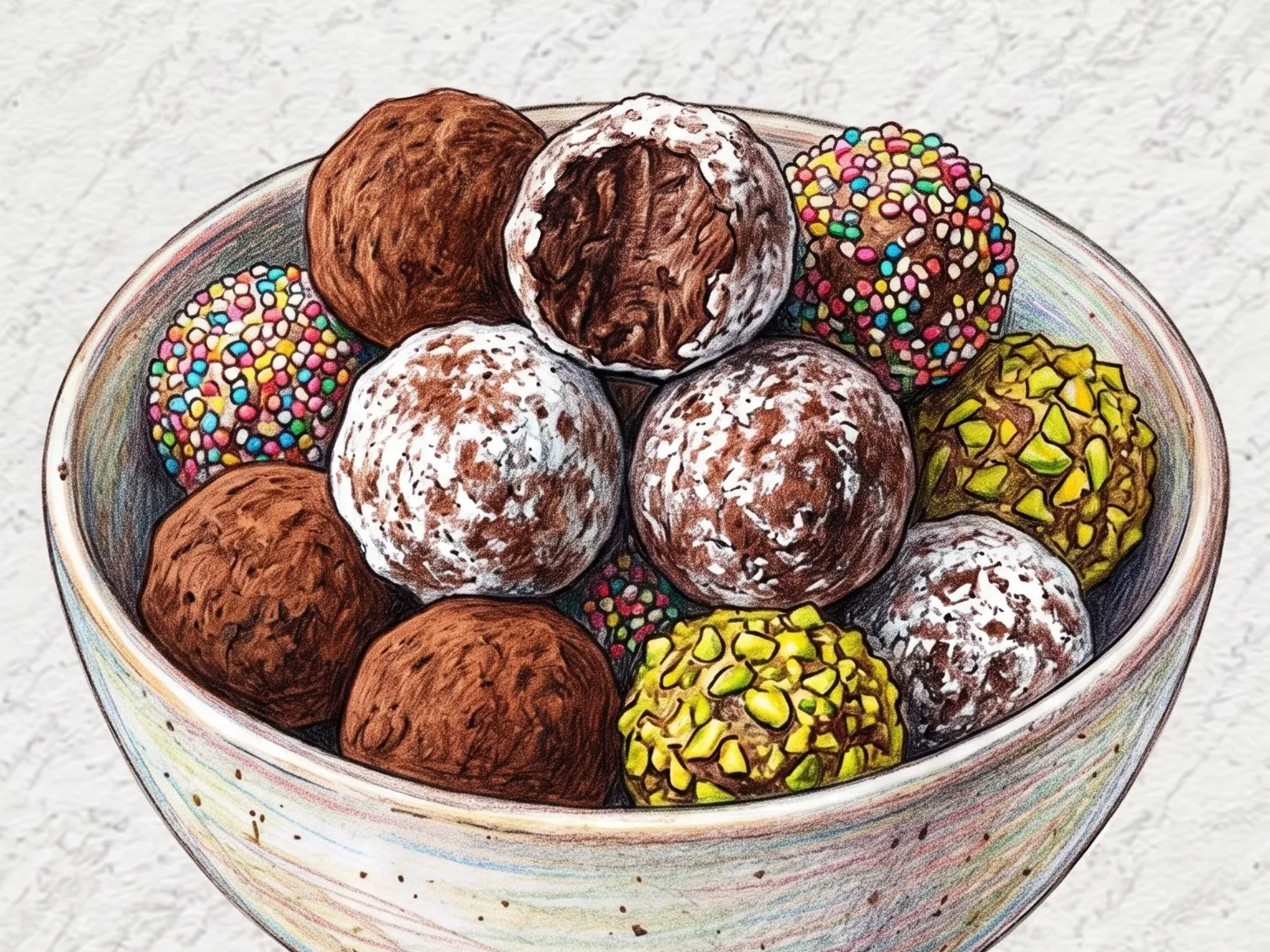
- Crushed chocolate cookies, dark rum, and cocoa powder bind into compact spheres dusted in cocoa.
- No-bake: crushed chocolate cookies bound with dark rum
- One day in the fridge lets rum permeate every crumb
Key ingredients
Core cooking flow
- 1 Crush 200 g chocolate cookie crumbs again until no large pieces remain.
- 2 Melt 30 g butter, then let it cool until warm rather than hot.
- 3 Add the cocoa reserved for the dough and mix until the color turns evenly dark.
Rum balls are a no-bake confection made by combining crushed chocolate cookie crumbs with dark rum, cocoa powder, powdered sugar, and melted butter, then rolling the mixture into compact spheres and coating them in cocoa. The absence of baking keeps the process fast and the result dense - each ball has a fudge-like firmness that yields slowly on the tongue, releasing waves of cocoa bitterness followed by the warm, boozy bloom of rum. The low moisture content means the crumb mixture binds tightly, holding its shape without refrigeration, though chilling overnight allows the rum to permeate every particle of cookie and cocoa for a more unified flavor. Stored in an airtight container, they keep for well over a week. Rolling some in chopped pistachios or rainbow sprinkles instead of cocoa adds color and textural variety, which makes them suitable for gift boxes or party platters. Despite their simplicity, the interplay between chocolate and rum gives these small bites a sophistication that belies the ten-minute preparation.
Instructions
Read the steps as a cooking flow: prep, heat, seasoning, doneness control, and finish.
- 1Finish
Crush 200 g chocolate cookie crumbs again until no large pieces remain.
Set aside the cocoa powder, keeping part for mixing into the dough and part for coating the finished rum balls.
- 2Season
Melt 30 g butter, then let it cool until warm rather than hot.
Mix it with 100 g powdered sugar and 3 tbsp dark rum until the sugar is evenly damp and smooth.
- 3Finish
Add the cocoa reserved for the dough and mix until the color turns evenly dark.
Press any dry clumps against the bowl with a spatula so the mixture does not stay powdery.
- 4Heat
Add the cookie crumbs and mix until the dough feels like damp sand that holds together when pressed.
If it cracks in your hand, rest it for 2 minutes, then knead again.
- 5Step
Divide the dough into bite-size portions and roll each one firmly between your palms.
If the surface cracks, use the warmth of your hands to press it lightly until smooth.
- 6Finish
Roll the balls in the reserved cocoa powder, sprinkles, or chopped pistachios, then tap off the excess.
Place them in an airtight container and chill for at least 2 hours, preferably overnight.
After the steps
Pick a recipe that fits this dish.
Continue with shared ingredients, meal pairings, or a similar method.
Recipes That Go Well With This
More Baking →Based on shared ingredients and meal pairing
Apple Crumble
Apple crumble was born from wartime constraint: during World War II, butter and sugar rationing in Britain made traditional double-crust pastry impractical, and bakers found that rubbing a far smaller amount of fat into flour and oats produced a topping that required none of the skill or rolling that pastry demanded. Sliced apples are tossed with sugar, lemon juice, and cinnamon, then spread into a baking dish and covered with the rough, breadcrumb-like mixture. In the oven, the fruit collapses into a thick, bubbling sauce while the topping bakes unevenly: the peaks turn deeply crisp and golden, while the underside where the topping meets the fruit juices becomes slightly sticky and chewy. Tart apple varieties such as Granny Smith hold up better under oven heat than sweet ones, turning into a fragrant sauce that contrasts with the sandy crumble overhead. The tension between the hot, yielding apple beneath and the crunchy, butter-scented rubble on top is the structural logic of the dish. Served with cold vanilla ice cream or warm pouring custard, the contrast multiplies further as cold cream melts into the steaming fruit. It remains the default British home dessert precisely because it needs nothing beyond what a reasonably stocked cupboard can supply and comes together in under an hour.
Fudgy Brownies
A fudgy brownie delivers dense, moist chocolate intensity in every bite, distinguishing itself from cake-style brownies through a higher ratio of butter and chocolate to flour. Melting chocolate and butter together before folding in sugar and eggs produces a glossy, pourable batter that bakes into a thin crust on top while the interior stays rich and slightly underdone. Pulling the pan from the oven just before the center fully sets is critical: as the brownie cools, that center sinks into a chewy, truffle-like layer. Using dark chocolate with a high cacao percentage shifts the flavor toward bittersweet depth rather than simple sweetness. A scattering of flaky sea salt on top before baking creates a sweet-salty contrast that amplifies the chocolate. Walnuts or pecans folded into the batter introduce crunch amid the dense crumb. Cutting clean squares requires patience, as the texture firms only after the brownie has cooled completely.
Korean Job's Tears Walnut Latte
Yulmu-hodu latte is a traditional Korean grain-based beverage prepared by combining job's tears and walnuts with milk to create a thick and consistent texture. The preparation begins by soaking the job's tears in water for a minimum of two hours. This extended soaking period is necessary to soften the grains thoroughly, ensuring they pulverize completely during the blending process to avoid a gritty or sandy mouthfeel. Once softened, the job's tears are dry-toasted along with the walnuts in a pan. This heat application serves to caramelize the starches within the grains, which effectively removes the scent of raw grain and replaces it with a concentrated, roasted aroma. After the toasted ingredients are blended with milk, the liquid is passed through a fine strainer to achieve a smooth and silky finish. Sweetness is added using honey, accompanied by a small amount of salt to highlight the deep profile of the roasted nuts. A light sprinkle of ground cinnamon is applied to the surface to provide a subtle spice that balances the grounded flavor of the grain base. For cold servings, it is important to dissolve the honey while the liquid is still warm to ensure it distributes thoroughly throughout the drink instead of settling at the bottom of the container. The resulting beverage offers a depth of flavor and a rounded profile that is far more prominent than what is found in mass-produced, packaged versions of similar grain drinks.
Challah Bread (Jewish Braided Egg Enriched Bread)
Challah is a traditional Jewish enriched bread made with eggs and oil, which give it a golden crumb, a tender, slightly chewy texture, and a faint sweetness that stops well short of being dessert-like. The dough is built from bread flour, yeast, sugar, eggs, and oil, divided into long strands, braided together, and then proofed before going into the oven. Brushing the loaf with egg wash before baking produces a deeply bronzed, glossy crust that contrasts visually and texturally with the pillowy interior. The braiding is not purely decorative; the interlocked strands provide structural support during proofing and help heat distribute evenly through the loaf while baking. Despite the eggs and sugar in the dough, challah eats like bread rather than cake and works equally well as a sandwich loaf, a dinner table bread, or sliced and toasted with butter and jam. It is traditionally prepared for Shabbat and Jewish holidays, but there is no practical reason to limit it to those occasions. Day-old challah absorbs custard deeply and evenly because of its tight, even crumb, making it one of the best breads for French toast.
Serve with this
Korean Honeycomb Candy (Caramel Sugar Disc with Baking Soda Puff)
Ppopgi dalgona is a Korean street candy made by melting white sugar in a small ladle over low heat, then stirring in baking soda to trigger a rapid foaming expansion. When the sugar reaches a pale amber stage, the heat is cut and baking soda with a pinch of salt is mixed in quickly: carbon dioxide releases immediately, puffing the molten sugar to two or three times its original volume within seconds. The expanded mixture is poured onto parchment and pressed flat to roughly 5 mm with an oiled plate or press, then stamped with a shape cutter before it sets. Once fully cool and rigid, the candy snaps crisply when tapped - the hallmark texture. The caramel's color at the moment the heat is removed determines the final flavor: pull it too early and the candy stays flat-sweet; let it darken a shade too far and bitterness overtakes the sweetness. The narrow window of pale amber is where the sweet-bitter balance lands correctly.
Warm Melting Cheese (Whole Oven-Baked Camembert with Garlic and Honey)
Baked Camembert is a French warm appetizer in which an entire wheel of Camembert is oven-roasted until the interior liquefies into a pooling, spoonable cream while the white-mold rind holds firm and serves as a natural bowl. Scoring the top of the rind in a crosshatch pattern and tucking in thin slices of garlic and sprigs of rosemary allows those aromatics to infuse the melting cheese throughout the approximately fifteen minutes it spends at 180 degrees Celsius. The result, straight from the oven, is a cheese that flows when touched but stays contained within its rind, making it ideal for sharing directly from the box or the baking dish it sat in. Torn baguette slices and lightly toasted walnuts are the most natural accompaniments for dipping, and a drizzle of honey over the top before serving adds a sweetness that bridges the funky, salty character of the cheese and creates a sweet-savory contrast. The entire preparation requires less than five minutes of active work before it goes into the oven, which makes it one of the most efficient warm appetizers to produce when hosting guests or pairing with wine. Unlike richer double-cream styles, Camembert has enough flavor depth to hold its own with both dry white wines and lighter reds, and the roasted garlic left in the scored grooves becomes soft and sweet as it heats, adding a mellow backdrop that complements rather than competes with the cheese.
Fruit Yogurt Salad
Apple, banana, strawberry, and blueberry are cut into bite-sized pieces and folded into plain yogurt for a fruit salad where the dressing serves as background rather than centerpiece. The yogurt provides gentle acidity that anchors the sweetness of the fruit without overwhelming it. Honey softens the sharper edge of the yogurt, and a squeeze of lemon juice does double duty: it slows the browning of cut apple and banana while leaving a clean citrus note on the finish. Roughly chopped walnuts scattered over the top introduce a crunchy, slightly bitter contrast to the soft fruit and smooth yogurt, breaking the monotony of texture. Swapping in seasonal fruit makes the recipe adaptable year-round without adjusting the base formula - peaches and melon in summer, persimmon and pear in autumn all work within the same yogurt, honey, and lemon framework. Light enough for a morning meal and refreshing enough after a heavy dinner, it sits comfortably in either role.
Similar recipes
Cinnamon Rolls
Cinnamon rolls are yeasted enriched dough baked into spirals of butter, cinnamon, and brown sugar, with roots in both Scandinavian and North American baking traditions. The dough, enriched with milk, butter, and eggs, rises into a crumb soft enough to pull apart in layers by hand. A thick layer of softened butter and cinnamon-sugar is spread on the rolled dough before it is coiled tightly and sliced into rounds. During baking, the sugar melts and caramelizes between the coiled layers, and the cinnamon aroma filling the space is one of the most recognizable in all of baking. A cream cheese glaze poured over the hot rolls melts into a tangy coating that balances the sweetness. In Sweden the same concept appears as kanelbulle with less sugar and added cardamom; in the United States the rolls are rolled thicker and buried under a generous glaze.
Chocolate Lava Cake
Chocolate lava cake bakes a batter of melted dark chocolate, butter, whole eggs, egg yolks, sugar, and a small measure of flour in buttered ramekins at 220 degrees Celsius for ten to twelve minutes, producing a set crust and molten center from a single brief baking window. The high oven temperature firms the outside and top of the batter into cake while the core stays liquid, so breaking the surface with a spoon releases a slow pour of concentrated warm chocolate. High-cacao dark chocolate provides a complex, bittersweet depth that pairs with the richness of butter fat, and vanilla extract softens and rounds the overall aroma. Timing controls everything in this recipe: overbaking by even two minutes sets the center solid and destroys the signature flow. The edges of each ramekin should feel just firm when pressed lightly through a towel at the ten-minute mark. Ramekins can be filled ahead and refrigerated, but the baking time then needs an extra one to two minutes to account for the colder starting temperature. Serving with a scoop of vanilla ice cream or a spoonful of cold heavy cream creates a striking contrast between the hot, dense chocolate interior and the chilled, lighter dairy.
Osaka-Style Takoyaki (Japanese Octopus Ball Street Snack)
Osaka-style takoyaki are spherical batter balls filled with diced octopus, a street snack so closely tied to Osaka that it serves as an unofficial symbol of the city. The batter is deliberately thin and watery-flour, eggs, and dashi stock whisked together-which is what creates the signature contrast between a lightly crisp shell and a molten, custardy interior. Each well of the specialized cast-iron pan receives a pour of batter, a chunk of boiled octopus, sliced green onion, tenkasu tempura flakes, and pickled red ginger. As the edges set, each ball is rotated ninety degrees at a time with a pointed pick until it forms a perfect sphere. The finished takoyaki are lined up and drizzled with a thick, tangy-sweet takoyaki sauce and Japanese mayonnaise, then crowned with a flurry of bonito flakes that wave in the rising heat. The octopus delivers a chewy, briny bite at the center of each molten ball.