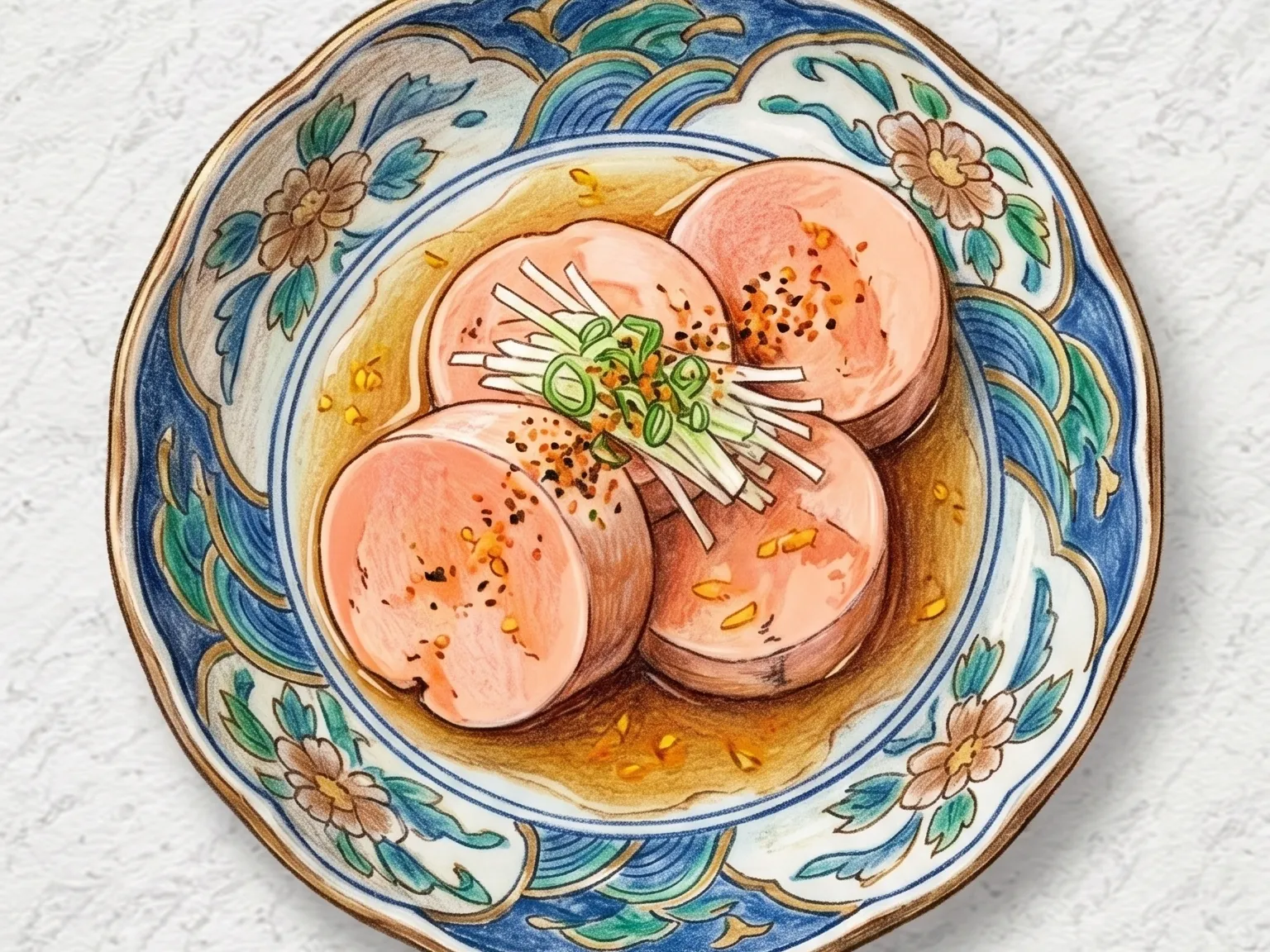
Steamed Monkfish Liver (Ankimo) with Ponzu
Quick answer
A premium appetizer recipe for Ankimo, often called the foie gras of the sea.
What makes this special
- Steamed Ankimo is a monkfish liver appetizer prepared with sake and served with a tangy ponzu sauce.
- 30-minute sake soak removes the liver's strong off-aroma before steaming
- Tight foil cylinder creates a firm, sliceable terrine-like texture
Key ingredients
Core cooking flow
- 1 Clean 300 g fresh monkfish liver by removing every visible vein and membrane.
- 2 Mix 100 ml sake with 1 tsp salt and coat the cleaned liver evenly.
- 3 Pat the liver dry again and lay it lengthwise on aluminum foil.
A premium appetizer recipe for Ankimo, often called the foie gras of the sea.
Instructions
Read the steps as a cooking flow: prep, heat, seasoning, doneness control, and finish.
- 1Season
Clean 300 g fresh monkfish liver by removing every visible vein and membrane.
Rinse it briefly in cold water, then press it dry with paper towels so the surface is not slippery before seasoning.
- 2Control
Mix 100 ml sake with 1 tsp salt and coat the cleaned liver evenly.
Let it sit for 30 minutes to reduce odor, turning it once halfway so both sides are seasoned.
- 3Step
Pat the liver dry again and lay it lengthwise on aluminum foil.
Roll it into a tight cylinder with no gaps, then twist both foil ends firmly like a candy wrapper to hold the shape.
- 4Control
When the steamer is producing steady steam, place the foil roll inside.
Steam over medium heat for 20 to 30 minutes until the center is set, checking that the steamer does not run dry.
- 5Prep
Move the steamed Ankimo, still wrapped, into ice water to cool it quickly.
Once the heat has gone, refrigerate it until thoroughly firm so it slices cleanly without crumbling.
- 6Finish
Slice the chilled Ankimo into neat rounds of a comfortable thickness.
Serve it cold with 4 tbsp ponzu, 50 g grated daikon, a pinch of chili powder, chopped chives, and lemon.
After the steps
Pick the next recipe from here.
Continue with a similar dish, a pairing, or the same category.
Tips
Nutrition (per serving)
Recipes to Cook Together
More Asian →Serve with this
Grapefruit Shiso Shrimp Salad
Grapefruit shiso shrimp salad brings together ice-chilled blanched shrimp, membrane-free grapefruit segments, shredded shiso leaves, and thinly sliced cucumber and radish, all tossed in a yuja marmalade dressing. Blanching the shrimp for exactly two minutes and transferring them immediately to ice water locks in a firm, springy texture by contracting the protein rapidly while preventing the rubbery toughness that comes from overcooking. Removing all of the white pith from the grapefruit eliminates bitterness and leaves only the clean, tart juice of the flesh. Cutting the segments free from the membrane also makes the pieces easier to eat in a single bite. The dressing is built from yuja marmalade, rice vinegar, olive oil, and pepper, and the yuzu's floral acidity layers on top of the grapefruit to create a pronounced citrus profile that is bright but not harsh. The mint-like herbal quality of shiso leaves neutralizes any trace of fishiness from the shrimp and ties the Japanese-influenced flavor framework together. The crisp bite of cucumber and radish contrasts with the softness of the shrimp and grapefruit segments. Serving the salad well chilled is necessary to keep every texture and fragrance sharp and distinct rather than muted.
Dipping Ramen (Japanese Thick Noodles with Concentrated Dipping Broth)
Tsukemen is a Japanese dipping ramen where thick noodles and a concentrated broth are served separately. The broth - typically tonkotsu or seafood-soy based - is reduced to roughly double the intensity of standard ramen soup. Noodles are rinsed in cold water after boiling, which firms their texture and creates a temperature contrast when dipped into the hot broth. Toppings such as chashu pork, soft-boiled egg, and nori are arranged alongside the noodles. The recipe takes about 50 minutes, with most time spent building and reducing the dipping broth.
Tea Rice Bowl (Japanese Green Tea Poured Rice with Salmon)
Ochazuke is a Japanese dish of cooked rice topped with grilled salmon flakes, dried seaweed, green onion, and wasabi, over which hot green tea is poured just before eating. The astringent bitterness of the green tea works against the fatty richness of the salmon, cutting through the oil and keeping the palate clean throughout the bowl. Wasabi adds a sharp, nasal heat that punctuates each spoonful differently depending on how much dissolves into the surrounding liquid. A light drizzle of soy sauce provides a salty baseline that ties the ingredients together without overpowering the tea. The seaweed flakes soften and dissolve into the hot liquid, gradually releasing a subtle oceanic aroma that spreads through the broth. As the meal progresses, the rice releases some starch into the tea, thickening the broth slightly and shifting the flavor toward the end. Using dashi stock made from kombu and bonito instead of green tea produces a richer, more umami-forward version. Variations with pickled plum or mentaiko in place of salmon are equally common.
Korean Fish Cake Soup (Clear Anchovy Radish Broth)
Eomuk-tang is a Korean fish cake soup in which skewered fish cakes and thick radish slices simmer in a clear broth built from dried anchovies and kelp. The kelp must be removed the moment the water begins to boil, otherwise it releases a slimy texture that clouds the broth. Cutting the radish thick allows it to slowly release natural sweetness over the long simmer. Rinsing the fish cakes in hot water before adding them washes away surface oil and keeps the broth clear and clean. Soup soy sauce adjusts the seasoning, and green onion and black pepper finish the pot. Adding the radish before the fish cakes ensures it has enough time to fully soften and sweeten the broth, since it takes longer than the eomuk to cook through.
Similar recipes
Shabu Shabu (Japanese Hot Pot with Thin-Sliced Beef in Kombu Broth)
Shabu-shabu is a Japanese hot pot built on simplicity: a pot of simmering kombu dashi, a plate of beef sliced so thin it is nearly translucent, and a selection of vegetables arranged on a separate platter. The name mimics the swishing sound made when a slice of beef is swept back and forth through the broth for just a few seconds until it turns from red to pale pink. Each piece is then dipped in either ponzu, a citrus-soy sauce, or a creamy sesame dipping sauce before eating. Napa cabbage, tofu, enoki mushrooms, shungiku greens, and rice cakes cook alongside the beef, each ingredient releasing its flavor into the broth and building complexity as the meal progresses. By the end, the enriched broth is used for a closing course of udon noodles or rice porridge, ensuring nothing is wasted.
Agedashi Tofu (Japanese Crispy Fried Tofu in Dashi Broth)
The dish has been in Japanese izakaya cookbooks since the Edo period - essentially a method for turning a block of tofu into something worth drinking beside. Firm tofu is pressed under weight for at least half an hour to drive out moisture, then tapped lightly in potato starch. Any residual water causes violent spitting in the oil; too thick a starch coat turns gummy once the broth hits. Into oil held at 170C until a translucent golden shell forms, two to three minutes without touching it. From there, hot dashi-soy-mirin broth goes on immediately at the table. The edges of the crust absorb the liquid and turn to something between gel and noodle; the center stays dry and crisp for roughly thirty seconds. That window is the whole point. Eat past it and you have soft tofu in broth, which is fine but is a different dish entirely. Grated daikon on top cuts through any lingering oil.
Ebi Fry (Japanese Panko-Crusted Shrimp)
Ebi fry developed during Japan's Meiji era as Western cooking techniques arrived and were reinterpreted through a Japanese lens, becoming one of the defining dishes of yoshoku - the country's own adaptation of European cuisine. Preparation starts by cutting the tendons along the shrimp's belly at several points and pressing each piece flat against a cutting board so it holds a straight, elongated shape when lowered into hot oil rather than curling back on itself. The three-stage coating of flour, egg wash, and coarse panko breadcrumbs is central to the dish's character: panko's jagged, irregular flakes puff and expand in hot oil, producing a crust that is unmistakably lighter and more open-textured than anything made with fine Western breadcrumbs. Because the shrimp fries quickly at high temperature, the flesh stays fully moist and snaps with a satisfying springiness when bitten. Tartar sauce, with its creamy acidity and flecks of pickled vegetables, offsets the richness of the crust, while tonkatsu sauce takes the flavor in a sweeter, fruitier direction. The dish migrates easily across formats: tucked into bento boxes as a daily side, placed on top of curry rice for an ebi fry curry, or layered into soft milk bread as an ebi katsu sando. Its staying power in Japanese home cooking and restaurant menus alike reflects how thoroughly yoshoku dishes have become part of everyday Japanese food culture.
Gyoza
Gyoza are Japanese pan-fried dumplings that evolved from Chinese jiaozi, brought back to Japan by soldiers and civilians returning from Manchuria after World War II, who recreated the dumplings they had eaten abroad. A thin wheat-flour wrapper encloses a filling of ground pork, napa cabbage (or regular cabbage), garlic chives, garlic, and ginger, pleated into a crescent shape. The dumplings are placed flat-side down in an oiled skillet, seared until golden, then water - sometimes mixed with a touch of flour - is added and the lid goes on to steam them through; as the water evaporates, the bottoms re-crisp and form the thin, lacy skirt called hanetsuki that connects all the dumplings in the pan. Each piece delivers three textures in one bite: the chewy steamed top, the crackling golden base, and the juicy meat filling inside. A dipping sauce of soy sauce, rice vinegar, and la-yu (chili oil) adds sharpness, salt, and heat atop the dumpling's savory richness. Gyoza are served as a ramen-shop side dish, an izakaya beer snack, and a weekend home-cooking staple - one of the most versatile foods in the Japanese repertoire.
Grapefruit Shiso Shrimp Salad
Grapefruit shiso shrimp salad brings together ice-chilled blanched shrimp, membrane-free grapefruit segments, shredded shiso leaves, and thinly sliced cucumber and radish, all tossed in a yuja marmalade dressing. Blanching the shrimp for exactly two minutes and transferring them immediately to ice water locks in a firm, springy texture by contracting the protein rapidly while preventing the rubbery toughness that comes from overcooking. Removing all of the white pith from the grapefruit eliminates bitterness and leaves only the clean, tart juice of the flesh. Cutting the segments free from the membrane also makes the pieces easier to eat in a single bite. The dressing is built from yuja marmalade, rice vinegar, olive oil, and pepper, and the yuzu's floral acidity layers on top of the grapefruit to create a pronounced citrus profile that is bright but not harsh. The mint-like herbal quality of shiso leaves neutralizes any trace of fishiness from the shrimp and ties the Japanese-influenced flavor framework together. The crisp bite of cucumber and radish contrasts with the softness of the shrimp and grapefruit segments. Serving the salad well chilled is necessary to keep every texture and fragrance sharp and distinct rather than muted.
Dipping Ramen (Japanese Thick Noodles with Concentrated Dipping Broth)
Tsukemen is a Japanese dipping ramen where thick noodles and a concentrated broth are served separately. The broth - typically tonkotsu or seafood-soy based - is reduced to roughly double the intensity of standard ramen soup. Noodles are rinsed in cold water after boiling, which firms their texture and creates a temperature contrast when dipped into the hot broth. Toppings such as chashu pork, soft-boiled egg, and nori are arranged alongside the noodles. The recipe takes about 50 minutes, with most time spent building and reducing the dipping broth.