Korean Strawberry Latte
Quick answer
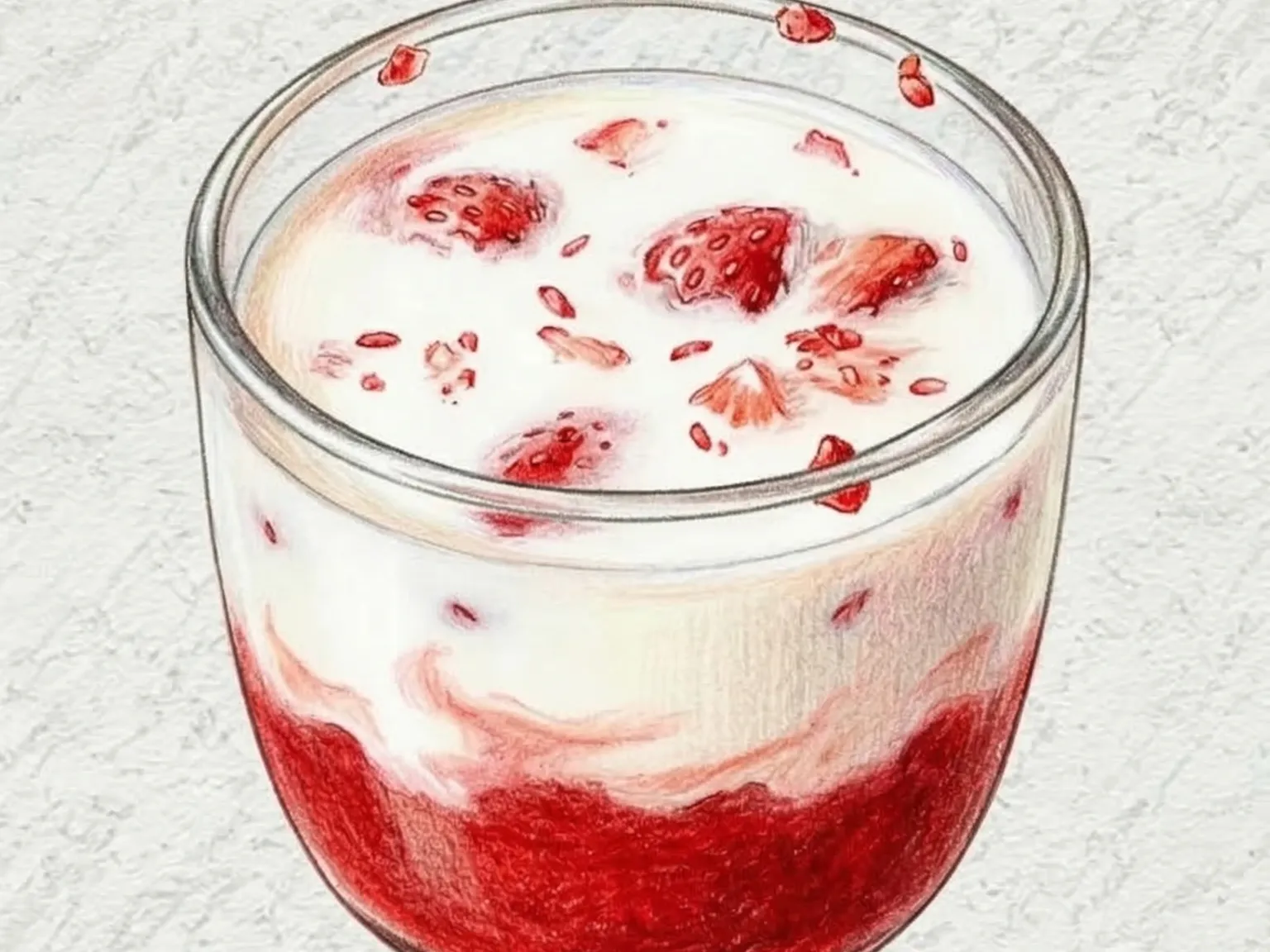
This strawberry latte layers a hand-crushed fresh strawberry base at the bottom of the glass, then builds a two-tone presentation by slowly pouring cold milk down the inside wall.
What makes this special
- Hand-crushed fresh berries layered under cold milk provide a chunky, textured base for Strawberry-latte.
- Roughly mashed strawberries leave chunky bits for texture in each sip
- 5-minute sugar maceration draws out juice for a concentrated syrupy base
Key ingredients
Core cooking flow
- 1 Rinse 250 g fresh strawberries quickly under cold water, then remove the green tops.
- 2 Place the strawberries in a bowl and add 2 tablespoons sugar.
- 3 When the berries look juicy, add 1 tablespoon honey and 0.3 teaspoon vanilla extract.
This strawberry latte layers a hand-crushed fresh strawberry base at the bottom of the glass, then builds a two-tone presentation by slowly pouring cold milk down the inside wall. The berries are crushed with a fork rather than blended smooth, leaving irregular pieces of fruit that provide texture in every sip. Mashing them with sugar and allowing five minutes for osmosis draws out enough juice to dissolve the sugar into a concentrated, syrupy base that sits dense at the bottom. One or two drops of vanilla extract smooth the sharp edge of the strawberry's acidity without masking the fruit. Honey, used in place of or alongside sugar, leaves a floral sweetness in the finish that plain sugar cannot replicate. Pouring the milk against the inside wall of the glass rather than directly over the fruit keeps the red base layer intact and the two-tone separation distinct. Stirring the drink collapses the layers into a uniform pale pink with flecks of fruit dispersed throughout. Made with fresh spring strawberries at peak ripeness, the latte delivers a real-fruit fragrance that processed strawberry syrups cannot match.
Instructions
Read the steps as a cooking flow: prep, heat, seasoning, doneness control, and finish.
- 1Step
Rinse 250 g fresh strawberries quickly under cold water, then remove the green tops.
Pat them dry with paper towels so extra water does not thin the strawberry base later.
- 2Season
Place the strawberries in a bowl and add 2 tablespoons sugar.
Crush them coarsely with a fork, leaving small fruit pieces, then rest for 5 minutes until juice collects and the sugar starts dissolving.
- 3Season
When the berries look juicy, add 1 tablespoon honey and 0.3 teaspoon vanilla extract.
Stir until most sugar grains disappear and the mixture looks glossy, but avoid mashing it completely smooth.
- 4Step
Fill the serving glass with 1 cup of ice first.
Spoon or pour the strawberry base slowly until it fills about one-third of the glass, letting the heavier fruit settle evenly at the bottom.
- 5Step
Pour 350 ml cold milk very slowly down the inside wall of the glass.
Do not pour directly onto the strawberry layer, or the red base will cloud the milk too early.
- 6Finish
Serve as soon as the layers are set and the drink is still cold.
Just before drinking, stir down to the bottom with a straw until the milk turns pale pink and the fruit spreads through it.
After the steps
Pick a recipe that fits this dish.
Continue with shared ingredients, meal pairings, or a similar method.
Recipes That Go Well With This
More Drinks →Based on shared ingredients and meal pairing
Korean Injeolmi Latte (Roasted Soybean Powder Milk Drink)
This beverage uses the roasted soybean powder commonly found on Korean rice cakes to create a milk based dessert drink. Pre-roasting the powder is a mandatory step to eliminate the sharp, grassy scent inherent in raw soybeans. Toasting transforms these raw qualities into a nutty fragrance similar to roasted grains. To ensure a consistent texture without clumps, the powder must be passed through a fine sieve before it meets the milk. Brown sugar syrup provides a dark, caramel sweetness that grounds the toasted base, while a small amount of honey adds a subtle floral lingering. A pinch of salt sharpens the overall profile and prevents the sweetness from feeling flat. Because the oils in roasted soybean powder remain stable across different temperatures, this drink performs well whether served over ice or heated. A final dusting of powder on the surface mimics the appearance of a traditional injeolmi cake and increases the aromatic impact of the first sip. For a variation, adding a shot of espresso introduces a bitter edge to the nuttiness, while incorporating black sesame powder creates a darker color and a more concentrated grain scent.
Korean Banana Milk
Banana milk is a homemade version of one of Korea's most consistently popular packaged beverages, sold in its distinctive small barrel-shaped bottle since 1974. Fresh ripe bananas are blended with cold milk, a spoonful of condensed milk, and a drizzle of honey to hit the characteristic level of sweetness. A small amount of vanilla extract bridges the fruit flavor and the dairy base, smoothing out any sharpness. Blending with ice produces a thick, smoothie-like consistency, while leaving out the ice gives a thinner, pourable drink closer to the original product. Unlike the commercial version, the homemade result contains no artificial flavoring or coloring, so the color stays a natural pale yellow rather than the vivid shade of the packaged drink. The sweetness varies with banana ripeness, and honey can be adjusted accordingly. Using frozen bananas in place of fresh ones plus ice delivers a cold, creamy texture without dilution. The whole preparation takes under five minutes, making it a practical option for a quick snack or light breakfast.
Gotgam Cream Cheese Roll (Dried Persimmon Rolls)
Gotgam cream cheese roll is a no-cook Korean dessert that requires nothing more than a knife, a bowl, and a refrigerator. Dried persimmons are slit open and flattened into thin sheets, each one acting as the outer wrapper. The filling is cream cheese mixed with honey and fresh lemon juice to balance its natural richness with acidity, and finely chopped walnuts are folded in throughout to add a crunchy, nutty element to every bite. The filling is spread across the opened persimmon, which is then rolled tightly and wrapped in plastic wrap. Twenty minutes in the refrigerator firms the roll enough to slice cleanly. Dipping the knife in warm water and wiping it dry before each cut produces the smoothest cross-sections. The finished slices reveal clearly defined layers: the chewy, caramel-sweet dried persimmon on the outside, the tangy cream cheese in the middle, and flecks of walnut distributed throughout. The combination makes it a natural pairing with wine or a polished addition to a traditional holiday table.
Korean Sweet Corn Latte (Butter Sauteed Corn Milk Drink)
Sweet corn latte begins by sauteing cooked corn kernels in butter until fragrant, then simmering them in milk to draw out the corn's natural sugars before blending everything smooth. The butter amplifies the starchy, roasted aroma during the initial saute, coating each kernel so that the fat-soluble flavor compounds dissolve fully into the milk during the five-minute simmer. Blending the mixture until completely smooth and then straining it through a fine sieve removes any remaining hull pieces, producing a texture as silky as a custard sauce. This straining step makes a noticeable difference in the final quality. Condensed milk adds a rounded sweetness, and a small amount of white pepper introduces a faint spiced warmth that gives the drink depth beneath the sweetness. It works equally well served hot in a ceramic mug or chilled and poured over ice; the corn aroma remains vivid in both versions.
Serve with this
Korean Stir-fried Sundae (Sundae Bokkeum)
Sundae-bokkeum is a spicy Korean stir-fry of blood sausage with cabbage, onion, and green onion in a sauce made from gochujang, gochugaru, soy sauce, sugar, and garlic. High heat and a short cooking time are essential because prolonged stir-frying causes the sundae casing to burst and the filling to toughen, while the cabbage and onion release just enough moisture as they wilt to help the sauce coat every piece evenly. The seasoning stacks direct heat from gochujang, a gentler radiant warmth from gochugaru flakes, and sweetness from sugar into a multidimensional spicy-sweet profile. Green onion is held until the very last moment so its fragrance survives the heat; added earlier, the aroma disappears before the dish reaches the table. Adding tteokbokki rice cakes transforms the dish into the popular combo known as tteoksuni, and a layer of melted cheese on top rounds out the spice.
Chicken Cabbage Wraps
Simple chicken tenderloin and cabbage wraps, ideal for a diet-friendly side dish.
Dasik (Korean Honey-Pressed Roasted Grain Confection)
Dasik is a traditional Korean pressed confection made by kneading roasted grain or nut powders with honey and pressing the mixture into carved wooden molds. Unlike baked goods, dasik holds its shape entirely through the binding power of honey, with no heat applied during preparation. This technique produces a texture that is slightly resistant at first contact, then dissolves gently at body temperature in a way that releases the full aroma of the main ingredient. Roasted soybean powder yields a nutty version, black sesame produces a deeply aromatic one, and additions of pine nut powder or cinnamon develop the flavor in different directions. The wooden molds carve decorative patterns into the surface of each piece, giving dasik a visual refinement that matches its restrained sweetness. For centuries, dasik has been a standard offering at Korean tea gatherings, and its subtle flavor remains a natural match for the gentle bitterness of green tea.
Similar recipes
Korean Pear Juice
Korean pear juice is a clean, naturally sweet fruit drink made by blending ripe Korean pear with cold water and straining out the pulp through a fine mesh or cheesecloth. The pear delivers a mild, floral sweetness without any assertive acidity, and adding a tablespoon of lemon juice alongside a small amount of ginger juice sharpens the finish with a crisp, slightly spicy edge. Honey can be adjusted to the ripeness of the pear, and a fully ripe specimen usually needs none. Using partially frozen pear chunks produces a thicker, slushier consistency that holds its chill longer. Soaking peeled pear pieces in cold water for twenty minutes before blending slows oxidation and keeps the juice a brighter, cleaner white.
Sweet Rice Punch (Traditional Korean Malted Barley Grain Drink)
Sikhye is a traditional Korean sweet rice punch made by steeping malted barley powder in lukewarm water, straining the liquid, adding cooked rice, and holding the mixture at around 60 degrees Celsius for one hour until the rice grains float to the surface. The amylase enzymes in the malt break down the rice starch, producing a distinctly malty, clear sweetness with grain depth that no sugar alone can replicate. Only the clear top liquid is used after settling -- discarding the sediment keeps the punch from turning cloudy. Simmering with sugar and sliced ginger for 20 minutes rounds the sweetness and adds a gentle, spiced warmth to the finish. Served well chilled with the reserved floating rice grains and pine nuts on top, the cold temperature sharpens the malty aroma and makes each sip crisp. Temperature control during the steeping stage is critical: if the mixture exceeds 70 degrees Celsius, the amylase denatures and the grains will not float, so keeping a steady 60-degree hold determines whether the preparation succeeds.
Korean Chamnamul Kimchi (Pimpinella Kimchi)
Chamnamul kimchi is a spring kimchi made by salting chamnamul greens for just ten minutes to wilt them slightly, then dressing with gochugaru, anchovy fish sauce, and salted shrimp without rinsing. Skipping the rinse allows the residual salt to convert into umami during fermentation rather than being washed away, deepening the overall flavor. Pureed Korean pear and onion blended with sweet rice paste form the seasoning base, contributing a natural sweetness that rounds off the sharp edges of the chili heat. After three hours of initial fermentation at room temperature followed by refrigeration, the kimchi reaches its best balance within one to two days, when the grassy herbal aroma of chamnamul aligns with the fermented depth of the fish sauce. Because chamnamul has a high moisture content, fermentation moves quickly, and the kimchi softens past its peak if left too long. Best consumed within three to four days for optimal texture and fragrance.