Asian Recipes
806 recipes. Page 22 of 34
The Asian category gathers popular dishes from Japan, China, Thailand, Vietnam, India, and beyond. Curry, stir-fried noodles, mapo tofu, pad Thai, and pho are among the Asian favorites commonly enjoyed in Korean households.
Hiruzen Okowa
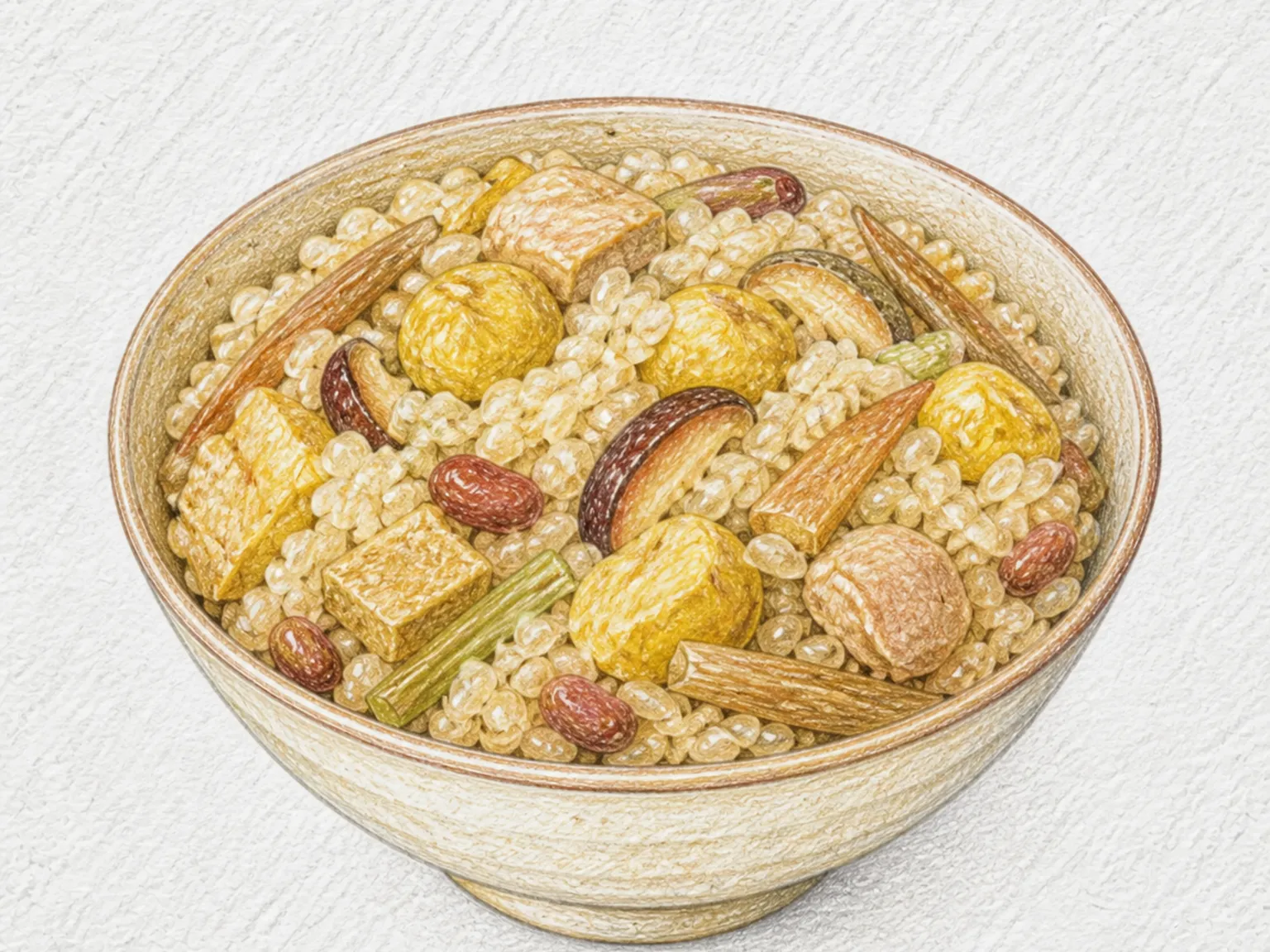
Hiruzen okowa is a steamed mixed glutinous-rice dish from Maniwa in Okayama, combining sticky rice and barley with chicken, chestnuts, burdock, fuki, dried shiitake, and fried tofu. It developed after Daisen okowa crossed into the Hiruzen area, and barley became part of the local version through community nutrition programs from the 1950s. Families served it for New Year, seasonal celebrations, festivals, and household gatherings. Its defining method is to sauté and simmer the filling, reserve the seasoned cooking liquid, and sprinkle that liquid over the grains during steaming. Soaked grains and briefly dried chestnuts become glossy and pleasantly chewy, while blanched green beans added at the end preserve a fresh green accent.
Yaki Manju Grilled Miso Buns
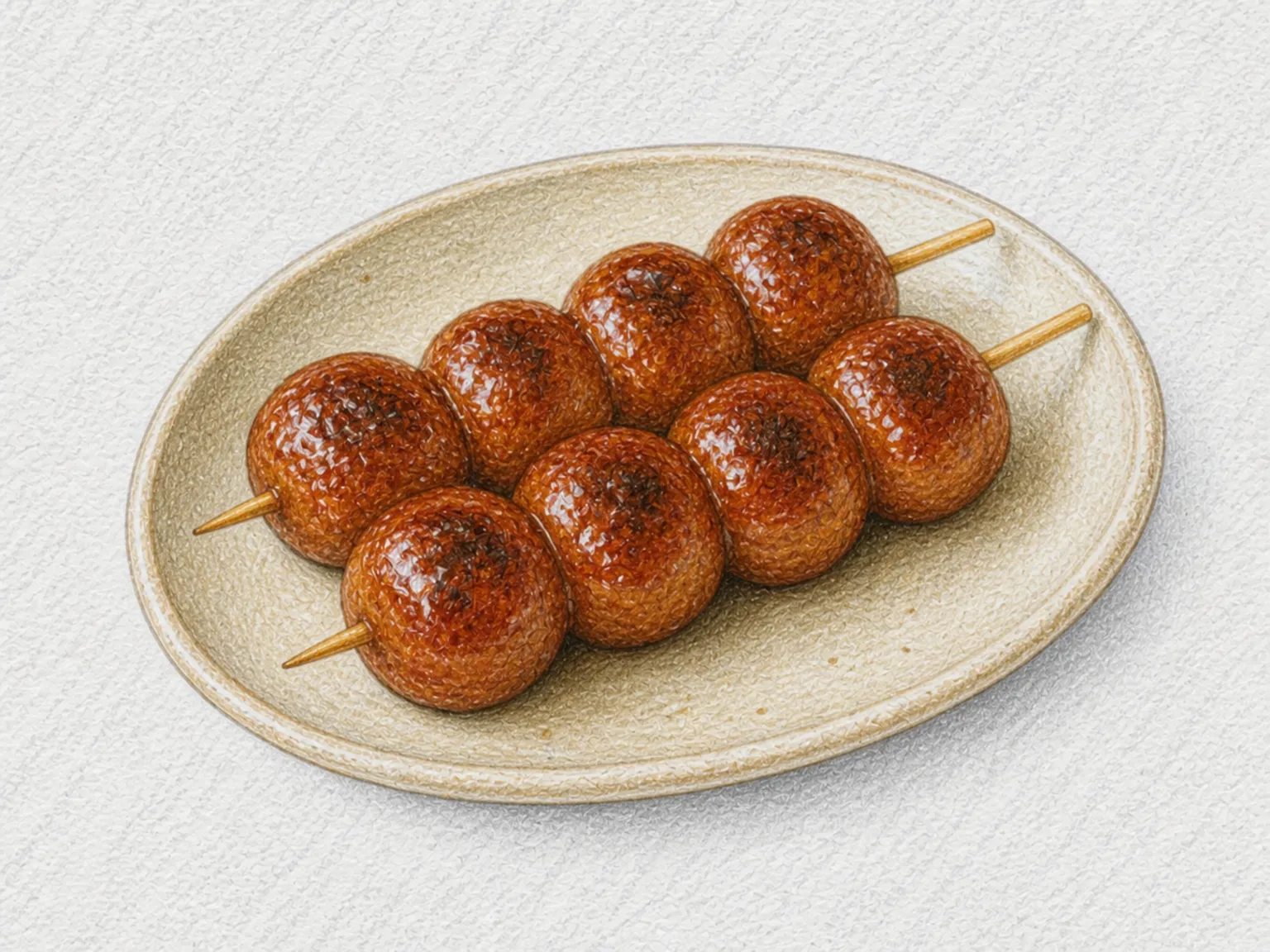
Yaki manju is a Gunma confection that first steams wheat buns fermented with rice koji, threads four at a time onto bamboo skewers, and grills them under repeated coats of strongly sweet red-miso glaze. In wheat-growing Gunma, it is traced to misozuke manju made by Ruizo Harashima in Maebashi near the end of the Edo period. The seasoning later moved toward its present sweetness after dark sugar syrup became available. Glutinous rice is cooked into porridge, cooled carefully, mixed with rice koji, and fermented for one to two days to create a starter. Wheat flour and water turn that starter into dough, which is divided into twenty-gram pieces, naturally proofed, and fully cooked by steam. The glaze dissolves coarse sugar and starch syrup with red miso, boils for thirty minutes, and rests after cooling. Brushing and grilling each side two or three times builds a dark sheen, lightly dry surface, and roasted miso aroma.
Gunma Suiton
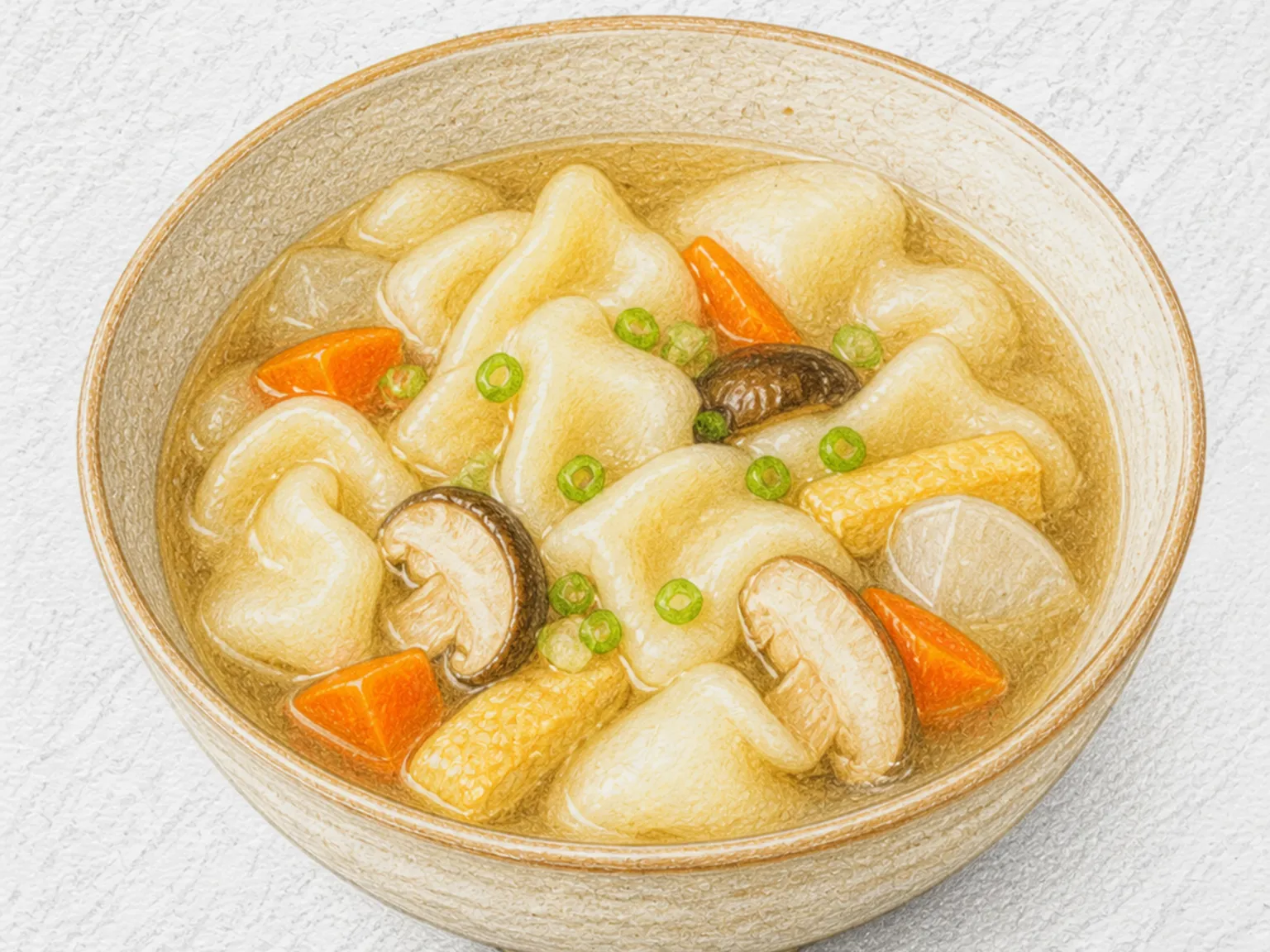
Gunma suiton is a wheat dumpling soup made by stirring flour with water into a soft batter that can be dropped from a spoon directly into dashi containing daikon, carrot, taro, shiitake, scallion, and aburaage. Gunma's long history of double-cropping rice and wheat produced many flour dishes, and suiton became an everyday staple and rice substitute in times of shortage because its dough needs no rolling or cutting. Regional names include tocchanage-jiru, tsumerikko, otsuyu-dango, and nejikko. The spoonfuls are added only after the vegetables are mostly tender and then boiled until no raw flour remains at their centers.
Mee Bandung (Malaysian Johor Shrimp Tomato Gravy Noodles)
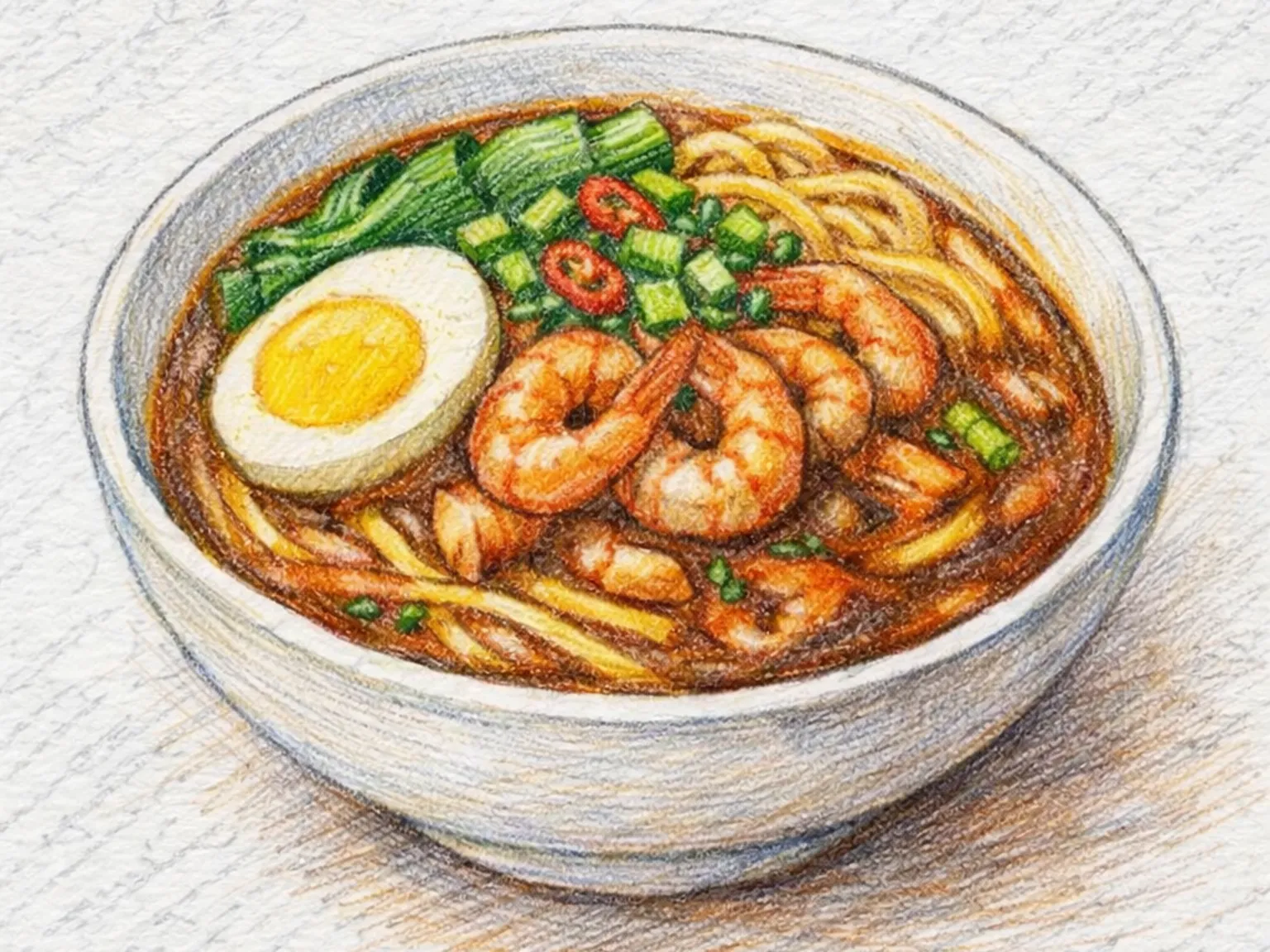
Mee bandung is a traditional noodle dish from the Johor region of Malaysia, featuring yellow wheat noodles served in a thick, reddish-orange shrimp and tomato gravy. The base is prepared by stir-frying finely minced onions and garlic, followed by tomato paste and chili paste to create a concentrated aromatic paste. Shrimp stock and soy sauce are poured in and simmered before fresh shrimp are added and cooked briefly to maintain a tender texture. A starch slurry is stirred into the hot liquid to thicken it, producing a gravy that coats the noodles and sits between a soup and a stir-fry in consistency. The resulting sauce delivers a balanced profile of sweet, spicy, and savory flavors. The dish is finished by ladling the warm gravy over boiled noodles and topping them with shrimp and boiled eggs.
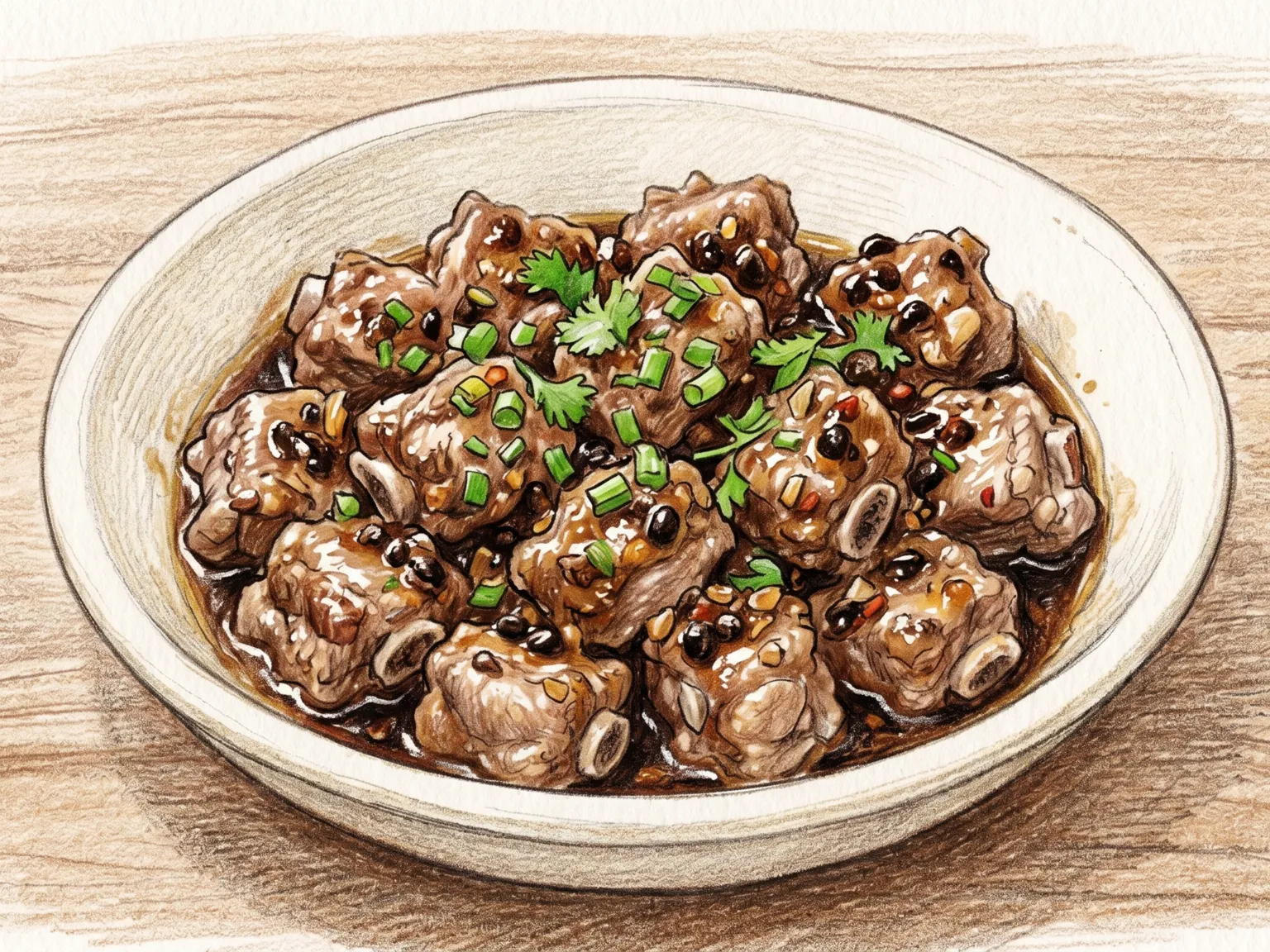
Steamed Pork Ribs with Black Bean Sauce
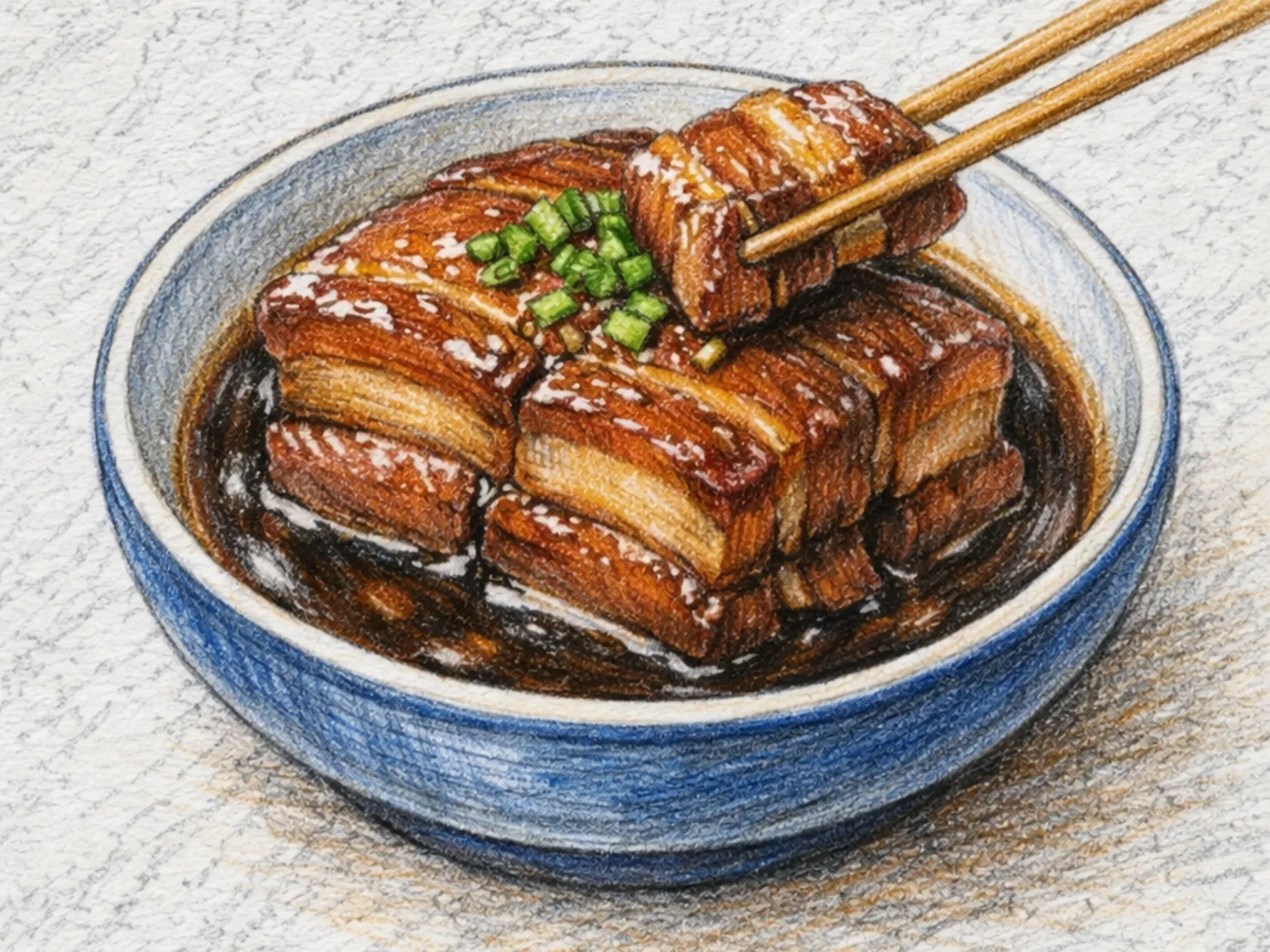
Douchi paigu is a Chinese steamed pork rib dish seasoned with fermented black beans, soy sauce, cooking wine, and garlic. For three servings, soak 500 g pork ribs in cold water for 20 minutes, change the water if it becomes cloudy, and dry every surface thoroughly. Chop 1 tbsp fermented black beans while leaving some texture, then mix them with 1.5 tbsp soy sauce, 1 tbsp cooking wine, and 1 tbsp minced garlic. Work this mixture between the bones and meat before adding 1 tbsp starch. The starch absorbs some of the liquid and helps the seasoning stay evenly distributed over the ribs; it does not replace proper steaming. Spread the pieces in one layer in a shallow heatproof dish and rest for 15 minutes. Bring plenty of water to a strong boil before putting the dish in the steamer, then maintain vigorous steam for 18 minutes. Turn off the heat and leave the steamer covered for a 3-minute rest. Check the thickest section of meat, away from the bone, for a center temperature of 63°C. If it is lower, return the steamer to high heat in 2-minute increments. Finish with 1 tsp sesame oil only after the ribs are fully cooked. Fill the steamer with enough water at the start to sustain the full cooking time, because weak or interrupted steam makes the timing unreliable.
Oshinuki-Zushi (Kagawa Pressed Sushi with Spring Toppings)
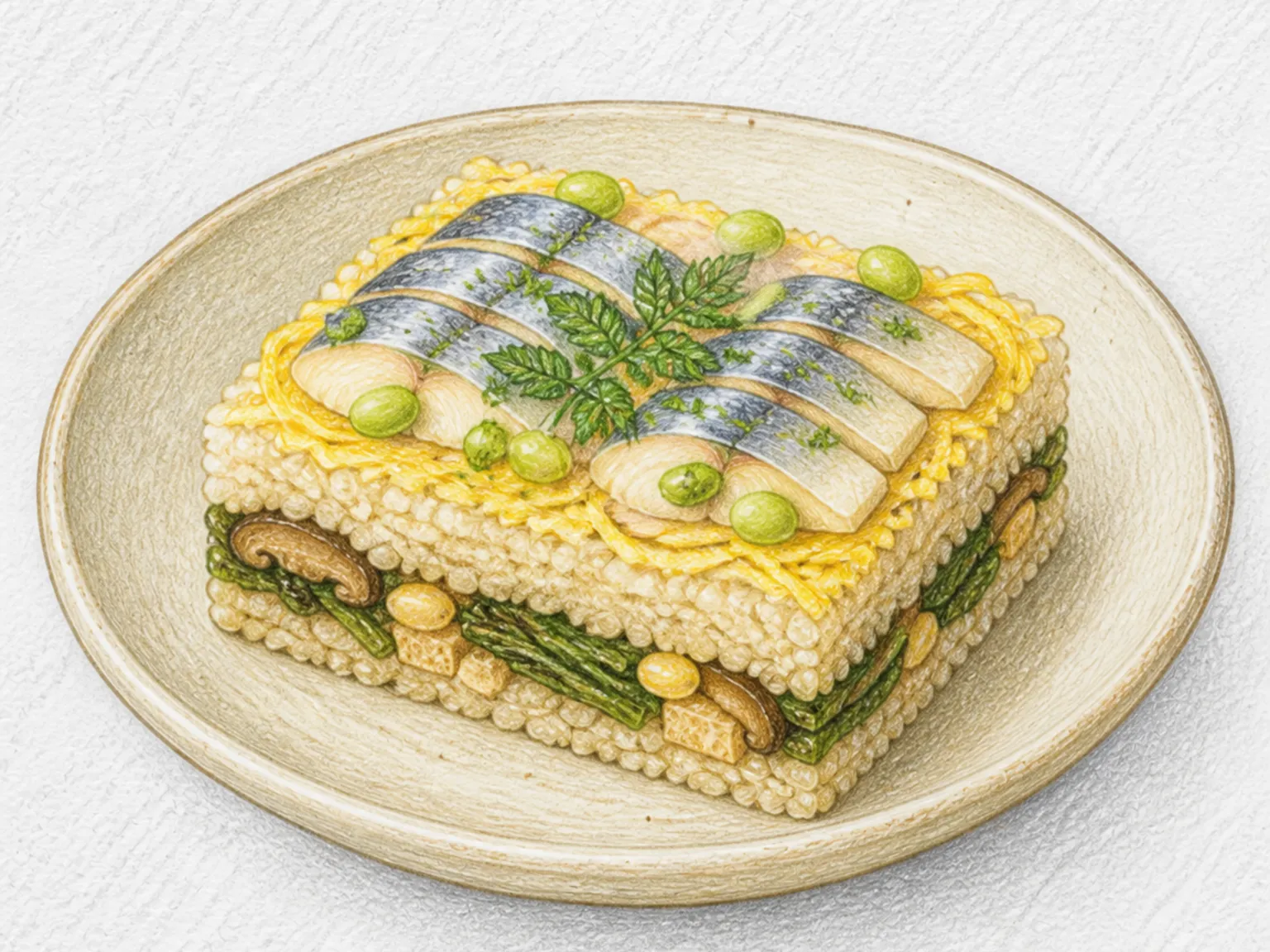
Oshinuki-zushi is a spring pressed sushi from Kagawa. A mold is half-filled with seasoned rice, layered with separately simmered fuki, shiitake, broad beans, and frozen tofu, covered with more rice, and pressed. Thin omelet, Spanish mackerel chilled in salt and vinegar, and bright beans are arranged on top before the piece is unmolded and finished with a bruised sansho leaf. Each cooked filling is reduced until little liquid remains so the rice keeps its shape. From late April through June, Sanuki farming families prepared this sushi when mackerel entered the Seto Inland Sea and broad beans ripened. It became the centerpiece of the Haruio spring gathering, when relatives shared fish, food, and sake. Sushi carried between a bride's family and her married household also helped maintain family ties.
Yakitsuke (Griddled Mugwort Rice Cakes)
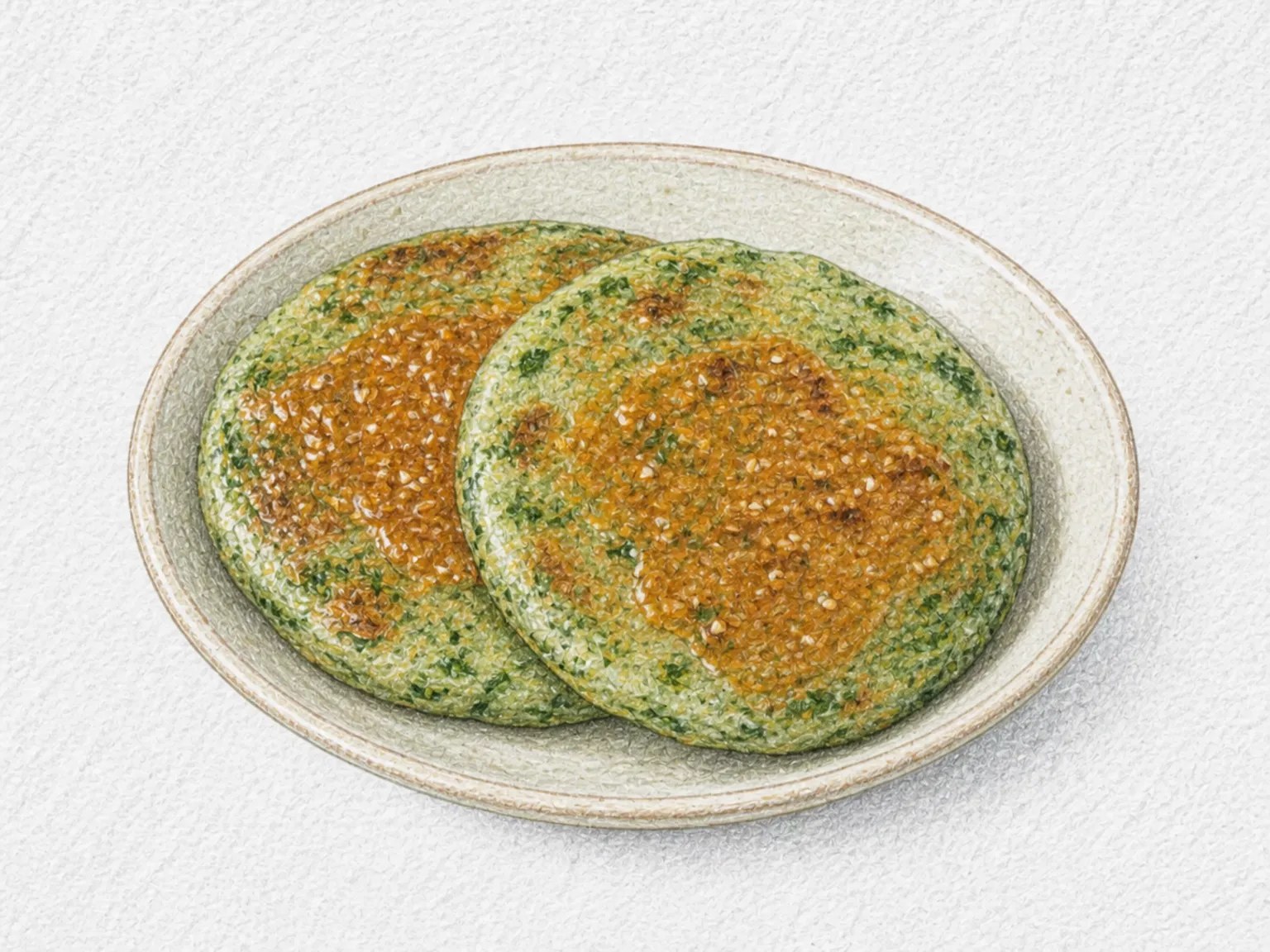
Yakitsuke is a rural Toyama snack. Glutinous rice flour is kneaded with hot water, mixed with blanched finely chopped mugwort, shaped to earlobe-soft cakes, and griddled covered in an oiled iron pan until both sides brown. Sweet sesame miso is spread over the hot cakes. In the past, broken glutinous rice that could not be shipped was milled and spread thin across a large household pan to share during farm-work breaks. The formal method is an oiled pan-griddle cake, not an oil-free toast. Use only mugwort verified for culinary use and cook the thickest center until hot and translucent before applying the sauce.
Su no Shui (Warm Grated Daikon and Sardine Vinegar Soup)
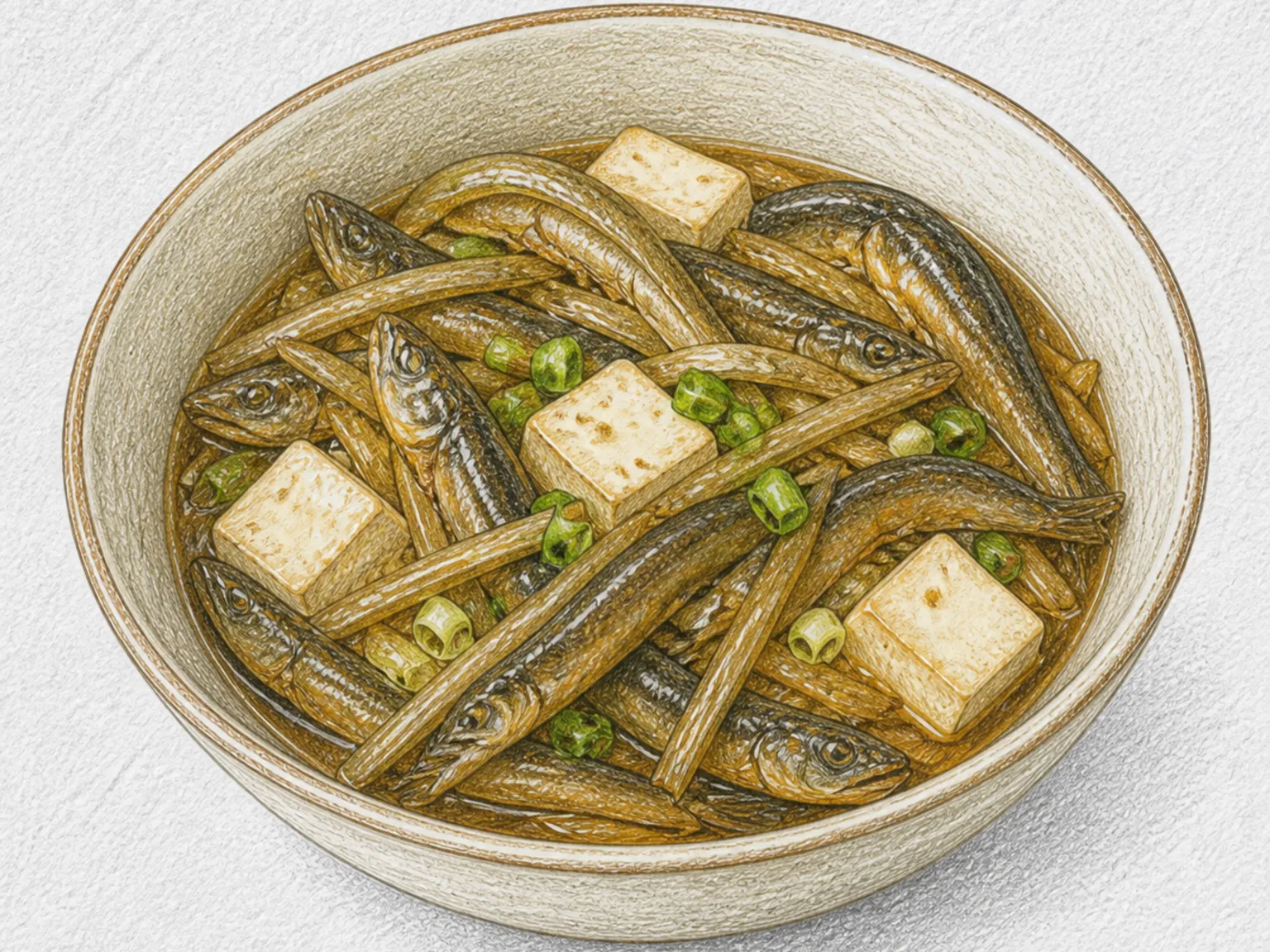
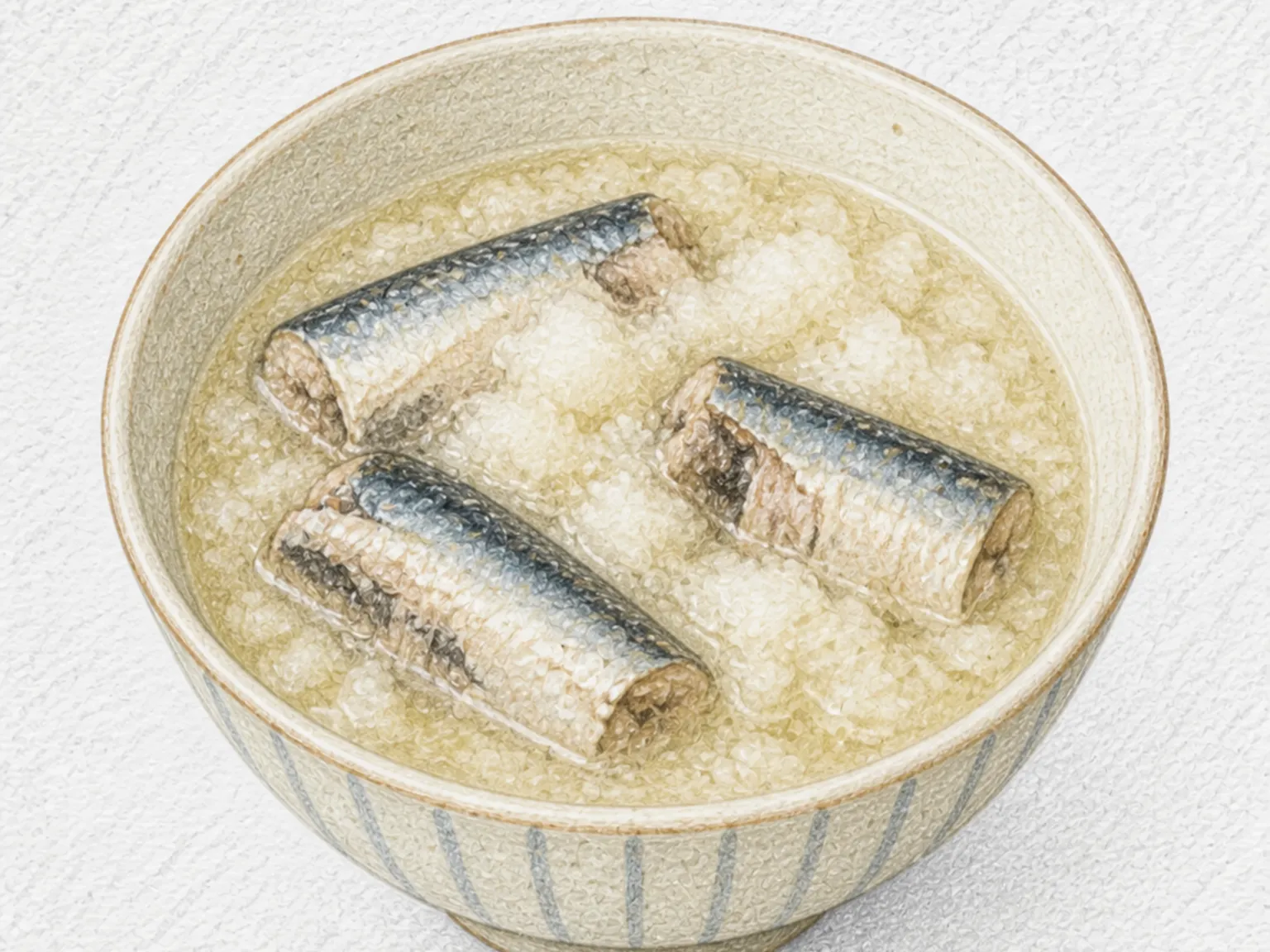
Su no shui is a warm Miyazaki soup of coarsely grated daikon and overnight-dried sardines seasoned with light soy sauce and vinegar. In the local name, shui means soup. Unlike a cold vinegared salad, this dish is served steaming and was often eaten with freshly pounded rice cakes. Grating the daikon on a coarse surface rather than turning it into a fine puree leaves small pieces that catch the fish broth. The sardines are cut into 4 or 5 sections and simmered so their flesh and bones flavor the water. Vinegar enters just before the heat is turned off, which softens its sharp edge without cooking away the bright acidity. The 12-serving pot is divided into small bowls with daikon and fish distributed evenly.
Mee Rebus (Noodles in Sweet Potato Curry Gravy)
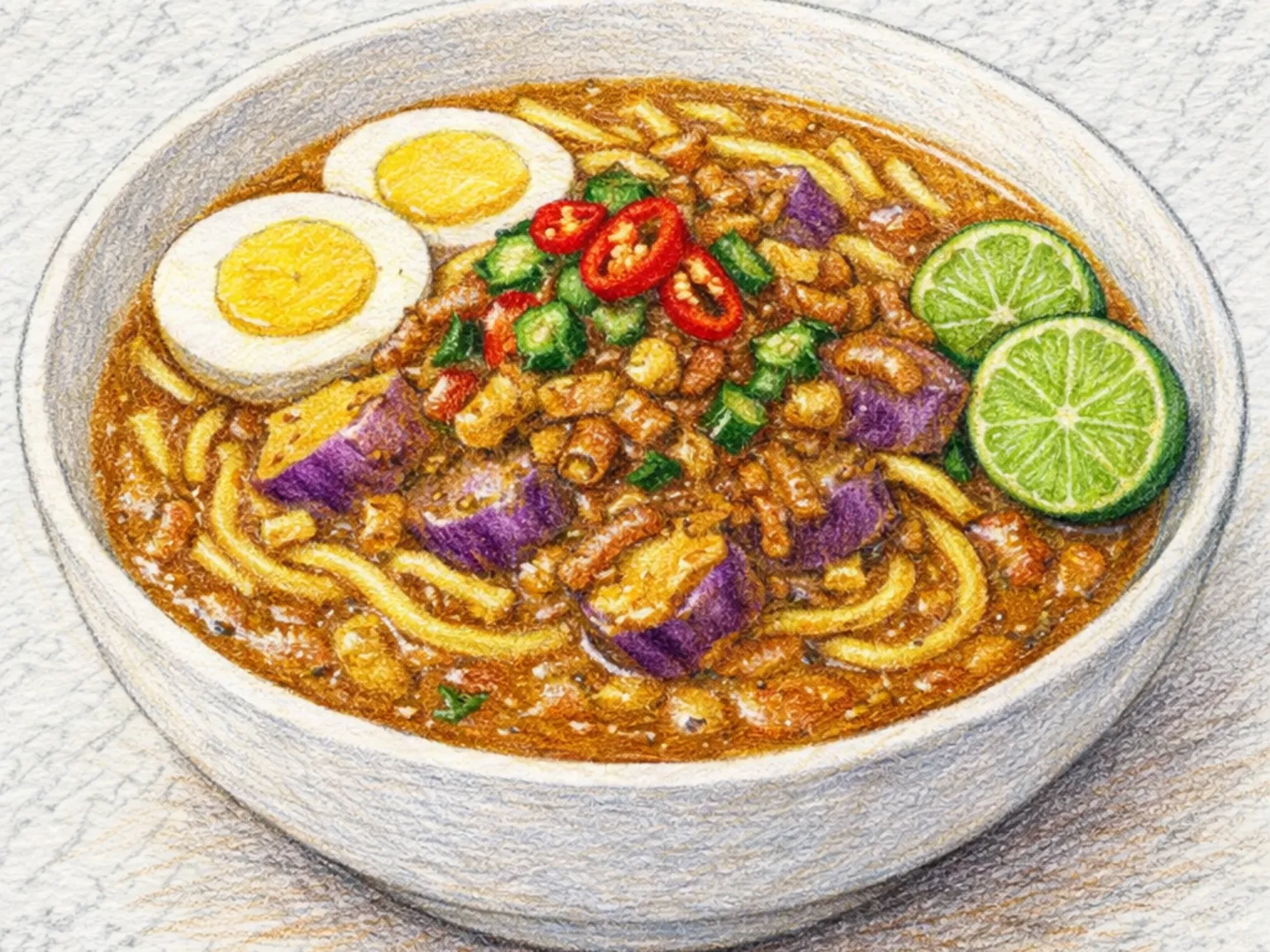
Mee rebus is a Malaysian noodle dish where springy yellow noodles are topped with a thick gravy built from mashed sweet potato, curry powder, peanut butter, and chicken stock. The sweet potato dissolves into the stock to form a naturally thick base, and the curry powder and peanut butter contribute layers of spice and nuttiness that make the sauce unlike any other noodle topping. Soy sauce adds fermented depth and ties the sweetness and spice together. If the gravy becomes too thick during cooking, extra stock loosens it without diluting the flavor. A halved boiled egg and a squeeze of fresh lime just before eating cut through the richness, bringing the bright acidity that is a hallmark of Southeast Asian noodle dishes.
Heso Daikon Nishime (Miyagi Dried Daikon Simmer)
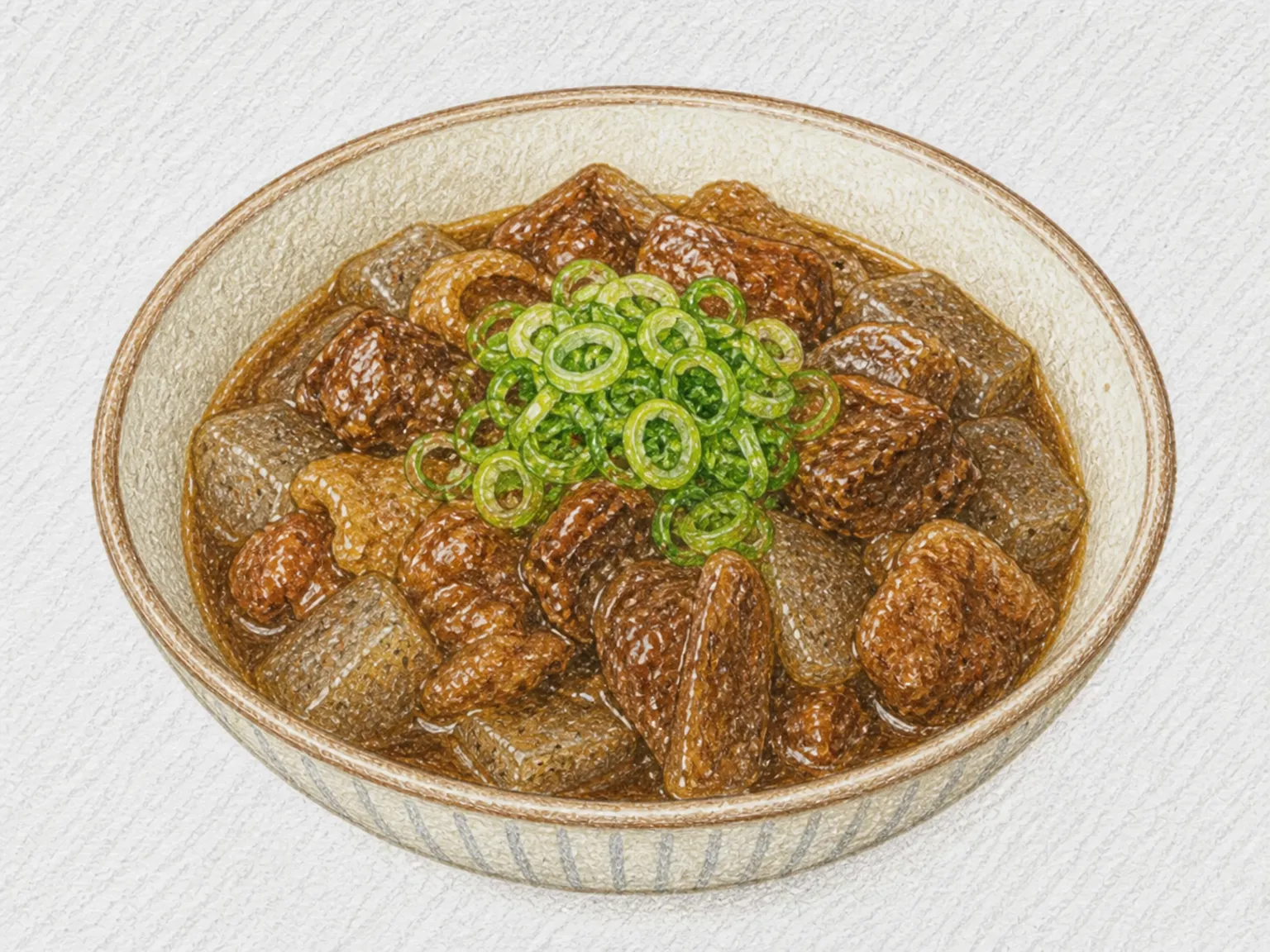
Heso daikon nishime is a southern Miyagi preserved-food simmer. Dried daikon rings soaked overnight cook with carrot, taro, dried shiitake, konnyaku, frozen tofu, knotted kombu, and sasa kamaboko in dashi until almost no liquid remains. Heso daikon is made by peeling and thickly slicing daikon, boiling the rounds, threading a skewer or straw through the center, and hanging them under the eaves for about a month. Repeated freezing at night and thawing by day turns the radish amber and concentrates it. The round hole left by the skewer resembles a navel, giving the ingredient its name. Fully dried pieces could last until the following summer. Shiitake soaking liquid joins the stock, bringing the flavors of the preserved vegetables and seafood together as the soy seasoning slowly penetrates every piece.
Battera (Pressed Mackerel and Kelp Sushi)
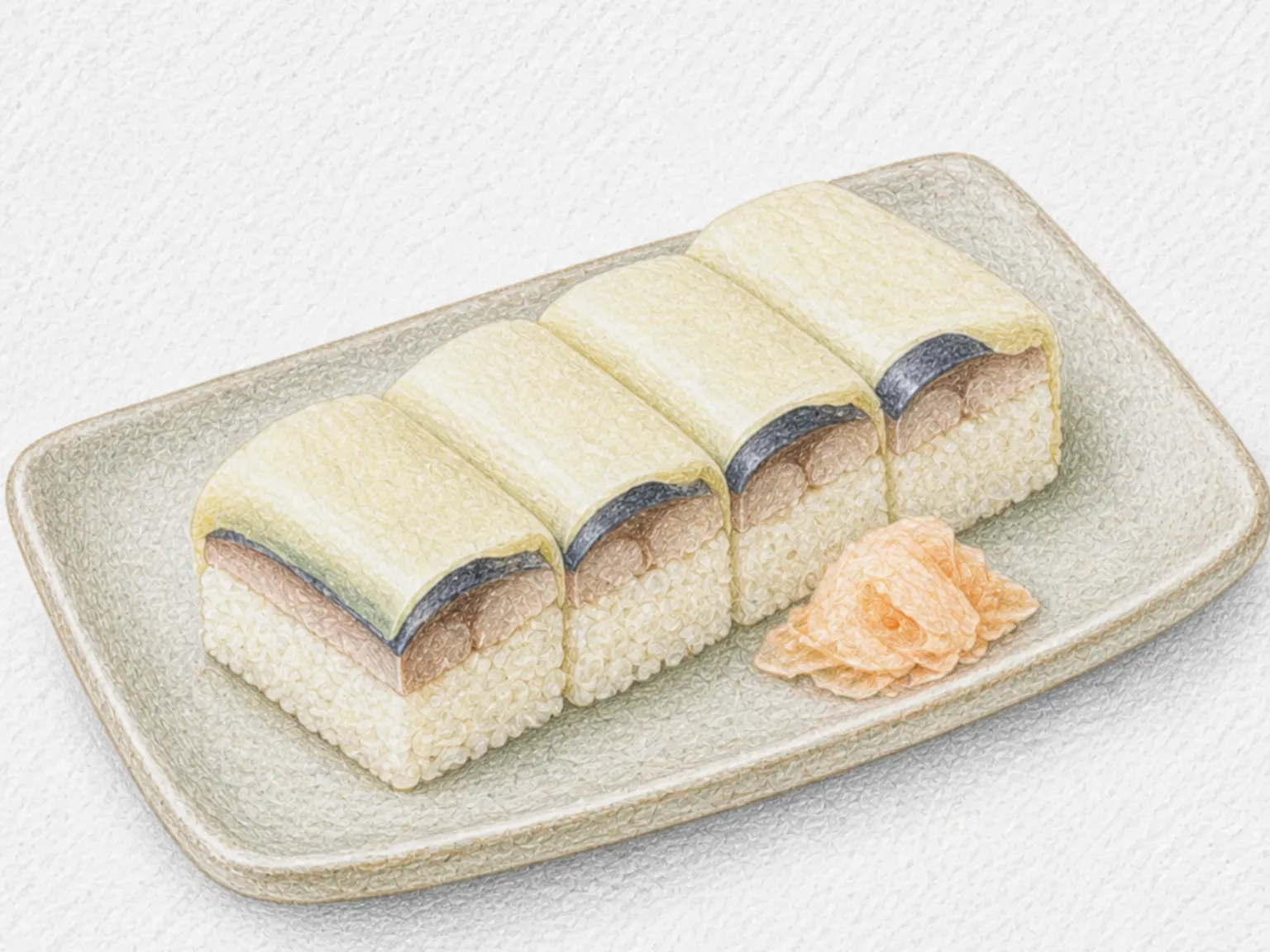
Battera is Osaka-style pressed sushi made by layering thin slices of vinegared mackerel and white sheet kombu over seasoned rice, then compressing everything in a wooden mold. Rice is cooked with a piece of dashi kombu and slightly more water than usual. While hot, it is folded with a mixture of vinegar, sugar, and salt and cooled quickly. The chilled mackerel is skinned, deboned, and sliced thinly before being arranged across the mold; the rice is packed above it and pressed into a firm rectangle. After unmolding, the loaf is wrapped in vinegar-moistened white kombu, cut, and served with sweet vinegared ginger, without requiring soy sauce. Sushi Tsune in Minami-Semba created the dish in 1891 using konoshiro. Its half-fish shape resembled a small boat, called battera in Portuguese; mackerel and a square mold later became standard.
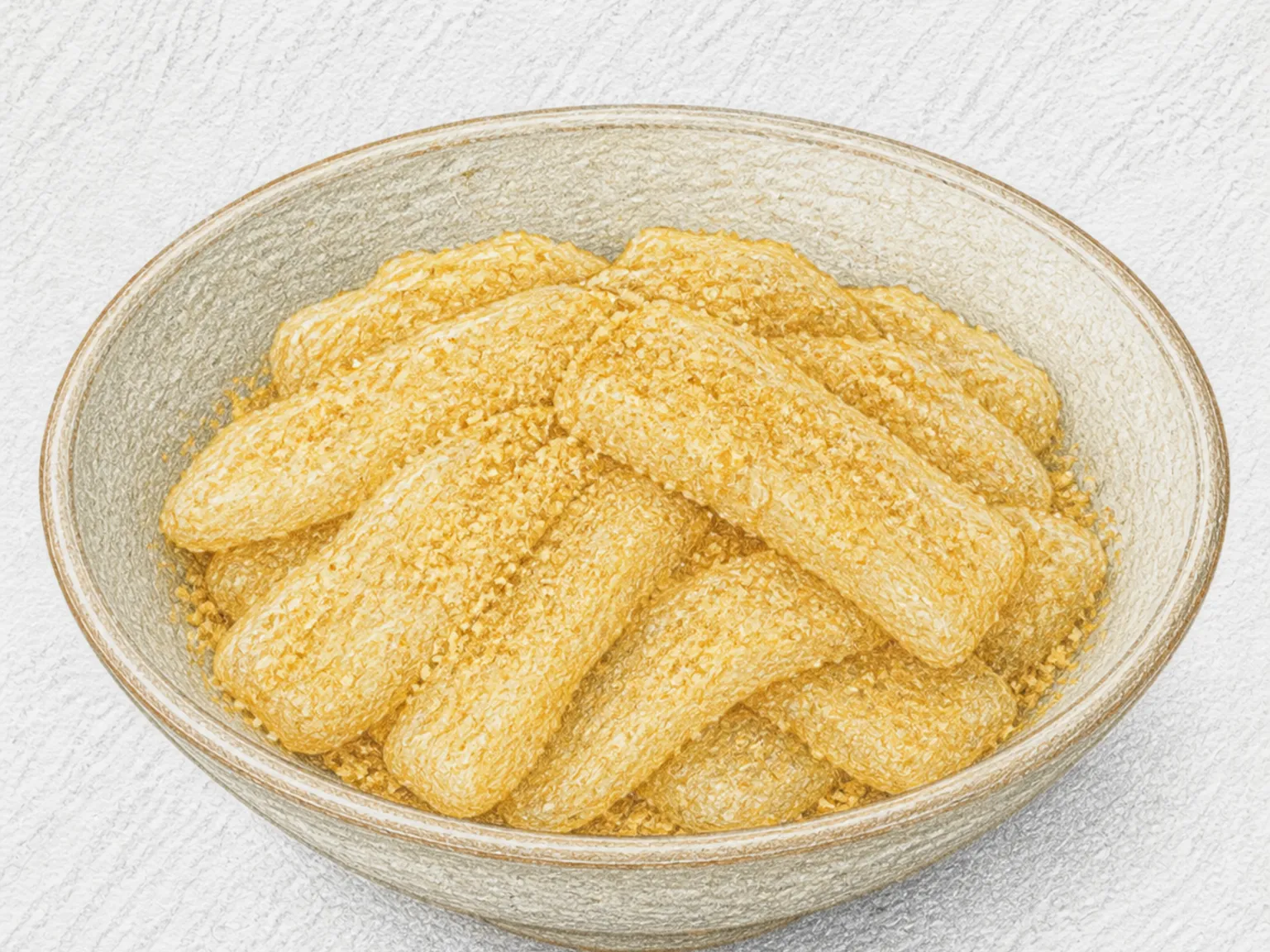
Yaseuma (Flat Wheat Ribbons with Kinako)
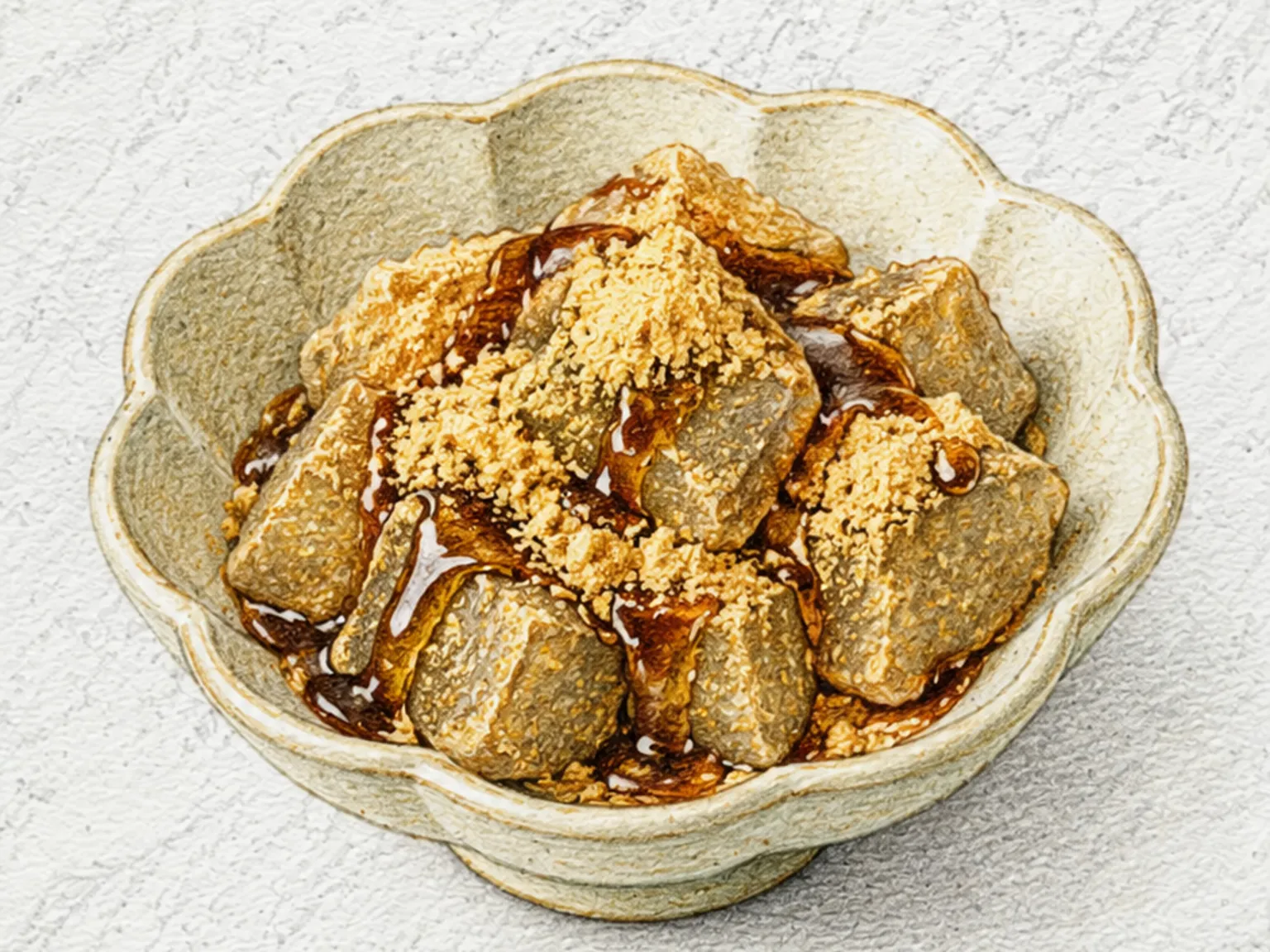
Yaseuma is a traditional snack from Oita made by kneading wheat flour with salted water, resting the dough twice, stretching each piece long, thin, and flat by hand, then boiling it and coating it with kinako and sugar. Skilled cooks can lengthen the dough without tearing it, creating a soft, chewy texture between a noodle and a rustic dumpling. Furuno in Yufu is regarded as its birthplace, and the food is also offered during Obon and Tanabata observances. The ribbons must cook beyond floating until no raw flour remains at the center. Draining them well and coating while warm helps the roasted soybean mixture cling evenly.
Tamago Fuwafuwa (Fluffy Egg and Clear Dashi Soup)
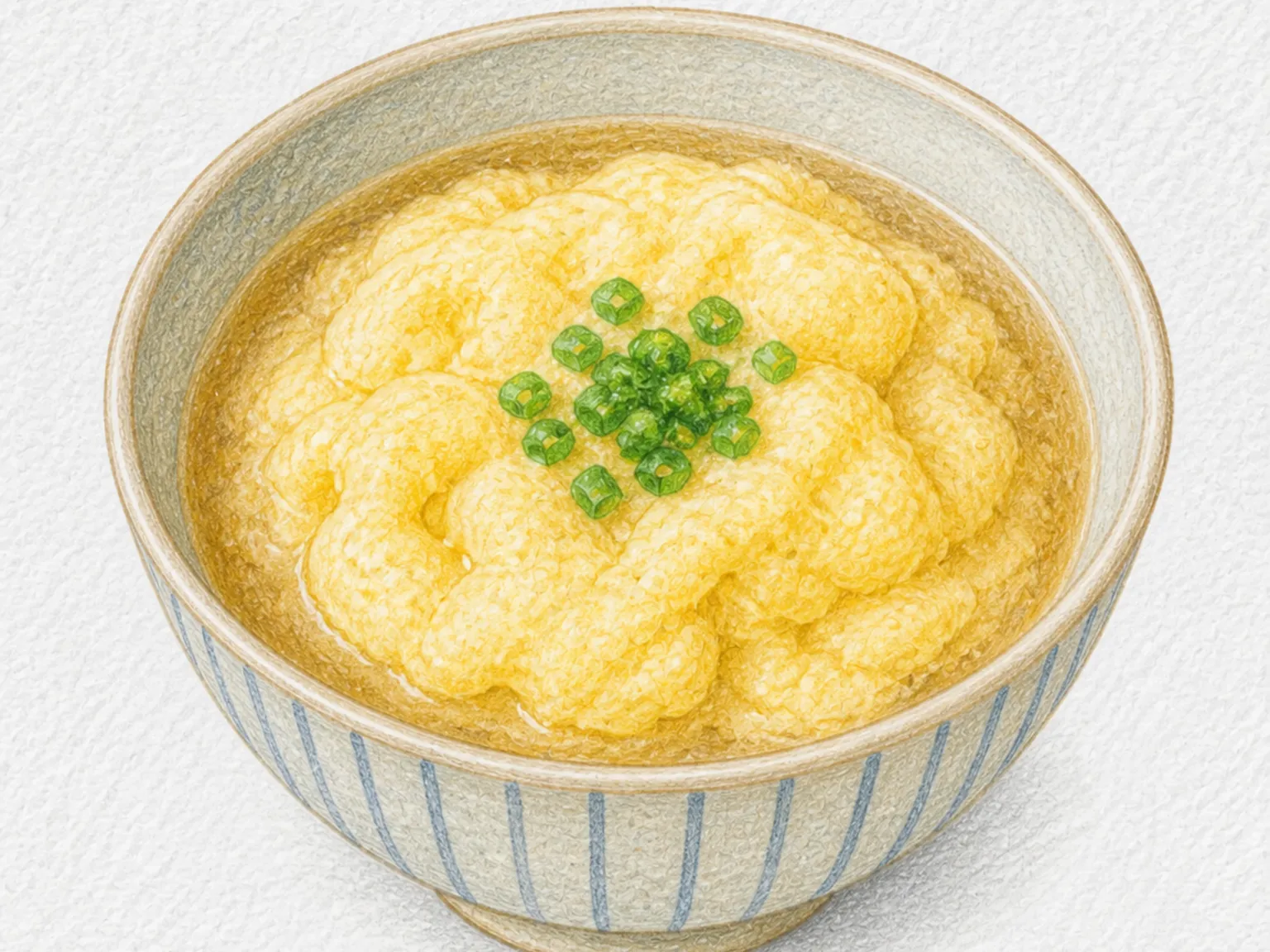
Tamago fuwafuwa is a Fukuroi dish made by whipping eggs with a small portion of seasoned bonito dashi for at least four to five minutes, then pouring the creamy foam into boiling clear soup and steaming it off the heat. Of the 400 ml broth, 360 ml heats in the covered pot while 40 ml is beaten with the eggs and mirin. Once the soup boils, the heat is turned off and the foam enters all at once around the edge. Two to three covered minutes let the retained heat expand and gently set the egg into a light, rounded cloud. An Edo-period travel record says it was served for breakfast to guests at the Ota side inn in the Fukuroi post town. The local tourism association later reconstructed the dish from historical sources and helped return it to restaurants and home kitchens.
Mee Siam (Singaporean Tangy Tamarind Shrimp Rice Vermicelli)
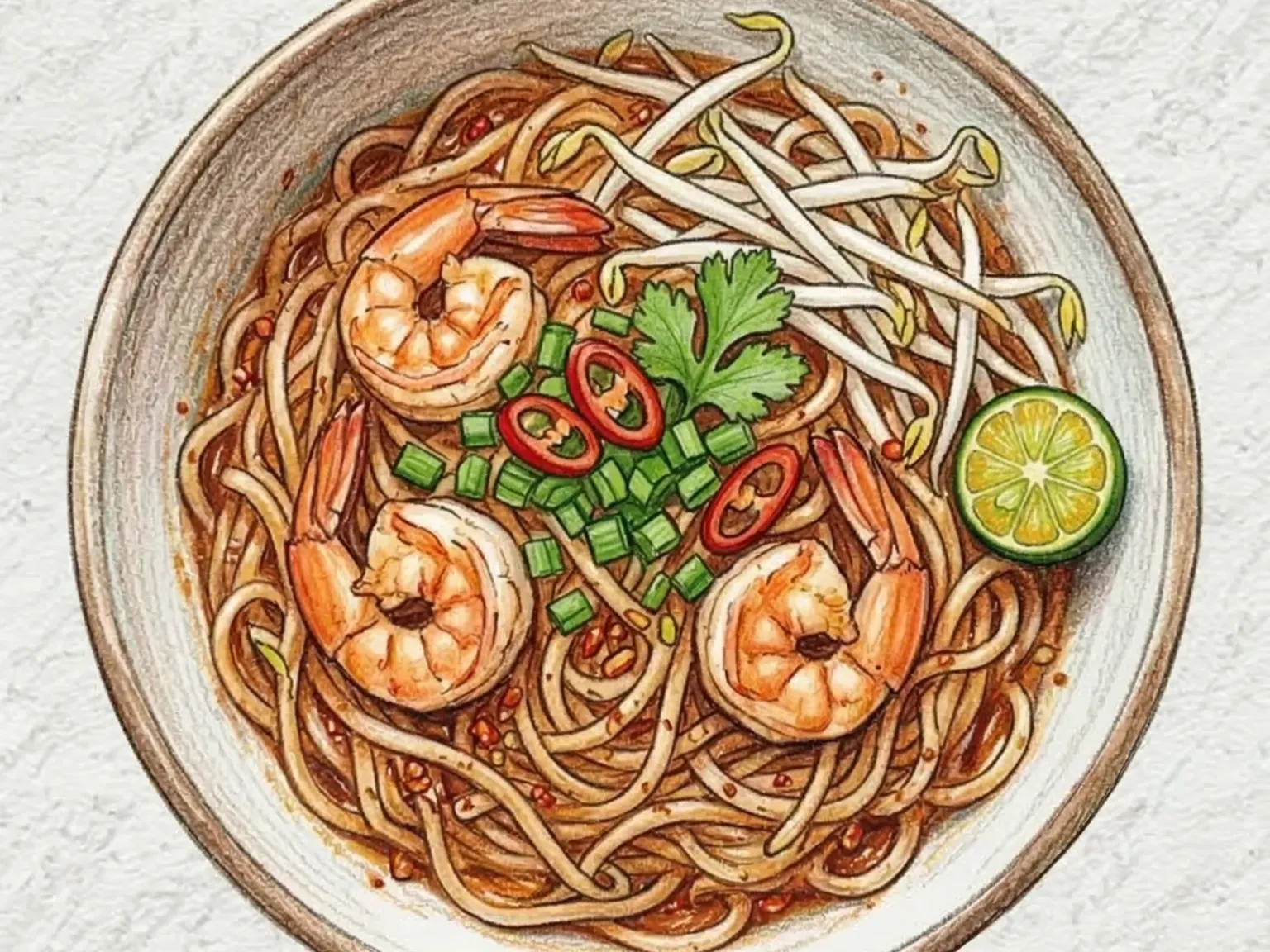
Mee siam is a rice vermicelli dish from Singapore and Malaysia defined by a tamarind-based sauce that balances sour, sweet, and spicy in one bowl. Thin rice noodles are stir-fried with a rempah, a pounded paste of dried shrimp, shallots, and chili, then finished with tamarind water, fish sauce, and sugar, with bean sprouts and tofu added near the end. A squeeze of fresh lime over the top introduces a bright acidity that cuts through the richness of the stir-fry. Despite the name referencing Siam, the dish is a distinctly Malay-Singaporean creation rather than Thai, most commonly eaten at breakfast or as a light meal at hawker centers. Soft-boiled eggs and whole shrimp are the standard toppings when the dish is served, and the heat level can be adjusted by varying the amount of chili in the rempah. Soaking the dried shrimp and pounding them finely before cooking deepens the umami in the rempah and spreads a consistent seafood richness throughout the sauce that whole or coarsely ground shrimp cannot achieve.
Hyoboshi no Nimono (Simmered Dried Purslane)
Hyoboshi no nimono is a preserved-vegetable side dish from Yamagata. Purslane that was blanched and sun-dried in summer is gently rehydrated overnight in winter, then stir-simmered with shirataki, carrot, and fried tofu in a sweet soy seasoning. The dish grew from the drying and salting culture of snowy Murayama and Okitama, where households had to secure food before fields disappeared under winter snow. Dried purslane has a light chew and concentrated green aroma rather than the fresh plant's acidity. Heating it from cold water to one boil, leaving it overnight, and changing the water 2 to 3 times the next day softens the stems evenly and clears stale flavors.
Chicken and Egg Rice Bowl
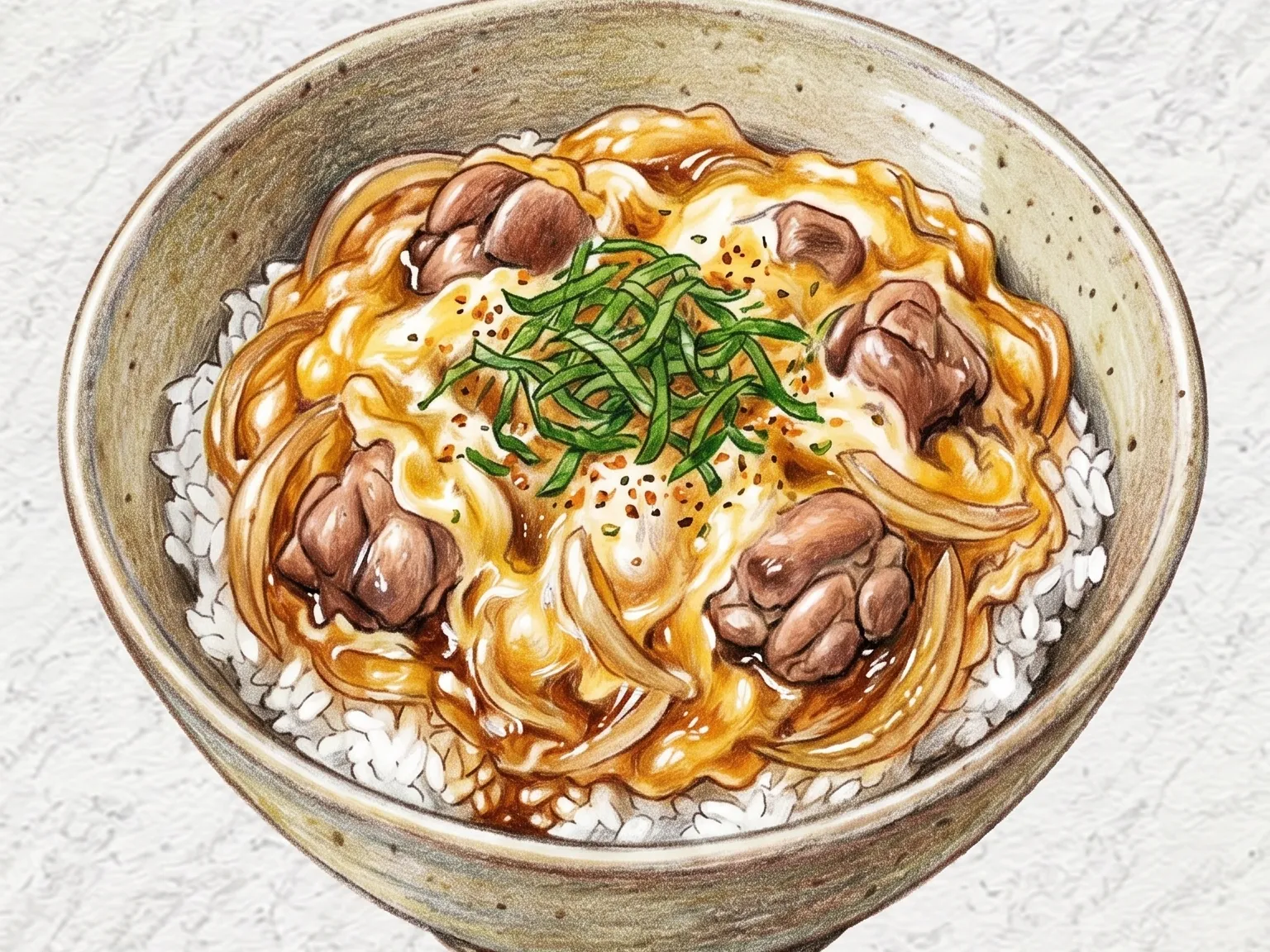
Oyakodon simmers bite-size chicken thigh and sliced onion in a soy-mirin broth, then binds everything with a soft-set egg before sliding it over steamed rice. The name means 'parent and child,' referring to the chicken and egg sharing the same bowl. Onion goes into the broth first to release its natural sweetness, followed by the chicken, which cooks just until tender. Beaten eggs are poured in a circular motion and the lid goes on briefly, leaving the egg custardy rather than fully set. That half-cooked egg absorbs the savory-sweet broth and coats each grain of rice. Despite using only a handful of ingredients, the layered umami from soy sauce and mirin gives the dish a satisfying depth.
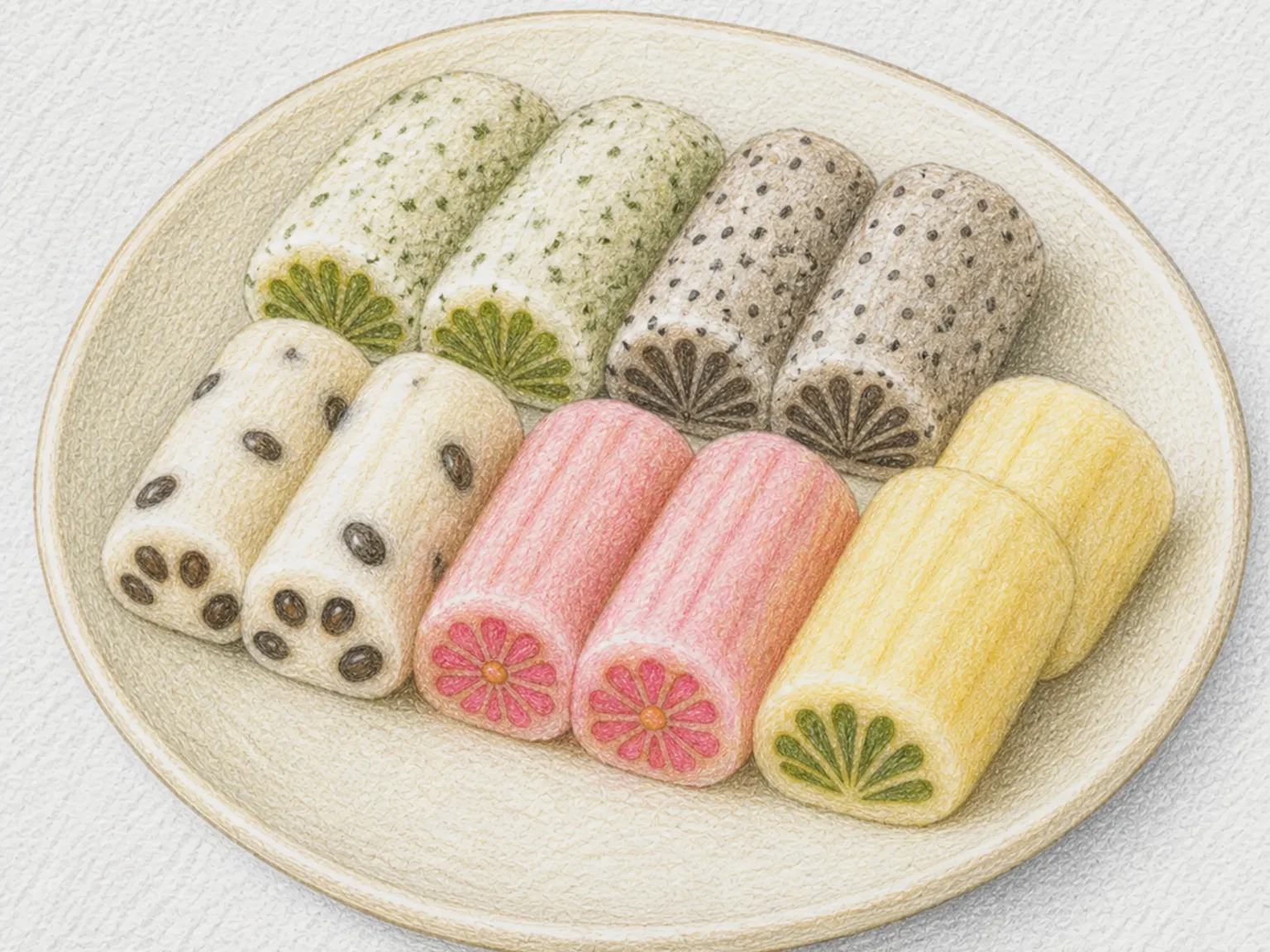
Yashoma (Patterned Rice-Flour Dumpling)
Yashoma is a Nagano rice-flour dumpling made by mixing rice flour, sugar, salt, and boiling water, steaming the dough, briefly shocking it in cold water, and kneading it firmly again. Portions are colored with aonori, black sesame, cooked black soybeans, or food coloring, shaped into long pieces, and pressed with chopsticks to create colored surfaces and cross-sections. It was traditionally offered at home altars and temples for Nehan-e on February 15 and shared with children. Shape the steamed dough while warm so it does not crack, then cut the soft logs with cotton thread to preserve their form.
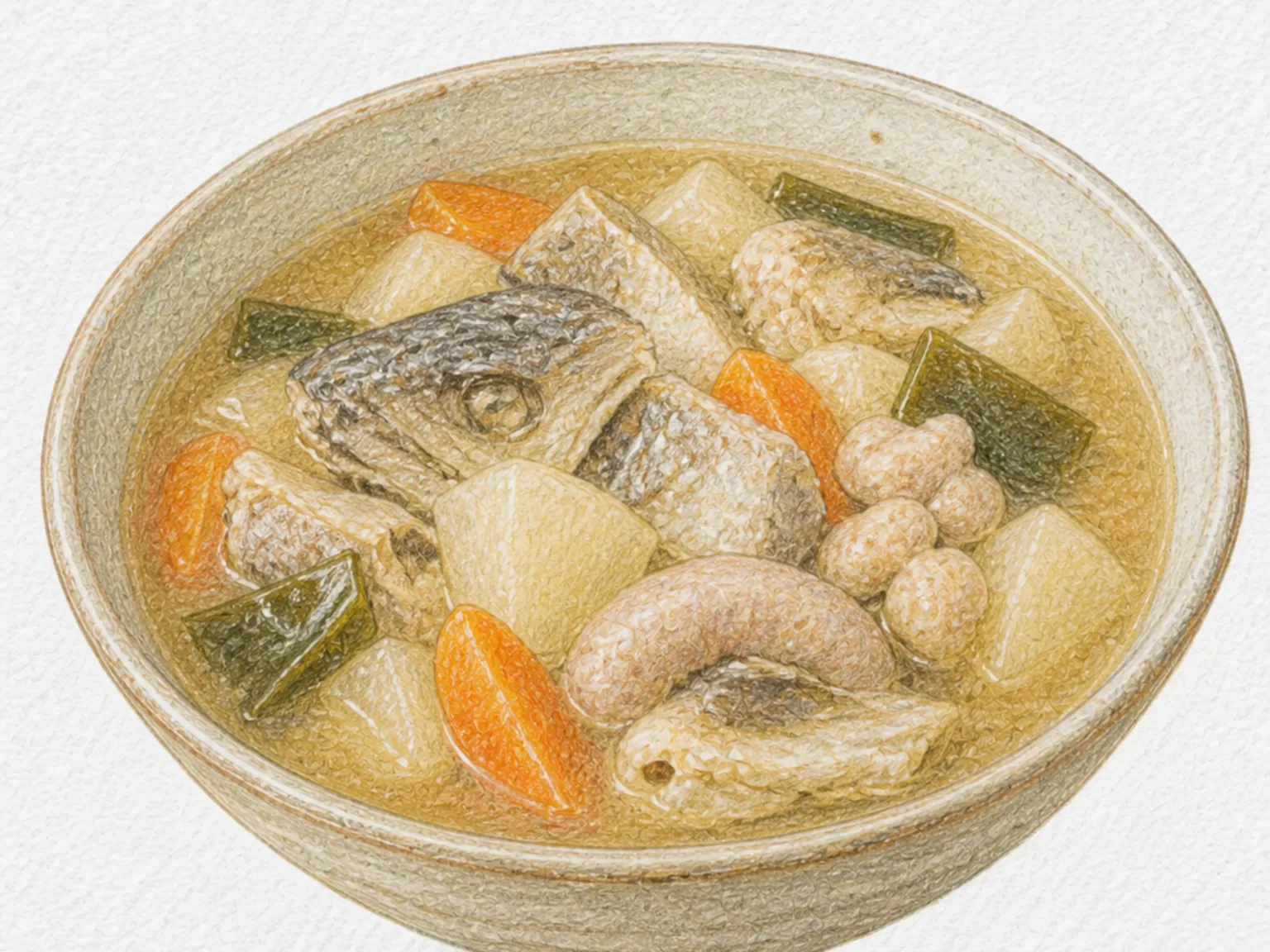
Tara Jappa-jiru (Whole-Cod Miso Soup)
Tara jappa-jiru is a Tsugaru winter soup from Aomori that uses the head, backbone, skin, organs, roe, or milt left after filleting a whole cod. Carefully cleaned parts simmer in a large pot with kombu, daikon, carrot, sake, and water before miso seasons the broth. Jappa means parts usually discarded in the Tsugaru dialect, but the dish turns an entire cold-water cod into a deeply flavored meal without waste. Liver is mashed into the soup near the end for mellow richness, and exceptionally fresh milt is especially prized. Cod was the year-end fish of Tsugaru, so essential to New Year that the phrase tara shogatsu, cod New Year, emerged. Families once bought a whole large fish and dragged it home over snowy roads. A generous ten-serving pot warms a household in midwinter.
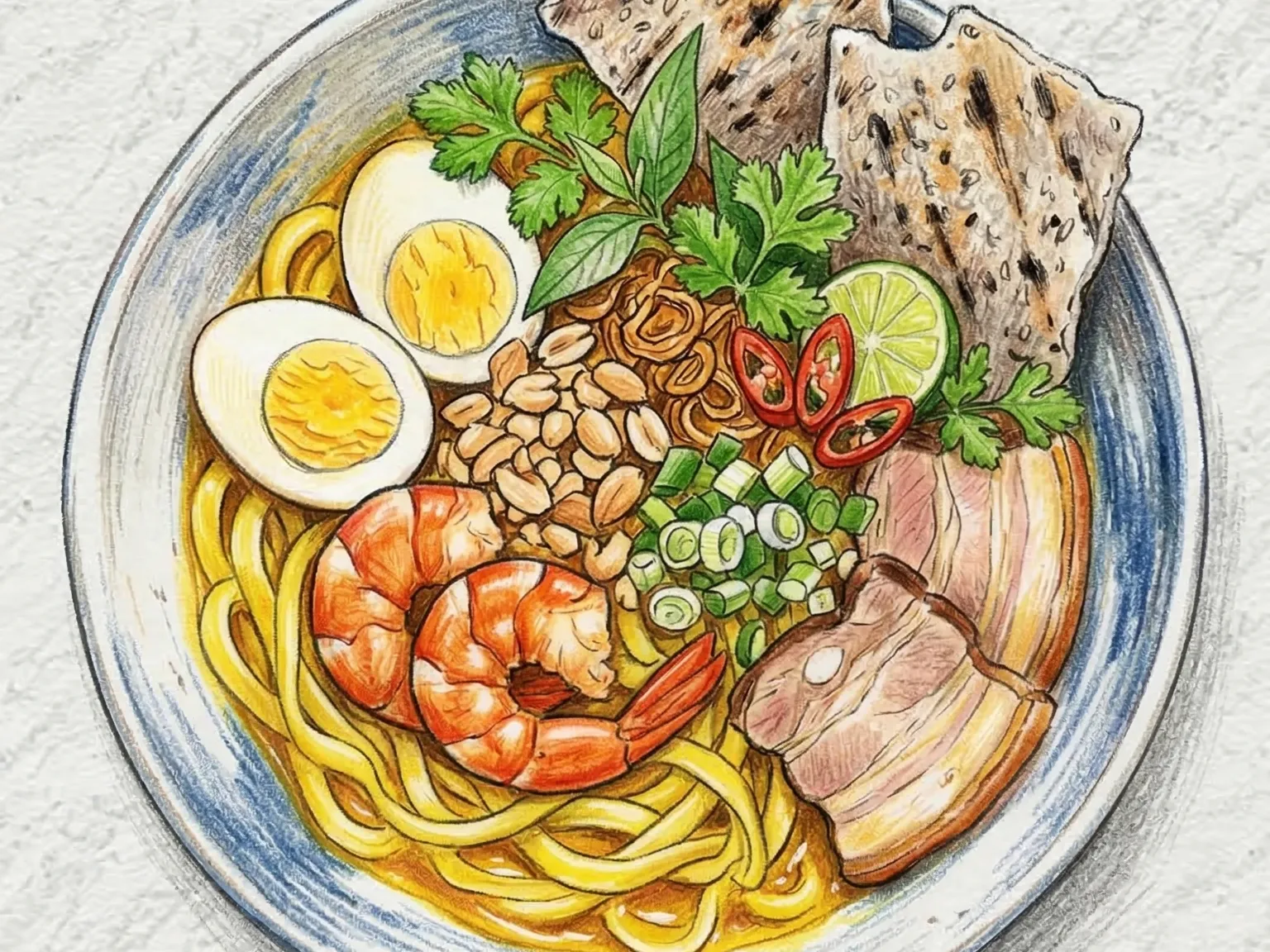
Vietnamese Mi Quang (Turmeric Noodles with Pork and Shrimp)
Mi quang is a noodle dish from the Quang Nam province in central Vietnam, built on wide, turmeric-tinted rice noodles dressed with pork, shrimp, and a deliberately small amount of intensely concentrated broth. The defining characteristic of the dish is that ratio. Where most noodle soups are meant to be submerged, mi quang uses just enough broth to moisten the noodles, making it closer to a dressed noodle than a soup bowl. Pork is marinated in fish sauce and turmeric before cooking, which simultaneously tints the meat yellow and saturates it with fermented savory depth. Simmering it briefly with chicken stock draws out a small volume of broth with a concentrated, meaty intensity that would taste overwhelmingly strong on its own but calibrates perfectly when distributed across a full serving of noodles. Shrimp are kept separate and cooked quickly by sautéing or grilling rather than simmering, which keeps them springy rather than soft. The noodles are cooked, rinsed under cold water so they do not stick, and placed in a bowl before the meat, shrimp, and broth go on top. Bean sprouts add a raw crunch that contrasts directly with the soft noodles, while crushed roasted peanuts contribute a dry, nutty texture that absorbs some of the broth. A squeeze of lime at the end sharpens the entire flavor profile and balances the richness.
Ebi Fry (Japanese Panko-Crusted Shrimp)
Ebi fry developed during Japan's Meiji era as Western cooking techniques arrived and were reinterpreted through a Japanese lens, becoming one of the defining dishes of yoshoku - the country's own adaptation of European cuisine. Preparation starts by cutting the tendons along the shrimp's belly at several points and pressing each piece flat against a cutting board so it holds a straight, elongated shape when lowered into hot oil rather than curling back on itself. The three-stage coating of flour, egg wash, and coarse panko breadcrumbs is central to the dish's character: panko's jagged, irregular flakes puff and expand in hot oil, producing a crust that is unmistakably lighter and more open-textured than anything made with fine Western breadcrumbs. Because the shrimp fries quickly at high temperature, the flesh stays fully moist and snaps with a satisfying springiness when bitten. Tartar sauce, with its creamy acidity and flecks of pickled vegetables, offsets the richness of the crust, while tonkatsu sauce takes the flavor in a sweeter, fruitier direction. The dish migrates easily across formats: tucked into bento boxes as a daily side, placed on top of curry rice for an ebi fry curry, or layered into soft milk bread as an ebi katsu sando. Its staying power in Japanese home cooking and restaurant menus alike reflects how thoroughly yoshoku dishes have become part of everyday Japanese food culture.
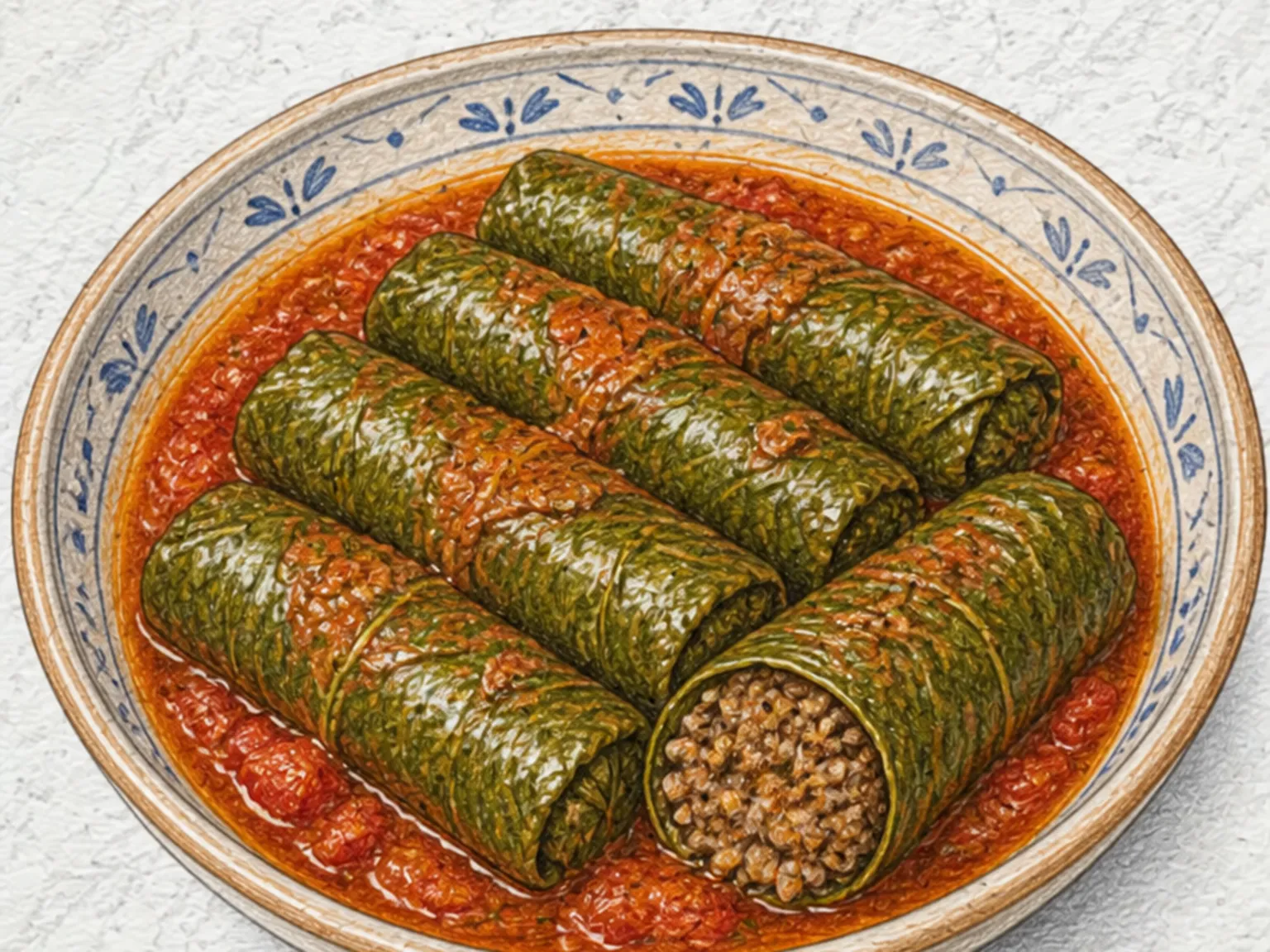
Pazı Sarması (Turkish Stuffed Swiss Chard Rolls)
The rice inside pazı sarması expands as the rolls cook, so the Swiss chard leaves need to remain closed around the filling. The short blanch, the finger-thick shape, the close arrangement in the pot, and the heavy plate on top all serve that single cooking process. This Turkish dish fills chard leaves with ground beef, soaked rice, onion, and dried mint, then simmers the wrapped rolls in a light tomato liquid. For 2 servings, prepare 12 Swiss chard leaves, 150 g ground beef, 60 g rice, and 80 g onion. Wash the leaves and blanch them in boiling water for 10 seconds. Move them into cold water immediately, then drain them before rolling. Soak the rice in lukewarm water for 15 minutes and drain it through a sieve. Combine the soaked rice with the ground beef, finely chopped onion, and 2 g dried mint in a bowl. Add part of the 30 ml olive oil and half of the 30 g tomato paste to complete the filling mixture. Spread one chard leaf with its back facing upward and place a portion of filling on it. Fold both sides inward and roll the leaf firmly into a cylinder about the thickness of a finger. Arrange each finished roll closely against the others across the bottom of the pot instead of leaving wide gaps between them. Dissolve the remaining tomato paste and olive oil in water and pour the liquid around the rolls until it sits partway up their sides. Set a heavy plate directly on top of the rolls and cover the pot. The plate holds the leaves in place while the rice swells during cooking. Keep the plate in position and simmer the covered pot over low heat for 30 minutes. The finished arrangement consists of softened chard wrapped around the beef, rice, onion, and mint filling, with the light tomato cooking liquid remaining around the rolls.
Miso Yubeshi (Steamed Yuzu and Miso Rice Cakes)
Miso yubeshi is a regional sweet from the Kikuchi area of Kumamoto. Glutinous and non-glutinous rice flours are mixed into a thick hot dough with yuzu, ginger, miso, and sugar. Each portion is flattened, wrapped in an oiled bamboo sheath, tied, and steamed for about 40 minutes. The bamboo holds moisture and adds a mild aroma, while miso tempers the large amount of sugar with savory saltiness. Chewing releases bright citrus and the elastic texture of rice flour. The sweet developed from preserved food that made use of broken rice after harvest. Its texture settles by the next day, when it can be sliced thin; brief reheating or toasting softens pieces that become firm.
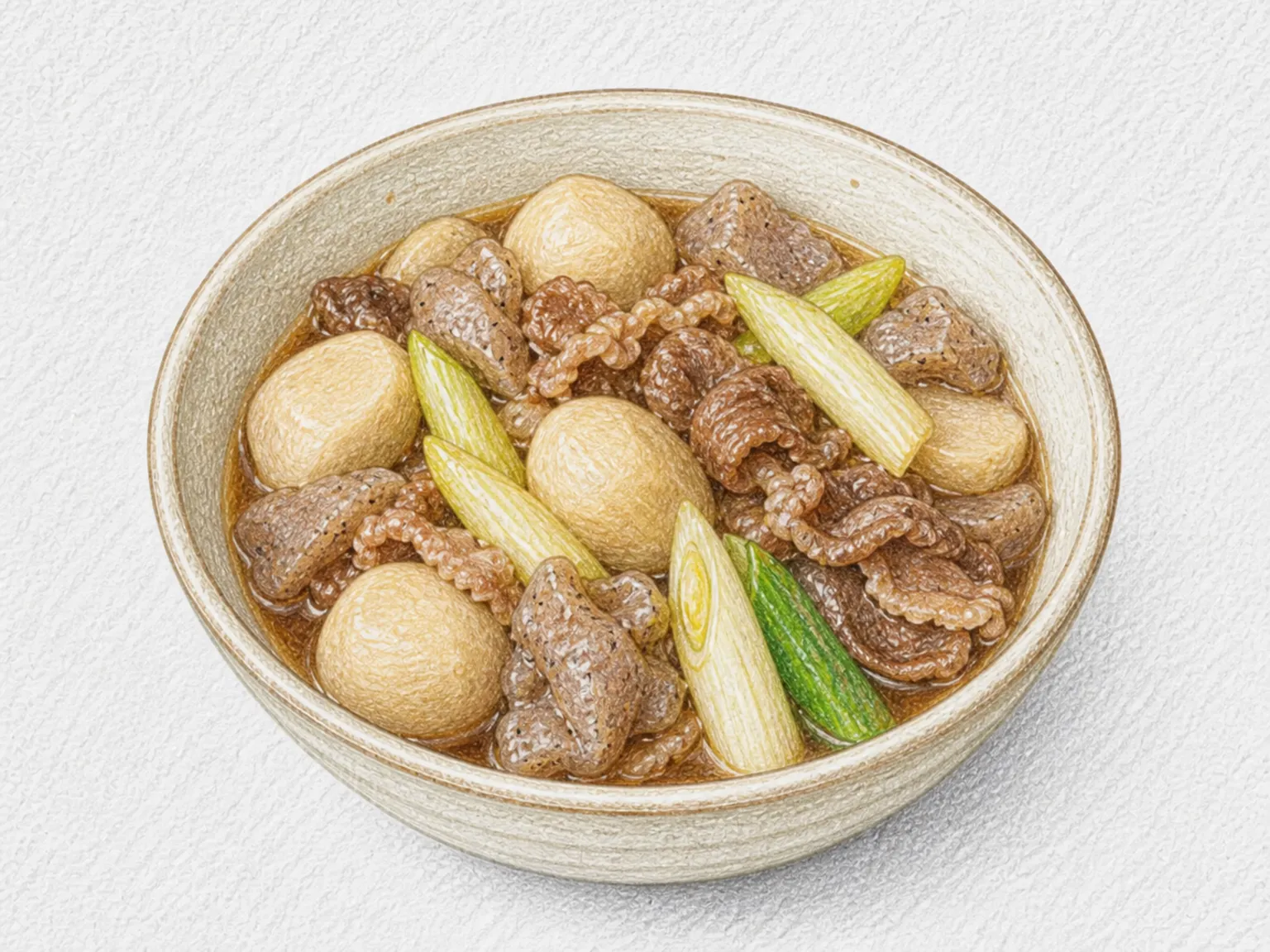
Imoni (Yamagata Taro and Beef Hot Pot)
Imoni is an inland Yamagata hot pot that simmers autumn taro with beef, konjac, and long onion in a soy-seasoned broth. Taro and hand-torn konjac begin cooking in water with part of the soy sauce so the roots soften before the meat enters. Fatty beef is then added with the remaining soy sauce, sugar, and sake, and the foam is skimmed as the broth cooks. Thick diagonal pieces of onion simmer until very soft and sweet. In Yamagata, families and friends gather beside rivers for imoni parties in autumn and winter, sharing large outdoor pots, while the same basic combination is also a regular home dish.
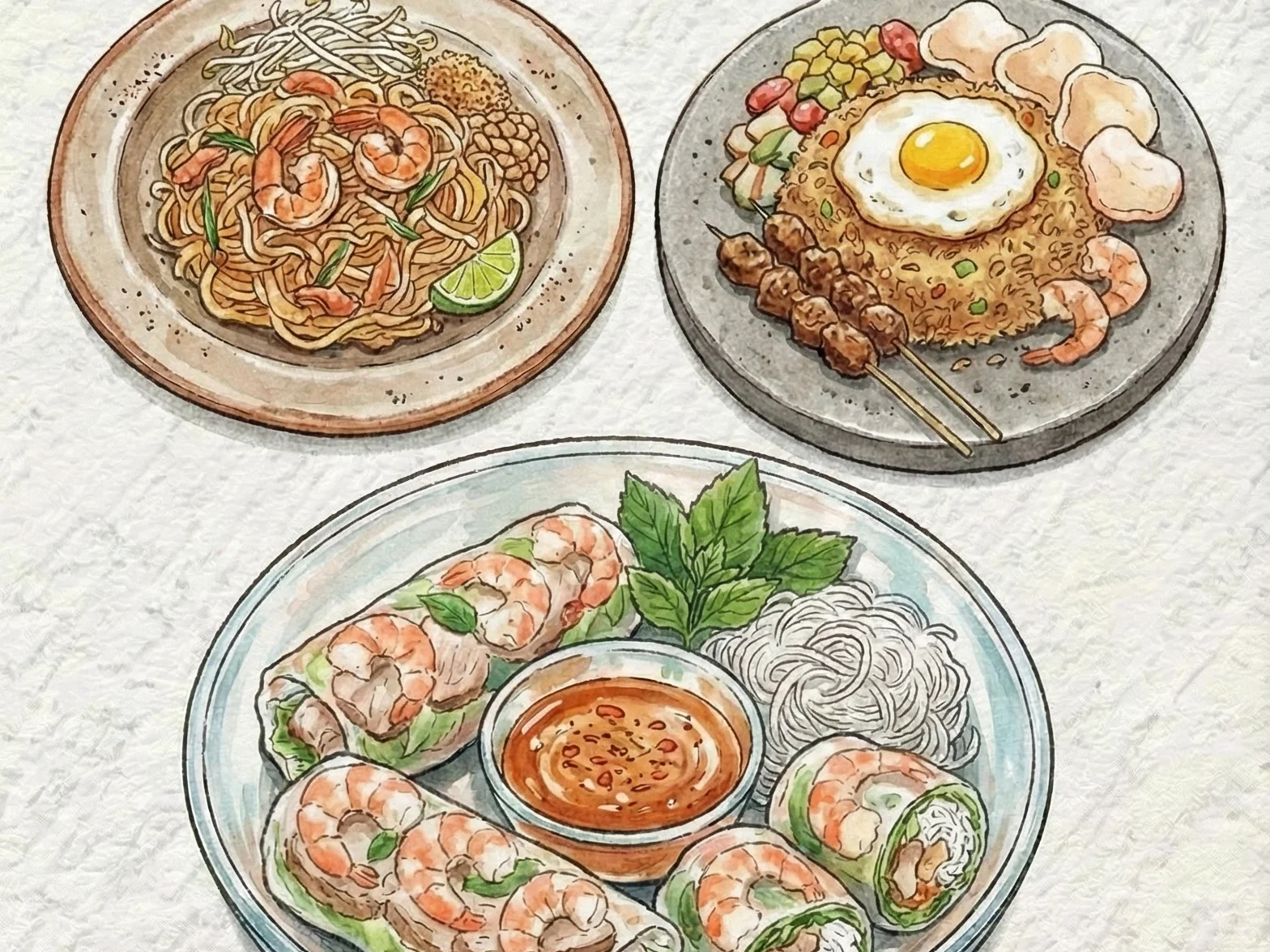
Javanese Chicken Mie Goreng
Javanese chicken mie goreng is an Indonesian stir-fried noodle dish built around kecap manis, a thick, molasses-dark sweet soy sauce that caramelizes in the wok and coats the noodles in a glossy, sweet-savory glaze that is impossible to mistake for any other style of fried noodle. Shallots and garlic are fried first to form the aromatic base, then sliced chicken thigh, shredded cabbage, and scallions join the wok over high heat. The egg noodles go in last, tossing rapidly to pick up wok breath and absorb the sauce. A fried egg with a runny yolk, prawn crackers for crunch, and a wedge of lime to cut through the sweetness complete the plate in the street-stall tradition of Java. The unmistakable sweetness of kecap manis is what sets this dish apart from Chinese-style fried noodles and gives Javanese mie goreng its identity across Indonesia and beyond.
About Asian
Each country brings its own signature spices and sauces, so even the same ingredients can produce completely different flavors. With a few key pantry items - coconut milk, fish sauce, curry powder, doubanjiang - you can recreate the tastes of Asia at home.