Asian Recipes
806 recipes. Page 21 of 34
The Asian category gathers popular dishes from Japan, China, Thailand, Vietnam, India, and beyond. Curry, stir-fried noodles, mapo tofu, pad Thai, and pho are among the Asian favorites commonly enjoyed in Korean households.
Tofu Castella
Tofu castella is a regional sweet from southern Akita made by pressing tofu, passing it through a sieve, and mixing it with sugar, egg whites, potato starch, and salt. Unlike ordinary castella, it contains no wheat flour or egg yolk, so it keeps a clear soybean flavor and a moist yet sliceable texture. When sugar and eggs were costly, precious tofu extended the batter for New Year, rice planting, weddings, funerals, and other special occasions. It is usually served with tea, but Akita diners also cut it like sashimi and add wasabi soy sauce as a savory drinking snack. Slow cooking in a heavy covered pan, followed by a careful turn, browns both faces.
Sinigang na Baboy (Filipino Tamarind Sour Pork Rib Soup)
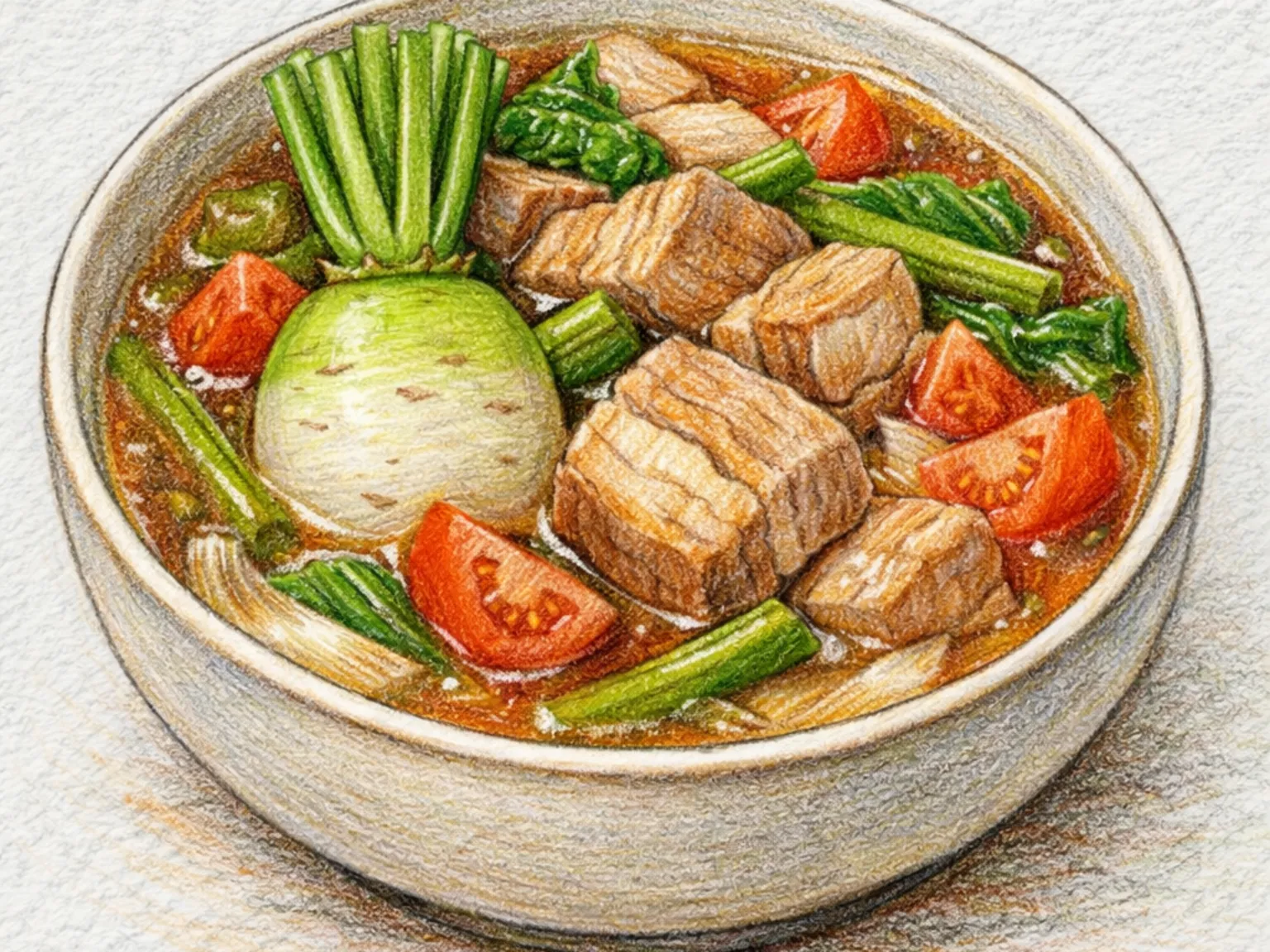
Sinigang na baboy is a Filipino sour soup that appears on family tables across the Philippines with the comforting regularity of a weekly ritual. Pork ribs are simmered until the meat loosens from the bone, then the broth is sharpened with tamarind - either fresh pods pounded and strained, or a spoonful of tamarind paste for convenience. Tomatoes, onions, and daikon radish go in early and soften into the broth, while eggplant, long green beans, finger chilies, and leafy greens like water spinach are added toward the end so they keep their color and bite. The resulting broth is clear, tart, and savory all at once, with the pork fat adding a subtle richness beneath the acidity. Filipinos ladle the soup generously over steamed rice, and the sourness is said to sharpen the appetite rather than satisfy it, which explains why second helpings are almost mandatory.
Coconut Shrimp Laksa (Spiced Coconut Broth Noodle Soup with Shrimp)
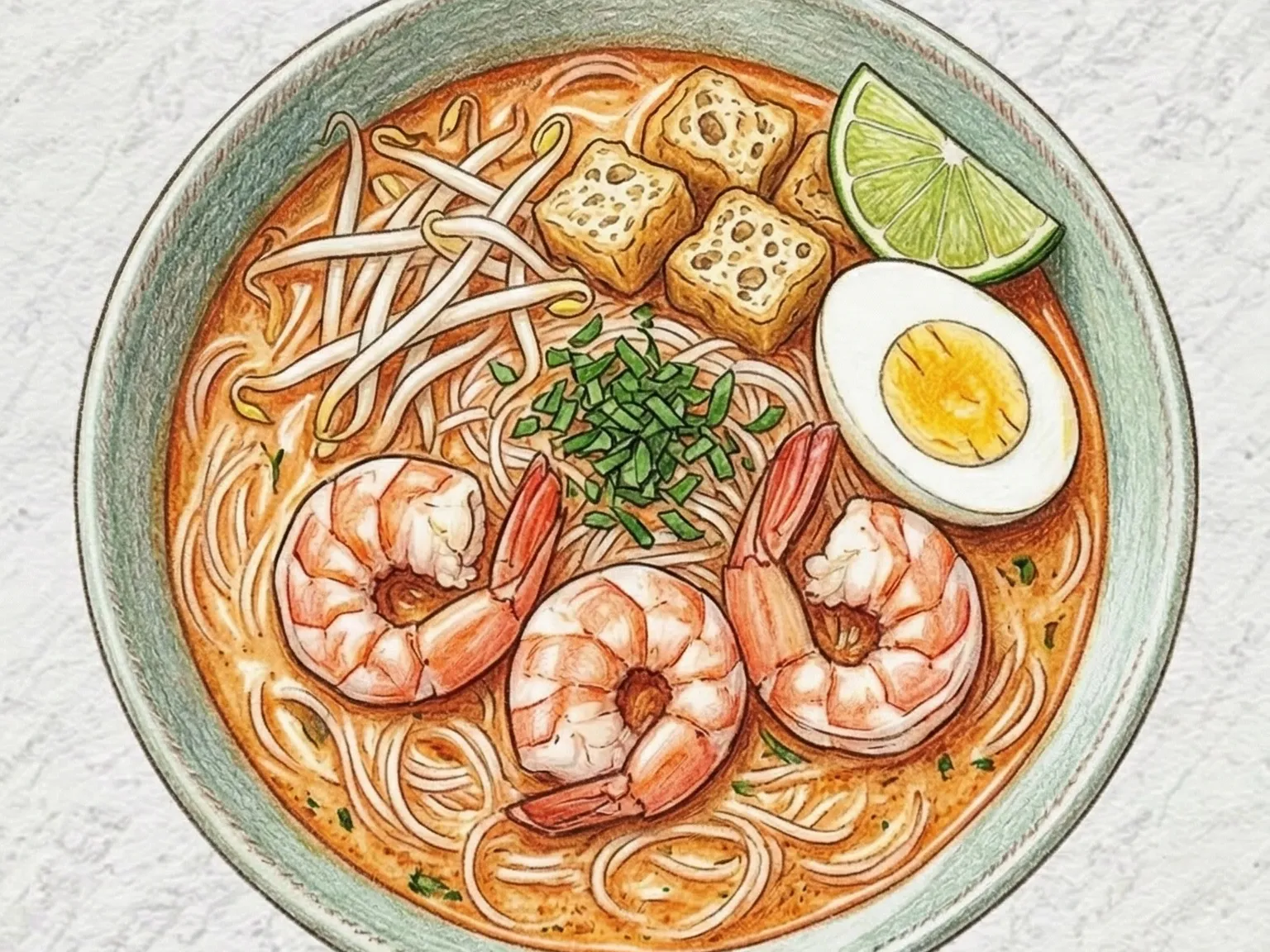
Coconut shrimp laksa is a Southeast Asian noodle soup built on a broth of coconut milk, spice paste, and chicken stock that manages to be simultaneously rich, spicy, and aromatic. The laksa paste - a pounded blend of lemongrass, galangal, turmeric, dried shrimp, dried chilies, and shrimp paste - is fried in oil until deeply fragrant before coconut milk and stock are poured in. The resulting broth is thick and creamy with visible pools of chili oil floating on the surface. Shrimp are cooked shell-on in the broth to extract maximum flavor, then peeled and placed back on top. Rice noodles form the base of each bowl, topped with bean sprouts, halved hard-boiled egg, and cubes of fried tofu puff that soak up the broth like sponges. A squeeze of lime and a drizzle of fish sauce finish the bowl, adding acid and salt that sharpen the richness of the coconut. In Singapore and Malaysia, laksa is eaten from early morning through late night, served at hawker stalls that often specialize in this single dish.
Dal Makhani (Creamy Buttered Lentils)
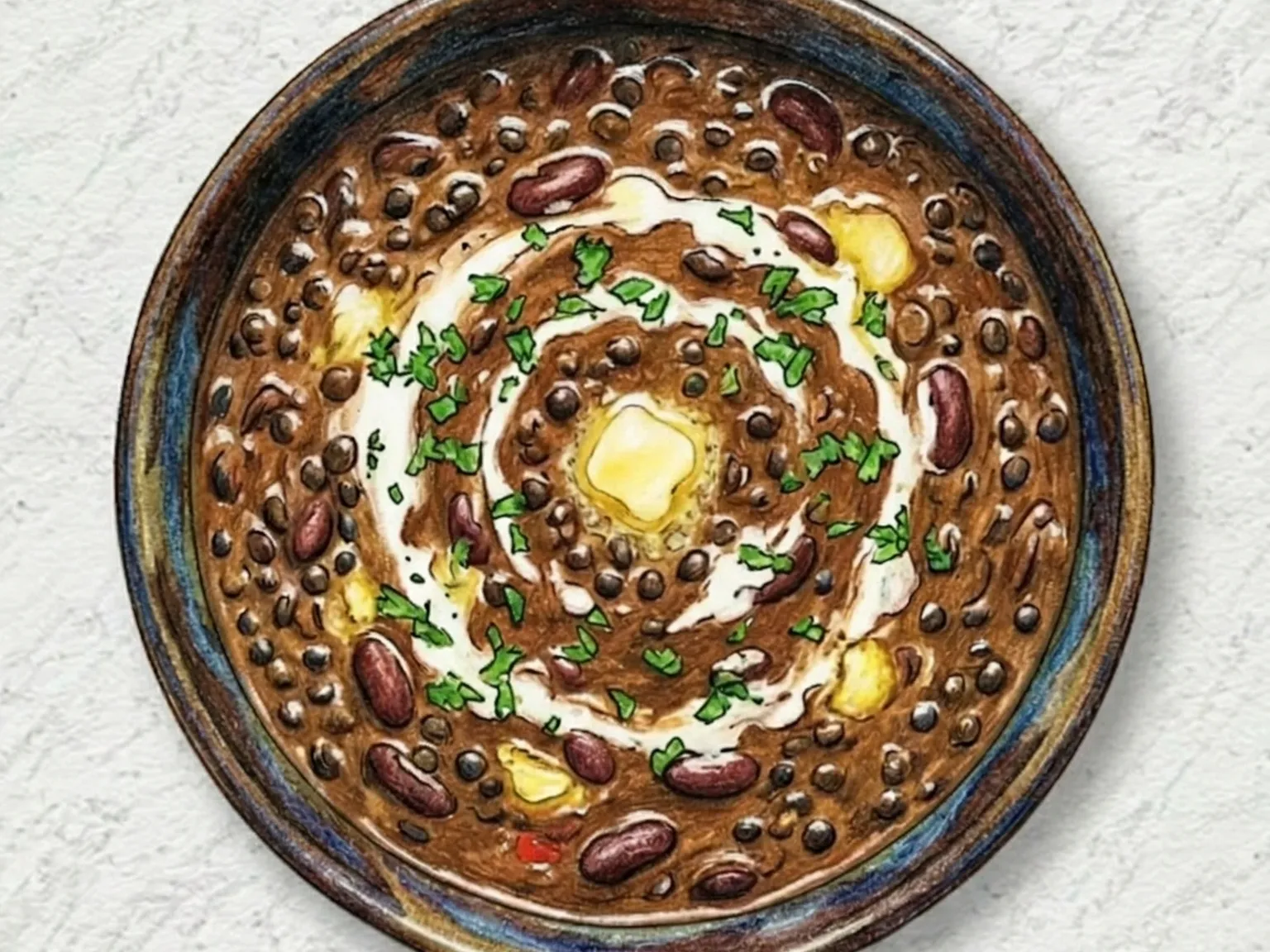
Dal makhani is Punjab's most celebrated lentil dish and now a fixture on restaurant menus across India and internationally. The name makhani, meaning buttery, signals its defining characteristic: a richness built from butter and cream that elevates humble lentils into something deeply satisfying. Whole black lentils (urad dal) and kidney beans (rajma) soak overnight, then pressure-cook before simmering for several hours in a base of tomato, garlic, ginger, and Kashmiri chili. During this slow cooking, the lentils gradually break down and release their starch into the liquid, creating a naturally creamy consistency even before a knob of butter and a pour of fresh cream are stirred in at the end to produce the dish's signature silky texture. Traditionally, dal makhani was left to simmer overnight beside the dying embers of a tandoor oven, absorbing smoky heat through the long hours before being served the next day. Served with naan or basmati rice, it is an indispensable dish at Indian wedding banquets and a comfort food that transcends class, equally at home in a roadside dhaba and a fine-dining restaurant.
Oae Dango
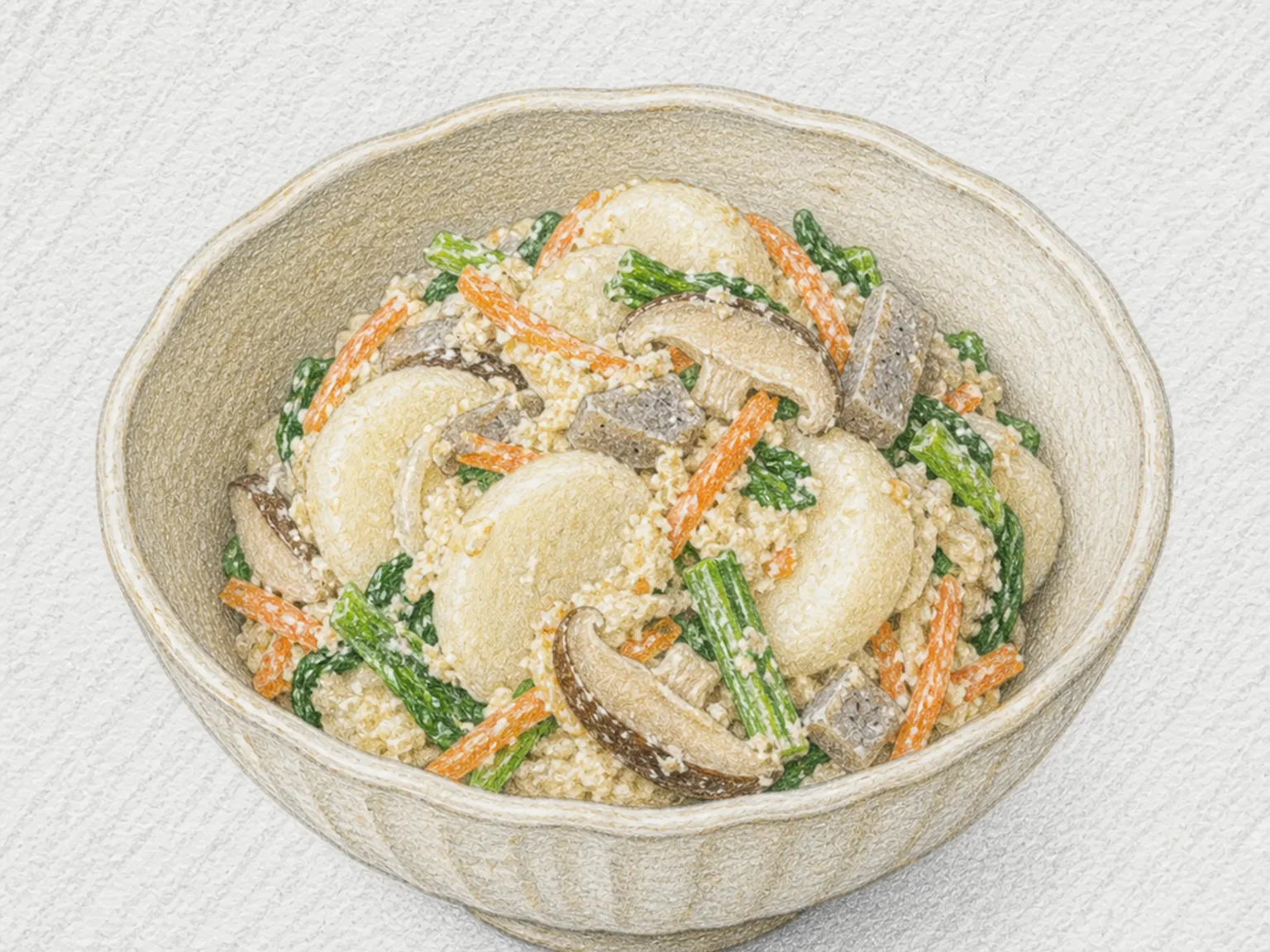
Oae dango is a local dish of the Moriyama and Yasu areas of Shiga. Flattened rice-flour dumplings are boiled, cooled, and coated in shira-ae made from pressed cotton tofu, toasted sesame, miso, and sugar, together with carrot, shiitake, konjac, and komatsuna. Because the dumplings make the dressed vegetables substantial, the dish can serve as both a side and something offered with tea. It has been prepared especially for Buddhist memorial gatherings, while also appearing in everyday meals. The sesame is ground before the seasonings and tofu are worked in, producing a smooth coating that clings best when every boiled component is thoroughly cooled and squeezed dry.
Tojiko-mame Soybean Wheat Sweet
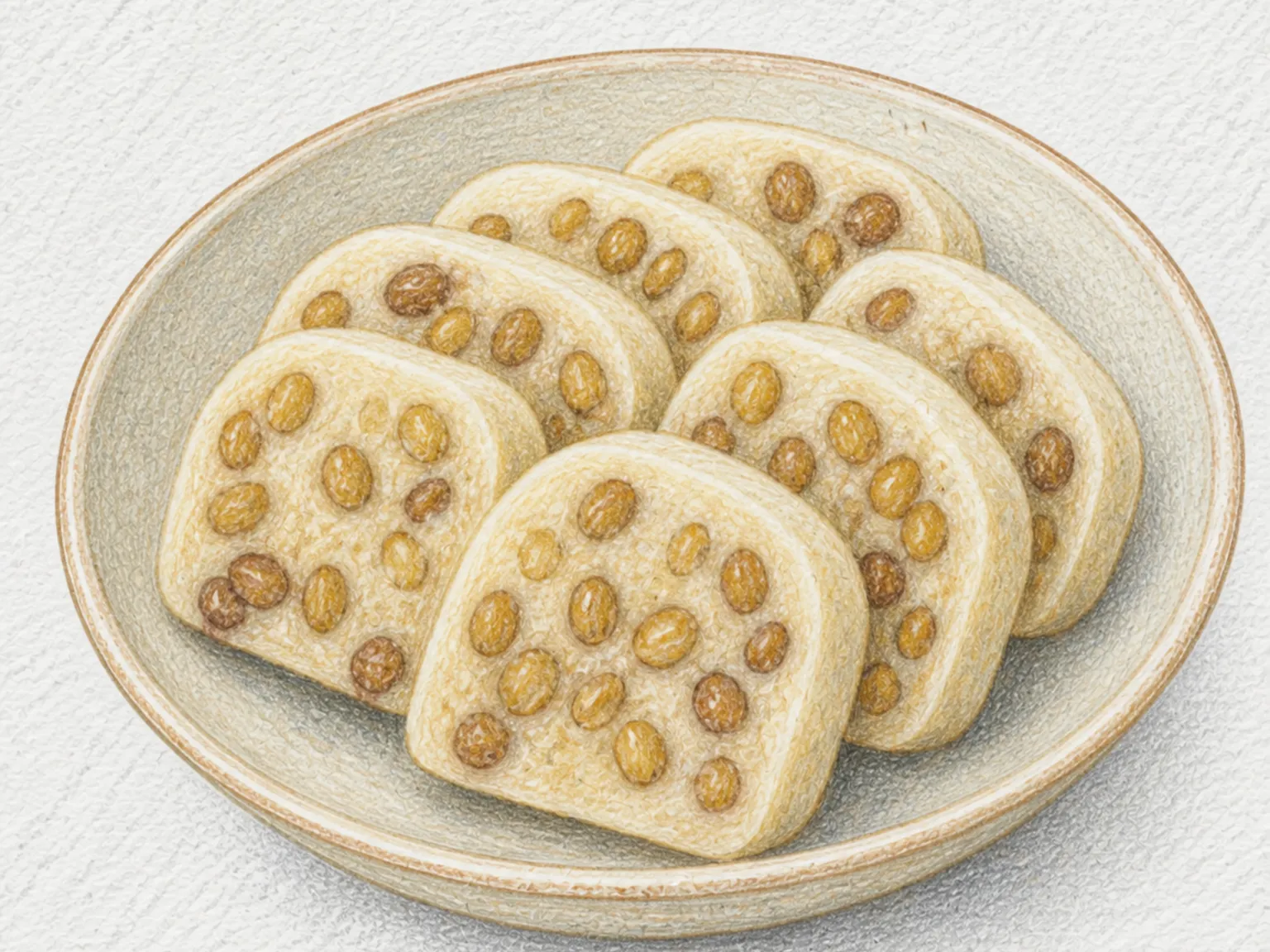
Tojiko-mame is a northern Kumamoto sweet that encloses densely roasted soybeans inside a wheat dough sweetened with dark brown and soft brown sugars. Its name refers to beans being shut inside the dough, and regional names include tochiko-mame and toshiko-mame. Families around Yamaga and Kikuchi prepared it at year-end with New Year foods, and it also appeared at ceremonies, as a busy-season farm snack, and as a gift. The soybeans are roasted until fragrant, briefly passed through boiling water, and folded into the sweet flour mixture. The heavy dough is kneaded in batches in an oiled pan until translucent, shaped into 5cm-wide logs, wrapped in bamboo leaves, and steamed for forty minutes before slicing.
Soki-jiru (Okinawan Clear Pork Rib Soup)
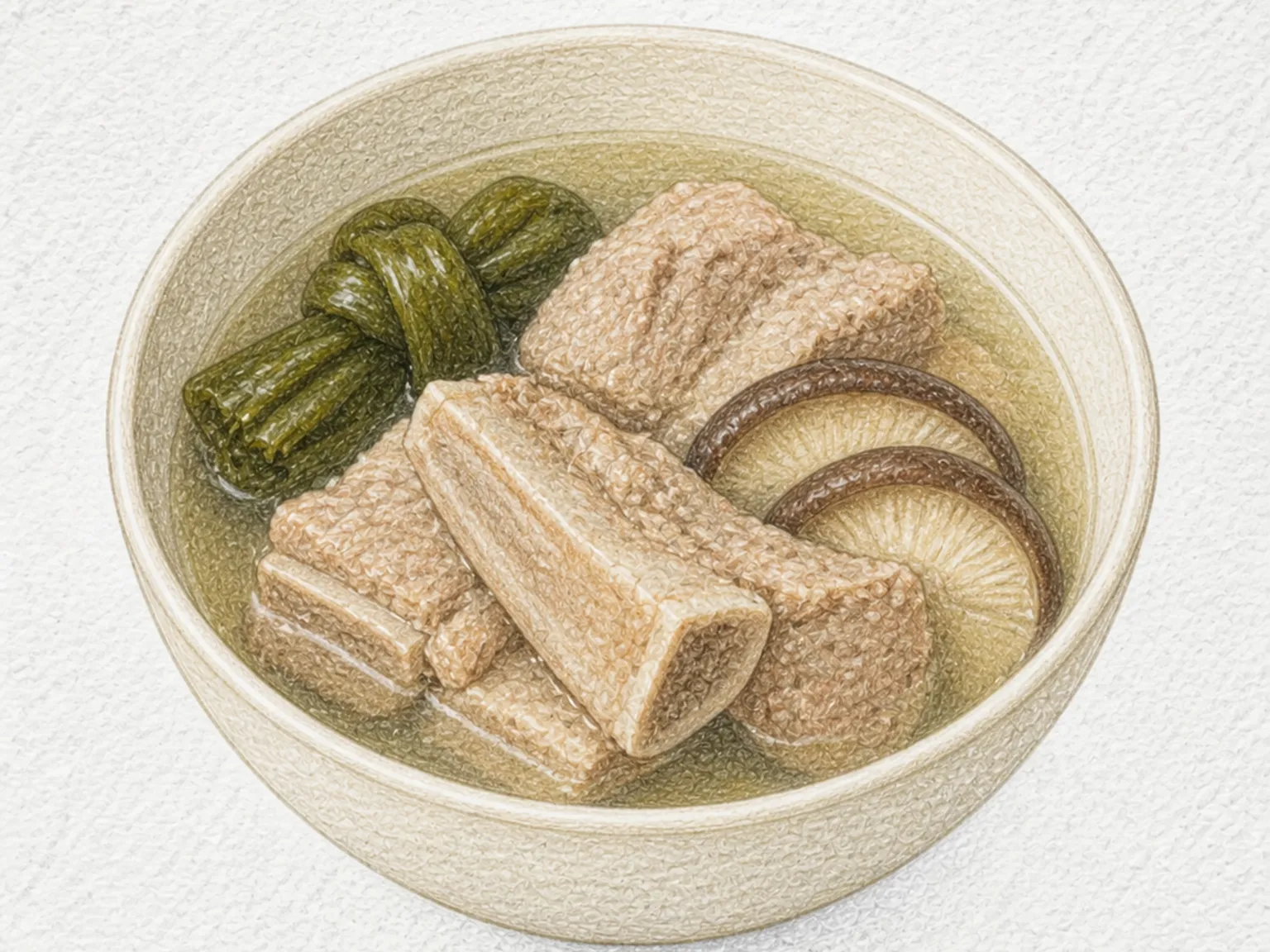
Soki-jiru is an Okinawan clear soup made by washing bone-in pork ribs first in cold water and then with hot water before simmering them gently with knotted kombu and rehydrated shiitake for about 90 minutes. When the meat releases from the bone easily, the kombu and mushrooms are removed briefly, bonito stock is added to restore the finished broth to about four cups, and salt and soy sauce season it like a light clear soup. This recipe therefore follows the exact core combination of ribs, kombu, and shiitake. Soki-jiru reflects Okinawa's practice of using every part of a pig and remains an important New Year dish.
Lanzhou Beef Noodles (Clear Spiced Beef Shank Soup Noodles)
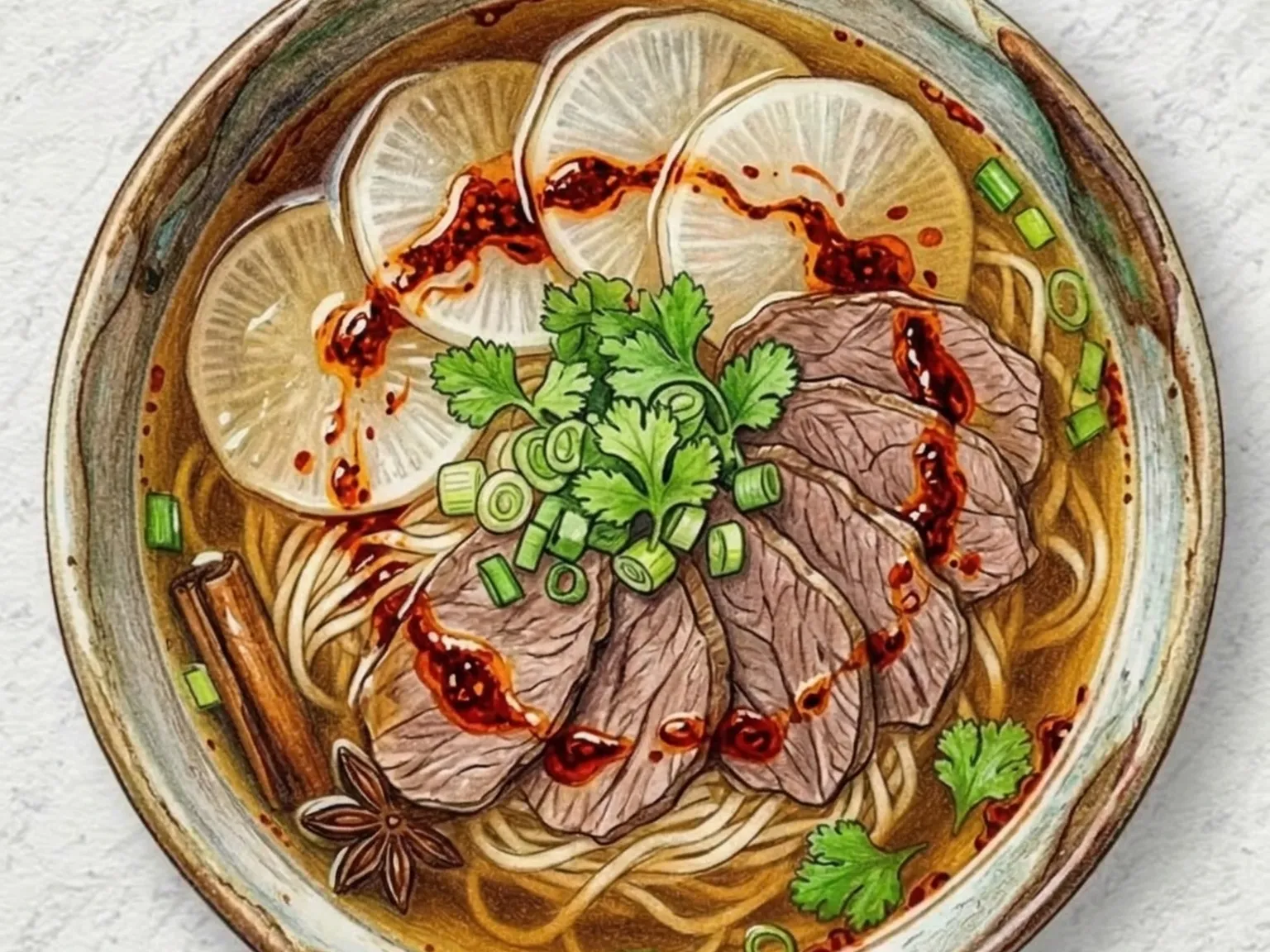
Lanzhou beef noodles are a clear-broth noodle soup originating from Lanzhou in China's Gansu province. Beef shank is soaked in cold water for thirty minutes to draw out blood, blanched, then simmered for two hours with star anise, a cinnamon stick, ginger, and garlic. Diligent skimming during the early stages of simmering is what keeps the broth transparent despite its long cooking time. Daikon radish is added to the strained broth and simmered until translucent, and the seasoning is kept to soy sauce and salt. The cooked beef is sliced thin and arranged over noodles in the bowl, with green onion, cilantro, and a drizzle of chili oil on top. Traditional versions use hand-pulled noodles stretched to order, but store-bought Chinese wheat noodles work as a practical substitute at home. The long cook time yields a broth that is clear yet deeply savory, which is the defining quality of this noodle.
Dan Bing (Taiwanese Egg Crepe Roll)
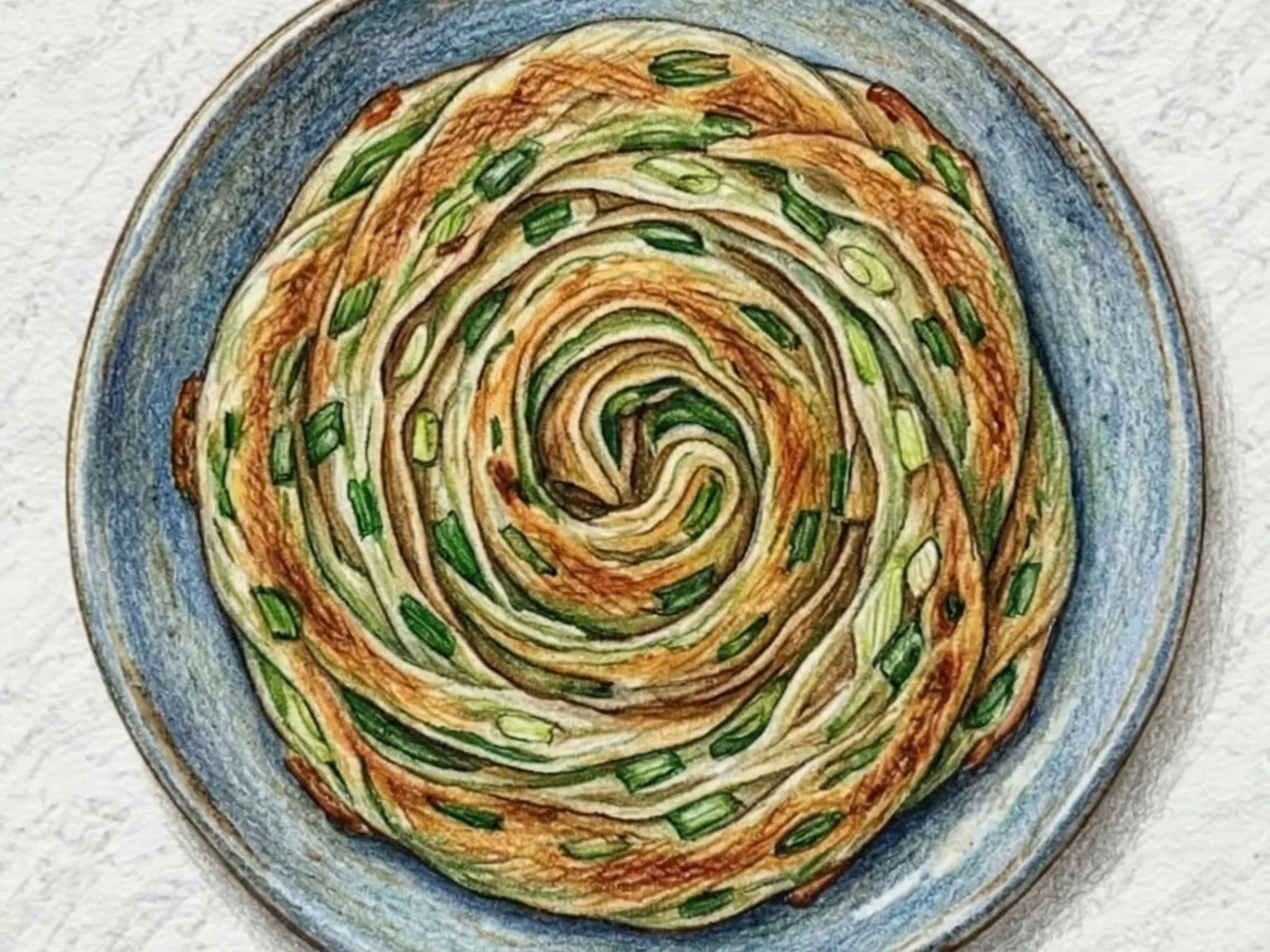
Dan bing is the cornerstone of Taiwan's breakfast culture, sold at nearly every zaocan dian (morning eatery) across the island. For many Taiwanese, no morning is complete without one. A thin wheat-flour batter is spread on a flat griddle, then an egg is cracked directly on top and spread across the crepe. As the egg sets, it bonds with the dough to create a dual texture: slightly chewy pastry on the outside and a soft, custardy egg layer within. Beyond the classic plain version, fillings range from corn and tuna to cheese and bacon, with each stall guarding its own batter recipe that keeps regulars loyal. A brush of soy paste adds salty depth, while a drizzle of chili oil sharpens the overall flavor. At 30-50 TWD (roughly one U.S. dollar), dan bing is assembled in under a minute, making it the grab-and-go fuel of Taiwan's scooter-riding commuters. The minor differences between stalls, the precise thickness of the batter, the exact moment the egg is spread, the ratio of soy paste to chili oil, are what turn a simple street food into a deeply personal daily ritual that regulars return to morning after morning.
Obaku Soft Barley Rice with Beans and Root Vegetables
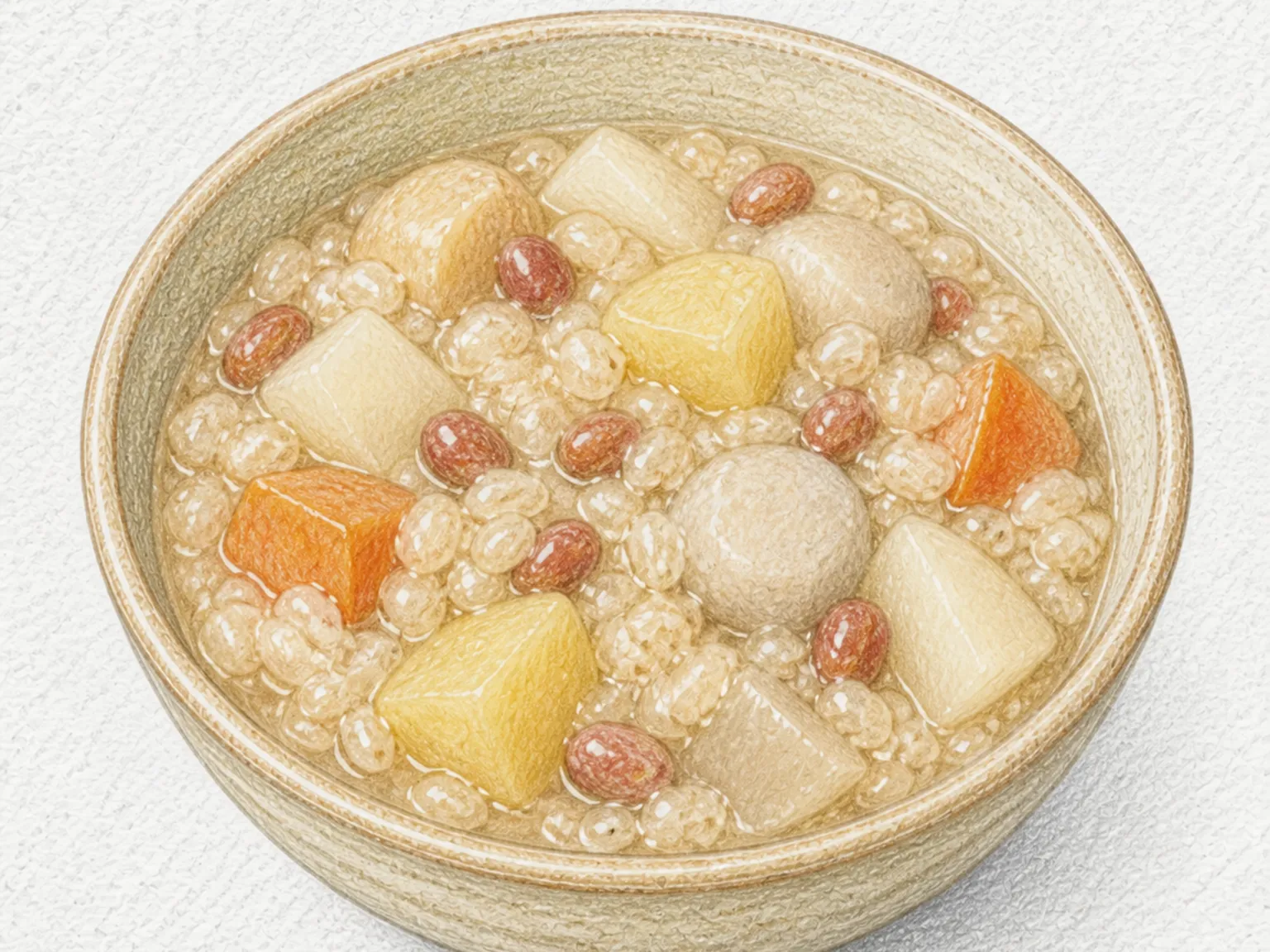
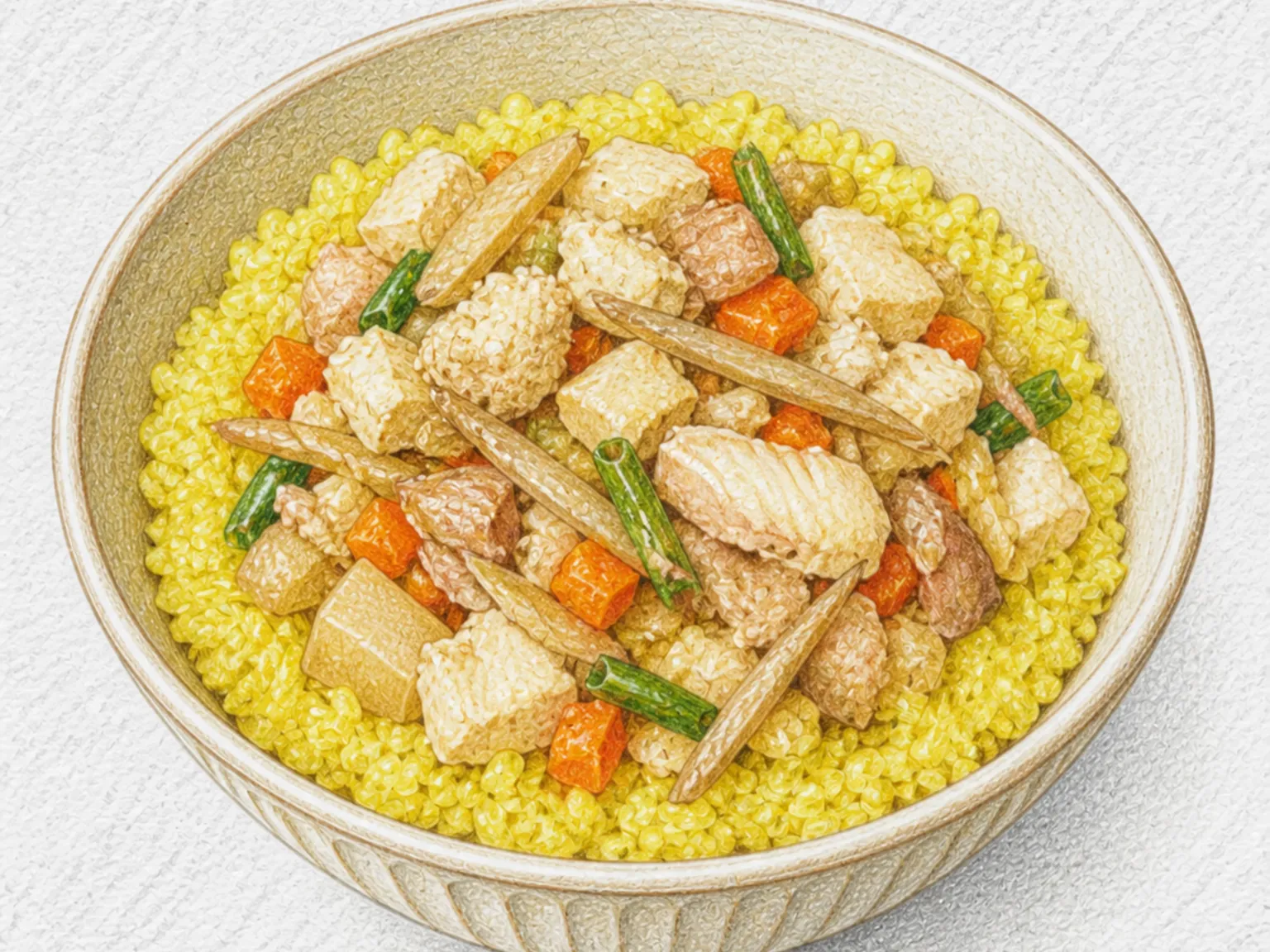
Obaku is a thick mountain staple from Yamanashi that cooks hulled whole barley, rice, and red kidney beans in abundant water, then folds in potato, sweet potato, taro, and daikon. In communities where wet-rice farming was difficult and rice was precious food for celebrations, barley supported ordinary meals. The appeal lies in whole grains that still pop gently within the soft roots and porridge-like rice. Barley is soaked for three to four hours and cooked separately the day before, while the beans soak overnight. In a large pot the beans cook first, followed by thin-cut daikon and the cooked barley. Once bean and radish begin to soften, soaked rice and all its water enter and the bottom must be stirred continuously. When the rice has bloomed and a spatula briefly exposes the pot floor, separately boiled potato, sweet potato, and taro are folded in. Obaku itself remains unseasoned; each diner adds negi miso mixed with scallion, bonito flakes, and a little sugar.
Tsuki no Shizuku (Fondant-Coated Koshu Grapes)
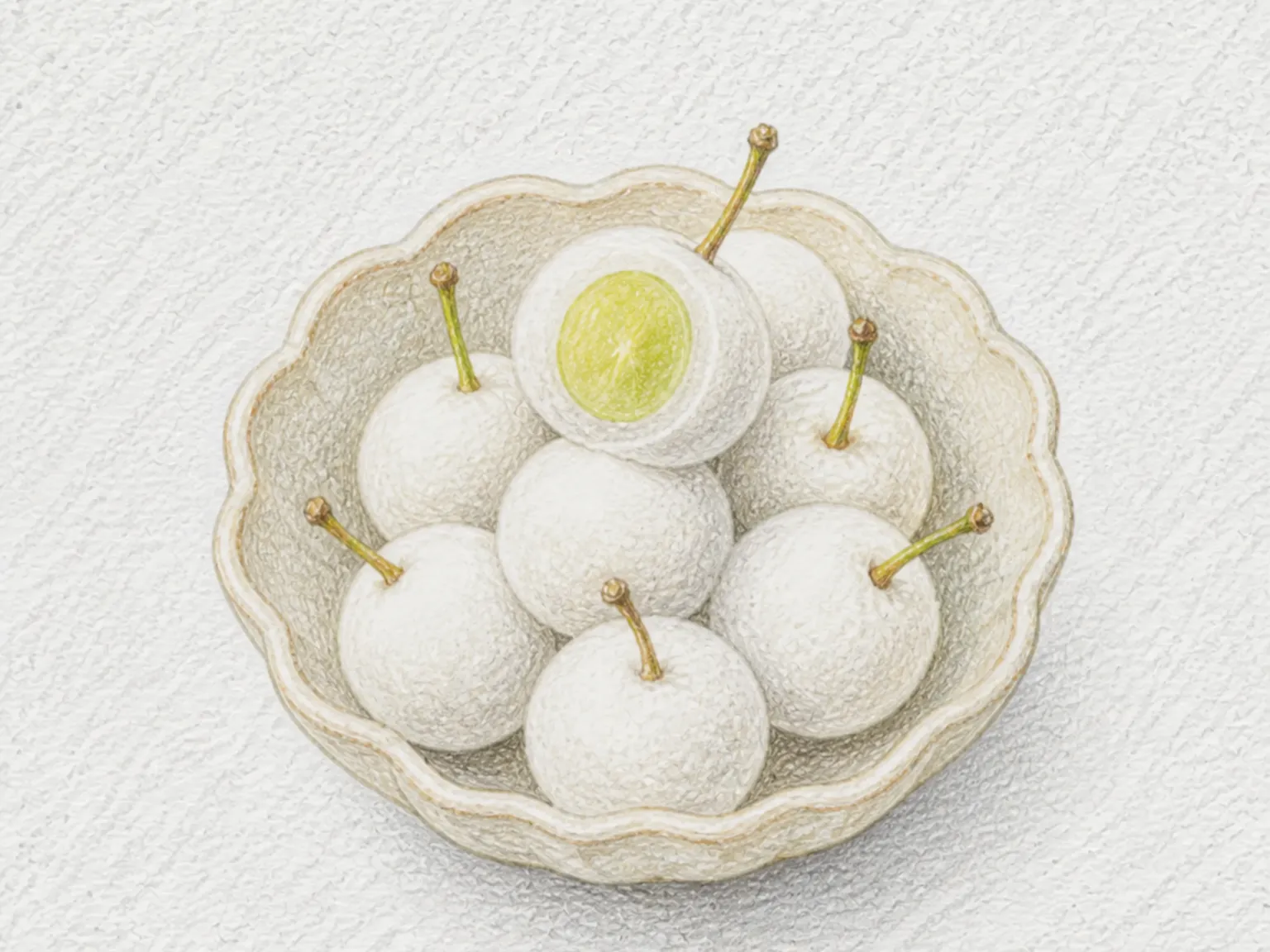
Tsuki no Shizuku is a Yamanashi confection made from fresh, thick-skinned, tart Koshu grapes. Each grape is cut from the cluster with a long stem, dipped in white fondant made by boiling sugar and water to 112 to 114C, cooling it to 40C, and beating it vigorously, then left to set. A firm but crumbly white sugar shell keeps the fresh juice inside. One origin story says a grape fell into boiling sugar at a Kofu confectionery during the Edo period. Moisture can make hot sugar spit and prevent an even coating, so dry grapes and tools completely and never touch the 114C syrup with bare skin.
Soto Betawi (Jakarta Creamy Coconut Milk Beef Soup)
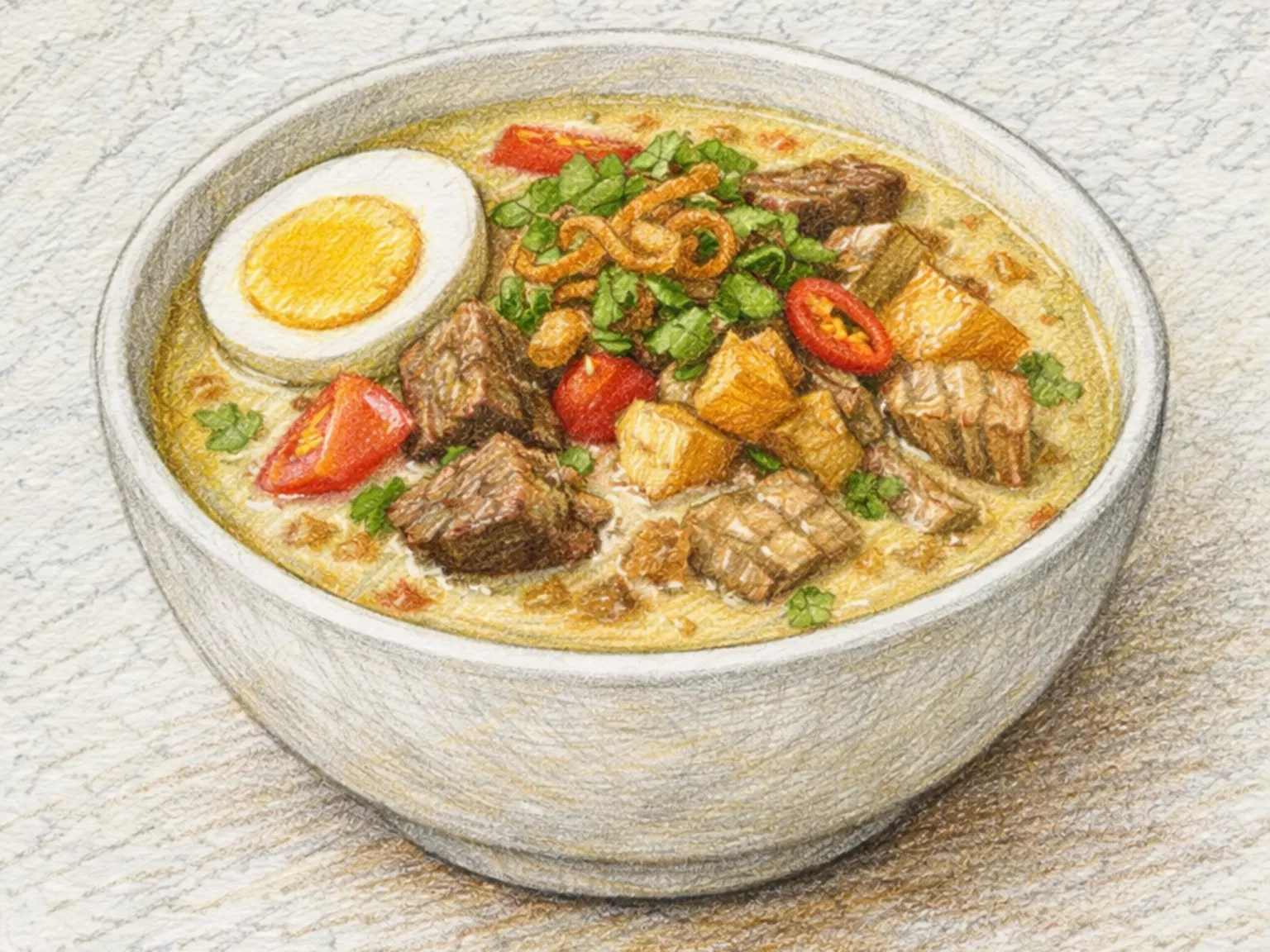
Soto Betawi is a Jakarta-born beef soup distinguished by its creamy, coconut-enriched broth and a layered spice profile. The aromatics begin with a paste of onion, garlic, and ginger, bloomed in oil alongside ground coriander and a cinnamon stick to build a warm, complex base. Beef brisket simmers in this fragrant liquid for forty minutes or more until it yields to the touch, its collagen enriching the stock. Coconut milk and fish sauce are stirred in toward the end, transforming the broth into something rich and velvety while rounding off the sharper spice edges. The finished soup is neither thin nor heavy-it sits in a satisfying middle ground, substantial enough to serve as a main course with steamed rice or crusty bread on the side. Soto Betawi is a point of pride for Jakarta's Betawi community and a fixture of the city's street-food landscape.
Chinese Lo Mein
Lo mein is a Chinese noodle dish where boiled noodles are tossed gently with vegetables, protein, and a soy-based sauce, resulting in a soft, glossy finish that sets it apart from the crisper chow mein. The sauce - soy sauce, oyster sauce, and a small amount of sugar - is premixed so it coats evenly during the brief time in the pan. Shrimp is seared first until half-cooked, then broccoli and carrot are stir-fried just until they lose their raw crunch. The warm, drained noodles go in last, and everything is tossed together until the sauce is absorbed and the noodles gleam. The key is restraint: lo mein should stay moist and supple, not charred or dry. The protein can be swapped freely - chicken, beef, or tofu all work with the same sauce and technique.
Dojo-Ni (Whole Loach Simmered with Burdock)
Dojo-ni is a freshwater fish stew from eastern Saitama in which cleaned loaches are simmered whole with burdock, tofu, and long onion in seasoned broth. The loaches are placed in a deep covered container and sake is poured in along the rim; once they stop moving, they are transferred to warishita made in a ratio of four parts water, one part sake, and one part soy sauce, with mirin added. Thinly shaved burdock enters at the same time and the pot is brought to a strong boil. The heat is then lowered before bite-size tofu and chopped onion are added. Cooking continues until the fish is opaque, thoroughly heated, and tender enough to eat with its small bones. The dish reflects river and paddy life around the Tone and Ayase basins, where loaches were caught from summer into autumn. Slender ones went into soup, while plump fish were reserved for whole stewing.
Tea Rice Bowl (Japanese Green Tea Poured Rice with Salmon)
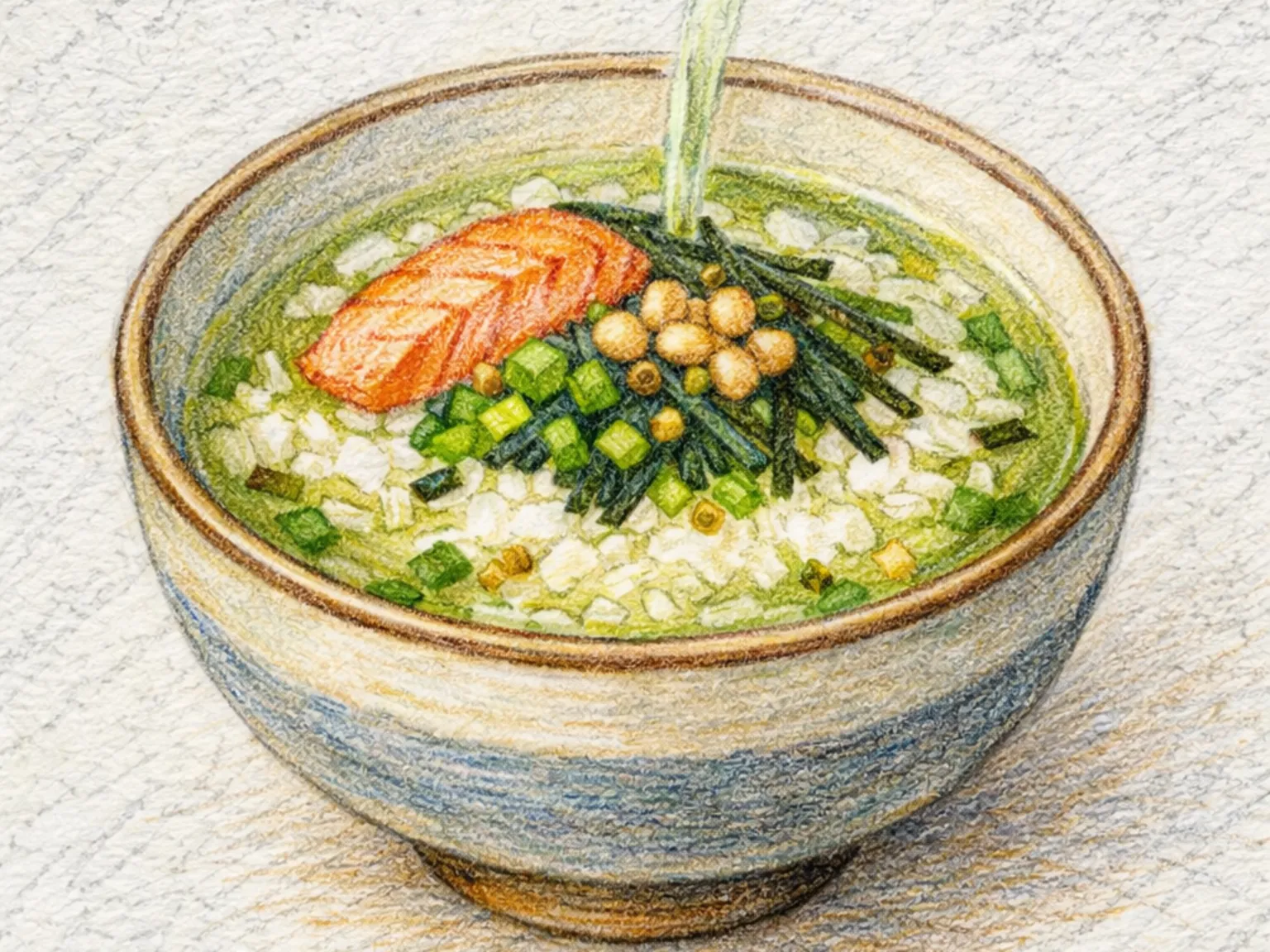
Ochazuke is a Japanese dish of cooked rice topped with grilled salmon flakes, dried seaweed, green onion, and wasabi, over which hot green tea is poured just before eating. The astringent bitterness of the green tea works against the fatty richness of the salmon, cutting through the oil and keeping the palate clean throughout the bowl. Wasabi adds a sharp, nasal heat that punctuates each spoonful differently depending on how much dissolves into the surrounding liquid. A light drizzle of soy sauce provides a salty baseline that ties the ingredients together without overpowering the tea. The seaweed flakes soften and dissolve into the hot liquid, gradually releasing a subtle oceanic aroma that spreads through the broth. As the meal progresses, the rice releases some starch into the tea, thickening the broth slightly and shifting the flavor toward the end. Using dashi stock made from kombu and bonito instead of green tea produces a richer, more umami-forward version. Variations with pickled plum or mentaiko in place of salmon are equally common.
Yamaguchi Uiro (Steamed Warabi and Red Bean Sweet)
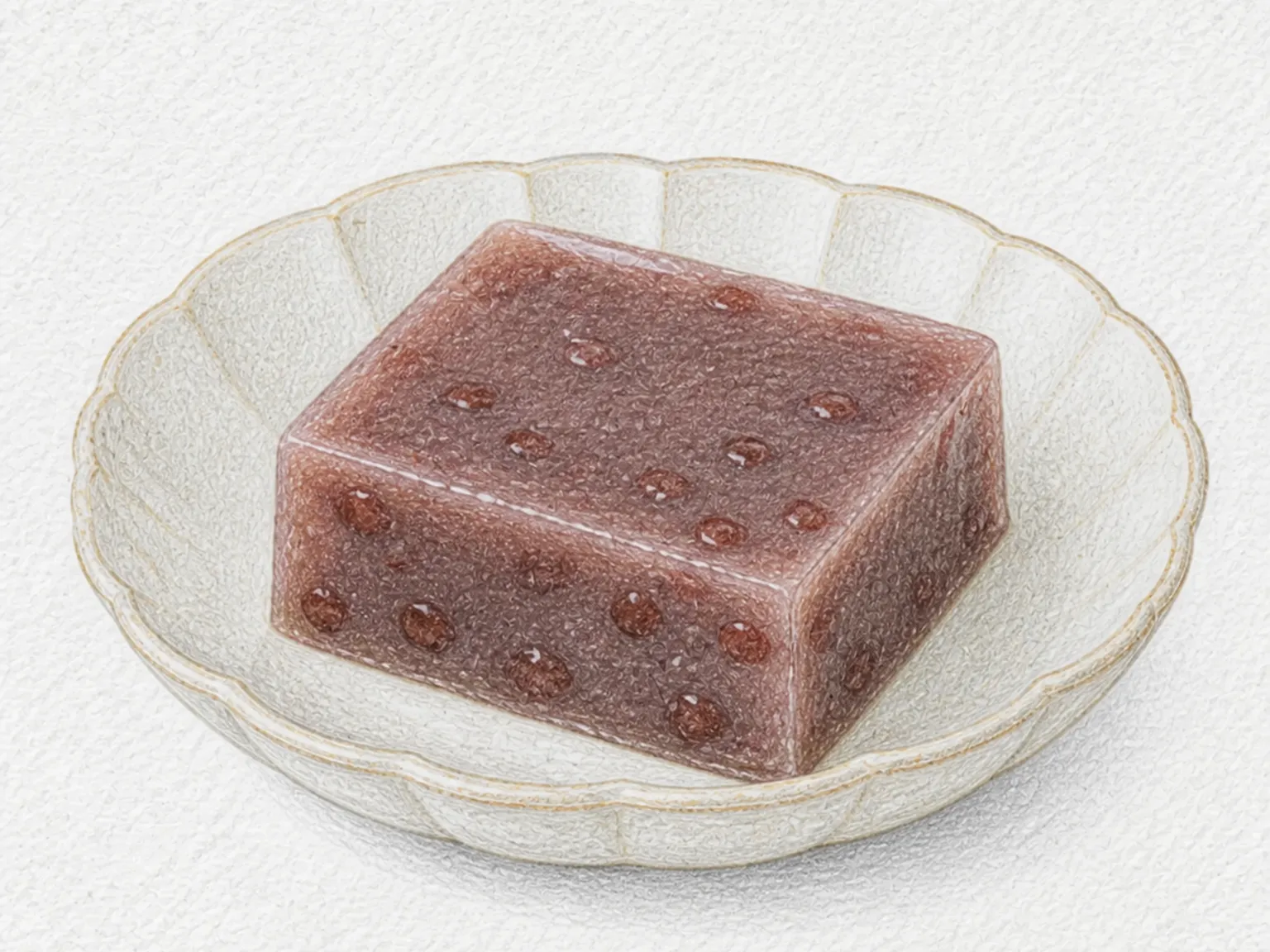
Uiro is a Japanese steamed sweet made by dissolving starch or flour with sugar and water, pouring the batter into a mold, and steaming it until set. The Yamaguchi style differs from heavier rice flour versions made elsewhere: warabi starch and smooth red bean paste give it a soft, gently trembling elasticity. This small recipe combines 20g warabi starch, 1 tablespoon sugar, 4 tablespoons water, and 60g prepared smooth anko. Adding the water gradually before the bean paste prevents dry lumps, while straining the batter produces an even surface. Fifteen minutes in a fully steaming pot sets the center. Slow cooling at room temperature preserves the supple texture that can become firm if chilled too quickly.
Mizuika Mada-jiru (Squid Ink Miso Soup)
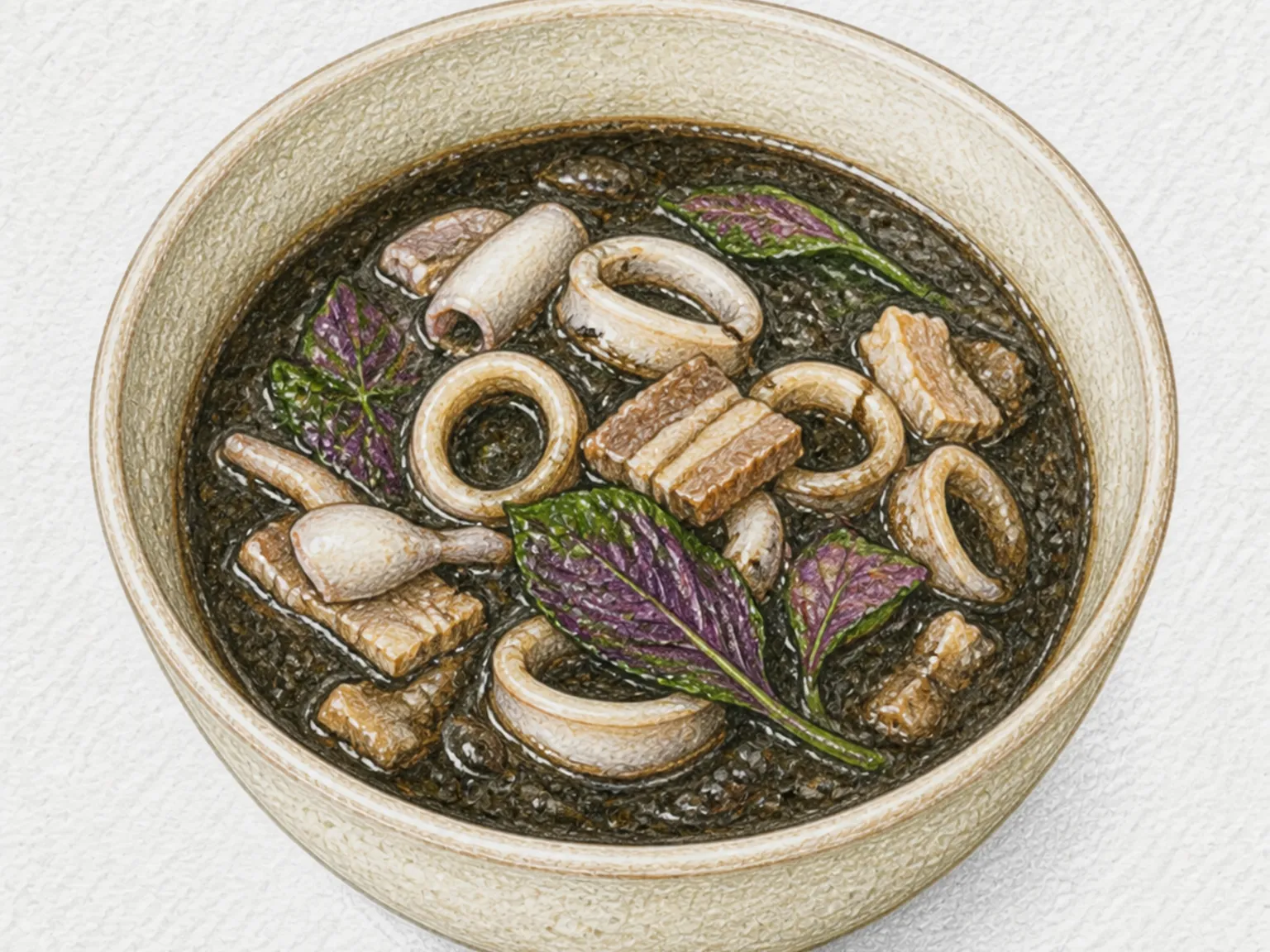
Mizuika mada-jiru is a dark, rich soup from the Amami area of Kagoshima. Pork belly and miso flavor a bonito broth, then flesh from mizuika, the local name for bigfin reef squid, and mada, its ink sac, are added. Squid fishing has deep roots in Amami, where these large translucent squid are caught throughout the year. Ink rounds the saltiness of miso and the richness of pork with a marine savoriness, while purple handama leaves add fresh herbal notes and color. The squid is cooked gently only until its center is done so it stays tender, and the ink is loosened thoroughly in broth before it enters the pot.
Mala Biang Biang Noodles (Wide Numbing Chili Oil Noodles)
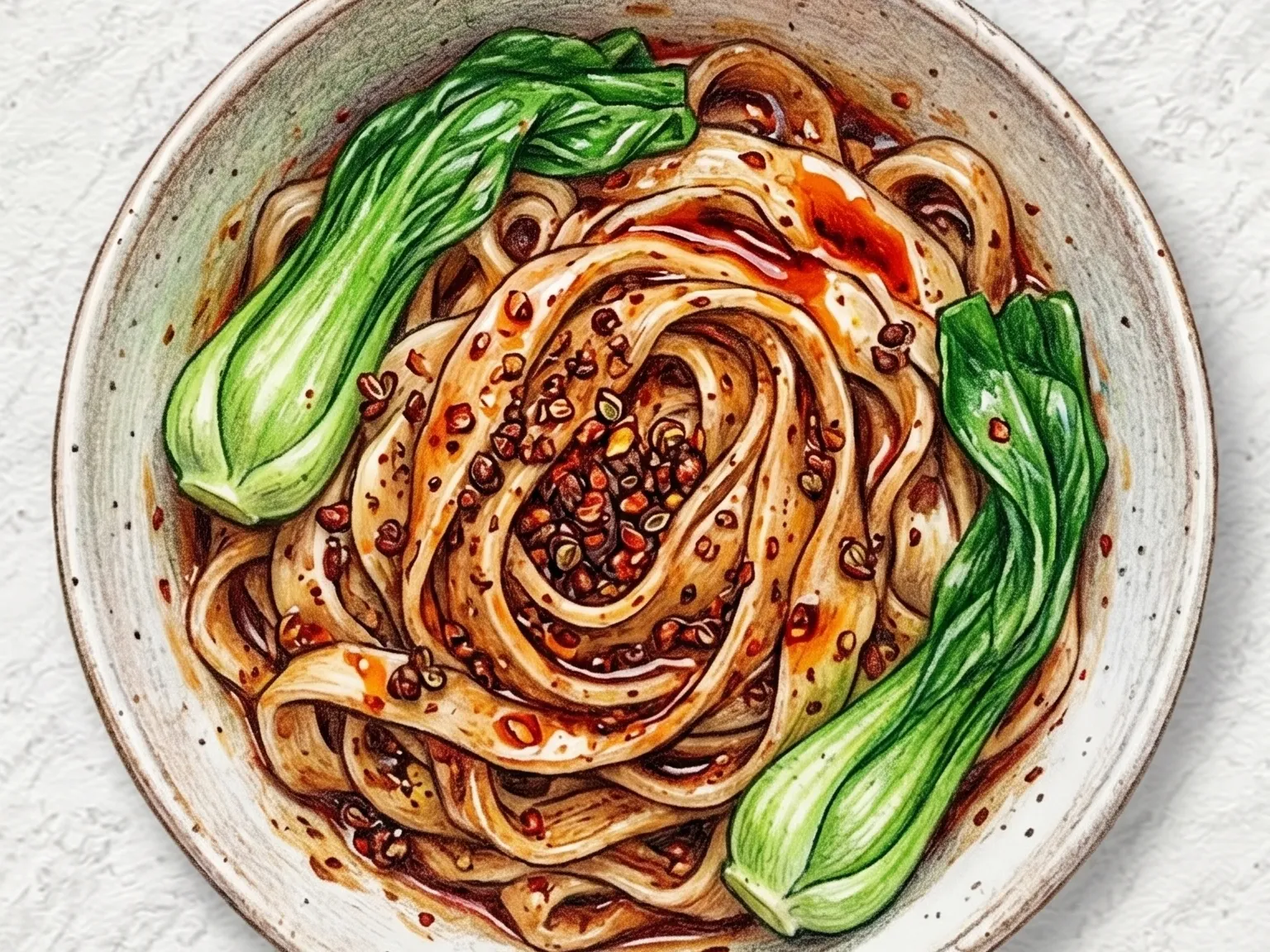
Mala biangbiang noodles consist of wide, thick strands that are coated in a complex sauce made from chili oil, doubanjiang, soy sauce, and black vinegar. This combination provides a specific type of heat that numbs the palate while simultaneously delivering spice. To achieve the authentic numbing character that defines mala, whole Sichuan peppercorns are briefly warmed in oil over a low heat. This controlled heating process is designed to release the numbing compounds from the spice without scorching the husks, a technical step that distinguishes genuine mala flavor from the simple heat of red chilies. The sauce is constructed in multiple layers by stacking the fermented saltiness of the doubanjiang with the deep and mellow acidity of the black vinegar. These ingredients work together to produce a seasoning profile with distinct depth rather than a single note of spiciness. For the preparation of the noodles, the broad strands are boiled for one minute less than the time indicated on the package. This ensures the dough remains elastic and chewy throughout the eating process. Because the noodles have such a large surface area, it is necessary to toss them aggressively in the sauce to ensure the seasoning is worked thoroughly into the wide surfaces of every strand. While the noodles are cooking, bok choy is blanched for forty seconds in the same boiling water. This vegetable adds a crisp and clean green element to the bowl, which serves to offset the richness of the oiled noodles. To finish the dish, a final drizzle of chili oil is applied over the top of the bowl just before it is served to intensify the aroma of the spices.
Dongpo Pork (Chinese Soy-Braised Melt-in-Mouth Pork Belly)
Dongpo rou is a Chinese-style pork belly braised slowly in soy sauce, rice wine, sugar, ginger, and green onion until the fat turns translucent and the lean sections absorb a deep mahogany glaze. The belly is cut into thick five-centimeter squares and tied with kitchen twine so the layers stay together over the long cook. Searing the pieces briefly in hot oil before moving them to the braising liquid is not decorative; the Maillard reaction at the surface builds color and aroma that carry into the finished dish. Long cooking over low heat renders the fat layers meltingly soft, while the lean portions turn a deep mahogany from the soy and sugar. Rice wine drives off any porkiness and ginger sharpens the finish, though the dominant impression is a sweet, deeply savory richness. Named after the Song dynasty poet Su Dongpo, the dish is appreciated for the luxurious texture of the rendered fat as much as for its flavor. Reducing the braising liquid separately and spooning it over the finished pieces produces a glossy coat that makes the plated result visually striking.
Ohan to Kayaku (Gardenia Rice with Fish and Vegetable Stew)
Ohan to kayaku is an Usuki ceremonial meal pairing rice colored yellow with gardenia fruit and a hearty stew of tofu, burdock, daikon, carrot, onion, and white-fleshed lizardfish. The gardenia infusion is strained and used promptly because prolonged soaking can dull the bright yellow or turn it greenish. For the kayaku, drained tofu is crumbled into oil, followed by minced fish and firm vegetables, then dashi and soy-based seasoning create a warm, substantial soup spooned directly over the rice. One story says the frugal Usuki domain developed yellow rice as an alternative to costly red bean rice. Another links its color to paella encountered through Nanban trade under the Christian lord Otomo Sorin. Merchants also cooked large pots of kayaku on New Year's Eve and reheated them through the first three days of the year.
Warabi Mochi (Japanese Bracken Starch Jelly with Kinako)
Warabi starch is dissolved in water with sugar and cooked in a saucepan, stirred constantly, until the mixture turns translucent and pulls away from the sides in a glossy, elastic mass. Once poured into a mold and chilled, it sets into a wobbly, jelly-like confection that is soft and springy on the tongue. Cut into bite-sized pieces and rolled generously in kinako - roasted soybean powder - each piece gains a toasty, nutty coating that contrasts with the clean sweetness inside. A drizzle of dark brown sugar syrup over the top adds a deep, molasses-like sweetness that layers with the kinako. Continuous stirring during cooking is non-negotiable, as the starch scorches quickly on the bottom of the pan. The mixture must reach full translucency; stopping too early leaves a raw starch taste. Pressing plastic wrap directly onto the surface while cooling prevents a dry skin from forming. Warabi mochi is at its most supple and appealing within hours of being made.
Suan Cai Yu (Sichuan Pickled Mustard Greens Fish Stew)
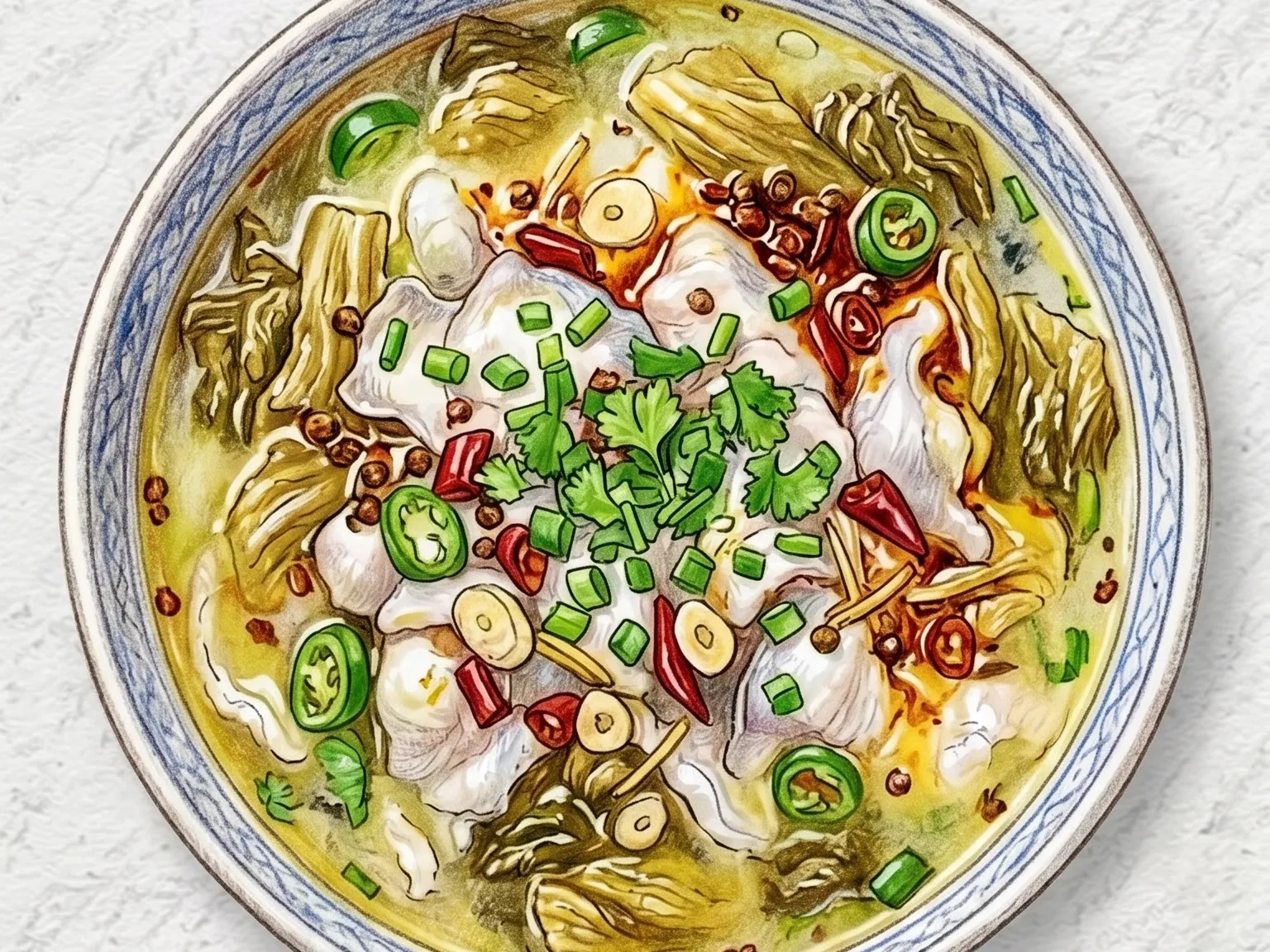
Suan cai yu is a Sichuan fish stew that draws its defining character from pickled mustard greens-fermented vegetables whose sharp acidity provides the tangy backbone of the dish. The cooking starts with chili oil, garlic, ginger, and dried chilies sizzled together to create a pungent, aromatic base. The rinsed pickled greens go in next, their sour bite mellowing slightly as they simmer in stock for ten minutes, releasing a complex fermented depth into the broth. Thin slices of white fish, lightly dusted with starch to protect their delicate texture, are added at the very end and cooked for only a few minutes so they remain silky and intact. The finished bowl is a study in contrasts: the broth is simultaneously sour from the pickled greens, spicy from the chili oil, and savory from the stock, while the fish offers a clean, mild counterpoint. It is a deeply satisfying dish that showcases Sichuan cuisine's mastery of bold, layered flavors.
Mazesoba (Japanese Brothless Mixed Noodles with Minced Pork)
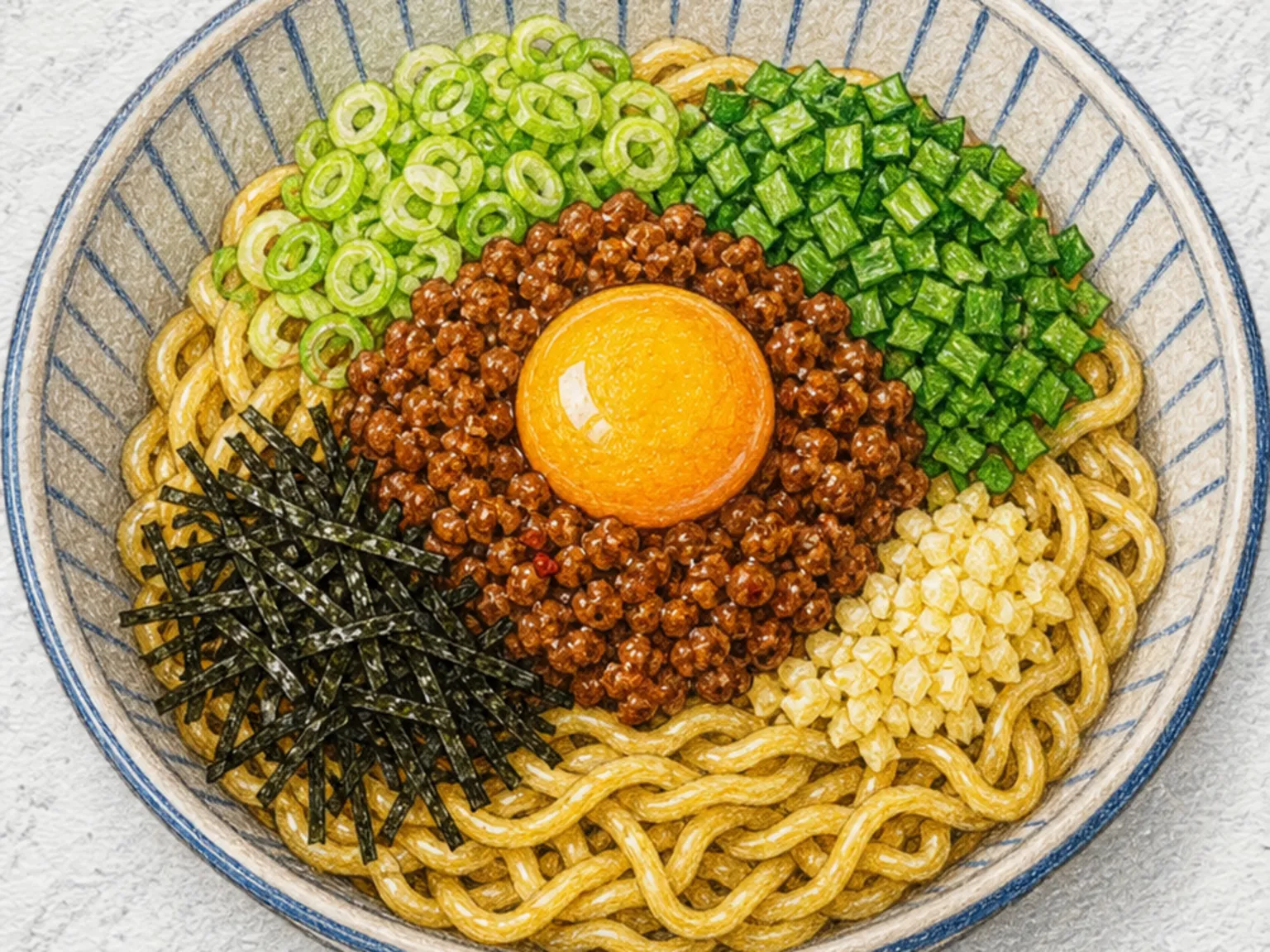
Mazesoba is a brothless noodle dish served with seasoned minced pork, chives, green onion, seaweed flakes, fish powder, and egg yolk over hot thick ramen noodles. Heat 15ml chili oil in a pan, add 150g minced pork and 20g minced garlic, and stir-fry until the pork is fully cooked. Add 30ml soy sauce and 15ml mirin, then continue cooking until loose liquid no longer remains on the bottom of the pan. Reducing the seasoning at this stage keeps it on the meat instead of forming a watery pool beneath the finished noodles. Finely chop 40g chives and 50g green onion, and prepare 5g seaweed flakes, 10g fish powder, and 2 egg yolks. Boil 400g thick ramen noodles, drain them thoroughly, and do not rinse them in cold water. Divide the noodles into serving bowls while they are still hot. Arrange the pork, chives, green onion, seaweed, and fish powder around the top so none of the toppings sits in one large pile, then place the egg yolk in the center. Break the yolk immediately before eating and mix from the bottom of the bowl until the noodles and every topping are evenly combined. Serving the noodles hot without rinsing and reducing the meat seasoning fully are the main controls for keeping this brothless dish cohesive rather than watery.
Doteyaki (Beef Tendon Simmered in Miso)
Doteyaki is an Osaka comfort dish of beef tendon parboiled to remove impurities, then gently cooked with dashi, ginger, and green onion until tender. The tendon and torn konnyaku are finished in a rich country-miso glaze with sugar, mirin, and sake. Its name refers to the traditional bank of miso built around the inside rim of an iron pot, allowing the paste to dissolve gradually into the bubbling liquid at the center. The result is sweet, savory, deeply flavored, and pleasantly chewy. It is served year-round in Shinsekai izakaya and kushikatsu shops, often as an affordable accompaniment to drinks.
About Asian
Each country brings its own signature spices and sauces, so even the same ingredients can produce completely different flavors. With a few key pantry items - coconut milk, fish sauce, curry powder, doubanjiang - you can recreate the tastes of Asia at home.