Japanese Beef Bowl (Gyudon)
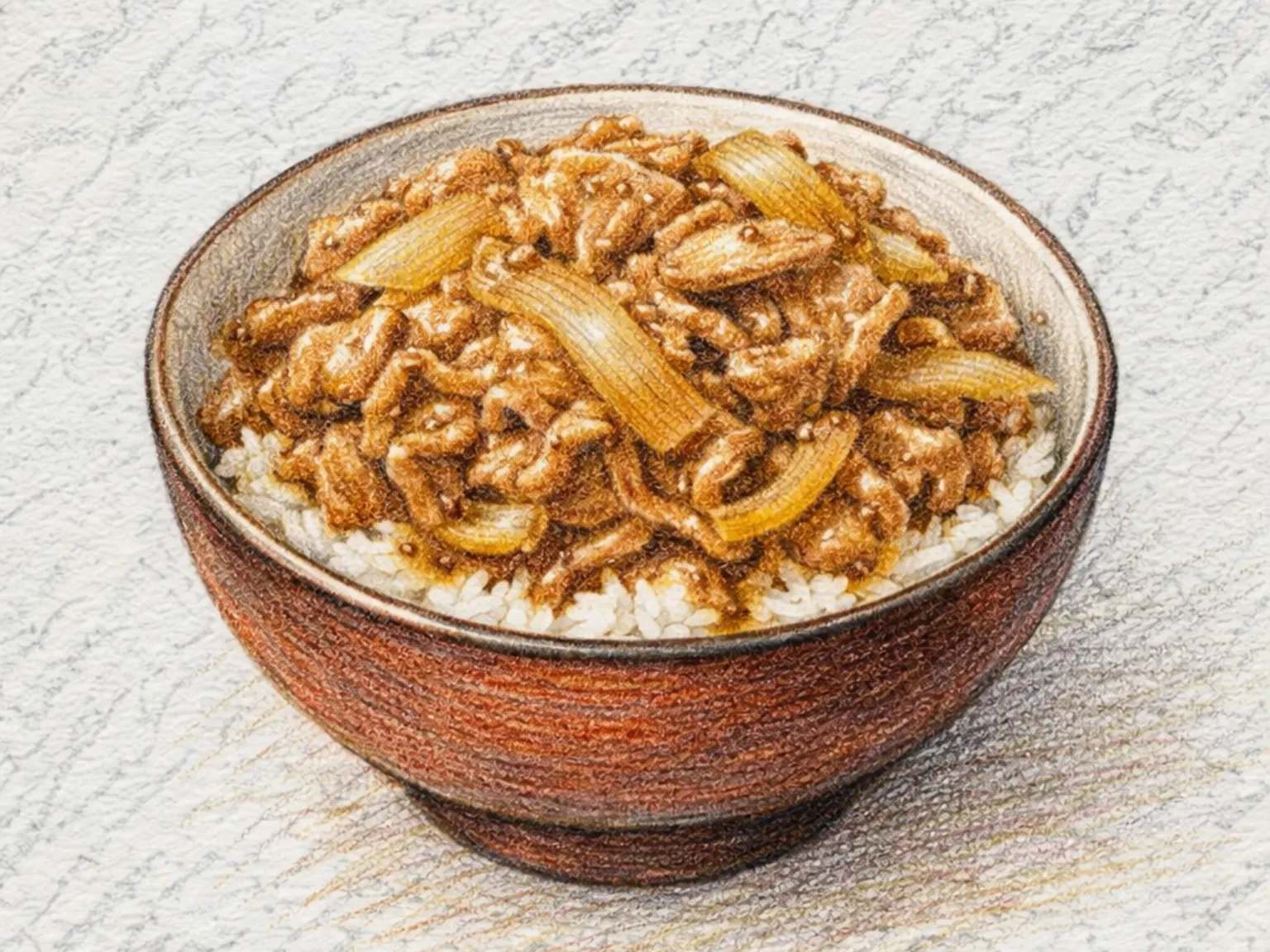
Thin-sliced beef and onion simmer briefly in soy sauce, mirin, sugar and ginger and go over rice with their broth, and the ginger leaves a sharp edge at the end of all that sweetness.
509 Japanese recipes. Page 8 of 22. Compare ingredients and cooking times. Japanese Beef Bowl (Gyudon), Urakami Soboro (Pork and Burdock Stir-Fry).
Thin-sliced beef and onion simmer briefly in soy sauce, mirin, sugar and ginger and go over rice with their broth, and the ginger leaves a sharp edge at the end of all that sweetness.
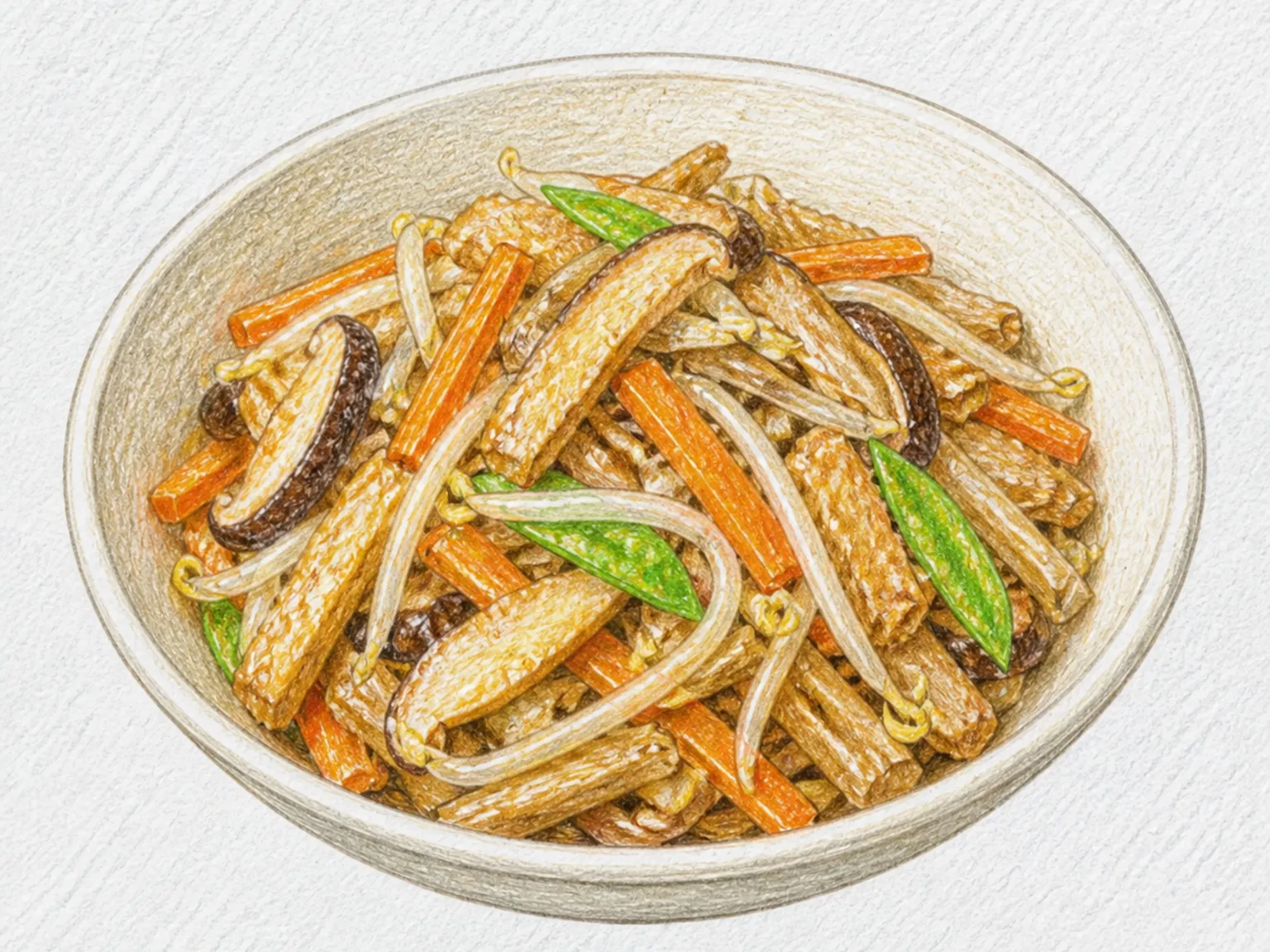
Despite the name, this soboro has no minced meat: pork belly, fried fish cake, konnyaku and carrot are all cut into sturdy 5 cm strips. The burdock is shaved thin and the bean sprouts go in last for just 90 seconds, giving each ingredient a different bite. Light soy sauce, sugar and sake with filtered shiitake soaking liquid make a short simmer, and the dish is served while a little liquid is still in the pan.
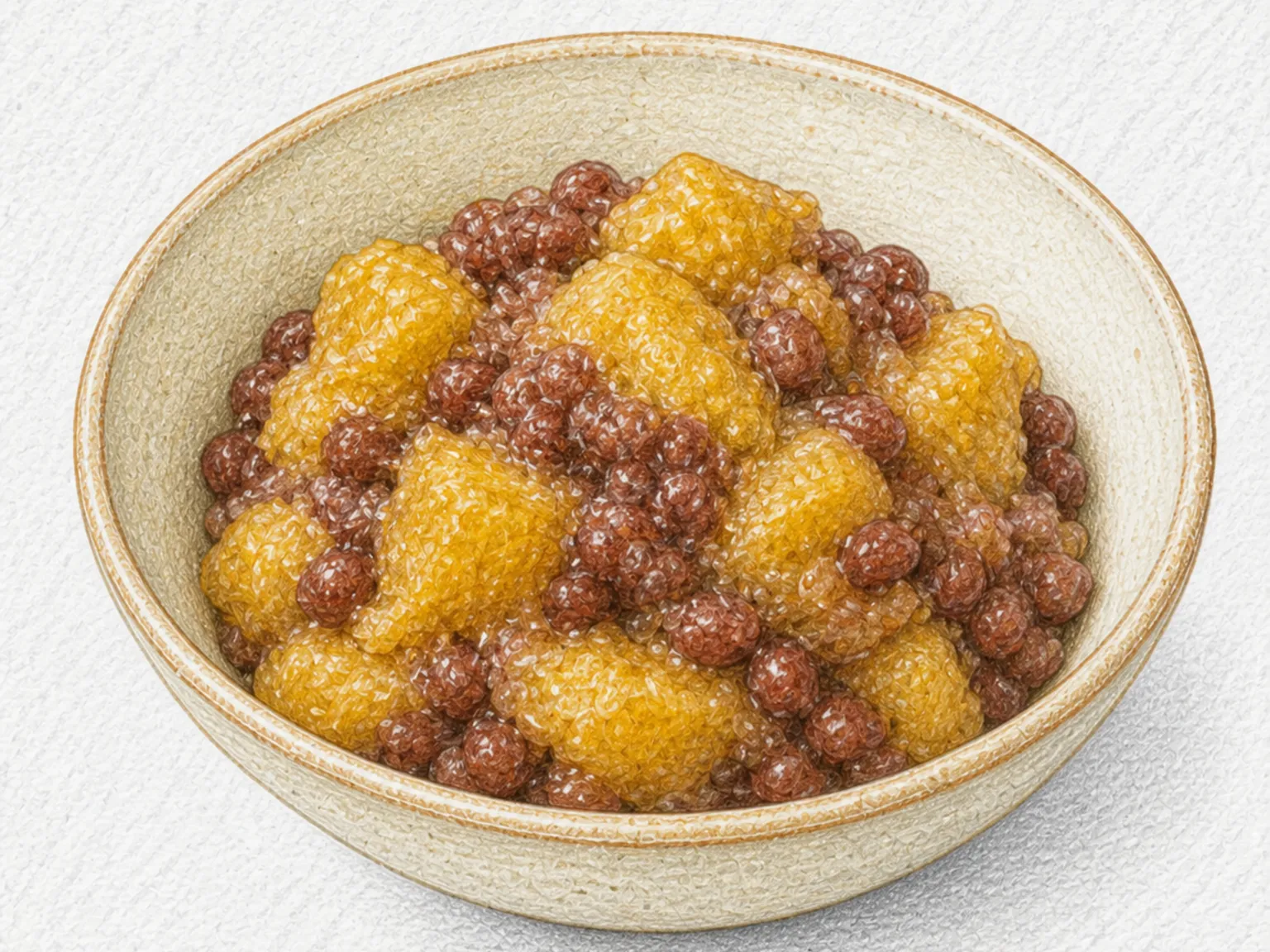
In Ino, Kochi, dried sweet potato goes by hera, and yudebera means whole potatoes boiled for a long time, dried, sliced into rounds, and dried again. Rehydrated and simmered with azuki and sugar, they bring a chewy bite against the soft, mealy beans. Unlike sweet red bean soups with flour dumplings, this one is finished just moist enough to scoop with a spoon.
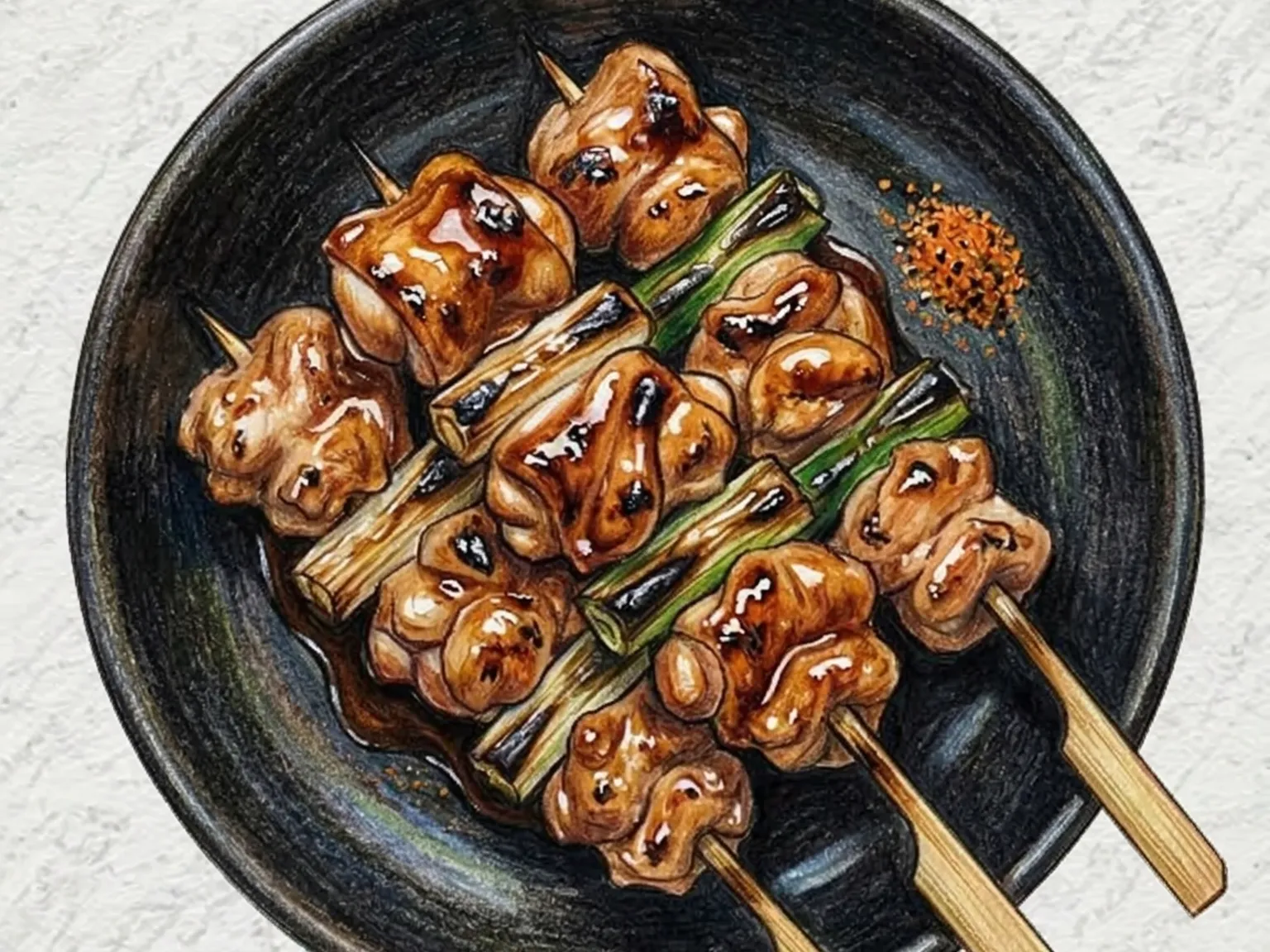
Grilled chicken thigh picks up a sweet, salty glaze and a few charred edges as the tare, a reduction of soy sauce, mirin, sugar, and sake, is brushed on in thin layers. The scallion pieces between the chicken lose their sharpness on the grill and turn sweet, which softens the saltiness of the glaze. For a plainer version, shio style skips the tare and seasons with salt alone, letting the chicken juices carry the flavor.
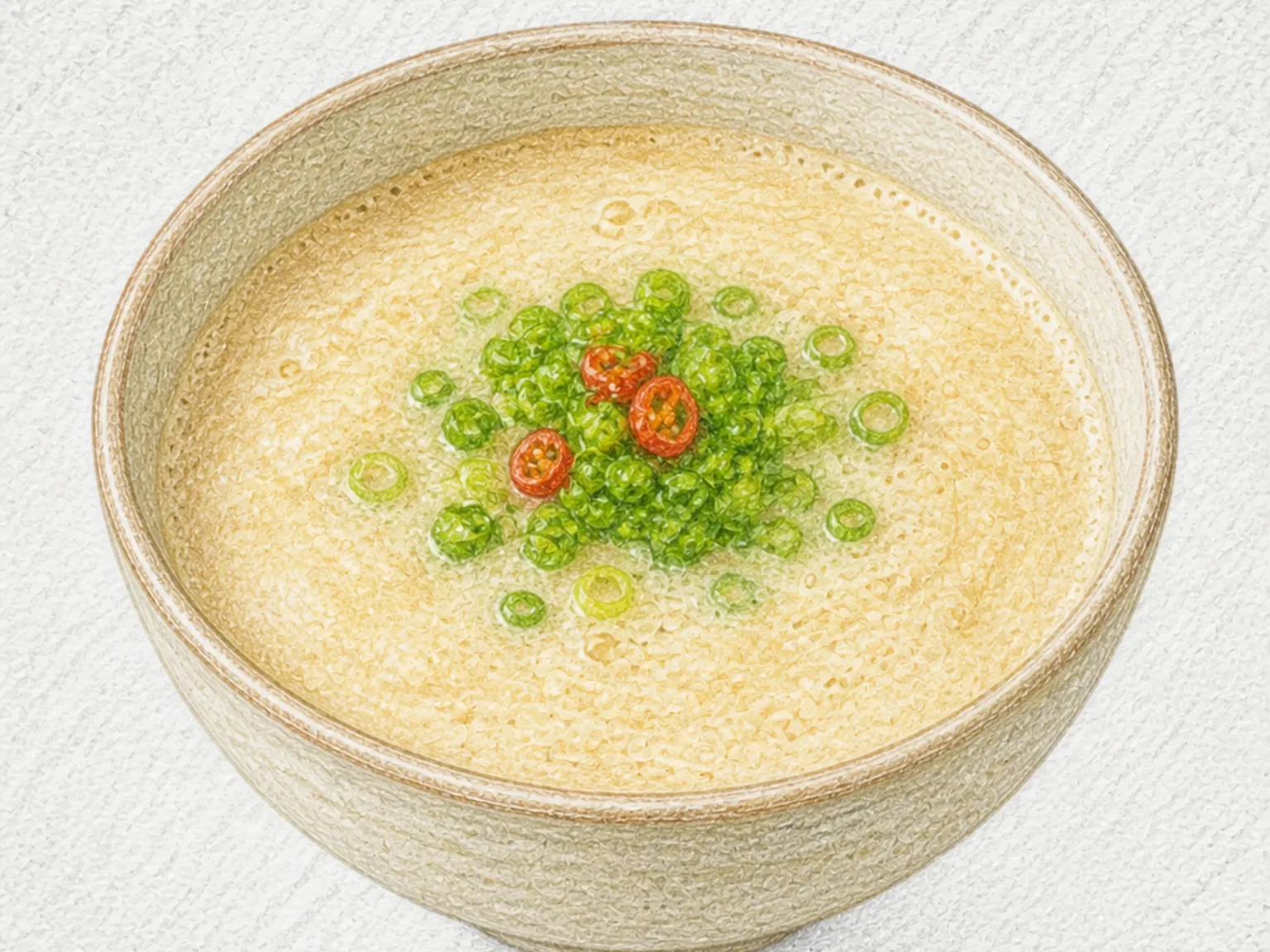
Soybeans soaked for a full night and day, simmered until their raw beany smell is gone and ground into a smooth paste called go, give this Fukui miso soup its body and a gentle nuttiness, and a soft foam rises as it heats. In Fukui it is still served as temple food at Hoonko, the major Jodo Shinshu observance around the anniversary of Shinran's death, known locally as Honko-san.
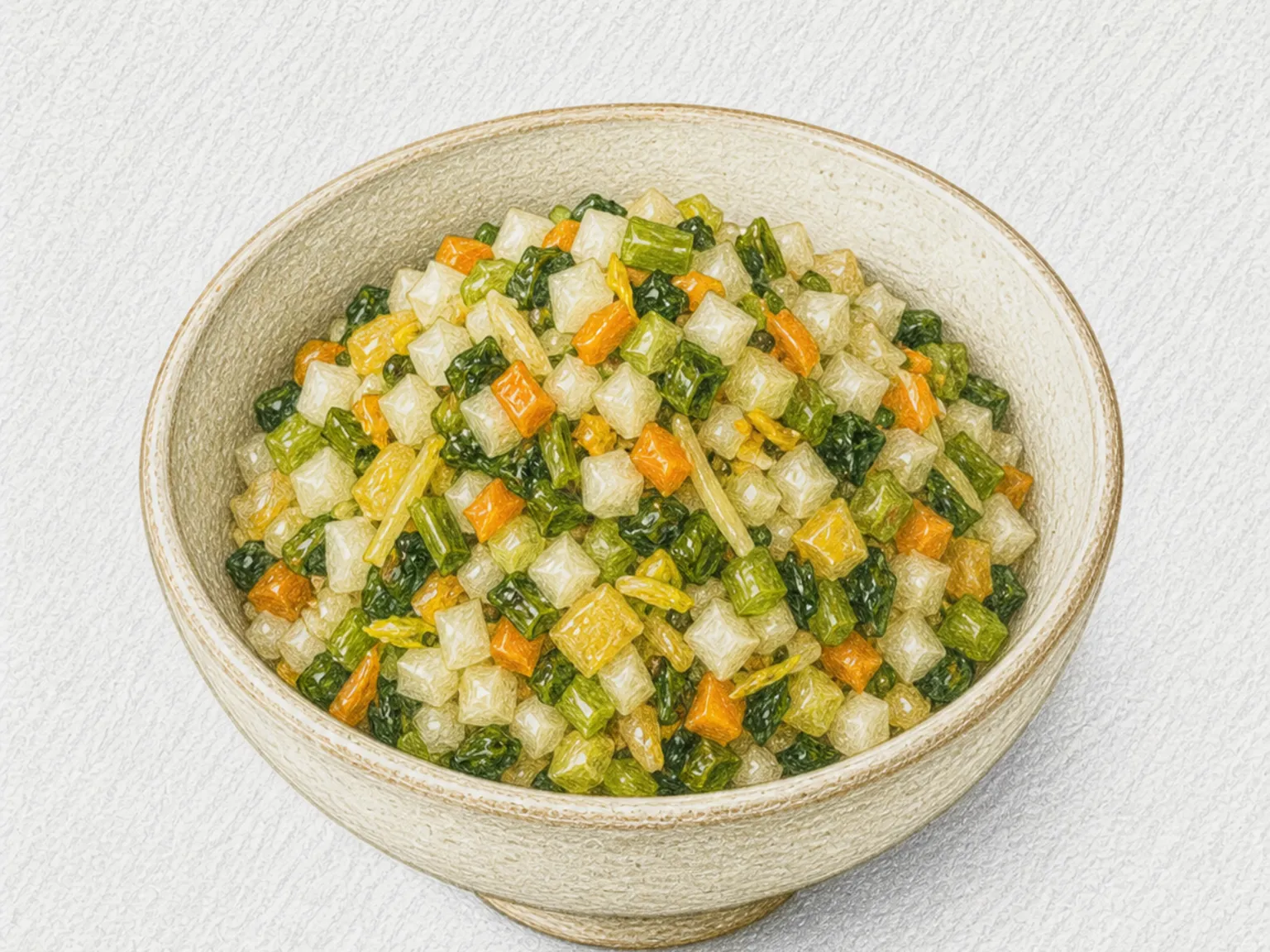
Finely cut seisai, a Yamagata mustard green, is mixed with daikon, carrot, sunchoke, salted shiso seeds and yellow edible chrysanthemum petals into a colorful, finely chopped relish. It comes from the Murayama, Mogami and Okitama areas of Yamagata. The green liquid released during the overnight pre-salting is poured off and the vegetables squeezed hard, which keeps the soy, mirin and zarame sugar marinade from being diluted. Mildly salted and soy-seasoned, it is spooned over rice or mixed into rice balls, ochazuke or fried rice. That low salt also means it stays refrigerated and is eaten within about two weeks.
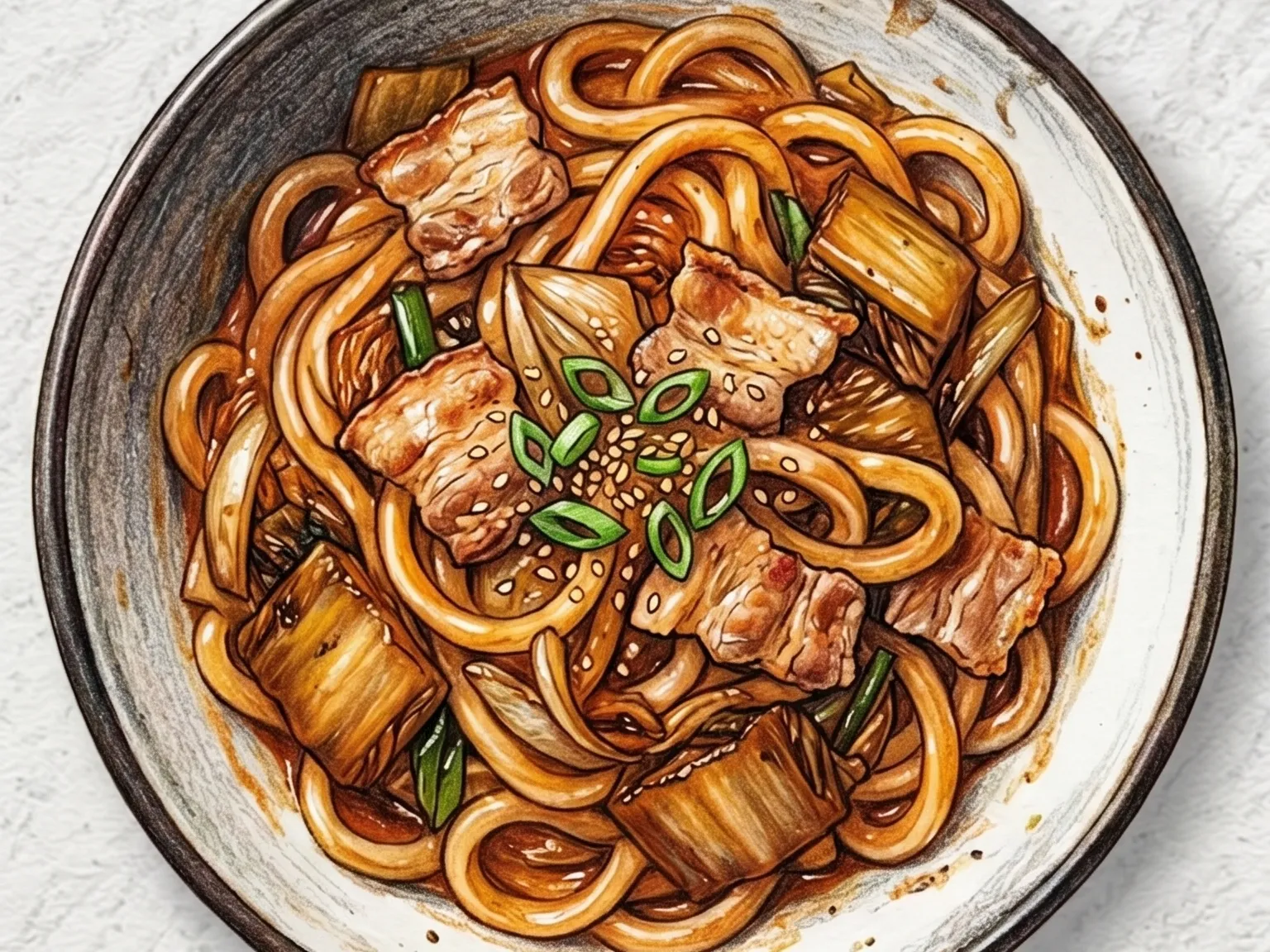
Thin-sliced pork belly fried until golden renders the fat that everything else cooks in. Onion, scallion and kimchi go into that fat, and the kimchi keeps frying until its juice has nearly gone, concentrating flavor and keeping the noodles from turning soggy. Older, more fermented kimchi gives a deeper sour note to the finished udon.
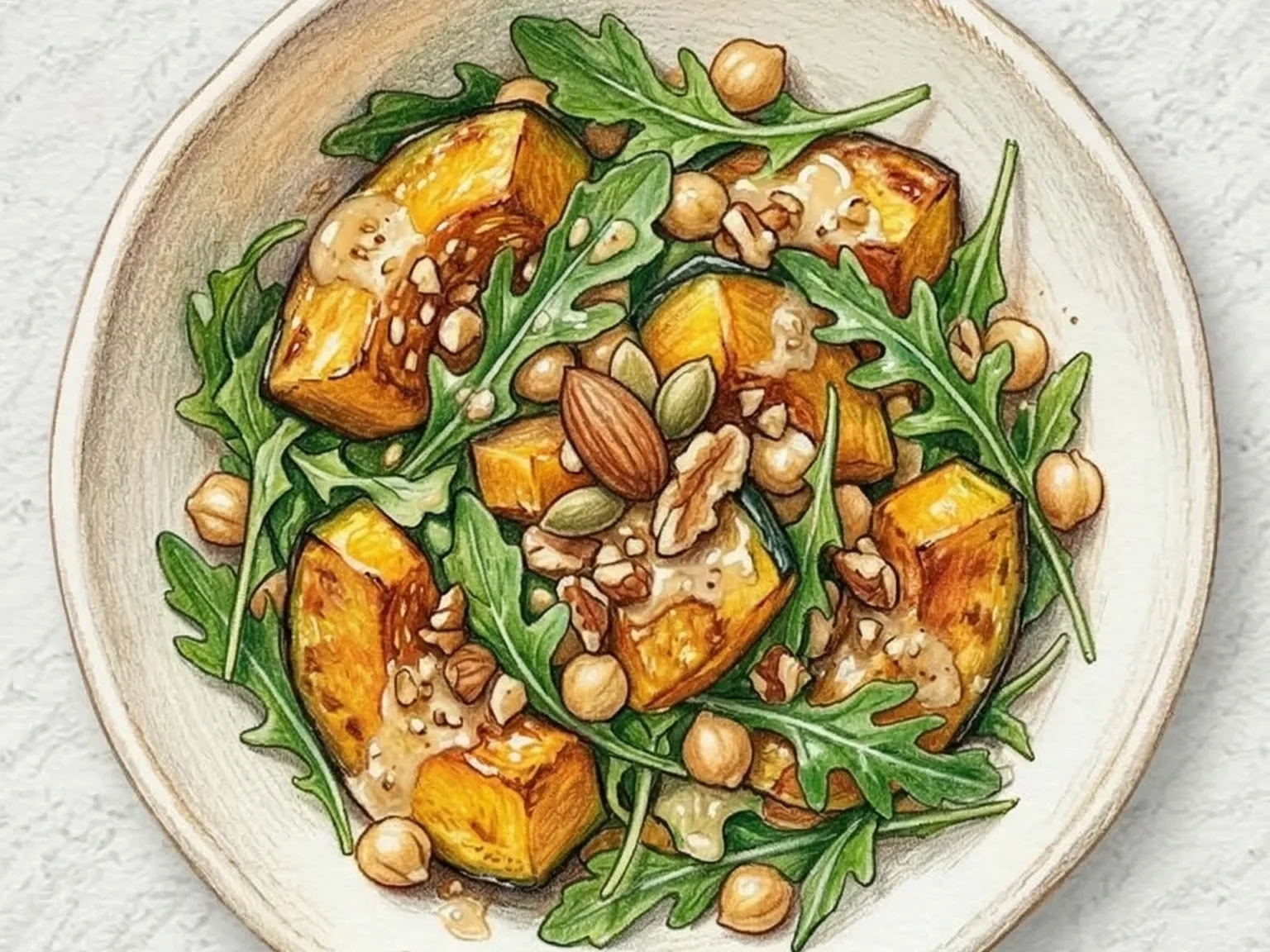
Kabocha roasted with its skin on turns chestnut-dry and fluffy inside, with caramelized edges outside. Autumn squash, at its sweetest, gives the clearest version of that flavor. White miso loosened with rice vinegar and maple syrup makes a dressing that is salty, sweet, and sour at once, and it makes the squash taste sweeter rather than masking it. With a very salty miso, add the dressing in portions and taste along the way. A bed of peppery arugula keeps the plate from tipping too sweet. Chickpeas and walnuts add chew and enough heft to make this a vegetarian main.
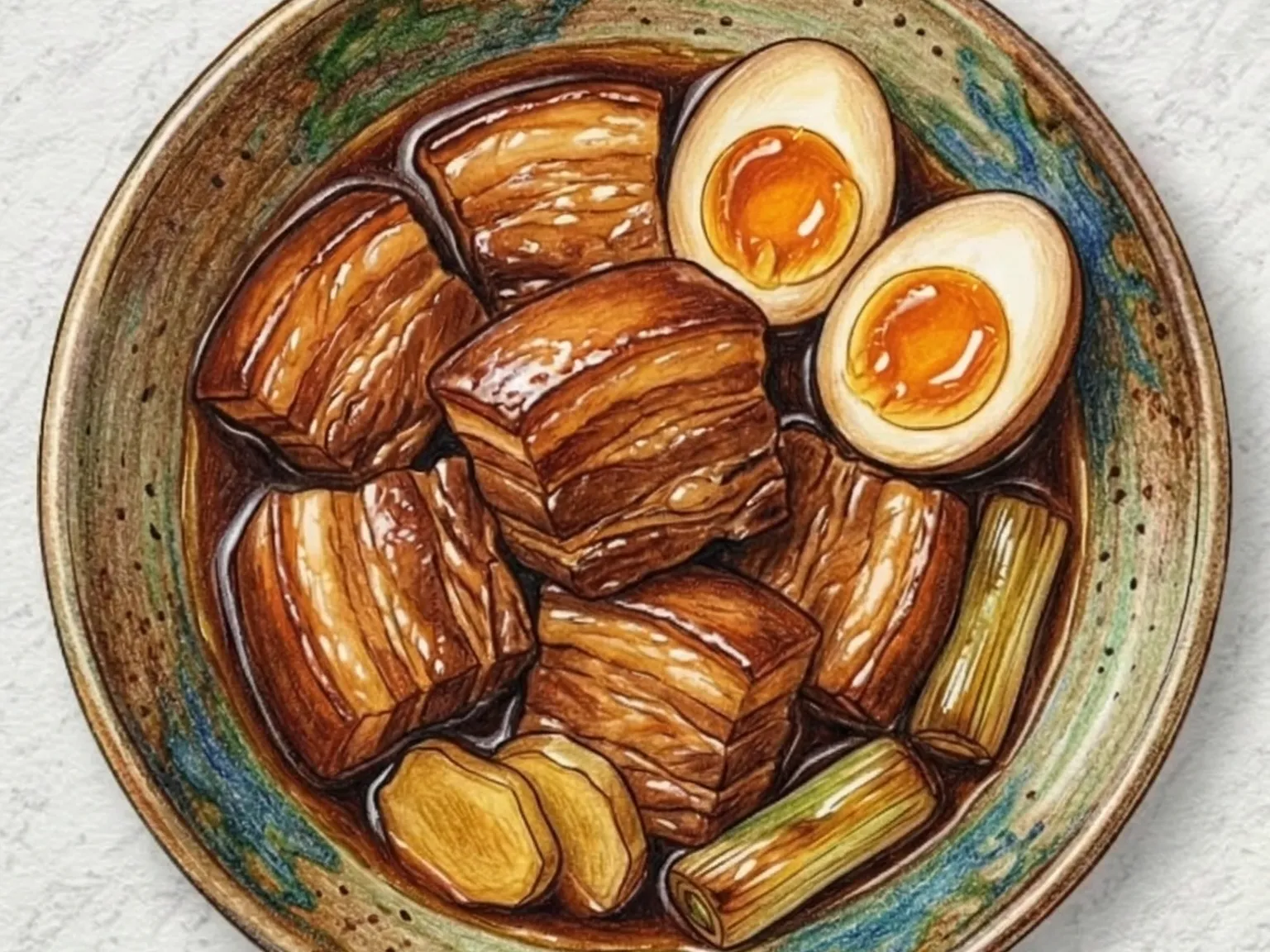
Thick blocks of pork belly are simmered twice: first in plain water with ginger and scallion until the fat layer turns soft, then in a fresh soy sauce, mirin and sugar glaze that leaves a glossy brown film on the surface. Splitting the work this way lets the meat go tender before the seasoning has a chance to reduce too far. Boiled eggs cook in the glaze alongside the pork and come out stained brown, seasoned through the white.
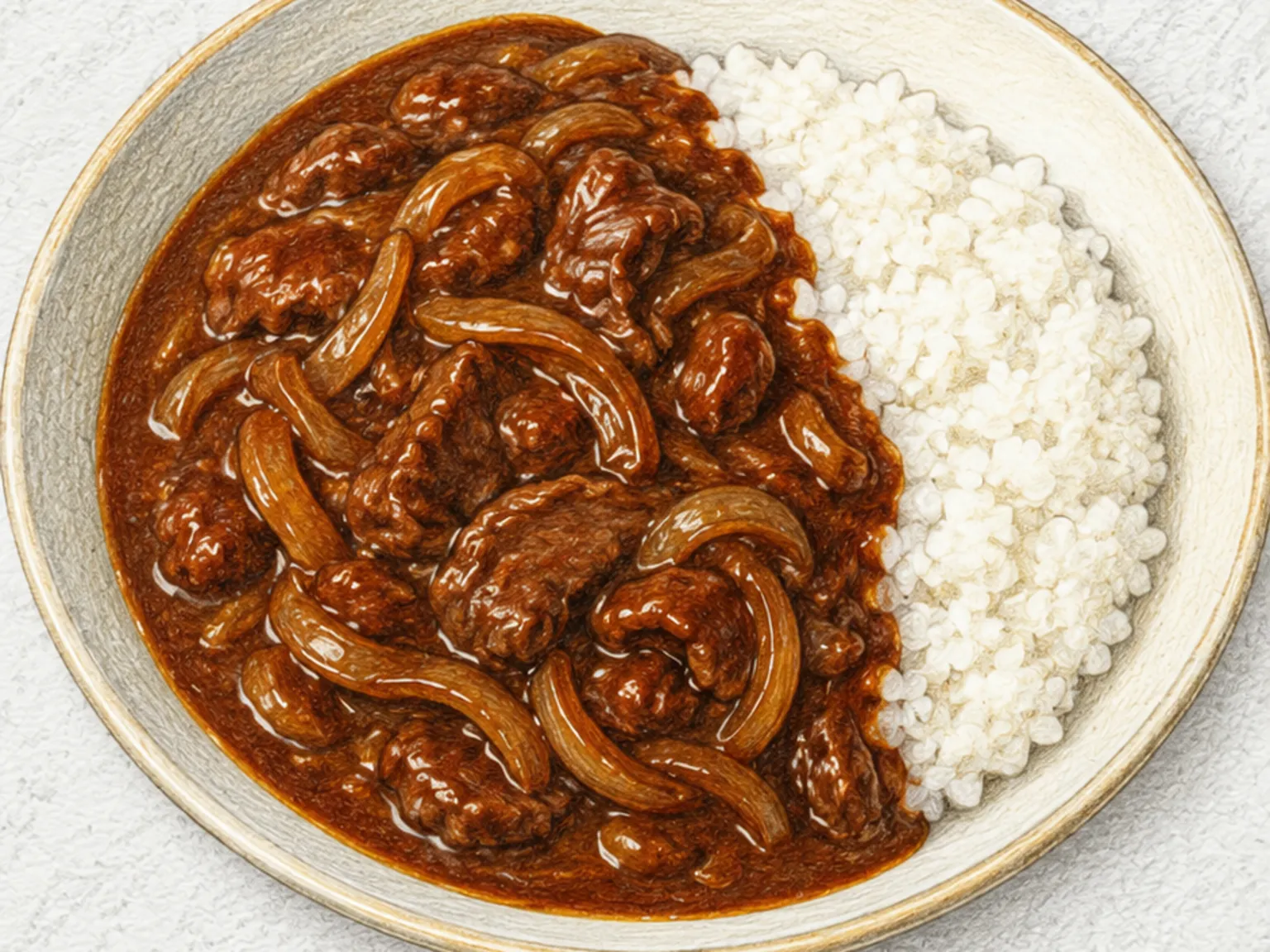
Most of the time goes into the onions, cooked in butter for eight minutes or more until the edges turn brown. Rush them and they only lose water without turning sweet, and the sauce ends up flat. The beef is cooked just until it changes color, then tomato paste, Worcestershire and flour turn the pan into a sauce that is spooned alongside the rice.
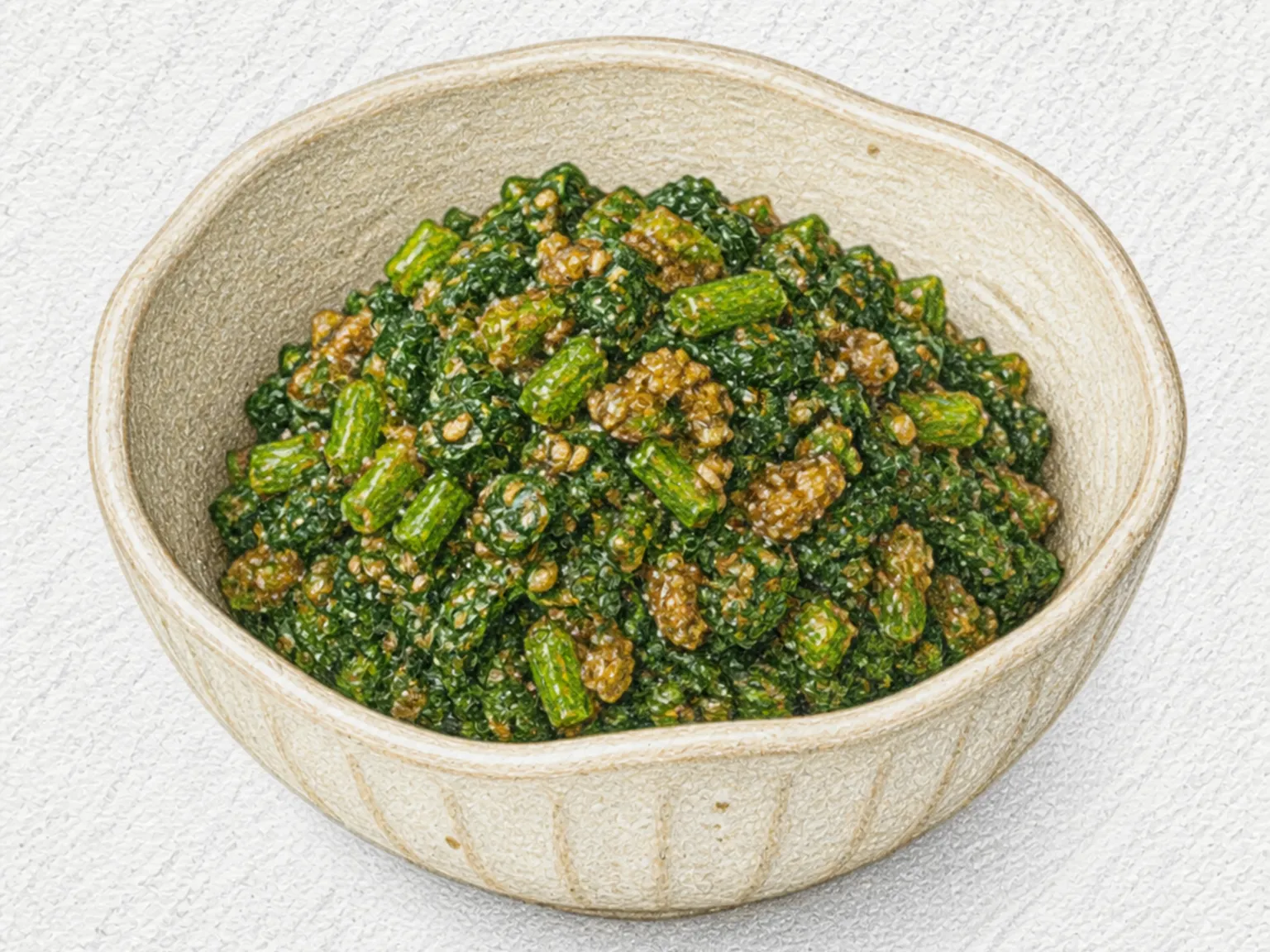
Blanched daikon greens are chopped fine and coated in miso and ground sesame, making a loose, crumbly side you spoon over rice. Chopped this small, even the tough stems go down easily, and a little sugar and mirin turn the miso sweet rather than sharply salty.
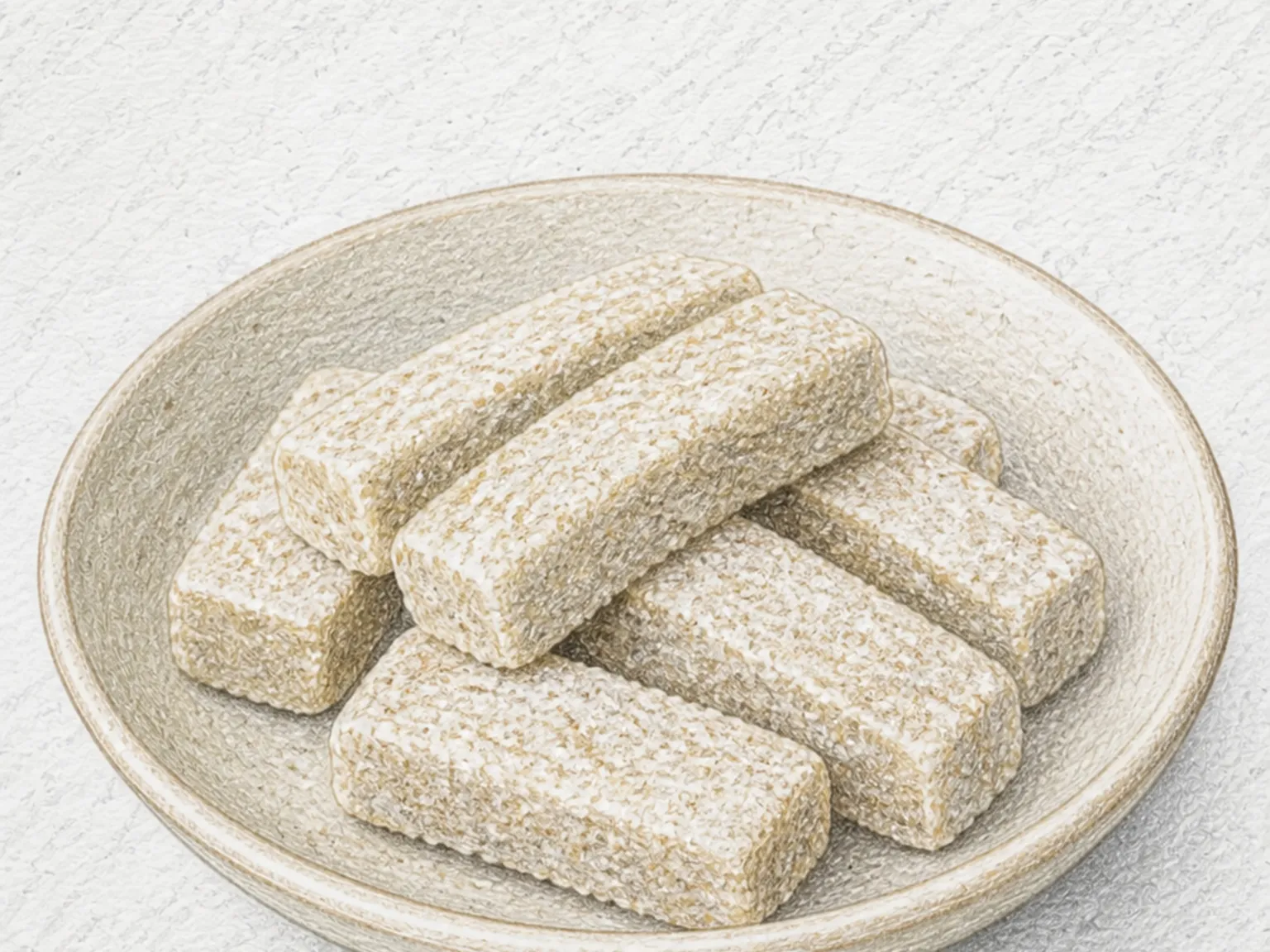
Flour from parched glutinous and short-grain rice takes in hot sugar syrup, added in four or five pours, and turns into soft mochi without any steaming or boiling. The toasted-rice smell stays with it. Once the slab has cooled right to the center, a knife dusted with potato starch cuts it into bars.
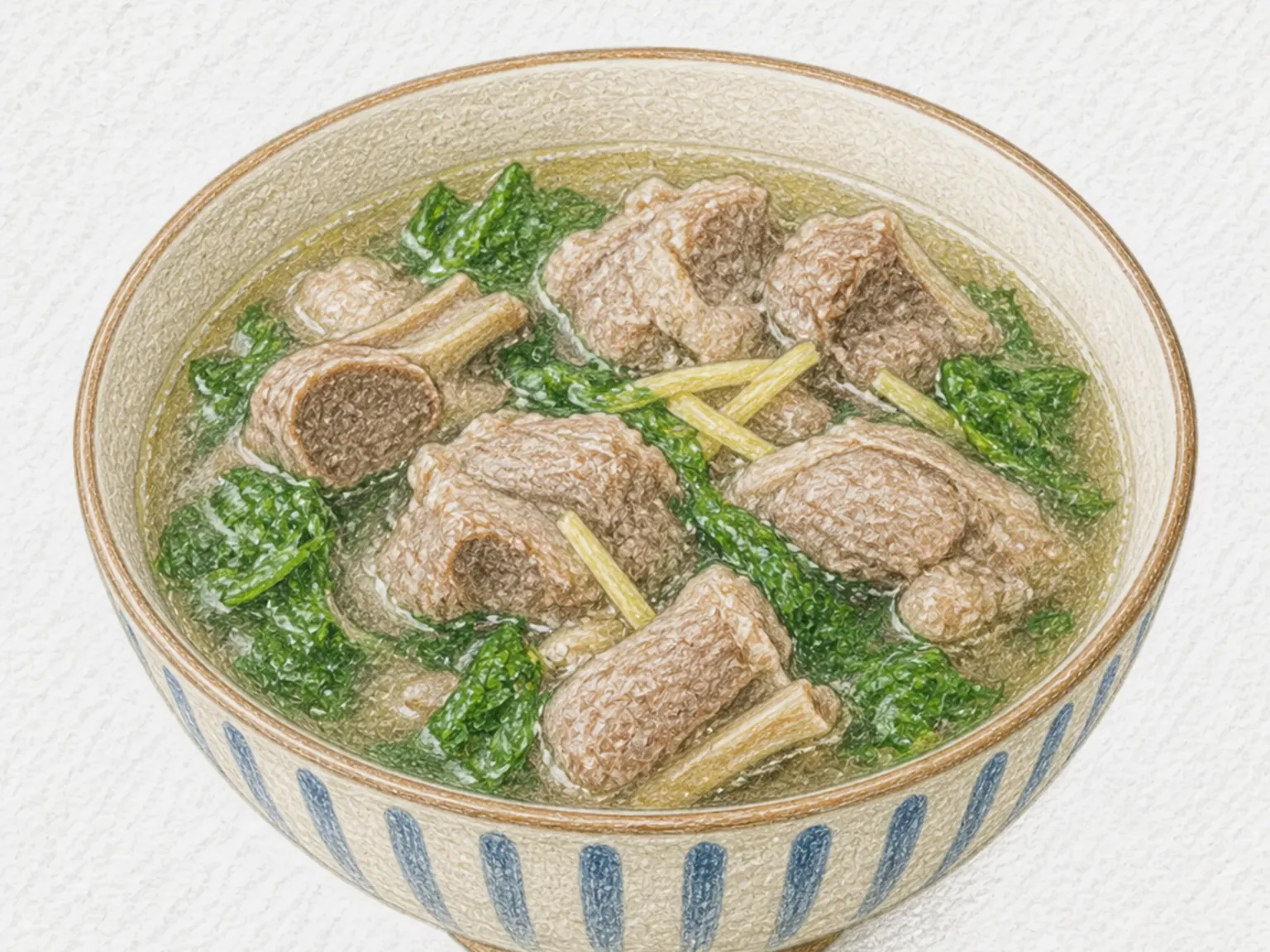
Goat meat, called hija in Okinawa, simmers for about three hours into a clear broth that keeps the animal's strong aroma. When refrigeration was scarce, slaughtering a goat meant sharing the meat across the community and cooking one large pot, and the soup became part of celebrations. Fuchiba, the local mugwort, is added briefly at the end. Rather than seasoning the whole pot heavily, each bowl comes with grated ginger and salt on the side so every diner can tame the goat aroma and set the saltiness.
A bed of cooked rice, rice koji and salt matures under refrigeration for at least a month before any vegetable touches it. After that, cucumber, carrot, eggplant or turnip needs only one night in it. The pickle comes from Nihonmatsu in Fukushima, where it helped farming households keep abundant vegetables and gave them a ready side dish during the busy rice-planting season. The long wait happens only at the start, because the finished bed is reused for batch after batch.
Sweet-savory simmered tofu pockets sit on a clear dashi broth and slowly release their syrup, and the soup grows a little sweeter as you eat. The broth starts out lightly seasoned to leave room for that sweetness and should not taste salty before the tofu goes on. Simmer the tofu until a little liquid remains and it stays moist, and making it a day ahead lets the flavor sink in further. Scallions and shichimi pepper add fragrance and a touch of heat.
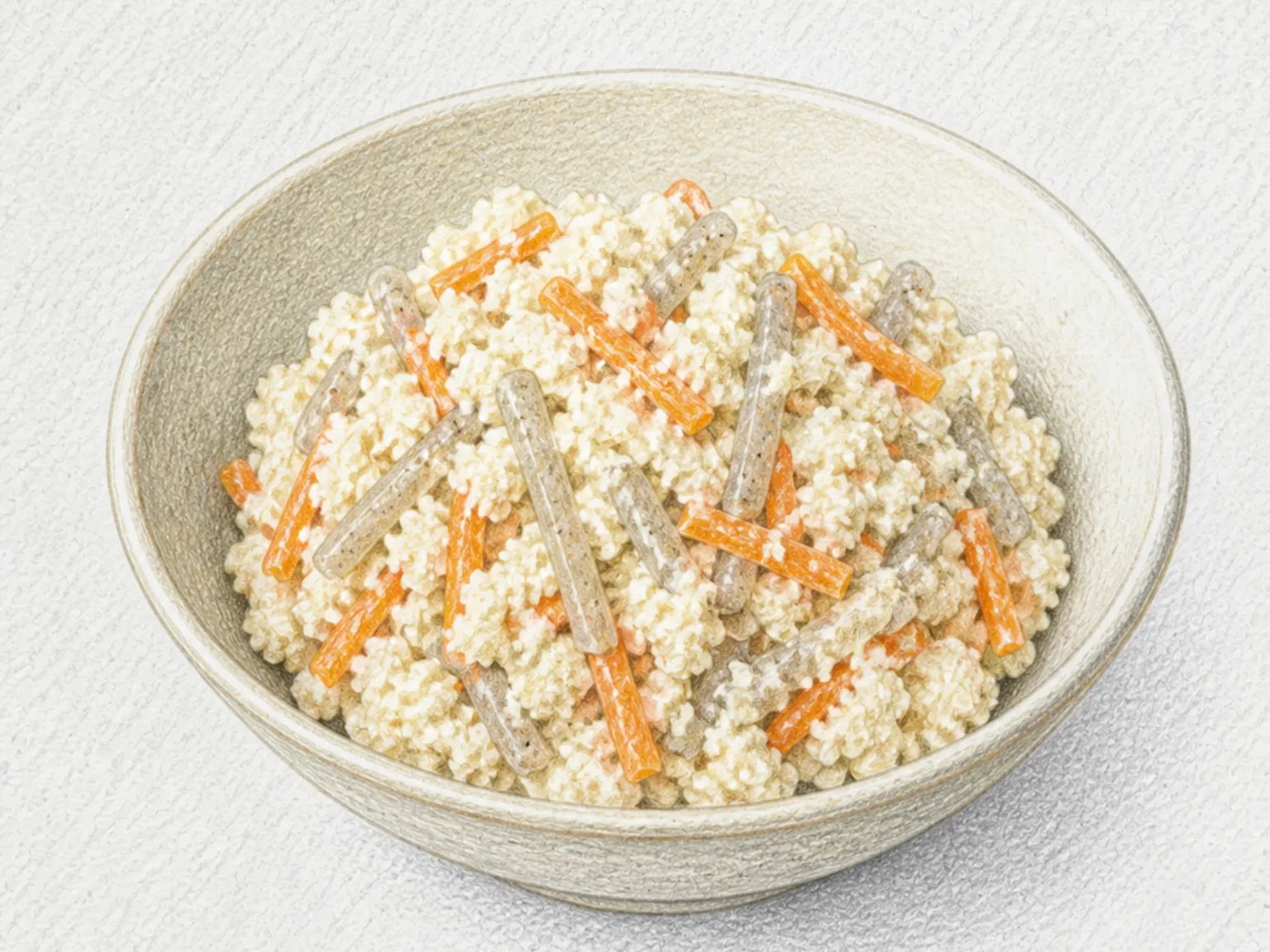
Tofu mashed until smooth, with ground sesame and a little sugar, coats the carrot and konjac in a white dressing that is more gently sweet than salty. Any warmth or liquid left in the vegetables thins it out, so after their simmer in dashi they are drained and cooled completely.
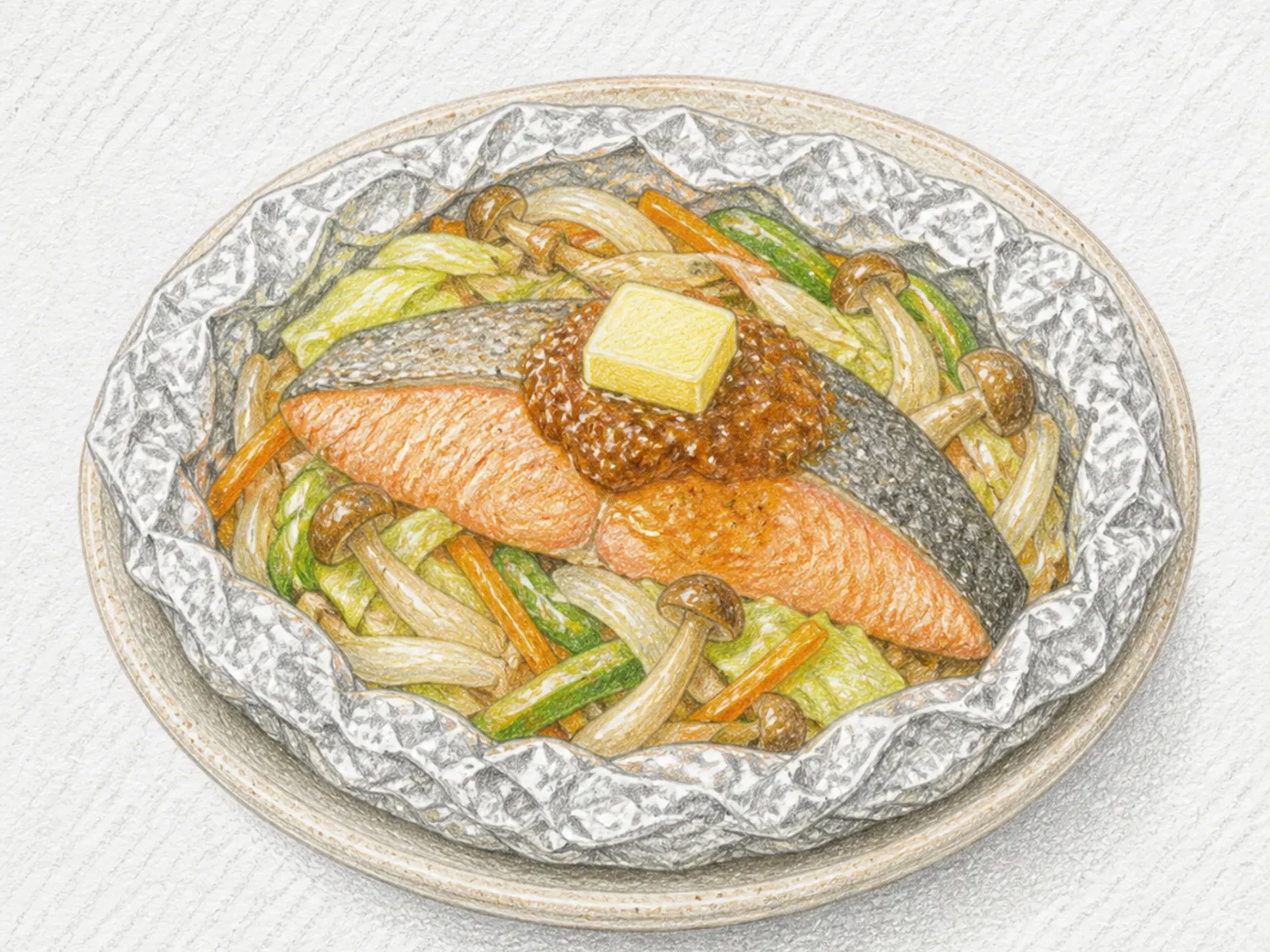
Salmon, cabbage, onion, shimeji mushrooms, green pepper and carrot are sealed in foil with a sweet miso sauce and a pat of butter, then steamed in a covered frying pan. The dish is a local specialty of the Ishikari area of Hokkaido. Inside the parcel, steam wilts the vegetables while butter, miso and the juices of the salmon and vegetables pool into a salty sauce at the bottom.
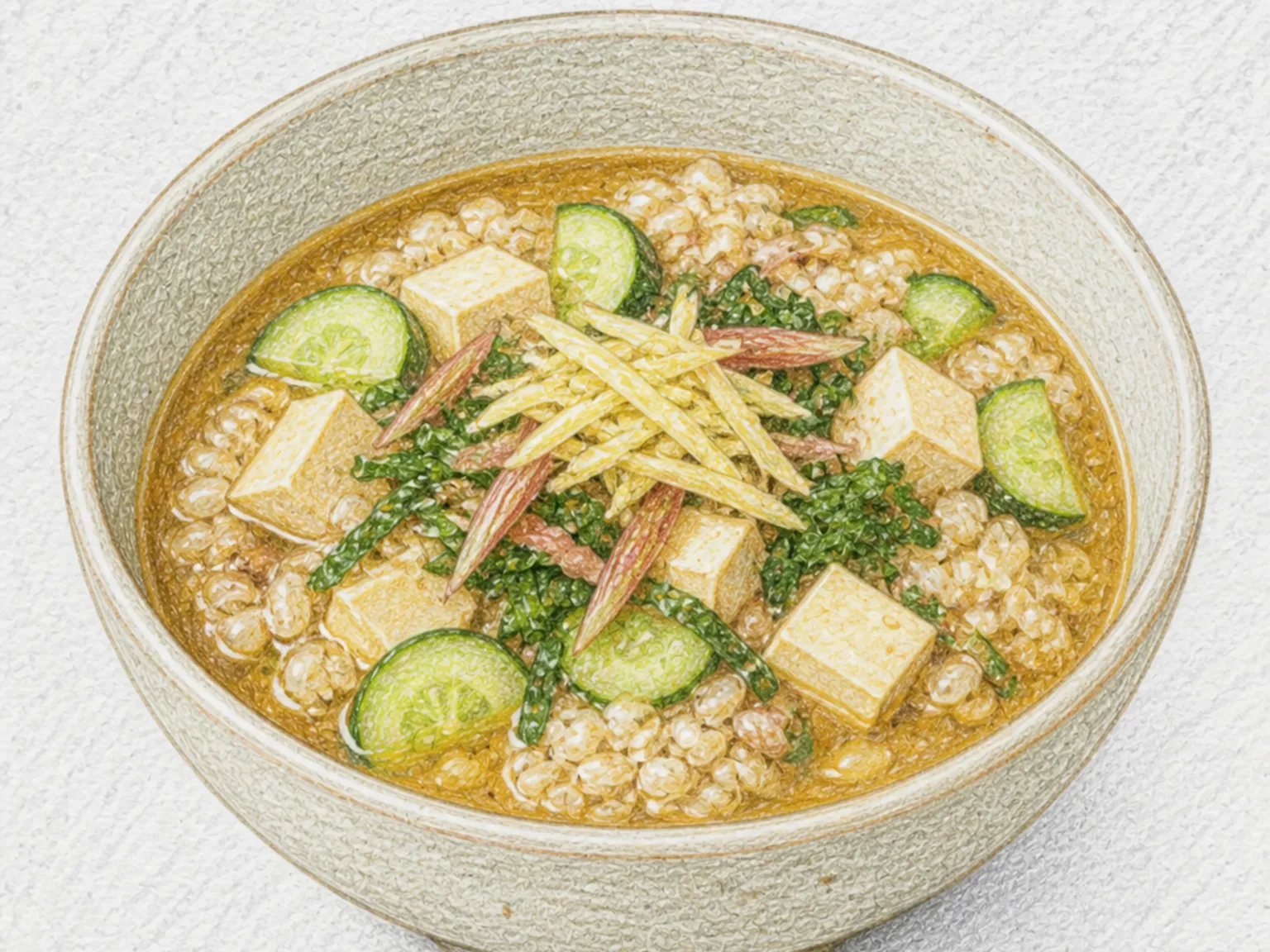
Toasted iriko (dried sardines), sesame and peanuts are pounded with miso, browned under the grill, then whisked into cold bonito stock until it is stronger than everyday miso soup. Torn tofu, cucumber, shiso, myoga and ginger float in it, and it is ladled over freshly cooked, hot barley rice. In Miyazaki it is said to have grown out of a farmhouse habit of putting raw miso and water on barley rice on hot days.
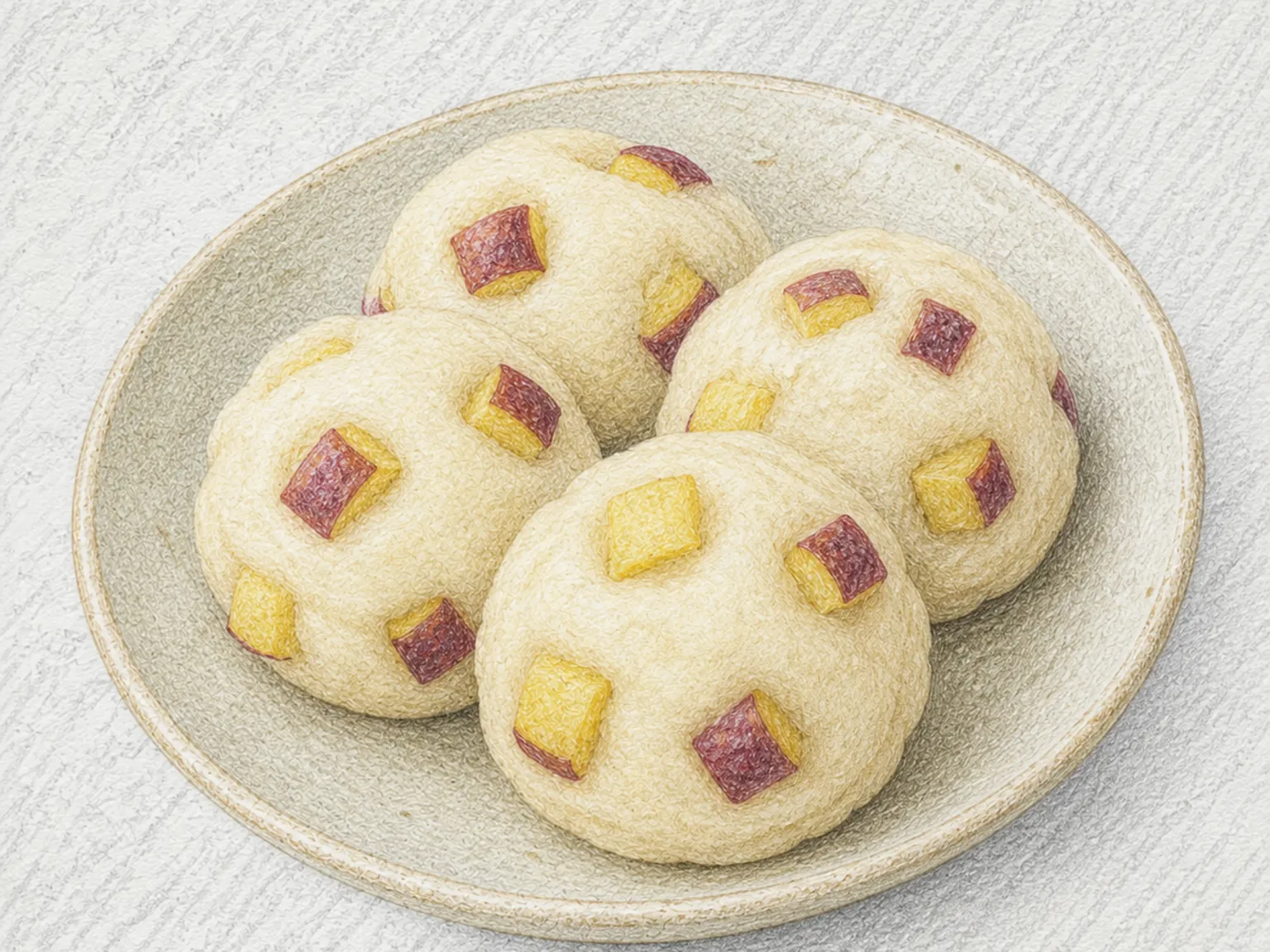
Cubes of sweet potato poke out of each round dumpling like stones in a wall, which gives ishigaki dango, stone-wall dumplings, their name. On the Sagamihara plateau in Kanagawa, where volcanic ash covered the fields, wheat and sweet potatoes grew widely, and these dumplings were a snack between farm tasks. Holding back some of the potato and pressing it onto the surface makes the stone pattern stand out.
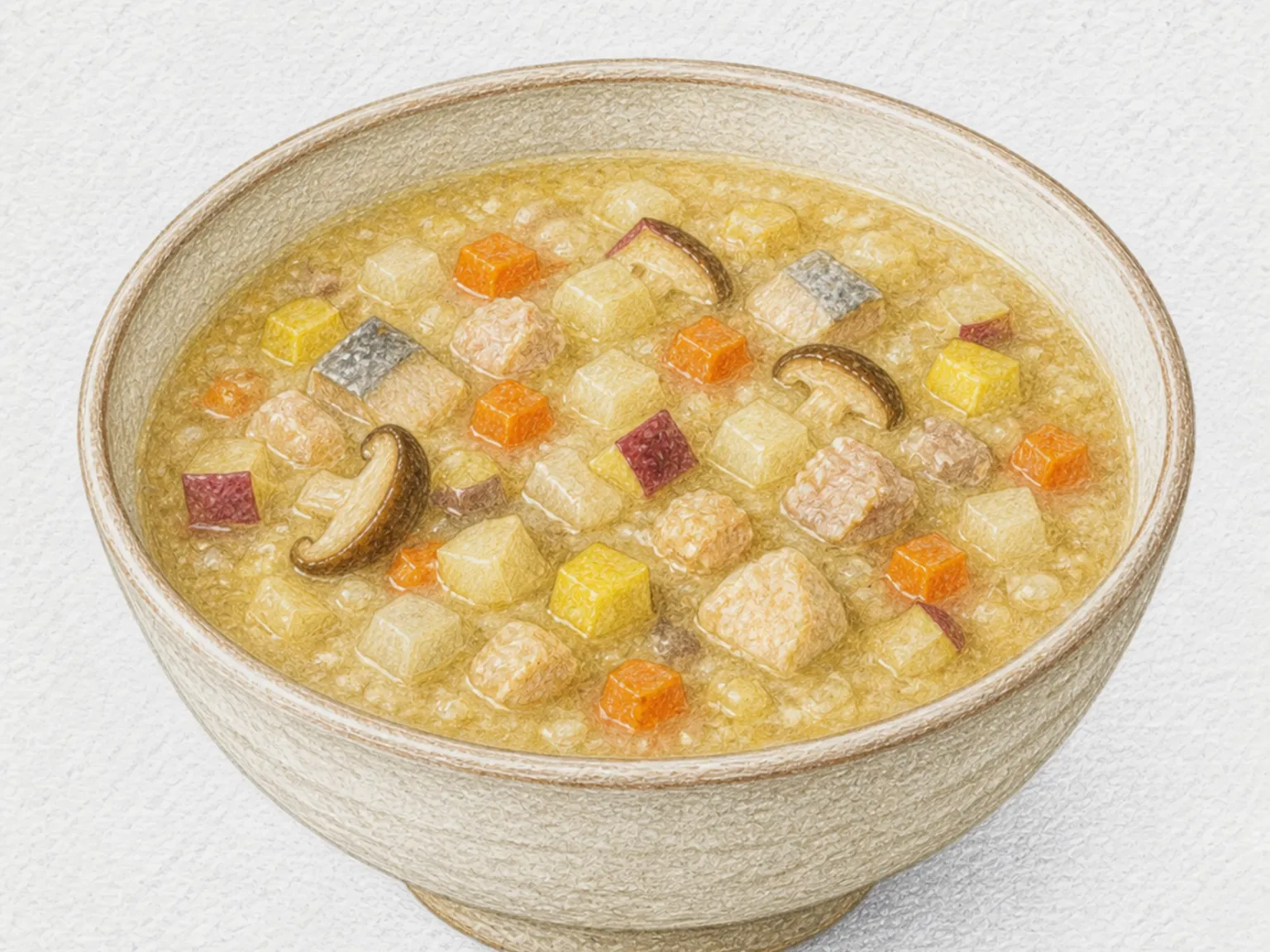
Diced skin-on sweet potato stays in pieces, while raw sweet potato grated in at the end melts into the broth, giving mild sweetness and a rustic body. Hikado is a Nagasaki winter soup, and its name is linked to the Portuguese picado, meaning finely chopped; it is said to have grown out of a stew that arrived through contact with the West and was remade with local fish and vegetables. No flour slurry is used, and with yellowtail and chicken in the same pot, fish and meat flavors overlap.
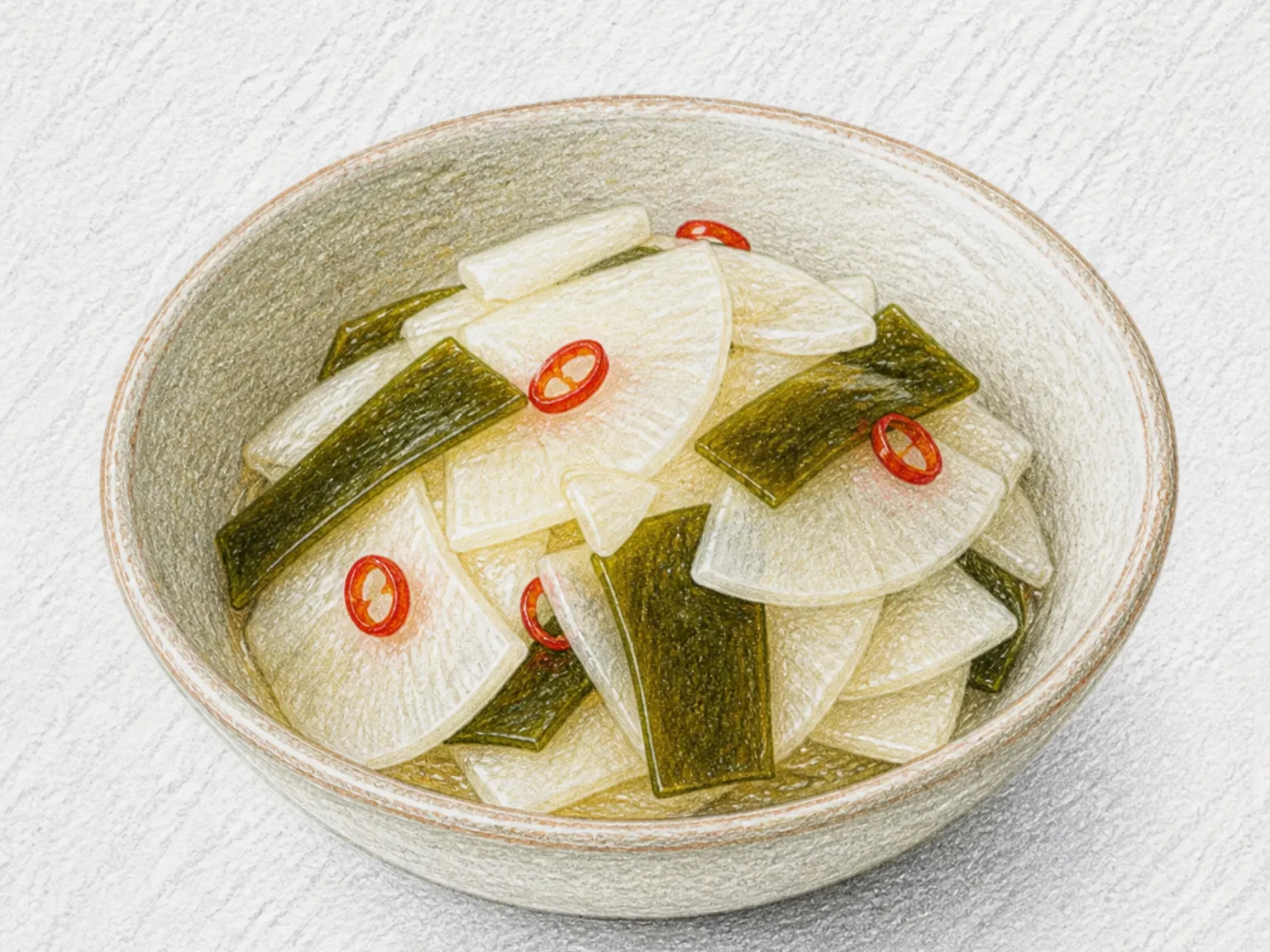
Shogoin turnip sliced paper-thin is layered with kombu and chili in a cooled sweet vinegar that the kombu turns slightly viscous. The Kyoto name means roughly a thousand sheets, a nod to the many thin slices. It is a short two-stage cure, one day in salt and one in sweet vinegar, meant to keep the turnip fresh and tenderly crisp.
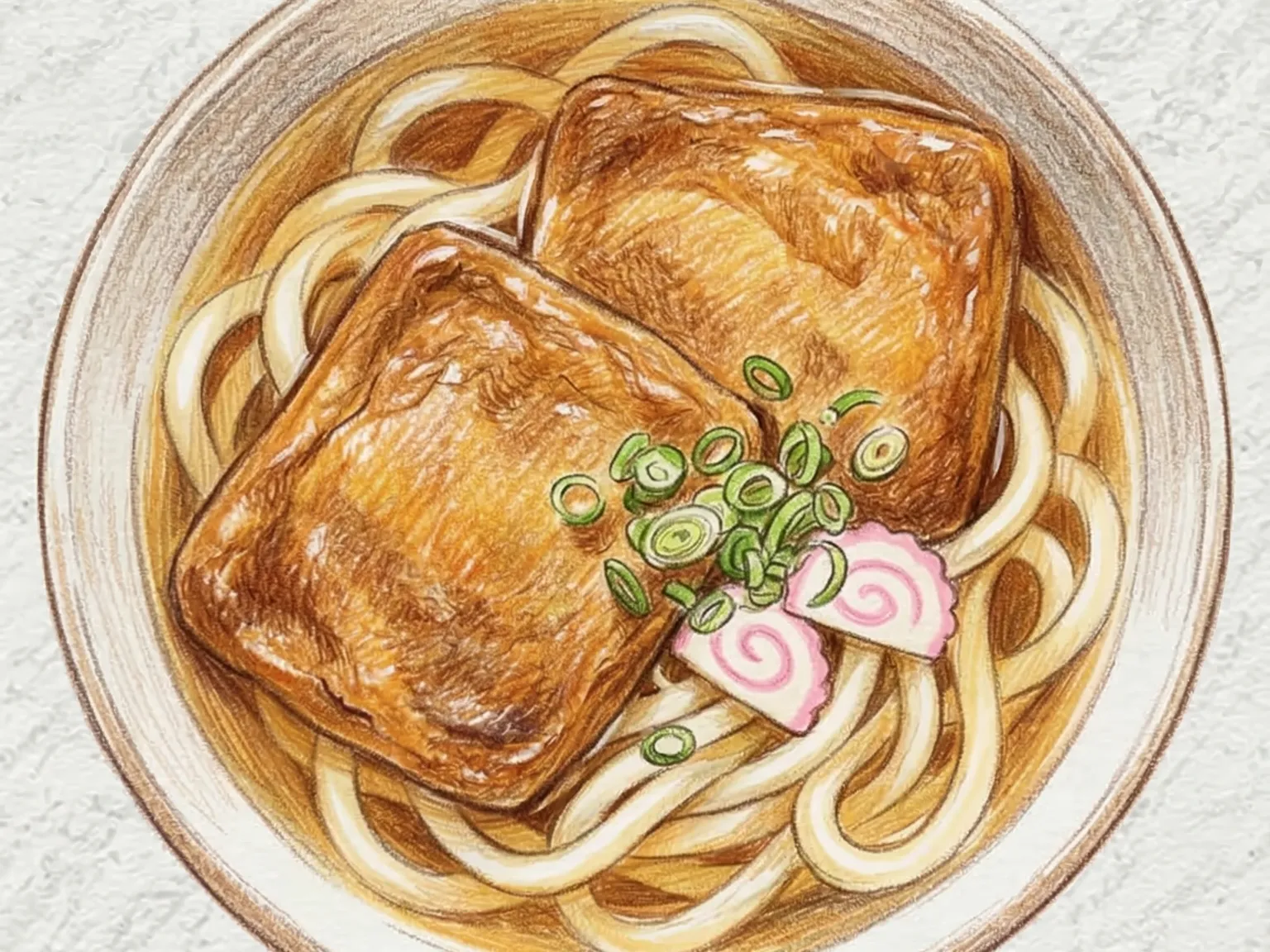
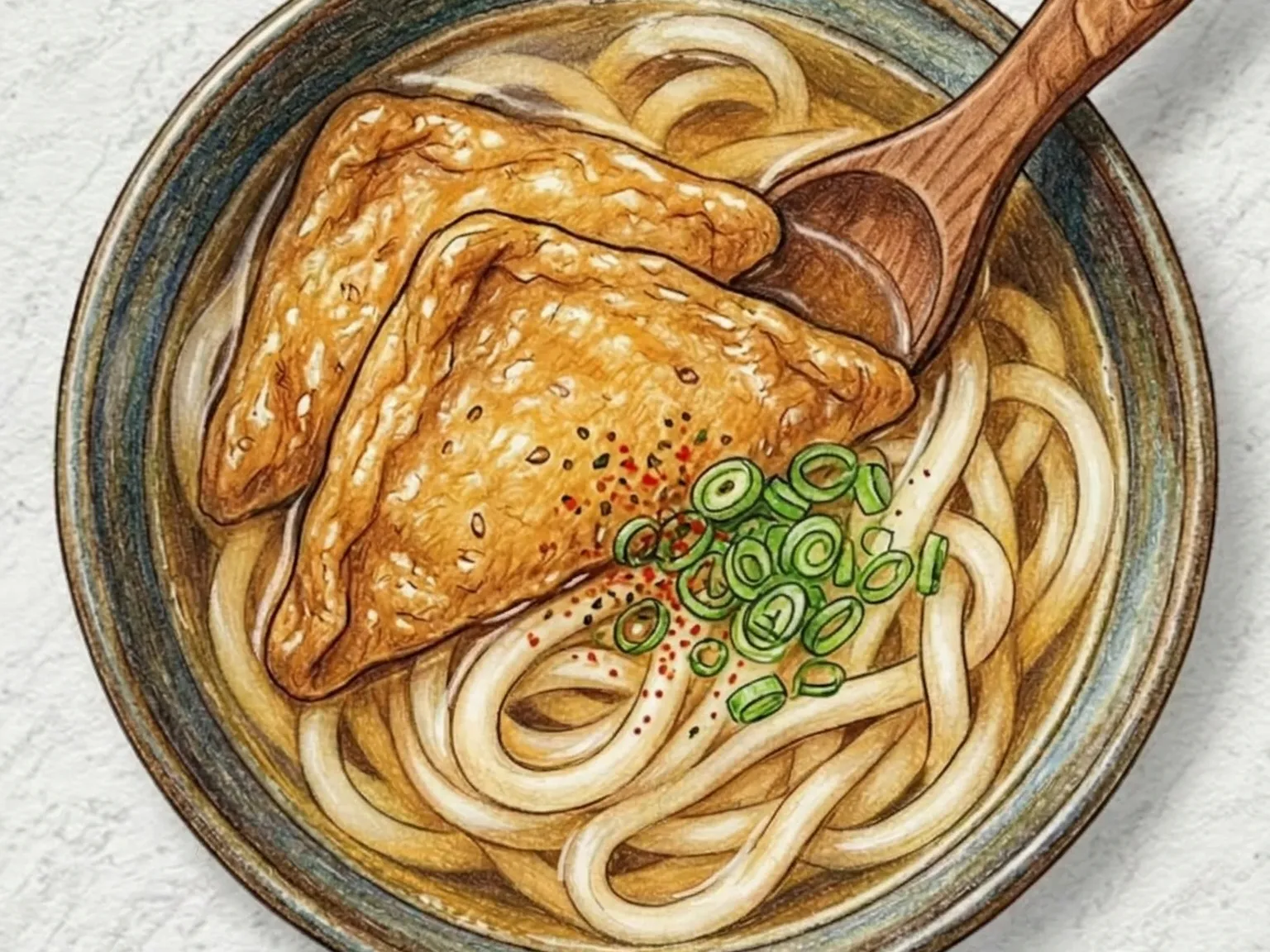
A sheet of sweet, soy-simmered fried tofu sits on top of the bowl, and every bite squeezes its braising liquid out into the broth. That broth is a clear dashi made from kombu and bonito flakes, pale in color but full in flavor, in the Kansai style associated with Osaka. Reducing the tofu until its simmering liquid is nearly gone puts the sweetness inside the tofu rather than leaving it in the pot. It tastes best once it has soaked in the hot soup for a moment and gone soft. In Osaka this is everyday food, eaten as an early breakfast as readily as at lunch.
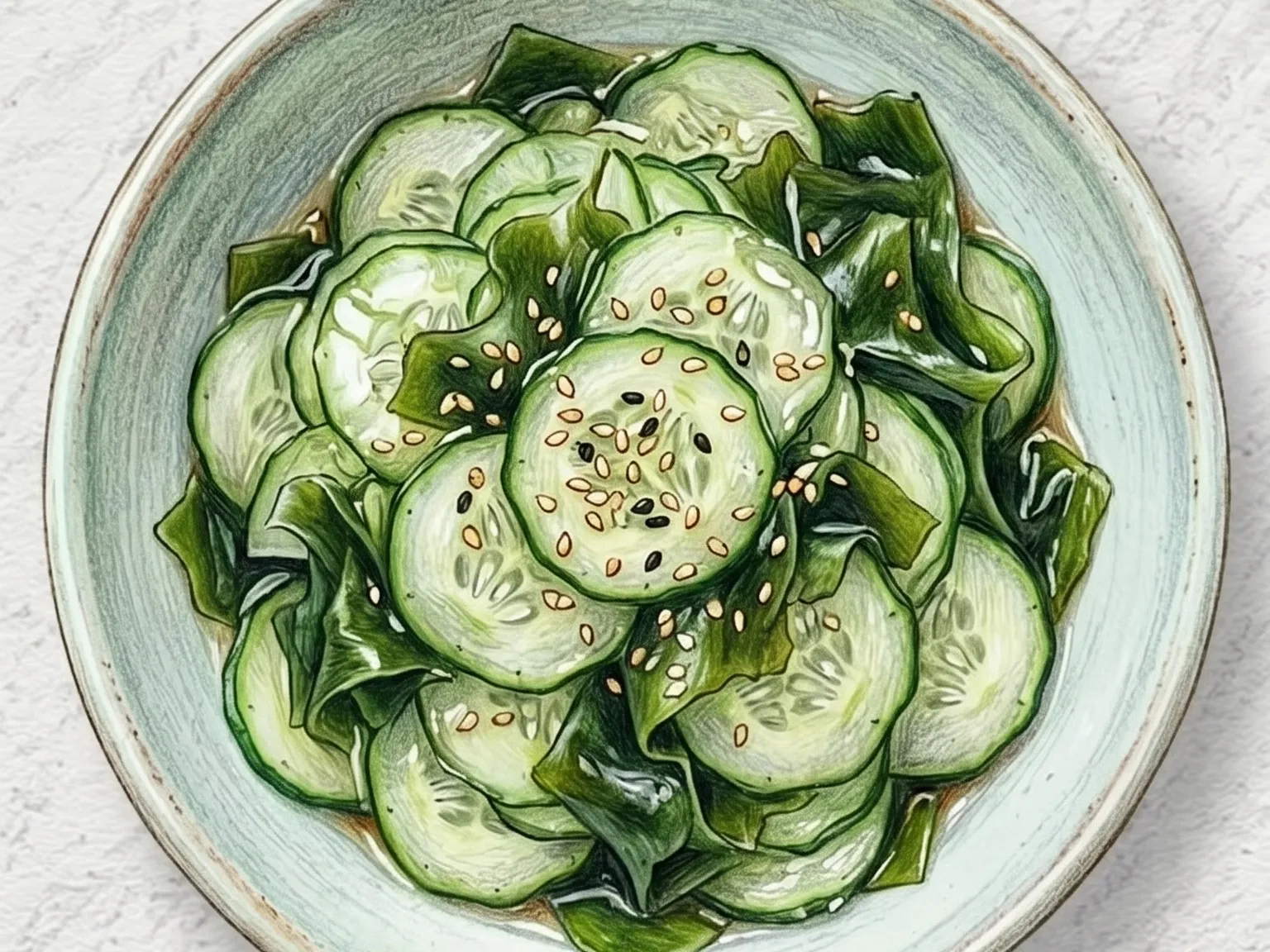
Paper-thin cucumber and wakame soak in a sweet rice vinegar dressing, and the result is cool, tangy, and very light. Unlike many cucumber salads, it carries no garlic or chili, so the vinegar and the clean taste of cucumber come through on their own.
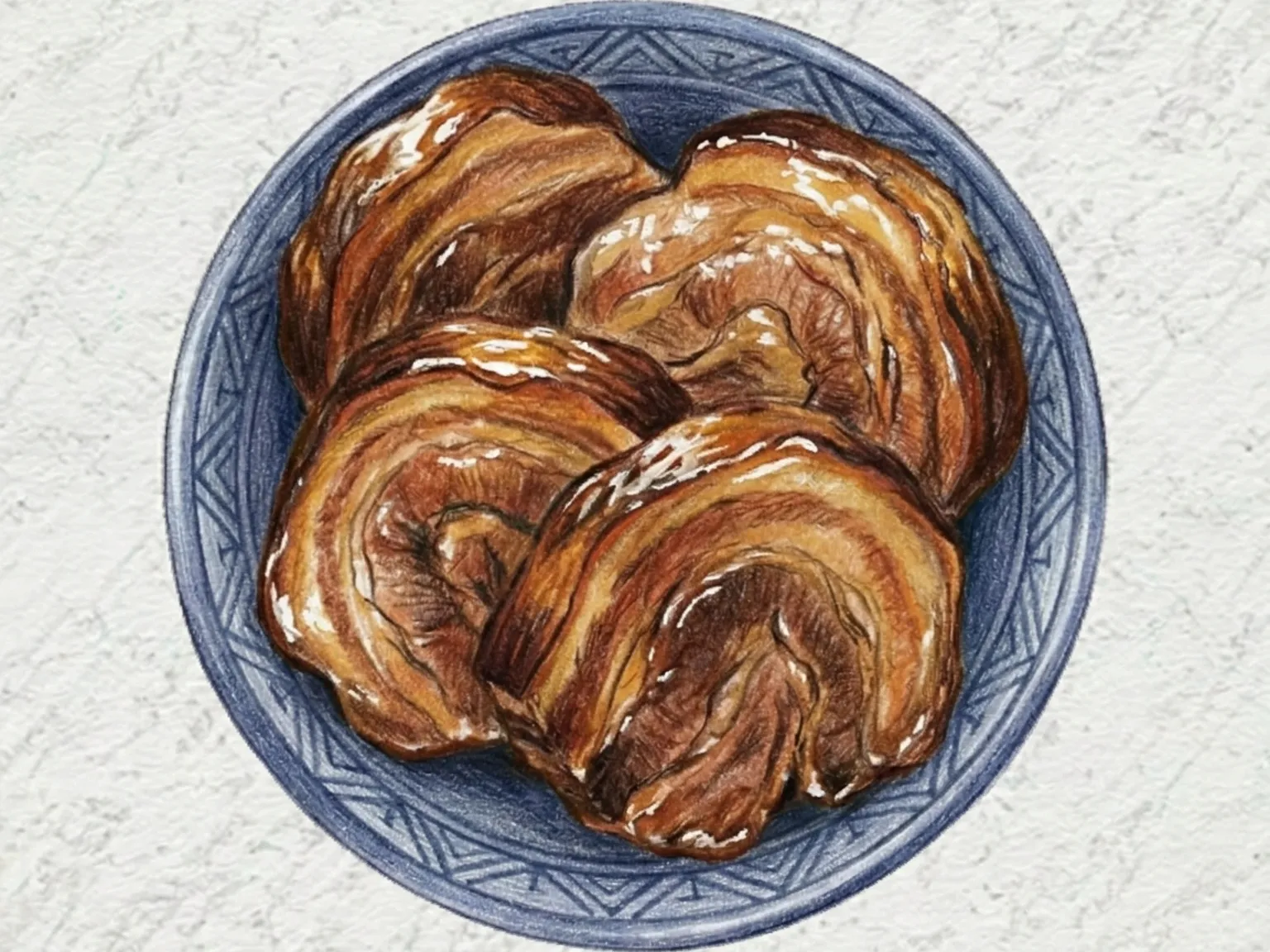
A boneless pork belly slab is rolled, tied with twine, and braised for 90 minutes in soy sauce, mirin, sake, and sugar. Each slice then shows fat and lean spiraled together. Thin slices sold for quick frying cannot be rolled this way, which is why the recipe calls for a whole slab. Those spiral rounds are the familiar ramen topping.