Cooking Guides

Korean Breakfast Recipes

Egg soup, rice porridge, Korean street toast, and gentle morning recipes.

Korean Breakfast Recipes

Why This Collection Works

A good Korean breakfast should feel gentle, cook quickly, and still carry the start of the day.

How the Recipes Were Chosen

Egg dishes, porridges, toast, and clear soups lead the collection because they are easy in the morning.

How to Build a Meal

Cook rice the night before for faster porridge, and prep toast fillings ahead for quick assembly.

Planning Tips

  • Choose one main dish first, then balance it with a soup, side dish, or quick vegetable recipe.
  • When time is limited, open the faster recipes first and save the more involved dishes for a weekend meal.
  • Use the category and tag links below to expand the collection into similar recipes.

Featured Recipes

Korean Street Egg Toast (Cabbage Egg Omelet Sandwich with Sweet Ketchup)
Street food Easy

Korean Street Egg Toast (Cabbage Egg Omelet Sandwich with Sweet Ketchup)

Gilgeori egg toast is a Korean street food sandwich built around a rectangular omelet of shredded cabbage, carrot, and beaten egg, layered between slices of bread that have been toasted in butter until golden. The defining touch is a sprinkle of white sugar over ketchup applied directly to the bread before the omelet goes in. That sugar-ketchup combination produces a sweet-tangy sauce that balances the savory egg and the mild crunch of the vegetables in a way that no other condiment quite replicates. The egg and vegetable batter is folded over itself on the pan to create a thick, layered patty, so each bite delivers alternating textures of soft egg and crunchy toasted bread. Street vendors began selling this sandwich in front of Korean schools during the 1990s, and it has remained a constant fixture of Korean street food culture ever since, available at food stalls and snack trucks across the country as both a breakfast option and an afternoon snack.

🧒 Kid-Friendly 🌙 Late Night
Prep 12min Cook 10min 2 servings
Korean Egg Porridge (Silky Sesame-Scented Rice Porridge)
Rice Easy

Korean Egg Porridge (Silky Sesame-Scented Rice Porridge)

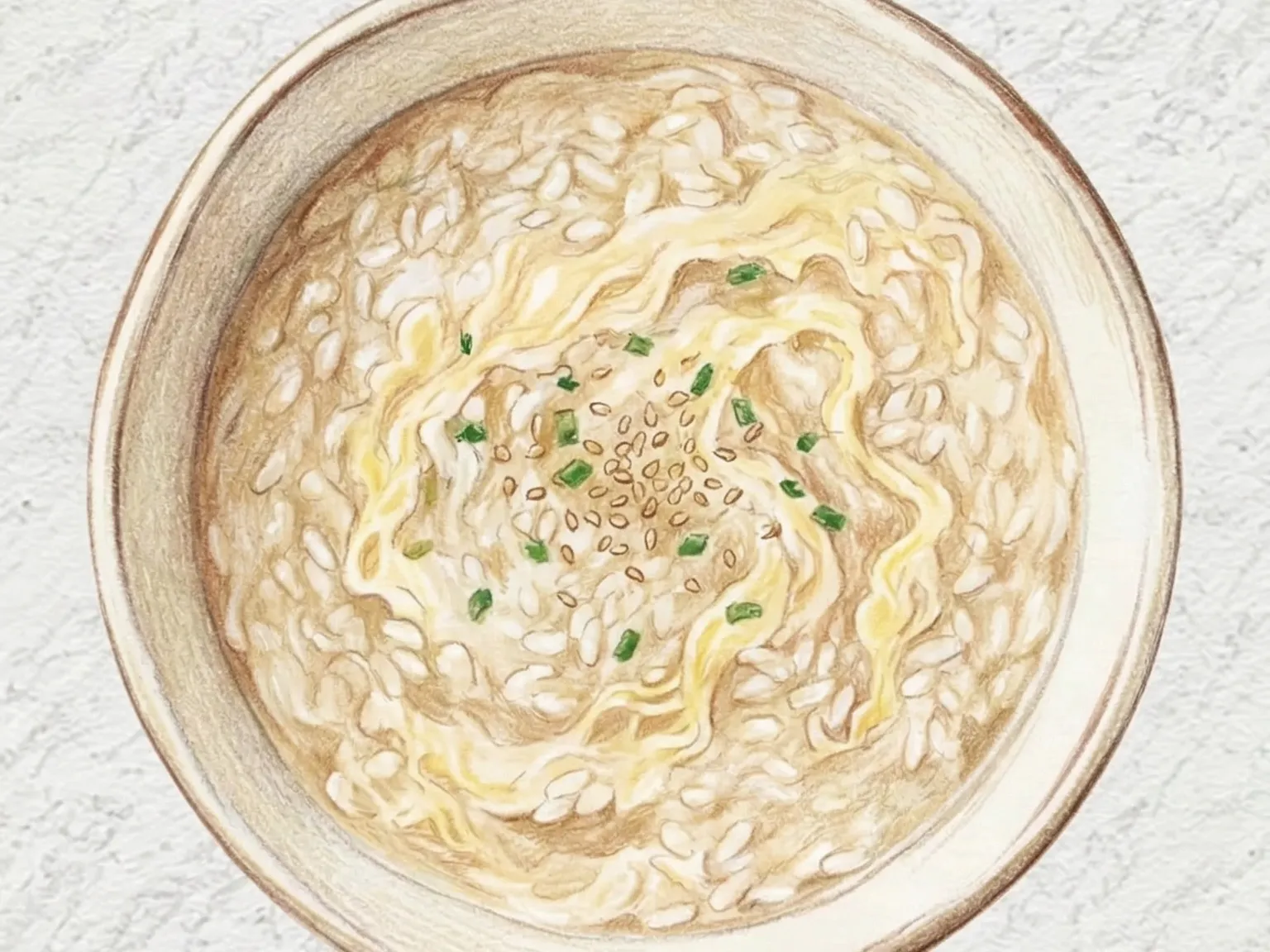
Gyeran juk is a mild, gentle rice porridge that starts by stir-frying soaked rice in sesame oil before any liquid is added, a step that coats the starch granules in oil to prevent the finished porridge from clumping and works the sesame fragrance evenly into every grain. Water is added and the pot simmers on low heat for twenty minutes with frequent stirring, breaking down the grains gradually until they dissolve into a smooth, cohesive base. Constant stirring on low heat is what prevents the rice from scorching on the bottom and what creates the uniformly silky texture that defines a well-made juk. Beaten egg is drizzled in at the very end in a thin stream and folded gently for just one minute, creating soft, ribbony layers of cooked egg throughout the porridge without allowing them to toughen. Soup soy sauce and salt provide restrained seasoning that stays behind the sesame fragrance rather than overpowering it, and sliced green onion scattered on top adds a fresh note over the warm nuttiness beneath. This is the kind of bowl that asks nothing of the stomach, which makes it the standard choice after illness, on mornings when appetite is low, or whenever a light and restorative meal is needed.

🥗 Light & Healthy 🏠 Everyday
Prep 10min Cook 30min 2 servings
Gyeran-guk (Egg Drop Anchovy Broth Soup)
Soups Easy

Gyeran-guk (Egg Drop Anchovy Broth Soup)

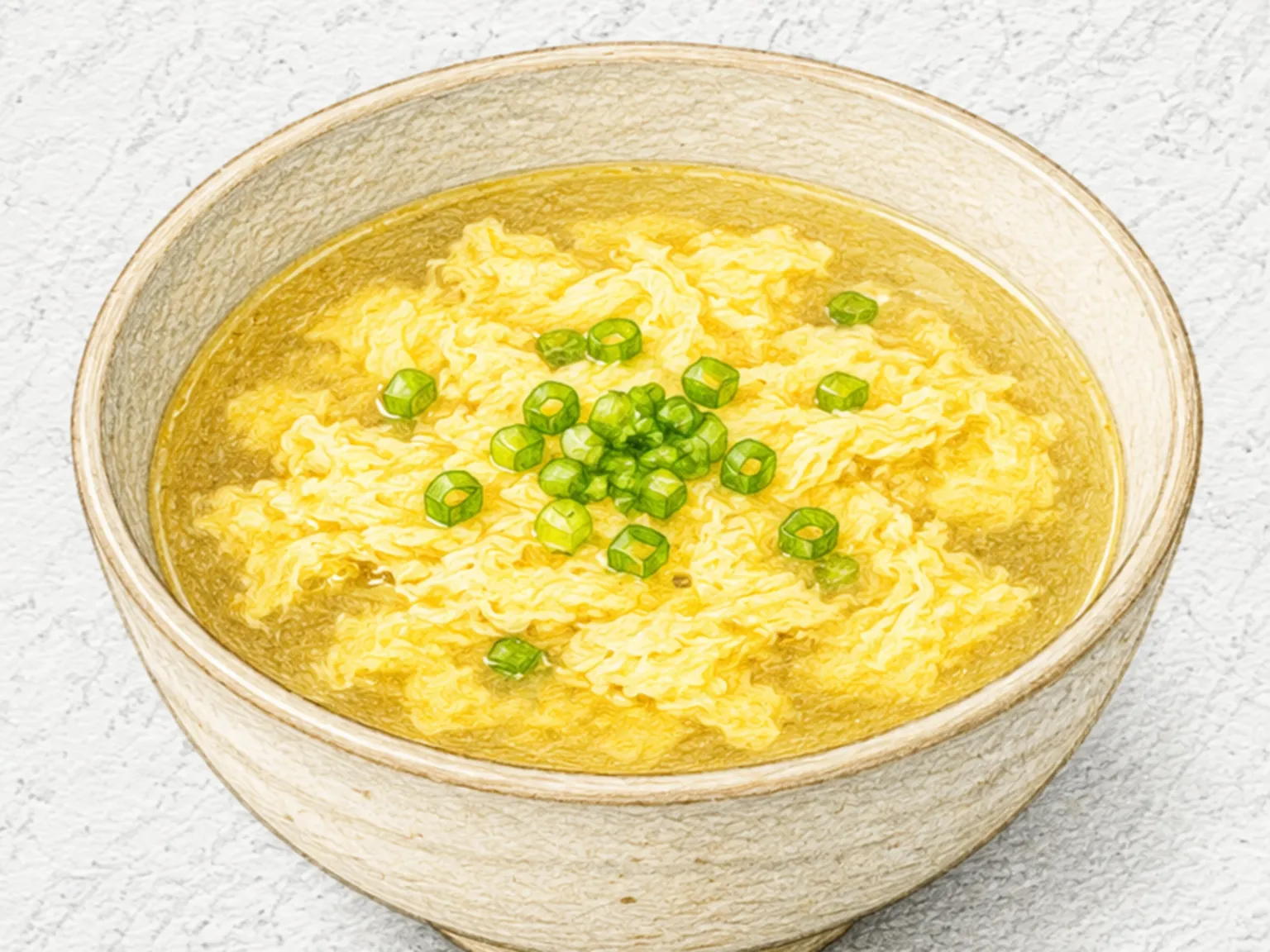
Gyeran-guk is Korea's most accessible comfort soup: a clear, golden broth seasoned with soy sauce and garlic into which a beaten egg is drizzled in a thin stream. When the egg hits the rolling boil, it sets almost instantly into delicate, flower-like ribbons that drift through the liquid in pale yellow sheets. Sliced green onion and a drop of sesame oil added at the end bring a gentle fragrance that lifts the otherwise clean, mild broth. The result is soothing and restorative, mild enough for a sick day yet substantial enough to anchor a full meal of rice and side dishes. Its near-universal appeal on Korean dinner tables comes partly from the fact that nearly every household keeps eggs, soy sauce, and garlic on hand, making it the soup most likely to appear with no planning at all. From start to finish the bowl is ready in under ten minutes.

🏠 Everyday ⚡ Quick
Prep 5min Cook 10min 2 servings
Korean Street Ham & Egg Toast
Street food Easy

Korean Street Ham & Egg Toast

Gilgeori ham egg toast is the foundational version of Korean street toast, the style found at early-morning carts across Seoul and other cities where vendors cook to order on flat griddles. The core is a pan-fried patty of beaten egg mixed with finely shredded cabbage and carrot, cooked flat and golden on both sides. Ham slices are seared on each side for about thirty seconds so the edges caramelize slightly and the surface color deepens without drying out. The bread is pressed onto a buttered pan until the exterior crisps while the crumb stays soft. Ketchup and sugar together form the sauce, and this combination is what separates the Korean street toast from any generic egg sandwich. Sugar in the sauce creates a sweet-salty pull that plays against the savory ham and egg, and omitting it produces something noticeably different in character. Without cheese, this version is lighter and less rich than variations that add a slice, making it more approachable as an early meal. The contrast between the crunchy toasted bread and the soft, yielding egg layer is the defining textural quality.

🧒 Kid-Friendly ⚡ Quick
Prep 10min Cook 12min 2 servings
Korean Bacon Egg Toast (Buttery Griddle Bacon Egg Street Sandwich)
Street food Easy

Korean Bacon Egg Toast (Buttery Griddle Bacon Egg Street Sandwich)

Bacon egg toast sits at the center of Korean street-toast culture - the gilgeori-toseuteu tradition that grew out of Seoul's pojangmacha stalls during the 1980s and 1990s and has since spread to carts and small storefronts across the country. Two slices of white sandwich bread are spread generously with butter and pressed onto a flat iron griddle until the surface caramelizes into something close to a fried crust - crisp, golden, and faintly sweet from the butter. The filling is built on the griddle in order: a thin omelet-style egg beaten with shredded cabbage and carrot is cooked flat and folded to fit the bread, then topped with crispy bacon strips and finished with ketchup and a small measure of sugar. That ketchup-and-sugar combination is the defining seasoning of the Korean street toast tradition - sweet and tangy in a ratio that surprises non-Korean eaters but has remained unchanged at Seoul's toast carts for decades. The bacon delivers smoky, salty contrast that prevents the sweetness from taking over. The finished sandwich is wrapped in wax paper and handed over to be eaten one-handed while walking. In busy districts like Hongdae and Myeongdong, morning lines form at the most popular carts, and the formula has not changed since the 1980s.

🌙 Late Night ⚡ Quick
Prep 5min Cook 10min 1 servings
Korean Sesame Porridge (Toasted Sesame Silky Rice Porridge)
Rice Easy

Korean Sesame Porridge (Toasted Sesame Silky Rice Porridge)

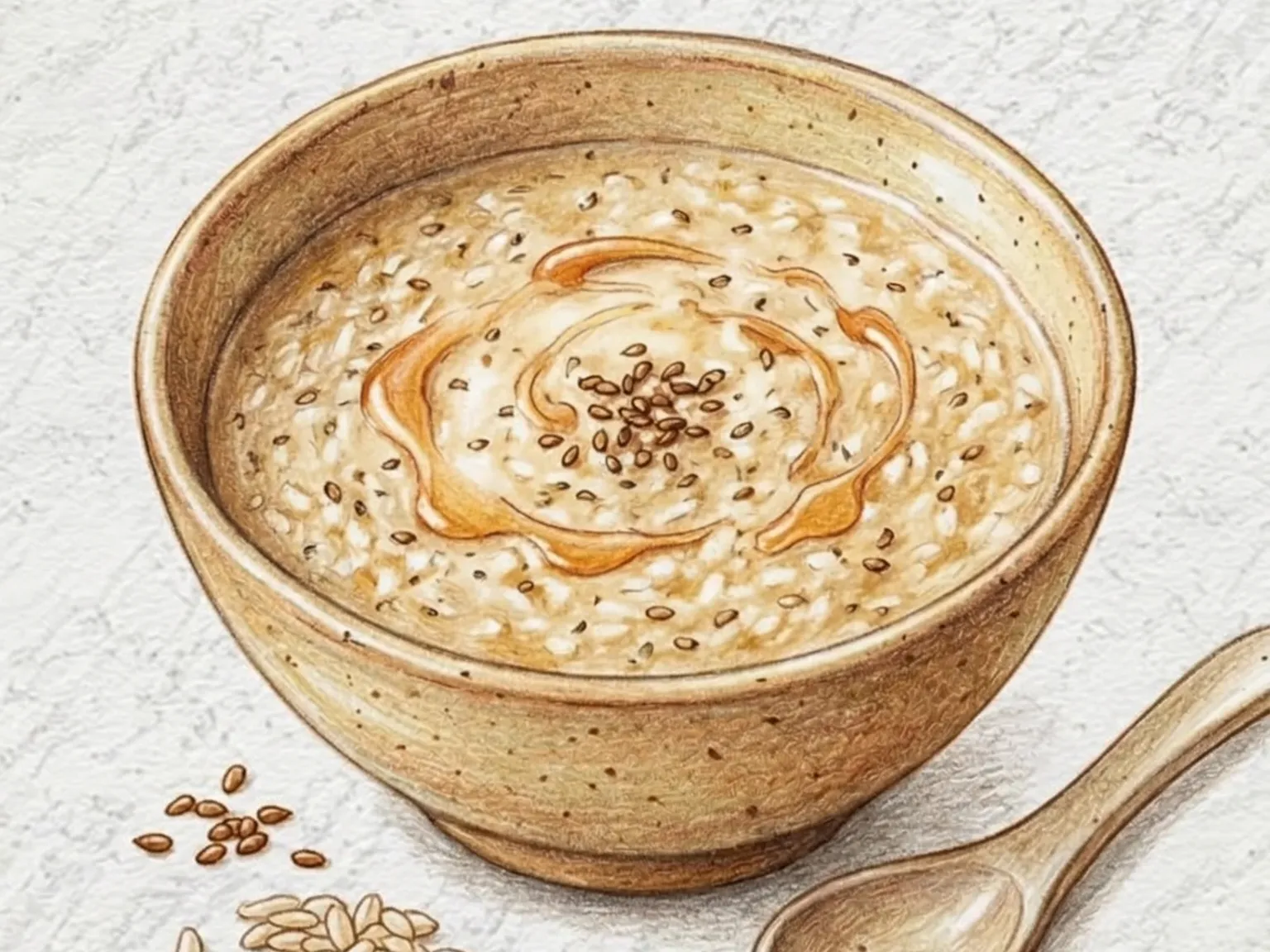
Kkaejuk is a traditional Korean porridge made by grinding toasted sesame seeds to a fine powder and simmering them with soaked rice, water, and milk until the mixture reaches a silky, cream-soup consistency. Toasting the seeds before grinding is not optional -- raw sesame lacks the deep, roasted fragrance that defines the dish, and the heat of toasting develops oils and aroma compounds that grinding alone cannot produce. Constant stirring over low heat prevents the mixture from scorching and coaxes the rice grains into breaking down completely, merging with the sesame base so no distinct texture remains. Milk enriches the body beyond what water alone provides and gives the finished porridge a warm ivory color. The simplest version is seasoned with nothing but salt and served with a drizzle of honey or rice syrup, letting the roasted sesame flavor carry the bowl without distraction. Easily digestible and gentle on the stomach, kkaejuk has a long tradition as a morning meal, a recovery food for the sick, and a postpartum nourishment dish in Korean households.

🥗 Light & Healthy 🏠 Everyday
Prep 15min Cook 30min 2 servings
Korean Egg Mayo Toast
Street food Easy

Korean Egg Mayo Toast

Egg mayo toast mashes three hard-boiled eggs with a fork, mixes them with mayonnaise, salt, and pepper, and piles the mixture onto freshly toasted bread. Crushing the eggs to uneven sizes -- some finely mashed, some left in larger pieces -- creates a textural variation between smooth sections and chunks in each bite, which is more interesting than a uniformly smooth paste. The mayonnaise binds the crumbly eggs into a cohesive, creamy spread, and placing the cool egg salad onto hot toast produces a temperature contrast that carries through the entire piece. Adding a small amount of mustard or finely chopped pickles introduces acidity that cuts through the richness of the mayonnaise and prevents the filling from tasting heavy. The eggs should be fully cooled before mashing -- adding mayonnaise to warm eggs causes it to thin out and can make the texture loose and uneven. With these adjustments, a simple combination of three ingredients becomes considerably more satisfying.

🌙 Late Night ⚡ Quick
Prep 10min Cook 5min 1 servings
Korean Dried Pollack Egg Soup
Soups Easy

Korean Dried Pollack Egg Soup

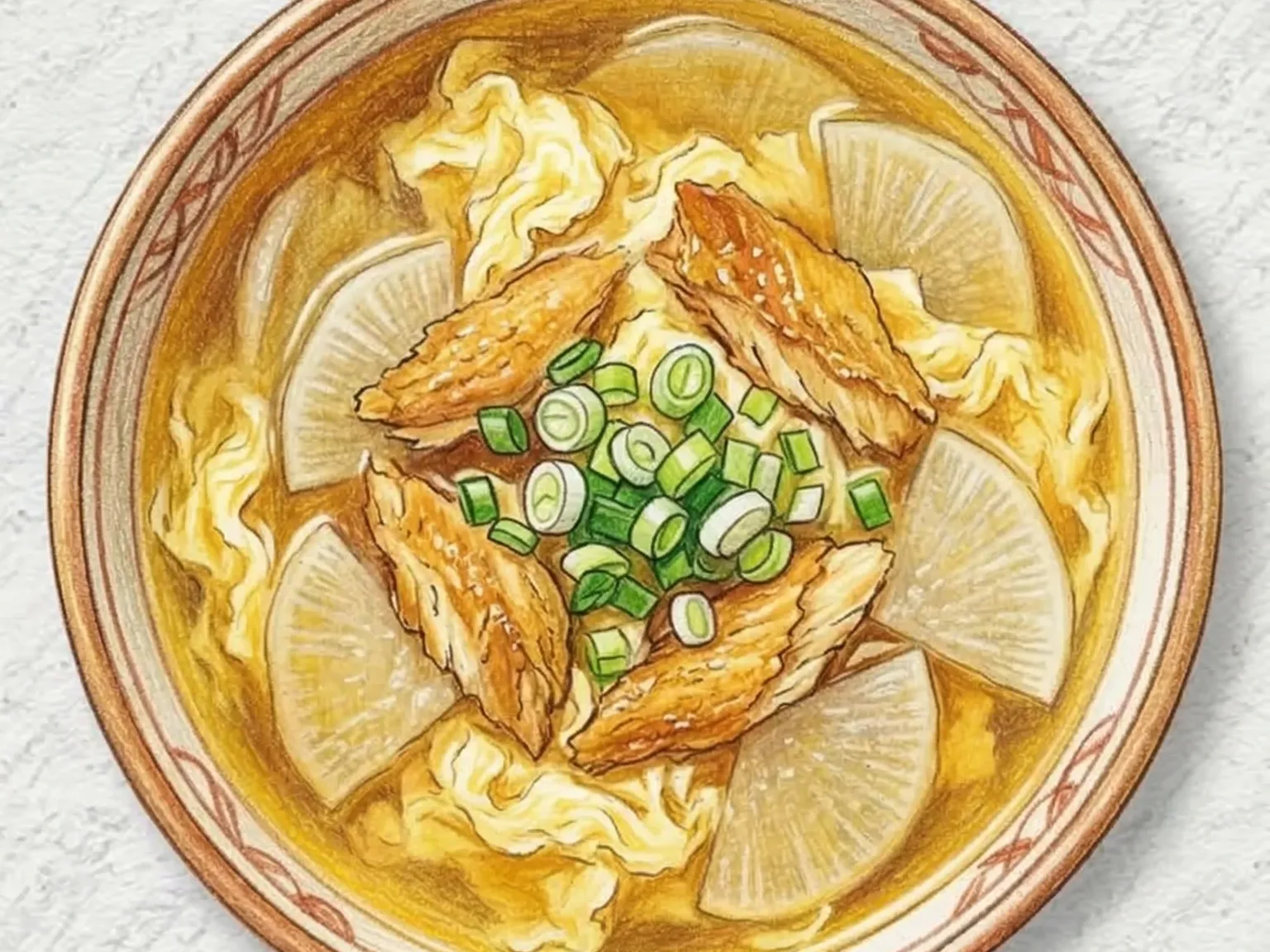
Hwangtae-gyeran-guk is a Korean clear soup that pairs dried pollock with silken egg threads in the same bowl. Toasting the pollock strips in sesame oil at the start is what gives the broth its foundation: the oil absorbs the nutty, roasted fragrance and carries it throughout the liquid as it simmers. Radish and green onion add a clean sweetness and mild sharpness, and once the broth is seasoned with soup soy sauce and garlic, beaten egg is streamed in slowly to form wispy, floating ribbons. The chewy pollock and the soft egg offer a changing texture from one spoonful to the next. Hwangtae is produced on outdoor racks in the Gangwon-do mountains through a winter-long cycle of freezing and thawing that breaks down the protein into a more digestible form and increases the amino acid content. In Korean households this soup appears at both the breakfast table and the post-drinking recovery meal, favored because the protein-rich pollock is gentle on a tired stomach and the whole pot comes together in under twenty minutes.

🏠 Everyday 🥗 Light & Healthy
Prep 10min Cook 18min 4 servings
Kaya Toast (Singaporean Coconut Jam Butter Toast)
Asian Easy

Kaya Toast (Singaporean Coconut Jam Butter Toast)

Kaya toast is the defining breakfast of Singaporean coffee shops, built from two slices of crisped white bread filled with kaya and a thick slab of cold butter. Kaya is a jam made by cooking coconut milk, eggs, sugar, and fresh pandan leaf over low heat with constant stirring until the mixture thickens into a pale green spread that smells of vanilla, coconut, and floral sweetness simultaneously. The bread is toasted directly over charcoal or in a grilling rack until it shatters at the edges. Cold butter placed inside the hot toast begins to soften immediately at the center while retaining its chill at the edges, so each bite delivers a different ratio of fat and sweetness. The traditional pairing is two soft-boiled eggs cracked into a shallow bowl, seasoned with dark soy sauce and a grind of white pepper, then loosely mixed into a thin custard for dipping or dunking. Alongside these, a glass of kopi - coffee brewed through a cloth sock filter and sweetened with condensed milk - completes the set. This breakfast combination has changed very little in decades and remains the first meal of the day for many Singaporeans, served at everything from old neighborhood kopitiams to national chains like Ya Kun Kaya Toast.

🏠 Everyday 🧒 Kid-Friendly
Prep 10min Cook 8min 2 servings
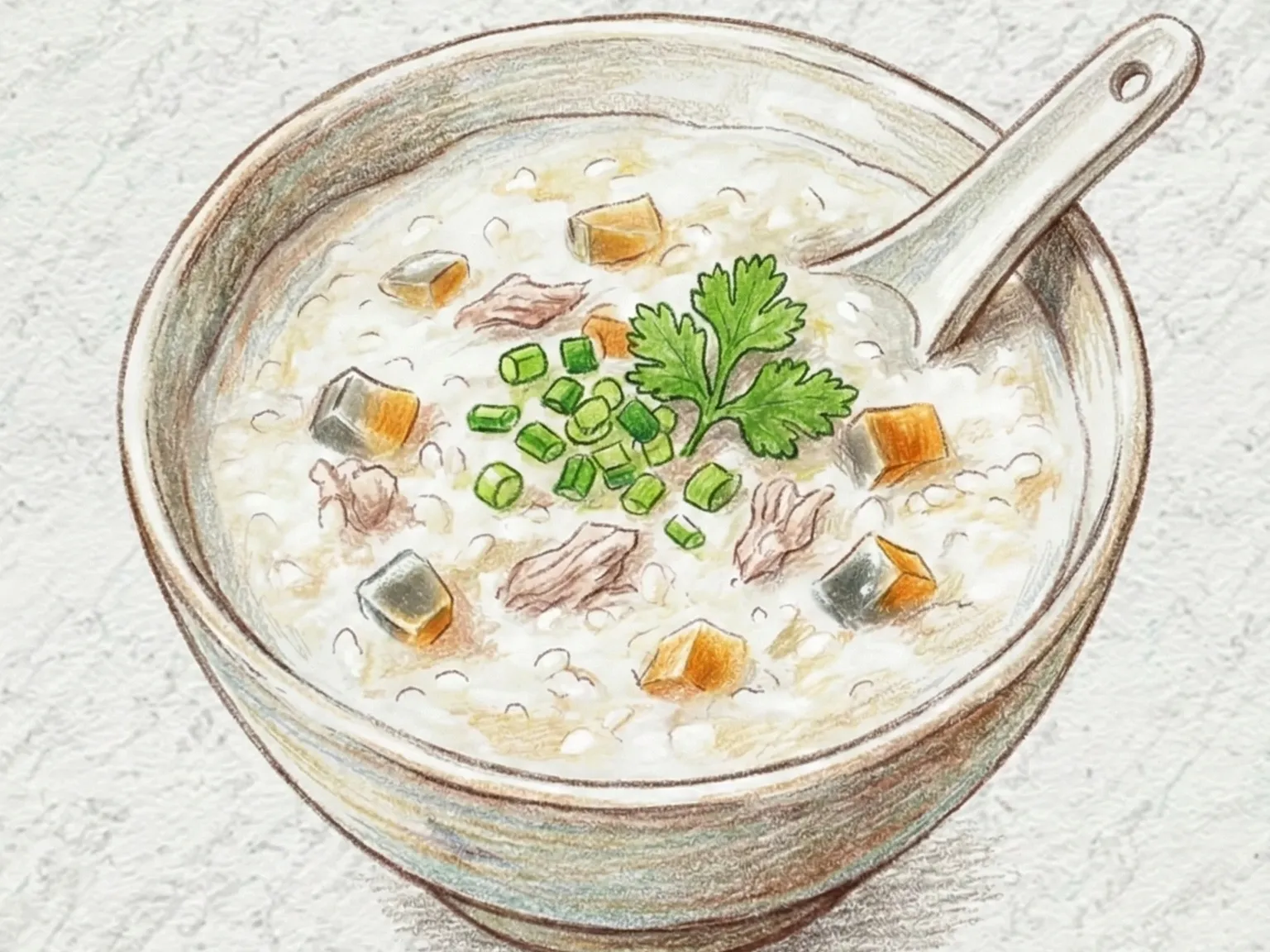
Century Egg and Pork Congee
Asian Medium

Century Egg and Pork Congee

Century egg and pork congee - pi dan shou rou zhou - is the defining Cantonese breakfast, served from dawn at congee shops across Hong Kong, Guangzhou, and the broader Pearl River Delta. The congee base demands a full hour of slow simmering over low heat, during which the rice grains break down entirely into a silky, fluid suspension. In Cantonese this texture is called sang shui - meaning the rice and water have become indistinguishable from each other - and anything short of that is considered undercooked. Lean pork is sliced thin and added during the final minutes, cooking through immediately in the residual heat of the porridge without toughening. Century egg - duck egg preserved in an alkaline mixture of clay, ash, and salt for several weeks - transforms dramatically in the process: the white sets into translucent, trembling amber jelly and the yolk becomes a creamy, dark-green semi-solid with a dense, sulfurous depth. Cubed and stirred through the porridge, the egg's alkaline richness cuts through the clean blandness of the rice base, while the pork provides a grounding savory note. White pepper, a few drops of sesame oil, and sliced scallion finish the bowl. The congee thickens rapidly once it leaves the heat, narrowing the window of ideal texture, so it must be eaten as soon as it is served.

🏠 Everyday 🎉 Special Occasion
Prep 15min Cook 50min 2 servings

Related Categories and Tags

Frequently Asked Questions

What recipes are included in Korean Breakfast Recipes?

Egg dishes, porridges, toast, and clear soups lead the collection because they are easy in the morning.

How many dishes should I make at once?

For a regular meal, one main dish and one or two sides are enough. For holidays or guests, build around one main, one soup, and two or three side dishes.

Can I prepare these recipes ahead?

Cook rice the night before for faster porridge, and prep toast fillings ahead for quick assembly.

More Guides