Cooking Guides

Korean Lunchbox Banchan

Soy-braised anchovies, fish cake, perilla leaves, potatoes, tofu, and kelp for packed Korean lunches.

Korean Lunchbox Banchan

Why This Collection Works

Lunchbox banchan should hold seasoning when cool, avoid excess liquid, and pair naturally with rice.

How the Recipes Were Chosen

Braised and stir-fried sides dominate because they travel well and are easy to pack in the morning.

How to Build a Meal

Cook two or three sides at once, refrigerate them, then change the rice or protein through the week.

Planning Tips

  • Choose one main dish first, then balance it with a soup, side dish, or quick vegetable recipe.
  • When time is limited, open the faster recipes first and save the more involved dishes for a weekend meal.
  • Use the category and tag links below to expand the collection into similar recipes.
Featured Recipes

Korean Braised Anchovy Side Dish
Side dishes Easy

Korean Braised Anchovy Side Dish

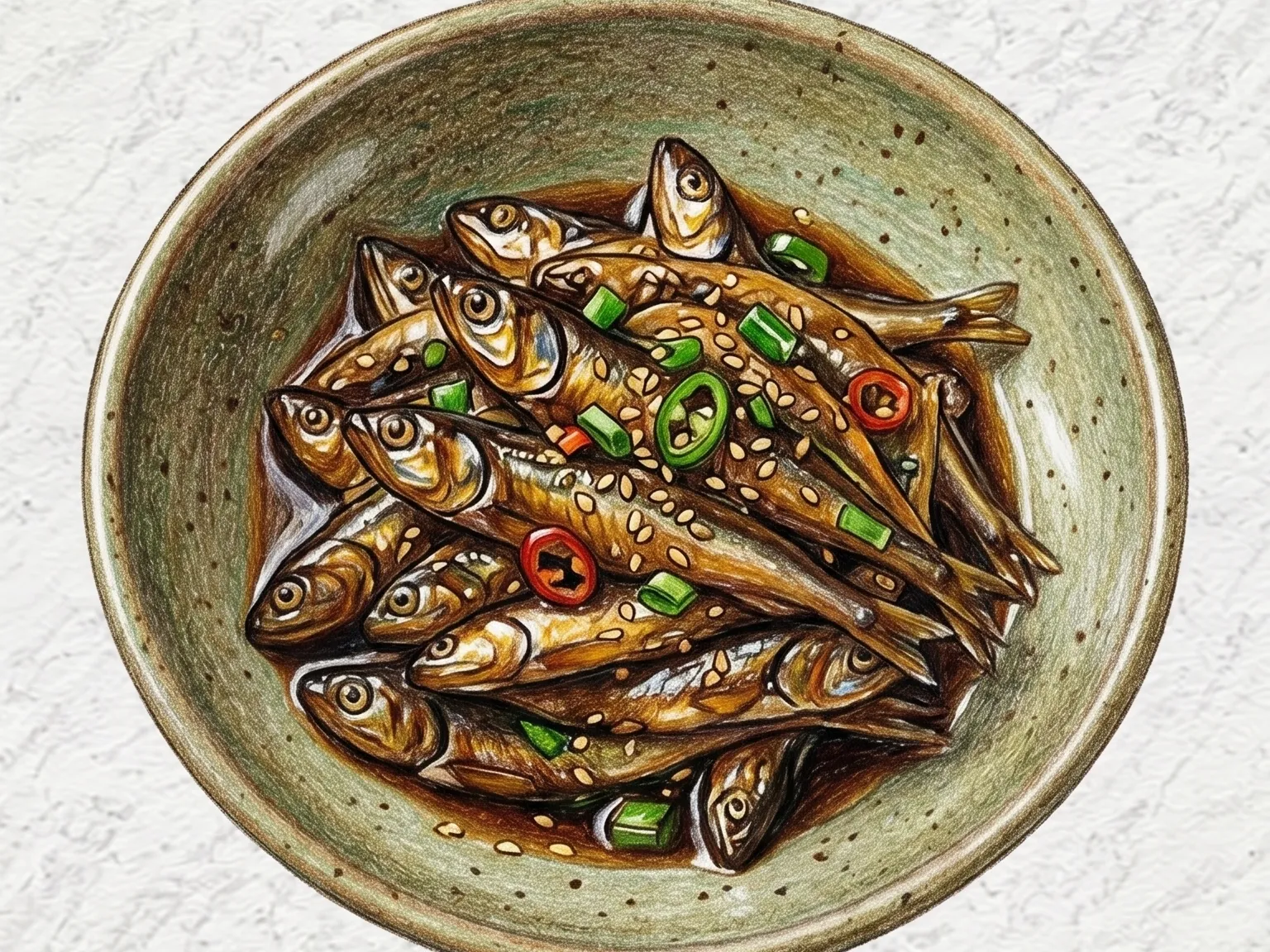
Myeolchi-jorim simmers tiny dried anchovies in soy sauce, rice syrup, and garlic into a moist, glazed banchan that contrasts fundamentally with stir-fried anchovy preparations. Where bokkeum chases crispness by cooking over high heat with minimal liquid, jorim pursues the opposite - anchovies braise in a seasoned liquid on low heat until they absorb it from the inside out, becoming pliant and saturated with sweet-salty flavor all the way through their flesh. A one-minute dry toast in a bare pan removes any residual fishiness before soy sauce, syrup, minced garlic, and water go in together, simmering uncovered for ten minutes while the liquid steadily reduces. As the sauce thickens, a sticky dark glaze wraps around each anchovy; biting one releases a rush of seasoned juice from within rather than the crunch of a dehydrated fish. Sesame seeds and sesame oil stirred in off heat add a final layer of warmth and nuttiness. Once fully cooled, the reduced sauce thickens further into an almost jelly-like coating that holds the anchovies together in a satisfying cluster. Stored in an airtight container in the refrigerator, myeolchi-jorim keeps well for over a week and the flavor continues to deepen as the anchovies sit in the congealed glaze.

🏠 Everyday 🍱 Lunchbox
Prep 8min Cook 15min 4 servings
Korean Soy-Braised Fish Cake
Side dishes Easy

Korean Soy-Braised Fish Cake

Eomuk-jorim is a braised Korean fish cake banchan in which triangles or rectangles of eomuk are simmered in a mixture of soy sauce, rice syrup, garlic, and water. Korean eomuk is a processed fish product made by grinding white fish flesh with starch and shaping the paste into flat sheets or molded forms -- denser and chewier than Japanese kamaboko, with a texture that holds its structure through the long braise without turning soft. As the liquid reduces by roughly half over ten minutes of steady simmering, the sauce concentrates into a thick, sticky glaze that adheres to each piece. Adding a sliced cheongyang chili near the end of cooking introduces a subtle heat that cuts through the sweetness of the rice syrup and gives the banchan a sharper edge that pairs well with plain rice. One of the most practical side dishes in the Korean repertoire, eomuk-jorim keeps in the refrigerator for up to a week and, like many braised preparations, deepens in flavor as the soy seasoning continues to penetrate the fish cake over subsequent days. Its low cost and the ease of making large batches in a single pan explain its decades-long presence in school cafeterias, packed lunchboxes, and the everyday home kitchen.

🏠 Everyday 🍱 Lunchbox
Prep 8min Cook 12min 4 servings
Braised Dried Pollock (Hwangtae-po Jorim)
Side dishes Easy

Braised Dried Pollock (Hwangtae-po Jorim)

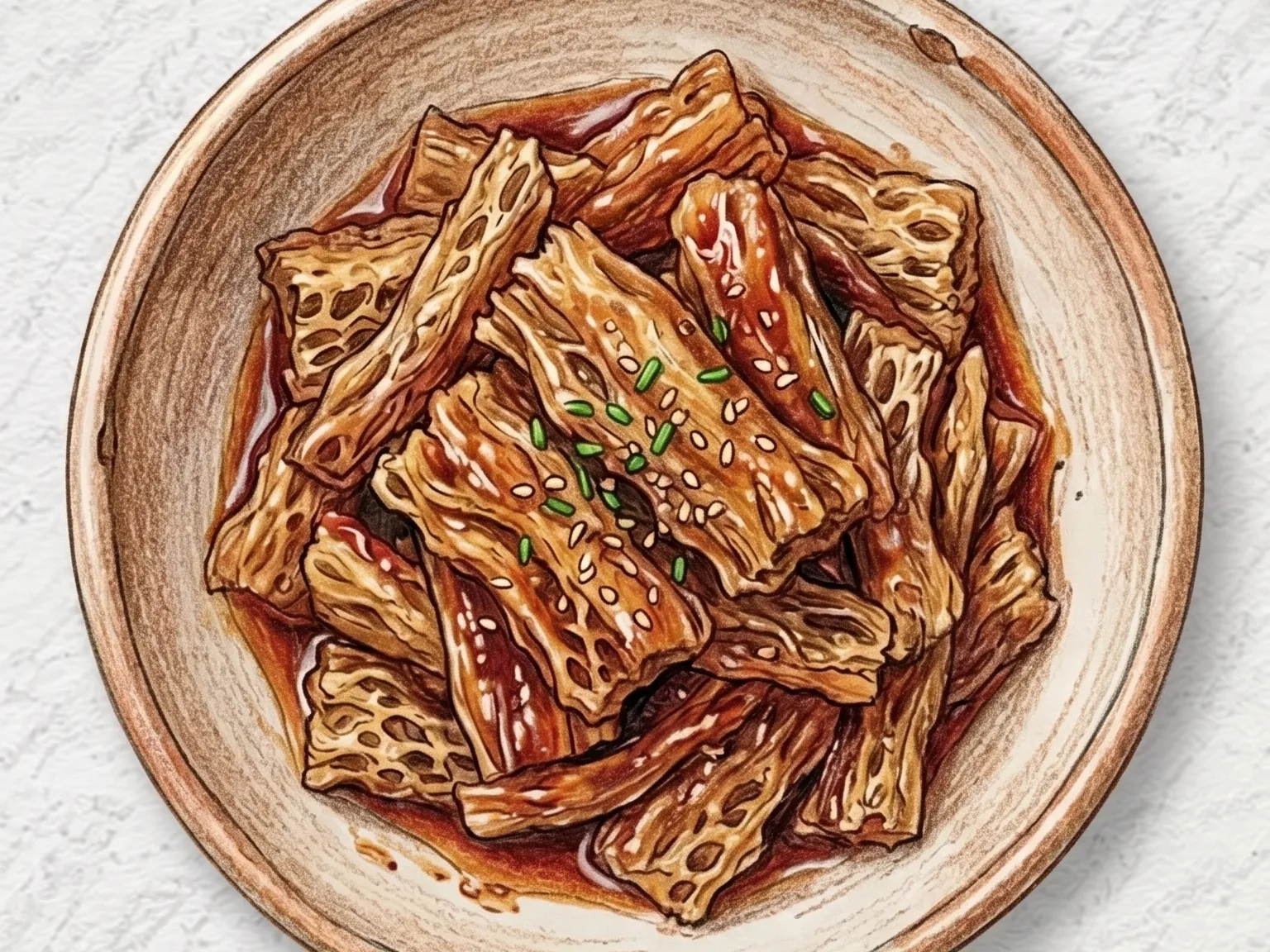
Hwangtae-po jorim is a Korean braised side dish made from hwangtae, the air-dried pollock produced in the Gangwon-do mountains where bitter winter cold freezes and thaws the fish dozens of times across the season. Each freeze-thaw cycle breaks down the protein structure and opens up a sponge-like network of pores throughout the flesh. When braised in a ganjang-gochujang sauce, those pores draw the seasoning deep inside, so every bite carries the savory-sweet glaze all the way through rather than just coating the surface. Rehydrating the dried pollock for no more than three minutes preserves the chewy, springy bite; soaking it longer collapses the structure and leaves it soft and crumbly. Oligosaccharide syrup reduces into a glossy finish that coats each piece, and sesame oil goes in only after the heat is off to keep its fragrance intact. Refrigerated, the dish holds for more than a week, making it a practical addition to meal-prep banchan rotations.

🏠 Everyday 🍱 Lunchbox
Prep 10min Cook 12min 4 servings
Korean Braised Perilla Leaves
Side dishes Easy

Korean Braised Perilla Leaves

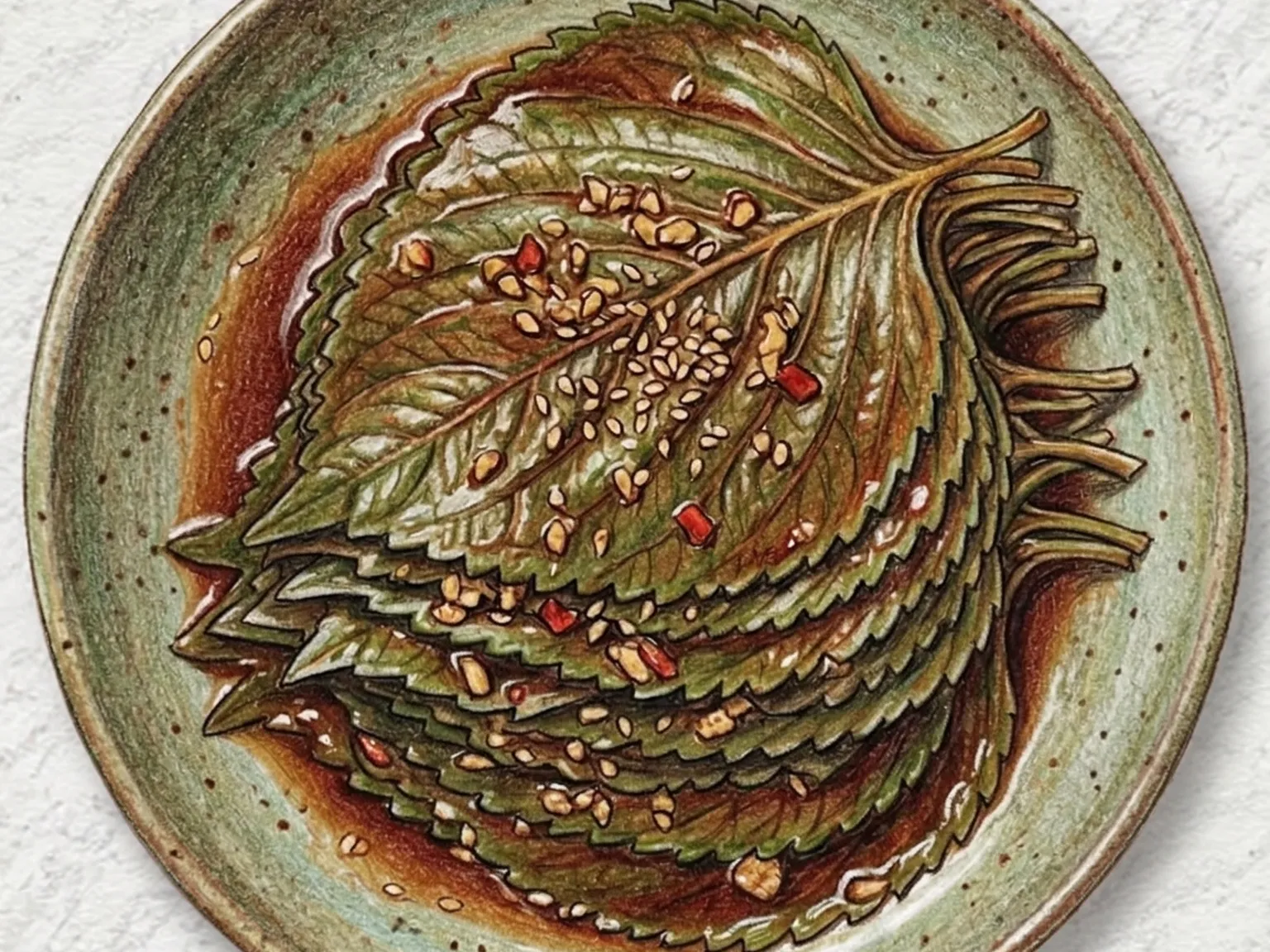
Kkaennip jorim layers fresh perilla leaves with a soy-based sauce and simmers them gently - a banchan built for make-ahead storage. Kkaennip (perilla) is a distinctly Korean herb with an aromatic intensity comparable to basil or mint, yet it is rarely found outside Korean cuisine. The technique stacks five to six leaves at a time, spooning sauce between each layer so every leaf seasons evenly. Simmering on medium-low heat for eight to ten minutes wilts the leaves into soft, pliable sheets that wrap neatly around a mound of rice. The sauce combines soy sauce, gochugaru, sugar, garlic, and sesame oil - the last adding a nutty richness that complements the herb's own perfume. Refrigerated in an airtight container, kkaennip jorim lasts up to two weeks, making it one of the most economical banchan to batch-prepare.

🏠 Everyday 🍱 Lunchbox
Prep 10min Cook 10min 4 servings
Korean Soy Braised Quail Eggs
Stir-fry Easy

Korean Soy Braised Quail Eggs

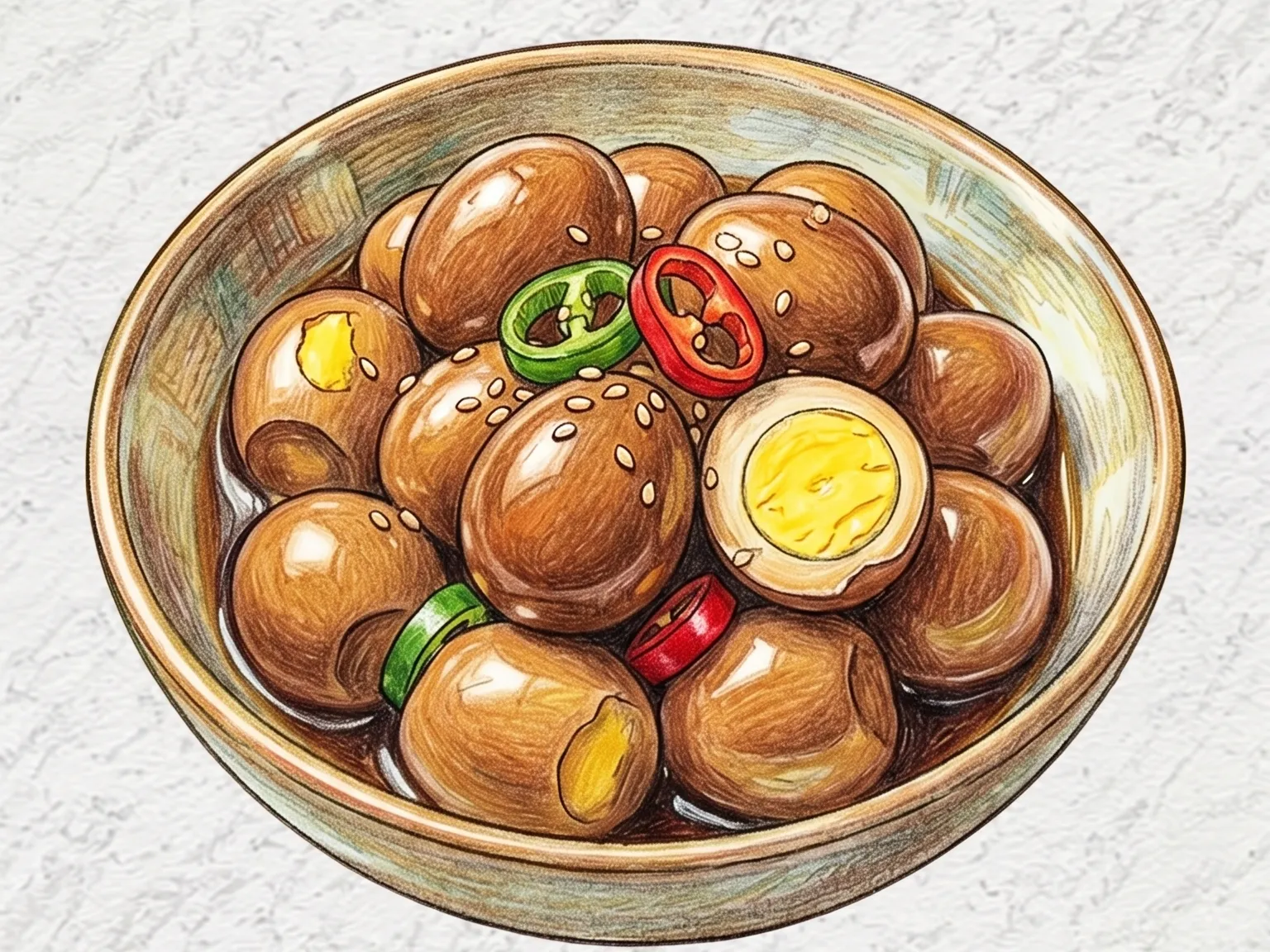
Al-jorim - soy-braised quail eggs - is one of Korea's most universal banchan, appearing in school cafeteria trays, packed office lunchboxes, and home refrigerators as a reliable standby. The dish belongs to the broader Korean jorim tradition of simmering proteins low and slow in a sweetened soy-based liquid until the glaze seeps through to the center. Peeled quail eggs go into a pan with soy sauce, water, sugar, cooking wine, and minced garlic, then simmer over medium-low heat for ten minutes. Turning the eggs occasionally is essential - it ensures the soy stain reaches every surface evenly rather than leaving pale patches. The liquid starts thin and gradually reduces as the eggs cook, concentrating into a sticky, glossy glaze that clings to the surface in the final two to three minutes over higher heat. The outside takes on a deep chestnut brown while the yolk inside stays vivid yellow. A sliced cheongyang chili added near the end introduces a low, slow heat that keeps the sweet-salty profile from becoming monotonous. Sesame oil and toasted sesame seeds scattered over the finished eggs add a nutty note against the soy base. Left overnight in the refrigerator, the seasoning penetrates further and the flavor deepens, making this one of the few banchan that genuinely improves after a day.

🏠 Everyday 🍱 Lunchbox
Prep 10min Cook 15min 2 servings
Korean Seasoned Shishito Pepper Banchan
Side dishes Easy

Korean Seasoned Shishito Pepper Banchan

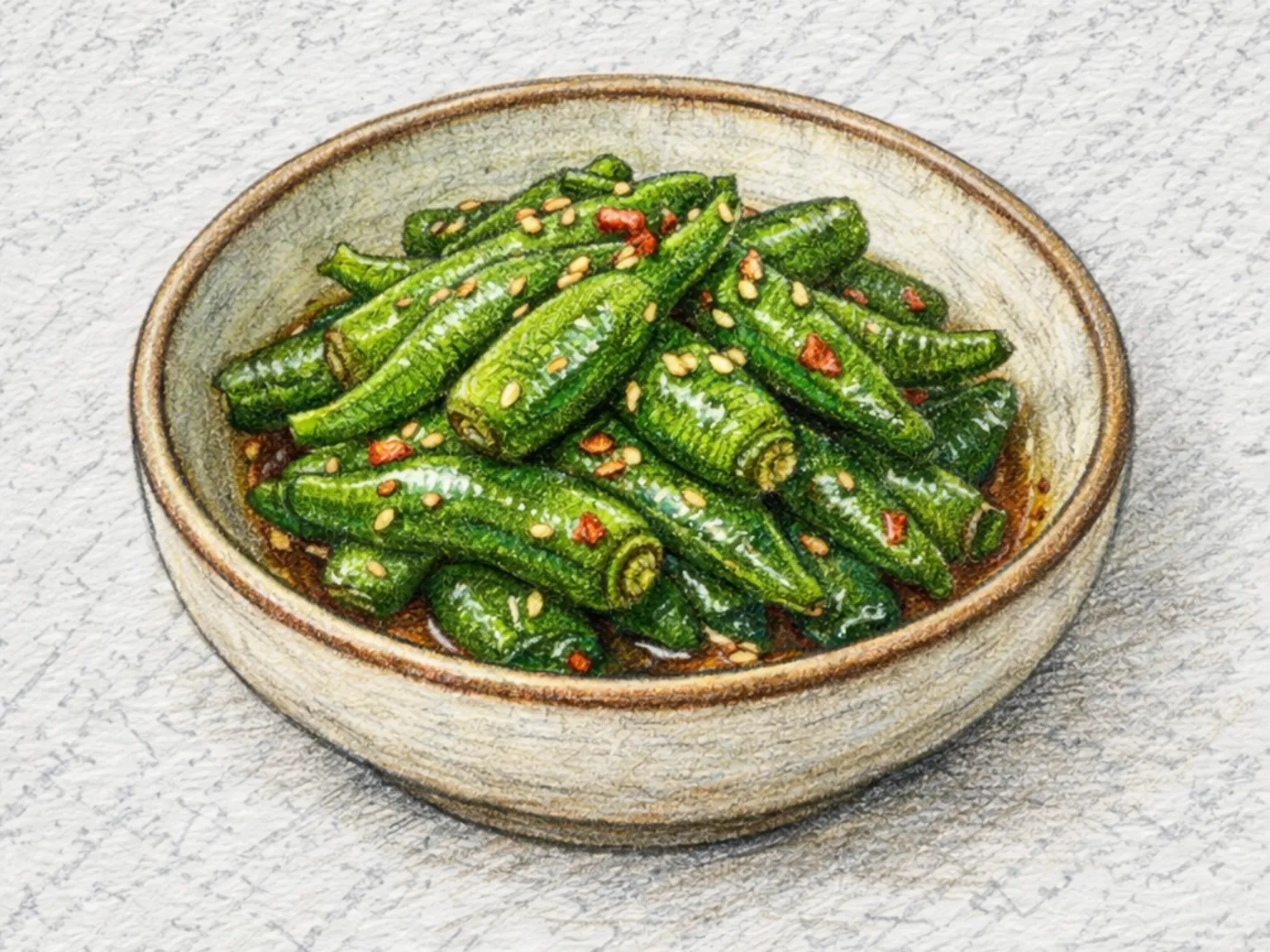
Kkwarigochu-muchim is a Korean banchan made by briefly blanching shishito peppers and dressing them in a doenjang-based seasoning. It is a distinct dish from kkwarigochu-jjim, the braised version of the same pepper, even though the ingredients overlap significantly. The braised version simmers the peppers until they soften and absorb the sauce, while muchim relies on a very short blanch, no longer than forty seconds, to preserve the pepper's snap. Shocking the peppers in cold water the moment they come out of the boiling water locks in the vivid green color, and squeezing out excess moisture prevents the doenjang dressing from thinning into something flat and watery. The irregular wrinkled surface of shishito peppers acts as a natural trap for the doenjang, soy sauce, and sesame oil dressing, which means a modest amount of seasoning spreads evenly across every piece. Tossing rather than kneading keeps the skins intact and the texture consistent. Tearing one end slightly before dressing allows the seasoning to reach the hollow interior. Among regular eaters, part of the appeal is the mild unpredictability: most shishito peppers are gentle, but one in every handful delivers unexpected heat. Because the dish releases very little liquid after seasoning, it travels well in packed lunches and is a regular fixture on summer dinner tables in Korean households.

🏠 Everyday 🍱 Lunchbox
Prep 8min Cook 3min 4 servings
Korean Sweet Spicy Pollock Floss Stir-fry
Side dishes Easy

Korean Sweet Spicy Pollock Floss Stir-fry

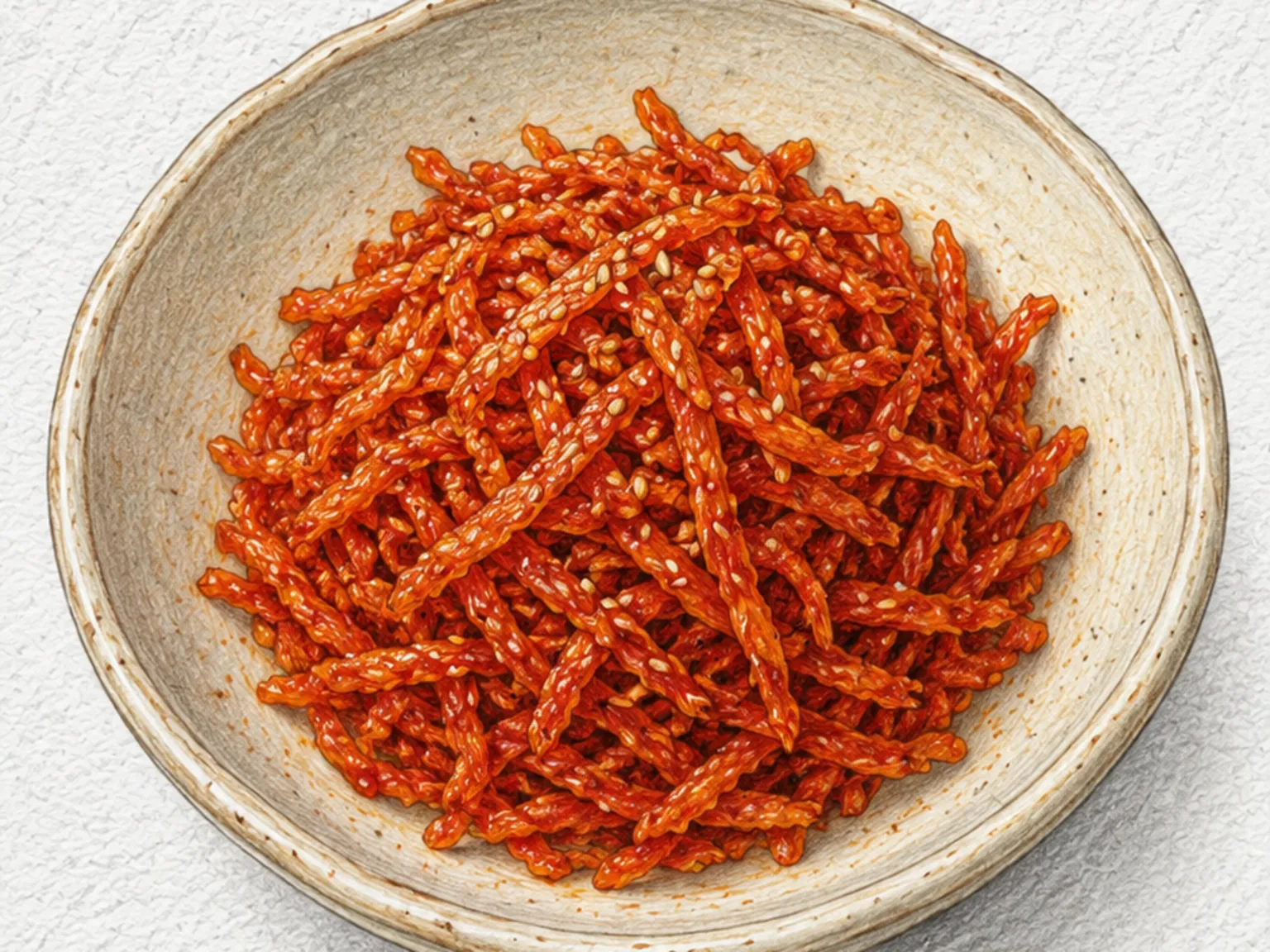
Myeongyeopchae-bokkeum stir-fries finely shredded dried pollock floss in gochujang and oligosaccharide syrup until each fiber strand is evenly coated and moist. Myeongyeopchae is thinner and softer-fibered than hwangtaechae, the wider dried pollock strips, arriving in a dense cotton-like bundle that must be loosened strand by strand before cooking. Running your fingers along the grain separates the fibers cleanly, allowing the seasoning to penetrate evenly and preventing the finished banchan from clumping together in the mouth. A dry toast of thirty seconds in an oil-free pan drives off residual moisture and coaxes out a toasted fish aroma before gochujang, gochugaru, oligosaccharide syrup, soy sauce, and minced garlic go in over the lowest heat for a rapid coating. The fine fibers absorb the sauce almost immediately and turn pliant and glistening, but heat held too long draws the moisture back out, leaving them tough and stiff, so the entire stir-fry must be completed within two minutes. A finishing drizzle of sesame oil and a scatter of sesame seeds deepen the nutty aroma. The resulting banchan occupies a middle ground between the chewier, more aggressively seasoned hwangtaechae-muchim and the bolder jinmichae-bokkeum, its mild sweet-spicy profile approachable enough for children. The relatively dry finish means the seasoning does not bleed into adjacent items in a lunchbox, and stored in an airtight container in the refrigerator the flavor holds well for up to five days.

🏠 Everyday 🧒 Kid-Friendly
Prep 5min Cook 7min 4 servings
Korean Braised Tofu with Shrimp
Side dishes Medium

Korean Braised Tofu with Shrimp

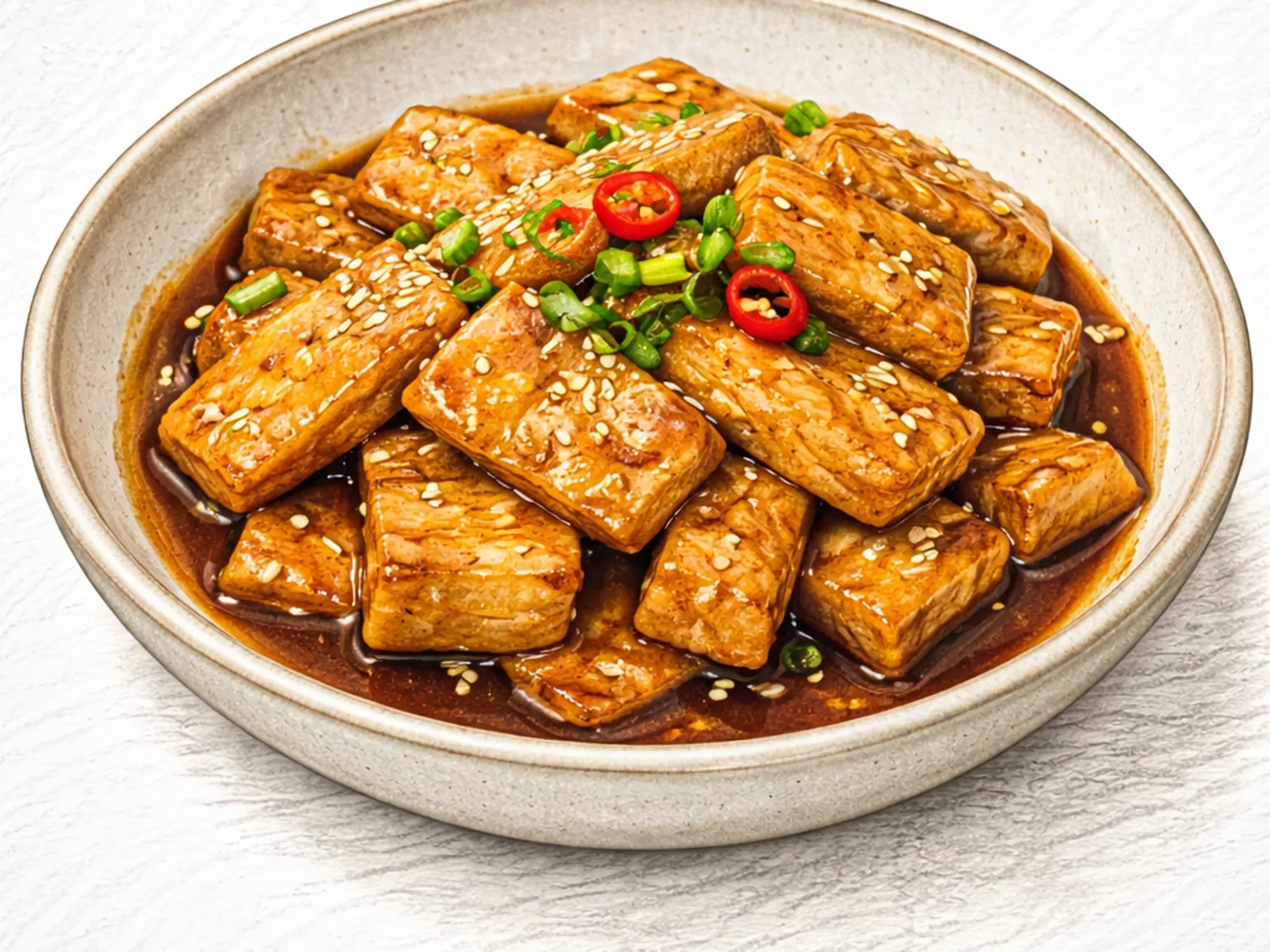
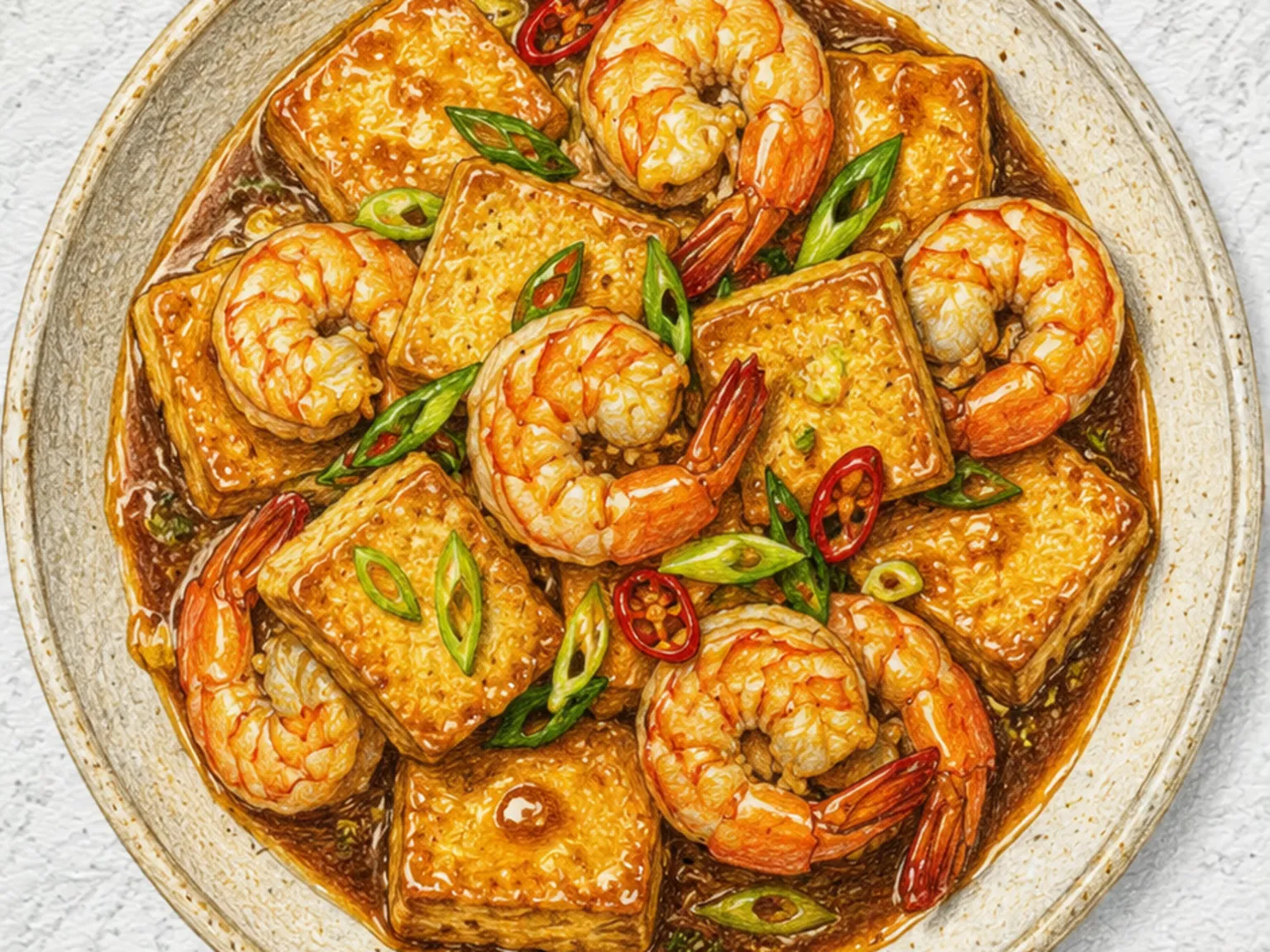
Dubu-saeu-jorim pairs pan-seared tofu with whole shrimp in a soy-based braising sauce, stepping well beyond the usual tofu-only preparations that appear in everyday banchan. The tofu is seared first until golden on both sides to develop a lightly firm crust that resists breaking apart during the braising stage, then set aside while shrimp cook briefly in the same pan, picking up the fond left by the tofu. The braising liquid -- soy sauce, minced garlic, sugar, cooking wine, and a touch of gochugaru -- goes in next, and both proteins return to the pan to simmer together for five minutes over medium heat. The shrimp release their marine sweetness into the sauce as they tighten and curl, and the porous interior of the tofu absorbs that combined soy-seafood flavor throughout each cube. Adjusting the simmer time controls the final sauce concentration: shorter for a looser, silkier coat; longer for a more intensely reduced glaze. The textural pairing is the dish's central appeal -- yielding, custardy tofu against the springy, snapping bite of the shrimp. Adding sliced green onion or fresh chili introduces another layer of fragrance, and scaled up in quantity, the dish works just as well spooned over steamed rice as a satisfying one-bowl meal.

🏠 Everyday 🍱 Lunchbox
Prep 15min Cook 15min 2 servings
Korean Braised Kelp Strips
Side dishes Medium

Korean Braised Kelp Strips

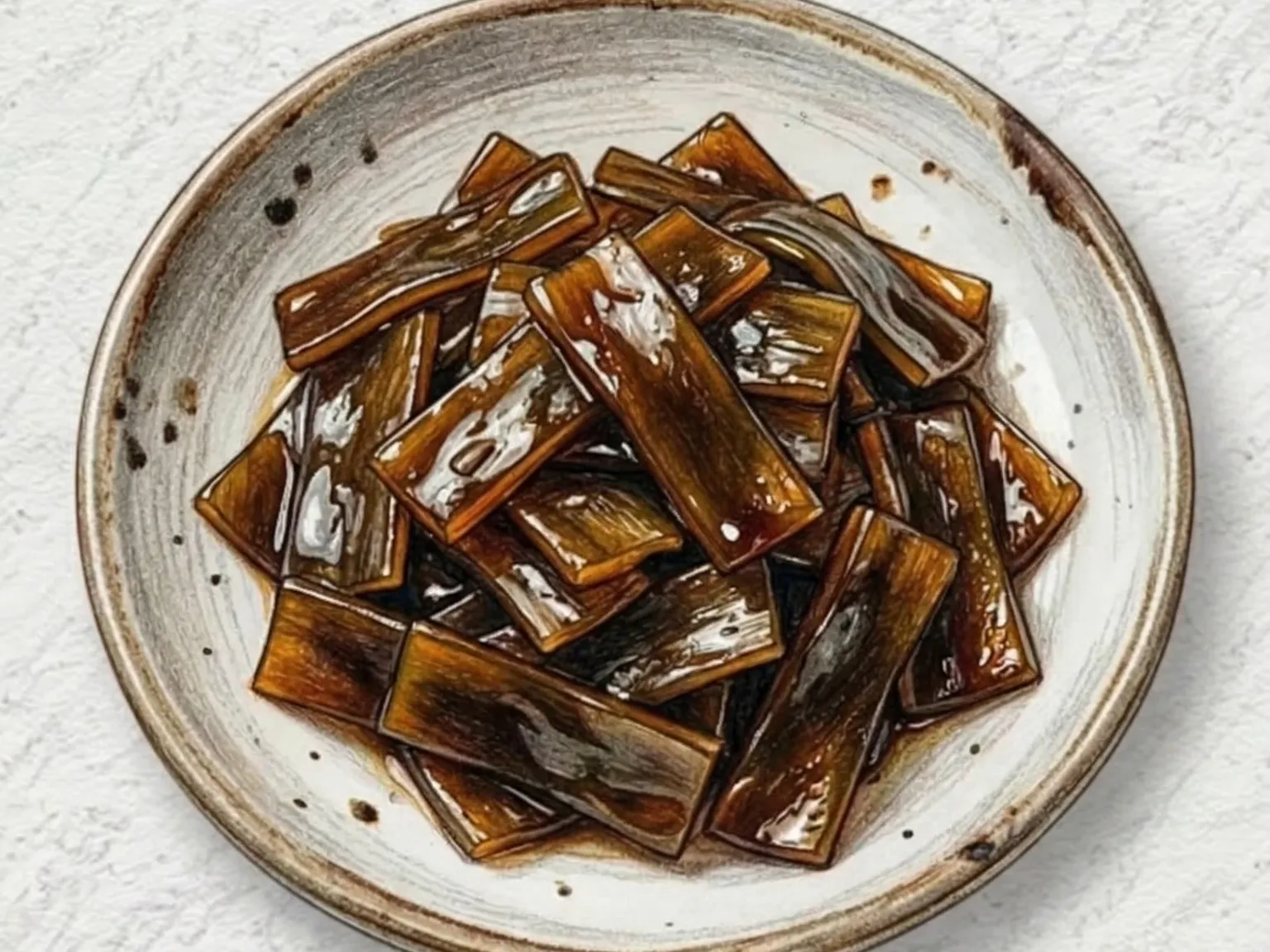
Dasima jorim is a banchan that repurposes dried kelp - typically discarded after making stock - into a glossy, chewy side dish through slow braising. The kelp is soaked in cold water for at least twenty minutes until it softens and becomes pliable, then cut into strips roughly one centimeter wide. Simmered in soy sauce, rice syrup, cooking wine, and garlic over medium-low heat for fifteen minutes or more, the braising liquid gradually reduces and thickens into a lacquer-like glaze that coats each strip on all sides. The rice syrup contributes both sweetness and the shine that gives the dish its visual appeal. The resulting texture is difficult to compare - somewhere between the springiness of gummy candy and the firm bite of pasta al dente, resilient but with a clean snap when bitten through. Refrigerated overnight, the seasoning penetrates the dense seaweed fibers more deeply, and the flavor continues to intensify over several days, making it a banchan that improves the longer it sits.

🥗 Light & Healthy 🏠 Everyday
Prep 15min Cook 20min 4 servings
Korean Braised Potatoes (Soy-Glazed Braised Potato Banchan)
Side dishes Easy

Korean Braised Potatoes (Soy-Glazed Braised Potato Banchan)

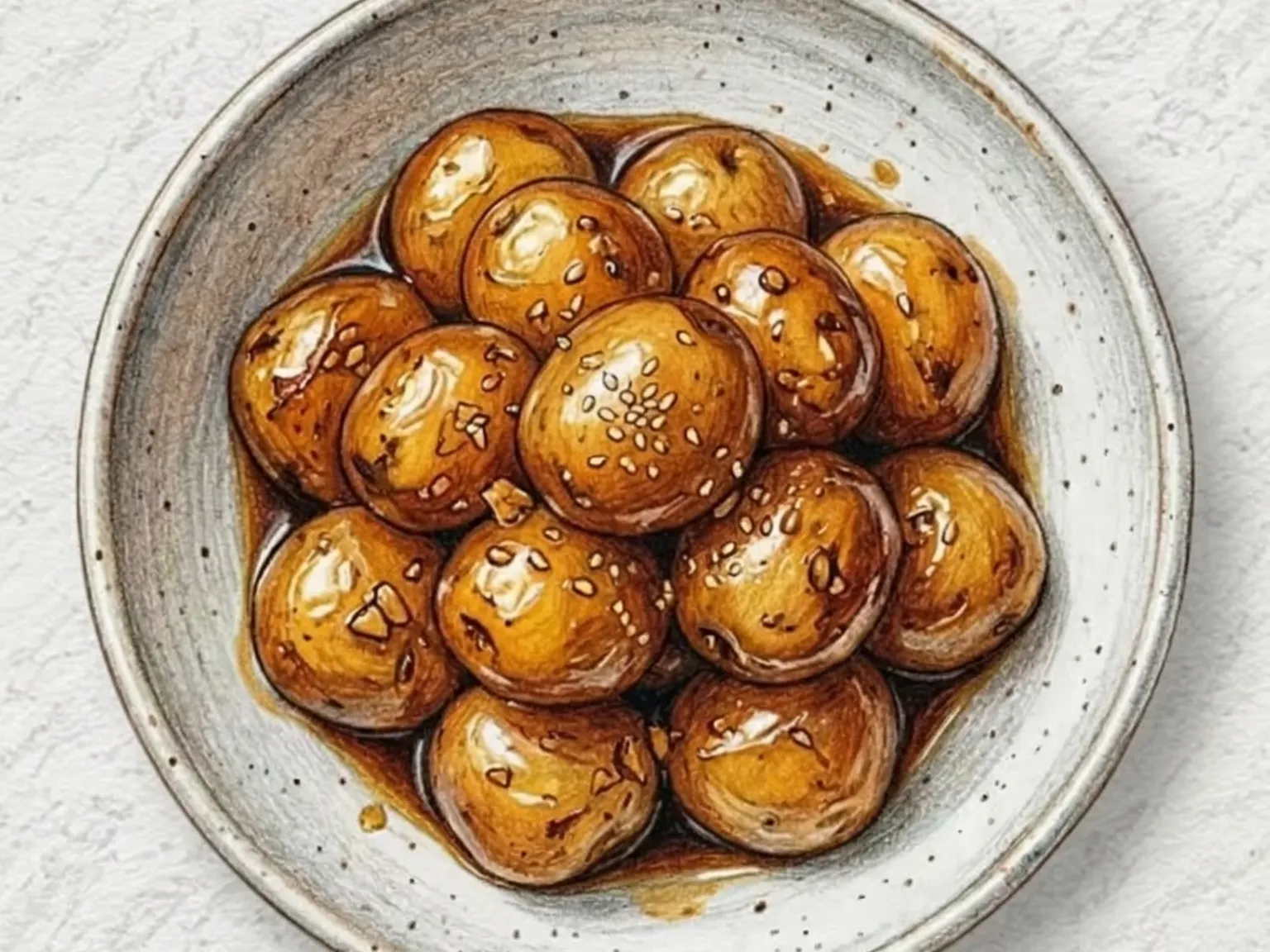
Gamja-jorim - soy-braised potatoes - is among the top five most frequently made banchan in Korean households, alongside kimchi, kongnamul, and gyeran-mari. Small potatoes are parboiled whole until just fork-tender, then transferred to a mixture of soy sauce, sugar, rice syrup, garlic, and water. The braising happens over medium-low heat for fifteen minutes with the lid off, allowing the sauce to reduce gradually into a thick, syrupy glaze. Constant gentle stirring prevents the soft potatoes from sticking or breaking apart. As the liquid evaporates, each potato develops a dark amber, lacquered surface while the interior remains starchy and yielding. The taste is straightforwardly sweet-salty with a garlic undertone - comfort food in its most elemental form. Korean mothers often make a large batch on weekends, refrigerating it to serve cold throughout the week. The dish improves overnight as the glaze continues to penetrate the potato's interior.

🏠 Everyday 🍱 Lunchbox
Prep 10min Cook 20min 4 servings

Related Categories and Tags

Frequently Asked Questions

What recipes are included in Korean Lunchbox Banchan?

Braised and stir-fried sides dominate because they travel well and are easy to pack in the morning.

How many dishes should I make at once?

For a regular meal, one main dish and one or two sides are enough. For holidays or guests, build around one main, one soup, and two or three side dishes.

Can I prepare these recipes ahead?

Cook two or three sides at once, refrigerate them, then change the rice or protein through the week.

More Guides