🍱 Lunchbox Recipes
Dishes that taste great packed and cold
723 recipes. Page 1 of 31
The best lunchbox dishes hold up well at room temperature. This tag features make-ahead sides and full lunchbox recipes you can pack in the morning without stress - sausage stir-fry, rolled omelet, stir-fried anchovies, and soy-braised beef are all lunchbox staples.
The key to a great packed lunch is choosing dishes with low moisture content and arranging contrasting colors. A sprinkle of sesame seeds or furikake over the rice adds a finishing touch that looks as good as it tastes.
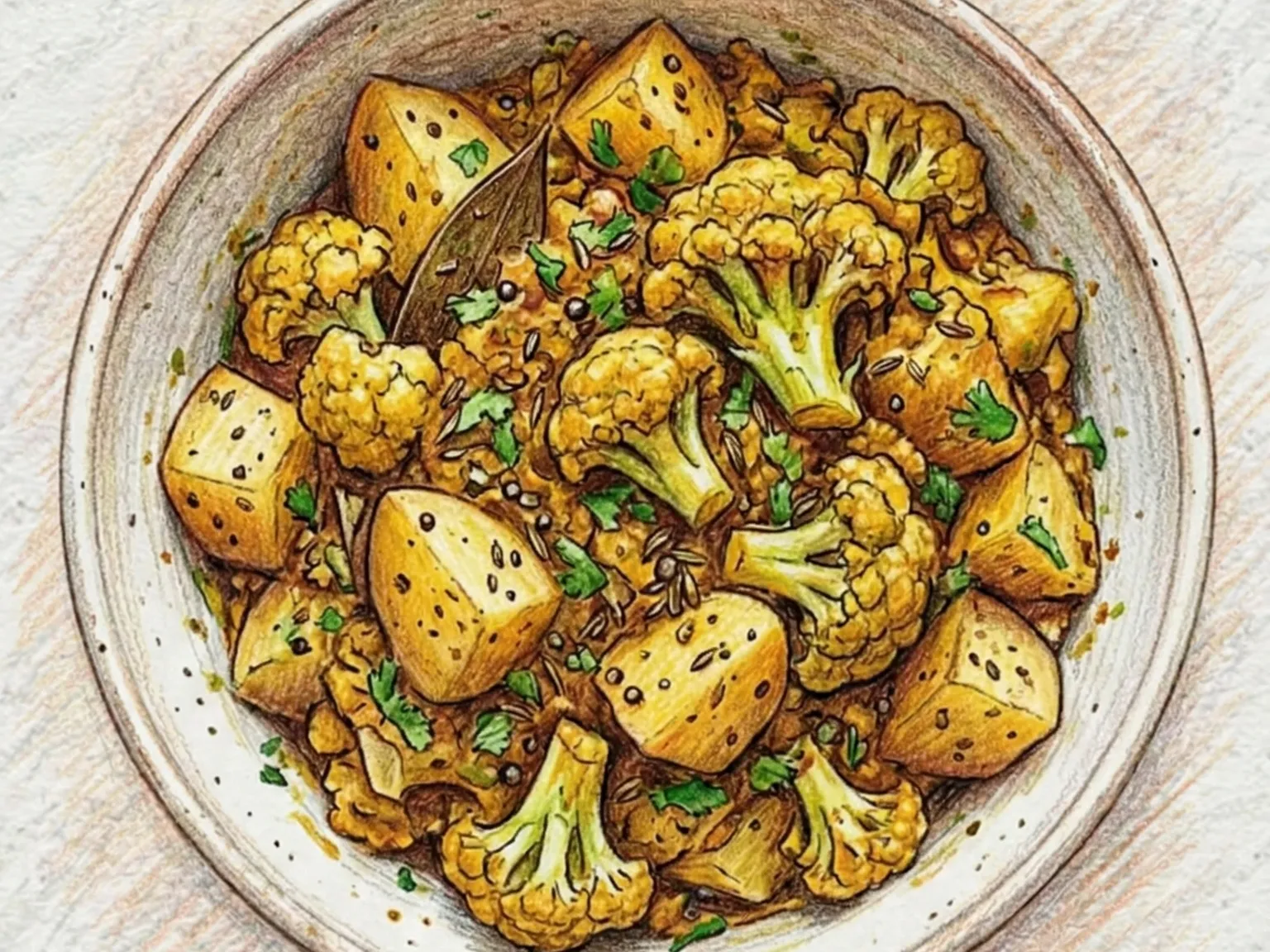
Aloo Gobi (Indian Cauliflower Potato Curry)
Aloo gobi is the kind of North Indian dish that appears in both roadside dhabas along Punjab highways and home kitchens across Uttar Pradesh, eaten by people with very different relationships to food. It is a dry preparation - no gravy, no broth - just potatoes and cauliflower coated in cumin, turmeric, and chili powder that forms a thin spice crust as the vegetables cook. Cumin seeds go into hot oil first, blooming their fragrance before the vegetables are added and turned to coat them evenly in the spiced fat. The lid goes on, trapping steam to cook the interiors while the base stays dry enough for browning to develop. Flipping once or twice is enough - too much movement breaks the crust and stews the vegetables instead of roasting them. The result: cauliflower edges that carry a faint char and a nutty depth, potato cubes that hold their structure with a floury, tender interior. Roti or plain steamed rice are the natural companions, and the spice notes actually sharpen as the dish cools, which makes it equally good packed for lunch the next day.

Alfajores (Argentine Dulce de Leche Sandwich Cookies)
Alfajores began as a medieval Andalusian sweet brought to Spain by Moorish confectioners, but the round, pillowy sandwich-cookie form that people recognize today was shaped in 19th-century Argentina and Uruguay, where the recipe drifted far enough from its origins to become its own thing. The defining characteristic is the dough: heavily weighted with cornstarch relative to flour, it produces a cookie that does not snap or crunch but dissolves the moment it meets the tongue. Two rounds sandwich a thick layer of dulce de leche - slow-cooked milk caramel with a toffee depth and a consistency somewhere between fudge and butter - and the cookie itself is deliberately made plain so it does not compete with the filling. Rolling the exposed dulce de leche along the edge in shredded coconut adds a dry, fibrous contrast to the sticky center. A dusting of powdered sugar on top provides a brief, clean sweetness before the caramel asserts itself with each bite. In Buenos Aires, bakery windows stack them into towers, and the debate over which brand makes the best alfajor is treated with the seriousness Argentines reserve for football and steak.
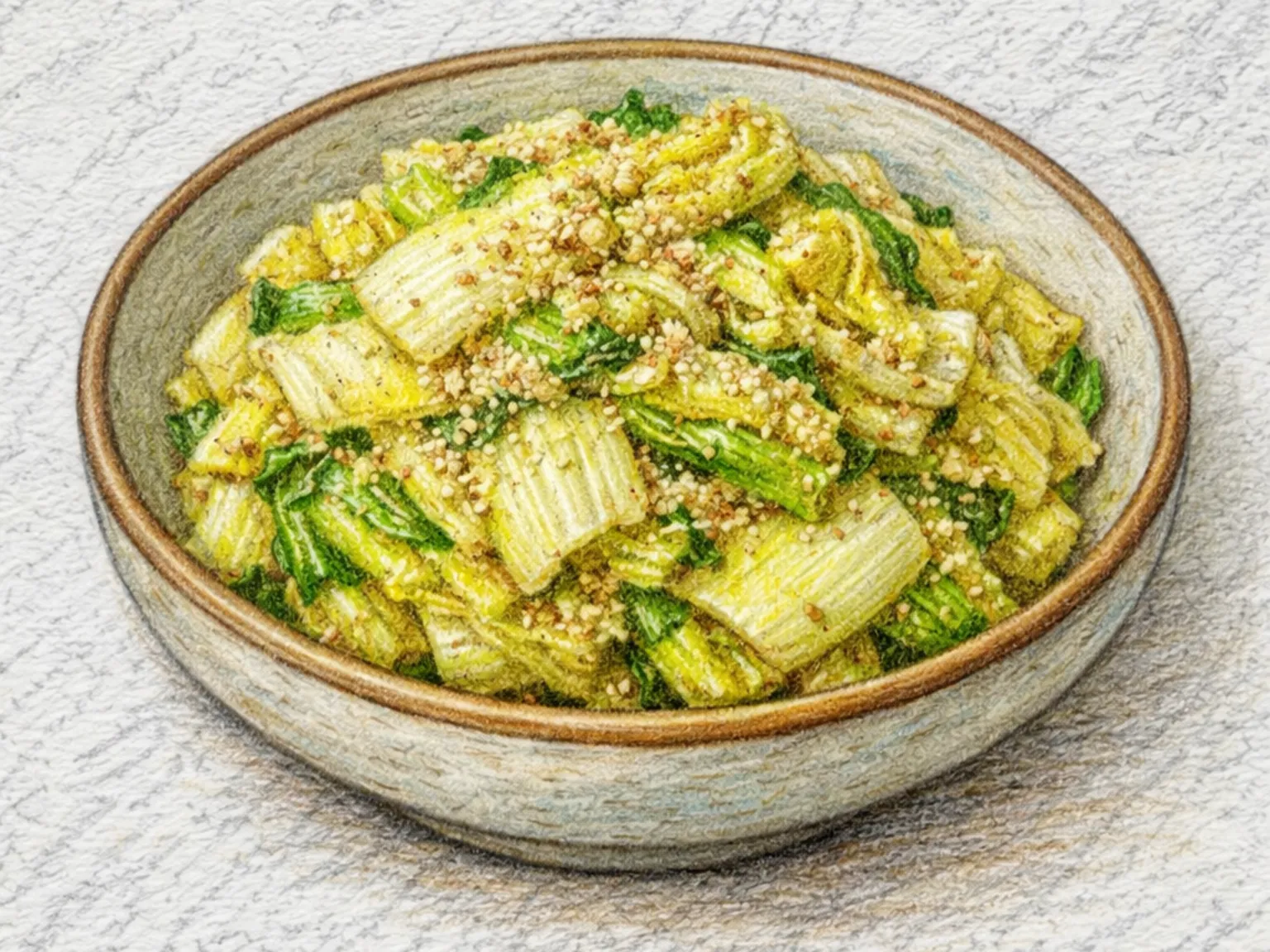
Korean Napa Cabbage Perilla Stir-fry
Two ingredients carry this dish: baby napa cabbage and ground perilla seeds. Perilla oil goes into the pan first, then cabbage over high heat until just wilted. A splash of water and a measure of soup soy sauce follow, with the lid on for two minutes more. The timing gap between leaf and stem matters here - stems retain a little bite while leaves turn soft, and that contrast is the point of the dish rather than an oversight. Ground perilla seeds go in just before turning off the heat: too early and the nutty fragrance dissipates in the steam; too late and they do not thicken the liquid properly. When done right, the seeds create a pale, creamy sauce that clings to the cabbage and soaks into rice underneath. Salt and pepper are the only other seasoning. It keeps well cold and travels without issue in a lunchbox.
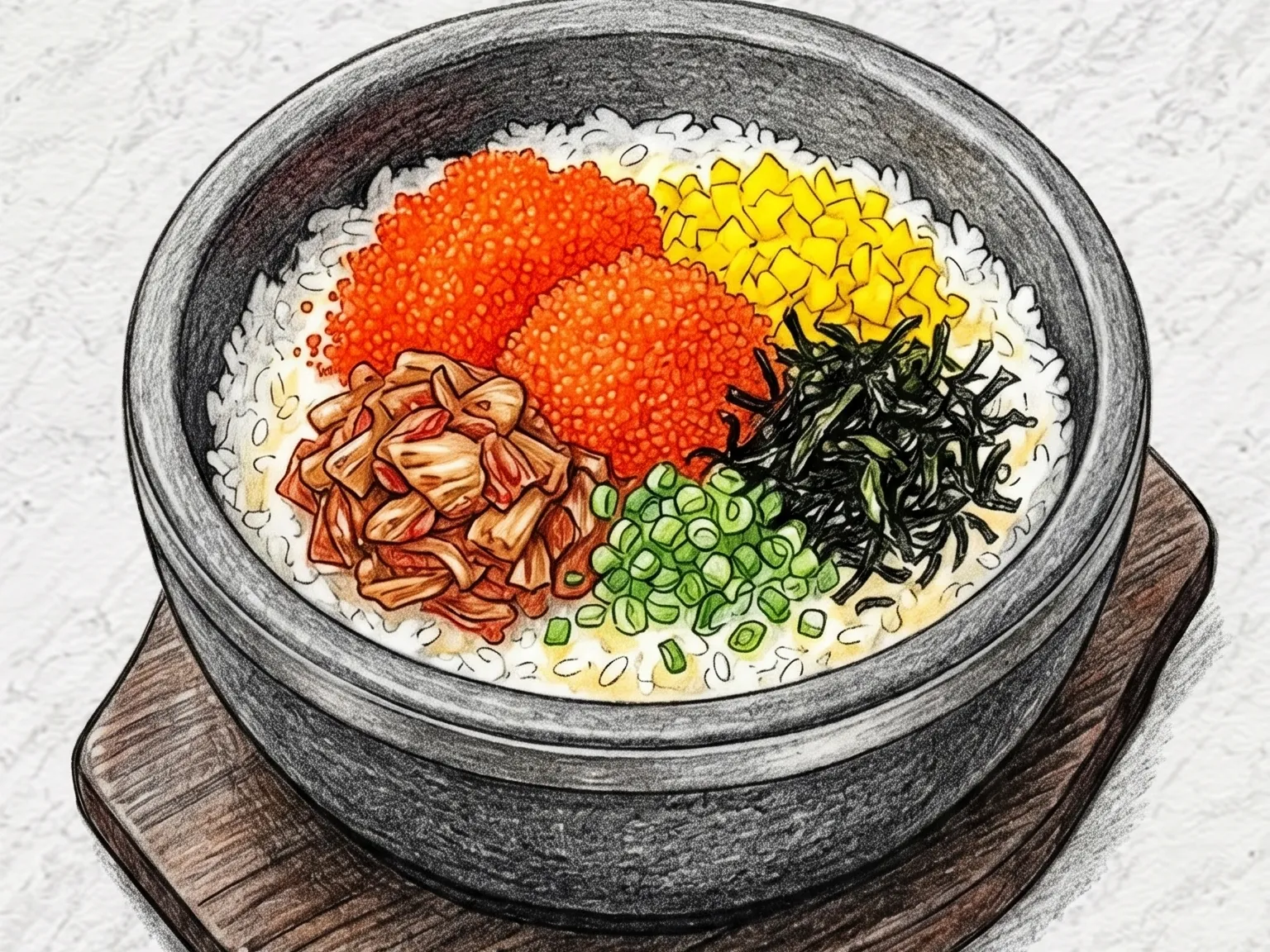
Korean Fish Roe Rice Bowl
Albap is a casual Korean rice bowl that likely traces its origins to sushi-bar kitchen culture, where flying fish roe - tobiko - was always stocked and cooks needed a quick staff meal. Warm rice is first tossed with sesame oil and a small knob of butter, coating each grain with a glossy, slightly nutty film. The toppings are arranged by section over the rice: bright orange tobiko that bursts between the teeth, stir-fried kimchi whose lactic tartness has deepened into a roasted sour note, diced pickled radish for crunch and sweetness, and a layer of shredded seasoned seaweed. Everything is mixed together at the table, and the warmth of the rice softens the roe just enough that its briny juice seeps into the buttered grains. Sliced scallion scattered on top adds a fresh finish. Flying fish roe freezes well and delivers noticeable texture in small quantities, making this dish well suited to solo cooking, and it has taken on a distinct identity from Japanese ikura or tobiko donburi. With minimal prep and about ten minutes of active work, this bowl packs an unusual range of textures - burst, crunch, crisp, and soft - into a single serving.
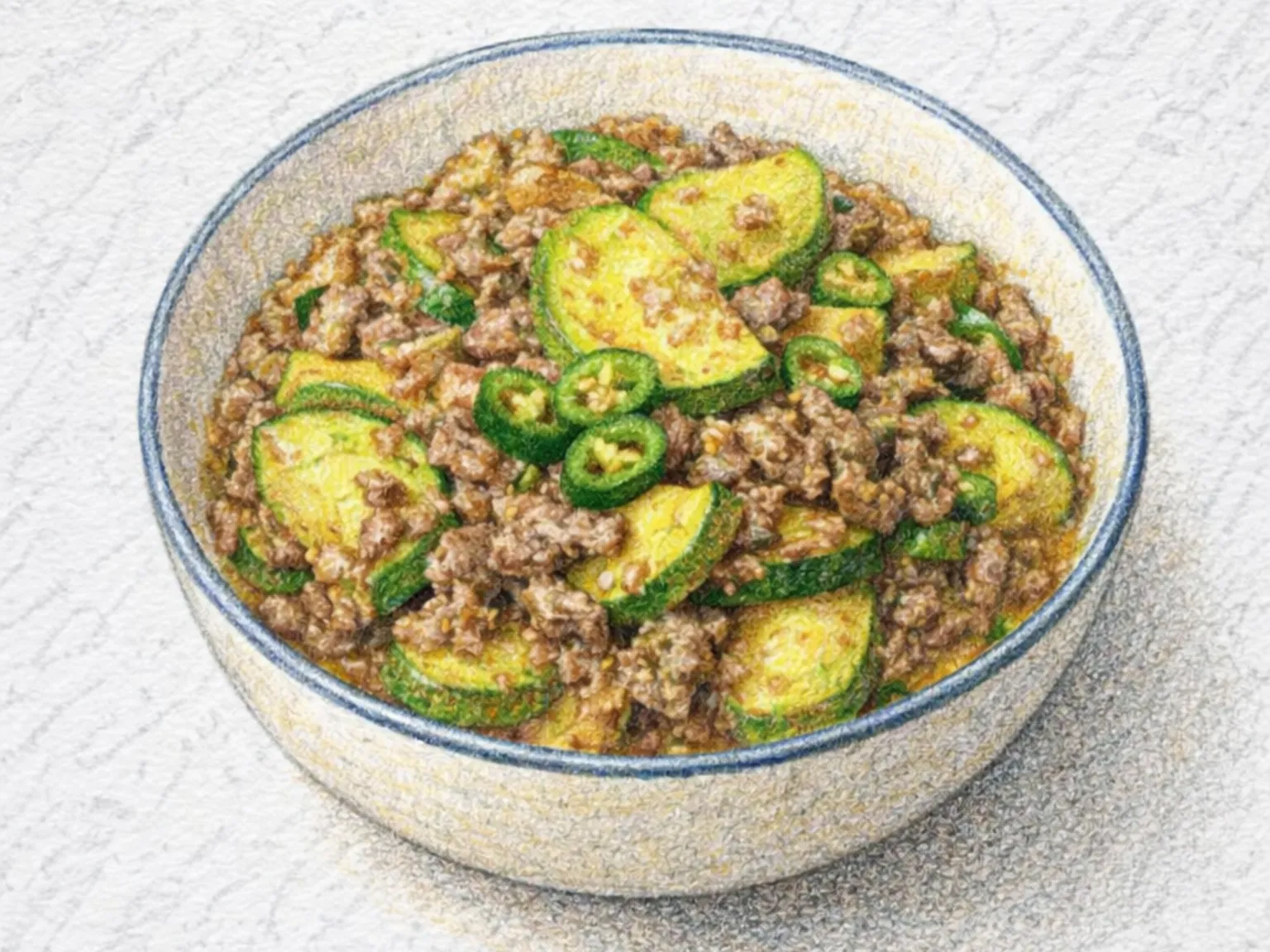
Korean Stir-Fried Zucchini and Beef Brisket with Doenjang
Three ingredients divide the labor in this stir-fry: beef brisket renders the fat, doenjang provides the fermented backbone, and zucchini supplies the body of the dish. The brisket goes into a dry pan first, no added oil, so its own fat melts out and becomes the cooking medium. Doenjang added directly to that rendered fat fries for thirty seconds until the raw paste smell cooks off and a deeper fragrance develops. Then the zucchini, sliced into half-moons, goes in with a dash of soup soy sauce over high heat. Total cooking time from pan to plate runs about five minutes - push past that and the zucchini releases too much water and turns limp. Sliced cheongyang chili at the end keeps a sharp heat in the background. A drizzle of perilla oil with the heat off gives a clean, herbal finish. Works as a banchan alongside rice, or spooned over a full bowl of steamed rice as a quick one-dish meal.
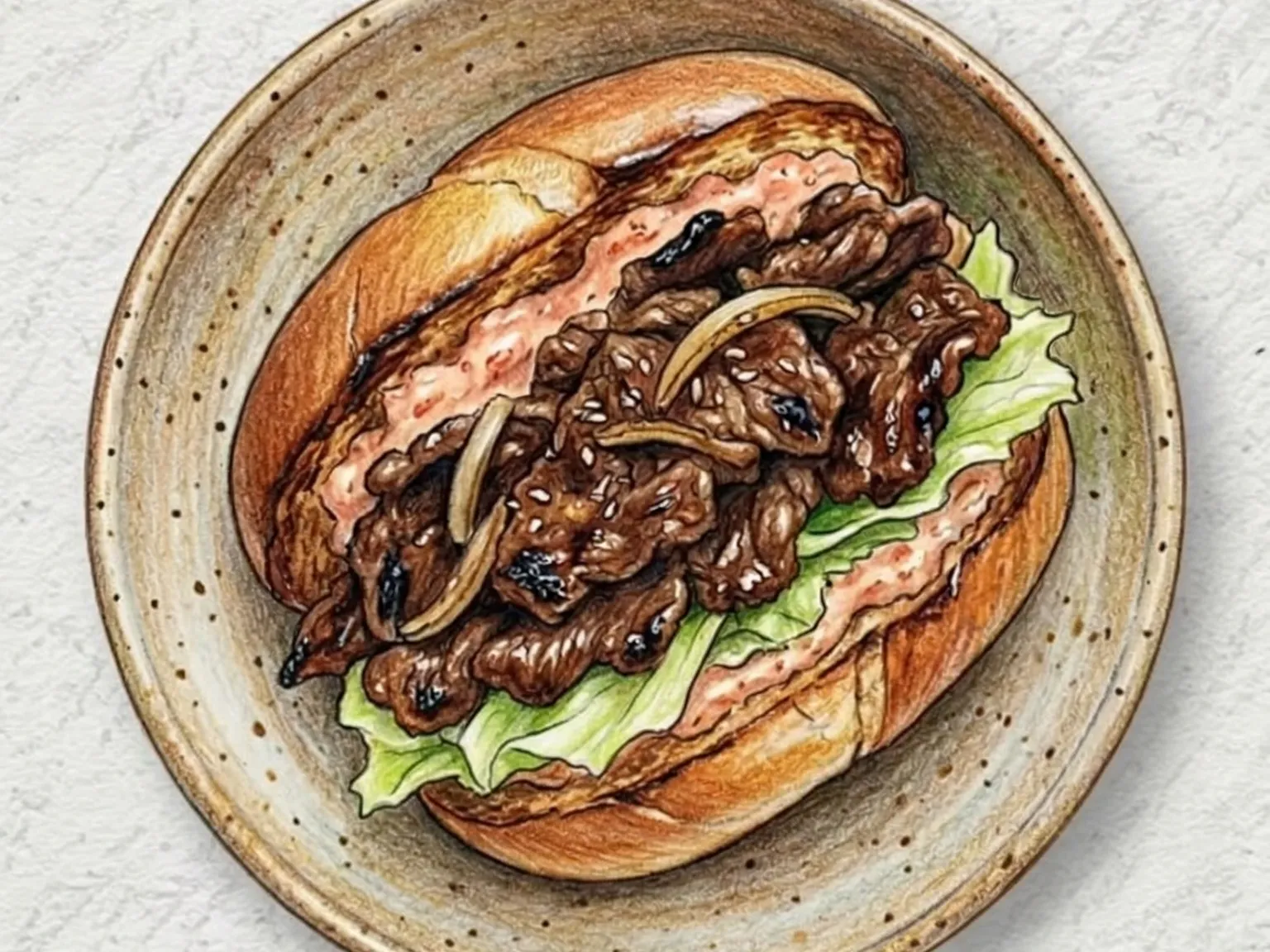
Korean Bulgogi Sandwich (Soy-Marinated Beef Toast with Mayo Lettuce)
The preparation of a bulgogi sandwich begins with beef marinated in a mixture of soy sauce, sugar, minced garlic, and sesame oil before meeting a scorching pan. A surface heated to its limit is essential because only extreme heat can evaporate moisture instantly, allowing the sugars in the marinade to caramelize into a savory-sweet exterior. If the temperature is insufficient, the meat stews in its own liquid rather than searing. A generous layer of mayonnaise on the toasted bread acts as a structural barrier, preventing the beef juices from making the sandwich soggy while softening the intensity of the seasoning. Fresh, crisp lettuce provides a textural contrast to the warm meat. Folding ssamjang into the mayonnaise introduces fermented and spicy elements that emphasize the Korean origin of the dish. A slice of cheese adds a smooth layer between the bread and the beef, and increasing the vegetable portion creates a lighter meal. With the meat prepped ahead of time, the entire assembly takes under ten minutes, offering a practical solution for a busy morning or a simple lunch.
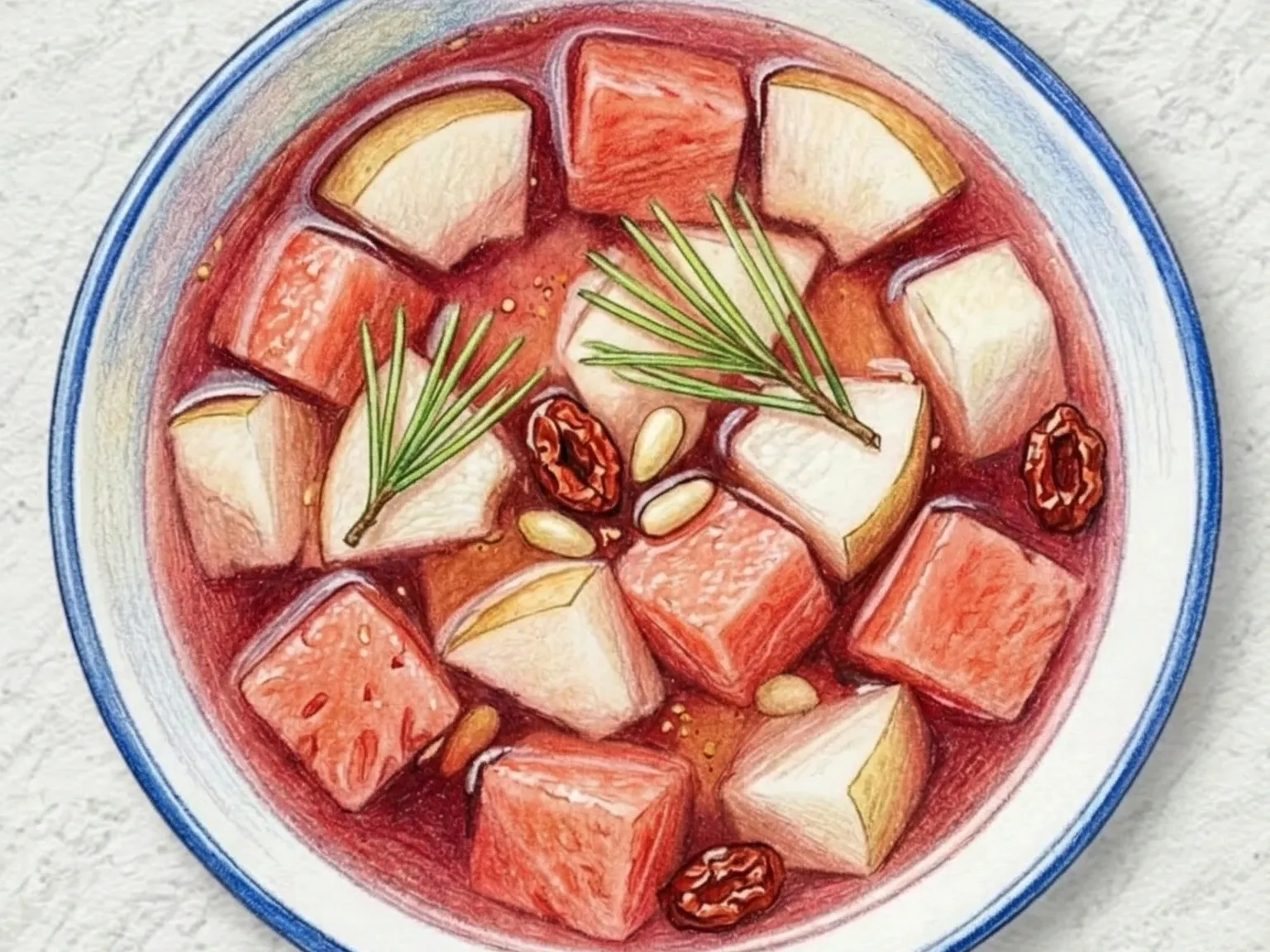
Schisandra Fruit Punch (Korean Cold-Brewed Berry Fruit Bowl)
Omija hwachae is a traditional Korean fruit punch made by cold-infusing dried schisandra berries in water for at least two hours to extract a vivid red liquid, then sweetening with honey. Cold extraction is not optional: hot water pulls excess astringency from the berries and makes the liquid harsh rather than bright. Only a small portion of the infusion is gently warmed to dissolve the honey before the two are combined. Scooped balls of Korean pear and watermelon sit submerged in the chilled omija broth, so each spoonful delivers a crisp, juice-filled bite against the tart-sweet liquid. Pine nuts floated on the surface add a mild fatty richness that tempers the sharpness of the schisandra acid, and serving the hwachae over generous ice keeps every component at its most vivid.
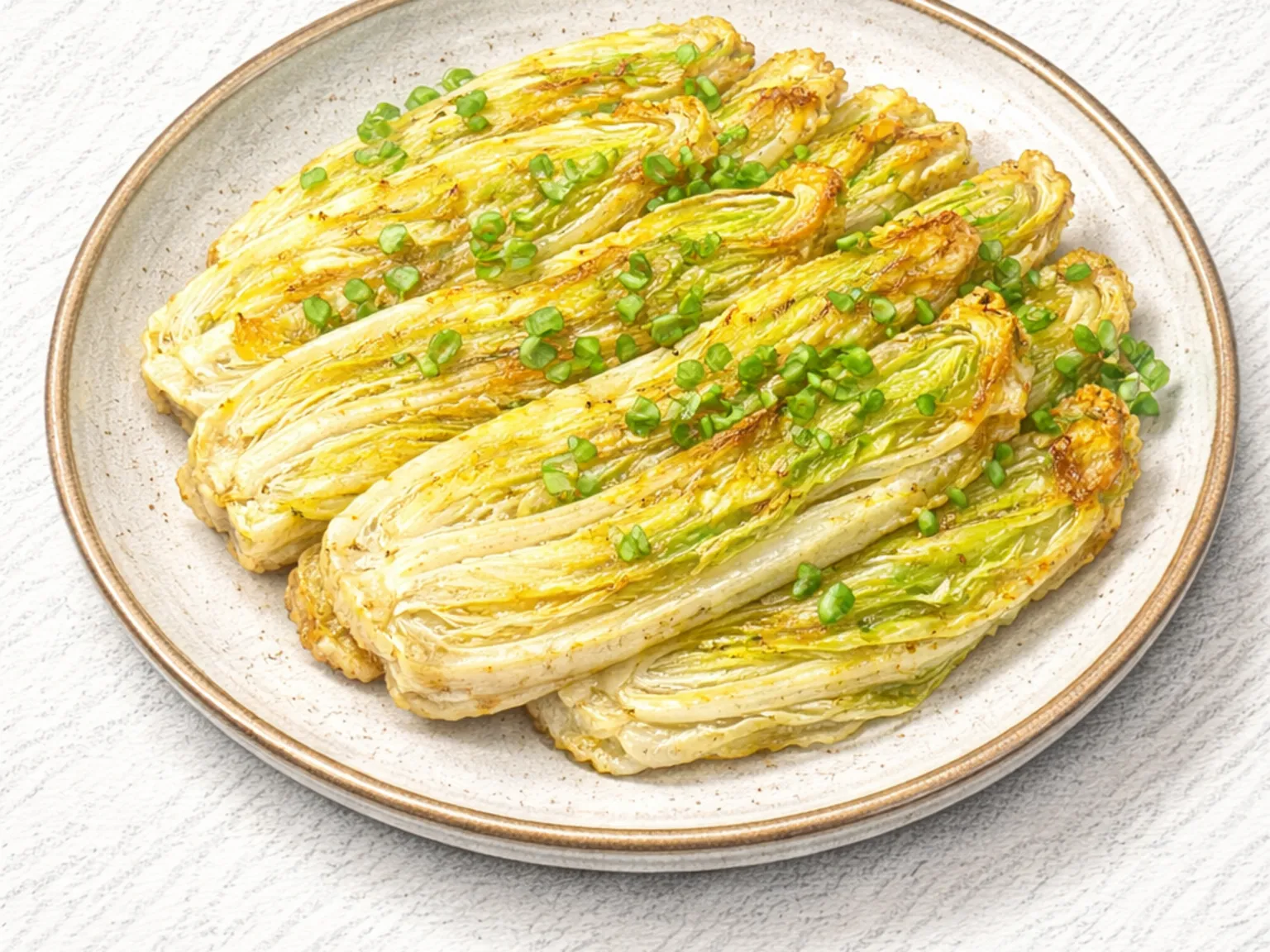
Korean Napa Cabbage Pancake
Baechu jeon is a Korean pan-fried pancake made with napa cabbage leaves coated in a thin flour batter. The simplicity of the recipe makes it a practical use-up dish during kimchi-making season, when salted outer cabbage leaves are on hand and need to be eaten quickly before they deteriorate. Outer leaves of medium size work best; the stem end, if too thick, needs to be flattened with the back of a knife so that the batter adheres uniformly and the leaf lies flat during cooking without curling or buckling. The batter is mixed thin - roughly equal parts buchim flour and water - so it forms a light coating rather than a thick shell. A heavy batter masks the cabbage entirely and produces a texture that is doughy rather than crisp. Generous oil in a well-heated pan and steady medium heat are what produce the characteristic result: a thin, crackling exterior while the cabbage inside softens and its natural sweetness intensifies. Napa cabbage's sweetness becomes more pronounced with heat than in its raw state, which is why this pancake, despite its simplicity, tastes distinctly of the vegetable. Each side must be fully golden before flipping - attempting to turn it early, before the batter sets, breaks the pancake. The standard accompaniment is a dipping sauce of soy sauce sharpened with rice vinegar and sliced cheongyang chili, whose acidity and heat provide contrast to the mild, faintly sweet pancake.
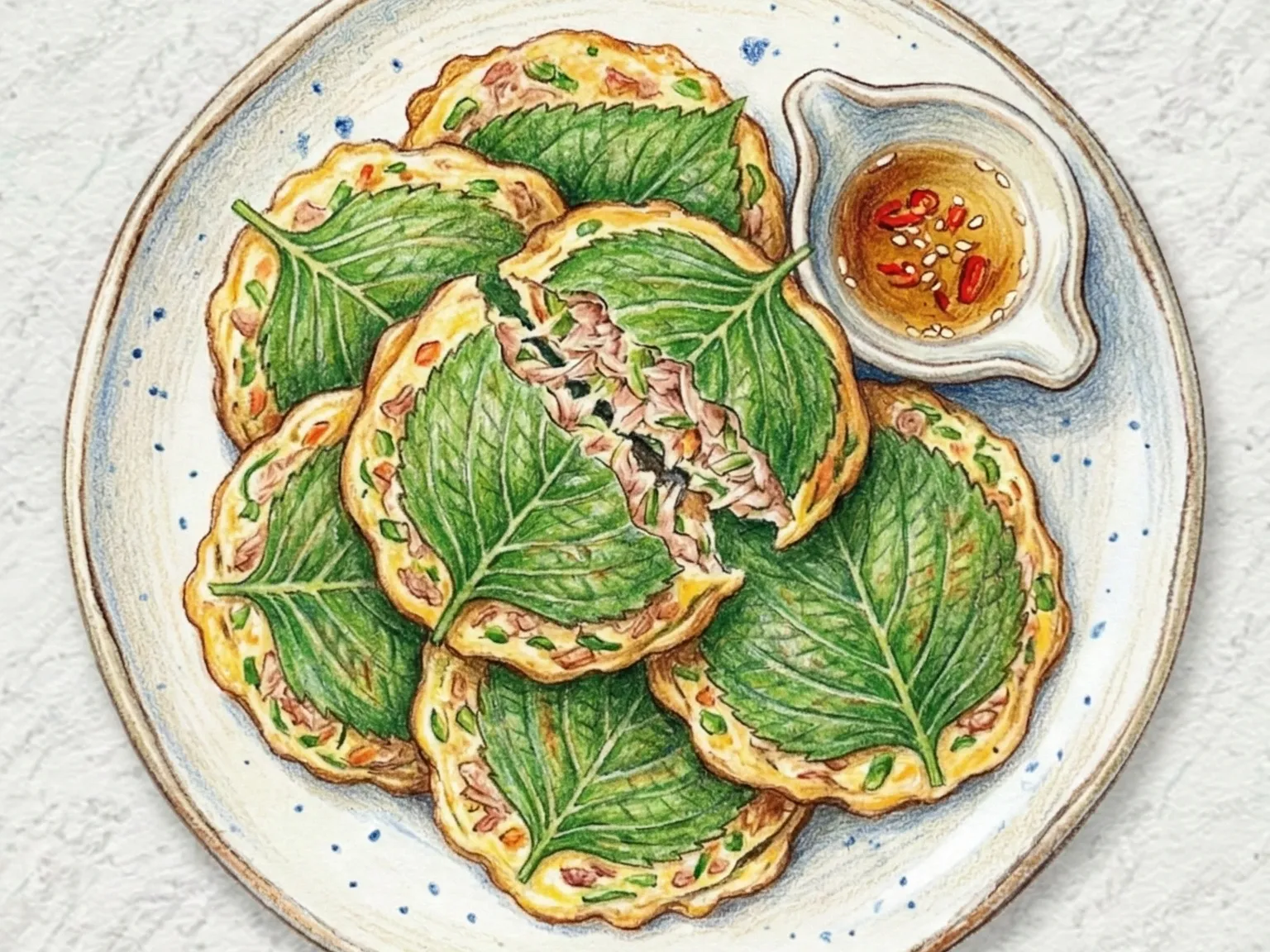
Korean Tuna & Perilla Leaf Fritters
Chamchi-kkaennip-jeon is a Korean pan-fried pancake made with canned tuna and perilla leaves. The oil is drained from the tuna before mixing, which keeps the batter from becoming greasy. Perilla leaves, chopped into the batter, contribute their distinctive herbal fragrance - sharp and slightly anise-like - which cuts through the brininess of the tuna and gives the pancake its character. The combination lands somewhere between a vegetable pancake and a fish cake: more substantial than the former, lighter than the latter. Egg binds the batter and produces a smooth, even surface when cooked. Onion and carrot are finely diced so the pancake spreads thin and cooks through uniformly, rather than leaving thick raw patches at the center. Adequate oil in the pan and medium heat produce a thin, crisp exterior without burning. The pancake holds its texture reasonably well at room temperature, making it a practical lunchbox side dish. A soy-based dipping sauce brings out the perilla fragrance more clearly when eaten alongside.
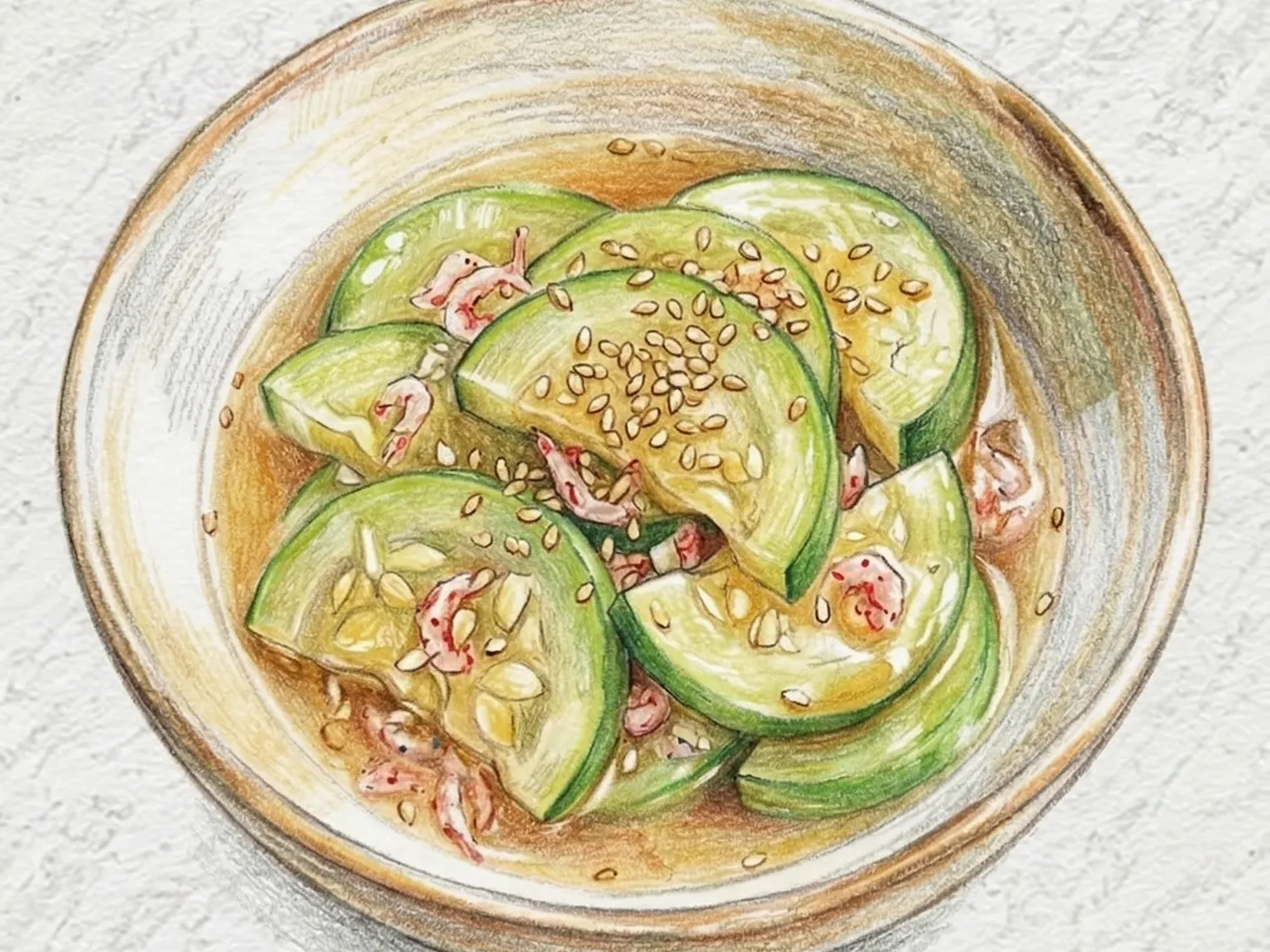
Korean Steamed Zucchini with Salted Shrimp
Aehobak saeujeot jjim belongs to a class of Korean dishes where the ingredient list is deliberately short and fermentation carries the flavor. The only seasoning is salted shrimp - saeujeot - minced fine and dissolved in water with garlic to form a light broth. That minimal liquid does more than it looks: as zucchini cooks in it, the brine's concentrated umami soaks into each piece, delivering more depth than the simple preparation suggests. Half-moon slices go into the pot, the broth is poured over, and the lid goes on over medium-low heat. This method sits between steaming and braising - moisture stays trapped in the pot, heat distributes evenly, and the zucchini cooks through without going soft or watery. Perilla oil and sesame seeds added off the heat balance the fermented note of the shrimp paste with a round, nutty fragrance. The dish comes from Korean countryside cooking, where salted seafood was the default seasoning long before soy sauce was widely available. It pairs well alongside richer, oil-forward mains where something clean and lightly briny makes sense.
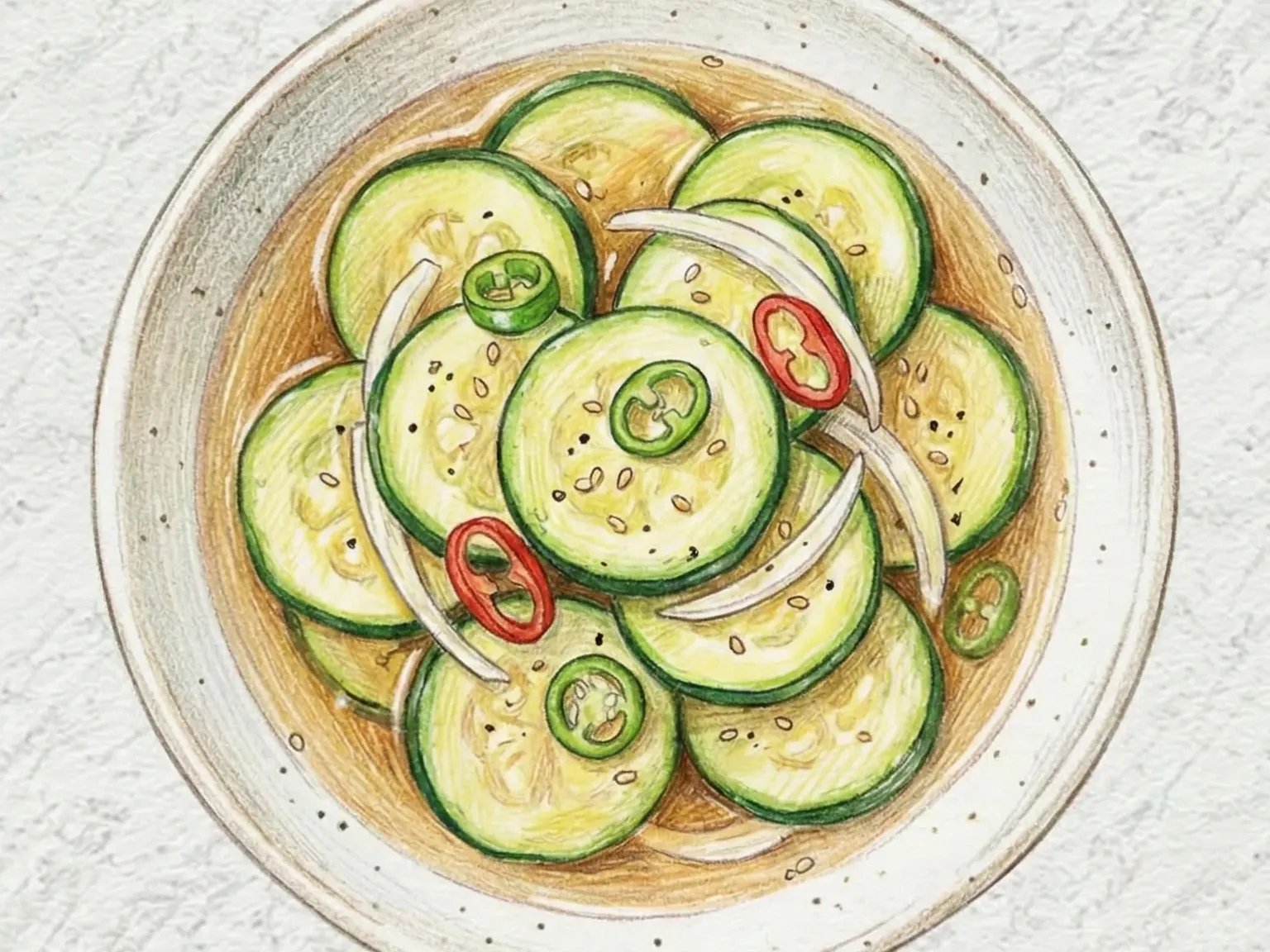
Korean Zucchini Pickles (Soy Vinegar Brine Jangajji)
Jangajji - vegetables preserved in soy brine - was the Korean kitchen's answer to long winters and months without reliable food storage. This zucchini version layers thick half-moon slices with onion, cheongyang chili, and whole garlic cloves in a sterilized glass jar before a boiling-hot brine of soy sauce, vinegar, sugar, and water is poured straight in. The heat from the brine does two things at once: it partially cooks the outer surfaces while the centers stay crisp, and it drives the pickling liquid deeper into each piece than cold brine ever could. The pickle is technically ready at 24 hours, but after three days the sweet-sour-salty brine has fully penetrated and the flavors integrate into something more balanced. Cheongyang chili contributes a slow-building heat at the back of each bite, and the whole garlic cloves shed their raw sharpness in the brine, softening into something mellow and slightly sweet. Unlike fresh banchan that must be eaten the same day, this keeps for two weeks in the refrigerator - a ready supply of bright, tangy contrast for any meal that needs it.
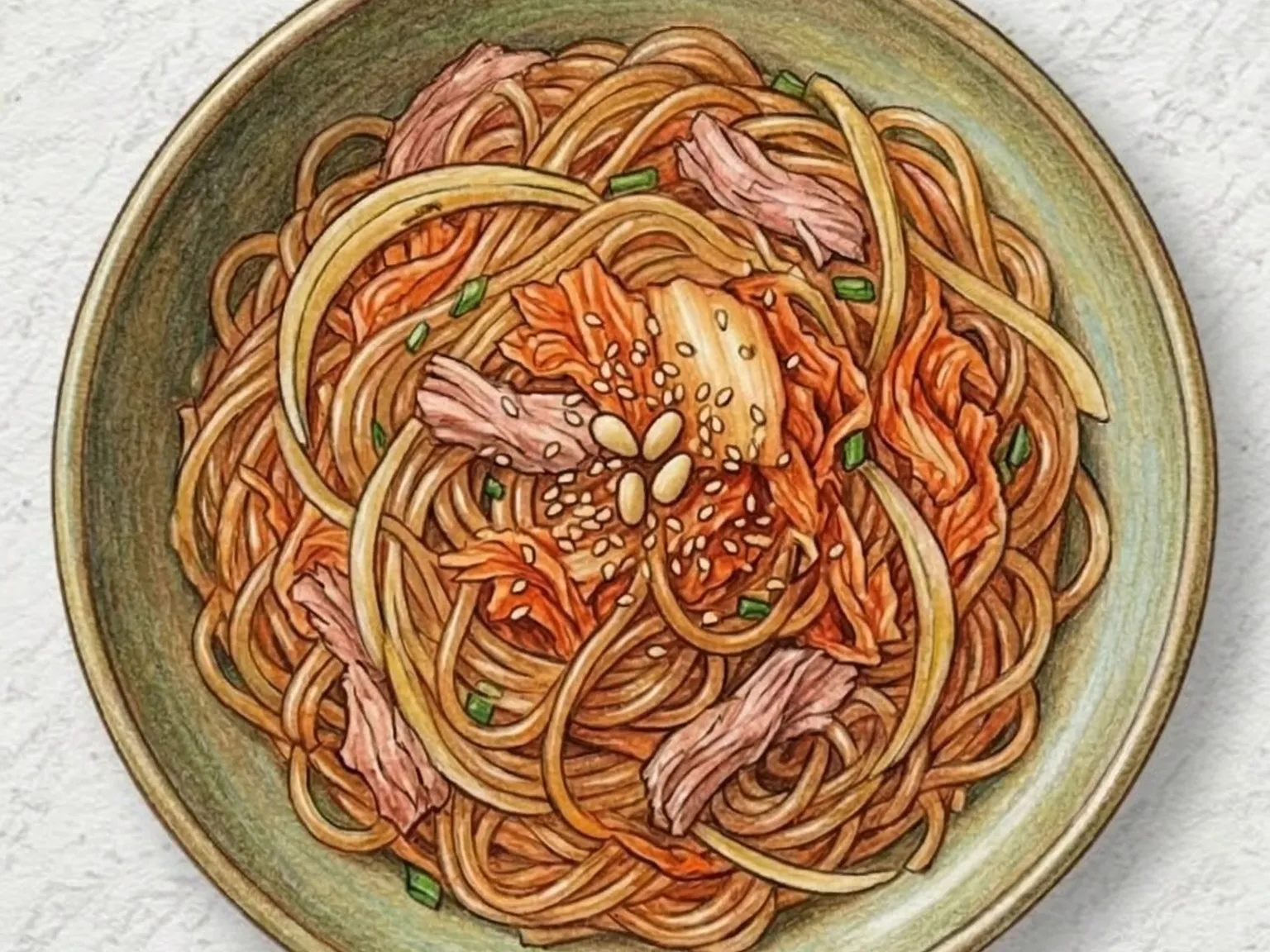
Korean Kimchi Glass Noodle Stir-Fry
Kimchi japchae is a variation on classic Korean glass noodle stir-fry that replaces the usual assortment of vegetables with well-fermented aged kimchi, giving the dish a bold tangy heat that the original does not have. Glass noodles are boiled, rinsed in cold water to stop the cooking, and pre-seasoned with soy sauce so they absorb flavor before hitting the pan. Pork shoulder goes in first to render its fat and build a savory base in the wok, then the kimchi -- thoroughly squeezed dry -- is added and stir-fried until the sourness concentrates and caramelizes slightly. Removing the kimchi's moisture is a non-negotiable step: excess liquid steams the noodles rather than frying them, causing the noodles to swell and the overall seasoning to turn watery and flat. Sliced onion goes in with the kimchi to contribute a natural sweetness that softens the acidity. Once the aromatics are cooked down, the noodles are tossed in with additional soy sauce and a small amount of sugar if the kimchi is especially sour. The pan comes off the heat before sesame oil is added to preserve its fragrance, and whole sesame seeds finish the dish. The combination of the noodles' chewy elasticity and the kimchi's pungent, fermented character produces a version of japchae that tastes fundamentally different from the traditional preparation.
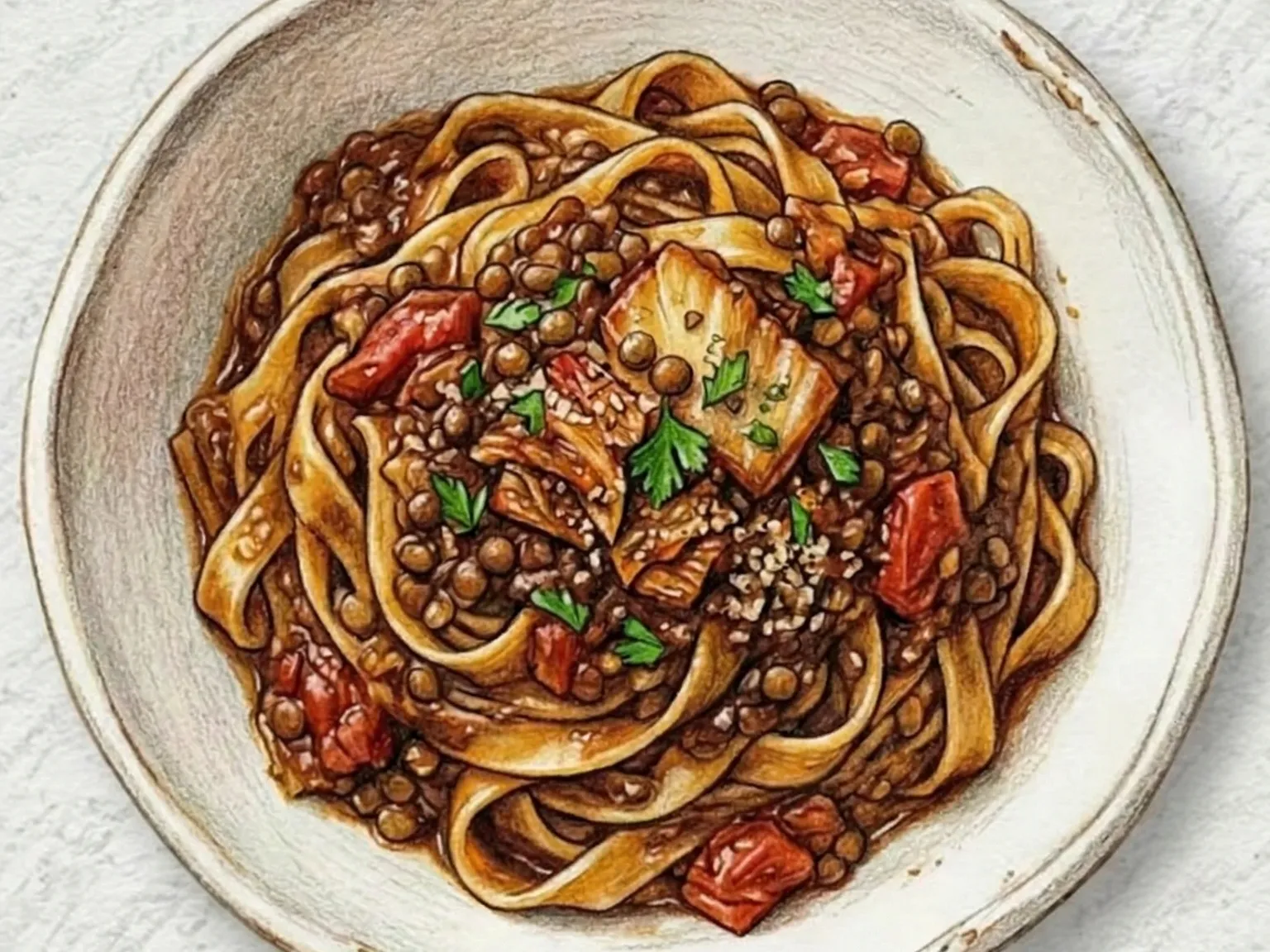
Kimchi Lentil Ragu Tagliatelle
Kimchi lentil ragu tagliatelle is a plant-forward pasta where lentils simmer with tomato puree, wine, and finely diced onion, carrot, and celery for 35 minutes, breaking down into a thick sauce with a meaty texture that contains no actual meat. The Korean-inflected soffritto builds the aromatic base, and as the lentils cook through they release starch that naturally thickens the ragu without any additional binder. Fermented kimchi is added late in the process, preserving its sharp acidity and keeping the fermented flavor present and distinct rather than cooked away. A small amount of sugar smooths the combined tartness of tomato and kimchi so neither dominates. The wide, flat tagliatelle ribbons hold the heavy sauce well, and every strand picks up the full depth of the braise. Without a gram of meat, the dish delivers genuine richness and staying power.
Brown Rice Buddha Bowl
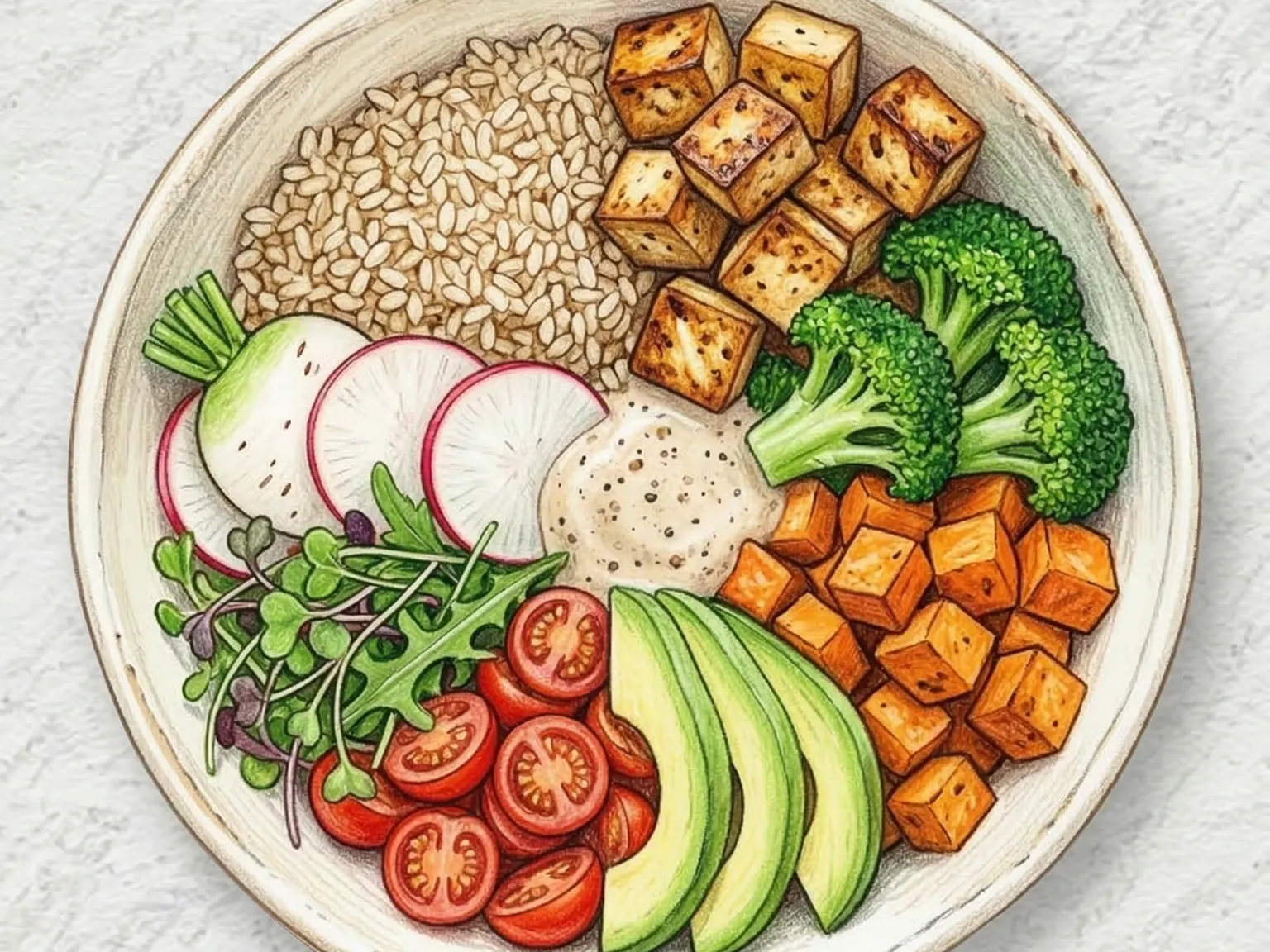
Brown rice Buddha bowl builds on a base of cooked brown rice, with pan-seared tofu and an arrangement of broccoli, carrot, red cabbage, and avocado placed in separate sections across the bowl. Brown rice has a coarser texture and a more pronounced, nutty grain flavor than white rice, and the chew brings out a mild sweetness that increases the longer it is worked. The tofu is pressed dry before searing so the exterior crisps properly in the pan while the center stays soft, giving a dual texture that holds up under the weight of the toppings. A soy and sesame oil dressing pulls the disparate ingredients together under a single Asian flavor profile, and the avocado contributes creamy fat that smooths out the drier components like the grain and the seared tofu. Keeping each ingredient in its own section preserves the visual contrast and lets each one hold its texture; mixing is done at the table according to the eater preference. The bowl covers protein, carbohydrates, and vegetables in a single serving.
Albondigas en Salsa (Spanish Meatballs in Tomato Sauce)
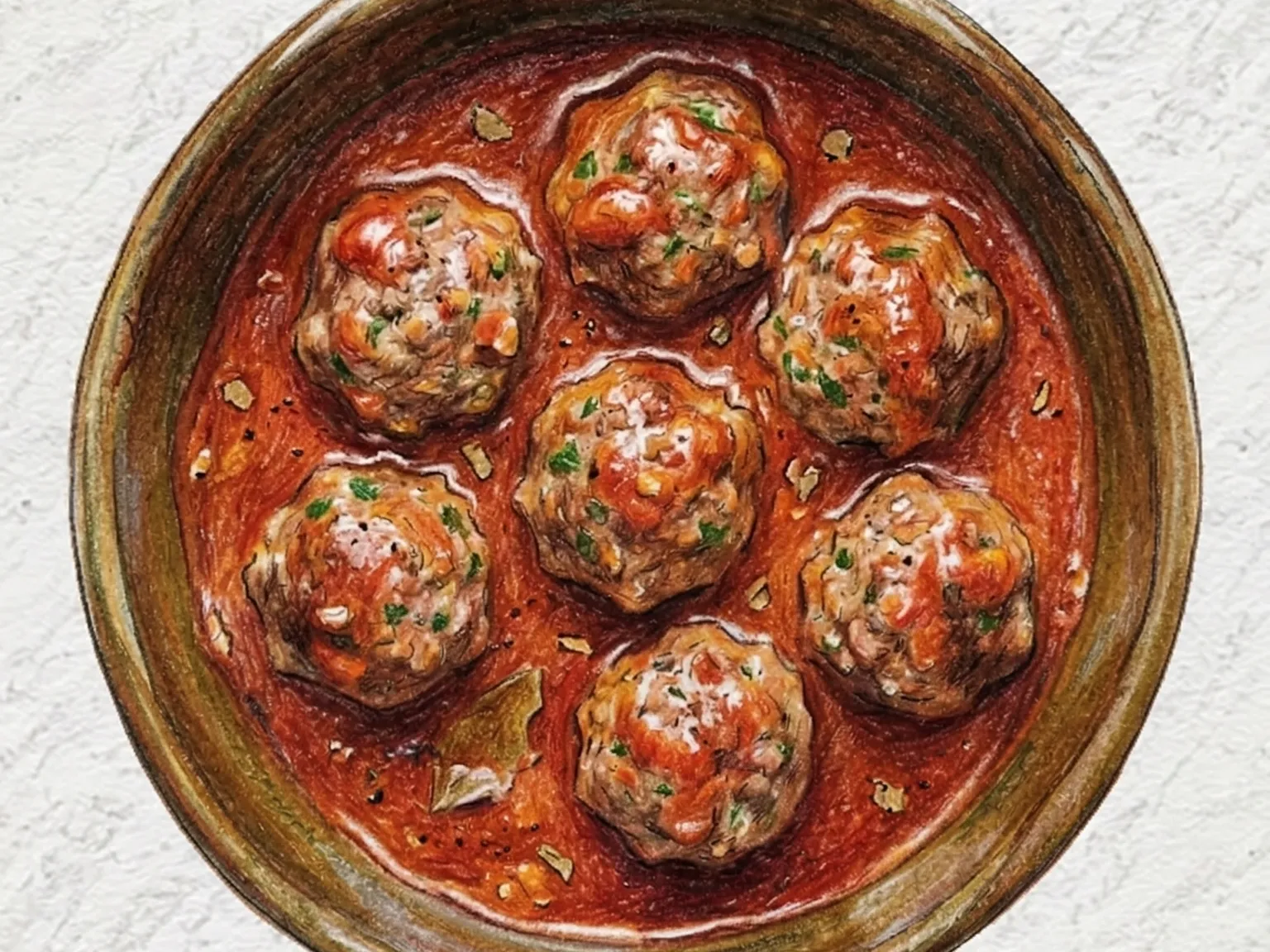
Albondigas - the word itself tracing back to the Arabic 'al-bunduq' meaning a small round thing - arrived in Spain with the Moorish occupation and became embedded in everyday home cooking across the peninsula. Ground pork and beef are combined with bread soaked in milk or water, egg, and garlic, then rolled into small, dense balls and browned in olive oil before the braising begins. The soaked bread in the mixture is what keeps the meatballs from tightening into dense rounds as they cook - it loosens the structure and creates a soft, almost spongy interior that drinks in the sauce during the long simmer. The tomato sauce is built with onion and garlic fried until golden, then tomatoes, smoked paprika, and a bay leaf are added and the whole pot cooks down over twenty minutes of low heat until the raw acidity mellows into sweetness. The meatballs go back into the sauce for a final ten minutes so the braising liquid penetrates to the center. Crusty bread to mop up the glossy sauce is traditional, but the dish works equally well spooned over plain rice. This is the kind of Spanish grandmother cooking where nothing is measured and the result is always the same.
Aloo Methi (Indian Potato Fenugreek Dry Stir-Fry)
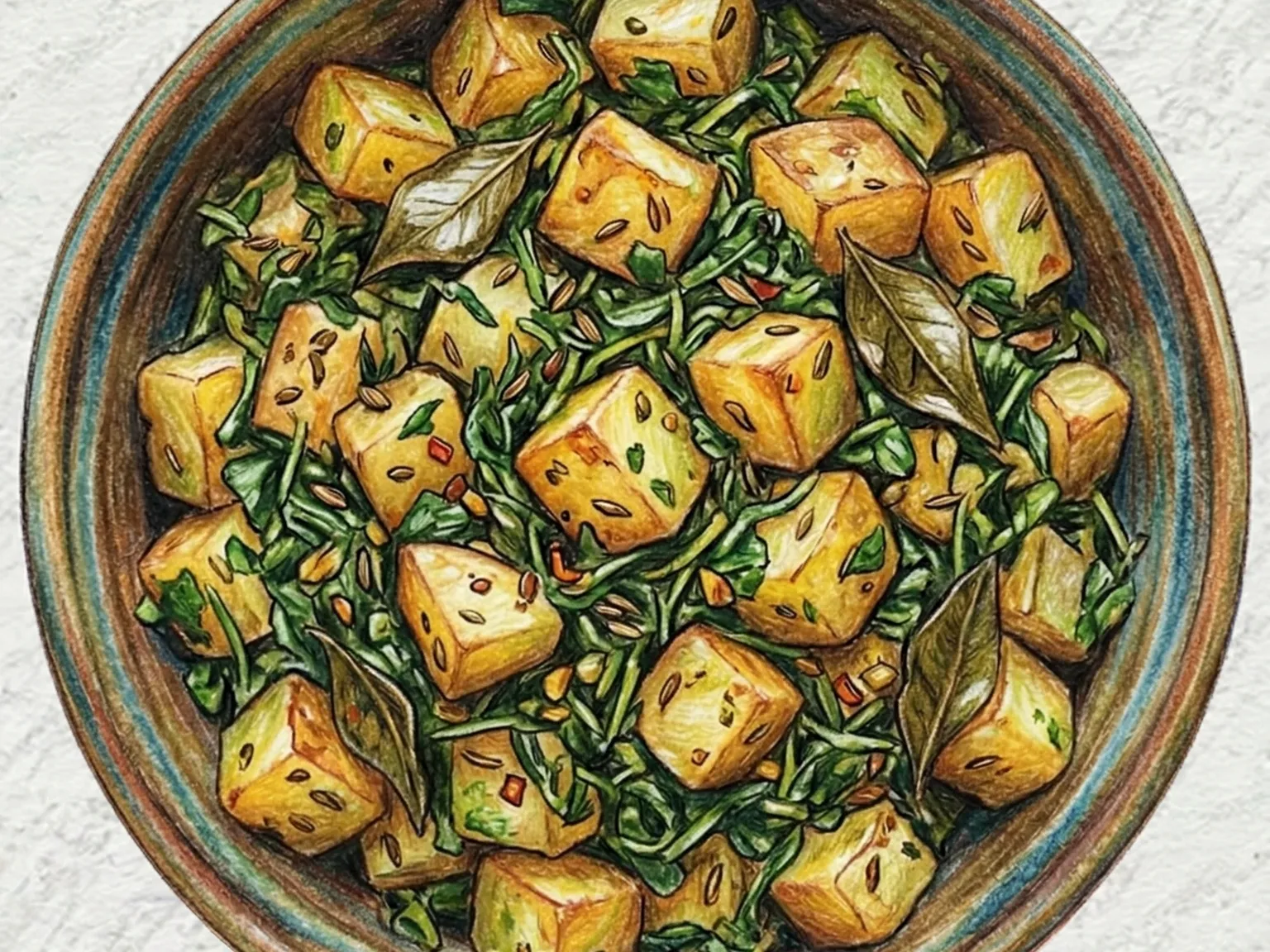
Aloo methi is a North Indian home-cooking classic built on the natural pairing of starchy potatoes and bitter fenugreek leaves - two ingredients whose flavors balance each other. Fresh methi leaves carry a pronounced earthy bitterness that softens and sweetens into a warm, maple-like aroma once they hit a hot pan. The potatoes are cut into small cubes and cooked covered with cumin, turmeric, and chili powder until fork-tender, absorbing the spices throughout as they steam. Methi leaves fold in at the end, and their residual moisture evaporates quickly on the hot pan, concentrating the herbaceous flavor into every bite. In Indian households this dish appears regularly alongside dal and rice as a weeknight staple that comes together in under thirty minutes. When fresh methi is unavailable, dried kasuri methi - rubbed between the palms to release its aroma before adding - produces a comparable result with a more concentrated flavor. Unlike many North Indian preparations built on layered masala chains, aloo methi has a short ingredient list and a straightforward method, which explains why it appears so consistently on everyday family tables.

Dorayaki (Sweet Red Bean Pancake Sandwich)
Dorayaki is a Japanese confection consisting of two small, round pancakes sandwiching a filling of sweet red bean paste. The batter brings together eggs, sugar, honey, and flour before being portioned onto a lightly greased griddle over low heat. Each pancake cooks on one side only, producing a smooth, pale top surface and an evenly browned, slightly springy underside. Honey in the batter dramatically improves moisture retention, keeping the pancakes soft and pliable for hours after cooling and lending a subtle floral sweetness that layers naturally with the bean filling. The pancakes' own sweetness is deliberately restrained so the dense, earthy richness of the anko filling takes the lead. Traditional anko uses adzuki beans simmered with sugar until thick and glossy; tsubu-an retains visible bean pieces while koshi-an is strained smooth, and either works depending on preference. The two pancakes are gently pressed together with a generous layer of filling between them, forming a compact round that fits easily in one hand. Beyond classic red bean, the same format welcomes custard cream, matcha paste, or sweetened chestnut filling.
Korean Crisp Chili Pepper Salad
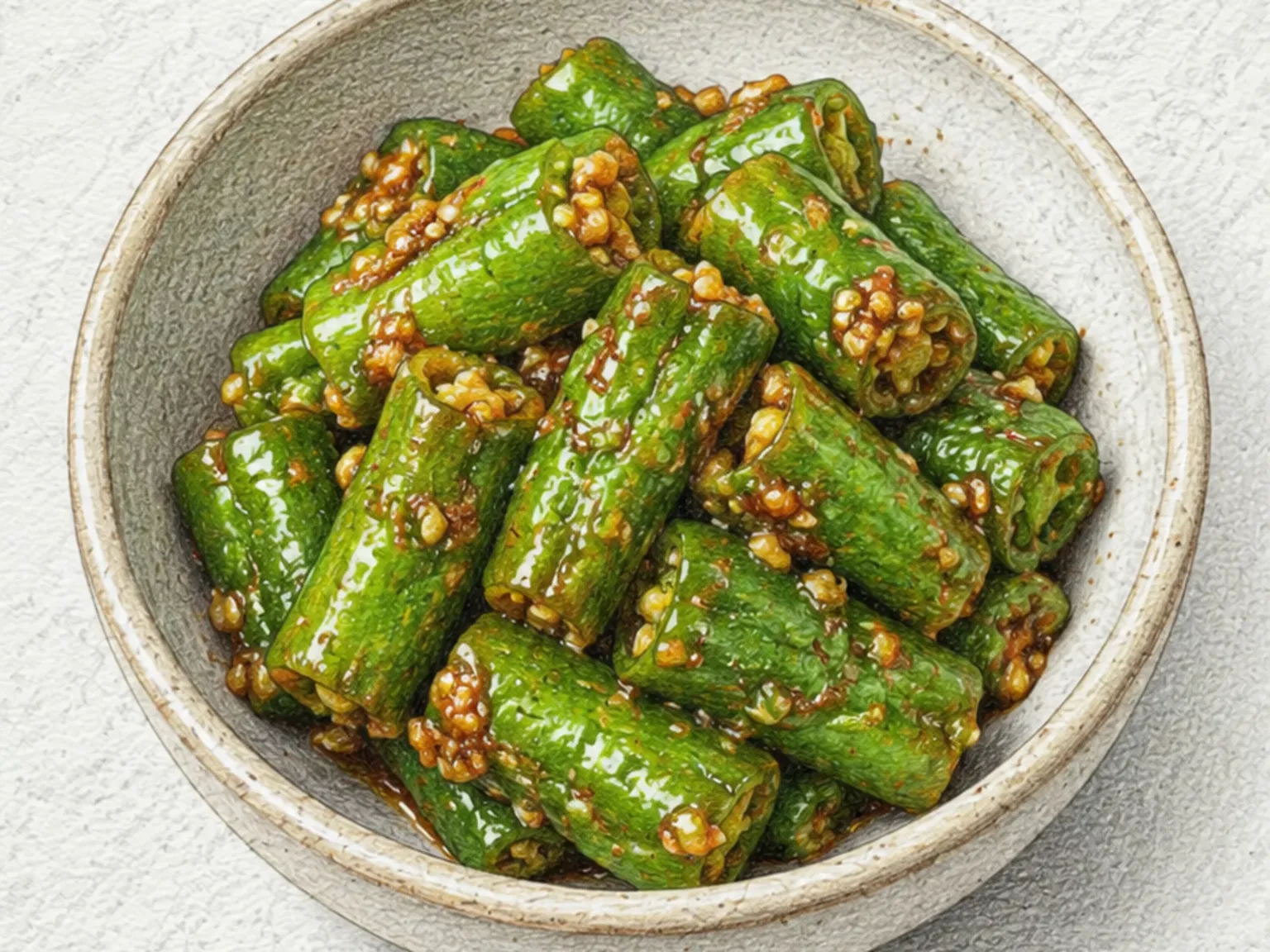
Asakigochu is a specific variety of Korean pepper characterized by its thick walls and a distinct snap when bitten. This pepper was developed to prioritize texture over spiciness, resulting in a vegetable that offers a significant crunch without the heat of other varieties. The preparation of this dish involves a brief blanching process where the peppers are submerged in boiling water for a duration of exactly twenty seconds. This short exposure to heat is sufficient to eliminate the raw, grassy aroma often found in uncooked peppers, yet it is not long enough to soften the cellular structure. Consequently, the characteristic crispness remains unchanged. The seasoning sauce is a mixture of two traditional fermented pastes. Doenjang provides a salty and fermented depth, while gochujang adds complexity. To balance these heavy flavors, vinegar is added for sharpness and oligosaccharide syrup is used to adjust the consistency and add a subtle sweetness. This combination creates a contrast between the deep, funky notes of the fermented beans and a bright acidity that highlights the clean taste of the pepper. Timing is important for the final result. It is best to allow the seasoned peppers to rest for five minutes before serving. This pause allows the flavors from the thick sauce to soak into the pepper walls instead of simply sitting on the exterior. This side dish functions well as a standard accompaniment to a bowl of rice or as a more fullly flavored snack to be consumed while drinking soju.
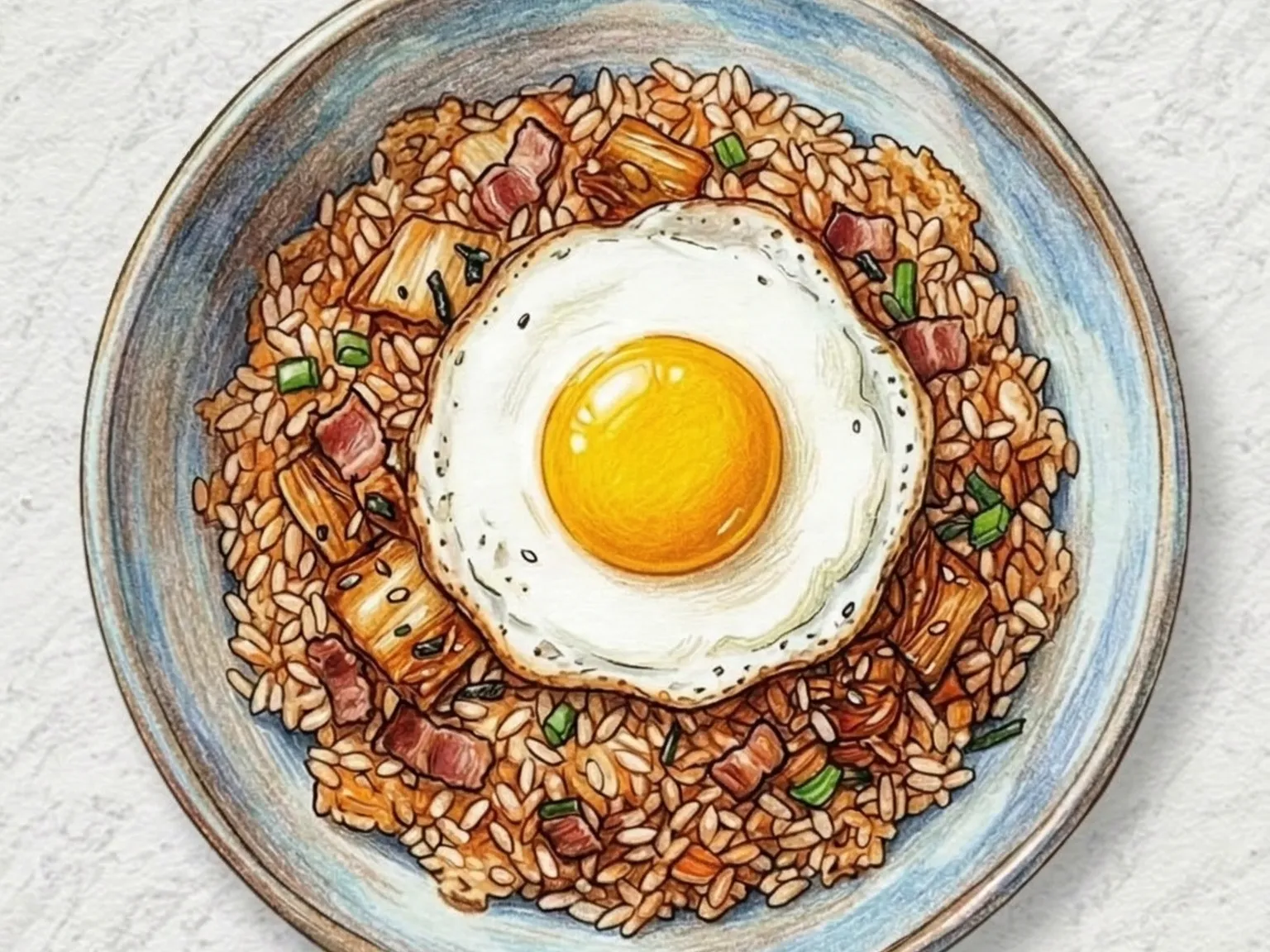
Korean Bacon Kimchi Fried Rice
Bacon kimchi fried rice takes the most common Korean leftover combination - cold rice and aging kimchi - and substitutes rendered bacon fat for the traditional sesame oil base. The bacon goes into a cold pan and cooks slowly so the fat renders completely before the meat crisps, creating a pool of smoky drippings that replace cooking oil entirely. Well-fermented kimchi, squeezed of excess juice and chopped roughly, goes into the hot fat and sizzles until its edges caramelize and the sharp lactic tartness mellows into a deeper, roasted sourness. Day-old rice is pressed flat against the pan to develop a crust reminiscent of nurungji - the scorched rice layer that fried rice enthusiasts seek. Soy sauce and a pinch of sugar season the dish, though both should be used in small amounts to avoid masking the interplay between the bacon's smokiness and the kimchi's fermented character. A fried egg on top, with a yolk still runny, becomes a sauce when broken and stirred through the rice. Bacon became a standard Korean grocery item in the 2000s, and this dish has since become a common home-cooking variation, with many cooks preferring its deeper, smokier flavor profile over the sesame oil original.
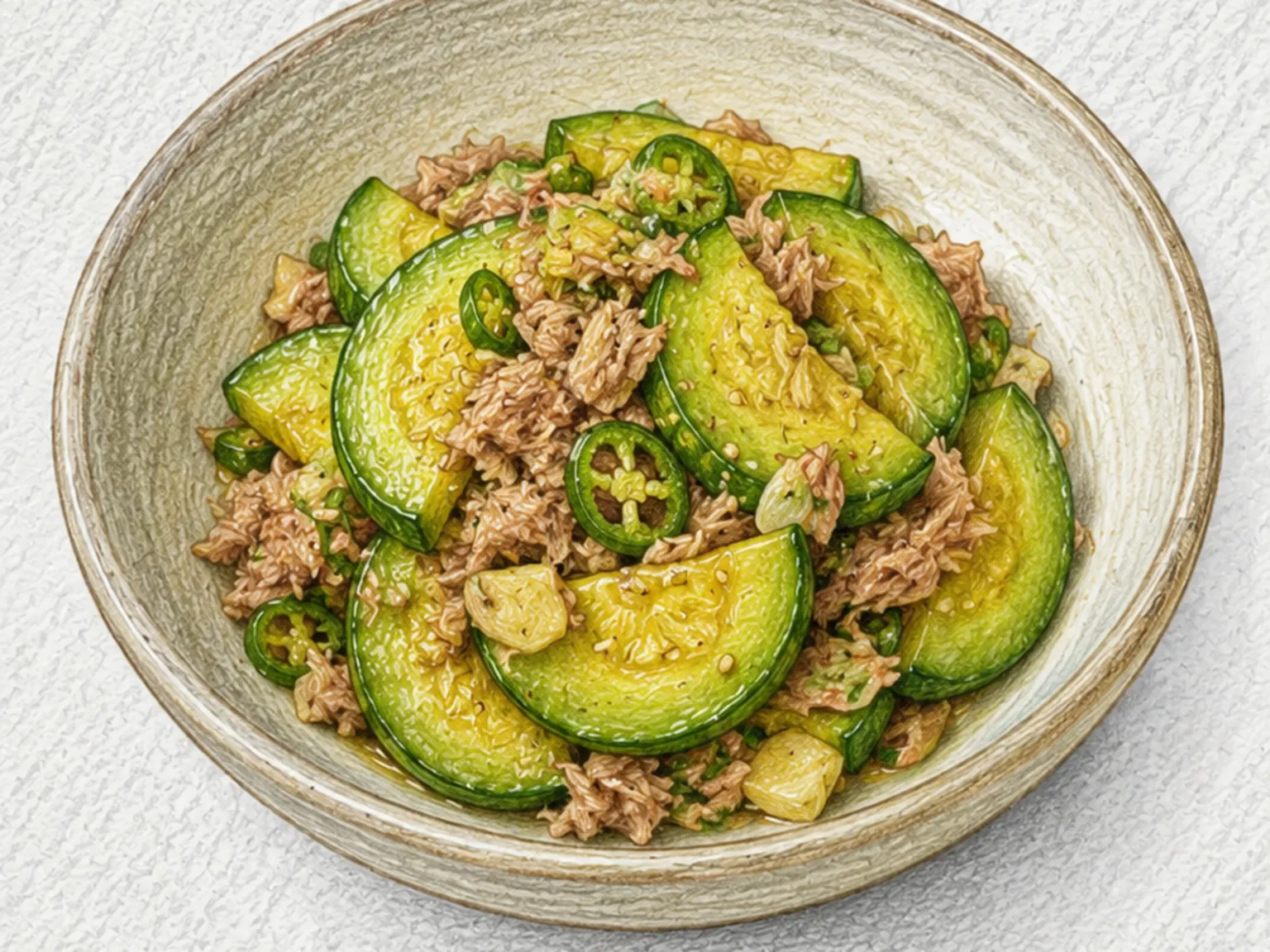
Korean Aehobak Chamchi Bokkeum (Zucchini Tuna Stir-fry)
Canned tuna and Korean zucchini are among the most constant fixtures in a Korean household refrigerator, and this stir-fry is one of the most efficient uses of both. The drained tuna brings protein and a clean saltiness that requires little beyond soup soy sauce to function as seasoning - no complex paste, no long list of aromatics. Zucchini provides mild sweetness and bulk. Garlic sauteed at the start builds a foundational aromatic layer, and cheongyang chili added shortly after threads a slow-building heat through the whole dish. The critical technique is brevity: the zucchini must come off heat while the half-moon slices still hold their shape. Overcooked zucchini releases water and collapses everything into a soft, wet mass. A finish of sesame oil seals the flavors and stabilizes the banchan at room temperature, which is why this dish transfers so well to lunchboxes.
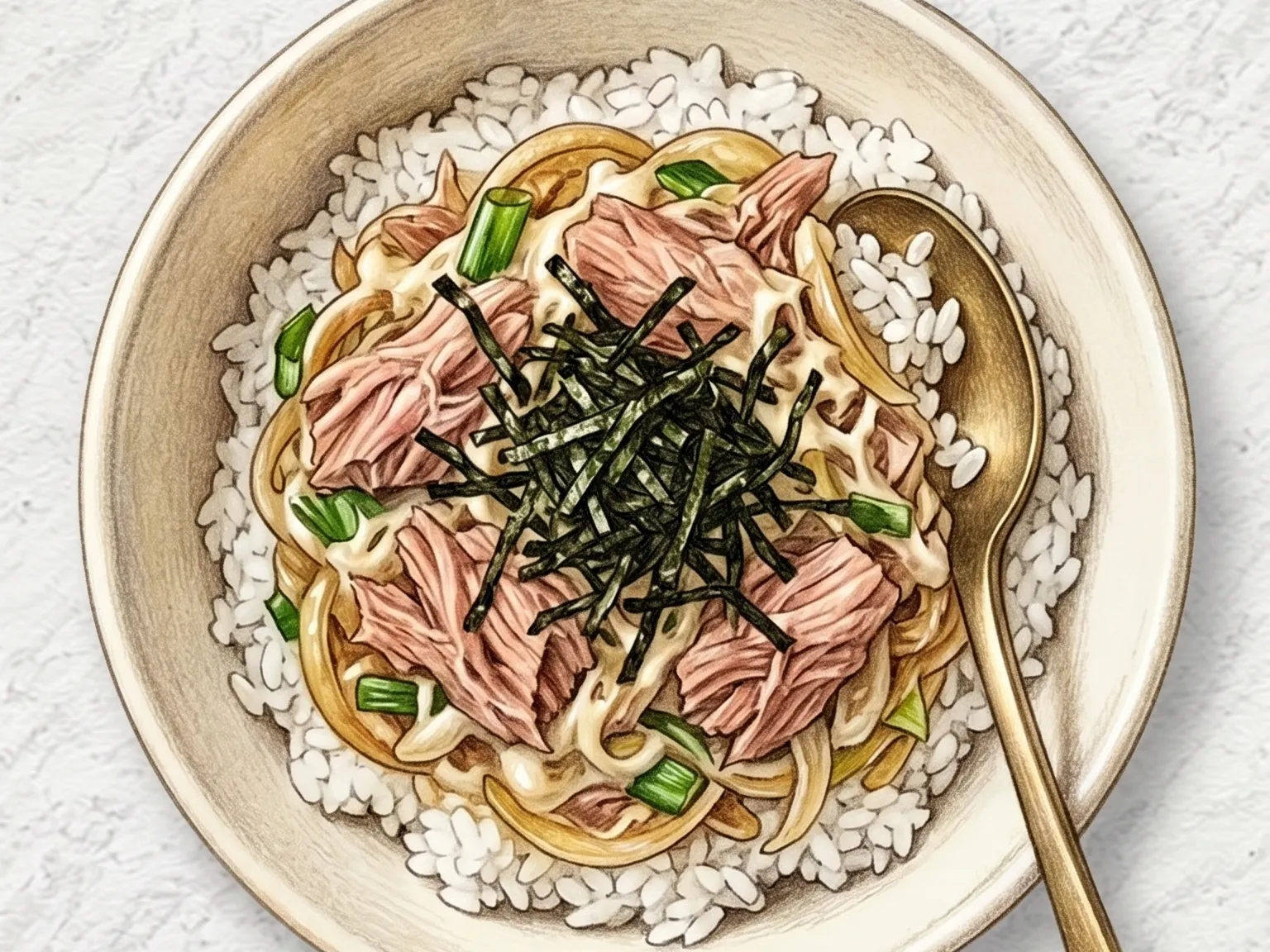
Tuna Mayo Rice Bowl (Chamchi Mayo Cupbap) - Easy Korean Bunsik Recipe
Chamchi mayo cupbap is Korea's well-loved quick meal of seasoned tuna and mayo spooned over steaming hot rice, assembled in about eighteen minutes. The canned tuna must be drained and pressed dry through a strainer before anything else: residual liquid from the can dilutes the soy and sugar seasoning and turns the rice soggy within minutes. Onion and scallion are stir-fried first to draw out their natural sweetness, and the tuna is folded in afterward so the fish picks up the developed flavor of the aromatics rather than sitting raw-tasting on top. Mayonnaise goes in only after the heat is turned off; adding it while the pan is still hot breaks the emulsion and produces a greasy finish. A generous scatter of crushed dried seaweed over the finished bowl adds a roasted oceanic note and textural contrast. Mixing everything together before eating is the correct approach: the tuna-mayo sauce coats every grain of rice evenly, so each spoonful carries the full range of flavors rather than alternating between plain rice and heavily sauced bites.
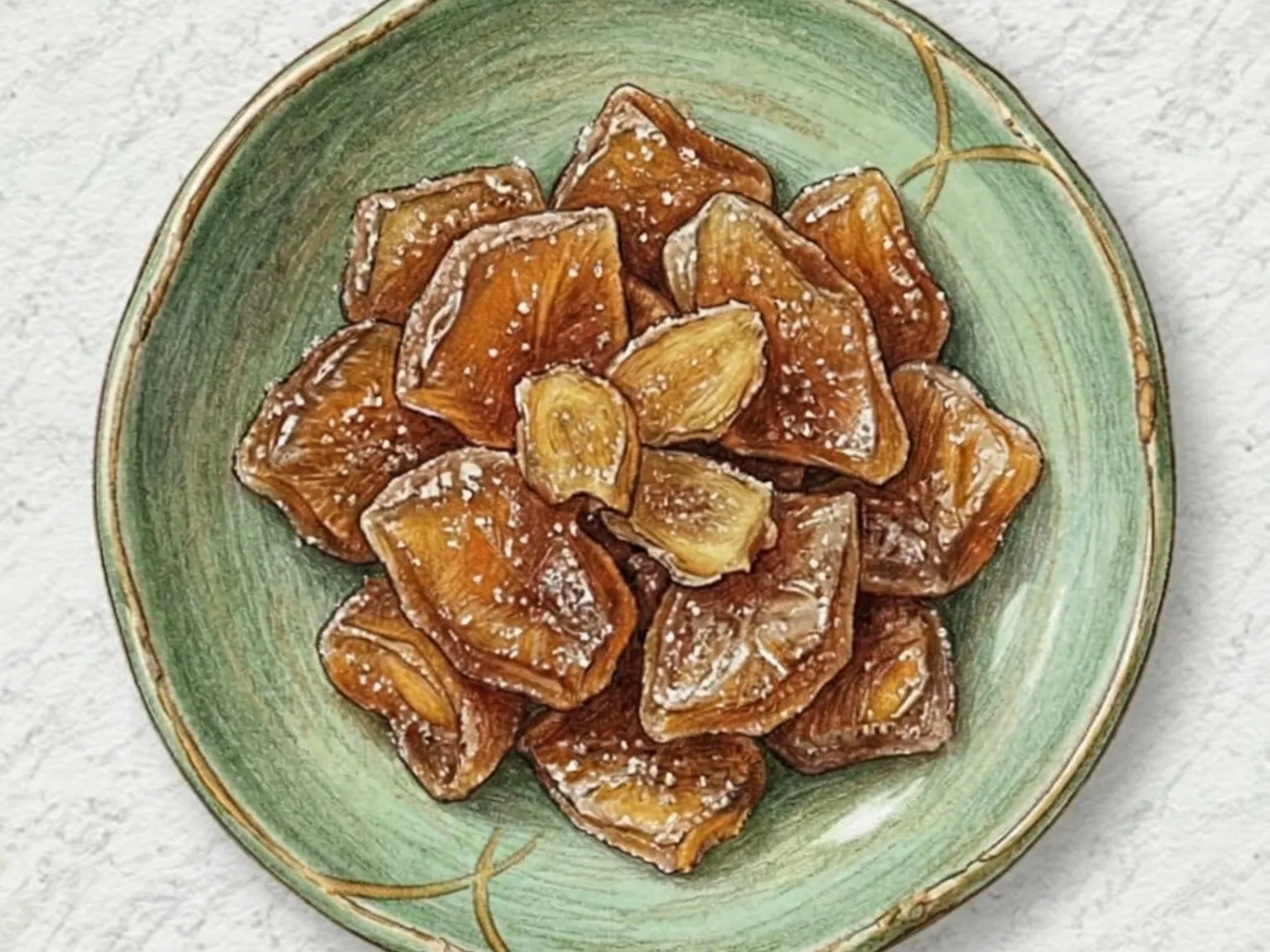
Saenggang Jeonggwa (Candied Ginger)
Saenggang jeonggwa is a traditional Korean candied ginger prepared by slicing fresh ginger thin, blanching it twice to reduce the raw heat, then simmering the pieces slowly in a glaze of sugar and grain syrup. A ten-minute soak in cold water draws out the sharpest bite first, and two rounds of boiling soften the pungency further while leaving the clean, aromatic core intact. The slices are cooked on low heat until the syrup reduces to a thick, glossy coat on the surface, at which point lemon juice is added to introduce an acidity that keeps the sweetness from becoming cloying. Once dried on a rack and rolled in granulated sugar, the finished pieces carry a crisp, crystalline shell on the outside. On the first bite, the sugar crust shatters, and the chewy, syrup-saturated ginger beneath releases a slow, building warmth that lingers well after the piece is finished.
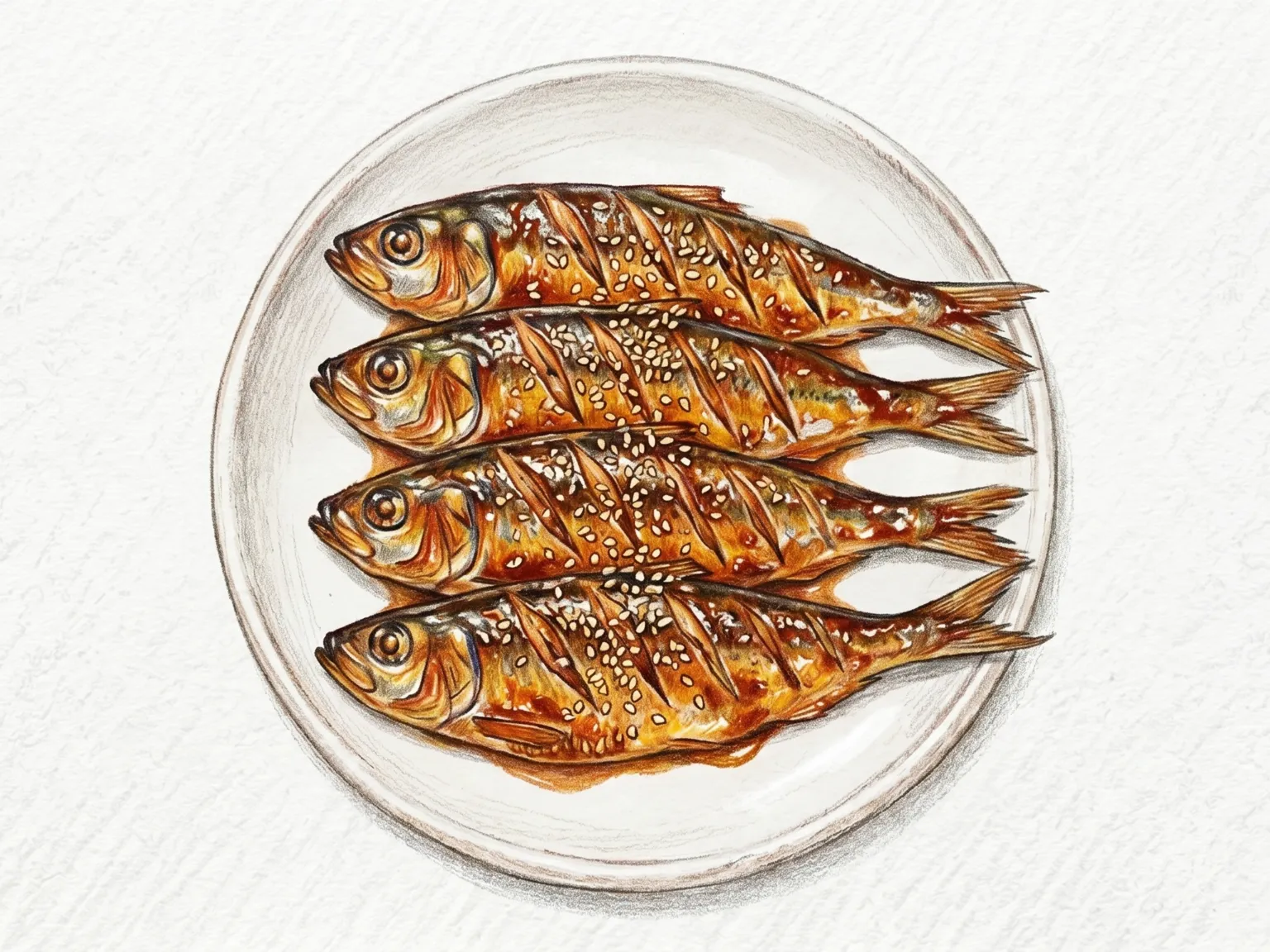
Korean Spicy Grilled Gizzard Shad
Baendaengi yangnyeom gui is a Korean grilled fish dish in which scored gizzard shad are coated in a gochujang-based glaze and cooked over medium heat until caramelized. Scoring the fish achieves two things simultaneously: it lets the seasoning penetrate into the flesh rather than sitting only on the surface, and it severs the fine pin bones that run through the small fish so they become less noticeable when eating. The marinade combines gochujang, soy sauce, oligosaccharide syrup, gochugaru, and ginger juice. The ginger juice specifically targets the fishiness of the shad, neutralizing it while adding a warm, sharp note to the overall flavor. Sugar content in the glaze is high enough that high heat will char the coating before the fish cooks through, so medium heat is maintained throughout, with three to four minutes per side giving an even result. As the oligosaccharide heats, it caramelizes into a glossy amber coating that makes the finished fish look as good as it tastes. A scattering of toasted sesame seeds adds a nutty fragrance in the final step. Gizzard shad are small enough to be eaten whole, bones included, and the bold spicy-sweet glaze makes them as suitable alongside a bowl of rice as they are paired with soju at the table.
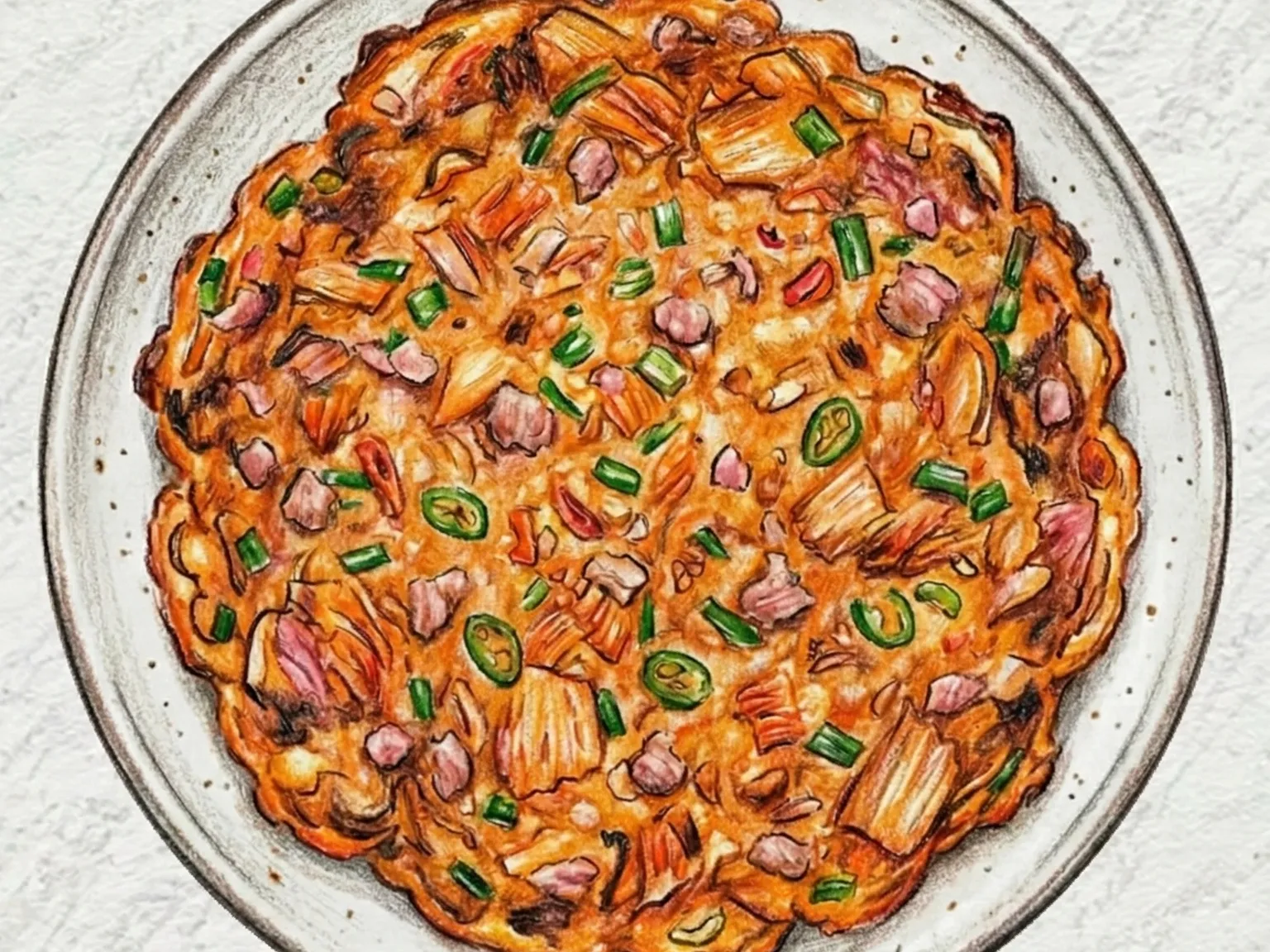
Korean Kimchi Pork Jeon (Fermented Kimchi and Pork Crispy Pancake)
Well-fermented kimchi and pork shoulder are the backbone of this hearty Korean pancake. Kimchi brine is mixed directly into the batter, intensifying both the crimson color and the tangy, fermented depth of flavor. A small amount of sugar balances the acidity, while green onion and onion distribute contrasting texture throughout each bite. Pressing the pancake flat in a generously oiled pan over high heat produces deeply caramelized, crispy edges. The kimchi should not be squeezed too dry before mixing in, since residual moisture keeps the interior soft and prevents the finished pancake from becoming dense. Pork shoulder should be cut into small pieces so it cooks through before the exterior over-browns. The kimchi's seasoning is assertive enough that no dipping sauce is required, making this a complete side dish on its own.