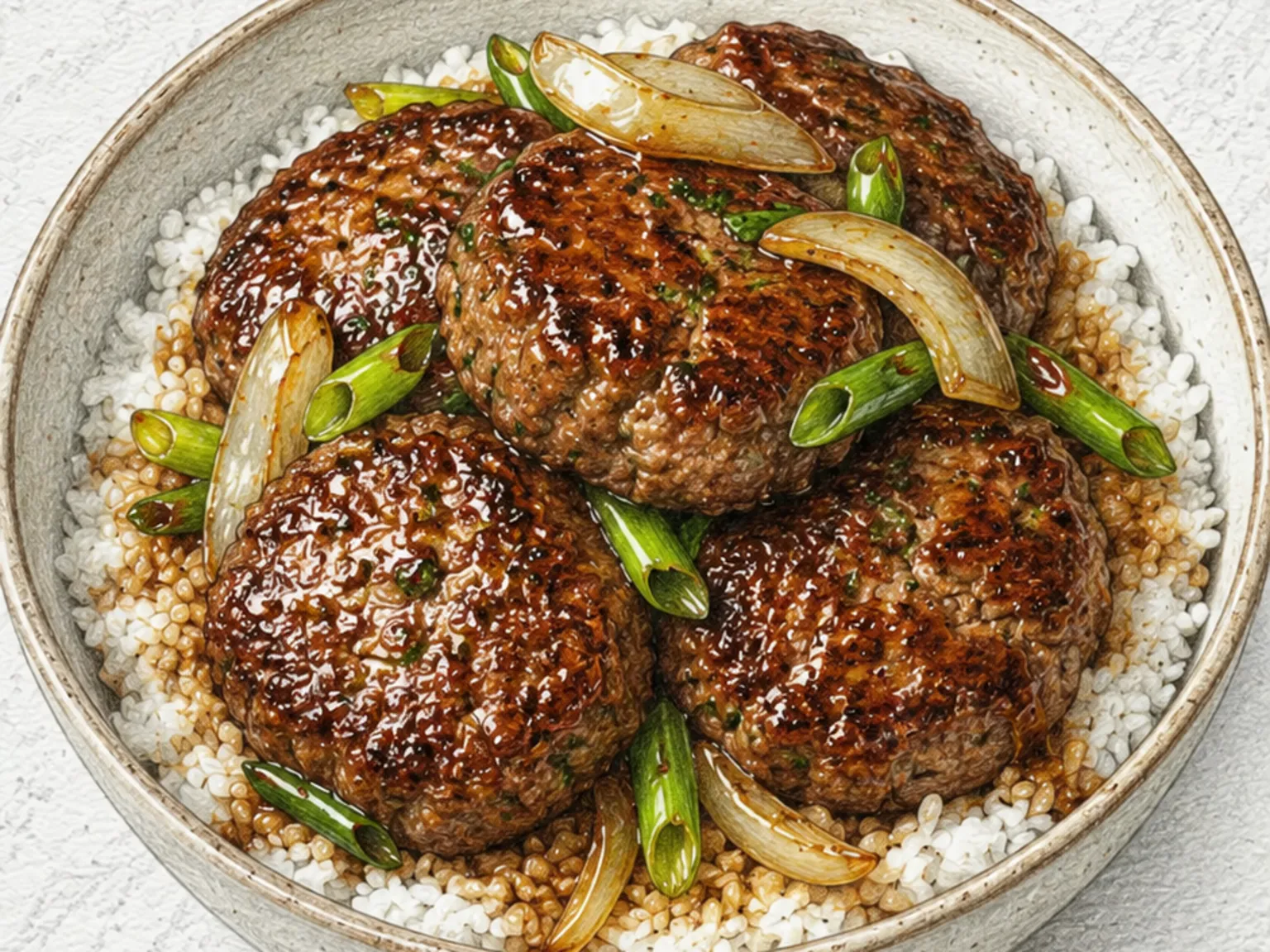
Korean Grilled Short Rib Patty Rice Bowl
Minced short-rib meat is seasoned with soy sauce, pear juice, and sesame oil, shaped into flat patties, and pan-seared until a caramelized crust forms on both sides. The exterior turns sweet and slightly charred while the interior stays moist and full of juice. Sauteed onion and green onion are added to sharpen the meat's savory depth and bring a fragrant note. Placed over hot rice with a spoonful of the pan sauce, the patty's sweetness melds with the warm grains for a quickly disappearing bowl.

Loco Moco Rice Bowl (Hawaiian Beef Patty Gravy Rice Bowl)
Ground beef is mixed with minced onion, shaped into patties, and pan-seared for four to five minutes per side until a crisp crust forms outside while the center stays moist. The same pan - still coated with beef drippings - gets butter, the remaining onion, and flour to build a quick roux, then water and Worcestershire sauce transform it into a smooth, glossy gravy that captures all the fond. Assembly is straightforward: rice on the bottom, patty on top, gravy ladled over, and a sunny-side egg crowning the bowl. Breaking the runny yolk into the gravy creates a rich, velvety sauce that ties the Hawaiian-born dish together into a hearty, deeply satisfying plate.

Korean Braised Beef and Shishito Rice
Beef is soaked in cold water for 30 minutes to draw out the blood, then placed in a pot with soy sauce, sugar, cooking wine, and whole garlic cloves. It is first brought to a high boil to cook off any off-flavors, then reduced to a medium-low simmer and left uncovered for twenty minutes so the liquid reduces into a glossy, salty-sweet braising sauce. Shishito peppers are added whole for the final six minutes, contributing gentle heat and a slight crunch that contrasts with the soft beef. Once cooked, the beef is torn along the grain by hand rather than cut, which opens the fibers so the braising liquid soaks in more deeply. A few drops of sesame oil stirred through at the end add gloss and a faint nuttiness. Stored in an airtight container with the remaining sauce, the jangjorim deepens considerably after a day or two of refrigeration as the beef continues to absorb the seasoning. Piled generously over a bowl of warm rice and mixed together, the concentrated soy-beef flavor spreads through every grain and makes the bowl satisfying in a way that richer dishes rarely manage.

Korean Mackerel and Dried Greens Rice Soup
Siraegi-godeungeo gukbap is a hearty Korean rice soup that simmers mackerel fillet and dried radish greens in a doenjang-based broth, then ladles everything over rice. The mackerel contributes a bold, oily umami while the siraegi adds an earthy vegetal depth - together in the fermented soybean broth, they create a rich, layered flavor. Anchovy stock forms the base, and a spoonful of gochugaru gives the soup a gentle heat that warms from the inside. The dried greens are boiled until completely tender before going into the pot, and the mackerel is deboned for easy eating. Finished with scallion and garlic, the broth soaks into the rice grains, making each spoonful a complete bite of soup, fish, greens, and grain.

Korean Tofu Seaweed Egg Rice Bowl
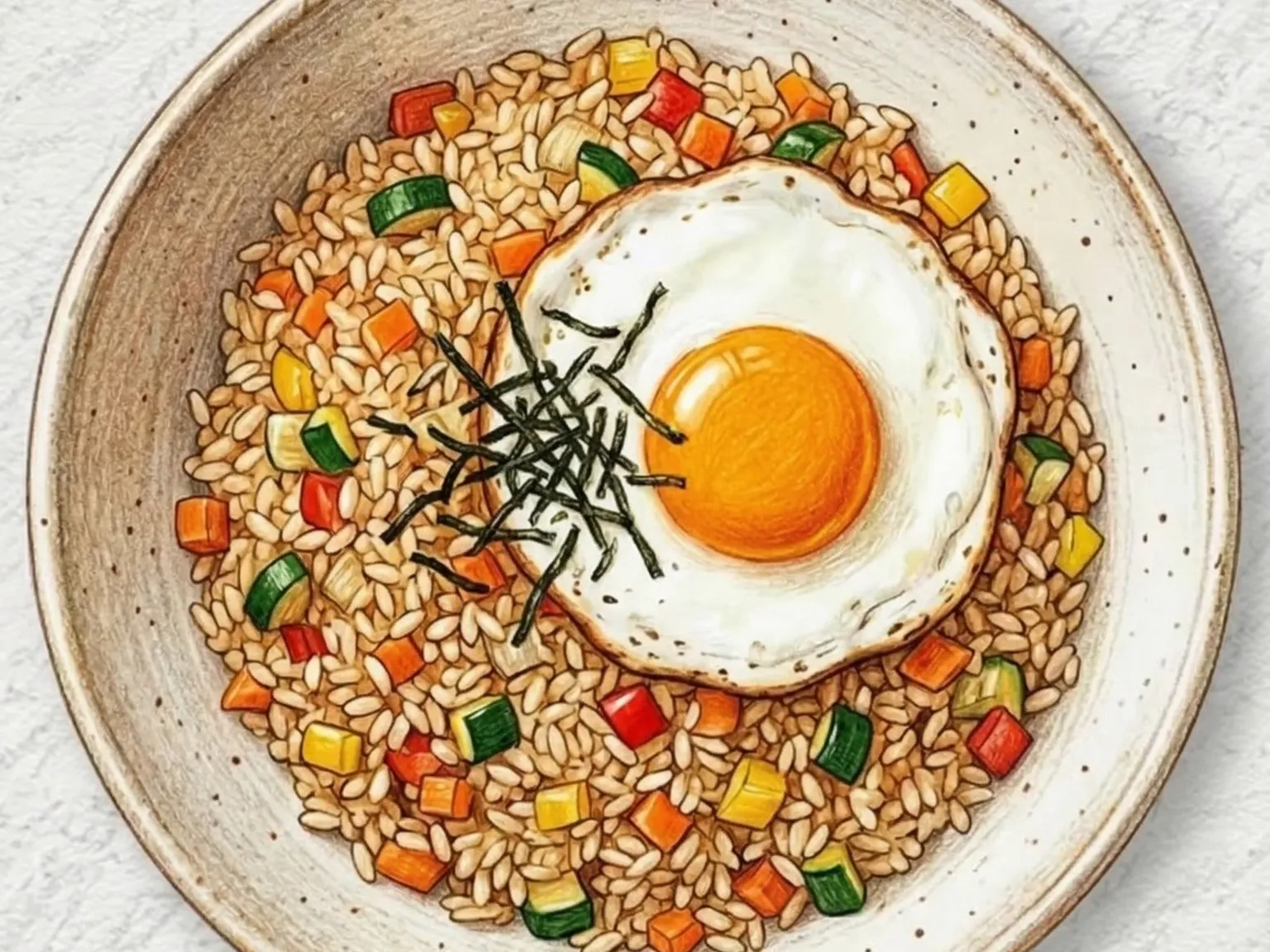
Dubu gim gyeran deopbap is a Korean rice bowl built from three pantry staples: pan-fried tofu, soft scrambled egg, and roasted seaweed flakes, all layered over a bowl of steamed rice. The tofu is pressed dry, cut into cubes, and seared until the edges turn golden before being tossed with soy sauce and syrup to form a salty-sweet glaze that coats each piece. Eggs are scrambled to a barely-set, custard-like consistency rather than cooked through, creating a deliberate contrast with the firm, glazed tofu beneath them. Crumbled seaweed scattered over the top introduces a brittle crunch and a faintly briny, toasty aroma that lingers with each bite. A final drizzle of sesame oil draws all three components together into a coherent flavor. Because tofu, eggs, and dried seaweed are refrigerator and pantry staples in most Korean households, the dish can be assembled in roughly ten minutes without a special shopping trip, making it one of the most dependable meals for busy mornings or quick lunches.

Korean Seaweed Jangjorim Rice Bowl
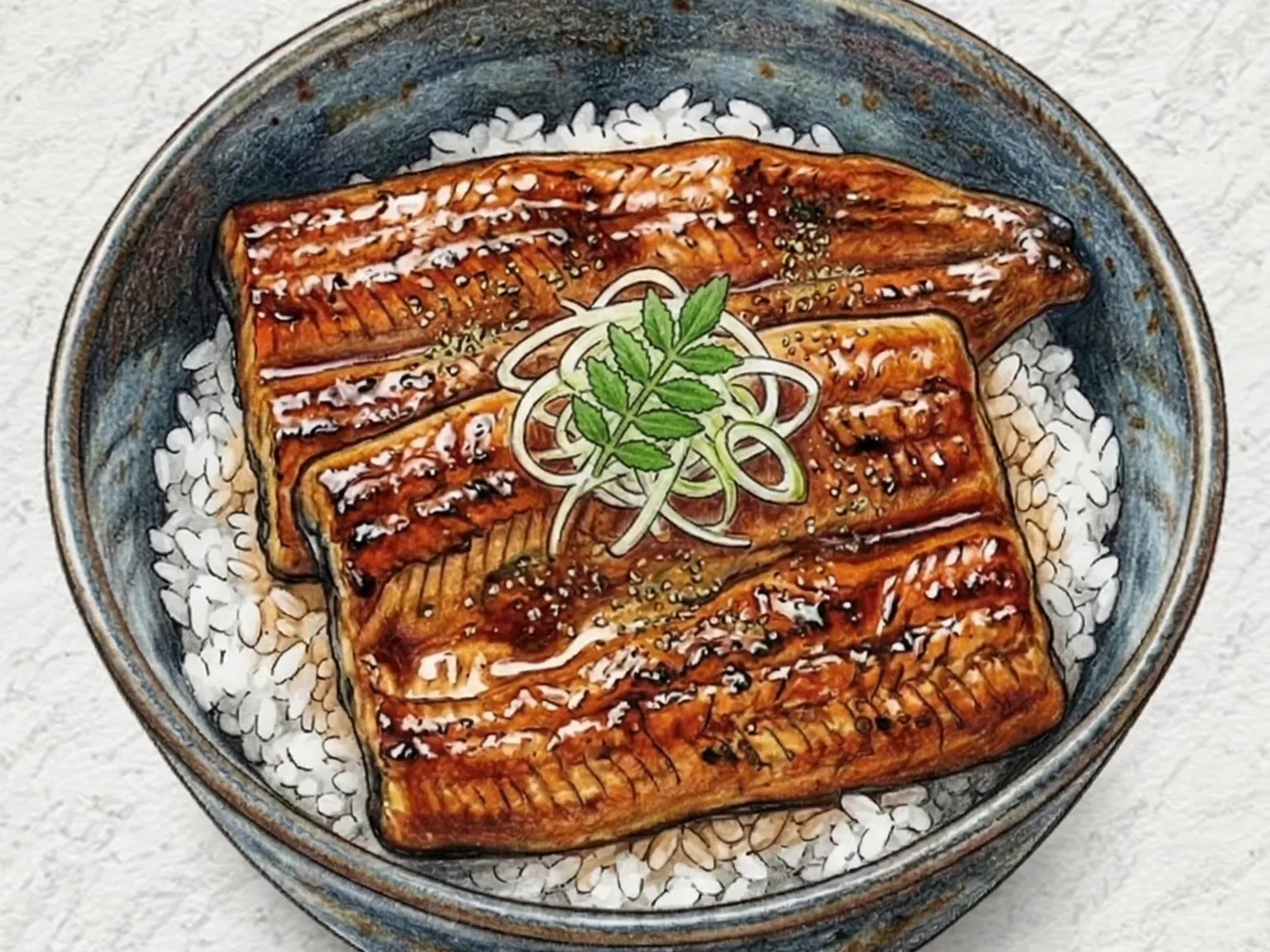
Beef eye of round is simmered slowly in soy sauce, sugar, and garlic until deeply seasoned throughout, then pulled apart by hand along the grain and braised again with quail eggs so they absorb the concentrated braising liquid. The jangjorim is spooned generously over warm white rice and finished with a heavy crumble of gamtae seaweed, whose crisp, ocean-fresh fragrance contrasts sharply with the salty-sweet braised meat beneath. Gamtae is a winter seaweed harvested from Korean coasts that carries a toasty, sesame-adjacent aroma when dried, and its papery crunch disappears quickly once exposed to moisture, making timing essential. The braising liquid left over in the pot is too flavorful to discard and can be repurposed as a mixing sauce for bibimbap or used to season blanched greens. Adding the gamtae at the very last moment before eating, rather than during plating, preserves both its texture and its fragrance. The bowl layers salt, sweetness, deep umami from the soy-reduced meat, and the clean smell of the sea into a compact, satisfying combination.

Korean Gimbap-Style Rice Bowl
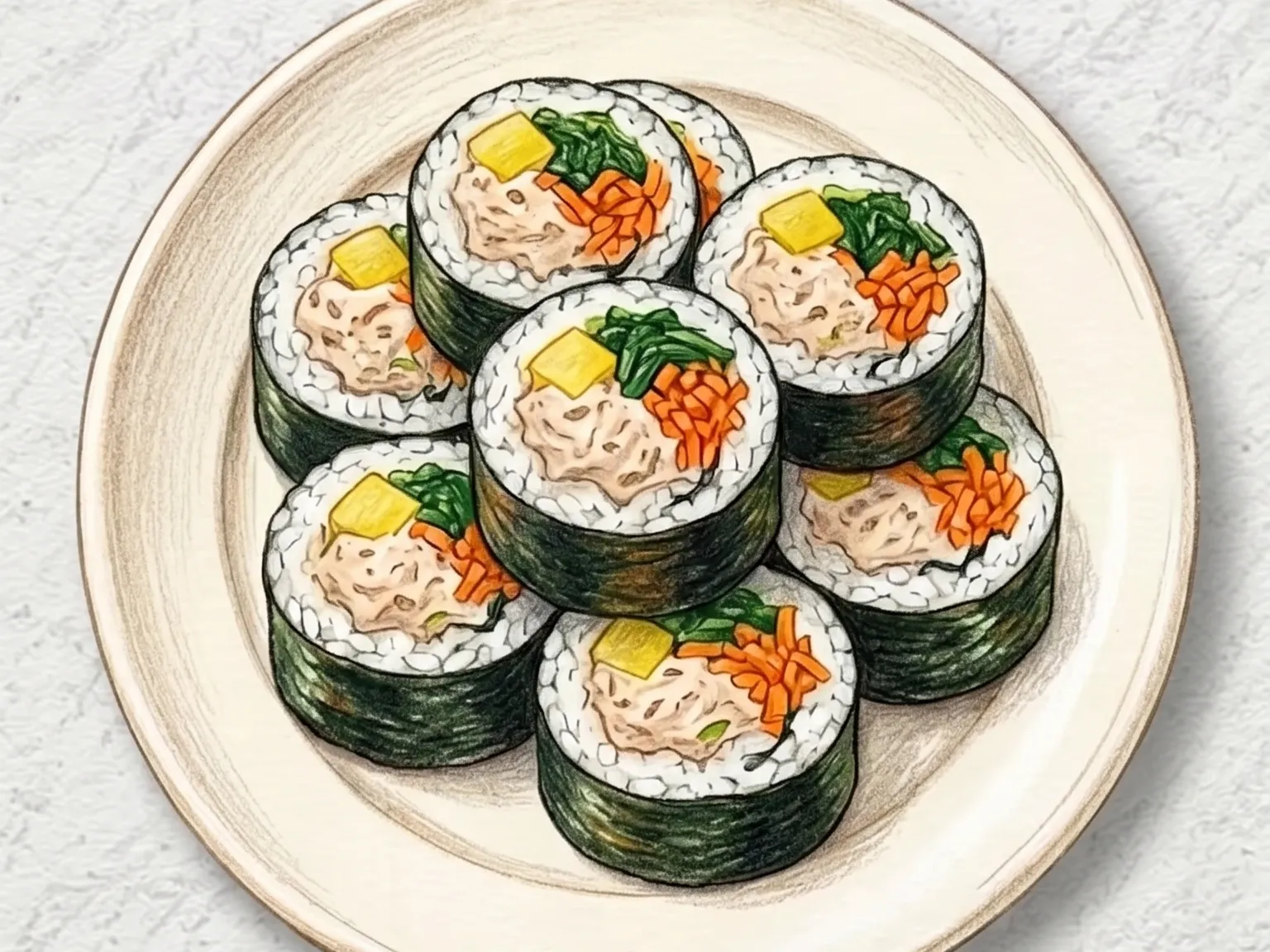
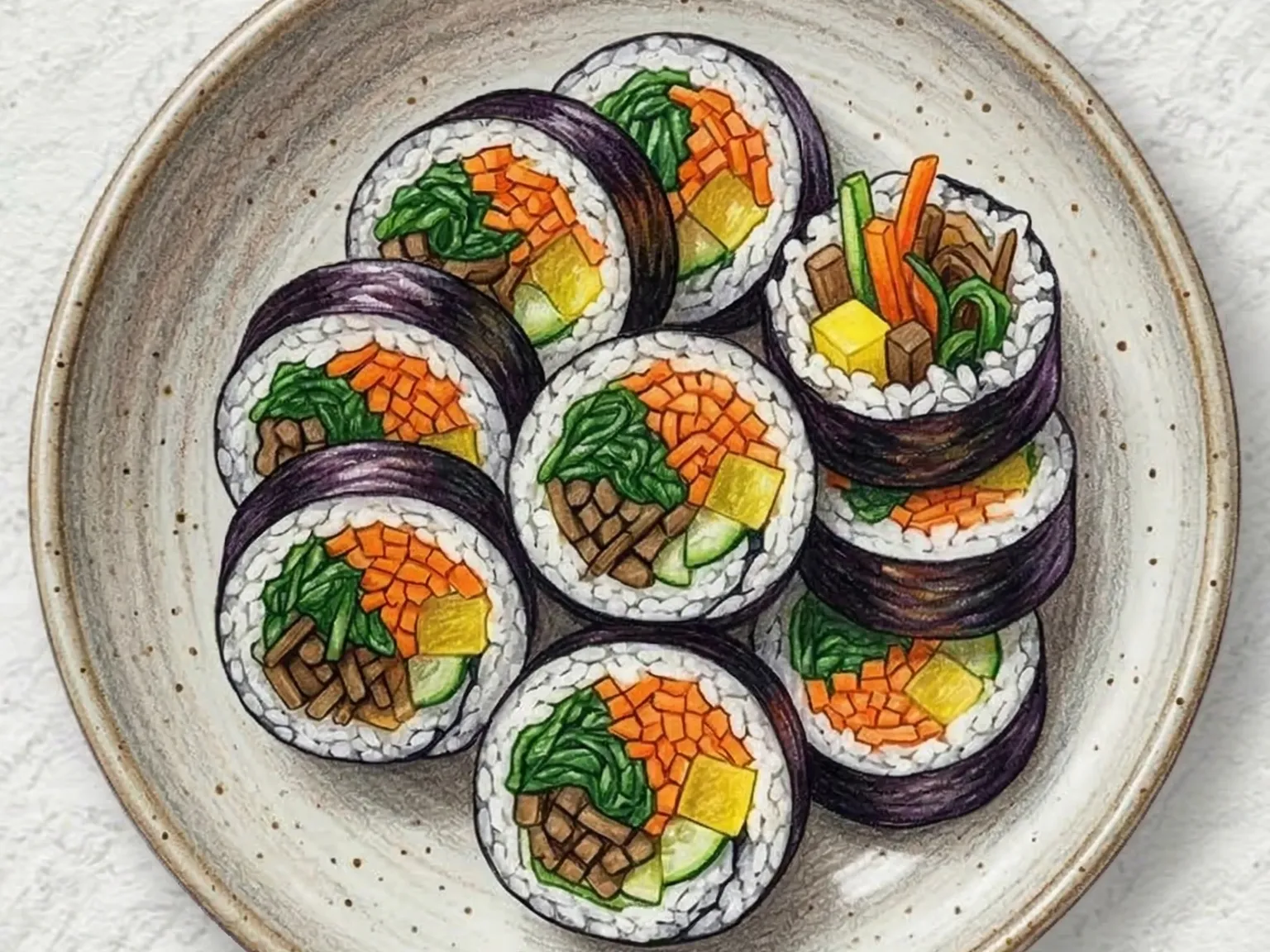
Gimbap-bap is a rice bowl that takes all the standard gimbap fillings - egg strips, imitation crab, blanched spinach, and stir-fried carrot - and serves them over sesame-oil-seasoned rice without rolling them in seaweed. The familiar flavor combination of gimbap is preserved while the rolling step is eliminated, which cuts preparation time considerably and allows each topping to be adjusted to taste. Adding pickled radish and fish cake on the side brings the result closer to the complete profile of traditional gimbap. The rice seasoned with sesame oil and salt serves as the unifying base that holds the individual flavors of each component together. It is particularly well-suited to quick solo meals.

Korean Sashimi Rice Bowl (Flounder Sashimi with Cho-Gochujang)
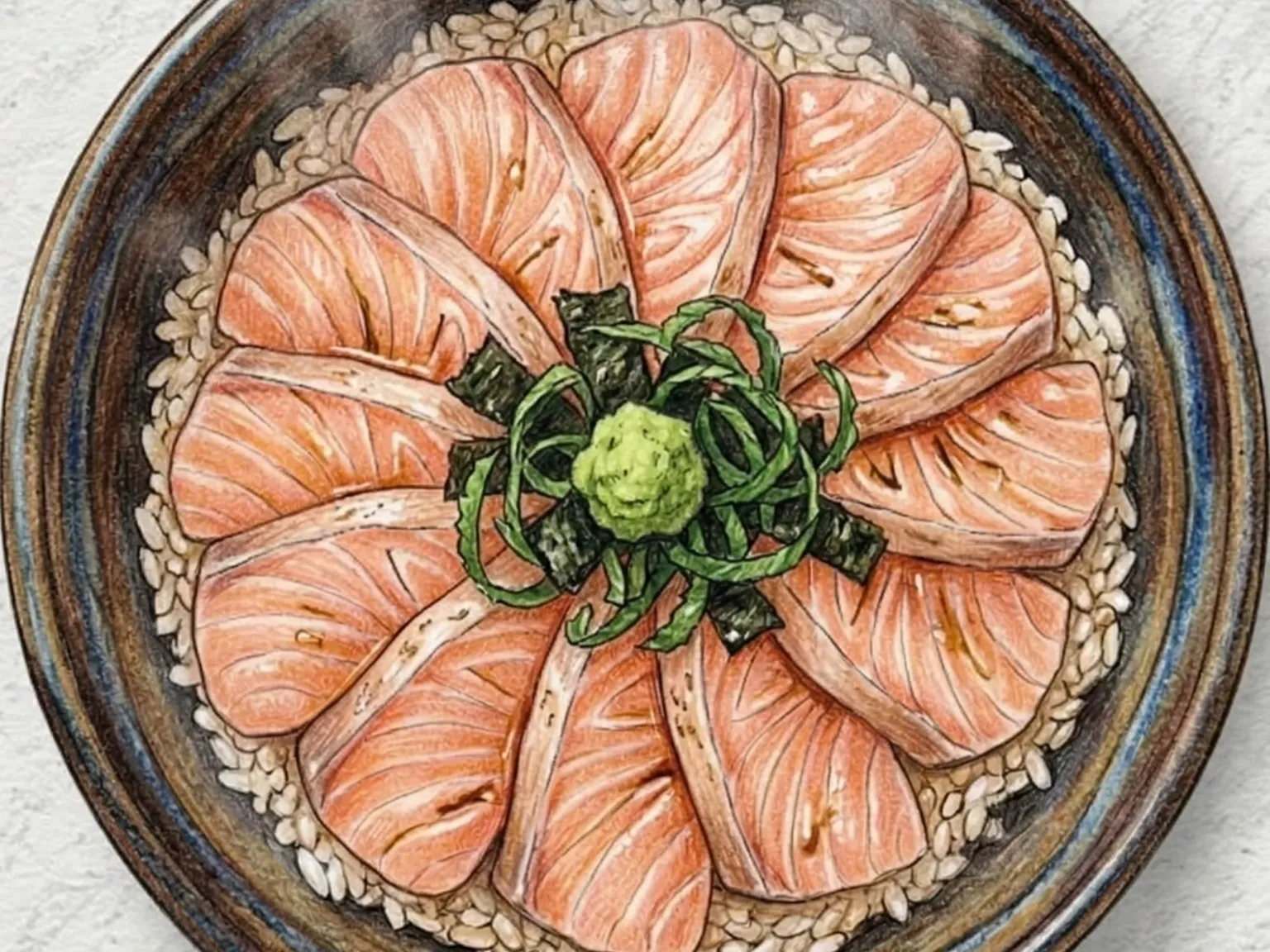
Sliced flounder sashimi sits atop julienned cucumber, lettuce, and perilla leaves over slightly cooled rice, dressed with cho-gochujang just before eating. The rice must not be piping hot because residual heat softens the sashimi and dulls its clean texture, so resting it until just warm is essential. The vinegar tang and chili warmth in cho-gochujang lift the mild fish flavor, while sesame oil and seeds leave a nutty finish on the palate. Keeping the vegetables well chilled before assembly creates a temperature contrast against the warm rice that sharpens every bite. Adding the cho-gochujang right before eating rather than in advance prevents the vegetables from weeping moisture and going limp.

Korean Spicy Baby Octopus Fried Rice
Jjukkumi bokkeumbap is a spicy fried rice built around webfoot octopus, where every element of the technique exists to preserve the squid's signature springy chew. The octopus is first rubbed with salt to strip off the surface slime, then cut to bite-size and seared over high heat for no more than three minutes. The gochujang-based sauce, bolstered with chili flakes, soy sauce, sugar, and garlic, concentrates spice and umami before the rice enters the pan and soaks up the red seasoning grain by grain. A drizzle of sesame oil at the end adds a nutty fragrance that lifts the dish slightly, and melted cheese is a popular addition for softening the heat without dulling the flavor. The oceanic character of the octopus - its brininess and elasticity - gives this fried rice a depth that ground pork or vegetables simply do not replicate. Not overcooking the octopus is the single most important decision in the recipe.

Korean Cream Chicken Rice Bowl
Cream chicken deopbap is a Korean fusion rice bowl where bite-sized chicken breast pieces are seared in butter to develop color and a light crust, then simmered in heavy cream and garlic until the sauce reduces into a glossy, velvety coating. Searing the chicken in butter first builds a Maillard layer that gives the final dish more depth than if the cream were added at the start. As the garlic cooks down in the cream, it loses its raw sharpness and releases a mild sweetness that permeates the entire sauce. A straightforward seasoning of salt and pepper is all the dish needs to come together. The concept takes the richness of a Western cream pasta sauce and serves it over steamed rice instead of noodles, letting the grains absorb the sauce and carry the flavor all the way through. A sprinkle of flat-leaf parsley or coarsely cracked black pepper over the top sharpens the finish.

Korean Saury Kimchi Rice Bowl
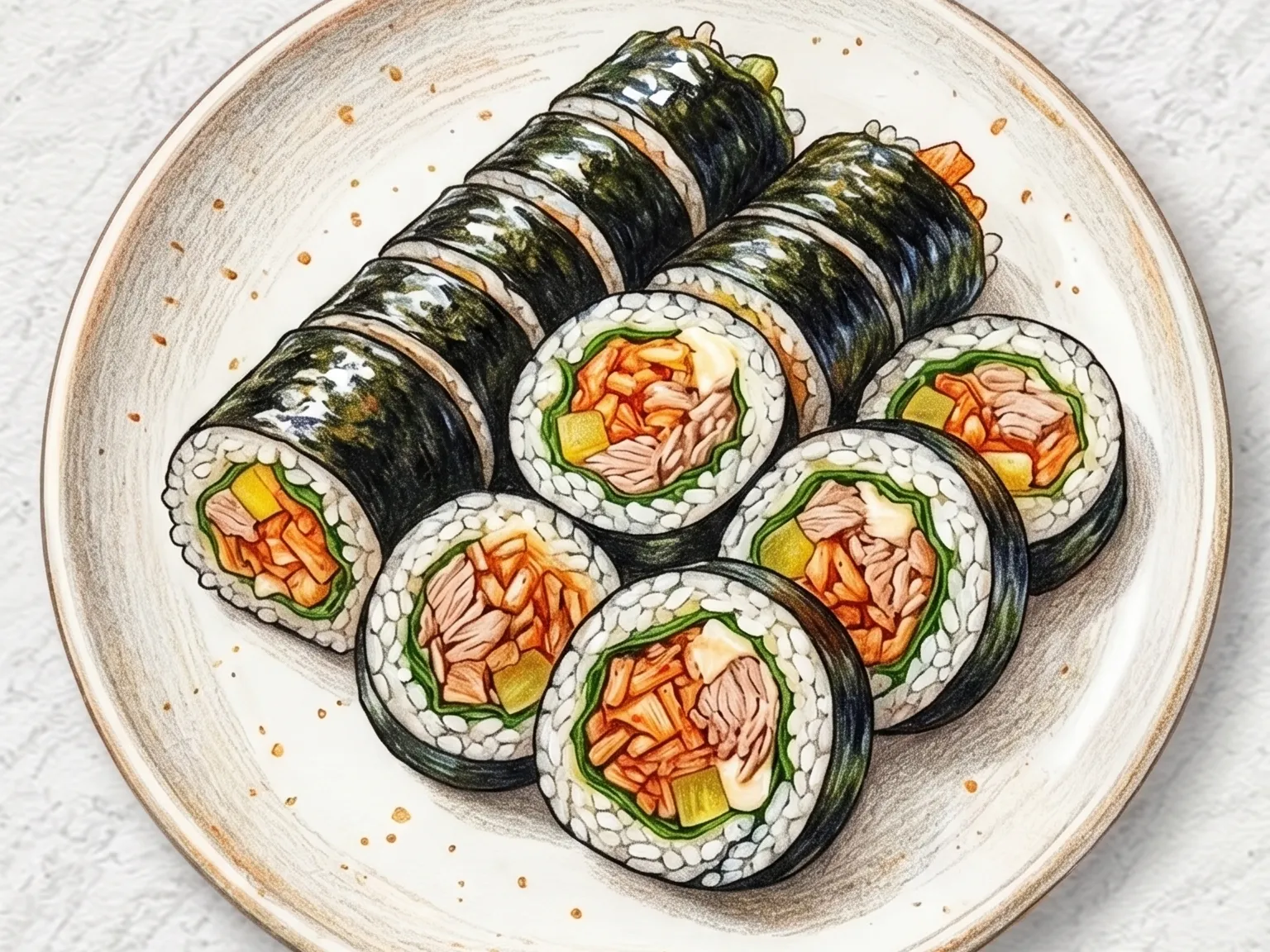
Canned mackerel pike (kkongchi) is stir-fried with aged kimchi and sliced onion, using a couple spoonfuls of the can liquid to deepen the sauce's umami. The kimchi cooks down for three minutes first to drive off excess moisture and tame its sourness, then the fish is broken into generous chunks - keeping them large preserves a pleasant flaky texture. Chili flakes, soy sauce, and sugar simmer together for four minutes into a thick, clinging glaze that soaks into the rice below. Topped with fresh scallion, this is a pantry-friendly rice bowl that transforms humble canned fish into something deeply flavorful.