Chewy Honey Wheat Bagel
Quick answer
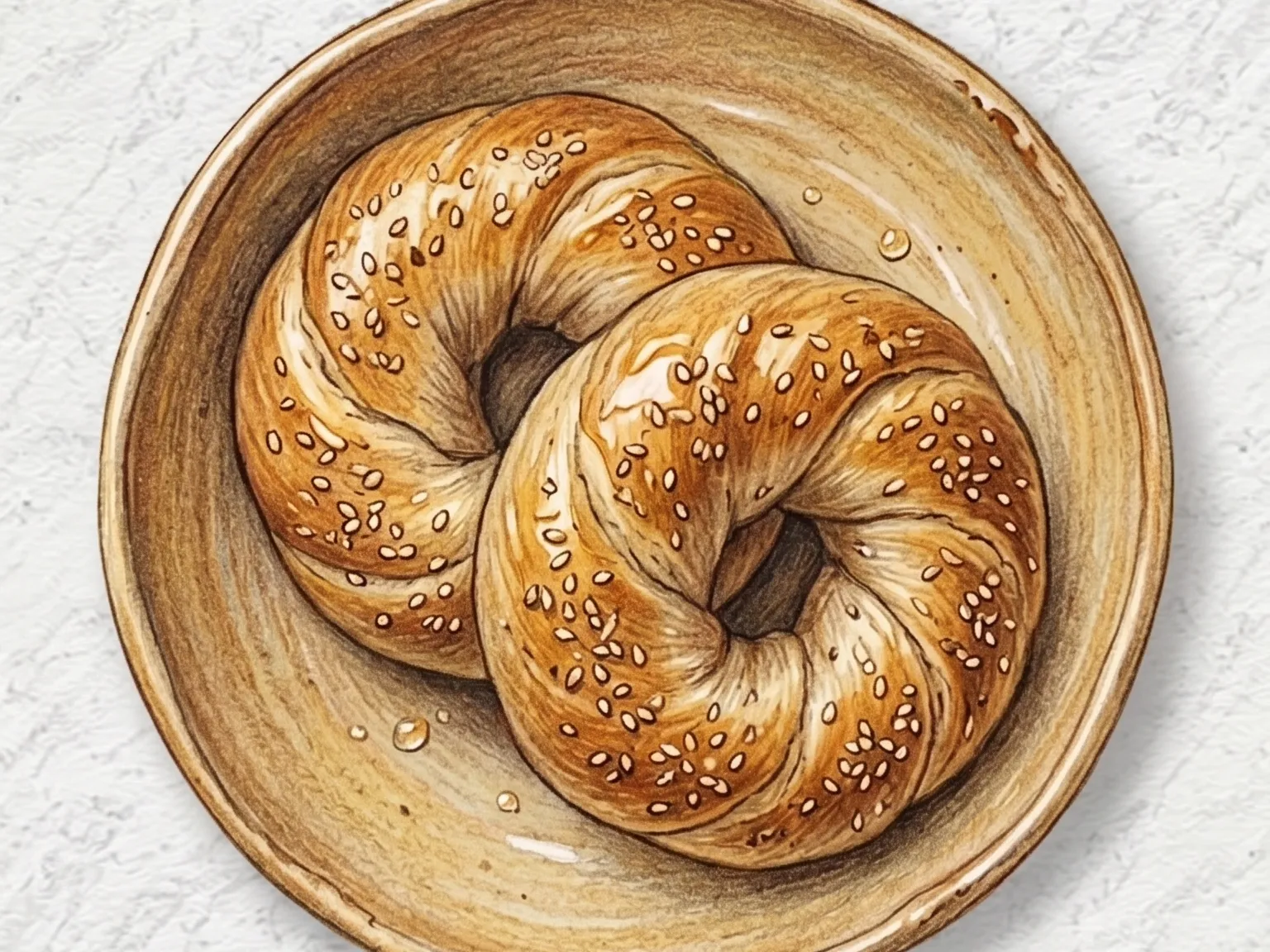
Authentic homemade bagels with extra chewiness from honey and nuttiness from wheat.
- A honey-water boil builds the signature thick and glossy crust on these wheat bagels.
- 30-second honey boil on each side builds the signature thick, glossy crust
Key ingredients
Core cooking flow
- 1 Mix 350g bread flour, 50g whole wheat flour, 5g instant dry yeast, and 7g salt.
- 2 Shape the dough into a ball, place in a bowl, cover with plastic wrap, and f...
- 3 Round each piece and rest for 15 minutes.
Authentic homemade bagels with extra chewiness from honey and nuttiness from wheat.
What Makes This Special
- A honey-water boil builds the signature thick and glossy crust on these wheat bagels.
- 30-second honey boil on each side builds the signature thick, glossy crust
- 7:1 bread-to-wheat ratio keeps whole wheat flavor present but not dominant
- 15-minute bench rest before shaping relaxes gluten for easy rolling
Instructions
- 1
Mix 350g bread flour, 50g whole wheat flour, 5g instant dry yeast, and 7g salt. Dissolve 20g honey in 240ml lukewarm water, pour into the dry ingredients and knead by hand or machine for 10 minutes until the dough clears the bowl.
- 2
Shape the dough into a ball, place in a bowl, cover with plastic wrap, and ferment in a warm spot for 1 hour until doubled. Gently degas and divide into 4 equal pieces.
- 3
Round each piece and rest for 15 minutes. Roll each into a 40-45cm rope, flatten one end, wrap the other end around it, and press firmly to seal the ring shape.
- 4
Place shaped bagels on a parchment-lined tray, cover with a damp cloth or plastic wrap, and proof for 40 minutes. Bring a large pot of water to a boil and add 1 tbsp honey for the poaching liquid.
- 5
Poach each bagel in the honey water for 30 seconds per side. This process coats the surface and creates the characteristic chew. Drain briefly and place on the baking pan.
- 6
Bake in a 200°C preheated oven for 18-20 minutes until evenly browned and hollow-sounding when tapped. Cool on a wire rack for 10 minutes before serving.
Tips
Nutrition (per serving)
Recipes to Cook Together
More Baking →Serve with this
Real Pineapple Sherbet
A refreshing and cool fruit sherbet dessert made inside a hollowed-out pineapple.
Snow Crab Boiling Seafood
A Southern American-style seafood boil featuring snow crab and seafood in spicy Cajun sauce.
Citrus Espresso Tonic with Orange
Espresso tonic is a carbonated coffee drink built by slowly pouring espresso over chilled tonic water to form two distinct layers. The tonic must be thoroughly cold to maintain stable carbonation throughout; cooling the espresso for about thirty seconds before pouring it over a spoon produces a clean separation between the two liquids. The quinine bitterness in the tonic water meets the espresso's roast bitterness, creating a balanced interplay rather than one-note sharpness. Orange slices and lemon peel garnish the glass, releasing citrus oils that rise with the bubbles. Specialty espresso with pronounced fruit acidity works particularly well here, harmonizing with the tonic's effervescence and lending natural sweetness without added sugar. Pre-chilling the glass with ice before adding the tonic helps preserve carbonation. The drink gained popularity in Scandinavian coffee culture during the 2010s before spreading worldwide.
Lentil Kale Salad
Lentil kale salad pairs the tender yet distinctly grainy bite of cooked green lentils with sturdy kale leaves, resulting in a bowl that satisfies like a full meal rather than a side salad. The vinaigrette of Dijon mustard, lemon juice, and olive oil does two things at once -- it brightens the kale's natural bitterness into something lively and it acts as the marinade that softens the leaves during the massage step. Massaging the kale by hand for about a minute before dressing it is the step that transforms the texture from tough and fibrous into something genuinely pleasant to chew, and it also opens up the leaf surface so the dressing clings rather than sliding off. Lentils benefit from careful timing: twenty to twenty-five minutes of simmering leaves them cooked through with a slight resistance at the center, and overcooking past that point turns them mushy and strips the salad of its textural contrast. Julienned carrot adds natural sweetness and a pop of color that keeps the bowl from looking uniformly green. Roughly chopped walnuts contribute a rich crunch and healthy fat that rounds out the nutritional profile. A shaving of Parmesan or a handful of roasted chickpeas makes a straightforward addition when more substance or complexity is wanted.
Similar recipes
Classic Bagel
Classic bagels are defined by a two-stage cooking process that no other mainstream bread undergoes: the shaped rings are boiled before they are baked, and it is that boiling step that creates everything distinctive about the finished product. The dough is made with high-gluten bread flour and deliberately low hydration, then kneaded extensively to build a dense gluten network strong enough to resist expansion in the oven. After shaping into rings and a brief second proof, the bagels are lowered into boiling water -- often sweetened with honey or malt syrup -- and held there for about a minute per side. The heat gelatinizes the starch on the outer surface, forming a thin, tight skin that acts as a physical barrier against the gas trying to expand inside. When the boiled rings go into a hot oven, that skin constrains the rise so the interior stays compressed and dense rather than open and airy. The result is a crust that is firm, slightly shiny, and resilient under pressure, surrounding an interior with a chewiness measured in seconds of resistance rather than the instant softness of most bread. Adding honey or malt to the boiling water contributes a faint sweetness and a deeper color to the finished crust. In New York tradition the bagel is split, toasted, and loaded with cream cheese and smoked salmon, but sliced in half and toasted with butter alone, the structure of a well-made bagel carries the eating experience entirely on its own.
Fluffy Pancakes
A straightforward American breakfast staple built from flour, egg, milk, and melted butter. Baking powder lifts the batter into thick, pillowy rounds with a golden-brown exterior. The key to a tender pancake is restraint when mixing: a few small lumps in the batter are preferable to a smooth but overworked one, which produces a tough, chewy result. Resting the batter for five to ten minutes lets the gluten relax and the leavener activate fully, yielding a noticeably fluffier rise on the griddle. Cooking over medium-low heat prevents the outside from scorching before the center sets. Maple syrup, fresh berries, or a pat of butter on the warm stack are the classic accompaniments.
Oatmeal Raisin Cookies
Rolled oats give these cookies a coarse, chewy grain that sets them apart from the uniform smoothness of standard drop cookies. Brown sugar drives the flavor, providing a molasses-tinged depth and keeping the interior moist days after baking. Cinnamon - just enough to warm the nose without dominating - threads through every bite. The raisins shrink slightly in the oven as their moisture evaporates, concentrating their fruity sweetness into small, chewy bursts scattered through the oat-studded crumb. Chilling the dough before baking allows the oats to hydrate, which results in a chewier, denser cookie rather than a crisp one. The finished cookies are sturdy enough for a lunch bag or a road trip and only improve when dunked in cold milk, which softens the oat flakes and amplifies the cinnamon.
Banana Bread
Banana bread is a quick bread leavened with baking soda rather than yeast, which means no rising time and a straightforward one-bowl process. The most important variable is the banana: heavily blackened, overripe fruit is essential because the starches have converted to sugar, the flesh mashes effortlessly, and the concentrated banana aroma permeates every part of the crumb. Melted butter adds richness without creaming, a single egg provides structure, and vanilla extract amplifies the banana's fragrance. The batter mixes in one bowl and goes directly into the oven at 170 degrees Celsius for roughly sixty minutes. A toothpick inserted into the center should come out clean. The bread is good warm from the oven, but the flavor is measurably deeper the following day as banana sugars continue to penetrate the interior. Walnuts or chocolate chips folded into the batter add textural contrast without changing the essential character of the loaf.
Coleslaw
Coleslaw is built from finely shredded cabbage and carrot tossed in a mayonnaise-based dressing sharpened with apple cider vinegar and Dijon mustard. A small amount of sugar keeps the acidity in check without making the salad noticeably sweet, and the mustard adds a subtle, savory bite that keeps the dressing from tasting flat. Resting the dressed slaw in the refrigerator for at least 30 minutes allows the vegetables to soften slightly and absorb the dressing more evenly, resulting in a more cohesive texture than eating it immediately after mixing. Coleslaw is one of the most common side dishes in American cooking, pairing naturally with barbecue, fried chicken, and pulled pork sandwiches. If the cabbage has high water content, a brief salt cure before dressing draws out excess moisture and prevents the sauce from becoming watery.
Cornbread
Cornbread is a Southern American quick bread made from cornmeal, flour, sugar, baking powder, milk, egg, and melted butter, baked until golden. Mixing the wet and dry ingredients separately and combining them with minimal stirring prevents overdeveloping gluten, which keeps the crumb tender and moist rather than tough. Baking at 200 degrees Celsius for twenty-two to twenty-five minutes produces a crisp exterior with a lightly sweet, nutty interior characteristic of cornmeal. The bread pairs well with stews, chili, and soups; its coarse grain absorbs broth and sauce effectively, making every bite more flavorful the longer it sits in the bowl.