Korean Cream Cheese Hotdog
Quick answer
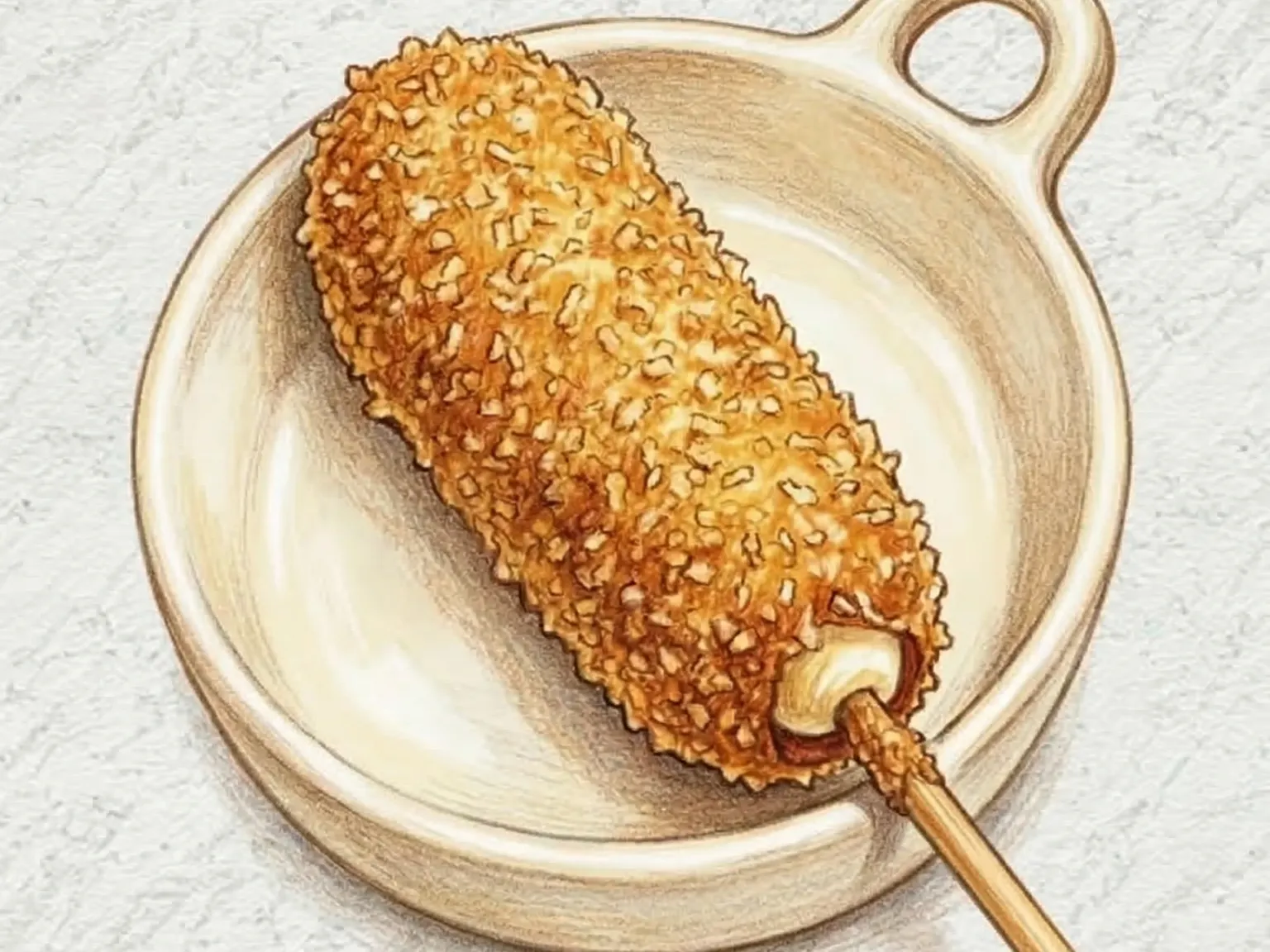
Cream cheese hotdog is a Korean street corn dog made by threading sausage and a log of cream cheese together on a stick, coating in wheat batter, rolling in breadcrumbs...
What makes this special
- Skewered sausage and cream cheese are coated in breadcrumbs and fried for a rich, savory snack.
- Sausage and cream cheese skewered together deliver two flavors in one bite
- Pre-freezing the cream cheese keeps it from melting out during frying
Key ingredients
Core cooking flow
- 1 Chill the 60g cream cheese until firm enough to hold its shape.
- 2 Put 150g flour, 1 egg, and 100ml milk in a bowl and mix until no dry flour remains.
- 3 Hold each stick and dip it into the batter, rotating until the sausage and cream cheese are fully covered.
Cream cheese hotdog is a Korean street corn dog made by threading sausage and a log of cream cheese together on a stick, coating in wheat batter, rolling in breadcrumbs, and deep-frying at 170 degrees Celsius. The breadcrumb crust fries to a golden, audibly crunchy shell, while the batter layer underneath stays soft and doughy, creating a distinct middle texture between crust and filling. Each bite delivers the salty snap of sausage alongside the smooth, tangy richness of melted cream cheese. Briefly freezing the cream cheese before assembly is the key step - without it, the cheese melts out through the batter before the crust has a chance to set.
Instructions
Read the steps as a cooking flow: prep, heat, seasoning, doneness control, and finish.
- 1Step
Chill the 60g cream cheese until firm enough to hold its shape.
Skewer the 2 sausages, then either press the cream cheese alongside each sausage or slit the sausages lengthwise and tuck the cheese inside.
- 2Prep
Put 150g flour, 1 egg, and 100ml milk in a bowl and mix until no dry flour remains.
The batter should fall slowly from a spoon, thick enough to cling without sliding off.
- 3Control
Hold each stick and dip it into the batter, rotating until the sausage and cream cheese are fully covered.
If any cheese is exposed, cover it with more batter so it does not leak during frying.
- 4Finish
Spread 80g breadcrumbs on a wide plate and roll the battered sticks through them.
Press gently with your hand so the crumbs adhere firmly and the coating does not fall away in the oil.
- 5Heat
Heat 500ml cooking oil to 170C and keep the heat at medium-low.
Add the hotdogs and fry for 2 to 3 minutes, turning often, until the breadcrumb crust is evenly golden.
- 6Finish
Transfer to a rack and drain for about 30 seconds.
Serve while the crust is still crisp, with ketchup or sugar if desired, and eat before the cream cheese cools and firms up.
After the steps
Pick a recipe that fits this dish.
Continue with shared ingredients, meal pairings, or a similar method.
Recipes That Go Well With This
More Street food →Based on shared ingredients and meal pairing
Potato Mozzarella Korean Corn Dog
Gamja mozzarella hotdog is a Korean street food that skewers a sausage and a mozzarella cheese stick together, coats them in a batter of flour, milk, and baking powder, then presses half-centimeter potato cubes across the entire surface before deep-frying. The potato cubes cook into a bumpy, golden-brown shell on the outside while the mozzarella inside melts and stretches into long, elastic strands when pulled apart. Sugar in the batter gives the whole corn dog a faintly sweet undertone throughout, and sprinkling additional sugar on the finished hotdog before eating is a common practice at street stalls. Each bite stacks the sausage's saltiness, the mozzarella's creamy stretch, and the crisp snap of the potato crust into one compact, layered structure.
Korean Corn Dog
Korean corn dogs are a street food built around two fillings: a sausage, mozzarella cheese, or both together, skewered on a stick and coated in a thick batter made from pancake mix before being rolled in panko breadcrumbs and fried at 170 degrees Celsius. The panko creates a coarse, jagged exterior that shatters on the first bite, while the inner batter layer stays dense and chewy, producing a layered texture that is central to the appeal. Inside, the mozzarella stretches in long pulls as the heat melts it, mixing with the salty sausage in a way that makes each bite unpredictable. Immediately after frying, the hot dog is rolled in granulated sugar, which clings to the crisp surface and creates the signature sweet-and-salty contrast that sets the Korean version apart from American corn dogs. Ketchup and mustard are standard condiments. Variations are common: some stalls use only cheese, others stack rice cake, potato cubes, or shrimp alongside the sausage for extra texture. Korean corn dogs are sold at street stalls, night markets, and bunsik shops.
Candied Sweet Potato
Goguma mattang is a Korean candied sweet potato snack made by cutting peeled sweet potatoes into large chunks and deep-frying them at 170 degrees Celsius until the interior turns floury and soft. A syrup of sugar, corn syrup, water, and a measured splash of soy sauce is cooked separately until large, foamy bubbles form - the visual cue for adding the fried sweet potatoes. Everything must be coated within thirty seconds to lock in a thin, glass-like caramel shell that crisps and turns translucent as it cools. The soy sauce shifts the flavor from purely sweet to a rounded, slightly savory depth. Pre-draining surface moisture from the cut sweet potatoes reduces oil splatter during frying and helps the syrup grip the pieces evenly. Black sesame seeds are scattered over the finished pieces for a toasted, nutty note, and each piece is spread individually on parchment paper while still warm so they cool without sticking together.
Korean Sweet Potato Mozza Corn Dog
Sweet potato mozza corn dog is a Korean street food made by skewering mozzarella and sausage end to end, coating the skewer in pancake batter, pressing diced sweet potato cubes and breadcrumbs into the surface, and deep-frying at 170 degrees Celsius. Freezing the mozzarella until hard before assembly is not optional: room-temperature cheese melts too quickly during frying and breaks through the batter before the exterior sets, causing the filling to leak. Biting through the sausage-cheese boundary delivers a sharp contrast between the salt of the sausage and the pull of the stretched cheese. The batter needs to hold a moderate thickness so the sweet potato pieces adhere evenly rather than sliding off before hitting the oil. In the fryer, the sweet potato cubes caramelize against the batter, forming a naturally sweet outer layer with slightly crisped edges. Breadcrumbs fill the gaps between the potato pieces and add crunch wherever the potato does not cover. Dusting the finished corn dog with granulated sugar immediately after it exits the fryer lays a thin sweet coating over the already-caramelized surface, amplifying the sweet-salty contrast with the savory interior. The visual of cheese pulling as the corn dog is bitten through became widely associated with Korean street food content on social media.
Serve with this
Korean Crispy Glazed Tofu Bites
Dubu gangjeong applies the double-coating logic of Korean fried chicken to tofu, pressing each cube dry before dredging in potato starch, frying until the shell turns shattering crisp, then tossing in a concentrated sticky glaze. The dish originated in temple cuisine as a meatless adaptation of gangjeong and has since become a staple anju in Korean bars. Pressing the tofu is non-negotiable: at least twenty minutes under a heavy weight wrapped in paper towels removes enough moisture to prevent oil from splattering and allows the starch coating to adhere evenly. Potato starch produces a noticeably thinner and more translucent crust than wheat flour, which cracks cleanly rather than bending when bitten. The glaze is made by boiling gochujang, soy sauce, sugar, and rice syrup together until large bubbles break on the surface, signaling that the mixture has concentrated and will cling rather than pool. Pouring the hot glaze over the fried tofu and tossing quickly coats every surface in an even, lacquer-like finish. The defining quality of a well-made dubu gangjeong is the contrast between the caramelized shell with its slight chew and the soft, almost custard-like interior. Once made, it must be eaten within ten minutes before the coating absorbs moisture and goes soft.
Korean Mussel Soup Noodles
Honghap tangmyeon is a mussel noodle soup where a generous quantity of mussels is simmered to produce a deeply briny, clear broth that serves as the foundation of the entire dish without the use of prepared stock. The mussels release their concentrated sea flavor directly into the pot, and this self-made broth is what distinguishes the dish from simpler seafood noodle soups. Korean radish is cooked alongside from the start, lending a natural sweetness and a refreshing clarity to the liquid as it breaks down gently. Soup soy sauce and cooking wine adjust the seasoning and temper the salt that the mussels contribute, pulling the flavor into balance. Minced garlic and green onion build an aromatic layer that keeps any fishiness in check, leaving only a clean, deep savoriness in its place. A generous crack of black pepper over the steaming bowl sharpens the marine character of the broth and warms the palate. The noodles should not be overcooked; they need enough bite to hold up against the rich, hot liquid. A few slices of cheongyang chili on top add a brisk heat that makes the broth feel simultaneously cool and fiery, the defining sensation of good Korean seafood soup.
Korean Sweet Corn Latte (Butter Sauteed Corn Milk Drink)
Sweet corn latte begins by sauteing cooked corn kernels in butter until fragrant, then simmering them in milk to draw out the corn's natural sugars before blending everything smooth. The butter amplifies the starchy, roasted aroma during the initial saute, coating each kernel so that the fat-soluble flavor compounds dissolve fully into the milk during the five-minute simmer. Blending the mixture until completely smooth and then straining it through a fine sieve removes any remaining hull pieces, producing a texture as silky as a custard sauce. This straining step makes a noticeable difference in the final quality. Condensed milk adds a rounded sweetness, and a small amount of white pepper introduces a faint spiced warmth that gives the drink depth beneath the sweetness. It works equally well served hot in a ceramic mug or chilled and poured over ice; the corn aroma remains vivid in both versions.
Similar recipes
Korean Corn Cheese Pot Rice
Oksusu cheese sotbap is a Korean pot-cooked rice dish built on butter-sauteed onions and corn that infuse the grains with sweetness as the rice steams, then topped with mozzarella placed on after the heat is cut so it melts into long, stretchy strands rather than browning. Each spoonful delivers the pop of individual corn kernels alongside the soft, creamy pull of melted cheese, with butter coating every grain in a glossy richness. Replacing part of the cooking water with milk deepens the creamy texture and gives the finished rice a density and smoothness that plain water cannot achieve. With the lid closed for two to three minutes after the heat is off, the residual steam inside the pot is sufficient to melt the cheese completely without any additional heat. The combination of sweet corn, buttery rice, and stretchy mozzarella lands in a flavor register that needs no side dishes to feel complete, and it appeals across a wide age range without effort.
Korean Corn Cheese (Buttery Skillet Corn Mozzarella)
Korean corn cheese starts with drained canned corn tossed in mayonnaise, sugar, and black pepper, then sauteed with diced onion in butter before being spread flat in the pan and topped with a generous layer of mozzarella. The lid goes on over low heat until the cheese melts into a stretchy, golden sheet that locks the corn mixture underneath. A teaspoon of sugar pushes the corn's natural sweetness forward, and the fat from the mayonnaise blends with the cheese to produce a rich, creamy texture that coats every kernel. For a finished crust, broiling at 220 degrees Celsius for five minutes chars the surface and adds a toasty, slightly smoky layer on top. Sliced green onion or chopped parsley scattered over the finished dish cuts through the richness and adds a fresh note.
Korean Cream Tteokbokki (Chewy Rice Cake in Cream Butter Sauce)
Cooking rice cakes in a mixture of heavy cream, milk, and butter offers a mild alternative to the spicy gochujang-based version. The process begins with sauteing onions in butter over low heat for at least ten minutes, which converts onion starches into sugar for a natural sweetness without added sugar. Once the cream and milk are added to the softened onions, the rice cakes simmer for seven to eight minutes over medium-low heat. This allows the cakes to absorb the liquid while maintaining their characteristic dense chewiness. A final addition of parmesan cheese provides a salty contrast to the heavy cream base. Because the flavor profile resembles a cream pasta, it serves as a common entry point for people avoiding chili heat. Maintaining a steady medium-low temperature prevents the sauce from separating during cooking. Adding bacon or shrimp introduces extra protein and savory elements to the pan. The sauce consistency thickens quickly as its temperature drops, making immediate service from the pan the best way to maintain the intended texture. Swapping the parmesan for cheddar or mozzarella changes the character of the finished sauce and provides a different eating experience.