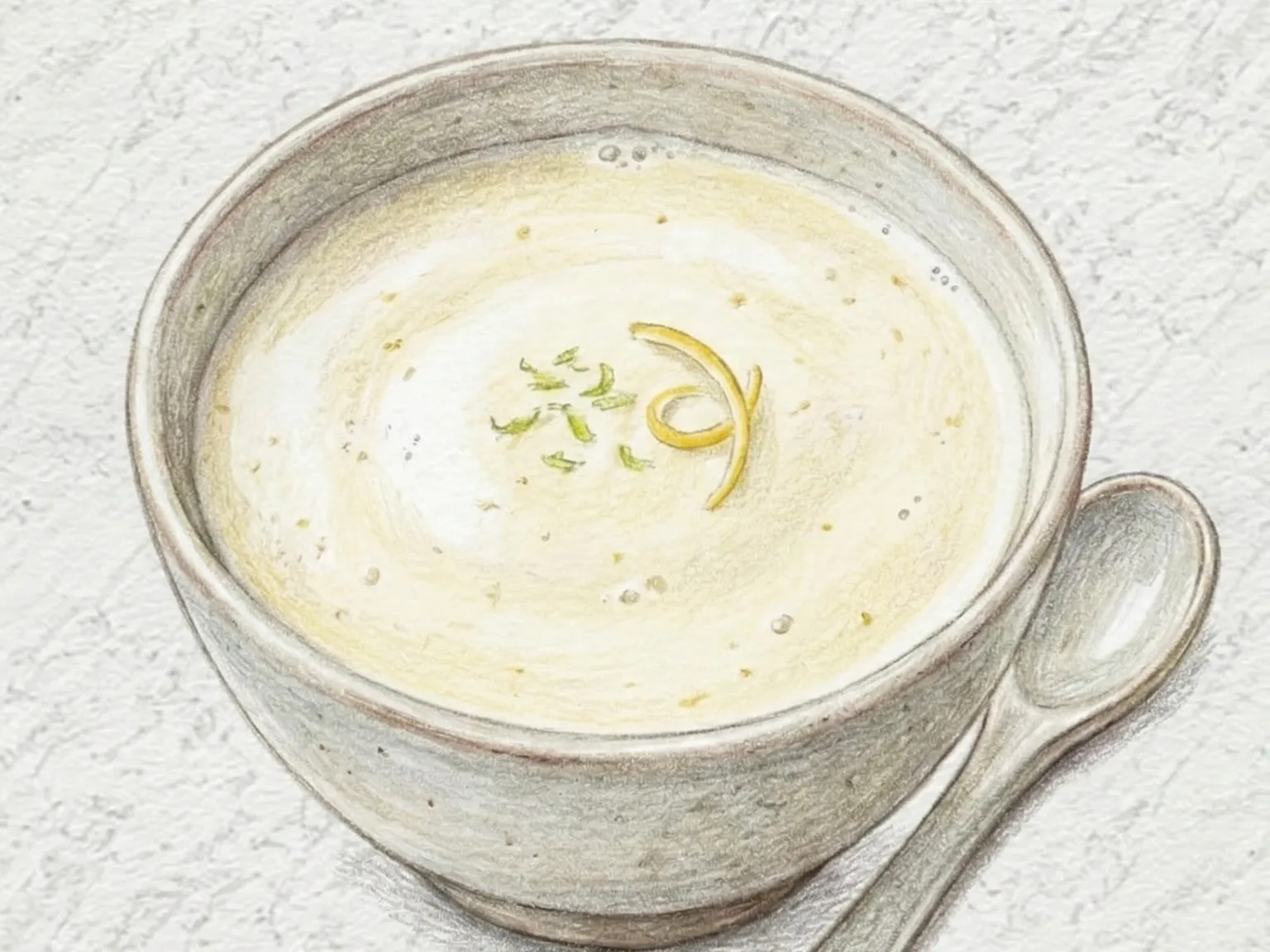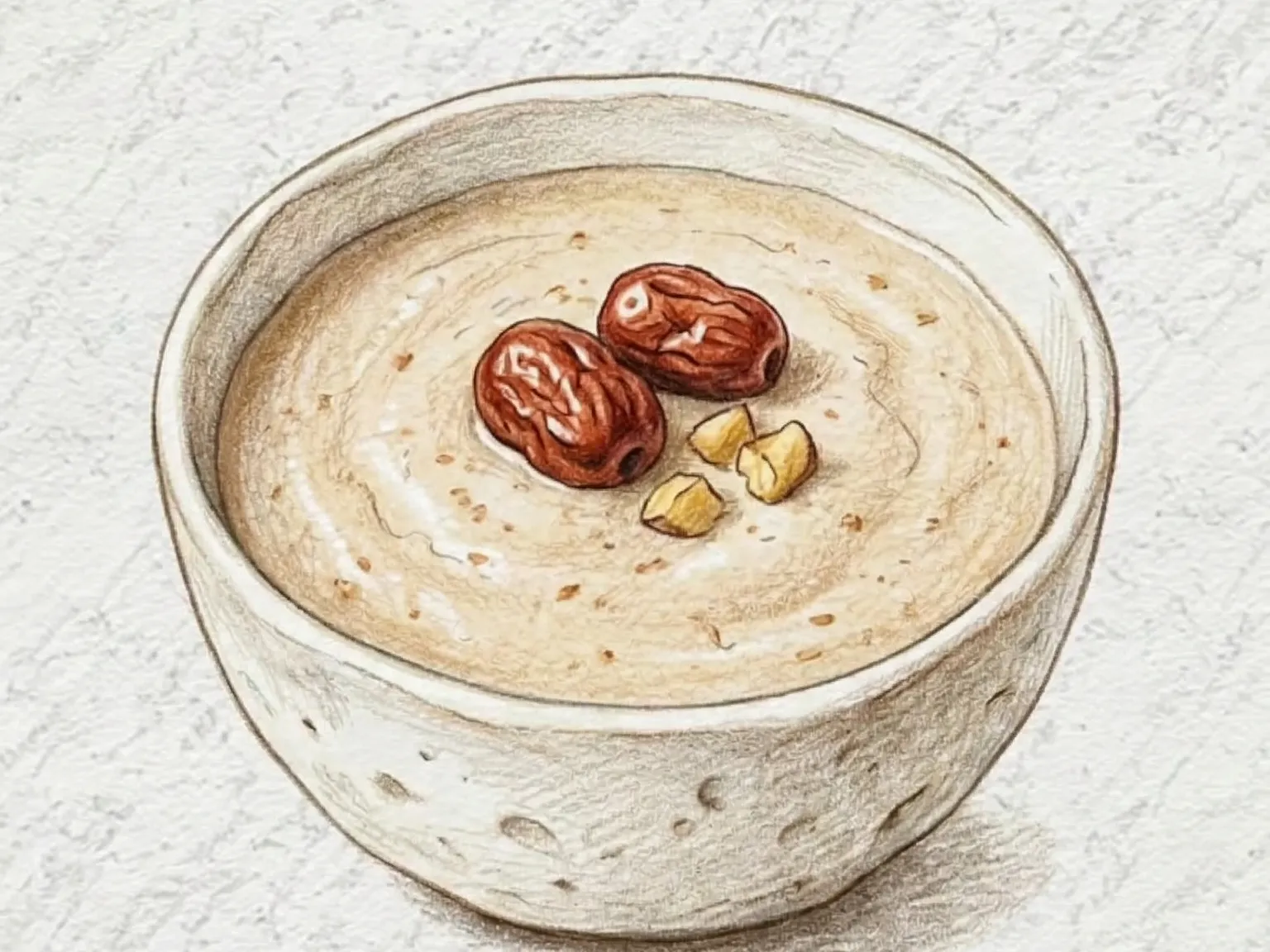
Korean Daechu Bam Shake (Jujube Chestnut Shake)
Quick answer
Daechu bam shake soaks pitted dried jujubes in warm milk for ten minutes before blending them with boiled chestnuts, plain yogurt, honey, and a pinch of ground cinnamon.
What makes this special
- Soaking dried jujube in warm milk releases natural sugars for a thick, starchy Daechu Bam shake.
- Soaking dried jujube in warm milk for 10 minutes fully releases the fruit's sweetness
- Boiled chestnut's starchy flesh naturally thickens the blended shake
Key ingredients
Core cooking flow
- 1 Rinse 45 g dried jujubes, remove the pits, and soak them in 80 ml warm milk.
- 2 Cut 140 g boiled chestnuts into pieces about 2 cm wide, and remove any firm bits of skin.
- 3 Add the soaked jujubes with their milk, the remaining 280 ml milk, 100 g pla...
Daechu bam shake soaks pitted dried jujubes in warm milk for ten minutes before blending them with boiled chestnuts, plain yogurt, honey, and a pinch of ground cinnamon. The chestnuts contribute a starchy thickness that gives the drink a substantial, spoonable body, while the jujubes provide a concentrated, date-like sweetness that makes added sugar unnecessary. Passing the blended mixture through a fine sieve removes any coarse jujube skin for a smooth finish. The shake works cold straight from the fridge or gently warmed on the stove - either way, it makes a filling breakfast substitute or a satisfying mid-afternoon drink that skips the empty calories of commercial shakes.
Instructions
Read the steps as a cooking flow: prep, heat, seasoning, doneness control, and finish.
- 1Step
Rinse 45 g dried jujubes, remove the pits, and soak them in 80 ml warm milk.
After 10 minutes, press one between fingers. Use them when the flesh feels soft and pliable, not leathery.
- 2Heat
Cut 140 g boiled chestnuts into pieces about 2 cm wide, and remove any firm bits of skin.
If the chestnuts look dry or crumbly, moisten them with a little soaking milk before blending.
- 3Prep
Add the soaked jujubes with their milk, the remaining 280 ml milk, 100 g plain yogurt, and the chestnuts to the blender.
Keep the liquids near the blade so the mixture catches quickly instead of spinning dry.
- 4Step
Add 18 g honey and 1 g ground cinnamon, then blend on medium speed for 20 seconds first.
Stop and scrape down chestnut paste from the sides so sweetness and cinnamon do not stay in one pocket.
- 5Step
Add 120 g ice and blend on high speed for 40 seconds to 1 minute.
If jujube skin or chestnut grains are still visible, blend in 10 second bursts until the shake looks even.
- 6Step
If the texture feels coarse, press the shake through a fine sieve.
Pour it straight into chilled glasses, and if it is thicker than desired, loosen it with a small splash of milk before serving.
After the steps
Pick a recipe that fits this dish.
Continue with shared ingredients, meal pairings, or a similar method.
Recipes That Go Well With This
More Drinks →Based on shared ingredients and meal pairing
Korean Melon Smoothie (Chamoe Korean Melon Yogurt Blend)
Chamoe smoothie blends peeled and seeded Korean melon flesh with plain yogurt, milk, honey, lemon juice, and a pinch of salt. The melon's clean, juicy sweetness meets the yogurt's tanginess to create a refreshing, well-rounded flavor, while the lemon brightens the finish and prevents the drink from tasting flat. The pinch of salt is a small but functional addition that amplifies sweetness across the whole glass. Ice goes in only at the final thirty seconds of blending - adding it earlier dilutes the flavor and produces a watery consistency. When the melon is particularly sweet, halving the honey maintains balance without masking the fruit's natural character. The smoothie should be poured immediately into a chilled glass so the fresh melon fragrance does not fade before serving.
Korean Chestnut Latte
Bam latte is a Korean autumn drink made by blending boiled chestnuts into a smooth paste and warming it with milk. The chestnuts are pureed with water until the mixture is completely smooth, then combined with milk and heated gently on the stovetop over low heat. Maple syrup introduces a caramel sweetness over the mild, starchy flavor of the chestnuts. Ground cinnamon adds warmth, and a small amount of vanilla extract gives the overall aroma more depth. Blending the chestnuts longer yields a silkier drink; leaving some texture produces a thicker, more porridge-like consistency. The full preparation takes about twenty minutes, making it a practical homemade version of the seasonal chestnut lattes that appear in Korean cafes each autumn.
Gotgam Cream Cheese Roll (Dried Persimmon Rolls)
Gotgam cream cheese roll is a no-cook Korean dessert that requires nothing more than a knife, a bowl, and a refrigerator. Dried persimmons are slit open and flattened into thin sheets, each one acting as the outer wrapper. The filling is cream cheese mixed with honey and fresh lemon juice to balance its natural richness with acidity, and finely chopped walnuts are folded in throughout to add a crunchy, nutty element to every bite. The filling is spread across the opened persimmon, which is then rolled tightly and wrapped in plastic wrap. Twenty minutes in the refrigerator firms the roll enough to slice cleanly. Dipping the knife in warm water and wiping it dry before each cut produces the smoothest cross-sections. The finished slices reveal clearly defined layers: the chewy, caramel-sweet dried persimmon on the outside, the tangy cream cheese in the middle, and flecks of walnut distributed throughout. The combination makes it a natural pairing with wine or a polished addition to a traditional holiday table.
Korean Nutritious Mixed Rice
Yeongyangbap is a traditional Korean mixed grain rice made with glutinous and regular rice, chestnuts, jujubes, black beans, and shiitake mushrooms. The chestnuts add a starchy, crumbly texture, jujubes bring natural sweetness, black beans contribute nuttiness, and mushrooms round out the umami. The glutinous rice ratio gives the dish a sticky quality that binds the toppings to each grain. The dish relies on the inherent flavors of its ingredients rather than heavy seasoning. While it often appears on holiday and special occasion tables, it works equally well as an everyday meal.
Serve with this
Korean Gochujang Honey Dakgangjeong
Gochujang honey dakgangjeong starts with bite-sized boneless chicken thigh pieces coated in potato starch and double-fried, first at 170 degrees Celsius and then at 180 degrees, before being tossed in a glaze of gochujang, honey, soy sauce, and garlic. The two-stage frying builds a rigid starch shell that stays crunchy even after the sauce is applied, while the natural fat in thigh meat keeps the interior juicy throughout the process. Gochujang's fermented heat contrasts directly with honey's thick sweetness, and soy sauce anchors the salt level so neither sweetness nor spice dominates. Garlic sharpens the aroma of the sauce, and sesame seeds scattered at the end add a finishing layer of nuttiness. The sauce must be reduced quickly on high heat, under one minute, to achieve a glossy coat without burning. The chicken should be sauced and eaten immediately after frying for the maximum contrast between the crackling crust and the tender, glazed interior.
Korean Stir-fried Balloon Flower Root
Doraji -- balloon flower root -- has been cultivated in Korea for centuries, valued in cooking and herbal medicine alike. The raw root carries a pronounced bitterness from saponins, so it must be shredded into thin strips, rubbed vigorously with salt, left for ten minutes, then rinsed twice in cold water. The salt scrub draws out the saponins while preserving the root's firm, snappy bite. A base of green onion goes into the pan first to build a fragrant oil, then the prepared doraji stir-fries for two minutes before gochujang, soy sauce, and oligosaccharide syrup go in for another three minutes. The heat is raised at the end to drive off moisture, so the sauce tightens and clings to each strip rather than pooling in the pan. The result is a glossy, sweet-spicy banchan with a distinctly chewy pull.
Danhobak Cream Cheese Swirl Muffin (Kabocha Cream Cheese Swirl Muffin)
Kabocha squash swirl muffins are autumn bakes that use steamed and mashed kabocha puree in the batter and a lightly sweetened cream cheese filling swirled across the top before baking. The puree contributes natural moisture and sweetness that transform the crumb from the typically dry muffin texture into something denser and notably more tender, while the orange pigment of the squash tints the batter to a warm amber that signals the season. A small amount of cinnamon and nutmeg deepens the earthy sweetness of the squash and wraps each bite in the rounded, cozy warmth that autumn spices are known for. The cream cheese filling is kept at minimal sweetness so its tanginess remains assertive, and drawing swirls through the batter with a toothpick before baking creates marble-like veins across the surface and through the interior once cut. The muffins emerge from the oven with lightly cracked, golden tops, and splitting one open reveals bright orange crumb threaded with white cream cheese streaks. The interplay between the sharp, rich cream cheese and the spiced squash crumb produces a complexity that makes these more interesting than a single-note muffin, and they come together in under an hour from mixing bowl to cooling rack.
Similar recipes
Korean Deodeok Honey Latte (Bellflower Root Latte)
Deodeok honey latte is made by peeling and chopping bellflower root, blanching it for two minutes to soften its natural bitterness, then blending it smooth with a portion of milk and honey to form the base. The base is combined with the remaining milk and warmed gently over low heat, then finished with condensed milk, vanilla extract, and a pinch of salt to build a rich, creamy body. The deodeok's earthy character, a faintly medicinal and mineral quality, persists just beneath the layers of sweetness, giving this latte an herbal depth that sets it apart from standard cafe drinks. A light dusting of cinnamon over the surface ties the flavors together on the finish. It represents a category of Korean yakseon beverages that draw on mountain ingredients traditionally valued for their nutritional properties.
Korean Hallabong Ade (Jeju Mandarin Sparkling Citrus Drink)
Hallabong ade is a Korean sparkling citrus drink built around hallabong, a Jeju Island tangerine hybrid distinguished by its thick, deeply fragrant peel, exceptionally sweet-tart juice, and characteristic knobby protrusion at the stem end. The fruit is macerated with sugar to draw out a concentrated syrup, which is then diluted with chilled sparkling water so that the citrus flavor stays bright and full without becoming syrupy. Mashing a few pieces of the flesh directly into the glass releases bursts of juice as each bubble rises, adding texture alongside the flavor. A squeeze of lemon juice reinforces the natural acidity and prevents the drink from tipping into one-dimensional sweetness. Packed with ice and finished with fresh mint leaves, the herbal coolness lifts the citrus aroma and turns the drink into a refreshing summer staple.
Chestnut Sweet Jelly (Korean Agar-Set Chestnut White Bean Confection)
Bam yanggaeng is built from three components: chestnut puree, white bean paste, and agar powder. Boiled chestnuts are mashed fine and combined with the bean paste, then dissolved agar, sugar, and honey are stirred into the mixture before it is brought to a brief boil. Poured into a mold and left to cool at room temperature, the agar sets the block into firm, clean-slicing slabs - a texture that comes from agar's sharp recrystallization as it cools, which produces a harder and more abrupt snap than gelatin-based confections. The starchy density of chestnuts gives the cross-section a smooth, fine-grained quality that plain bean paste lacks. A small amount of salt is critical: it draws the sweetness into focus rather than muting it. Skimming air bubbles before pouring ensures a flat, even surface. Prepared as a holiday gift in Korean households for generations, the finished block keeps in the refrigerator for about a week without losing texture.