Charim

2686 Korean & World Recipes

2686+ Korean recipes, clean and organized. Ingredients to instructions, all at a glance.

Oven-Roasted Chicken Drumsticks

Oven-Roasted Chicken Drumsticks

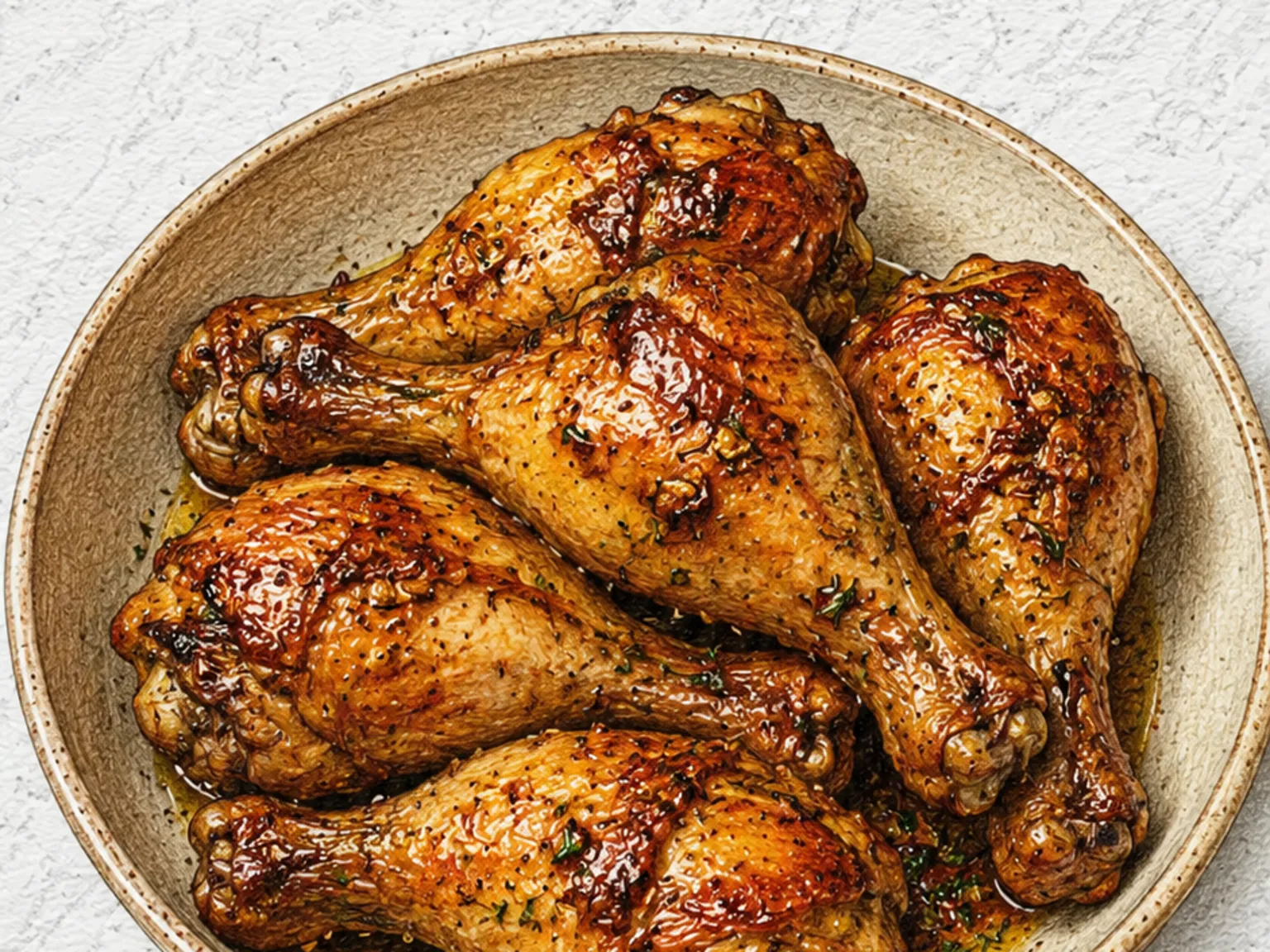
Dak-dari oven-gui is a Korean oven-roasted chicken drumstick dish where the legs marinate for at least thirty minutes in a mixture of soy sauce, minced garlic, olive oil, and a dried herb blend before going into a 200-degree-Celsius oven. Bringing the drumsticks to room temperature before roasting closes the temperature gap between the surface and the bone, ensuring the meat cooks through evenly rather than having a cooked exterior with an underdone center. Flipping the pieces once at the halfway point promotes uniform browning on both sides and prevents the exposed skin from drying out. Raising the oven temperature to 220 degrees for the final ten minutes drives caramelization in the sugar-containing soy marinade, which produces a thin, lacquered crust on the skin. The salty depth of soy sauce, the mild fat of olive oil, and the fragrance of the herb blend combine with the rendered chicken fat to form a coating that is both deeply savory and aromatic. Marinating overnight in the refrigerator allows the soy and garlic to penetrate further into the meat, resulting in more pronounced flavor all the way to the bone.

Prep 30min Cook 45min 3 servings
Recipes by ingredient → garlic soy sauce olive oil

Adjust Servings

2servings
servings

Instructions

  1. 1

    Mix garlic, soy sauce, olive oil, herbs; marinate drumsticks 30 minutes.

  2. 2

    Preheat oven to 200°C, place drumsticks on baking pan.

  3. 3

    Roast for 45 minutes until cooked through.

🛒Shop Ingredients on Amazon

As an Amazon Associate, we may earn from qualifying purchases.

Tips

Flip halfway through for even crispness on both sides.

Nutrition (per serving)

Calories
380
kcal
Protein
35
g
Carbs
4
g
Fat
24
g

Goes Well With

Honghap-tang (Korean Mussel Garlic Broth)
SoupsEasy

Honghap-tang (Korean Mussel Garlic Broth)

Honghap-tang is a Korean mussel soup that proves how much flavor a single shellfish can deliver with almost no help. Shell-on mussels are placed in water with sliced green onion, garlic, and a light dusting of gochugaru, then brought to a boil. As the shells open, they release a briny, faintly sweet liquor that becomes the broth itself, clear in appearance but surprisingly concentrated in taste. The entire process takes about fifteen minutes. Timing matters here: once the shells have opened and the flesh has puffed, the pot comes off the heat immediately or the meat turns rubbery. In Korea, honghap-tang is a standard drinking companion, sipped between shots of soju while the mussel meat is pulled from the shells and dipped in vinegary chojang sauce. The combination of the bold, oceanic broth and the chilled sauce creates a cycle that is hard to stop. Mussels caught during the colder months, when they are fatter and richer, produce the most intensely flavored broth.

🍺 Bar Snacks🏠 Everyday
Prep 10minCook 15min2 servings
Korean Paengi Beoseot Jeon (Enoki Pancake)
Side dishesEasy

Korean Paengi Beoseot Jeon (Enoki Pancake)

Paengibeoseot-jeon is a thin Korean pancake built around 200 grams of enoki mushrooms separated into loose strands and coated in a light batter of pancake mix, egg, and water. Cooked over medium-low heat, the batter spreads thin enough that the edges turn golden and crisp while the mushroom clusters in the center stay moist and chewy. Chopped scallions add color and a mild onion fragrance throughout. The pancake is served with a dipping sauce of soy sauce, vinegar, and a pinch of chili flakes, whose acidity and salt lift the subtle earthiness of the mushrooms. Keeping the heat moderate is essential - too high and the outside burns before the interior sets.

🍺 Bar Snacks🏠 Everyday
Prep 15minCook 12min2 servings
Korean Tuna Fried Rice (Quick Canned Tuna Stir-Fried Rice)
RiceEasy

Korean Tuna Fried Rice (Quick Canned Tuna Stir-Fried Rice)

Chamchi bokkeumbap is a staple Korean home-style fried rice made by stir-frying canned tuna together with its oil alongside diced onion, carrot, and green onion, then folding in cooked rice and seasoning with soy sauce and sesame oil. The tuna oil distributes through the rice during frying, coating each grain and building a savory, nutty richness that needs little else to feel complete. It is the kind of meal that comes together from pantry and fridge staples with no advance planning: one can of tuna plus whatever vegetables are on hand covers the whole recipe. Cold leftover rice works better than freshly cooked because lower moisture content keeps the grains separate and gives the fried rice its characteristic loose texture. Maintaining high heat throughout prevents clumping and develops a slight char on the rice that adds depth.

Quick
Prep 5minCook 10min2 servings
Korean Soy Pickled Onions
KimchiEasy

Korean Soy Pickled Onions

Yangpa jangajji is a soy-pickled onion made by immersing large-cut onion chunks in a boiled brine of soy sauce, vinegar, and sugar. The hot brine tempers the raw onion's sharp, pungent bite on contact, and as the pickle matures in the refrigerator the sweet-salty seasoning penetrates evenly through each piece. Cutting the onion along its fiber rather than against it keeps the texture firm and crisp after pickling, whereas thin cross-cut slices tend to soften quickly in the acidic brine. Sliced cheongyang chili peppers added to the jar gradually release their heat into the liquid, lending a gentle, lingering spiciness that offsets the sweetness and keeps the flavors from becoming one-dimensional. The pickle is ready after one day of refrigeration but improves noticeably at three days or more as the seasoning continues to deepen. It is a staple accompaniment to grilled meats like samgyeopsal, where its acidity and crunch cut through richness and refresh the palate between bites. It also works well over bibimbap or cold noodles. The brine can be brought back to a boil and reused for a second batch of onions, making this an economical pantry item.

🏠 Everyday🍱 Lunchbox
Prep 15minCook 12min4 servings

More Recipes

Korean Grilled Chicken Drumsticks
GrilledEasy

Korean Grilled Chicken Drumsticks

Dakdari-gui is a Korean grilled chicken drumstick marinated for at least two hours in soy sauce, gochujang, honey, garlic, and ginger juice, then cooked on a pan or grill until the skin is deeply browned and the meat pulls from the bone. Starting skin-side down over medium heat renders the subcutaneous fat slowly, producing a crackling-crisp skin; too high a flame chars the sugar in the marinade before the fat has time to melt. Once the skin turns golden and rigid, flip the drumstick and cover the pan to let steam finish the interior quickly without drying the meat. Drumsticks tolerate longer cooking times better than breast meat because of their higher fat and connective tissue content, and the flavor peaks when the leg bone separates cleanly from the muscle. The layered marinade -- gochujang's fermented heat, honey's sweetness, and ginger's sharp warmth -- balances the richness of the rendered chicken fat rather than fighting it. A scatter of sesame seeds over the finished drumsticks adds a final nutty note on top of the caramelized crust.

🍺 Bar Snacks
Prep 20minCook 30min2 servings
Korean Assorted Grilled Chicken
GrilledMedium

Korean Assorted Grilled Chicken

Dakgogi-gui-modeum is a Korean assorted chicken grill that brings breast, thigh, and wing pieces together on a single plate, each cut seasoned differently: salt for the breast, gochujang paste for the thigh, and soy-based glaze for the wings. Because each cut carries a different ratio of fat to muscle, cooking times must be calibrated individually rather than treating all three the same. Breast meat loses moisture quickly and needs the shortest time over heat, while wings benefit from longer cooking to render the fat under the skin. The salt-seasoned breast keeps its clean, mild flavor front and center; the gochujang thigh delivers fermented heat and a char at the edges; the soy-glazed wing balances sweet against salty in each sticky bite. Serving all three together lets diners compare three distinct outcomes from the same bird, making the role of seasoning and cut easy to taste side by side rather than just understand in theory.

🍺 Bar Snacks
Prep 30minCook 30min4 servings
Korean Grilled Aged Kimchi
GrilledEasy

Korean Grilled Aged Kimchi

Well-aged napa kimchi is shaken free of excess marinade and placed directly onto a hot skillet or grill over medium-high heat. Both sides cook until the edges take on a light char. The longer the kimchi has fermented, the more pronounced its acidity becomes, and that sourness undergoes a caramelization reaction when it hits direct heat, converting into a mellow roasted sweetness that is distinct from fresh kimchi. Sprinkling a small amount of sugar onto the surface before or during grilling accelerates this reaction and deepens the color. Once both sides are grilled, sesame oil is brushed on and sesame seeds are scattered over the top, adding a nutty aromatic layer that complements the smoky, slightly bitter char. Only four ingredients are involved, but the quality of the kimchi matters significantly. Properly fermented kimchi with developed acidity produces far more complex flavor than fresh kimchi would. The contrast between the crisp, slightly caramelized exterior and the moist, tender interior is at its best immediately after cooking.

🍺 Bar Snacks Quick
Prep 5minCook 10min2 servings
Tuna Steak
GrilledMedium

Tuna Steak

Chamchi steak is a pan-seared fresh tuna dish where a thick block of tuna is seasoned with olive oil, salt, and black pepper, then pressed onto a smoking-hot pan for under thirty seconds per side. This extreme brevity is deliberate: it produces a dark, caramelized Maillard crust on the surface while leaving the interior a vivid, translucent pink that is barely cooked through. Temperature control is the central technique - if the pan is not hot enough, the tuna releases moisture and steams rather than sears, so the oil should be at the point of just-visible smoke before the fish goes in. A squeeze of lemon at the end brightens the rich, iron-forward flavor of the raw center.

🍺 Bar Snacks Quick
Prep 10minCook 6min2 servings
Korean Spicy Braised Chicken
Stir-fryMedium

Korean Spicy Braised Chicken

Dak-bokkeum-tang starts with chicken pieces stir-fried in a gochujang and soy sauce mixture, then water is added and the whole pot simmers down until the liquid reduces to a thick, clinging sauce. Potato chunks absorb the braising liquid as it concentrates, becoming fully flavored throughout rather than just on the surface, while onion softens and dissolves over the long cooking time, lending the broth a natural sweetness. Gochujang supplies the heat backbone and soy sauce contributes the umami depth, producing a flavor profile that layers rather than reads as a single note. The longer the simmer, the deeper the seasoning drives into the meat and bones, and the sauce itself thickens to a glossy consistency. Spooning the reduced sauce over a bowl of rice turns the meal into a quick, satisfying seasoned rice dish.

🏠 Everyday
Prep 15minCook 35min3 servings
Korean Stir-Fried Chicken
Stir-fryEasy

Korean Stir-Fried Chicken

Dak-bokkeum is a Korean stir-fried chicken dish seasoned with a soy sauce-based marinade. Soy sauce, sugar, and minced garlic coat the chicken evenly before it hits the pan, producing a salty, umami-forward crust as it sears. Onion and carrot are added partway through, and the moisture they release as they soften blends into the seasoning to form a natural pan sauce without any added liquid. Sesame oil goes in at the end, its nutty aroma lifting through the dish as it finishes. Breast meat produces a leaner, cleaner-tasting result, while thigh meat stays more moist and springy throughout cooking. The dish pairs well with steamed rice and comes together quickly enough for weeknight cooking.

🏠 Everyday🌙 Late Night
Prep 15minCook 15min2 servings
More Grilled →