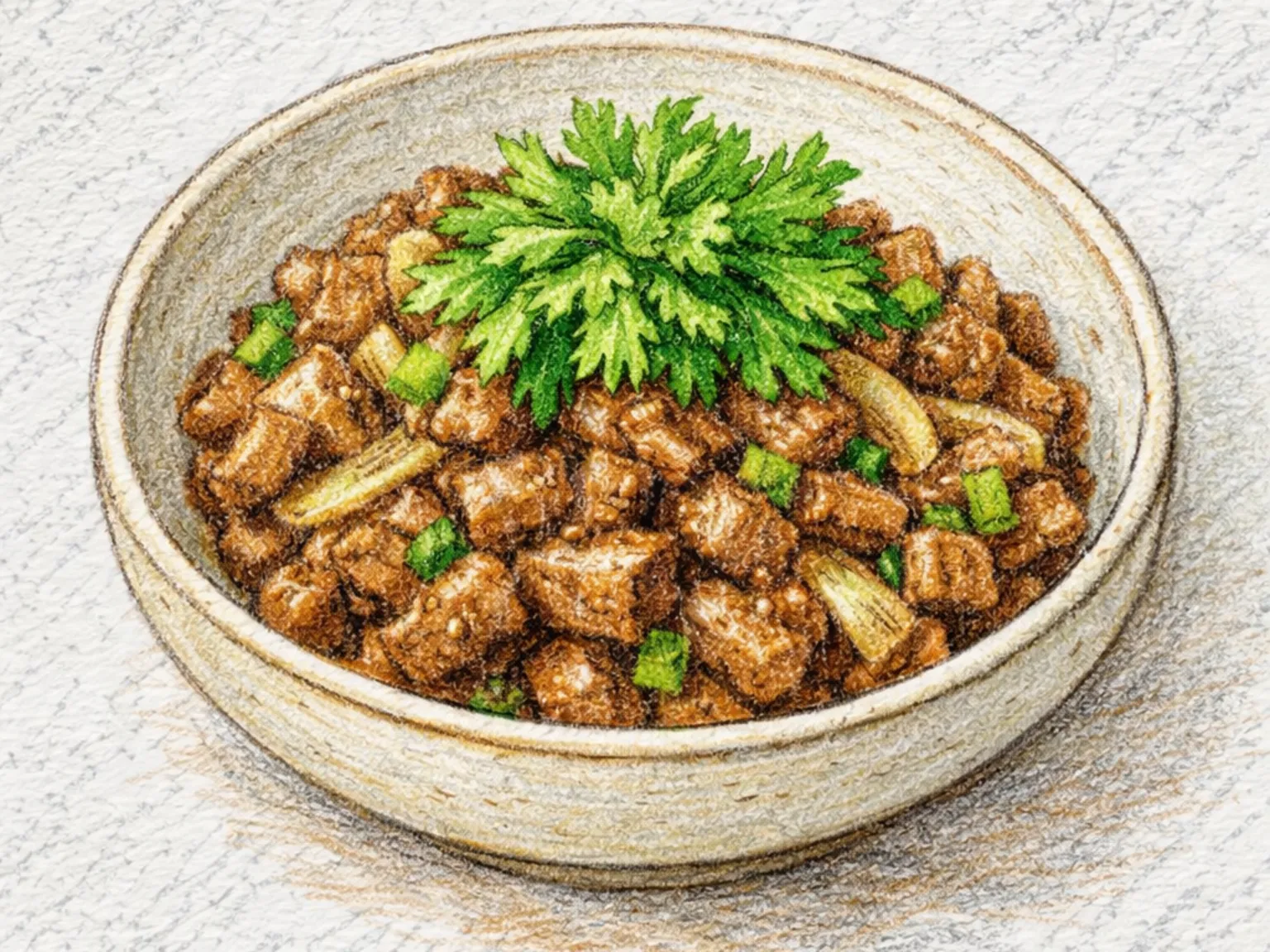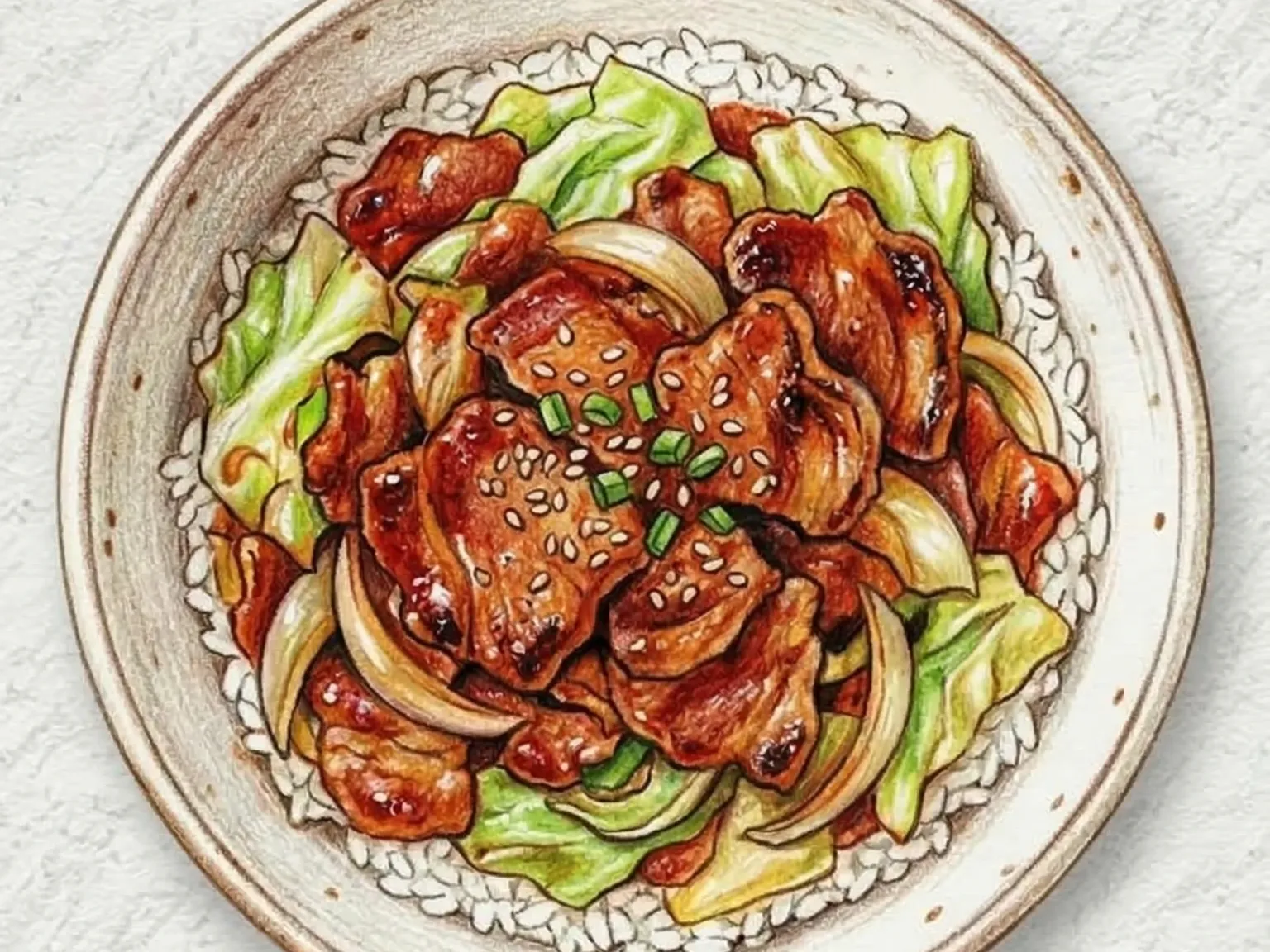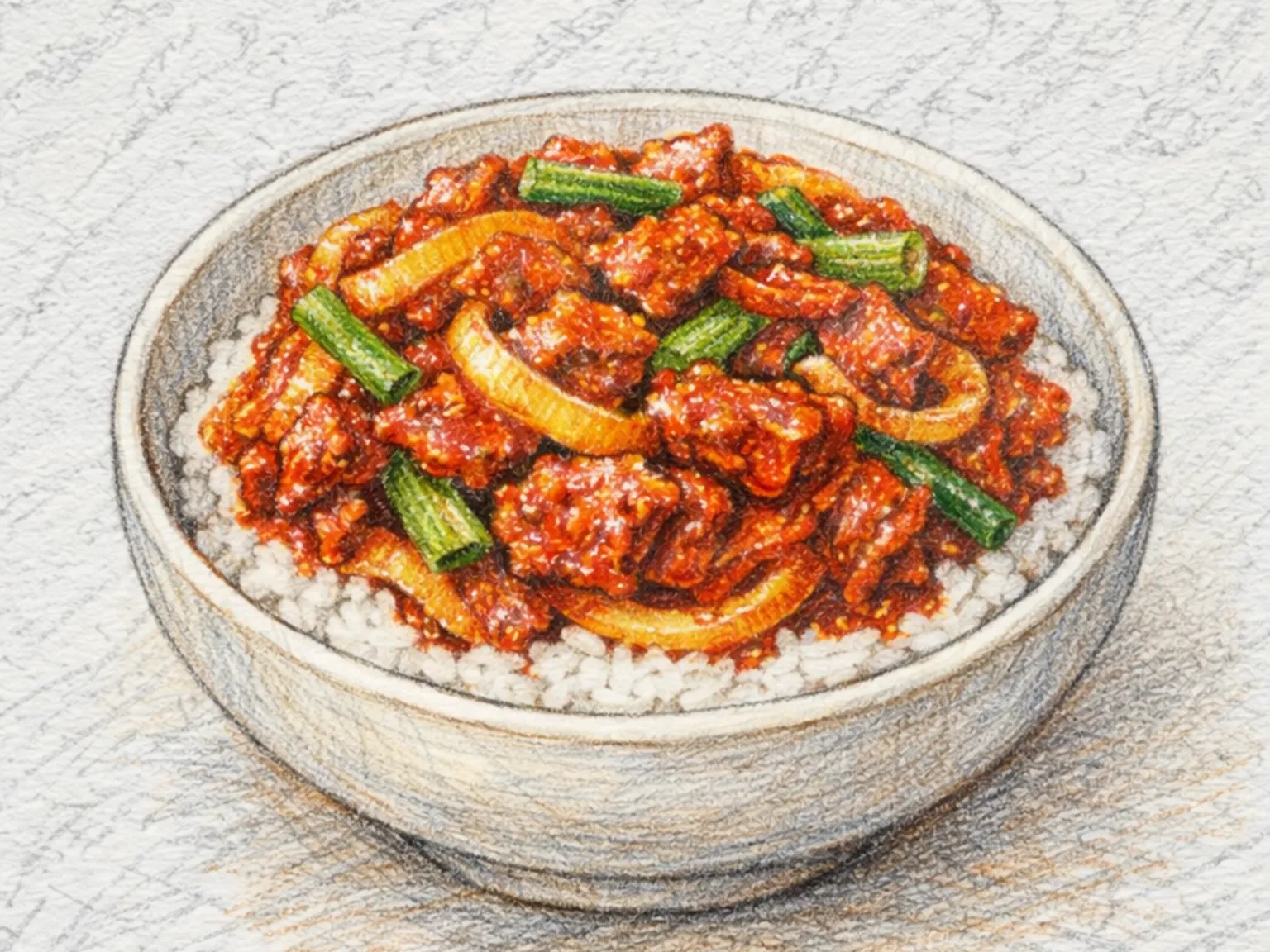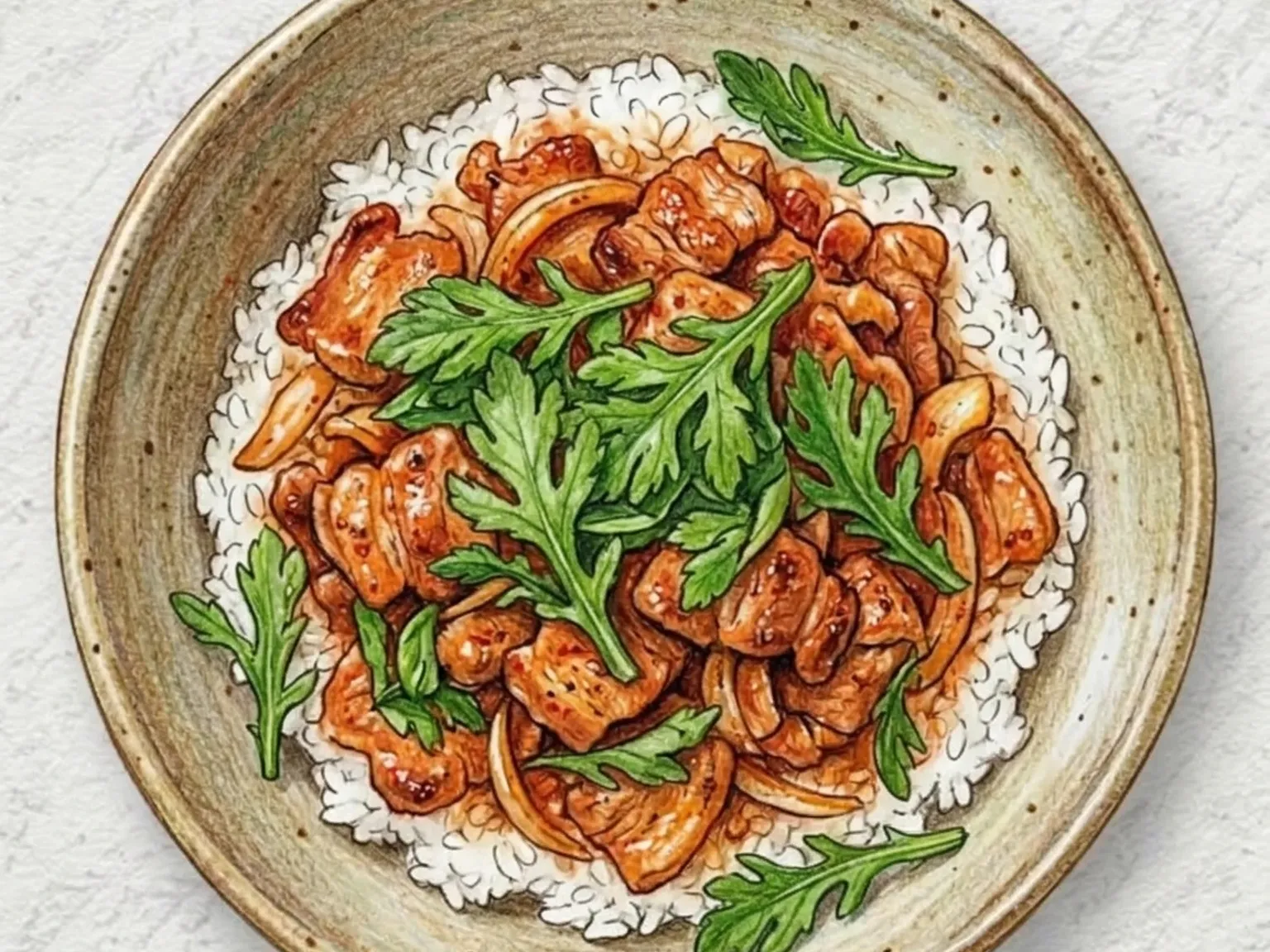
Korean Bulgogi Deopbap (Pork Rice Bowl)
Spicy-sweet pork bulgogi piled over rice with aromatic crown daisy greens - a one-bowl Korean dinner ready in 30 minutes. Gochujang-marinated pork shoulder is stir-fried with onion over high heat and finished with a handful of crown daisy greens. The marinade layers gochujang, chili flakes, soy sauce, sugar, and garlic into a sauce that is simultaneously spicy, sweet, and deeply savory. Pork shoulder renders enough fat during cooking to carry the sauce into the rice below, creating a rich base. Crown daisy goes in during the final thirty seconds - just long enough to wilt slightly and release its herbal, almost chrysanthemum-like fragrance, which cuts through the heaviness of the pork and sauce with a green, aromatic brightness. The timing of the ssukgat addition is critical: too early and it turns limp and bitter, too late and the aroma stays locked inside the leaves. The finished bowl needs no accompaniment to feel complete.
Adjust Servings
Instructions
- 1
Cut pork into bite-size pieces and slice onion thinly.
- 2
Mix gochujang, soy sauce, chili flakes, sugar, and garlic into a sauce.
- 3
Coat pork with sauce and marinate for 10 minutes.
- 4
Stir-fry onion and pork in a hot pan over high heat.
- 5
Add crown daisy and toss for 30 seconds to keep aroma bright.
- 6
Serve over rice and finish with sesame oil.
As an Amazon Associate, we may earn from qualifying purchases.
Tips
Nutrition (per serving)
More Recipes

Korean Bulgogi Mushroom Rice Bowl
Soy-and-pear-juice-marinated beef is stir-fried with torn oyster mushrooms and served over rice for an umami-loaded bowl. Pre-cooking the mushrooms drives off excess moisture, so the sauce stays concentrated and glossy when the marinated beef joins the pan. Pear juice tenderizes the beef naturally while contributing a subtle sweetness, and sesame oil ties the flavors together with its toasty fragrance. If pear juice is unavailable, a teaspoon of sugar with a tablespoon of water makes a workable substitute.

Korean Spicy Pork Rice Bowl
Pork shoulder is sliced into strips, marinated in gochujang, chili flakes, soy sauce, garlic, and sugar for ten minutes, then stir-fried over high heat until the edges caramelize. Onion goes in first to build sweetness, and green onion added at the end brings a sharp, fresh bite that cuts through the spicy-sweet glaze. A final drizzle of sesame oil rounds out the aroma. Served over steamed rice, the bold sauce coats every grain, making this a satisfying single-bowl meal that comes together in under thirty minutes.

Korean Gochujang Chicken Mayo Rice Bowl
Crispy chicken thigh glazed in gochujang and drizzled with creamy mayo over rice - the ultimate Korean comfort bowl. Bite-sized chicken thigh pieces are stir-fried in a sauce of gochujang, soy sauce, sugar, and garlic until a glossy, spicy-sweet glaze coats every piece. The sauced chicken is piled over warm rice and finished with a zigzag drizzle of mayonnaise, creating a three-way interplay of fermented chili heat, caramelized sweetness, and cool creaminess. Onion cooked alongside the chicken adds a natural sweetness to the sauce, and chopped green onion on top provides a fresh finishing note. Thigh meat holds its moisture better than breast through the high-heat stir-fry, keeping the bowl from drying out.

Korean Pork Belly Kimchi Fried Rice
Pork belly is diced small and rendered in a hot pan until golden, producing enough fat to cook the entire dish without additional oil. Aged kimchi and onion go into that rendered fat, where the kimchi's sharp tang softens into the pork's richness. Gochujang and soy sauce season the rice as it joins the pan, and aggressive high-heat stir-frying keeps each grain distinct rather than clumpy. Day-old cold rice works best because its lower moisture content yields a drier, crispier result, and a fried egg on top provides a creamy counterpoint when the yolk breaks.

Korean Spicy Gochujang Bulgogi
This spicy gochujang pork bulgogi builds its bold flavor from a marinade of gochujang, Korean chili flakes, soy sauce, garlic, and corn syrup applied to thick-cut pork neck. Stir-frying on medium-high heat drives off moisture first, allowing the sauce to caramelize and develop depth rather than turn watery. Onion goes in next, contributing natural sweetness that tempers the chili heat, followed by green onion for a fresh aromatic lift. Scoring thicker slices helps the marinade penetrate more evenly. The generous four-serving yield makes it a practical centerpiece for family dinners.

Korean Spicy Pork Rice Cup
Jeyuk cupbap is a Korean street-style rice cup topped with pork shoulder stir-fried in a sauce of gochujang, soy sauce, sugar, and garlic, along with onion and cabbage. The gochujang-sugar combination creates a spicy-sweet glaze on the pork, which picks up smoky notes from high-heat cooking. Cabbage is added late to keep its crunch, and the onion's natural sweetness offsets the chili heat. Slightly cooled rice is used in the cup to prevent the dish from turning soggy.