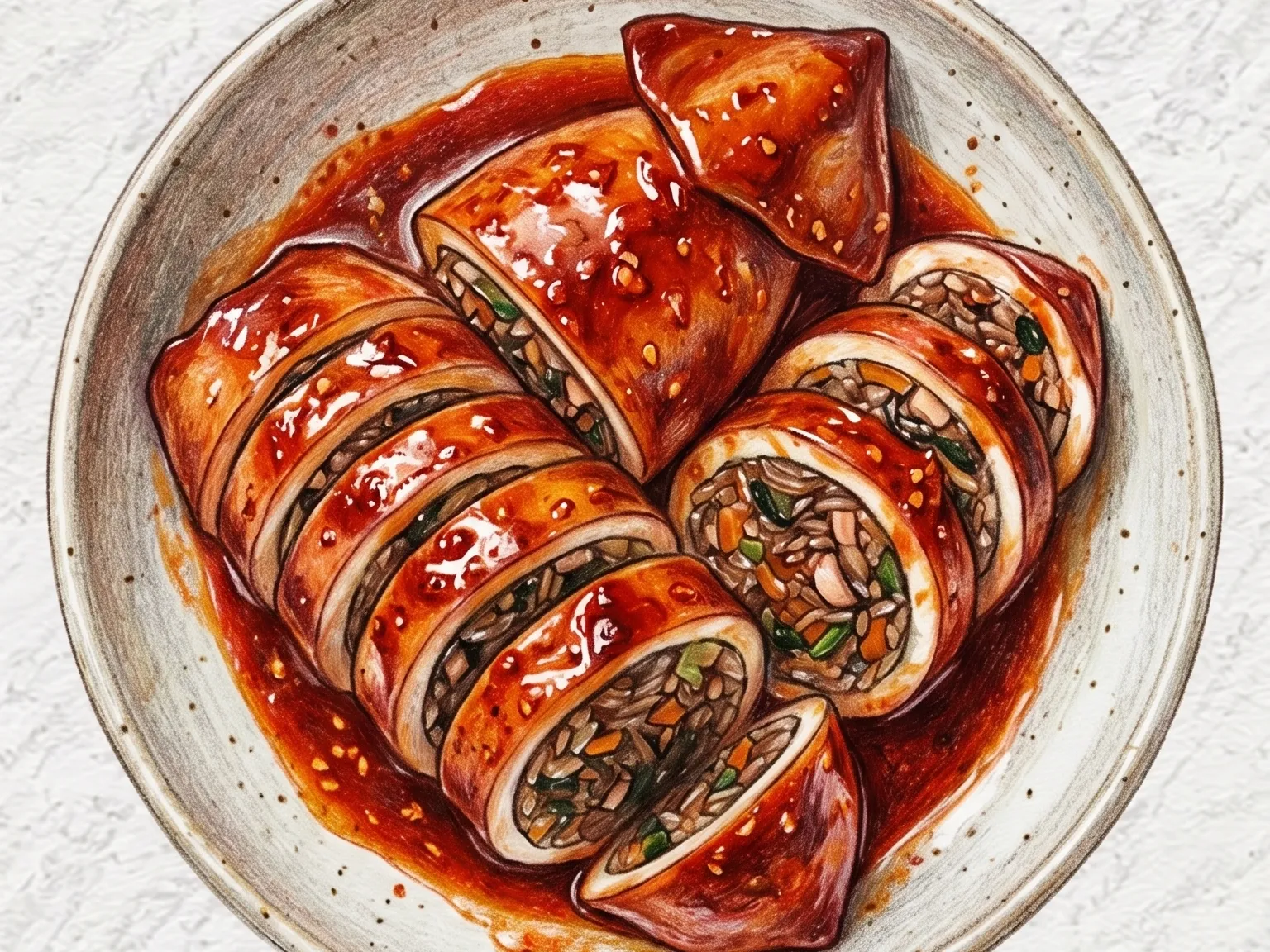
Braised Squid Sundae in Spicy Sauce
Quick answer
Squid sundae filled with stuffing, braised in a sweet and spicy sauce for extra depth.
- Braised squid sundae yangnyeom jorim uses thick 1.5 cm slices to keep the pork stuffing intact within a spicy-sweet glaze.
- 1.5 cm thick slices keep the stuffing intact through the braising process
Key ingredients
Core cooking flow
- 1 Slice the squid sundae into 1.5cm thick pieces.
- 2 In a pan, boil water, chili paste, chili powder, soy sauce, syrup, and garlic.
- 3 When the sauce boils, place the sliced squid sundae in a single layer.
Squid sundae filled with stuffing, braised in a sweet and spicy sauce for extra depth.
What Makes This Special
- Braised squid sundae yangnyeom jorim uses thick 1.5 cm slices to keep the pork stuffing intact within a spicy-sweet glaze.
- 1.5 cm thick slices keep the stuffing intact through the braising process
- Minimal flipping with basting preserves the cross-section during reduction
- Starch syrup thickens the gochujang base into a sticky, lacquered glaze
Instructions
- 1
Slice the squid sundae into 1.5cm thick pieces.
- 2
In a pan, boil water, chili paste, chili powder, soy sauce, syrup, and garlic.
- 3
When the sauce boils, place the sliced squid sundae in a single layer.
- 4
Baste with the sauce and braise over low heat until the liquid reduces by half.
- 5
Turn off the heat and drizzle with sesame oil for flavor.
Tips
Nutrition (per serving)
Recipes to Cook Together
More Steamed →Serve with this
Refreshing Spicy Mulhoe Broth
A golden ratio recipe for a refreshing, spicy, and sweet-and-sour Mulhoe broth.
Jayeom Seasoned Bean Sprouts
Clean bean sprout salad highlighting the deep flavor of traditional Jayeom salt.
Handmade Scorched Rice
Crispy and savory handmade scorched rice that is easy to make at home.
Jeolla-style Green Onion Kimchi
Deep-flavored green onion kimchi with rich fish sauce and spicy seasoning.
Similar recipes
Korean Spicy Steamed Squid
Ojingeo-jjim is a Korean spicy steamed squid dish cooked with onion and green onion in a sauce of gochugaru, gochujang, and soy sauce. The key is keeping the total cooking time to around ten minutes, starting on high heat and finishing on medium, so the squid stays chewy rather than turning rubbery. Gochujang provides a thick, coating heat while the chili flakes add a sharper spiciness on top. One final toss at the end ensures every piece is evenly glazed with the red sauce. This quick-cooking dish works equally well as a banchan alongside rice or as an accompaniment to drinks.
Korean Spicy Braised Tofu
Spicy dubu-jorim pan-sears firm tofu slabs cut 1.5 centimeters thick until golden on both sides, then braises them in a sauce of soy sauce, gochugaru, garlic, and sugar. Searing first firms the tofu so it holds its shape through the eight-minute simmer, during which onion and green onion cook alongside in the reducing liquid. The chili flakes deliver a direct, persistent heat that penetrates the tofu as the sauce thickens, balanced by the sugar's sweetness. A final circle of sesame oil ties the flavors together with a roasted, nutty aroma.
Korean Braised Squid with Shishito Peppers
Kkwari-ojingeo-jorim is a Korean braise of squid and shishito peppers simmered in a gochujang and soy sauce seasoning. The squid retains its chewy bounce while soaking in the bold sauce, and the peppers absorb enough flavor to stand on their own while keeping a slight crunch. Gochujang brings a warm spiciness that combines with soy sauce's depth into a multilayered seasoning, and garlic with ginger neutralizes any seafood odor. As the liquid reduces, it coats each piece in a concentrated glaze that makes this banchan work especially well spooned over a bowl of steamed rice.
Korean Spicy Braised Monkfish
Agu-jjim originated as a specialized seafood preparation from Masan, which is a prominent port city located in the South Gyeongsang province of Korea. During the 1970s, fishmongers working in the harbor district of Odong-dong began a practice of braising unsold monkfish over high heat. They combined the fish with a substantial amount of bean sprouts and a thick chili paste, a combination that eventually led to the dish gaining recognition across the entire nation. The preparation involves coating pieces of monkfish in a heavy seasoning mixture made from gochugaru, gochujang, soy sauce, and garlic. These seasoned pieces are placed on top of a thick layer of bean sprouts and braised in a covered pot using high heat. Monkfish differs from many other types of white-fleshed fish because it possesses a firm and gelatinous texture that is particularly rich in collagen. This structural quality allows the fish to absorb the intense flavors of the seasoning without breaking into small pieces, ensuring the meat remains resilient and chewy throughout the entire cooking process. As the dish braises, the bean sprouts release their own moisture, which creates a natural braising liquid at the bottom of the pot. Water dropwort, known as minari in Korean, is introduced to the pot at the final stage of cooking. This ingredient provides an herbal flavor similar to celery that balances the heavy coating of chili and garlic while adding a certain brightness to the spice. Agu-jjim is typically served in a communal fashion on a large platter. It is considered a fundamental part of Korean social gatherings involving alcohol, where the intense heat of the spices is often paired with chilled beer or soju.
Korean Dakbong Gochujang Jorim (Gochujang-Braised Chicken Drumettes)
Dakbong gochujang jorim is chicken drumettes braised with potato in a sauce made from gochujang, soy sauce, chili flakes, and oligosaccharide syrup. The meat surrounding the small bones turns dense and pleasantly chewy as it simmers, holding onto the thick, reduced sauce at every surface. Potato pieces soften in the braising liquid until starchy and tender throughout, absorbing the chili-soy base from the outside in. The oligosaccharide syrup wraps the gochujang heat in a shiny glaze that keeps you reaching for another piece. A stalk of green onion stirred in at the very end adds a sharp, pungent aroma that lifts the finished dish.
Korean Spicy Fermented Squid Jeotgal
Ojingeo jeotgal is a Korean fermented squid preserve made by salting cleaned, finely chopped squid for one hour to firm the flesh and extract moisture, then dressing it in a paste of gochugaru, minced garlic, ginger, fish sauce, and corn syrup. The salt cure intensifies the squid's natural chewiness, and cutting the pieces small accelerates seasoning absorption during the two-to-three-day cold fermentation. Chili flakes coat every surface in a deep red layer that delivers steady heat, while corn syrup adds gloss and a mild sweetness that prevents the salt from dominating. Spooned over steamed rice, each piece offers a firm, springy chew followed by a wave of fermented umami. Mixing in a touch of sesame oil before serving softens the saltiness and adds a nutty fragrance that rounds out each mouthful.