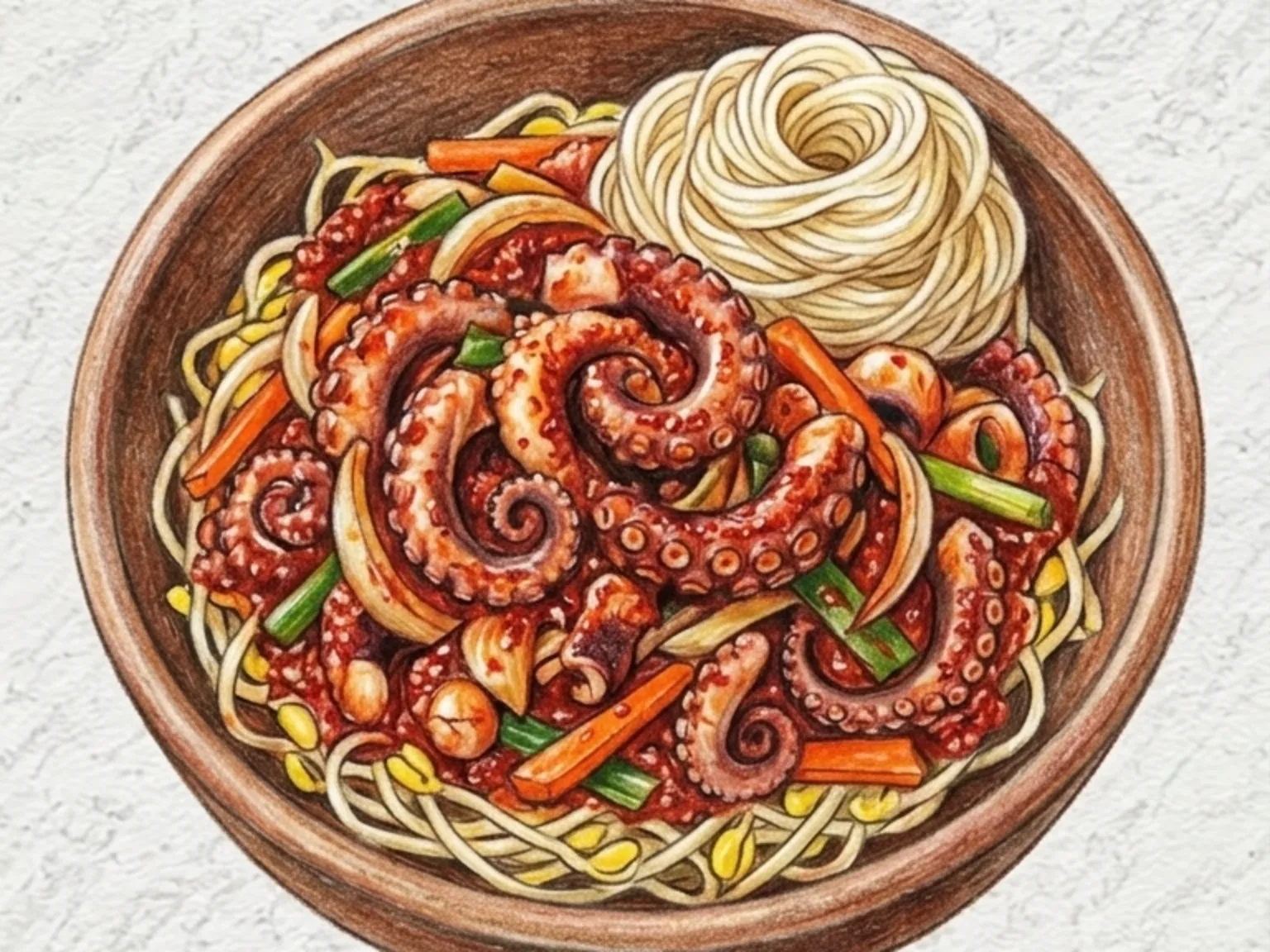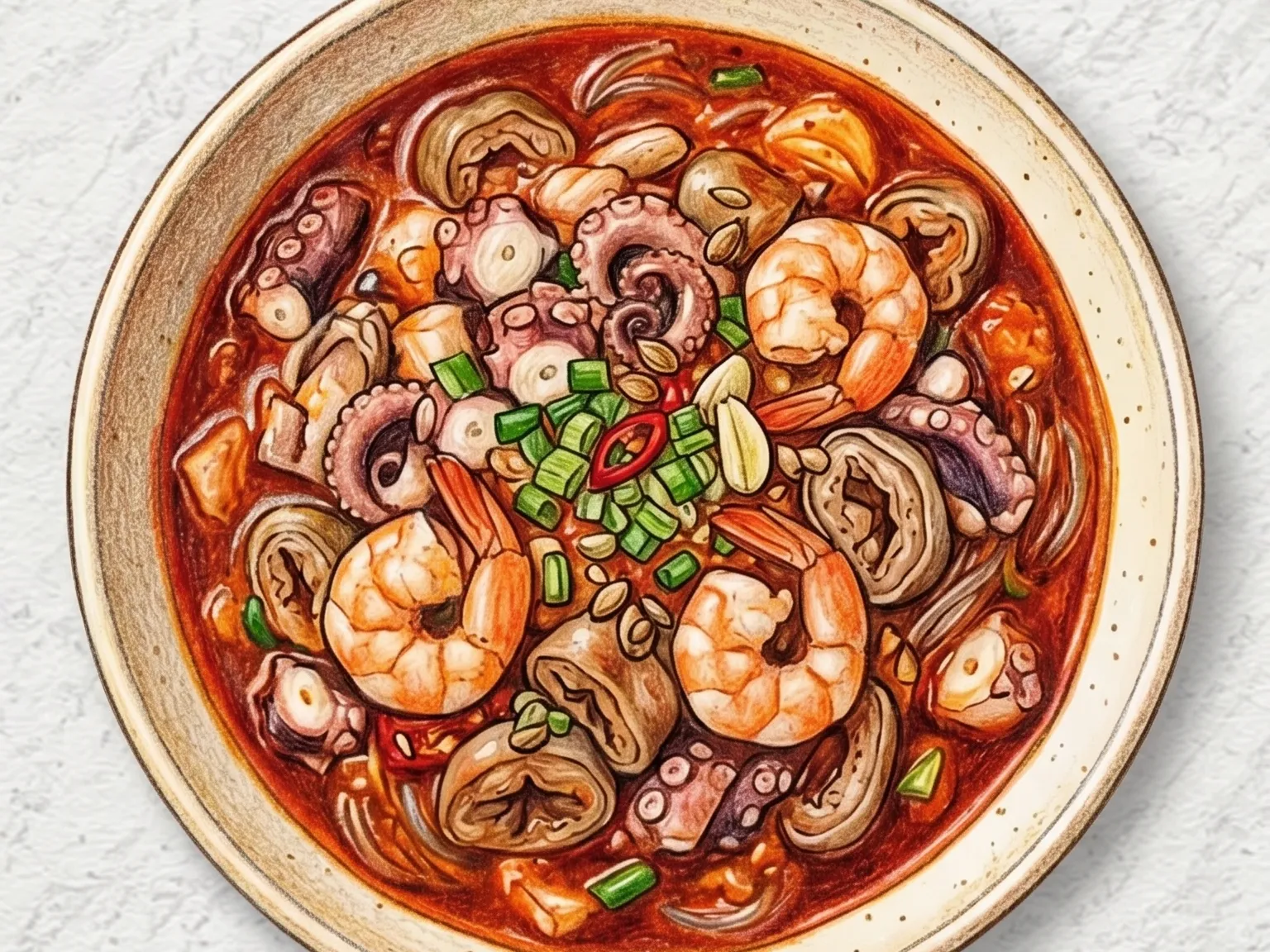
Nakgopsae (Octopus, Intestine, and Shrimp Stew)
Quick answer
A spicy Busan-style stew with a perfect harmony of octopus, intestines, and shrimp.
- Nakgopsae contrasts the distinct textures of octopus, beef intestine, and shrimp against a sweet green onion base that eventually coats every glass noodle.
- Octopus, intestine, and shrimp each bring distinct elasticity to one broth
Key ingredients
Core cooking flow
- 1 Soak 50g of glass noodles in lukewarm water for 30 minutes until they become...
- 2 Scrub 200g of octopus with flour, rinse well, and cut into 5cm pieces.
- 3 Combine 3 tablespoons of red chili powder, 2 tablespoons of soy sauce, 1 tab...
A spicy Busan-style stew with a perfect harmony of octopus, intestines, and shrimp.
What Makes This Special
- Nakgopsae contrasts the distinct textures of octopus, beef intestine, and shrimp against a sweet green onion base that eventually coats every glass noodle.
- Octopus, intestine, and shrimp each bring distinct elasticity to one broth
- Generous scallion bed absorbs chile oil while adding its own sweetness
- Reduced sauce saturates the glass noodles for a final rice-mixing finish
Instructions
- 1
Soak 50g of glass noodles in lukewarm water for 30 minutes until they become soft and translucent, then drain the water and cut them once or twice with scissors.
- 2
Scrub 200g of octopus with flour, rinse well, and cut into 5cm pieces. Clean 150g of beef intestines and 100g of cocktail shrimp under cold running water to remove any impurities.
- 3
Combine 3 tablespoons of red chili powder, 2 tablespoons of soy sauce, 1 tablespoon of minced garlic, and 1 tablespoon of sugar in a bowl, stirring until the sugar dissolves completely.
- 4
Place two stalks of green onions cut into 4cm pieces and half an onion sliced into 1cm thickness at the bottom of a shallow pot to create a fragrant vegetable base.
- 5
Arrange the prepared octopus, beef intestines, and shrimp over the vegetables, then place the soaked glass noodles in the center and top everything with the spicy seasoning sauce.
- 6
Pour in 200ml of anchovy broth and boil over high heat. Once boiling, reduce to medium heat, stir the seasoning sauce evenly, and simmer until the broth reduces and the octopus is cooked.
Tips
Nutrition (per serving)
Recipes to Cook Together
More Stews →Serve with this
Handmade Scorched Rice
Crispy and savory handmade scorched rice that is easy to make at home.
Chicken Cabbage Wraps
Simple chicken tenderloin and cabbage wraps, ideal for a diet-friendly side dish.
Jeolla-style Green Onion Kimchi
Deep-flavored green onion kimchi with rich fish sauce and spicy seasoning.
Korean Stuffed Perilla Leaf Pancakes
Kkae-ip-jeon are pan-fried perilla leaf parcels stuffed with a filling of ground pork and firm tofu, coated in flour and egg. The tofu must be squeezed dry in a cloth before mixing; excess moisture causes the filling to spread and stick to the pan. Garlic chives and onion add crunch and fragrance to the mix, and the filling seasoned with soy sauce and black pepper pairs cleanly with the perilla's strong herbal character. Dusting with flour first, then dipping in egg, produces an even coating, and frying covered over medium-low heat for two minutes per side ensures the filling is cooked through to the center. The bite-sized pieces work well as a packed lunch side or as bar food.
Similar recipes
Korean Octopus Hot Pot (Spicy Gochujang Broth with Herbs)
Nakji jeongol is a spicy Korean hot pot built around small octopus simmered in anchovy stock seasoned with gochujang and gochugaru, together with napa cabbage, water parsley, onion, and tofu. Anchovy stock works particularly well here because it has a clean, salty depth that amplifies rather than competes with the oceanic flavor of the octopus. The gochujang contributes a fermented sweetness to the broth while the gochugaru layer on top provides the sharp, direct heat, producing a multi-dimensional spicy broth that is more complex than either ingredient alone. Octopus is highly sensitive to overcooking. Cooked within two minutes, it stays springy and pleasantly chewy. Beyond that, the protein fibers contract and the texture becomes tough and rubbery. Water parsley loses its fresh herbal fragrance quickly under heat, so it is best added about one minute before serving to keep that clean, slightly grassy brightness intact. Cooking the hot pot at the table allows diners to add octopus in small batches at their own pace, which is the most reliable way to keep every piece at the ideal doneness.
Korean Webfoot Octopus Tofu Stew
Jjukkumi dubu jjigae is a Korean stew of webfoot octopus and soft tofu cooked in a gochugaru-seasoned anchovy broth. A full 450 grams of jjukkumi goes into the pot, providing a bouncy, chewy texture in every spoonful. The tofu absorbs the spicy broth as it cooks, creating a soft counterpoint to the firm octopus, and the contrast between the two textures is a central part of the dish. Rice wine added early in the cooking process neutralizes any fishiness from the seafood, keeping the broth clean-tasting rather than pungent. Soup soy sauce deepens the umami base without darkening the broth too heavily, and gochugaru provides the heat. Zucchini and onion contribute natural sweetness that rounds out the broth and prevents the salt from the seafood from feeling sharp or one-dimensional. Jjukkumi becomes rubbery if overcooked, so removing the pot from heat three to four minutes after it comes back to a boil is the key step for keeping the octopus tender and springy rather than tough.
Korean Sea Squirt Stew (Pop-and-Burst Seafood Broth)
Mideodeok-jjigae is a traditional Korean seafood stew characterized by its spicy broth and its central ingredient, the sea squirt. This coastal dish is widely recognized for the specific way the sea squirts pop when they are bitten, a sensation that is paired with an intense aroma reminiscent of the ocean. When an individual bites into a sea squirt, the outer skin breaks to release a concentrated internal liquid that carries a saline and savory marine flavor that is distinct from any other type of seafood. The cooking process starts with the creation of an anchovy stock which serves as the fundamental liquid base for the dish. Slices of Korean radish, zucchini, and white onion are placed into this stock and cooked until they become tender and translucent. It is important to wait until the very end of the cooking process to add the sea squirts to the pot. If the sea squirts are boiled for too long, their internal sacs will eventually collapse and lose their structure, which leads to a loss of the desired texture. The seasoning of the stew involves the use of gochugaru and soup soy sauce, which together create a heat that is both spicy and clean. Minced garlic and sliced green onions are also incorporated to add further complexity and a rounded depth to the final broth. After the sea squirts are added and the liquid returns to a boil, the cooking should be completed within a five-minute window to ensure the ingredients remain firm and elastic. Mideodeok that is harvested during the peak season of April and May will produce a broth that is notably more fragrant and flavorful than at other times of the year. People who enjoy the strong and bold flavors associated with the sea often find that this stew leaves a lasting impression.
Korean Spicy Fish Roe Stew
Altang is a Korean stew built around pollock roe - the egg sacs that are the defining ingredient, distinguishing this dish from the many other spicy Korean seafood stews. The dish originated in east coast fishing towns where fresh roe is available in large quantities during the winter spawning season and must be used quickly. Anchovy-kelp stock simmers first with radish to create a clean, sweet foundation before the roe and tofu are added. Once the roe goes into the broth, something visible happens: the egg sacs release their contents as they cook, turning the liquid cloudy and enriching it with marine oils that give the broth a noticeably heavier, more unctuous body. This transformation is specific to altang and is part of what makes it a different eating experience from other spicy Korean stews. Gochugaru and doenjang season the stew together - the chili bringing direct heat and the fermented paste adding depth - and together they neutralize the fishy edge that pollock roe would otherwise carry. Crown daisy, ssukgat, is added in the final moments. Its sharp, almost medicinal herbal fragrance is the correct counterpoint to the heavy, briny broth. In Korean drinking culture, altang occupies a specific role as a late-night restorative consumed at the end of a long evening. The image of a stone pot of altang arriving at the table still vigorously boiling, at two or three in the morning, is a recognizable part of Korean urban nightlife.
Spicy Live Webfoot Octopus with Bean Sprouts
A spicy and savory recipe featuring tender live webfoot octopus and crunchy bean sprouts.
Korean Spicy Octopus Skewers
Blanched octopus is cut into bite-sized pieces, threaded onto skewers, and grilled on a pan or open flame while being basted repeatedly with a spicy sauce of gochujang, soy sauce, sugar, minced garlic, and sesame oil. Octopus toughens dramatically with prolonged heat, so high-temperature, quick grilling is essential. Adding a slice of ginger to the blanching water removes any fishiness before the octopus hits the grill. The layered sauce builds up with each basting: gochujang contributes heat, sugar balances it with sweetness, soy sauce deepens the umami, and sesame oil finishes with a nutty fragrance. Keeping the heat at medium-high and turning the skewers frequently prevents the sugar in the glaze from burning while still achieving light char marks. The result has a caramelized, sticky crust over a chewy, springy center. Equally at home as street food or as bar snacks alongside cold beer or soju, these skewers are a reliable crowd-pleaser.