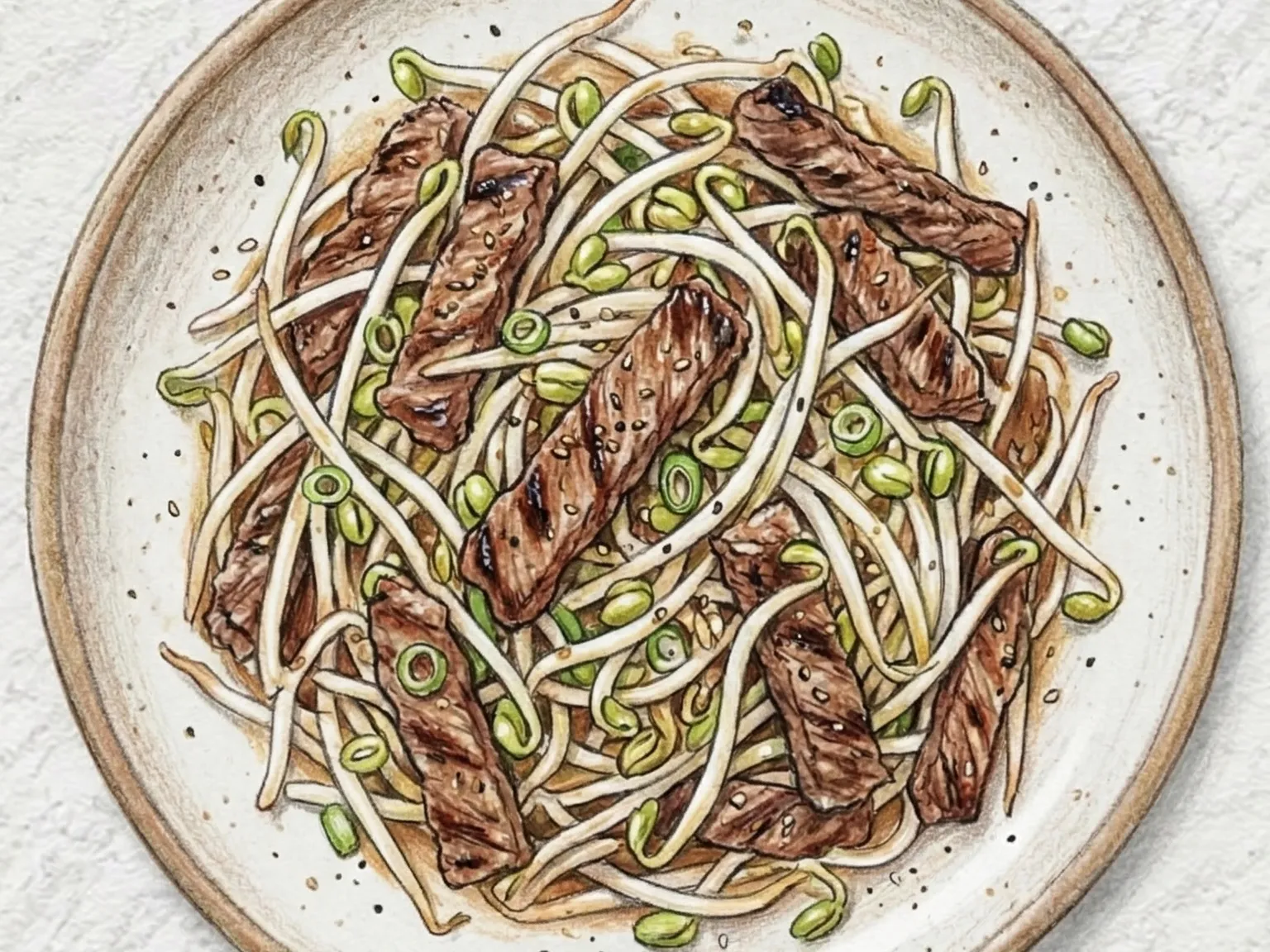
Korean Beef and Bean Sprout Stir-fry
Quick answer
Sukju-sogogi-bokkeum stir-fries thinly sliced lean beef and mung bean sprouts in soy sauce over high heat.
What makes this special
- Sukju-sogogi-bokkeum flash-fries mung bean sprouts and beef to hold a smoky wok aroma and crisp bite.
- Screaming hot pan chars the beef edges for a distinct wok-smoke flavor
- Bean sprouts stir-fried only 1 to 2 minutes to stay crisp and juicy
Key ingredients
Core cooking flow
- 1 Slice 250 g lean beef thinly and season it with 1 tablespoon soy sauce and 1/2 teaspoon black pepper.
- 2 Slice 90 g onion thinly and keep 1 teaspoon minced garlic ready beside the stove.
- 3 Heat a pan over high heat until it is fully hot, then add 1 tablespoon cooking oil.
Sukju-sogogi-bokkeum stir-fries thinly sliced lean beef and mung bean sprouts in soy sauce over high heat. The beef goes into a well-heated pan first to develop wok hei, then the sprouts are added for just one to two minutes to keep their crunch and moisture. Seasoning stays minimal with soy sauce, black pepper, and a finish of sesame oil, letting the ingredients speak for themselves. The result is a light stir-fry where the smoky sear of the beef meets the cool, watery snap of the sprouts.
Instructions
Read the steps as a cooking flow: prep, heat, seasoning, doneness control, and finish.
- 1Season
Slice 250 g lean beef thinly and season it with 1 tablespoon soy sauce and 1/2 teaspoon black pepper.
Rinse the mung bean sprouts, then drain them very well so they do not water down the stir-fry.
- 2Season
Slice 90 g onion thinly and keep 1 teaspoon minced garlic ready beside the stove.
Arrange the beef, sprouts, remaining soy sauce, and sesame oil nearby because the high-heat cooking moves quickly.
- 3Control
Heat a pan over high heat until it is fully hot, then add 1 tablespoon cooking oil.
When the oil moves easily across the surface, spread in the beef and sear the outside quickly before stirring too much.
- 4Heat
When about half of the beef has lost its red color, add the onion and minced garlic.
Stir-fry for about 40 seconds, tossing constantly so the garlic smells fragrant but does not burn.
- 5Season
Add 250 g mung bean sprouts and the remaining 1 tablespoon soy sauce, keeping the heat high.
Toss for only 1-2 minutes, stopping when the sprouts soften slightly but before the stems turn translucent.
- 6Finish
Turn off the heat and drizzle in 1 teaspoon sesame oil, tossing with the residual heat to coat everything evenly.
Transfer to a plate right away before liquid pools in the pan, and serve while the sprouts are crisp.
After the steps
Pick a recipe that fits this dish.
Continue with shared ingredients, meal pairings, or a similar method.
Recipes That Go Well With This
More Stir-fry →Based on shared ingredients and meal pairing
Korean Stir-fried Squid and Bean Sprouts
Ojingeo-sukju-bokkeum stir-fries bite-size squid pieces and bean sprouts in a gochujang-gochugaru sauce over very high heat, capturing smoky wok flavor. Garlic and the chili paste cook first to bloom their heat, then squid and onion go in for a fast sear. Bean sprouts are added only in the final minute or two, keeping them crisp and preventing the dish from becoming watery. Scallion joins at the same time for a sharp finish. The contrast between the squid's firm, chewy body and the sprouts' light crunch defines the texture, while the bold seasoning makes this a natural match for steamed rice.
Korean Selleri Sogogi Bokkeum (Celery Beef Stir-fry)
Selleri sogogi-bokkeum stir-fries soy-marinated lean beef round with celery, onion, and bell pepper over high heat. The beef is seared first for about two and a half minutes then set aside, and the vegetables are cooked separately in the same pan to keep them crisp before everything is combined. Oyster sauce and soy sauce give the beef a deep umami character, while celery's herbal freshness and firm crunch lighten the overall dish. Adding celery leaves at the very end intensifies the aromatic, almost grassy fragrance.
Handmade Scorched Rice
Crispy and savory handmade scorched rice that is easy to make at home.
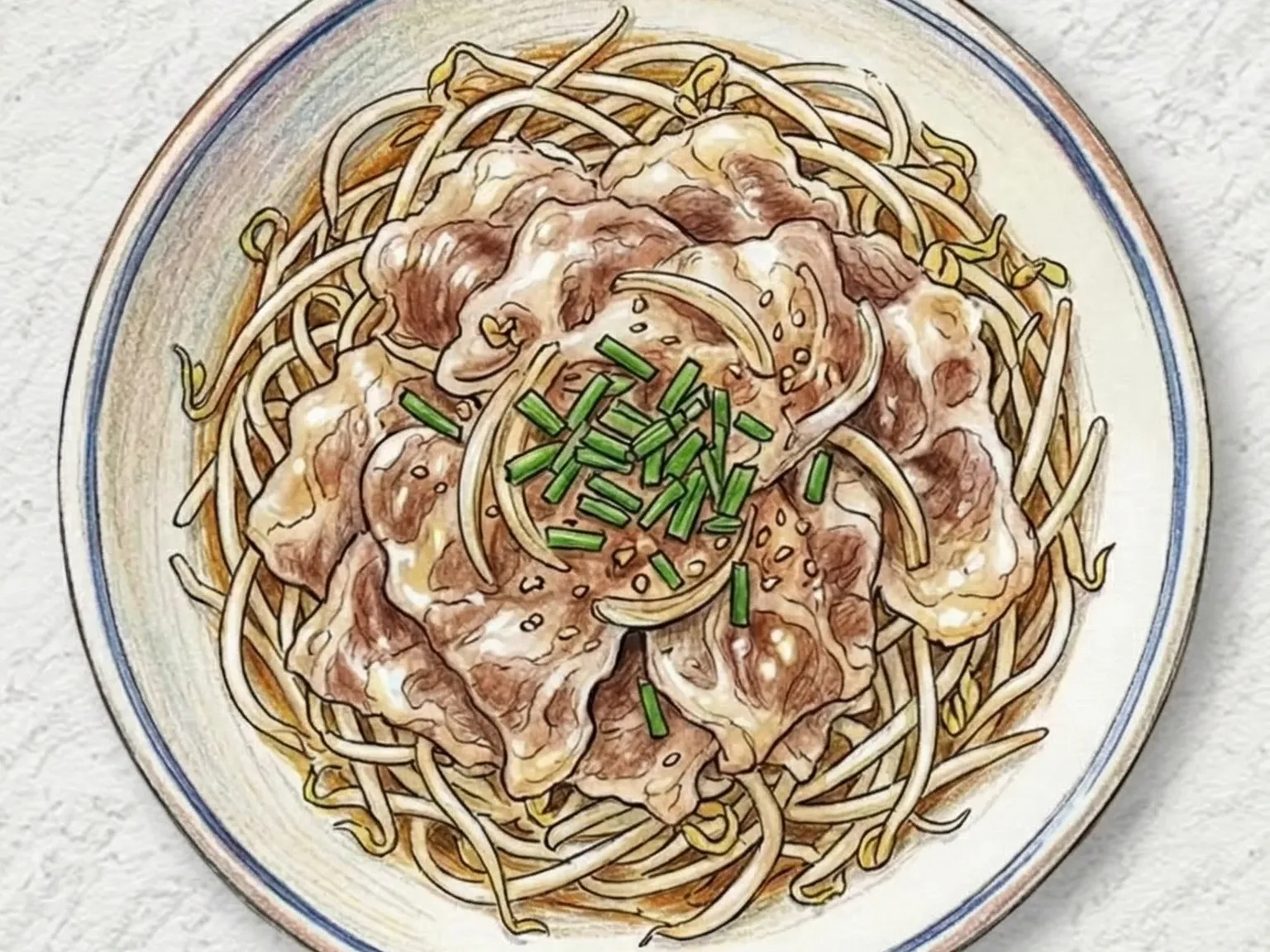
Korean Steamed Beef Brisket and Bean Sprouts
Thin-sliced marbled beef brisket is layered over bean sprouts and steamed with a dressing of soy sauce, minced garlic, sugar, and sesame oil. As the brisket cooks, the fat renders and drips down onto the sprouts, coating them with beefy richness that no separate sauce could replicate. The bean sprouts hold their crunch under the steam, and sliced onion and chive soften into the mix, adding mild sweetness and fragrance. Lightly sweetened soy sauce keeps the seasoning clean rather than heavy. The dish has a short ingredient list and a fast cook time, but the quality of the brisket - specifically how well it renders - determines the outcome.
Serve with this
Korean Kimchi Mandu Jjigae (Kimchi Dumpling Stew)
Kimchi mandu jjigae drops whole frozen kimchi dumplings straight into a simmering pot of aged kimchi, tofu, and anchovy stock. The dumpling wrappers absorb the broth as they cook, swelling plump and moist, while the kimchi filling inside echoes the stew's tangy base and doubles the fermented depth. Gochugaru and soup soy sauce add a clean chili heat, and firm tofu cubes absorb the spiced broth for a softer textural contrast. Because the dumplings themselves carry seasoning, it is better to start with less sauce and adjust after tasting the broth. This is a filling, no-fuss meal that needs nothing more than a bowl of steamed rice alongside it.
Manduguk (Korean Dumpling Clear Broth Soup)
Manduguk is a Korean dumpling soup in which hand-folded dumplings stuffed with ground pork, tofu, scallion, and garlic are dropped into a clear, simmering broth, typically anchovy-kelp stock or beef broth, and cooked until they float. As the dumplings cook, their thin wheat-flour wrappers release a subtle starch that gives the broth a barely perceptible body, while the filling leaks savory juices that enrich the liquid gradually. A thin drizzle of beaten egg stirred in near the finish creates silken wisps on the surface of the broth and gives the bowl a more finished appearance. Shredded egg strips and crumbled dried seaweed scattered on top add a pleasant contrast in color and a faint oceanic note to the flavor. Many Korean households serve manduguk on Lunar New Year as an alternative to tteokguk, and some combine the two by adding sliced rice cakes alongside the dumplings. Dumplings can be made in large batches and frozen raw, which means this soup can be pulled together quickly on weeknights without sacrificing any of the flavor that comes from homemade filling. A small dish of soy-vinegar dipping sauce served alongside lets each person adjust the seasoning at the table, and the light acidity of the sauce cuts through the mild broth in a way that makes the contrast between the two worth trying.
Korean Soybean Leaf Doenjang Muchim
Kongip-doenjang-muchim dresses boiled soybean leaves in doenjang and perilla oil - a rustic Korean banchan more commonly found on countryside tables in Jeolla and Gyeongsang provinces than in urban kitchens. Soybean leaves are larger and thicker than perilla leaves, with a chewy, almost fabric-like texture after cooking. Fresh leaves are a seasonal ingredient available only in summer, typically sourced at rural markets or directly from farms rather than supermarkets. Boiling for five to six minutes softens the tough fibers while preserving the earthy, beany aroma unique to the leaf. Since doenjang is the primary seasoning and can easily over-salt the dish, diluting it with a tablespoon of water brings the intensity to the right level. Perilla oil is chosen over sesame oil because its grassy, nutty profile harmonizes with the leaf's herbaceous character. Gentle hand-mixing is essential - aggressive tossing tears the softened leaves.
Similar recipes
Korean Beef and Pimpinella Stir-fry
Beef sliced thin for bulgogi is marinated in soy sauce, cooking wine, minced garlic, and black pepper for ten minutes, then spread in a single layer across a hot pan so every piece browns without steaming. Crowding the pan drops the temperature and causes the meat to stew in its own liquid rather than sear, so a wide, flat arrangement is essential. Sliced onion goes in next for two minutes to draw out its sweetness, followed by chamnamul, a Korean wild green whose aroma sits somewhere between celery leaf and parsley but sharper and more distinctly herbal. The chamnamul needs only forty seconds of tossing; any longer and the stems lose their crunch while the leaves wilt and the aroma fades. Sesame oil stirred in off the heat coats every piece in a nutty richness, and whole toasted sesame seeds burst with oil when bitten. Chamnamul is a spring green harvested from late March through April, so this stir-fry has a short seasonal window. At 365 calories and 30 grams of protein, it is a nutrient-dense plate that makes the most of that brief peak.
Korean Spicy Pork Bean Sprout Stir-fry (Kongbul)
Kongbul is a fiery Korean stir-fry of pork shoulder tossed in a gochujang-gochugaru-soy sauce blend and cooked over high heat, with bean sprouts added at the very end to preserve their crunch. The gochujang's thick spiciness combines with rendered pork fat for an intense, mouth-coating savoriness, while the bean sprouts release just enough moisture to keep the sauce from scorching. The sprouts must be stir-fried only until barely wilted to maintain their snap. Chopped scallion goes in last, and mixing the whole thing into a bowl of rice stretches this into a full, hearty meal.
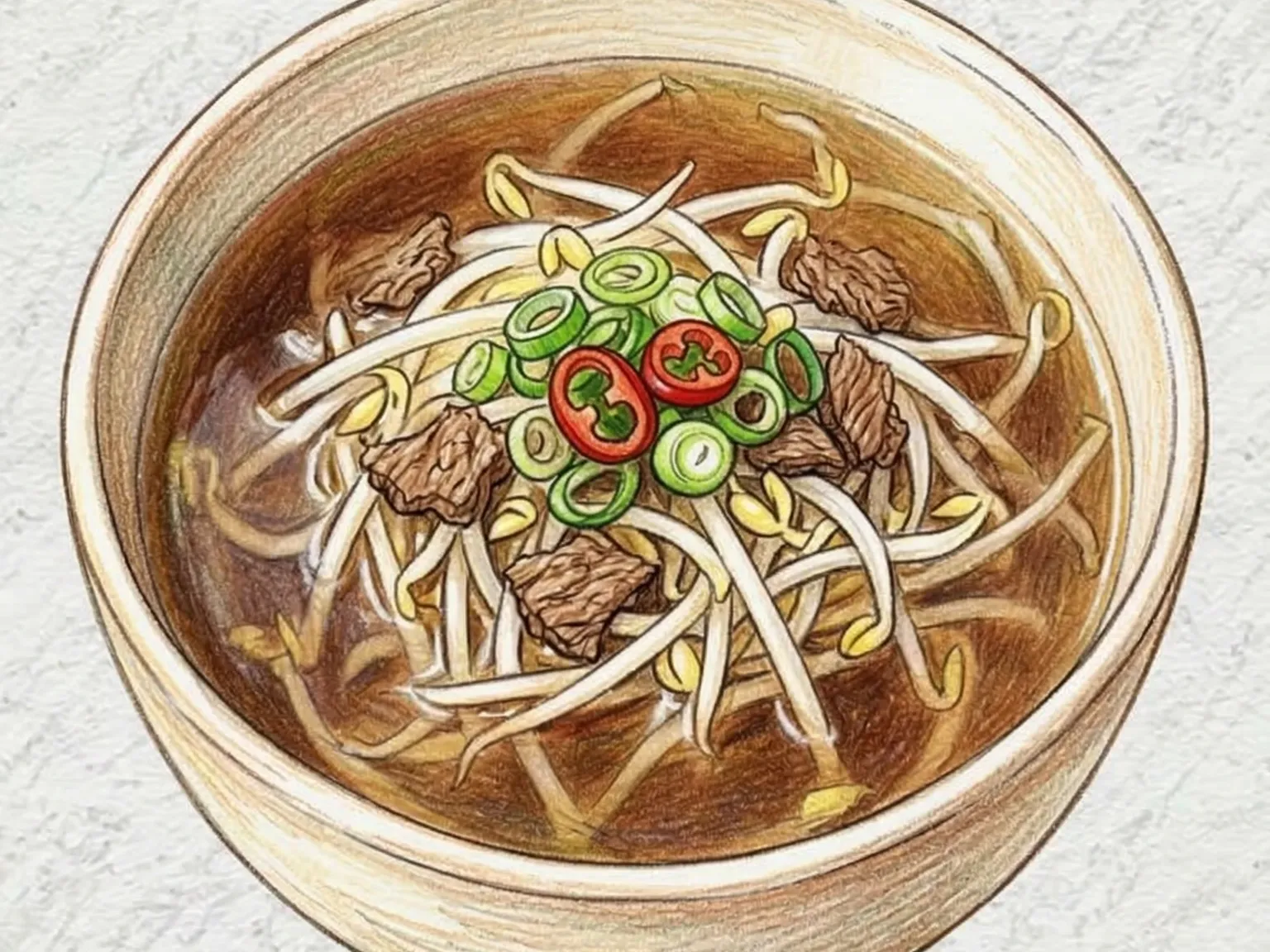
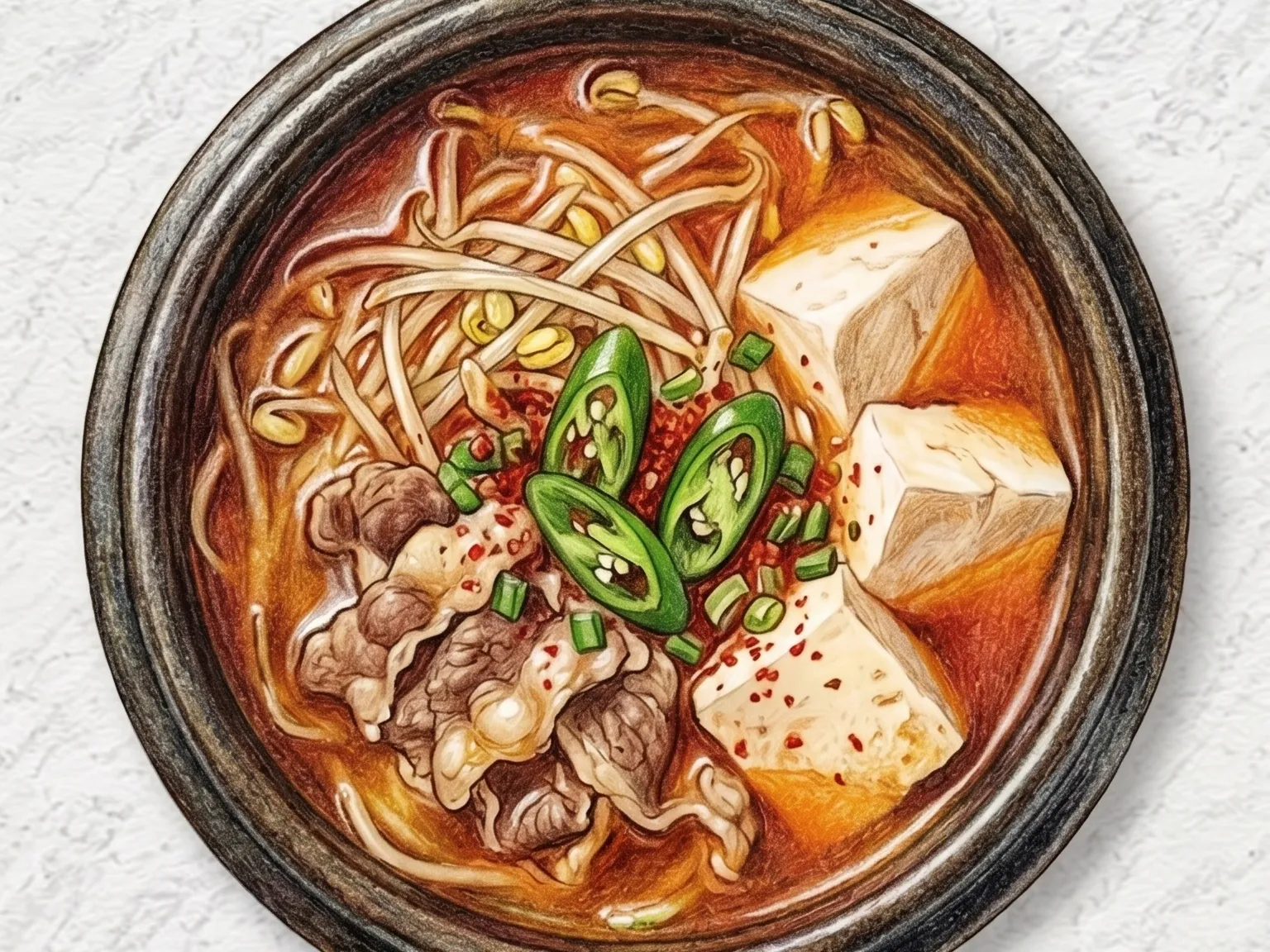
Korean Beef & Mung Bean Sprout Stew
Sukju soegogi jjigae is a spicy, clean-finishing Korean stew made by simmering beef brisket and mung bean sprouts together in a gochugaru-seasoned broth. The brisket is soaked in cold water to draw out blood before being briefly boiled and skimmed, which keeps the broth clear and free of off-flavors as it simmers. As the brisket slowly cooks through, it releases a deep, meaty base that forms the backbone of the stew's flavor, seasoned with chili flakes and soup soy sauce for a spicy, savory kick. Korean radish cooked alongside the meat counteracts any heaviness in the broth and contributes a clean, refreshing note to the finish, while oyster mushrooms add a layer of chewy umami. Mung bean sprouts go in last and should cook for no more than two minutes to preserve their snap; prolonged heat softens them completely and removes the textural contrast that defines the dish. Ladled over a bowl of steamed rice, the spicy broth seeps into every grain and turns the whole combination into a satisfying single-bowl meal.