Asian Recipes
806 recipes. Page 12 of 34
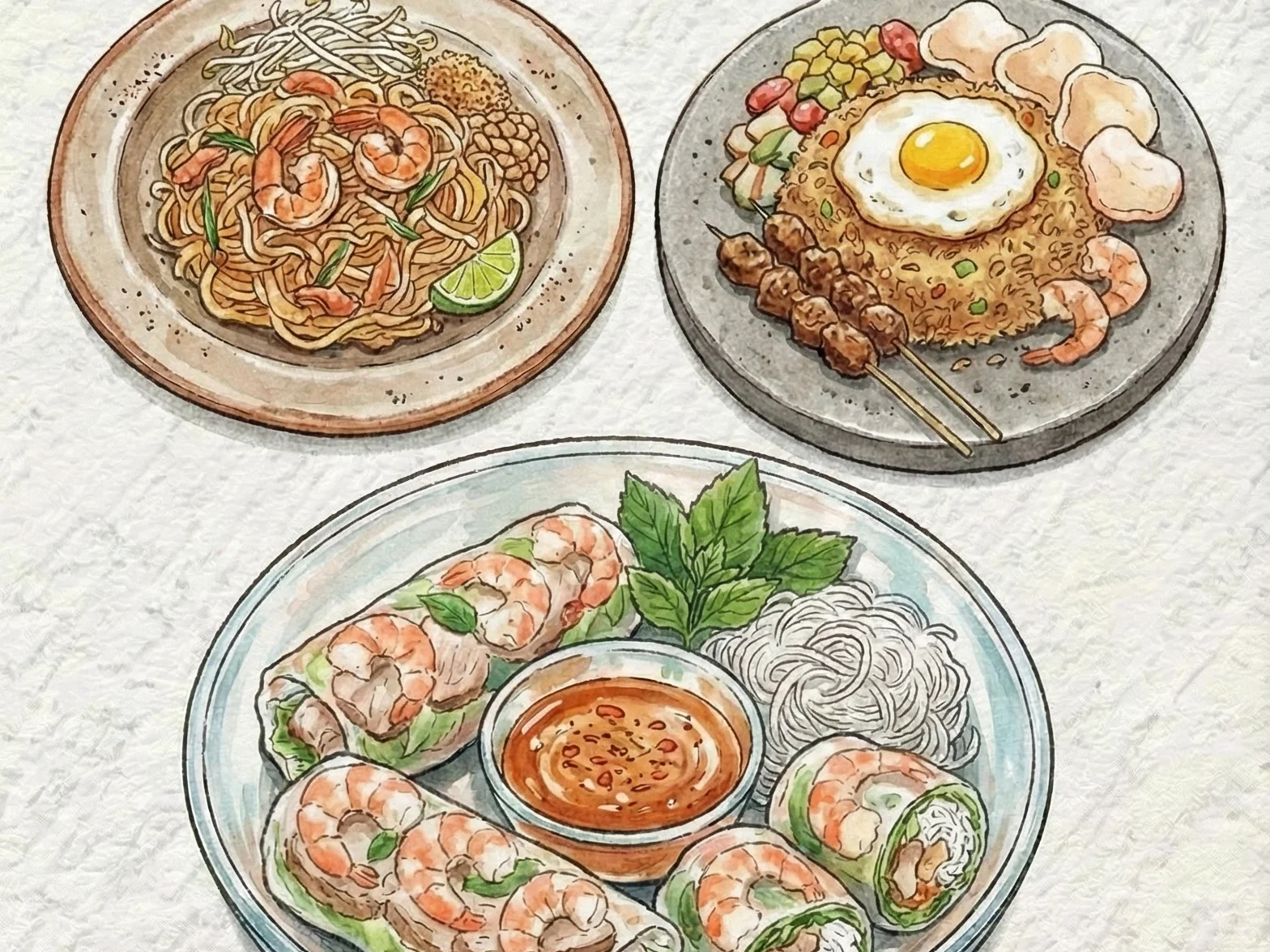
The Asian category gathers popular dishes from Japan, China, Thailand, Vietnam, India, and beyond. Curry, stir-fried noodles, mapo tofu, pad Thai, and pho are among the Asian favorites commonly enjoyed in Korean households.
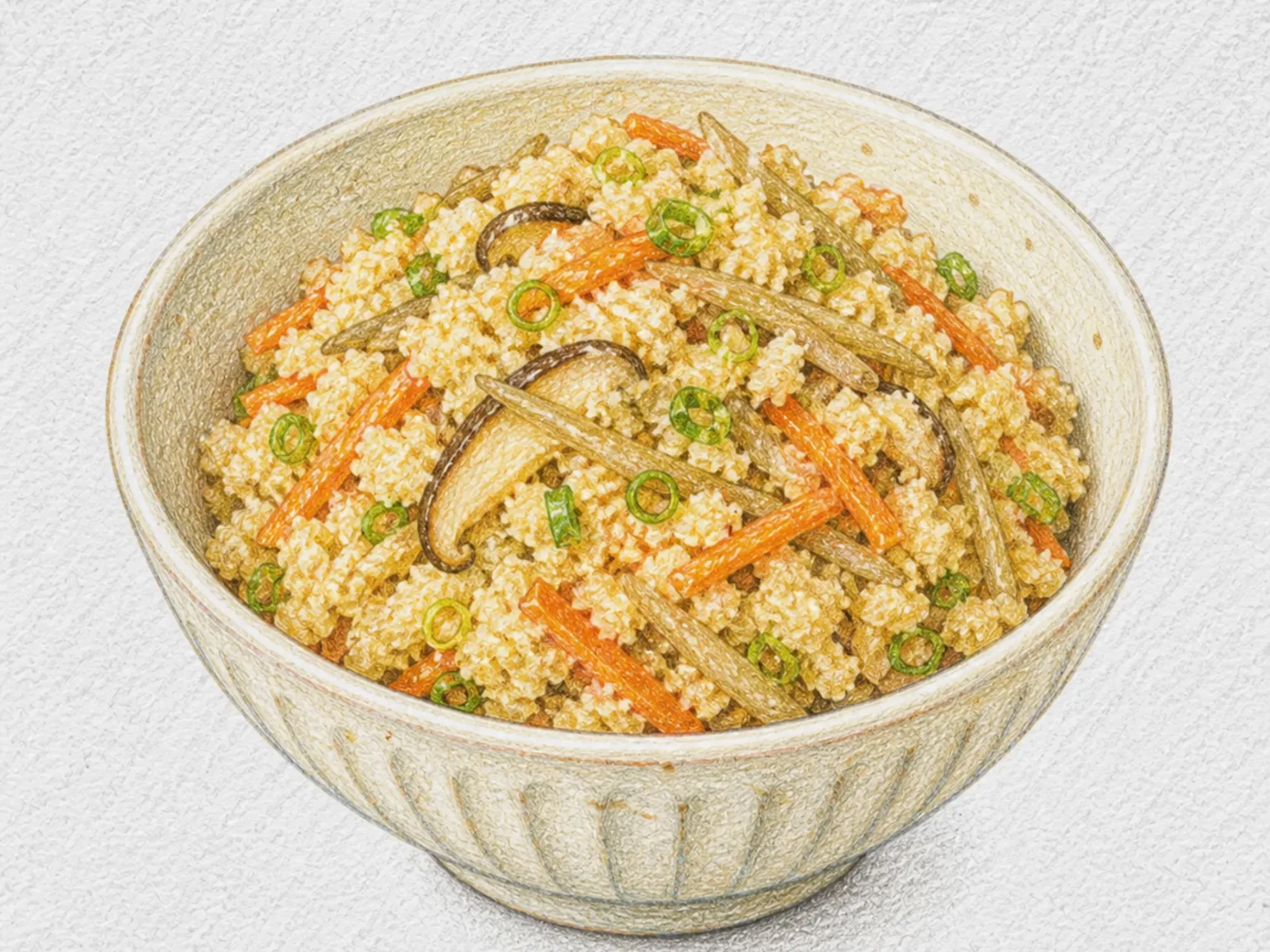
Kishazu-iri (Okara and Vegetable Stir-Fry)
Fresh okara absorbs a seasoned dashi with carrot, burdock, and dried shiitake in this moist, crumbly stir-simmer. Rehydrate 4 dried shiitake mushrooms, remove the stems, and slice the caps thinly. Julienne 200 g carrot. Scrape 200 g burdock, shave it into small thin pieces, soak it briefly to reduce harshness, and drain. Heat 2 tablespoons cooking oil in a wide pot over medium heat. Hold back the green onion and sauté the other three vegetables until oil coats them and the burdock begins to bend. Add 1.5 cups dashi, 2 tablespoons sugar, 2 teaspoons salt, and 1 tablespoon soy sauce. Bring the seasoned liquid to a full simmer before adding 400 g fresh okara. Break up the lumps, lower the heat to medium-low, and keep turning the mixture from the bottom so no layer sticks or scorches. Stop when no loose broth remains and a moist clump separates into crumbs when cut through with a spatula. Fold in 1 thinly sliced green onion and turn off the heat immediately. Spread the mixture briefly to release excess steam, but do not leave it until the okara loses the moisture that marks the finished texture.
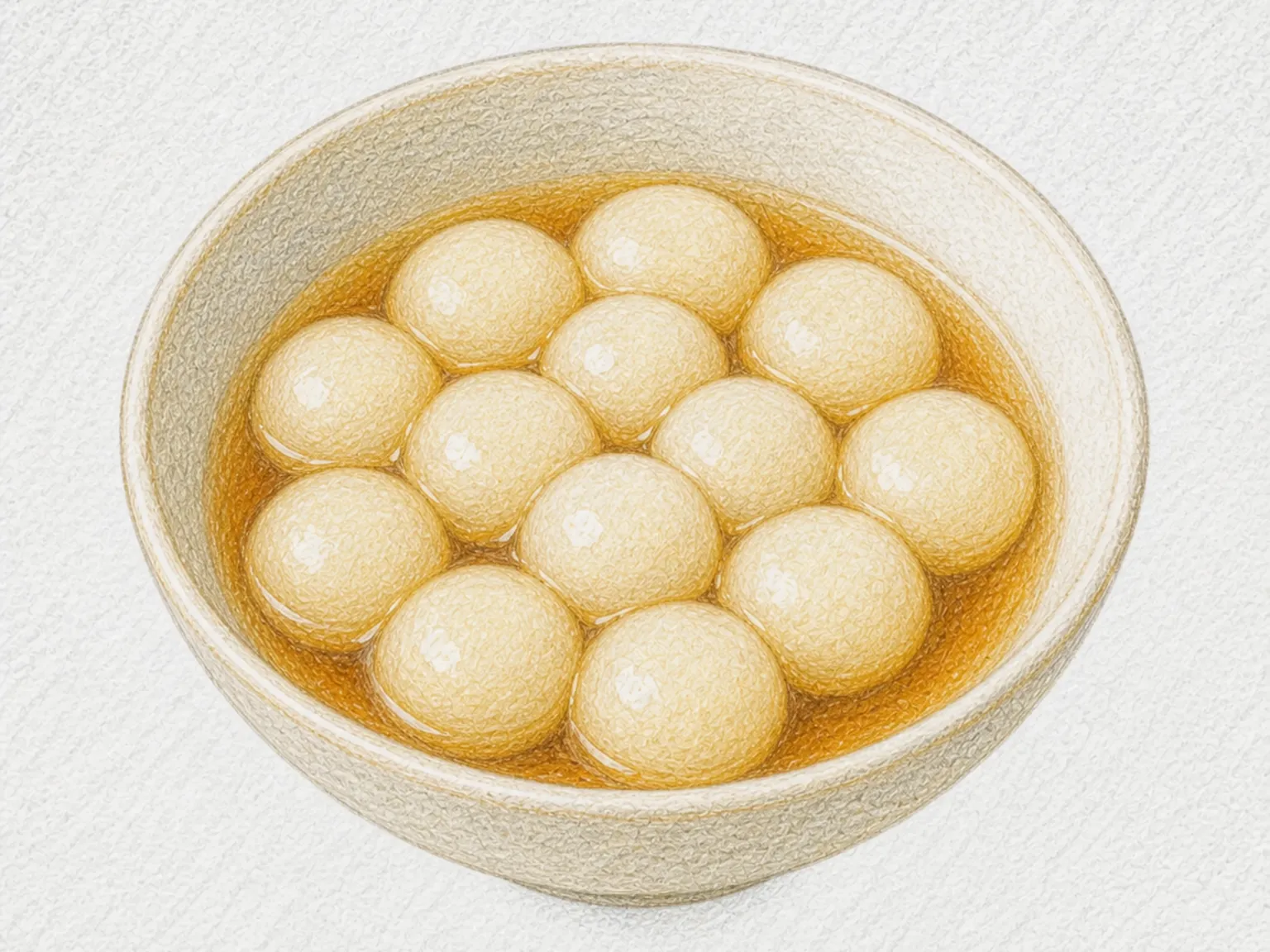
Kanzarashi (Chilled Shiratama Dumplings in Syrup)
Kanzarashi serves small shiratama dumplings in a clear, thoroughly chilled sugar syrup. Make the syrup first so it has time to cool. Combine 200ml water, 50g coarse sugar, 9g white sugar, 0.5ml light soy sauce, and 0.5g salt in a saucepan. Heat over medium until the sugars dissolve. When small bubbles appear around the edge, reduce the heat, cook for 2 more minutes, and remove the pan. Cool the syrup and refrigerate it while shaping the dumplings. Put 60g shiratamako in a bowl and add the first 40ml water. Crush the flour granules between your fingertips as you mix. If the dough still cracks when pressed, add the remaining water 5ml at a time, stopping as soon as it feels smooth and as soft as an earlobe. Divide it into 20 equal pieces and roll each one into a 1.5cm ball. Keep the shaped pieces under a damp cloth so their surfaces do not dry. Bring a generous pot of water to a full boil and lower in the dumplings one by one. Sweep the pot once gently to release any pieces touching the bottom. After all 20 balls rise to the surface, keep them boiling for 1 additional minute so the centers cook through. Transfer them to ice water for 2 minutes, then drain well. Divide 10 dumplings into each of two bowls and pour half of the cold syrup over each serving. A cooked dumpling should be translucent through the center and free of a dry, floury bite. Serve promptly while the syrup remains cold. Shiratama is chewy, so eat the dumplings one at a time, chew them thoroughly, and do not swallow them whole.
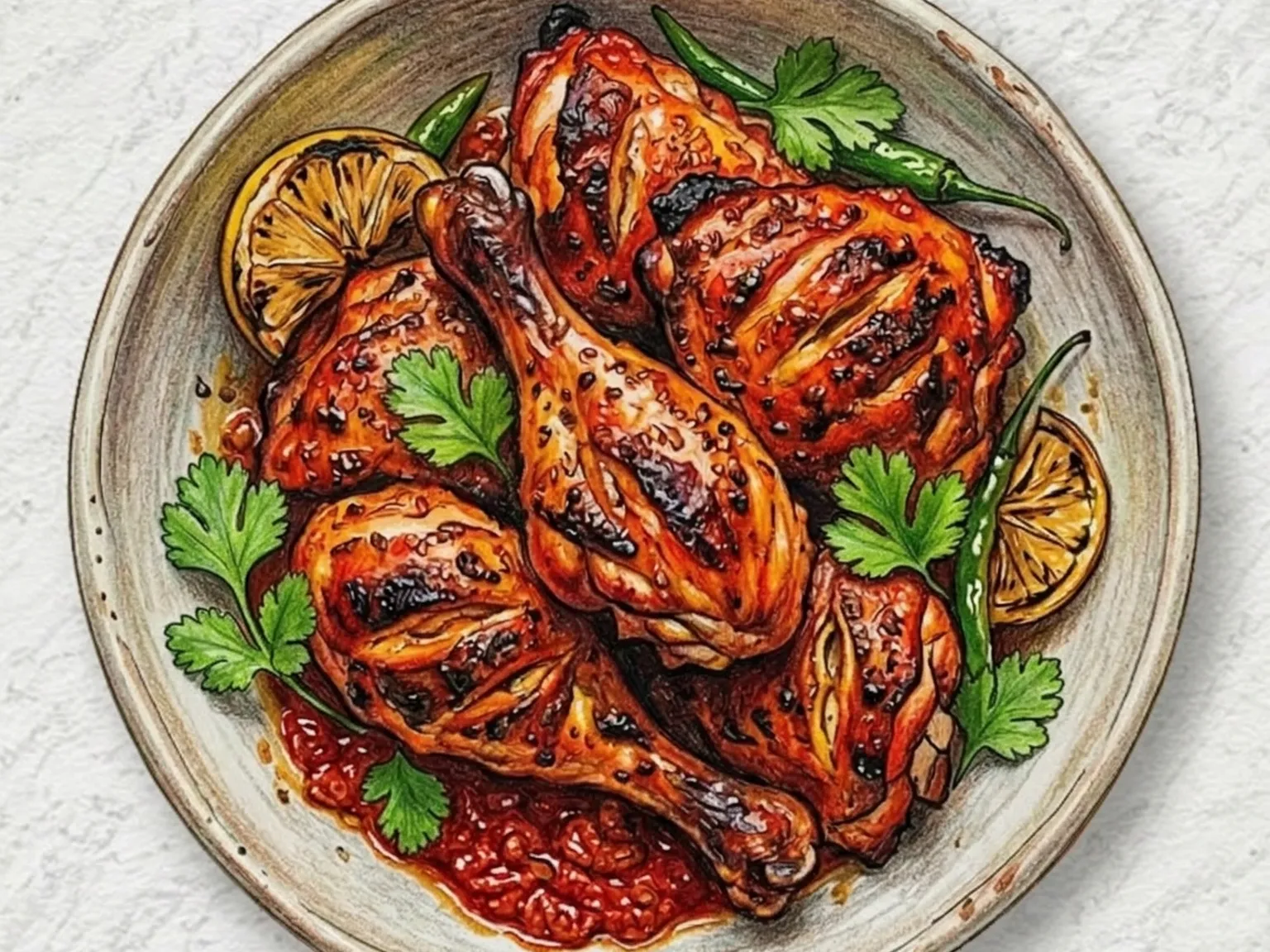
Tandoori Chicken
Tandoori chicken is an Indian dish in which chicken pieces are marinated for hours in a spiced yogurt mixture and then roasted at high heat until the surface chars and develops a smoky fragrance. The marinade combines yogurt with cumin, coriander, and paprika powders, which together create the dish's signature vivid red hue and layered spice character. Lemon juice in the marinade tenderizes the meat and adds a subtle citrus undertone. Scoring the chicken before marinating allows the spices to penetrate deeply, so every bite carries the full complexity of the blend. At 230 degrees Celsius, the exterior develops dark, slightly blistered spots that contribute a smoky bitterness, while the yogurt coating keeps the interior moist and succulent. Tandoori chicken is traditionally cooked in a cylindrical clay oven called a tandoor, though a conventional oven at maximum temperature produces excellent results. It is often served with naan bread, sliced onion, and a squeeze of fresh lemon.
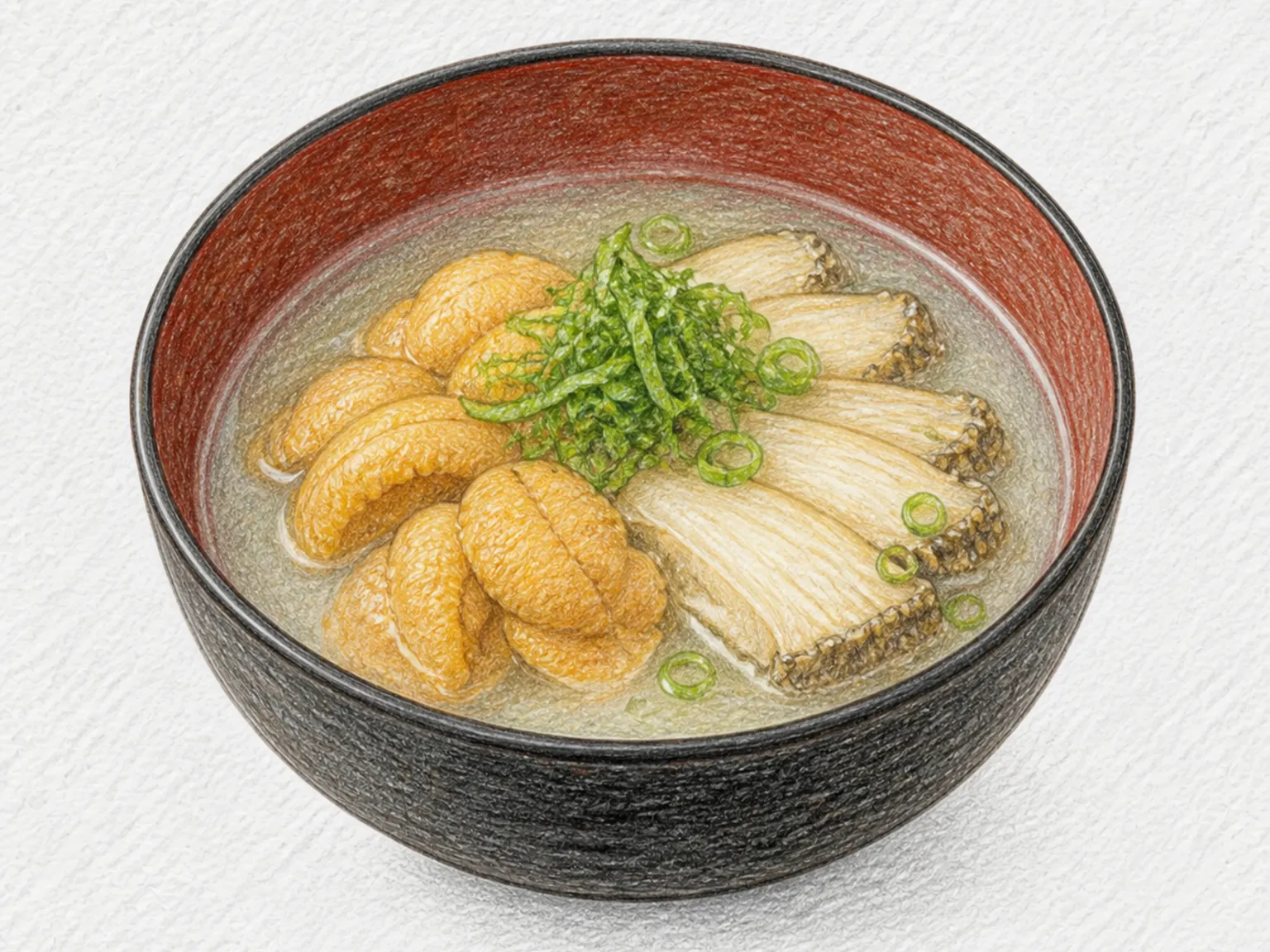
Ichigo-ni Sea Urchin and Abalone Soup
Ichigo-ni is a clear soup from southern Aomori in which fresh sea urchin and abalone are cooked briefly in water or bonito stock and seasoned with only a little salt, sake, and soy sauce. Extract from the abalone clouds the broth slightly, while the golden sea urchin floating on top suggested wild strawberries seen through morning mist and gave the dish its name. The sea urchin is heated only until its surface sets, and thin abalone slices keep a firm bite. Shiso and green onion finish a soup served at Bon, New Year, weddings, and other celebrations.
Tofu Misozuke (Miso-Aged Tofu)
Tofu misozuke is a preserved food from Kumamoto made by coating thoroughly drained firm tofu with sugar, wrapping it in gauze, burying it completely in miso, and aging it under refrigeration for about 40 days. After aging, the tofu is not rinsed. The gauze is removed carefully and the concentrated tofu is sliced thinly. Local accounts connect the dish with Heike fugitives roughly 800 years ago, and older versions could remain in miso for about half a year. Moisture loss and slow seasoning produce a dense, cheese-like texture and a strong salty-sweet flavor, so it is served in small portions as a side dish or accompaniment to drinks.
Dojo-jiru Loach and Udon Soup
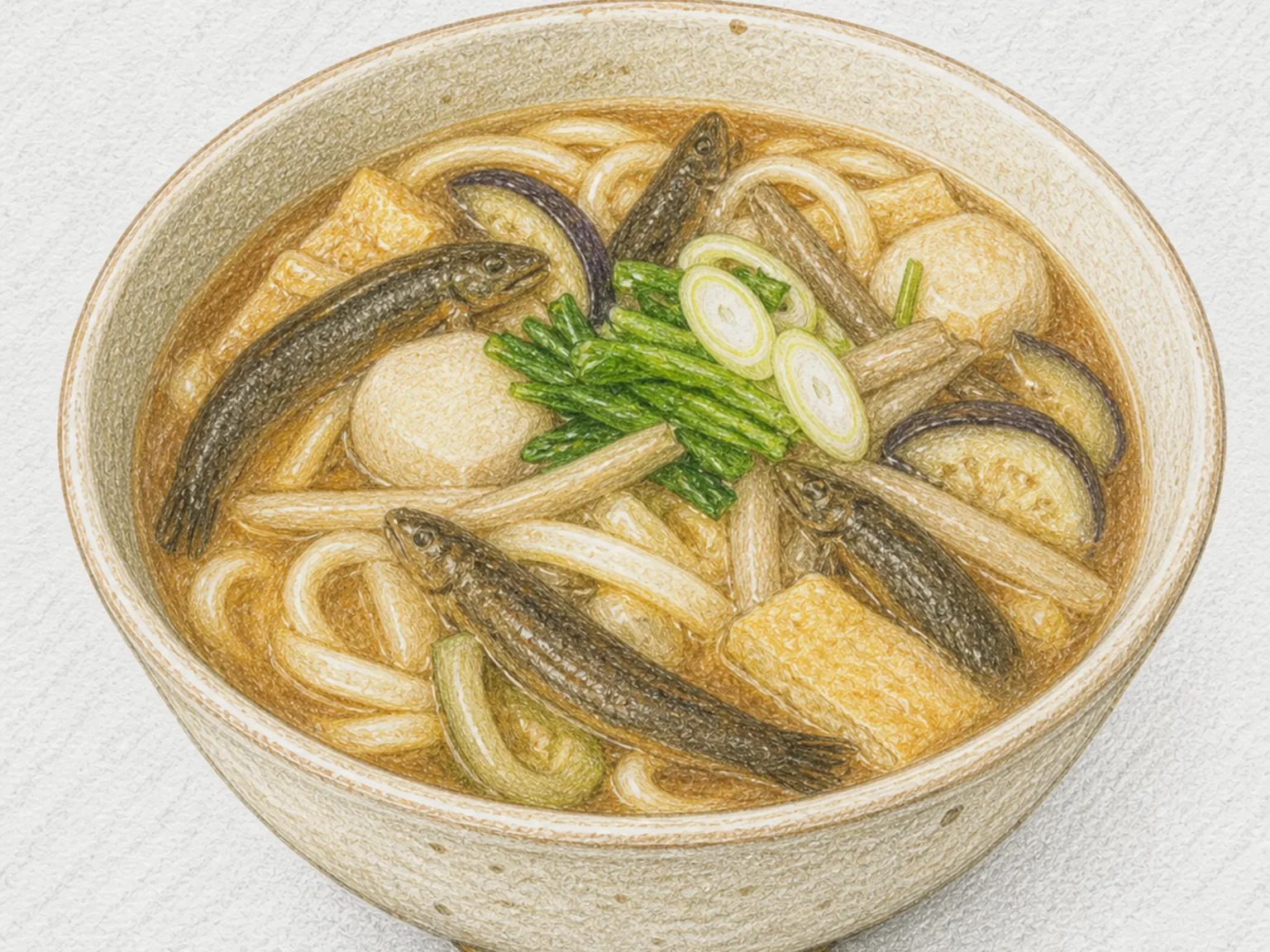
Dojo-jiru is a Kagawa summer soup from the Chusan region and part of Tosan, simmering whole loach with burdock, eggplant, taro, fried tofu, leek, and fresh udon in miso broth. After rice planting, men once caught loaches from ponds and rivers and cooked them in large cauldrons to share with neighbors, making the dish part of communal work and gatherings. Thoroughly simmered fish that can be eaten with its fine bones and noodles cooked directly in the broth create a substantial bowl. Raw freshwater fish can carry parasites and environmental contaminants. Never use self-caught fish; obtain only farmed, professionally purged and processed cooking-grade loach from a licensed supplier, cook it the same day, separate raw-fish tools, and heat every fish completely in the soup.
Narae (Seven-Ingredient Vinegar Salad)
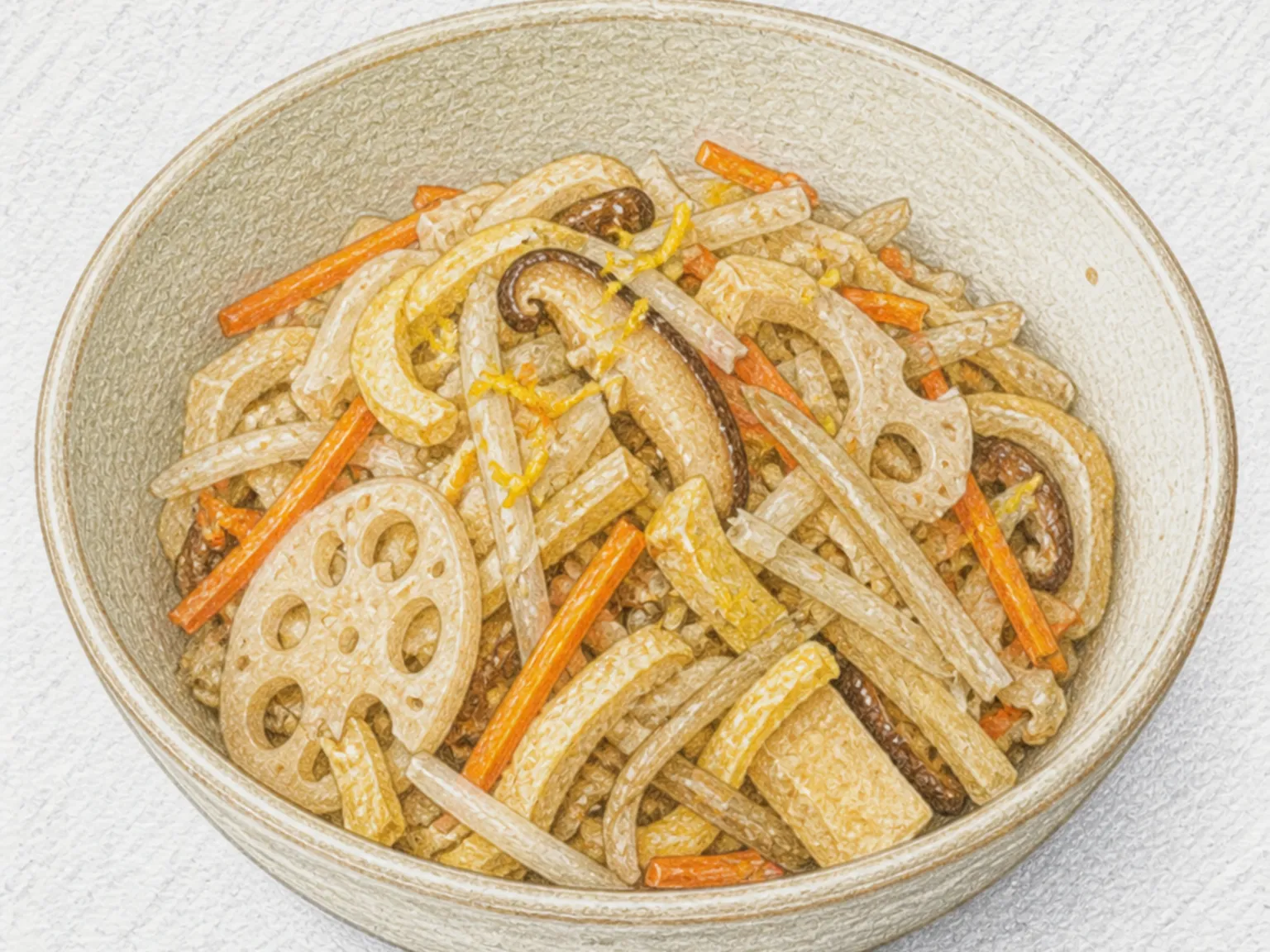
Narae is a Tokushima salad that cooks seven ingredients separately before dressing them in a sweet seasoned vinegar: daikon, carrot, dried shiitake, fried tofu, lotus root, burdock, and koya tofu. Daikon, carrot, lotus root, mushroom, and fried tofu simmer in shiitake soaking liquid; burdock is boiled on its own; and koya tofu absorbs a lightly sweet soy broth. Once all three groups are thoroughly drained, they are tossed with rice vinegar, sugar, light soy sauce, mirin, and sake and left to take on the seasoning. Sesame and yuzu peel finish a dish served at memorials and equinox observances, and now also eaten at home and in school meals.
Banh Xeo (Vietnamese Sizzling Turmeric Rice Crepe with Shrimp)
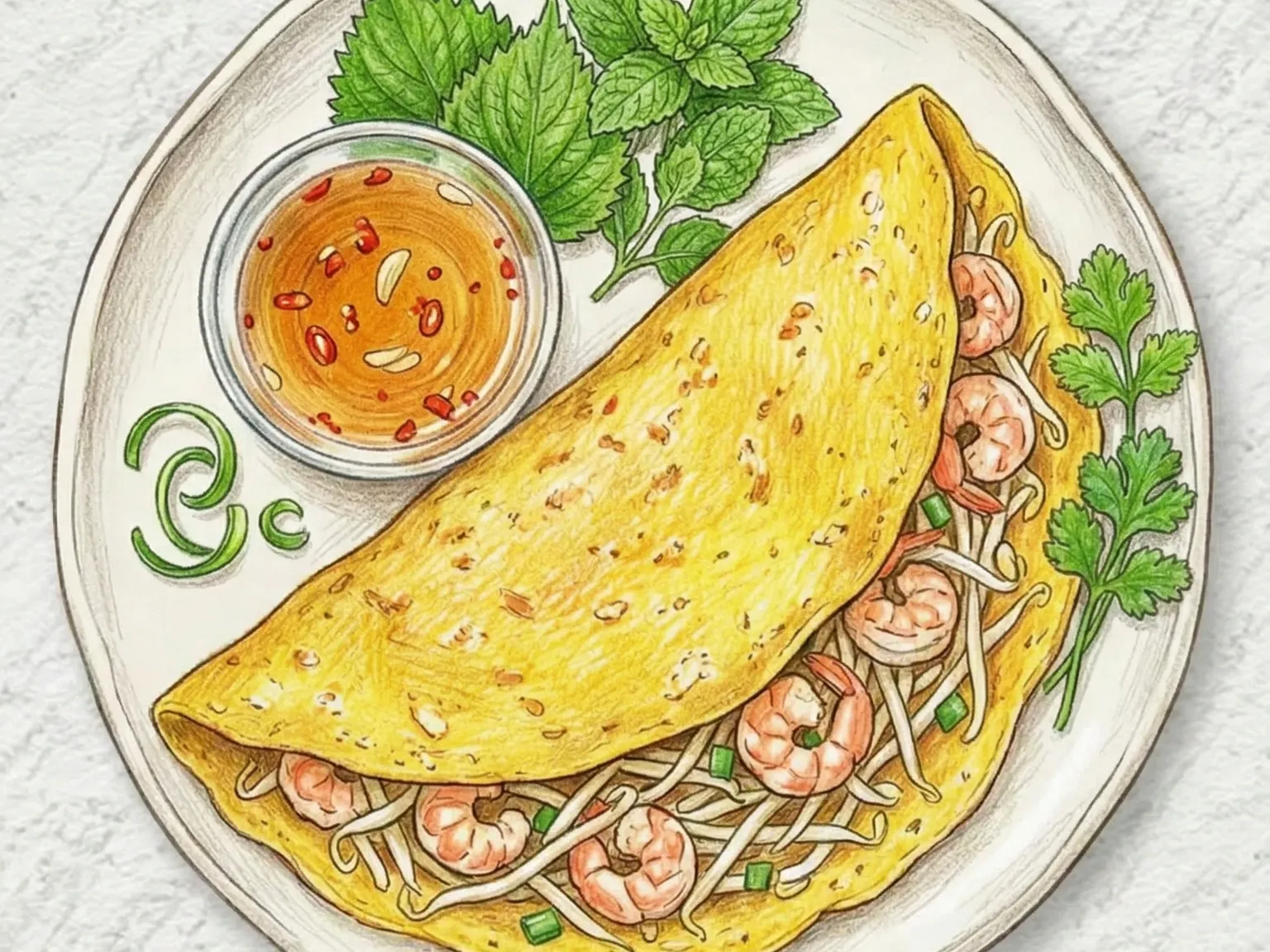
Banh xeo takes its name from the sizzling sound the batter makes when it hits a hot, oiled pan. A thin pour of rice flour, coconut milk, and turmeric crisps into a lacy, golden shell with a shatteringly crisp edge. Shrimp, sliced pork, and bean sprouts fill one half before the crepe folds over. In southern Vietnam, banh xeo are plate-sized and served with a tall pile of lettuce, fresh herbs, and pickled carrots. How you eat matters as much as how it is cooked: tear off a piece, wrap it in a lettuce leaf with mint and perilla, dip in nuoc cham, and eat in one bite. The contrast between the hot, oily crunch of the crepe and the cool, raw freshness of the herbs is what makes this dish worth eating. Northern versions are smaller and more compact, but the principle remains the same.
Hiyajiru (Cold Fish and Miso Soup over Barley Rice)
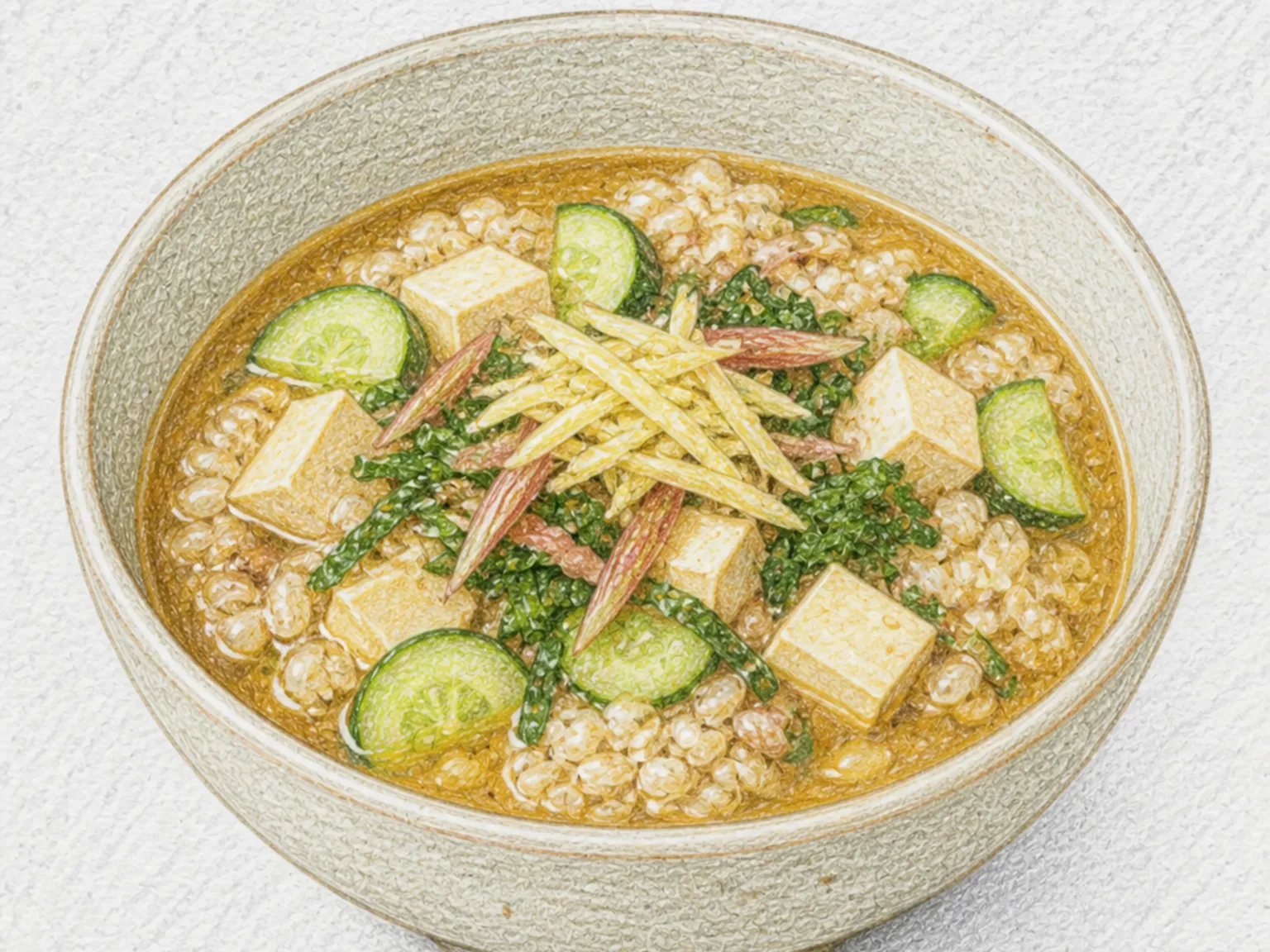
Hiyajiru is a Miyazaki summer meal made by grinding toasted dried sardines, sesame, peanuts, and miso, browning the paste until fragrant, loosening it with cold stock, and adding tofu, cucumber, shiso, myoga, and ginger. The concentrated soup is chilled thoroughly and poured over freshly cooked hot barley rice for a sharp temperature contrast. It is said to have developed from farmers' quick hot-weather meal of raw miso and water over barley rice. Celebratory versions use grilled sea bream or horse mackerel with every bone removed, while everyday bowls often rely on toasted iriko dried sardines. Nutty richness and fish savor support the cool broth, and crisp cucumber with aromatic herbs keeps the rice refreshing in Miyazaki's humid heat.
Pad Kra Pao (Thai Basil Stir-Fried Pork with Egg)
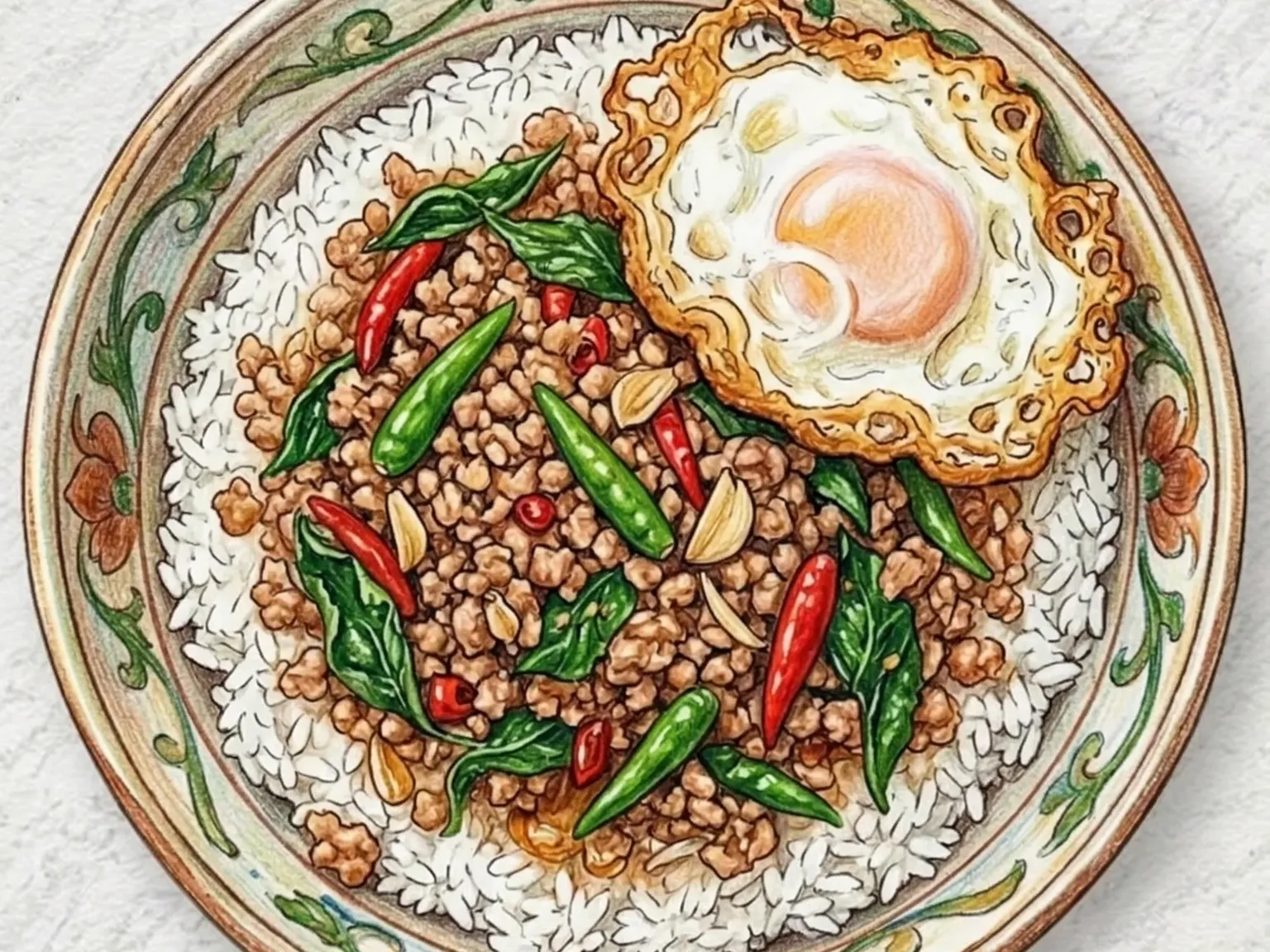
Pad kra pao cooks 300 g ground pork over high heat with garlic, fresh chilies, a four-part sauce, and Thai basil added at the finish. Roughly mince or pound 5 garlic cloves and 5 chilies, then pick the leaves from 30 g Thai basil and shake off their water. Mix 2 teaspoons oyster sauce with 1 teaspoon each of fish sauce, soy sauce, and sugar, stirring until the sugar begins to dissolve. Heat a wok until it is very hot and just starting to smoke. Add oil and move the garlic and chilies through it for about 20 seconds, stopping before the garlic darkens. Add the pork and break it into small pieces immediately. Keep the heat high for 3 minutes, then check the meat and allow up to 1 more minute if any pink remains or the edges have not begun to brown. Pour the prepared sauce around the wok wall so it sizzles into the pork. If liquid pools at the bottom, cook for about 1 additional minute until the meat looks glossy rather than soupy. Add the basil immediately before turning off the heat and toss only until the leaves wilt. Serve at once with the 2 fried eggs listed for the dish. The egg cooking method is not specified in the source steps, so the critical evidence here is the fully cooked pork, reduced sauce, and briefly wilted basil.
Kagoshima Karukan
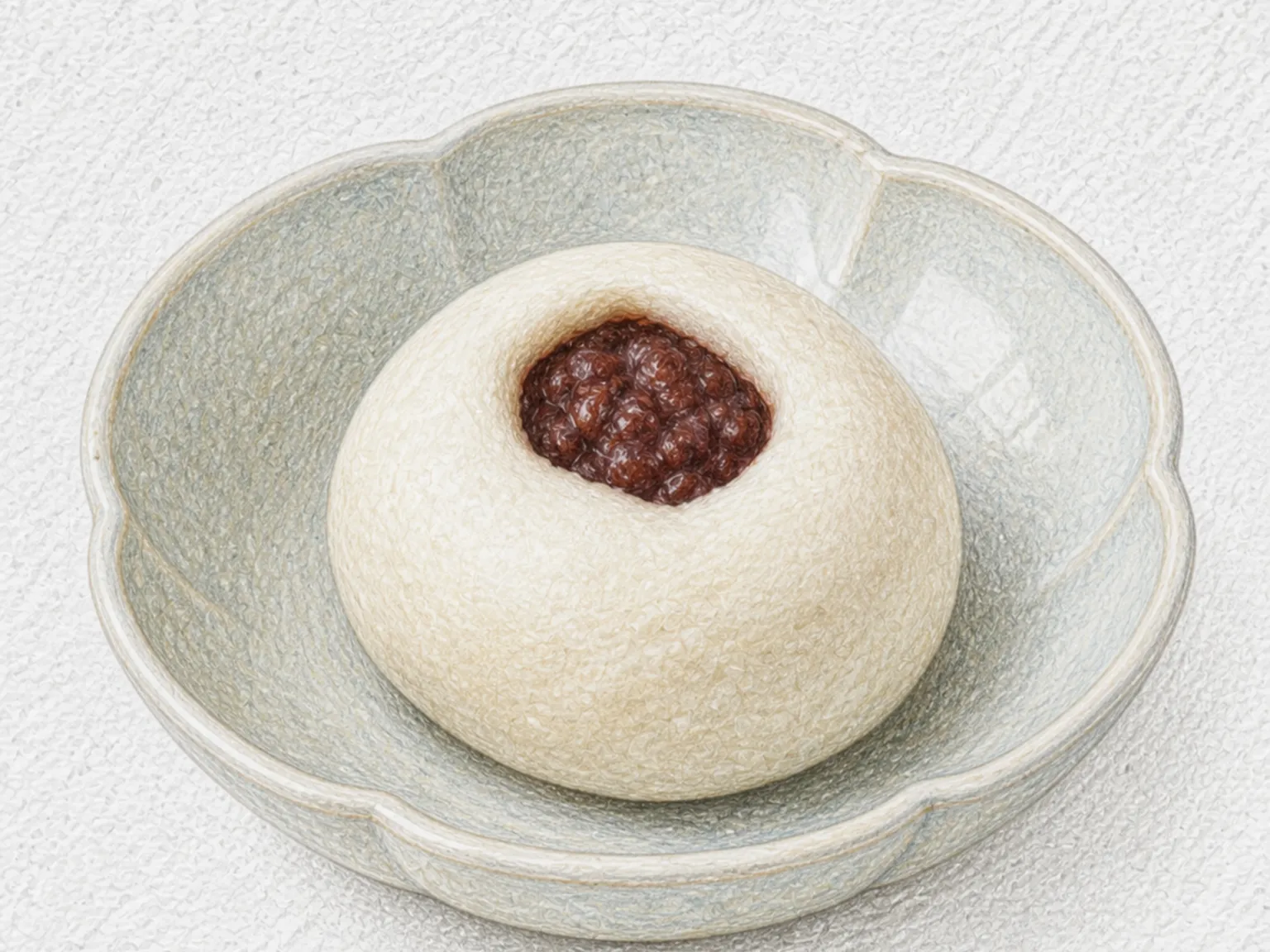
Karukan is a white Kagoshima sweet made by aerating grated Yamato yam with water, folding in sugar and karukan rice flour, enclosing red bean paste, and steaming over strong steam. It took root where wild yam grew well in the well-drained shirasu plateau and sugar arrived from Amami and Ryukyu. Sugar was precious in the Edo period, so karukan was once a lordly sweet served in daimyo households before spreading more widely in the Meiji era. Its characters mean light yokan, reflecting how the steamed cake becomes lighter than its batter. Yam viscosity and rice flour create the airy, moist crumb without eggs or oil.
Tokishirazu no Yakizuke (Soy-Marinated Spring Salmon)
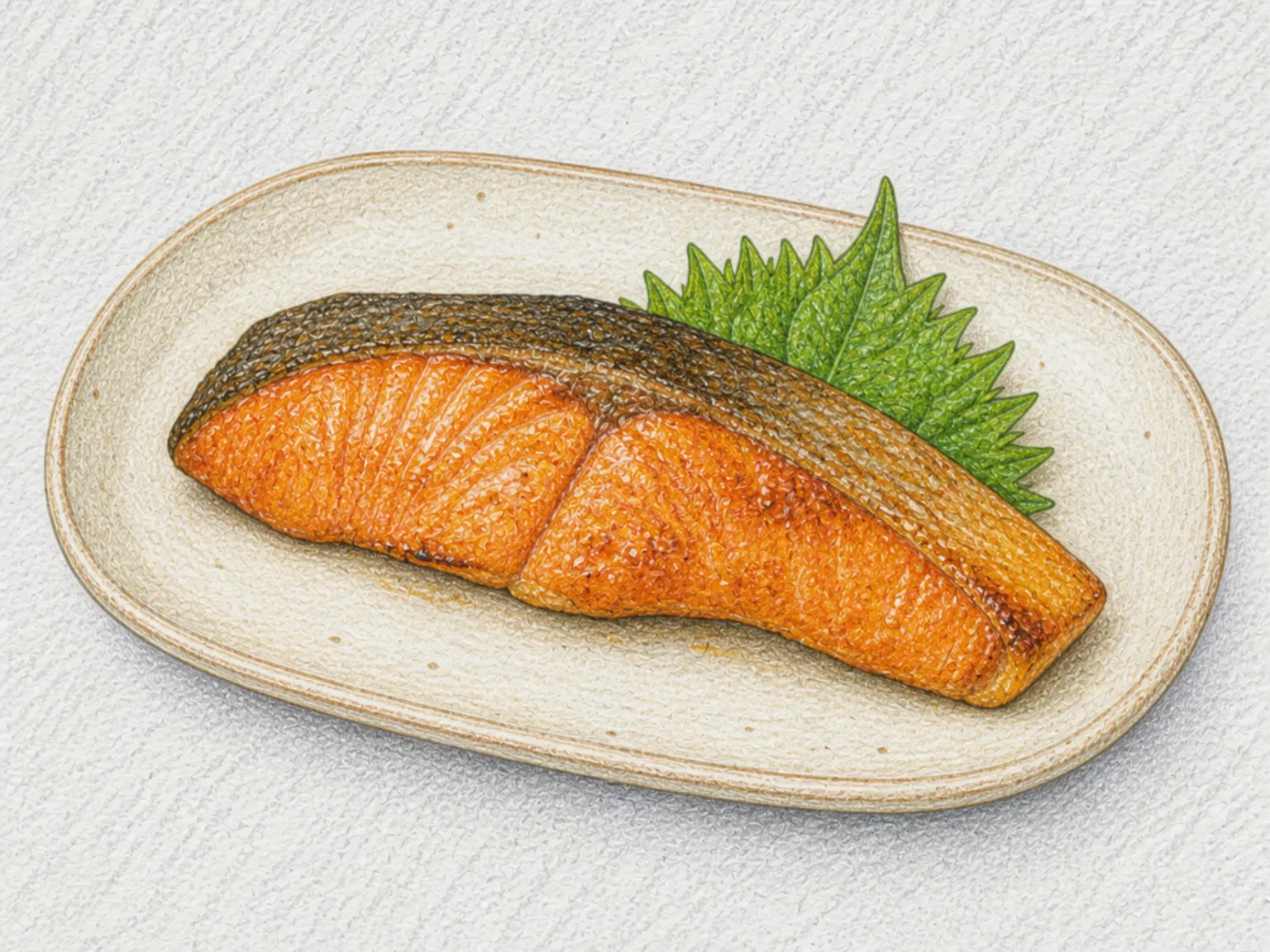
Sake no yakizuke is a Hokkaido specialty using tokishirazu salmon caught along the coast from spring into summer. Four salmon portions marinate for half a day in soy sauce and sake, then grill while early coats of marinade build a glossy surface. Tokishirazu differs from ordinary autumn salmon returning to spawn: it is caught young during migration, before fat and nutrients move into roe or milt, so the flesh stays especially rich and soft. A fresh moderately fatty salmon fillet works when tokishirazu is unavailable. Families served the dish with sekihan during the June Hokkaido Shrine Festival, and it remains suitable both for rice and drinks. Marinade that touched raw fish is used only during the early cooking stage, and the final minutes cook without further brushing until the center is safe.
Inamudouchi Okinawan Pork Miso Soup
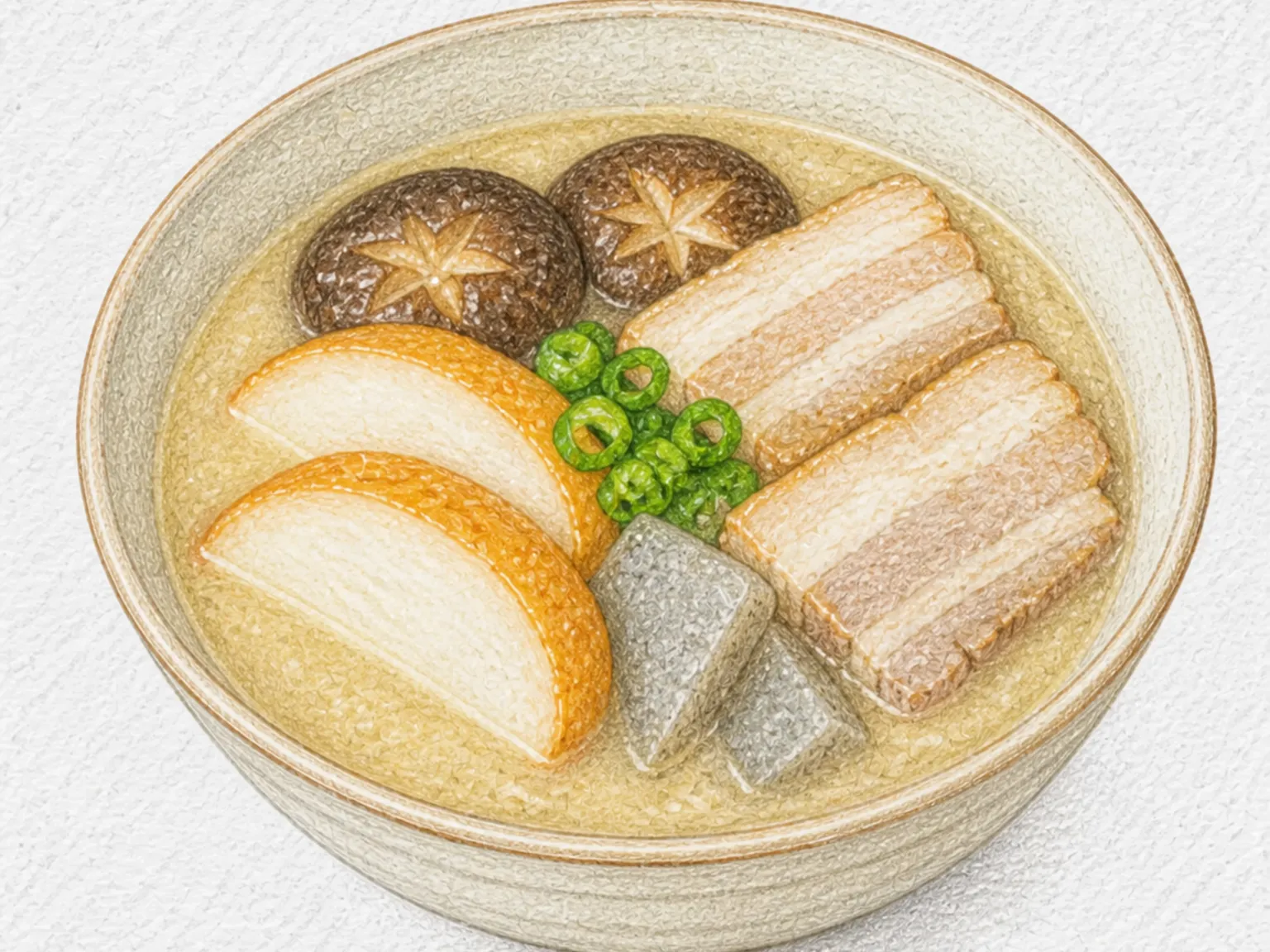
Inamudouchi is an Okinawan celebration soup of boiled pork belly, castella kamaboko, shiitake, and konnyaku in combined pork and bonito stocks, thickened gently with sweet white miso. Ina means wild boar and mudouchi means an imitation; the name arose when pork replaced increasingly scarce boar. Its prized castella kamaboko, made by steaming and frying a fish paste rich in surimi, connects the soup to Ryukyu court hospitality and to New Year, graduation, school entrance, and coming-of-age celebrations. The pork belly is boiled whole through the center, cut into short strips, and briefly blanched again to reduce excess fat and strong flavor. Kamaboko enters only at the end so its tender structure remains distinct.
Tofu Umezu-zuke (Plum Vinegar Pickled Tofu)
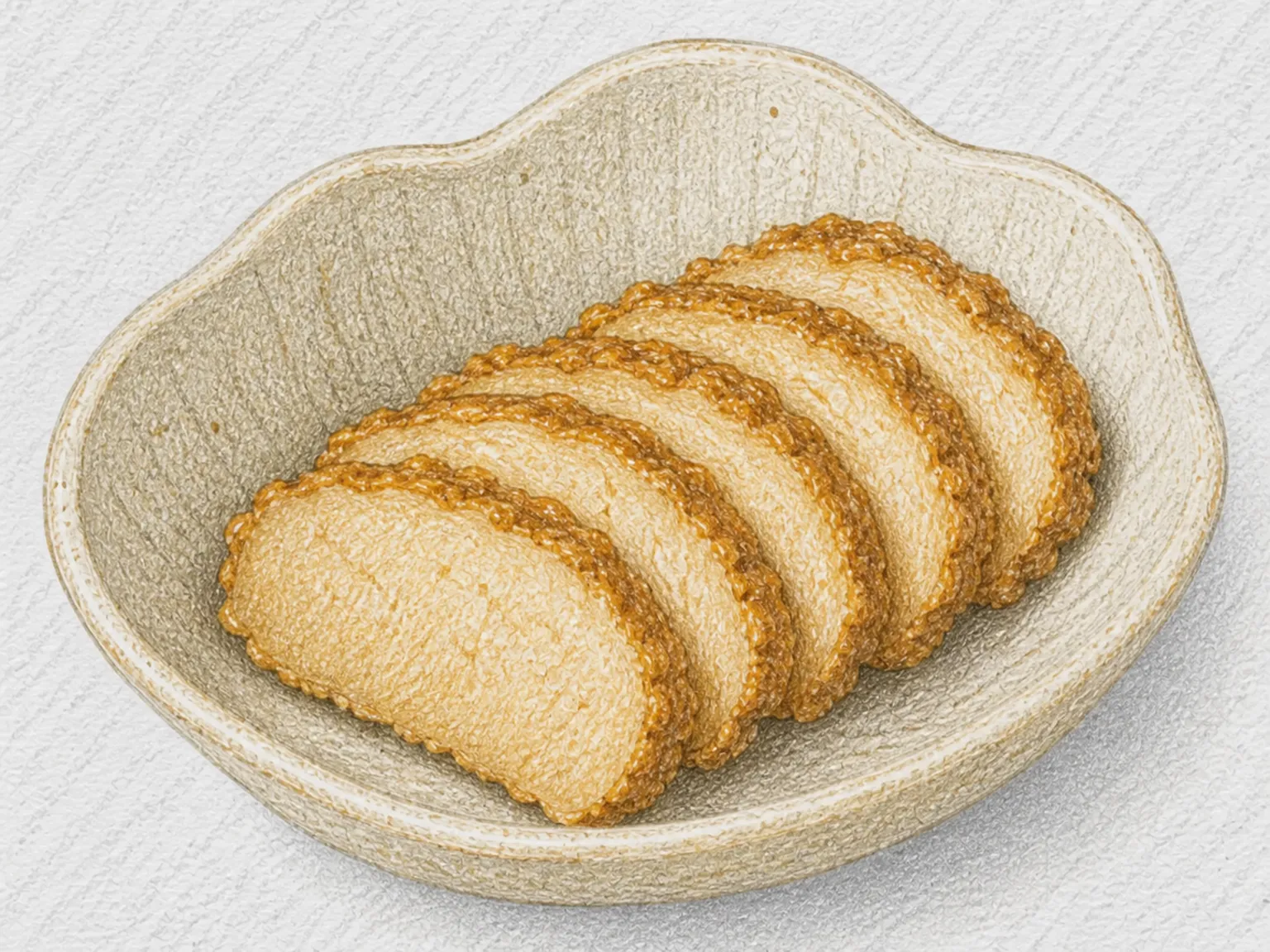
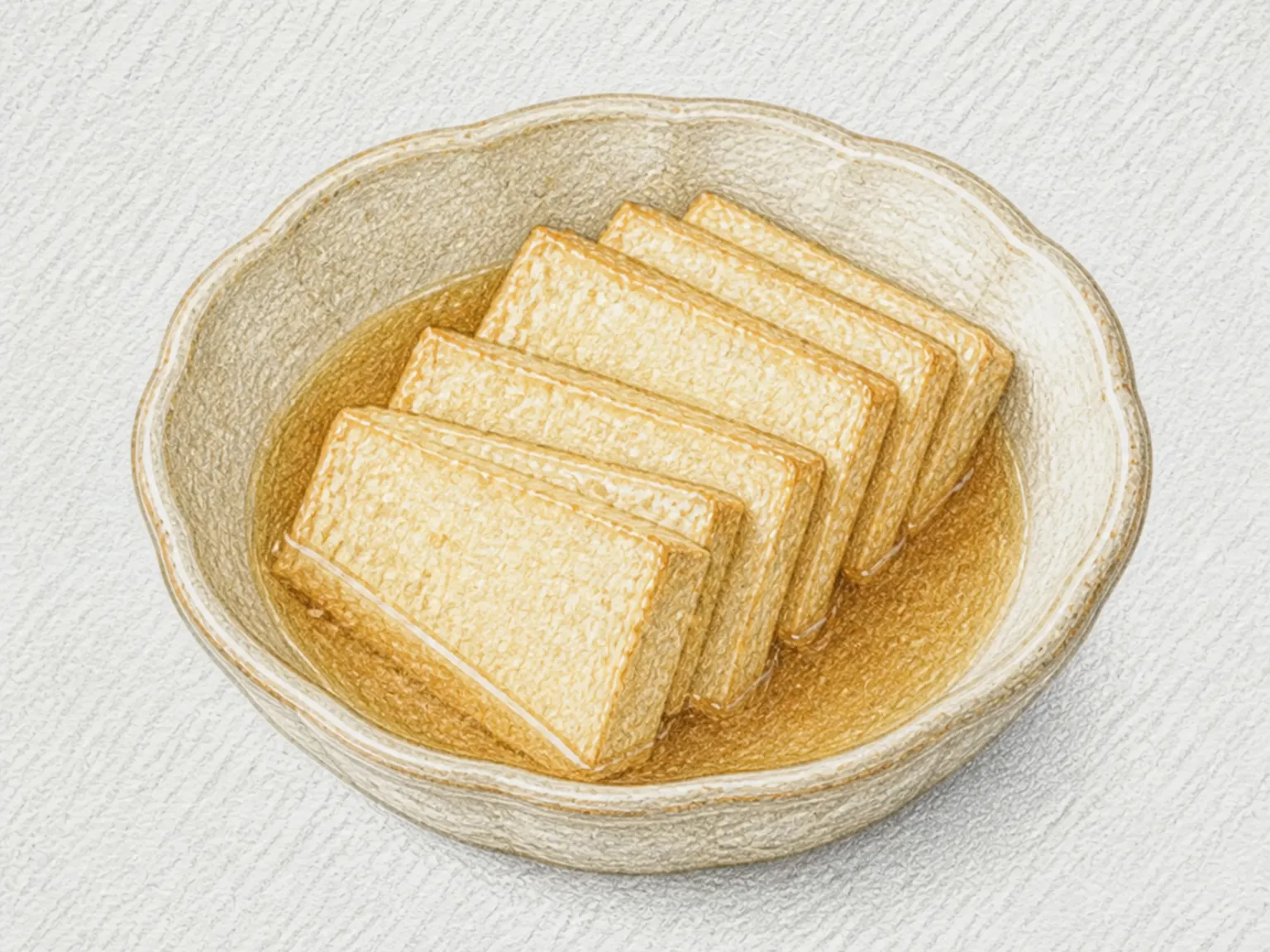
Tofu umezu-zuke is a Kochi preserved side dish made by slicing firm momen tofu, pressing it between cloth and absorbent paper for one or two hours, grilling both sides until golden, cooling it, and soaking it for about a week in umezu, the salty sour liquid produced when plums are cured. The result combines bright acidity and high salinity with a dense, almost creamy tofu texture, so it is eaten in thin slices as a drinking snack. For home preparation, bottled food-grade umezu is used and tofu is heated through before curing only at 4C or below.
Drunken Noodles
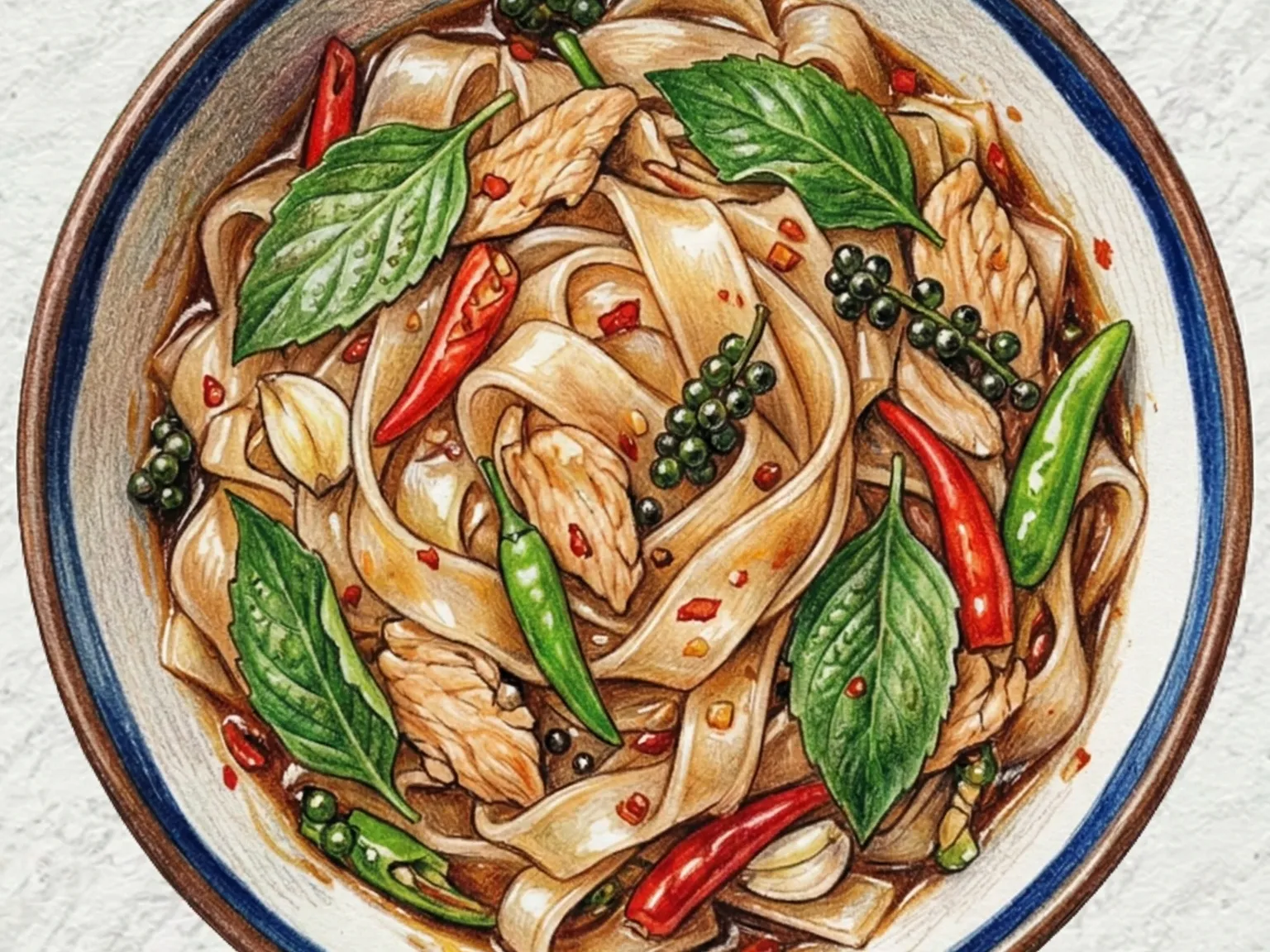
Pad kee mao, known outside Thailand as drunken noodles, is a stir-fried rice noodle dish from central Thailand whose name has two competing origin stories: one holds that it was street food eaten late at night to accompany drinking, the other that the ferocious chili heat leaves the eater feeling intoxicated. Wide rice noodles called sen yai are tossed in a screaming-hot wok with fresh chilies, crushed garlic, and protein, and the defining technique is leaving the noodles undisturbed long enough to char slightly where they press against the metal surface, generating a smoky, wok-seared flavor that no other cooking method replicates. Thai holy basil, known as krapao, is a fundamentally different ingredient from Italian basil: it carries a peppery, clove-adjacent sharpness and a faint natural heat, and when it hits a hot wok the volatile oils bloom instantly into the air around the pan. A dark sauce of oyster sauce, soy sauce, fish sauce, and sugar stains the noodles a deep mahogany-brown while building a flavor profile that stacks salt, sweetness, and fermented umami in every strand. In Thailand the dish is made with seafood, pork, or chicken, and a crispy fried egg cooked in a generous pool of oil until the edges lacquer and crunch is placed on top. The yolk is broken and stirred through the noodles at the table, coating everything in a rich, golden layer that softens the heat and ties the dish together. No rice is needed when the noodles already carry this much.
Nuta (Wakegi and Whale Skin with Mustard Miso)
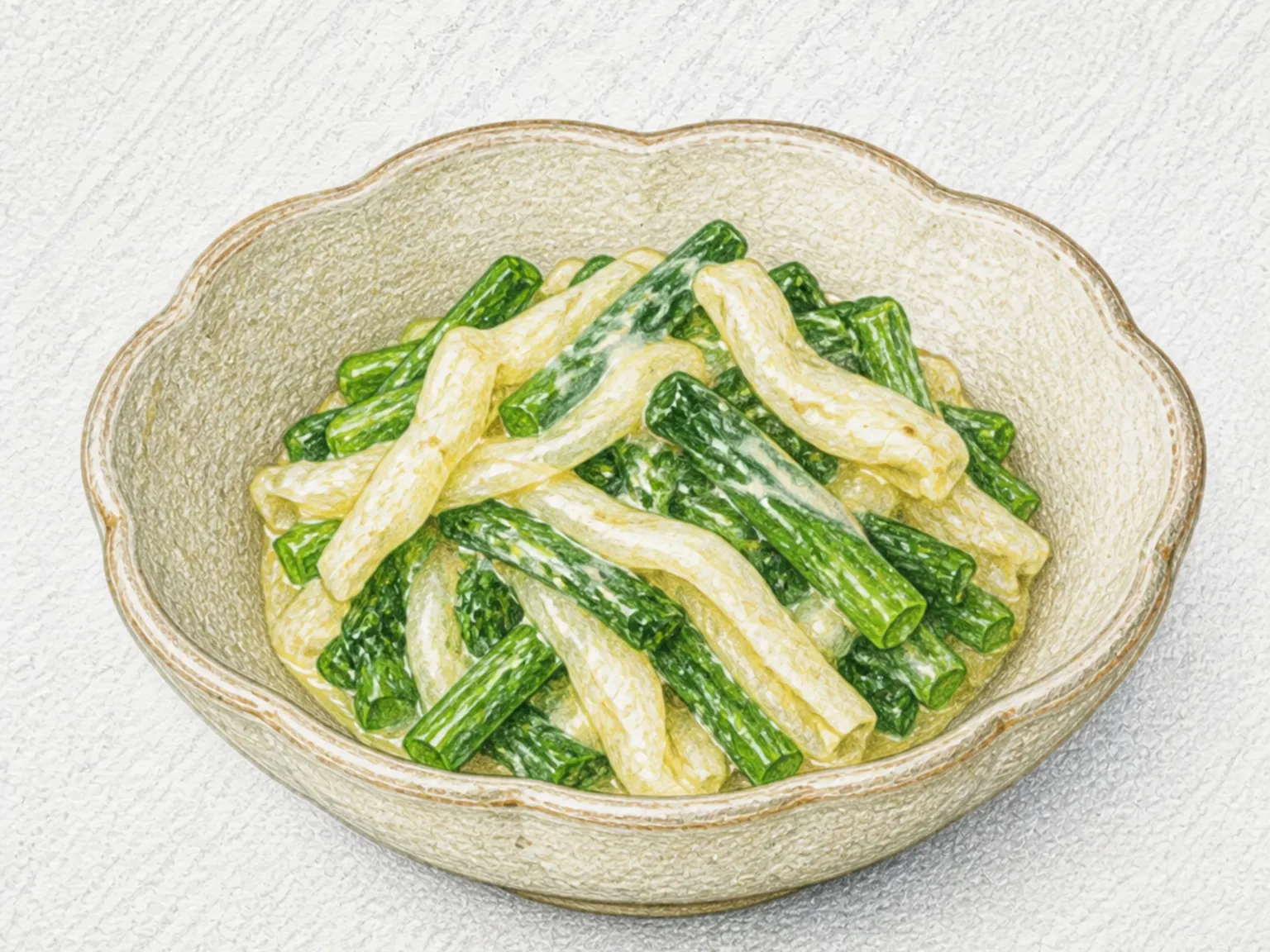
Nuta is a spring side dish from the Kitaura area of Yamaguchi, pairing lightly boiled wakegi scallions with obaike and a thick dressing of white miso, sugar, vinegar, and mustard. Obaike is a regional product made by thinly slicing and blanching the skin and fatty tissue near a whale's tail, giving it a crisp yet resilient bite. The pairing reflects Nagato's whaling history and the local practice of using many parts of the animal; around Hagi, the dish is also called negi-ae. Pressing slippery moisture from the scallions with the back of a knife and adding the sauce immediately before serving keeps the dressing thick instead of watery.
Pork Baozi (Chinese Steamed Pork Cabbage Bun)
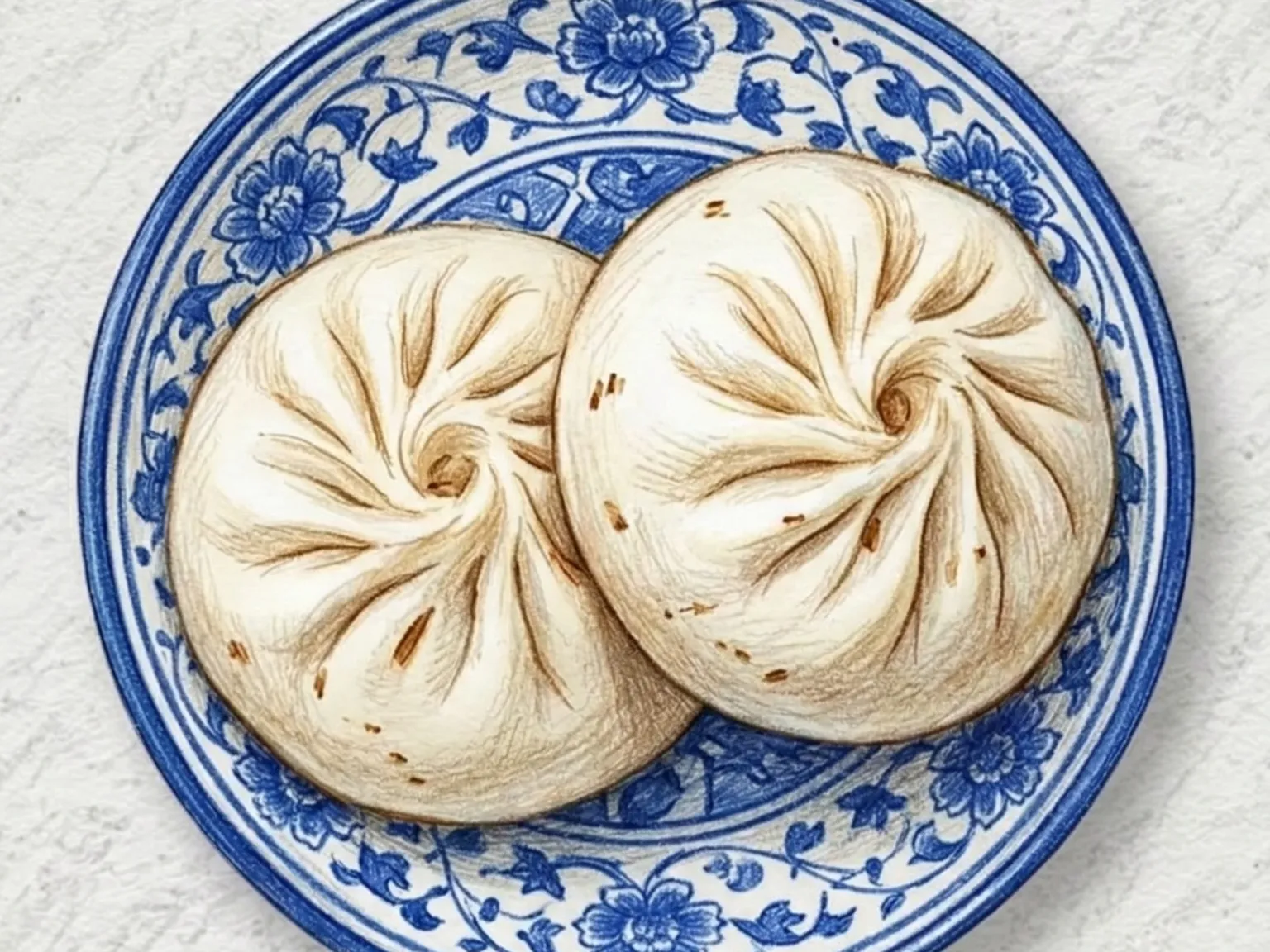
Baozi is a Chinese steamed bun made from yeast-leavened wheat dough filled with seasoned ground pork, cabbage, and scallion. The dough proofs for 40 minutes, during which the yeast activity creates the open crumb structure that gives the finished bun its soft, pillowy texture when steamed. The filling is seasoned with soy sauce and sesame oil, which brings savory depth and aroma to the minced pork and vegetables. Pleating the top of each bun seals in the juices during the 15-minute steam and also creates the ridged crown that visually identifies a well-made baozi. Resting the buns for two minutes with the lid off after turning off the heat prevents the delicate skin from collapsing from the sudden temperature change between the steam environment and the open air. In China, baozi appears on breakfast tables and as a midday snack, and shares ancestry with the broader family of dim sum dumplings, though home kitchens make this version far more regularly than the restaurant varieties.
Iiyachi (Glutinous Rice, Millet, and Azuki Cakes)
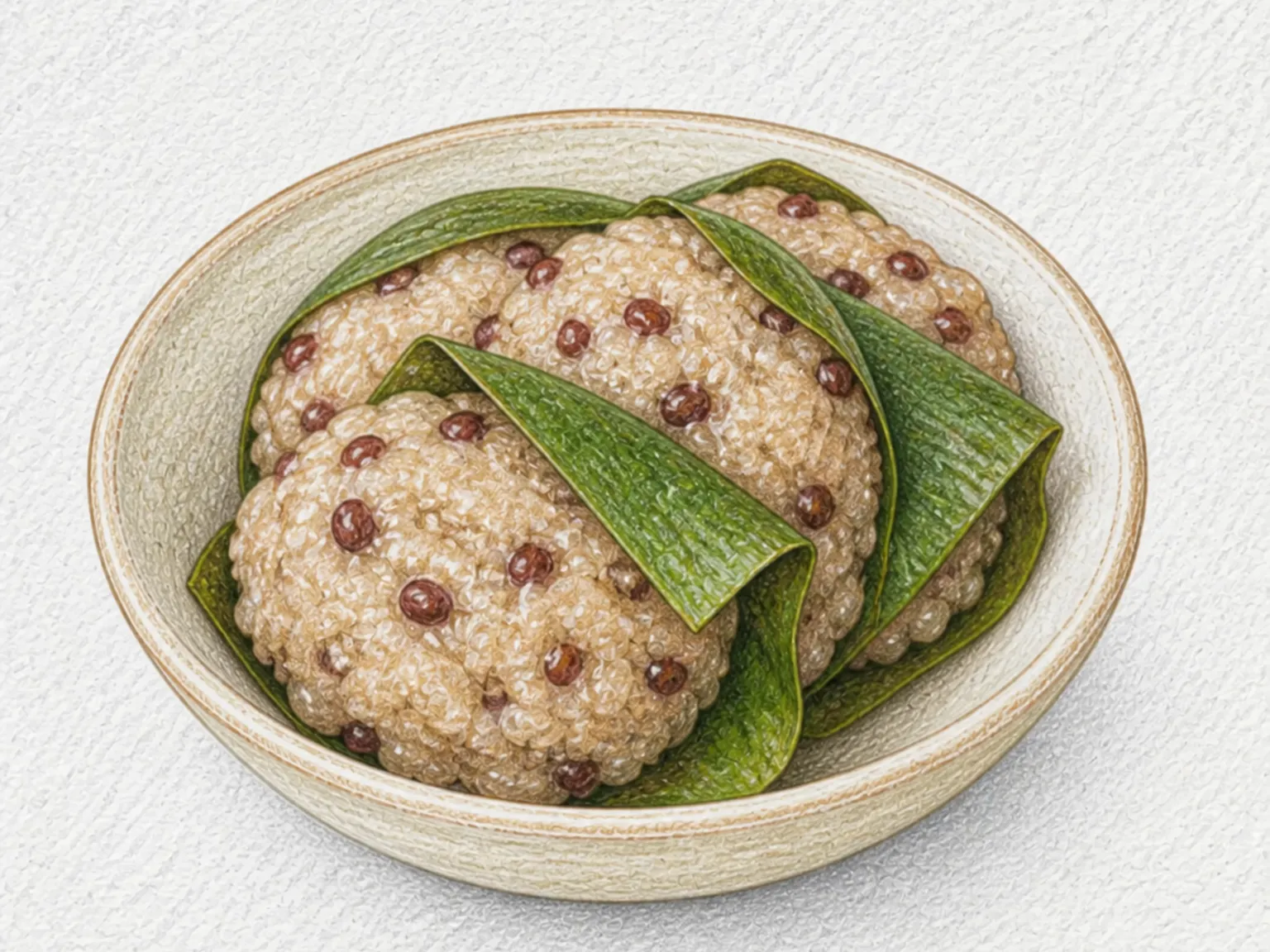
Iiyachi is a traditional preserved food from Taketomi Island in Okinawa's Yaeyama chain. Glutinous rice, glutinous millet, and azuki beans are boiled, drained, worked into a cohesive mass, shaped on oiled Japanese banana leaves, and steamed again. It was prepared for Taketomi's nine-day Seed Festival, a harvest rite with about six centuries of history, so food would be ready during the busiest ceremonial days. Pounding the hot grains with a broad wooden paddle develops their chew, while the final steaming transfers the leaf's fragrance. When sweet potato was the island staple, this grain-rich festival food was considered a special treat.
Eight Treasure Seafood Stir-fry
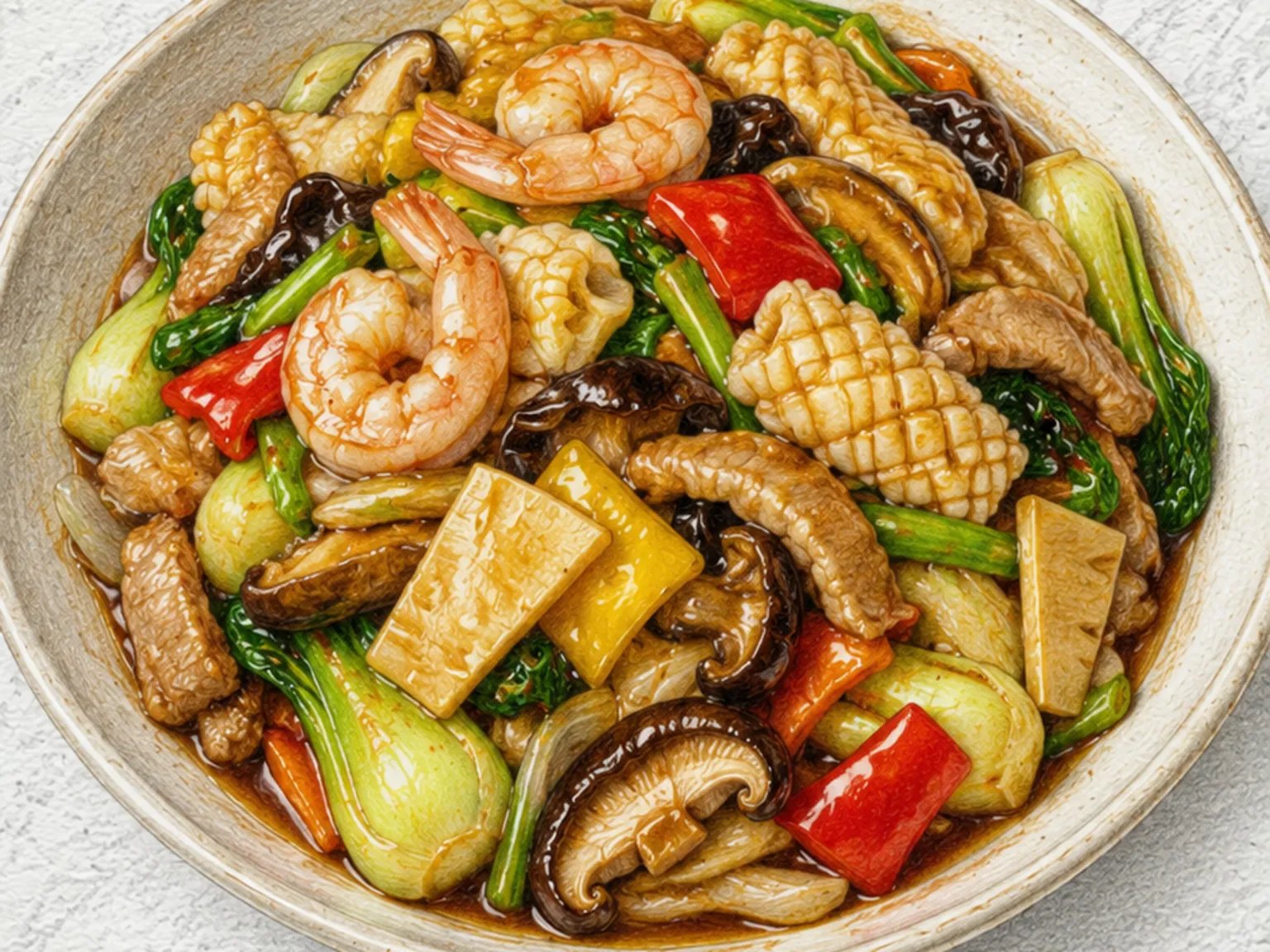
Palbochae brings pork, shrimp, and squid to the same finish by adding them according to how quickly they cook. Cut the three proteins into comparable bite-size pieces, then press the shrimp and squid with paper towels to remove surface moisture. Slice the bamboo shoots, shiitake mushrooms, and bok choy before heating the pan and keep them separate, since there is little time to pause once stir-frying starts. Spread 120 g of pork across a thoroughly heated pan and cook it over high heat for about 1 minute. As the outside begins to lose its red color, add 160 g of shrimp and 150 g of squid. Stir-fry the seafood for roughly 1 minute, moving on as soon as the shrimp changes color and the squid firms slightly. Add the bamboo shoots, mushrooms, and bok choy for another minute. Finally, pour in 1 1/2 tablespoons of oyster sauce and 180 ml of water and boil for 2 minutes. The oyster sauce should disperse through the liquid and form a light coating rather than a heavy paste. Turn off the heat when the pork and seafood are cooked through and the bok choy remains bright, lightly wilted, and crisp at the stem.
Shimane Kashiwa Mochi
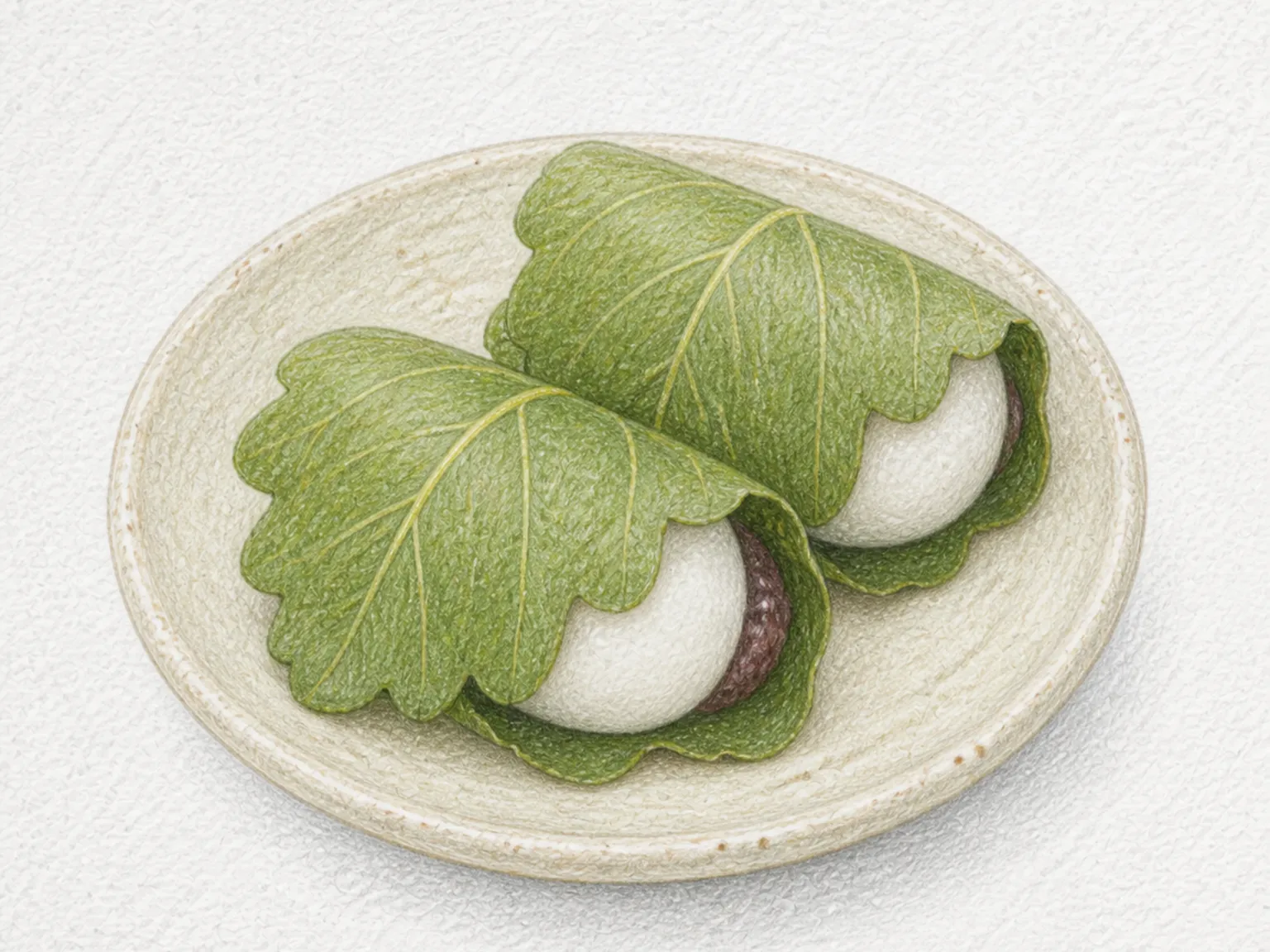
Shimane kashiwa mochi is a seasonal sweet made by enclosing red bean paste in dough prepared from mixed rice dumpling flour, coating it lightly with potato starch, wrapping it in sarutori-ibara leaves, and steaming it. Oak leaves do not grow naturally in the prefecture, so glossy, fragrant sarutori-ibara leaves became the local wrapper. The sweet has many regional names, including katara mochi in the east, maki in the west, and katari manji in Oki. Families prepare it for the Boys' Day observance in May to wish children healthy growth, and also for doro-otoshi gatherings in June or July after rice planting, when the sweet bean filling offers a substantial farm-work snack.
Yakitori (Japanese Charcoal-Grilled Chicken Skewers)
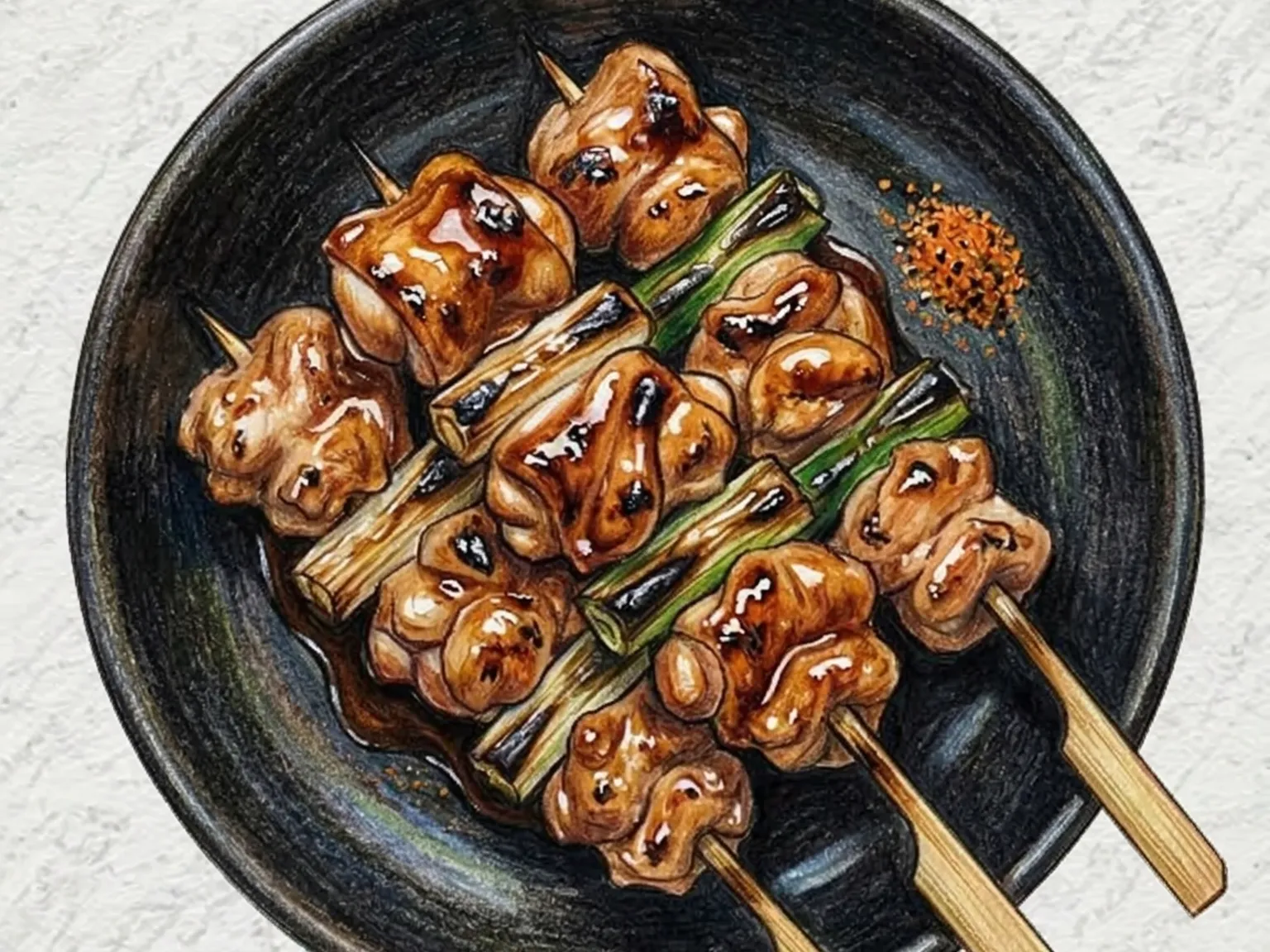
Yakitori is a traditional Japanese chicken skewer dish where bite-sized pieces of chicken thigh and leek are threaded onto bamboo sticks and grilled. The cooking process involves repeatedly brushing the skewers with a sweet soy-based glaze made of soy sauce, mirin, sugar, and sake. This builds a glossy, caramelized coating that pairs with the smokiness from the grill. Threading the ingredients with small gaps allows heat to circulate, ensuring the meat cooks through evenly. As they grill, the leek segments soften and sweeten, balancing the savory glaze. While the glazed version is common, yakitori can also be seasoned simply with salt, a style known as shio, which highlights the natural juiciness of the chicken thigh. The skewers are served hot as a casual dining item.
Ishikari Nabe Salmon Miso Hotpot
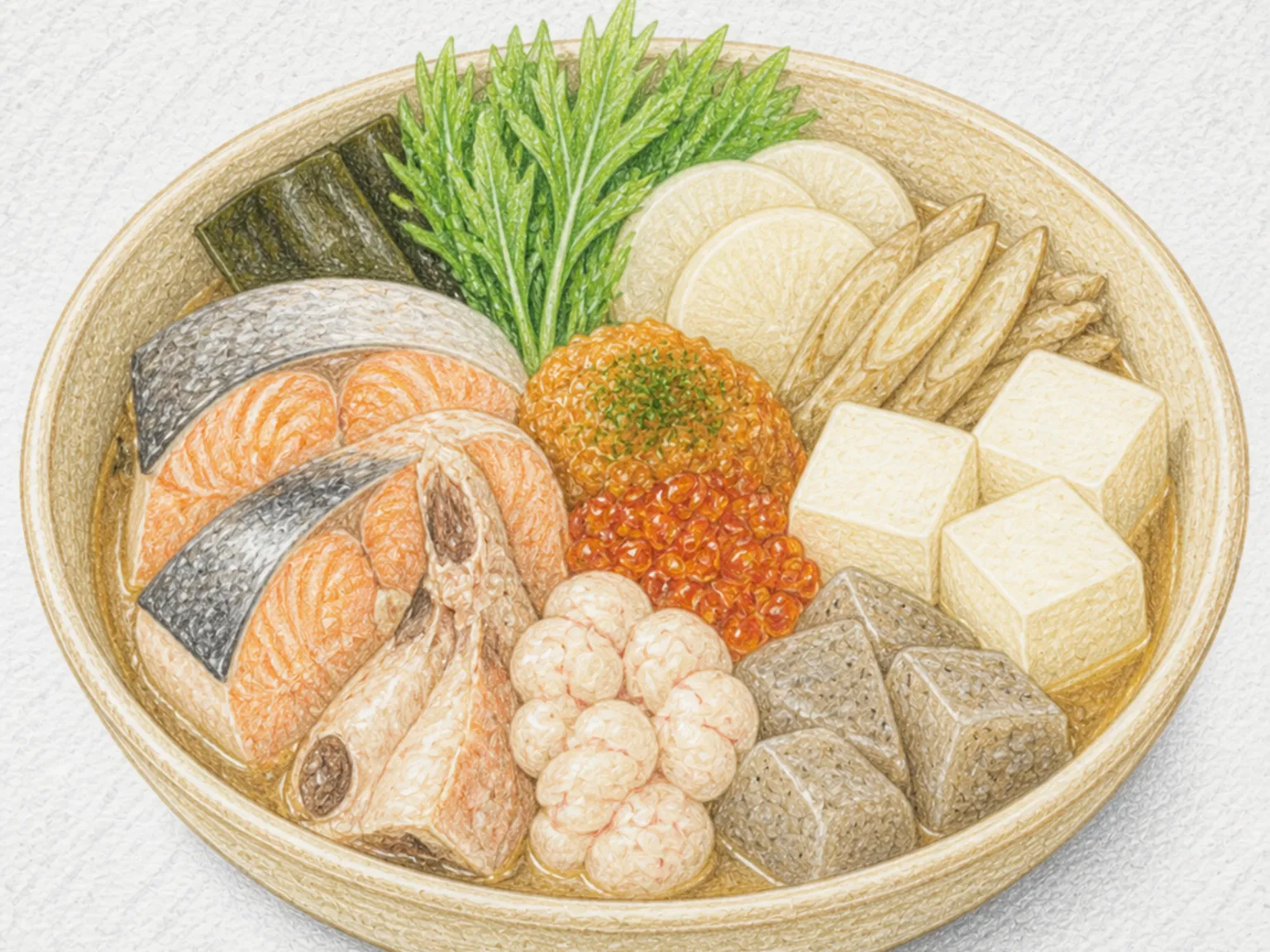
Ishikari nabe is a salmon miso hotpot from the Ishikari region of Hokkaido. Chunks of salmon with skin and bony parts, milt, loose roe, tofu, konnyaku, daikon, burdock, mushrooms, and leafy vegetables cook together in kombu broth, with ground sansho added at the finish. The dish is said to come from fishermen near the mouth of the Ishikari River, where salmon fishing had flourished since the Edo period. To celebrate a large catch, they put pieces and bony parts of fresh salmon directly into a pot of miso soup. Kombu lines the pot, seasoned miso sits in the center, and the ingredients cook around it for a hot winter meal now common in homes.
Sansho Leaf Tsukudani with Dried Whitebait
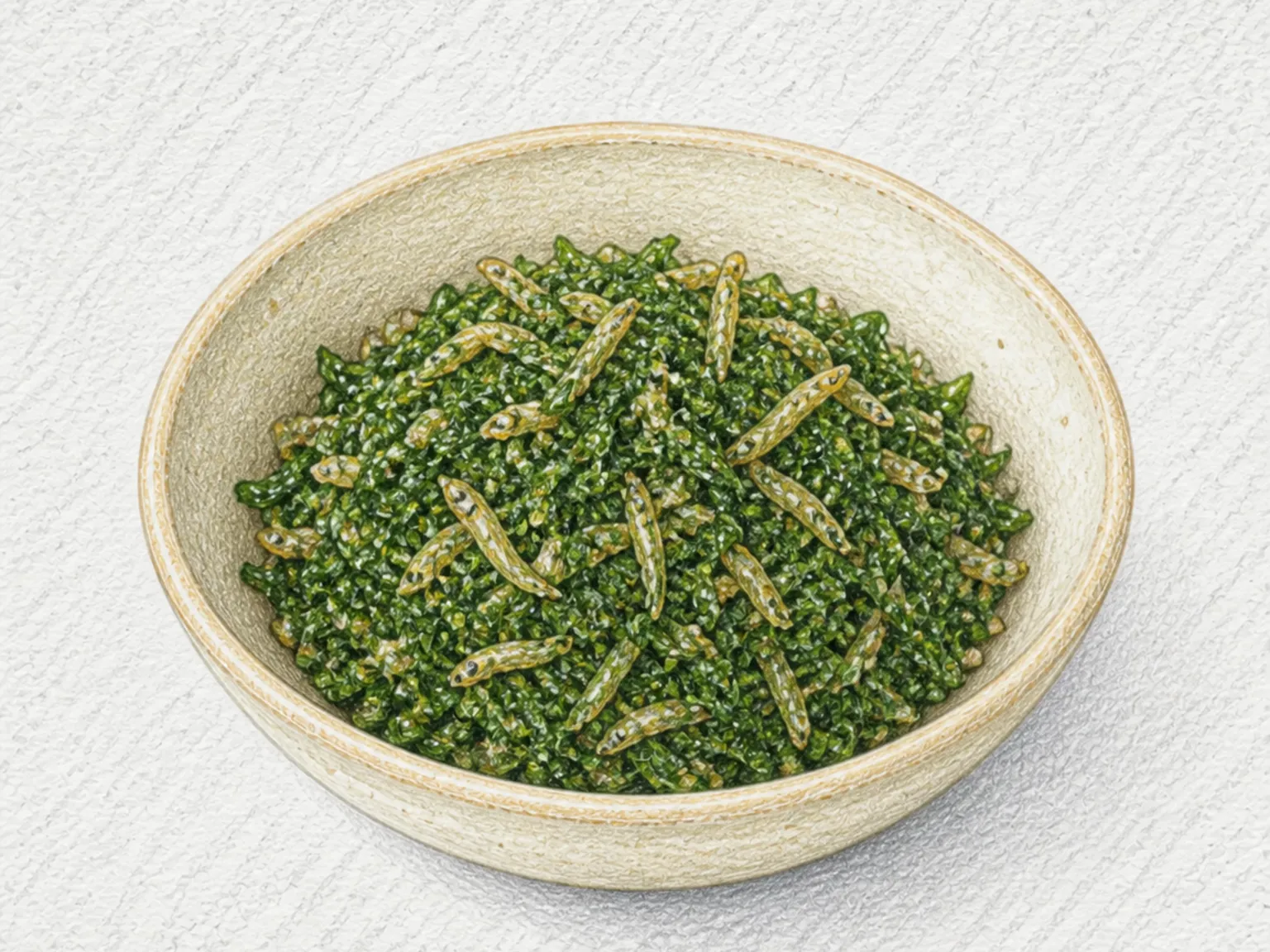
Sansho leaf tsukudani is a Kyoto preserve made from tender spring leaves. The leaves are cleaned, chopped finely, and showered with boiling water to brighten their green color before sake, light soy sauce, and chirimen-jako dried whitebait simmer with them until almost dry. Citrus-like sansho aroma, a gentle tongue-tingling sensation, and the salty savor of fish make a small spoonful sufficient for rice. Sansho has long grown wild around Kyoto's mountain villages and waterways. Cooks use kinome young shoots in early spring, flowers in April, and green berries in May, preserving each short season in different dishes. The finished tsukudani tops rice, rice balls, ochazuke, udon, somen, or chilled tofu. Chopping before the boiling-water rinse helps the leaves retain a vivid color.
Fukumen (Konjac Noodles with Fish Soboro)
Fukumen is a ceremonial dish from Uwajima in Ehime. Shirataki noodles are dry-fried, simmered with dashi, mirin, light soy sauce, sugar, and salt, then cooled under a fluffy topping of boiled white fish cooked into sweet sake soboro. Pink-tinted fish, white konjac, green scallion, and orange mandarin peel are arranged in distinct sections for a multicolored presentation. The fish must be checked carefully for bones, and the noodles need to lose surface moisture before seasoning so the broth is absorbed rather than diluted.
About Asian
Each country brings its own signature spices and sauces, so even the same ingredients can produce completely different flavors. With a few key pantry items - coconut milk, fish sauce, curry powder, doubanjiang - you can recreate the tastes of Asia at home.