Asian

Asian Recipes

806 recipes. Page 11 of 34

The Asian category gathers popular dishes from Japan, China, Thailand, Vietnam, India, and beyond. Curry, stir-fried noodles, mapo tofu, pad Thai, and pho are among the Asian favorites commonly enjoyed in Korean households.

Asian
Hone Kajiri Salt-Simmered Bone-In Pork
Soups Medium

Hone Kajiri Salt-Simmered Bone-In Pork

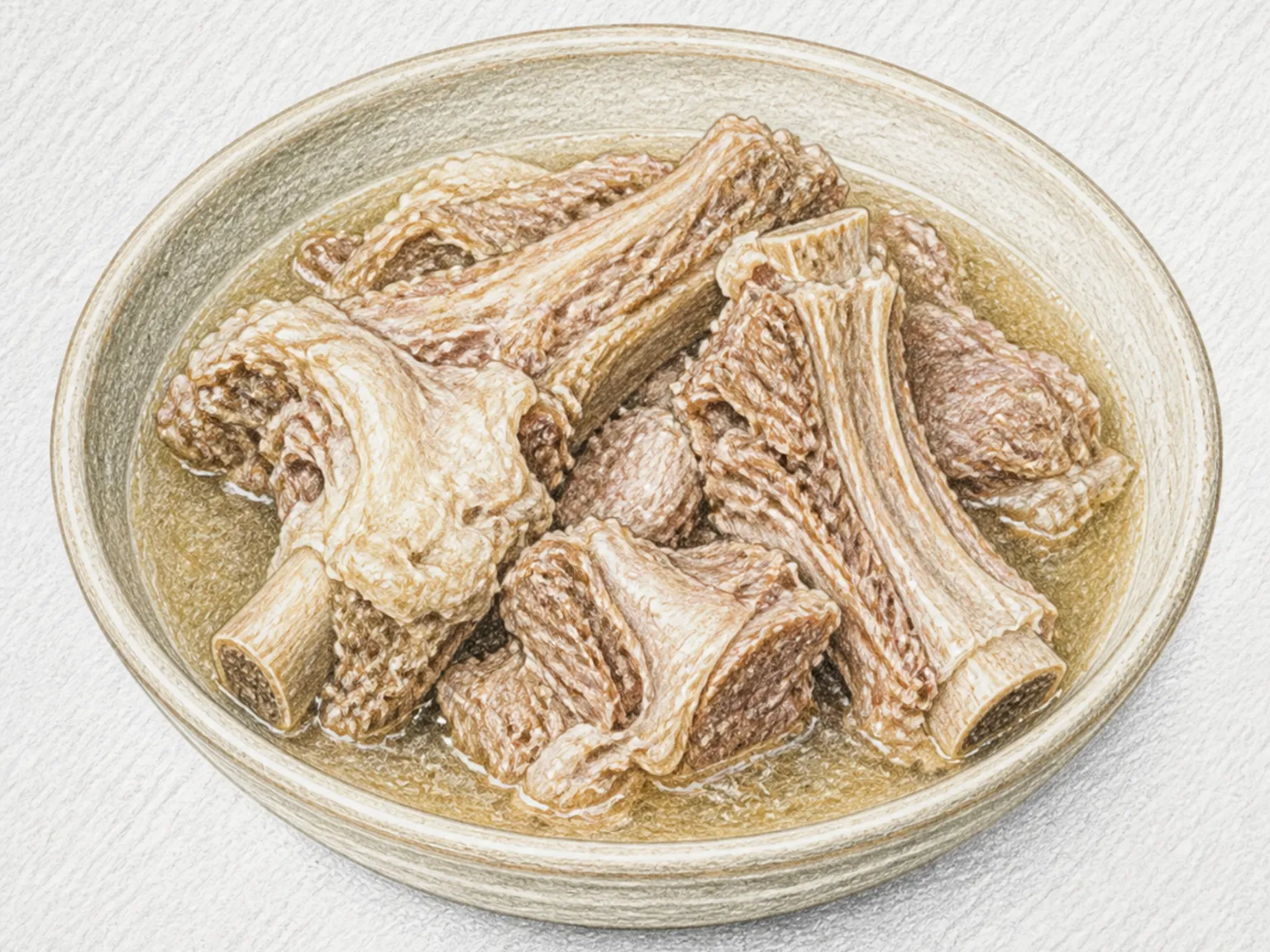
Hone kajiri is an Oku-Kuma specialty from Kumamoto that simmers large meaty pork or wild-boar bones, such as ribs, backbones, and pelvic sections, in water for about three hours and seasons them simply with salt and a little soy sauce. It is said to descend from hunters who used every scrap of meat left on the bones after butchering. Today pork versions are still prepared generously for regional events and large gatherings. The bones start in cold water so foam and excess fat can rise gradually and be skimmed thoroughly. After the first boil, low heat keeps the liquid from churning and allows the attached meat to soften without drying. Seasoning waits until the meat nearly falls from the bone. Each large piece is served intact, held by hand, and picked clean around the bone, while the deeply extracted broth is enjoyed alongside it.

🎉 Special Occasion 🍺 Bar Snacks
Prep 25min Cook 190min 6 servings
Dried Squid Koji Pickle
Kimchi Hard

Dried Squid Koji Pickle

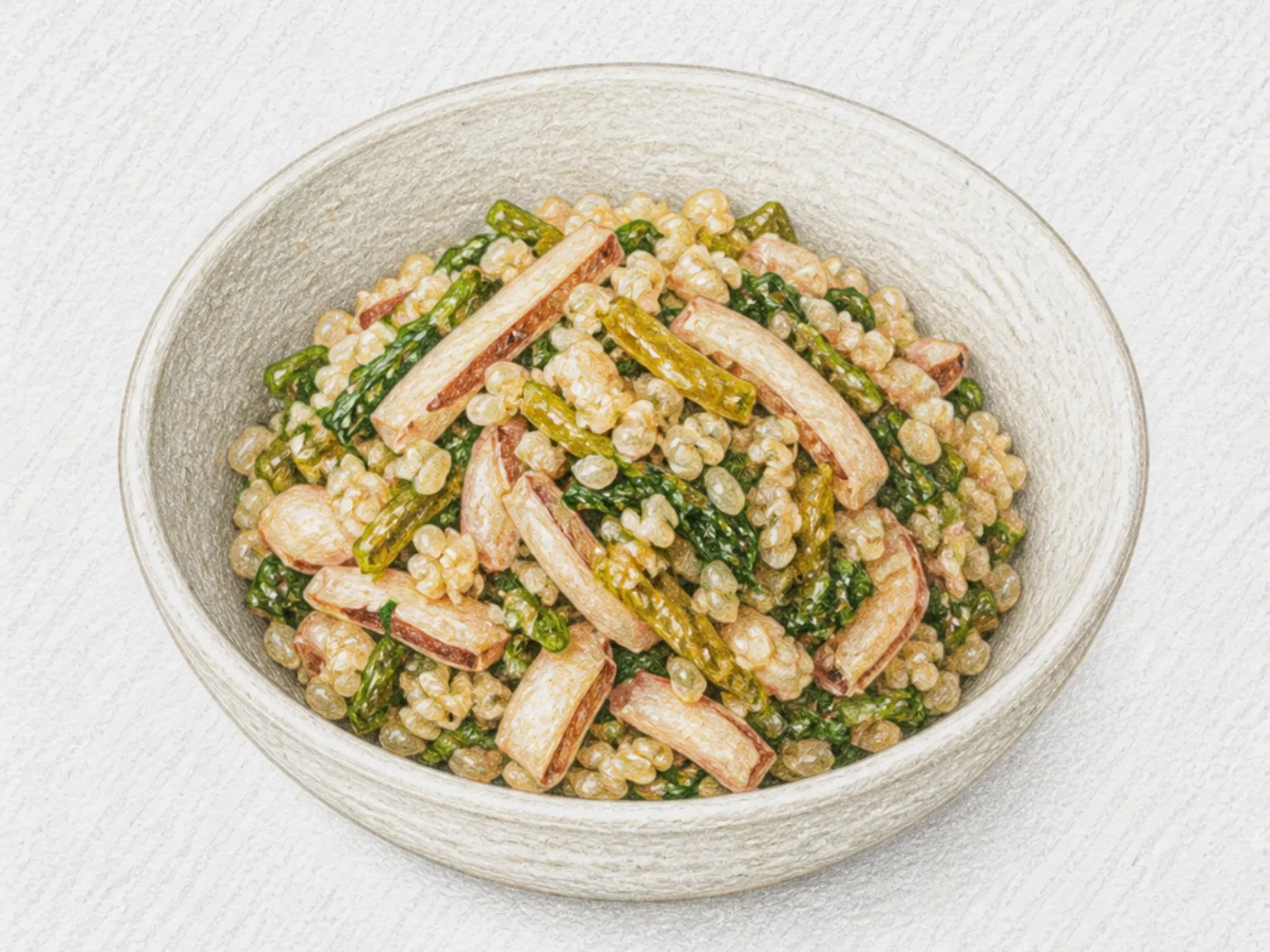
Dried squid koji pickle is a preserved food from Tottori, made by curing finely cut squid and salt-pickled vegetables with rice koji. Families prepared it from autumn through winter as a rice accompaniment or drink snack, and each household developed its own flavor through salted shiso leaves and seeds, eggplant, cucumber, and myoga. Traditional crocks were weighted and aged for more than twenty days in cold weather. This conservative home version uses only commercial food-grade koji, ready-to-eat fully dried squid, and commercially salt-pickled vegetables. The seasoning is boiled and cooled before mixing, then the pickle is held at 4°C or colder for ten days rather than left at room temperature.

🍺 Bar Snacks 🏠 Everyday
Prep 90min Cook 10min 24 servings
Crossing the Bridge Noodles
Noodles Hard

Crossing the Bridge Noodles

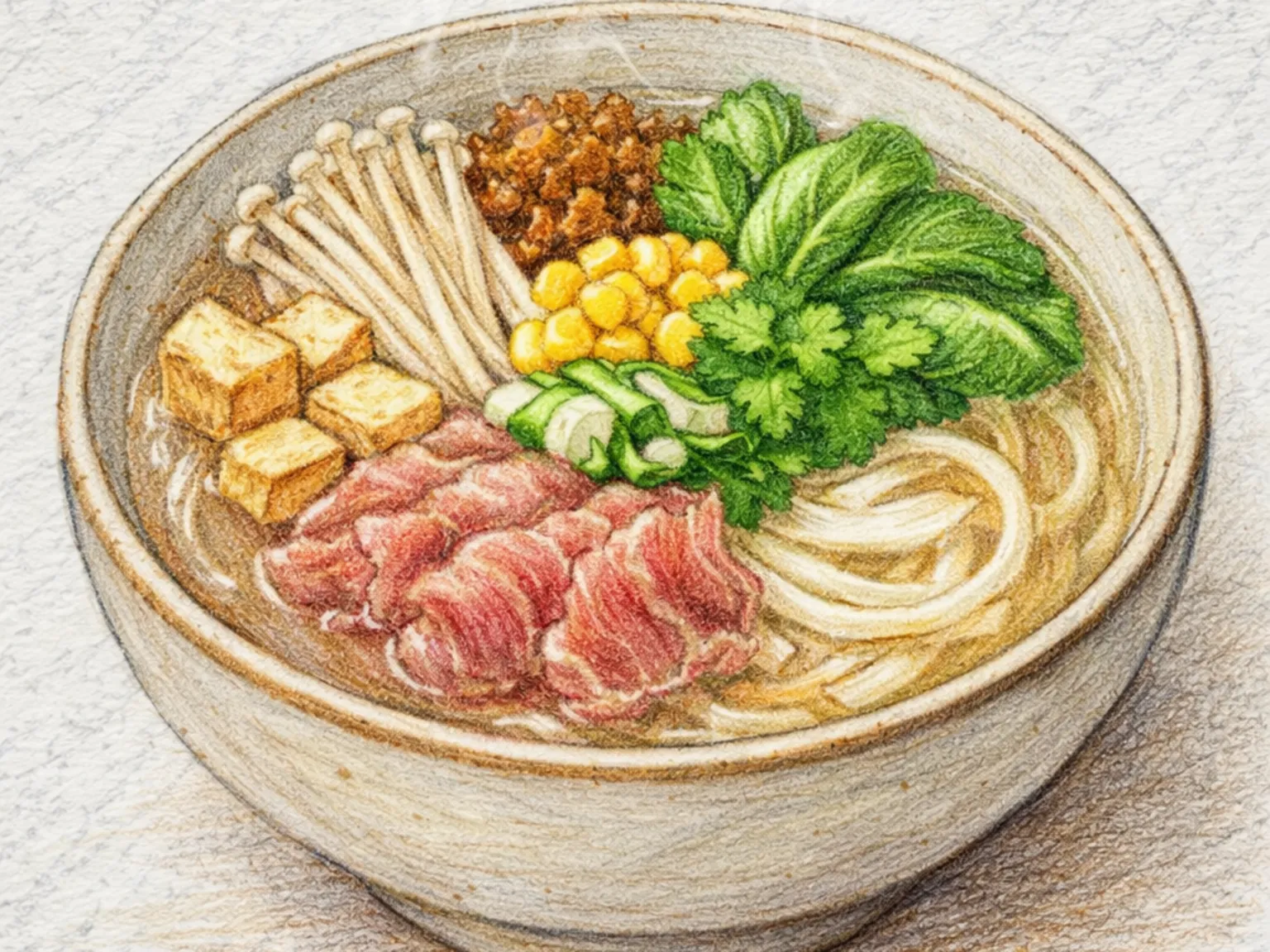
Crossing bridge noodles is the signature dish of Yunnan province in China, served as a bowl of boiling-hot, clear chicken broth sealed under a thin layer of hot oil, accompanied by separate plates of paper-thin raw meats, vegetables, tofu skin, quail eggs, and rice noodles. The oil cap acts as an insulating lid, holding the broth at a temperature high enough to cook raw ingredients the moment they touch the surface. Meat sliced so thin it is nearly translucent turns opaque within seconds without any external heat source. Diners add ingredients in a deliberate sequence, starting with items that need the most time and ending with the noodles, which go in last to prevent them from absorbing broth and softening. By the time the bowl is finished, each component has reached its ideal texture inside the single vessel. The dish takes its name from a legend about a devoted wife who carried soup across a long bridge to her husband studying for imperial examinations, relying on the oil layer to keep the broth hot for the entire journey.

🎉 Special Occasion 🌙 Late Night
Prep 25min Cook 30min 2 servings
Thai Larb Gai
Salads Medium

Thai Larb Gai

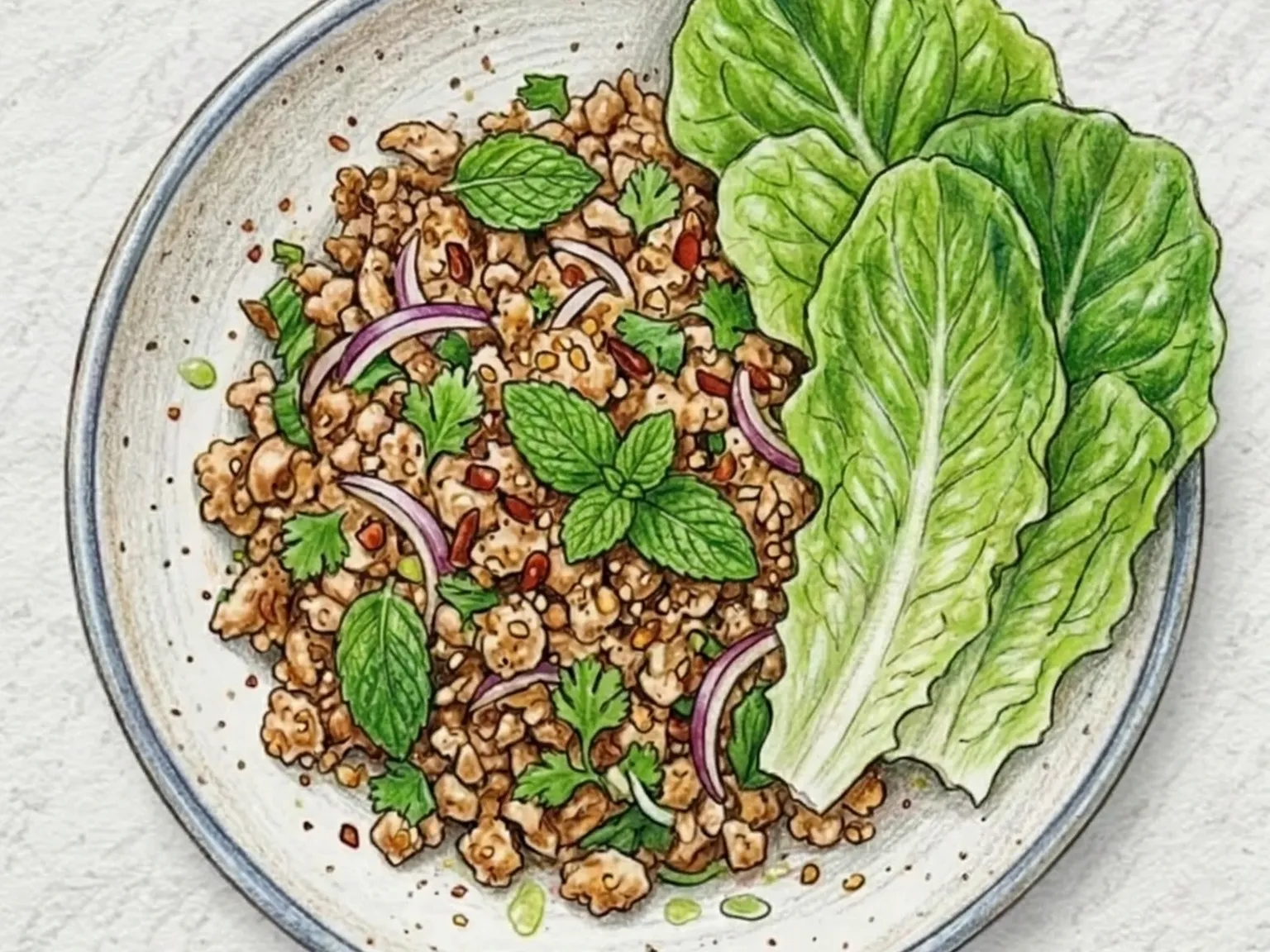
Larb gai is a traditional salad preparation originating from the Isan region of Thailand that uses ground chicken as its primary protein component. During the cooking process, the minced meat is simmered with a small volume of water to ensure that it remains soft and retains its natural moisture throughout the preparation. The chicken is then seasoned using a combination of fish sauce and the juice squeezed from fresh limes. A specific ingredient that gives this dish its unique character is khao khua, which is rice that has been dry-toasted and subsequently processed into a coarse powder. To create this, plain white rice is heated in a dry pan without the addition of any oil until the grains develop a golden brown color and release a toasted aroma. When this ground rice is added to the salad, it introduces a nutty and slightly smoky flavor profile that distinguishes larb from other types of minced meat preparations found in the region. The dish also incorporates thin slices of raw red onion, which provide a sharp flavor and a crisp texture. Additionally, fresh mint leaves are mixed in to provide a cooling herbal quality that balances the savory notes of the seasoned chicken. After the salad has been placed on a plate, the amount of lime juice can be adjusted according to individual preferences for acidity. The standard method for consuming larb gai involves placing a portion of the mixture into a fresh, crisp lettuce leaf, which provides an extra layer of crunch while helping to moderate the intensity of the spices.

🥗 Light & Healthy 🏠 Everyday
Prep 15min Cook 10min 2 servings
Banh Cuon (Hanoi Steamed Rice Rolls with Pork and Mushroom)
Asian Hard

Banh Cuon (Hanoi Steamed Rice Rolls with Pork and Mushroom)

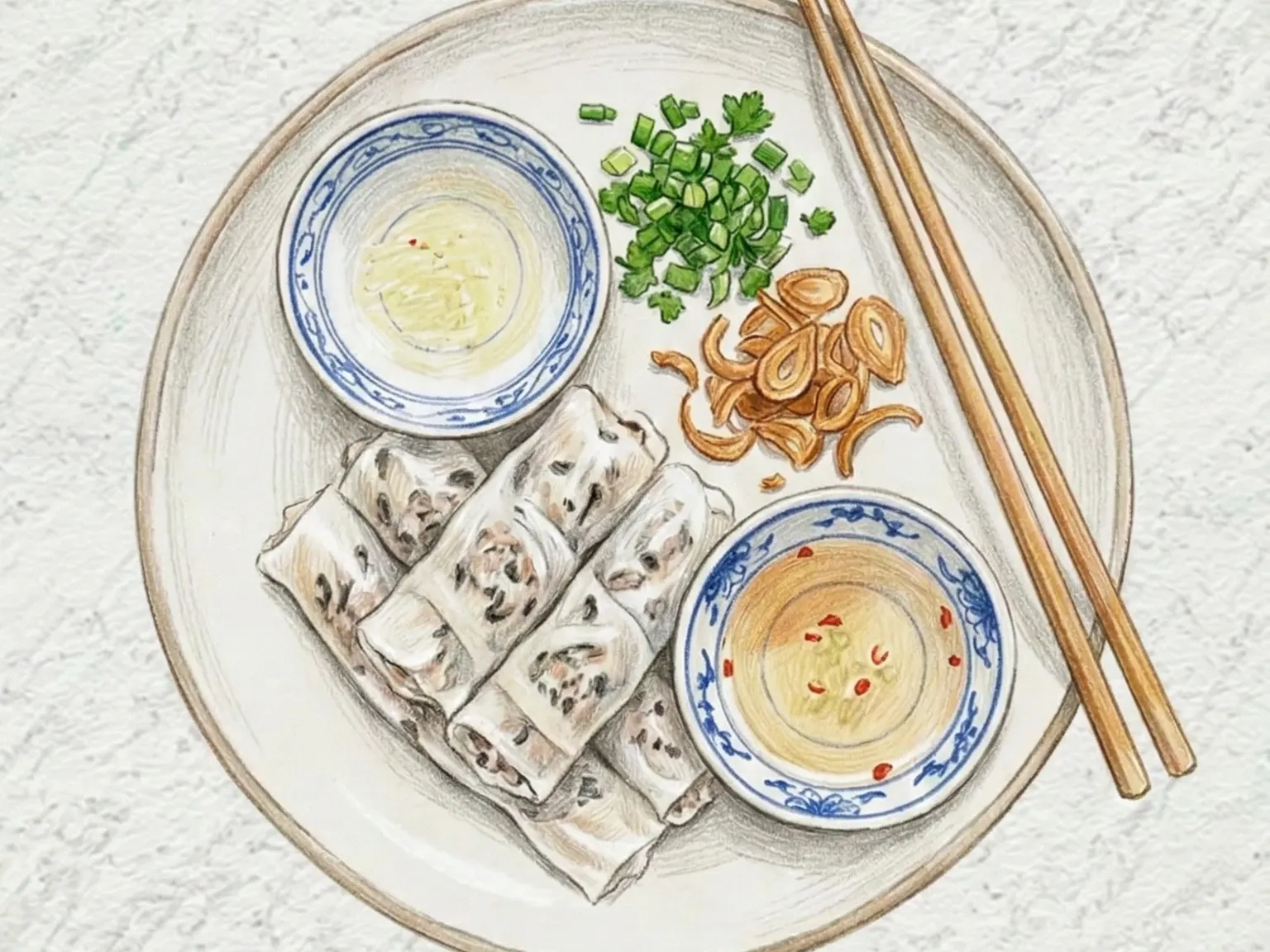
Banh cuon uses a thin rice flour and tapioca starch batter to make steamed sheets wrapped around pork and wood ear mushrooms. Whisk 220 g rice flour, 30 g tapioca starch, and 500 ml water until smooth, then rest the batter for 20 minutes. Stir before steaming each sheet because the starch settles between batches. Chop 40 g soaked wood ear mushrooms into 0.3 cm pieces and cook them with half an onion and 220 g ground pork in part of the measured cooking oil. When the pork reaches 71C at the center, add 1.5 tablespoons fish sauce and continue over medium heat until no liquid remains in the pan. A wet filling will weaken the thin sheet, so check the pan before rolling. Spread one ladle of batter in a paper-thin layer on steaming cloth stretched over boiling water. Cover and steam over high heat for 40 seconds. Lift the translucent sheet carefully from one edge, place the filling in the center, and roll without pulling the wrapper. Brush the finished rolls lightly with the remaining oil so they do not stick, and plate them before the sheets dry and crack.

🎉 Special Occasion
Prep 30min Cook 25min 3 servings
Hainanese Chicken Rice (Poached Chicken on Fragrant Rice)
Rice Medium

Hainanese Chicken Rice (Poached Chicken on Fragrant Rice)

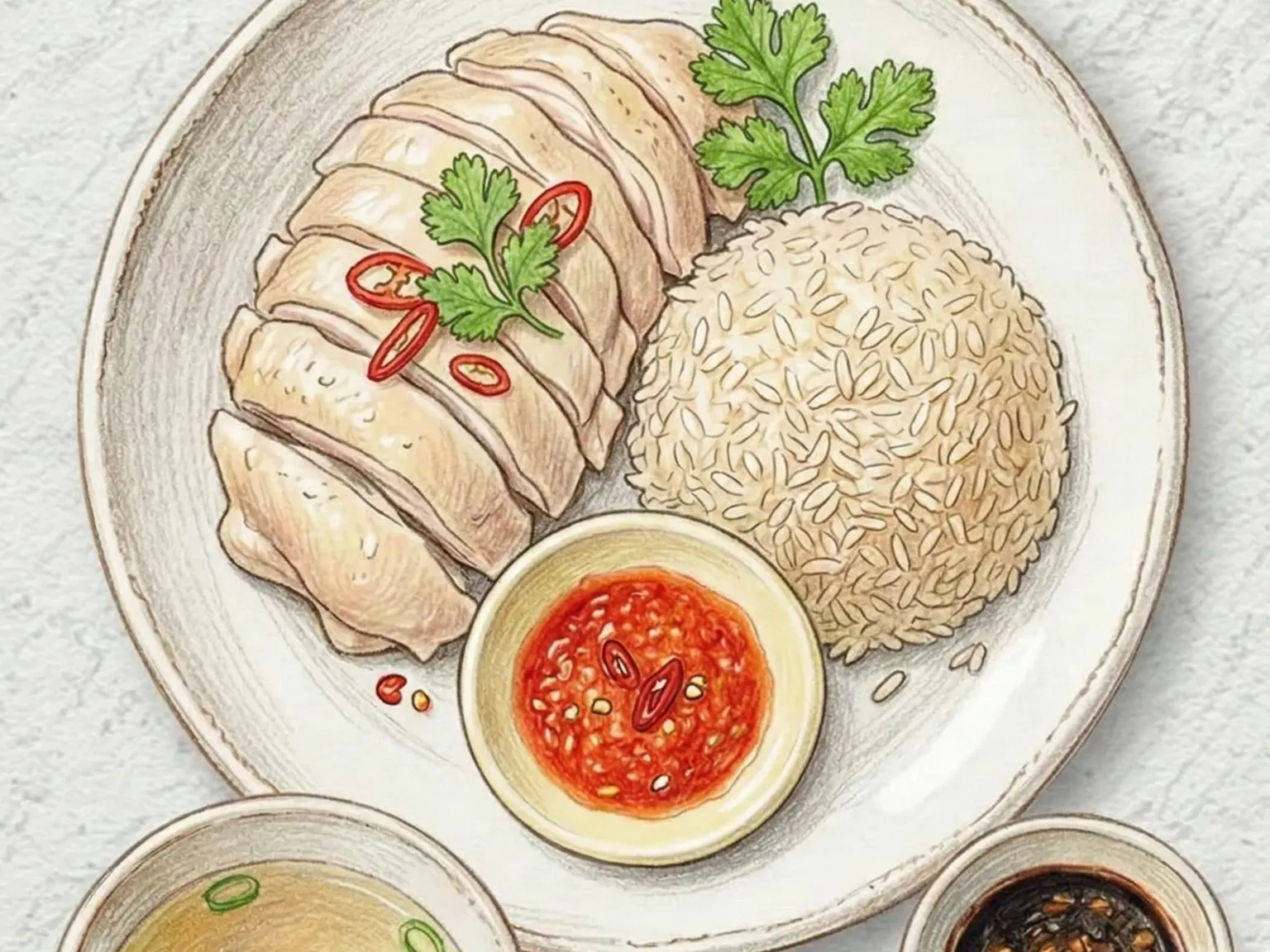
Hainanese chicken rice is the signature dish of Singapore and Malaysia, built on the deceptively simple technique of poaching bone-in chicken thighs in water seasoned with ginger and scallion at a consistently gentle temperature, then using the resulting broth to cook the rice. The temperature during poaching is the defining variable: the water must stay at a bare tremble rather than a rolling boil to keep the muscle fibers relaxed and the meat silky rather than fibrous or dry. For the rice, garlic and ginger are sauteed in oil or rendered chicken fat until fragrant, then raw jasmine rice joins the pot and the strained poaching broth replaces plain water for cooking. A spoonful of additional chicken fat stirred in before the lid goes on gives the finished rice a glossy sheen and noticeably richer aroma. The poached chicken is cooled, sliced across the grain to show a smooth, tender cross-section, and arranged alongside fresh cucumber slices that add a crisp, refreshing contrast to the soft meat. Two condiments accompany the dish and define its character: a chili-ginger sauce that provides heat and brightness, and a thick, dark soy sauce that contributes deep, caramel-like sweetness. Despite relying on few ingredients, the dish rewards careful attention to poaching temperature and broth management at every stage.

🎉 Special Occasion 🍺 Bar Snacks
Prep 20min Cook 45min 4 servings
Ninjin Shirishiri (Okinawan Carrot and Egg Stir-Fry)
Stir-fry Easy

Ninjin Shirishiri (Okinawan Carrot and Egg Stir-Fry)

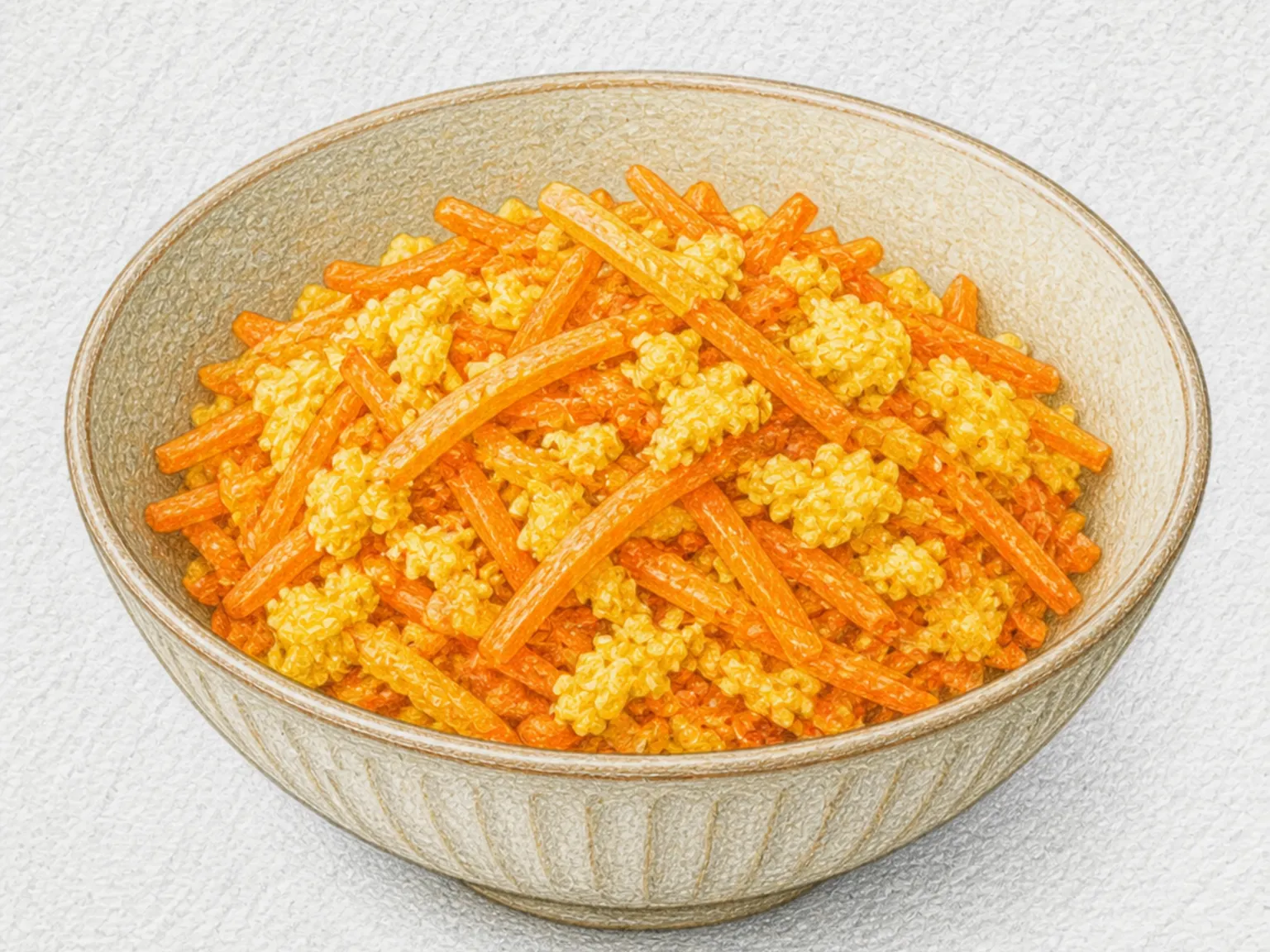
Ninjin shirishiri uses 250 g carrot cut into long coarse strands, then finishes it with 2 eggs folded broadly through the pan. Wash the carrot, peel it thinly only if needed, and use a coarse grater or julienne slicer to make strands 4 to 5 cm long. Cutting them too fine removes their distinct bite during the medium-heat cooking stage. Use the safety holder when the remaining carrot brings your hand close to the blade. Beat the eggs until the whites and yolks are evenly combined and check that no shell fragments remain. Heat 1 tablespoon cooking oil over medium heat, add the carrot with 0.9 teaspoon salt, and spread the strands across the pan. Turn the bottom layer upward for 5 to 6 minutes. Move on once the carrot bends easily and its orange color has deepened. Pour the beaten eggs broadly over the strands and leave them undisturbed for about 10 seconds. When the edges begin to set, fold the egg and carrot together in large strokes for 1 to 2 minutes. Fine, constant scrambling would break up both textures. Turn off the heat only when no liquid egg remains visible between the carrot strands.

🏠 Everyday ⚡ Quick
Prep 10min Cook 10min 4 servings
Akita Kamabuku
Desserts Hard

Akita Kamabuku

Kamabuku is an Akita ceremonial sweet made by layering a white potato-and-rice-flour dough with a red-bean potato dough, rolling them into a spiral, shaping the roll like kamaboko, and steaming it for about ninety minutes. It developed in inland mountain communities where fish was difficult to obtain, so familiar potatoes, sugar, and rice flour were transformed into a decorative kuchitori sweet that resembled fish cake. In Kamiiwakawa it is called kamabuku, a local rendering of kamaboko; in parts of Odate it is known as agemono because families made it during the quiet winter farming season and gave it to relatives. Thick slices reveal a festive white-and-red spiral served at New Year, ceremonies, festivals, and sports days.

🎉 Special Occasion 🧒 Kid-Friendly
Prep 90min Cook 90min 50 servings
Peking Duck
Grilled Hard

Peking Duck

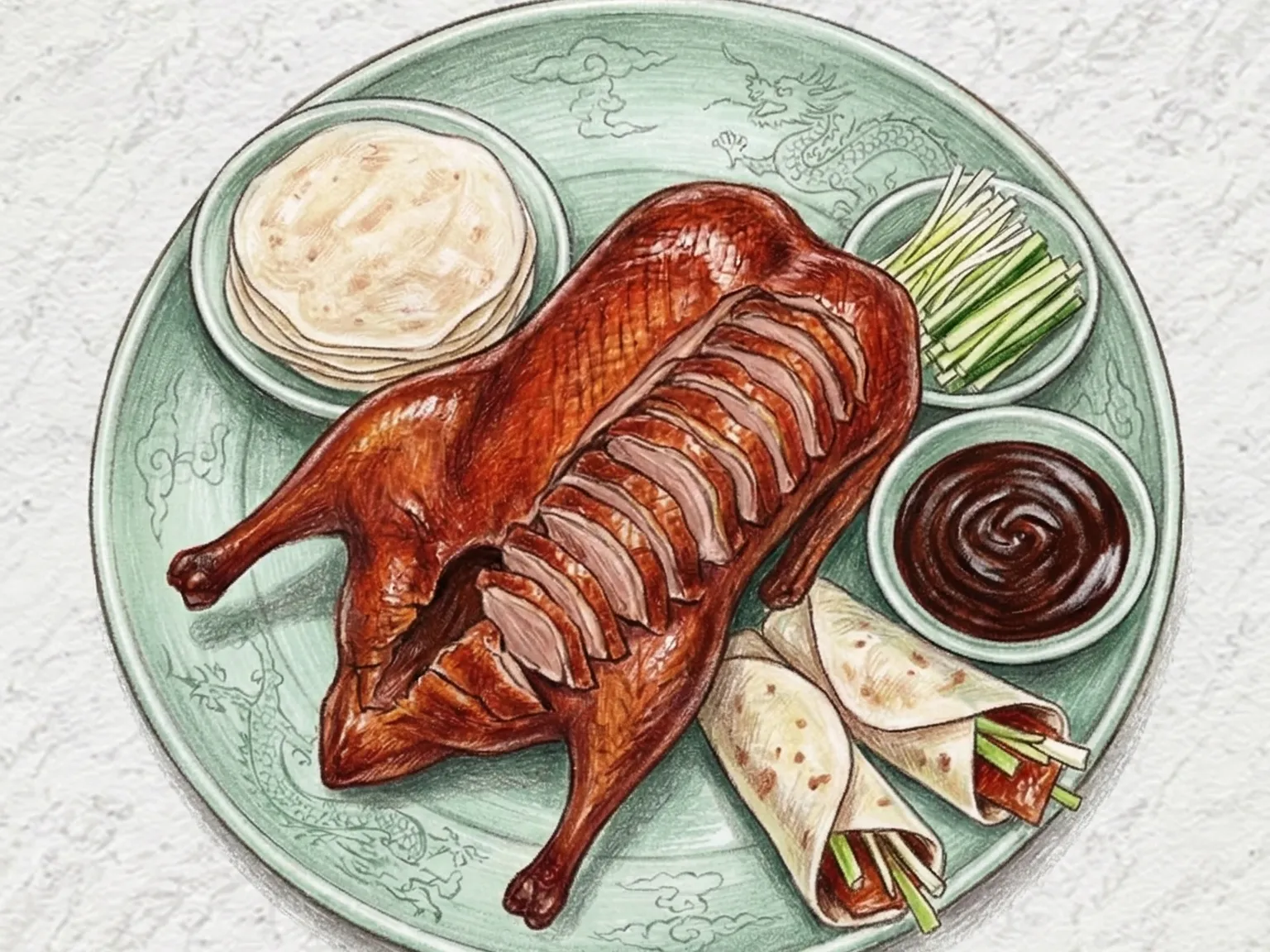
Peking duck is a centuries-old Chinese banquet dish refined in the imperial kitchens of Beijing. A whole duck is air-dried to tighten the skin, then roasted at high heat until the exterior shatters like glass while the fat beneath renders almost entirely away. The skin is the centerpiece: a lacquered sheet of crunch that carries a faint sweetness from the maltose glaze applied before roasting. Traditionally, a skilled carver slices the skin and meat tableside into thin pieces. Diners place a few slices onto a paper-thin wheat pancake, add julienned scallion and cucumber, streak on hoisin sauce, then roll everything into a tight parcel. Each bite layers crisp skin, supple meat, raw vegetable crunch, and the fermented sweetness of the sauce into a single mouthful.

🎉 Special Occasion
Prep 90min Cook 70min 4 servings
Hot and Sour Soup
Soups Easy

Hot and Sour Soup

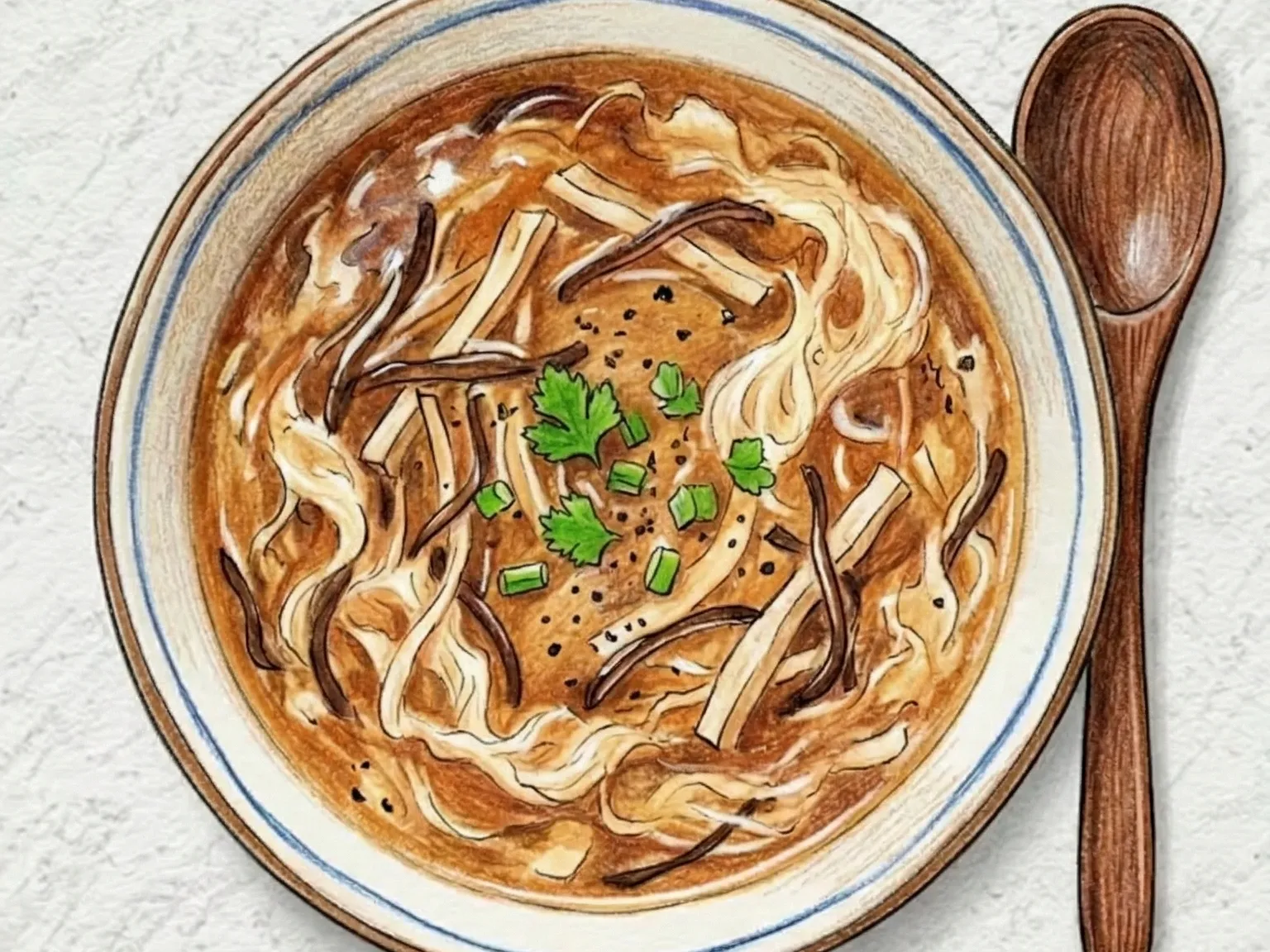
Hot and sour soup is among the most widely recognized Chinese soups, and its defining character comes not from chili but from two specific sources: black vinegar's sharp acidity and white pepper's slow, creeping heat. Chicken broth forms the base, simmered with cubed tofu, reconstituted wood ear mushrooms, and sliced shiitake. A cornstarch slurry is worked in gradually, small additions at a time, to build a lightly viscous consistency without tipping the broth into something gluey and heavy. Beaten egg is poured in a thin, steady stream while the soup is stirred, forming delicate ribbons that float throughout. Two timing rules matter: the slurry goes in slowly, and the vinegar goes in last, after the heat is reduced, because its volatile aroma dissipates quickly if boiled. Wood ear mushrooms provide a springy, almost cartilaginous chew that contrasts with the softness of the tofu and the wispy egg threads. The white pepper heat lingers and builds after each spoonful, arriving late rather than hitting immediately, which gives the soup its characteristic slow warmth.

🏠 Everyday 🥗 Light & Healthy
Prep 15min Cook 20min 4 servings
Sushiko (Lactic-Fermented Glutinous Rice and Vegetables)
Kimchi Hard

Sushiko (Lactic-Fermented Glutinous Rice and Vegetables)

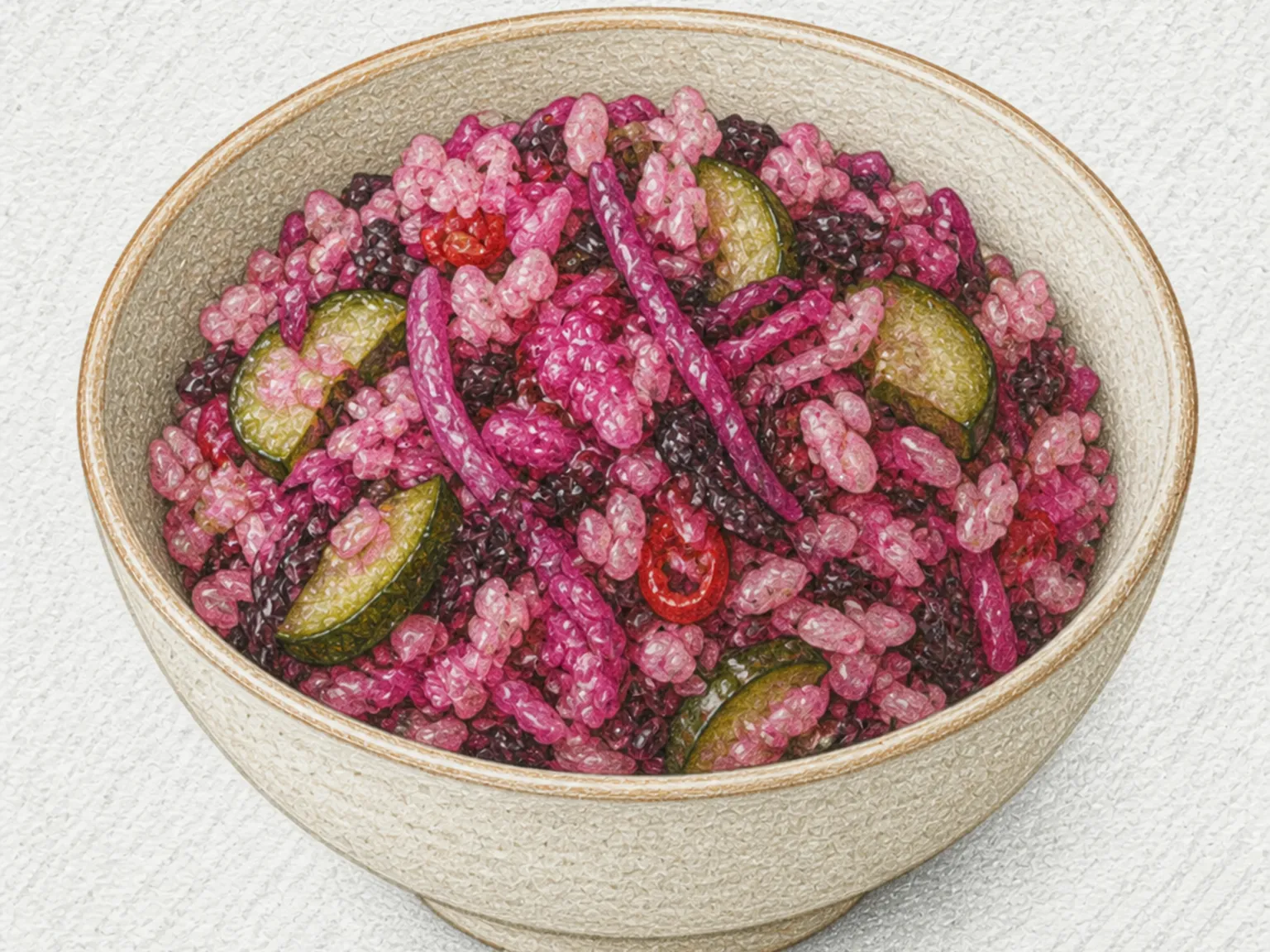
Sushiko is a preserved food from the northwestern Tsugaru region of Aomori Prefecture, sometimes described as a pickle made from rice. Glutinous rice is steamed and cooled completely. Five kilograms of cucumber and purple cabbage are salt-rubbed to draw out moisture, while red shiso leaves are separately rubbed with salt to remove harshness. Red chili, concentrated five-fold vinegar, and a small amount of white sugar season the vegetables. The cooled rice and prepared vegetables are mixed and packed firmly in layers into a clean 18 L pickling barrel. A weight presses the batch while it rests in a cool place for several days. As lactic fermentation develops, the red color spreads through the rice, the mixture becomes increasingly gooey, and its sourness grows. It is eaten as a side dish with plain rice, with the fermentation time chosen according to the preferred acidity and texture.

🏠 Everyday
Prep 90min Cook 60min 60 servings
Dan Dan Mian (Sichuan Spicy Noodles)
Noodles Medium

Dan Dan Mian (Sichuan Spicy Noodles)

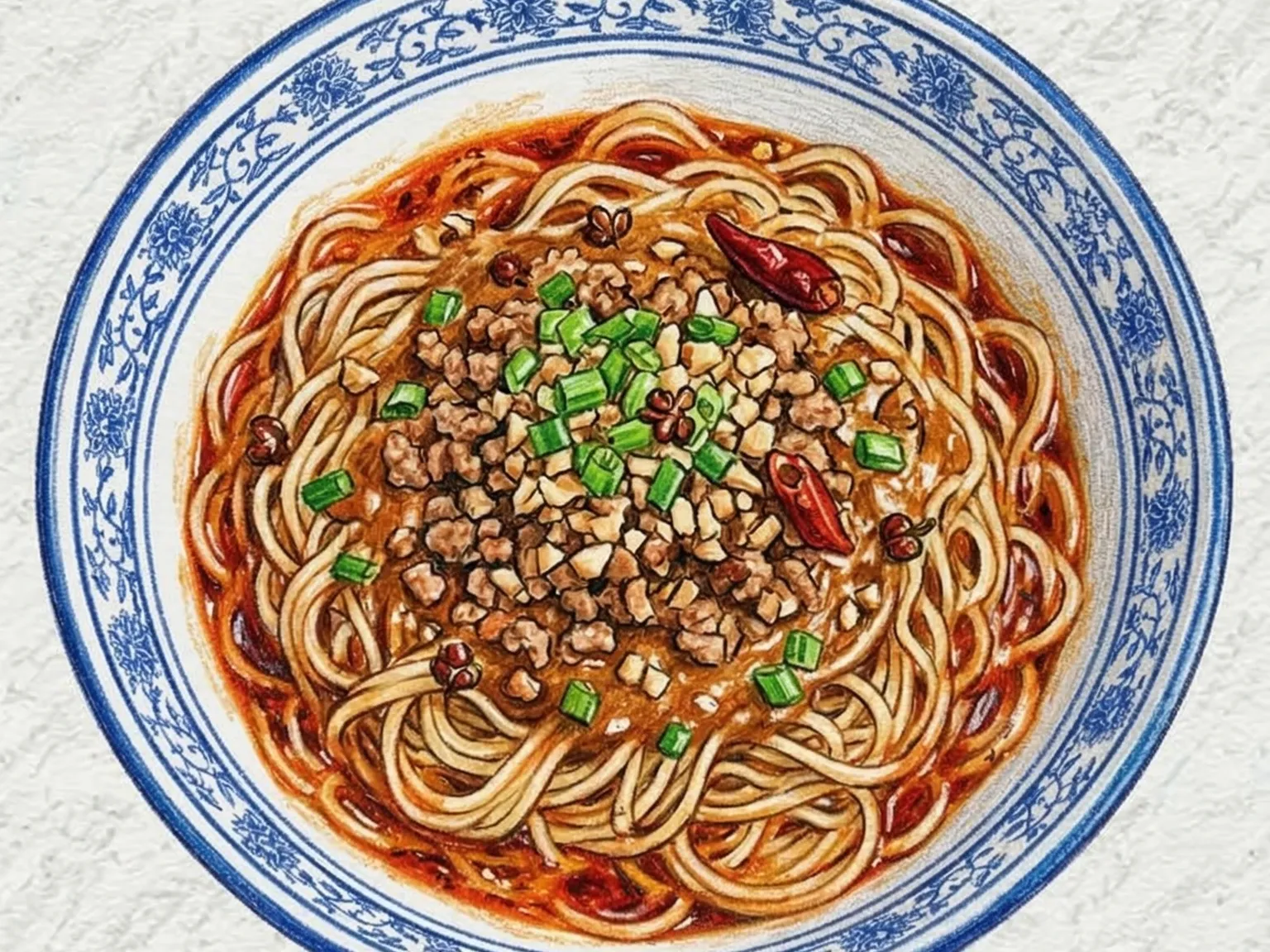
Dan dan mian is a Sichuan noodle dish built on a thick sauce of sesame paste, soy sauce, chili oil, and vinegar, topped with wheat noodles and browned ground pork. Ground Sichuan peppercorn brings a lip-numbing, almost electric sensation that sits underneath the chili oil's direct heat and the sesame paste's deep richness, creating multiple distinct layers in a single mouthful. Browning the pork thoroughly before adding any liquid is essential -- the caramelized crust develops a roasted meatiness that permeates the entire sauce and prevents the dish from tasting flat. Blanched bok choy provides a fresh counterpoint to the oily intensity and keeps the bowl from feeling too heavy. Sichuan peppercorn's numbing effect accumulates quickly, so starting with a small quantity and tasting as you go gives precise control. Draining the cooked noodles completely is equally important; any residual water will thin the sauce and break the coating on the noodles.

🍺 Bar Snacks 🎉 Special Occasion
Prep 15min Cook 20min 2 servings
Lauki Raita (Indian Bottle Gourd Yogurt)
Salads Easy

Lauki Raita (Indian Bottle Gourd Yogurt)

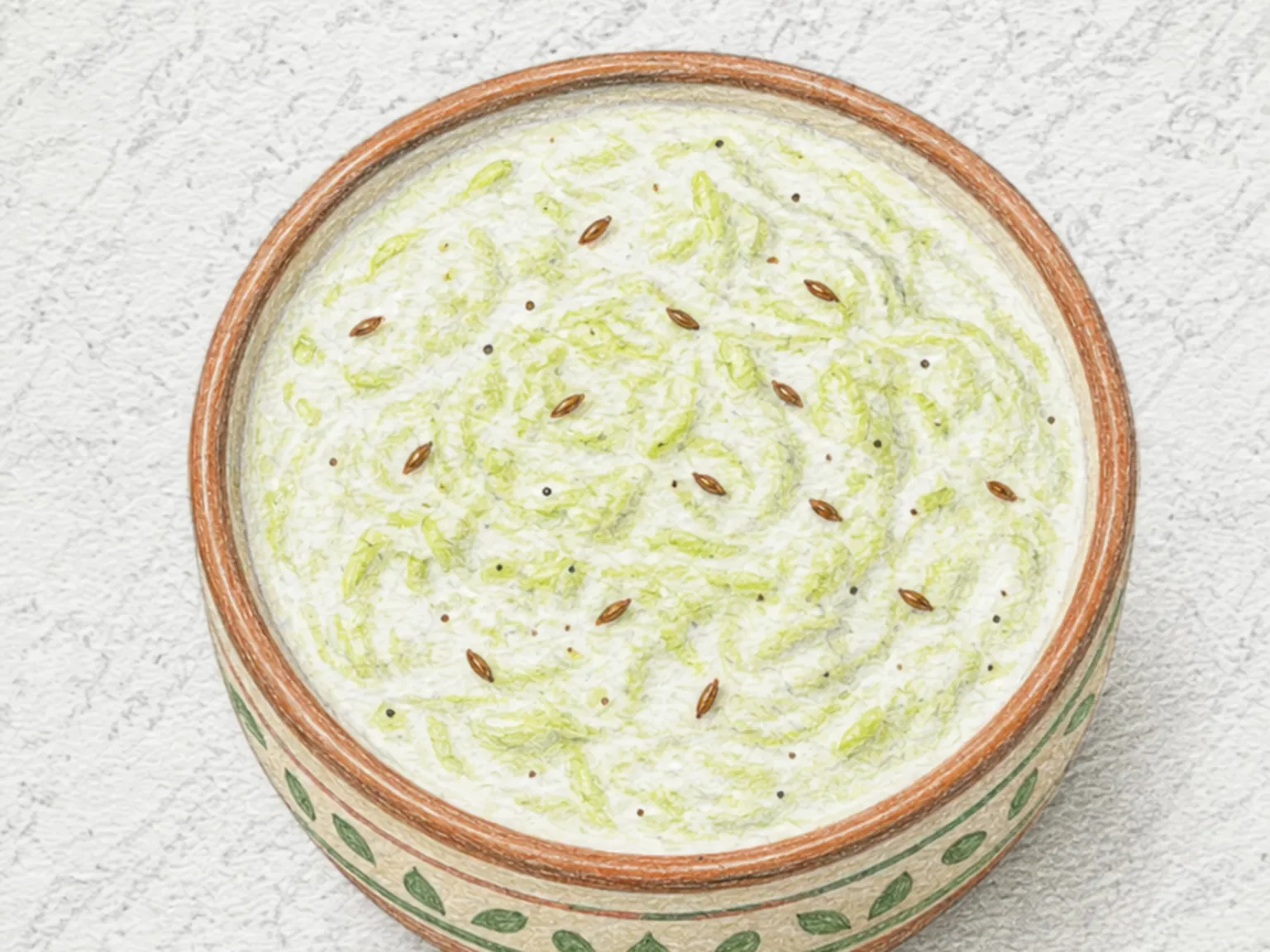
Lauki raita is a chilled Indian accompaniment made from coarsely grated bottle gourd, plain yogurt, roasted cumin powder, black salt, chili powder, mint, and coriander. Peel and grate the gourd, then boil it only until it becomes tender; extended cooking can turn the shreds into a soft mass that disappears into the yogurt. Cool the cooked gourd under cold water and press it in a sieve with a spoon. The aim is to remove free water without squeezing the vegetable completely dry. Too much retained liquid makes the raita thin and allows the spices to settle, while a little moisture helps the strands disperse through the yogurt. Whisk the plain yogurt on its own until smooth before adding the drained gourd, roasted cumin, and black salt. This order avoids pockets of thick yogurt and gives the seasoning an even base. Chop the mint and coriander near serving time and scatter them over the bowl with only a pinch of chili powder, preserving their fresh aroma and giving the pale mixture a clear finishing accent. Refrigerate the raita until thoroughly cold. Its mild gourd, tangy yogurt, toasted cumin, and herbal top notes provide a cooling contrast beside a spiced curry, and the spoonable consistency also makes it useful as a dip for flatbread. Stir once before serving if any liquid has collected around the edge.

🏠 Everyday
Prep 10min Cook 10min 2 servings
Banh Khot (Crispy Vietnamese Mini Shrimp Pancakes)
Asian Medium

Banh Khot (Crispy Vietnamese Mini Shrimp Pancakes)

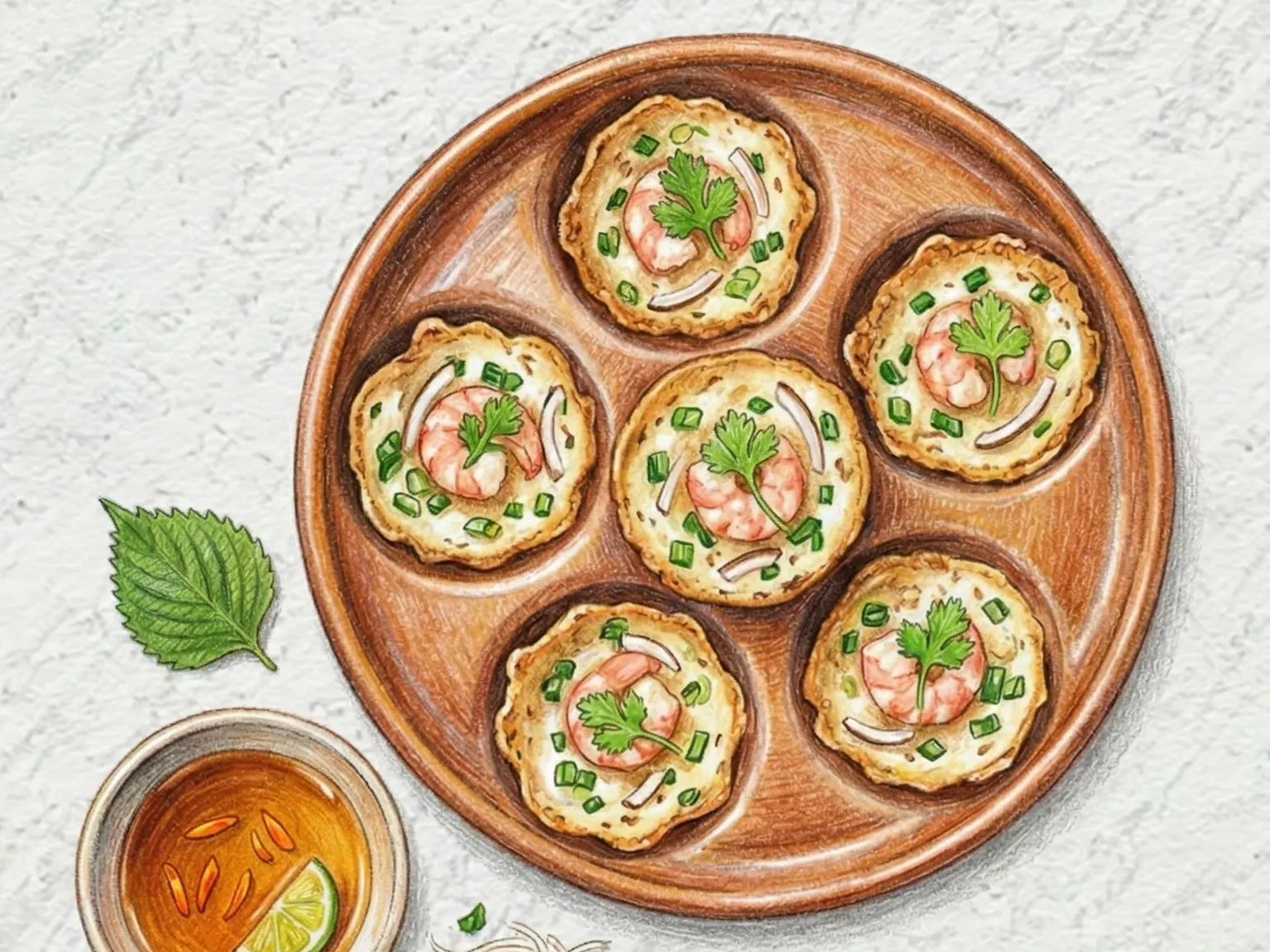
Banh khot is a Vietnamese miniature shrimp pancake that originated in the coastal city of Vung Tau in southern Vietnam. Rice flour and coconut milk are combined into a thin batter, which is poured into the circular hollows of a specialty cast-iron griddle and covered to steam-bake until the edges crisp up and the centers set into a soft, custardy texture. One whole shrimp is pressed into each pancake while the batter is still liquid so it cooks embedded in the top. Coconut milk gives the rice batter a gentle sweetness and richness that plain rice flour lacks, and the fat in the milk contributes to the characteristic crisp edges. The pancakes are served hot, wrapped in lettuce or perilla leaves with fresh mint and Thai basil, then dipped in nuoc cham. The contrast between the hot, crispy shell and the cool, fresh herbs is central to how the dish is eaten. At home, a small egg pan or takoyaki mold can substitute for the traditional griddle.

🎉 Special Occasion 🧒 Kid-Friendly
Prep 25min Cook 20min 2 servings
Hainanese Curry Rice (Mixed Curry Gravy Platter)
Rice Medium

Hainanese Curry Rice (Mixed Curry Gravy Platter)

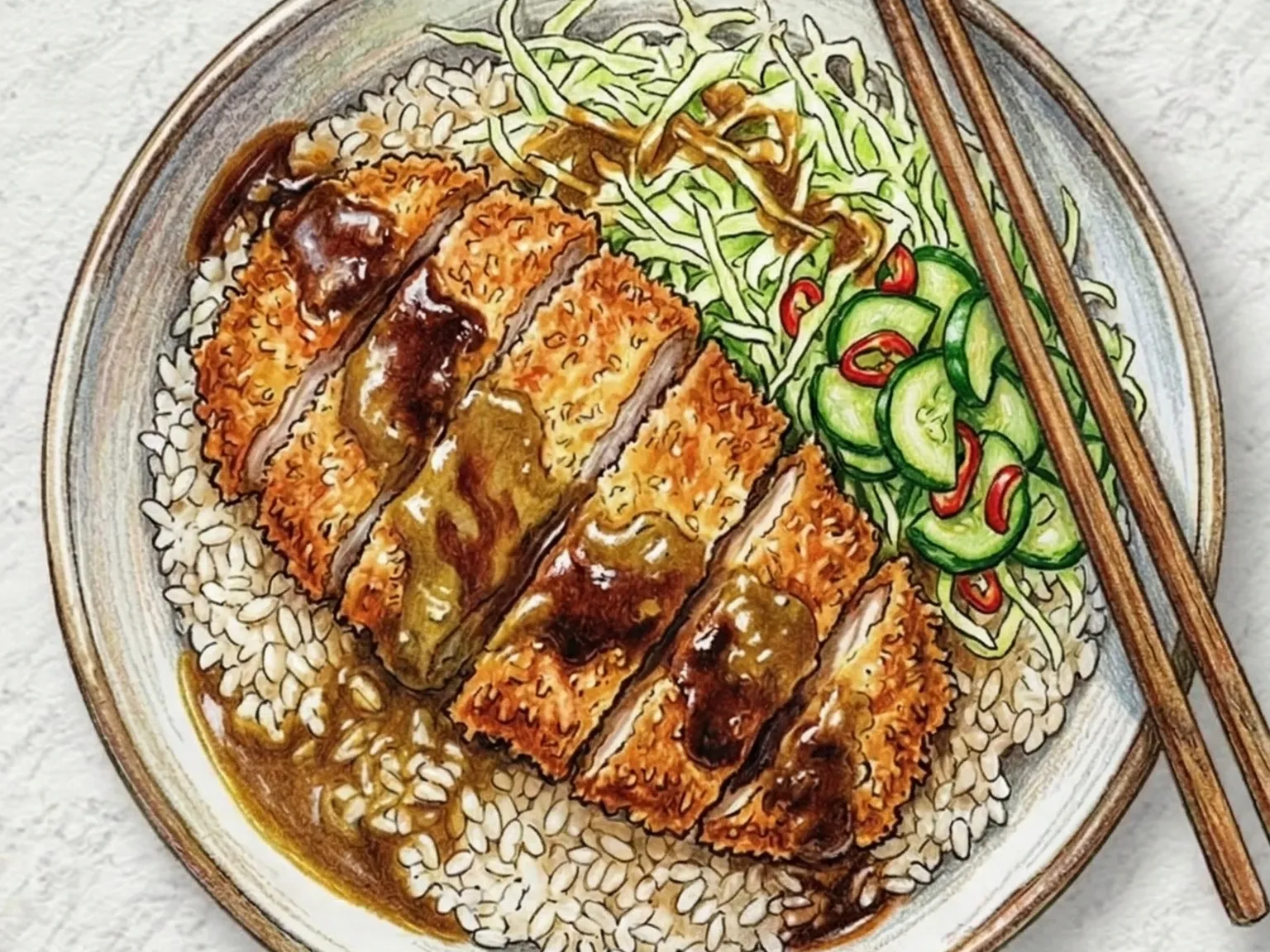
Hainanese curry rice is a Singaporean comfort plate that grew out of the island's Hainanese immigrant community, blending Japanese-style pork cutlet, Malay curry traditions, and the influence of British colonial cooking into a single unassuming dish. Crispy pork cutlet, boiled potato, and blanched cabbage are laid over steamed rice, then drenched in a combination of curry gravy and braised soy sauce that pool together on the plate. The curry begins with blooming curry powder in oil to coax out its full fragrance before coconut milk and water are added, simmering until the sauce thickens and takes on a gentle coconut sweetness alongside the layered spice. What truly distinguishes this plate is the intentional mixing of two contrasting sauces directly on the rice, where the heat and warmth of curry meets the saltier, deeper soy-braised gravy. The pork cutlet is sliced only at the moment of serving to preserve its crunch against the liquid. Soft potato pieces and slightly firm cabbage provide textural counterpoints to each bite of crunchy cutlet and saucy rice. In Singapore, this dish is served from early morning at hawker centres where each stall keeper holds their own closely guarded ratio of spices, making the quality of the gravy the true mark of each vendor.

🎉 Special Occasion
Prep 25min Cook 25min 2 servings
Nmu-Kuji Putturu (Okinawan Sweet Potato Starch Cake)
Stir-fry Medium

Nmu-Kuji Putturu (Okinawan Sweet Potato Starch Cake)

Nmu-kuji putturu cooks 1 cup sweet potato starch with red-miso bonito stock and garlic chives until a loose slurry becomes one glossy mass. Whisk 1.5 tablespoons red miso into 1.5 cups bonito dashi until no paste lumps remain. Wash and thoroughly dry a handful of garlic chives, chop them to about 5 mm, then set them aside. Put the starch in a large bowl and add the seasoned stock gradually, whisking out every dry pocket before mixing in the chives. Because sweet potato starch settles quickly, stir the batter all the way from the bottom immediately before it enters the pan. Heat 2 tablespoons cooking oil in a heavy skillet over high heat, pour in the refreshed batter, and scrape the bottom continuously with a sturdy spatula. When scattered translucent lumps begin to form, reduce the heat to medium. Keep pressing and folding those pieces rather than leaving any layer against the hot surface. The dish is ready when the separate lumps unite into one elastic-looking mound, the entire surface is glossy, and no chalky white starch remains. Divide it into four portions. The hot paste can stick to skin, so use a long utensil, keep the pan away from the face, and let bite-size pieces cool briefly before handling or eating them.

🏠 Everyday ⚡ Quick
Prep 10min Cook 10min 4 servings
Kanrobai (Sugar-Cured Green Ume Wrapped in Red Shiso)
Desserts Medium

Kanrobai (Sugar-Cured Green Ume Wrapped in Red Shiso)

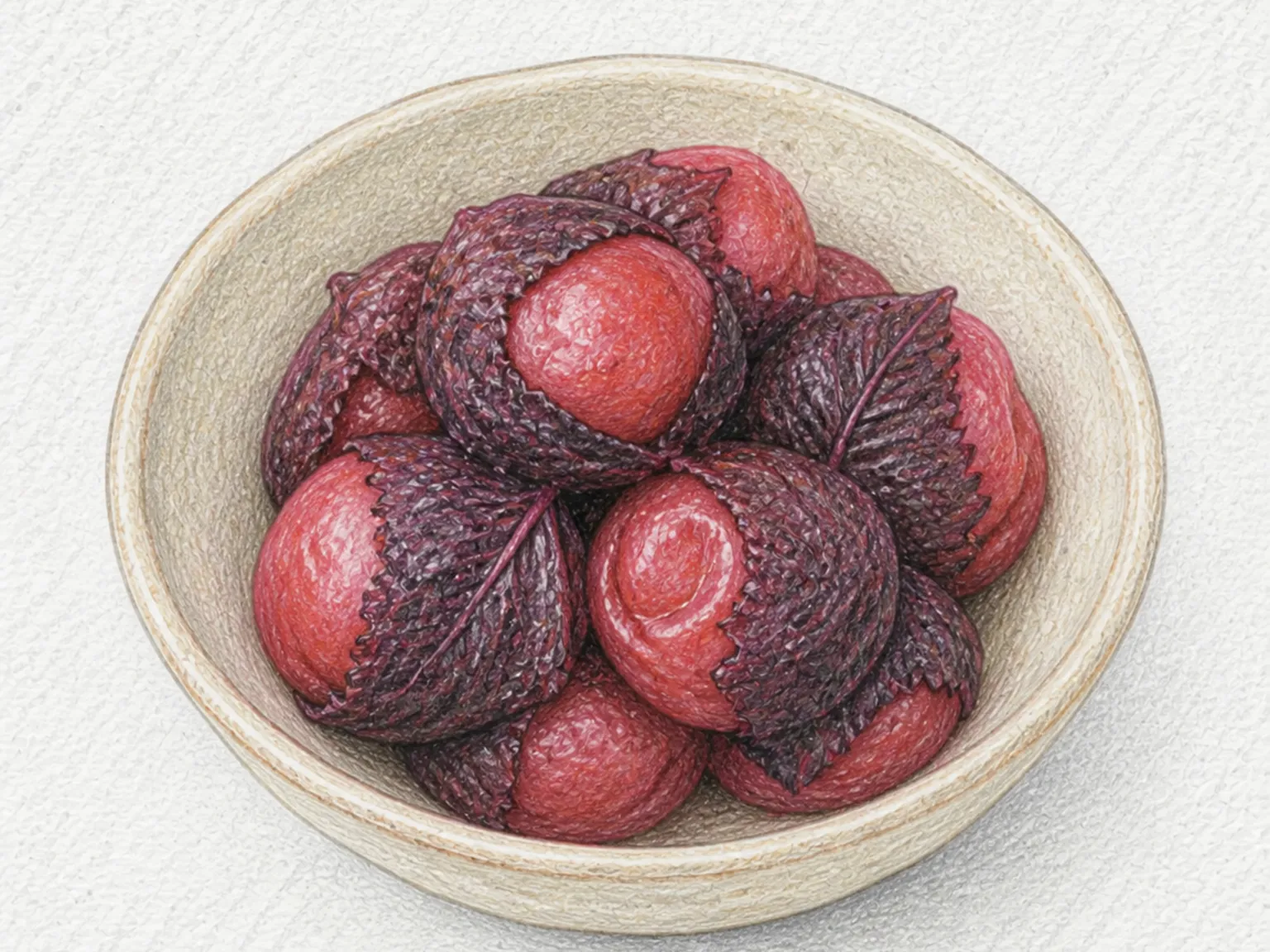
Kanrobai is a preserved sweet from the Ogose area of Saitama. Firm green ume are pitted, cured first with sugar, wrapped piece by piece in red shiso leaves colored with ume vinegar, and matured again in syrup. One kilogram of freshly harvested fruit soaks in water for 5 hours to reduce harshness, then is quartered and mixed with two thirds of the sugar until it releases liquid. The shiso leaves spend one day in ume vinegar and are squeezed well so their color and aroma remain concentrated. After wrapping, the remaining sugar and enough plum syrup to cover the fruit are added. About one month under refrigeration allows sweetness, acidity, and the red shiso color to move into the flesh. Raw green ume is not tasted before curing is complete.

🏠 Everyday
Prep 360min 20 servings
Tachiuo Maki (Spiral-Grilled Cutlassfish on Bamboo)
Grilled Hard

Tachiuo Maki (Spiral-Grilled Cutlassfish on Bamboo)

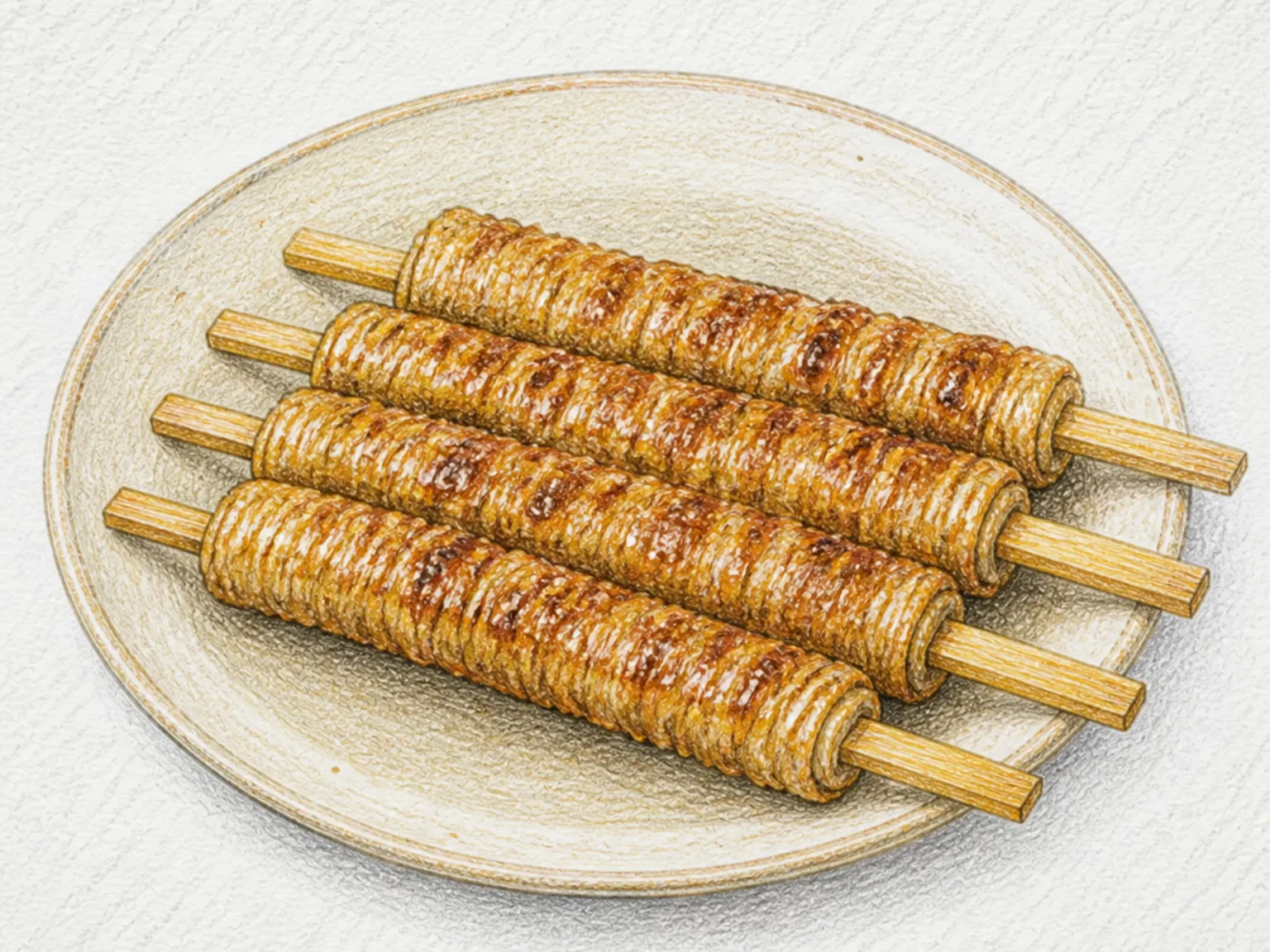
Tachiuo maki is a grilled fish specialty of Uwajima in Ehime. Long cutlassfish fillets are wound in a spiral around bamboo sticks and turned over charcoal while a sauce of soy, sugar, sake, and ginger juice is brushed on repeatedly. Two fish are cleaned into four long strips, checked carefully for bones, and wrapped tightly, one per stick. Continuous rotation over medium charcoal cooks the curved surface evenly; each thin application of sauce dries before the next, building a glossy brown coating without burning the sugar. Mirin is brushed on only near the end for a final shine after the fish is cooked through. A long-established Uwajima fishmonger is said to have devised the preparation in 1987. Because the wrapping and rotating require considerable work, it is more often encountered at local restaurants, izakaya, and fish-paste shops than as a home dish. The fish is slid off the hot bamboo before eating.

🍺 Bar Snacks 🎉 Special Occasion
Prep 35min Cook 25min 4 servings
Mizu to Hoya no Mizumono Chilled Sea Squirt Soup
Soups Medium

Mizu to Hoya no Mizumono Chilled Sea Squirt Soup

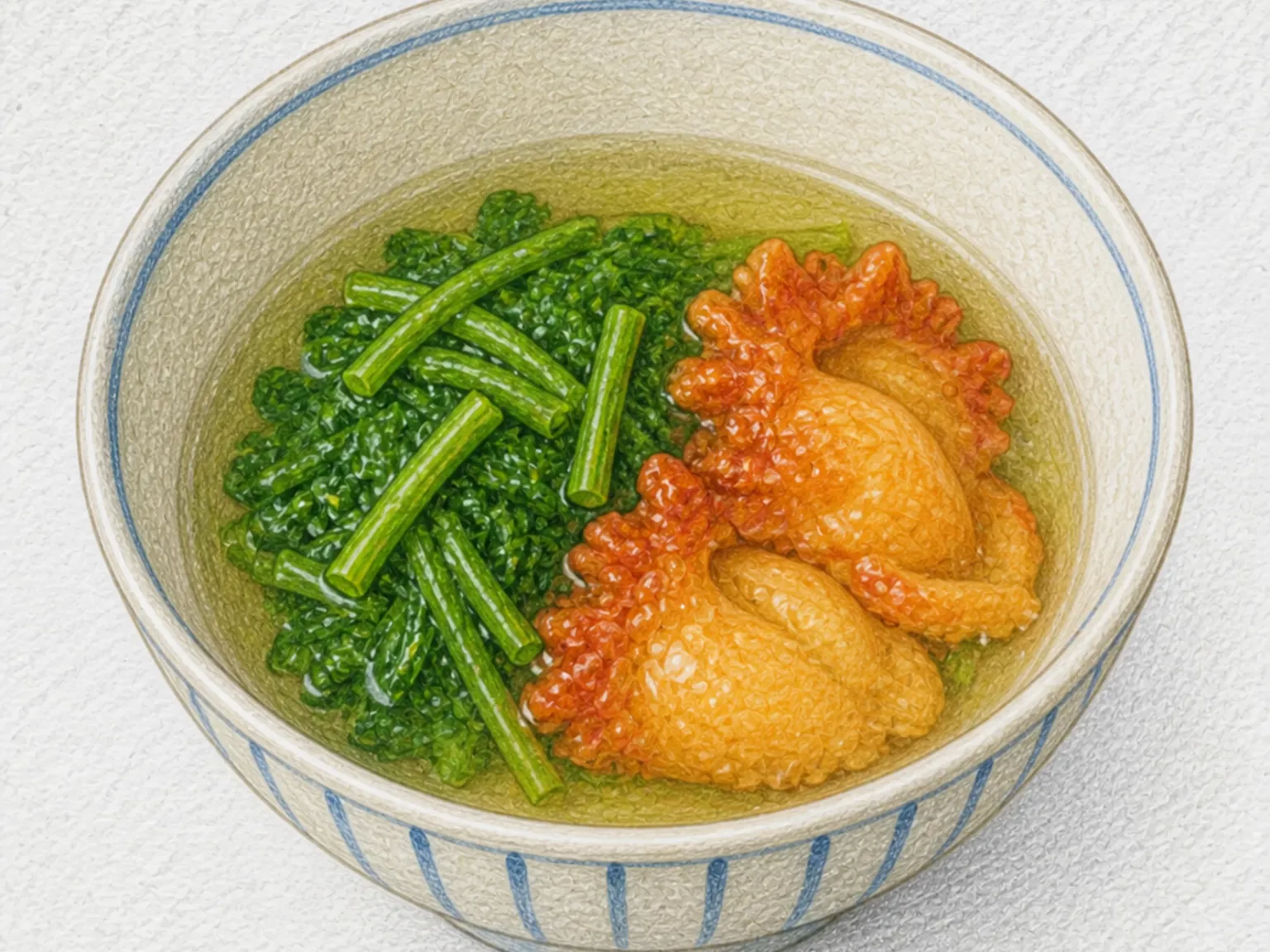
Mizu to hoya no mizumono is a Tsugaru summer soup from Aomori that combines blanched mizu mountain greens and freshly cleaned sea squirt with cold salted kombu stock. Locally shortened to hoya mizu, it brings together two ingredients at their best during northern Japan's brief summer. Mizu, also called uwabamiso, is blanched only briefly and cooled in ice water so its stems retain their clean fragrance and crisp snap. Kombu infuses the water slowly, is removed just before boiling, and the salted stock is chilled completely. Only very fresh sea squirt sold for raw consumption is suitable. Its aromatic inner liquid may be saved, but it is strained through a clean fine sieve before joining the stock. Every component remains cold, the bowls are assembled immediately before eating, and leftovers are not stored because the uncooked seafood deteriorates quickly.

🏠 Everyday 🥗 Light & Healthy
Prep 35min Cook 8min 5 servings
Takana-zuke (Fermented Mustard Greens)
Kimchi Hard

Takana-zuke (Fermented Mustard Greens)

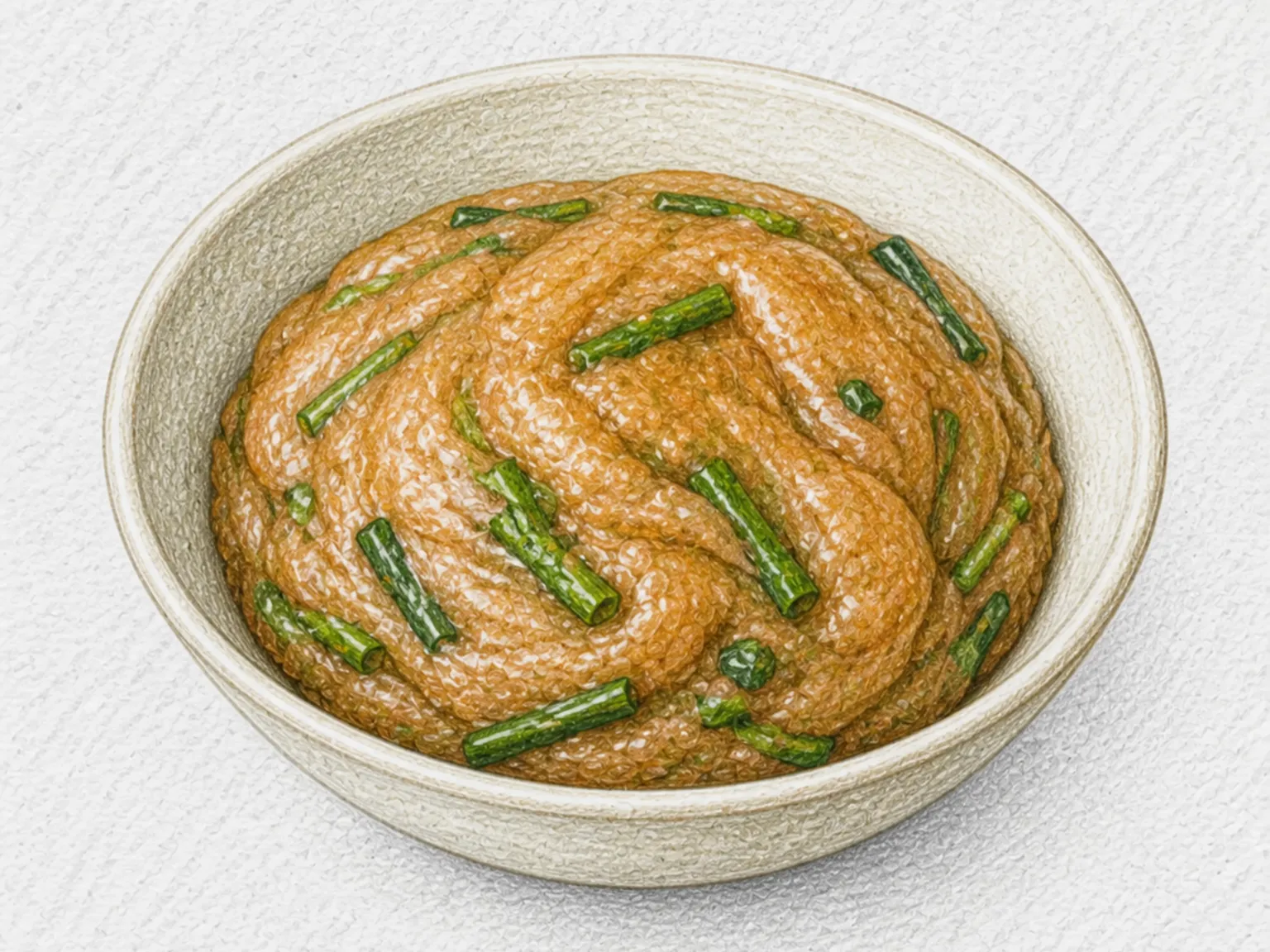
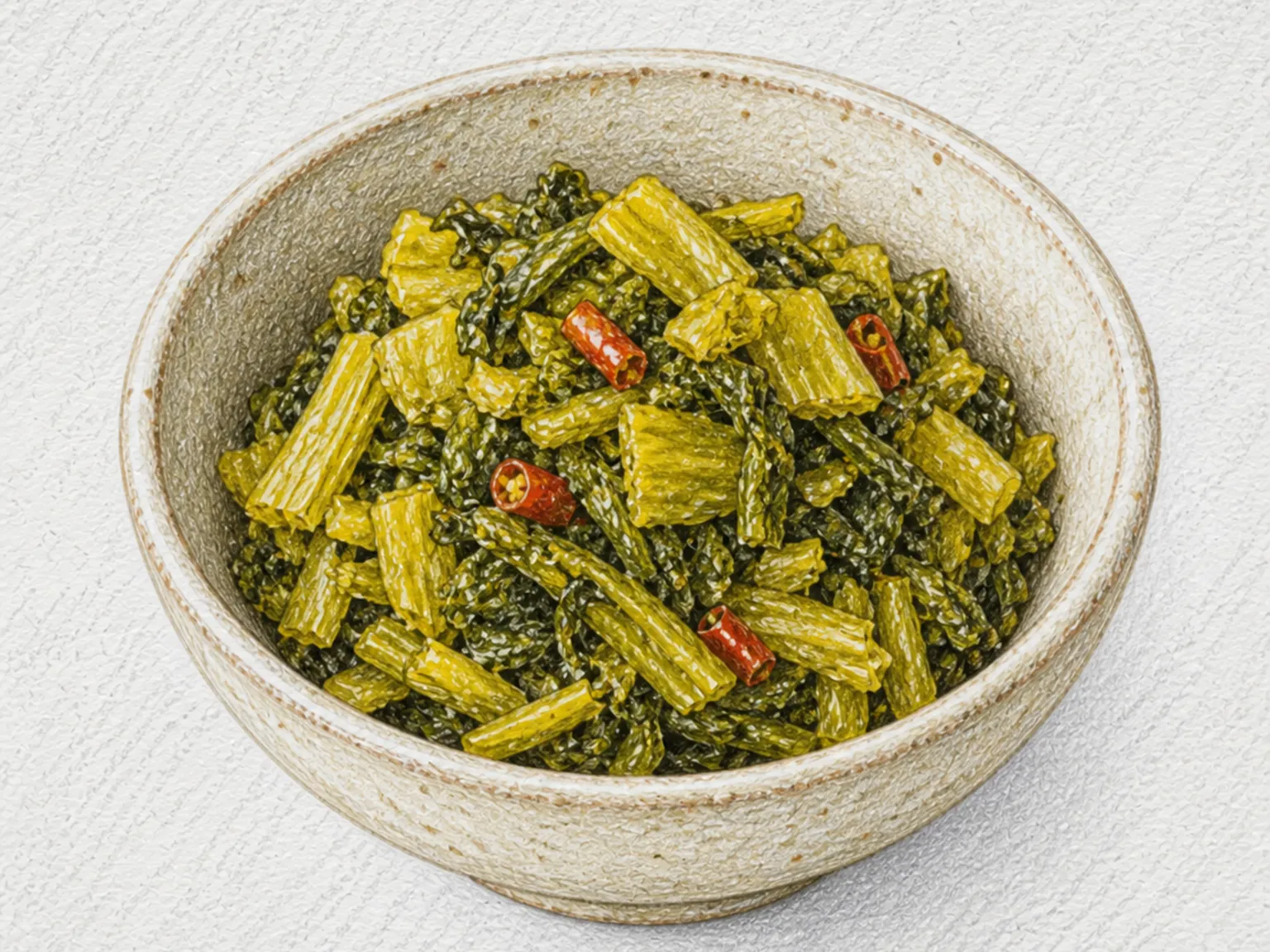
Takana-zuke is a long-fermented mustard-green pickle from Setaka in Fukuoka. Large, thick Miike takana leaves are washed, air-dried for one to two days, layered tightly with salt and chili powder, and pressed under a heavy weight. After about a week, the first liquid is drained, the weight is replaced, and the greens mature beneath their rising brine until the rainy season has passed. Turmeric and whole chilies are added for storage. Miike takana developed from a Sichuan green crossed with a local variety and is valued for crisp stems and pungent aroma. The finished pickle is chopped finely for rice, ramen, or stir-fries, and old pickles become more acidic and savory.

🏠 Everyday
Prep 90min 60 servings
Korean Doenjang Mushroom Udon
Noodles Medium

Korean Doenjang Mushroom Udon

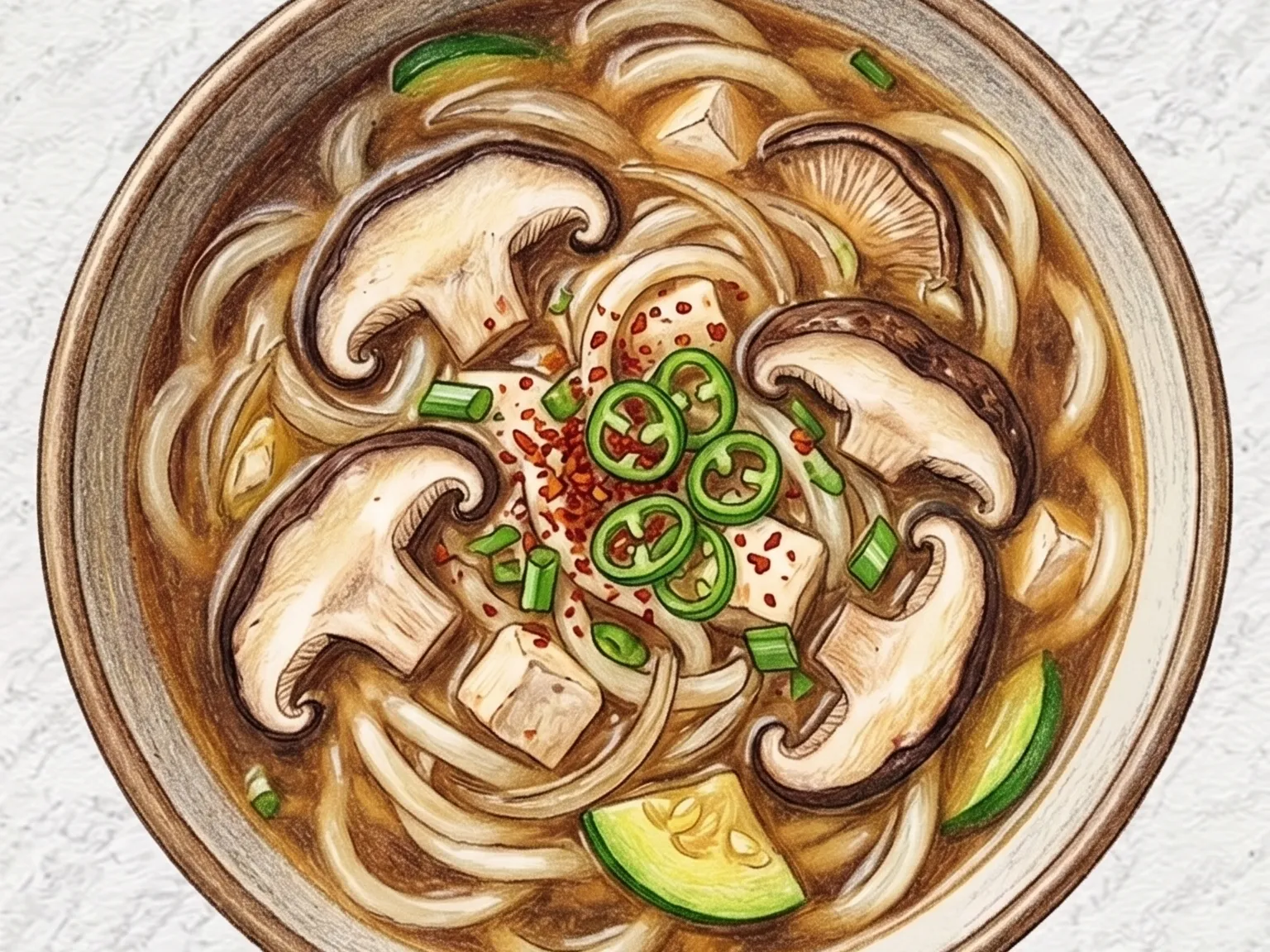
Doenjang mushroom udon is a Korean noodle soup where thick-cut shiitake mushrooms simmer in an anchovy-kelp broth with dissolved soybean paste, building layered depth from two distinct fermented and dried umami sources. The shiitake's aromatic depth stacks on top of the doenjang's fermented, mellow character, while onion adds a quiet sweetness that prevents the broth from tasting one-dimensionally salty. Passing the doenjang through a fine sieve before stirring it into the broth ensures no lumps remain and the paste disperses evenly. Parboiling the udon noodles separately in plain water and rinsing briefly strips away surface starch, keeping the broth clear and clean to the last spoonful. A pinch of gochugaru added during the seasoning stage introduces a faint warmth at the finish that sharpens the overall flavor, and a few thin slices of cheongyang chili on top add color and a sharper bite. Adding silken tofu or sliced zucchini makes the bowl substantial enough to serve as a full meal.

🏠 Everyday 🌙 Late Night
Prep 12min Cook 18min 2 servings
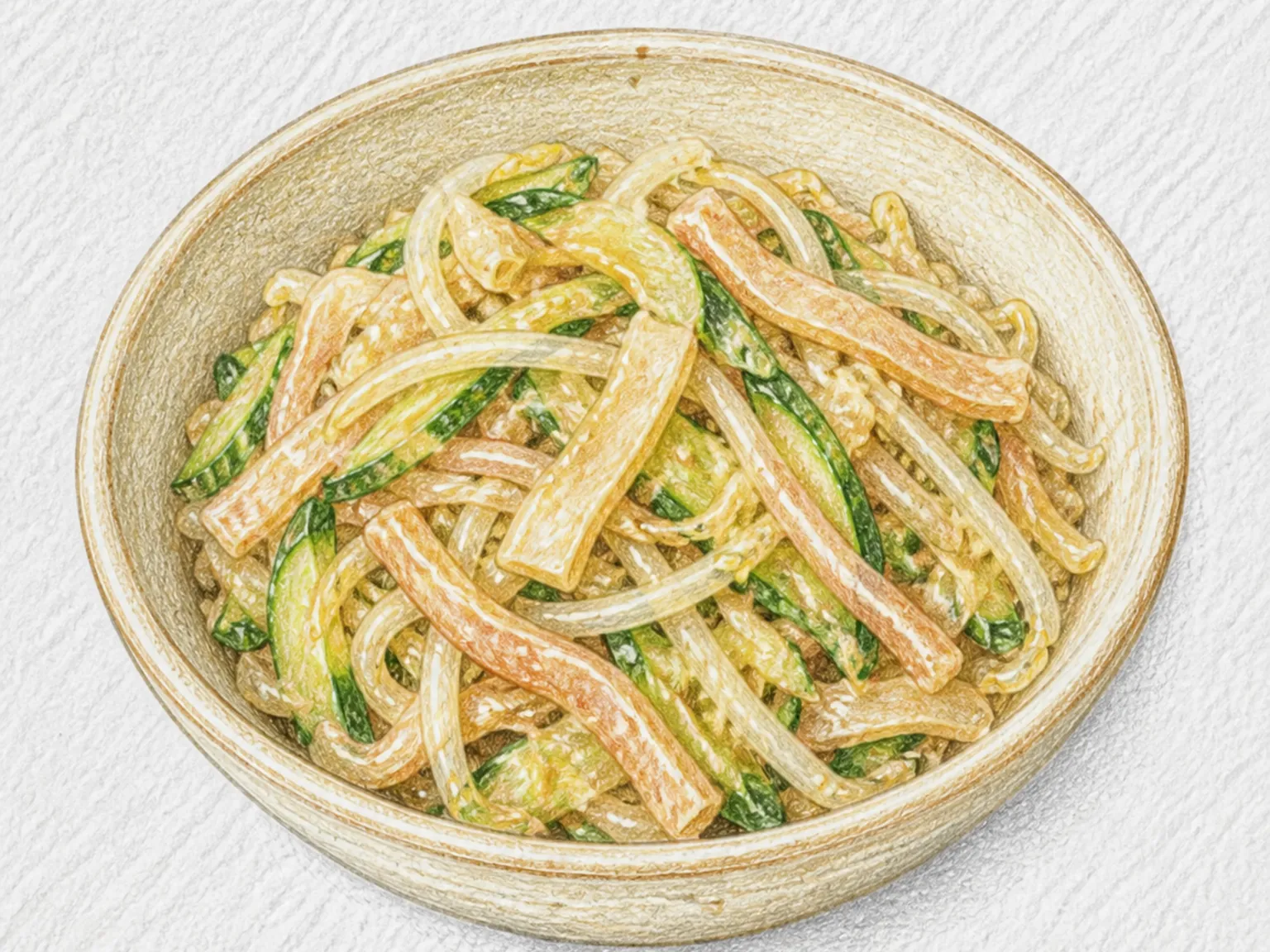
Mimiga Sashimi with Peanut Vinegar
Salads Easy

Mimiga Sashimi with Peanut Vinegar

Mimiga sashimi is an everyday Okinawan dressed dish, not raw pork. Commercially cooked, sliced pork ear is rubbed with salt, briefly blanched, and kneaded in cold water to remove excess salt and fat before it is mixed with cucumber and bean sprouts in a dressing of peanut butter, white miso, vinegar, sugar, and salt. In this name, sashimi refers to a dressed preparation rather than uncooked meat. Cartilage in the ear supplies a firm, crisp bite comparable to jellyfish, while the vegetables keep the dish light. Prepared mimiga is sold in Okinawan supermarkets and markets, making the dish practical for home meals, institutional lunches, classes, and events.

🏠 Everyday ⚡ Quick
Prep 20min Cook 5min 4 servings
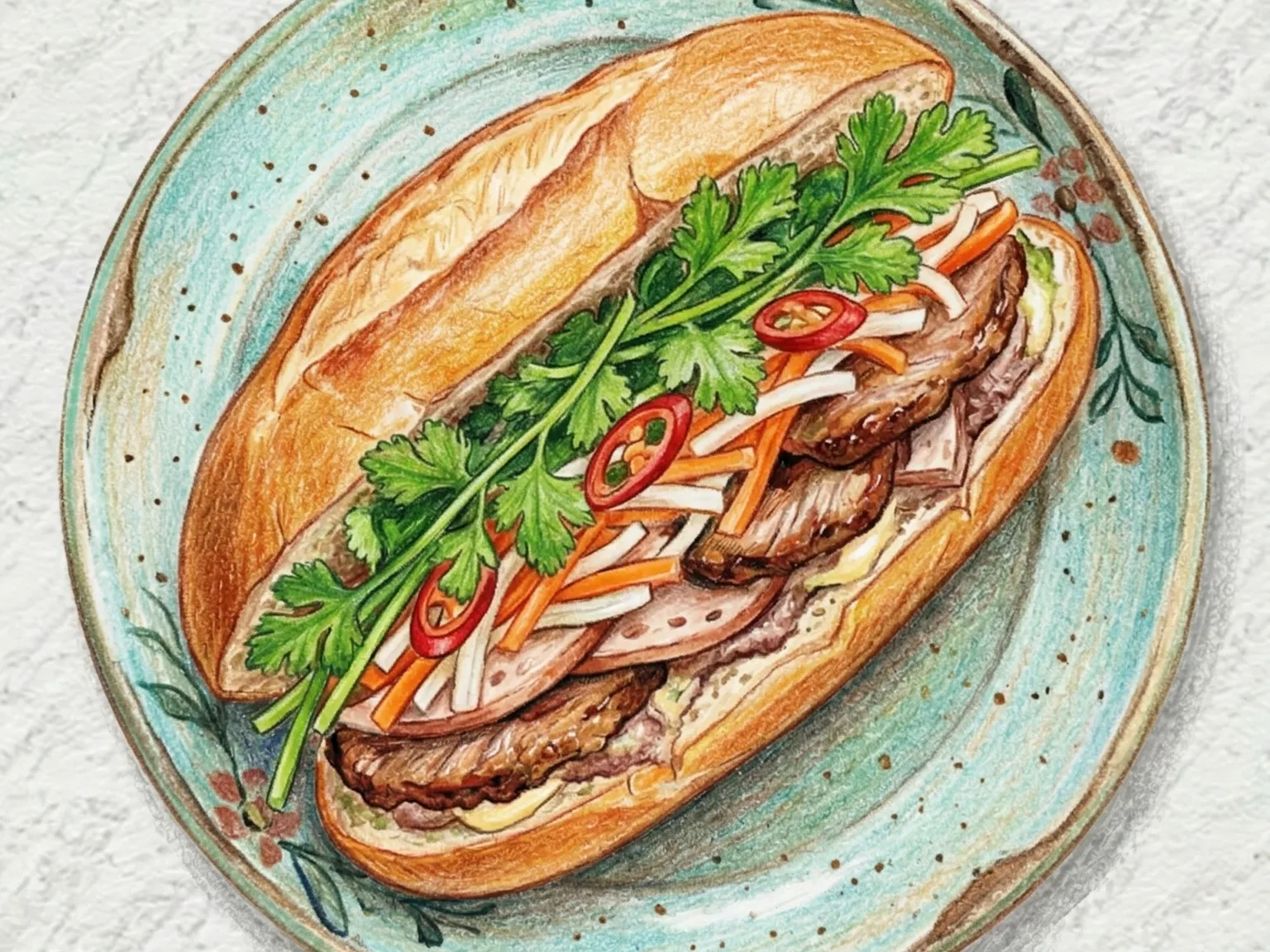
Bánh Mì (Vietnamese Crispy Baguette Sandwich with Pork and Pickles)
Asian Medium

Bánh Mì (Vietnamese Crispy Baguette Sandwich with Pork and Pickles)

Banh mi is the product of French colonialism meeting Vietnamese resourcefulness. A baguette made partly with rice flour results in a bread lighter and airier than its French counterpart, with a shattering crust that flakes on the first bite. The bread is the foundation and everything else is built around its texture. Fillings vary by region and stall, but the classic Saigon version layers pate, cold cuts, pickled daikon and carrot, sliced cucumber, cilantro, and jalapeno. The pickled vegetables provide sharp, tangy crunch that cuts through the fattiness of the meat and pate. At street carts across Ho Chi Minh City, a banh mi is assembled in under a minute and costs less than a dollar, delivering crispy, sour, herbal, spicy, and fatty elements in every bite. The bread was introduced during French colonial rule in the nineteenth century, and Vietnamese bakers gradually reduced the density and adapted the loaves to local ovens and ingredient availability. Today, variations include a tofu version for vegetarians and a shrimp version common in coastal cities. The key to a proper banh mi is bread baked the same day, eaten while the crust is still intact.

🎉 Special Occasion 🍱 Lunchbox
Prep 20min Cook 10min 2 servings
Hayashi Rice (Japanese Beef and Onion Brown Sauce Rice)
Rice Easy

Hayashi Rice (Japanese Beef and Onion Brown Sauce Rice)

Hayashi rice is a Japanese home-cooking dish in which thinly sliced onions are caramelized in butter for at least eight minutes until deeply golden, then simmered with thin-cut beef, tomato paste, Worcestershire sauce, and flour into a glossy, thick brown sauce served over warm rice. The caramelization of the onions is the single most important step in the recipe. Rushing this stage produces onions that have lost moisture but not developed sweetness, resulting in a flat sauce with no depth. Extended browning converts the onion's natural sugars into a rich, almost candy-like sweetness that forms the foundation of the entire dish and cannot be replicated by any shortcut. Tomato paste adds acidity and deepens the color, Worcestershire sauce contributes a layered spice complexity, and flour gives the sauce enough body to sit on top of the rice without running. The sauce is spooned generously over one side of the rice in the same manner as curry rice, and the complete absence of spicy heat makes it a mild, accessible dish that appeals to both children and adults.

🏠 Everyday 🧒 Kid-Friendly
Prep 15min Cook 25min 2 servings

About Asian

Each country brings its own signature spices and sauces, so even the same ingredients can produce completely different flavors. With a few key pantry items - coconut milk, fish sauce, curry powder, doubanjiang - you can recreate the tastes of Asia at home.