Asian Recipes
806 recipes. Page 13 of 34
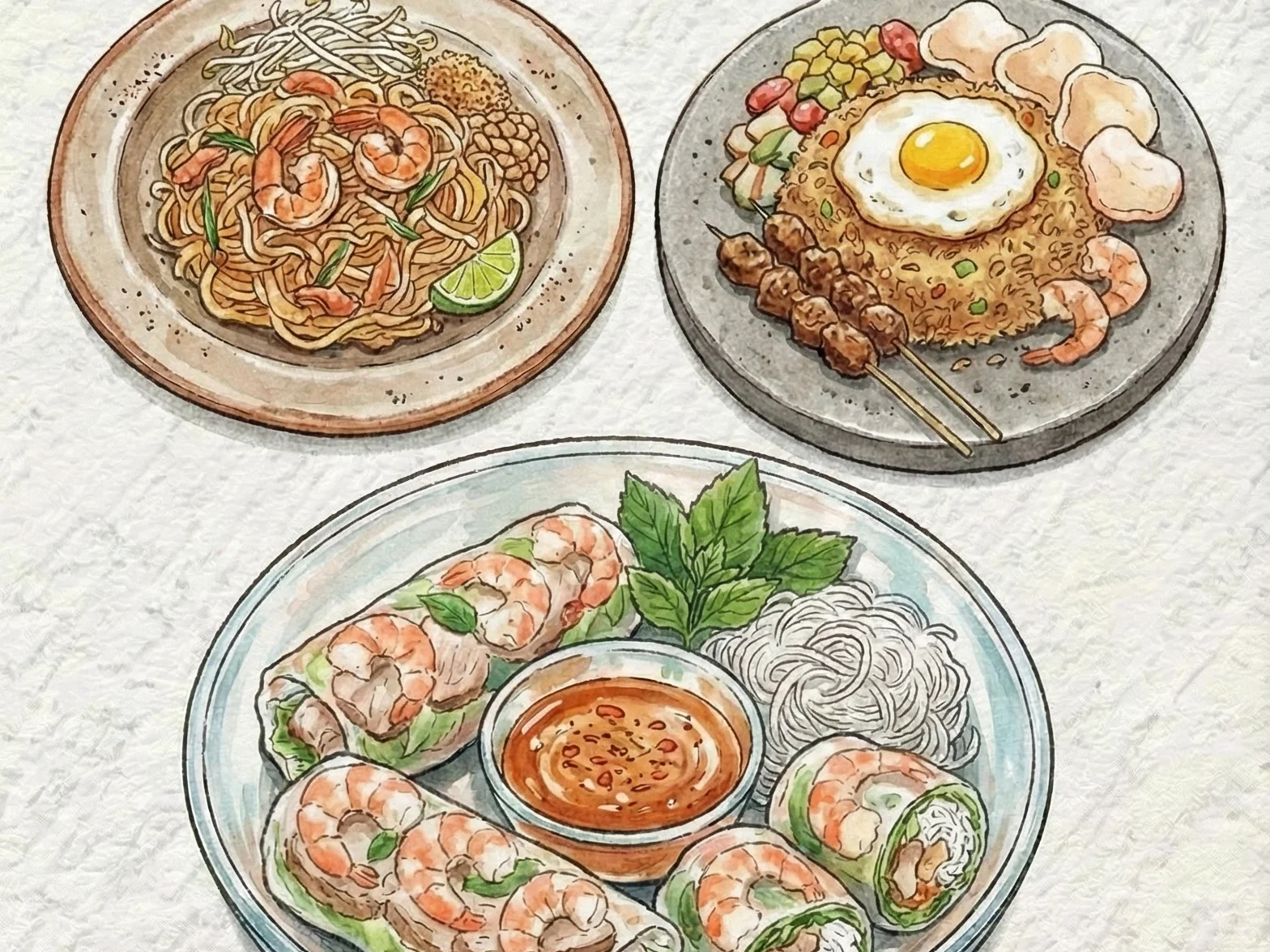
The Asian category gathers popular dishes from Japan, China, Thailand, Vietnam, India, and beyond. Curry, stir-fried noodles, mapo tofu, pad Thai, and pho are among the Asian favorites commonly enjoyed in Korean households.
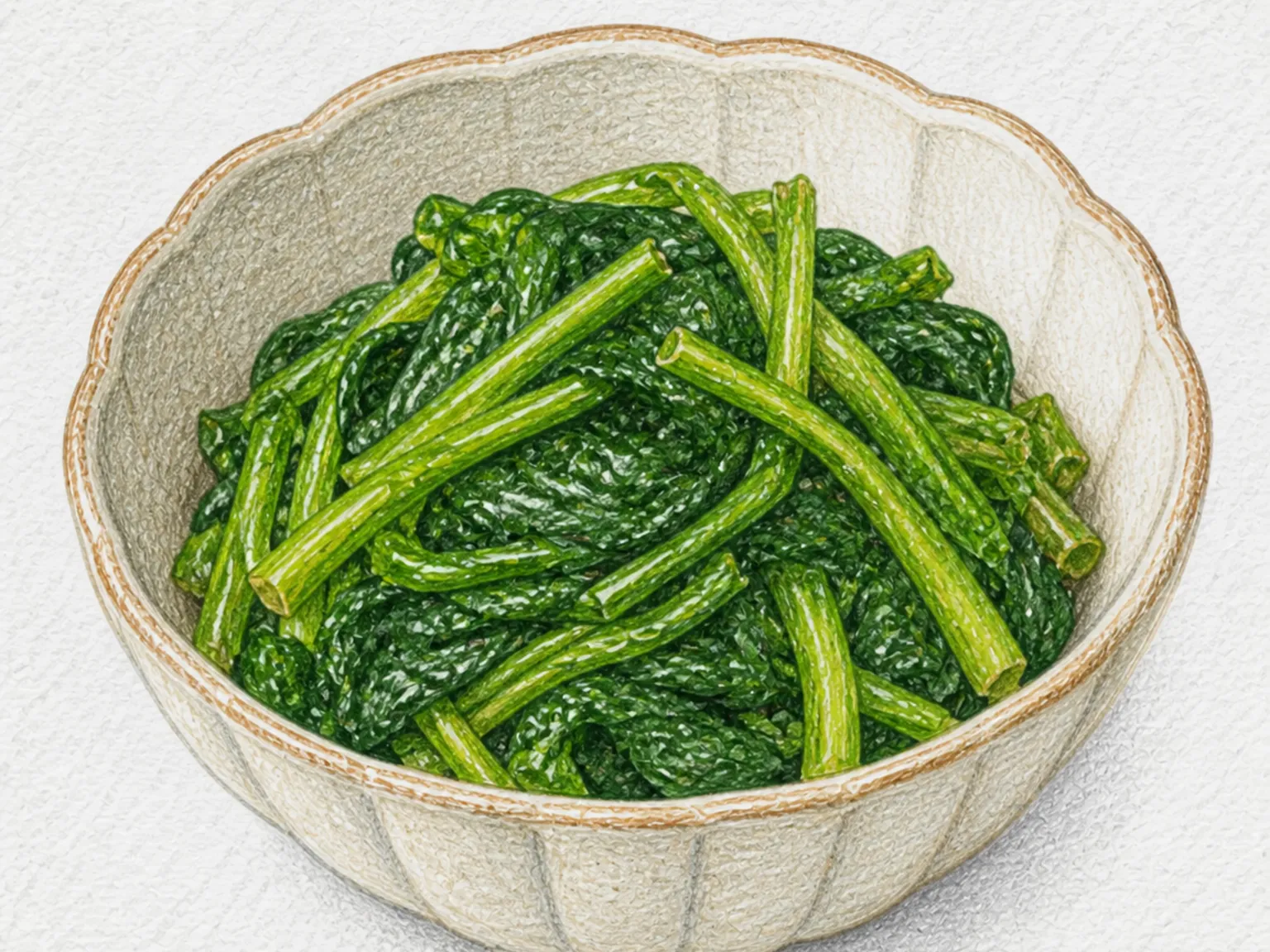
Ohitashi (Seri and Spinach in Dashi)
Ohitashi makes four portions by blanching 60 g Kuroda seri and 140 g spinach separately, then steeping both greens in chilled dashi seasoning for 8 to 12 hours. Boil 15 ml mirin in a small pan over medium heat for 30 seconds. Add 90 ml dashi and 15 ml light soy sauce, stop the heat as soon as the mixture boils once, and transfer it to a wide container. Cool it completely and refrigerate it before the vegetables enter. Trim damaged leaves and root ends from the seri and spinach, wash them twice in cold water, and cut them into aligned lengths of 4 to 5 cm. Immerse the spinach stems in vigorously boiling water for 20 seconds, add the leaves for another 20 seconds, and chill them. In the same water, blanch the seri stems for 15 seconds and the leaves for only 15 seconds more. Separate timing keeps the tender spinach from overcooking while the seri stems retain a distinct bite. Align the cooled greens and press them gently between the palms to remove water; do not twist them, which can crush the stems. Divide them into four bundles, submerge them fully in the cold seasoning, cover, and refrigerate. Just before serving, distribute both vegetables evenly and spoon 1 tablespoon of the soaking dashi over each dish.
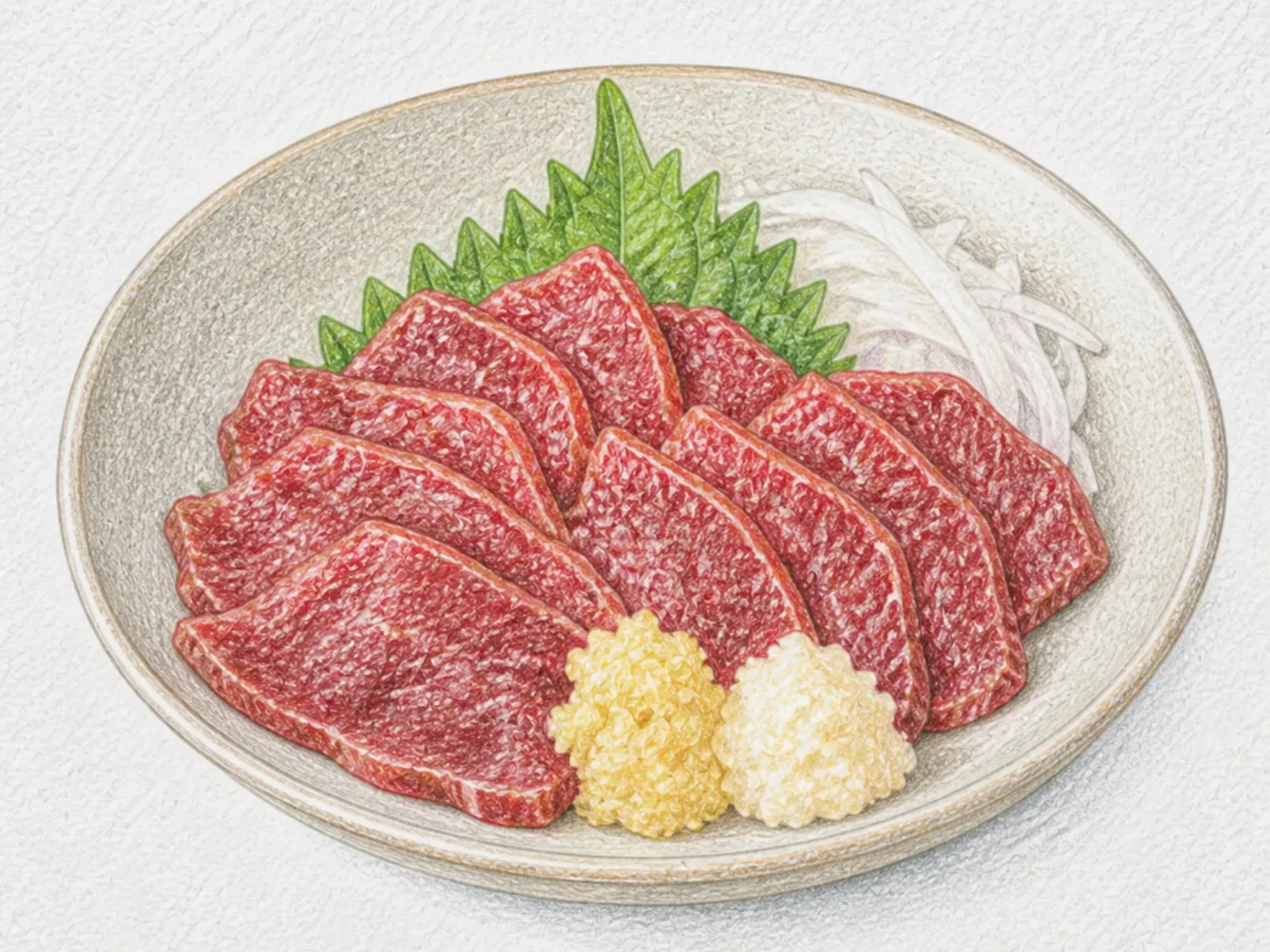
Basashi Horse Meat Sashimi
Basashi uses only commercially processed horse meat explicitly labeled for raw consumption, kept cold and sliced thinly with shiso, onion, ginger, garlic, and sweet soy sauce. Horse meat intended for ordinary cooking does not become a substitute by being frozen at home. Follow the package thawing directions for 200g raw-consumption horse meat and keep it as a whole block in the coldest part of the refrigerator until slicing. Wash the knife and cutting board thoroughly and dry both completely. Slice 0.5 onion paper-thin, soak it in cold water for 5 minutes, then drain and dry it well. Rinse and dry 8 shiso leaves. Finely grate 1 garlic clove and 15g fresh ginger separately. Spread the shiso and onion on the serving plate first. Keep the horse meat cold while cutting it across the grain into slices 2 to 3mm thick. Place each slice on the plate as soon as it is cut instead of piling the pieces together. Serve with the grated garlic and ginger and 4 tablespoons sweet soy sauce while the meat is still cold and bright in color. Do not leave uneaten raw meat at room temperature or store it again.
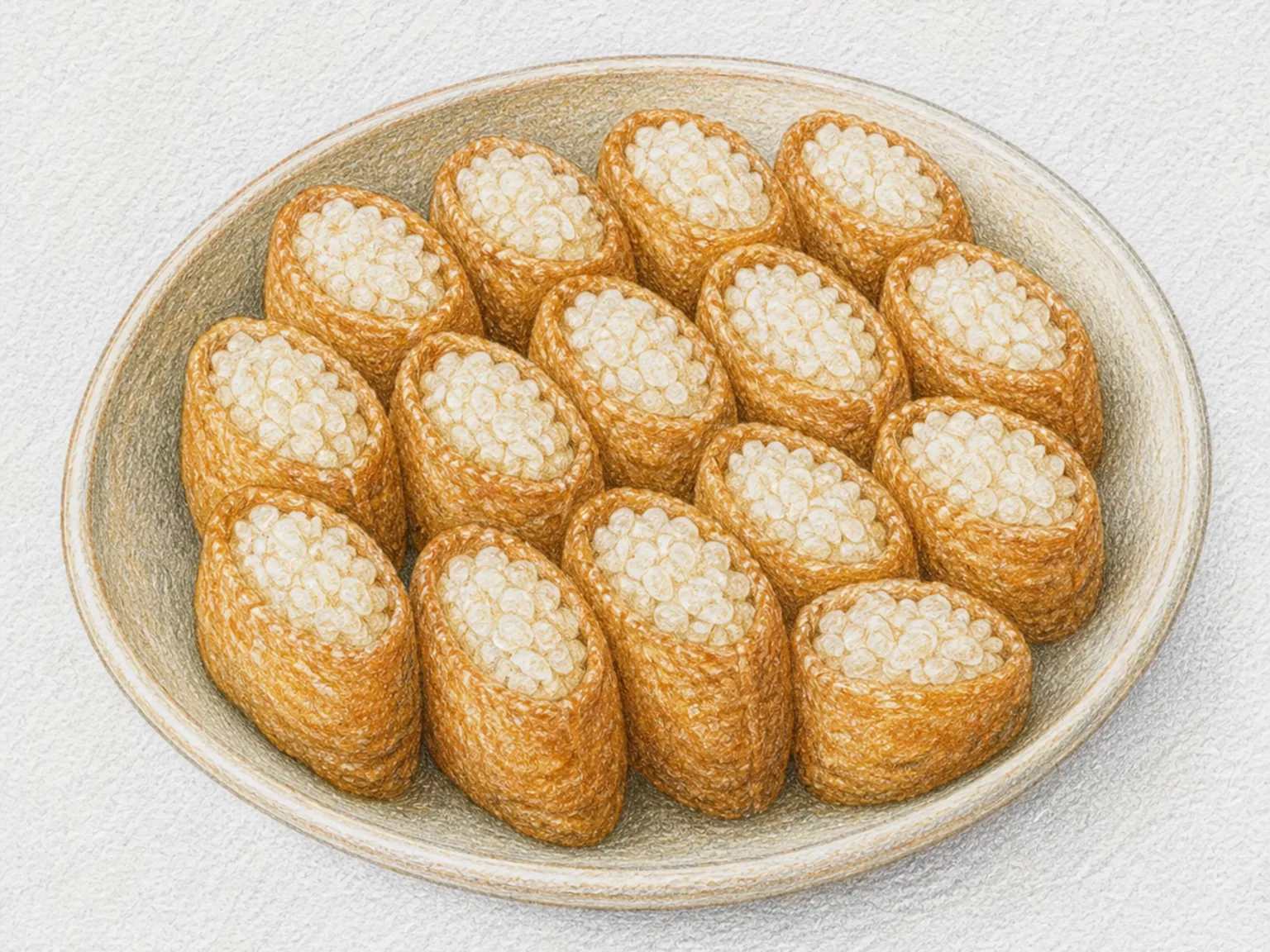
Inari-zushi (Seasoned Tofu Pocket Sushi)
Inari-zushi is an Aichi sushi of vinegared rice packed into tofu pockets simmered with dashi, soy sauce, sugar, and mirin. Toyokawa Inari's temple town is named among its possible birthplaces, while Nagoya-style pockets are filled generously and often left open along the bottom edge. This recipe halves eight tofu sheets to make sixteen compact pieces. Blanching removes excess frying oil, slow simmering draws seasoning into the pockets, and cooling before filling keeps the sweet-savory tofu moist without making the sushi rice heavy.
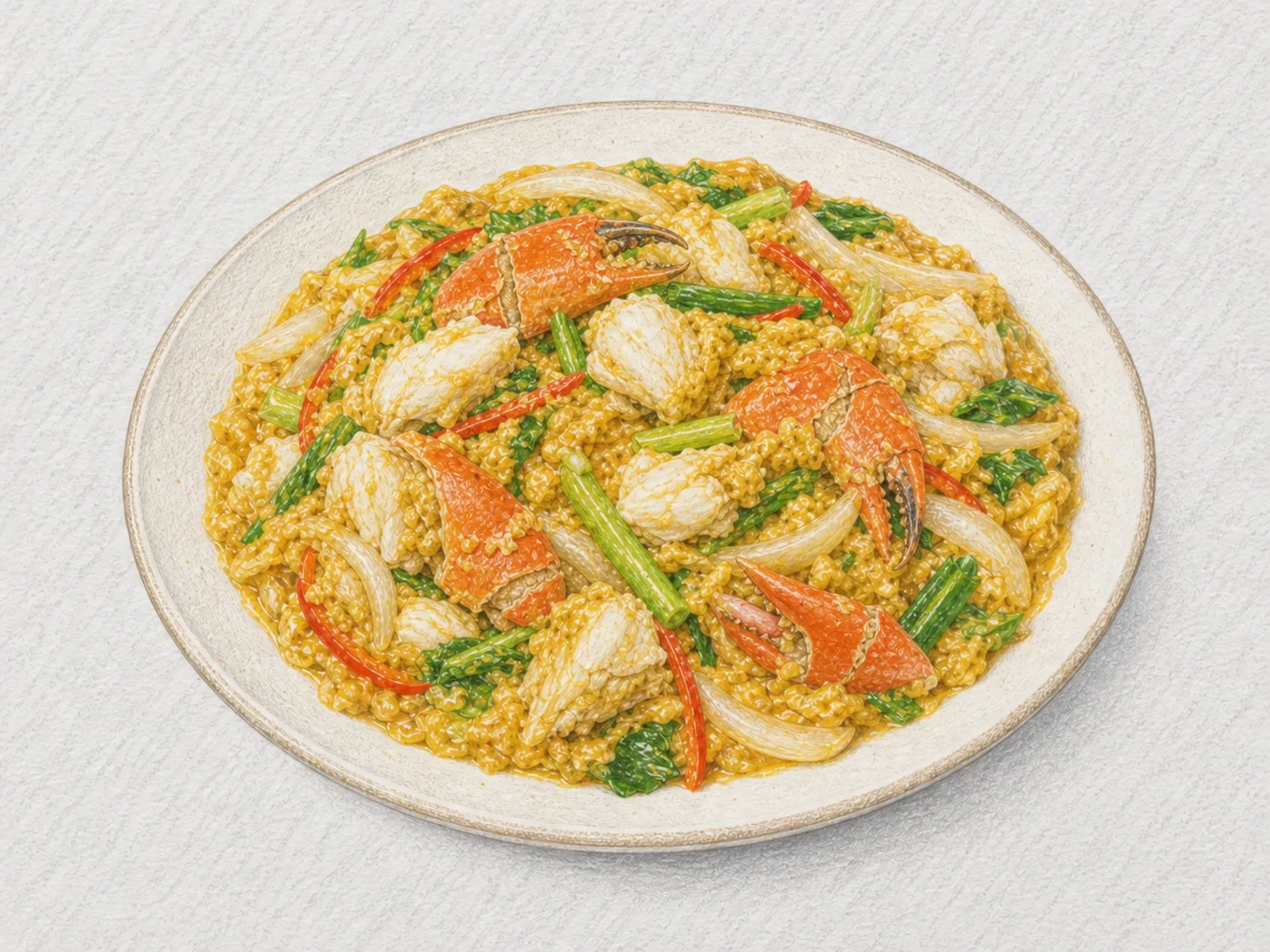
Pu Pad Pong Curry (Thai Crab Stir-Fry with Egg and Curry Powder)
Pu pad pong curry is a Sino-Thai stir-fry of crab with a sauce made from mild curry powder, eggs, and evaporated milk. Unlike a coconut-based Thai curry, it cooks quickly in a wok. Nam prik pao, oyster sauce, light soy sauce, and white pepper season the custard-like sauce without covering the sweetness of the crab. The egg mixture should remain soft and glossy, not dry like scrambled eggs. Chinese celery and scallions go in at the end so their aroma stays distinct. Measure the sauce before heating the wok, then cook the crab only long enough to warm it through.
Kofuku Mame (Roasted Soybean Griddle Cakes)
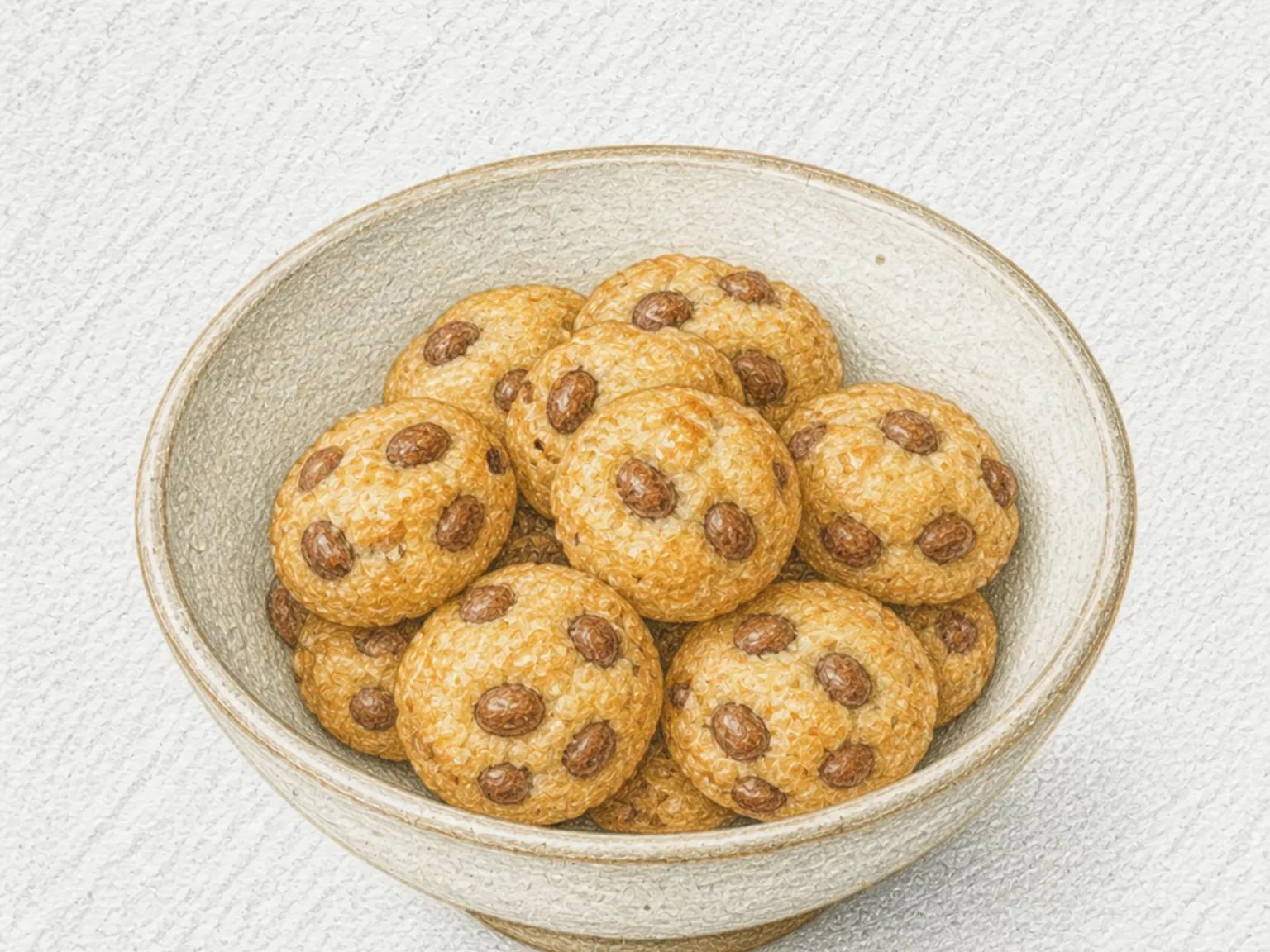
Kofuku mame, meaning happiness beans, is a rustic griddle snack from the Kohoku area of Shiga. Roasted soybeans are folded into a slowly flowing batter of wheat flour, sugar, salt, and water, then cooked as small discs until both sides are golden. The thin cake surrounds each nutty, firm bean; using rice flour instead gives a chewier result. Farming households once grew soybeans on paddy ridges and wheat as a second crop, turning their own staples into a filling break-time sweet when sugary treats were scarce. It remains an easy year-round family snack, especially popular with children. The soybeans need thorough roasting and the batter must cook through without raw flour at the center.
Itoko-jiru (Adzuki and Root Vegetable Miso Soup)
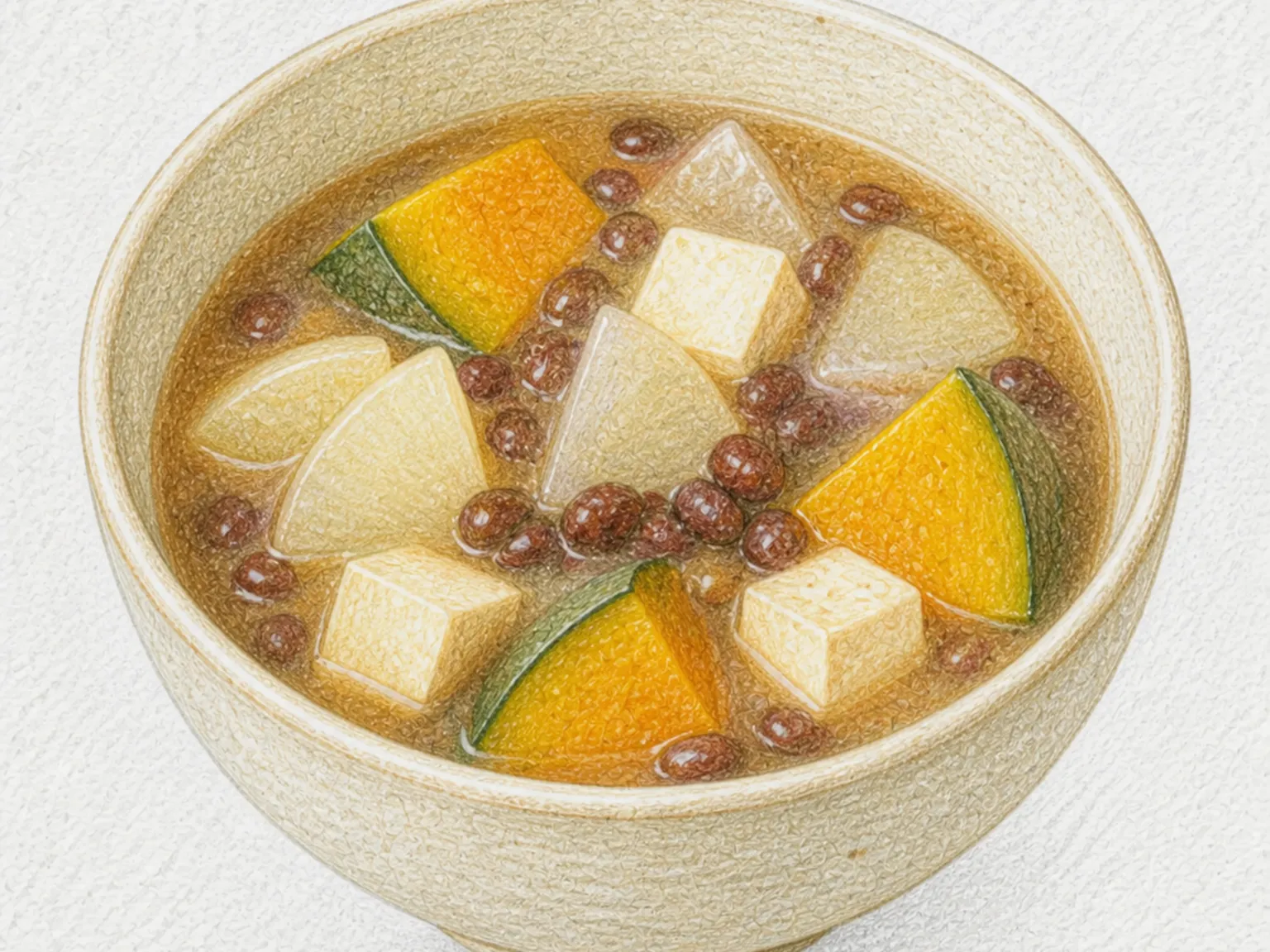
Itoko-jiru is an Ishikawa soup of adzuki beans, daikon, kabocha, and firm tofu seasoned with miso. It uses kombu dashi and reserved bean liquid, with no meat or fish stock. For four servings, rinse 50g dried adzuki beans, cover them generously with water, and boil them for 15 minutes. Discard that first water to reduce harshness and cloudiness. Add fresh water and keep the beans at a low simmer for 45 to 60 minutes, replenishing the water and skimming foam as needed. They are ready when one crushes easily between the fingers. Drain the beans but reserve 400ml of their cooking liquid. Cut 80g tofu and 80g daikon into 1cm cubes, and prepare 60g kabocha in small bite-size pieces. Combine the reserved liquid with 400ml kombu dashi and cook the daikon first. Once it is nearly tender, add the kabocha and give it another 7 to 10 minutes. Return the beans with the tofu and warm them for 2 minutes. Dissolve 24g miso in a ladleful of hot broth before stirring it into the pot, then stop the heat just before the edges begin to boil. Adding the fragile kabocha and tofu late keeps their pieces intact, while avoiding a hard boil after the miso preserves its aroma.
Umeboshi (Salt-Cured Sun-Dried Ume)
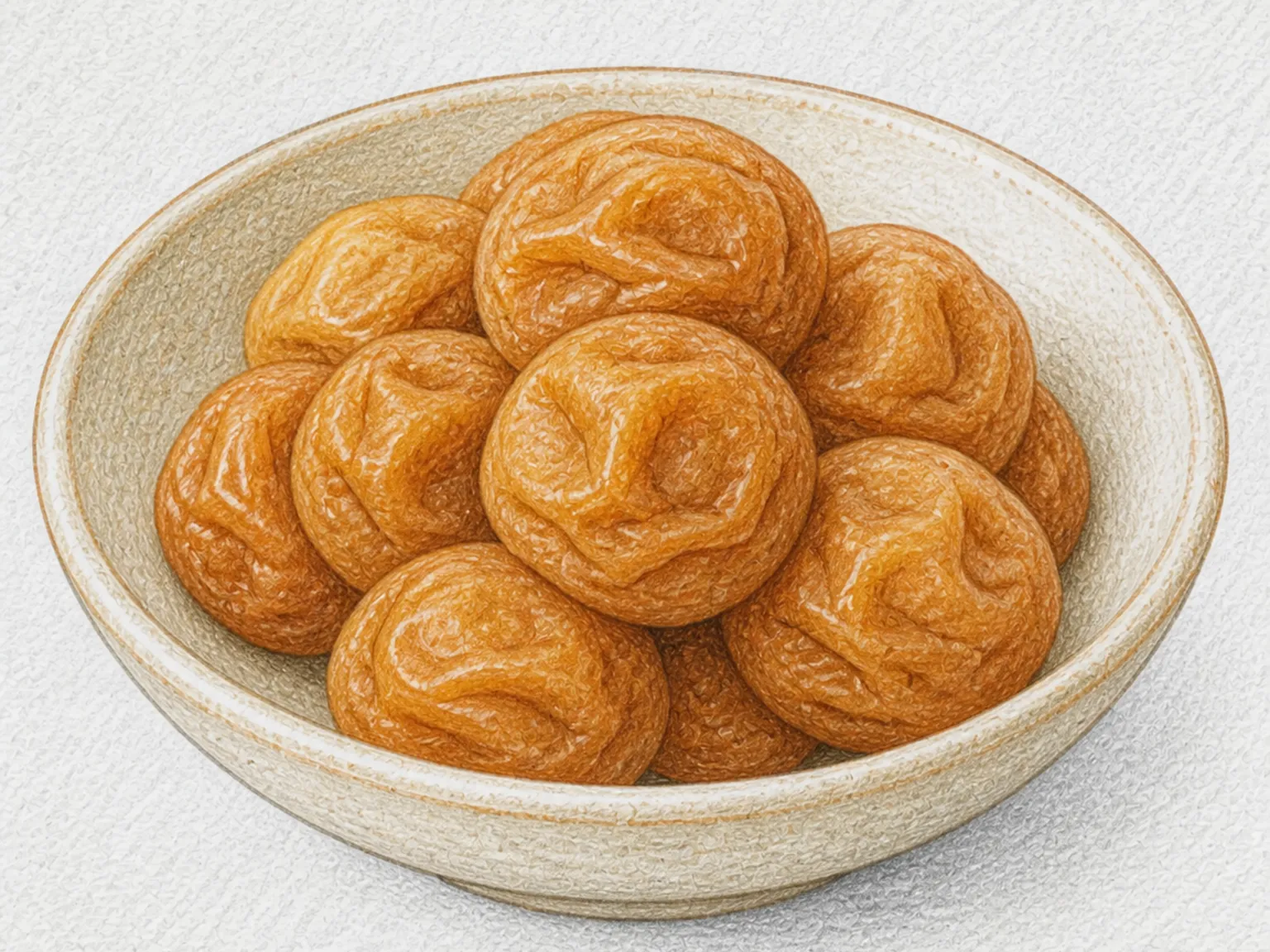
Umeboshi are Wakayama-style salted plums made from fully ripe yellow ume packed with coarse salt until fragrant ume vinegar rises, aged for about one month, then dried in direct sun for 3 to 4 clear days. Salt equals 20 percent of the plum weight, producing an intensely sour and salty preserve whose flesh becomes chewy and concentrated after drying. During aging, every plum must stay wetted by brine. Any fuzzy mold, slimy discoloration, bag leak, or rotten odor means the entire batch should be discarded without tasting.
Gan Jjajangmyeon (Dry-Fried Black Bean Sauce Noodles)
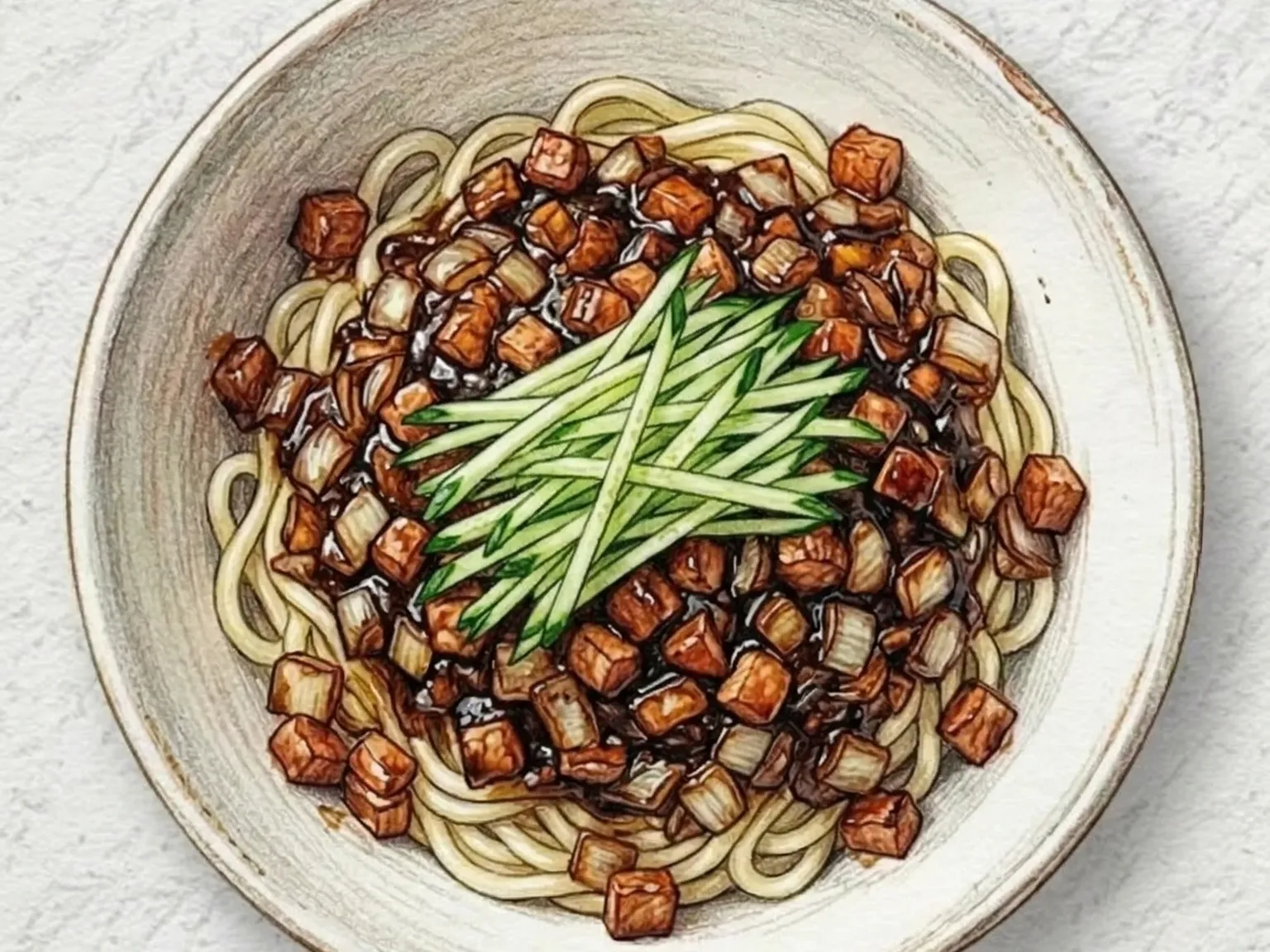
Gan jjajangmyeon is a Korean-Chinese noodle dish built on the character of deeply fried black bean paste. Chunjang is cooked in oil over moderate heat, long enough for the paste to lose its raw bitterness and develop a roasted, almost charred aroma before the other ingredients enter the pan. Ground pork and onion are then added and stir-fried over high heat -- unlike standard jjajangmyeon, no cornstarch slurry is used, so the finished sauce arrives on the noodles in the form of a glossy, oil-carried stir-fry rather than a thick, starchy gravy. The distinction matters to how the sauce interacts with the wheat noodles: without starch to hold the sauce in suspension, the oily coating distributes itself across every strand of noodle as the dish is tossed, producing a different mouthfeel from the standard version. Prolonged cooking caramelizes the natural sugars in the onion, creating a sweetness that offsets the salt and bitterness of the fermented paste. Julienned cucumber served on the side provides a cool, crisp counterpoint to the richness of the oily black bean sauce.
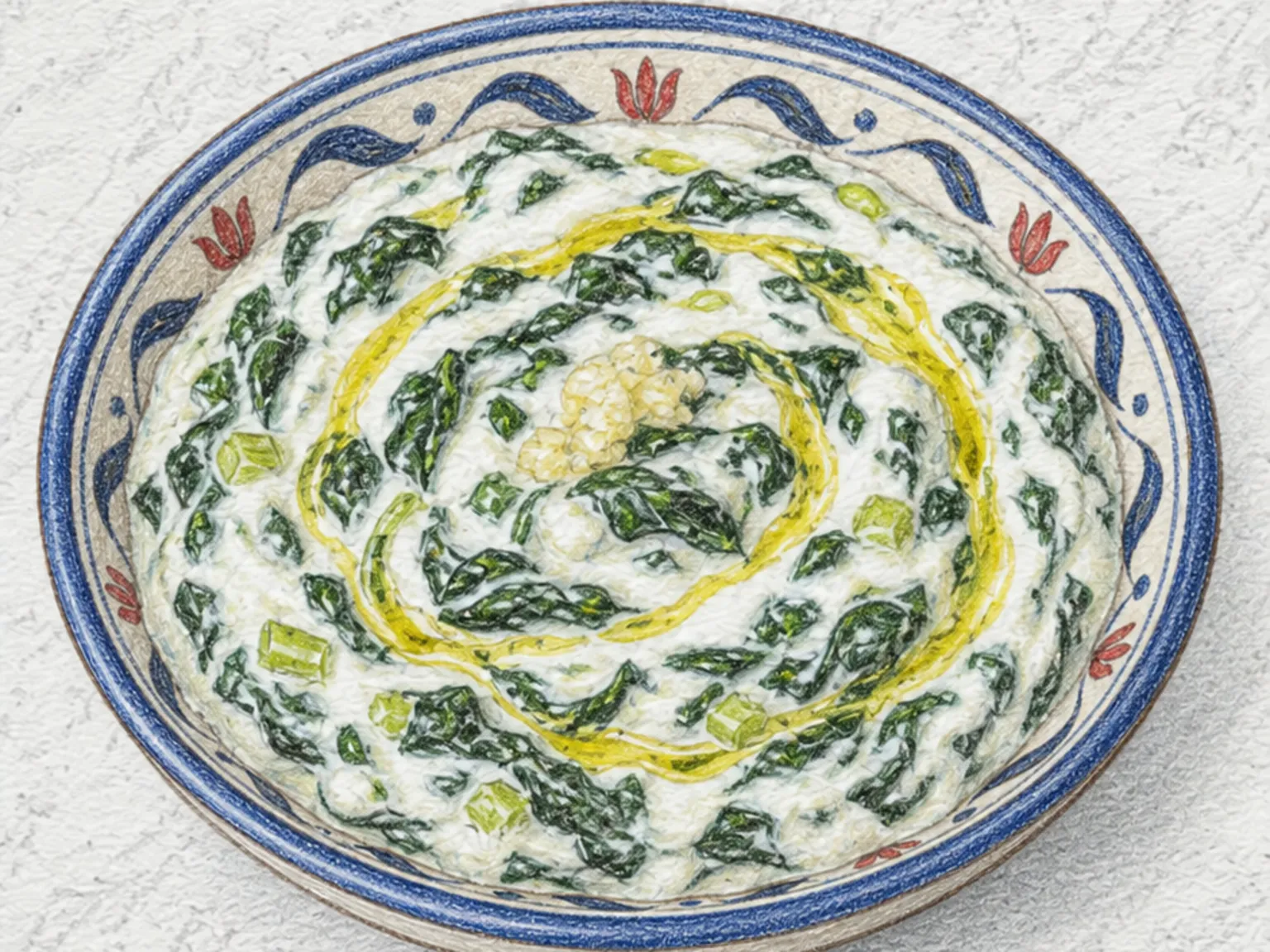
Pazı Borani (Turkish Swiss Chard with Yogurt)
The critical boundary in pazı borani comes between cooking the Swiss chard and mixing it with yogurt. The sautéed greens need to cool completely before they enter the sauce, since residual heat and moisture can loosen the thick yogurt. For 2 servings, use 300 g Swiss chard, 200 g Greek yogurt, 80 g onion, and 10 g garlic. Wash the chard thoroughly, drain it, and chop both the leaves and stems into bite-sized pieces. Finely chop the onion and mince the garlic, keeping the garlic ready to divide between the pan and the yogurt. Heat 20 ml of the total 30 ml olive oil in a pan. Sauté the onion with half of the minced garlic, then add the chard and cook until the leaves and stems have wilted. Remove the cooked chard from the heat and let it cool until no warmth remains. While it cools, combine 200 g thick, low-moisture Greek yogurt with the remaining garlic and 5 g salt. Stir until the garlic and salt are evenly distributed through the yogurt. Fold the fully cooled chard into this sauce and coat the chopped leaves and stems before transferring the mixture to a plate. Put the remaining 10 ml olive oil and 2 g red chili flakes in a small pan and heat them briefly. Drizzle the red chili oil over the yogurt-coated chard as the final layer. The finished borani should hold a thick coating instead of releasing water, with the sharp garlic and warm chili oil remaining distinct against the cool yogurt and tender greens.
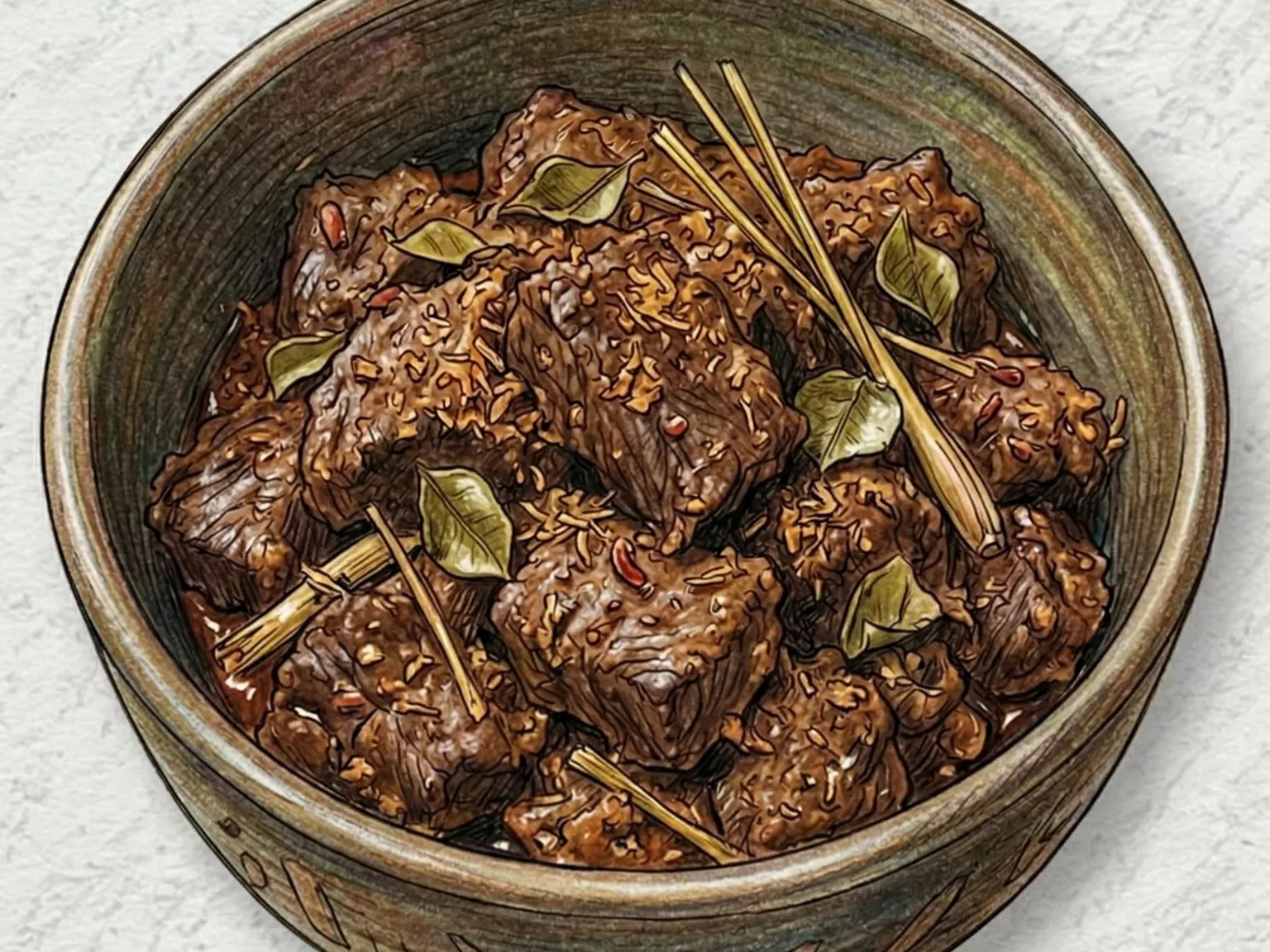
Beef Rendang (Indonesian Dry Coconut Braised Beef Curry)
Rendang originated among the Minangkabau people of West Sumatra as a preservation method: cooking meat in coconut milk and spices until all moisture is driven out, allowing it to keep for days without refrigeration in tropical heat. The process begins with a rempah paste of shallots, garlic, ginger, galangal, turmeric, and lemongrass pounded in a mortar, then fried in coconut oil until the raw sharpness cooks off. Beef chunks go into coconut milk and braise for two to three hours as the liquid reduces in stages - first a loose curry, then a thick sauce, and finally a dry phase where the coconut oil separates and essentially fries the meat inside its own spice crust. The finished pieces are dark brown, nearly black at the edges, carrying concentrated layers of chili heat, galangal warmth, and deep sweetness from the caramelized coconut solids. UNESCO recognized rendang as part of Minangkabau intangible cultural heritage, and the dish ranks consistently among the world's most celebrated preparations.
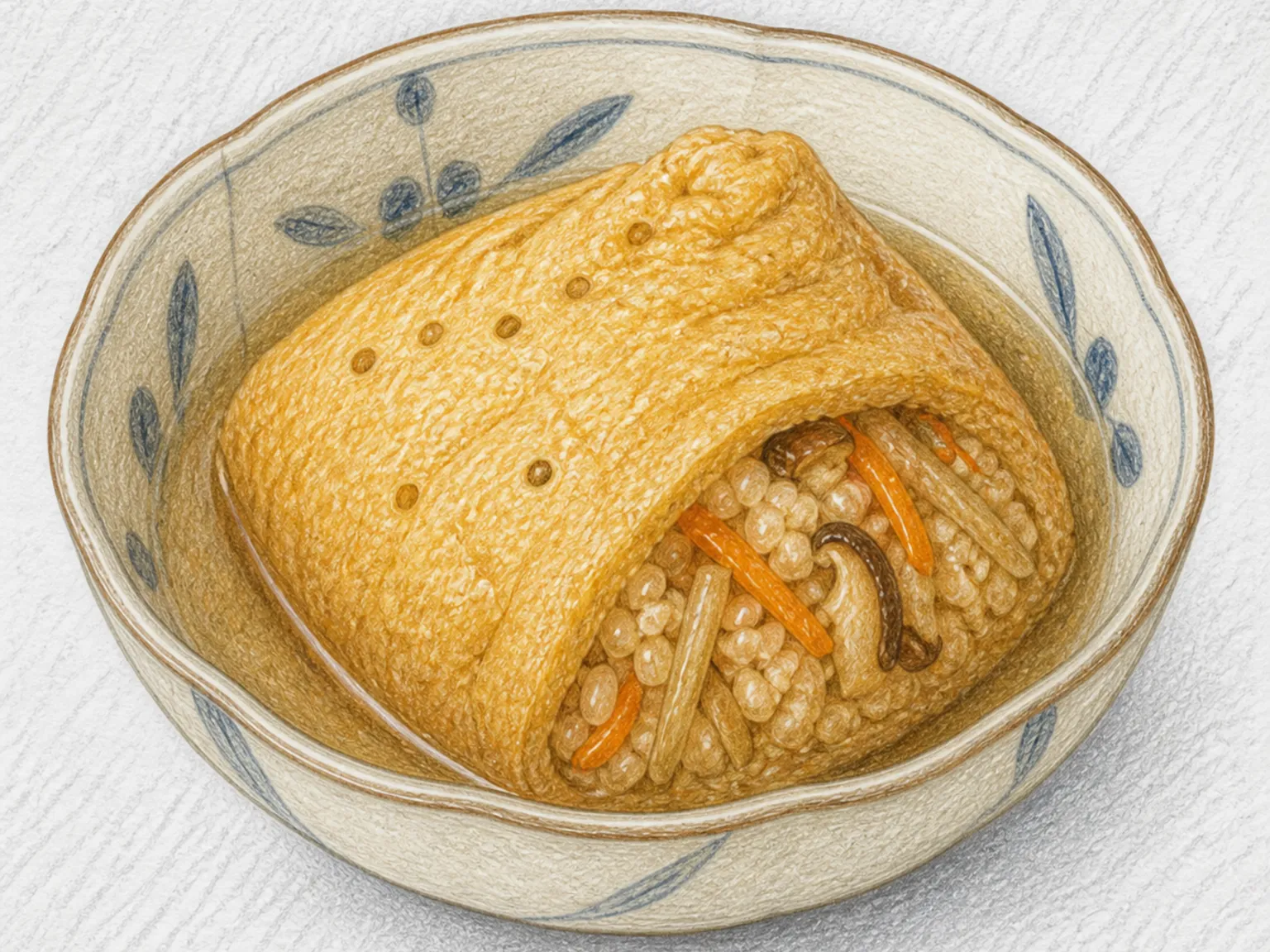
Itadaki (Rice-Stuffed Simmered Tofu Pouches)
Itadaki cooks raw rice, burdock, carrot, and rehydrated shiitake inside large triangular fried tofu pouches, using shiitake soaking liquid seasoned with soy sauce, sugar, and sake. Soak 3 dried shiitake mushrooms until they are soft through the center. Squeeze out the mushrooms and strain the soaking liquid through a fine sieve, reserving all 800 ml. Cut a slit along one short side of each of 6 tofu pouches and open the interior carefully with a finger. Shave 40 g burdock into thin pieces and rinse them in cold water. Julienne 40 g carrot and finely chop the shiitake. Rinse and drain 300 g uncooked rice, then mix it evenly with the three vegetables. Divide the mixture among the six pouches, leaving open space at the top for the rice to expand, and secure each opening with a toothpick. Use the tip of a chopstick to make about 10 small holes across the surface of every pouch. Pierce only the tofu skin gently so the seasoning can enter without crushing the filling or tearing one concentrated area. Lay 1 square 10 cm sheet of kombu and 10 dried sardines across the bottom of a rice cooker. Stand the pouches close together with their sealed openings facing upward. Dissolve 60 g soy sauce, 30 g sugar, and 20 g sake in the reserved shiitake liquid and pour it into the cooker. Run a standard white-rice cycle until the grains are fully cooked inside and the pouches look plump. Rest them in the closed cooker for 10 minutes, lift them out carefully, and remove the toothpicks before serving.
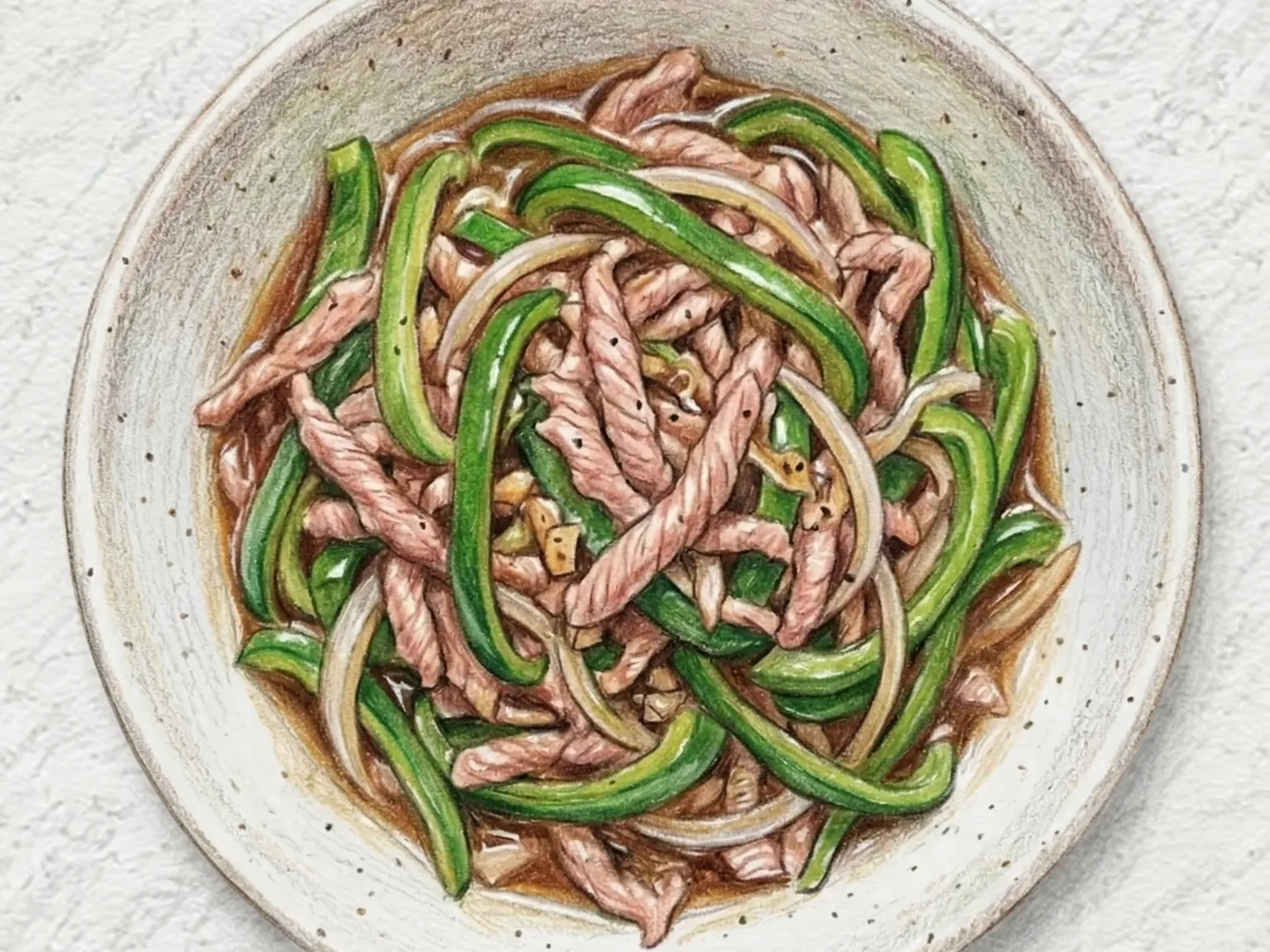
Stir-fried Pork and Green Pepper
Qingjiao rousi cooks 220 g of pork loin and 2 green bell peppers as narrow, similarly sized strips so both can finish during a brief high-heat stir-fry. Slice the pork across the grain, then mix it with 1/2 tablespoon of soy sauce and 1 tablespoon of cooking wine for 5 minutes. Shake off excess liquid before cooking to limit steaming when the pork reaches the pan. Heat 1 1/2 tablespoons of cooking oil over high heat and stir 1 teaspoon of minced garlic for about 10 seconds, only until fragrant. Spread the pork strips across the hot surface and separate them as they cook for 50 seconds to 1 minute. As soon as most of the red color disappears, add the bell pepper and onion, which should be cut to roughly the same width as the meat. Keep everything moving for about 2 minutes. When the pepper looks brighter and only the onion edges have turned translucent, add the remaining 1 tablespoon of soy sauce and 1 tablespoon of oyster sauce around the edge of the pan. Stir-fry for 1 more minute. The sauce should form a thin coating with no puddle left below, and the pepper should retain a crisp resistance when the pan comes off the heat.
Koppa Mochi (Dried Sweet Potato Rice Cake)
Koppa mochi is an Amakusa rice cake from Kumamoto made by steaming glutinous rice separately from koppa, sweet potato slices that were boiled and sun-dried for storage. Both are mashed and pounded together with brown sugar, white sugar, and salt, then pressed into a thick slab to firm. The food grew from island households preserving sweet potatoes for later use. It is sliced and eaten while soft, then grilled or reheated after it hardens. Chewy rice carries the concentrated sweetness and fibers of dried sweet potato, while two sugars keep the cake dense and moist.
Kaki no Dotenabe (Oyster Miso Hot Pot)
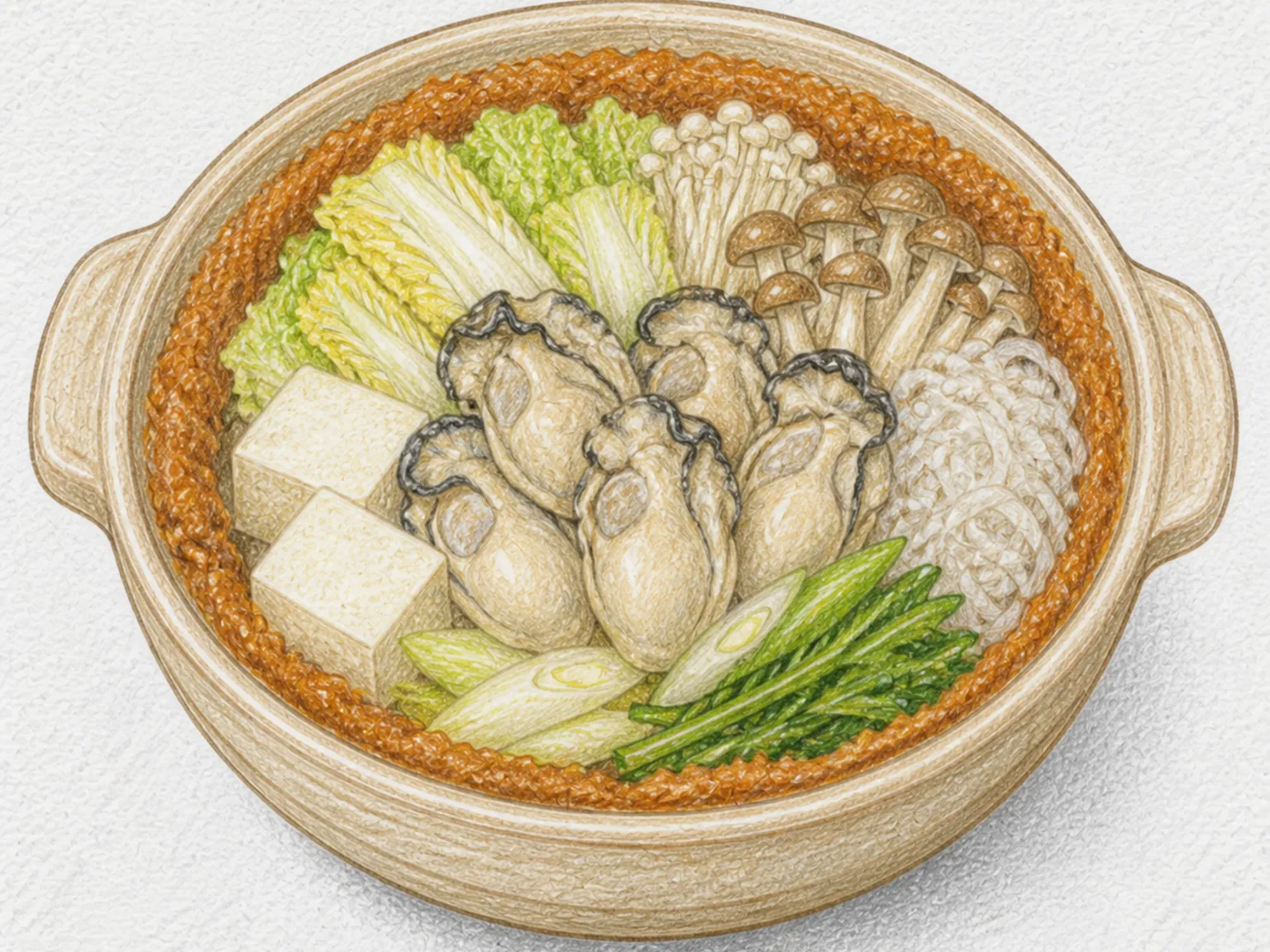
Kaki no dotenabe is an oyster hot pot in which a seasoned miso paste is spread like a bank around the inside rim of the pot and dissolved gradually into dashi as the ingredients cook. Gently swish 300g raw oysters in cold water mixed with 1 teaspoon salt, rinse them once in clean water, and drain them thoroughly in a sieve. Mix 100g red miso and 100g white miso with 1 teaspoon each sake, mirin, and sugar, then spread the paste thickly around the inner rim of the pot. Separate the firm cores from 500g napa cabbage and use them to line the bottom. This layer reduces direct contact between the pot and the miso or other ingredients. Arrange the remaining cabbage, tofu, 4 fresh shiitake mushrooms, 100g enoki mushrooms, 60g briefly blanched carrot, 2 stalks white leek, 200g shirataki noodles, and 150g chrysanthemum greens over the cores. Place the drained oysters in the center and pour in 600ml dashi. Bring the pot to a simmer over medium heat, then dissolve the miso bank into the broth a little at a time instead of adding all of it immediately. This lets you judge the final strength after liquid from the oysters joins the stock. Cook for about 5 minutes after the broth begins to simmer. Serve as soon as the oysters look plump and opaque and the vegetables are tender, using the condition of the oysters rather than extra boiling time as the finishing cue.
Uri no Teppo-Zuke (Chili-Stuffed Soy-Pickled Melon)
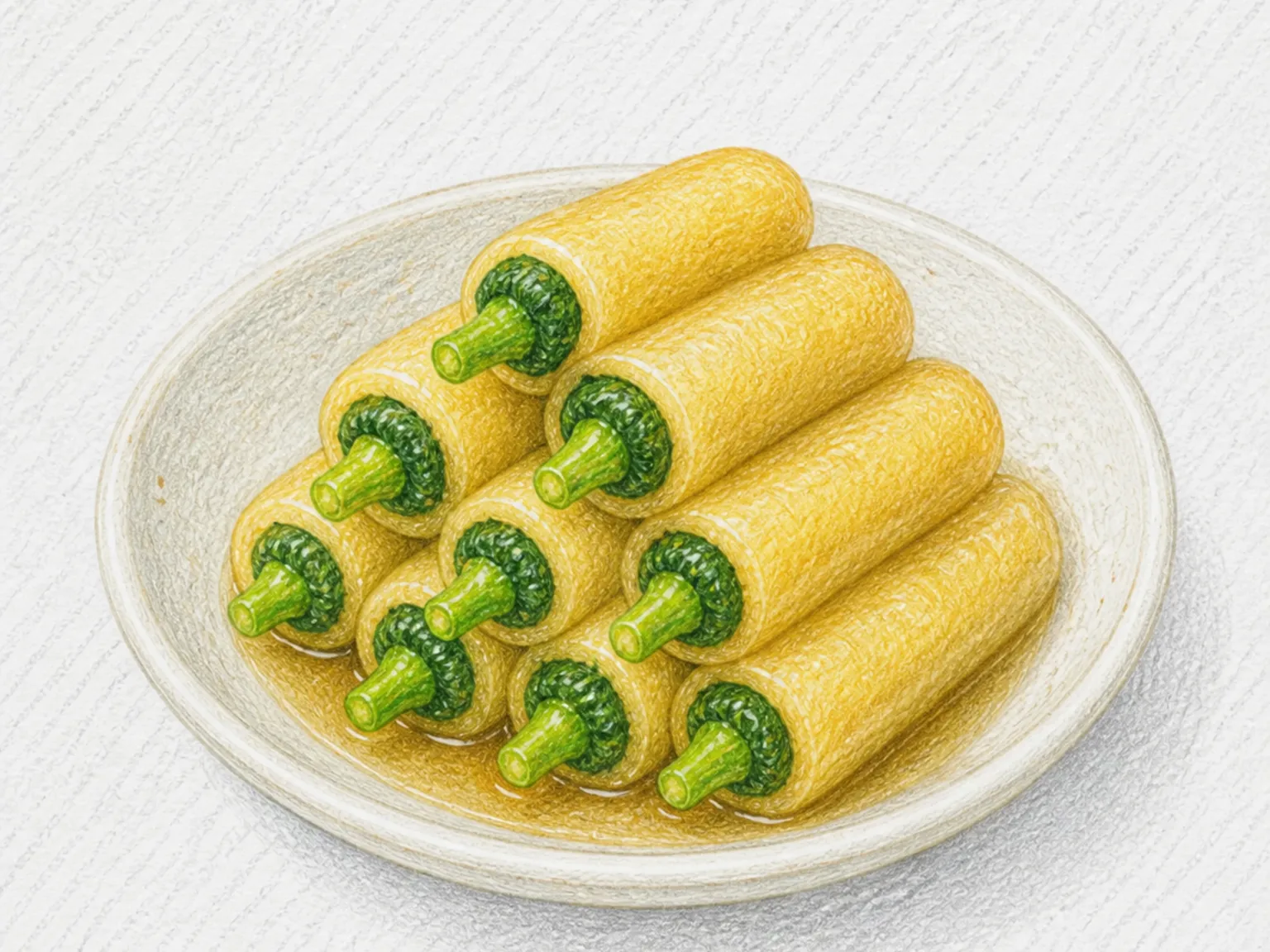
Uri no teppo-zuke is a Chiba pickle made from hollowed, salt-cured white melon. The melon is desalinated over two days with repeated water changes, squeezed thoroughly dry, and packed with green chilies wrapped in shiso leaves like ammunition inside a gun barrel. A marinade of soy sauce, coarse sugar, sake, mirin, and vinegar is boiled, cooled completely, and poured over the melon. For four to five consecutive days, the melon is removed and the liquid alone is reboiled, cooled, and returned; it is ready after about a week. The shape explains the name teppo-zuke, or gun pickle. Once a winter preserve around Narita and Katori, it remains a crisp, spicy rice side and sake accompaniment and is a well-known souvenir near Naritasan Shinshoji Temple.
Soy Butter Udon (Pan-Tossed Udon in Caramelized Soy Butter)
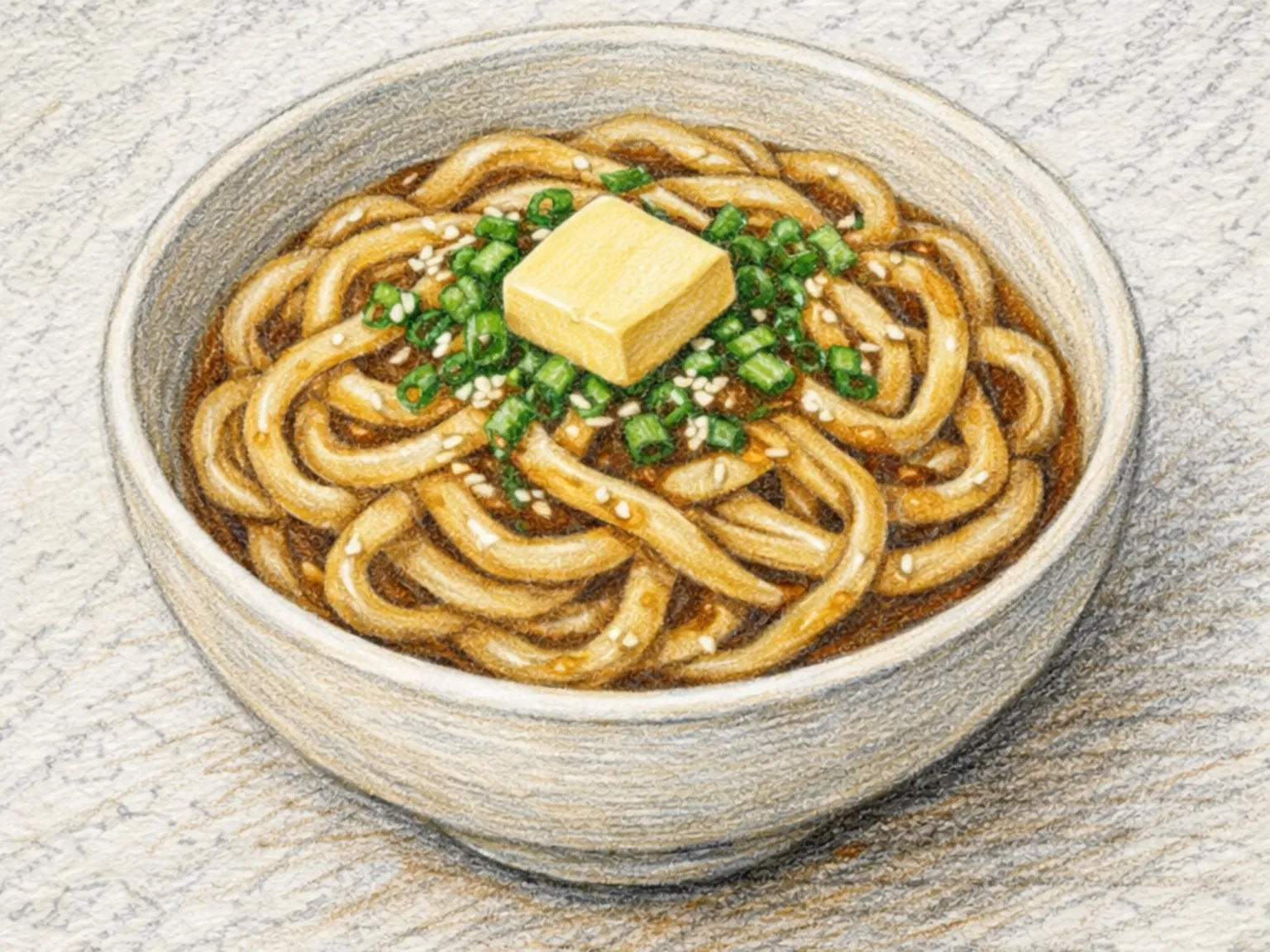
Ganjang butter udon is a quick pan-fried noodle dish that delivers deep, satisfying flavor in roughly ten minutes. Boiled udon noodles go into a pan with melted butter, and as soon as they hit the hot surface the butter releases a toasted, nutty fragrance. Soy sauce added to the pan caramelizes almost immediately against the heat, forming a savory-sweet glaze that coats every strand of the thick, springy noodles. The fat from the butter helps the glaze adhere evenly and rounds out the soy's saltiness with richness. Katsuobushi piled on top at the finish adds a layer of smoky umami that deepens the overall flavor, and an egg yolk placed in the center and stirred through transforms the dish with a creamy, silky texture. It is an ideal solution for a late-night craving or a satisfying solo meal when time is short.
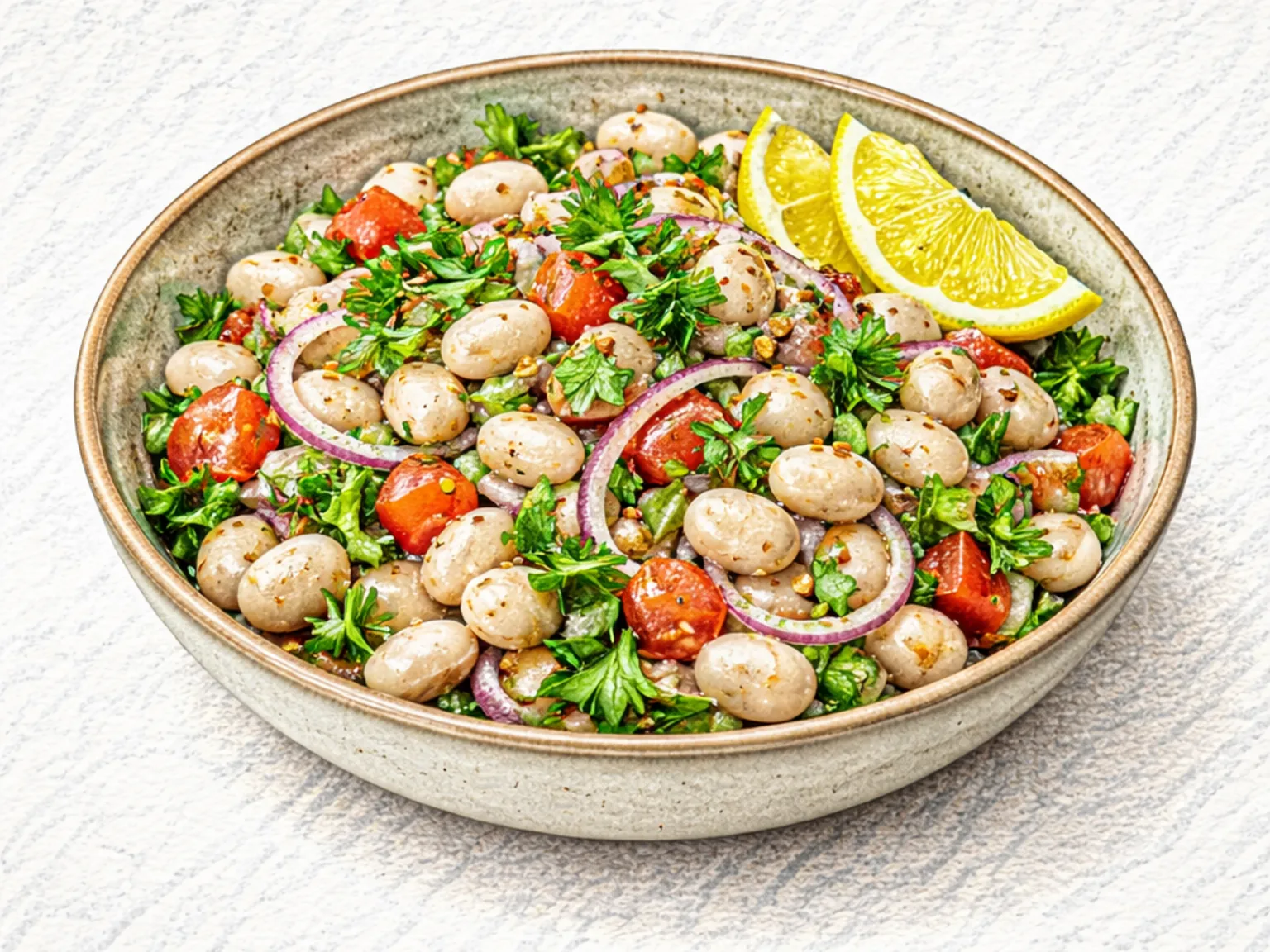
Turkish White Bean Salad (Turkish Cooked White Beans Salad)
Rinse 280 g cooked white beans lightly under running water in a sieve. Move them gently so they do not break, then drain until no water pools underneath. Slice 70 g red onion very thinly and soak it in cold water for about 5 minutes. Drain it once the sharp bite softens so its water does not dilute the dressing. Remove the thick stems from 20 g parsley and chop the leaves roughly; cutting them too finely can make them soft and watery. Whisk 2 tablespoons olive oil, 1.5 tablespoons lemon juice, and 1 tablespoon vinegar until the surface looks slightly thick and the oil no longer separates. Add the beans and onion first, folding from the bottom upward. When the beans look evenly glossy, add the parsley and turn the mixture once more without crushing them. Sprinkle 0.5 teaspoon sumac evenly so its acidity does not gather in one spot. Leave the salad at room temperature for about 10 minutes. Check the acidity and onion sharpness just before serving 2 portions with bread or grilled meat.
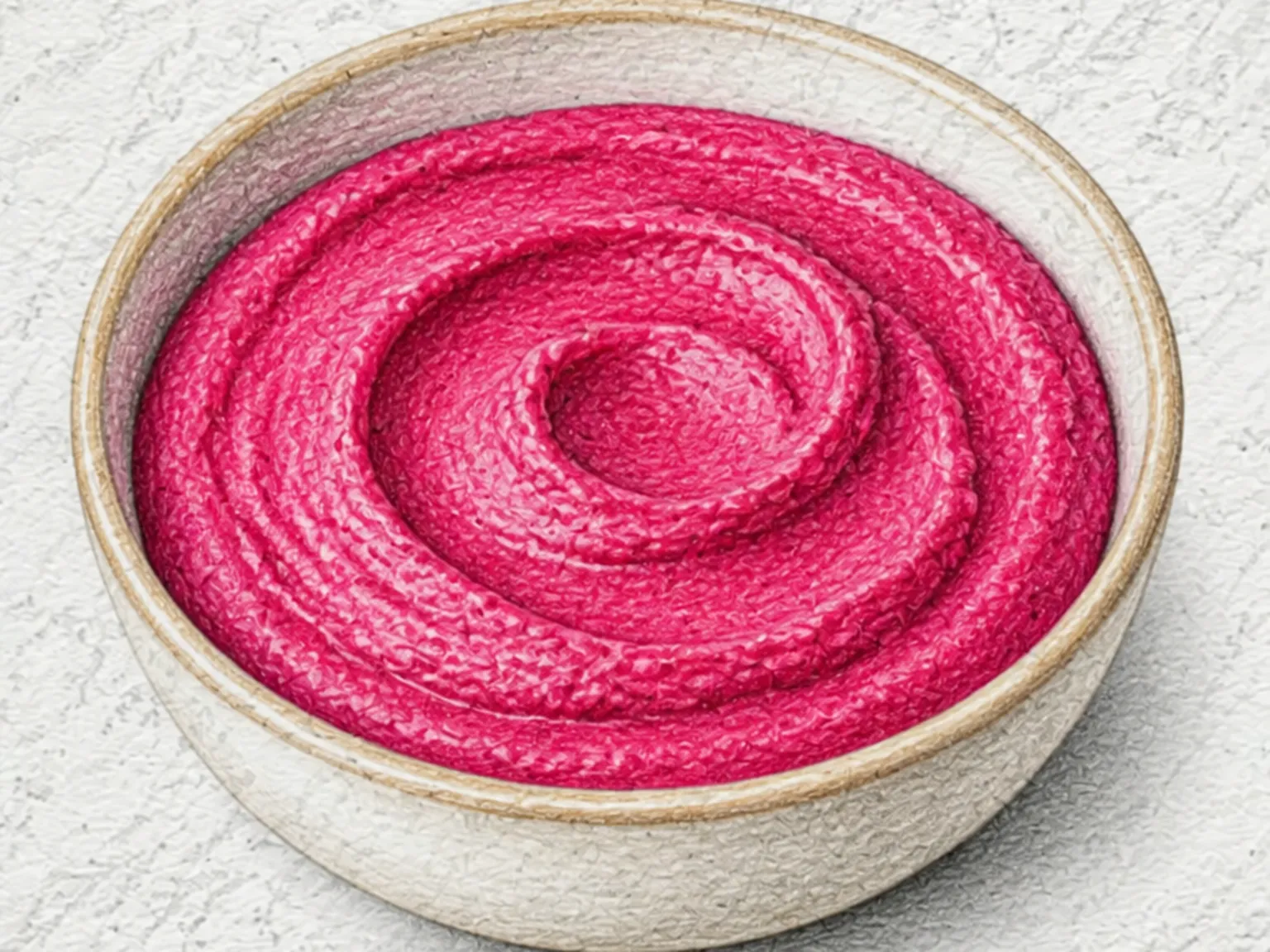
Beet Hummus
Beet hummus combines tender cooked beet with chickpeas, tahini, lemon juice, and olive oil to make a smooth pink dip. Peel 150 g beet, cut it into rough pieces, and place it in a steamer once the steam is fully rising. Steam for 20 minutes, until a knife reaches the center easily, then let the pieces cool completely so trapped heat does not loosen the finished hummus. Drain 240 g canned chickpeas in a colander, rinse them lightly under cold water, and remove excess moisture. Peeling the chickpeas at this stage takes more time but produces a finer texture. Put the cooled beet, chickpeas, 60 g tahini, and 10 g minced garlic into a blender or food processor first. Add 30 ml lemon juice, 45 ml olive oil, 2 g cumin powder, and 3 g salt, then secure the lid. Begin with short pulses to break down the larger pieces. Stop once to scrape ingredients from the sides back toward the blade, then process continuously until no chickpea pieces remain. The hummus is ready when it forms a cohesive, creamy ribbon from a spoon rather than a coarse mash. Transfer it to a serving bowl and serve immediately, or refrigerate it for 1 hour so the garlic, cumin, and lemon distribute more evenly through the mixture. Stir once after chilling to restore an even texture. When storing it, cover the bowl or use a sealed container so the exposed pink surface does not dry out before serving.
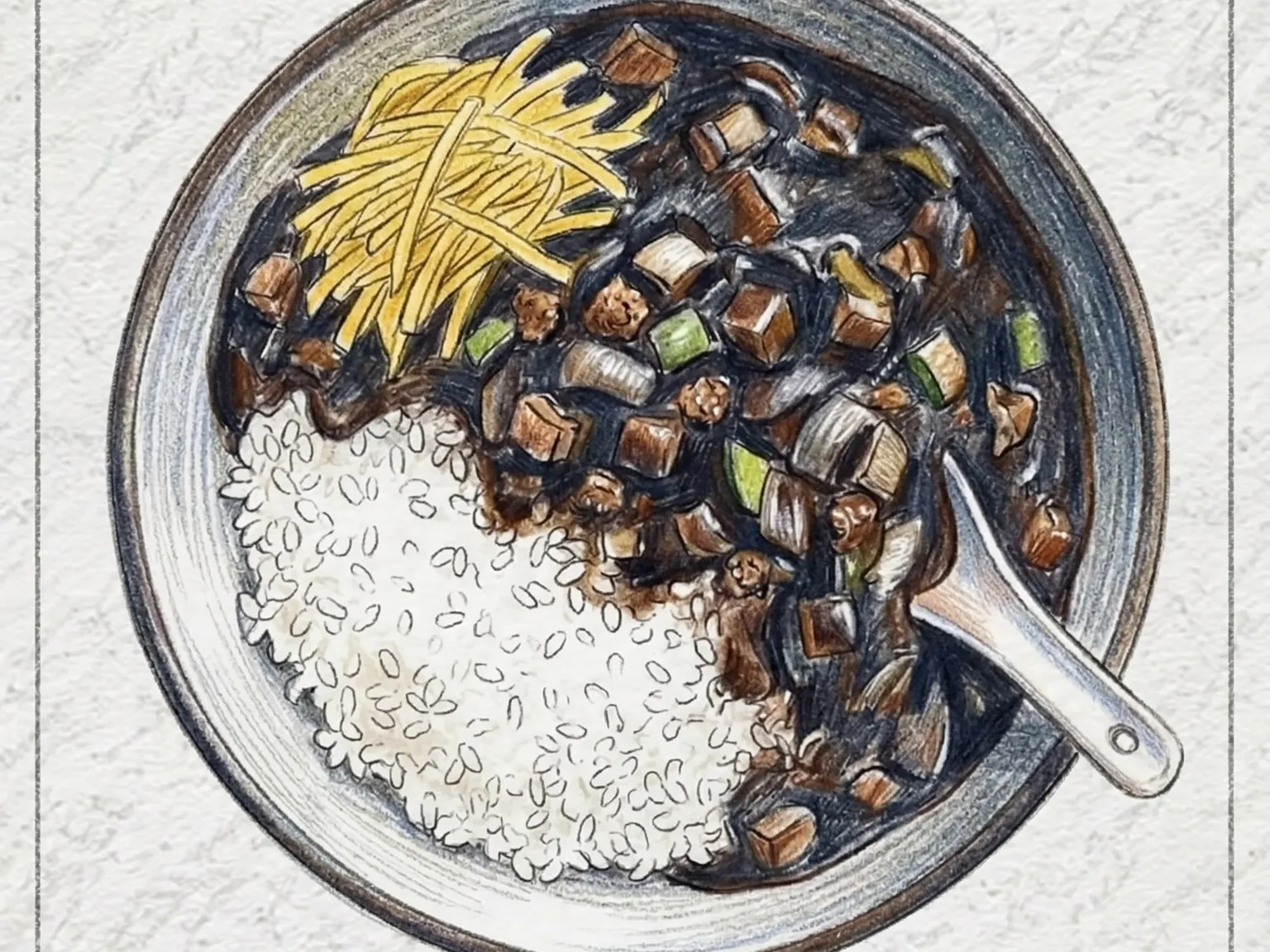
Korean Black Bean Sauce Rice
The key to jjajangbap lies in pre-frying chunjang (Korean black bean paste) in oil to strip its raw bitterness and unlock a toasty, earthy aroma. Ground pork, diced onion, zucchini, and cabbage are stir-fried until just softened, then folded into the fried paste so the dark sauce coats every piece. A potato starch slurry thickens the mixture after a brief simmer, giving it enough body to cling to rice without pooling. The finished bowl delivers a mellow sweetness mostly from the caramelized onion, layered with fermented soybean depth - a homestyle take on Chinese-Korean comfort food.
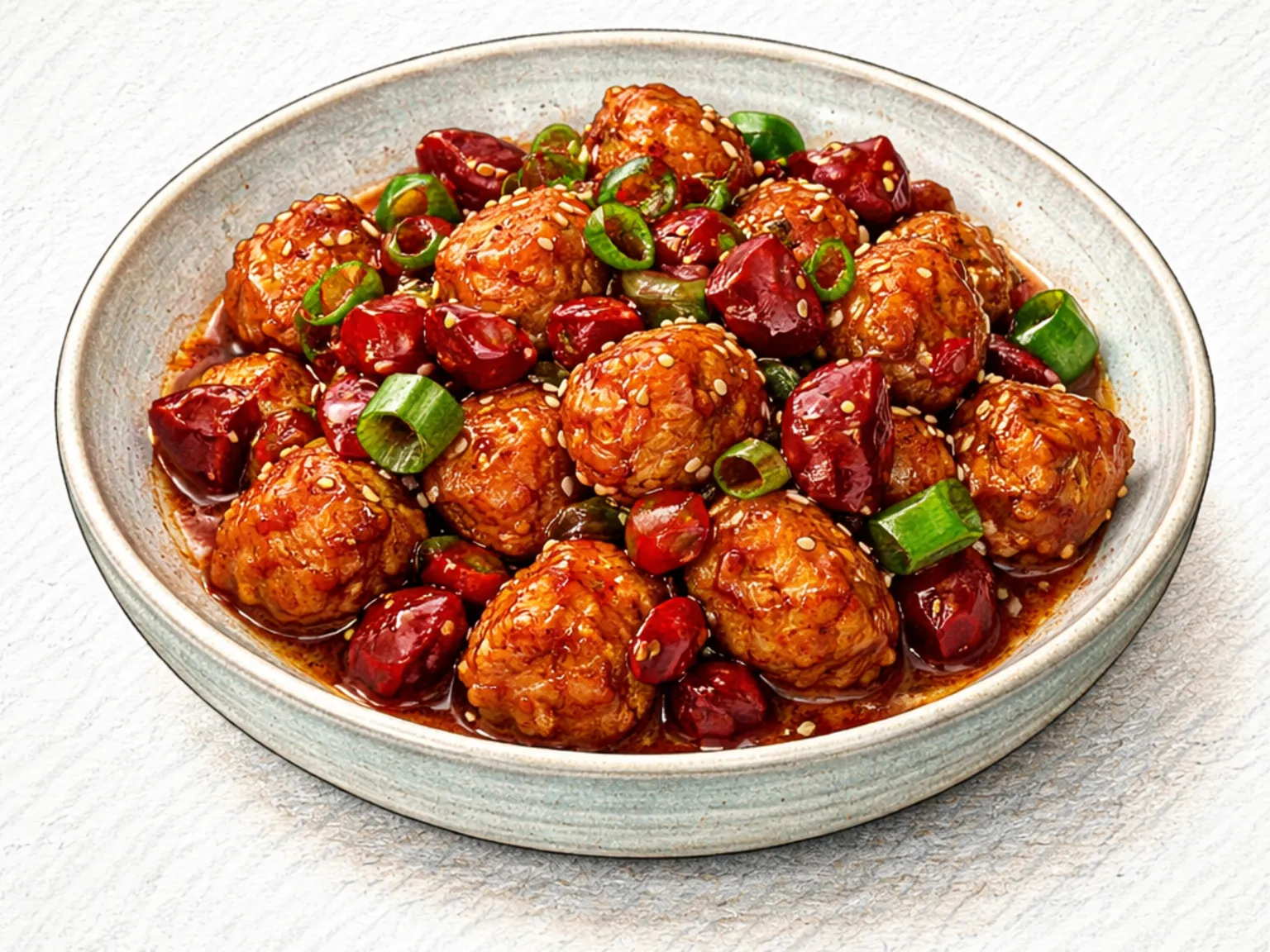
Spicy Fried Chicken Stir-fry
Rajogi keeps its fried crust by separating the frying stage from the final sauce toss. Cut 450 g of chicken thigh into even bite-size pieces, press away excess surface moisture, and cover all sides with 5 tablespoons of potato starch. Shake off heavy clumps so the coating fries as a thin shell instead of remaining pasty. Heat 2 cups of cooking oil to 170 degrees Celsius and add the chicken without crowding the pot. Maintain medium heat until the pieces are golden and firm around the edges, then lift them out to rest briefly. A short return to the hot oil just before making the sauce is an optional way to make the exterior firmer. In a separate pan over medium heat, stir-fry 90 g of onion and 100 g of bell pepper only until they begin to soften while retaining their shape. Lower the heat and add 1 tablespoon of gochujang, 2 tablespoons of ketchup, and 1 tablespoon of vinegar. Stir and scrape the bottom until the thick sauce bubbles and looks glossy. Add the fried chicken at the last moment, toss only until every piece has a thin coating, and transfer it immediately so the crust does not sit in the sauce.
Kujira-mochi (Steamed Walnut Rice-Flour Cake)
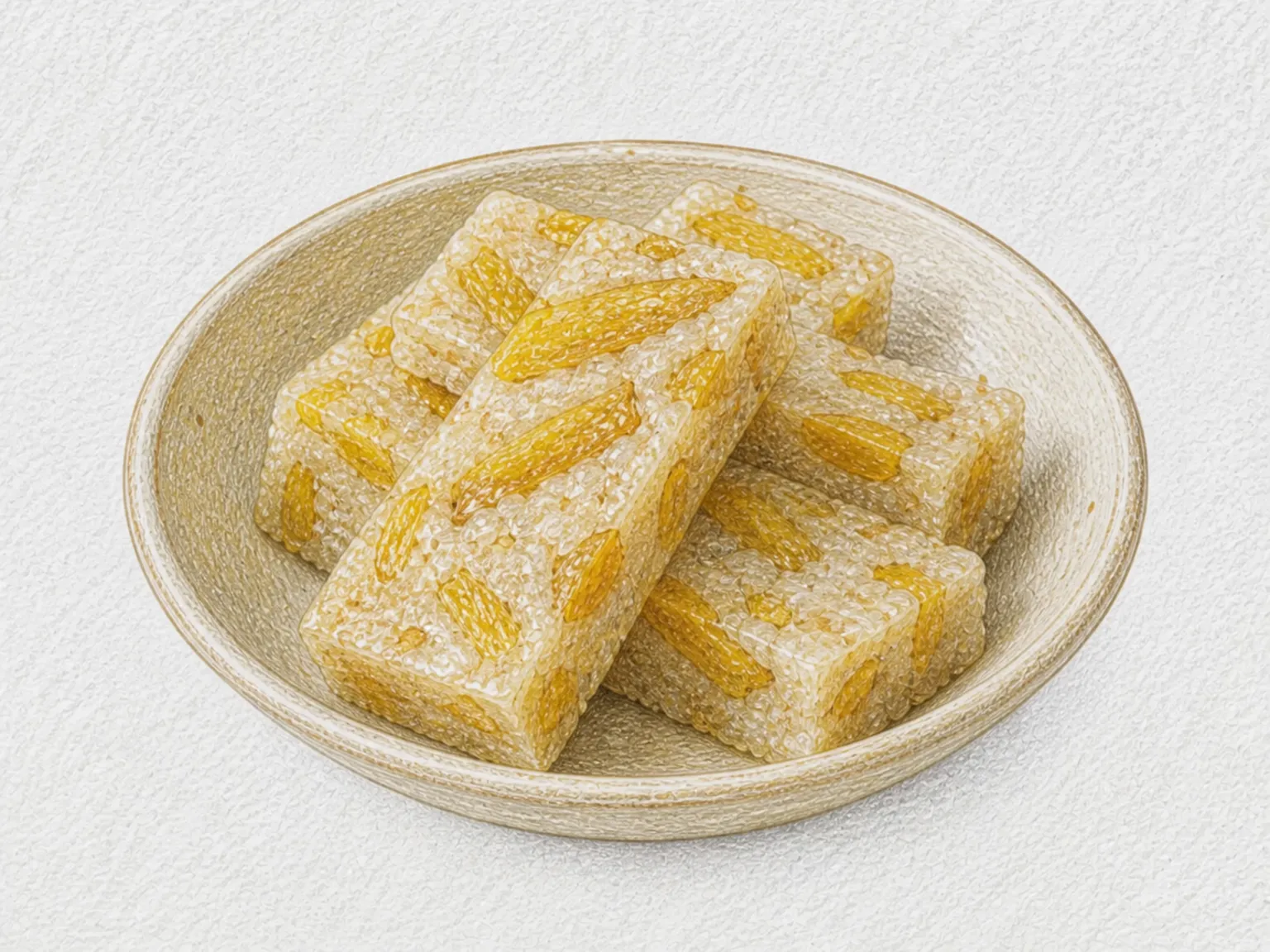
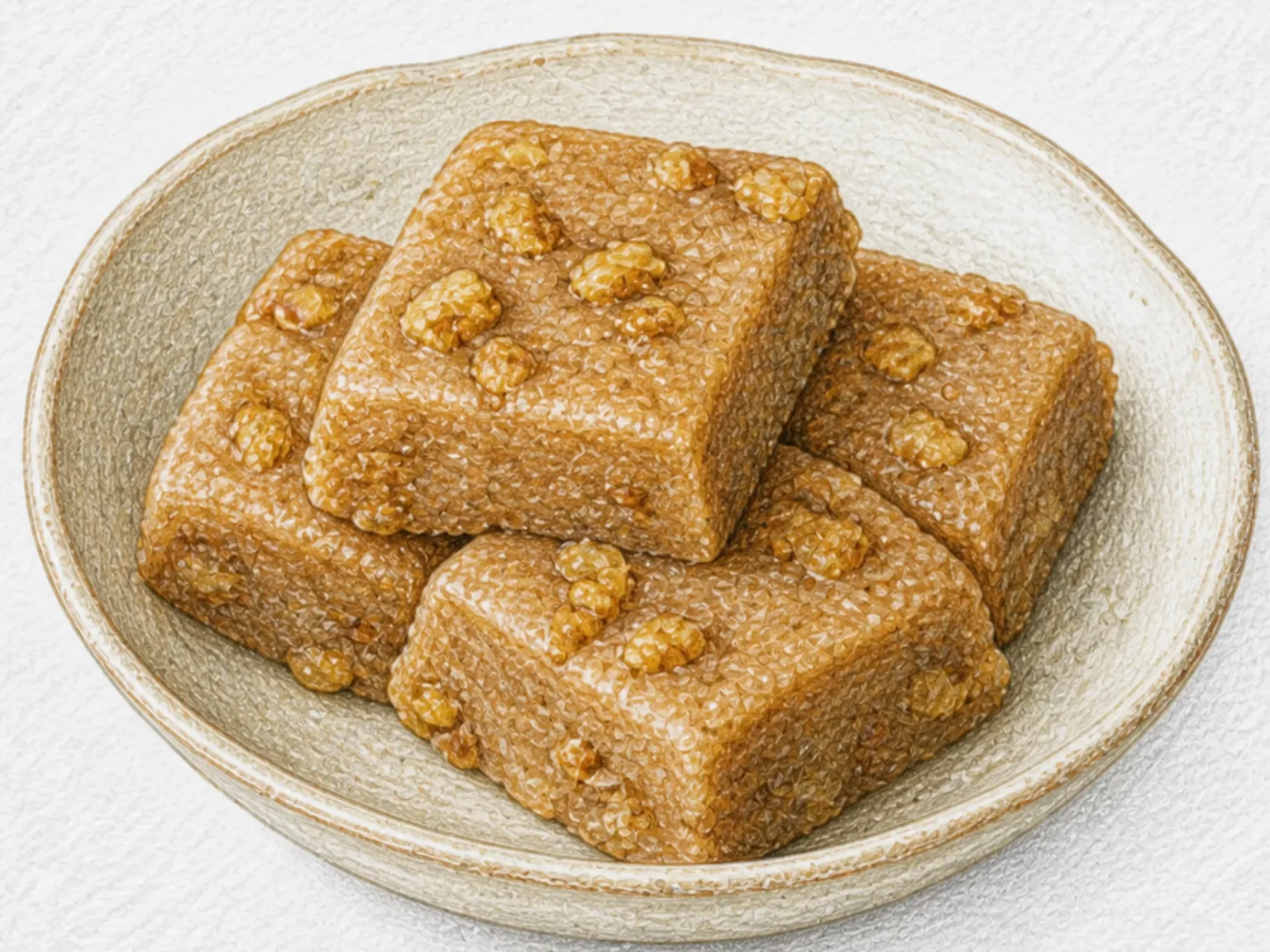
Kujira-mochi is a dense steamed rice-flour cake from the Mogami and Murayama areas of Yamagata. Glutinous and non-glutinous rice flours are mixed into cooled brown-sugar syrup, rested overnight, poured over walnuts in deep molds, and steamed until set. Despite the whale in its name, it contains no whale. Suggested origins include a phrase meaning a good cake that keeps for a long time, its formerly whale-like size, and a resemblance to salted whale fat. One account links it to provisions made for the Shinjo domain about three centuries ago. Families also offered it before Hina dolls on the lunar Peach Festival and ate it to welcome spring.
Kanimaki Jiru Freshwater Crab Miso Soup
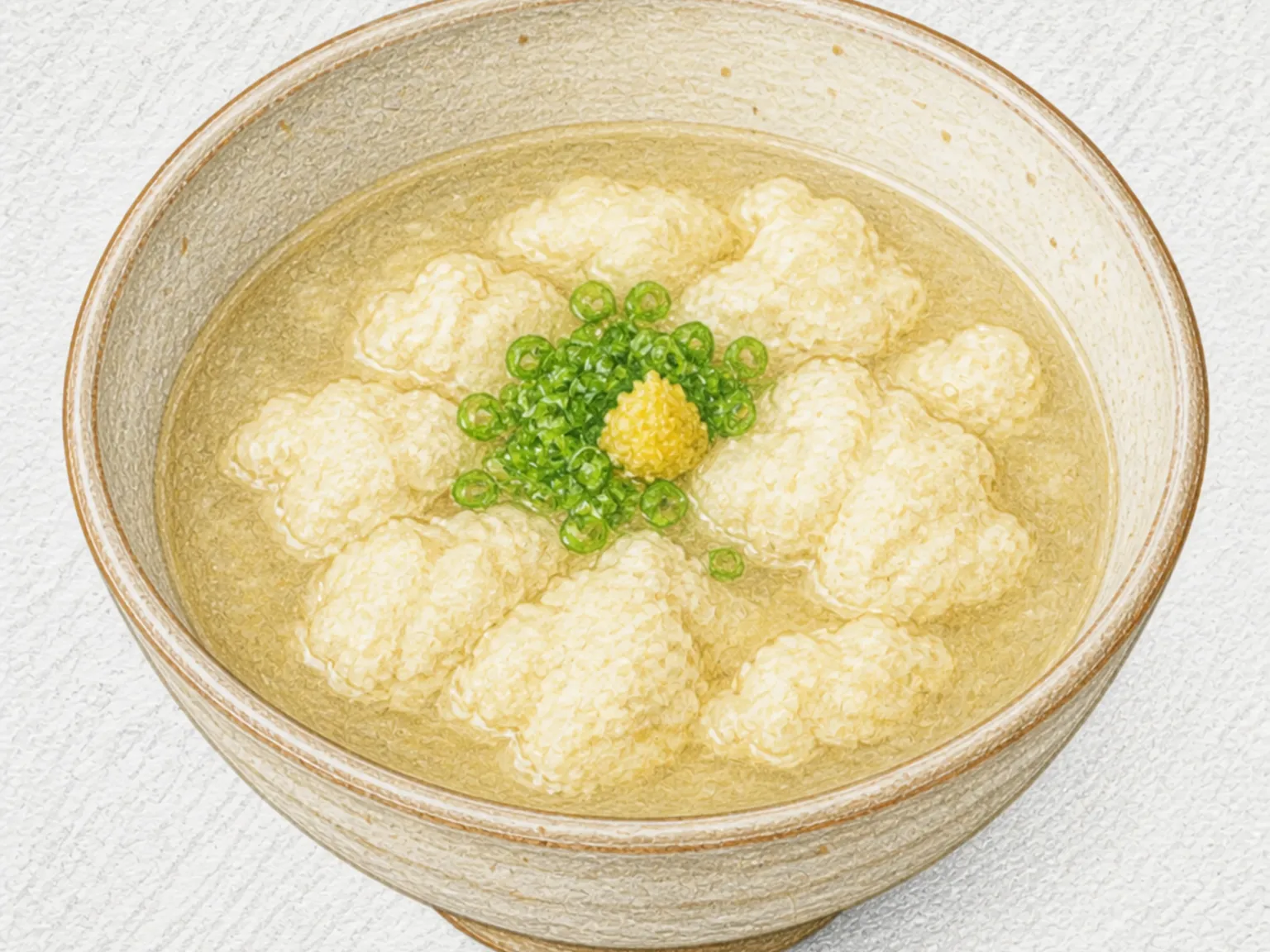
Kanimaki jiru is a soup from Kitago in southern Miyazaki. Thoroughly washed Yamataro freshwater crab with the carapace removed is crushed with miso, diluted gradually with water, and strained several times before heating. As the smooth crab liquid begins to boil and the heat is lowered, the crab protein and miso form soft, fluffy curds resembling oboro tofu in a clear broth. The dish uses the crab caught in the Sakatani and Hiroto rivers from autumn into winter, and it has traditionally been eaten especially from September to October. Ginger juice and green onion finish the concentrated crab flavor without obscuring the curds.
Zuiki Sweet Vinegar Pickle
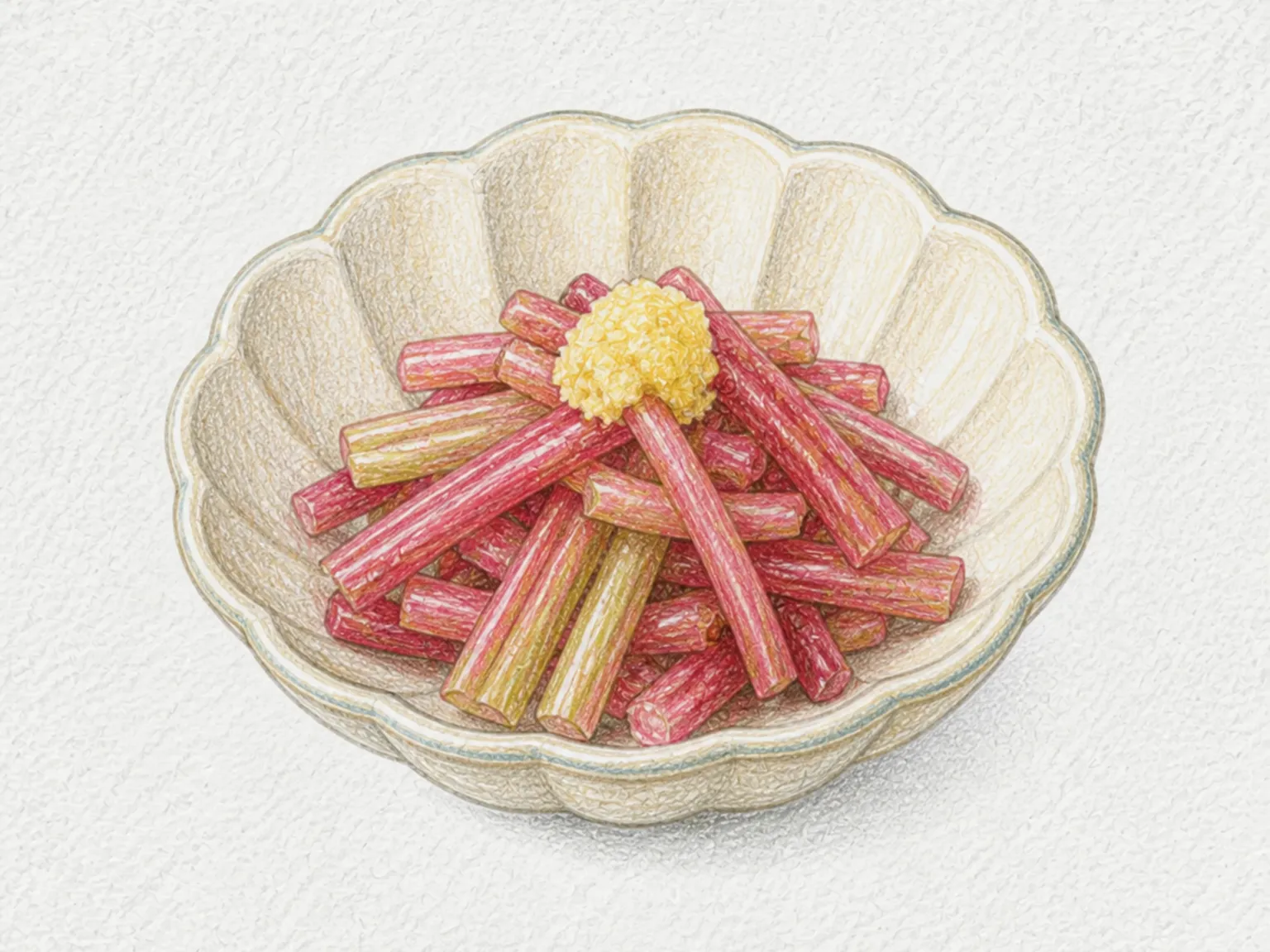
Zuiki sweet vinegar pickle is a Niigata summer side dish made from the fresh leaf stalks of Yatsugashira taro. The peeled stalks are soaked to draw out harshness, briefly boiled, and placed while hot into a cooled brine of vinegar, sugar, and salt. Zuiki is harvested from June through September, and the vinegar sharpens its natural red color while preserving a lightly crisp, fibrous bite. Boiling the brine first dissolves the sugar and salt evenly; cooling it before adding the hot stalks prevents unnecessary softening. The finished pickle is chilled thoroughly and served with freshly grated ginger for a clean, spicy finish.
Korean-Chinese Chicken Broth Noodles
Gis-myeon is a Korean-Chinese noodle soup in which thin wheat noodles are served in a clear, pale chicken broth topped with delicate ribbons of egg that have been poured in a fine stream and cooked into floating wisps. The broth begins with chicken breast simmered in water with aromatics; once the stock is strained and clarified, the cooked chicken is shredded into fine threads and reserved as the main garnish. Beaten egg is drizzled very slowly into the gently boiling stock while stirring in one direction, which produces the characteristic silk-like strands rather than broken scrambled curds. The seasoning is deliberately minimal: only soup soy sauce and salt are used, keeping the broth light, clean, and transparent enough to see the noodles beneath. A small measure of starch slurry stirred in just before serving gives the liquid a subtle viscosity that allows it to cling to each strand of noodle, ensuring flavor in every bite rather than leaving a watery pool at the bottom of the bowl.
About Asian
Each country brings its own signature spices and sauces, so even the same ingredients can produce completely different flavors. With a few key pantry items - coconut milk, fish sauce, curry powder, doubanjiang - you can recreate the tastes of Asia at home.