Asian

Asian Recipes

806 recipes. Page 31 of 34

The Asian category gathers popular dishes from Japan, China, Thailand, Vietnam, India, and beyond. Curry, stir-fried noodles, mapo tofu, pad Thai, and pho are among the Asian favorites commonly enjoyed in Korean households.

Asian
Minudaru (Black Sesame Steamed Pork)
Asian Medium

Minudaru (Black Sesame Steamed Pork)

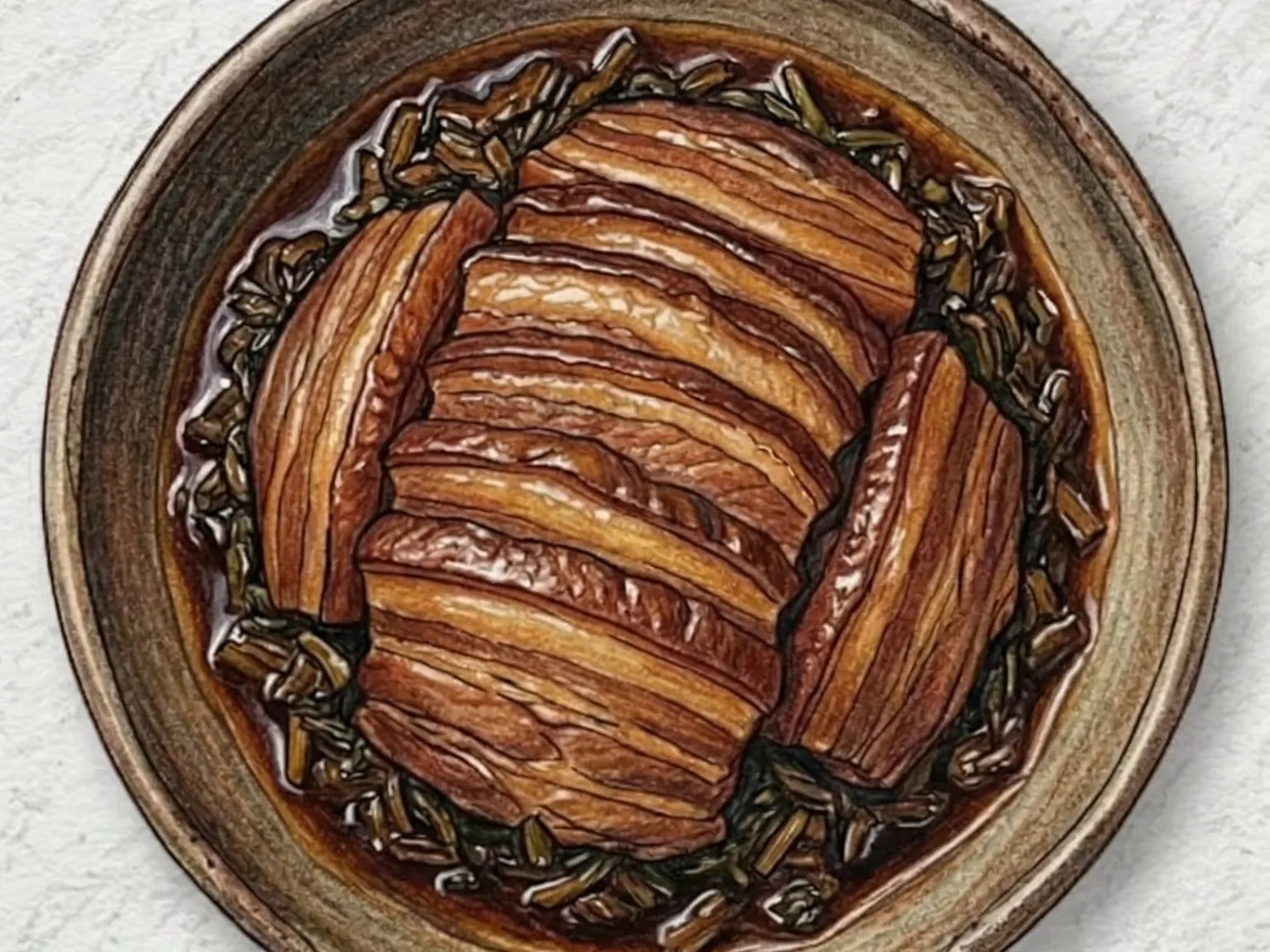
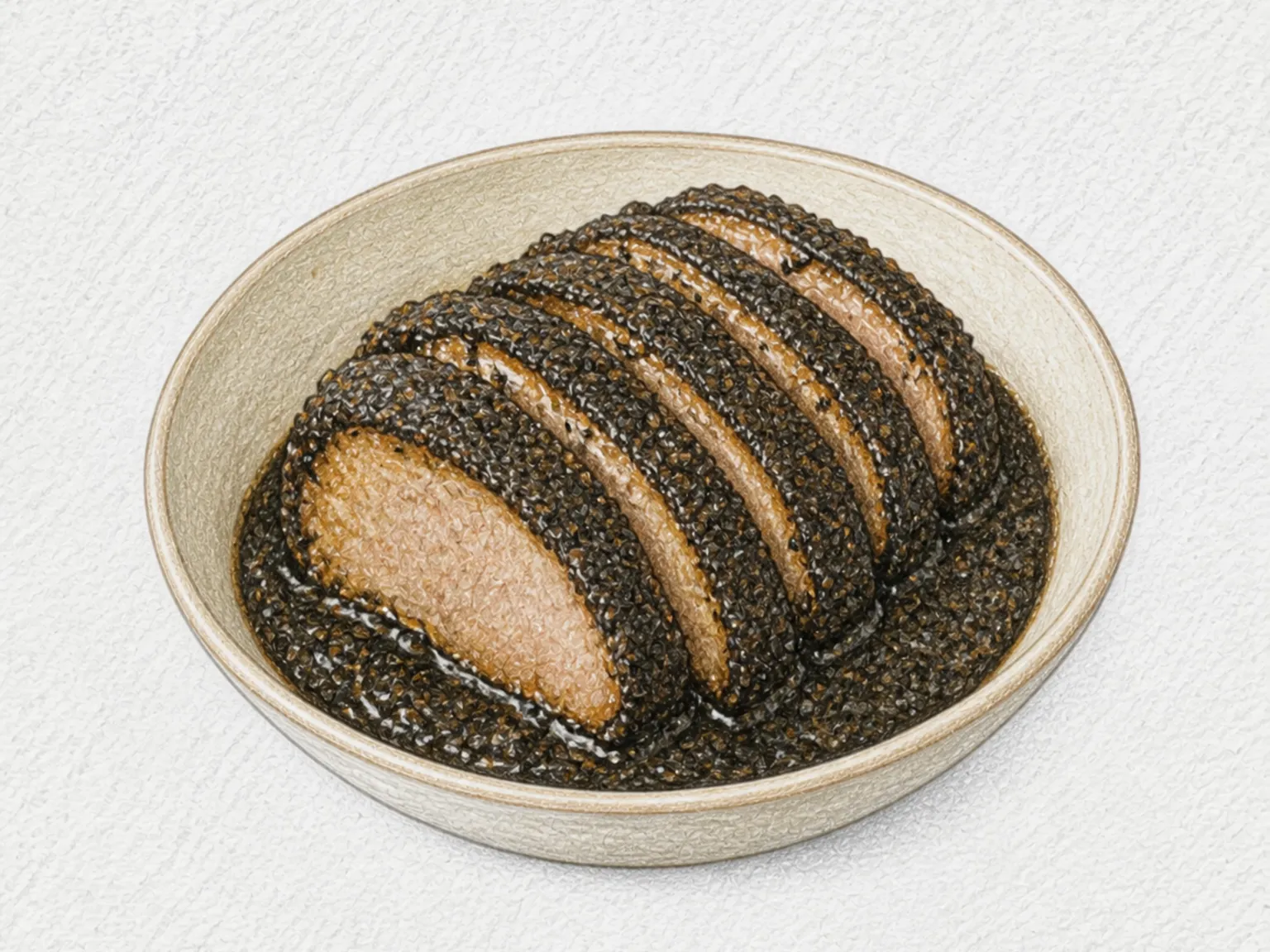
Minudaru is an Okinawan Ryukyuan court dish of thin pork loin coated in a thick paste of toasted black sesame, soy sauce, mirin, and sugar, then steamed with the dark layer intact. Its name is associated with black clothing, reflected in the glossy near-black surface of the finished pork. Moist steam gently cooks the lean loin while sesame oil coats it with richness and a roasted aroma. Strong steam at the beginning raises the temperature quickly, then moderate heat finishes the meat without washing the sesame paste away.

🎉 Special Occasion 🍺 Bar Snacks
Prep 20min Cook 15min 4 servings
Miso Potato (Fried Potatoes with Sweet Miso Sauce)
Asian Medium

Miso Potato (Fried Potatoes with Sweet Miso Sauce)

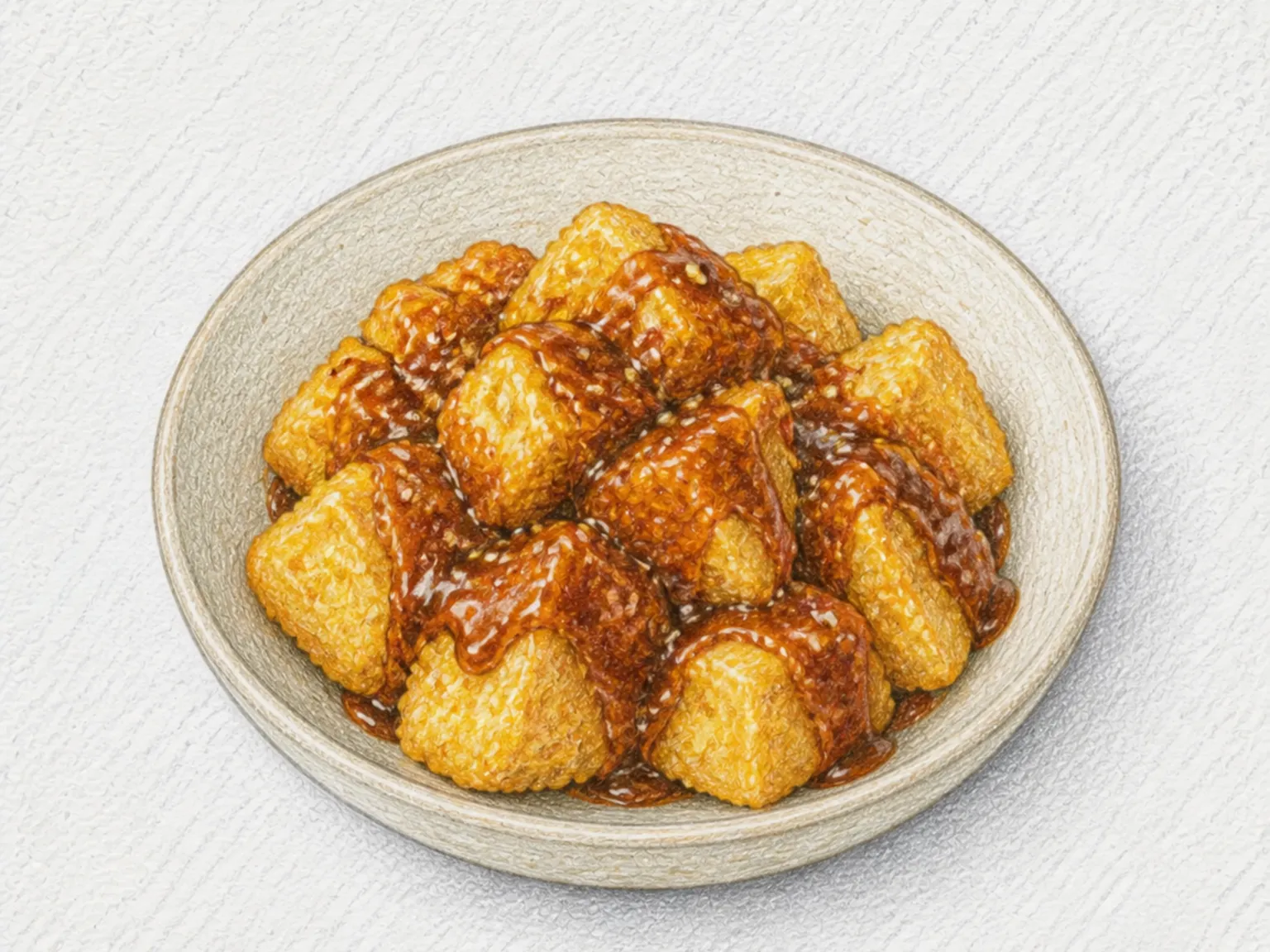
Miso potato is a Chichibu, Saitama snack once eaten as kojuhan, a light meal during breaks from farm work. Bite-size potatoes are soaked, parboiled until nearly tender, coated in a loose flour batter, and fried at 180°C until the thin shell becomes crisp. Miso, sugar, sake, mirin, and water are cooked separately into a glossy sweet-savory sauce and poured over the potatoes while they are still hot. Each piece combines a fluffy center, light fried coating, and concentrated miso topping. What began as practical farm food is now served as a home snack, side dish, sake accompaniment, and school lunch item.

🧒 Kid-Friendly 🍺 Bar Snacks
Prep 20min Cook 25min 4 servings
Thai Five-Spice Braised Pork and Eggs
Asian Medium

Thai Five-Spice Braised Pork and Eggs

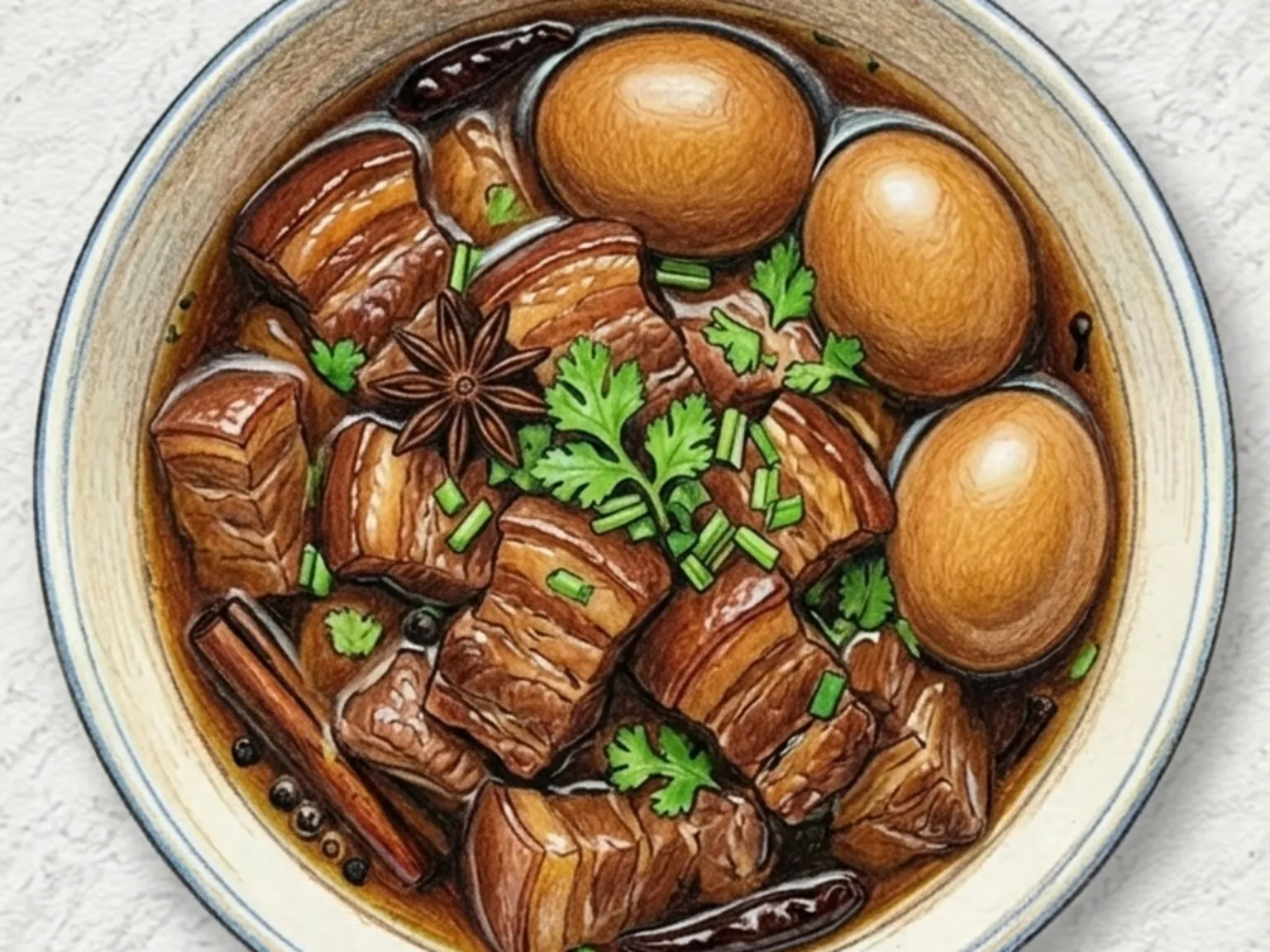
Moo palo is a Thai home-cooked braise of pork belly and soft-boiled eggs simmered slowly in a sauce built from soy sauce, palm sugar, and five-spice powder. The palm sugar goes into a dry pot first, caramelized until it turns a deep amber before the pork is added, which gives the meat a rich lacquered surface rather than a pale stew color. Five-spice powder draws together cinnamon, star anise, clove, fennel seed, and Sichuan pepper into a layered fragrance that permeates the braising liquid from the start, setting moo palo apart from simpler soy-based stews. Peeled eggs submerged in the liquid take on a uniform mahogany tint as they cook, absorbing the seasoning all the way to the yolk over the long simmer. Pork belly or shoulder with a good ratio of fat to lean is the right cut here, as the fat melts into the liquid and keeps the meat from drying out during the extended cooking time. Spooned over a bowl of steamed jasmine rice, the braise delivers a warm, sweet-salty depth punctuated by gentle spice heat, the kind of satisfying everyday meal that is central to Thai home cooking.

🎉 Special Occasion
Prep 20min Cook 70min 4 servings
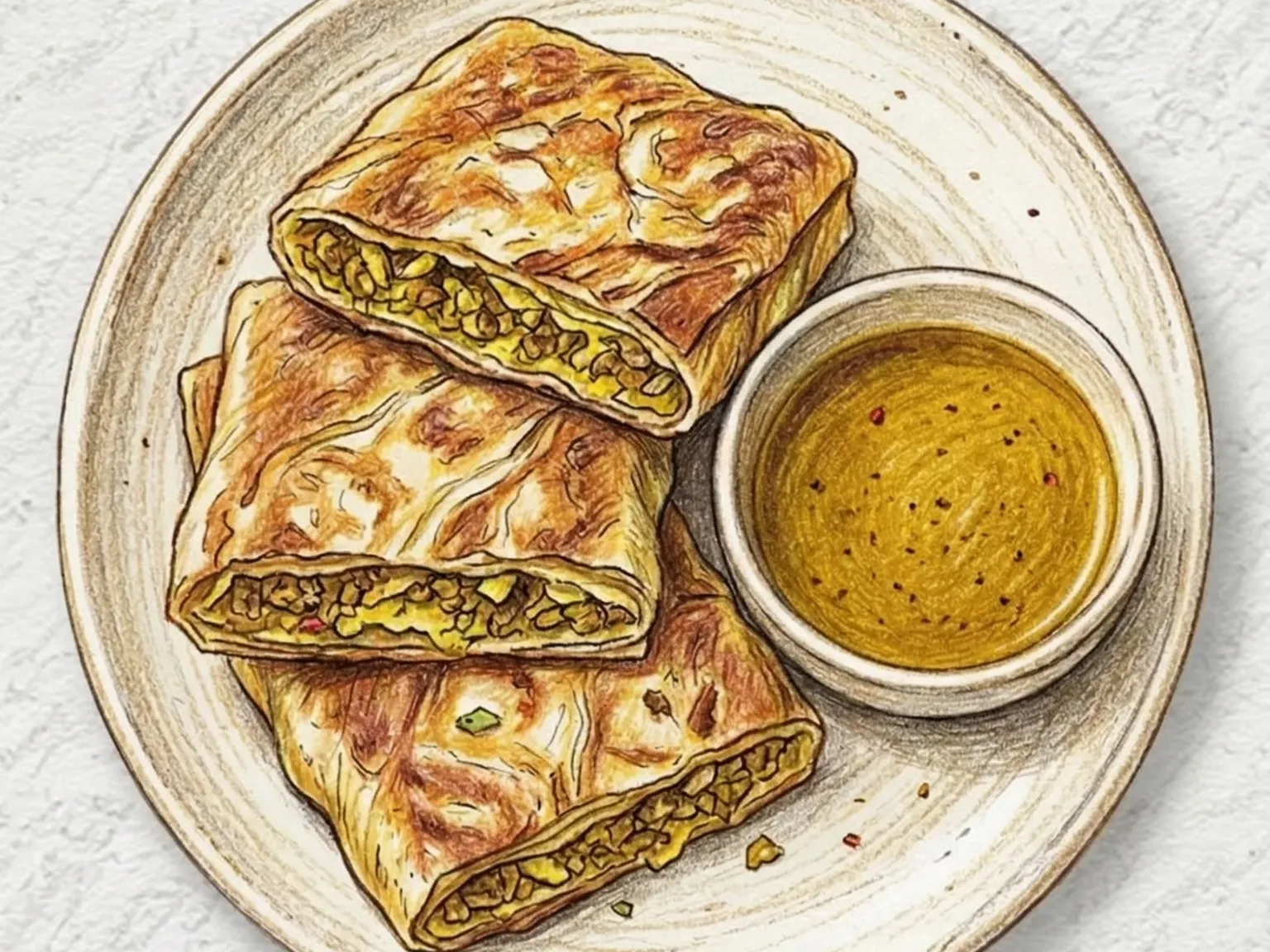
Murtabak (Malaysian Stuffed Pan-Fried Flatbread with Spiced Beef and Egg)
Asian Medium

Murtabak (Malaysian Stuffed Pan-Fried Flatbread with Spiced Beef and Egg)

Murtabak is a popular Malaysian pan-fried flatbread stuffed with spiced ground beef and egg. The process begins by kneading wheat flour, water, salt, and oil to form a smooth dough, which is rested for thirty minutes to ensure it can be stretched thin. The filling is prepared by cooking ground beef and onion with curry powder until dry, which prevents the flatbread from becoming soggy. To assemble, the dough is stretched paper-thin with oiled hands, topped with the beef mixture, and a raw egg is added before folding the sides into a square. The flatbread is cooked in a lightly oiled pan over medium heat until both sides turn golden and crisp. The result is a multi-layered pastry with a crispy shell and a moist, savory core. It is cut into pieces and served with curry sauce or chutney.

🎉 Special Occasion 🍺 Bar Snacks
Prep 25min Cook 20min 2 servings
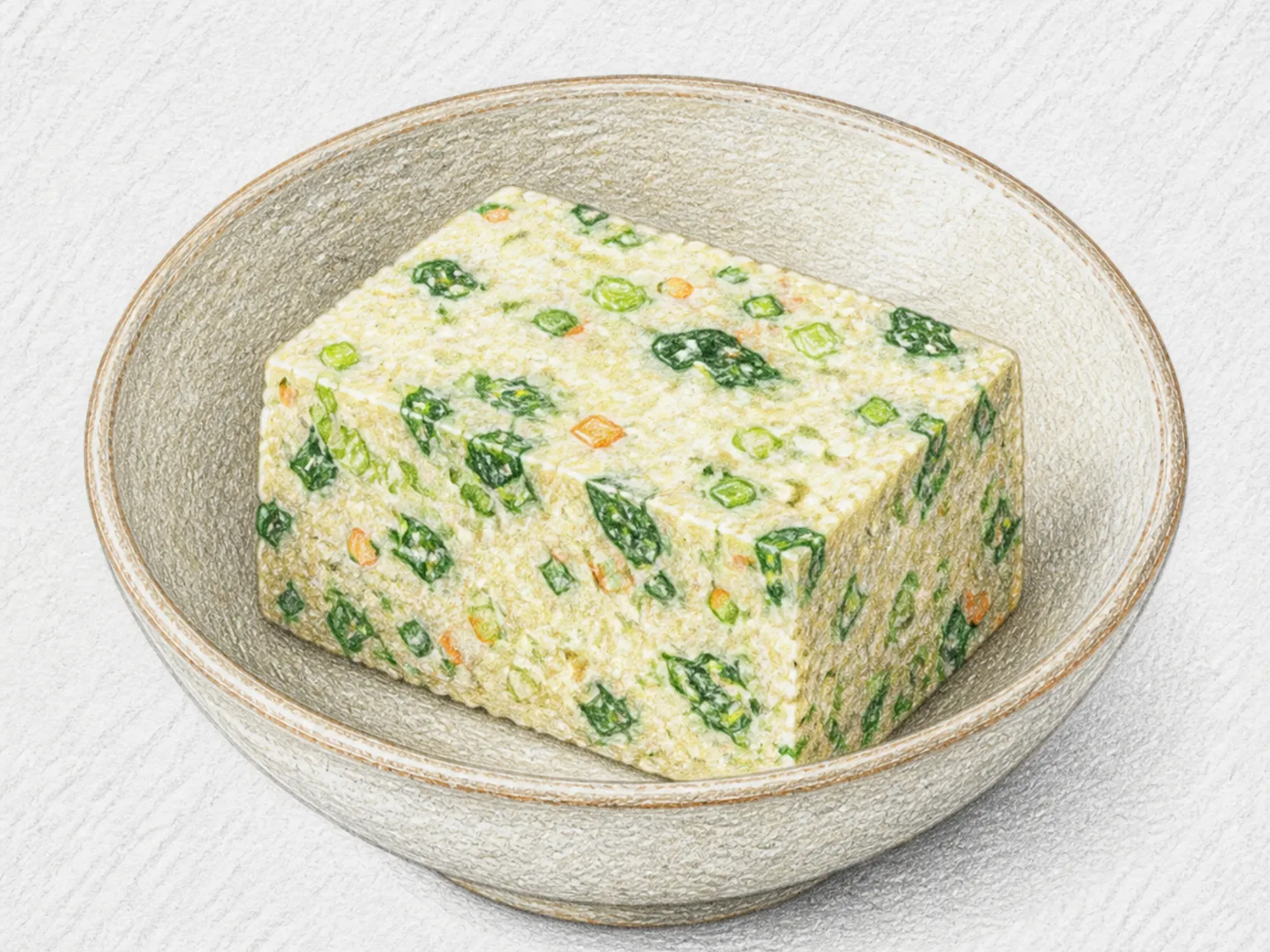
Na Dofu Seasonal Vegetable Tofu
Asian Hard

Na Dofu Seasonal Vegetable Tofu

Na dofu is a specialty tofu from Shiiba village in Miyazaki that mixes finely cut seasonal vegetables and nigari into hot freshly made soy milk, setting their color and aroma inside the tofu curd. Spring versions used rape blossoms, wisteria flowers, and mitsuba, while an aromatic local green called Heike kabu appeared from autumn through spring. Carrot, radish greens, shiso, and spinach are also used today. In a mountain village with poor farmland, adding vegetation both stretched precious soybeans and increased the block's nourishment while expressing the season. The vegetables are washed carefully, passed briefly through water held at seventy to eighty degrees, and chopped very fine. Soy milk made by soaking, grinding, straining, and fully boiling soybeans cools to about sixty degrees before powdered nigari and vegetables are folded in. The curds drain and press in a cloth-lined mold. Unlike plain tofu, the finished block is not soaked in water; it is cut directly and eaten with soy sauce or yuzu miso.

🥗 Light & Healthy 🎉 Special Occasion
Prep 480min Cook 70min 4 servings
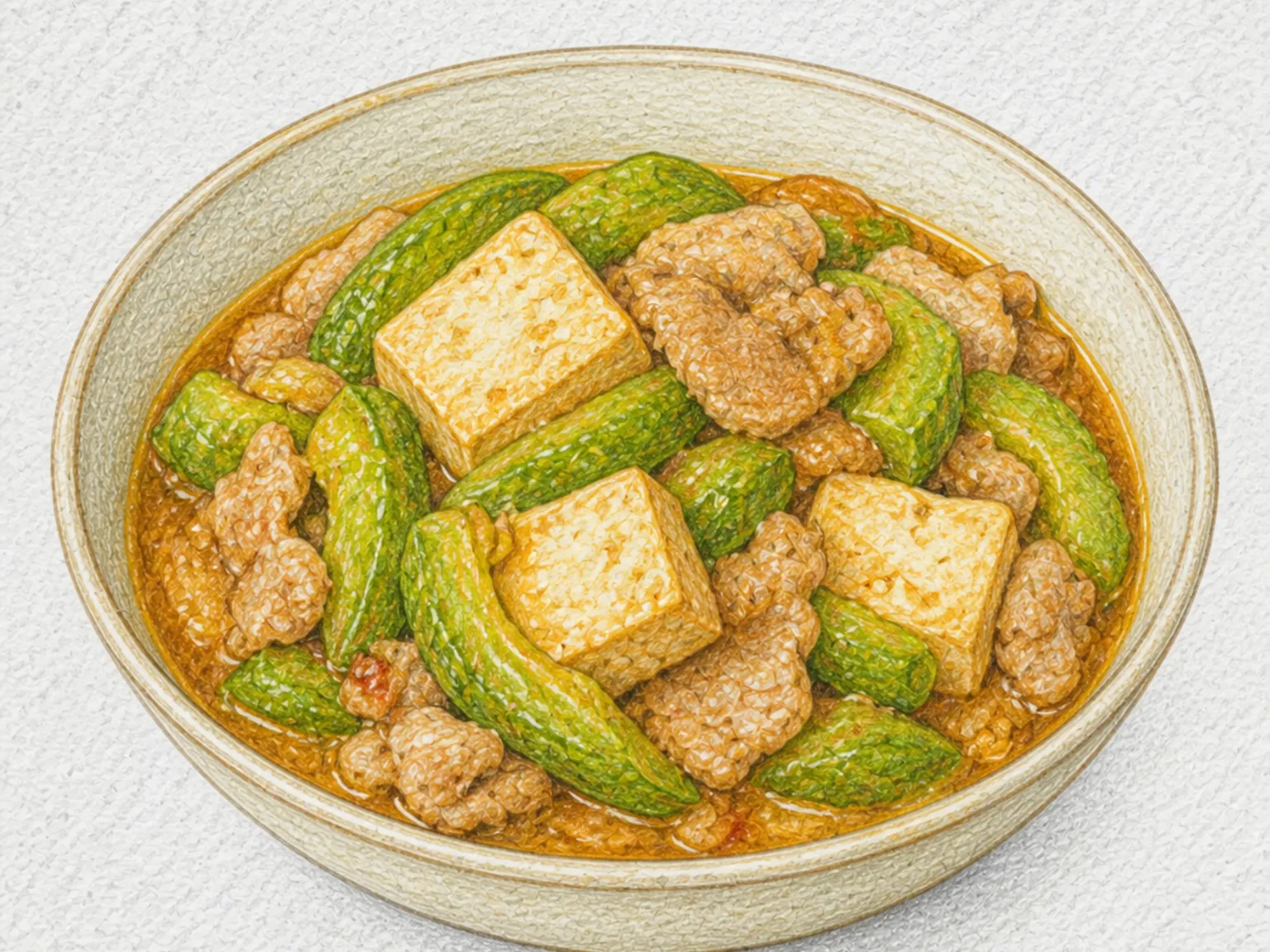
Nabera-nbushi (Loofah, Tofu, and Pork Miso Simmer)
Asian Medium

Nabera-nbushi (Loofah, Tofu, and Pork Miso Simmer)

Nabera-nbushi is an Okinawan summer home dish that gently simmers young edible loofah, pork belly, and firm island tofu in a red-miso seasoning. Nabera means loofah, while nbushi refers to vegetables and tofu cooked with miso. Slow heating coaxes sweet liquid called doo-jiru from the loofah without adding plain water. That juice combines with a small amount of pork broth and the seasoning to form more liquid than a stir-fry but less than a soup. Large torn pieces of island tofu stay intact while absorbing the savory broth, and properly cooked loofah becomes soft, silky, and juicy.

🏠 Everyday
Prep 15min Cook 35min 4 servings
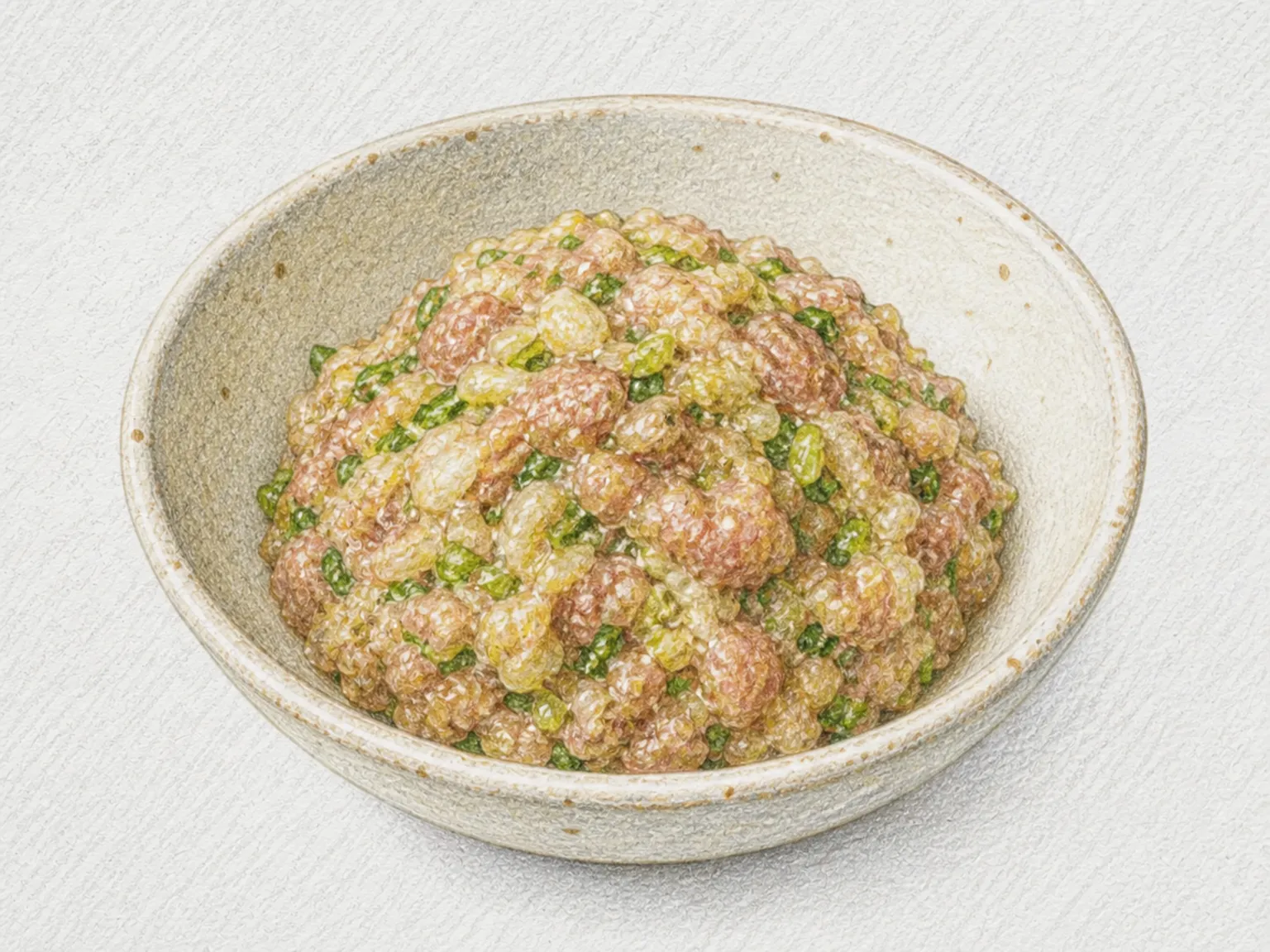
Namero (Miso and Herb Chopped Horse Mackerel)
Asian Medium

Namero (Miso and Herb Chopped Horse Mackerel)

Namero is a fisherman's dish from the Boso Peninsula in Chiba. Sashimi-grade horse mackerel is cut to 1cm, topped with miso, green onion, ginger, and shiso, then repeatedly chopped and folded with a knife until little shape remains and the mixture turns light and tacky. Its name is linked to the idea that it tastes good enough to lick the plate. With no cooking, cool fish texture, salty miso, and sharp herbs remain direct. It is not a keeping food, so only parasite-controlled sashimi fish from a professional supplier is handled cold and eaten immediately.

🍺 Bar Snacks 🎉 Special Occasion
Prep 20min 4 servings
Etsu Nanbanzuke (Fried Fish in Sweet Vinegar)
Asian Hard

Etsu Nanbanzuke (Fried Fish in Sweet Vinegar)

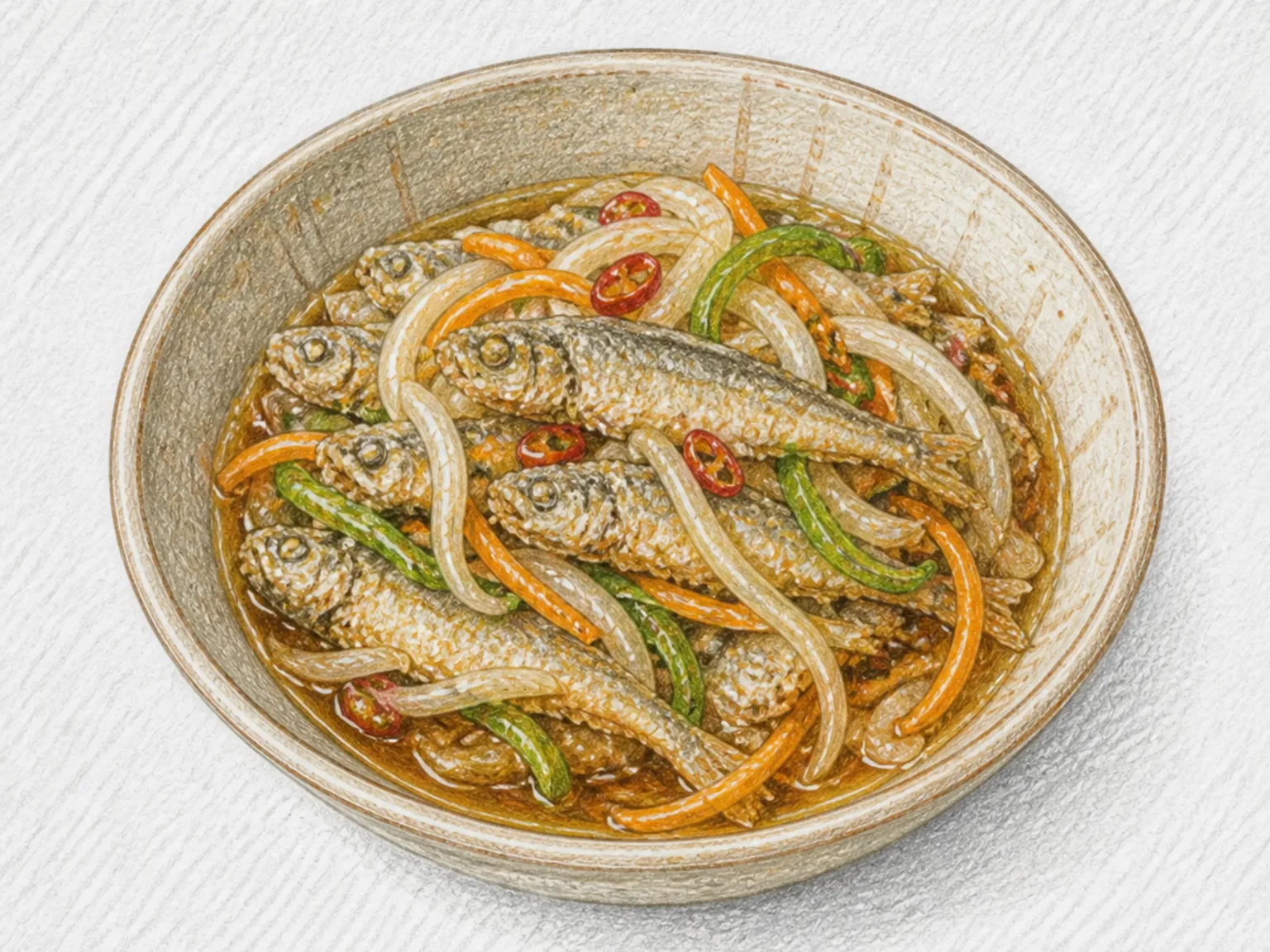
Etsu nanbanzuke is a summer fish dish from the Chikugo area of Fukuoka. Etsu from the Ariake Sea and Chikugo River estuary is scored at 1mm intervals to cut its many fine bones, coated with potato starch, fried crisp, and soaked while hot in a sweet soy-vinegar marinade with onion, carrot, green pepper, and dried chili. The fish appears during a short May-to-July season, and smaller catches are often prepared this way for the home table. Hot fried fish absorbs the dressing quickly, becoming tangy outside and moist within, while thin vegetables soften slightly in the residual heat yet retain a fresh bite.

🎉 Special Occasion
Prep 35min Cook 25min 4 servings
Nara-ae (Simmered Vegetables with Narazuke)
Asian Medium

Nara-ae (Simmered Vegetables with Narazuke)

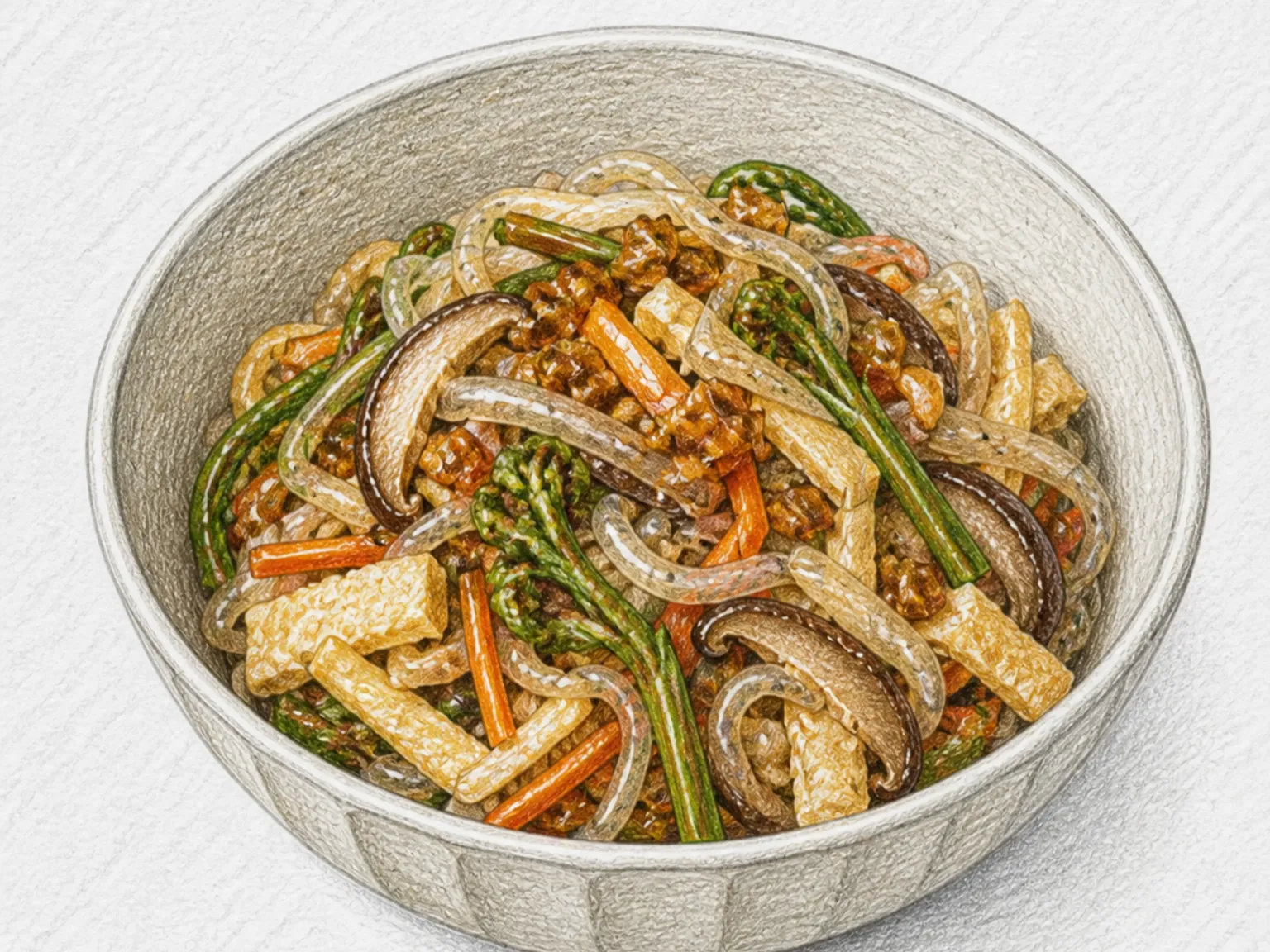
Nara-ae is an everyday Nara side dish that combines the prefecture's sake-lees pickle, narazuke, with fiddlehead fern, dried gourd strips, shiitake, konjac strips, carrot, and fried tofu. The konjac is parboiled and the dried ingredients are rehydrated before everything except the pickle is lightly fried and simmered with dashi, sugar, soy sauce, and mirin until almost dry. Finely chopped narazuke is folded in only at the end so its aroma and firm bite remain distinct. The dish is not served hot. It cools while being mixed several times, allowing the seasoning to settle evenly and making the strong pickle easier to enjoy.

🏠 Everyday
Prep 30min Cook 25min 4 servings
Nasu no Oranda-ni
Asian Easy

Nasu no Oranda-ni

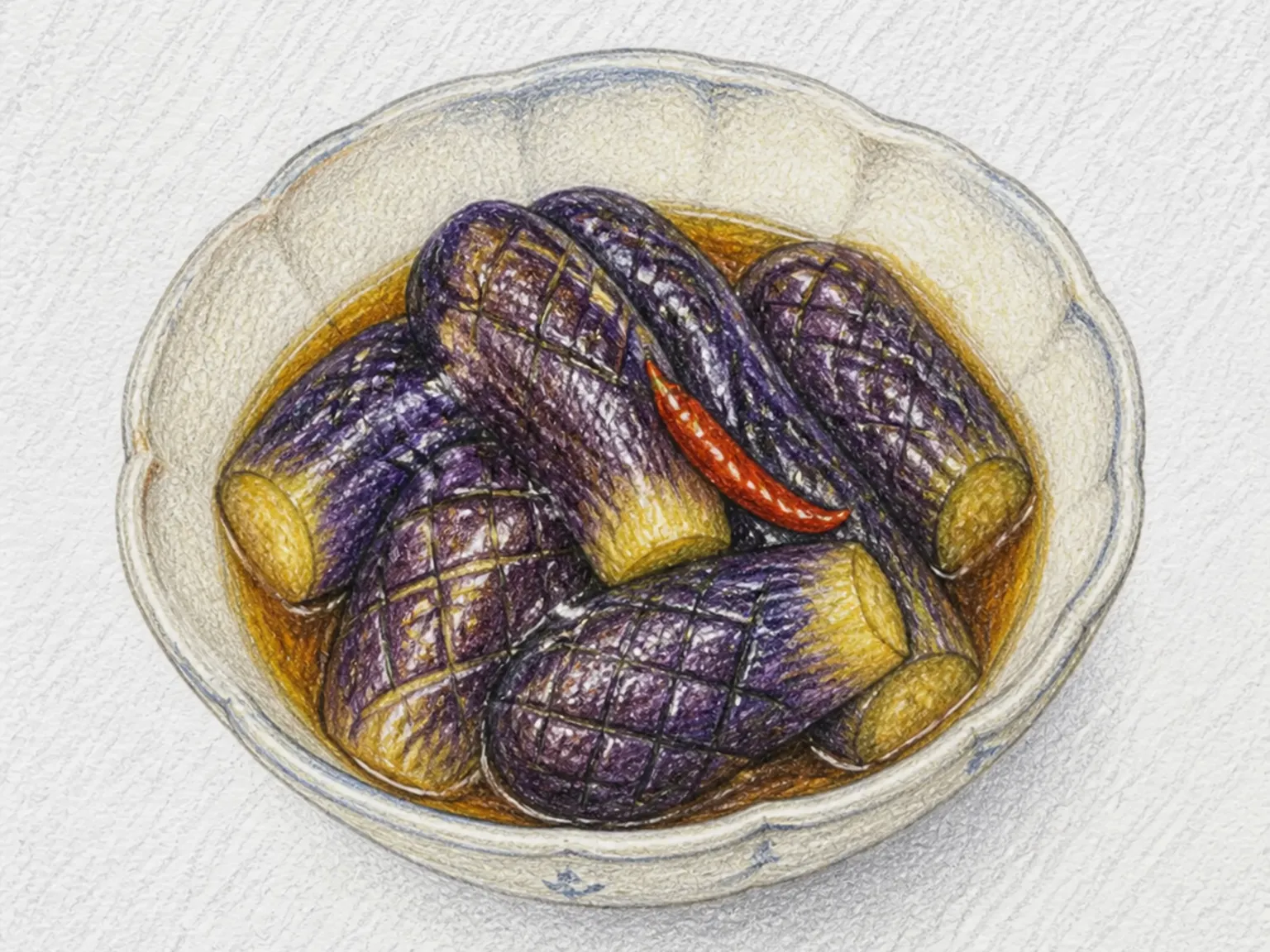
Nasu no Oranda-ni is a Kanazawa summer side dish of small whole eggplants that are blanched, moved to fresh seasoning, simmered, and cooled. Stem 8 eggplants and make a lengthwise cross cut while leaving 2cm joined at the base. Soak them in 1000ml water for 10 minutes, then blanch in a fresh 1500ml water for 4 to 5 minutes. Move them to cold water when the skins deepen in color and the bodies bend slightly. Discard all the blanching water rather than carrying its bitterness into the final sauce. In a clean pot, bring 300ml dashi, 2.75 tablespoons light soy sauce, 1 tablespoon sake, 1 tablespoon sugar, and 0.33 teaspoon salt to a boil. Slice 1 dried red chili into 3mm pieces, add it with the eggplants, fit a paper drop lid, and simmer over gentle medium heat for 18 minutes. Stop when chopsticks enter the centers easily and the liquid has reduced by half. Drizzle over 1 tablespoon sesame oil, cool for 30 minutes, and either serve then or refrigerate for 2 hours for a cold dish. The preliminary blanch removes harshness, while the cross cuts let the fresh dashi seasoning enter the whole eggplants without frying. Thin-skinned Heta Murasaki eggplant, a Kaga vegetable, keeps its shape especially well through the simmer. Separate blanching and seasoning liquids, plus a close drop lid, protect both the clean flavor and the intact form.

🏠 Everyday 🥗 Light & Healthy
Prep 20min Cook 30min 4 servings
Neer Dosa (Mangalorean Thin Rice Water Crepe with Coconut)
Asian Medium

Neer Dosa (Mangalorean Thin Rice Water Crepe with Coconut)

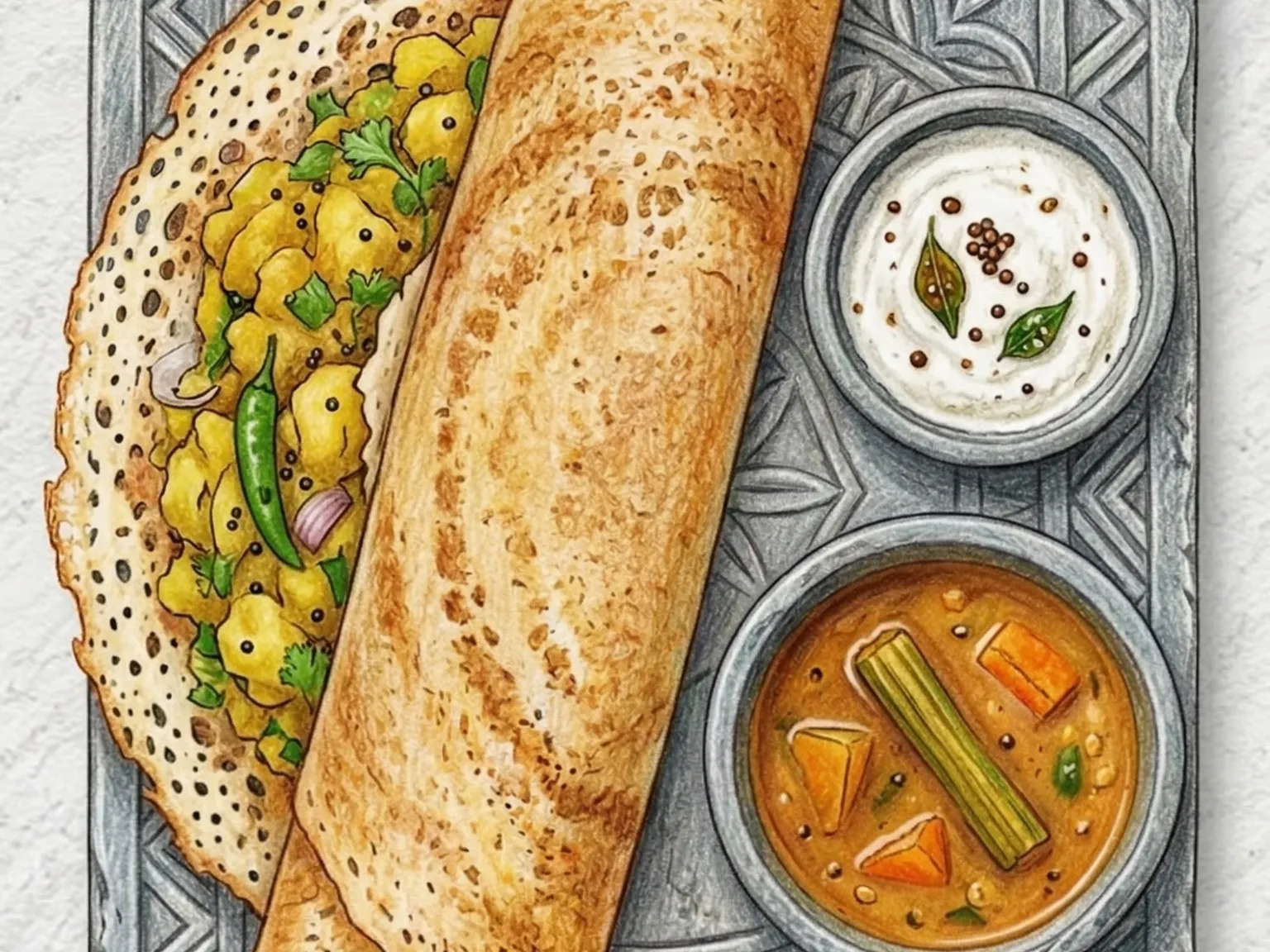
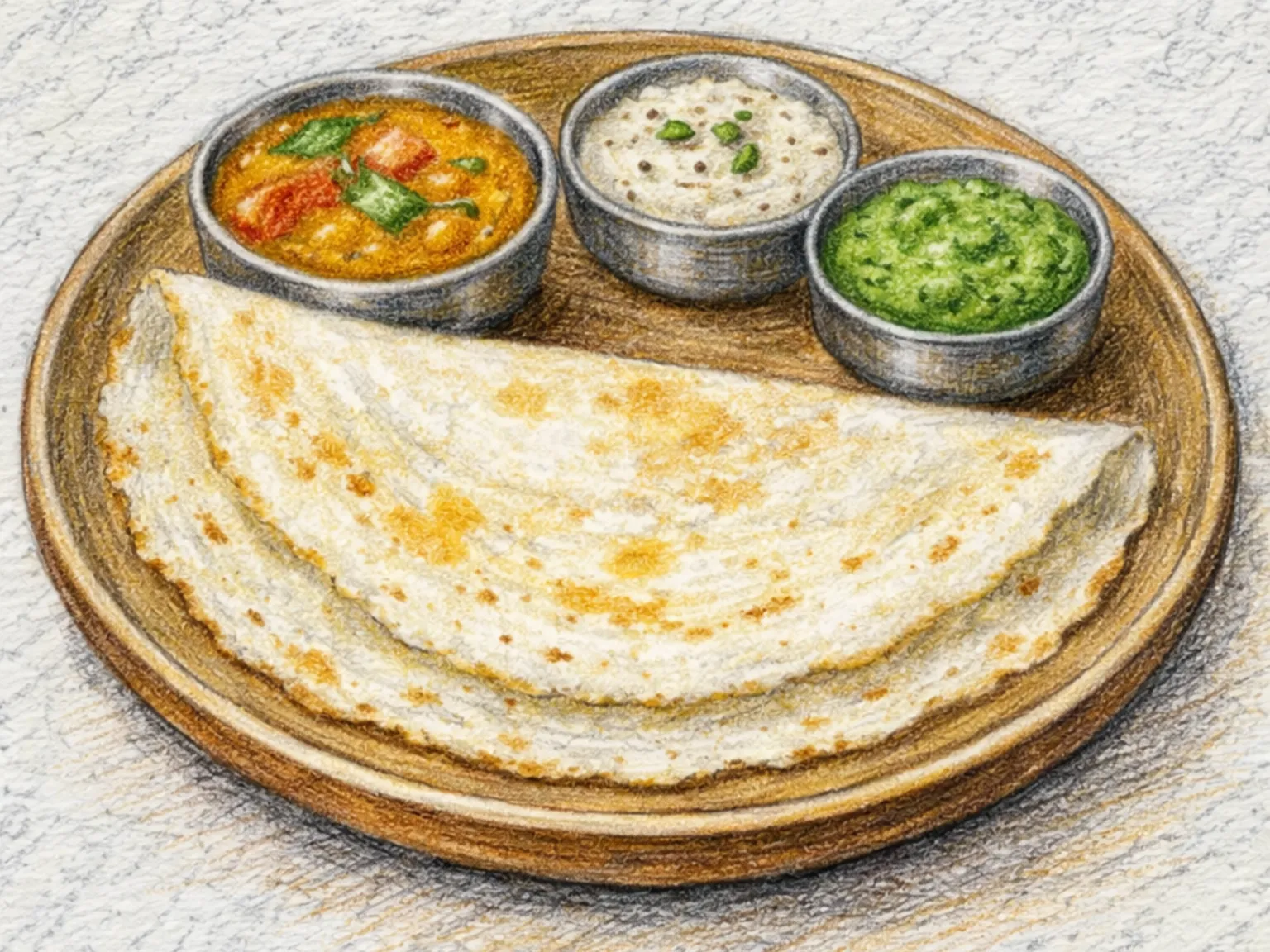
Neer dosa is a rice crepe from the coastal Mangalore region of Karnataka in southwestern India. The name means 'water dosa' in Kannada, referring to the extremely thin batter used to make it. Soaked rice and a little fresh coconut are ground to a pourable consistency thinner than regular dosa batter, then swirled onto a hot pan from the edges inward. The batter spreads into a delicate, lace-patterned sheet with tiny holes throughout. Unlike traditional dosa, neer dosa requires no fermentation, so there is no sourness - just the clean, mild flavor of rice. It is cooked on one side only and never flipped.

🏠 Everyday 🎉 Special Occasion
Prep 20min Cook 20min 4 servings
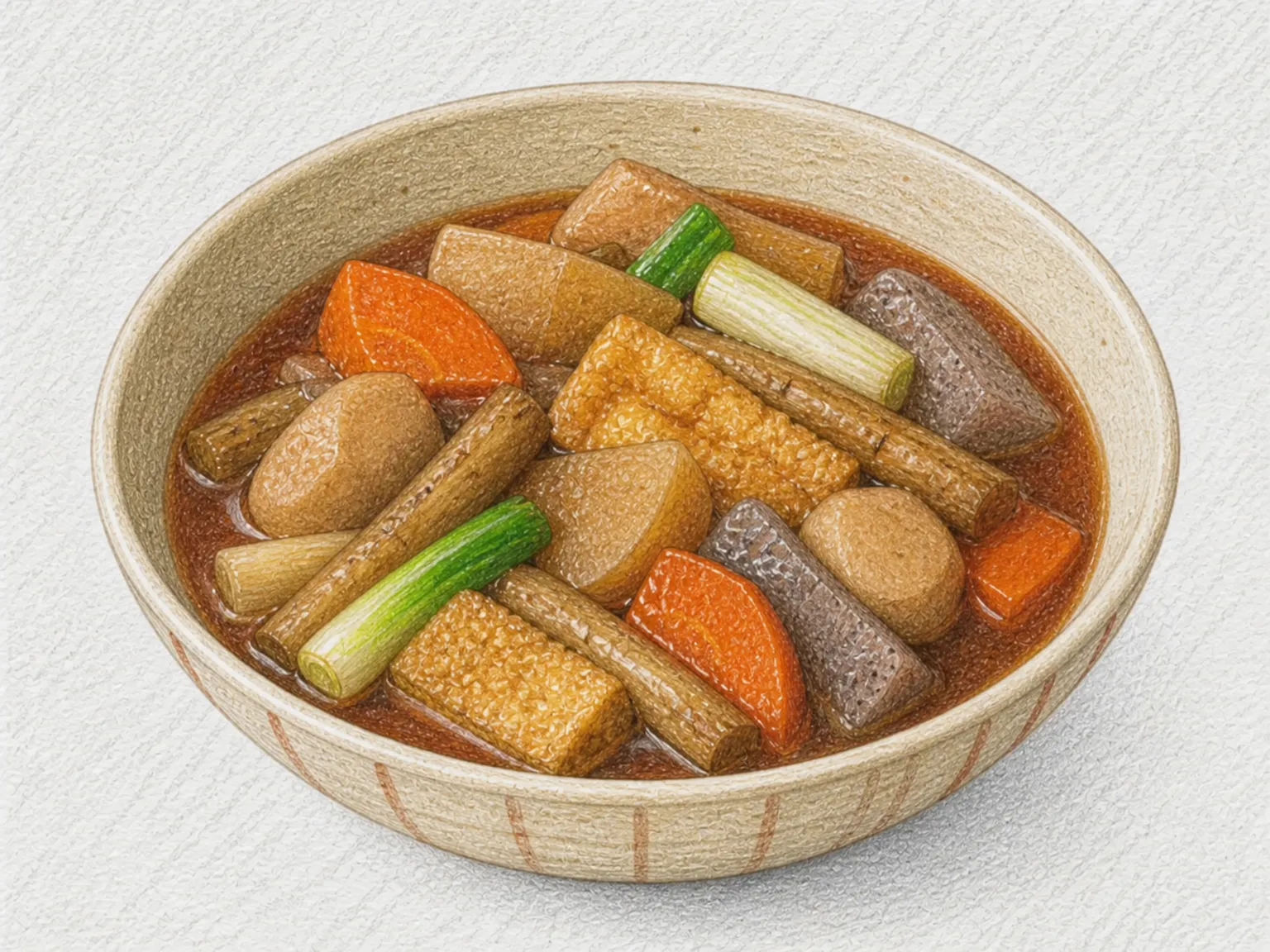
Niai (Sweet-Sour Simmered Root Vegetables)
Asian Medium

Niai (Sweet-Sour Simmered Root Vegetables)

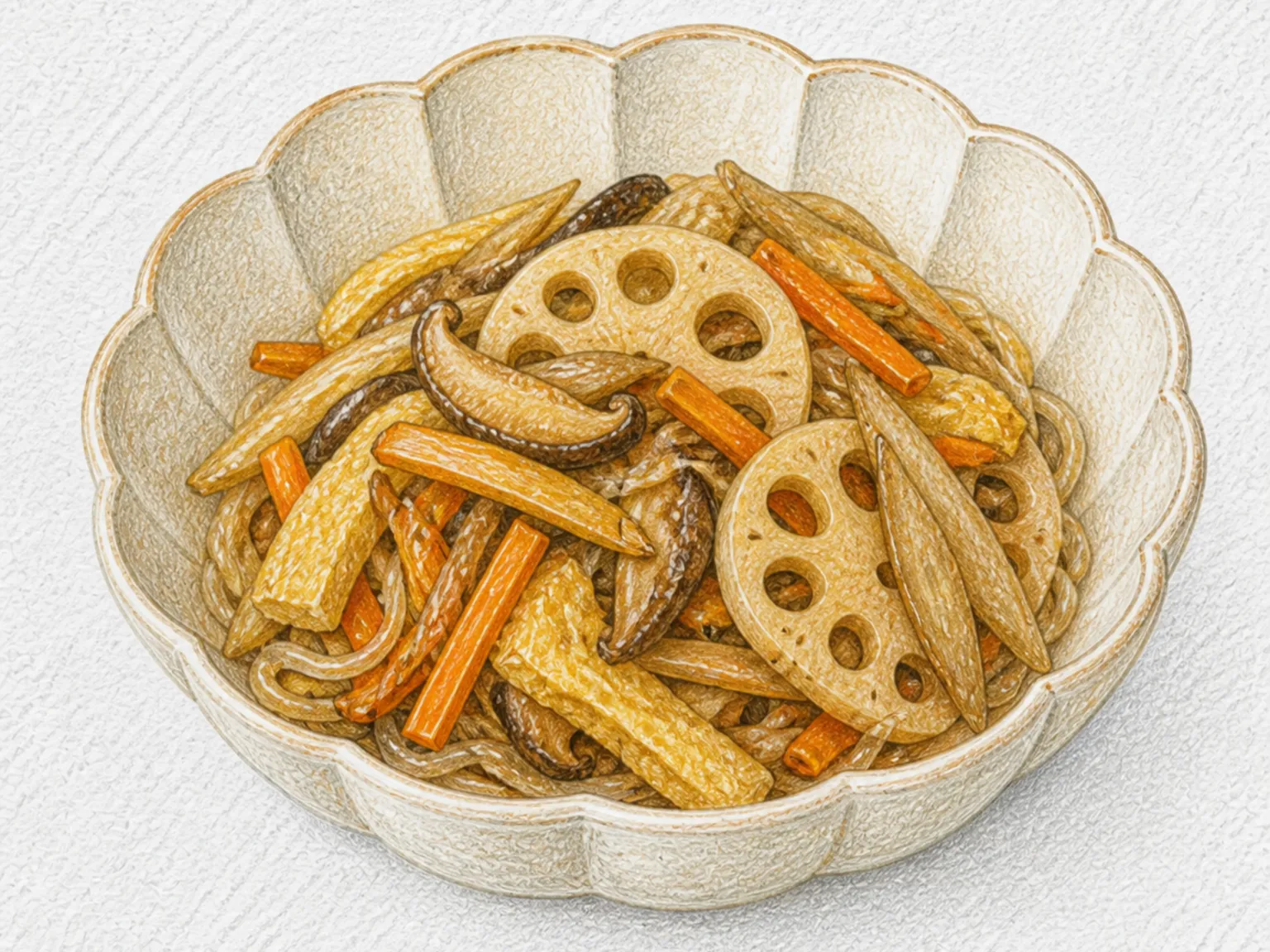
Niai is a sweet-sour root-vegetable side dish from the Mito area of Ibaraki. Burdock, carrot, lotus root, shiitake, shirataki, and fried tofu are stir-fried in sequence, simmered with dashi, soy sauce, and sugar, then finished with vinegar and covered so the flavors settle. One explanation links the name to nite aeru, meaning to simmer and combine. The dish uses roots readily grown around Ibaraki and was prepared in quantity for New Year, celebrations, and ceremonial gatherings. Vinegar brightens the oil from the tofu and the sweet soy seasoning.

🏠 Everyday 🎉 Special Occasion
Prep 35min Cook 35min 4 servings
Niku Dofu Beef and Tofu Simmer
Asian Easy

Niku Dofu Beef and Tofu Simmer

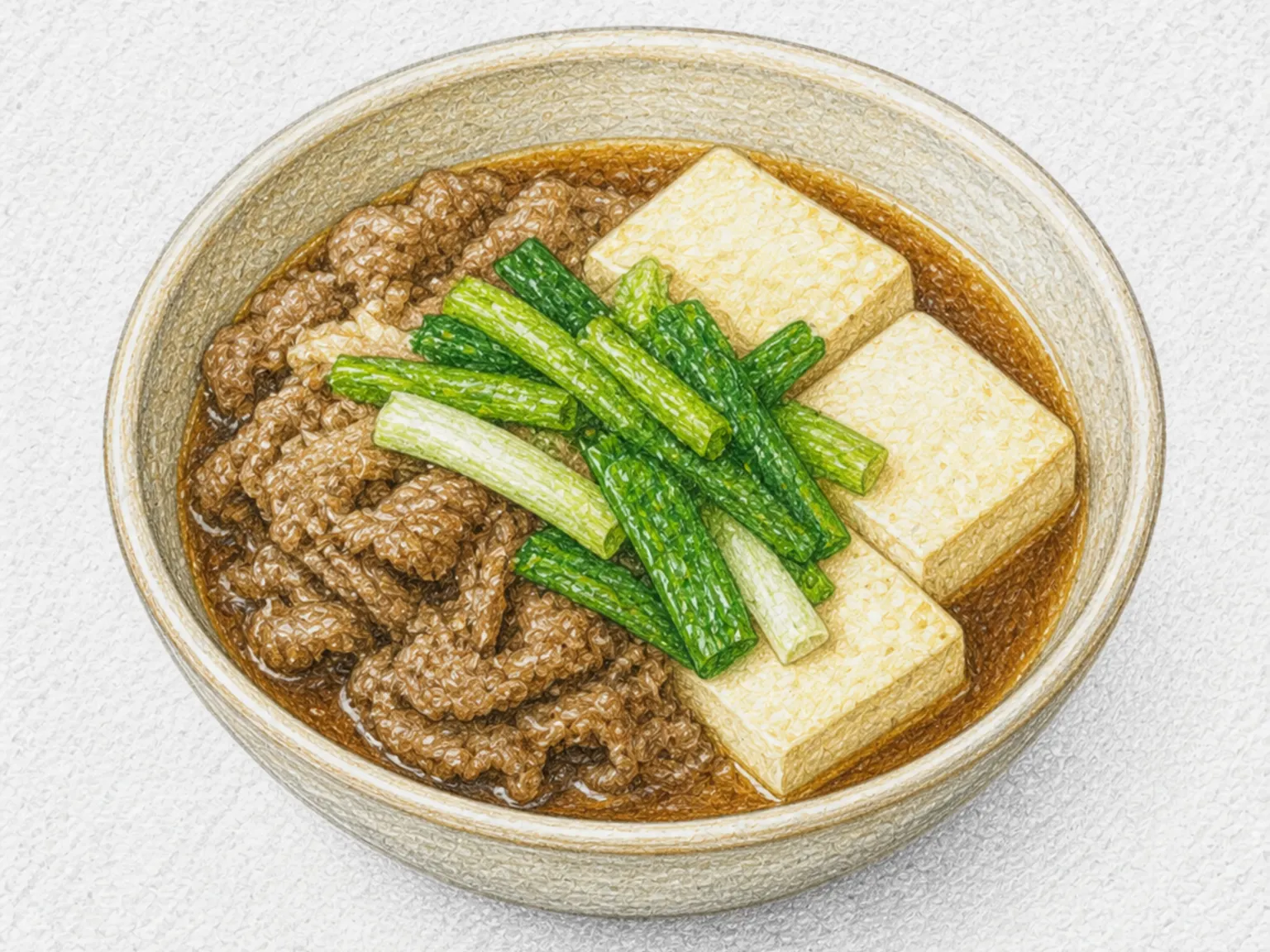
Niku dofu is a Kyoto winter home dish centered on tofu, briefly simmering thin beef and Kujo negi in a sweet soy-seasoned stock. Kyoto's soft water, low in mineral taste, is considered well suited to making delicate clean-flavored tofu. Kujo negi, sometimes praised as the king of leaf onions, brings mucilage inside its leaves, strong sweetness, and fragrance. Kyoto also has a long beef culture, from early records of Tamba cattle to sukiyaki restaurants established in the early Meiji era. The thin beef is first passed briefly through boiling water to reduce foam and excess fat, simmered with tofu for ten minutes, and finished with Kujo negi only at the end. The result preserves the tofu's shape and the onion's fresh sweetness.

🏠 Everyday 🎉 Special Occasion
Prep 20min Cook 20min 3 servings
Nikujaga (Japanese Beef Potato Onion Soy-Sweet Stew)
Asian Easy

Nikujaga (Japanese Beef Potato Onion Soy-Sweet Stew)

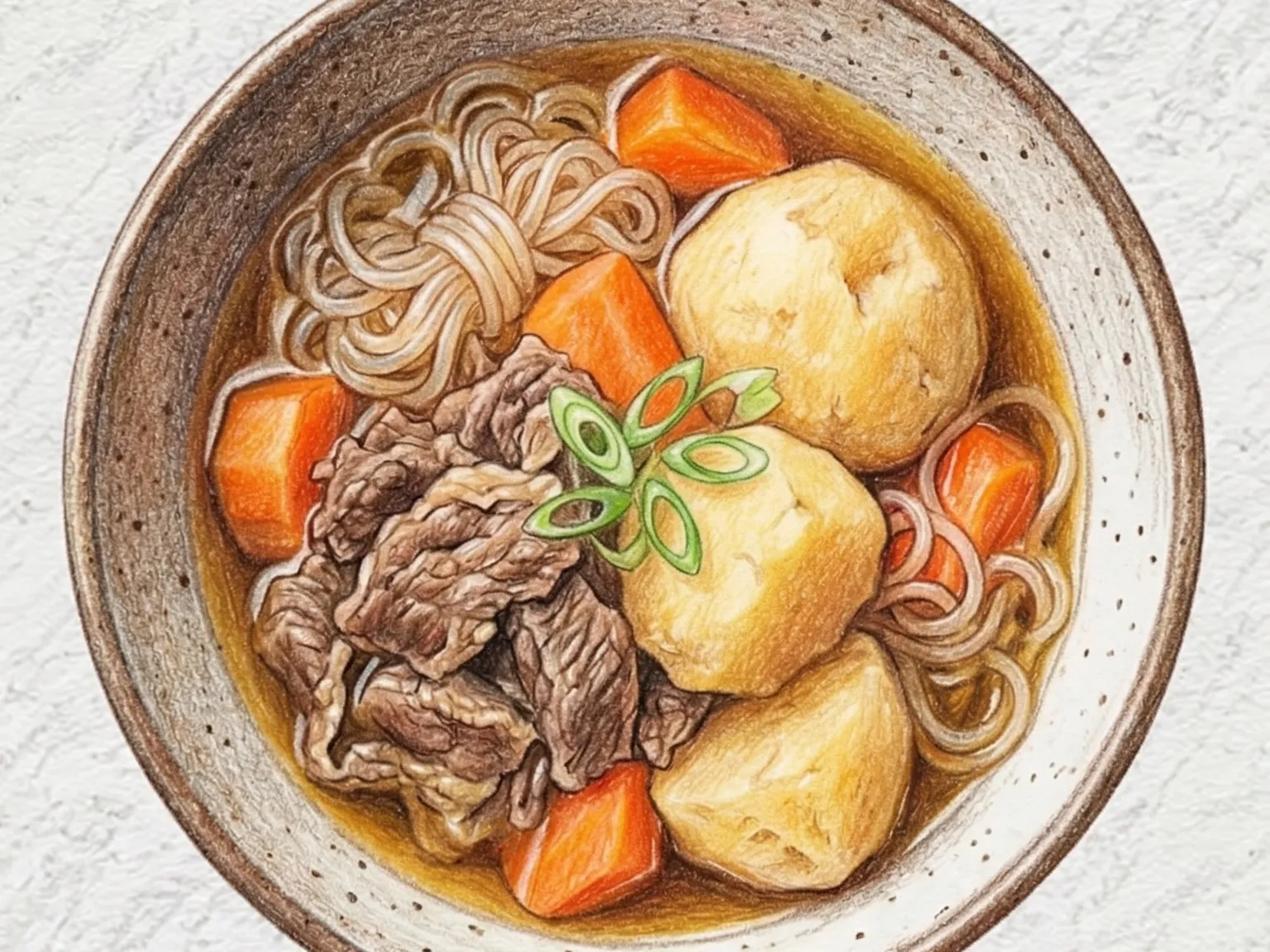
Nikujaga is a Japanese home-cooked stew often described as the dish that defines a mother's cooking in Japan. Thinly sliced beef, potatoes, onion, carrot, and shirataki noodles are simmered in a broth of dashi, soy sauce, mirin, and sugar. The dish traces its origins to the Meiji era, when a Japanese naval officer attempted to recreate British beef stew using local ingredients -- resulting in a clear, soy-based braise rather than a thick, flour-bound stew. The potatoes absorb the seasoned liquid until soft at the edges but still holding shape, while shirataki noodles soak up flavor and add a springy contrast.

🏠 Everyday 🍱 Lunchbox
Prep 15min Cook 30min 4 servings
Steamed Pork Buns
Asian Hard

Steamed Pork Buns

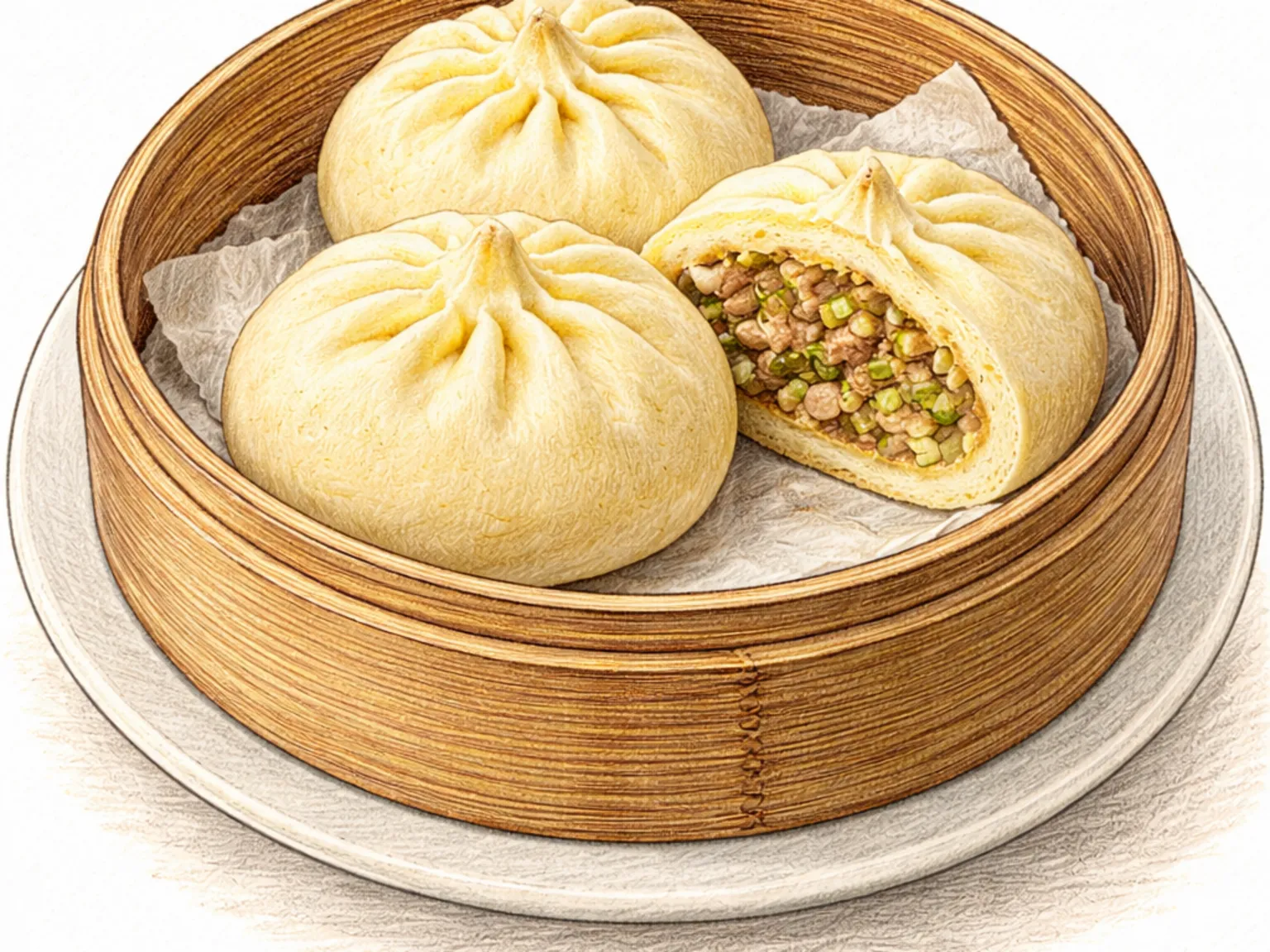
Nikuman is a Japanese steamed pork bun descended from Chinese baozi but adapted to local tastes over generations. Yeasted wheat dough is kneaded, left to rise, then filled with a mixture of ground pork seasoned with soy sauce, ginger, and sesame oil, along with finely chopped cabbage. After pleating and steaming, the bun emerges snow-white and pillowy, with a moist, savory filling inside. Opening the steamer releases a cloud of fragrant steam carrying notes of ginger and soy. In Japan, nikuman is the defining winter convenience-store snack -- warming your hands around the bun before biting into the hot, juicy filling.

🎉 Special Occasion
Prep 40min Cook 20min 4 servings
Nimiso Red Miso Vegetable Stew
Asian Medium

Nimiso Red Miso Vegetable Stew

Nimiso is an everyday Aichi stew that slowly cooks daikon, carrot, burdock, taro, konnyaku, and fried tofu in stock seasoned with dark red soybean miso, mirin, and sugar. Also called misoni, it grew from Aichi's soybean-miso culture, represented by Hatcho miso. Red miso made from soybean koji and aged for one to three years develops deep savoriness, acidity, and a mild astringent edge. Household versions vary: some retain ample broth like a hot pot, while others reduce it to a concentrated simmered dish. Their common feature is cooking a generous batch of root vegetables. Here, burdock, konnyaku, and fried tofu are briefly blanched separately to clean their flavors, while leek is added at the end to preserve its aroma.

🏠 Everyday 🎉 Special Occasion
Prep 30min Cook 45min 4 servings
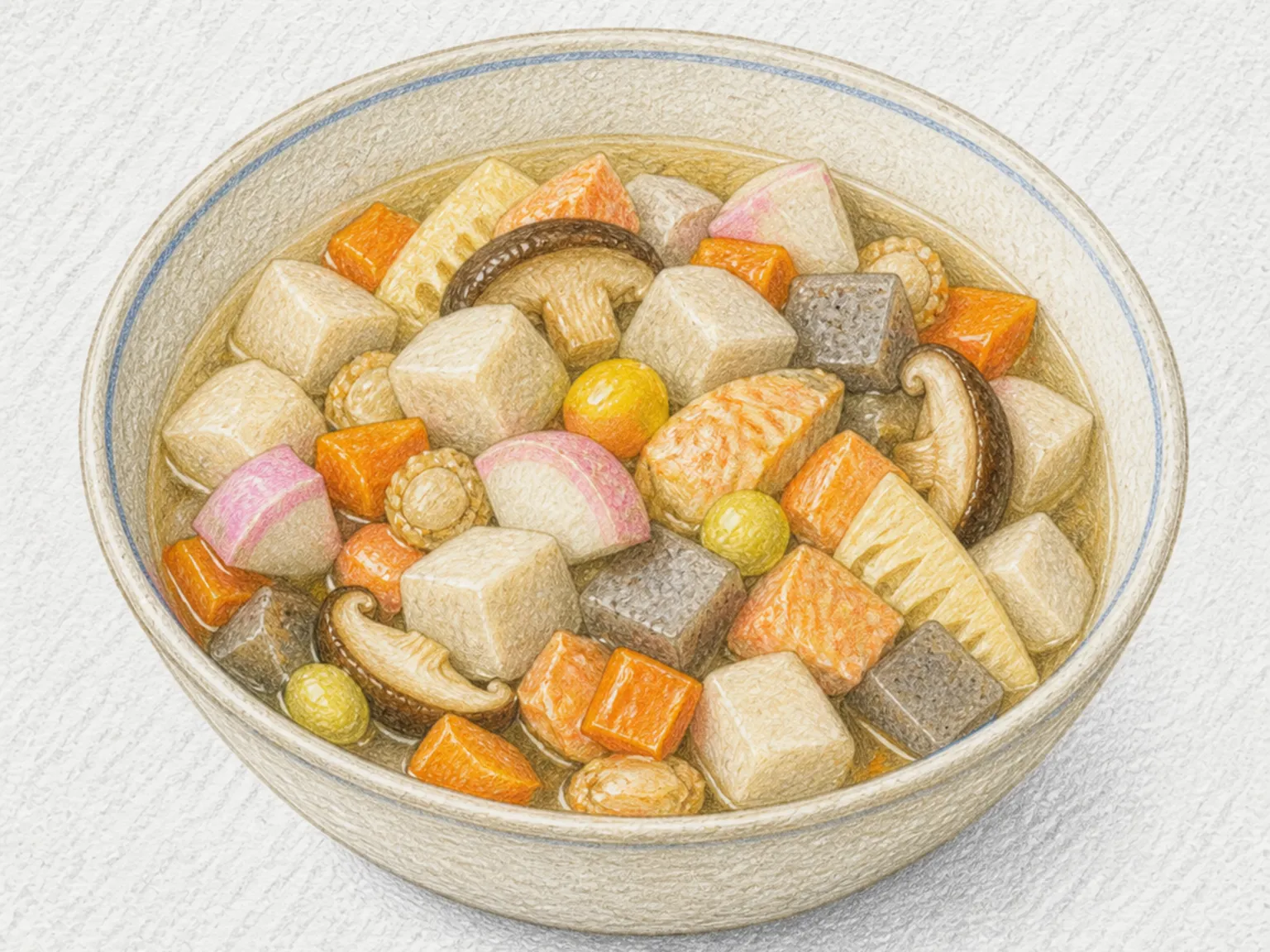
Noppe (Niigata Taro and Vegetable Simmer)
Asian Hard

Noppe (Niigata Taro and Vegetable Simmer)

Noppe is a Niigata simmer of taro, carrot, bamboo shoot, konnyaku, shiitake, kamaboko, ginkgo nuts, and salted salmon, all cut to a similar size and cooked gently in broth enriched with the soaking liquids from dried scallop and shiitake. Starch released by the taro gives the liquid its natural light viscosity, so no separate starch slurry is used. Noppe is closer to a moist simmered dish than a soup. Stirring is kept gentle and cooking stops before the pieces lose their outlines, preserving both clear broth and distinct shapes. Niigata households prepare large pots for New Year, weddings, memorial services, and funerals, and serve it either warm or chilled according to season and family custom.

🎉 Special Occasion
Prep 30min Cook 35min 6 servings
Iwashi no Unohana-zuke (Vinegared Sardines with Okara)
Asian Hard

Iwashi no Unohana-zuke (Vinegared Sardines with Okara)

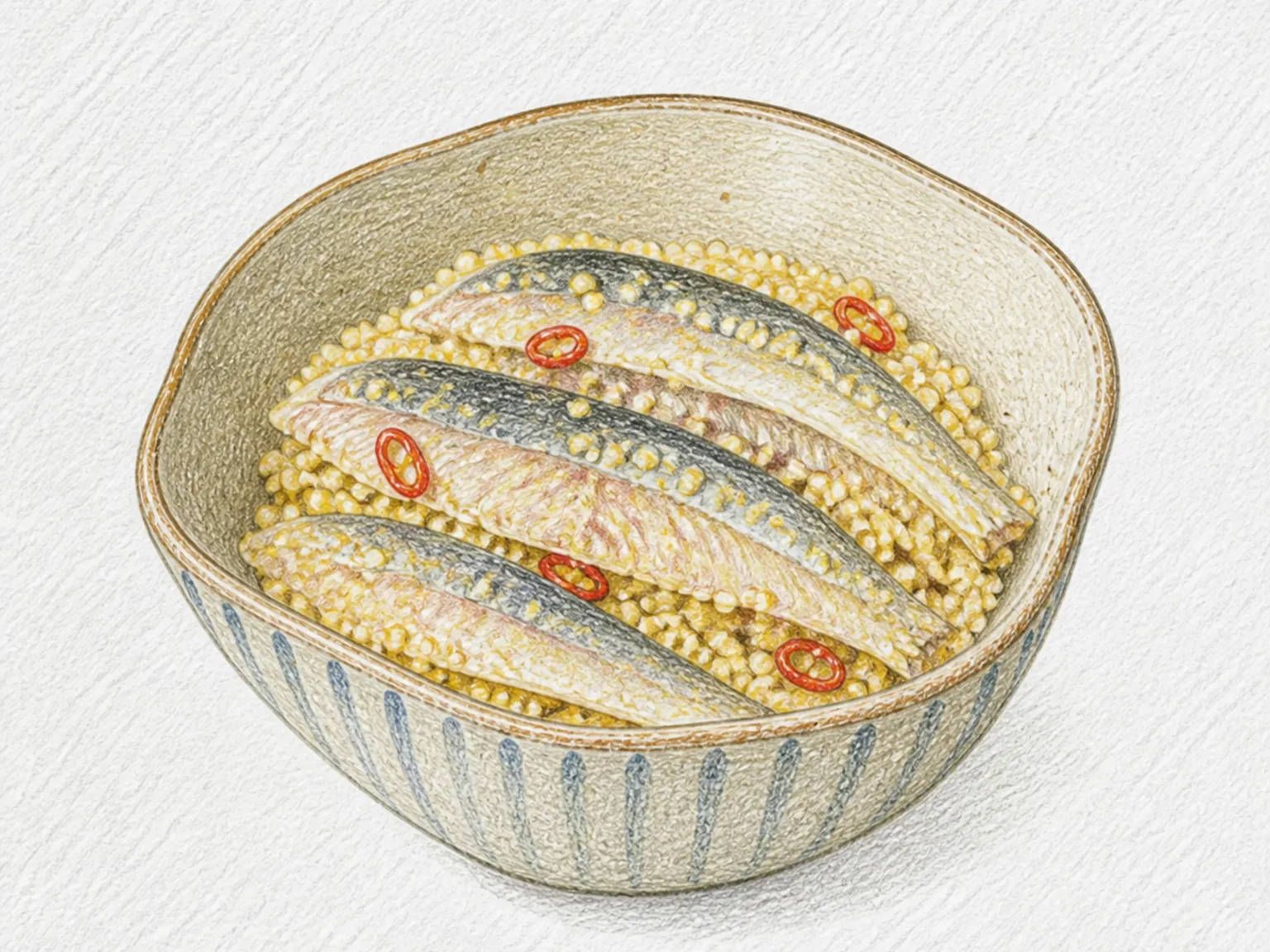
Iwashi no unohana-zuke is an Ibaraki dish of small sardines salted, soaked in vinegar, and packed inside and out with cooled okara cooked with sugar, vinegar, carrot, yuzu, and chili. Salt and vinegar do not kill Anisakis larvae, so the sardines must be intended for raw consumption and previously frozen at minus 20C for at least 24 hours or processed under equivalent controls. Keep the fish cold throughout preparation, use clean separate tools, refrigerate the finished dish, and eat it promptly rather than treating it as a shelf-stable pickle.

🎉 Special Occasion 🍺 Bar Snacks
Prep 35min Cook 12min 4 servings
Mushidai (Whole Sea Bream Steamed with Okara Stuffing)
Asian Hard

Mushidai (Whole Sea Bream Steamed with Okara Stuffing)

Mushidai is a Kochi celebration dish built around a whole sea bream of about 1 kg. The fish is opened from the back while its fins and overall form remain intact, salted lightly overnight, filled with 500 g okara seasoned with burdock, carrot, shiitake, leaf garlic, eggs, and sugar, then steamed whole for about 45 minutes. A sweet potato steams beside it as a traditional doneness indicator; when a skewer passes through the potato, the fish is checked. Sieved hard-boiled egg yolk finishes the surface. Presented whole on a large sawachi platter, it belongs at weddings, New Year gatherings, and Kochi banquets called okyaku. The center bones are traditionally retained for flavor, so diners must remove bones carefully.

🎉 Special Occasion
Prep 60min Cook 60min 8 servings
Kibinago no Hokaburi (Vinegar-Cured Fish and Okara Sushi)
Asian Hard

Kibinago no Hokaburi (Vinegar-Cured Fish and Okara Sushi)

Kibinago no hokaburi is a sushi-shaped dish from Kochi that replaces rice with okara. Fresh soybean pulp is seasoned with ginger, sugar, soy sauce, vinegar, and salt, cooked gently, cooled, and formed into balls about half the size of an egg. Small kibinago are opened, salted, chilled in sweetened vinegar, and wrapped over the okara. The fish resembles a cloth drawn over a person's head and cheeks, which is said to explain the name hokaburi. Kochi also calls okara otama, and the dish belongs to the tamazushi tradition that conserved precious rice by using the nutritious by-product of tofu making. It became especially associated with Sukumo, where large kibinago catches once came from Sukumo Bay. The filling crumbles softly in the mouth while the cured fish adds savory firmness and acidity.

🎉 Special Occasion
Prep 45min Cook 10min 4 servings
Okiagari (Sakura Shrimp and Tofu Hot Pot)
Asian Easy

Okiagari (Sakura Shrimp and Tofu Hot Pot)

Okiagari is a sakura shrimp and tofu hot pot from the fishing community of Yui in Shizuoka. Its name refers to fishermen coming ashore after the sakura shrimp catch and sharing a hot meal. Rinse 150g of fresh sakura shrimp briefly in cold water, then drain it thoroughly in a fine sieve. Frozen shrimp should thaw in the refrigerator before draining so it stays cold and does not water down the measured broth. Bring 72ml soy sauce, 48g sugar, 75ml sake, and 50ml water to a boil in a shallow pot, making sure the sugar dissolves before the shrimp goes in. Simmer for 2 to 3 minutes, just until every shrimp becomes opaque. Cut 400g firm tofu into pieces about 5cm wide and nestle them among the shrimp. Cook for 10 minutes over medium heat, spooning broth over the tofu instead of turning the fragile pieces. This keeps the corners intact while the sweet and savory seasoning penetrates. Add 100g leafy scallions cut into 4cm lengths at the end, press them lightly into the liquid, and stop cooking as soon as the pot returns to a boil. Serve the shrimp, tofu, scallions, and concentrated broth together while hot.

🏠 Everyday 🎉 Special Occasion
Prep 10min Cook 18min 4 servings
Oyaki with Eggplant and Sweet Miso
Asian Medium

Oyaki with Eggplant and Sweet Miso

Oyaki are Nagano dumplings made by wrapping seasonal vegetables in a simple wheat dough and cooking the parcels by grilling, steaming, or both. This version sandwiches sweetened miso inside slices of round eggplant, encloses each piece in rested dough, browns both sides in a pan, and then steams the dumplings through. Browning develops a toasted surface while steaming softens the wrapper and cooks the eggplant without drying it. Keeping the center of each dough round slightly thicker helps it stretch around the filling without tearing.

🏠 Everyday 🎉 Special Occasion
Prep 75min Cook 30min 20 servings
Palak Paneer (Indian Spinach Curry with Paneer Cheese)
Asian Medium

Palak Paneer (Indian Spinach Curry with Paneer Cheese)

Palak paneer is one of North India's most beloved vegetarian curries, pairing a bright spinach puree with cubes of mild, milky paneer cheese. Fresh spinach is blanched briefly and blended into a green sauce, combined with a base of sauteed onions, garlic, ginger, and tomatoes seasoned with garam masala. The paneer cubes are typically pan-seared first to form a light skin that holds their shape in the sauce while the interior stays soft and creamy. A swirl of heavy cream at the end rounds out the flavors, blending the earthy depth of spinach with warm spice and dairy richness.

🎉 Special Occasion
Prep 20min Cook 25min 2 servings
Panang Curry (Thai Thick Peanut Coconut Curry)
Asian Medium

Panang Curry (Thai Thick Peanut Coconut Curry)

Panang curry cooks thin slices of pork tenderloin and red bell pepper in a thick sauce made from panang curry paste, coconut milk, and peanut butter. Slice 220 g pork tenderloin thinly, cut 80 g red bell pepper into even strips, and tear 3 kaffir lime leaves. Heat 100 ml of the measured 300 ml coconut milk over medium heat for about 2 minutes, stirring until the edges bubble and a light sheen appears. Add 2 tablespoons panang curry paste and cook for 1 to 2 minutes, scraping the pan as the paste darkens. Stir in the pork until its surface turns pale, then add the remaining 200 ml coconut milk in two or three portions. Mix after each addition to loosen the paste evenly. Add 1 tablespoon fish sauce, 2 teaspoons palm sugar, and 1 tablespoon peanut butter. Simmer over low heat for 8 minutes, stirring until the peanut butter dissolves and the sauce coats a spoon. Add the lime leaves and bell pepper for the final 3 minutes. Stop cooking when the pepper still has a slight bite and the pork reaches 63C at the center. Rest the pork for 3 minutes before serving.

🍱 Lunchbox
Prep 15min Cook 20min 2 servings

About Asian

Each country brings its own signature spices and sauces, so even the same ingredients can produce completely different flavors. With a few key pantry items - coconut milk, fish sauce, curry powder, doubanjiang - you can recreate the tastes of Asia at home.