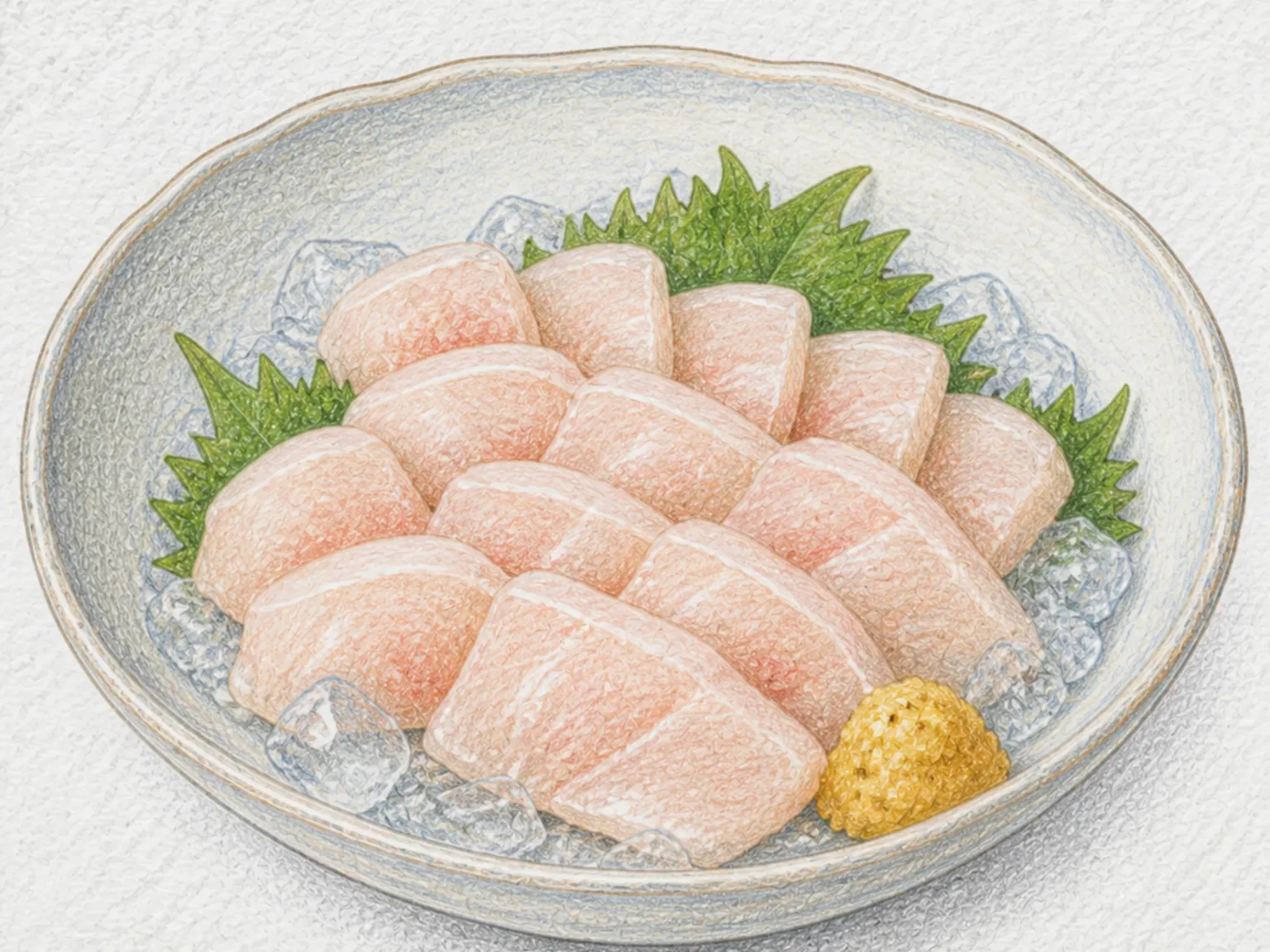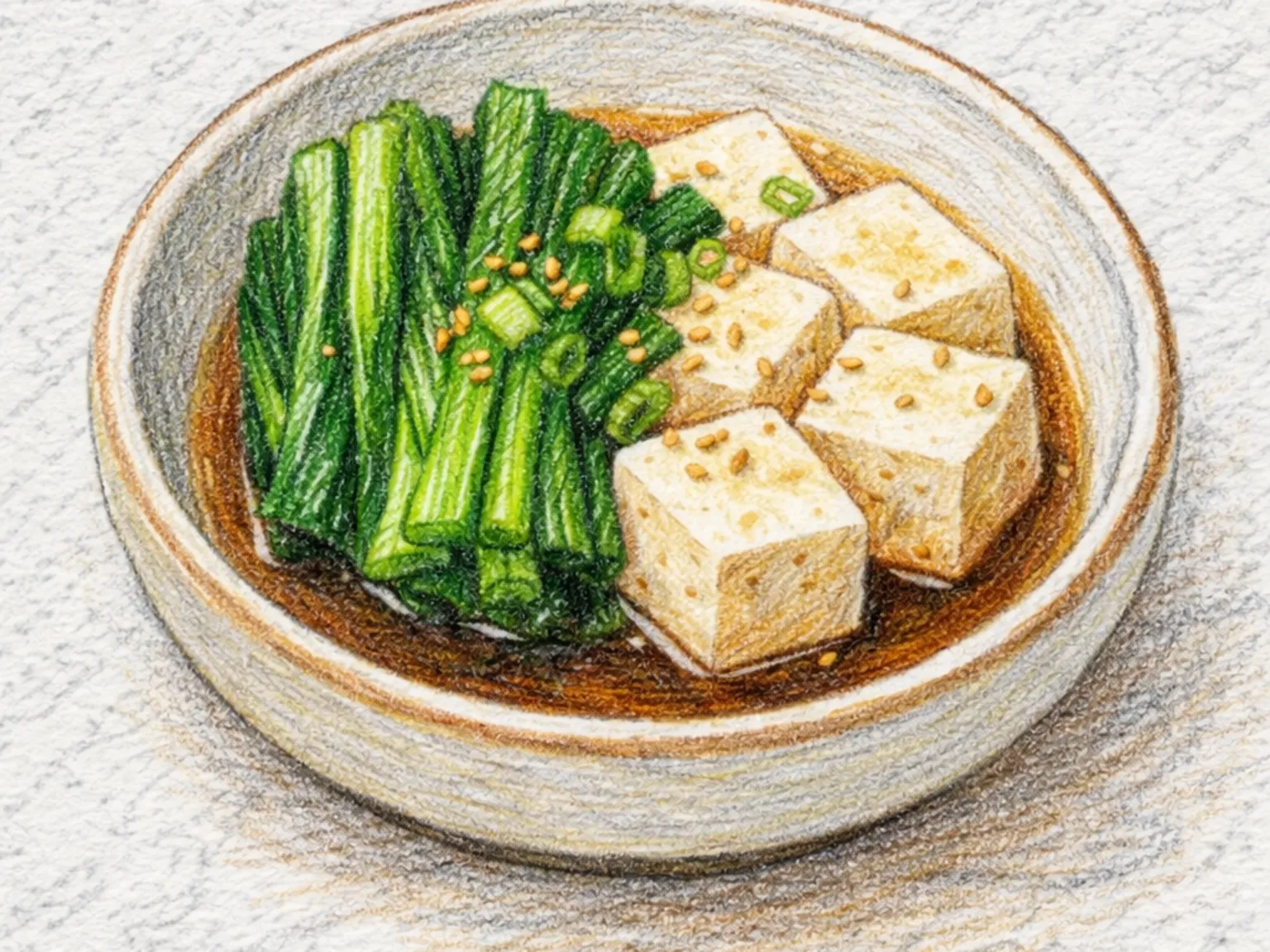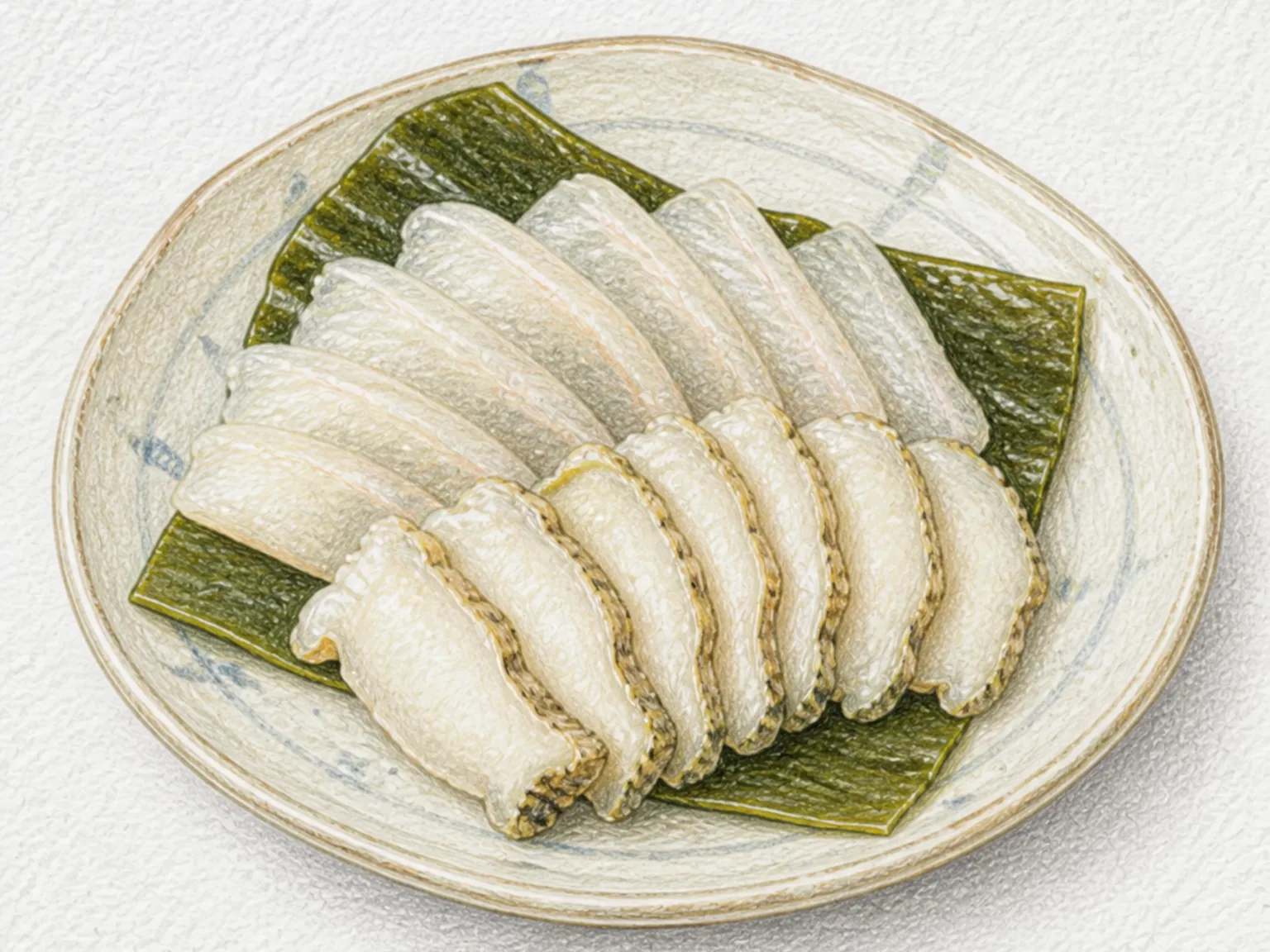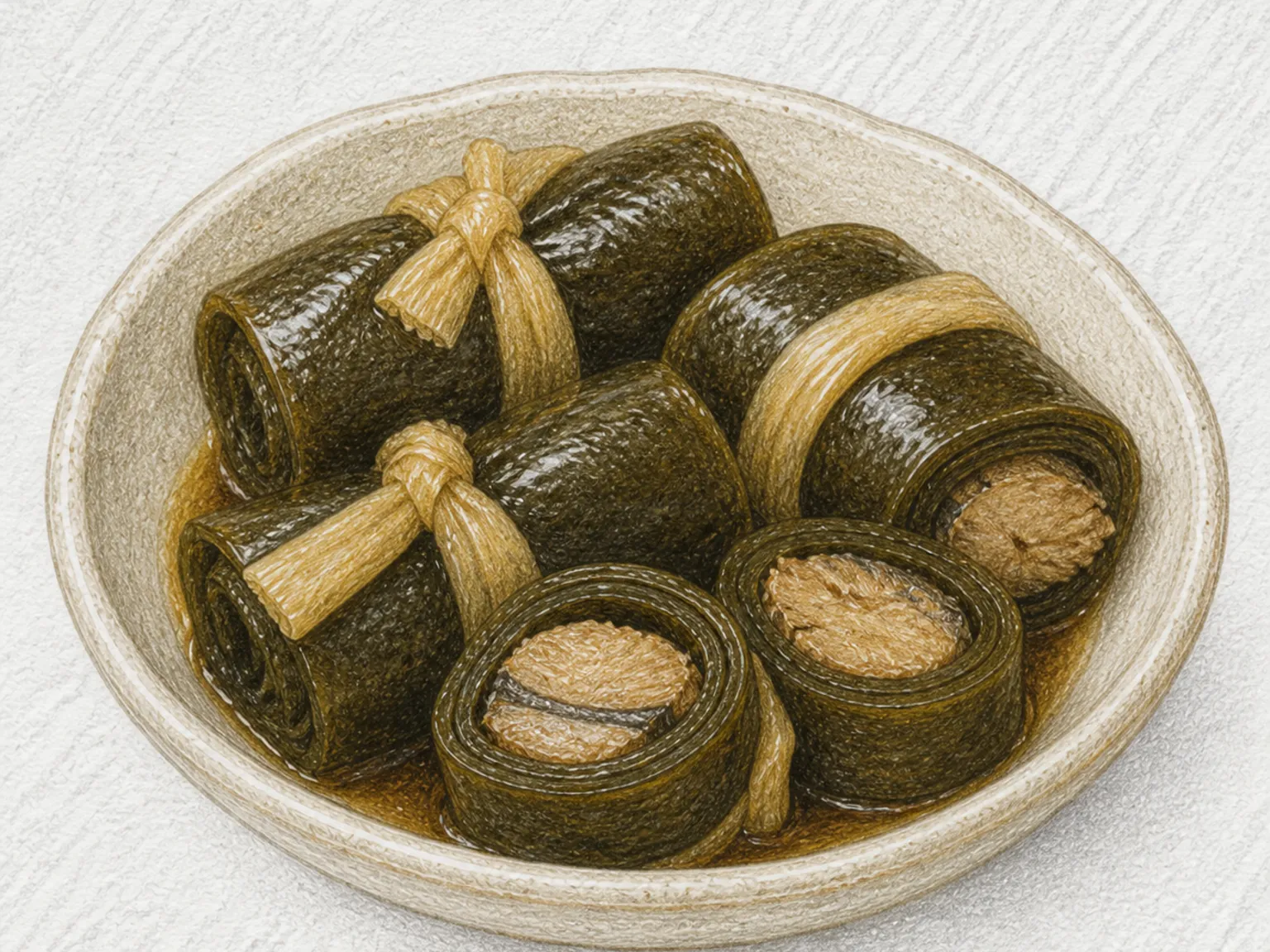

Asian

Asian Recipes

806 recipes. Page 30 of 34

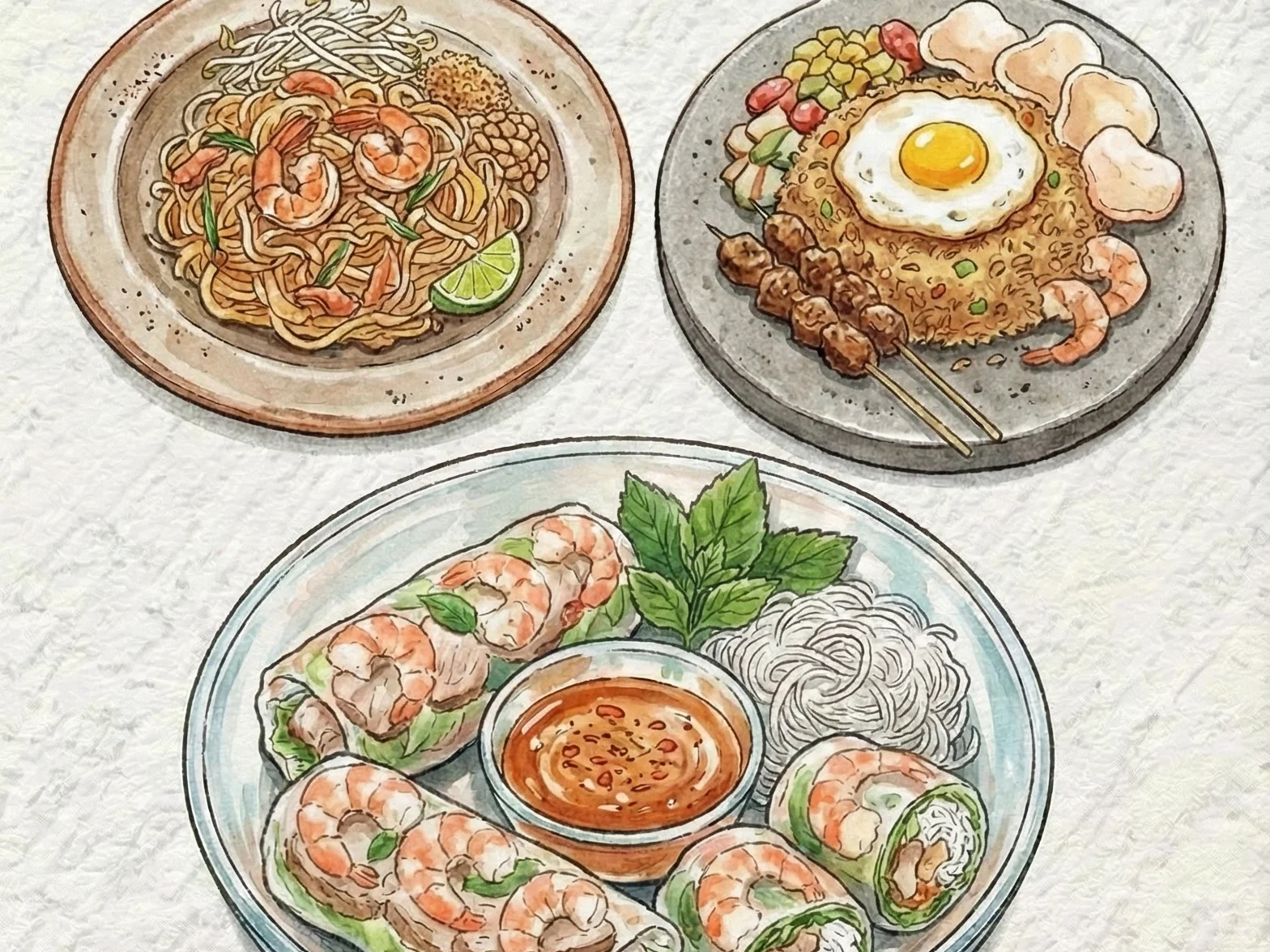
The Asian category gathers popular dishes from Japan, China, Thailand, Vietnam, India, and beyond. Curry, stir-fried noodles, mapo tofu, pad Thai, and pho are among the Asian favorites commonly enjoyed in Korean households.

Asian
Kombu-jime (Bai Shellfish Cured in Kombu)
Asian Hard

Kombu-jime (Bai Shellfish Cured in Kombu)

Kombu-jime is a Toyama curing method that presses fresh sashimi tightly between kombu under refrigeration, drawing out excess moisture while transferring seaweed savor. This version removes two bai sea snails from their shells, rubs them with salt to clean away slime and debris, cuts them into edible pieces, and encloses them in ma-kombu lightly wiped with vinegar water. A wrapped packet rests overnight under gentle pressure. Thin ingredients may be ready in 2 to 3 hours, while thick shellfish develops clearer elasticity and umami through the full night. The technique arose when Edo-period Kitamaebune ships connected Hokkaido kombu with seafood from Toyama Bay and served as preservation before refrigeration. Today swordfish, sea bream, flounder, white shrimp, firefly squid, and even mountain vegetables are cured this way, and used kombu becomes simmered food.

🍺 Bar Snacks
Prep 20min 1 servings
Kombu-Maki (Herring Rolled in Simmered Kombu)
Asian Hard

Kombu-Maki (Herring Rolled in Simmered Kombu)

Kombu-maki is a Hokkaido celebratory simmer made by soaking dried herring overnight in rice-rinsing water, laying it across 15 cm pieces of cooking kombu, rolling tightly, and tying with kanpyo. The rolls first simmer in abundant water for several hours until the kombu cuts easily, then sugar, mirin, soy sauce, vinegar, and salt reduce into the layers. Soft, low-fiber Hidaka kombu is especially suited to rolling, while preserved herring once sustained households through severe winters. Kombu sounds like yorokobu, to rejoice, and herring carries wordplay connected with parents and descendants. Their pairing therefore became an auspicious osechi and celebration dish expressing longevity, children, and family prosperity.

🎉 Special Occasion
Prep 30min Cook 240min 4 servings
Komo-dofu (Straw-Wrapped Seasoned Tofu)
Asian Hard

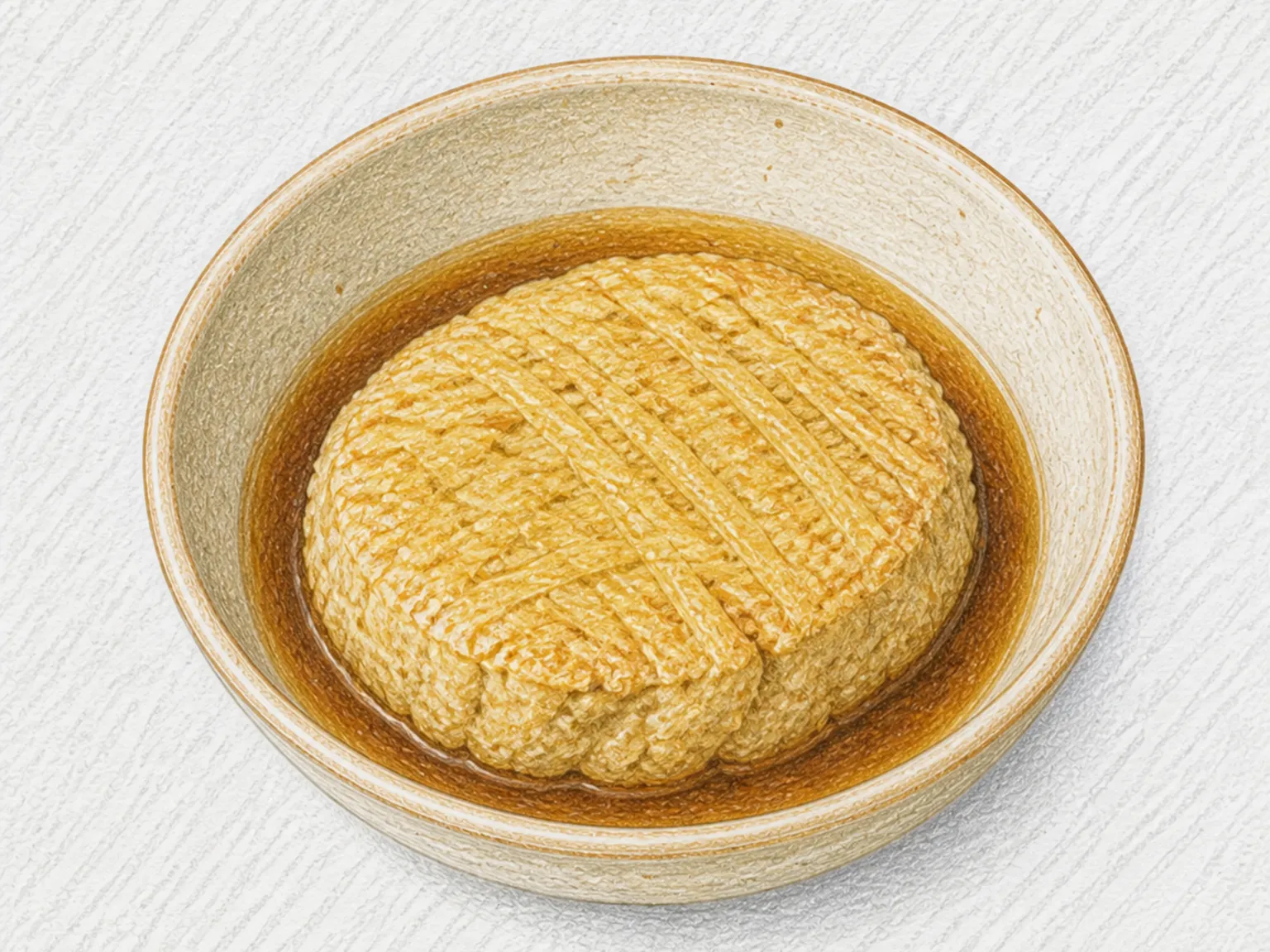
Komo-dofu (Straw-Wrapped Seasoned Tofu)

Komo-dofu is an Ibaraki tofu dish. Blanched tofu is crumbled while hot, packed tightly into food-safe rice-straw wrappers, rested into firm cylinders, removed from the straw, and slowly simmered in a sweet soy seasoning. As the curds compress back together, small channels remain inside and absorb the liquid, while the wrapper leaves a striped surface and a faint straw aroma. Tofu supplied valuable protein when meat was difficult to obtain, but spoiled quickly, so a local account says villagers pooled straw and prepared large batches together. In central Ibaraki it became food for weddings and funerals, often rested overnight after simmering for deeper seasoning.

🎉 Special Occasion
Prep 35min Cook 35min 4 servings
Kori-Dofu Tamago-Toji (Frozen Tofu and Egg Simmer)
Asian Easy

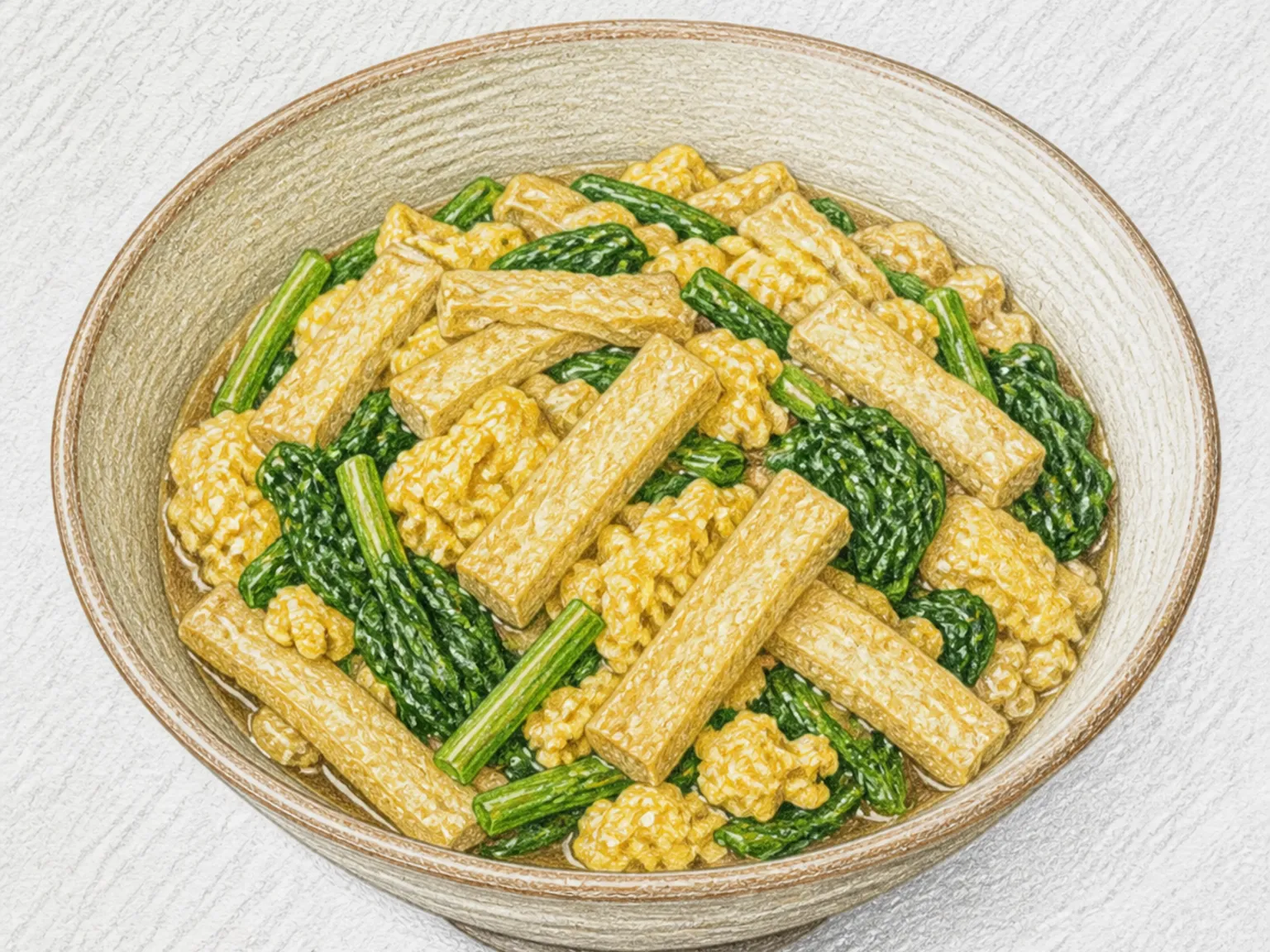
Kori-Dofu Tamago-Toji (Frozen Tofu and Egg Simmer)

Kori-dofu tamago-toji is a Fukushima City dish made by rehydrating freeze-dried tofu, cutting it into strips, and stir-frying it with blanched shinobuna greens or komatsuna. The ingredients then simmer in dashi seasoned with sugar and soy sauce until the liquid is nearly gone, before beaten egg is folded in to bind everything. The porous tofu absorbs the sweet-savory broth deeply, while the greens and softly set egg restore moisture. The dish belongs to Fukushima's shimi preservation culture, shaped by cold winters, the surrounding Abukuma highlands, and the strong Azuma-oroshi seasonal wind. In the past, households began after the November harvest, wrapping thin tofu in straw and exposing it to cold air for roughly two weeks. The resulting preserved tofu also went into dressed dishes, soups, and New Year ozoni.

🏠 Everyday
Prep 20min Cook 20min 4 servings
Japanese Korokke (Crispy Panko Potato and Beef Croquette)
Asian Medium

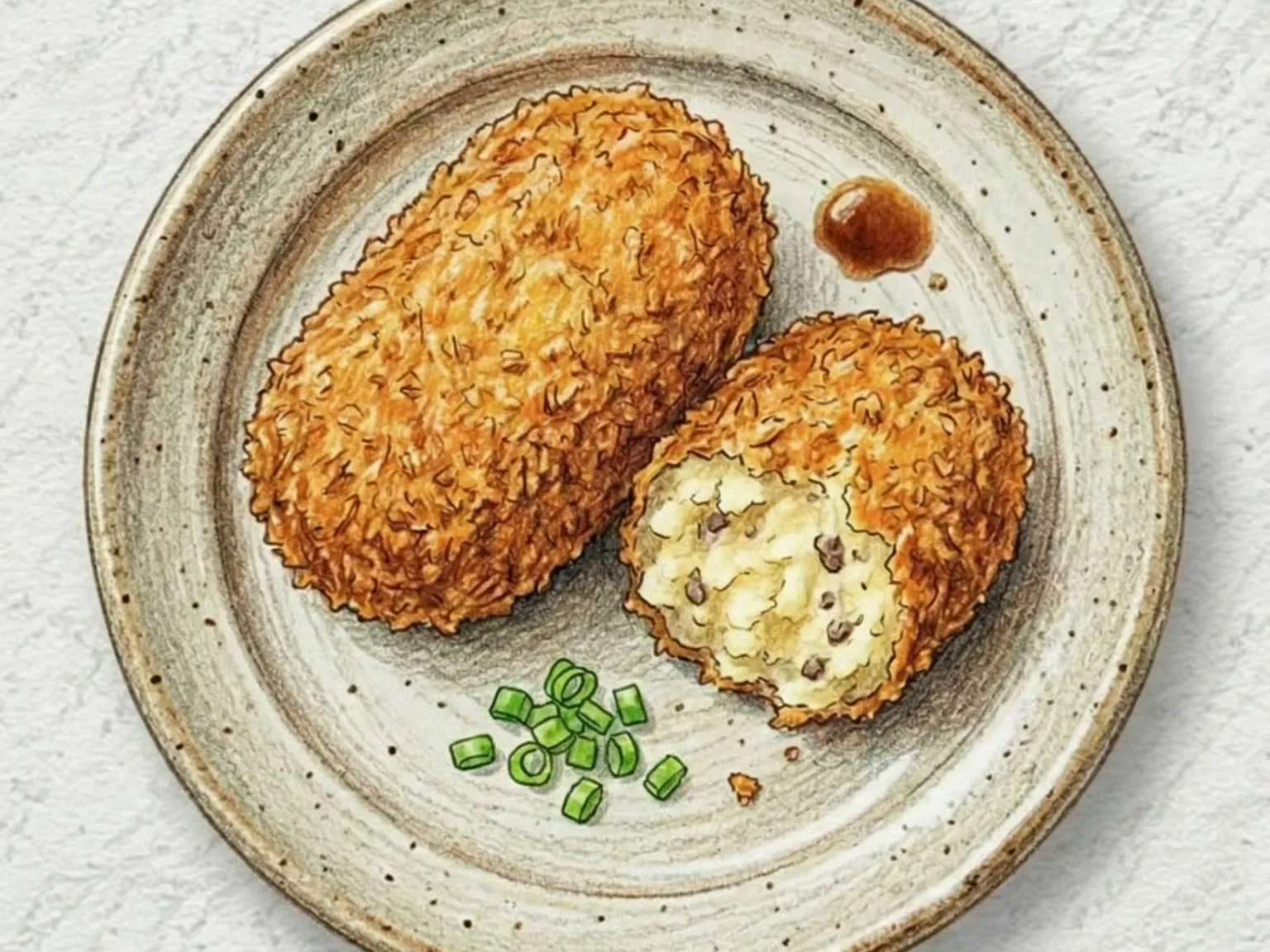
Japanese Korokke (Crispy Panko Potato and Beef Croquette)

Korokke is a Japanese potato croquette that traces its roots to the French croquette but has become a distinctly Japanese comfort food. Potatoes are boiled until completely soft, mashed while still hot, then mixed with sauteed onion and seasoned ground beef. The mixture is shaped into flat ovals, coated in flour, dipped in beaten egg, and rolled in panko breadcrumbs before frying at around 170 degrees Celsius. The panko crust turns an even golden brown and stays audibly crunchy, while the interior remains fluffy and starchy. A drizzle of Worcestershire or tonkatsu sauce is the standard condiment. In Japan, korokke are a staple of butcher shops and prepared-food counters, where they are fried to order and eaten on the spot or carried home still warm. Cream korokke filled with bechamel and crab, curry-flavored korokke, and kabocha pumpkin korokke are among the popular variations. Allowing the shaped patties to cool fully before frying keeps them from falling apart in the oil, and maintaining a steady temperature around 170 degrees prevents the crust from absorbing excess oil and turning greasy.

🧒 Kid-Friendly 🍱 Lunchbox
Prep 25min Cook 20min 4 servings
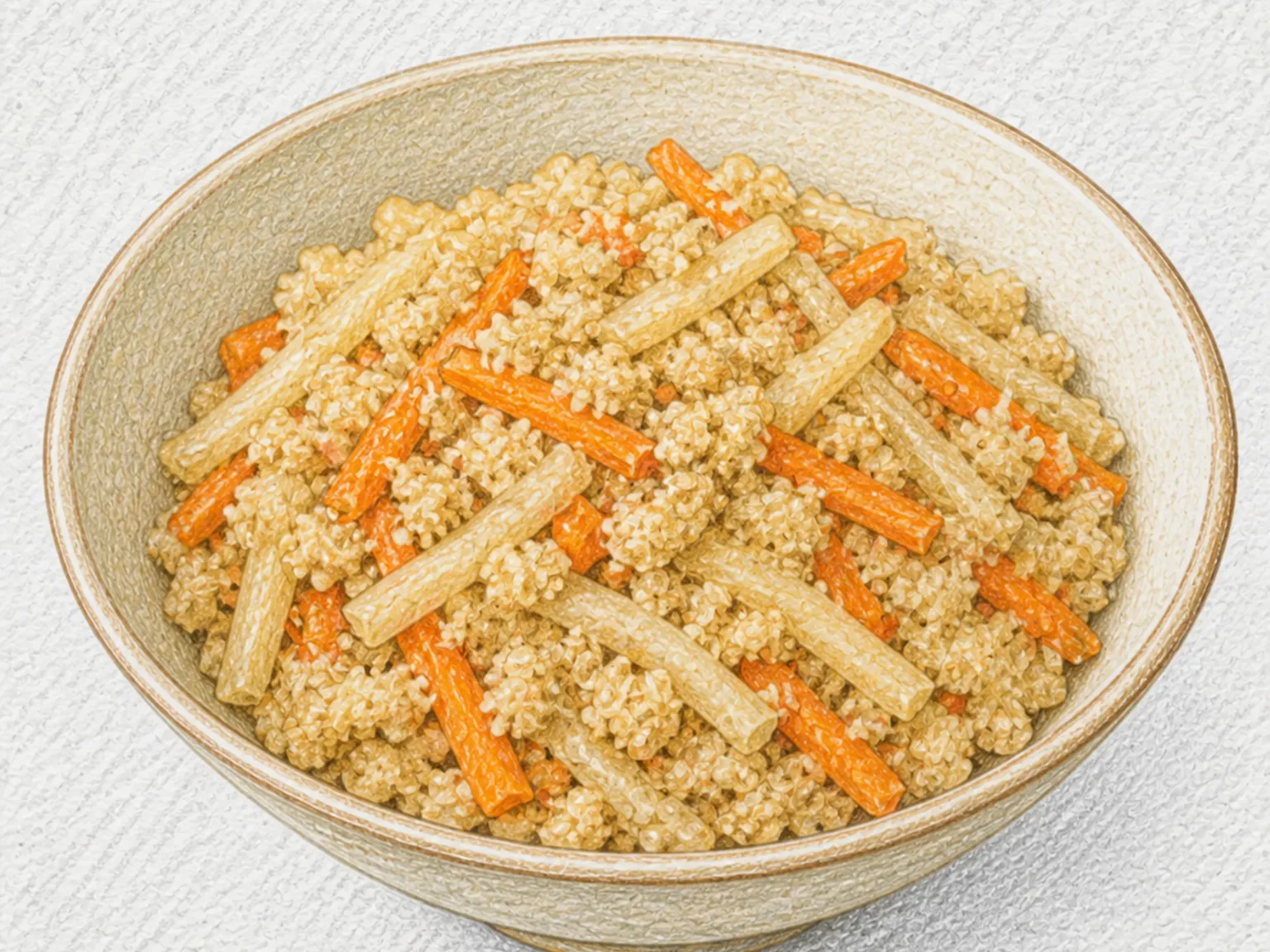
Koya Tofu Powder and Vegetable Nimono
Asian Medium

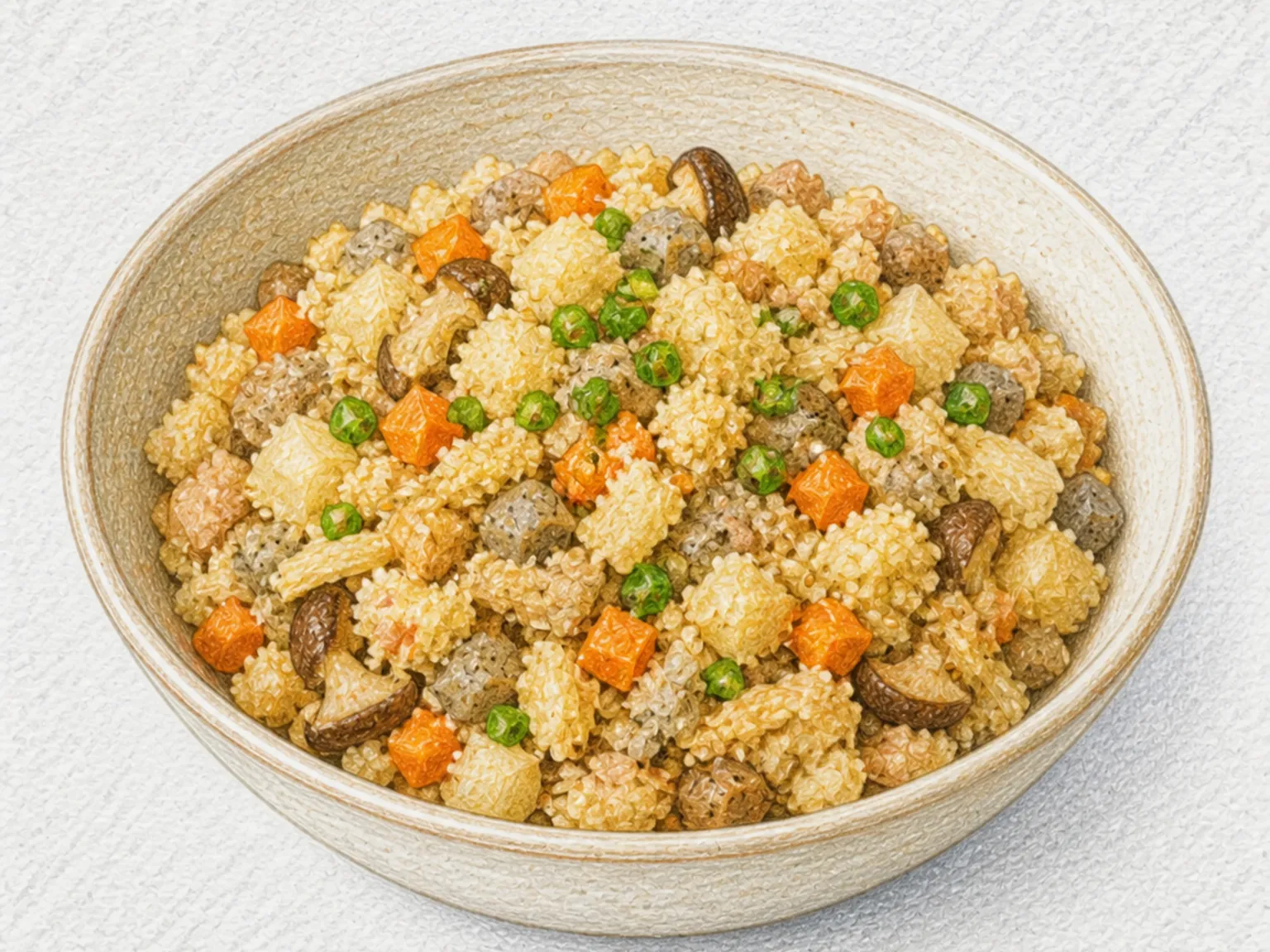
Koya Tofu Powder and Vegetable Nimono

This nimono is a home dish from Taka in Hyogo that uses the fine powder produced during freeze-dried koya tofu making. Small cubes of chicken, carrot, burdock, lotus root, shiitake, konnyaku, chikuwa, and fried tofu are sautéed and simmered before the powder is added. Cutting every solid ingredient to about 8mm distributes several textures in each spoonful. Dashi, mirin, sugar, and light soy sauce first cook the chicken and vegetables for 10 minutes. The koya tofu powder then absorbs much of the 550ml broth and forms soft, crumbly clusters in about 5 minutes. Stopping while a little liquid remains prevents a dry, chalky result. Sliced green onion added at the end keeps a fresh edge against the savory tofu and vegetables.

🏠 Everyday
Prep 25min Cook 20min 5 servings
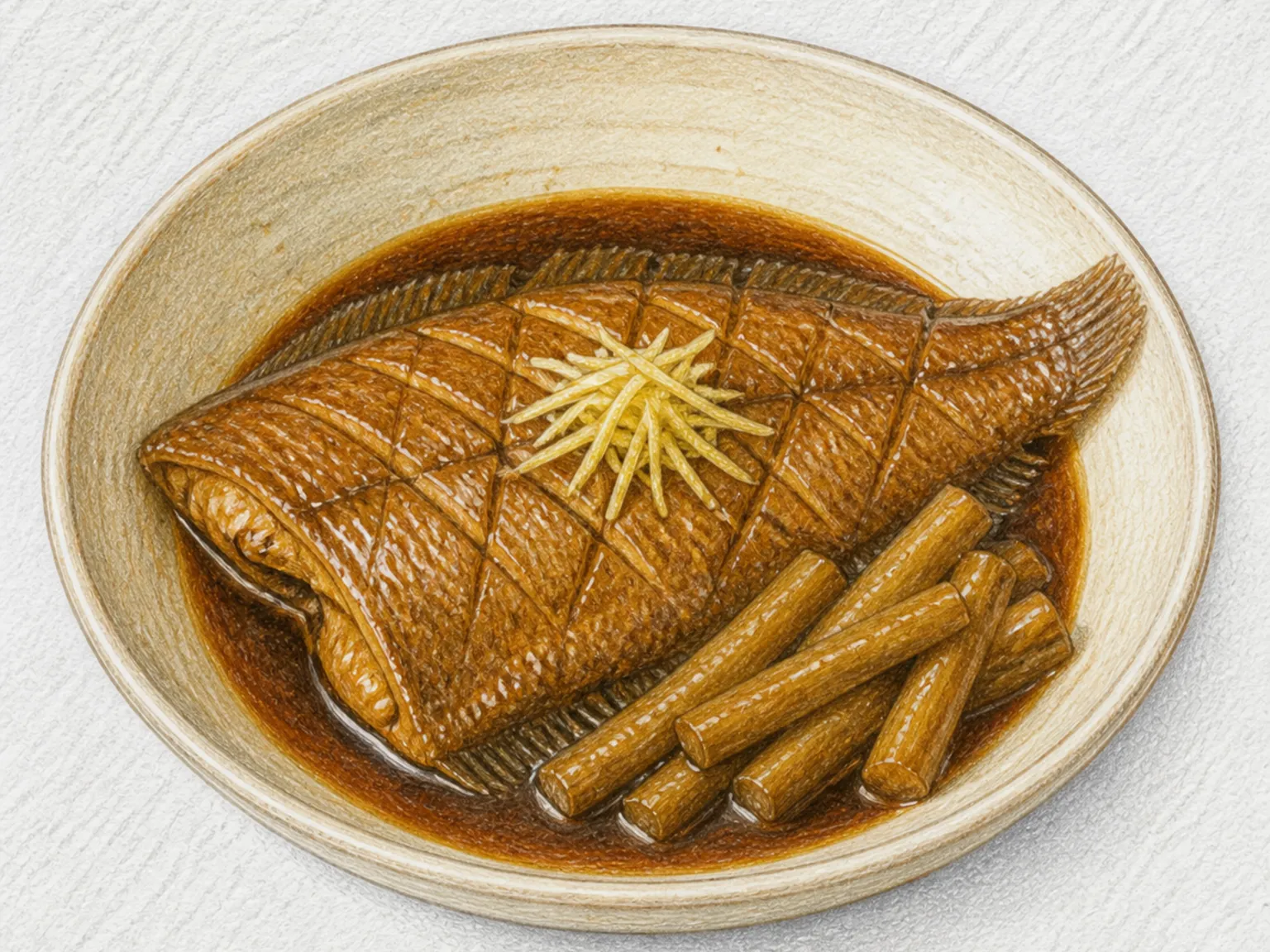
Kuchizoko no Nitsuke (Saga-Style Simmered Sole)
Asian Medium

Kuchizoko no Nitsuke (Saga-Style Simmered Sole)

Kuchizoko no nitsuke is a fish dish from the Ariake Sea coast of Saga, where sole is locally called kuchizoko. A whole cleaned fish is scored along the backbone and simmered briefly in a generous mixture of sake, soy sauce, mirin, sugar, and water. Keeping the scored side facing up helps the thin flesh stay intact while the liquid reaches the cut. Ginger juice is added near the end, then the glossy broth is spooned over the fish several times. Burdock cooks in the same liquid and absorbs its sweet and savory seasoning. Sole cooks quickly, so checking the thickest part and lifting the fish as soon as it is done preserves its tender texture.

🏠 Everyday
Prep 20min Cook 20min 4 servings
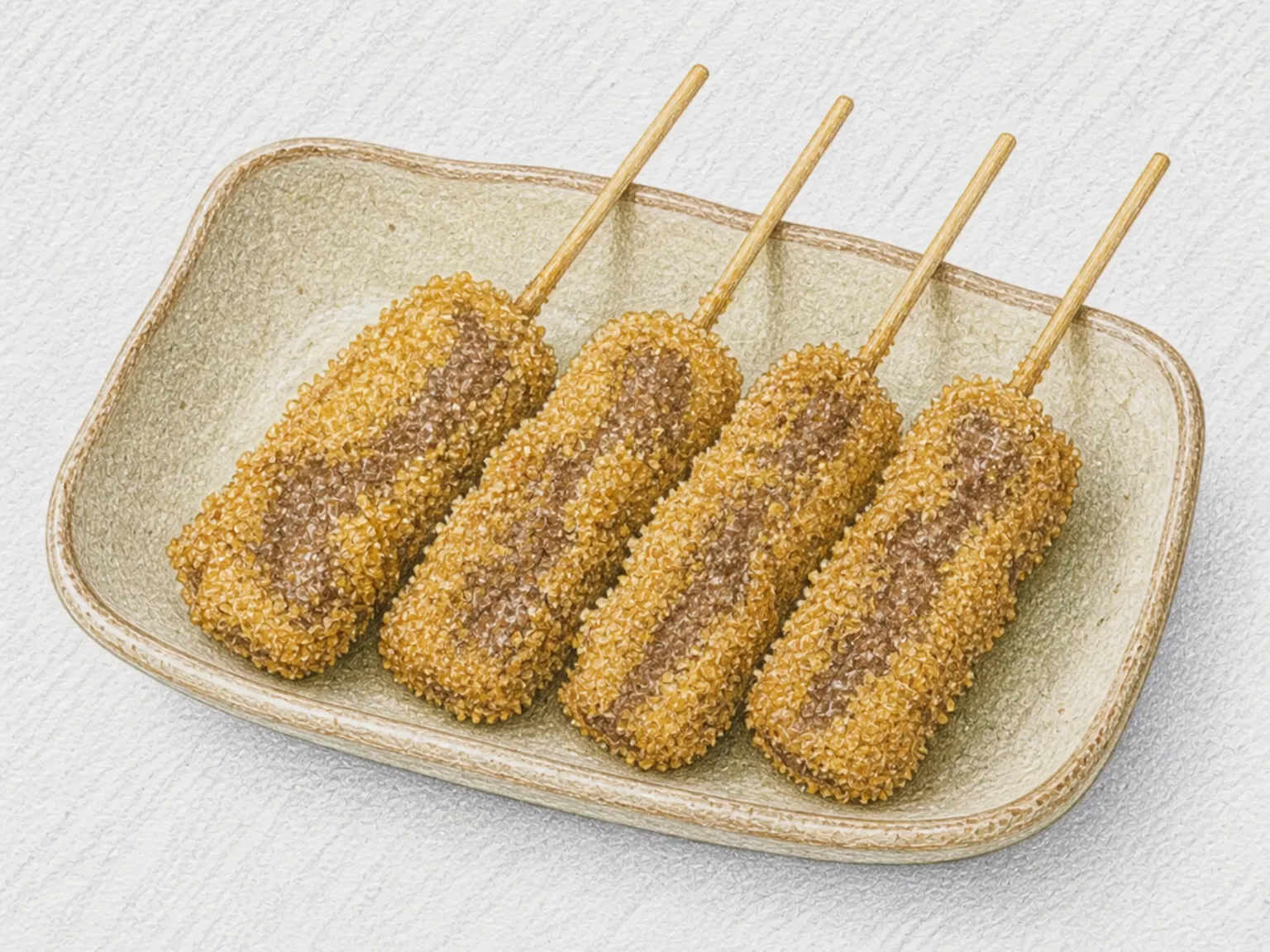
Kushikatsu (Osaka-Style Beef Skewers)
Asian Medium

Kushikatsu (Osaka-Style Beef Skewers)

Kushikatsu is an Osaka street food of bite-size ingredients on bamboo skewers, coated in a thin flour batter and fine breadcrumbs, then fried quickly at 180°C. One origin account places it in Shinsekai from the late Taisho to early Showa years, when thin slices of inexpensive, firm beef received a substantial coating to feed nearby workers quickly. Restaurants later added vegetables, seafood, and quail eggs, but this reference recipe makes four beef skewers in the older style. Shops are also associated with the no-double-dipping rule for a shared sauce container. At home, thin equal beef pieces and controlled oil temperature give a cooked center and crisp coat.

🍺 Bar Snacks 🔥 Trending Now
Prep 15min Cook 10min 4 servings
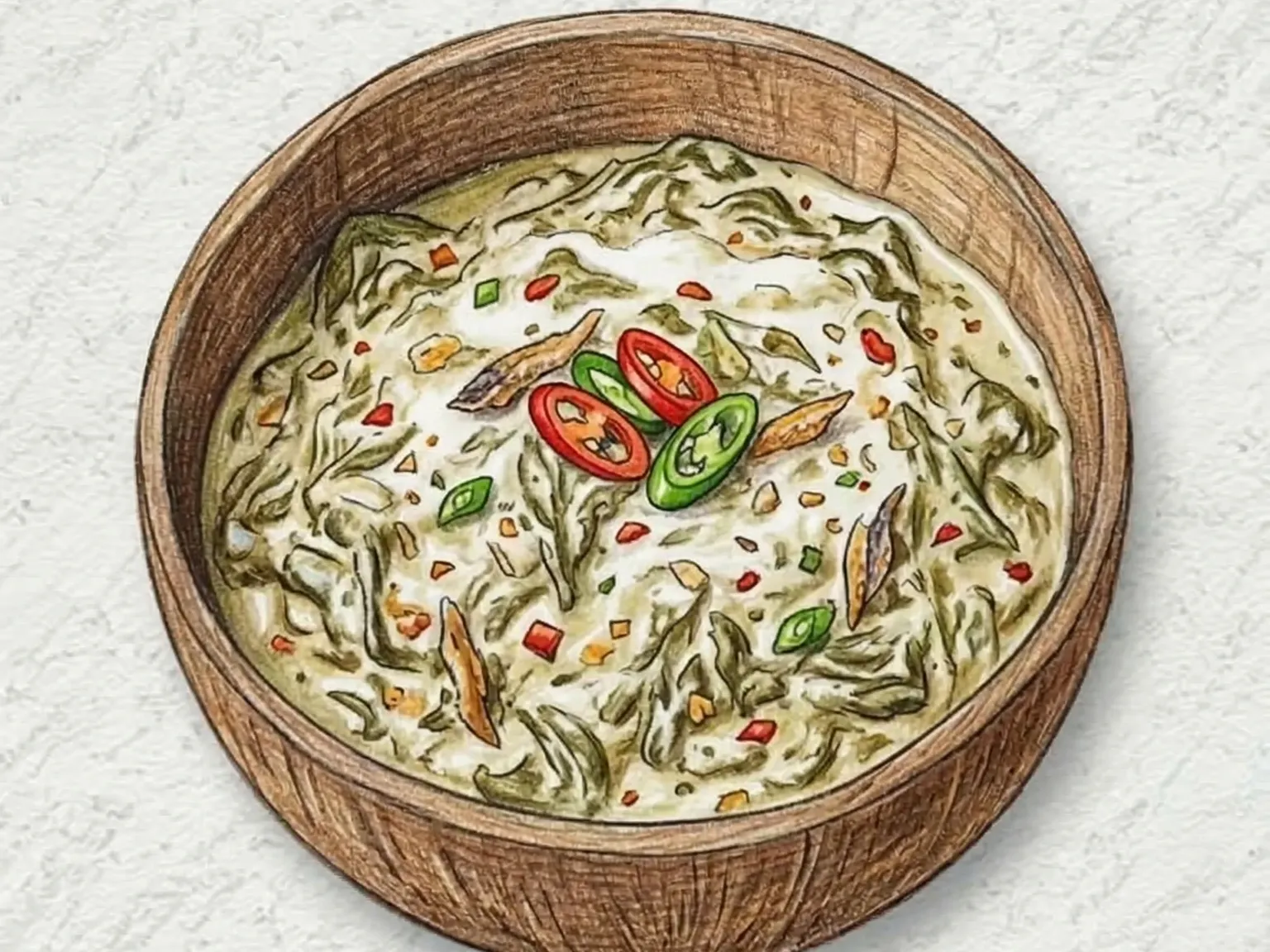
Laing (Filipino Bicol Dried Taro Leaf Coconut Milk Stew)
Asian Medium

Laing (Filipino Bicol Dried Taro Leaf Coconut Milk Stew)

Laing is a traditional dish from the Bicol region of the Philippines, made by slowly simmering dried taro leaves in coconut milk with chili, garlic, ginger, and shrimp paste. The leaves must be fully dried rather than fresh - fresh taro leaves contain calcium oxalate crystals that cause an intense itching sensation in the mouth and throat. Once the aromatics are sauteed in coconut milk, the dried leaves are layered in and the pot is left uncovered to reduce. A critical rule in traditional preparation is to never stir the pot; stirring releases the irritants from the leaves into the liquid. As the coconut milk reduces over low heat, it concentrates into a thick, oily sauce that clings to the softened leaves. Shrimp paste contributes a deep, funky salinity, while fresh or dried chilies bring the heat that Bicolano cuisine is known for. The result is rich, spicy, and intensely savory - meant to be eaten in modest spoonfuls alongside a generous mound of steamed rice.

🎉 Special Occasion 🍱 Lunchbox
Prep 15min Cook 35min 4 servings
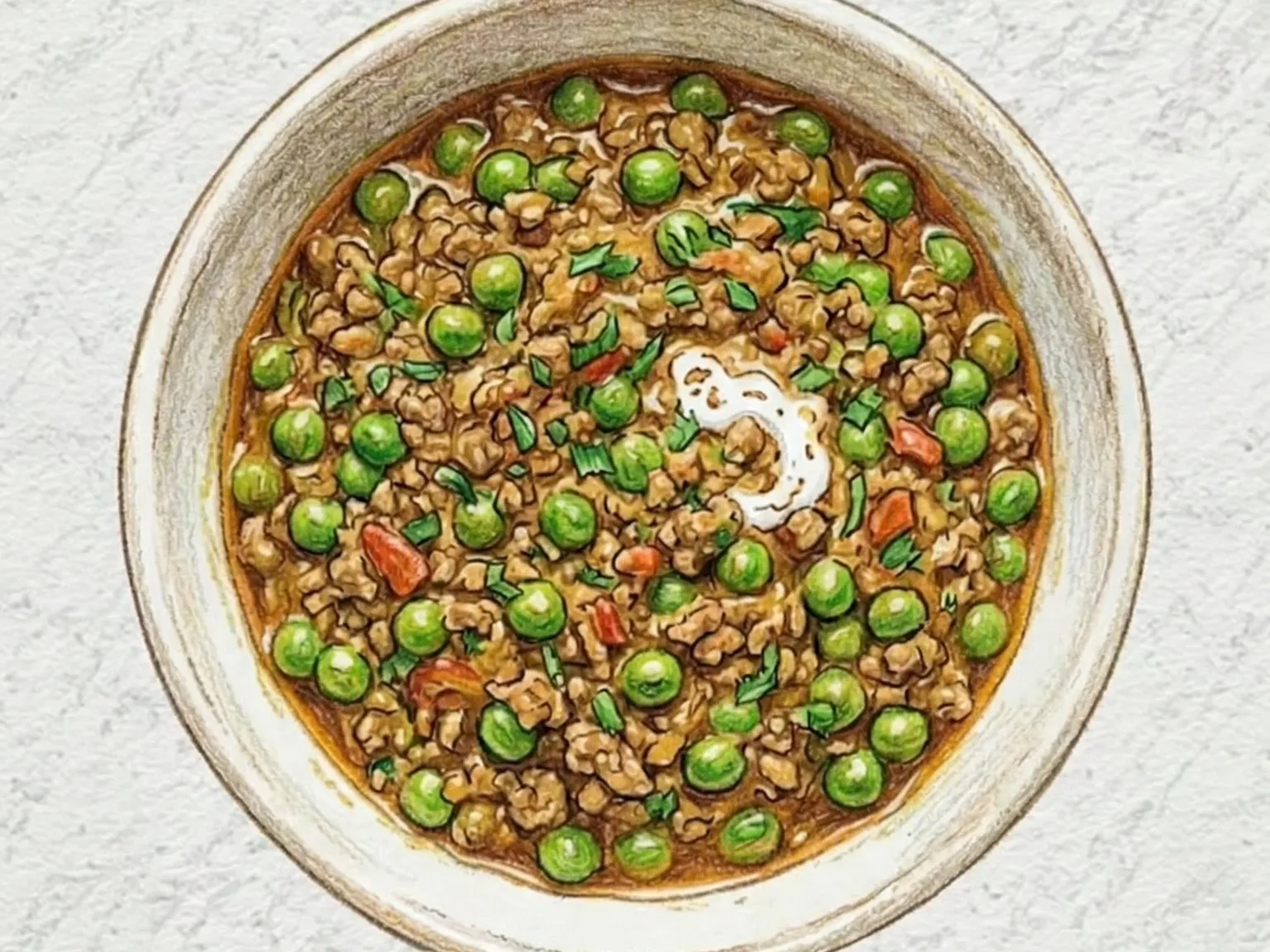
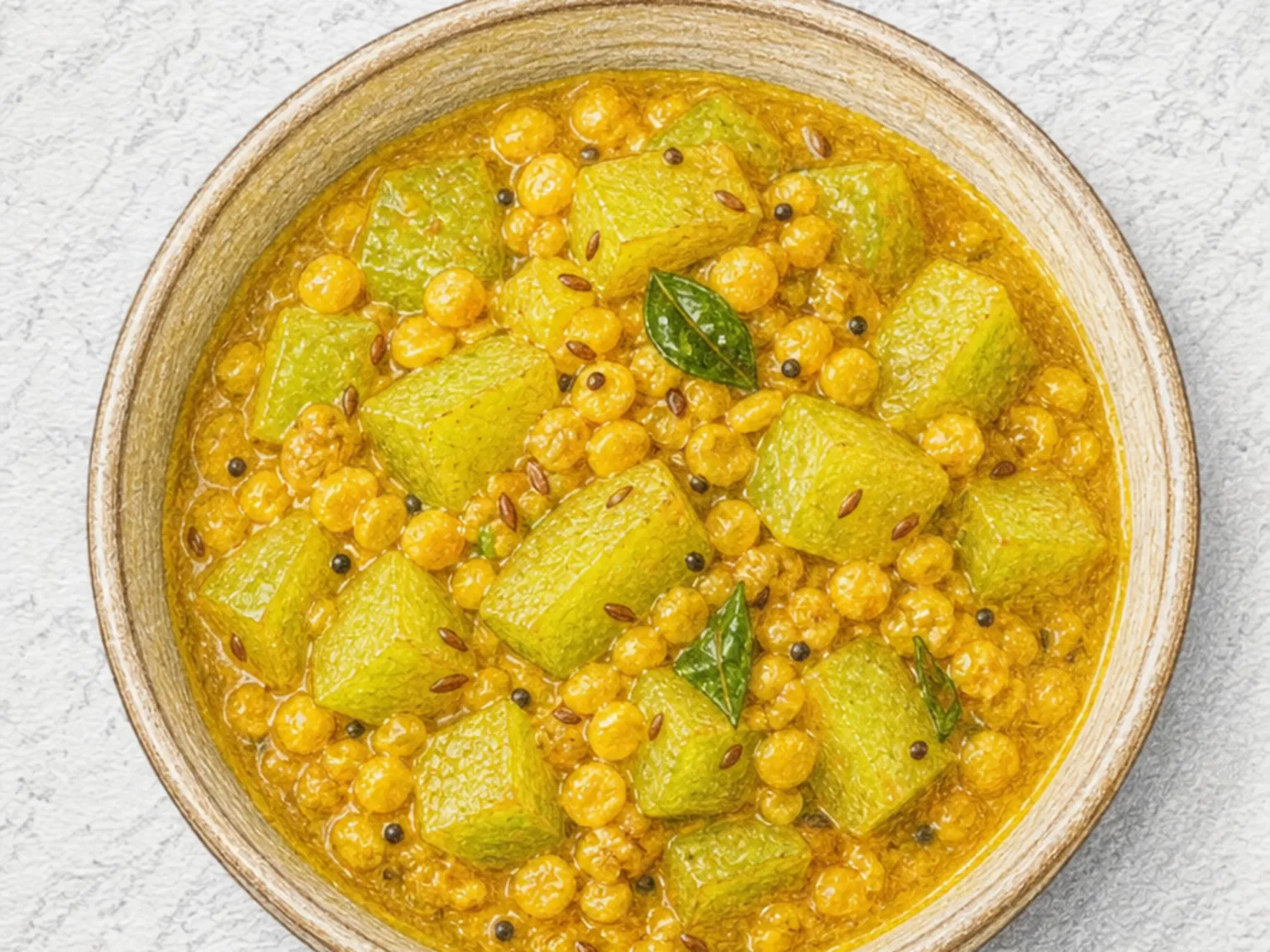
Lauki Chana Dal (Bottle Gourd and Split Chickpea Curry)
Asian Easy

Lauki Chana Dal (Bottle Gourd and Split Chickpea Curry)

Lauki chana dal combines bottle gourd and split chickpeas in two stages: the soaked dal and diced gourd are simmered with turmeric until tender, while cumin, onion, garlic, ginger, tomato, and chili are cooked separately in ghee to form the aromatic base. Soaking the chana dal before cooking helps the dense centers soften at the same pace as the outside instead of remaining chalky. Peel and remove the seed section from the bottle gourd, then cut the flesh into substantial cubes so it does not disappear while the legumes cook. In the pot, the dal should become soft enough to press easily, and the gourd should release moisture and a mild sweetness into the yellow broth. Meanwhile, heat the ghee and let the cumin seeds become fragrant before adding onion, garlic, and ginger. Cook these aromatics until golden, then add chopped tomato and chili powder and continue until the tomato loses its raw, watery character. Stir this concentrated mixture into the cooked dal and gourd and simmer briefly. The chickpea starch thickens the surrounding liquid while the seasoned ghee carries cumin and aromatics through the entire pot. A good final consistency is spoonable rather than dry, with tender gourd pieces that break under light pressure and small, nutty particles of chana dal still evident. Serve it warm over rice or scoop it with flatbread, adjusting only the final thickness if the dal has tightened while standing.

🏠 Everyday
Prep 15min Cook 35min 2 servings
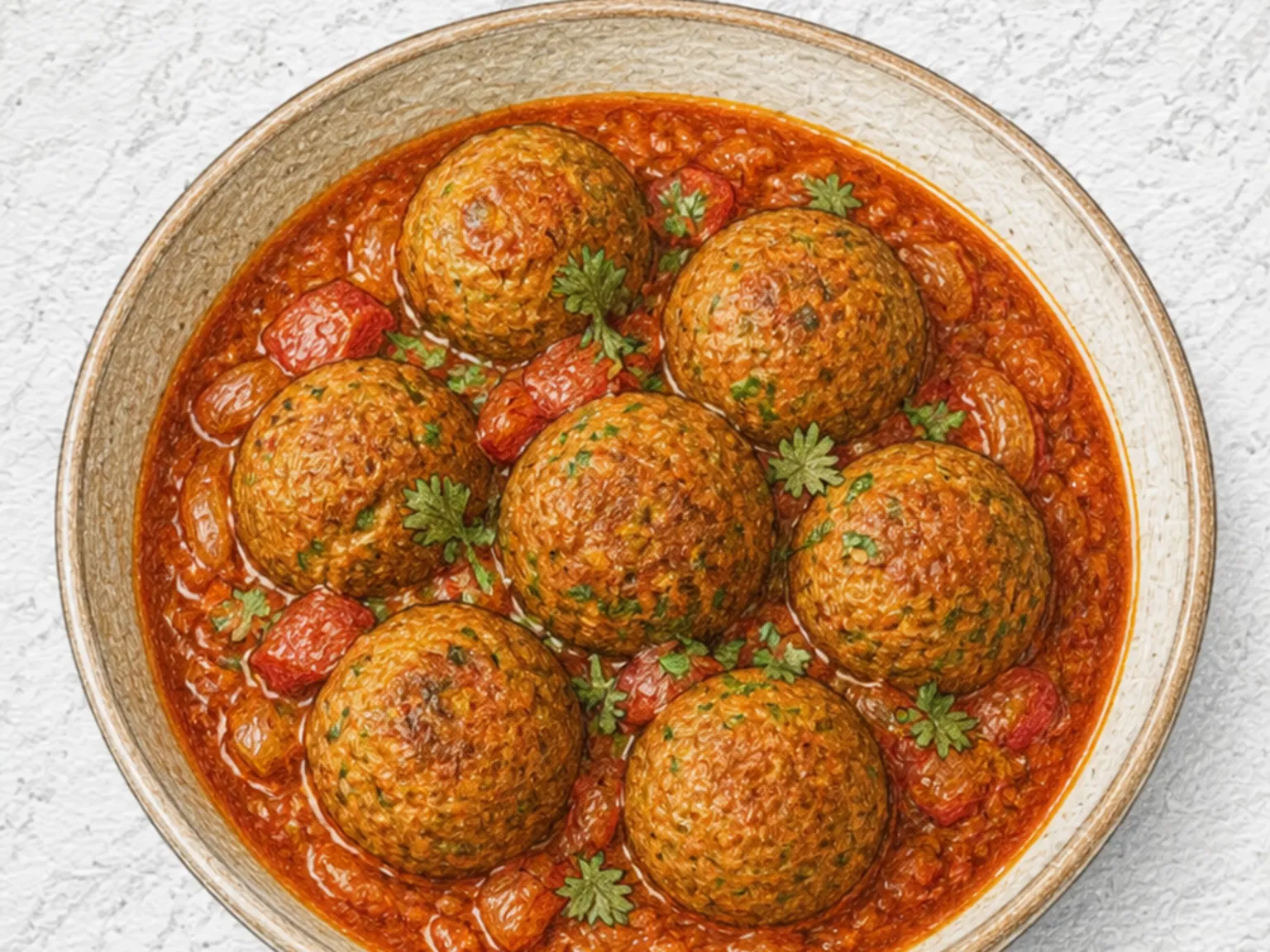
Lauki Kofta (Indian Bottle Gourd Dumpling Curry)
Asian Medium

Lauki Kofta (Indian Bottle Gourd Dumpling Curry)

Lauki kofta turns grated bottle gourd into fried dumplings and finishes them in an onion and tomato curry sauce. Peel and finely grate 300 g bottle gourd, then squeeze it firmly in cheesecloth until excess water no longer drips freely. Mix it with 80 g chickpea flour, half of the measured 3 g turmeric, 5 g chili powder, and 5 g garam masala, plus 5 g salt. When the mixture holds together, shape it into round dumplings. Reserve a small portion of the measured 200 ml cooking oil for the sauce and heat the rest to 170C. Fry the dumplings for 5 minutes, turning as needed until their surfaces are evenly golden, then drain them. Heat the reserved oil in a pan and cook 150 g chopped onion with 15 g ginger garlic paste until the onion browns. Add 200 g finely chopped tomato and the remaining turmeric, chili powder, and garam masala. Cook until the tomato pieces break down and the base no longer looks raw. Pour in 200 ml water and bring the sauce to a simmer. Add the fried dumplings and cook over medium heat for 5 minutes. Stop when the dumplings remain intact and the reduced sauce clings to their surfaces.

🏠 Everyday
Prep 20min Cook 30min 2 servings
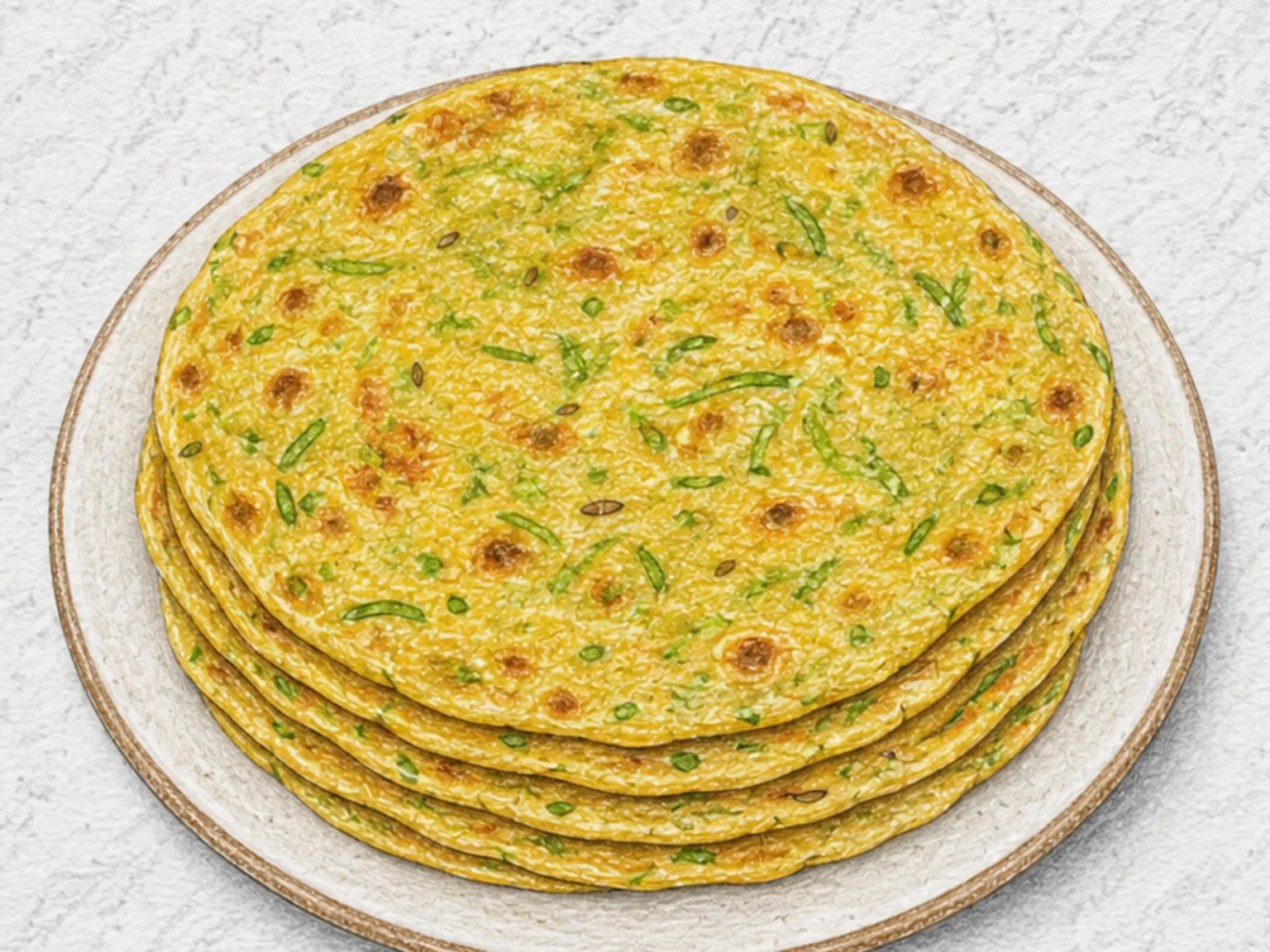
Lauki Thepla (Bottle Gourd Flatbread)
Asian Medium

Lauki Thepla (Bottle Gourd Flatbread)

Lauki thepla is a Gujarati flatbread in which finely grated bottle gourd supplies the moisture for a whole-wheat dough seasoned with yogurt, turmeric, chili powder, ajwain seeds, coriander, salt, and oil. Peel and grate the gourd directly into the mixing bowl, keeping both the pulp and its juice. That liquid is intended to bind the flour, so do not add extra water at the beginning. Mix in the whole-wheat flour, yogurt, and seasonings, then knead with part of the oil until the dough becomes smooth. It may appear firm at first, but grated gourd continues to release moisture; adding water too quickly can leave the rested dough sticky and difficult to roll. After a short rest, divide it into small portions and roll each one into a thin, even circle. Uneven thickness gives a patchy result, with dry edges and a center that still tastes of raw flour. Place a round on a hot pan, turn it when dry spots begin to form, and brush a small amount of oil over each side. Continue flipping until brown spots appear across the surface and any puffed sections have cooked through. Press those bubbles gently against the pan instead of extending the cooking until the whole bread becomes hard. Properly cooked thepla stays flexible and lightly chewy, with moisture from the gourd softening the whole wheat and ajwain, coriander, turmeric, and chili giving the bread a layered savory aroma. Serve it warm with curry or a yogurt accompaniment.

🏠 Everyday
Prep 20min Cook 15min 2 servings
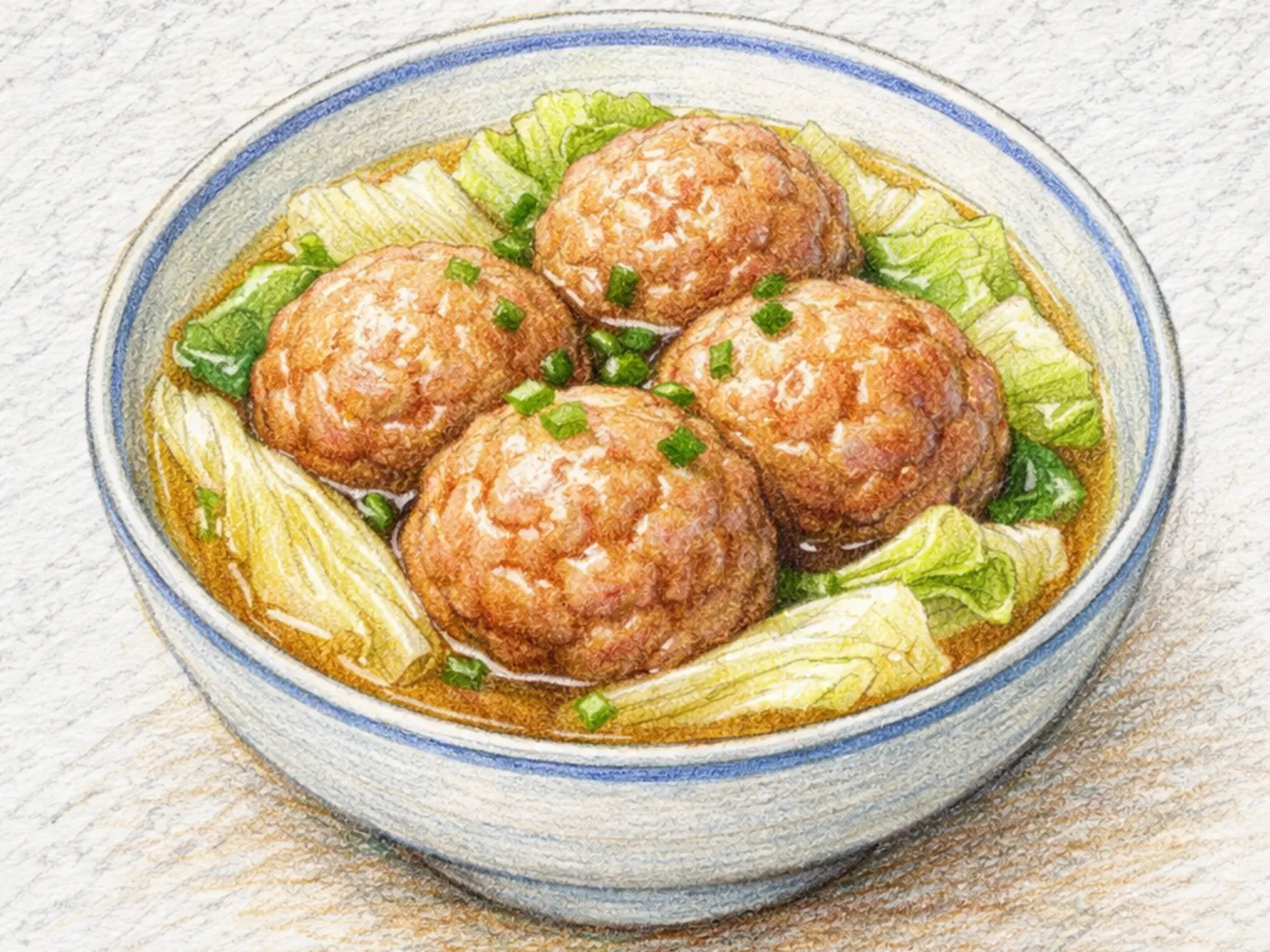
Lion's Head Meatballs (Chinese Braised Large Pork Meatballs with Cabbage)
Asian Medium

Lion's Head Meatballs (Chinese Braised Large Pork Meatballs with Cabbage)

Lion's Head meatballs are four large pork meatballs, each about 7 to 8cm wide, gently braised on a bed of napa cabbage in a light soy broth. Finely mince 30g scallion and 10g ginger, then combine them with 500g ground pork, 1 egg, 2 tablespoons starch, 1 tablespoon soy sauce, and 1 tablespoon cooking wine. Keep the mixture cold and knead it in one direction for about 5 minutes. It is ready when it clings to the hand and leaves a thin film on the bowl, a sticky texture that keeps the oversized meatballs from breaking apart. Divide the pork into four portions. Wet the hands with some of the measured 500ml water, shape each portion into a round ball, and press every surface crack closed. Cut 300g napa cabbage into 4cm pieces and spread it across the pot bottom. Place the meatballs on the cabbage with space between them, using the leaves to shield the pork from direct heat. Pour the remaining measured water down the side of the pot and add the final 1 tablespoon soy sauce. Bring the liquid to a boil over high heat, skim the foam, reduce to medium-low, and cover. Braise for 25 minutes, skimming again if the broth clouds. Pierce the center of the thickest meatball. Clear juices show that it is cooked. Serve the meatballs with the softened cabbage and spoon the hot broth over both.

🎉 Special Occasion 🍱 Lunchbox
Prep 25min Cook 35min 4 servings
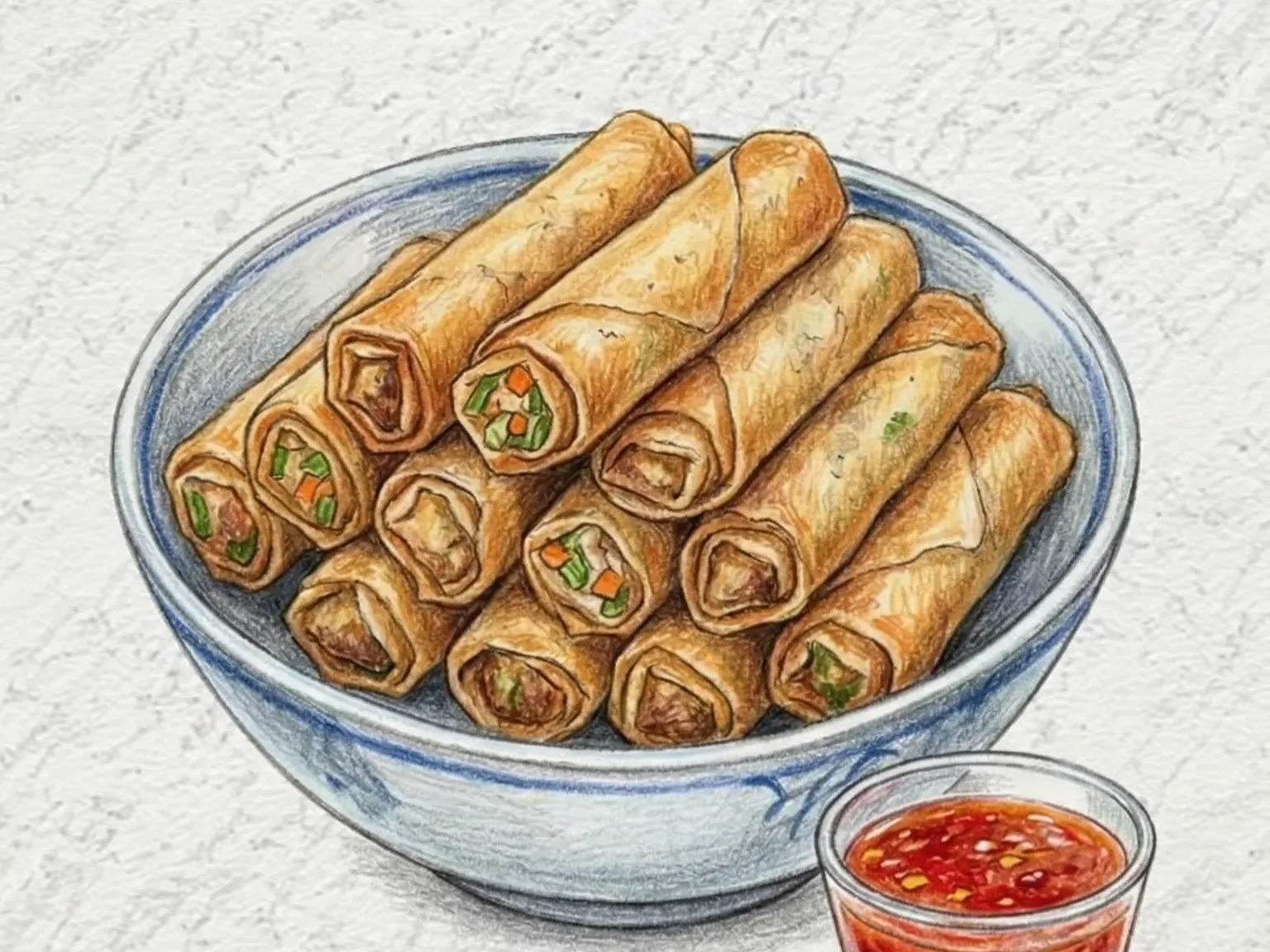
Lumpiang Shanghai (Filipino Deep-Fried Pork Spring Rolls)
Asian Medium

Lumpiang Shanghai (Filipino Deep-Fried Pork Spring Rolls)

Lumpiang Shanghai is the spring roll that appears without fail at every Filipino celebration, from birthday parties to holiday feasts and town fiestas. Ground pork is mixed with finely diced carrots, onions, and scallions, seasoned with soy sauce and black pepper, then rolled into finger-length cylinders using thin spring roll wrappers before being deep-fried to a golden, audibly crisp shell. The moment teeth break through the shattering exterior, well-seasoned and juicy meat pours out from within, and that contrast is the core of its appeal. Served alongside a sweet chili dipping sauce or a sharp vinegar sauce, the richness of the pork and the acidity of the condiment lock together in a way that makes stopping at one piece genuinely difficult. The rolls hold their crispness at room temperature far longer than most fried foods, which is why trays of them tend to disappear within minutes at any gathering. Adding shrimp to the pork filling introduces a springy bite and a layer of brininess that takes the flavor a step further.

🎉 Special Occasion 🍺 Bar Snacks
Prep 30min Cook 15min 4 servings
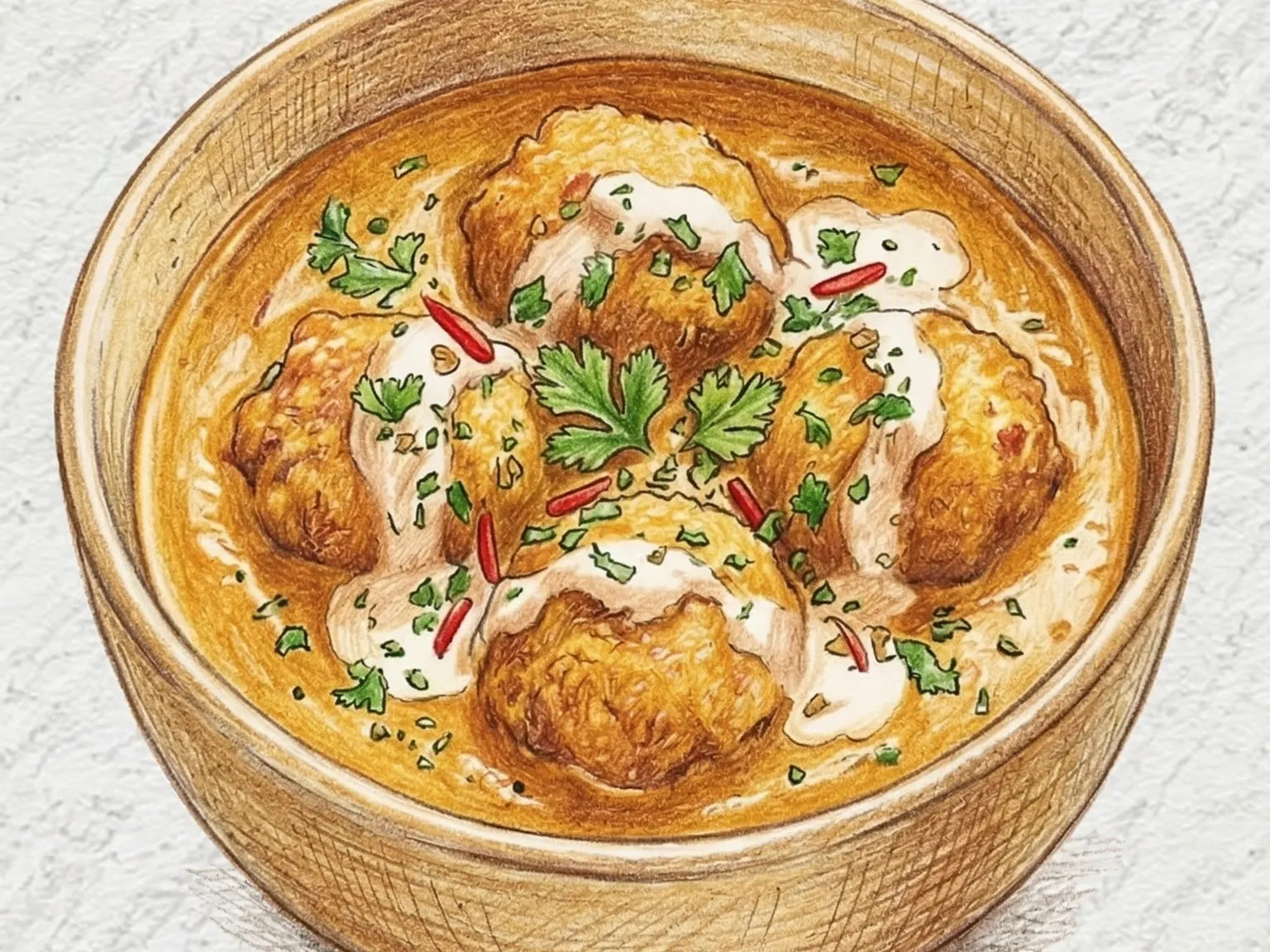
Malai Kofta (Indian Paneer Potato Dumplings in Creamy Tomato Sauce)
Asian Hard

Malai Kofta (Indian Paneer Potato Dumplings in Creamy Tomato Sauce)

Malai kofta is a celebratory vegetarian dish from North India in which dumplings made from mashed potato and crumbled paneer are fried until golden-brown, then placed in a velvety tomato-cream gravy. The exterior of each kofta crisps in the oil while the interior remains soft and filled with mild paneer, so that when broken open in the gravy, the cheese spills into the sauce and enriches it further. The gravy is built from a base of slow-cooked onions and tomatoes pureed until smooth, finished with cashew nut paste and heavy cream for a rich, dense texture. Cashew paste is the key technique here, adding a nutty creaminess that coconut milk or plain cream alone cannot replicate. Garam masala and a touch of turmeric contribute warm, fragrant spice without sharp chili heat, keeping the dish approachable and suitable for formal occasions. The koftas should be added to the gravy just before serving, since extended soaking softens the exterior and causes them to break apart. Served alongside naan or basmati rice, malai kofta is a standard centerpiece at Indian wedding feasts and festival gatherings, prized as much for its visual richness as for its flavor.

🎉 Special Occasion
Prep 30min Cook 30min 4 servings
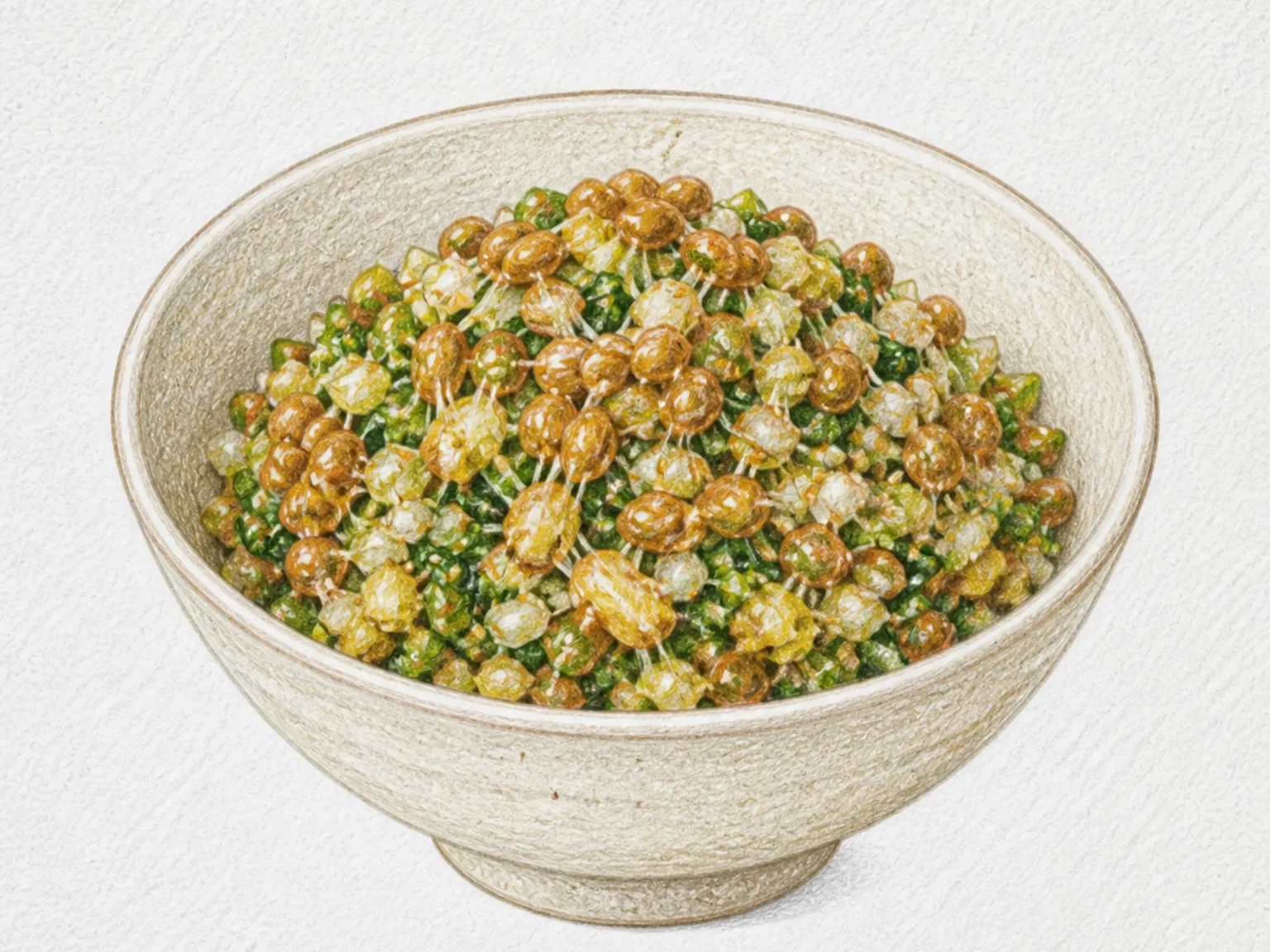
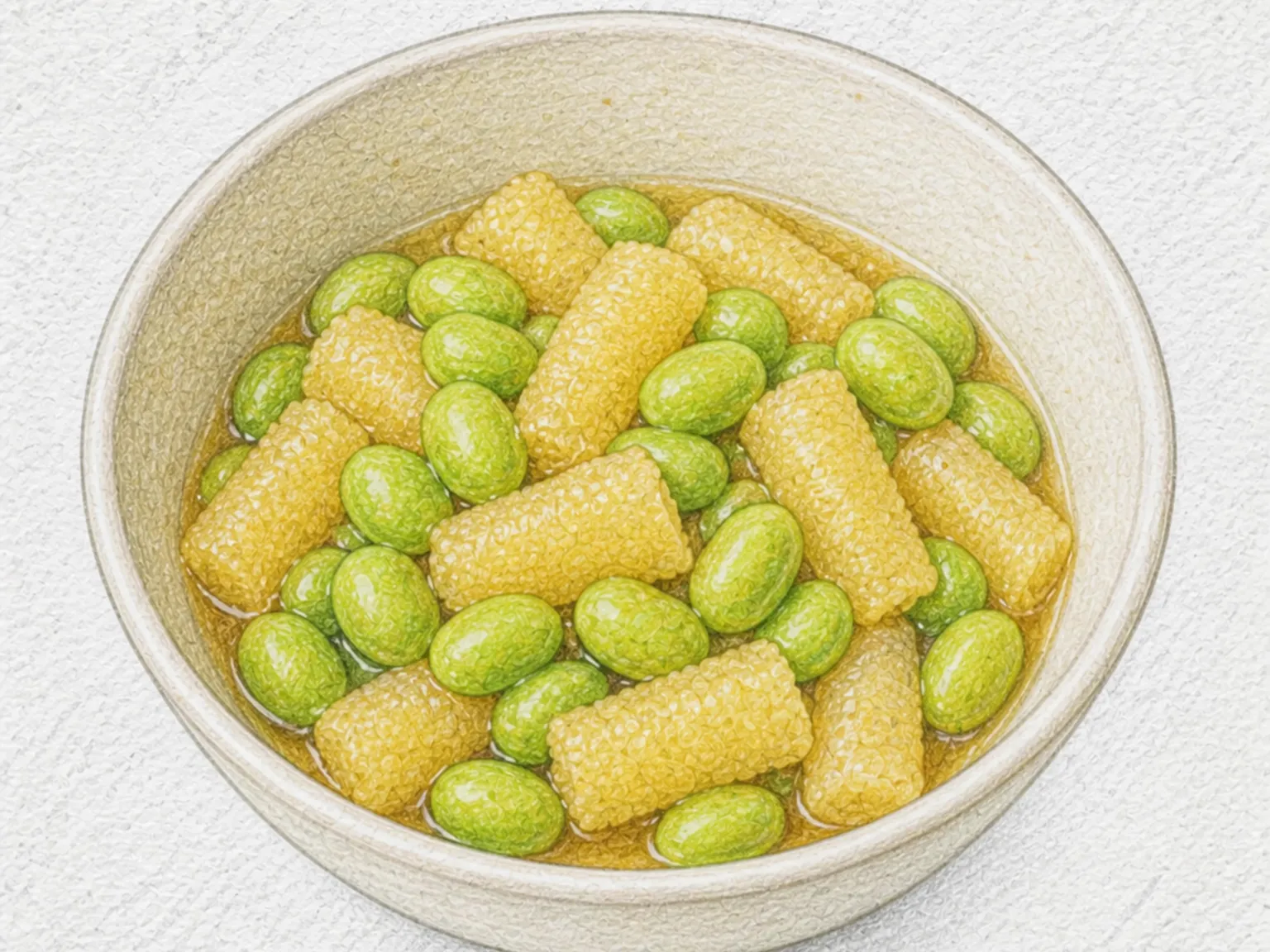
Mame Kazunoko (Green Soybeans and Herring Roe in Dashi)
Asian Medium

Mame Kazunoko (Green Soybeans and Herring Roe in Dashi)

Mame kazunoko is a Fukushima New Year dish. Aobata green soybeans are soaked overnight and boiled until tender but intact, while salted herring roe is slowly desalted in cold water, stripped of membrane, cut to bite-size pieces, and combined with the beans in bonito dashi and mentsuyu. Flat, firm beans contrast with the crisp grains of roe. Prepare each component separately, cool it fully, then bring them together in cold seasoning. Dried soybeans must cook through until no raw or chalky center remains. Use only salted roe labeled ready to eat and keep it at 4C or below throughout desalting.

🎉 Special Occasion 🍺 Bar Snacks
Prep 30min Cook 35min 8 servings
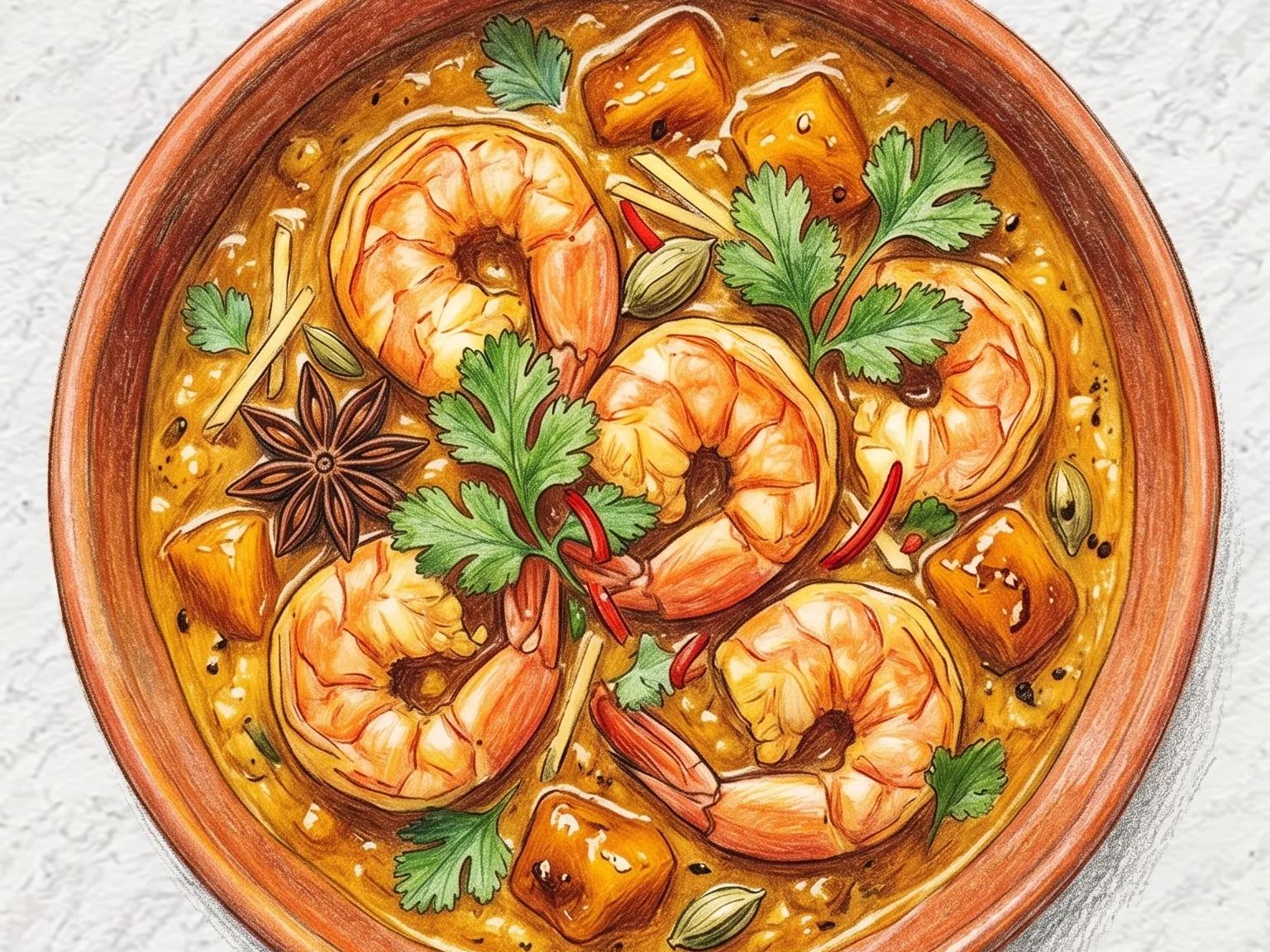
Sweet and Spicy Mango Chutney Shrimp Curry
Asian Easy

Sweet and Spicy Mango Chutney Shrimp Curry

Sweet and Spicy Mango Chutney Shrimp Curry is an Indian-style dish combining shrimp, mango chutney, and coconut milk. The process starts by sauteing onion and garlic, then blooming curry powder in oil to release its aroma. Shrimp are added and lightly cooked before pouring in coconut milk and mango chutney. Simmering for five to seven minutes ensures the shrimp remain tender and firm instead of becoming rubbery. The natural acidity of the mango chutney balances the creamy richness of the coconut milk. A touch of lime juice is added for acidity, and the dish is garnished with cilantro. It is served with rice or naan. Chopping large chunks of chutney results in a smoother sauce, and dried chili flakes can be added for extra heat.

🔥 Trending Now 🏠 Everyday
Prep 15min Cook 20min 2 servings
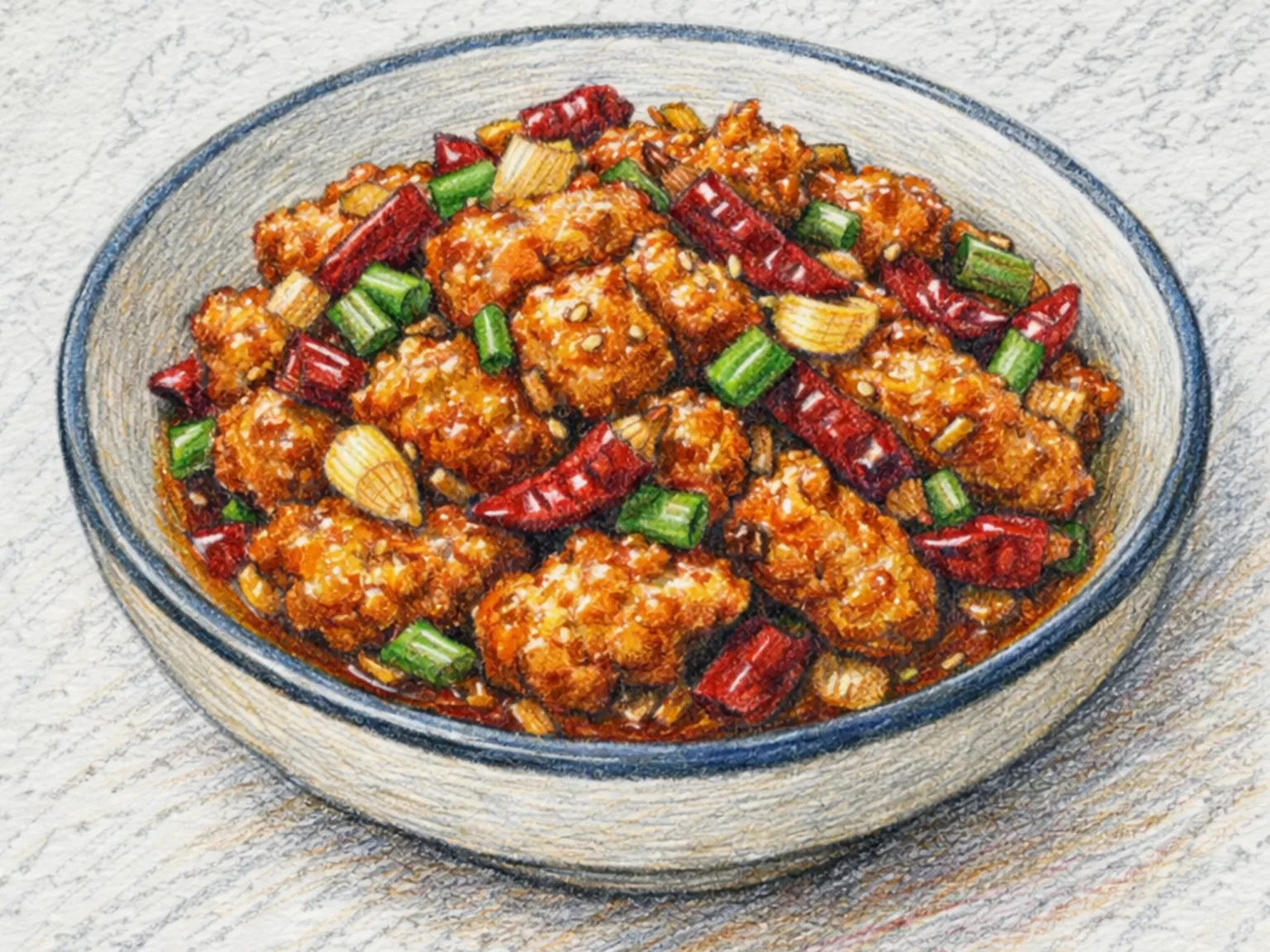
Sichuan Spicy Tofu (Mapo Tofu)
Asian Medium

Sichuan Spicy Tofu (Mapo Tofu)

Mapo tofu is the dish that defines Sichuan cooking for much of the world, and it earns that reputation through an uncompromising combination of heat and numbing spice. Blocks of silken tofu are slid carefully into a wok with ground pork, doubanjiang (fermented chili bean paste), and a generous measure of ground Sichuan pepper, then cooked at high heat until the sauce tightens and coats every cube completely. The doubanjiang provides fermented depth and an unmistakable rusty-red color that signals its flavor before the first bite, while the Sichuan pepper delivers the numbing, tingling sensation known as ma that separates this dish from any other spicy food. Each cube of tofu absorbs the sauce at its edges while remaining silken at the center, creating a contrast between the spiced exterior and the cool, neutral interior that makes each bite dynamic. Spooned generously over steamed rice, the thick sauce penetrates between every grain, pulling together the entire bowl into a single cohesive experience. The interplay of ma (numbing) and la (spicy heat) is the defining characteristic of Sichuan cuisine, and mapo tofu demonstrates that pairing with more clarity and intensity than almost any other dish in the repertoire.

🍺 Bar Snacks 🏠 Everyday
Prep 12min Cook 15min 2 servings
Masala Dosa (South Indian Crispy Rice Crepe with Spiced Potato Filling)
Asian Hard

Masala Dosa (South Indian Crispy Rice Crepe with Spiced Potato Filling)

Masala dosa is a cornerstone of South Indian cuisine, served from breakfast through dinner across the subcontinent. The crepe is made from a batter of rice and urad dal (black lentils) that ferments overnight, developing a mild tanginess from lactic acid bacteria while building the structure that allows the batter to crisp sharply on a hot griddle. Inside sits a filling of mashed potatoes tempered with mustard seeds, curry leaves, turmeric, and green chilies. The dosa arrives at the table golden and oversized, folded or rolled around its filling, with coconut chutney and sambar, a lentil and vegetable stew, served alongside for dipping. The contrast between the shatteringly crisp crepe and the soft, warmly spiced potato is the defining quality of the dish. Fermentation time determines both the sourness and the crispness of the finished dosa, and cooks adjust it between eight and sixteen hours depending on ambient temperature.

🎉 Special Occasion
Prep 30min Cook 25min 2 servings
Massaman Curry (Thai-Muslim Mild Chicken Potato Peanut Coconut Curry)
Asian Medium

Massaman Curry (Thai-Muslim Mild Chicken Potato Peanut Coconut Curry)

Massaman curry stands apart from other Thai curries with its mild, sweet-savory character and its roots in the Muslim communities of southern Thailand, where trade routes from Persia and India brought cinnamon, cardamom, cloves, and star anise into the local kitchen long before chili became dominant. These whole spices simmer in the coconut milk base, lending an aromatic warmth that is closer to a slow-braised stew than to the fiery curries Thailand is more widely known for. Chicken thighs, whole shallots, potatoes, and roasted peanuts braise together until the potatoes begin to break apart and naturally thicken the sauce, absorbing the spiced oil along the way. Tamarind paste and palm sugar steer the richness toward a gentle tang and sweetness rather than a heavy or one-dimensional creaminess. The result is a deeply layered curry that uses almost no chili heat, making it one of the most approachable dishes in the Thai repertoire for those unaccustomed to spice while still rewarding more experienced palates with its complexity.

🎉 Special Occasion
Prep 20min Cook 40min 4 servings
Braised Pork Belly with Preserved Mustard Greens
Asian Hard

Braised Pork Belly with Preserved Mustard Greens

Meicai kourou is a Hakka Chinese dish of pork belly colored with soy sauce, layered with preserved mustard greens in a bowl, steamed, and inverted for serving. Parboil a 700g pork belly block over medium heat until the outside firms, then cool it enough to slice cleanly. Mix 3 tablespoons soy sauce with 1 tablespoon sugar, brush the mixture over the skin, and sear briefly over medium-low heat until the surface darkens. Remove it before the sugar scorches, since burnt glaze will make the finished sauce bitter. Cut the cooled pork into thick slices and stand them neatly in a steaming bowl with the fat layers aligned in the same direction. Taste 180g preserved mustard greens for saltiness, squeeze only their surface moisture, and spread them evenly over the pork. Add 1 tablespoon minced garlic, 20g ginger, 2 tablespoons rice wine, and 400ml water. Cover the bowl and steam for 60 minutes over medium heat in a steamer already producing steady steam. The pork is ready when the thickest flesh is cooked through and a chopstick passes gently through the fat. Press a wide serving plate over the hot bowl, invert carefully, and spoon the remaining sauce over the aligned slices. Parboiling, surface searing, and covered steaming each have a separate purpose: the meat becomes easier to shape, the skin gains color, and the long moist heat softens the fat while the fermented greens season the pork. Even slice thickness and aligned layers keep the arrangement intact when the bowl is turned out.

🎉 Special Occasion
Prep 35min Cook 90min 4 servings
Chinese Shrimp Toast
Asian Medium

Chinese Shrimp Toast

Menbosha sandwiches a minced shrimp filling between matching squares of white bread and fries them at two oil temperatures. Remove the crusts from 4 bread slices and cut each slice into 4 equal squares. Coarsely mince 250 g peeled shrimp with the flat side of a knife so some texture remains. Add 1 tablespoon potato starch, 1 egg white, 10 g melted butter, and 0.5 teaspoon salt. Stir in one direction until the mixture becomes sticky enough to hold its shape. Place a rounded portion on one bread square, cover it with a matching square, and press the edges lightly so the filling stays inside. Heat 500 ml cooking oil in a deep pan to 130C. Begin frying at this lower temperature so the shrimp filling cooks before the bread becomes too dark. When the shrimp is opaque and the center of the filling, including the egg white, reaches at least 71C, raise the oil to 150C. Continue only until the bread is evenly golden, then lift the pieces out and drain thoroughly. Match the bread squares by size before assembly because uneven edges can separate in the oil.

🏠 Everyday 🎉 Special Occasion
Prep 20min Cook 15min 2 servings
Menchi Katsu (Japanese Deep-Fried Breaded Minced Meat Patty)
Asian Medium

Menchi Katsu (Japanese Deep-Fried Breaded Minced Meat Patty)

Menchi katsu is a Japanese deep-fried minced meat cutlet that combines ground pork and beef with caramelized onion, shaped into thick patties, coated in flour, egg wash, and coarse panko breadcrumbs, then fried at 170 degrees Celsius until the crust turns a deep, shattering golden brown. The onion must be cooked down properly in oil and cooled before mixing into the meat so that the patties hold their shape and do not leak moisture into the breading. Coarse panko, applied generously and pressed firmly, builds a layered, craggy shell with multiple breaks and ridges that shatter on the first bite. Cutting the finished katsu open releases a rush of steaming, savory juice, and the sweetness of the cooked onion rounds out the richness of the two meats. Worcestershire or tonkatsu sauce is the standard accompaniment, though Japanese hot mustard works equally well as a sharp contrast. In Tokyo, neighborhood butcher shops fry fresh batches daily, displaying them in glass cases for customers to buy and eat on the street while still hot. The menchi katsu sandwich, where a freshly fried cutlet is pressed between thick slices of milk bread with shredded cabbage, has grown into a regional specialty category of its own.

🍺 Bar Snacks 🧒 Kid-Friendly
Prep 20min Cook 15min 3 servings
Kohada no Awazuke (Sweet-Vinegar Gizzard Shad with Millet)
Asian Hard

Kohada no Awazuke (Sweet-Vinegar Gizzard Shad with Millet)

Kohada no awazuke is an Edo-style New Year side dish made by filleting raw-consumption-grade gizzard shad, salting and vinegar-curing it under refrigeration, then packing it with steamed, fully cooled millet and sliced chili. During two to three days of curing, the sweet vinegar seasons the fish while millet grains adhere to its surface as a tender, crumbly layer. Gizzard shad changes names as it grows, from shinko through kohada and nagasumi to konoshiro, making it an auspicious fish associated with advancement. Yellow millet represents an abundant grain harvest, so the pairing became a symbolic item in the second tier of an osechi box.

🎉 Special Occasion
Prep 45min Cook 30min 4 servings

About Asian

Each country brings its own signature spices and sauces, so even the same ingredients can produce completely different flavors. With a few key pantry items - coconut milk, fish sauce, curry powder, doubanjiang - you can recreate the tastes of Asia at home.