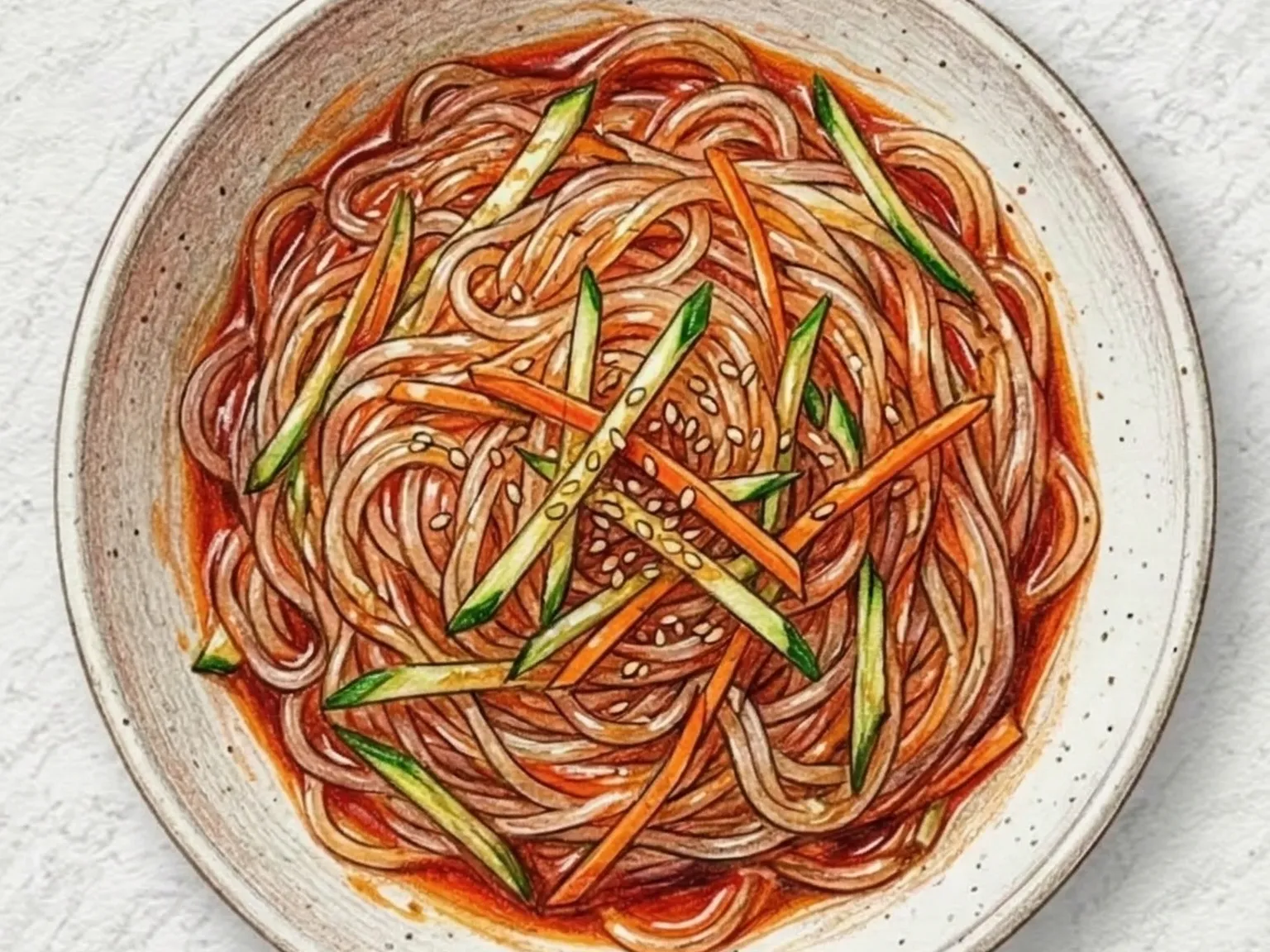
Bibim Dangmyeon (Spicy Glass Noodles)
Boil the noodles for 8 to 10 minutes, until they turn clear and no white core shows when one is bitten, then rinse under cold running water for at least 30 seconds, stopping when they no longer feel warm. For the dressing, mix 2 tbsp gochujang, 1 tbsp vinegar and 1 tbsp sugar until the sugar dissolves. Toss the noodles and vegetables in it for 2 to 3 minutes and finish with a small drizzle of sesame oil, which keeps the strands from clumping.
Quick answer
- Total time
- 25 min
- Level
- Easy
- Servings
- 2 servings
- Ingredients
- 7
About this dish
With only gochujang, vinegar and sugar in the dressing, this bunsik-shop noodle dish lives on the texture of the noodles.
Read more
A thorough cold rinse is what makes sweet potato glass noodles springy, because any warmth left after draining keeps them softening until they stick into a clump. The dressing keeps in the fridge, but the noodles should meet it only just before eating, or they soak it up and turn soft.
Ingredients
Instructions
- 1
Loosen 150 g sweet potato starch noodles before cooking so they separate more easily.
Bring a large pot of water to a strong boil, using enough water for the noodles to move freely and cook without sticking.
- 2
When the water is boiling hard, keep the heat at medium-high and add the noodles.
Cook for 8 to 10 minutes, stirring once or twice, until they turn clear and no white core remains when bitten.
- 3
Drain the cooked noodles immediately and rinse them under cold running water for at least 30 seconds.
Toss with your fingers as you rinse, and stop only when they no longer feel warm, which prevents over-softening.
- 4
Julienne 0.5 cucumber and 0.5 carrot into thin 5 cm strips so they mix evenly with the noodles.
If the cucumber is watery, squeeze it lightly before mixing to keep the dressing from becoming thin.
- 5
In a wide bowl, mix 2 tbsp gochujang, 1 tbsp vinegar, and 1 tbsp sugar until the sugar dissolves and the sauce looks smooth.
- 6
Add the noodles and vegetables to the dressing and toss thoroughly for 2 to 3 minutes until every strand is coated.
Finish with a small drizzle of sesame oil to prevent clumping, then serve immediately for the best chew.
Use-up ingredient planner
Turn these ingredients into two more meals
The overlap excludes basic seasonings. Open the next recipe and your selected dishes will stay with you.
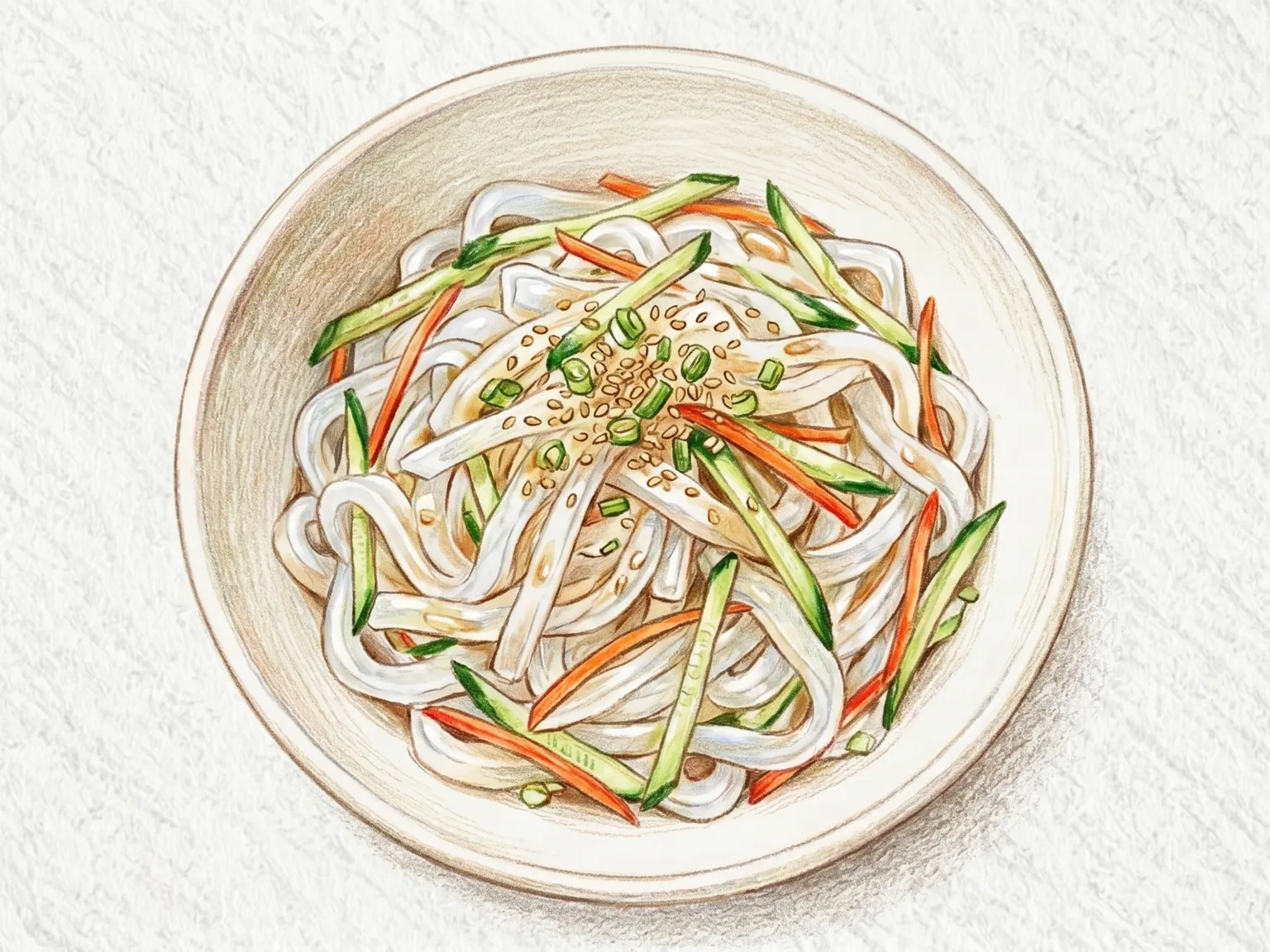
Cheongpo Muk Muchim
Cucumber, Carrot
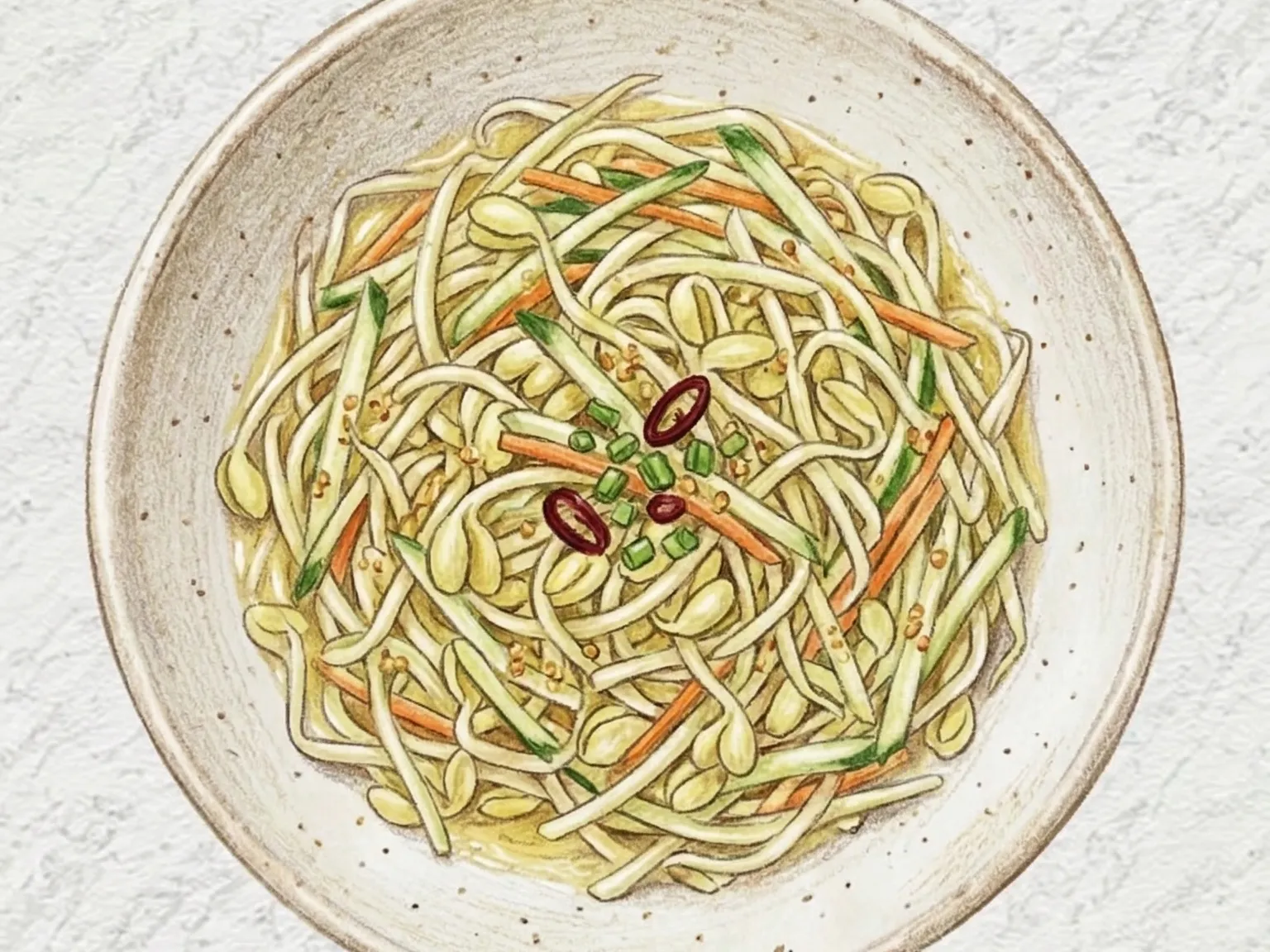
Korean Soybean Sprout Cold Salad
Cucumber, Carrot
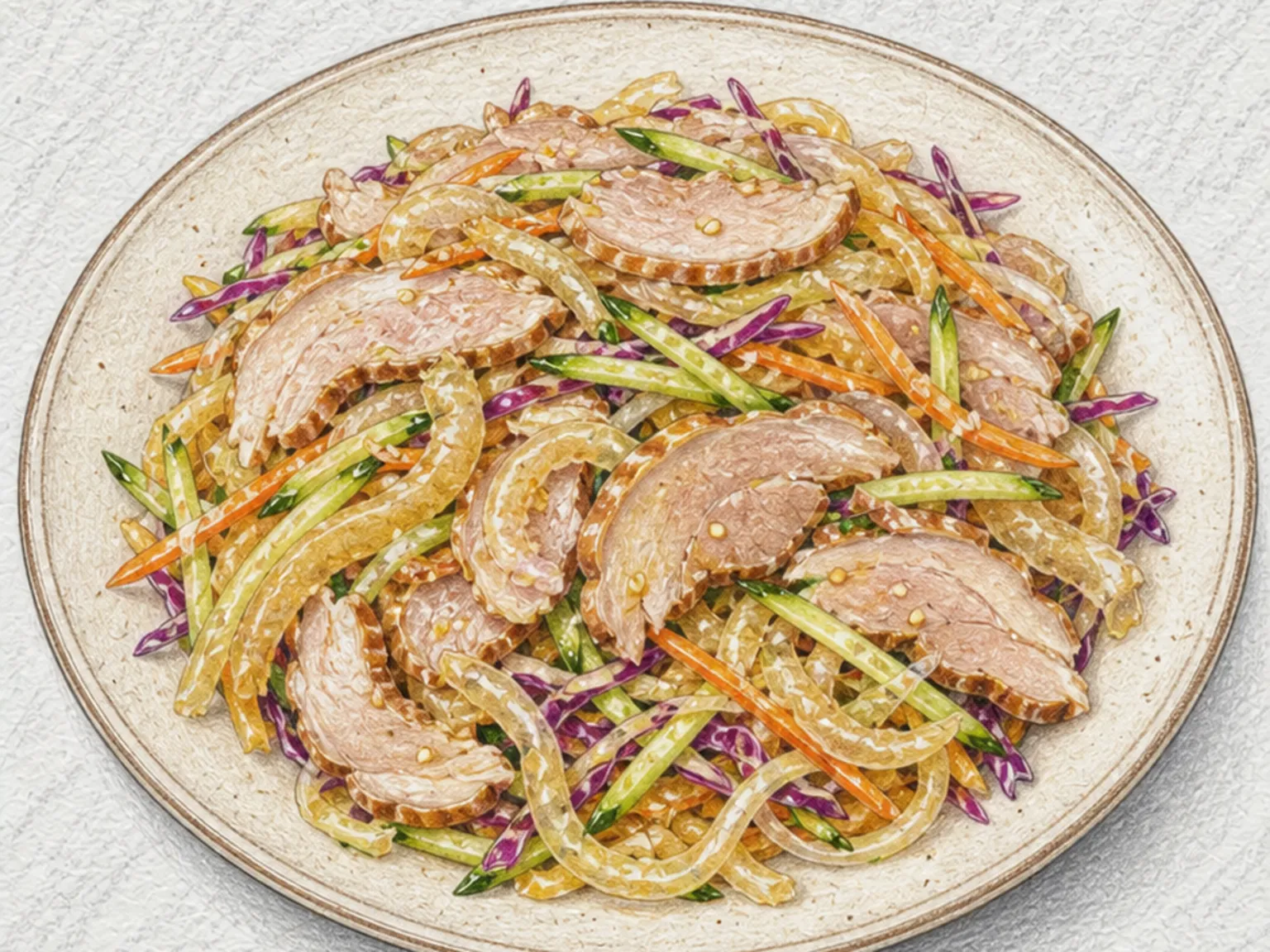
Chilled Mustard Pork Trotters
Cucumber, Carrot