Colcannon (Irish Mashed Potatoes with Cabbage and Butter)

Colcannon (Irish Mashed Potatoes with Cabbage and Butter)

Quick answer

Colcannon is a traditional Irish dish of hot mashed potatoes folded together with blanched shredded cabbage and chopped green onion, then brought to a creamy, pillowy con...

What makes this special

  • Mashing hot potatoes immediately after boiling prevents gumminess before folding in blanched cabbage with warm butter.
  • Mashing while still hot smooths the starch structure without gluey clumping
  • Warm milk and butter must be added hot to prevent starch from seizing into lumps
Total time
35 min
Level
Easy
Servings
4 servings
Ingredients
7
Calories
310 kcal
Protein
6 g

Key ingredients

potatoescabbagemilkbuttergreen onion

Core cooking flow

  1. 1 Peel 700 g potatoes and cut them into even pieces so they cook at the same pace.
  2. 2 Shred 220 g cabbage thinly and finely slice 40 g green onion.
  3. 3 Put 180 ml milk and 50 g butter in a small pot.

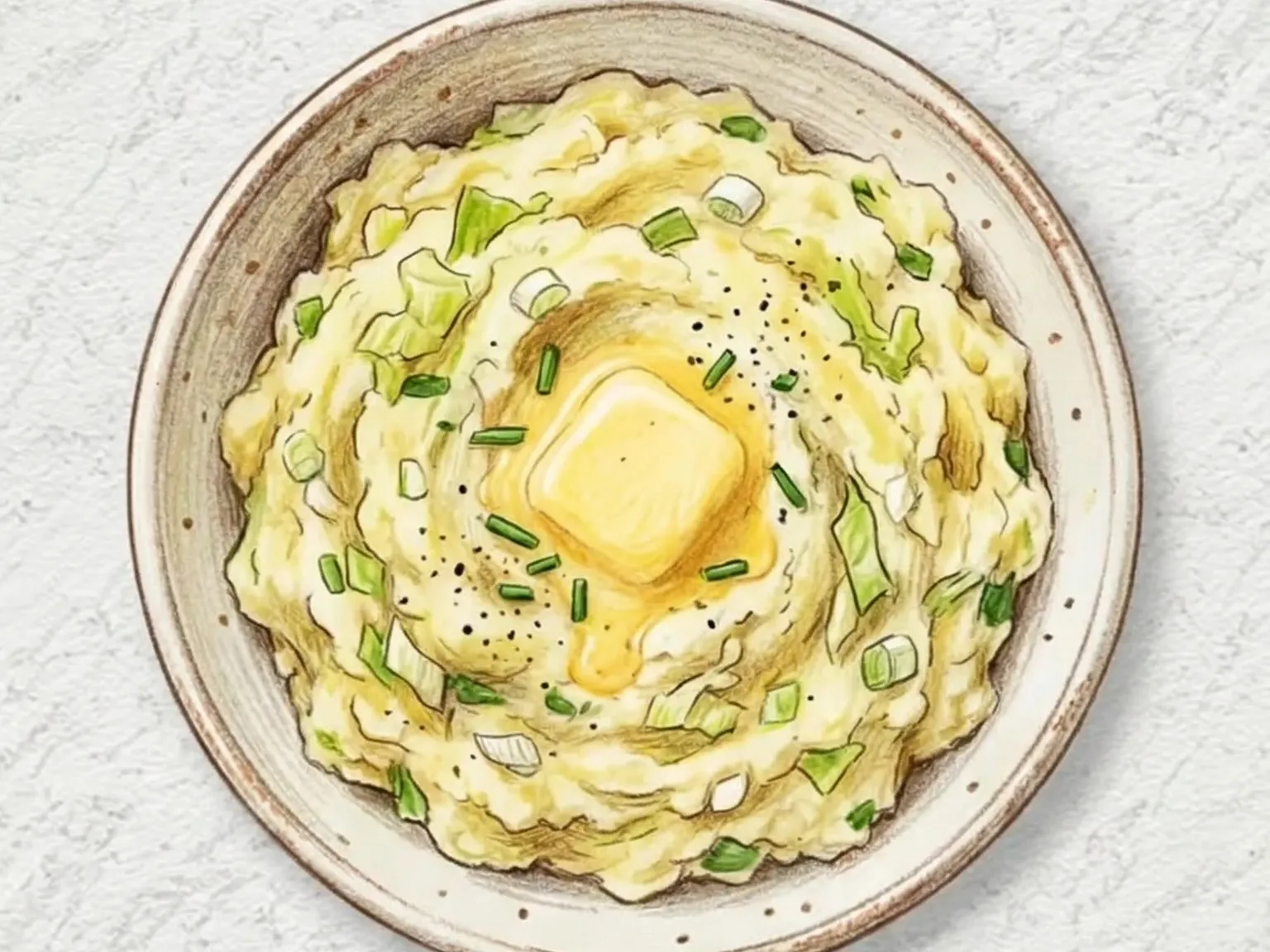
Colcannon is a traditional Irish dish of hot mashed potatoes folded together with blanched shredded cabbage and chopped green onion, then brought to a creamy, pillowy consistency with warmed milk and butter. Mashing the potatoes while they are still steaming hot is essential, because the starch granules release cleanly and evenly only at high temperature. Both the milk and butter must be heated before they go in, because cold dairy causes the starch to seize and turn the mash dense and gluey instead of light and smooth. Blanching the cabbage for three minutes in salted water leaves just enough resistance in each shred to contrast with the yielding potato. Green onion disperses a mild, fresh allium fragrance throughout the dish without overpowering it. A knob of butter placed on top just before serving melts into a shallow pool that deepens the richness of every spoonful. In Ireland, colcannon was traditionally eaten on Halloween, sometimes with a coin hidden inside the mash to bring good luck. Kale or spring onion can stand in for cabbage, and using a floury variety of potato produces the dish's characteristic light yet dense texture.

Prep 10min Cook 25min 4 servings

Instructions

Read the steps as a cooking flow: prep, heat, seasoning, doneness control, and finish.

6 steps
  1. 1
    Control

    Peel 700 g potatoes and cut them into even pieces so they cook at the same pace.

    Cover with water, bring to a boil, then cook over medium heat until a skewer or fork slides in easily.

  2. 2
    Season

    Shred 220 g cabbage thinly and finely slice 40 g green onion.

    Blanch the cabbage in boiling salted water for 3 minutes only, keeping a slight crunch instead of letting it turn limp.

  3. 3
    Control

    Put 180 ml milk and 50 g butter in a small pot.

    Warm over low heat just until the butter melts and steam rises, avoiding a hard boil that can make the dairy taste heavy.

  4. 4
    Step

    Drain the potatoes and mash them immediately while they are still very hot.

    Stop once the large lumps are gone, because working cooled potatoes too much can make the mash gluey.

  5. 5
    Step

    Fold the blanched cabbage and green onion through the hot mashed potatoes.

    Use broad, gentle motions so the green vegetables spread evenly without compacting the potatoes into a dense paste.

  6. 6
    Finish

    Add the warm milk and butter mixture a little at a time, stirring until the mash loosens to a creamy texture.

    Season with 1 tsp salt and 0.5 tsp black pepper, then finish with extra butter on top.

After the steps

Pick a recipe that fits this dish.

Continue with shared ingredients, meal pairings, or a similar method.

Recipes That Go Well With This

More Western →

Based on shared ingredients and meal pairing

Bubble and Squeak (Pan-Fried Mashed Potato and Cabbage Cake)
Shared ingredient: potatoes Western

Bubble and Squeak (Pan-Fried Mashed Potato and Cabbage Cake)

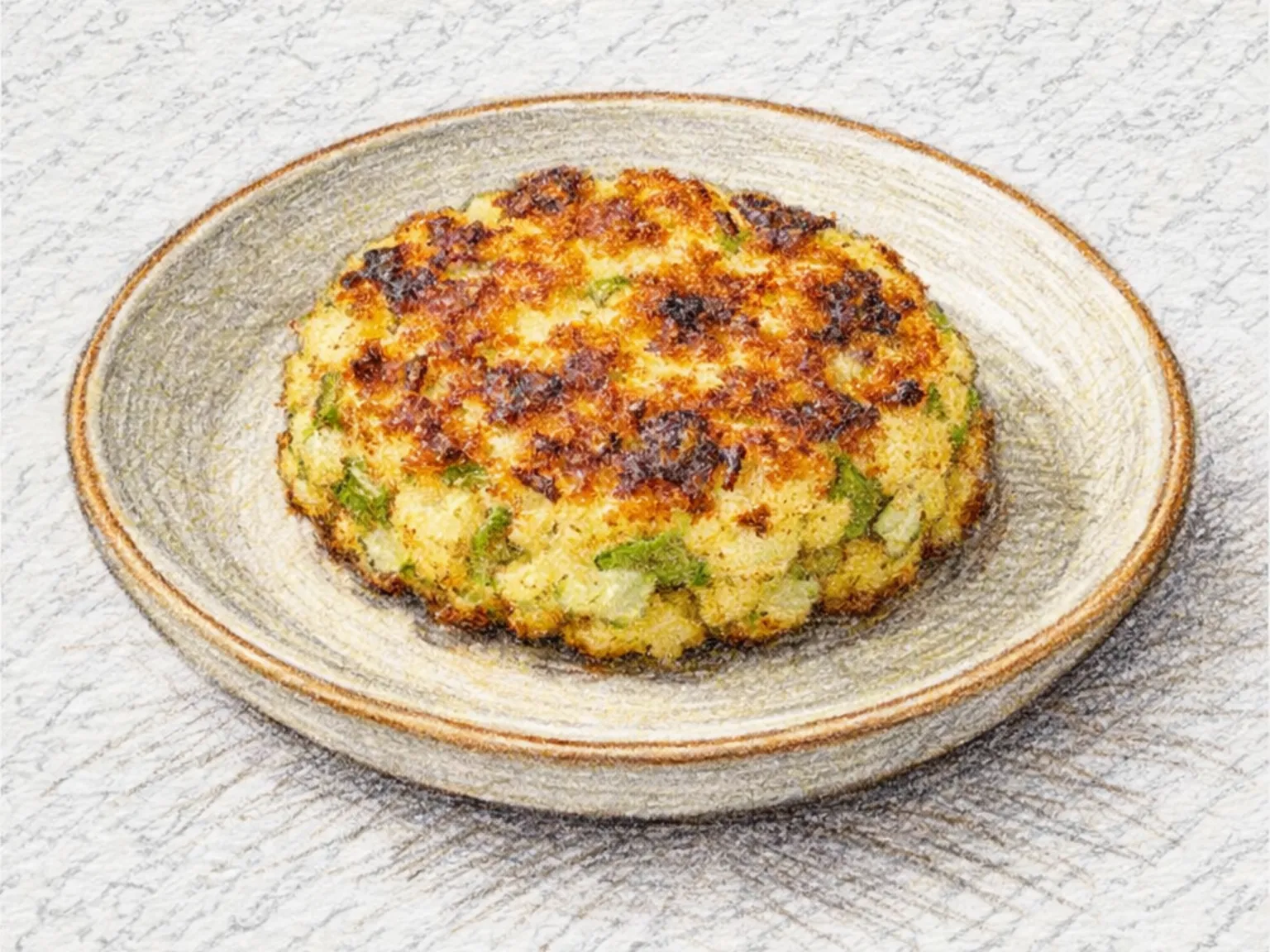
Bubble and squeak is a traditional British household dish made by combining mashed boiled potatoes with blanched, chopped cabbage, pressing the mixture flat in a well-oiled hot pan, and frying each side until a deep golden-brown crust forms across the entire surface. The name refers to the noise the dish makes during cooking - moisture from the cabbage hits the hot fat and sends up bubbles and a squeaking hiss. Frying diced onion in butter until soft and lightly caramelized before folding it into the potato-cabbage mixture adds a quiet sweetness that elevates the otherwise modest base ingredients considerably. Pressing the mixture firmly and evenly with a spatula throughout cooking is what creates the crust, and holding back the urge to move or flip it prematurely is the main technique. If the potatoes are particularly wet, a tablespoon or two of plain flour helps the mixture bind and hold its shape in the pan. The dish has been a fixture of British home cooking for generations, rooted in the tradition of using leftover Sunday roast vegetables the following day, and is commonly topped with a fried egg to make a complete one-plate meal.

Dauphinoise Potatoes (Creamy Garlic Potato Gratin)
Shared ingredient: potatoes Western

Dauphinoise Potatoes (Creamy Garlic Potato Gratin)

Dauphinoise potatoes are a French gratin made by layering uniformly thin potato slices - cut to two millimeters - in a buttered baking dish, with a warm mixture of heavy cream, milk, minced garlic, and salt poured between each layer. Rinsing and drying the sliced potatoes removes excess surface starch for a cleaner result. Grated Gruyère cheese goes on top before the dish bakes at 170 degrees Celsius for fifty-five to sixty minutes, during which the potatoes absorb the cream and turn meltingly tender beneath a golden crust. Resting the gratin for ten minutes after baking lets the layers firm up enough to hold their shape when sliced. Keeping the potato thickness consistent ensures every slice cooks at the same rate.

Yam Woon Sen (Thai Glass Noodle Salad with Shrimp)
Serve together Salads

Yam Woon Sen (Thai Glass Noodle Salad with Shrimp)

Yam woon sen is a Thai glass noodle salad where soaked and briefly boiled mung bean noodles are tossed with blanched shrimp, sliced red onion, diagonally cut celery, and chopped cilantro in a dressing of lime juice, fish sauce, and palm sugar. The noodles are soaked in warm water for ten minutes, then boiled for just two minutes to maintain their chewy, springy texture - rinsing in cold water immediately after removes surface starch and prevents clumping. The shrimp need only a two-minute blanch to reach a firm, bouncy doneness; any longer and they turn rubbery. The dressing builds three layers simultaneously - fish sauce for salty depth, lime juice for bright acidity, and palm sugar for a caramel sweetness - creating the complex balance characteristic of Thai cuisine. Cilantro provides a fresh, herbal finish.

Crispy Fan-Cut Potatoes (Garlic Butter Accordion Bake)
Similar recipe Western

Crispy Fan-Cut Potatoes (Garlic Butter Accordion Bake)

Hasselback potatoes are a Swedish dish where potatoes are sliced thinly at close intervals - leaving the bottom intact - then brushed with garlic butter and roasted until the edges fan out and crisp. Melted butter mixed with minced garlic, fresh thyme, and olive oil is brushed over and between the slices before the potatoes go into a 200-degree oven for forty minutes. Midway through baking, the potatoes are removed so the slices can be gently fanned open and given a second coat of butter. Breadcrumbs and Parmesan cheese scattered on top for the final fifteen minutes create a crunchy golden crust that contrasts with the fluffy interior. Placing chopsticks on either side of the potato while slicing acts as a guide to prevent cutting all the way through.

Serve with this

Candied Sweet Potato
Desserts Easy

Candied Sweet Potato

Goguma mattang is a Korean candied sweet potato snack made by cutting peeled sweet potatoes into large chunks and deep-frying them at 170 degrees Celsius until the interior turns floury and soft. A syrup of sugar, corn syrup, water, and a measured splash of soy sauce is cooked separately until large, foamy bubbles form - the visual cue for adding the fried sweet potatoes. Everything must be coated within thirty seconds to lock in a thin, glass-like caramel shell that crisps and turns translucent as it cools. The soy sauce shifts the flavor from purely sweet to a rounded, slightly savory depth. Pre-draining surface moisture from the cut sweet potatoes reduces oil splatter during frying and helps the syrup grip the pieces evenly. Black sesame seeds are scattered over the finished pieces for a toasted, nutty note, and each piece is spread individually on parchment paper while still warm so they cool without sticking together.

🏠 Everyday 🧒 Kid-Friendly
Prep 15min Cook 20min 4 servings
Ssamjang Chicken Spinach Orecchiette (Ssamjang Chicken Pasta)
Pasta Easy

Ssamjang Chicken Spinach Orecchiette (Ssamjang Chicken Pasta)

Ssamjang chicken spinach orecchiette dissolves ssamjang directly in milk rather than frying it first, which softens the fermented paste's sharp edges into a smooth, savory cream sauce without bitterness. Boneless chicken thigh is seared until the skin turns golden and fat renders out, then combined with sauteed onion and garlic that build a sweet aromatic base underneath the fermented sauce. Spinach goes in at the very end to preserve its bright color and slight bite, and the concave, ear-shaped form of orecchiette cups the thick sauce inside each piece so every bite carries a full measure of flavor. Parmesan and black pepper are folded in off the heat so the cheese melts gradually without breaking. Reserving a small amount of pasta cooking water to loosen the sauce at the end helps achieve the right consistency.

🏠 Everyday 🍺 Bar Snacks
Prep 18min Cook 17min 2 servings
Korean Spicy Stir-fried Cartilage
Drinks Medium

Korean Spicy Stir-fried Cartilage

Odolppyeo-bokkeum is a fiery Korean stir-fry of chicken cartilage marinated in a sauce of gochujang, gochugaru, soy sauce, garlic, and sugar, then cooked at maximum heat for a short burst. The cartilage delivers a distinctive crunch-then-chew that no other cut can replicate, and thorough drying with paper towels before marinating ensures the sauce clings directly to the surface. After ten minutes of marinating, the cartilage hits a ripping-hot oiled pan to pick up smoky wok char, followed by onion, green onion, and hot green chilies that are tossed until all moisture evaporates and the glaze turns glossy. Keeping the total stir-fry time brief is critical, since prolonged cooking turns the cartilage from pleasantly crunchy to unpleasantly tough.

🍺 Bar Snacks 🌙 Late Night
Prep 15min Cook 12min 2 servings

Similar recipes

Irish Stew
Western Easy

Irish Stew

Irish stew is a traditional dish where chunks of lamb shoulder are slowly simmered with potatoes, onion, and carrot in beef stock seasoned with nothing more than thyme, salt, and pepper. Browning the lamb lightly and sauteing the onion and carrot first builds a foundation of Maillard flavor and natural sweetness in the broth. Adding potatoes and stock, then cooking on low heat for at least ninety minutes allows the connective tissue in the lamb to break down into tenderness, while some of the potato pieces dissolve into the liquid and thicken it naturally. The restraint in seasoning is the point - with only thyme as an aromatic, the deep flavors of the lamb and root vegetables define the stew entirely on their own.

🧒 Kid-Friendly 🎉 Special Occasion
Prep 20min Cook 90min 4 servings
Korean Spicy Gochujang Potatoes
Stir-fry Easy

Korean Spicy Gochujang Potatoes

Gamja gochujang bokkeum is a simple Korean banchan of cubed potatoes stir-fried and simmered in a gochujang-based sauce until each piece is coated in a glossy, spicy-sweet glaze. Soaking the potatoes in cold water before cooking draws out excess starch, which prevents sticking and allows the sauce to adhere evenly across the surface rather than pooling at the bottom of the pan. The balance of gochujang heat and sugar sweetness is the flavor backbone, and the sauce is considered ready when it has reduced enough to form a shiny film on the potatoes - a visual cue that means the sugars have caramelized slightly and the flavors have concentrated. Because the sauce contains no additional liquid, it clings deeply to each cube rather than sitting separately, delivering full seasoning in every bite. This is a reliable everyday banchan that takes around twenty-five minutes with pantry staples and appeals to a wide range of palates, including children who find the sweetness more prominent than the heat.

🏠 Everyday 🌙 Late Night
Prep 10min Cook 15min 2 servings
Korean Soy Steamed Potatoes
Steamed Easy

Korean Soy Steamed Potatoes

Gamja-jjim is a Korean braised potato banchan made by simmering potato pieces in a sauce of soy sauce, sugar, and minced garlic until the liquid reduces to a thick, glossy glaze. As the sauce concentrates, it coats every cut surface of the potato with a lacquered sheen while the seasoning penetrates through to the center, so the flavor is consistent from the outside in. The sugar caramelizes slightly during the final minutes of reduction, adding a faint toffee-like sweetness to the soy's deeper, saltier notes. Minced garlic breaks down in the heat and melds into the sauce, providing an umami backbone that rounds out the simpler flavors. Finishing with sesame oil and a generous scatter of sliced chives introduces a toasted, nutty aroma and a fresh herbal brightness. The potato itself holds its shape but is cooked through to a fluffy, yielding interior beneath the sticky exterior. Simple to make and requiring few ingredients, it is the kind of side dish that disappears from the table without much fanfare, pairing effortlessly with a bowl of rice.

🏠 Everyday 🧒 Kid-Friendly
Prep 12min Cook 25min 2 servings

Tips

Use warm milk to keep mash smooth.
A final knob of butter boosts flavor.

Nutrition (per serving)

Calories
310
kcal
Protein
6
g
Carbs
38
g
Fat
15
g