Maple Bacon Cornbread Muffins
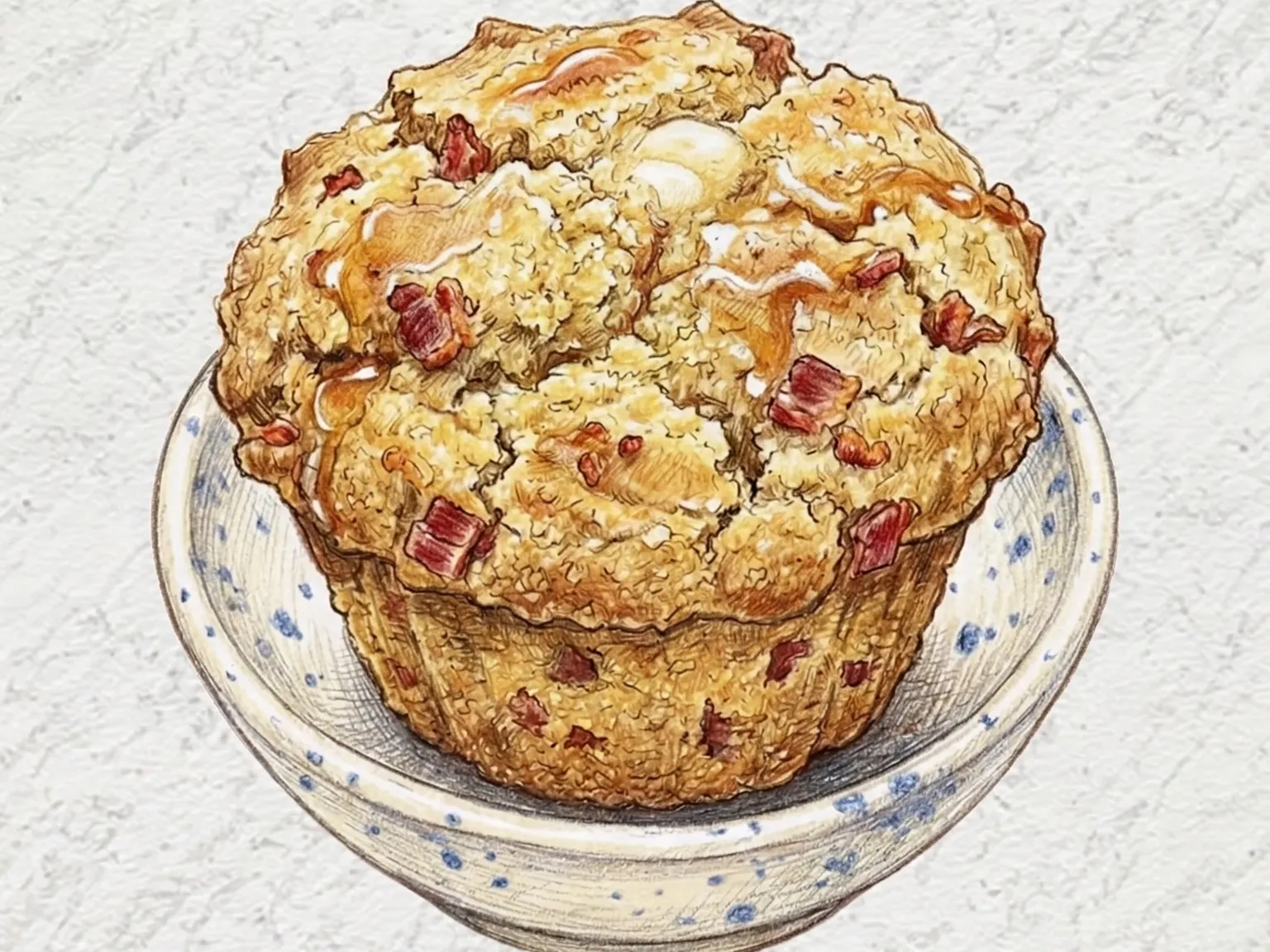
Cornmeal gives this American muffin a gritty, toasty crumb that sets it apart from all-flour versions, while crisp bacon bits and maple syrup create a pronounced sweet-salty dynamic in every bite. The batter combines cornmeal and all-purpose flour with buttermilk, whose acidity reacts with baking powder for a good rise and also keeps the crumb moist despite the cornmeal's tendency to dry out. Bacon is cooked until shattering-crisp, drained, crumbled, and folded into the batter just before portioning. Maple syrup contributes not only sweetness but also a woody, caramel-edged flavor that complements the smokiness of the bacon. Mixing the wet and dry ingredients just until the flour disappears is essential; over-stirring toughens the muffin. At 200 degrees Celsius, the muffins dome and crack across the top within 18 to 20 minutes, signaling that the center has set. Served warm with butter, the muffin becomes a one-piece brunch that needs nothing alongside it.
Adjust Servings
Instructions
- 1
Preheat oven to 200C and line a muffin pan.
- 2
Cook bacon until crisp, crumble, and let cool.
- 3
Whisk dry ingredients; in another bowl whisk egg, buttermilk, melted butter, and maple syrup.
- 4
Fold wet into dry just until no dry spots remain.
- 5
Fold in bacon and fill cups to about 80%.
- 6
Bake 18-20 minutes, then cool on rack for 5 minutes.
As an Amazon Associate, we may earn from qualifying purchases.
Tips
Nutrition (per serving)
More Recipes

Cornbread
Cornbread is a Southern American quick bread made from cornmeal, flour, sugar, baking powder, milk, egg, and melted butter, baked until golden. Mixing the wet and dry ingredients separately and combining them with minimal stirring prevents overdeveloping gluten, which keeps the crumb tender and moist rather than tough. Baking at 200 degrees Celsius for twenty-two to twenty-five minutes produces a crisp exterior with a lightly sweet, nutty interior characteristic of cornmeal. The bread pairs well with stews, chili, and soups - its coarse grain absorbs broth and sauce effectively.

Flaky Oven Biscuits
Buttermilk biscuits are built on the tension between cold butter and high oven heat. Cubes of chilled butter are cut into flour until pea-sized pieces remain, and the dough is brought together quickly with buttermilk - just enough mixing to bind, no more. In the oven, the butter melts and releases steam, forcing the dough apart into flaky, irregular layers. The exterior bakes to a golden, slightly crisp shell while the interior stays soft and crumbly. Buttermilk provides a faint tanginess that sharpens the overall flavor and reacts with baking soda to give the biscuits additional lift. Overworking the dough is the most common mistake, as it develops gluten and produces a tough, bread-like result instead of the tender, pull-apart texture that defines a good biscuit. Split while still warm and spread with butter and jam, they are a cornerstone of American Southern breakfast.

Doenjang Maple Pull-Apart Bread
Enriched yeast dough is rolled thin, spread with a mixture of doenjang and maple syrup, then stacked and packed into a loaf pan so that each layer bakes into a tearable, fluffy sheet loaded with flavor. The doenjang contributes a fermented saltiness that deepens the bread's own yeast character, while the maple syrup caramelizes during baking and pools at the bottom of the pan, forming a sticky glaze that coats the loaf when inverted. Butter in the dough provides a rich, tender crumb that pulls apart in long, soft strands. The interplay between salty fermented paste and sweet caramel sits in a zone that is neither strictly dessert nor savory bread, making it versatile enough to accompany a meal or stand on its own as an afternoon snack. Eating it warm, when the layers separate most easily, is the best way to experience the full range of textures.

Chestnut Sweet Potato Muffins
Chestnut sweet potato muffins combine two staple Korean autumn ingredients into a baked format. Steamed and mashed sweet potato mixed directly into the batter lends natural sweetness and moisture that keeps the crumb soft for days. Diced roasted chestnuts folded throughout provide a starchy, crumbly contrast to the tender muffin around them. A touch of cinnamon amplifies the sweet potato's warmth without masking it, and a streusel topping adds a crunchy layer that breaks under the teeth before giving way to the soft interior. The sweet potato acts as a built-in moisturizer, preventing the common muffin problem of drying out after cooling. When made with freshly harvested ingredients in autumn, the natural sugars are concentrated enough to reduce added sweetener.

Brown Sugar Cinnamon Rolls
Brown sugar replaces white sugar in the filling of these cinnamon rolls, adding a molasses-like depth that elevates the pastry beyond the standard version. The yeast dough, enriched with milk, egg, and butter, rises into a soft and elastic sheet that rolls easily around the dark sugar and cinnamon filling. During baking, the brown sugar melts into a sticky caramel that clings to the spiraled layers. The resulting rolls are darker in color and richer in flavor, with a mineral sweetness that white sugar cannot provide. Cinnamon warmth permeates every layer from edge to center. A cream cheese glaze drizzled over the hot rolls introduces a tangy counterpoint that prevents the sweetness from becoming one-dimensional.

Club Sandwich
A club sandwich stacks three slices of buttered, golden-toasted bread with layers of sliced chicken breast, crisp bacon, fresh lettuce, and tomato in a double-decker arrangement. The salty crunch of bacon meets the lean protein of chicken, while juicy tomato slices and crisp lettuce add freshness and texture contrast. Mayonnaise spread on each bread layer acts as a binding agent that smooths the bite and balances the savory components. Drying the lettuce thoroughly is essential to prevent the toast from softening. Securing with picks and cutting diagonally produces clean cross-section layers.