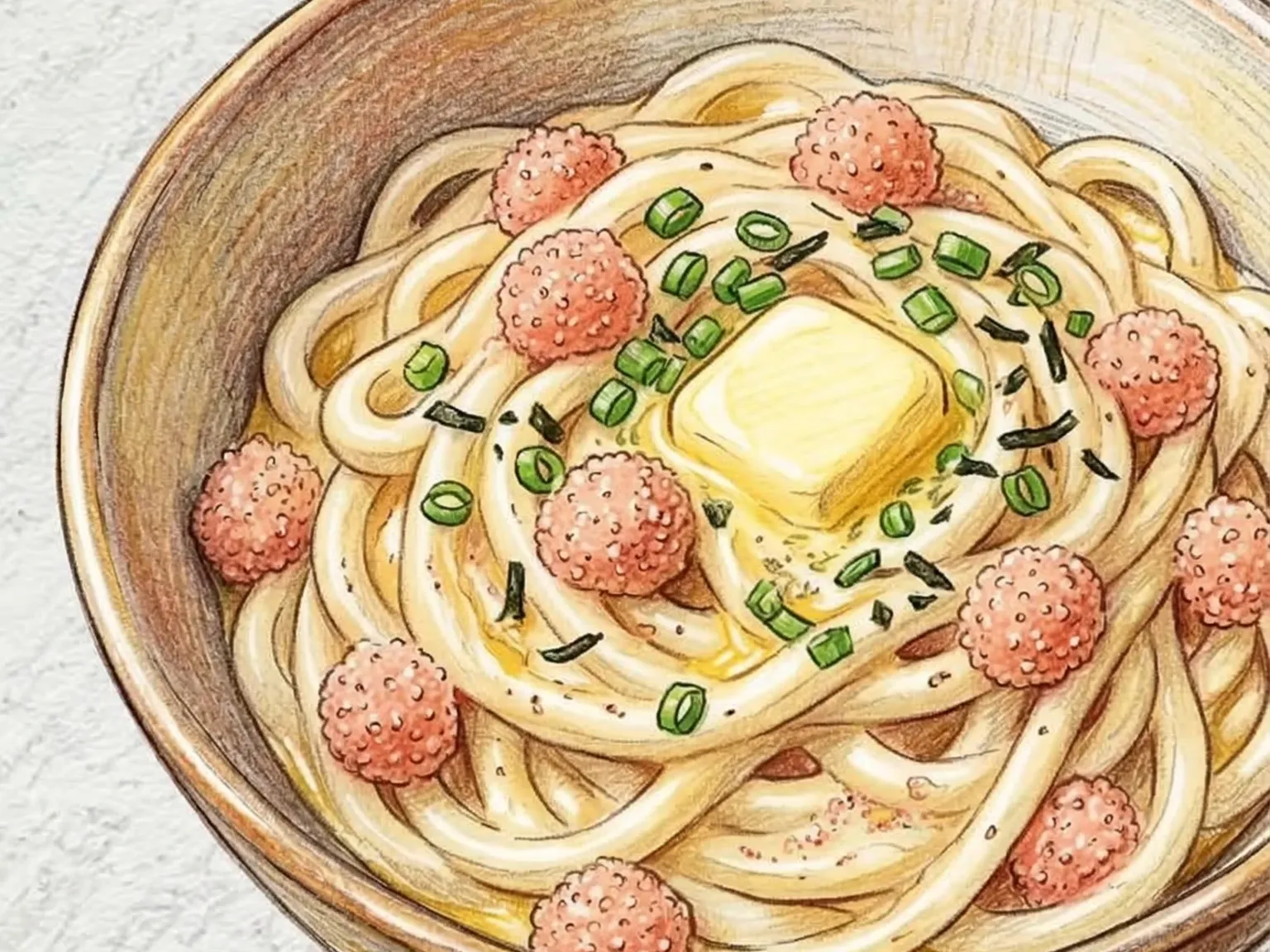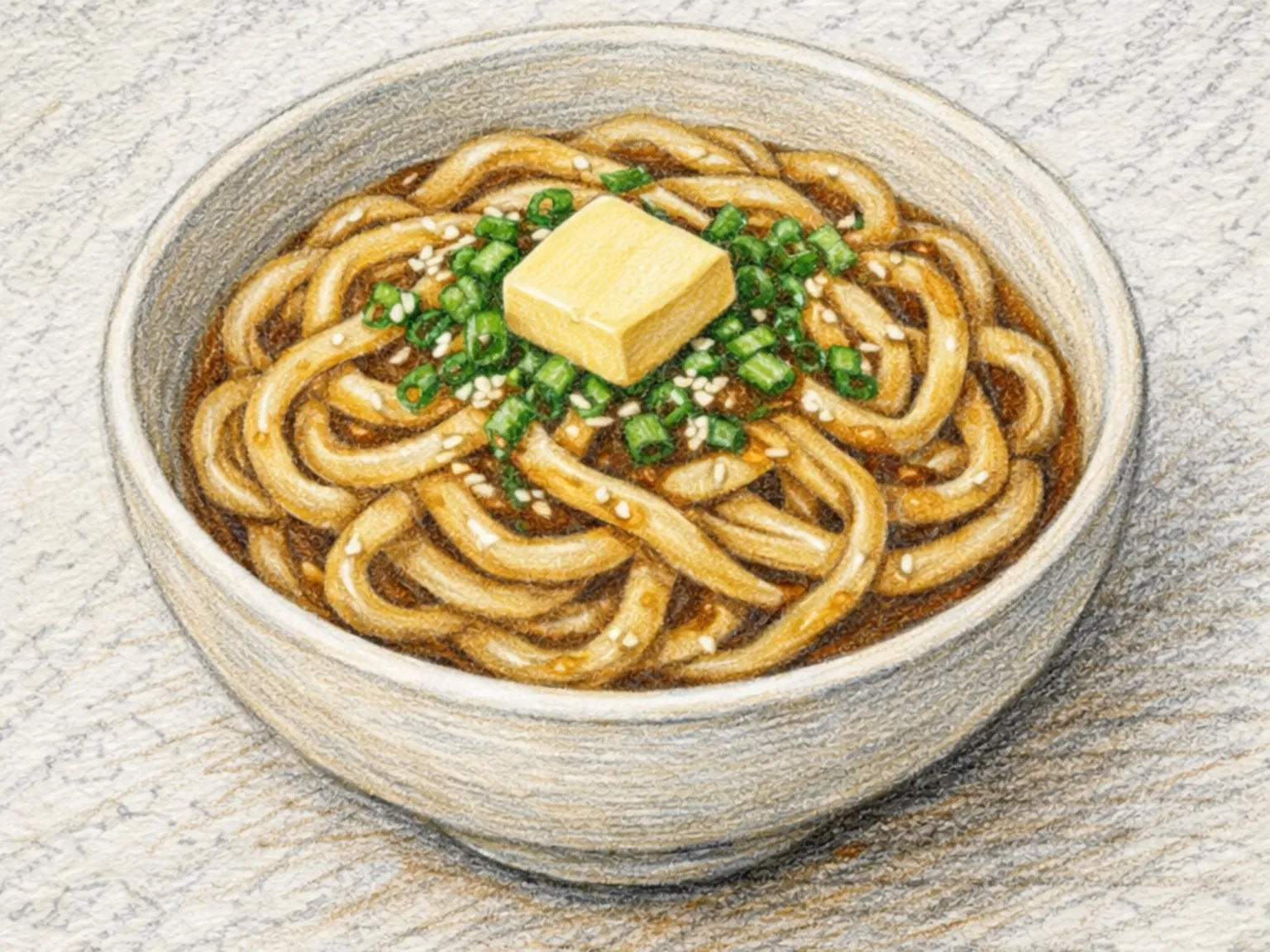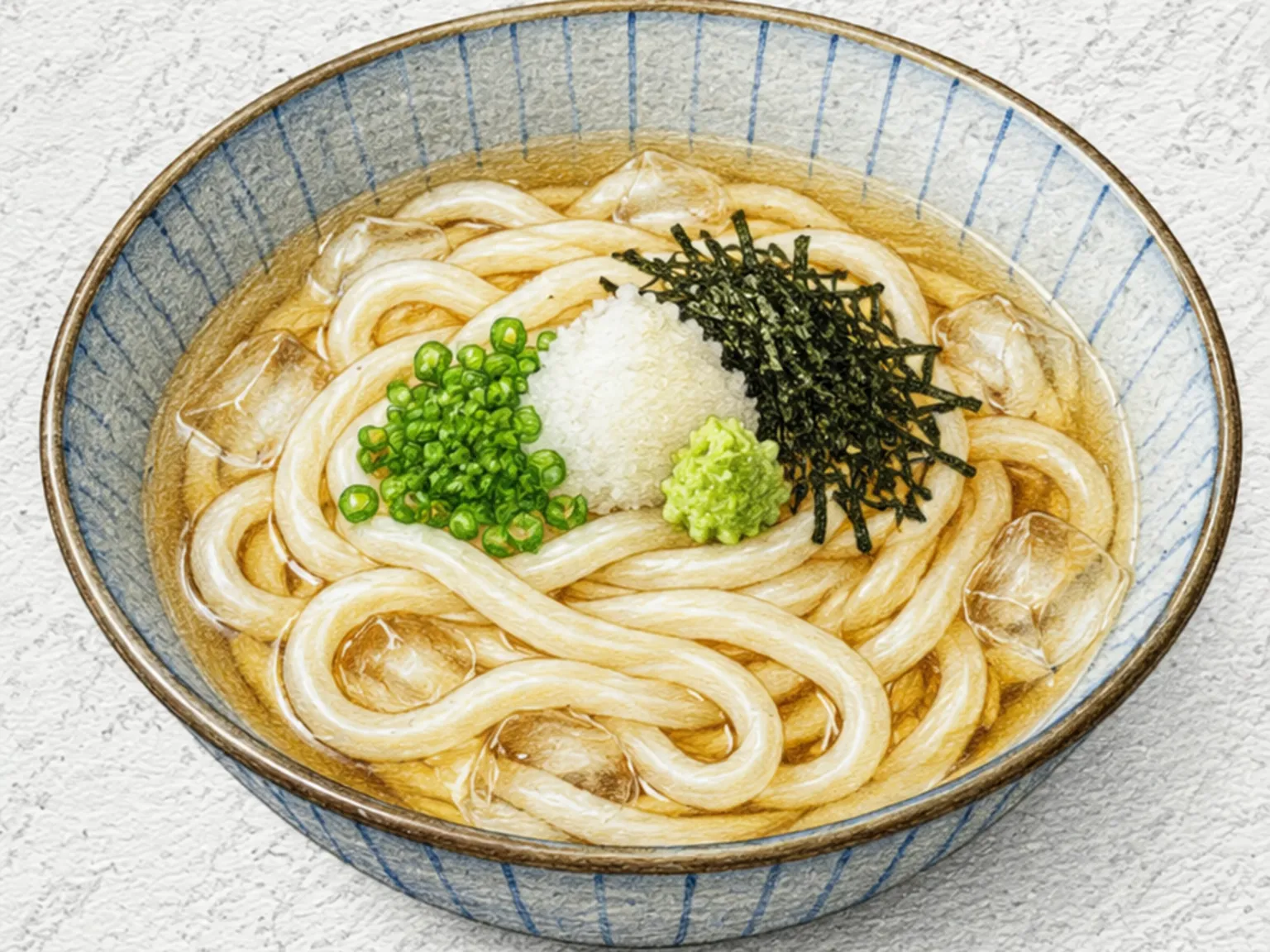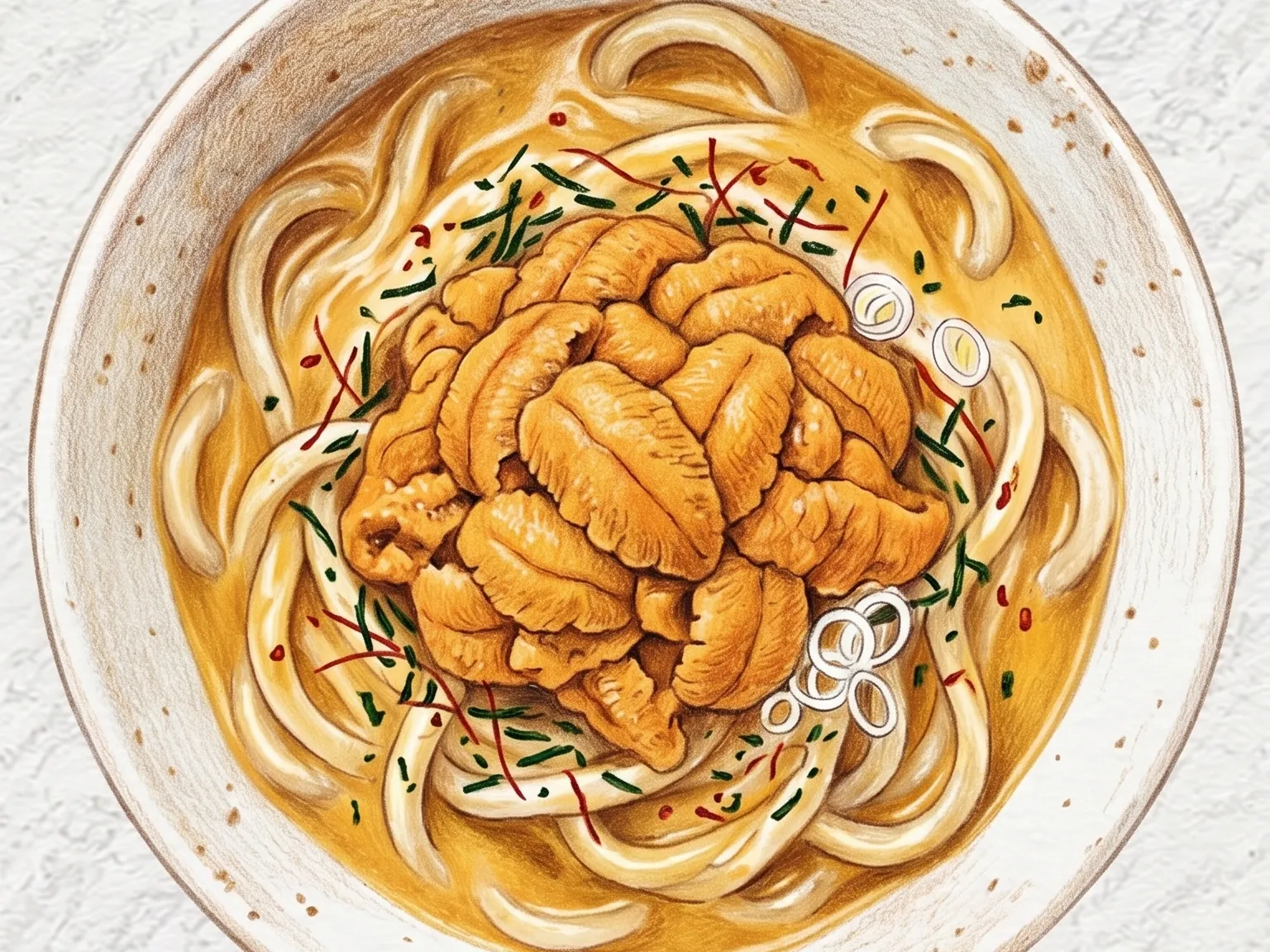
Rich Sea Urchin (Uni) Cream Udon
Quick answer
A luxurious noodle dish combining the sea aroma of fresh uni and a smooth cream sauce.
- Rich Sea Urchin Cream Udon blends fresh uni into a smooth cream sauce for a briny, oceanic flavor.
- Half the uni melted into cream builds an oceanic, briny sauce base
Key ingredients
Core cooking flow
- 1 Boil udon noodles, rinse in cold water, and drain well.
- 2 Heat a little oil in a pan and sauté minced garlic and pollock roe.
- 3 Pour in heavy cream and season with tsuyu once it starts to boil.
A luxurious noodle dish combining the sea aroma of fresh uni and a smooth cream sauce.
What Makes This Special
- Rich Sea Urchin Cream Udon blends fresh uni into a smooth cream sauce for a briny, oceanic flavor.
- Half the uni melted into cream builds an oceanic, briny sauce base
- Mentaiko replaces salt while adding a second layer of umami
- Reserved raw uni placed last keeps its delicate, sweet sea flavor
Instructions
- 1
Boil udon noodles, rinse in cold water, and drain well.
- 2
Heat a little oil in a pan and sauté minced garlic and pollock roe.
- 3
Pour in heavy cream and season with tsuyu once it starts to boil.
- 4
Add half of the uni to the sauce and gently break it down with a spatula to thicken.
- 5
Add the boiled udon noodles to the sauce and toss for 1-2 minutes.
- 6
Serve in a bowl and top with the remaining uni, chives, and seaweed strips.
Tips
Nutrition (per serving)
Recipes to Cook Together
More Asian →Serve with this
Roasted Kabocha Miso Nut Salad
Kabocha squash is sliced into half-moons and roasted in a hot oven until the cut surfaces caramelize and the flesh turns chestnut-soft and dry in the best possible way. The dressing combines white miso, rice vinegar, and maple syrup into a mixture where salt, acid, and a restrained sweetness reinforce each other and amplify the roasted squash underneath. Arugula provides the peppery, slightly bitter base that keeps the salad from tipping too sweet. Chickpeas add lean protein and a firm, satisfying chew that holds up against the tender squash. Walnuts, crushed roughly rather than chopped fine, contribute crunch and a deep, roasted nuttiness that layers well with the soft squash in each forkful. The contrast between textures, tender squash against resistant walnut, is what makes this salad interesting across every bite. Autumn kabocha, at the peak of its natural sugar content, delivers the most pronounced sweetness, and the dish is filling enough to stand as a vegetarian main course with nothing else alongside it. If using refrigerated squash, adjust oven time and temperature to ensure even caramelization.
Japanese Napolitan Spaghetti
Napolitan spaghetti is a Japanese yoshoku pasta stir-fried with ketchup, sausage, onion, and green bell pepper that traces its origins to postwar Japan, when imported ingredients were scarce and cooks adapted Western techniques with locally available pantry staples. Cooking the ketchup in the pan first drives off moisture and concentrates its tomato sweetness, transforming it from a condiment into a sauce base with genuine depth. Worcestershire sauce adds a layer of fermented complexity that ketchup alone cannot provide. The sausage goes in first to render its fat and build flavor, followed by onion and pepper stir-fried quickly over high heat to retain their texture. Spaghetti cooked al dente with a quarter cup of pasta water reserved helps the sauce cling to the noodles when tossed together in the pan. A knob of butter stirred in at the end rounds off the ketchup's acidity and gives the finished dish a glossy, sweet-savory character that has made napolitan a beloved nostalgic dish in Japanese home cooking.
Japanese Rice Soup Porridge
Zosui is a Japanese rice porridge made by simmering leftover cooked rice in dashi broth and finishing with beaten egg. The broth soaks into the rice grains, giving the porridge a deep umami base, while the egg sets into soft ribbons throughout. Enoki mushrooms add thin, delicate strands of texture, and chopped scallions contribute a fresh finish. Seasoning is kept minimal with just soy sauce and salt to let the broth flavor come forward. It is often served as the closing dish after a nabe hot pot, using the remaining broth as the cooking liquid.
ACV Honey Ginger Tea
A warm healthy tea that maximizes the benefits of ACV for digestion and blood sugar control.
Similar recipes
Mentaiko Yuzu Cream Udon
Myeongran yuja cream udon is a Japanese-style noodle dish that features a sauce made from a combination of salted pollock roe and yuzu marmalade. The base of the liquid consists of heavy cream and milk, which are enriched with butter to create a dense and smooth texture. The preparation begins by melting butter in a pan and sauteing minced garlic until the aroma is released. Once the garlic is fragrant, the cream and milk are poured in. This mixture needs to simmer over low heat for approximately two to three minutes until it thickens enough to coat the back of a spoon. Instead of adding the yuzu marmalade all at once, the cook incorporates it in small amounts. This gradual process allows for precise control over the citrus acidity so that it complements rather than overshadows the richness of the heavy cream. After removing the pan from the heat, two-thirds of the salted pollock roe is stirred in. The residual warmth of the sauce is sufficient to gently cook these eggs, ensuring they remain tender. The remaining third of the roe is reserved to be placed raw on top of the finished bowl, providing a distinct briny flavor and a grainy texture in every bite. To finish the dish, freshly cracked black pepper is added for a subtle sharpness, and shredded nori is scattered over the top to provide a roasted, oceanic scent that works well with the yuzu fragrance. The thick udon noodles provide a substantial chew that allows them to carry the heavy sauce and stand up to the combination of salty, creamy, and acidic elements without the flavors becoming lost.
Japanese Shrimp with Mayo
Ebi mayo was invented by Hong Kong-born chef Chou Yuanji while working in Japan, fusing Cantonese prawn cookery with the rich creaminess of Japanese mayonnaise. Shrimp are coated in cornstarch and deep-fried until the shell crackles, then tossed in a sauce of mayonnaise, condensed milk, and lemon juice. The condensed milk tempers the mayo's tang and adds a gentle sweetness. Japanese Kewpie mayonnaise, made with egg yolks only rather than whole eggs, is denser and more umami-rich than Western varieties, and this difference is what gives ebi mayo sauce its distinctive body. The crispy starch coating absorbs the thick sauce on the surface while the shrimp beneath stays springy, creating a two-layered texture -- creamy on first contact, then bouncy when the teeth reach the center. Ebi mayo is a staple of izakaya menus and Chinese restaurants in Japan, and has crossed into convenience-store bento boxes and onigiri fillings as one of the country's most ubiquitous fusion flavors.
Japanese Stir-Fried Udon
Yaki udon is a Japanese stir-fried noodle dish where thick udon noodles are tossed in a soy-based sauce over high heat with sliced pork or seafood and vegetables such as cabbage, carrot, and scallion. The high heat gives the noodles lightly charred edges while keeping their chewy center intact. Bonito flakes (katsuobushi) are often scattered on top just before serving, where they wave from the residual heat. The recipe takes about 25 minutes and depends on maintaining strong heat throughout the stir-fry to avoid steaming the noodles.
Sapporo Miso Ramen (Hokkaido-Style Rich Miso Broth Ramen with Pork)
Sapporo miso ramen was born in Hokkaido's capital as a way to warm up against brutal northern winters, and everything about the bowl reflects that purpose. The broth starts with chicken stock fortified with a generous amount of miso paste, giving it a thick, opaque body and a deep fermented savoriness. Ground pork, cabbage, and bean sprouts are stir-fried in a wok before being added to the broth, which picks up smoky wok flavor in the process. Sweet corn kernels and a pat of butter melt into the surface, adding richness that feels earned rather than excessive. The noodles are thick and curly, engineered to trap the heavy broth in every coil. Garlic and chili oil variations are common in Sapporo's ramen shops.
Kimchi Stir-Fried Udon (Pork Belly Kimchi Wok-Fried Noodles)
Kimchi udon stir-fry is a Korean-Japanese fusion noodle dish that brings together paper-thin pork belly, aged kimchi, and thick udon noodles over intense, unbroken high heat. The pork belly goes into the pan first, searing until the edges crisp and enough fat renders out to carry the aromatics that follow. Onion and green onion go in next to build fragrance, and kimchi is added last among the aromatics and stir-fried hard until every drop of its moisture has evaporated and the flavor has concentrated into the solids. A sauce of gochujang, soy sauce, and sugar is poured over, and blanched udon noodles are tossed in and moved constantly so the coating reaches every noodle strand. Dropping the heat at any point causes the udon to soften and lose its bounce, so full high heat from start to finish is essential. A spoonful of kimchi juice added mid-cook deepens the umami without making the sauce watery, and a small knob of butter stirred in just before plating rounds the sharp edges of the seasoning. The more fermented and sour the kimchi, the more complex the finished noodle becomes.
Cold Udon (Chilled Noodles with Mentsuyu Dipping Broth)
Naeng udon is a Japanese cold noodle dish where thick udon is cooked, drained, and then cooled aggressively in ice water before being served in chilled mentsuyu broth. The broth is prepared by diluting concentrated mentsuyu with cold water at a ratio of one to two, then refrigerating it until well chilled, which produces a clean liquid dense with soy-based umami. Cooling the noodles completely in ice water is not optional: the cold firms the starch back up, restoring the springy, slightly resistant chew that defines good udon. Freshly grated daikon stirred into the broth contributes a mild peppery heat and a cooling edge that lightens the overall flavor. Thinly sliced scallion adds a bright green freshness, and a sheet of nori brings oceanic depth to what might otherwise be a simple dipping liquid. A small amount of wasabi dissolved into the broth delivers a sharp nasal sting that contrasts directly with the cold temperature, leaving a clean, bracing finish on the palate. The dish is best eaten quickly while everything stays cold, and it comes together from pantry staples in minutes, making it one of the most practical summer meals.