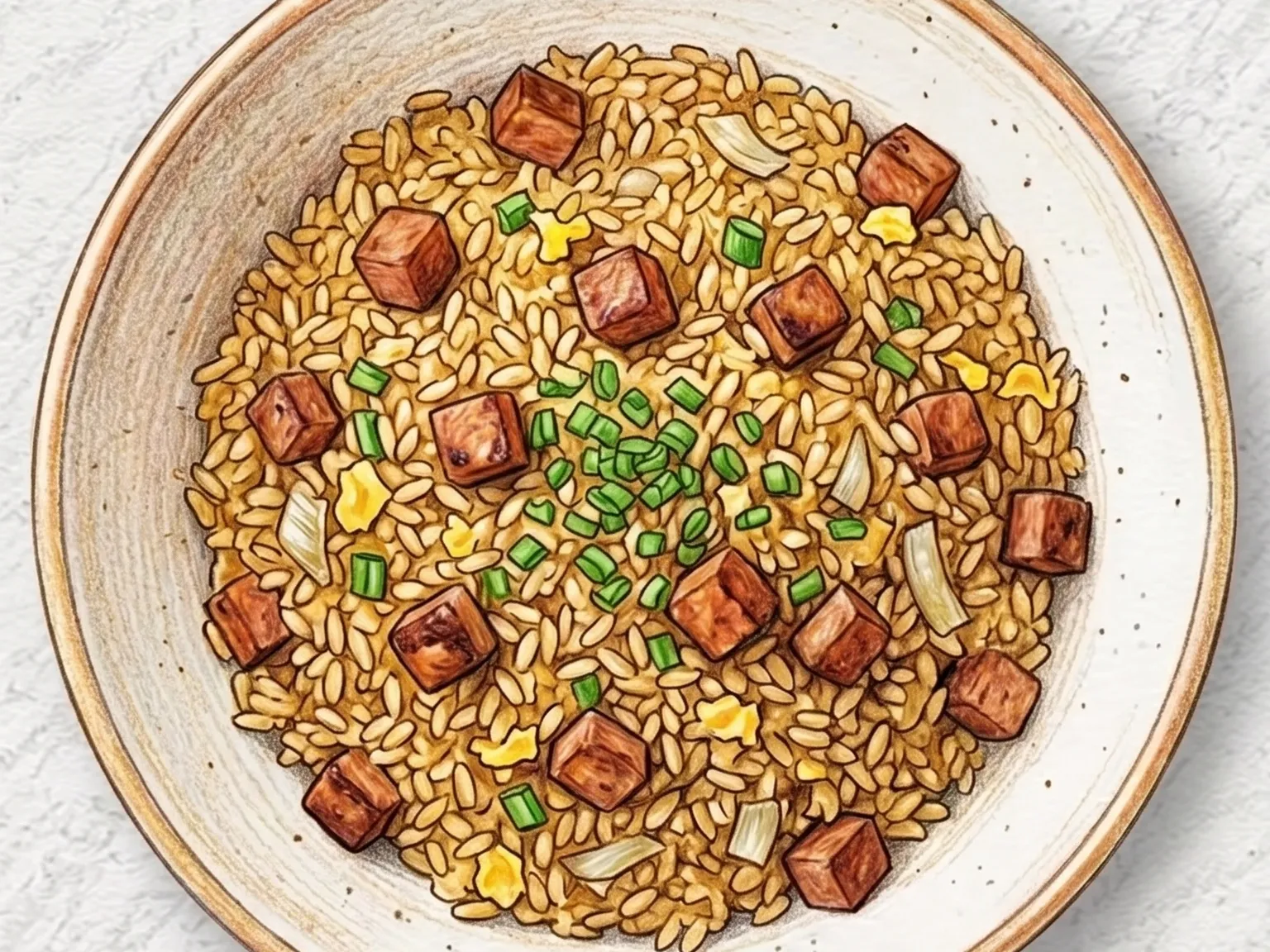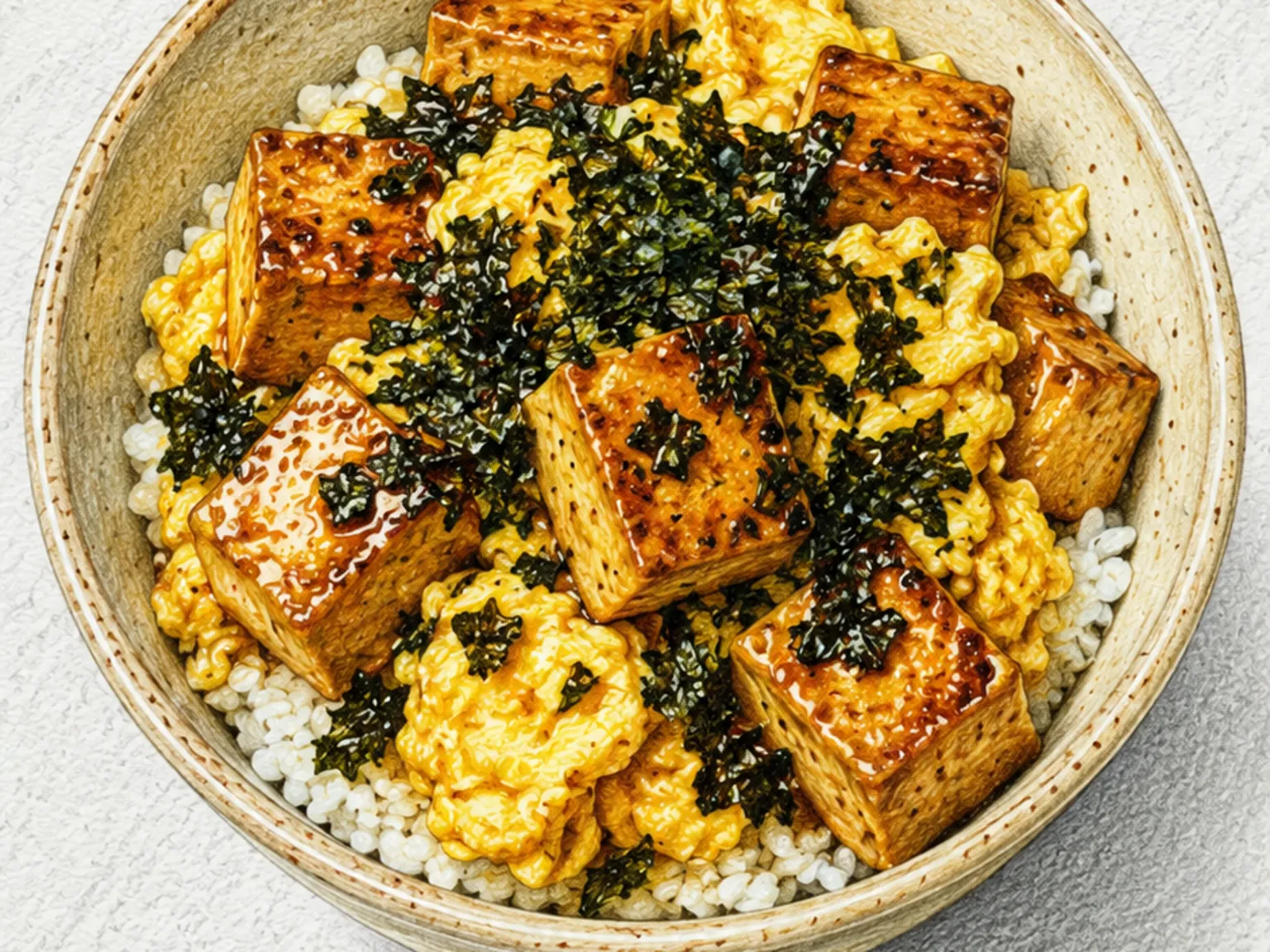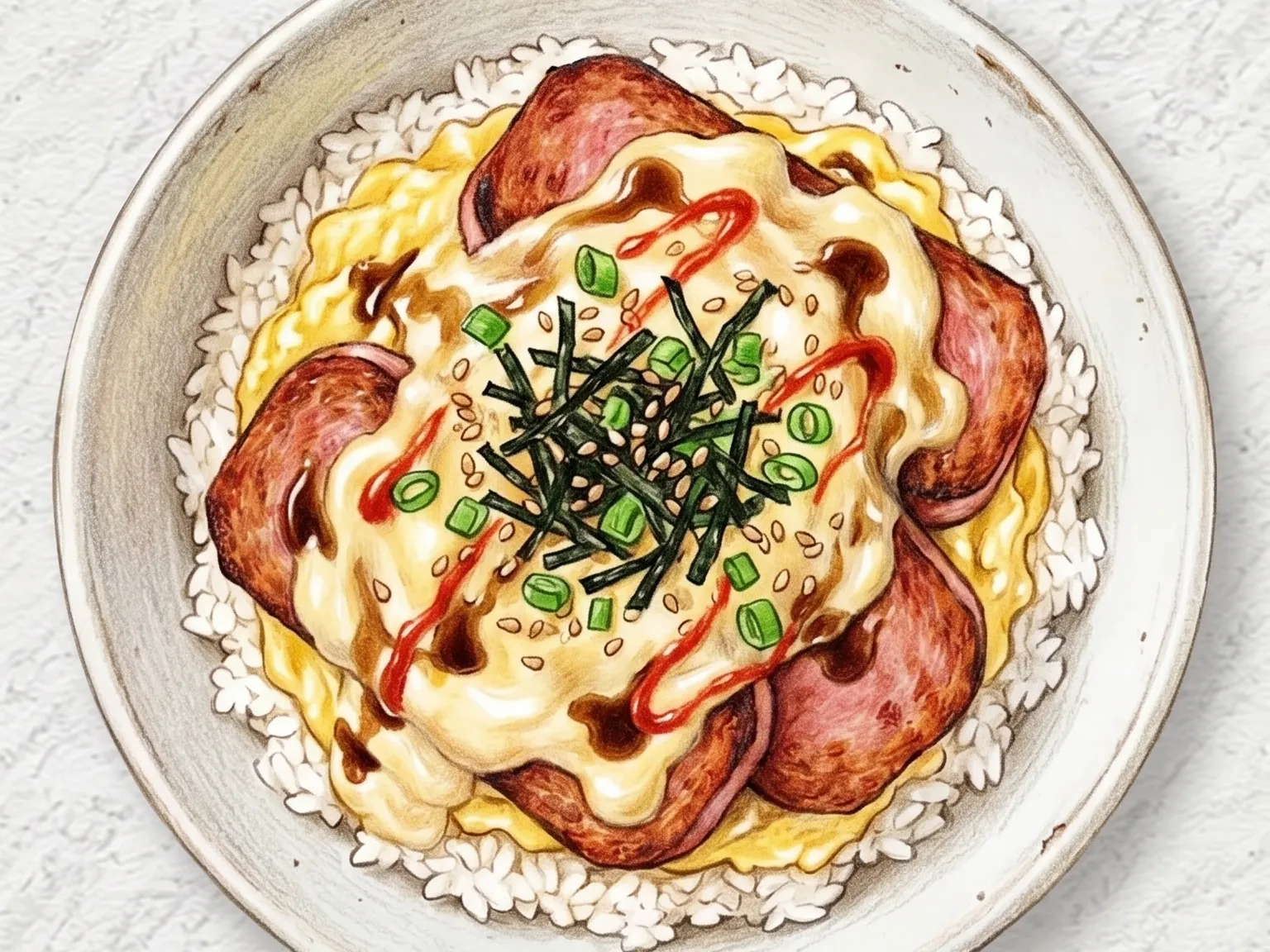
Korean Spam Mayo Rice Bowl
Quick answer
Thick-cut spam is pan-seared until the edges turn golden and crisp while the center stays moist.
What makes this special
- A 30-second soy and sugar toss gives pan-seared Spam a glossy, lacquered finish over rice.
- Spam glazed 30 seconds with soy and sugar for a lacquered finish
- Mayo melts slightly on hot rice spreading creamy richness through the bowl
Key ingredients
Core cooking flow
- 1 Cut the 180 g spam into roughly 1.5 cm cubes so the pieces brown evenly.
- 2 Heat a pan over medium heat and spread 1 tablespoon cooking oil in a thin layer.
- 3 Turn the spam and cook for about 2 more minutes, until the edges look crisp.
Thick-cut spam is pan-seared until the edges turn golden and crisp while the center stays moist. Soft-scrambled eggs are folded loosely so they remain creamy, then layered over steaming rice alongside the spam. A generous drizzle of mayonnaise sauce melts gently against the warm rice, binding the salty meat and silky egg together. A dash of soy sauce or sriracha adds a sharp accent that cuts through the richness and keeps each bite interesting. Controlling resting time and grain texture helps the ingredients cook evenly while keeping the final seasoning balanced.
Instructions
Read the steps as a cooking flow: prep, heat, seasoning, doneness control, and finish.
- 1Season
Cut the 180 g spam into roughly 1.5 cm cubes so the pieces brown evenly.
Beat the 3 eggs with a pinch of salt until no clear streaks of white remain.
- 2Control
Heat a pan over medium heat and spread 1 tablespoon cooking oil in a thin layer.
Add the spam in a single layer and leave it undisturbed for about 3 minutes until the underside turns golden.
- 3Heat
Turn the spam and cook for about 2 more minutes, until the edges look crisp.
If too much fat renders out, push the pieces aside and lower the heat slightly so the glaze will not burn.
- 4Season
Add 1 tablespoon soy sauce and 1 teaspoon sugar, then toss quickly for about 30 seconds.
As soon as the sugar dissolves and the spam looks glossy, turn off the heat to prevent bitterness.
- 5Finish
Warm another pan over low heat, pour in the beaten eggs, and stir slowly.
When soft curds form and the surface still looks slightly moist, remove the pan from heat and let the residual heat finish them.
- 6Finish
Divide 2 cups warm rice between bowls, then arrange the glazed spam and soft eggs side by side.
Drizzle with 3 tablespoons mayonnaise, scatter 2 tablespoons shredded roasted seaweed, and serve while the rice is still warm.
After the steps
Pick a recipe that fits this dish.
Continue with shared ingredients, meal pairings, or a similar method.
Recipes That Go Well With This
More Rice →Based on shared ingredients and meal pairing
Tuna Mayo Rice Bowl (Chamchi Mayo Cupbap) - Easy Korean Bunsik Recipe
Chamchi mayo cupbap is Korea's well-loved quick meal of seasoned tuna and mayo spooned over steaming hot rice, assembled in about eighteen minutes. The canned tuna must be drained and pressed dry through a strainer before anything else: residual liquid from the can dilutes the soy and sugar seasoning and turns the rice soggy within minutes. Onion and scallion are stir-fried first to draw out their natural sweetness, and the tuna is folded in afterward so the fish picks up the developed flavor of the aromatics rather than sitting raw-tasting on top. Mayonnaise goes in only after the heat is turned off; adding it while the pan is still hot breaks the emulsion and produces a greasy finish. A generous scatter of crushed dried seaweed over the finished bowl adds a roasted oceanic note and textural contrast. Mixing everything together before eating is the correct approach: the tuna-mayo sauce coats every grain of rice evenly, so each spoonful carries the full range of flavors rather than alternating between plain rice and heavily sauced bites.
Korean Kkaennip Deulgireum Gyeran Bap (Perilla Egg Rice)
Kkaennip-deulgireum-gyeran-bap is a simple one-bowl rice dish built on three main flavors: the deep roasted-nut aroma of perilla oil, the herb-like fragrance of fresh perilla leaves, and the richness of soft scrambled eggs. The eggs are cooked low and slow in butter, set aside, and then rice is stir-fried briefly in perilla oil over moderate heat. Perilla oil has a low smoke point, so high heat rapidly destroys its distinctive aroma. Soy sauce drizzled along the hot rim of the pan picks up a faint caramel char as it hits the surface, adding depth beyond straightforward saltiness. The scrambled eggs and the rice are folded together with thinly sliced perilla leaves off the heat, because the leaves lose their volatile oils quickly when exposed to sustained warmth. Finishing with a generous amount of whole sesame seeds adds a repeated crunch and further layers of nuttiness through every bite. With ingredients this minimal, the quality of the perilla oil and the freshness of the leaves determine the final result.
Korean Mung Bean Jelly Soup
Cheongpo-muk-guk is a traditional Korean soup built on a clear beef brisket broth, with thick-cut strips of mung bean jelly as the main ingredient. The jelly, set from mung bean starch, has a slippery yet springy texture that sets it apart from any noodle or dumpling -- it glides over the tongue while offering a gentle, elastic resistance. Cutting the jelly into thick strips and rinsing briefly in cold water removes surface starch, and simmering for only three minutes keeps the pieces intact; a longer cook dissolves the jelly into the broth and makes it cloudy. Beaten egg drizzled in thin streams forms delicate floating ribbons throughout the pot, adding color against the pale jelly and clear broth. Roasted seaweed flakes scattered on top contribute a toasty, oceanic fragrance, and a seasoning of soup soy sauce with a small amount of minced garlic keeps the bowl from tasting flat.
Korean Scallion Shrimp Fried Rice
This scallion shrimp fried rice stir-fries plump shrimp and generous amounts of green onion over high heat for a clean, aromatic bowl. The shrimp go into the wok first, searing until the edges turn golden and leave behind a savory fond. Chopped scallions follow, releasing a sharp, oniony fragrance that cuts through the richness. Day-old rice is added and tossed rapidly with soy sauce and oyster sauce, breaking up clumps until every grain is individually coated. Beaten egg stirred in at the end wraps the rice in a soft, silky layer. Despite the short ingredient list, the combination of briny shrimp and pungent scallion delivers a depth of flavor that keeps this dish in regular weeknight rotation.
Serve with this
Korean Mushroom Dumpling Hot Pot
Mandu jeongol is a generous hot pot of twelve large dumplings simmered with napa cabbage, shiitake mushrooms, oyster mushrooms, and bok choy in anchovy-kelp stock. The two varieties of mushroom add layers of umami to the clear broth, while the cabbage and bok choy soften and release their natural sweetness as they cook. The dumplings cook directly in the simmering stock, their wrappers gradually turning chewy as the filling flavors seep into the surrounding liquid. Soup soy sauce and garlic provide a clean, understated seasoning that keeps the broth from overshadowing any single ingredient. The right moment to eat is when the vegetables have wilted and the dumplings float to the surface, signaling they are cooked through. The absence of any spice or strong seasoning makes this one of the more universally approachable hot pots, suited for all ages. Leftover broth absorbs cooked rice or soaked glass noodles easily, turning what remains into a satisfying finish to the meal.
Korean Crispy Glazed Tofu Bites
Dubu gangjeong applies the double-coating logic of Korean fried chicken to tofu, pressing each cube dry before dredging in potato starch, frying until the shell turns shattering crisp, then tossing in a concentrated sticky glaze. The dish originated in temple cuisine as a meatless adaptation of gangjeong and has since become a staple anju in Korean bars. Pressing the tofu is non-negotiable: at least twenty minutes under a heavy weight wrapped in paper towels removes enough moisture to prevent oil from splattering and allows the starch coating to adhere evenly. Potato starch produces a noticeably thinner and more translucent crust than wheat flour, which cracks cleanly rather than bending when bitten. The glaze is made by boiling gochujang, soy sauce, sugar, and rice syrup together until large bubbles break on the surface, signaling that the mixture has concentrated and will cling rather than pool. Pouring the hot glaze over the fried tofu and tossing quickly coats every surface in an even, lacquer-like finish. The defining quality of a well-made dubu gangjeong is the contrast between the caramelized shell with its slight chew and the soft, almost custard-like interior. Once made, it must be eaten within ten minutes before the coating absorbs moisture and goes soft.
Korean Mustard Greens Pickle
Paeju mustard pickle is a quick vinegar preserve where mustard greens are cut into roughly four-centimeter pieces, packed into jars with sliced garlic, and submerged in a hot brine of vinegar, water, sugar, salt, and lemon juice. Mustard greens hold on to their peppery, nasal bite even after pickling, layering that natural heat against the sharp acidity of the brine. Lemon juice is added only after the heat is turned off, preserving the citrus aroma that would otherwise evaporate during boiling. Thicker stems absorb the brine more slowly than the leaves, so separating them and salting the stems first gives a more uniform texture throughout. The pickles are ready after twelve hours of refrigeration, but a full day of resting allows the brine to penetrate to the center of each piece and the flavors to settle into a rounder balance. Served alongside fatty meats, their peppery acidity cleans the palate effectively; tucked into a sandwich, they stand in for mustard with more complexity.
Similar recipes
Korean Soy Glazed Beef Rice Bowl
Sogogi deopbap tops steamed rice with thin-sliced beef and onions cooked in a sweet-soy glaze, served with just enough sauce to soak into the grains. The beef is marinated briefly in a mixture of dark soy sauce, sugar, and minced garlic, which caramelizes quickly in a hot pan. Onion slices cook alongside the beef, their natural sweetness balancing the salty-sweet sauce as they soften. Sesame oil added toward the end leaves a nutty aftertaste that lingers. The key is keeping a small pool of sauce in the pan rather than reducing it completely - that glossy liquid seeps into the rice and makes each spoonful flavorful without needing additional seasoning. A generous crack of black pepper at the end adds a sharp finish.
Korean Gochujang Chicken Mayo Rice Bowl
Gochujang chicken mayo deopbap pairs stir-fried chicken thigh glazed in a fermented chili sauce with a drizzle of creamy mayonnaise over warm steamed rice. Boneless chicken thigh cut into bite-sized pieces is stir-fried over high heat in a sauce built from gochujang, soy sauce, sugar, and minced garlic until a glossy, sticky glaze coats every surface and the edges of the chicken begin to caramelize. The sauced chicken goes directly onto the rice, and mayonnaise is zigzagged across the top in strips, creating alternating lines of red and white that fold together at the table. The combination works because gochujang contributes fermented, slow-building heat while the mayo provides a cool, fat-rich creaminess that extends each bite and carries the sauce deeper into the rice. Onion cooked alongside the chicken breaks down into the glaze, rounding the sauce's edges with a natural sweetness, while a scattering of sliced green onion on top adds a fresh, sharp contrast. Thigh meat is the correct choice over breast - its fat content means it retains moisture through the high-heat stir-fry rather than turning dry or stringy. A variation that has gained popularity layers a slice of processed cheese beneath the chicken, letting the residual heat melt it into a creamy middle layer between rice and glaze.
Korean Spicy Pork Rice Cup
Jeyuk cupbap is a Korean street-style rice cup topped with pork shoulder stir-fried in gochujang, soy sauce, sugar, and garlic, layered over steamed rice with onion and cabbage. The gochujang-sugar combination forms a spicy-sweet glaze on the pork that caramelizes quickly under high heat, sealing in the meat's juices and creating a lacquered surface. Cabbage goes in last to keep its snap, and the slow-cooked onion contributes a gentle sweetness that tempers the chili heat. Slightly cooled rice keeps the cup from turning soggy, and the tight, portable format makes this a defining item of Korean street-food culture, equally at home in a pojangmacha stall and a school cafeteria. A soft-boiled egg or a slice of processed cheese on top adds a rich, creamy note.