Whoopie Pie
Quick answer
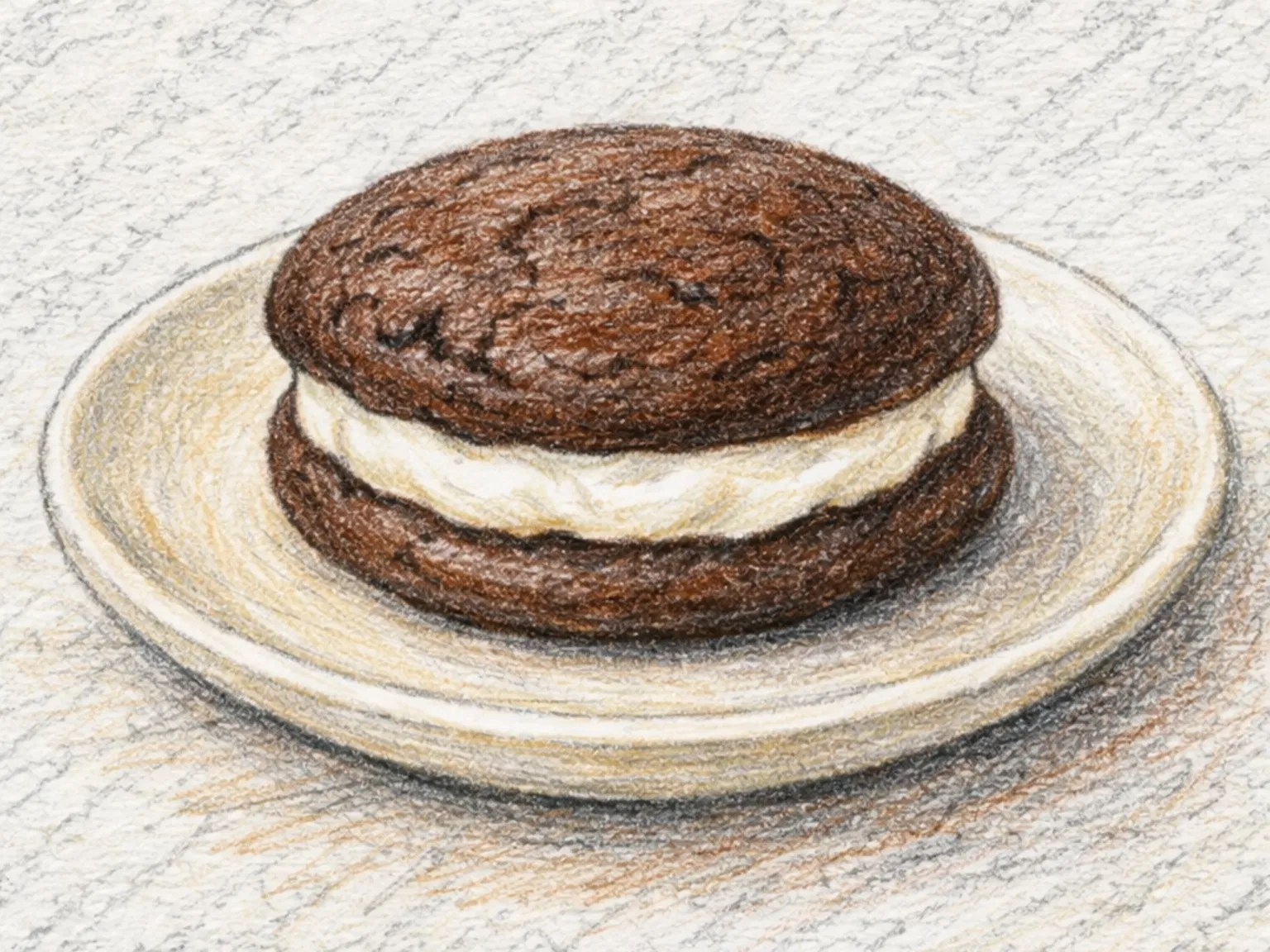
Two dome-shaped cocoa cake cookies sandwich a generous swirl of marshmallow cream, creating an American classic that straddles the line between cookie and cake.
What makes this special
- Whoopie Pies consist of soft cocoa cake rounds sandwiched with a light marshmallow filling.
- Thicker and moister than standard cookies, sitting between cake and cookie
- Cocoa bitterness underneath marshmallow cream creates a layered sweet contrast
Key ingredients
Core cooking flow
- 1 Soften 120 g butter, then beat it with 160 g sugar for 2 to 3 minutes until creamy and lighter.
- 2 Sift 220 g all-purpose flour with 40 g cocoa powder, then add it to the butter mixture.
- 3 Pipe the batter into round mounds on the tray, leaving generous space betwee...
Two dome-shaped cocoa cake cookies sandwich a generous swirl of marshmallow cream, creating an American classic that straddles the line between cookie and cake. The cookies are thicker and softer than standard drop cookies, with a moist, cakey crumb that yields gently when bitten. Cocoa provides a mild bitterness that grounds the filling, while the marshmallow cream is airy, sweet, and slightly sticky. Spacing the batter mounds well apart on the baking sheet is important, as they spread during baking into the flat, round shape that defines a whoopie pie. Filling must wait until the cookies are completely cool; warm cookies melt the cream and create a messy result. Matching pairs by size before assembly produces a uniform, professional look. Stored in the refrigerator, the cream firms and seeps into the cookies overnight, producing a denser, fudgier texture that many prefer to the freshly assembled version.
Instructions
Read the steps as a cooking flow: prep, heat, seasoning, doneness control, and finish.
- 1Season
Soften 120 g butter, then beat it with 160 g sugar for 2 to 3 minutes until creamy and lighter.
Add 1 egg and mix until the batter looks even, stopping before it separates or turns greasy.
- 2Heat
Sift 220 g all-purpose flour with 40 g cocoa powder, then add it to the butter mixture.
Fold just until no dry streaks remain; overmixing makes the cake cookies tough instead of soft and cakey.
- 3Finish
Pipe the batter into round mounds on the tray, leaving generous space between each one because they spread.
Keep the mounds fairly low and similar in size so the finished pairs match cleanly after baking.
- 4Heat
Bake in a 180C oven for 10 to 12 minutes.
Remove them when the edges are set and the tops slowly spring back after a light touch; if they look wet in the center, bake a little longer.
- 5Heat
Let the cookies rest briefly on the tray, then cool them completely before filling.
Warm cookies melt marshmallow creme, so pair pieces of similar size first and turn half of them flat side up.
- 6Control
Pipe 150 g marshmallow creme onto the flat side of half the cookies, leaving a small border so it does not squeeze out.
Cover with the matching cookies and press gently until the filling reaches the edge.
After the steps
Pick a recipe that fits this dish.
Continue with shared ingredients, meal pairings, or a similar method.
Recipes That Go Well With This
More Baking →Based on shared ingredients and meal pairing
Brownie Cookie Bars (Layered Brownie and Cookie Bar)
Brookie bars combine brownie batter and cookie dough in a single baking pan, stacking the two components so that each cut piece delivers both in one bite. The cookie layer sits at the bottom of the pan and is built on brown sugar and melted butter, which together produce a deep caramel flavor that plain white sugar cannot achieve. At the edges, where the batter is thinnest and heat penetrates fastest, the cookie bakes into a crisp, snapping crust. Toward the center, the same layer stays chewy and slightly underdone, with a pull to the texture that contrasts with the firmer brownie above. The brownie layer uses both cocoa powder and dark chocolate chips, a dual approach that delivers two distinct expressions of chocolate flavor. Cocoa powder spreads its bitter intensity throughout the entire layer, while the chips melt into pockets of concentrated richness that survive as soft inclusions in the finished bar. Where the two layers press against each other during baking, a narrow transition zone forms in which cookie and brownie are partially merged. This interstitial region carries the vanilla-butter warmth of the cookie alongside the bitter darkness of the brownie simultaneously. The bars must cool completely before cutting. Removing them from the pan too soon results in crumbling and smearing that destroys the clean cross-section that makes brookie bars visually satisfying.
Boston Cream Pie
Boston cream pie is, despite its name, a layered cake rather than a pie. Two rounds of tender sponge sandwich a thick vanilla pastry cream, and the top is cloaked in a glossy dark chocolate glaze. The sponge bakes from cake flour and eggs to a fine, pillowy crumb that compresses gently under a fork without crumbling. The pastry cream -- cooked from milk, cornstarch, and egg yolks -- sets into a thick, silky custard that holds its shape when sliced but melts smoothly on the tongue. The chocolate glaze cools into a thin, shiny shell that cracks cleanly when pressed, mixing with the cream beneath. Each forkful delivers the sequence of bitter chocolate, sweet vanilla custard, and plain sponge in quick succession. Making the custard a day ahead and refrigerating it overnight ensures it holds firmly when the layers are assembled and sliced. Pour the glaze when it has cooled slightly -- warm enough to flow but not so hot that it thins out and drips unevenly.
Sloppy Joe
Sloppy Joe is an American sandwich where ground beef is browned with diced onion until the moisture cooks off, then simmered in a sweet-savory sauce made from tomato paste, ketchup, Worcestershire sauce, and a small amount of sugar. Browning the beef thoroughly before adding the sauce ingredients is critical - residual moisture dilutes the sauce and prevents the meat from developing flavor. Tomato paste provides concentrated umami, ketchup adds sweetness and body, and Worcestershire contributes a fermented depth that ties the flavors together. The mixture is simmered on low heat for about eight minutes until thick enough that it holds its shape on a spoon rather than running off. Toasting the buns before assembly creates a barrier that slows the inevitable soaking, and pickles served alongside cut through the richness.
Korean Choco Pie (Marshmallow Cream Chocolate Cake)
Two soft chocolate cake rounds sandwich a layer of melted marshmallow cream, and the whole assembly is dipped in dark chocolate to form a glossy shell. The cake batter combines cake flour with cocoa powder and is baked just until set; overbaking dries out the sponge and ruins the pillow-soft texture that defines this treat. Marshmallows melted over a water bath turn into a light, stretchy cream that acts as a cushion between the rounds, pulling slightly with each bite. Adding a small amount of butter to the melted coating chocolate produces a thinner, smoother shell that sets with a clean snap and resists fingerprints. Chilled, the chocolate hardens and adds a crisp layer of contrast; at room temperature, the entire piece softens into a unified, yielding bite. This is the homemade version of Korea's iconic convenience-store snack, and making it from scratch allows control over the chocolate quality and the generosity of the filling.
Serve with this
Real Pineapple Sherbet
A refreshing and cool fruit sherbet dessert made inside a hollowed-out pineapple.
Fruit Yogurt Salad
Apple, banana, strawberry, and blueberry are cut into bite-sized pieces and folded into plain yogurt for a fruit salad where the dressing serves as background rather than centerpiece. The yogurt provides gentle acidity that anchors the sweetness of the fruit without overwhelming it. Honey softens the sharper edge of the yogurt, and a squeeze of lemon juice does double duty: it slows the browning of cut apple and banana while leaving a clean citrus note on the finish. Roughly chopped walnuts scattered over the top introduce a crunchy, slightly bitter contrast to the soft fruit and smooth yogurt, breaking the monotony of texture. Swapping in seasonal fruit makes the recipe adaptable year-round without adjusting the base formula - peaches and melon in summer, persimmon and pear in autumn all work within the same yogurt, honey, and lemon framework. Light enough for a morning meal and refreshing enough after a heavy dinner, it sits comfortably in either role.
Citrus Espresso Tonic with Orange
Espresso tonic is a carbonated coffee drink built by slowly pouring espresso over chilled tonic water to form two distinct layers. The tonic must be thoroughly cold to maintain stable carbonation throughout; cooling the espresso for about thirty seconds before pouring it over a spoon produces a clean separation between the two liquids. The quinine bitterness in the tonic water meets the espresso's roast bitterness, creating a balanced interplay rather than one-note sharpness. Orange slices and lemon peel garnish the glass, releasing citrus oils that rise with the bubbles. Specialty espresso with pronounced fruit acidity works particularly well here, harmonizing with the tonic's effervescence and lending natural sweetness without added sugar. Pre-chilling the glass with ice before adding the tonic helps preserve carbonation. The drink gained popularity in Scandinavian coffee culture during the 2010s before spreading worldwide.
Similar recipes
Classic Apple Pie
Apple pie has been baked in America since the colonial era, though its origins lie in 14th-century English and Dutch recipes where apples were enclosed in pastry as a way to cook fruit without a proper oven. The filling is built from tart baking apples - Granny Smith or Braeburn - tossed with sugar, cinnamon, nutmeg, a squeeze of lemon, and a spoonful of flour or cornstarch to thicken the juices as they cook. The double crust is made from cold butter cut into flour until the dough resembles wet sand, producing flaky, shattering layers when baked. As the pie bakes, the apples soften and release their juice, which the starch captures into a syrupy glaze that holds the filling together when sliced. The top crust turns deep golden and pulls away slightly from the filling, creating a hollow where steam escapes. Served warm with a scoop of vanilla ice cream - a la mode - or a slice of sharp cheddar in the New England tradition, apple pie is as much a cultural symbol as it is a dessert.
Crab Cake
Crab cakes are a signature seafood dish of the American East Coast, made by gently folding crab meat with mayonnaise, Dijon mustard, egg, breadcrumbs, parsley, and lemon juice, then shaping the mixture into patties and pan-frying in butter until golden on each side. Mixing the crab meat with a light touch preserves the large flakes that give each bite its distinctive texture. Lemon juice brightens the flavor and tempers any fishiness. Chilling the formed patties for thirty minutes firms them enough to flip in the pan without breaking apart. The finished crab cake has a crisp, buttery exterior enclosing moist, sweet crab.
Chicken Pot Pie
Chicken pot pie fills a butter pie crust with a mixture of cooked chicken, carrots, potatoes, and peas bound in a thick, creamy roux-based sauce, then bakes until the top crust turns golden and the filling visibly bubbles at the edges. The roux begins with butter and flour cooked together over medium heat until the raw flour smell disappears, at which point chicken broth and heavy cream are whisked in gradually to form a smooth, rich sauce that coats every piece of filling without clumping. Pre-boiling the carrots and potatoes is important because the oven time alone is not sufficient to cook dense root vegetables through, while peas are stirred in at the final moment to keep their bright green color and slight resistance when bitten. Brushing the top crust with beaten egg before it goes into the oven produces the characteristic glossy, deeply golden surface that distinguishes a well-made pot pie. After 35 minutes at 200 degrees Celsius, the filling should be audibly bubbling and the crust should be firm enough to hold its shape when the pie is cut. Breaking through the flaky top layer with a spoon releases the thick cream sauce and a cloud of steam carrying the aroma of braised chicken and cooked vegetables.