Korean Salted Oyster Jeotgal
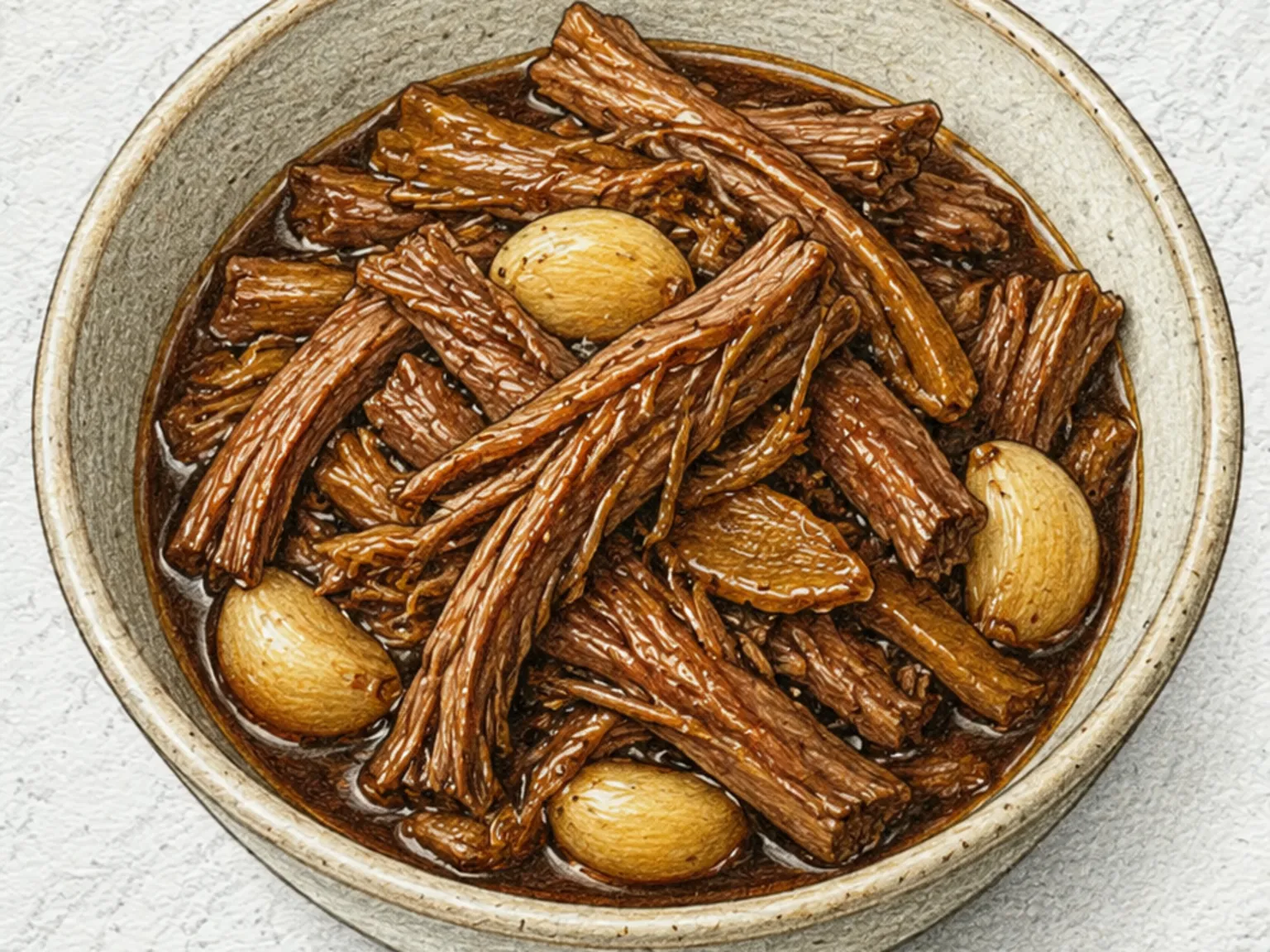
Gul jeotgal is a traditional Korean fermented condiment made by curing fresh winter oysters in coarse solar salt with gochugaru, minced garlic, ginger, and plum extract, then aging the mixture at low temperature. As the salt draws moisture from the oyster tissue, the flesh contracts and its marine umami intensifies into something denser and more complex than a fresh oyster delivers. Gochugaru gives the condiment its characteristic red color and adds heat that balances the brininess. Plum extract plays a specific role during fermentation: it suppresses the fishy odor that naturally develops while contributing a mild acidity that keeps the overall flavor from turning flat or heavy. The longer gul jeotgal ages, the more layered and deep its character becomes. Eaten on its own over warm rice, it functions as a complete banchan, briny and bold against plain starch. Its more significant culinary role, however, is as a filling ingredient in baechu kimchi: folded into the seasoning paste, it introduces a richer source of umami than fish sauce alone provides, and the amino acids it releases during fermentation elevate the entire kimchi as it continues to ripen.
Rokubei (Extruded Sweet Potato Noodles)
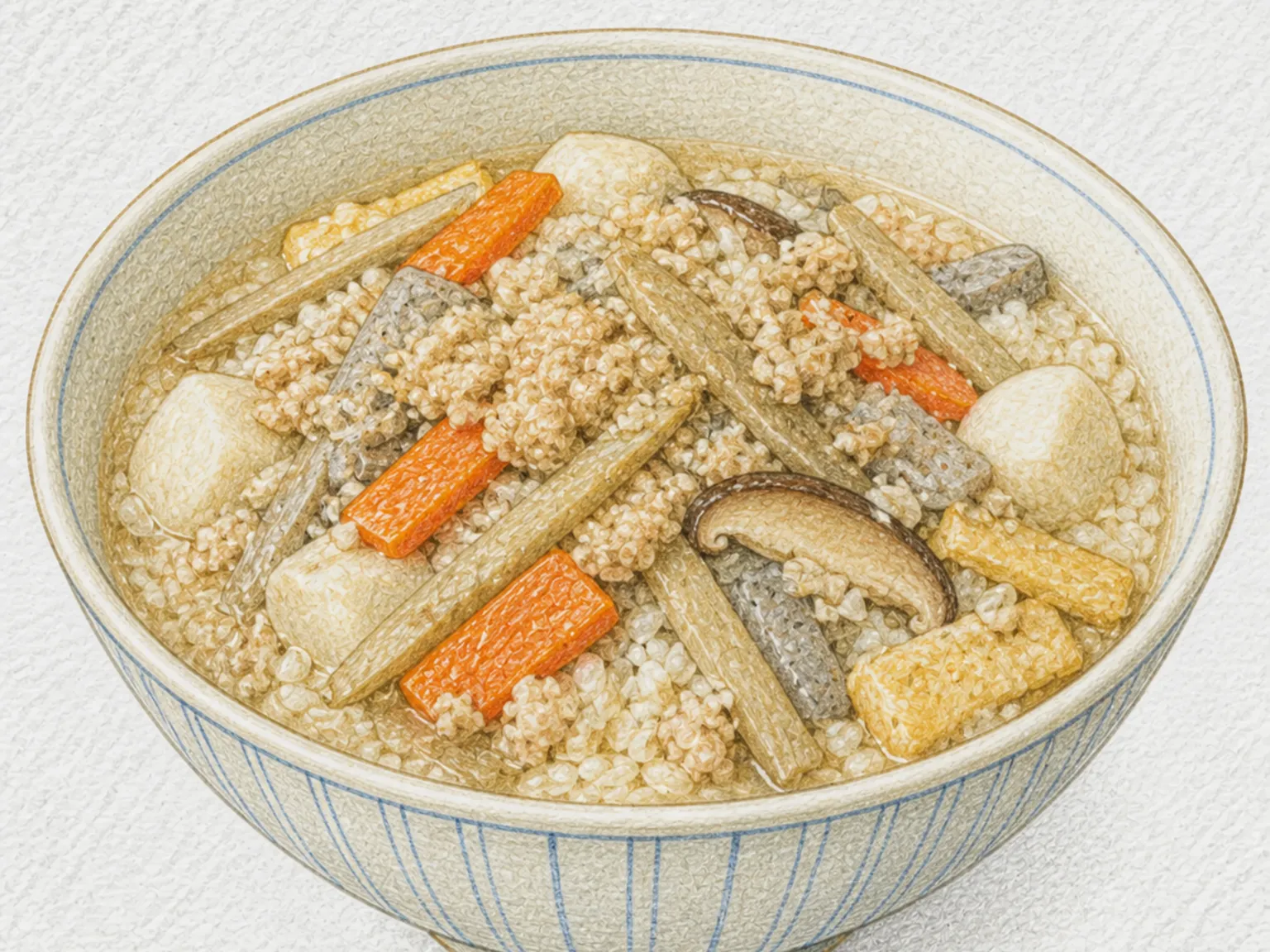
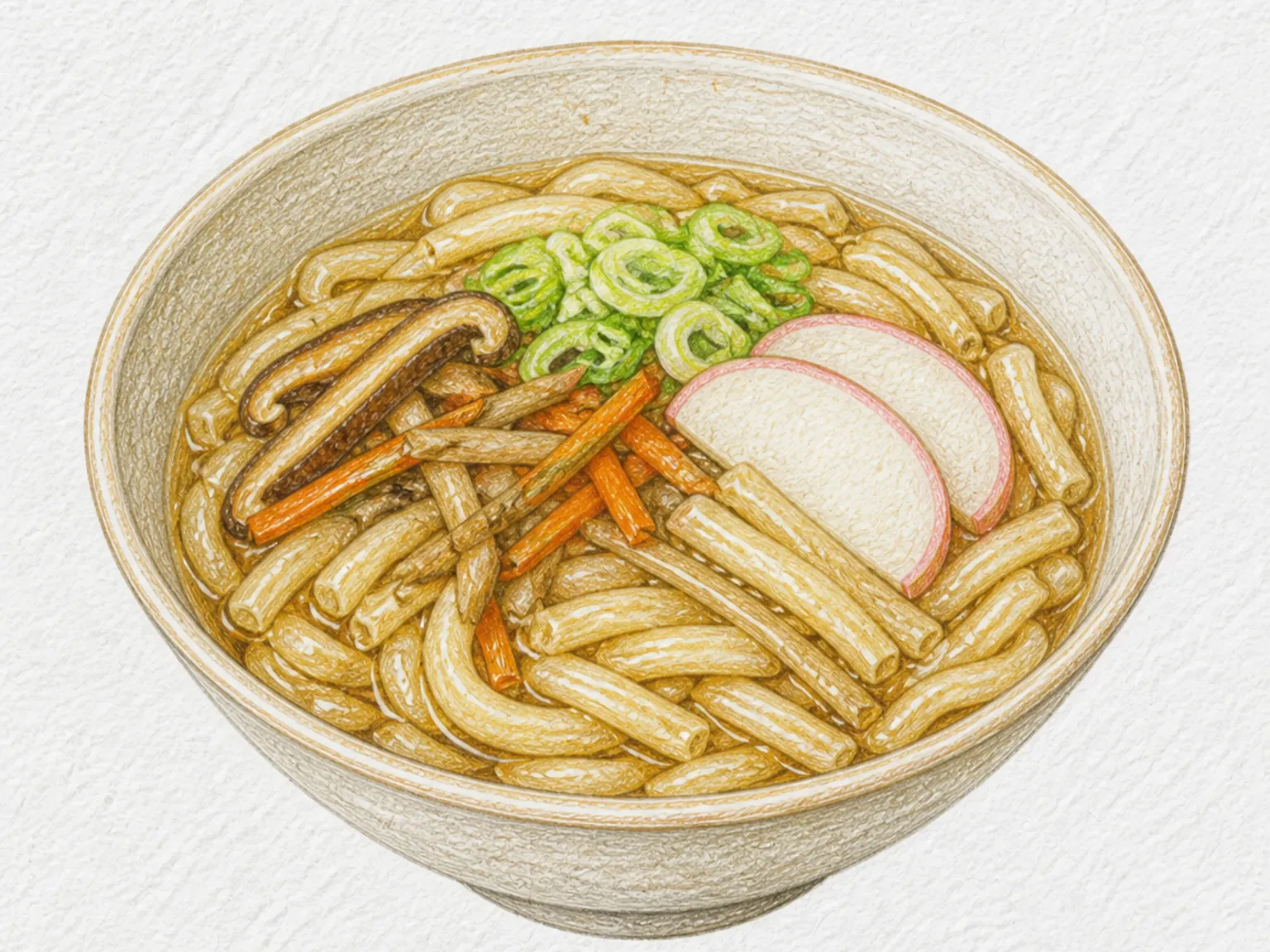
Rokubei is a sweet-potato noodle dish passed down since the Edo period in Shimabara and Tsushima, Nagasaki Prefecture. Sendango, made from the local preserved sweet-potato product called sen, is crumbled and kneaded with warm water. The smooth dough is formed into softball-size balls, briefly boiled, broken apart, and kneaded again. Small portions are pressed through the holes of a rokubei-segi directly into boiling water, producing short, thick strands rather than long wheat noodles. After the pot returns to a boil, the noodles cook for 2 to 3 minutes, then are cooled and rinsed to remove surface harshness. A clear soup is made with burdock, carrot, rehydrated shiitake, dashi, sake, light soy sauce, dark soy sauce, and salt. The drained noodles are served in the soup with sliced kamaboko and green onion, giving a smooth exterior, chewy center, and faint sweet-potato taste.
Tara no Ko-ae (Vegetables Coated with Cod Roe)
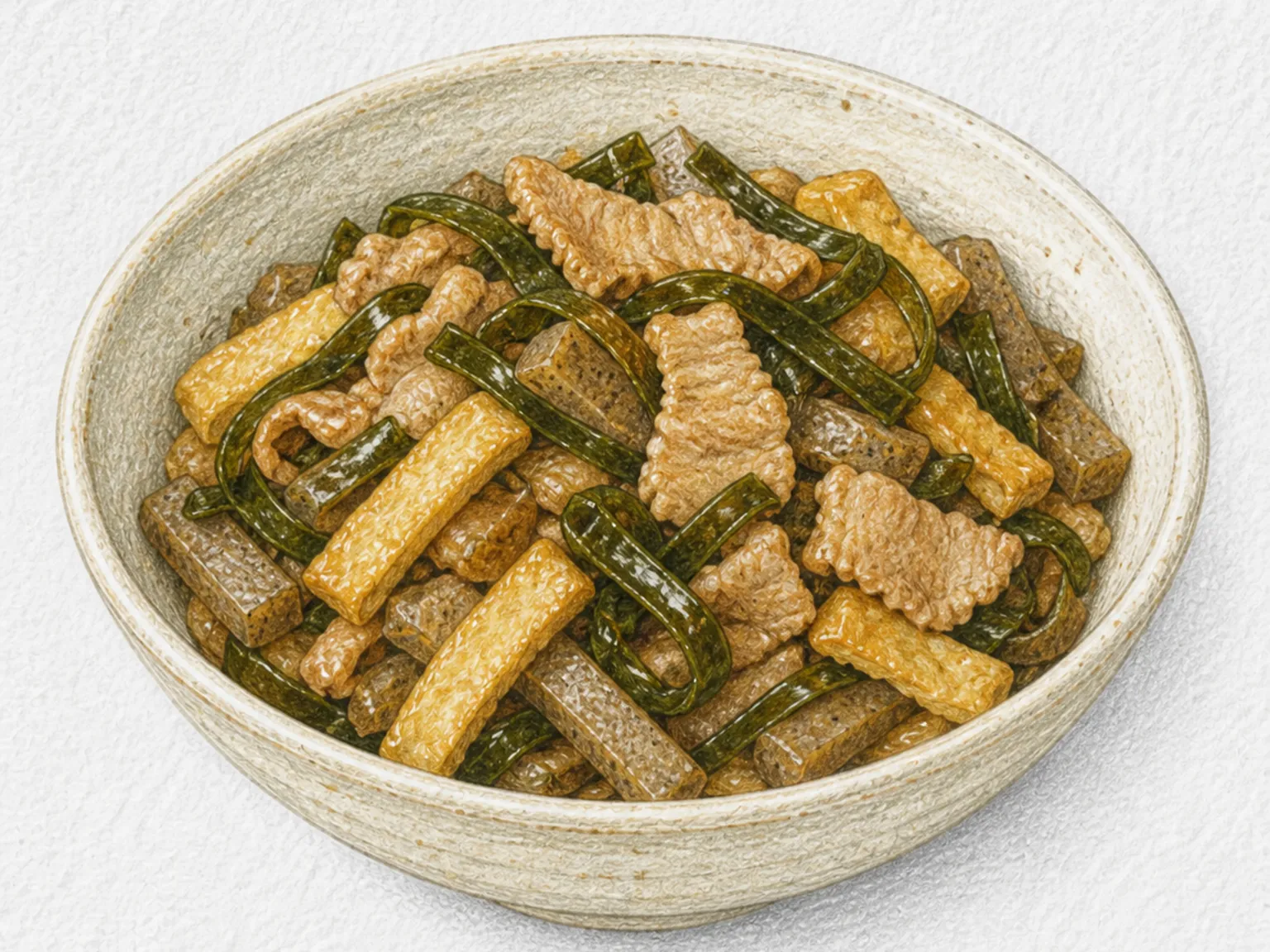
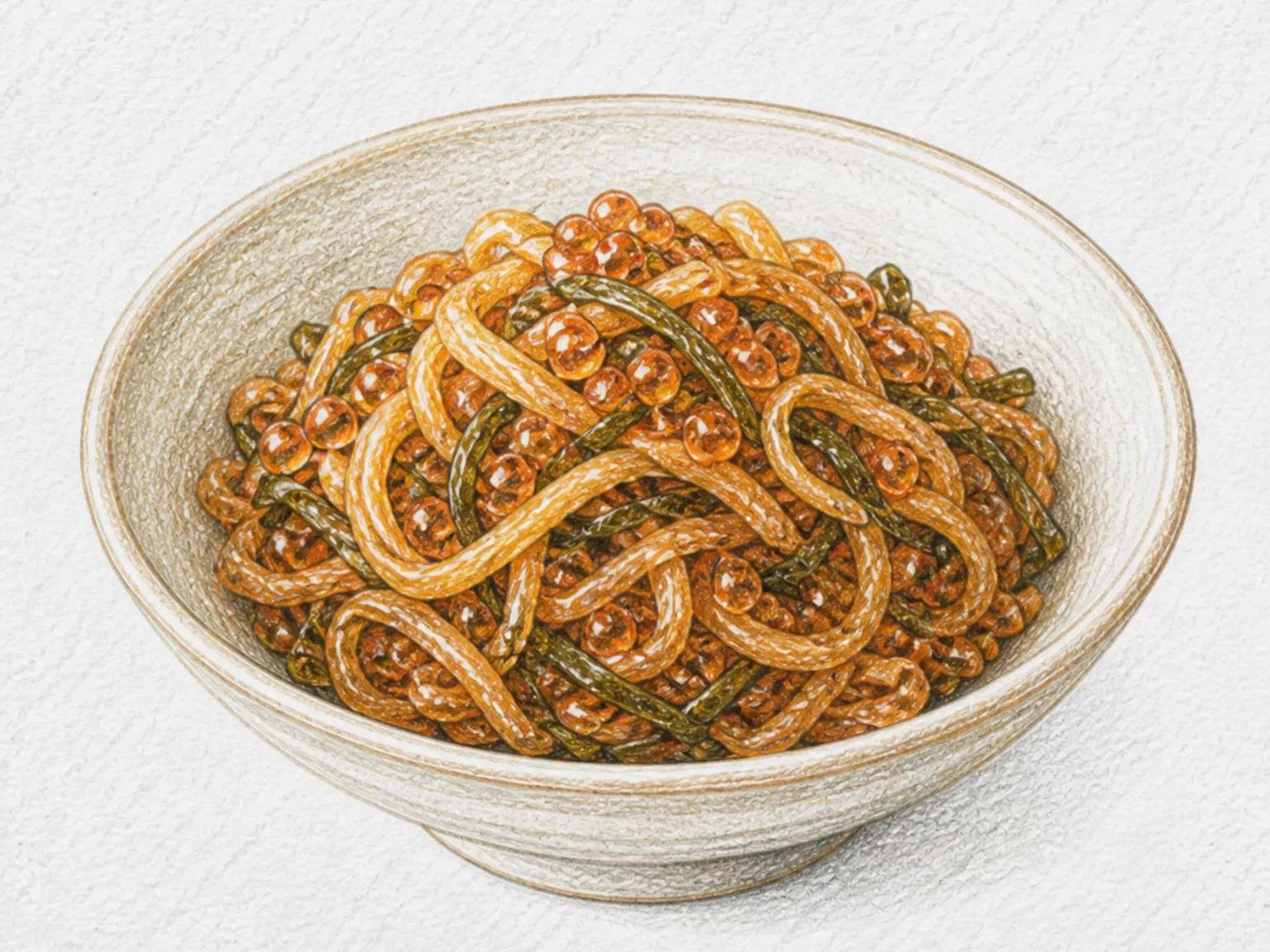
Tara no ko-ae is a winter side dish from the Tsugaru area of Aomori. Carrot, rehydrated koya tofu, and shirataki are cooked, then loose cod roe is stirred through them until its tiny grains cook and cling evenly to every surface. In a region where winter cod was used from head to offal, roe was salted for keeping and also served for New Year or celebrations. Orange carrot and cooked roe give the dish a bright appearance, while sake softens fishy aromas without covering the mild ingredients.
Gonjuu (Pork Belly and Fried Tofu Rice Ball)
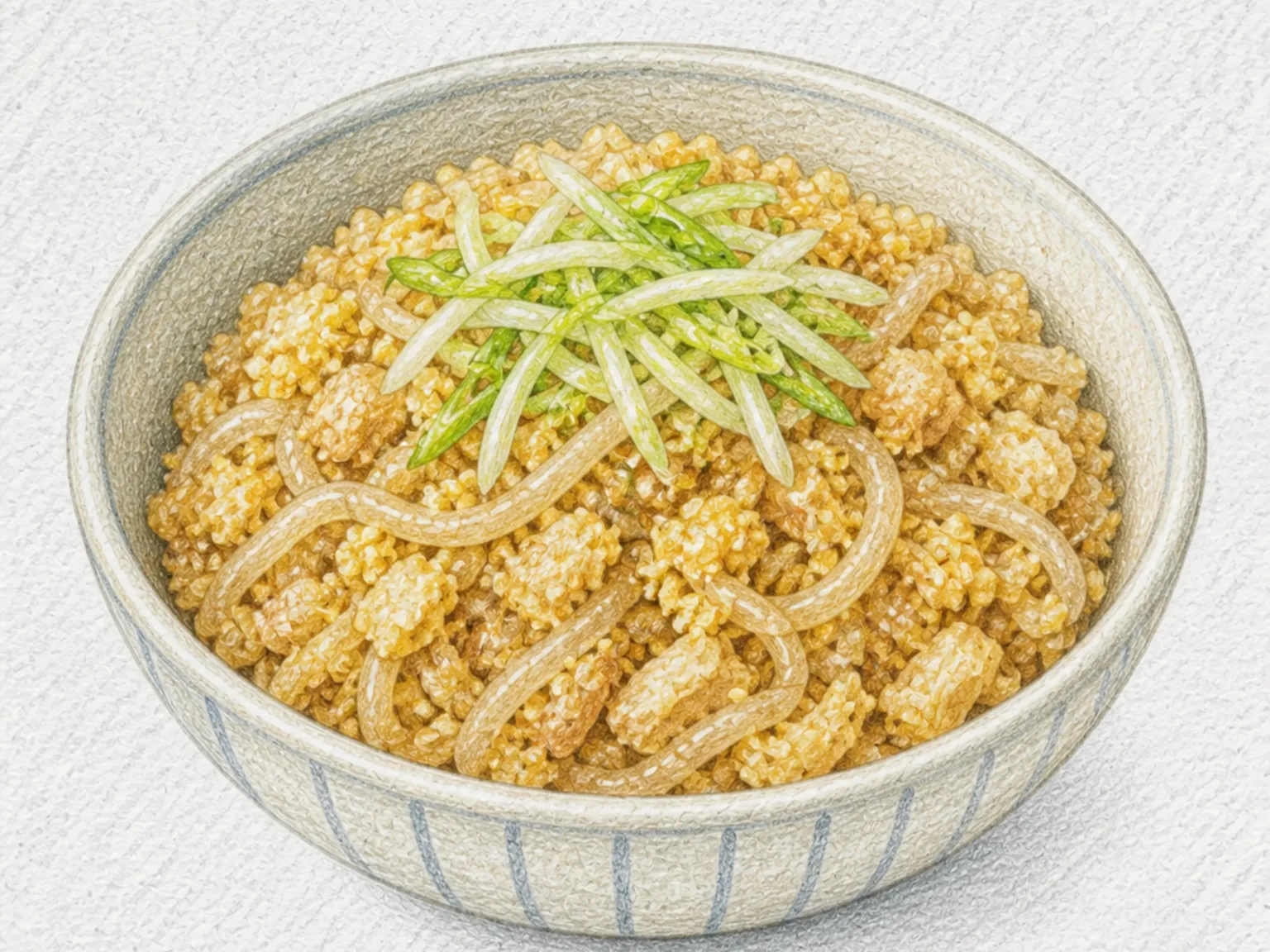
Gonjuu is a large rice ball long eaten in Tateyama City, Chiba Prefecture. Five cups of rice are cooked while pork belly is cut into 1 cm cubes and fried tofu is trimmed and chopped. Two-thirds of lightly toasted, crumbled bonito flakes are simmered with the pork, tofu, sugar, soy sauce, sake, and water. Mirin is added at the end, after the pork is fully cooked and the sweet savory liquid has soaked into the pieces. The hot rice is spread in a wide mixing tub and combined evenly with the cooked filling and its reduced liquid. The reserved bonito flakes are mixed through last, and the batch is shaped firmly into twenty generous rice balls. Their one-handed form reflects how gonjuu has been served to mikoshi carriers at Tateyama's autumn Yawatanmachi festival, though it is also eaten at home throughout the year.
Chicken Chicken Gobo (Glazed Chicken and Burdock)
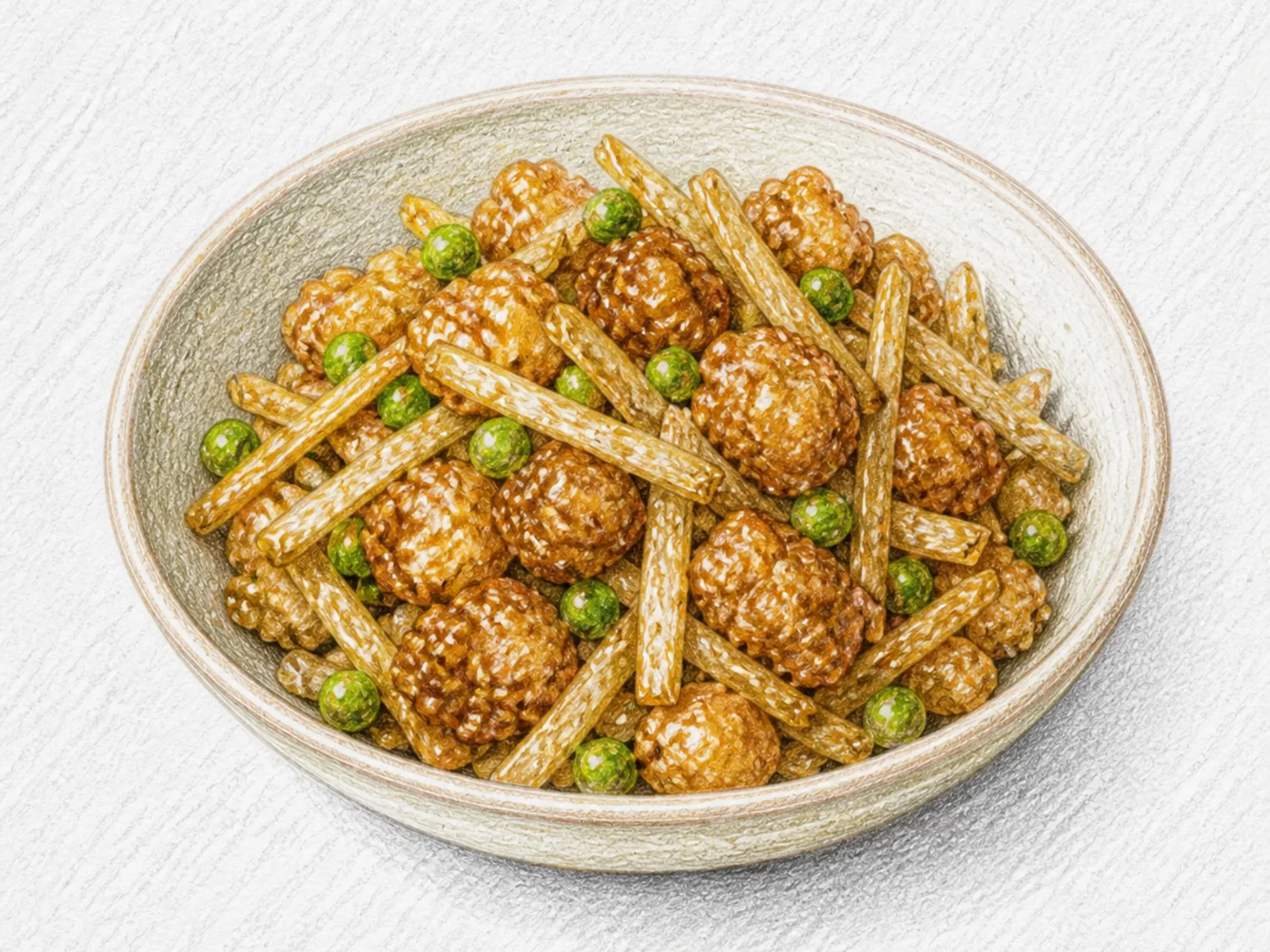
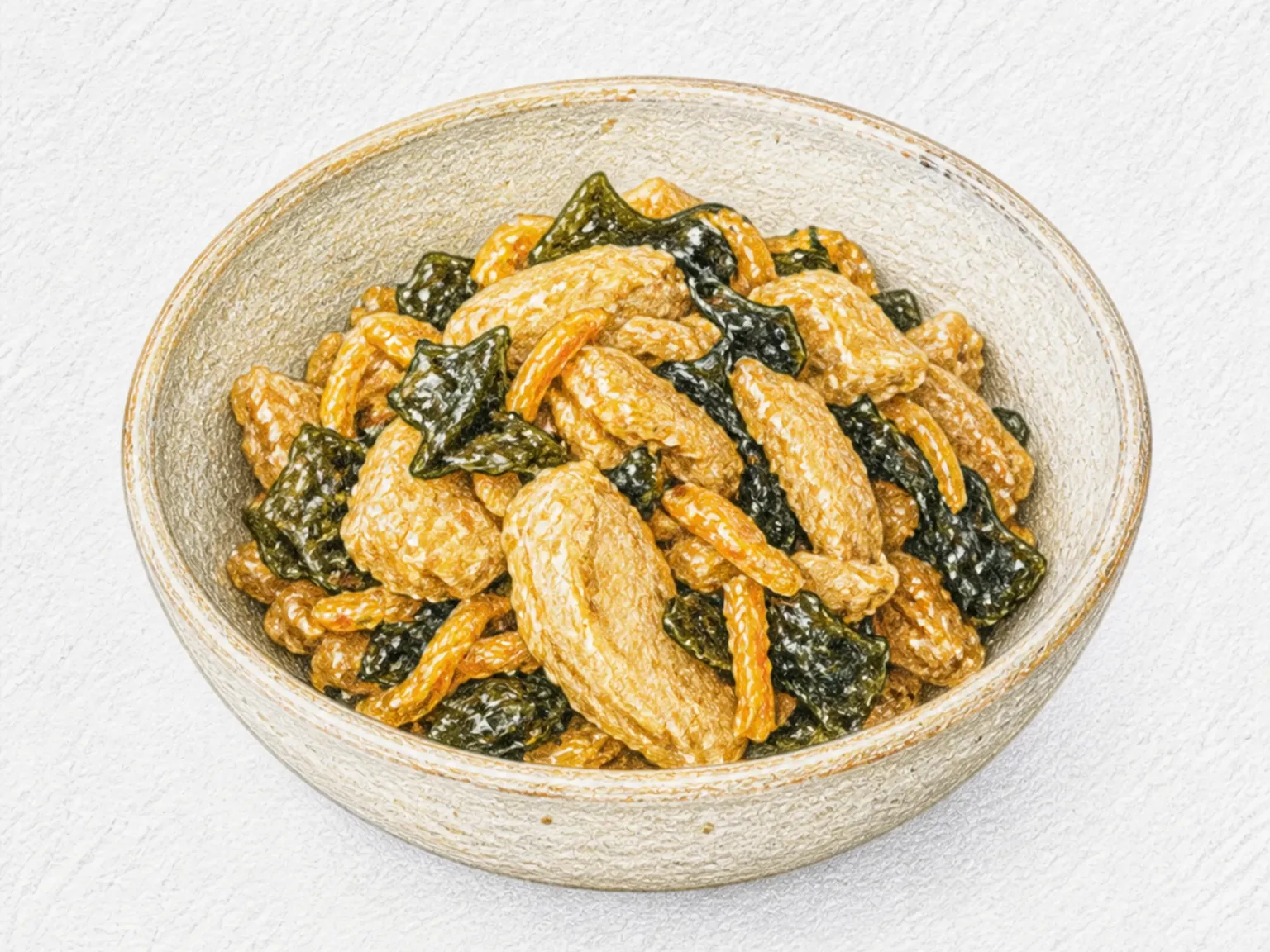
Chicken chicken gobo is a Yamaguchi dish of bite-size chicken thigh and thin burdock slices coated with potato starch, fried separately, and briefly glazed in a sweet-savory soy sauce with edamame. It began around 1995 after an elementary-school nutrition teacher invited families to submit dishes that could refresh the lunch menu. From school cafeterias it spread into homes, restaurants, and local events. Frying chicken and burdock in separate batches gives each ingredient the time it needs, while a short final toss coats the crisp surfaces without soaking them. The rhythmic name also makes its main ingredients immediately clear to children.
Fusube Mochi (Rice Cakes with Spicy Loach and Burdock Sauce)
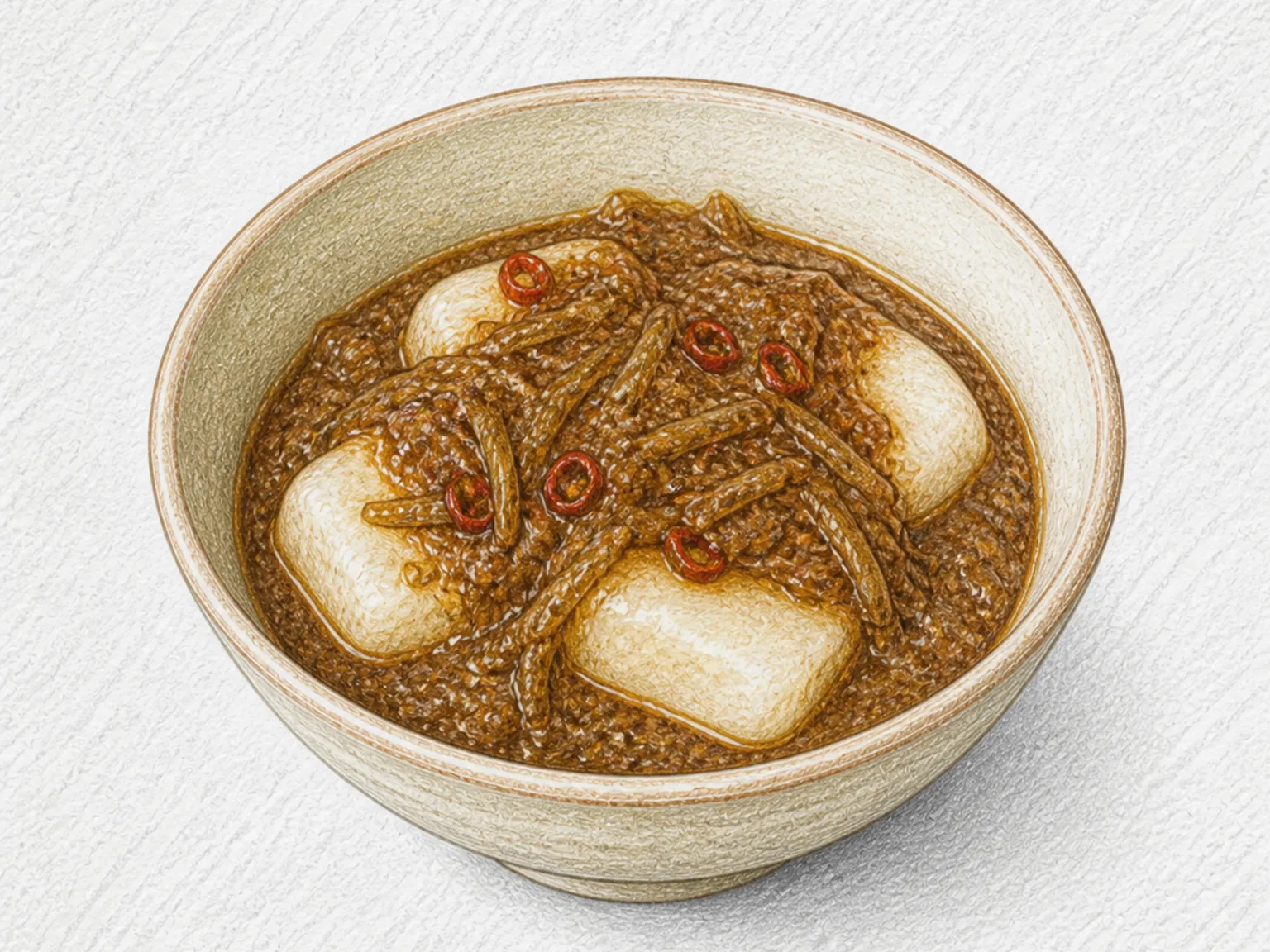
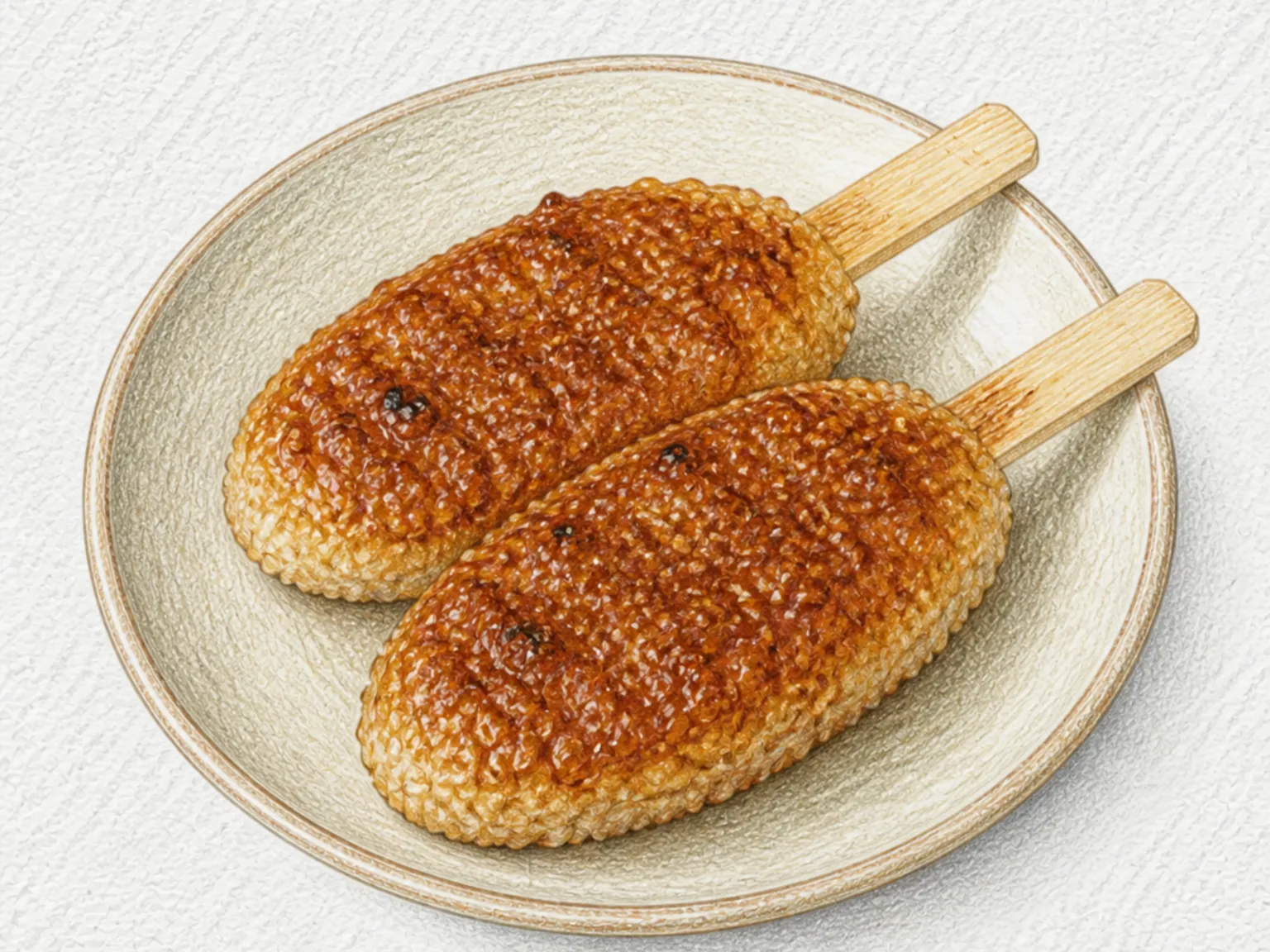
Fusube mochi is a rice-cake dish from Kurihara City in Miyagi Prefecture, eaten at New Year, weddings, memorial services, seasonal observances, and pauses in farm work. Grilled, dried loach powder is combined with grated burdock and daikon. The burdock is sautéed first in oil, followed by the daikon, a seeded red chili, and the loach powder. Water is added with attention to the moisture released by the radish. Soy sauce and sake season the mixture, which then simmers gently for about one hour while foam is removed carefully. The roots soften into the liquid and the loach powder gives it body. Freshly pounded, hot mochi is placed in bowls and covered with the spicy sauce just before eating. The name comes from fusuberu, the local term for smoking the grilled loaches dry above the hearth, linking inland Kurihara's freshwater fish traditions with Miyagi's mochi culture.
Korean Pollock Jeon (Egg-Battered Pan-Fried Pollock)
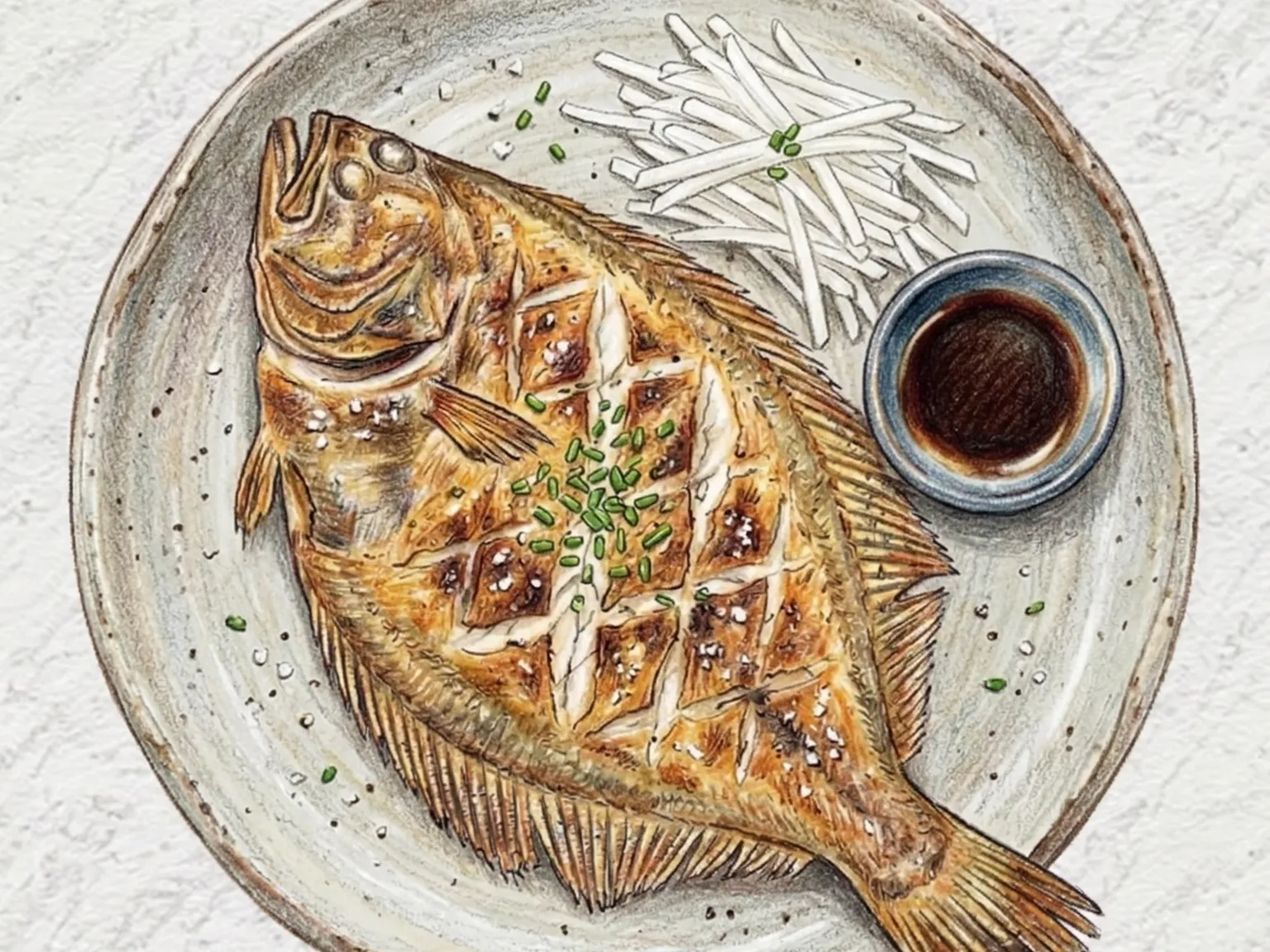
Dongtae-jeon is a Korean pan-fried pollock dish where thin slices of frozen-then-thawed pollock are seasoned with salt, pepper, and cheongju (rice wine), lightly dredged in flour, dipped in beaten egg, and fried in a thin layer of oil. Because frozen pollock releases significant moisture when thawed, pressing it thoroughly with paper towels is a critical step without it, the flour coating will not adhere and the oil will splatter. The flour layer should be thin enough that it barely coats the surface, preserving the fish's mild flavor, and cooking over medium-low heat gives the egg batter time to turn golden while keeping the fish inside soft and flaky. Mixing finely chopped green onion into the egg batter before dipping adds a subtle allium fragrance to the otherwise clean-tasting fish. A staple at Korean ancestral rites and holiday spreads, it is served with soy dipping sauce that draws out the savory, delicate flavor of the pollock.
Korean Buchu Honghap Guk (Chive Mussel Soup)
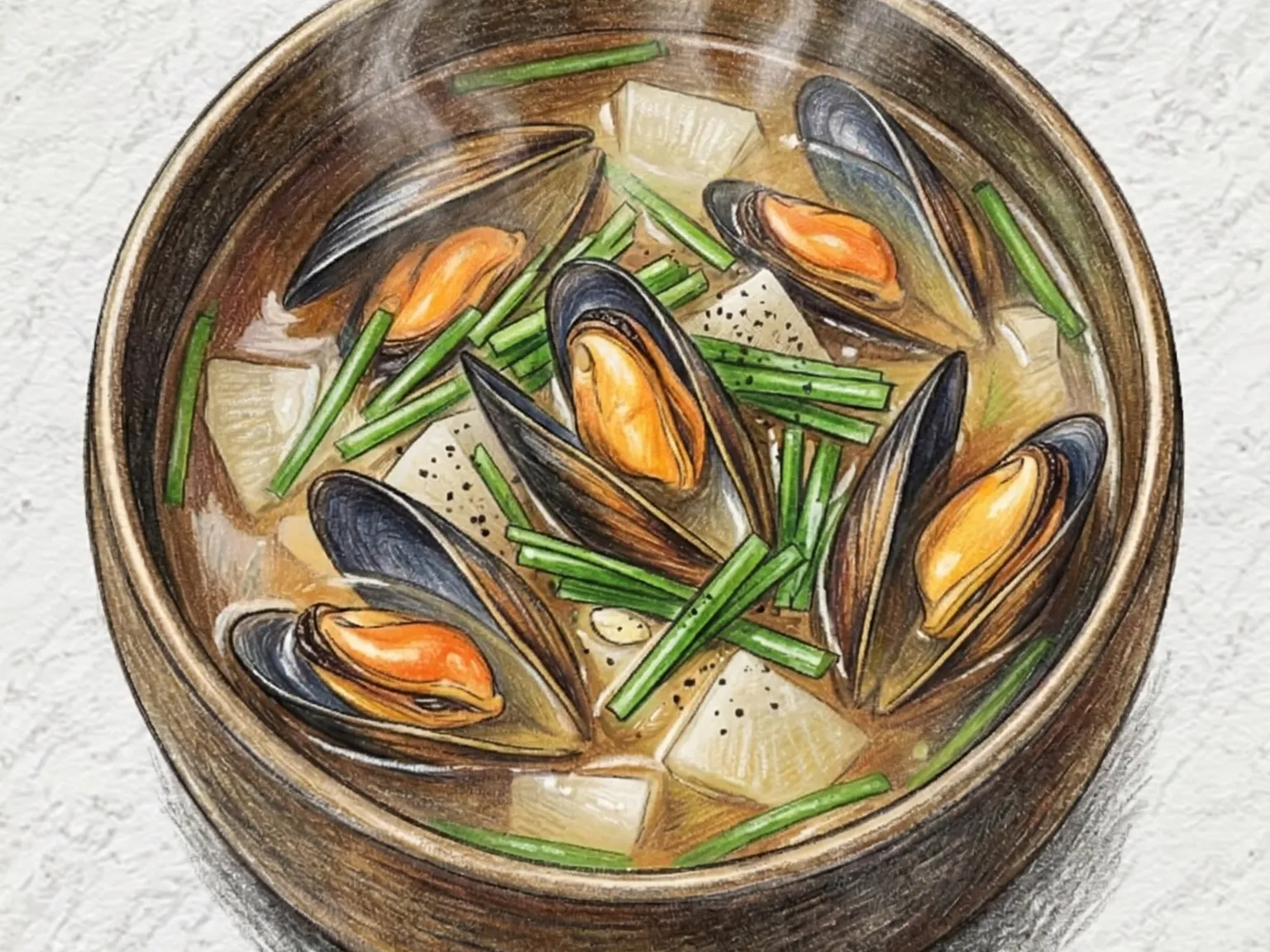
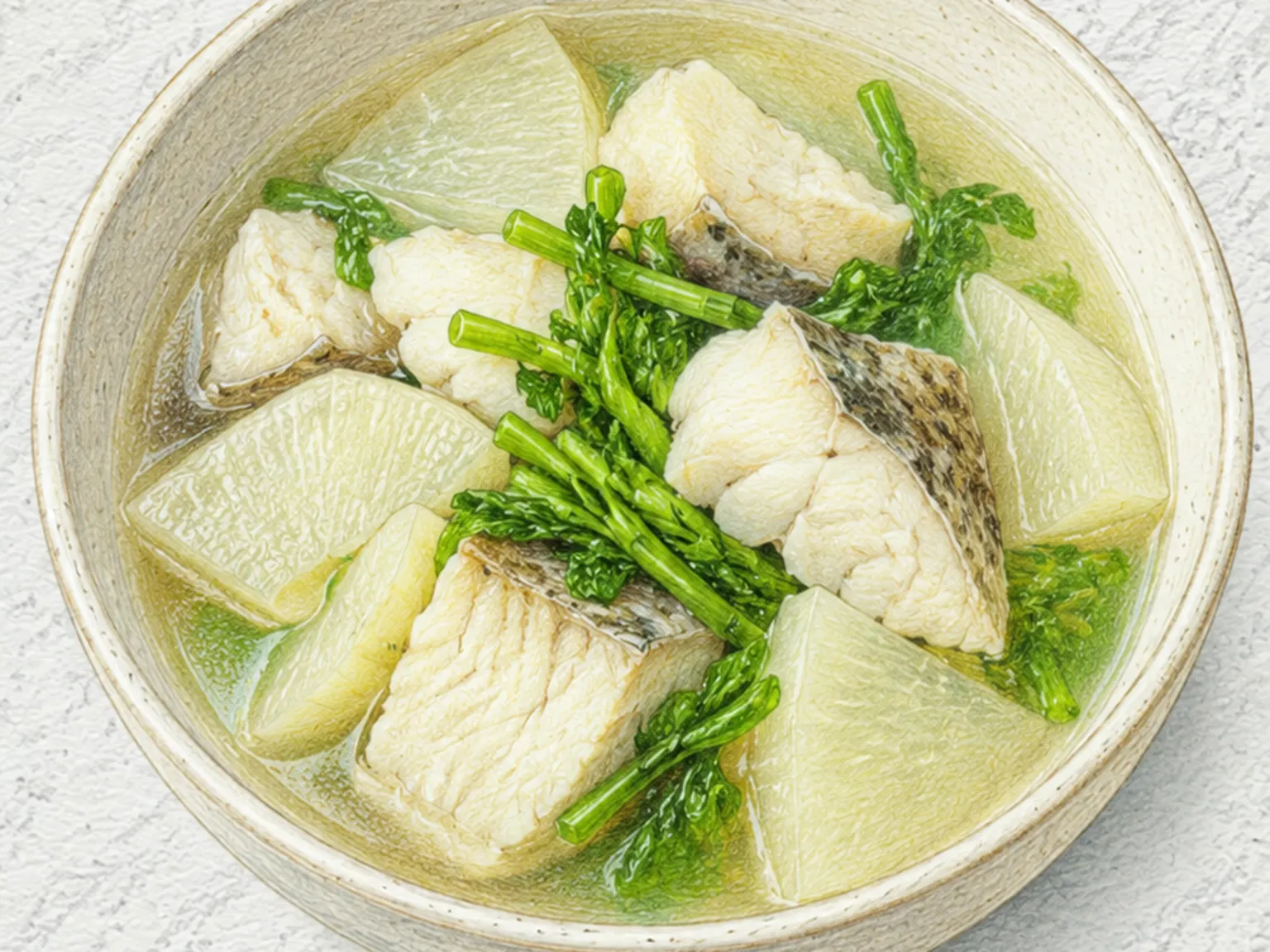
Debearded mussels are simmered with radish in water to draw out a briny, full-bodied stock, with rice wine added early to neutralize any fishy off-notes while keeping the oceanic depth intact. Soup soy sauce and garlic season the broth through the middle of cooking, and Korean chives plus black pepper go in at the very end so their fresh fragrance carries through to the bowl. Cooking uncovered lets off-flavors escape with the steam. Any mussel that stays closed after five minutes of simmering must be removed. Starting the radish alongside the mussels from the beginning allows its natural sweetness to dissolve into the stock and support the briny umami from below.
Okiagari (Sakura Shrimp and Tofu Hot Pot)
Okiagari is a hot pot from the fishing community of Yui in Shizuoka, named for fishermen coming ashore after the sakura shrimp catch. Fresh sakura shrimp simmer briefly in a sweet soy and sake broth before large tofu pieces are added to absorb the seasoning. Leafy scallions enter only at the end, preserving their color and fresh aroma. The shrimp should be drained well and cooked until opaque, while the tofu remains in large pieces so it does not break apart during simmering.
Korean Steamed Pomfret (Whole Fish with Soy Ginger Sauce)
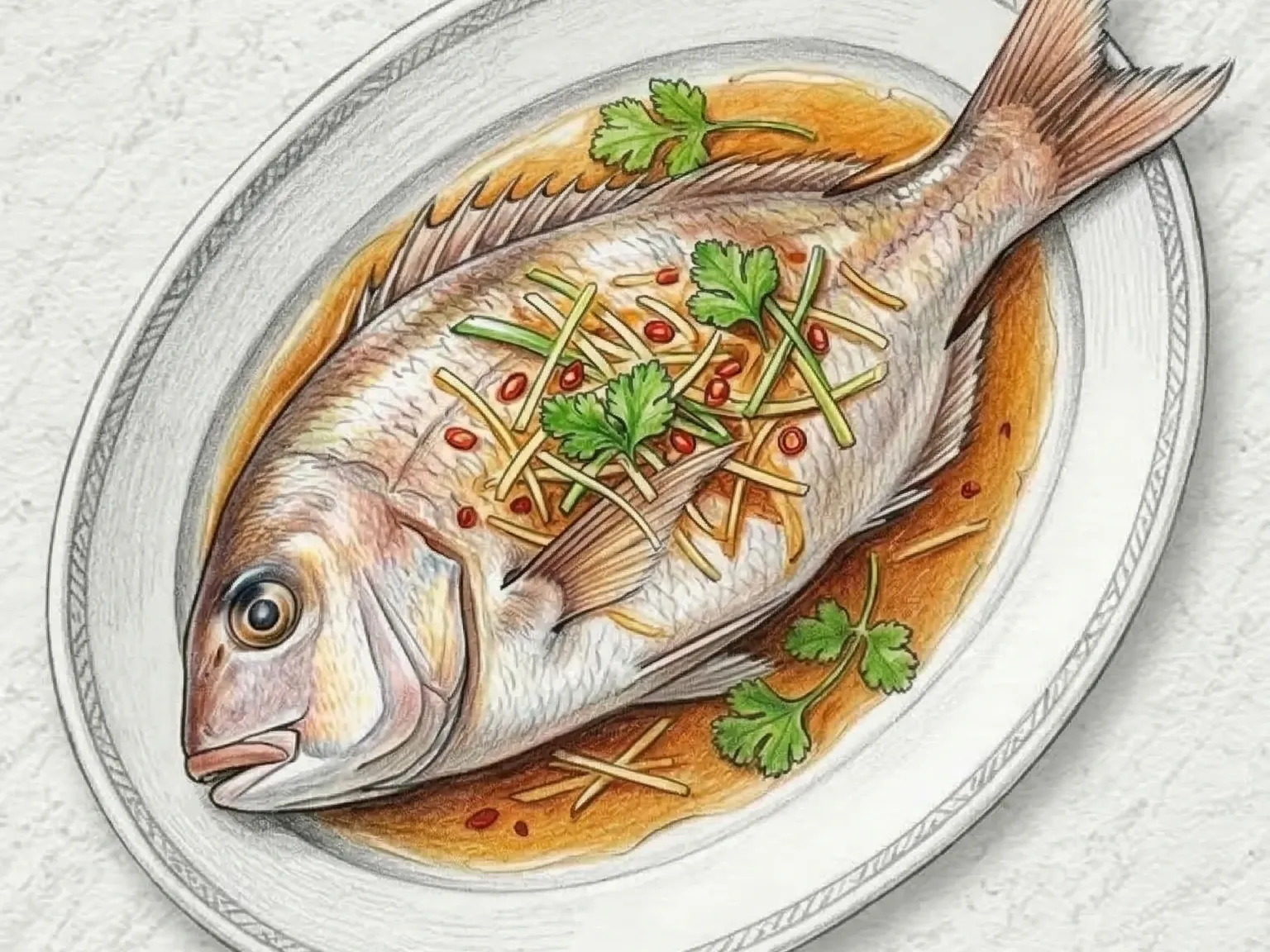
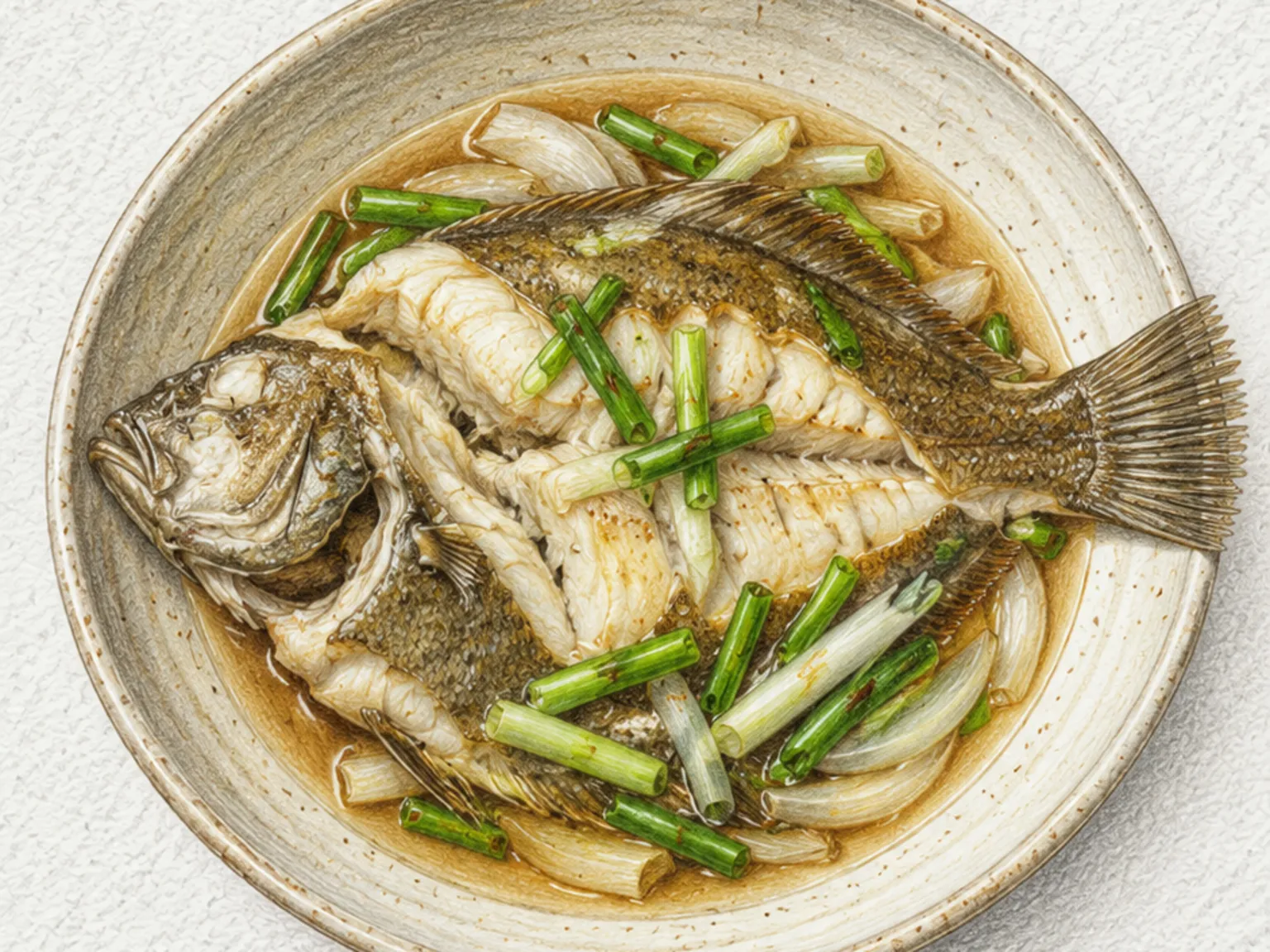
Korean steamed pomfret is a mild fish dish made by steaming a whole scored pomfret with ginger and green onions, then seasoning it with a warm soy sauce mixture. The thin, delicate flesh of the pomfret becomes tender after steaming, allowing the meat to separate easily from the bone. To manage the fish odor and build layers of aroma, sliced ginger and cut green onions are added in two separate stages: first during the main steaming process and again at the end. A heated sauce of soy sauce, rice wine, and water is poured over the cooked fish to ensure the seasoning penetrates evenly. A final touch of sesame oil adds a toasted scent to the non-spicy, low-fat preparation. This clean and mild dish is suitable for various diners.
Korean Salted Yellow Croaker Jeotgal
Jogi jeotgal is a Korean salted and fermented yellow croaker made by gutting the fish, layering it in coarse sea salt for an initial multi-day cure in the refrigerator, then folding in gochugaru, garlic, ginger, and rice wine for a second stage of aging. Over the extended fermentation, fish protein breaks down into a concentrated savory depth that bears no resemblance to the raw ingredient, while the sea salt continuously draws out moisture and causes the flesh to contract and firm. Gochugaru and ginger suppress the fermentation smell and add a mild heat and aromatic warmth, while rice wine smooths out the sharp, rough edges that develop early in the process. The finished jeotgal is used in small amounts, placed over rice or added to kimchi jjigae as a flavor amplifier, a condiment that delivers significant depth from a very small quantity.
Taipiien (Kumamoto Glass Noodle Soup)
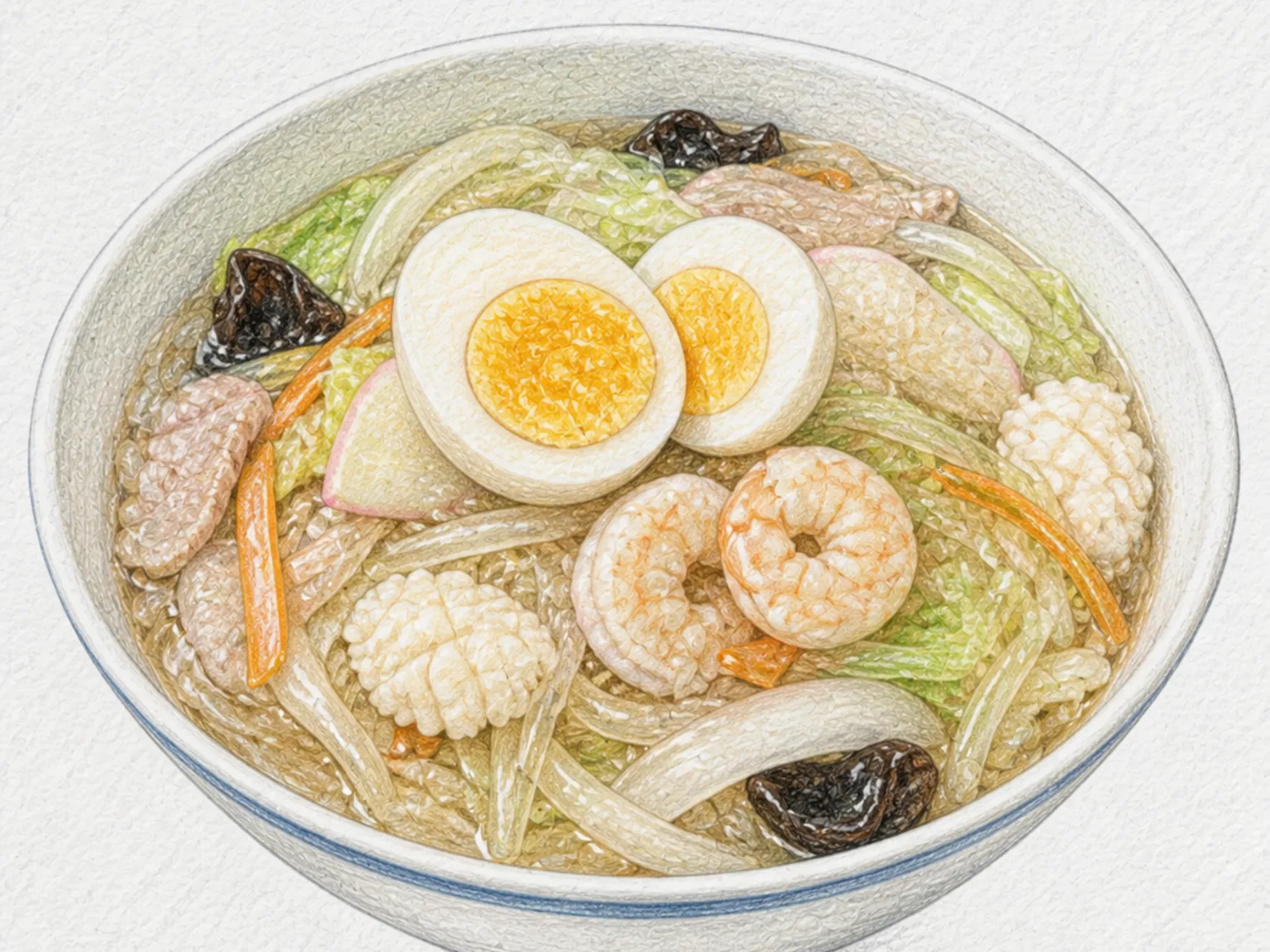
Taipiien is a substantial glass noodle soup served in Chinese restaurants and homes across central Kumamoto. Ginger, pork, onion, carrot, wood ear, and napa cabbage are stir-fried before shrimp, squid, and kamaboko join a clear chicken broth. Separately boiled glass noodles are cut to an easy length and warmed in the soup, which is finished with light soy sauce, green onion, and sesame oil. A firm hard-boiled egg cut in half tops each bowl. The dish traces its roots to celebratory soup from Fuzhou in China's Fujian Province, brought through Nagasaki to Kumamoto in the late Meiji period and adapted with local ingredients.
Hyoboshi no Nimono (Simmered Dried Purslane)
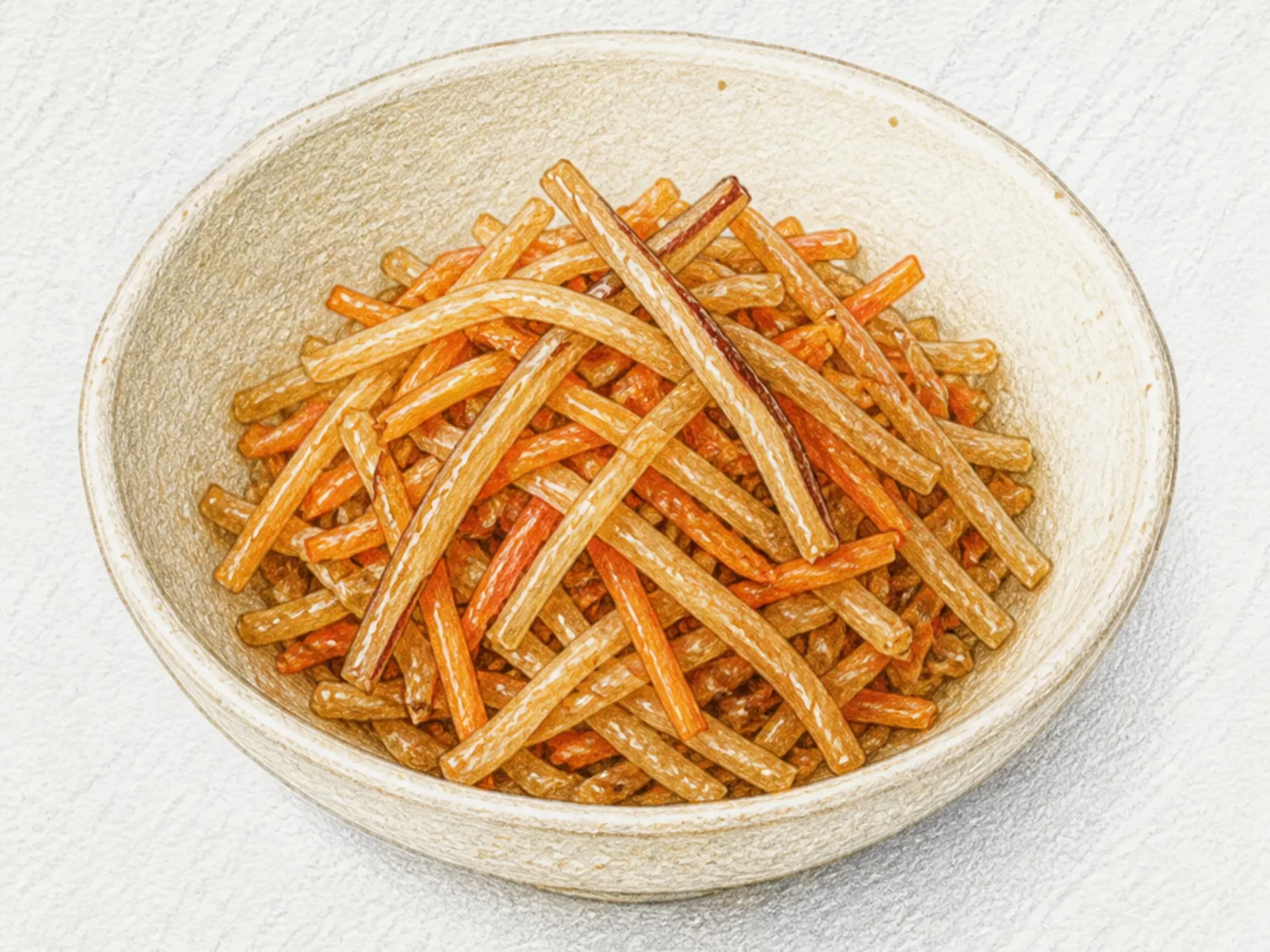
Hyoboshi no nimono is a preserved-vegetable side dish from Yamagata. Purslane that was blanched and sun-dried in summer is gently rehydrated overnight in winter, then stir-simmered with shirataki, carrot, and fried tofu in a sweet soy seasoning. The dish grew from the drying and salting culture of snowy Murayama and Okitama, where households had to secure food before fields disappeared under winter snow. Dried purslane has a light chew and concentrated green aroma rather than the fresh plant's acidity. Heating it from cold water to one boil, leaving it overnight, and changing the water 2 to 3 times the next day softens the stems evenly and clears stale flavors.
Ohan to Kayaku (Gardenia Rice with Fish and Vegetable Stew)
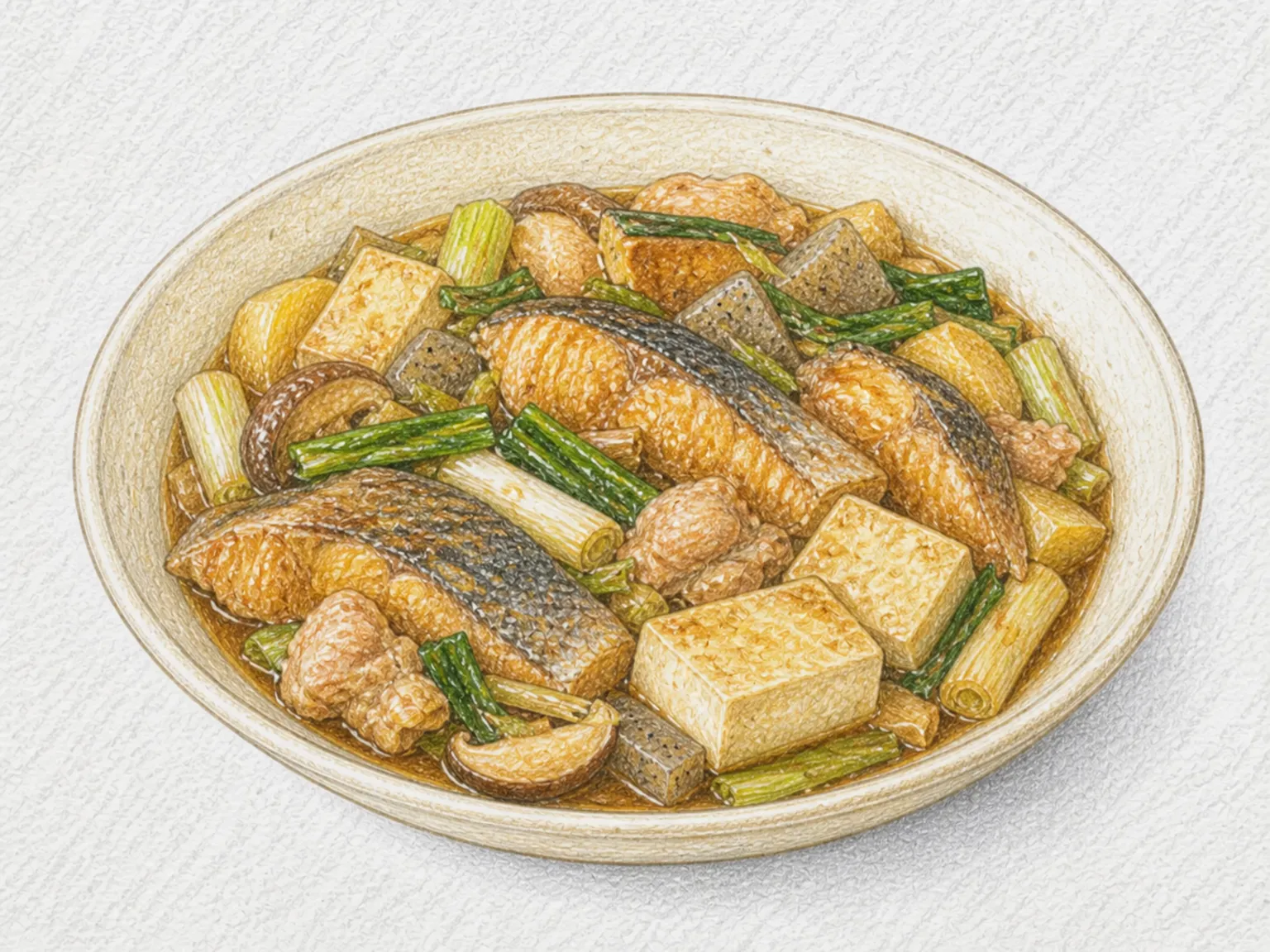
Ohan to kayaku is an Usuki ceremonial meal pairing rice colored yellow with gardenia fruit and a hearty stew of tofu, burdock, daikon, carrot, onion, and white-fleshed lizardfish. The gardenia infusion is strained and used promptly because prolonged soaking can dull the bright yellow or turn it greenish. For the kayaku, drained tofu is crumbled into oil, followed by minced fish and firm vegetables, then dashi and soy-based seasoning create a warm, substantial soup spooned directly over the rice. One story says the frugal Usuki domain developed yellow rice as an alternative to costly red bean rice. Another links its color to paella encountered through Nanban trade under the Christian lord Otomo Sorin. Merchants also cooked large pots of kayaku on New Year's Eve and reheated them through the first three days of the year.
Korean Mussel Stir-Fry (Plump Mussels with Butter, Garlic and Chili)
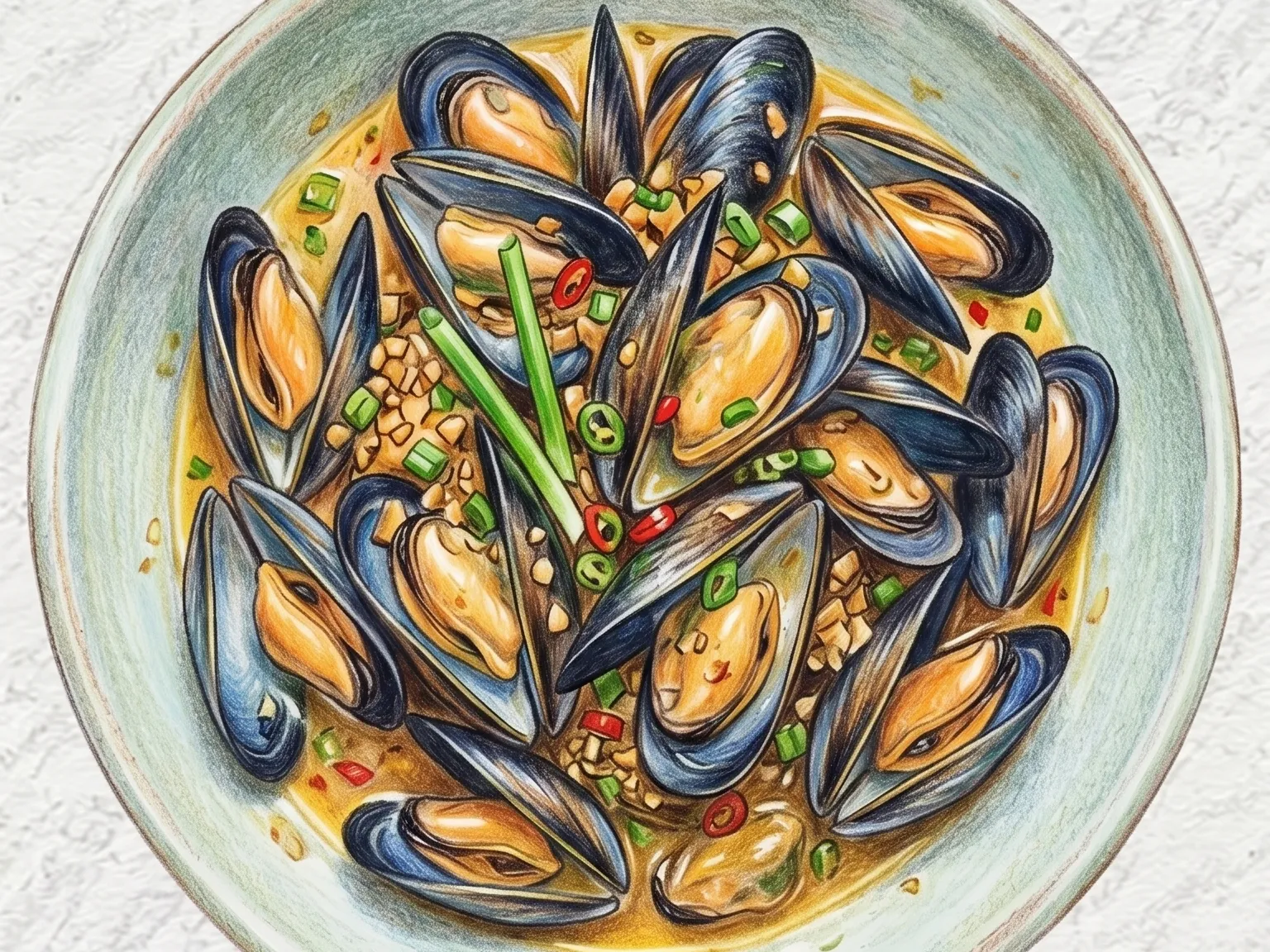
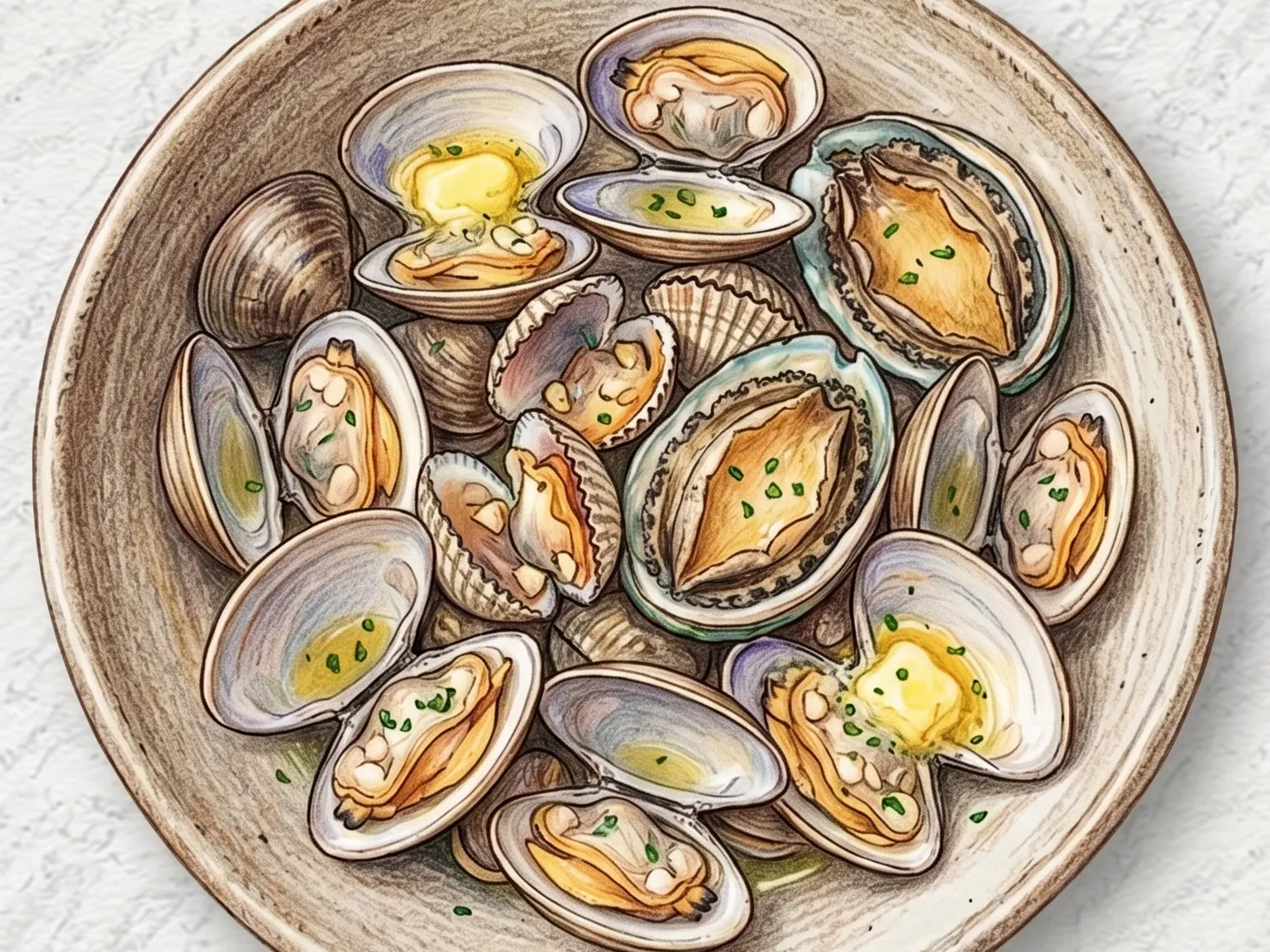
Honghap-bokkeum is a Korean stir-fried mussel dish cooked in a garlic butter sauce. The recipe begins by cleaning the mussels, removing the beards, and discarding cracked shells. Garlic slices are sautéed in melted butter until fragrant. The mussels are then added with rice wine, covered, and steamed for four minutes. This steaming process creates a savory sauce by combining the butter with the natural juices from the mussels. Unopened shells are discarded. Sliced green onions and cheongyang chilies are stir-fried with the mussels for one minute, adding a sharp heat that balances the buttery richness. Finally, a splash of soy sauce is drizzled around the pan edge to glaze the shells, making the dish ready to serve alongside steamed rice.
Miso Potato (Fried Potatoes with Sweet Miso Sauce)
Miso potato is a Chichibu, Saitama snack once eaten as kojuhan, a light meal during breaks from farm work. Bite-size potatoes are soaked, parboiled until nearly tender, coated in a loose flour batter, and fried at 180°C until the thin shell becomes crisp. Miso, sugar, sake, mirin, and water are cooked separately into a glossy sweet-savory sauce and poured over the potatoes while they are still hot. Each piece combines a fluffy center, light fried coating, and concentrated miso topping. What began as practical farm food is now served as a home snack, side dish, sake accompaniment, and school lunch item.
Korean Euneo Sogeum-gui (Salt-Grilled Sweetfish)
Euneo-sogeum-gui is a salt-grilled freshwater sweetfish dish where whole fish, intestines left intact, are seasoned only with coarse salt and cooked slowly over charcoal or a wire grill until the skin crisps and chars lightly at the edges. Sweetfish carries a distinctive fresh fragrance comparable to cucumber or watermelon rind, a quality that earned it the name 'fragrant fish' in Japanese, and that delicate aroma would be overwhelmed by any marinade or heavy seasoning, making salt the only appropriate choice. The intestines contain a concentrated bitterness balanced by deep umami, and eating the fish whole, organs included, is the traditional approach rather than an afterthought. Grilling slowly over medium heat while turning the fish at intervals prevents the lean flesh from drying out while allowing the skin to develop an even, crackled crispness. Skewering the fish in a wave-like curve before cooking is the classic presentation that allows fat to render and drip naturally during grilling, basting the skin from the inside. A squeeze of lemon at the table brings acidity that tempers the slight bitterness from the organs and brightens the overall finish. Fish caught and grilled the same day is considered ideal, and smaller individuals tend to carry a purer aroma and a milder bitterness.
Dabu Chicken and Root Vegetable Soup
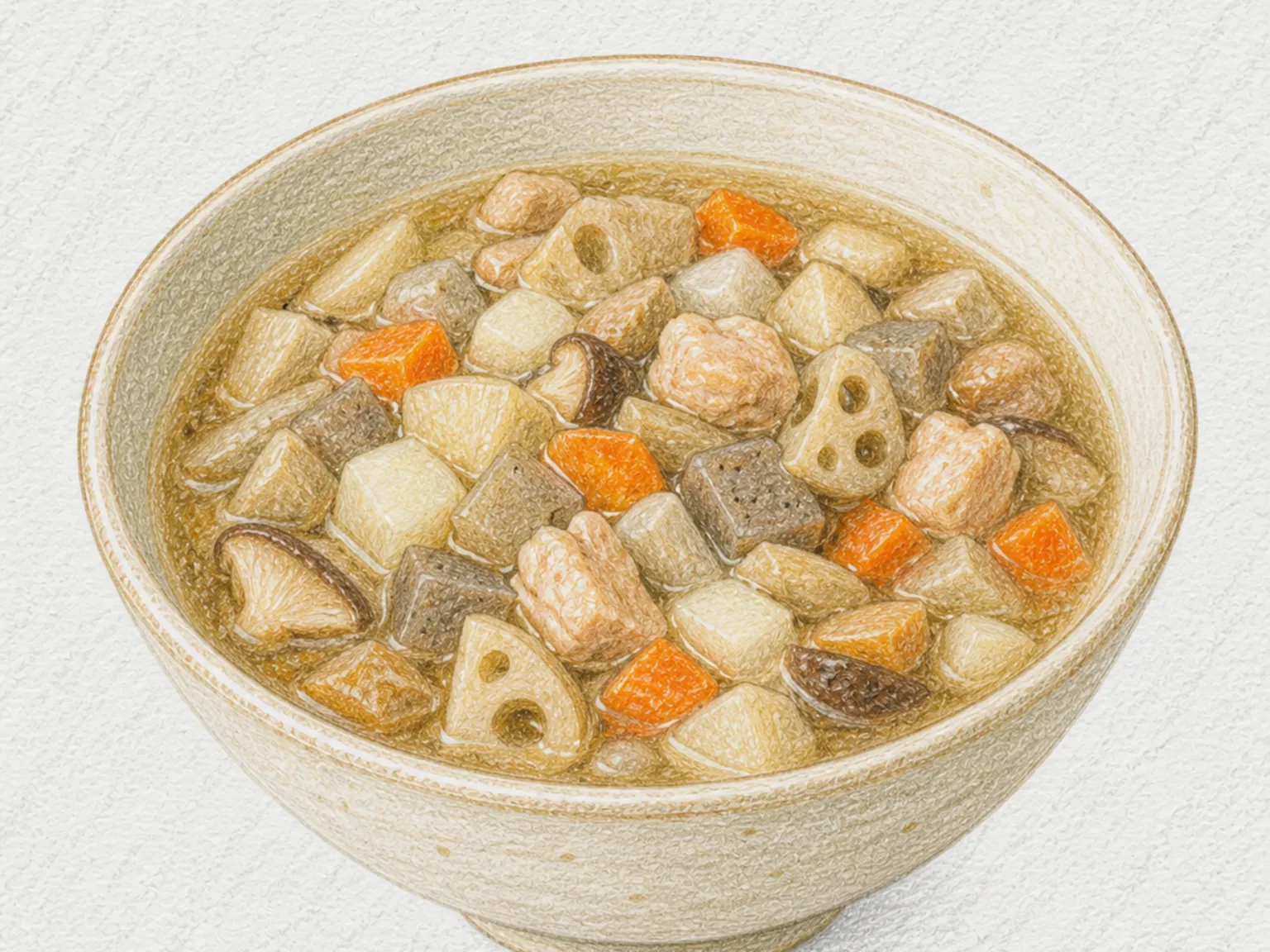
Dabu is a local soup from the Karatsu area of Saga, simmering chicken, lotus root, taro, burdock, carrot, shiitake, konnyaku, and other small-cut ingredients in abundant broth. Its name is said to come from zabu-zabu, an expression for liquid sloshing generously around the solids. Neighbors once gathered to cook it in large pots for weddings, funerals, and invited guests. The shape and selection changed with the occasion: square pieces and wheat gluten for celebrations, while triangular konnyaku could mark Buddhist memorial meals. This version uses 18g potato starch for 1. 2L broth, adding only a thin sheen rather than turning the soup heavy.
Imoni (Yamagata Taro and Beef Hot Pot)
Imoni is an inland Yamagata hot pot that simmers autumn taro with beef, konjac, and long onion in a soy-seasoned broth. Taro and hand-torn konjac begin cooking in water with part of the soy sauce so the roots soften before the meat enters. Fatty beef is then added with the remaining soy sauce, sugar, and sake, and the foam is skimmed as the broth cooks. Thick diagonal pieces of onion simmer until very soft and sweet. In Yamagata, families and friends gather beside rivers for imoni parties in autumn and winter, sharing large outdoor pots, while the same basic combination is also a regular home dish.
Korean Steamed Sea Bream (Whole Fish with Soy Ginger Rice Wine)
Domi-jjim is a whole sea bream steamed with soy sauce, rice wine, and ginger. Sea bream is a firm-fleshed white fish with a naturally mild, clean taste, and steaming preserves its moisture and delicate texture far better than dry-heat methods. Rice wine and ginger remove any remaining fishiness from the flesh, leaving only a refined umami that speaks to the quality of the fish itself. Soy sauce is used sparingly as an understated seasoning that enhances without overpowering. Because the fish is steamed rather than roasted or pan-fried, the flesh stays supple and springs back with each bite. Bringing a whole fish to the table makes a strong visual impression, which explains its frequent appearance at holiday meals and formal gatherings. The finished dish is typically garnished with julienned scallion and red chili before a final drizzle of hot sesame oil.
Korean Green Plum Pickles
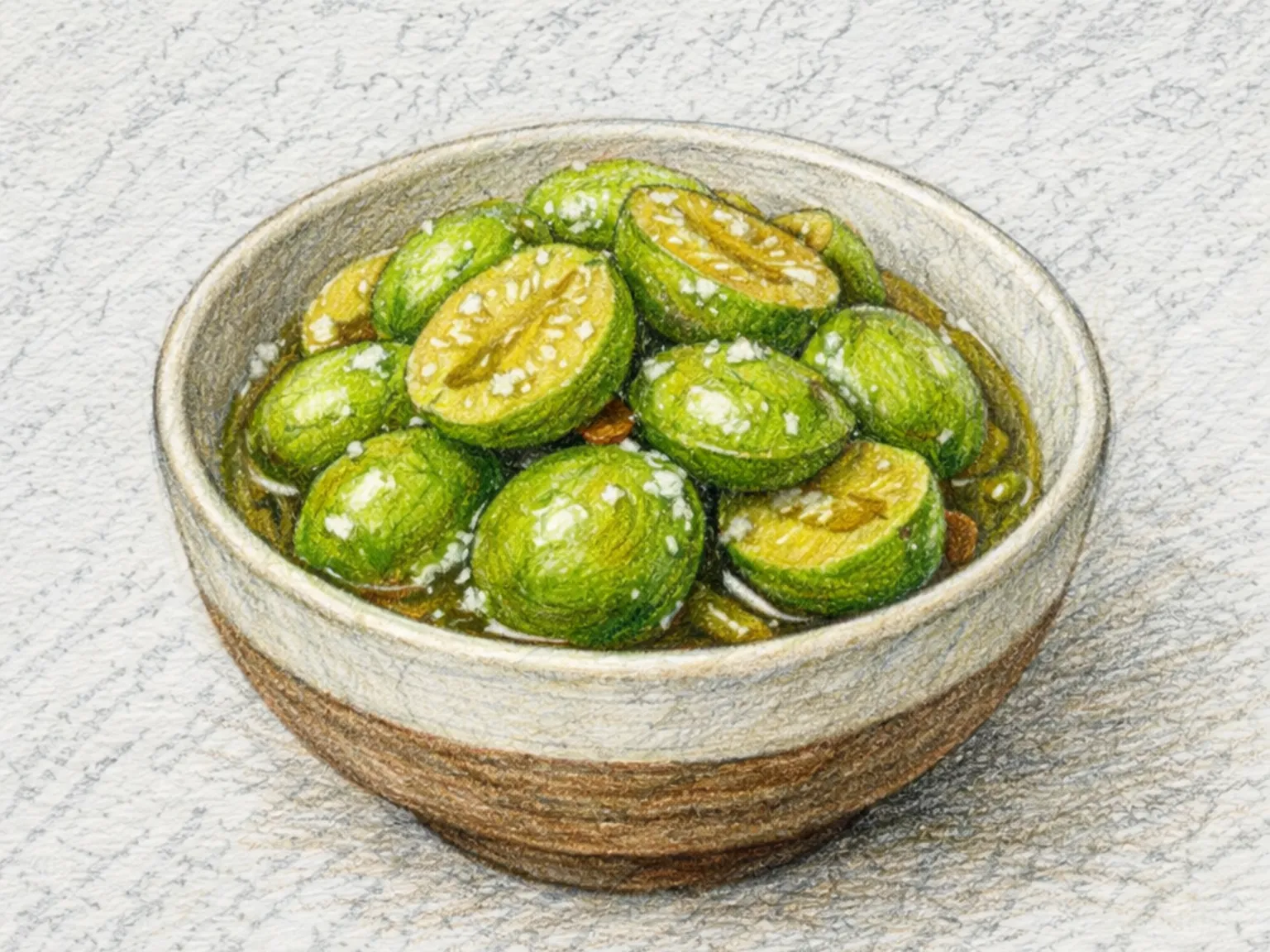
Maesil jangajji is a traditional Korean green plum pickle made by salting unripe plums to draw out bitterness, layering them with sugar, and pouring in vinegar and rice wine for months of aging. Over the long curing process, the plum's sharp acidity gradually harmonizes with the sugar's sweetness, and the flesh condenses as moisture evaporates, concentrating its floral aroma. Vinegar stabilizes the fermentation while rice wine smooths any harsh notes, resulting in a pickle that is tart, sweet, and cleanly fragrant. A couple of pieces placed beside a bowl of rice stimulate the appetite with their bright acidity, making this a Korean summer preserve with a long tradition. The best time to prepare it is early June when young green plums come to market, and stored in glass jars in a cool spot the pickle keeps well for over a year.
Ei no Nikogori Chilled Simmered Ray
Ei no nikogori is a Katsuragi specialty from Nara that sweet-salty simmers fresh red stingray with ginger, sake, mirin, sugar, and soy sauce, then chills the fish in its liquid until the broth sets like jelly. Although inland, Nara received seafood landed in Osaka quickly along the Takenouchi road. Ray was especially useful because its abundant collagen firms the cooled braising liquid without added gelatin. The fish is cut into six-centimeter pieces, soaked well in cold water to moderate its odor, and dried. The seasonings are boiled first, and the ray cooks in the liquid until opaque and tender. Fish and strained broth are arranged together in a shallow container, cooled promptly rather than left at room temperature, and refrigerated until firm enough to slice. Ray with an ammonia odor indicates deterioration and must not be cooked or eaten.
Ikameshi (Rice-Stuffed Squid)
Ikameshi is a Hokkaido dish made by filling whole squid bodies with soaked glutinous rice and chopped tentacles, then simmering them slowly in dashi, soy sauce, sake, and sugar. The rice expands inside the squid while absorbing the seafood juices and the sweet savory broth. Filling each body only a little over halfway leaves room for that expansion and helps prevent splitting. Gentle simmering cooks the rice through without tightening the squid too quickly, and the finished pieces are sliced crosswise for serving.
Korean Water Parsley, Clam & Garlic Stir-fry
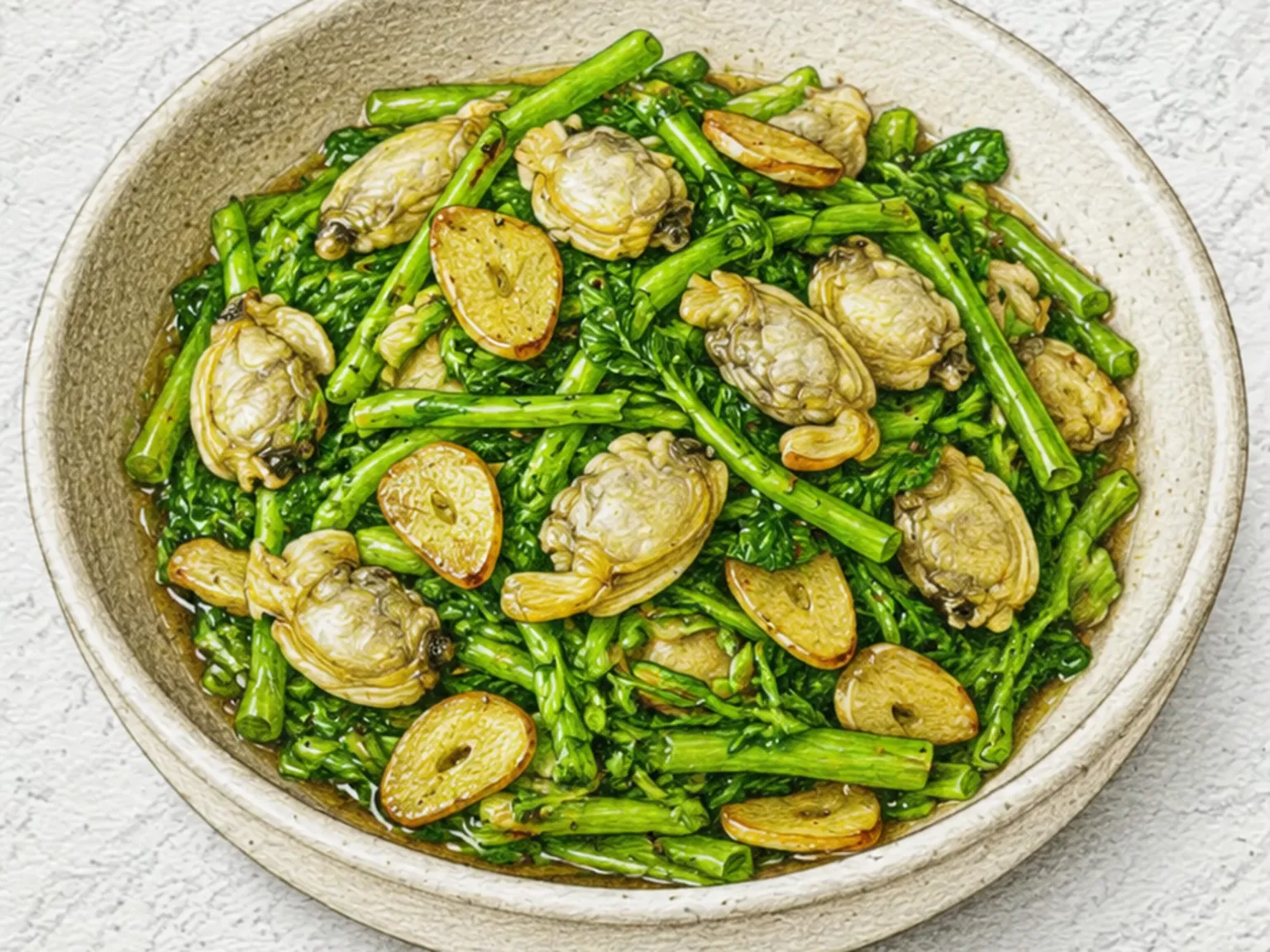
Minari-bajirak-maneul-bokkeum starts by slowly toasting garlic slices in oil over low heat until they turn golden and mellow, coaxing out a sweet, nutty fragrance that becomes the aromatic backbone of the entire dish. As the garlic cooks gently, its sharp pungency fades and the infused oil absorbs its full flavor. Clam meat goes in next with a splash of rice wine and cooks for just about 90 seconds at higher heat, long enough to eliminate any fishiness while keeping the flesh plump and springy. Water parsley stems are added with a measure of soup soy sauce and, if desired, sliced red chili, and their crunch is preserved by not overcooking. The delicate parsley leaves join only in the final 20 seconds before the heat is turned off so they barely wilt, contributing their distinctive grassy aroma without losing it entirely to the heat. A few drops of sesame oil finish the dish. The result brings together three distinct textures and flavors in a single pan: the sweet depth of the toasted garlic oil, the clean ocean salinity of the clams, and the fresh herbal brightness of the minari.