Apple Vinegar Spicy Mixed Noodles
Quick answer
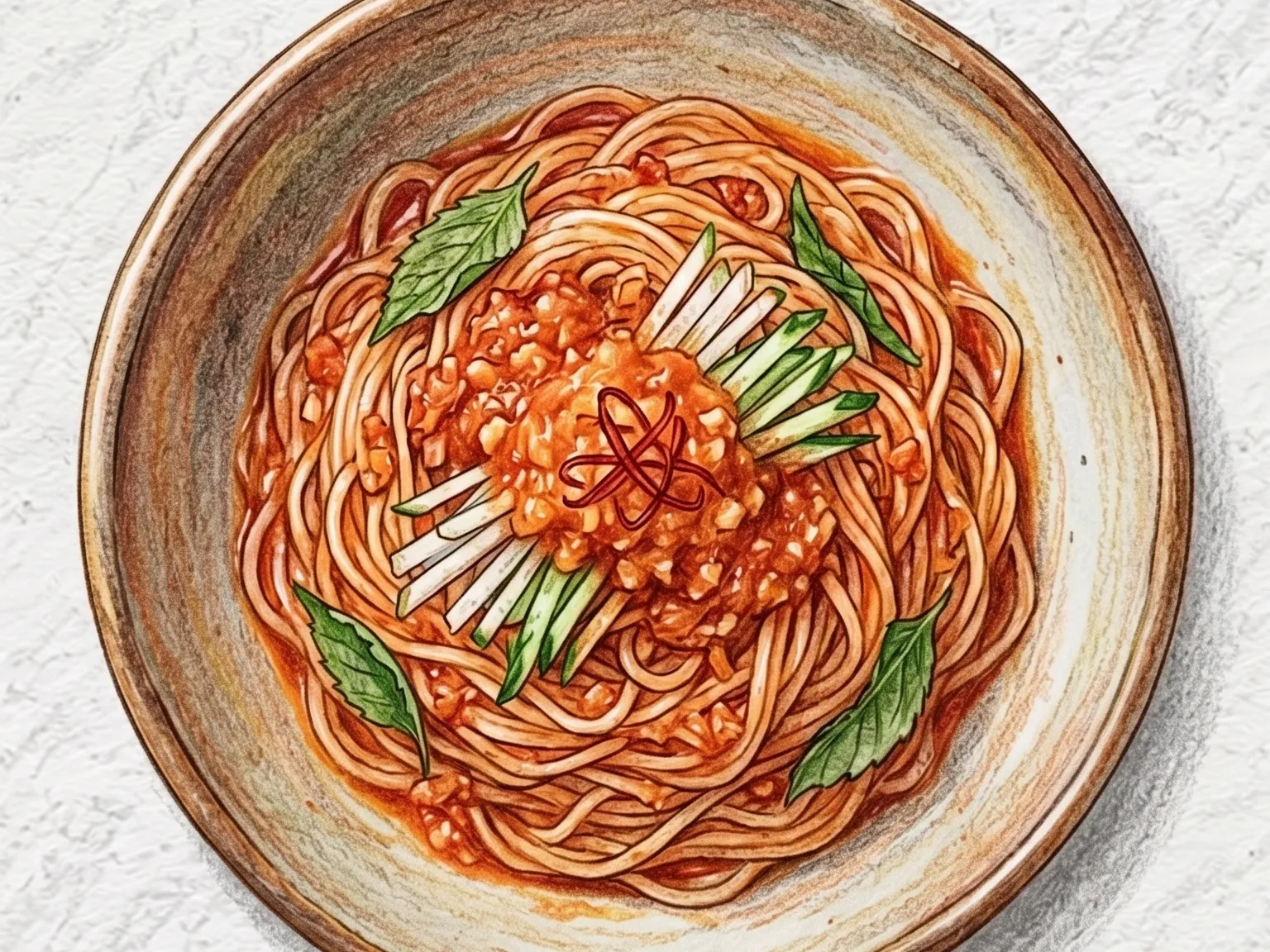
Apple Vinegar Spicy Mixed Noodles is a cold noodle dish featuring a sauce made with freshly grated apple and apple vinegar.
What makes this special
- Apple vinegar and freshly grated apple add a natural, tangy sweetness to these spicy noodles.
- Grated fresh apple replaces sugar for natural sweetness
- Sauce rested 30 minutes in the fridge mellows raw gochujang
Key ingredients
Core cooking flow
- 1 Peel half an apple and grate it finely on a box grater so the juice and pulp remain together.
- 2 Combine the grated apple with 3 tbsp gochujang, 1 tbsp red pepper flakes, 3...
- 3 Transfer the sauce to a sealed container and refrigerate for 30 minutes so t...
Apple Vinegar Spicy Mixed Noodles is a cold noodle dish featuring a sauce made with freshly grated apple and apple vinegar. Instead of using a large amount of refined sugar, half of a fresh apple is grated into the mixture to provide a natural sweetness. The sauce combines gochujang, gochugaru, soy sauce, minced garlic, and apple vinegar, and it is rested in the refrigerator for thirty minutes to eliminate the raw smell of the chili paste and deepen the flavor. The thin wheat noodles are boiled for three minutes and then rinsed vigorously in cold water to remove excess starch, which ensures a springy and chewy texture. Once drained, the noodles are tossed with the chilled seasoning sauce and sesame oil. The dish is garnished with a halved hard-boiled egg and sesame seeds before serving.
Instructions
Read the steps as a cooking flow: prep, heat, seasoning, doneness control, and finish.
- 1Step
Peel half an apple and grate it finely on a box grater so the juice and pulp remain together.
- 2Season
Combine the grated apple with 3 tbsp gochujang, 1 tbsp red pepper flakes, 3 tbsp apple cider vinegar, 1 tbsp soy sauce, 2 tbsp oligodang syrup, and 0.5 tbsp minced garlic, and stir until uniform.
- 3Season
Transfer the sauce to a sealed container and refrigerate for 30 minutes so the apple's acidity blends with the gochujang and deepens the flavor.
- 4Heat
Cook 200g somyeon in boiling water for 3 minutes until translucent, then drain and rub vigorously under cold water to remove starch, and drain in a colander.
- 5Season
In a large bowl, combine the drained noodles and the chilled sauce, add 1 tbsp sesame oil, and toss gently with chopsticks until the sauce coats every strand without breaking the noodles.
- 6Finish
Plate neatly, halve the hard-boiled egg and place it on top, then finish with a sprinkle of sesame seeds.
After the steps
Pick a recipe that fits this dish.
Continue with shared ingredients, meal pairings, or a similar method.
Recipes That Go Well With This
More Noodles →Based on shared ingredients and meal pairing
Korean Spicy Mixed Wheat Noodles
Bibim guksu is a chilled Korean noodle dish in which boiled and cold-rinsed somyeon wheat noodles are tossed in a sauce of gochujang, chili flakes, plum syrup, vinegar, soy sauce, and sesame oil. The heat from the gochujang, the sweetness of plum syrup, and the brightness of vinegar stack into a multi-dimensional flavor in every bite. Rinsing the noodles thoroughly in cold water removes excess starch, giving them a bouncy texture and allowing the sauce to cling evenly. Torn lettuce and julienned cucumber folded in at the end add crunch and release moisture that loosens the thick sauce just enough. A tablespoon of noodle cooking water can thin the sauce if needed. For 100 g of somyeon, a starting ratio of 1 tablespoon gochujang, 1 tablespoon plum syrup, and 1 teaspoon vinegar provides a reliable base to adjust from.
Korean Yeolmu Bibim Guksu
Yeolmu bibim guksu is a Korean mixed noodle dish built around young radish kimchi (yeolmu kimchi). The kimchi provides a crunchy texture and a fermented tanginess that anchors the bowl. Thin somyeon noodles are rinsed in cold water, then tossed with gochugaru or gochujang dressing, sesame oil, and sesame seeds. The heat level stays moderate, letting the kimchi's sourness come through. Total preparation is about 23 minutes, and the recipe requires no cooking beyond boiling the noodles. The main ingredients are Somyeon noodles, Yeolmu kimchi, Gochujang, and Vinegar, and the recipe depends on careful handling of noodle cooking time and sauce thickness.
Chicken Cabbage Wraps
Chicken Cabbage Wraps represent a simple side dish combining tender chicken tenderloin with steamed cabbage leaves. The cabbage leaves are steamed for seven to eight minutes until slightly translucent, then cooled in cold water to preserve their color and flexibility. The chicken tenderloins are prepared by removing the tough tendons and marinating with mirin, salt, and pepper to reduce dryness and enhance tenderness. Once grilled on a medium-heated pan until cooked through, the chicken is rolled tightly inside the prepared cabbage leaves. Brushing the rolls with sesame oil before slicing them into bite-sized pieces adds a nutty finish. Serving these wraps with ssamjang creates a balanced dish with minimal ingredients, offering a clean taste and a pleasant contrast of textures.
Korean Spicy Mixed Cold Noodles
Cold, chewy naengmyeon noodles are tossed in a sauce of gochujang, chili flakes, vinegar, sugar, and sesame oil. The noodles' characteristically tough, springy texture grips the bold sauce rather than letting it slide off, which creates an intensely textured bite. The single most critical preparation step is rinsing the boiled noodles thoroughly under cold water multiple times - removing the surface starch and squeezing out excess moisture keeps the sauce from diluting as it sits. Julienned cucumber and thin-sliced Korean pear cut through the heat, bringing refreshing crunch and a light fruitiness to each mouthful. Half a boiled egg placed on top tempers the chili's sharpness and brings the overall balance into line.
Serve with this
Korean Beoseot Deulkkae Jeon (Mushroom Perilla Pancake)
Mushroom and perilla seed jeon brings together oyster mushrooms and shiitake, sliced thin and folded into a batter built on perilla seed powder and a splash of soy sauce. Perilla seeds carry a heavier, slightly bitter nuttiness compared to sesame, and that quality anchors the earthy depth of the mushrooms rather than competing with it. Seasoning the batter directly with soy sauce means the pancake holds its own without a dipping sauce, though one on the side does not go amiss. Frying with enough oil gives the exterior a thin, crisp shell while the mushroom filling stays moist inside. Oyster mushrooms torn along their grain develop a pleasantly chewy bite as they cook; shiitake sliced fine distribute evenly so the whole pancake cooks at the same rate. It works as a makgeolli pairing or a straightforward side, and holds up well at room temperature - the perilla aroma actually deepens as it cools.
Chia Seed Yuja Dressing Tofu Salad
Chia Seed Yuja Dressing Tofu Salad is a light salad featuring soft silken tofu and baby greens. The dressing is made by soaking chia seeds in lemon juice and water for ten minutes until they swell into gel beads, which are then combined with yuja marmalade, vinegar, olive oil, and soy sauce. The soft tofu is cut into pieces and drained on paper towels to ensure it absorbs the citrus flavors of the dressing. Halved cherry tomatoes and baby greens provide a crisp texture that balances the softness of the tofu. To prevent the greens from softening, the dressing is poured over the salad just before serving. Refrigerating the mixed dressing for thirty minutes enhances the chewiness of the seeds. You can also substitute soft tofu with grilled tofu or chicken breast to modify the protein source.
Korean Soy Pickled Radish Cubes
Mu jangajji is a fundamental Korean soy-pickled radish made by cutting radish into 1.5 cm cubes, packing them in a sterilized jar with dried chili, and pouring over a boiled brine of soy sauce, vinegar, and sugar. The radish's firm flesh absorbs the sweet-salty brine gradually while maintaining its crisp bite, and the dried chili adds a gentle warmth and aroma to the liquid. Pouring the brine while still hot is important because the heat briefly opens the cell walls of the radish, allowing the seasoning to penetrate more evenly throughout. Vinegar balances the soy's saltiness with a clean tang, and using dense winter radish yields the best texture. This is one of the most versatile Korean pickles, appearing alongside gimbap, bibimbap, and gukbap as a reliable everyday table companion.
Similar recipes
Korean Bulgogi Jjolmyeon (Marinated Beef on Chewy Spicy Noodles)
Thinly sliced beef marinated in soy sauce, sugar, and sesame oil sits atop a bed of noodles characterized by a dense, chewy structure. Jjolmyeon provides a firm texture that resists the teeth, offering a different physical experience compared to standard noodles. The accompanying sauce, created with gochujang, soy sauce, and vinegar, introduces spicy and acidic elements that balance the sweetness of the meat. To maintain tenderness, the beef requires rapid cooking over high heat, which prevents the thin slices from drying out or becoming tough. Shredded cabbage and carrots provide layers of crispness, while a soft-boiled egg helps temper the heat from the chili paste. Serving the ingredients in separate sections keeps the textures distinct and allows for mixing just before consumption. Rinsing the cooked noodles in cold water increases their characteristic firmness, creating a clear contrast with the texture of the stir-fried beef. Adding extra sesame seeds enhances the nutty scent, and incorporating spicy peppers increases the heat level.
Korean Gochujang Bibim Udon Cup (Spicy Mixed Udon Cup)
Gochujang bibim udon cup is a cold-tossed udon noodle dish served in a cup, dressed with a sauce built from gochujang, soy sauce, oligosaccharide syrup, vinegar, and sesame oil. The fermented heat of gochujang meets the acidity of vinegar to create a bright, tangy-spicy flavor profile that avoids sharpness, and the viscous syrup gives the sauce enough body to cling evenly to the thick udon strands. Raw julienned cabbage and carrot are folded in without cooking, adding a snappy crunch that contrasts the soft noodles. Cooling the noodles completely before tossing is a key step that prevents the sauce from clumping and ensures even distribution throughout the cup. The handheld cup format suits street food settings, and additional toppings such as a soft-boiled egg or seasoned seaweed can elevate it into a fuller meal.
Korean Grilled Squid and Pork
Osam-gui is a Korean mixed grill of squid and pork belly marinated together in a spicy sauce of gochujang, soy sauce, sugar, minced garlic, and sesame oil, then cooked on a pan or grill. As the pork belly renders its fat, it merges with the marinade to form a rich, savory-spicy sauce in the pan that the squid absorbs during cooking, producing a deeper flavor than either ingredient would achieve alone. The two proteins cook at very different rates, so the pork belly goes in first for five to six minutes to render its fat and partially cook through before the squid is added-squid toughens past three to four minutes of heat exposure. The gochujang paste scorches easily at high temperatures, so maintaining medium heat and turning the pieces frequently is necessary to build a glossy glaze without any burnt bitterness.