Bomdong Strawberry Doenjang Salad
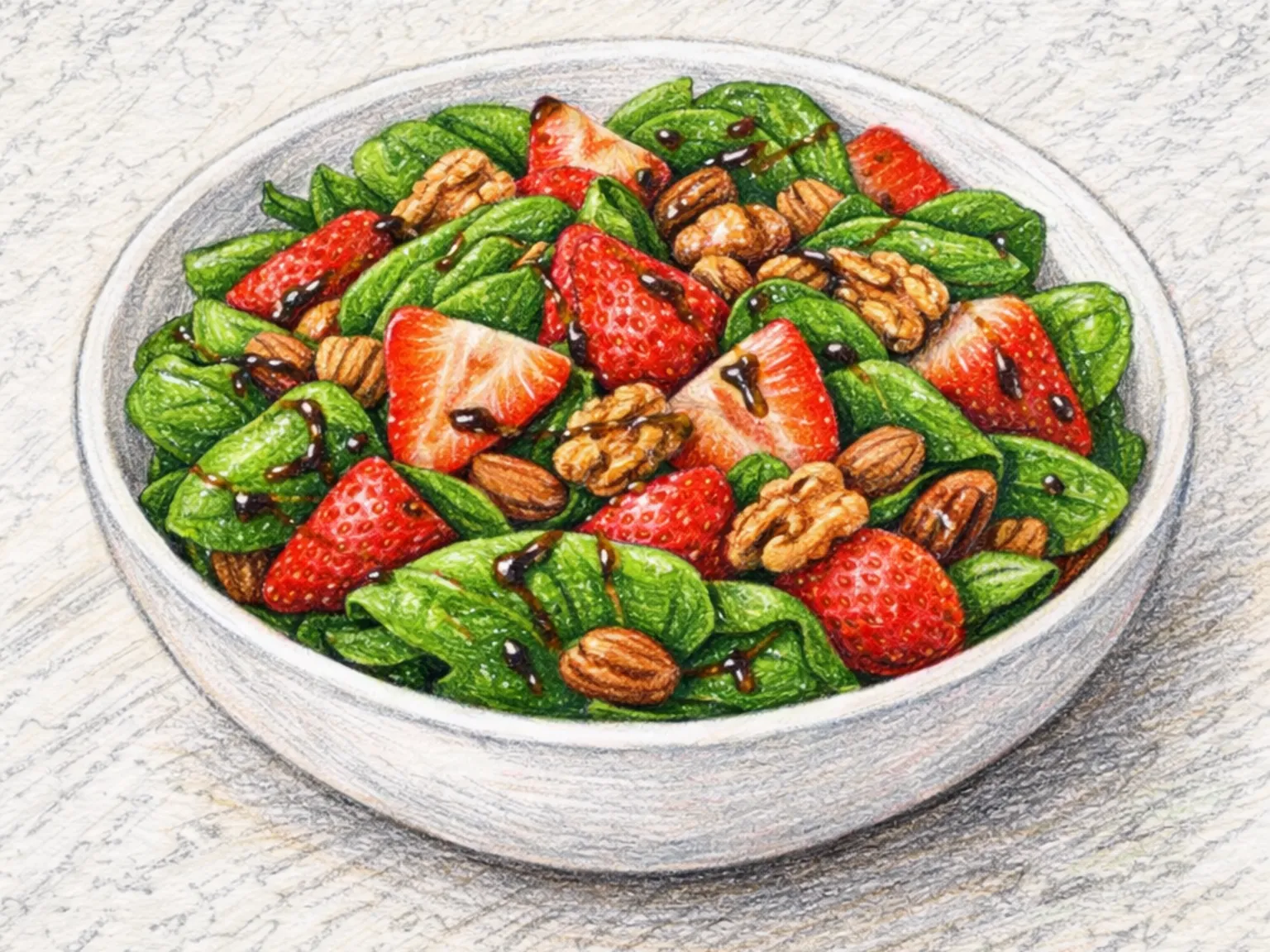
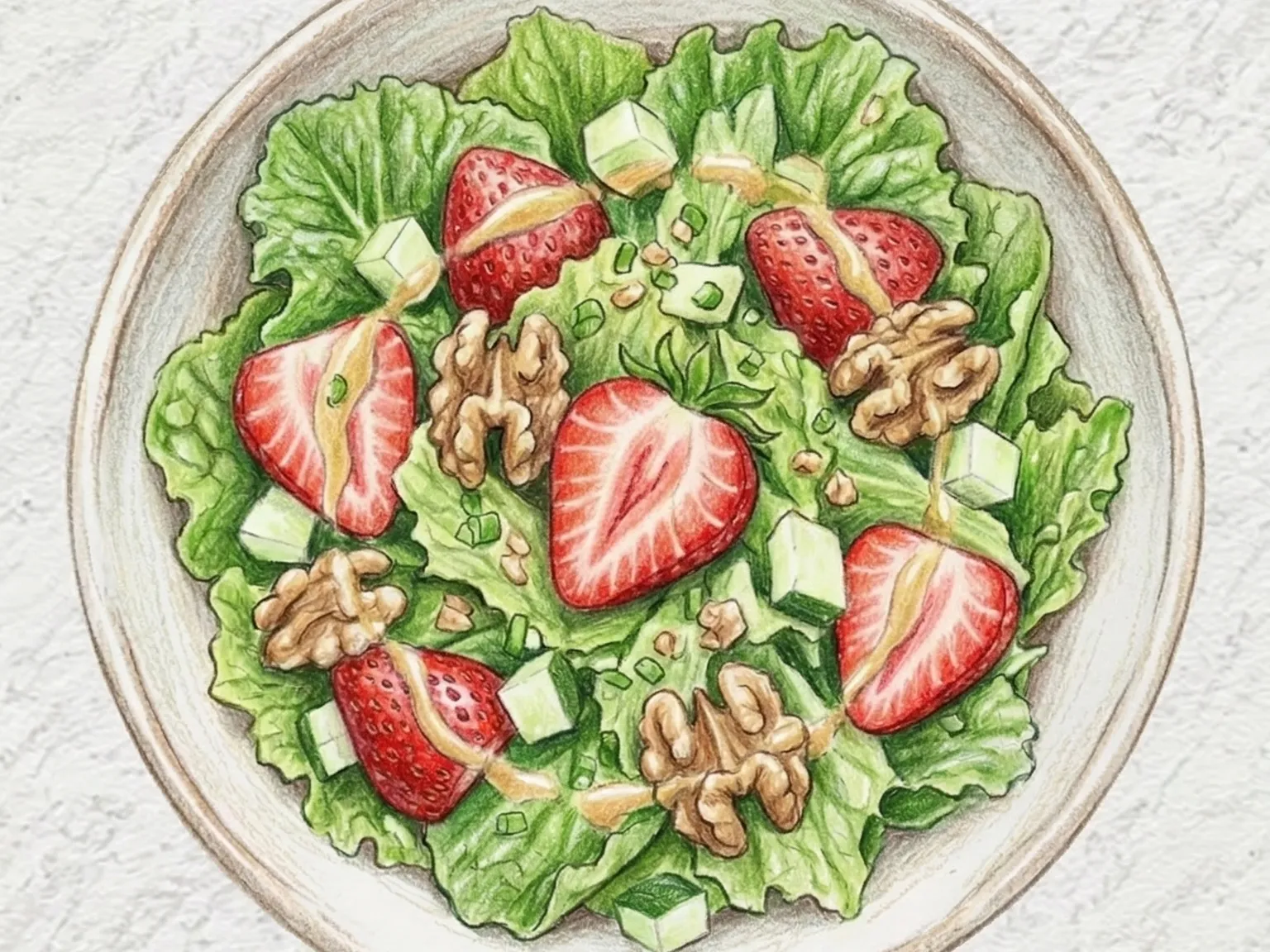
Bomdong strawberry doenjang salad pairs the crisp, mild leaves of early-spring bomdong cabbage with ripe strawberries and a dressing built on fermented soybean paste. Doenjang dissolved into olive oil and vinegar creates a savory base that gives the otherwise neutral greens a deep, umami-driven character, while the strawberries' natural acidity neutralizes the paste's saltiness. Walnuts bring a crunchy, toasted contrast between the soft fruit and tender leaves, and sliced cucumber adds a cooling moisture. The salad should be dressed just before serving - tossing too early draws juice from the strawberries and dilutes the bowl.
Adjust Servings
Instructions
- 1
Tear bomdong into bite-size pieces, rinse in cold water, and dry thoroughly.
- 2
Halve the strawberries, thinly slice the cucumber, and soak red onion in cold water for 5 minutes.
- 3
Whisk doenjang, olive oil, lemon juice, and honey until smooth for the dressing.
- 4
Toss bomdong, cucumber, and red onion with two-thirds of the dressing in a large bowl.
- 5
Plate the salad, top with strawberries and walnuts, then finish with remaining dressing and sesame seeds.
As an Amazon Associate, we may earn from qualifying purchases.
Tips
Nutrition (per serving)
More Recipes

Chwinamul Apple Doenjang Salad
Chwinamul (aster scaber) is blanched briefly to preserve its herbal, slightly bitter character, then combined with thin-sliced apple and cucumber for crisp sweetness. The dressing is built on doenjang - Korean fermented soybean paste - which adds a deep umami layer uncommon in typical salad dressings. Perilla oil rounds out the nuttiness, while red onion contributes a sharp edge that keeps the bowl from feeling heavy. The salad is best in spring when chwinamul is freshly harvested and most aromatic.

Water Parsley Shrimp Salad
Pan-seared shrimp bring a plump, clean sweetness that pairs with minari's grassy aroma in this Korean salad. The dressing dissolves doenjang into plain yogurt, merging fermented soybean depth with tangy creaminess in a combination uncommon outside Korean cooking. Thinly sliced cucumber adds cool moisture, and red onion soaked in cold water contributes a mild sharpness without overpowering the delicate shrimp. Tossing with two-thirds of the dressing first establishes the base seasoning, then adjusting with the remainder prevents oversalting while ensuring every component is evenly coated. Sesame seeds scattered on top close the dish with a nutty finish.

Naengi Doenjang Mushroom Salad
Naengi is briefly blanched to soften its earthy bitterness while preserving its spring fragrance, and oyster mushrooms are dry-seared to concentrate their savory depth. A dressing of doenjang dissolved with yuja marmalade and vinegar provides a rich fermented base lifted by citrus brightness. Baby greens and halved cherry tomatoes lighten the heavy paste flavor with tenderness and bursting juice. Sesame oil and toasted sesame seeds add a nutty finish, making the salad most compelling with freshly foraged naengi in early spring.

Salmon Salad (Seared Salmon over Greens with Soy Vinaigrette)
Salmon salad sears a salmon fillet skin-side down until the exterior is crisp and the interior stays moist, then places it over lettuce, shredded red cabbage, sliced avocado, and peppery radish sprouts, dressed with soy sauce, vinegar, minced garlic, and olive oil. Patting the salmon completely dry and seasoning with black pepper five minutes before cooking prevents the skin from sticking to the pan and allows it to crisp evenly - four minutes skin-side down and two minutes flipped produces a center that retains a pale pink translucency for maximum moisture. The avocado's creamy fat harmonizes with the salmon's omega-3 richness, while radish sprouts add a sharp, mustard-like bite that energizes the bowl. The dressing's combination of soy sauce, vinegar, and garlic creates a salty-tangy base that cuts cleanly through the oily fish.

Korean Gangwon Gondre Rice
Gondre, a wild thistle green traditionally foraged in the mountains of Gangwon province, is soaked, squeezed dry, and layered over rice before cooking in a pot. The three-stage heat method - high for five minutes, medium-low for ten, then low for ten more - followed by a ten-minute rest produces fluffy grains infused with the greens' earthy herbal scent. The rice is intentionally plain so that a soy-based dressing of garlic, green onion, chili flakes, and sesame oil can be mixed in at the table, providing a sharp contrast. Dried gondre works year-round, though the fragrance peaks with fresh spring-harvested greens.

Korean Broccoli Doenjang Salad
Blanched broccoli in doenjang dressing - a modern Korean banchan bridging Western ingredients with traditional seasoning logic. Florets and thinly sliced stems blanch ninety seconds, then are shocked in cold water for vivid green and a firm bite. The dressing combines doenjang with vinegar and oligosaccharide syrup - fermented salt, acidity, and gentle sweetness that lifts mild bitterness. Ready in under ten minutes and keeps refrigerated for days.