🏠 Everyday Recipes
Simple home-cooked meals for any day
1705 recipes. Page 46 of 72
These are the meals you can cook day after day without getting tired of them. Doenjang jjigae, rolled omelet, spicy pork stir-fry - the kind of home-cooked dishes that fill an ordinary day with comfort.
The beauty of everyday cooking is that it relies on common ingredients already in your fridge. No exotic items, no complicated techniques - just straightforward recipes for satisfying home meals.
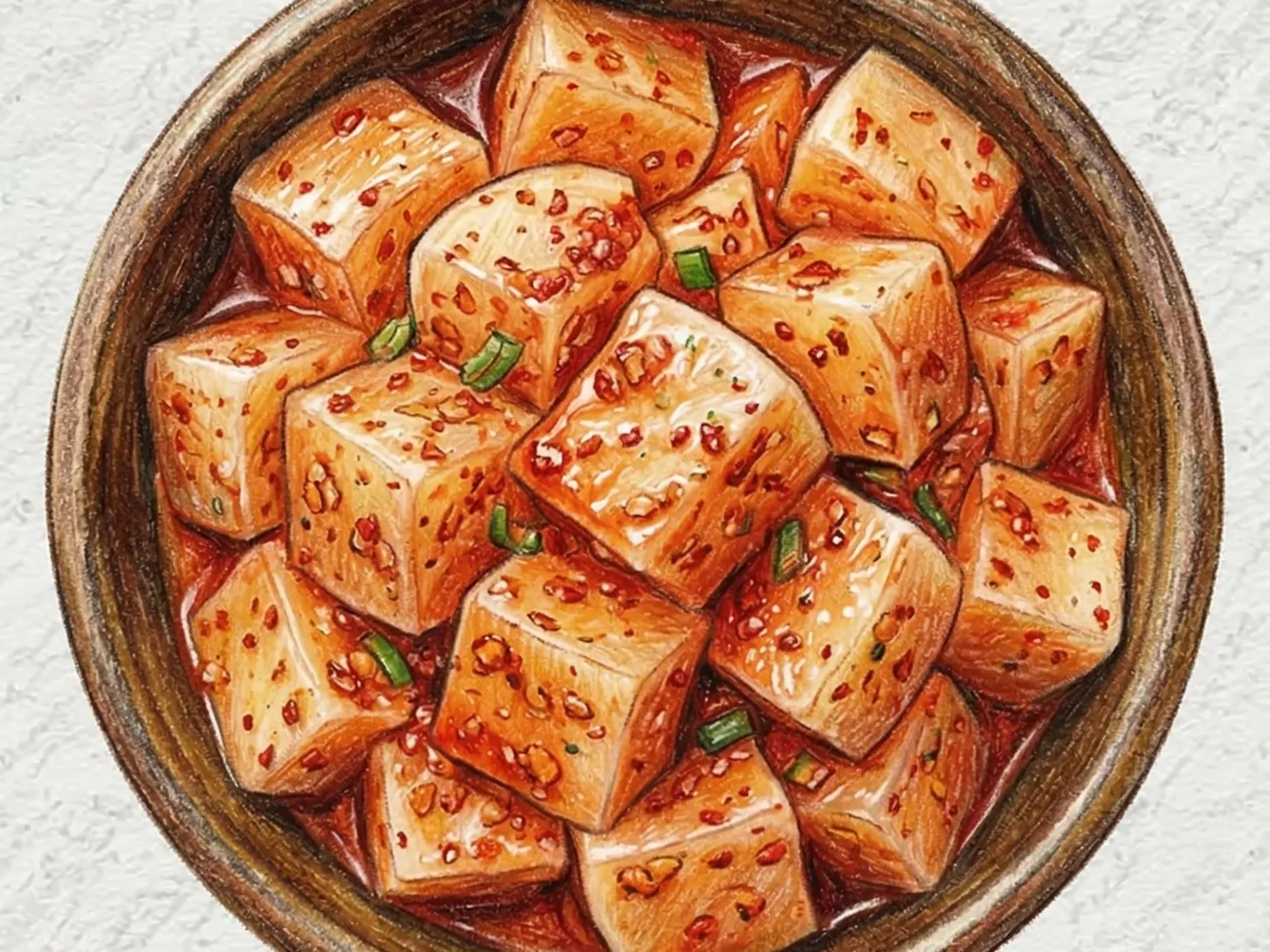
Korean Seokbakji Radish Kimchi
Seokbakji is a traditional Korean radish kimchi in which large-cut radish cubes are salted for one hour, drained, and tossed with a seasoning of gochugaru, salted shrimp, minced garlic, ginger, and scallion pieces before being set aside to ferment. The size of the radish pieces is the most important factor in this kimchi - smaller cuts turn mushy during fermentation as salt and acid break down the cell structure, while large cubes maintain their firm, satisfying crunch throughout the entire maturation period. Salted shrimp here does far more than add salt: its fermented depth provides an umami backbone that gochugaru alone cannot deliver. After one day of fermentation at room temperature, two more days in the refrigerator allow lactic acid bacteria to develop a clean, refreshing sourness. The liquid that the radish releases during this process becomes a flavorful brine - this brine is one of seokbakji's most prized characteristics. Placed alongside a bowl of seolleongtang or gukbap, the cold, crunchy kimchi and its tangy liquid cut directly through the richness of the bone broth, refreshing the palate between spoonfuls. Compared to kkakdugi, seokbakji pieces are larger and more liquid-forward.
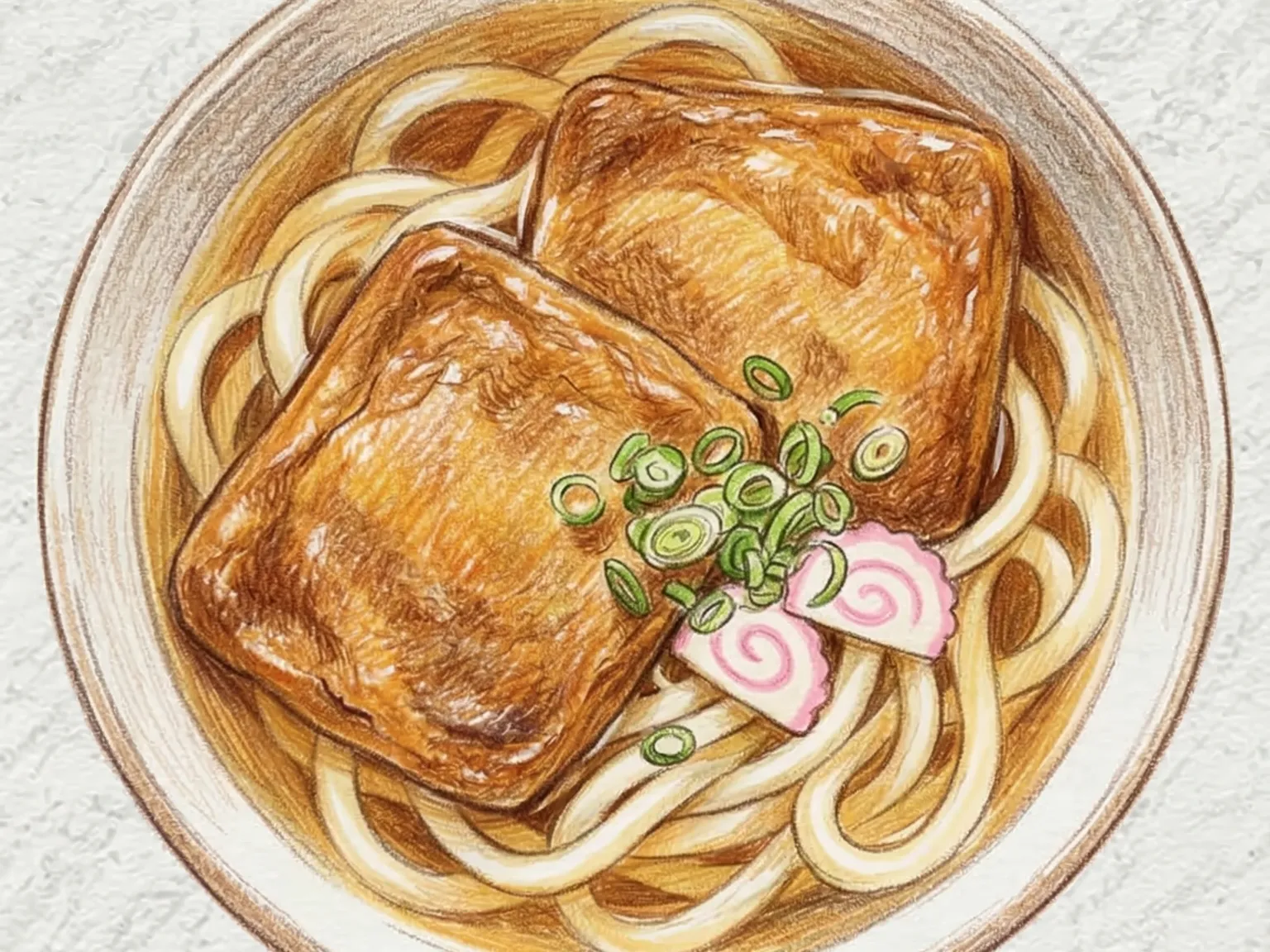
Udon with Seasoned Fried Tofu
Kitsune udon is a Japanese noodle soup defined by its topping of sweet-simmered fried tofu pouches floating on a clear, deeply savory dashi broth. The aburaage is blanched first in boiling water to remove the excess oil that would otherwise cloud the broth and repel the seasoning, then braised in a mixture of water, soy sauce, mirin, and sugar for about six minutes until the liquid has been absorbed and the sweetness has penetrated to the center of each pouch. The broth is built separately from a stock of katsuobushi and kombu, seasoned with soy sauce, mirin, and just enough salt to round out the flavor without making it salty. The quality of this broth is the single most important factor in the finished bowl. Frozen udon noodles are warmed in boiling water for about two minutes, just long enough to loosen and heat through without losing their elastic, springy texture, then transferred to the bowl with the broth ladled over. The simmered tofu pouch sits on top, and as you eat, it releases its sweetened liquid gradually into the surrounding broth, shifting the flavor of the soup with each bite. Sliced scallion and a pinch of shichimi togarashi finish the bowl with fresh aroma and gentle heat. The tofu benefits from being prepared a day in advance, as resting overnight deepens the braising flavor throughout.
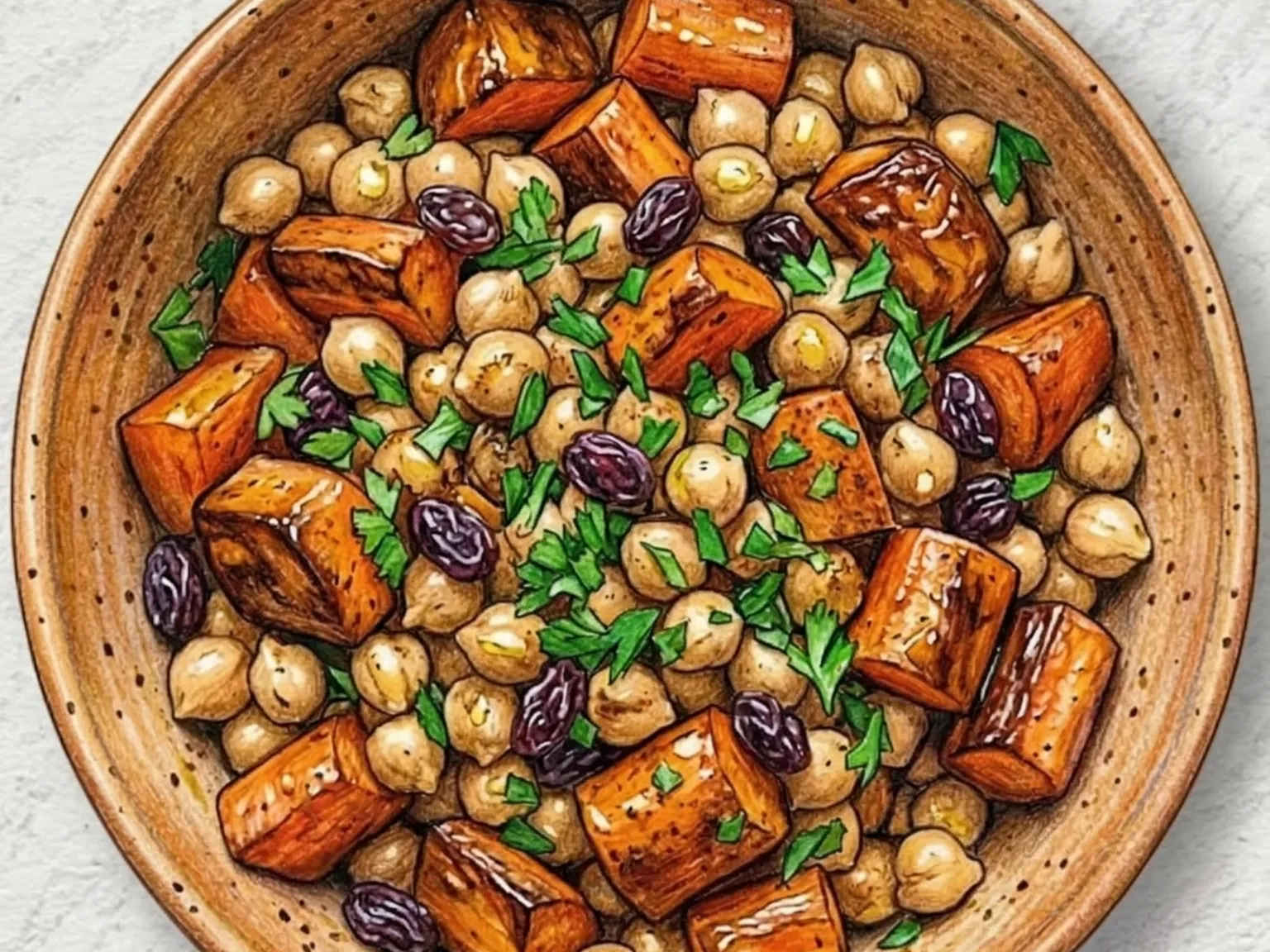
Moroccan Carrot Chickpea Salad
Carrots are roasted with cumin and paprika until the edges caramelize while the centers stay tender and sweet. Cooked chickpeas add enough protein to make the salad substantial on its own. A lean dressing of lemon juice and olive oil tempers the warm spice notes with bright acidity, while raisins tucked throughout provide pockets of fruity sweetness. Chopped parsley lifts the bowl with fresh herbal contrast. The sweet-savory balance characteristic of Moroccan cooking makes this versatile alongside bread, rice, or grilled meat.

Tuna Melt
Tuna melt mixes drained canned tuna with finely diced celery and mayonnaise, spreads the mixture on sandwich bread, tops it with cheddar cheese, butters the outside, and grills in a pan until both sides are crisp and golden. Draining the tuna thoroughly is the first priority - excess moisture soaks into the bread and prevents it from crisping no matter how long it cooks. The celery adds a textural crunch that contrasts with the soft, creamy tuna filling. Using several thin slices of cheese rather than one thick piece ensures more even melting and full coverage across the bread. Medium-low heat is essential: it gives the cheese enough time to melt completely before the bread burns, which high heat makes nearly impossible. The sandwich is best served immediately after cutting in half, while the cheese is still stretchy and warm.
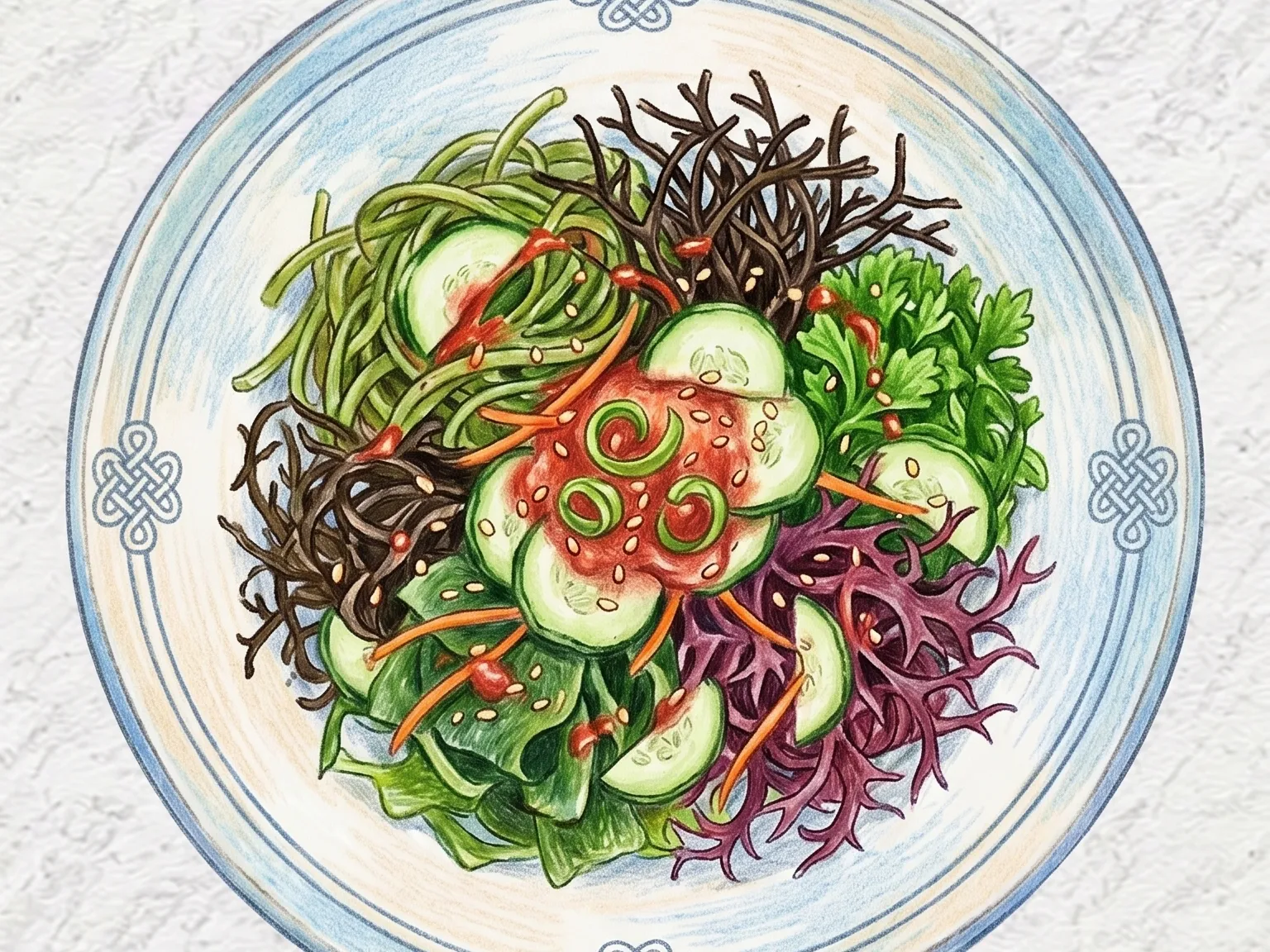
Korean Mixed Seaweed Salad
Haecho-muchim gathers several types of ocean seaweed - often including miyeok julgi (seaweed stems), tot (sea mustard), parae (green laver), and kkosiraegi - into one bowl and dresses them in cho-gochujang, a tangy-sweet sauce made by blending gochujang with vinegar and sugar. Each strand and leaf brings a different texture: some chewy, some slippery, some with a gentle pop. The seaweed is blanched for no longer than twenty seconds to preserve that textural variety - longer cooking turns everything uniformly soft. Squeezing out all residual water before dressing is critical, otherwise the sauce dilutes into a watery puddle. Julienned cucumber threaded through the seaweed adds a crisp, garden-fresh counterpoint to the briny marine flavors. Served chilled, this low-calorie banchan is especially welcome in hot weather.
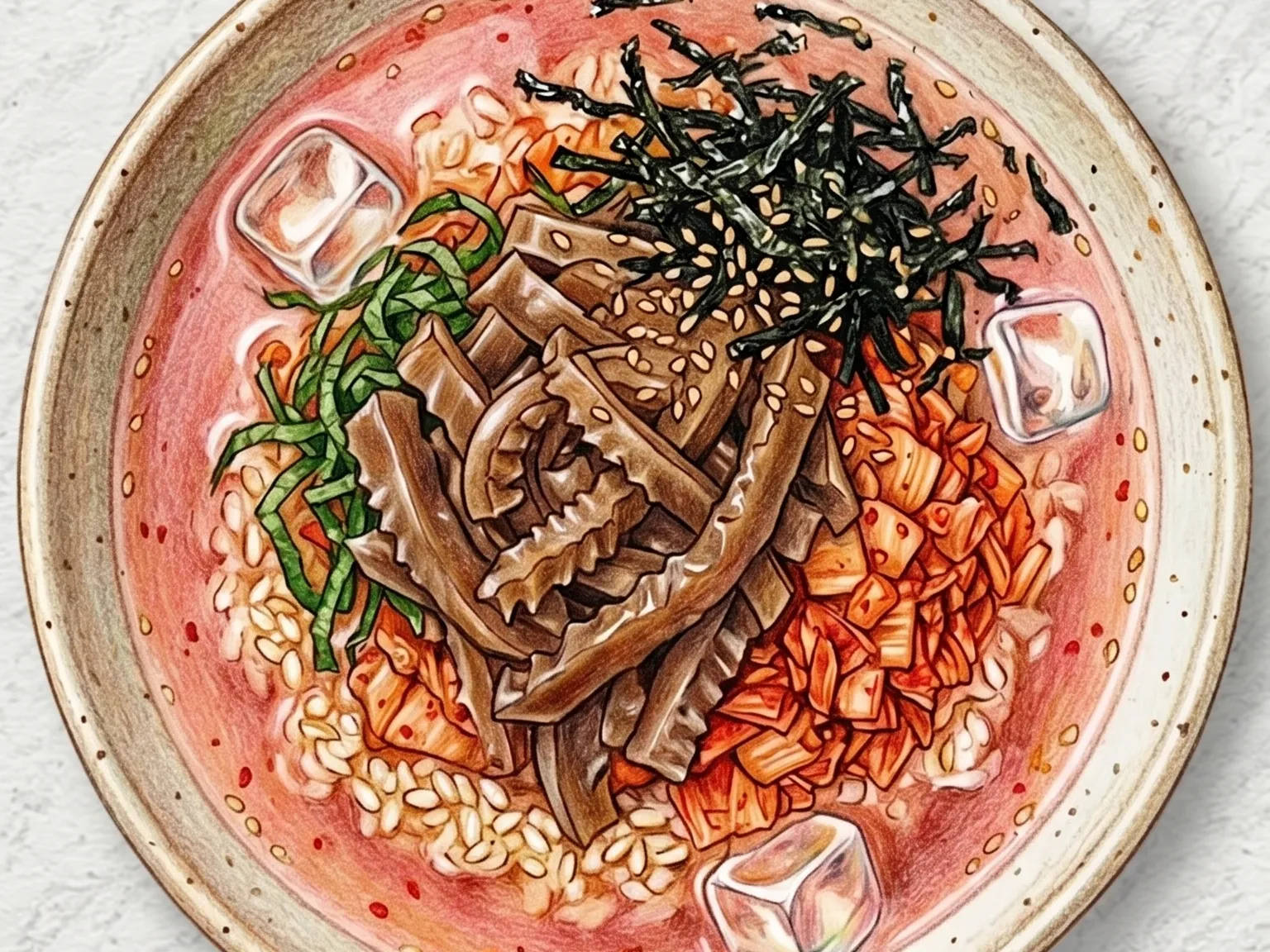
Korean Kimchi Acorn Jelly Rice Bowl
Acorn jelly (dotorimuk) is sliced into strips, placed over rice, and drenched in a chilled broth made from kimchi juice, cold water, and a touch of sugar. The jelly's slippery, bouncy texture contrasts with the crunch of chopped kimchi, while the tangy broth refreshes the palate with every spoonful. A light toss of sesame oil on the rice provides a nutty base, and roasted seaweed flakes add an ocean-like finish. Adding ice cubes makes it even more bracing, a distinctly Korean way to beat summer heat with a cold, brothy rice bowl. If the kimchi is too tart, a small addition of sugar rounds the flavor into balance.
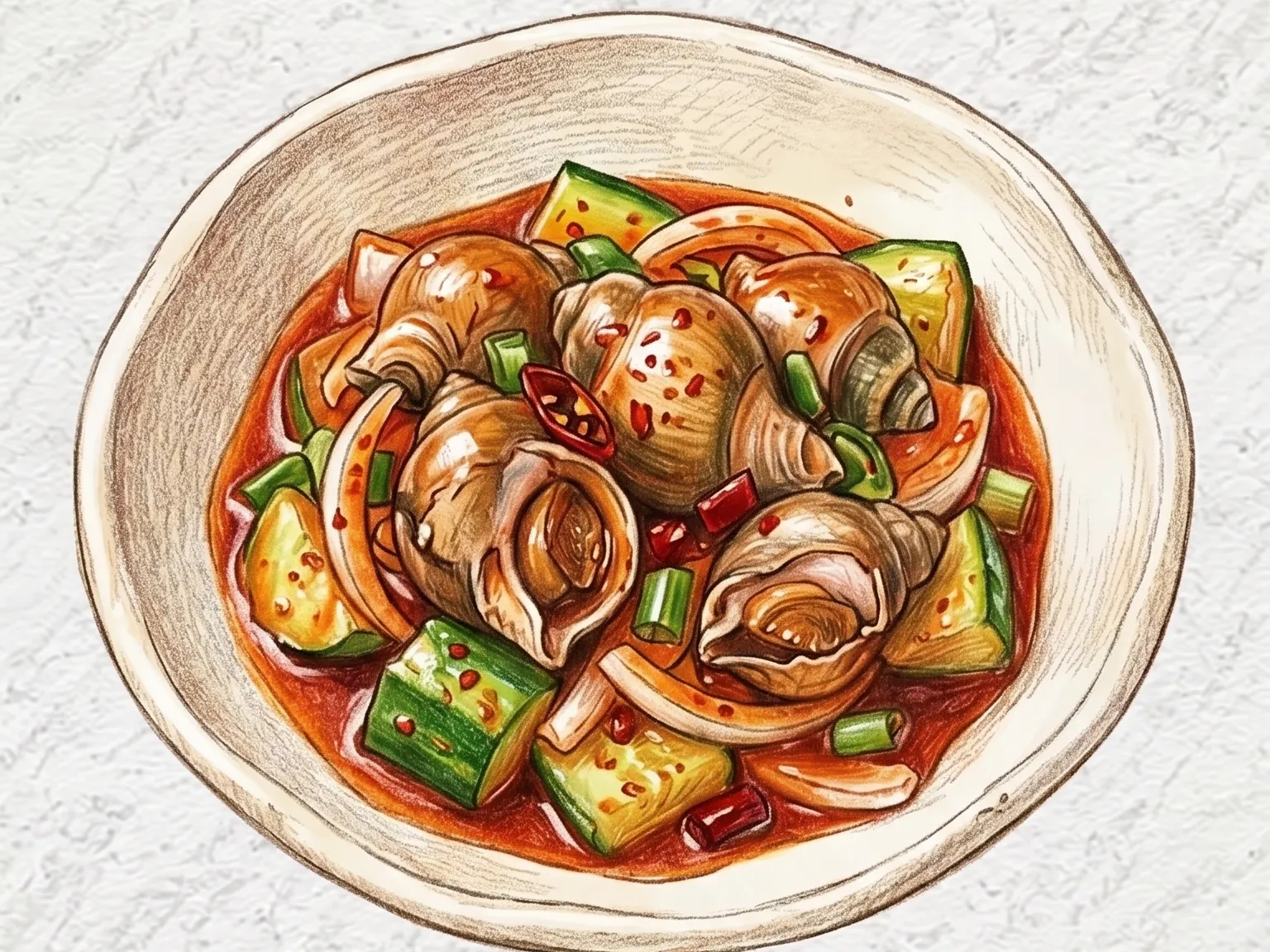
Korean Spicy Whelk Stir-fry
Golbaengi bokkeum is a spicy Korean whelk stir-fry that uses canned whelk with a sauce built from gochujang, gochugaru, vinegar, sugar, and sesame oil. The firm, chewy texture of the whelk is the defining quality of the dish, which means cooking time must stay within two to three minutes to prevent the meat from toughening further. Vinegar adds a tangy brightness that lifts and balances the heat from the chili components. A splash of the canning liquid stirred in during cooking enhances the whelk's natural brininess and keeps the sauce from drying out. Julienned cucumber, sliced onion, and scallion are added off the heat so they stay crisp and retain their raw freshness rather than wilting into the sauce. As a banchan, it pairs directly with rice, but served alongside thin wheat noodles or glass noodles it transforms into one of Korea's most beloved drinking snacks, a staple of old-school pojangmacha stalls where the combination of cold beer and spicy, chewy whelk has been a fixture for decades.
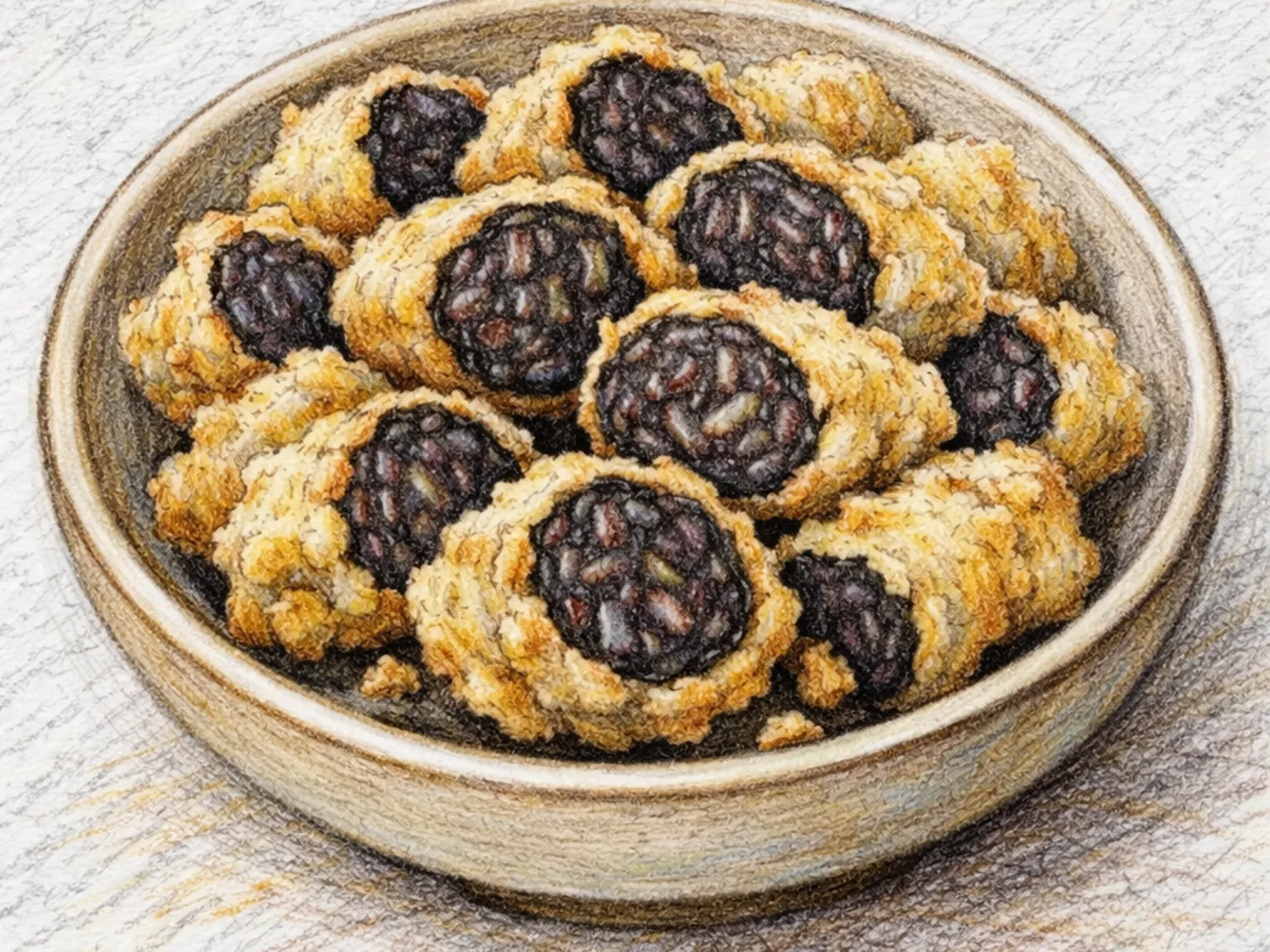
Korean Crispy Fried Sundae
Soondae-twigim is deep-fried Korean blood sausage, sliced thick and coated in a batter of frying mix blended with potato starch for extra crunch. A double-frying method is used: the first round at 170 degrees Celsius cooks the inside through, followed by a brief second fry at 185 degrees that hardens the crust to a shattering crispness while the interior stays chewy and moist. Patting the sundae surface dry before battering is essential so the coating adheres evenly and does not peel off in the oil. A light dusting of chili powder and a side of mustard add heat and a sharp tang that cuts through the richness.
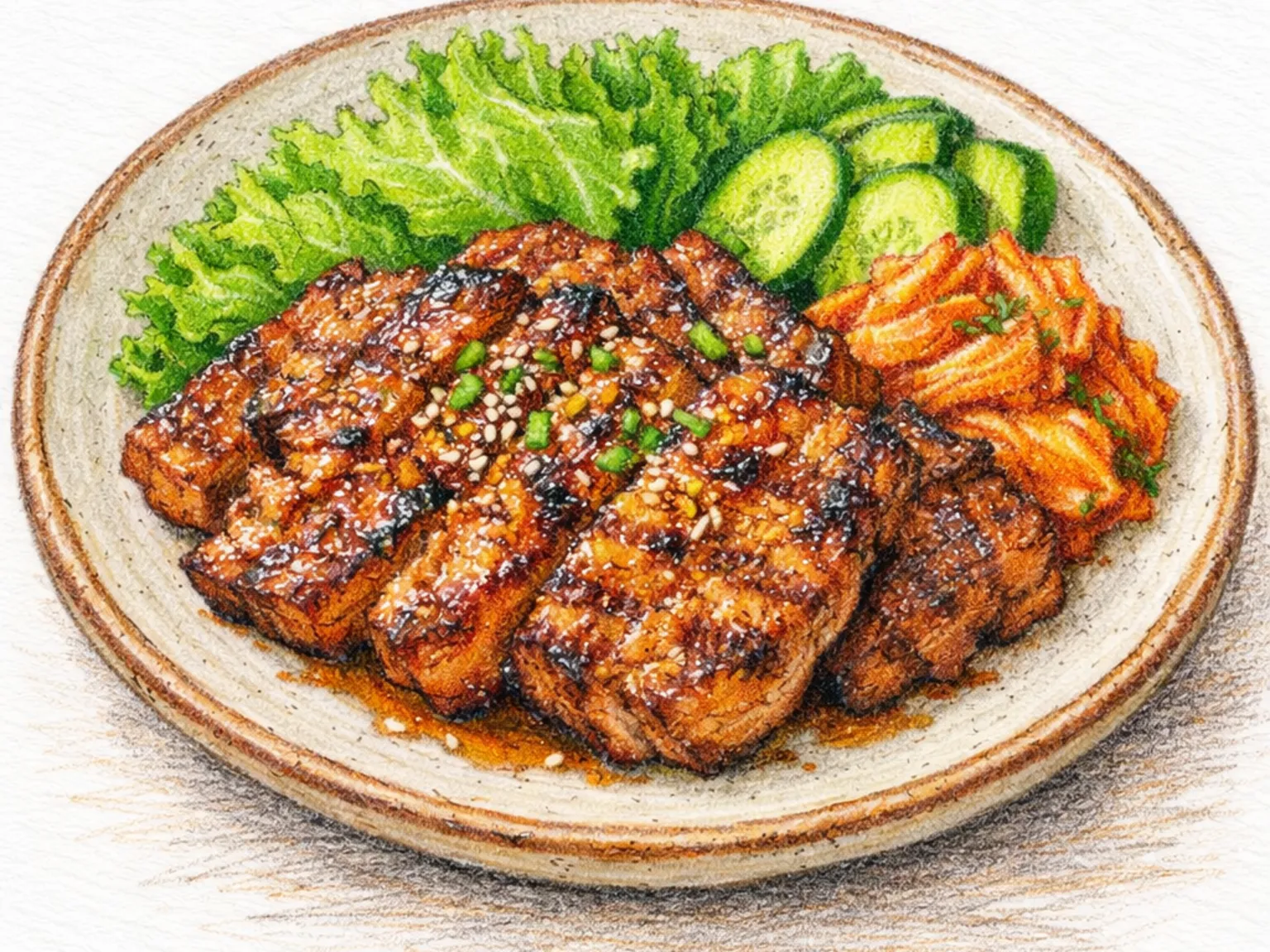
Korean Grilled Soy-Doenjang Pork
Maekjeok-gui is a traditional Korean grilled pork dish that is traced back to the Goguryeo period, prepared by marinating thick-cut pork neck in a paste of doenjang, soy sauce, rice syrup, minced garlic, ginger powder, sesame oil, and black pepper before grilling. Unlike most contemporary Korean marinades, which center on gochujang or sugar, maekjeok uses doenjang as its primary seasoning, which means the dominant flavor is a deep, fermented umami rather than sweetness or heat. The soybean paste bonds with the abundant intramuscular fat in pork neck during grilling, producing an intense savory quality that develops layer by layer over the heat, while the viscous rice syrup reduces into a shiny lacquer-like glaze on the surface. Shallow scoring on both faces of each thick pork slice allows the marinade to penetrate beyond the surface and reach the interior, and at least thirty minutes of marinating time is recommended for this effect. Doenjang scorches significantly faster than sugar, so the correct technique is to sear both sides first and then apply any final glaze only after reducing the heat or briefly pulling the meat from direct flame, which preserves the gloss without introducing bitterness. After removing from the grill, letting the meat rest for two minutes under a scattering of sliced green onion allows the juices to redistribute, so the pork stays moist and does not run when cut.
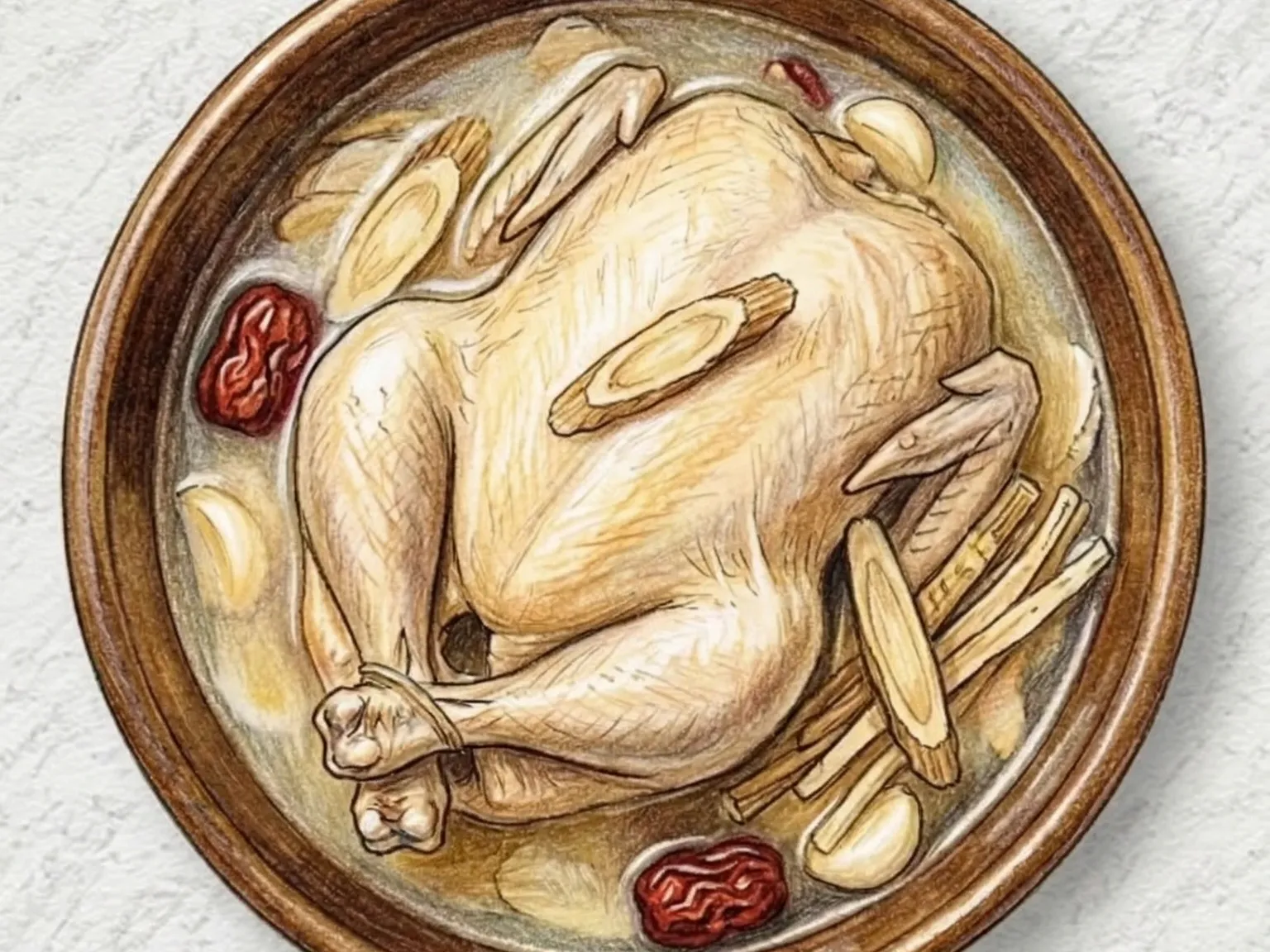
Korean Astragalus Chicken Soup
Hwanggi-dak-tang is a Korean herbal chicken soup built around astragalus root, a staple of traditional East Asian medicine long valued for its restorative and immune-supporting properties. The dried root, known in Korean as hwanggi, carries a faintly sweet, earthy flavor that is subtle enough to complement rather than dominate the broth. A whole chicken simmers for well over an hour with the dried root, jujubes, and garlic, producing a clear yet full-bodied liquid with a gentle herbal undertone that deepens as the pot reduces. The extended cooking dissolves collagen from the skin, cartilage, and joints, giving the broth a velvety weight that coats the palate without turning cloudy. The chicken meat, by the time the soup is ready, pulls apart with almost no resistance. Jujubes gradually soften into the broth over the long cooking time and add a subtle fruity sweetness that bridges the medicinal and culinary aspects of the dish without making it taste overtly medicinal. Seasoning is kept to salt alone so the herb-infused stock remains the focus. In Korea, this soup appears most often during the seasonal transitions of early summer and late autumn, or during recovery from illness, typically served steaming in a heavy stone pot.
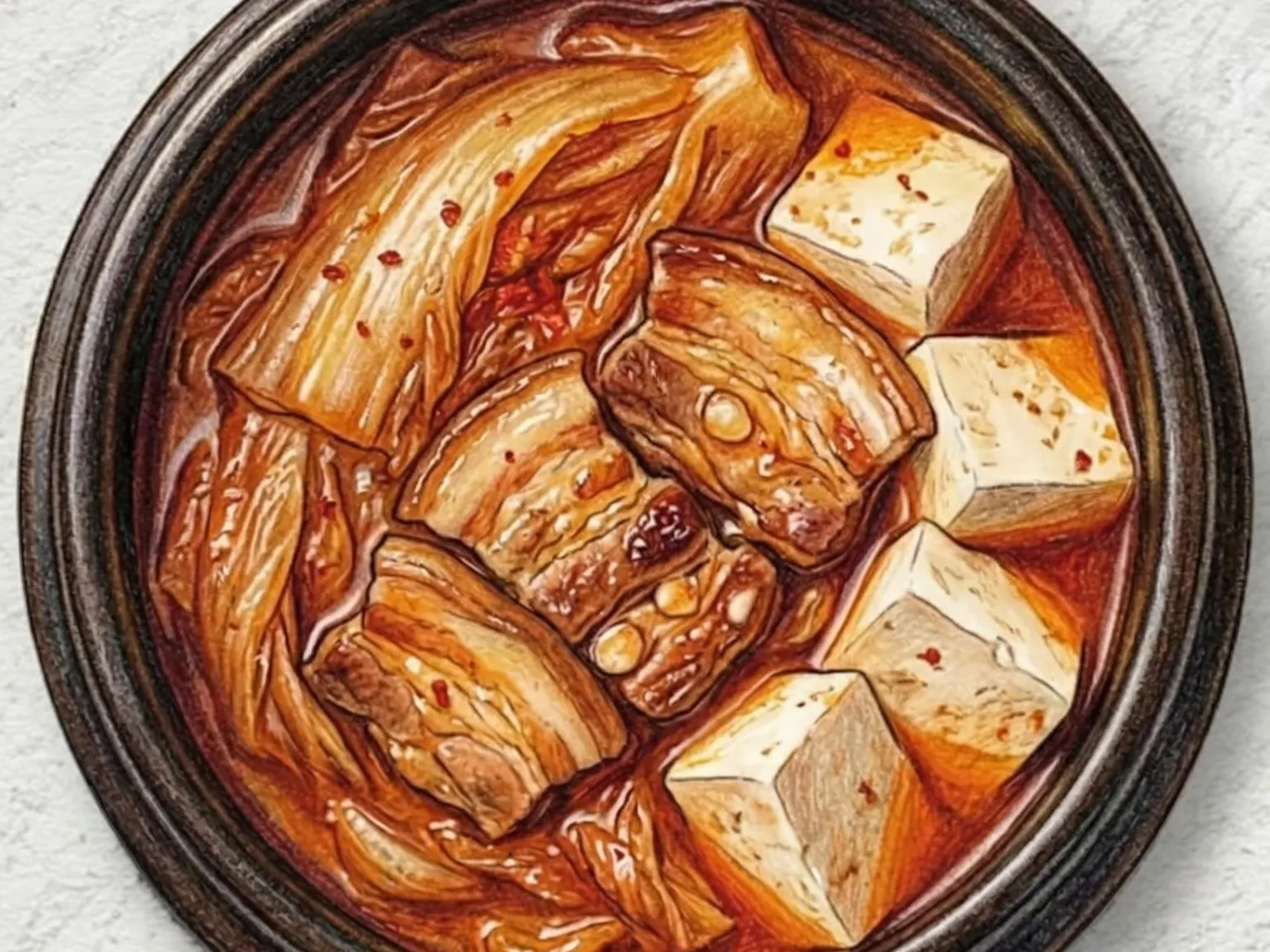
Korean Aged Kimchi Stew (Deep-Fermented Pork Belly Broth)
Mugeunji jjigae is a traditional Korean stew featuring deeply aged and fermented kimchi cooked with pork belly and tofu. The preparation begins by stir-frying sliced pork belly in a pot for a few minutes until the rich pork fat renders out. The aged kimchi is then added and stir-fried in the pork fat, which helps to soften its sharp, pungent acidity. Water and red pepper flakes are introduced to the pot, and the mixture is brought to a boil. It is essential to simmer the stew over medium heat for at least twenty minutes; this extended cooking time draws the deep, sour flavors from the fermented kimchi into the broth. Finally, sliced tofu is placed in the pot and simmered briefly to absorb the spicy and savory liquid without breaking. The combination of rich pork fat and aged kimchi creates a complex flavor profile that requires no additional seasonings.
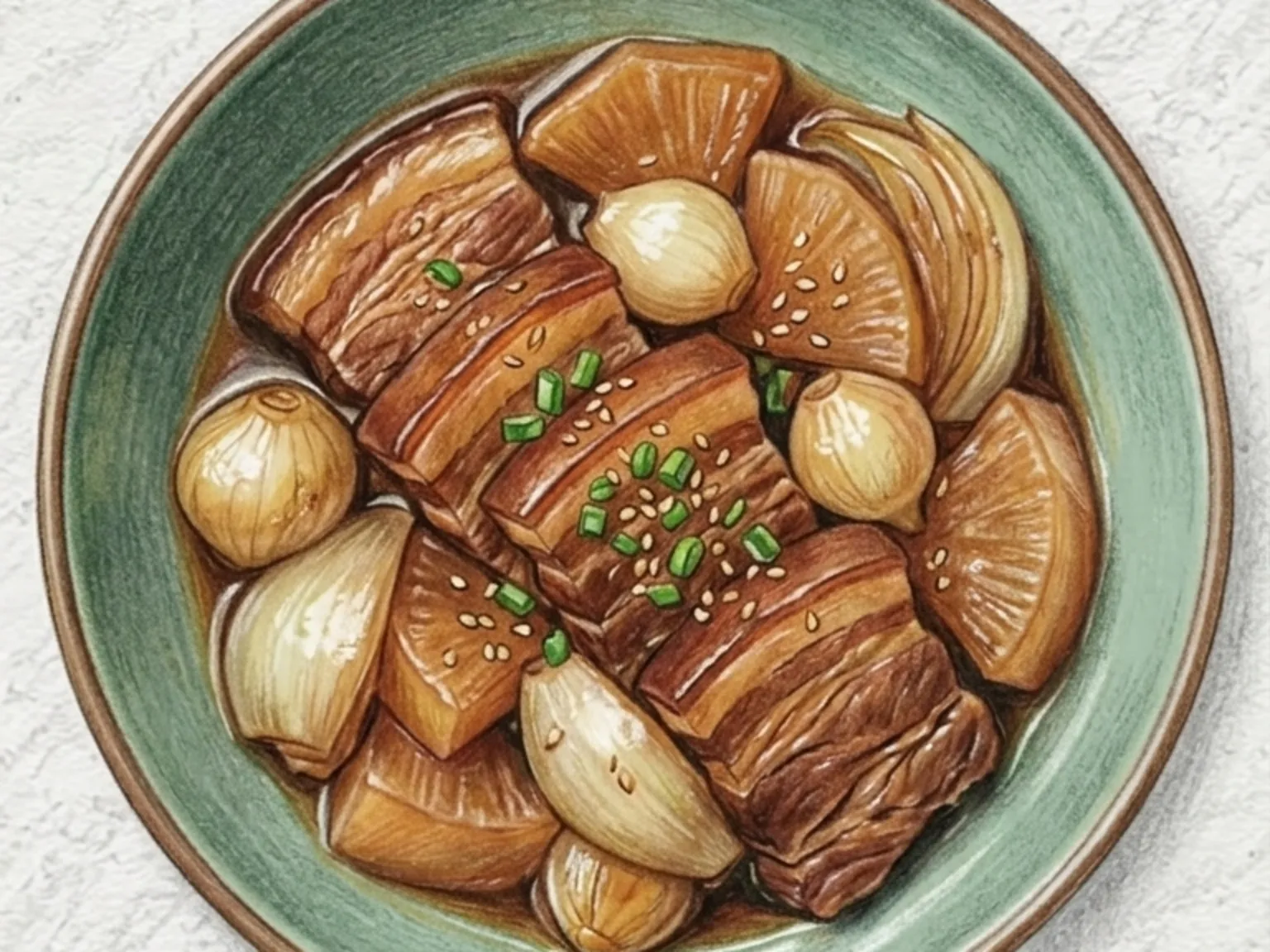
Korean Samgyeopsal Ganjang Jorim (Soy-Braised Pork Belly)
Samgyeopsal ganjang jorim is a Korean soy-braised pork belly dish where blanched pork belly is simmered with radish and onion in a soy sauce base for over forty-five minutes. Blanching first removes impurities and excess fat, leaving a clean-tasting braise. The long simmer allows soy sauce to penetrate the layered pork, building a deep flavor that is savory without being greasy. Radish chunks absorb the pork-enriched liquid and develop a richness of their own, while oligosaccharide syrup lends a natural sheen. Cooling and reheating concentrates the seasoning further, making this a strong choice for gatherings or holiday meals.
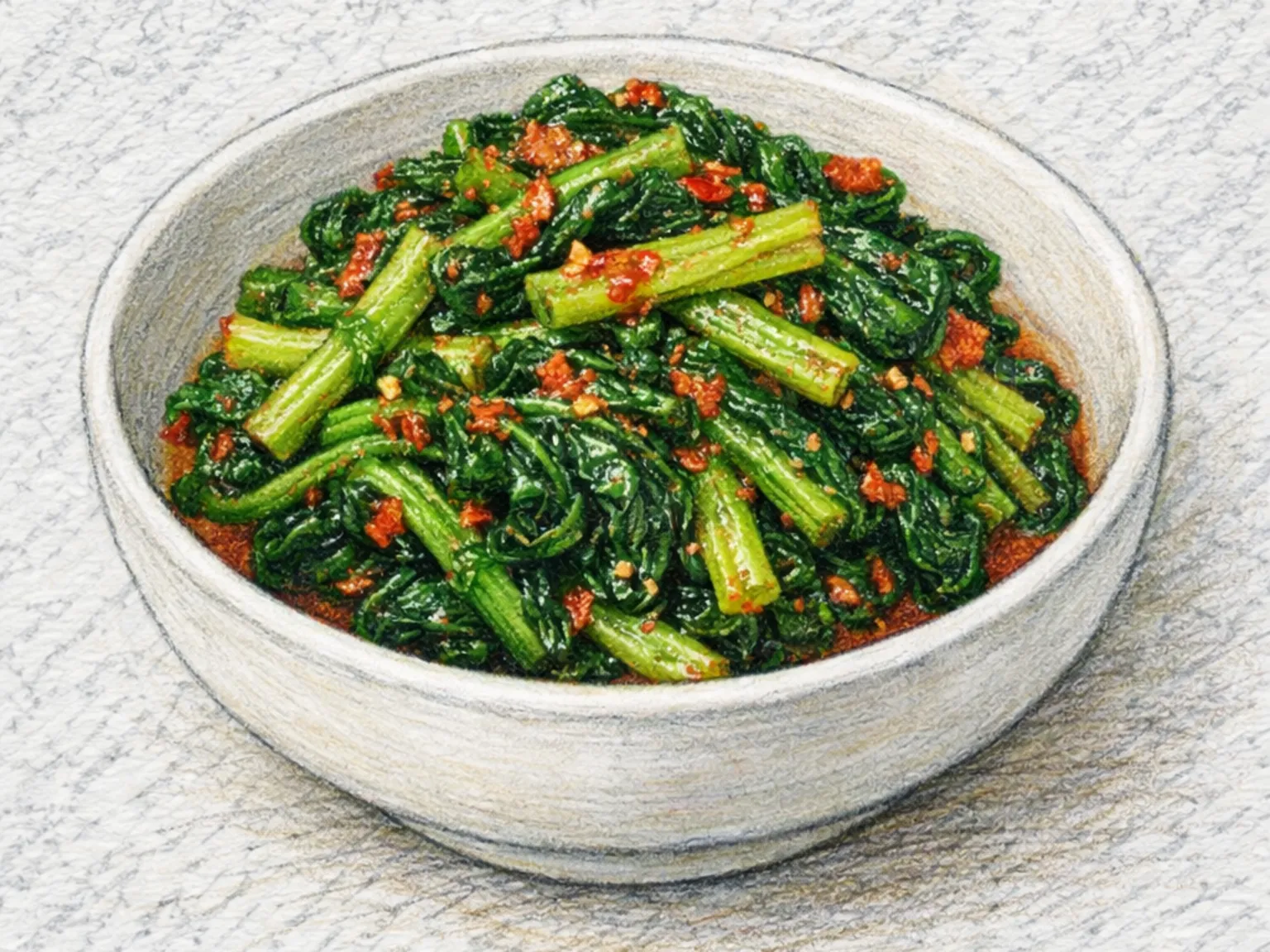
Korean Sigeumchi Kimchi (Spinach Kimchi)
Sigeumchi kimchi is a Korean spinach kimchi made by salting the greens for exactly twelve minutes to wilt the leaves while keeping the stems crisp, rinsing in cold water, squeezing dry, then tossing with gochugaru, sand lance fish sauce, minced garlic, plum extract, and scallion pieces. Strict timing on the salt is what creates the dual texture - tender leaves and crunchy stems - that defines this kimchi; over-salting collapses everything into softness. The fish sauce's fermented depth layers onto the spinach's mild, grassy base, and plum extract rounds out the seasoning's sharp edges with a gentle sweetness. Six hours of refrigeration settles the flavors into a cohesive whole. The vivid green color makes this a visually appealing banchan on any Korean table.
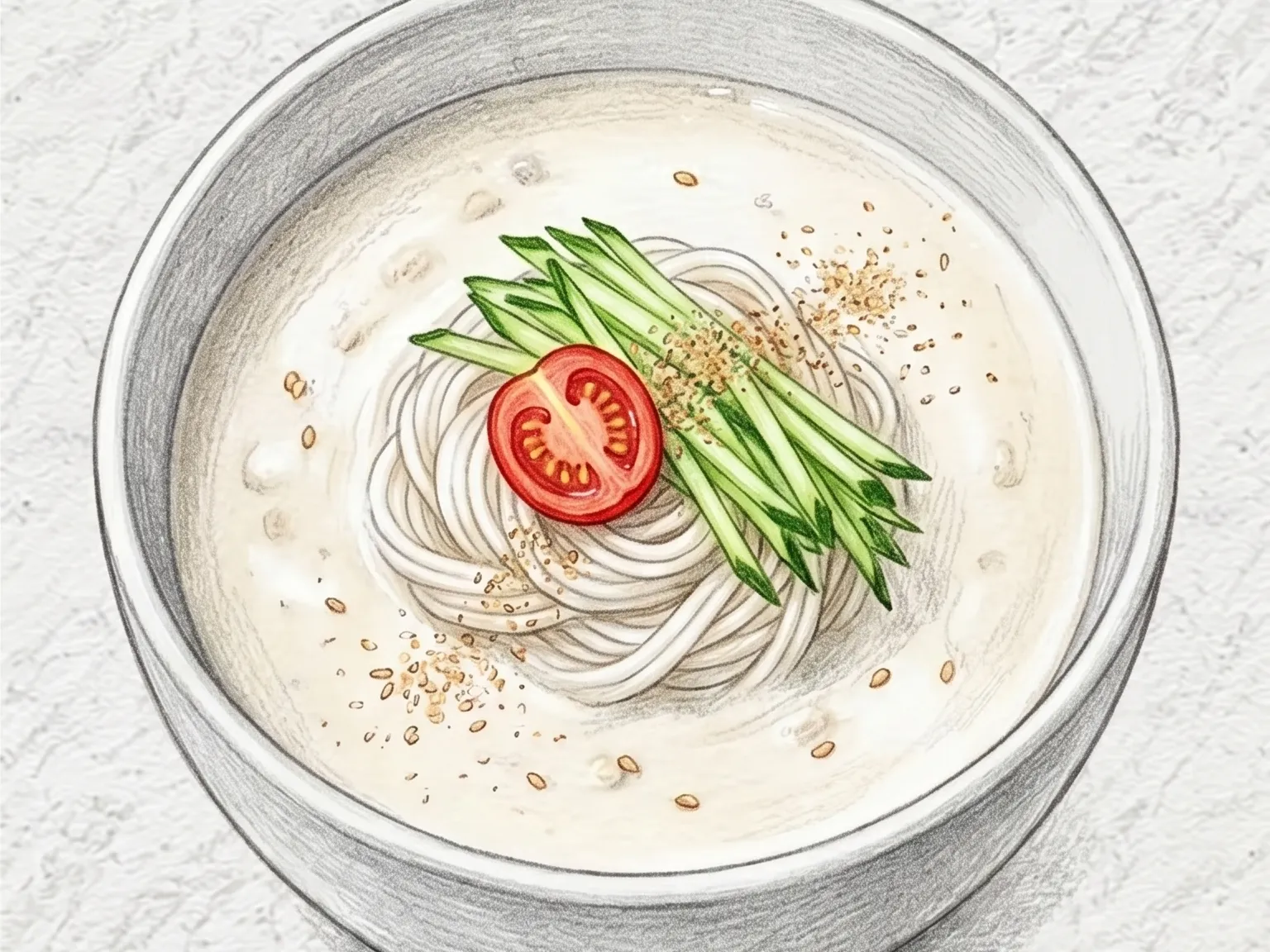
Kongguksu (Korean Cold Soy Milk Noodles)
Kongguksu is a Korean cold noodle dish in which thin somyeon noodles are served in a chilled broth made entirely from blended soybeans. Cooked white soybeans are peeled as thoroughly as possible to reduce any bitterness, then blended with cold water, sesame seeds, and salt until the mixture is smooth and creamy. The resulting soy broth is refrigerated until genuinely cold before use -- adding ice directly to the bowl would thin it out, so proper chilling in advance is the standard approach. Somyeon noodles are boiled until just cooked through, then rinsed vigorously under cold running water and briefly submerged in ice water to firm up their texture before being placed in the serving bowl. The cold soy broth is poured generously over the noodles, and julienned cucumber is arranged on top for color and crunch. Seasoning is personal: some eat it with salt only, others stir in a small amount of sugar. Straining the broth once through a fine mesh sieve eliminates any remaining gritty bits and gives the finished soup a noticeably silkier mouthfeel. High in plant protein and relatively light on the stomach despite its richness, it is exactly the kind of cold dish that makes summer heat more bearable. Black soybeans blended in alongside white ones deepen both the color and the toasty, nutty flavor.
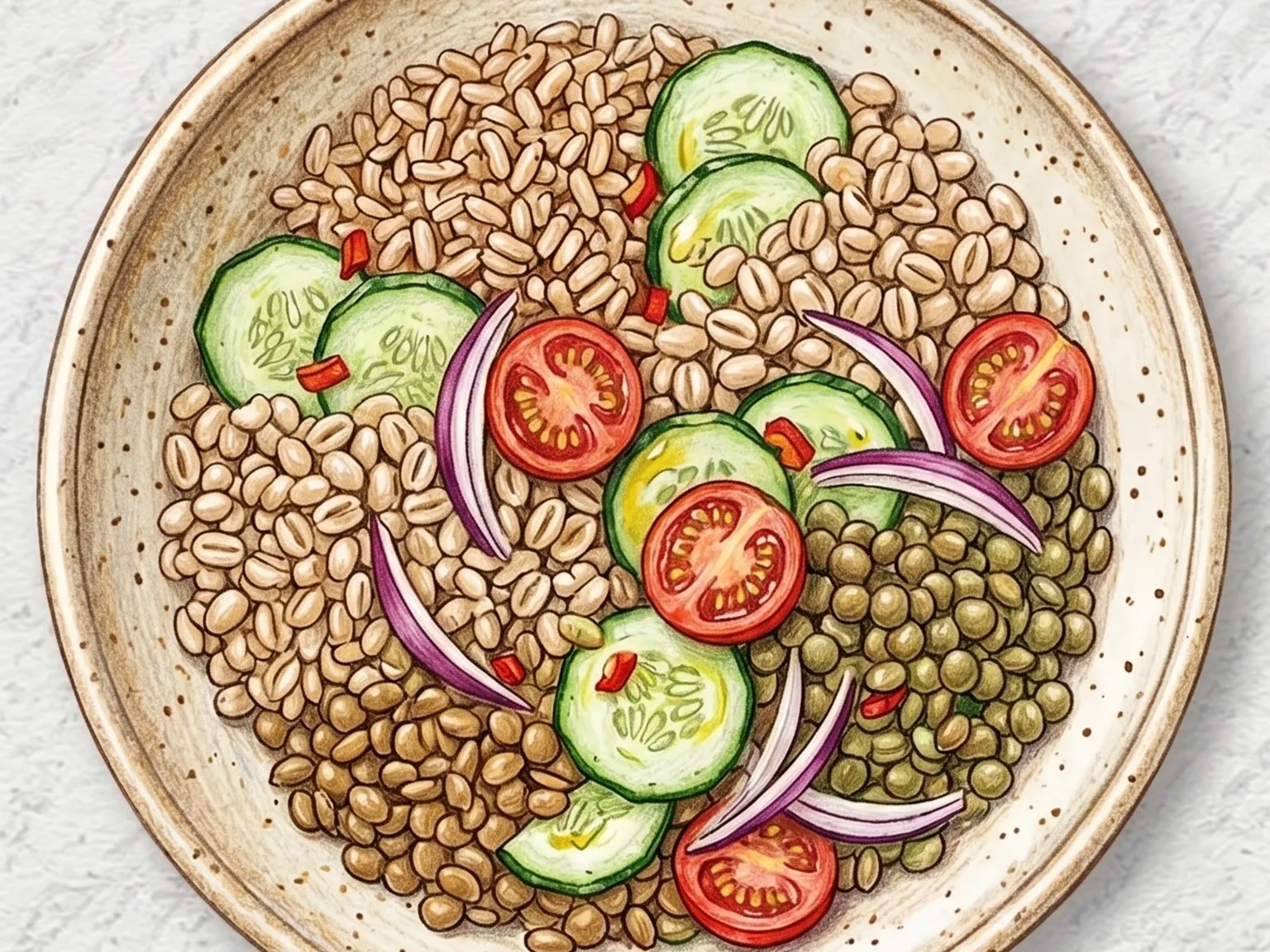
Multigrain Salad
Brown rice, barley, and lentils are each boiled separately and cooled before being combined, so that every grain contributes its own distinct size and texture to the finished bowl. The brown rice stays chewy, the barley holds a thick bite, and the lentils offer a soft give that rounds out the contrast. Julienned cucumber and red onion introduce crunch and a mild sharpness that keep the heavier grains from feeling dense. Halved cherry tomatoes release juice as a natural supplement to the dressing, and a mixture of perilla oil and apple cider vinegar ties the bowl together with nuttiness and clean acidity. Adding sliced red chili or diced bell pepper extends the color and sweetness without changing the character of the dish. It holds well at room temperature, which makes it practical for meal prep and packed lunches. The combination of dietary fiber and plant protein means a moderate portion keeps hunger at bay for several hours.

Tuna Noodle Casserole
Tuna noodle casserole boils egg noodles one minute short of the package time, sautés onion and mushrooms in butter, builds a cream sauce with flour and milk, folds in drained tuna and half the cheddar cheese, then bakes the mixture topped with the remaining cheese at 190 degrees Celsius for 20 minutes. Undercooking the noodles is intentional - they continue absorbing sauce and softening in the oven, so fully cooked noodles turn mushy by the time the casserole is done. Toasting the flour in butter before adding milk eliminates the raw flour taste and produces a smooth sauce when the milk is poured in gradually. Draining the tuna well keeps the sauce from becoming greasy. Splitting the cheese between the sauce and the topping gives the casserole depth throughout while creating a golden, bubbling gratin crust on the surface.
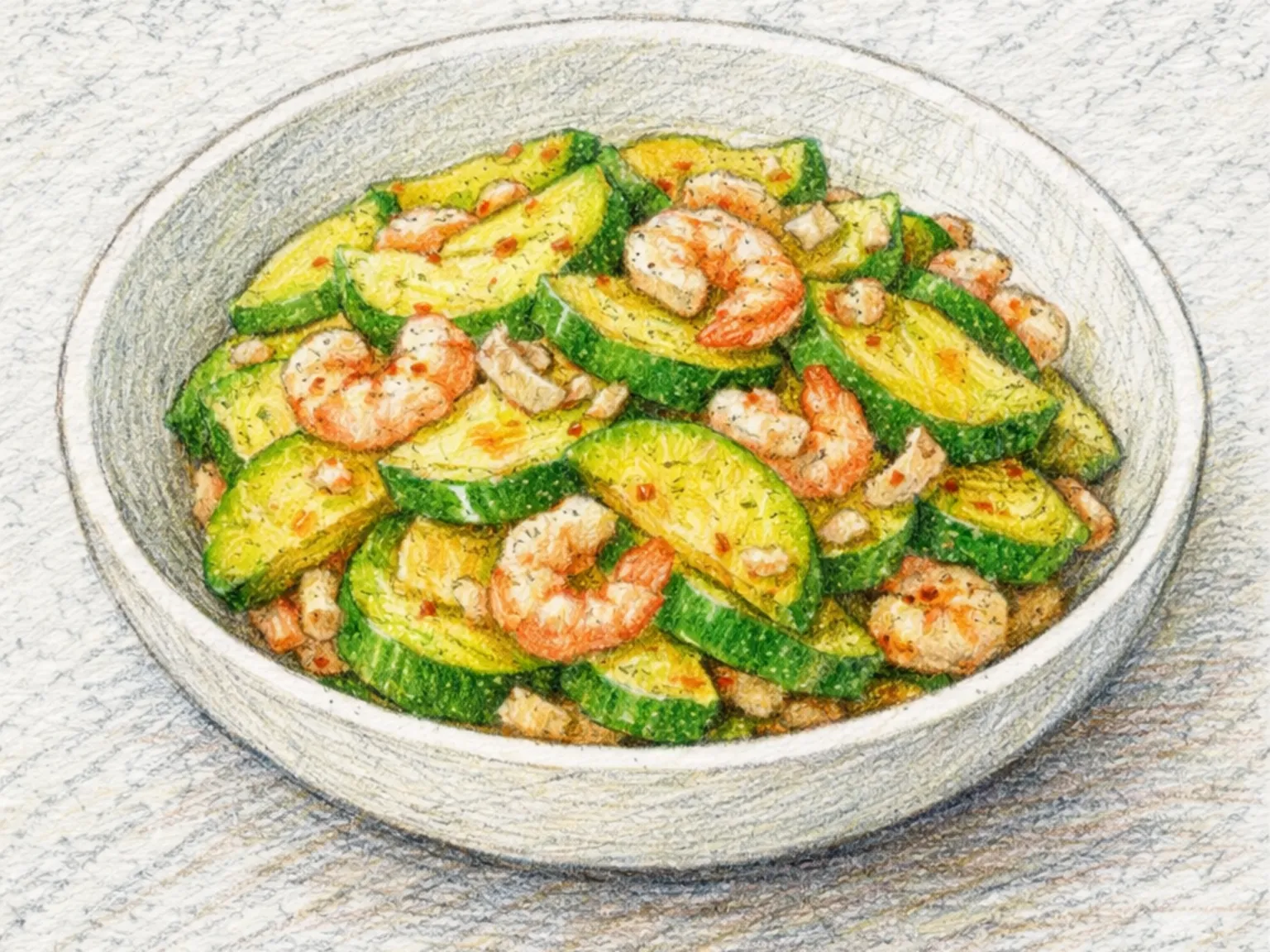
Korean Stir-fried Zucchini
Hobak-bokkeum is one of the quickest and most fundamental banchan in the Korean home-cooking repertoire. Thinly sliced Korean zucchini, known as aehobak, is salted for five minutes to draw out moisture before cooking. Skipping this step floods the pan during stir-frying and produces a steamed rather than properly stir-fried result. Seasoning with saeujeot, fermented salted shrimp paste, instead of plain salt brings a deeper marine umami that cannot be replicated by sodium alone, and the high salinity of the paste means additional salt is rarely needed. High heat and a short cooking time allow the surface of each slice to lightly caramelize, building a toasty, nutty aroma while the interior cooks through without turning watery or soft. Garlic goes into the oil first to bloom its fragrance before the zucchini follows, layering flavor from the base. Green onion added in the final seconds of cooking preserves its aromatic edge rather than wilting away. A drizzle of sesame oil and a scatter of toasted sesame seeds at the end produces a clean, simply flavored side dish with a lasting nutty finish. When aehobak is already in the refrigerator, the whole dish can be on the table within five minutes.
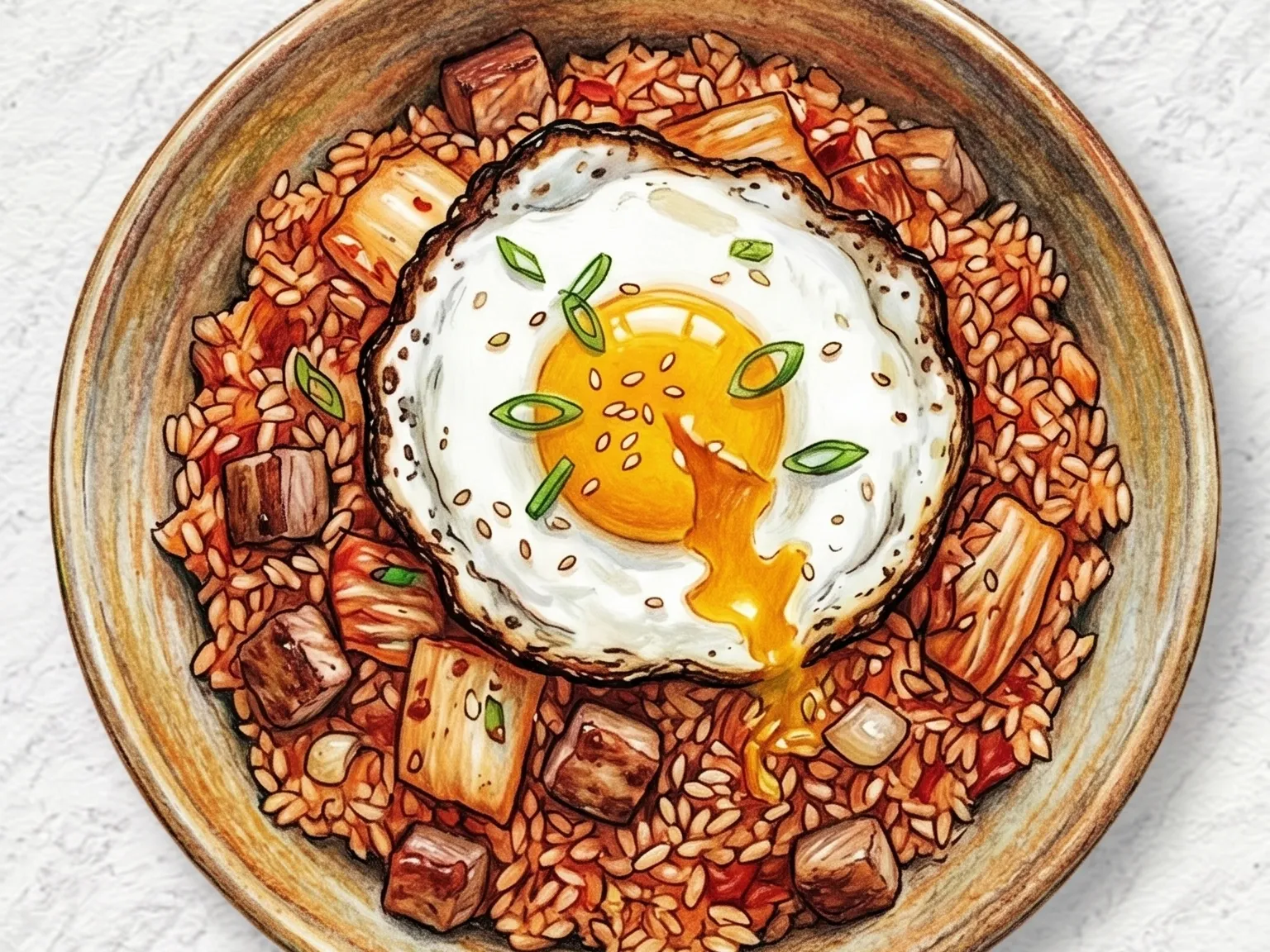
Korean Pork Belly Kimchi Fried Rice
Pork belly is diced small and rendered in a hot pan until golden, producing enough fat to cook the entire dish without additional oil. Aged kimchi and onion go into that rendered fat, where the kimchi's sharp tang softens into the pork's richness. Gochujang and soy sauce season the rice as it joins the pan, and aggressive high-heat stir-frying keeps each grain distinct rather than clumpy. Day-old cold rice works best because its lower moisture content yields a drier, crispier result, and a fried egg on top provides a creamy counterpoint when the yolk breaks.
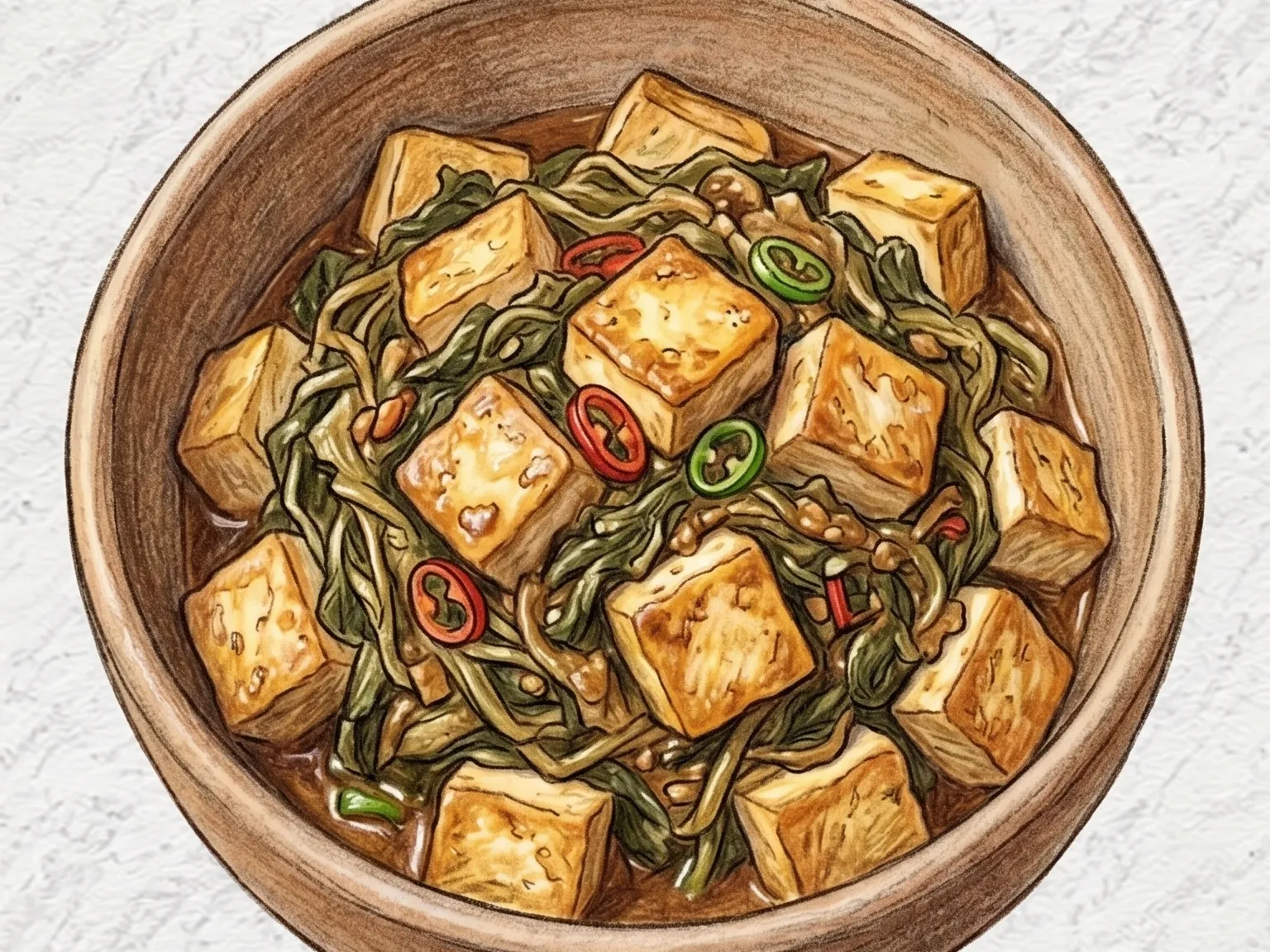
Korean Gondre Dubu Doenjang Bokkeum (Thistle Tofu Doenjang Stir-fry)
Gondre dubu doenjang bokkeum is a stir-fried side dish that pairs pan-seared firm tofu with blanched gondre thistle greens in a doenjang-based sauce. Searing the tofu separately in perilla oil before combining it with the greens is the step that makes the difference: the firm, lightly crisped surface that forms holds its shape through the subsequent stir-frying and absorbs the seasoning without breaking down into chunks. Doenjang dissolved in a small amount of water is stirred through the gondre so the fermented paste coats every strand evenly, and a small addition of soup soy sauce deepens the savory character without pushing the salt level too high. Sliced cheongyang chili adds a gentle heat that lingers at the finish. Perilla oil, with its nutty, herbal scent, binds the flavors and gives the dish its distinctive aromatic character. Gondre is a thistle variety grown in the Gangwon mountain region and pairs particularly well with doenjang because its earthy, slightly sweet fragrance complements the depth of the fermented paste.

Korean Sotteok Sotteok Skewers
Sotteok-sotteok is a Korean street snack of alternating mini sausages and cylinder rice cakes on a skewer, pan-grilled and coated in a sweet-spicy glaze of gochujang, ketchup, and oligosaccharide syrup. The rice cakes are soaked in warm water beforehand to soften them, ensuring they cook through on the pan and achieve maximum chewiness. Sausages are lightly scored to prevent splitting, and the skewers are rolled over medium heat until evenly browned. The glaze is tossed on quickly over low heat so it clings in a glossy layer, and the sauce gradually seeps into the rice cakes with each bite.
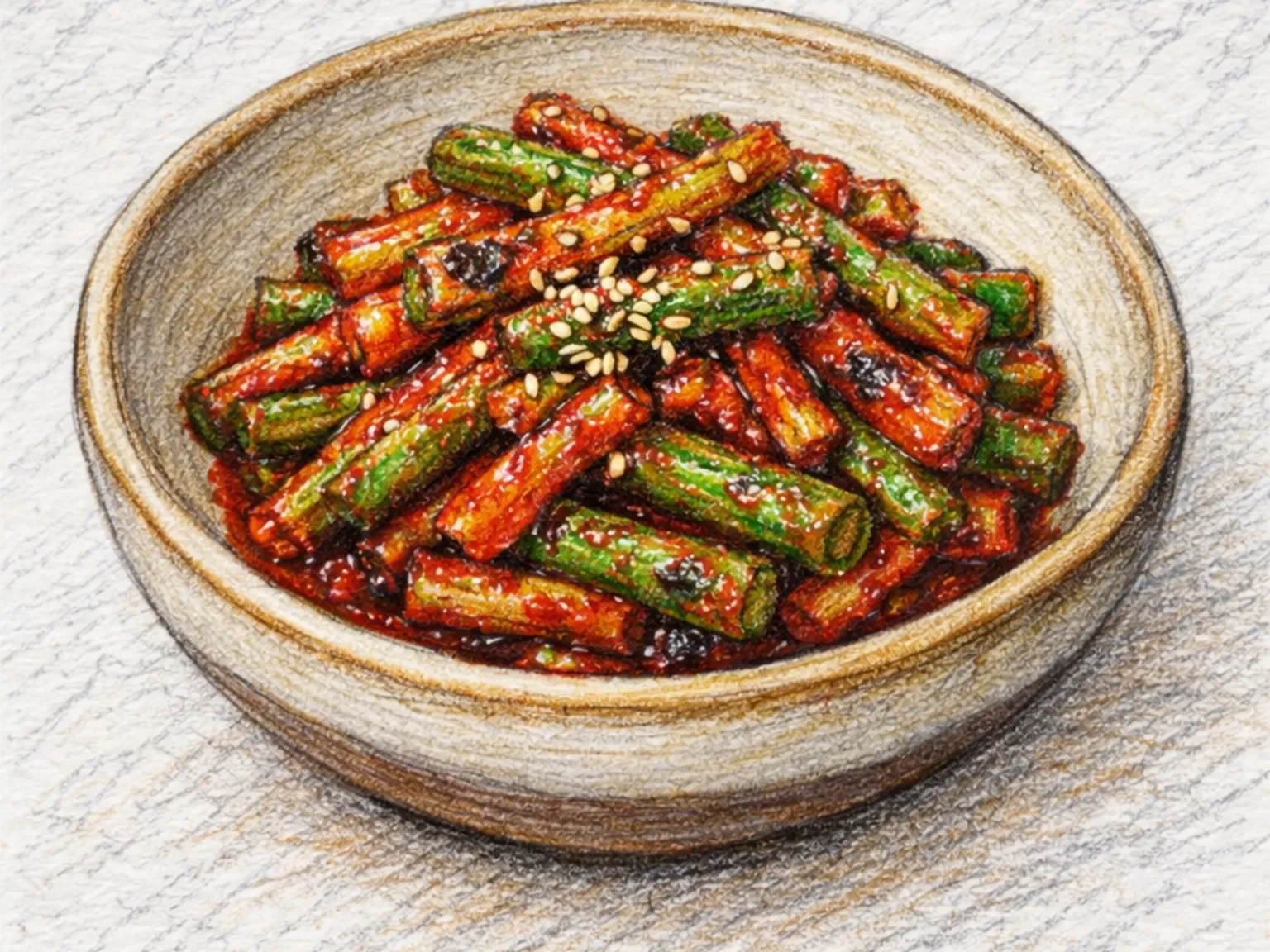
Korean Gochujang Grilled Garlic Scapes
Maneuljjong-gochujang-gui is a Korean vegetable side dish where garlic scapes cut into six-centimeter pieces are blanched for just thirty seconds, then stir-grilled in a pan with a sauce built from gochujang, gochugaru, soy sauce, oligosaccharide syrup, and minced garlic. The thirty-second blanch is precisely timed to loosen the tough outer fibers of the scape so the sauce has a surface to cling to, while the crisp interior stays intact. Plunging the scapes into cold water immediately after blanching is necessary to halt carryover cooking and lock in the texture. The garlic scape's own sharp, pungent bite merges with gochujang's fermented depth to build a layered spiciness that carries more complexity than raw chili heat alone, and the oligosaccharide syrup contributes both a glossy coating and a restrained sweetness that rounds off the sauce. When the sauce starts catching on the pan, adding a tablespoon of water loosens it without washing out the flavor. Sesame oil and toasted sesame seeds go on at the very end to finish the dish with a nutty, roasted aroma.
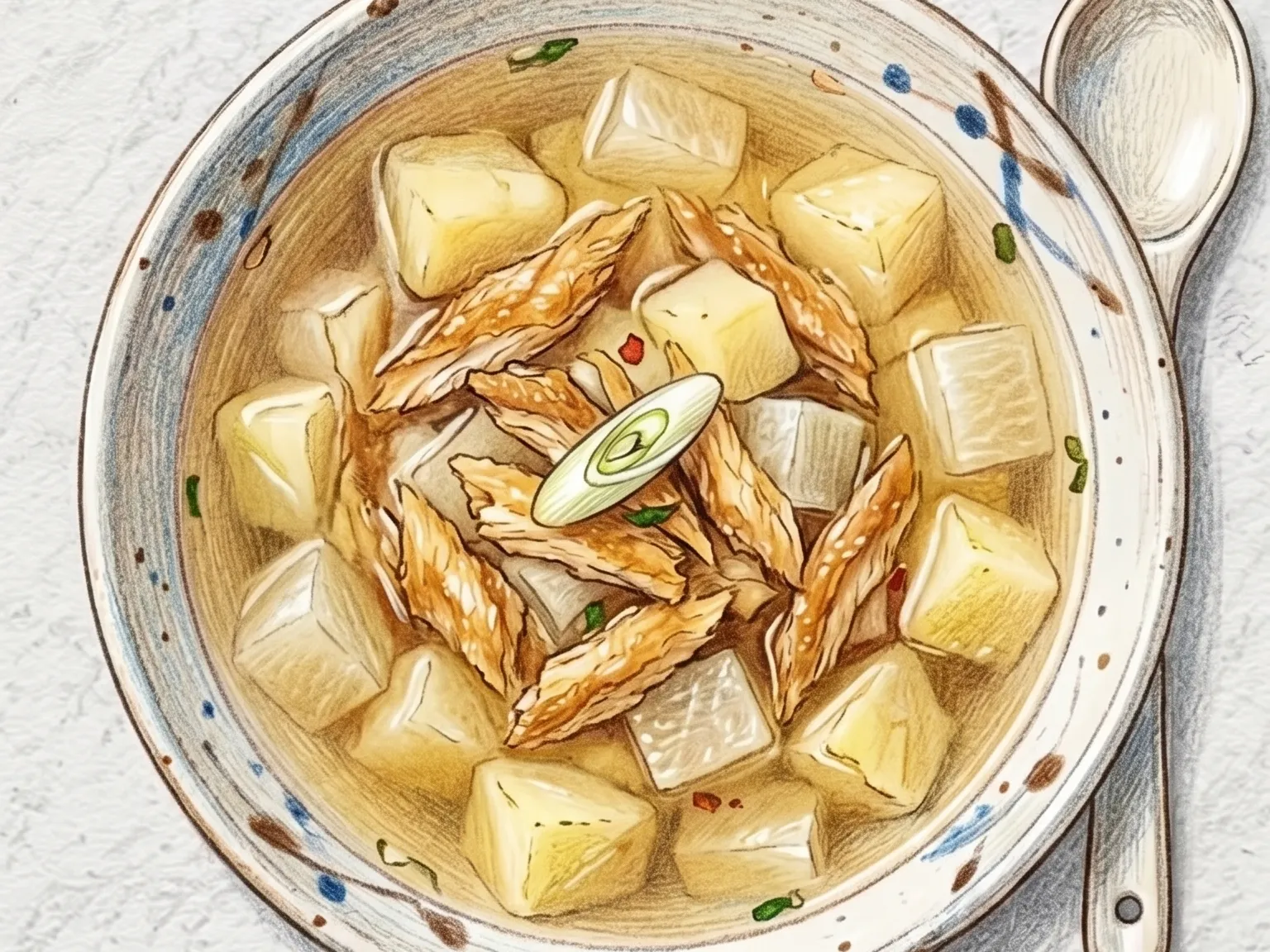
Korean Dried Pollock Potato Soup
Hwangtae-gamja-guk is a clear Korean soup built around dried pollock strips that have been wind-dried and then sauteed in sesame oil before any liquid is added. That initial stir-fry step is what separates this soup from simpler broth dishes: the heat releases a toasty, nutty fragrance from the pollock that permeates the entire pot and melds with the anchovy-kelp stock poured in afterward. Potato slices simmer alongside radish, and as they soften their edges gradually break down, giving the broth a mild, natural body without the use of starch or thickener. Radish contributes a clean, cooling sweetness that tempers the concentrated umami of the dried pollock. Soup soy sauce and minced garlic handle the seasoning, keeping the flavor profile clear and uncluttered. The pollock itself stays pleasantly chewy even after prolonged simmering, providing a protein-rich bite that makes the bowl genuinely filling. This soup is a fixture on Korean breakfast tables, valued for its ability to settle the stomach and restore energy.
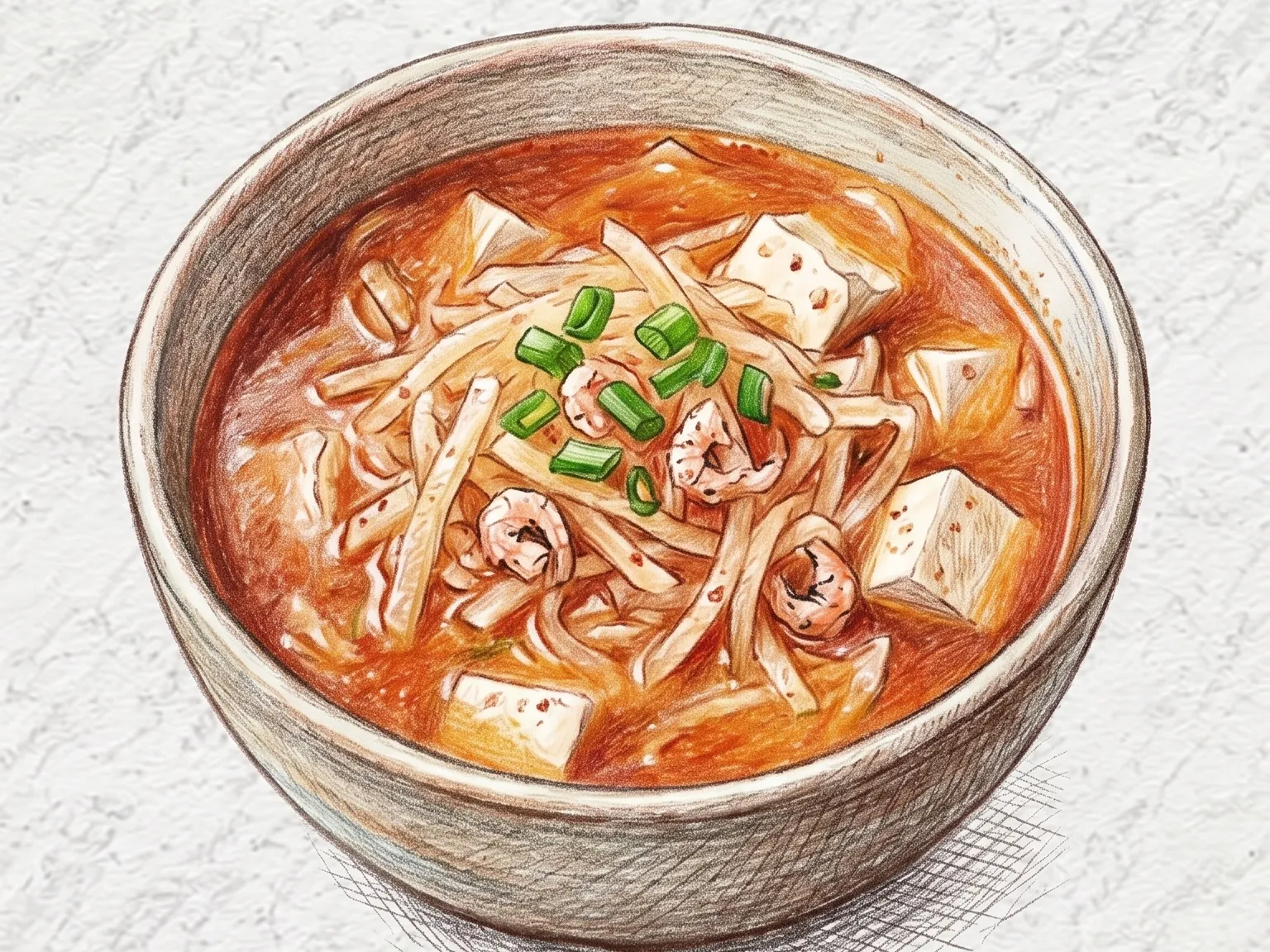
Korean Radish and Salted Shrimp Stew
Musaengchae-jjigae simmers julienned radish in a broth built on salted shrimp (saeujeot) and gochugaru, drawing a surprising depth of flavor from minimal ingredients. Saeujeot is fermented shrimp paste that concentrates months of salt-curing and enzymatic breakdown into a potent seasoning -- it supplies umami on the level of fish sauce but with a more rounded, fermented character that forms the backbone of this broth without requiring any stock. Cutting the radish into thin julienne strips, rather than chunks, is deliberate: thin pieces cook through quickly and release just enough starch into the broth to give it a faint natural body. Gochugaru provides color and heat, and its fruity spice complements the sweet, mild flavor that radish develops as it softens. Tofu adds body and protein, and the green onion and garlic round out the aromatics. What makes this jjigae worth repeating despite its simplicity is the fermented complexity from the saeujeot -- a single tablespoon transforms plain water into something that tastes long-cooked. Lighter in texture than doenjang or kimchi jjigae, it works well as an everyday soup that pairs with rice without overwhelming the meal.
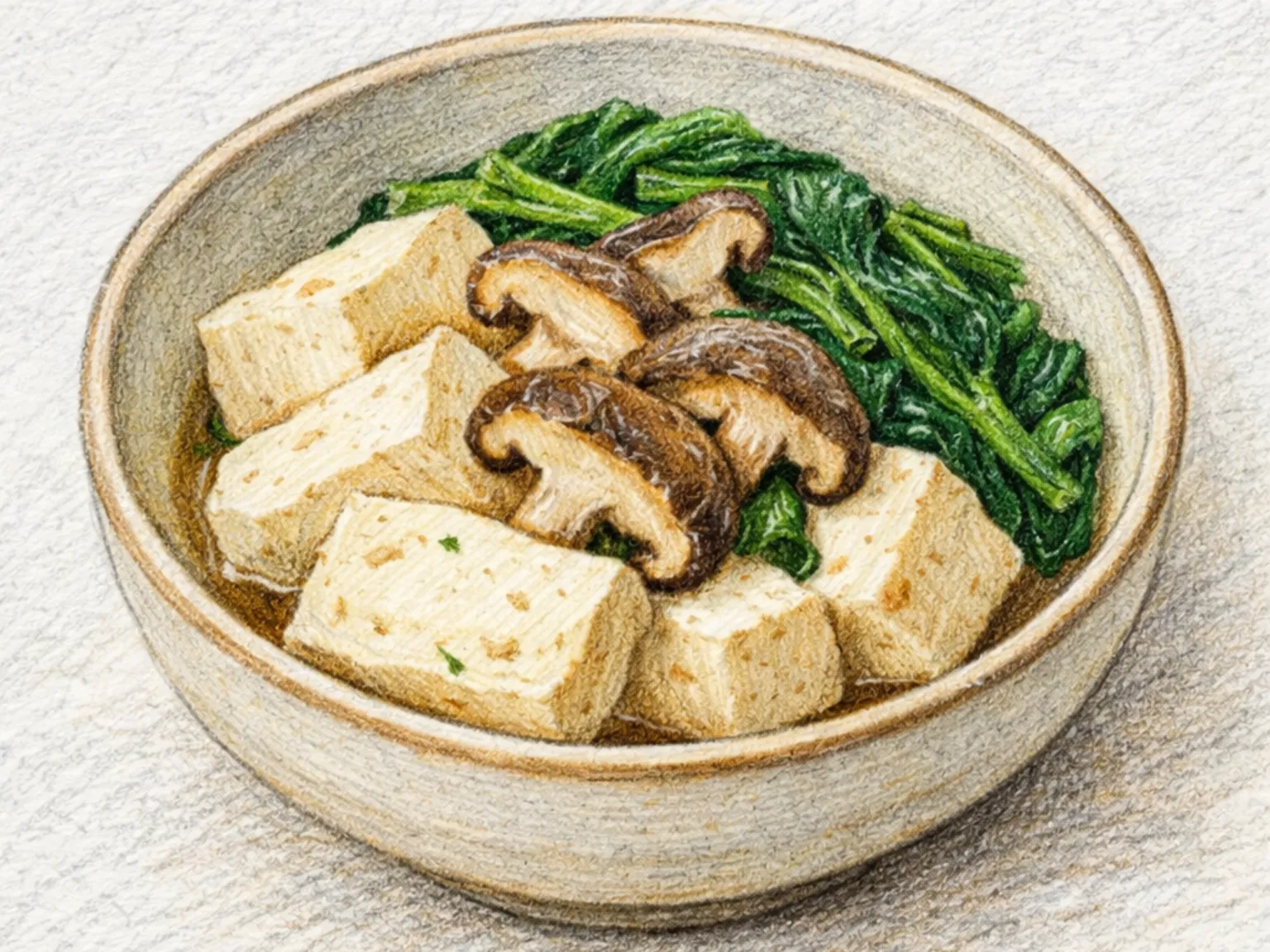
Korean Steamed Tofu with Spinach
Sigeumchi dubu jjim is a Korean steamed side dish of firm tofu, spinach, and shiitake mushrooms seasoned with soy sauce and soup soy sauce, then covered and cooked over gentle heat until everything is just done. Pressing the tofu firmly between layers of kitchen paper to remove excess moisture is a necessary first step; water left in the tofu dilutes the seasoning and turns the cooking liquid murky. When the spinach and mushrooms are arranged alongside the tofu and the seasoning is spooned over everything before the lid goes on, the steam released by the vegetables cooks the dish evenly without any added water. Shiitake mushrooms bring a concentrated umami that gives unexpected depth to what is otherwise a very simple soy-based seasoning. A drizzle of perilla oil and a scattering of sesame seeds at the end add a distinctly nutty, aromatic finish that lifts the entire dish. Low in calories and rich in plant protein, it fits naturally into a light weeknight dinner as a side dish that is as nourishing as it is unfussy.