Asian Recipes
806 recipes. Page 28 of 34
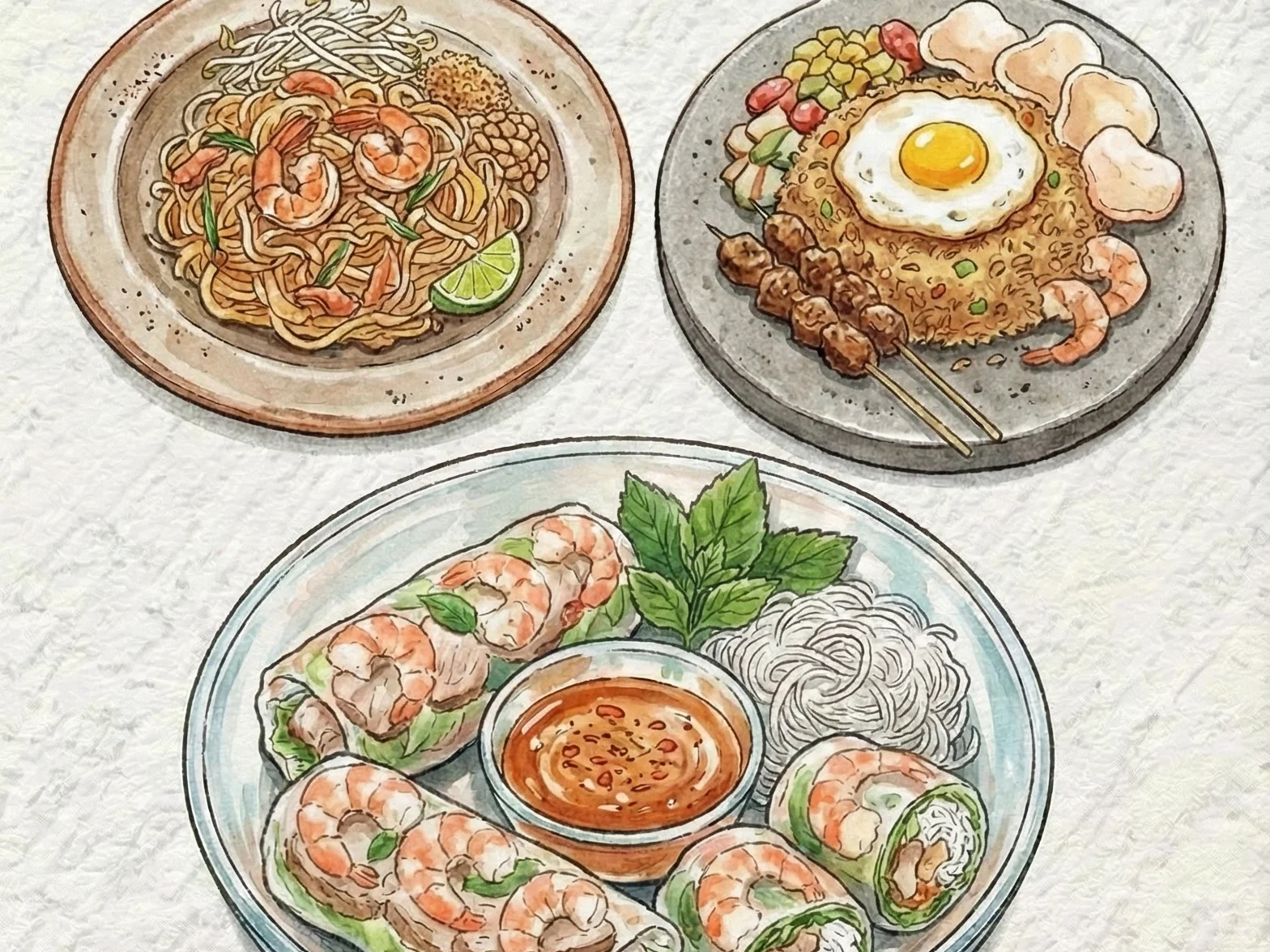
The Asian category gathers popular dishes from Japan, China, Thailand, Vietnam, India, and beyond. Curry, stir-fried noodles, mapo tofu, pad Thai, and pho are among the Asian favorites commonly enjoyed in Korean households.
Igoneri (Rolled Ego Seaweed Jelly)
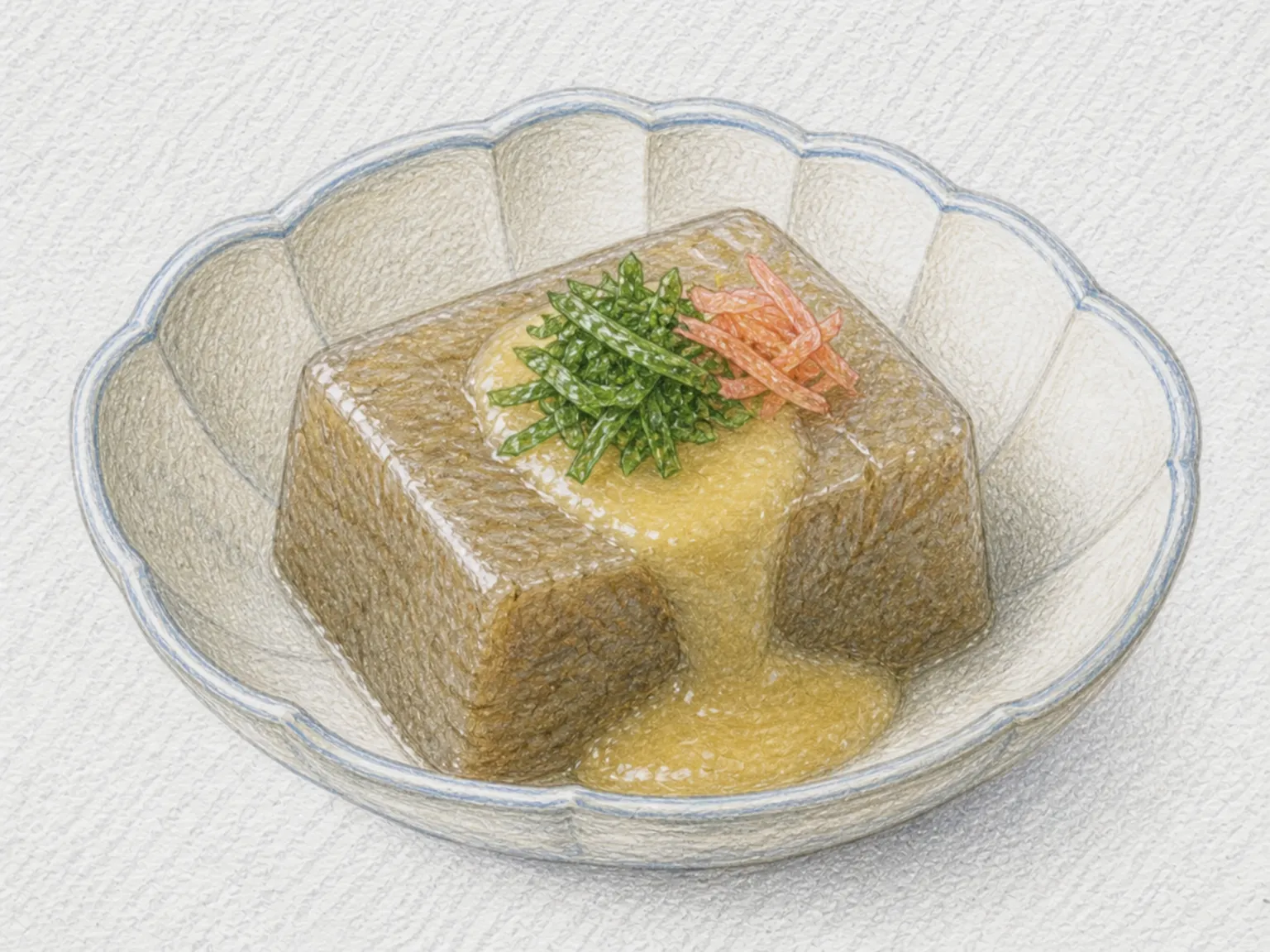
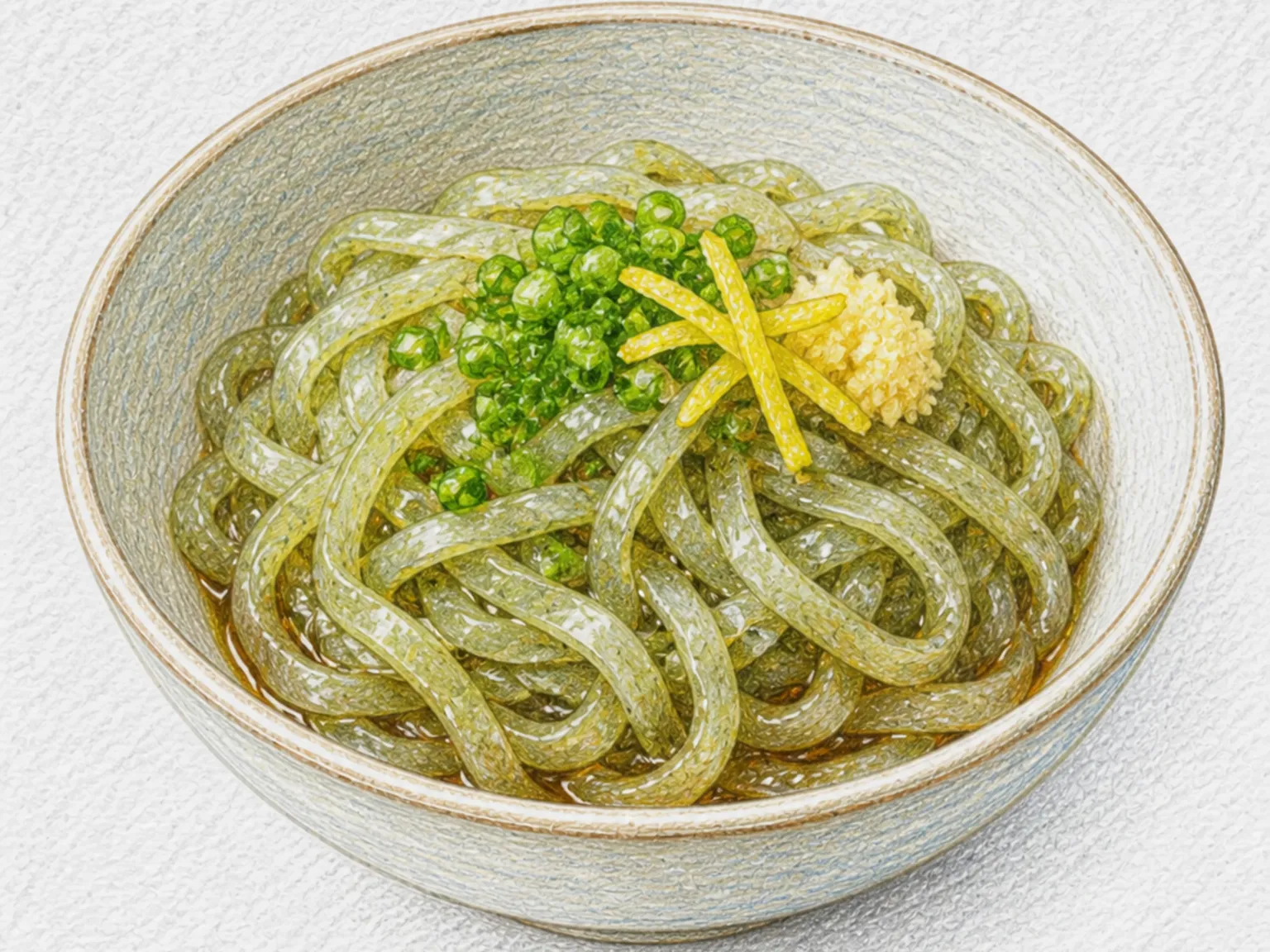
Igoneri is a set ego-seaweed dish from Sado Island in Niigata. Wash 100g dried ego seaweed several times under cold running water, removing visible sand, shell fragments, and pieces of other seaweed. Bring 2000ml water to a boil in a large pot, add the ego, and turn off the heat when the strands wilt. Cover the pot and leave it in the hot water for 10 minutes. Return it to low heat and stir continuously, scraping the bottom and corners until the large strands disappear into a thick paste. The mixture scorches easily even over low heat, so do not pause the stirring, and lower the heat if it becomes stiff before the seaweed has fully dispersed. Wet a clean stainless tray so the set sheet will release cleanly, then spread the hot paste quickly to a thickness of 3 to 4mm. Let the steam subside and refrigerate it for at least 2 hours. Cut the firm sheet into 15cm squares, roll each square tightly, and slice the rolls into 5mm ribbons. Loosen the ribbons like noodles and divide them among four bowls. Finish with 50g chopped long onion, 20g grated ginger, 10g thinly sliced lemon peel, and 60ml soy sauce. A properly dissolved and evenly spread batch sets smooth enough to roll without splitting.
Taiwanese Beef Noodle Soup
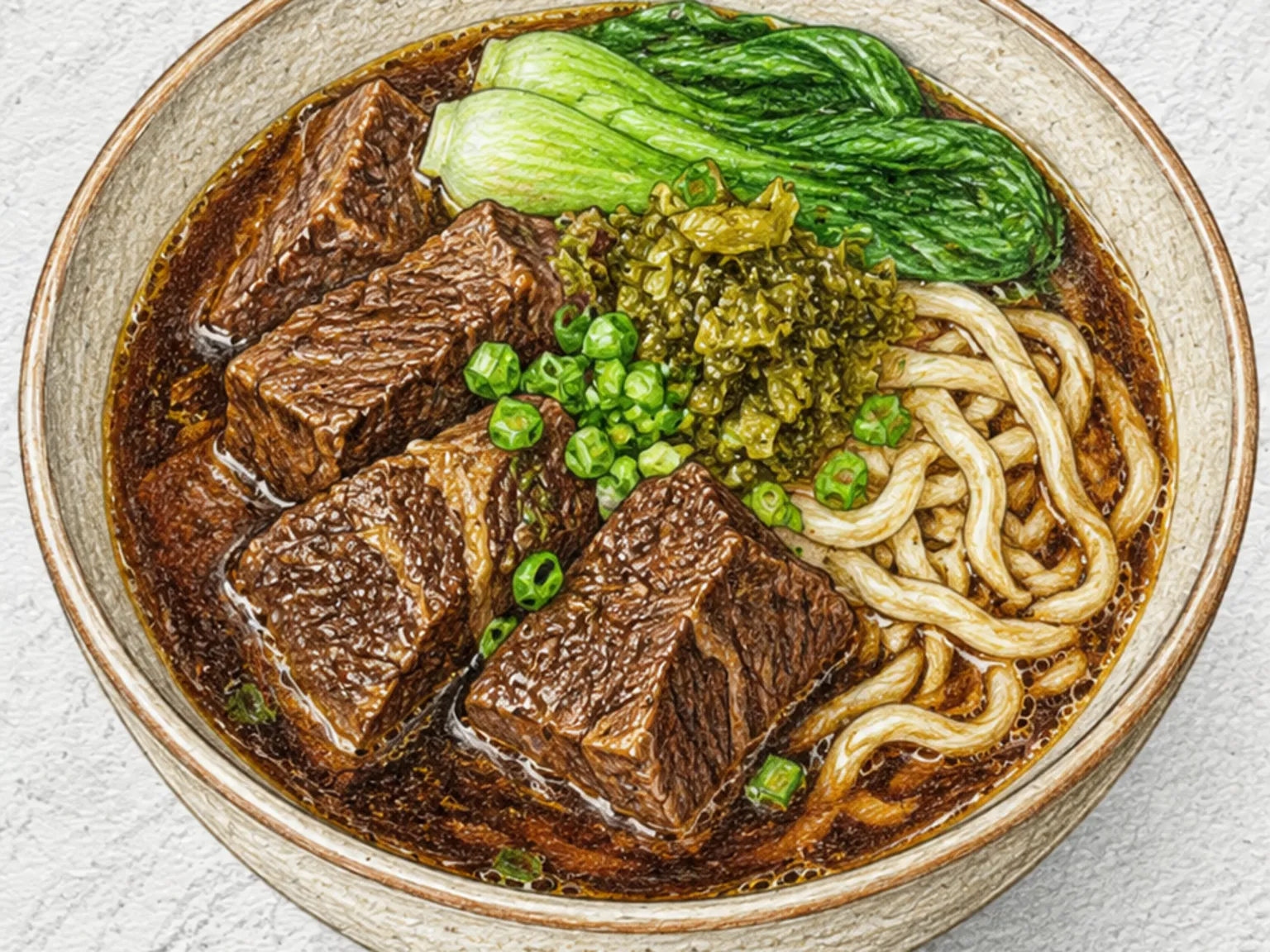
Taiwanese beef noodle soup slow-braises beef brisket in a soy-based broth seasoned with doubanjiang, star anise, cinnamon, and Sichuan peppercorns. The minimum 90-minute simmer renders the meat fork-tender while building a deeply layered broth. Thick wheat noodles are served in the finished broth, soaking up its concentrated flavor. Spice level is adjustable by varying the amount of doubanjiang. Common garnishes include pickled mustard greens and blanched bok choy, adding brightness to the rich bowl.
Iizushi Fish and Rice Koji Ferment
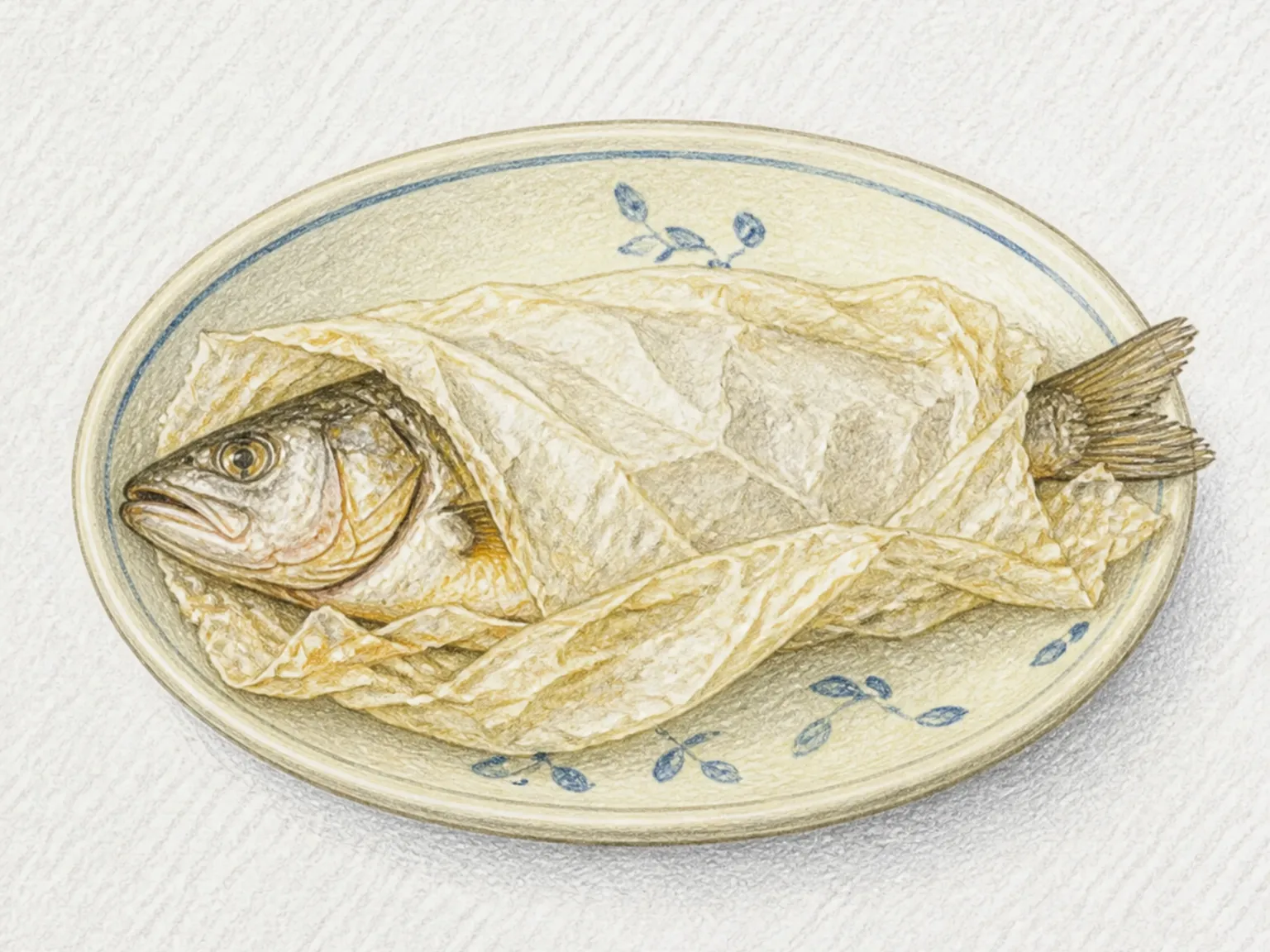
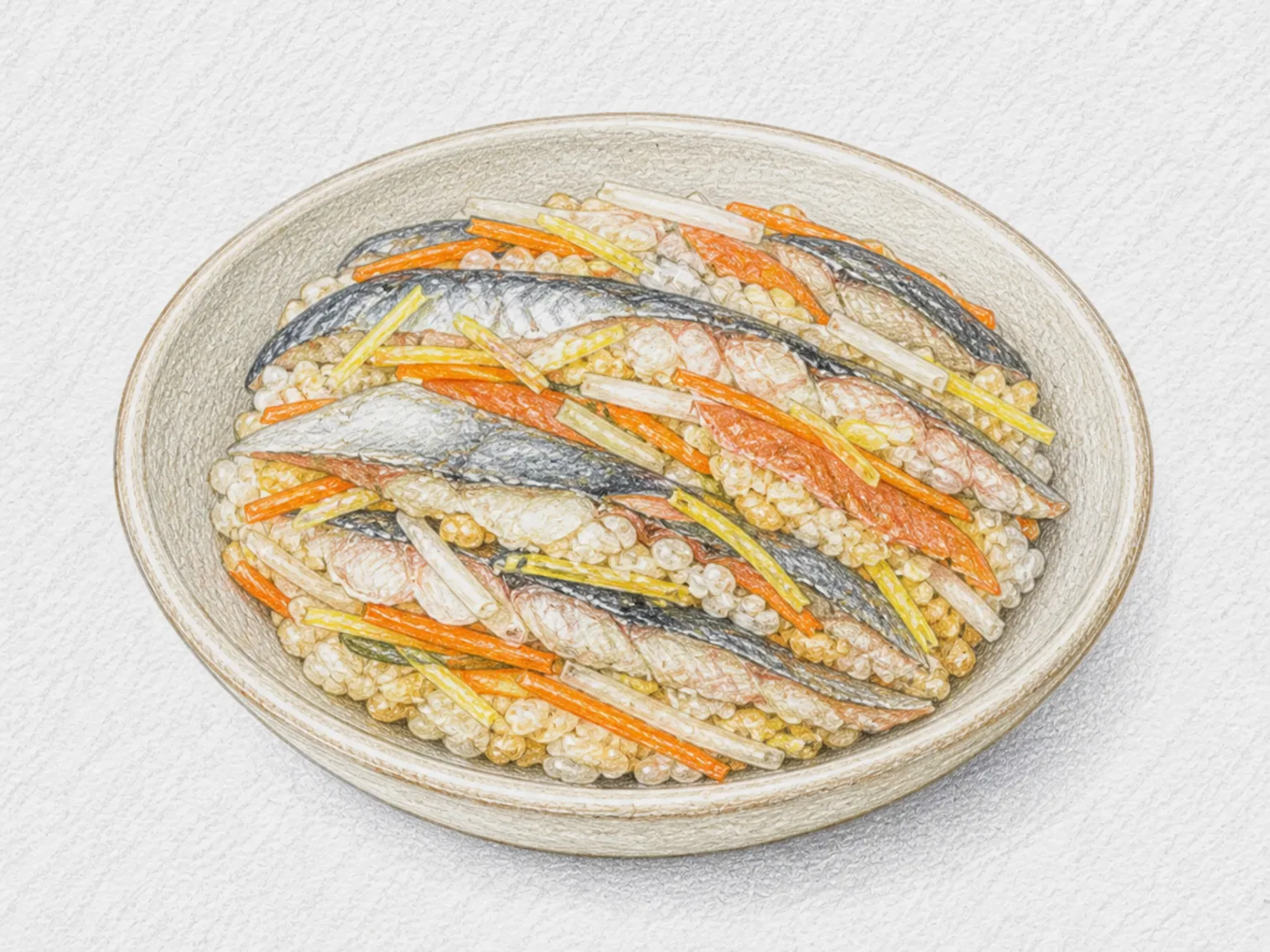
Iizushi is a Hokkaido winter preserve that layers salted fish, daikon, carrot, and ginger with cooked rice and rice koji under a weight for low-temperature lactic fermentation. Hatahata, hokke, salmon, herring, and saury vary by coast. Fishing households traditionally packed it around the first snow and served it at New Year gatherings and other celebrations. Its fermentation is shorter than many narezushi styles, giving a relatively mild aroma with rice sweetness, lactic acidity, and fish savoriness. Because safe raw-fish fermentation requires validated temperature, salt, and pH controls, this home recipe does not reproduce manufacture; it covers serving a fully matured refrigerated product from a licensed maker.
Japanese Dan Dan Ramen (Sesame Cream Broth with Spicy Pork)
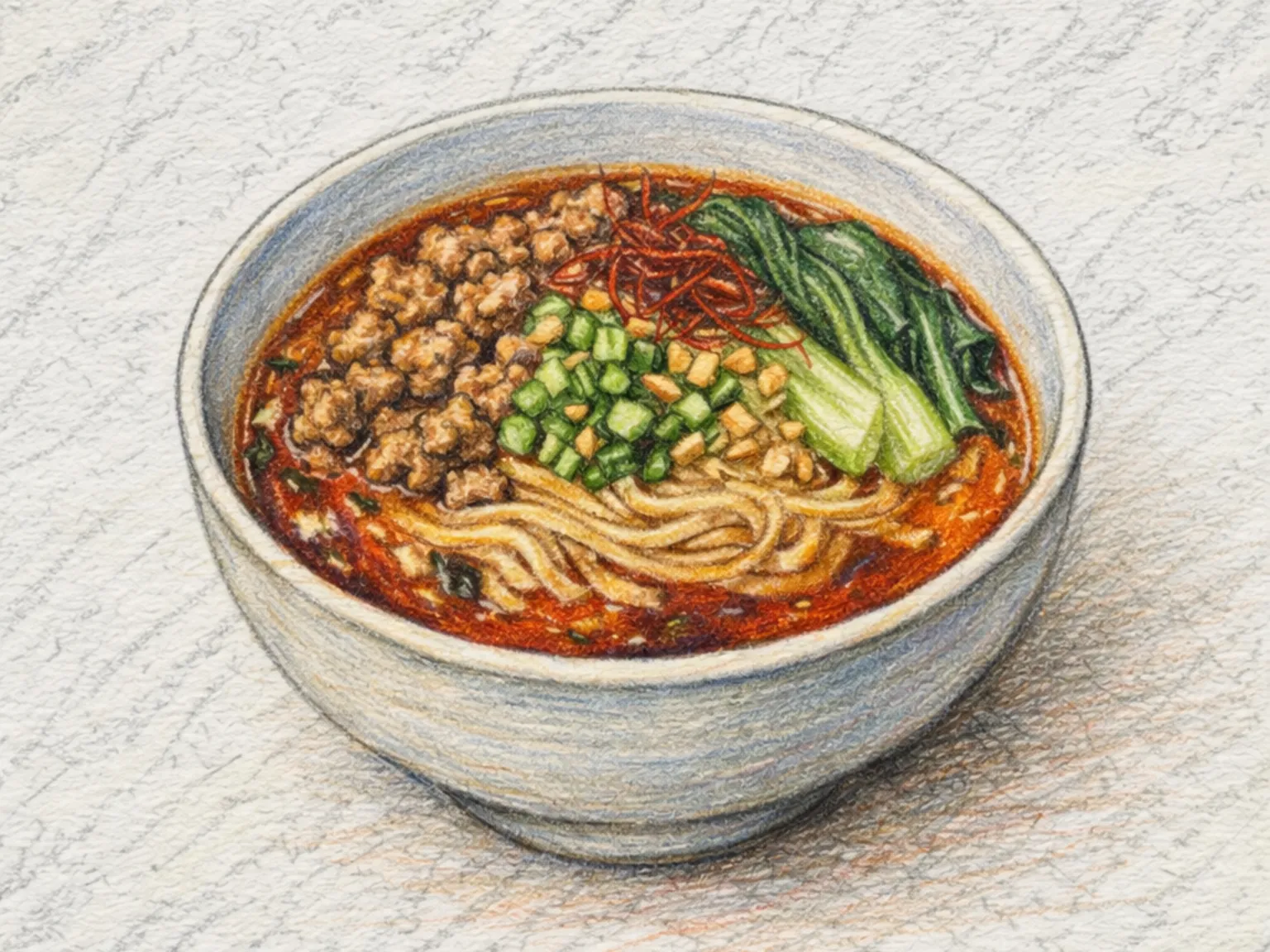
Tantanmen is the Japanese adaptation of Sichuan dan dan noodles, served as a ramen with a thick sesame-cream broth. Ground pork is stir-fried with doubanjiang and spooned over the bowl along with chili oil. The sesame base gives the soup a dense, nutty body, while the chili oil adds a slow-building heat. Standard ramen noodles are used, paired with bok choy or scallions. Preparation takes about 45 minutes, with most of the effort going into building the sesame broth and seasoning the pork topping.
Ika Menchi (Coarse Squid and Vegetable Fritters)
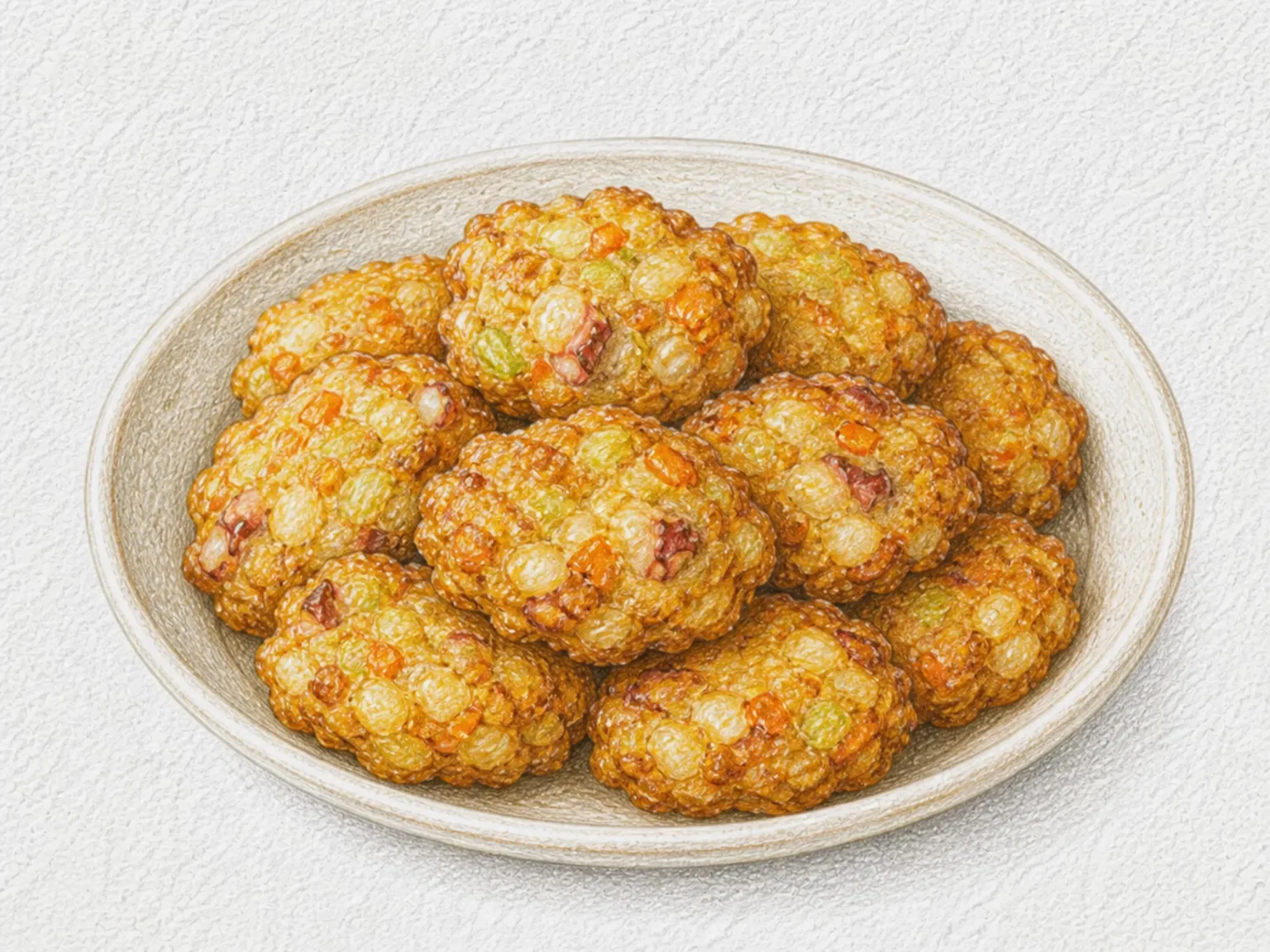
Ika menchi is a home-style food from the Tsugaru region of Aomori. Squid body, fins, and tentacles are chopped coarsely, mixed with cabbage, carrot, and onion, bound with wheat flour, and fried without breadcrumbs. The body is pulsed only until small pieces remain, while the tentacles are chopped by knife, giving the soft mixture distinct springy bites. Carrot is briefly heated to remove its raw firmness, and cabbage is cut into 5 mm pieces so its sweetness and texture remain noticeable. The seasoned mixture is shaped into ten patties and fried after the shishito peppers until the outside is brown and crisp and the squid is opaque through the center. The dish is said to have developed during food shortages after the war as a way to use squid legs left from sashimi and vegetable trimmings. It remains an everyday item in homes, markets, and prepared-food counters.
Sesame Spicy Tantanmen (Chinese Creamy Sesame Chili Oil Noodle Soup)
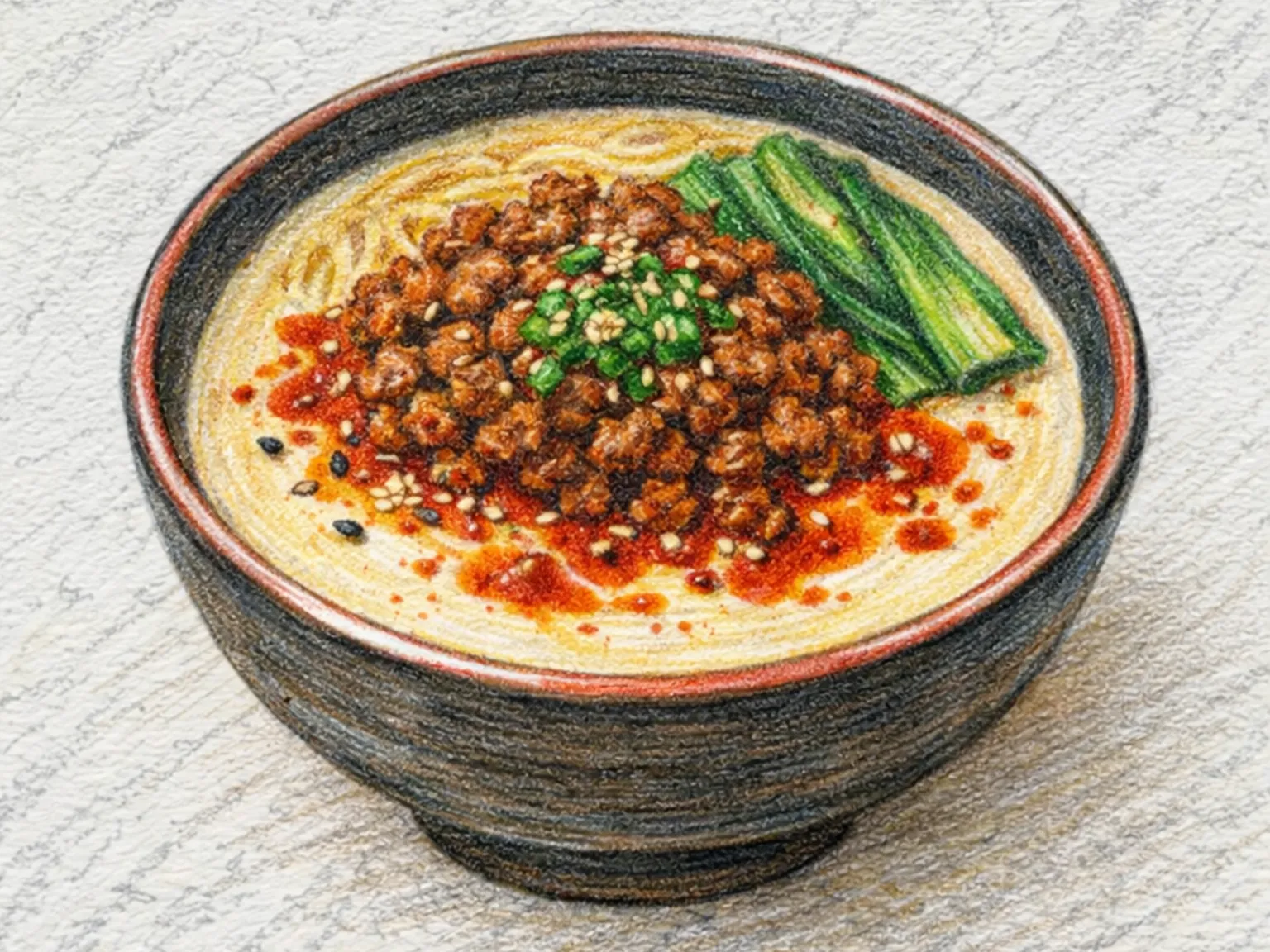
Tantanmen is a noodle soup of Chinese origin that is defined by the combination of a creamy sesame-based broth and the sharp heat of chili oil. This pairing creates a bowl of noodles that features nutty, spicy, and savory characteristics all at once. The preparation of the broth starts with a base of chicken stock. To this base, sesame paste is added and whisked thoroughly until it has fully dissolved into the liquid. The result of this process is a thick, tan-colored soup base that emits a prominent fragrance of roasted nuts. The meat topping for the dish is prepared separately by frying ground pork with minced garlic and fresh ginger. During this cooking process, doubanjiang, which is a paste made from fermented chili beans, is stirred into the pork to add saltiness and depth. The meat is cooked until it is well-browned and has a crumbly consistency, after which it is spooned over the noodles to provide a rich component to the final assembly. To balance the density of the broth, bok choy is blanched and added to the bowl, offering a crisp and vegetal element that provides a contrast to the liquid. Just before serving, a final drizzle of chili oil is applied to the surface of the soup, where it gathers in small pools and releases its aroma with the heat. The noodles are generally cooked until they are just short of being fully done, which allows them to maintain a firm and chewy texture while they remain submerged in the hot liquid. Each individual ingredient, from the sesame and chili to the fermented beans and pork, contributes its own specific layer of flavor. As these different elements gradually merge together in the bowl, the taste of the soup continues to develop and change while the meal is consumed slowly.
Ikanago no Kugini (Ginger Soy Simmered Sand Lance)
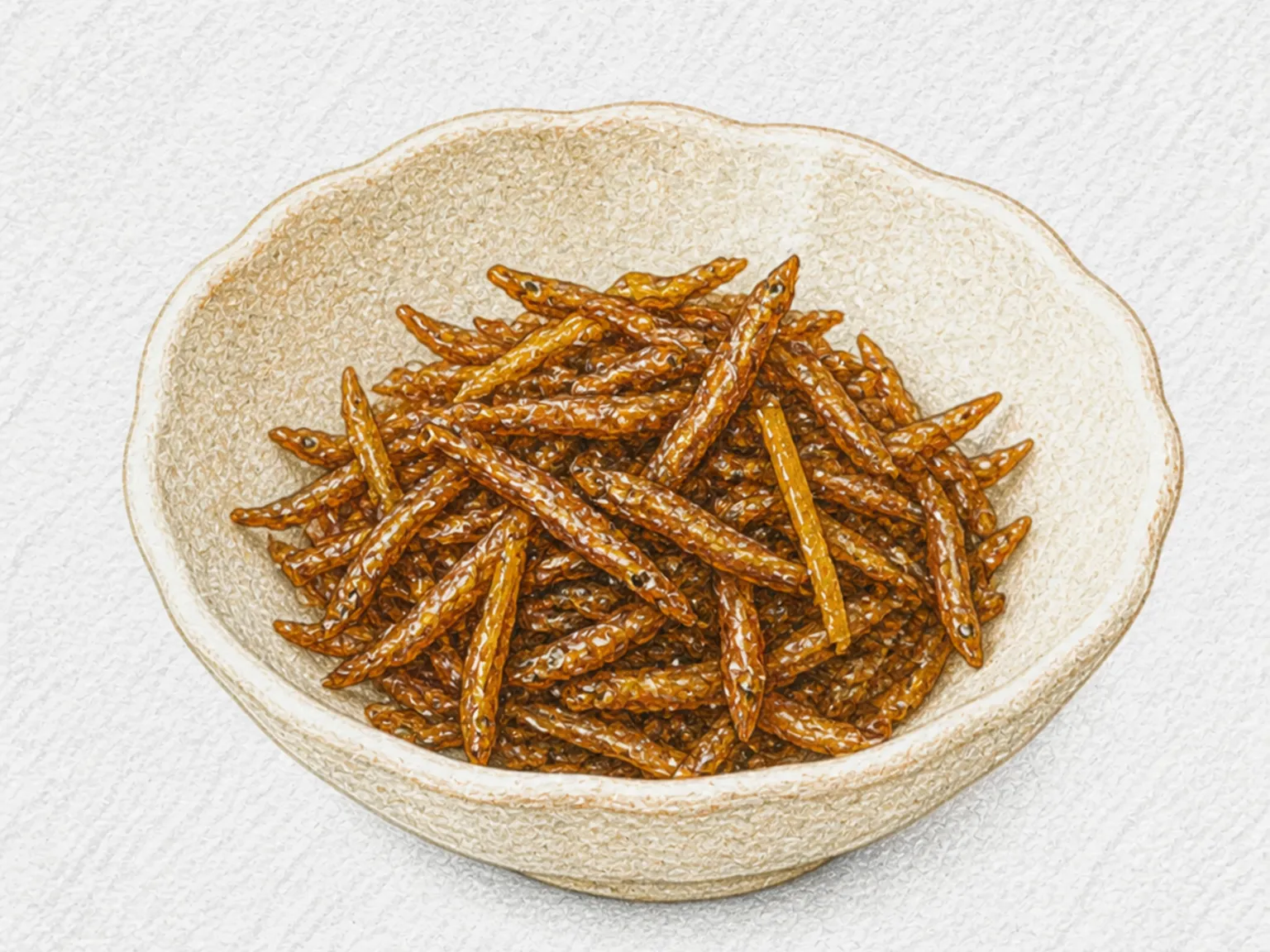
Ikanago no kugini is a spring preserve from the coast of Ise Bay in Mie, made by reducing young sand lance with soy sauce, sake, mirin, coarse sugar, and ginger. Fresh fish about 3 to 4 cm long are scattered into the vigorously simmering sauce in small batches so the temperature does not fall. The fish must not be stirred while cooking because their slender bodies break easily. Near the end, the pot itself is turned several times until the liquid is nearly gone, leaving glossy, bent fish that resemble rusty nails, the image behind the name kugini.
Thai Boat Noodles (Intense Thai Canal Beef Noodle Soup)
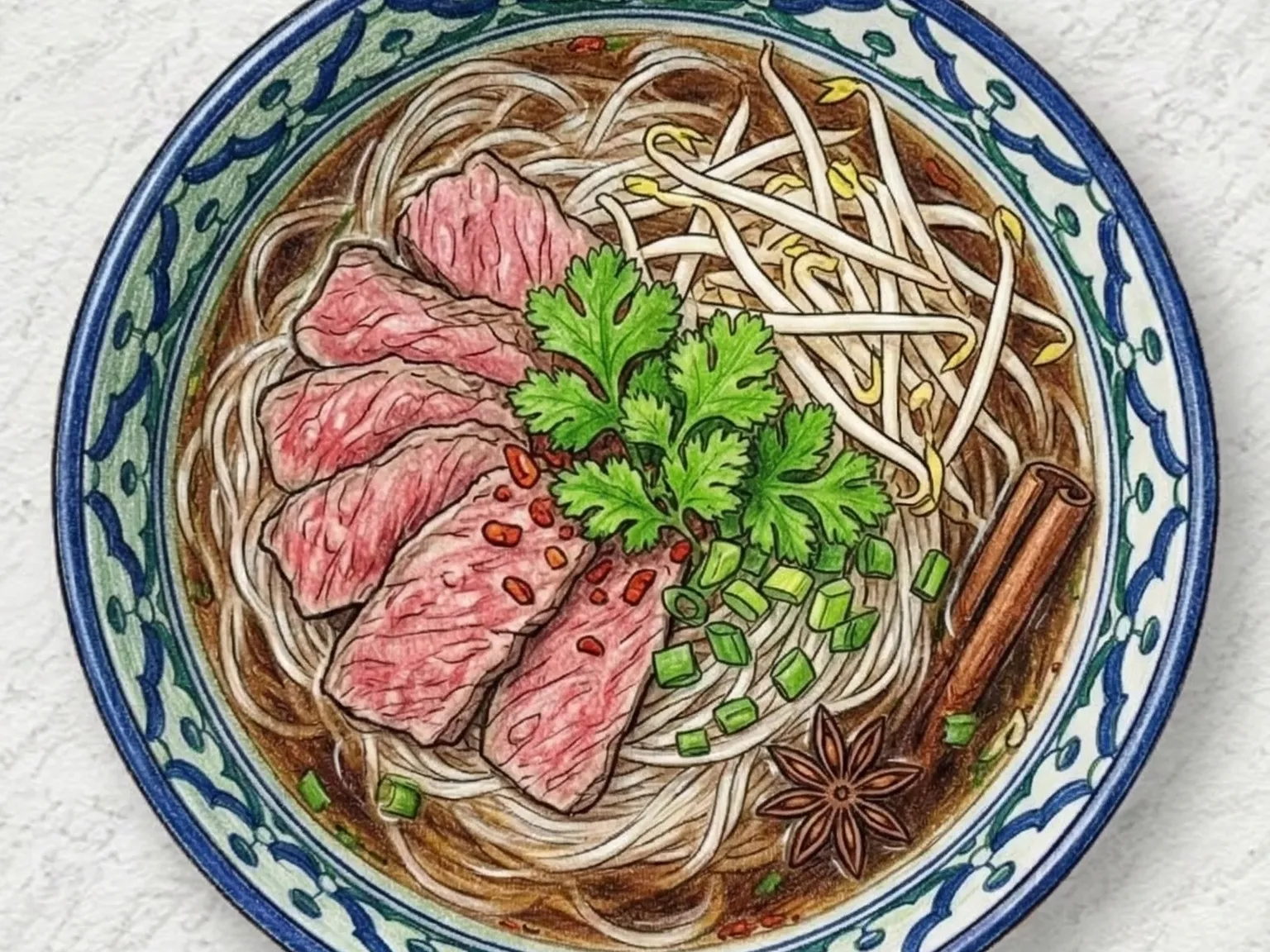
Thai boat noodles are an intensely flavored street noodle soup that originated on the small boats plying Bangkok's canals, where vendors would hand bowls across the water to customers on the banks. The broth is built by simmering beef stock with star anise and a cinnamon stick for fifteen minutes or more, extracting warm, aromatic notes that form the backbone of the dish. Fish sauce, dark soy sauce, and palm sugar are added to season the liquid into a deeply savory, slightly sweet, and mahogany-dark broth. Thinly sliced beef is poached in the simmering liquid for just a minute or two so it stays supple, then ladled over cooked rice noodles in a bowl. Fresh bean sprouts provide crunch and cilantro adds a bright herbaceous lift that counterbalances the concentrated broth. Boat noodle portions are traditionally small-designed to be eaten quickly and in multiples-so every spoonful delivers maximum impact.
İmam Bayıldı (Turkish Stuffed Eggplant)
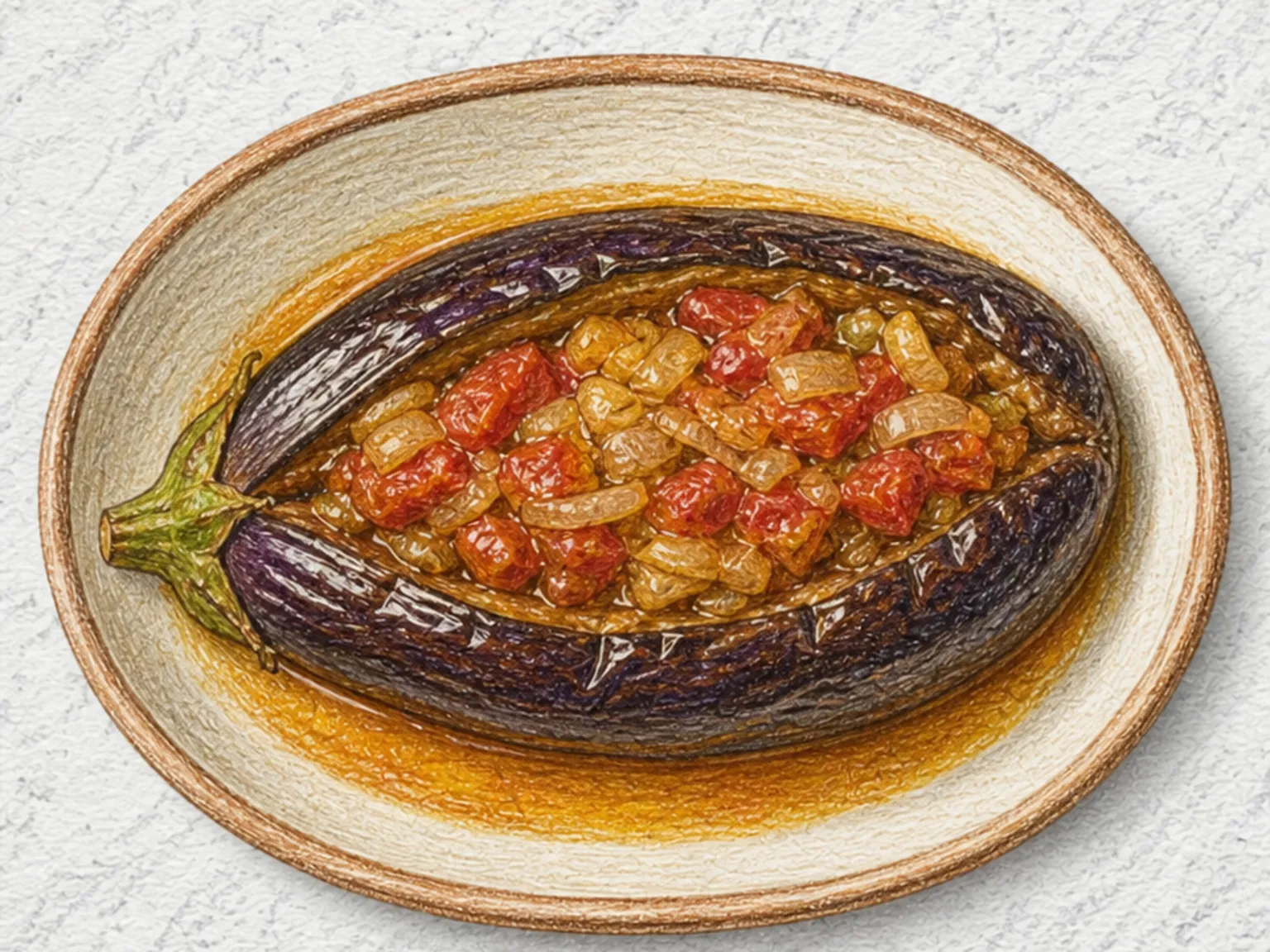
Imam bayildi is served well chilled after whole eggplants are slit, filled with onion and tomato, and braised very gently with olive oil and water. Wash 2 eggplants and peel alternating vertical strips of skin, leaving a zebra pattern. Soak them in cold salted water for 15 minutes, then dry their surfaces. Cut one deep lengthwise slit down the center of each eggplant while keeping both ends intact. Warm 2 tablespoons olive oil in a pan, add the eggplants, and cover. Steam-cook over low heat for 10 minutes, turning them occasionally until the slits can open and the flesh is soft enough to hold filling. In a second pan, heat another 2 tablespoons olive oil. Cook 150 g thinly sliced onion and 4 sliced garlic cloves until browned. Add 150 g chopped tomatoes, 1 teaspoon sugar, and 1/2 teaspoon salt, cook for 5 minutes, and stir in 10 g chopped flat-leaf parsley. Carefully open the slit in each cooked eggplant and use a spoon to create space without cutting through the base. Fill generously with the onion and tomato mixture. Arrange the stuffed eggplants in a deep pan, then pour in the remaining olive oil and 100 ml water. Cover and simmer over very low heat for 30 minutes, until the liquid reduces and the eggplants absorb the vegetable juices. Turn off the heat and let the dish cool briefly. Transfer it to a sealed container and refrigerate within 2 hours. Serve only after it is thoroughly chilled and the olive oil, tomato, onion, and eggplant juices have had time to settle together.
Tomato Egg Lamian (Chinese Home-Style Tomato Scrambled Egg Noodle Soup)
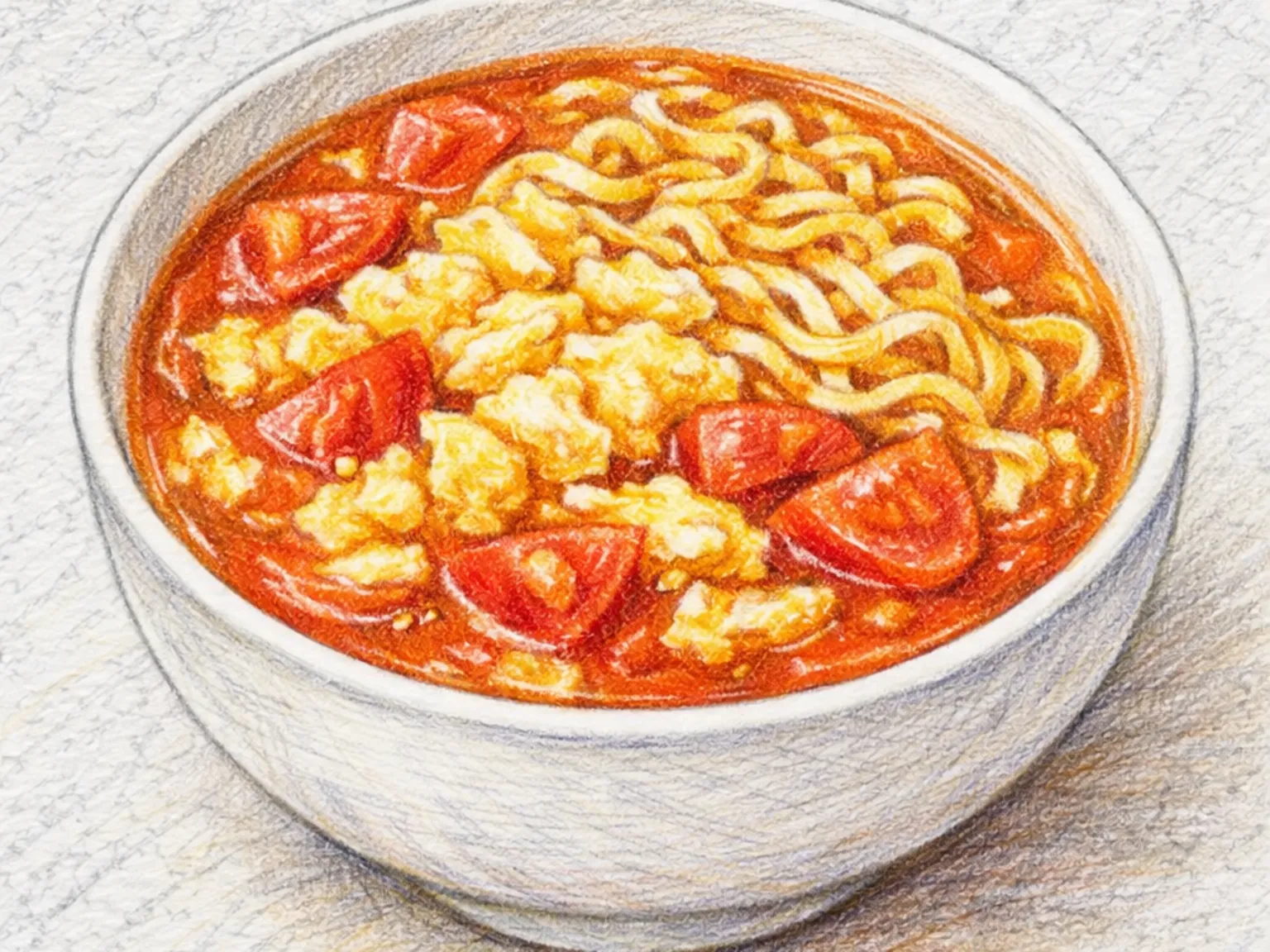
This two-serving noodle soup uses 240 g fresh wheat noodles, 300 g tomato, and 3 eggs. Cut the tomatoes into large pieces, finely slice 25 g green onion, and beat the eggs until the whites and yolks are evenly combined. Heat 1 tablespoon neutral oil over medium heat, pour in the eggs, and fold them broadly for about 30 seconds. Remove them while still slightly wet so they remain soft when returned to the broth. Lower the same pot to medium-low heat and cook some of the green onion with 1 teaspoon minced garlic for 40 seconds. Add the tomatoes and press them as they cook for 4 minutes, stopping when they have released plenty of red juice. Pour in 800 ml chicken stock, 1 tablespoon soy sauce, and 1 teaspoon sugar, then simmer for 5 minutes over medium heat. Add the fresh noodles and loosen them with chopsticks, cooking until their centers retain a little firmness. Reduce the heat, return the eggs for only 1 minute, and serve with the remaining green onion while the egg pieces are still soft and distinct.
Iragimun, Green Papaya with Pork and Miso
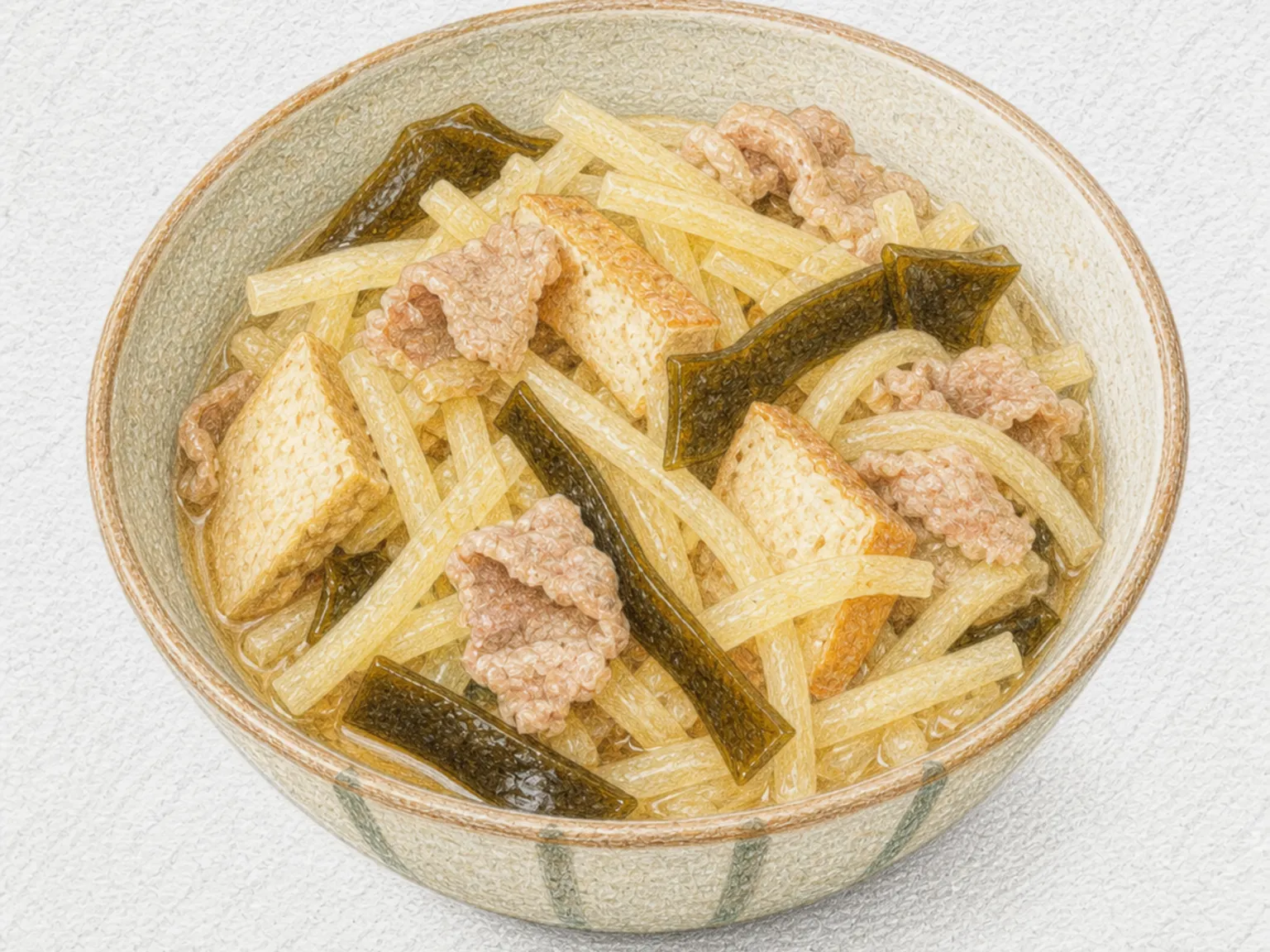
Iragimun is an everyday dish from the Yaeyama islands of Okinawa. Unripe green papaya is briefly boiled, then cooked with pork, kombu, and atsuage in modest amounts of bonito and pork broths. Miso and a little sugar season the mixture, which is turned gently as the liquid reduces to a light coating rather than a soup. Green papaya is used here as a vegetable, not as ripe fruit; after cooking, its firm yet tender texture is often compared with daikon. Families traditionally used papaya trees planted near the house, serving the dish for ordinary meals and also among foods prepared around the equinoctial observance. Limited liquid and restrained cooking preserve the shapes and mild miso flavor.
Classic Tonkotsu Ramen (Pork Bone Milky Broth Noodles)
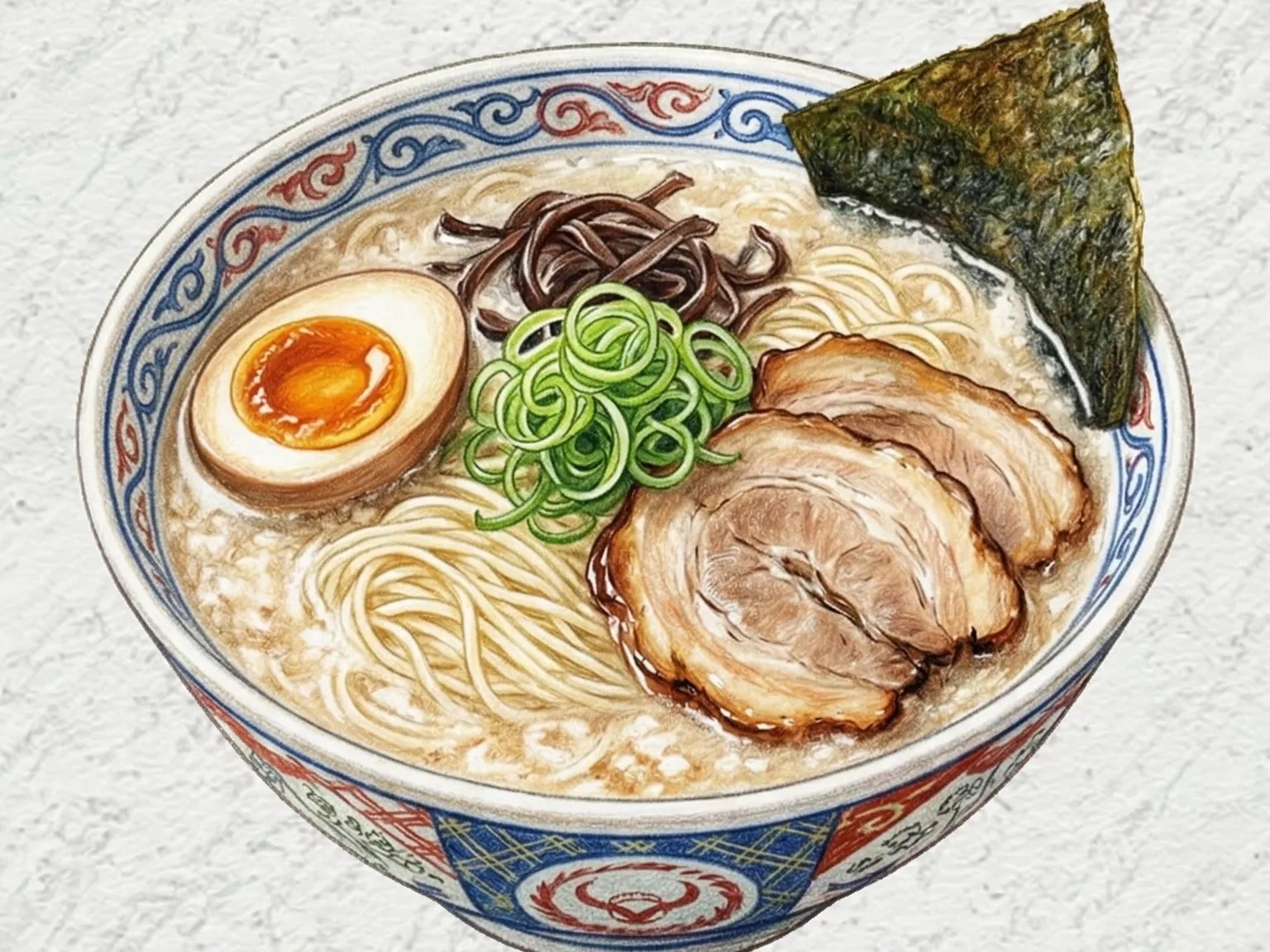
Classic Tonkotsu Ramen is a Japanese noodle dish defined by its deep, creamy pork bone broth. The foundation of this soup requires boiling pork back bones and pig trotters with garlic and ginger at a continuous, vigorous roll for seven to eight hours. This sustained high heat emulsifies the fat and breaks down the collagen, producing a milky, gelatinous broth that coats the palate. It is served with thin, firm noodles that retain a springy bite without becoming soggy in the heavy soup. Top the bowl with pork belly chashu braised in soy sauce and mirin, soft-boiled eggs marinated in the braising liquid, and sliced green onions. Maintaining a strong boil without reducing the heat is critical to achieving the characteristic white color and rich texture. Prepare the chashu a day in advance and chill it for easier thin slicing.
Jabu (Simmered Chicken, Tofu, and Vegetables)
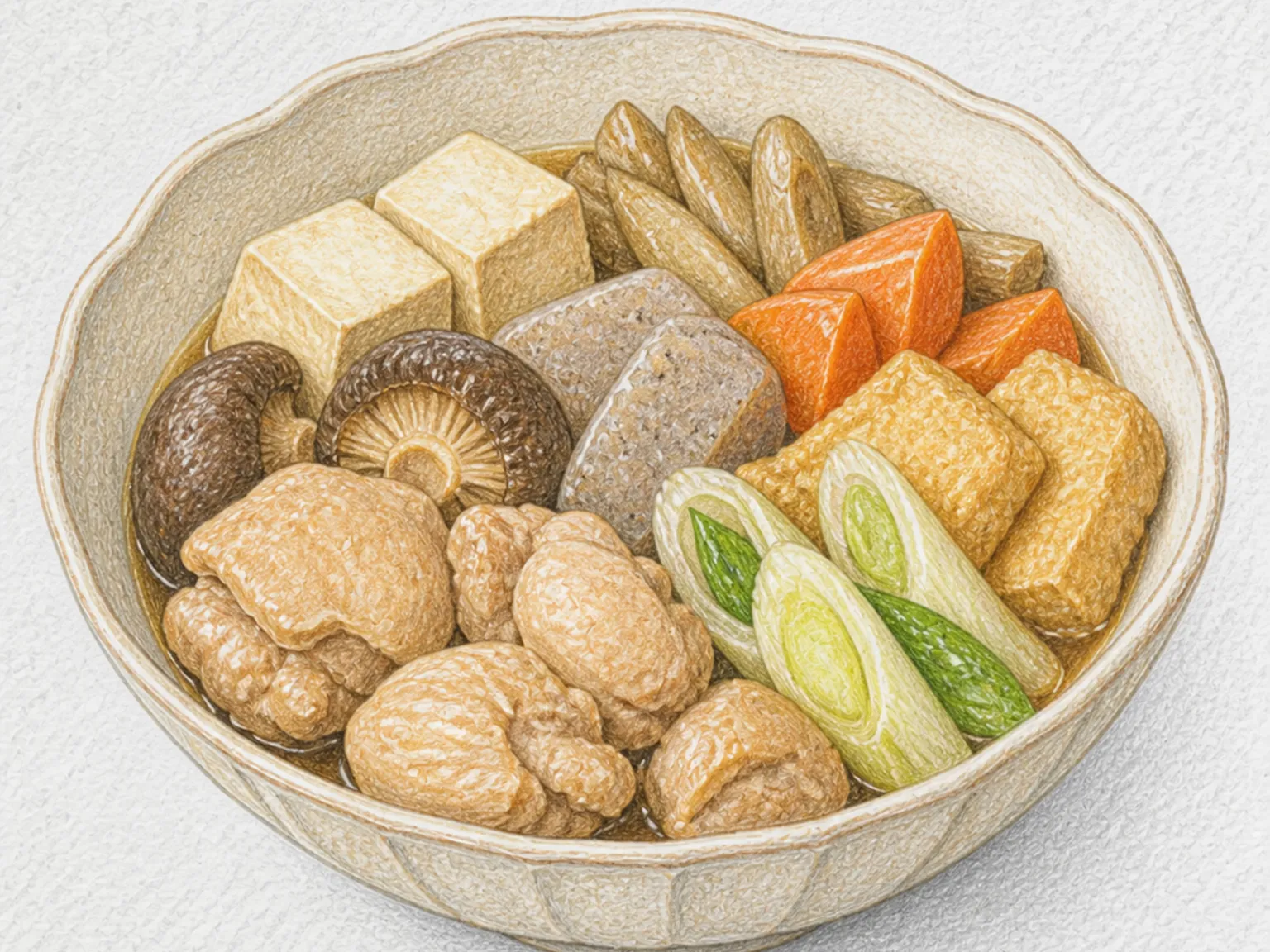
Jabu is a Tottori simmer of chicken, tofu, burdock, carrot, shiitake, aburaage, konjac, and Japanese leek cooked in a modest amount of soy-seasoned dashi. Its name is associated with the liquid released by tofu and vegetables, but the finished dish is plated around the solids rather than served as soup. Cut 200g chicken thigh and 350g firm tofu into 3cm pieces, then drain the tofu for 10 minutes. Scald the aburaage to remove surface oil and slice it 1cm wide. Shave 100g burdock, soak it in cold water for 5 minutes, and slice the carrot and shiitake 5mm thick. Tear 250g konjac with a spoon and blanch it for 2 minutes; the rough surface holds the seasoning better than a smooth knife cut. Heat 10g cooking oil in a wide pot and cook the chicken for 5 minutes, until every surface is opaque. Add the burdock, carrot, shiitake, and konjac and stir-fry for 4 minutes more. Pour in 200ml dashi, 30ml sake, 20g sugar, and 50ml Japanese soy sauce. Cover with a drop lid and simmer over medium-low heat for 10 minutes, until the firm vegetables are nearly tender. Add the tofu and aburaage and cook for another 6 minutes while spooning broth over the pieces instead of stirring them. Confirm that the center of the chicken reaches 75C, add the leek, and cook for 2 minutes. Fold once from the bottom and serve the intact ingredients with the shallow layer of broth left in the pot.
Dipping Ramen (Japanese Thick Noodles with Concentrated Dipping Broth)
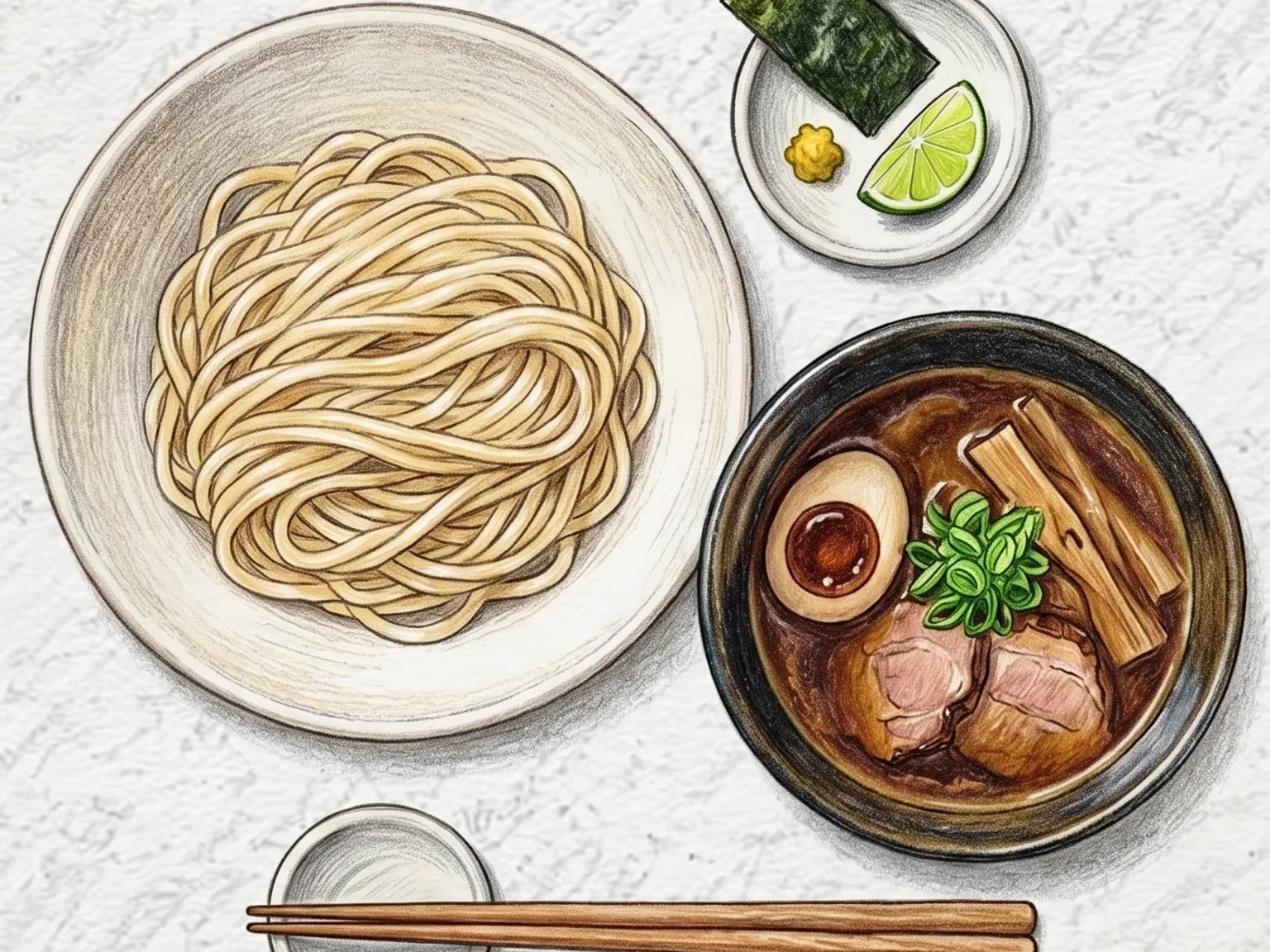
Tsukemen is a Japanese dipping ramen where thick noodles and a concentrated broth are served separately. The broth - typically tonkotsu or seafood-soy based - is reduced to roughly double the intensity of standard ramen soup. Noodles are rinsed in cold water after boiling, which firms their texture and creates a temperature contrast when dipped into the hot broth. Toppings such as chashu pork, soft-boiled egg, and nori are arranged alongside the noodles. The recipe takes about 50 minutes, with most time spent building and reducing the dipping broth.
Jako Goko, Osaka Pickled Eggplant with Shrimp
Jako goko is a Senshu, Osaka dish made by soaking and blanching well-aged pickled mizu eggplants, then simmering them with small ebi-jako shrimp and ginger until very little broth remains. Jako means the small shrimp and goko refers to pickles. It developed as a practical way to enjoy eggplants fermented in rice bran for two to three months from late summer into autumn. The soaking and rinsing moderate the salt and fermented aroma without erasing them, while dashi, shrimp, soy sauce, sake, and mirin soak back into the tender eggplant. Ginger keeps the rich preserved flavor clean and focused.
Uchikomi-Jiru (Fresh Noodle Miso Soup)
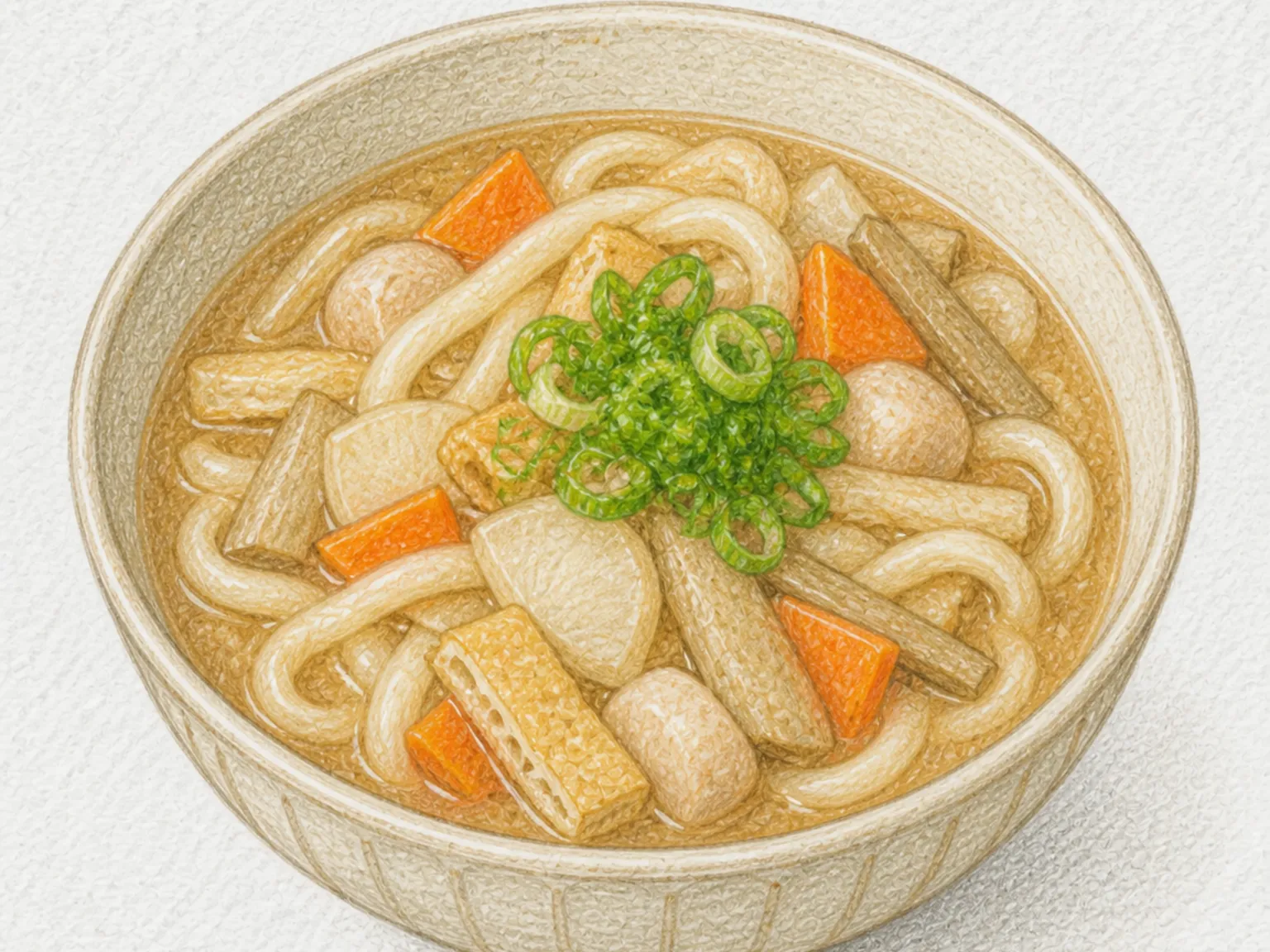
Uchikomi-jiru is a Kagawa winter noodle soup in which unsalted fresh noodles made only from wheat flour and water are cooked directly in miso broth rather than boiled separately. While the dough rests, daikon, carrot, burdock, taro, and fried tofu are cut and simmered first in dried-sardine stock. The dough is rolled and cut slightly thicker than ordinary udon, then dropped into the boiling soup for 7 to 8 minutes. Flour clinging to the raw noodles disperses into the pot and gives the broth its characteristic body. Medium miso is dissolved only after the noodle centers are cooked, and green onion completes the dish. Unlike handmade udon served for special occasions, this was a quick everyday evening meal in rural areas during cold winters. Kagawa's dry climate suited wheat production, while anchovies from the Seto Inland Sea supplied the stock.
Chinese Soy-Braised Beef Shank
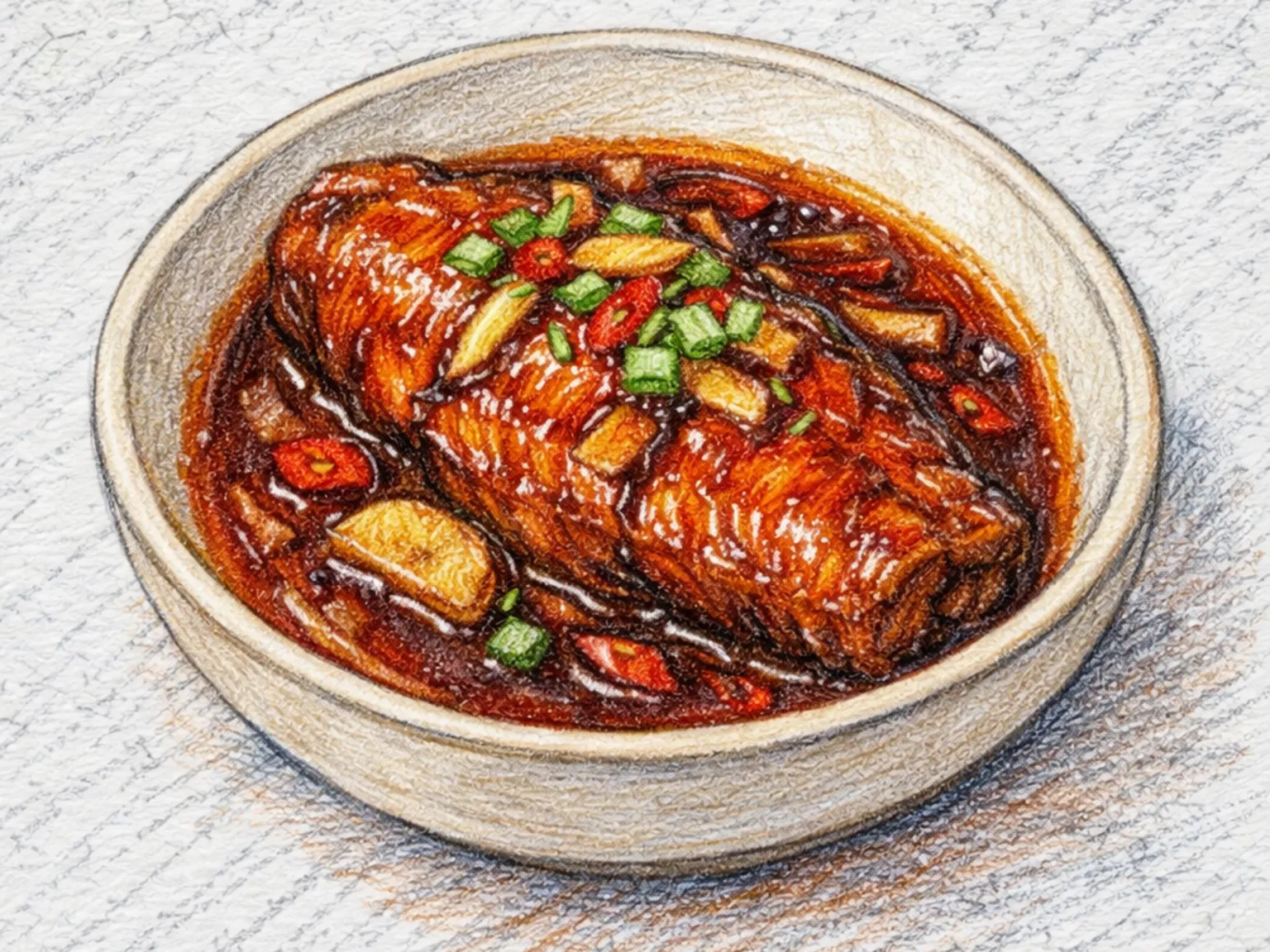
Jiang niu rou is Chinese beef shank braised with soy sauce, dark soy sauce, star anise, ginger, green onion, and sugar, then chilled and sliced thinly. Soak 1000g beef shank in cold water for 2 hours, changing the water once if it becomes deeply red. Blanch the beef in boiling water for 5 minutes and remove the gray foam and surface residue. In a clean pot, bring 1600ml water, 5 tablespoons soy sauce, 1 tablespoon dark soy sauce, 1 tablespoon sugar, 2 star anise, the green onion, and ginger to a boil. Add the blanched shank and boil it over high heat for 5 minutes. Lower the heat, leave the lid slightly ajar, and maintain a quiet simmer for 90 minutes. Turn the beef once halfway through so its color and seasoning remain even without damaging the surface. The meat is ready when a chopstick enters the thickest part without force and the center reaches at least 63C. Let the shank lose its strongest heat while submerged, then transfer it with enough braising liquid to a shallow heat-safe container and refrigerate within 2 hours after cooking. Once completely cold and firm, slice it 0.3cm thick across the grain. Cutting while warm compresses the softened fibers and produces ragged slices. Dark soy sauce supplies the deep brown color, while limiting the star anise to 2 pieces keeps its aroma from overwhelming the beef.
Korean-Chinese Seafood Gravy Noodles
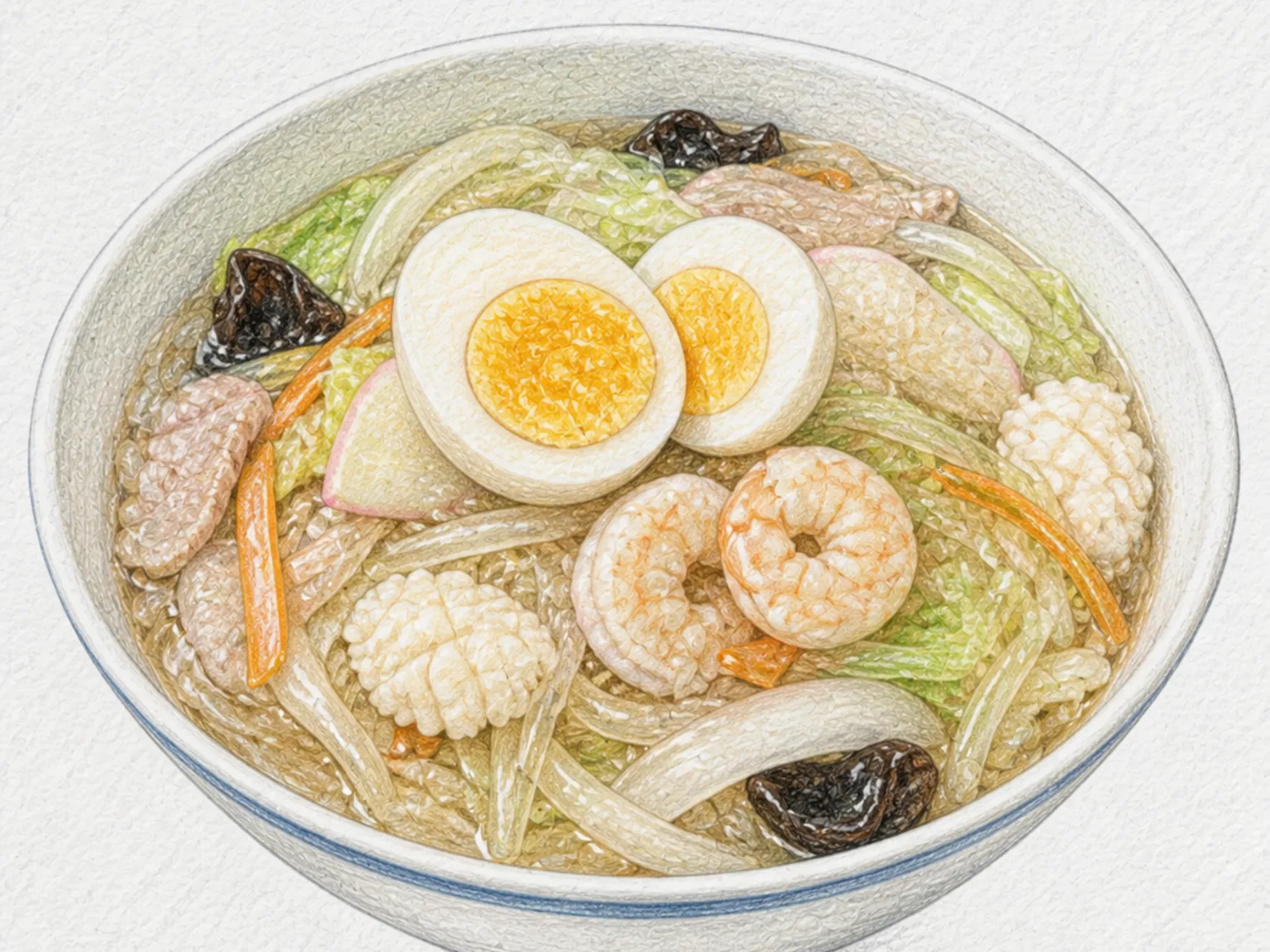
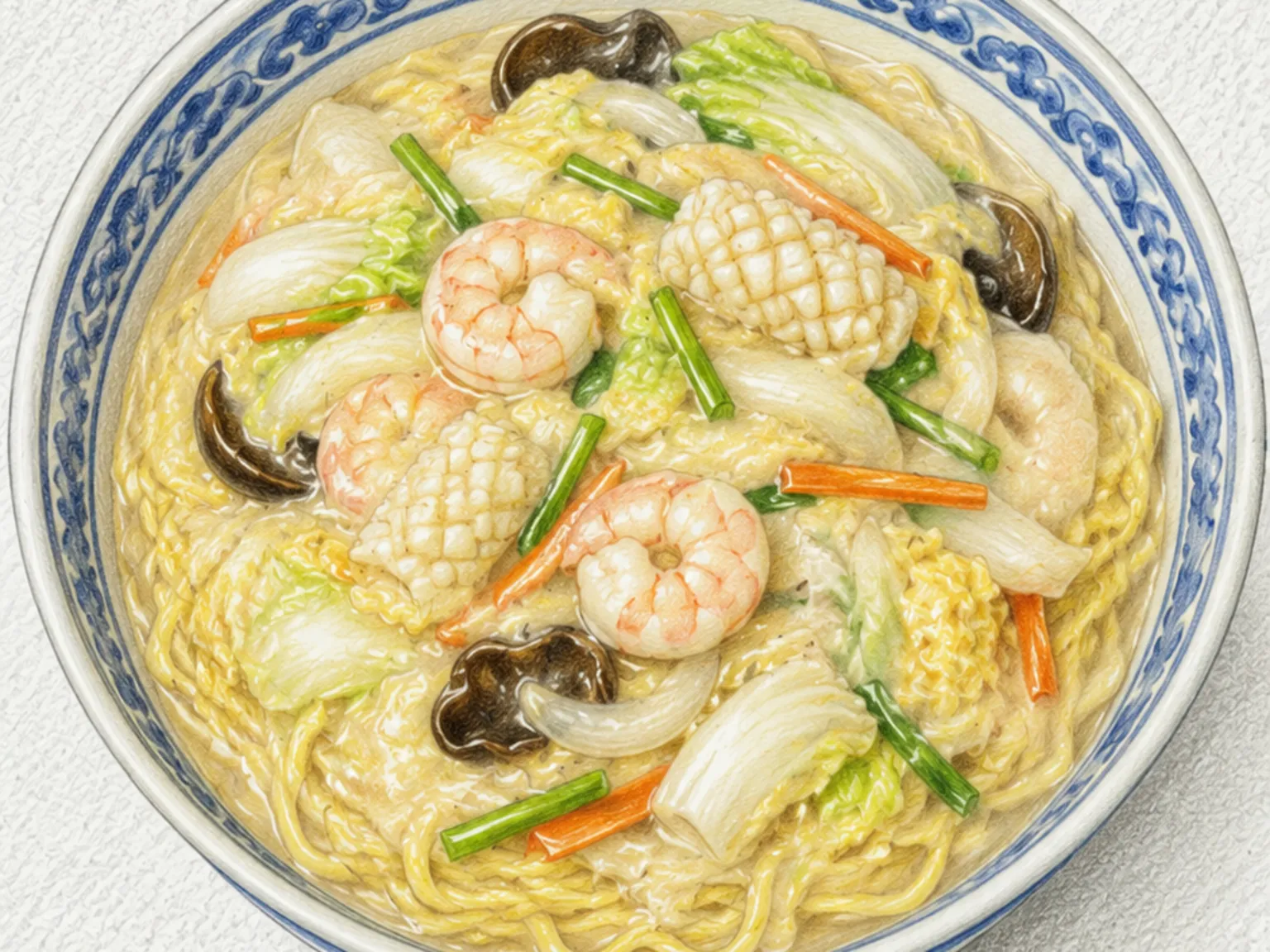
Ulmyeon is a Korean-Chinese noodle dish in which fresh wheat noodles are topped with a thick, white starch-thickened gravy loaded with seafood and vegetables. Shrimp, squid, and other shellfish give the gravy a pronounced umami backbone. Beaten egg is swirled into the sauce toward the end, adding body and soft curds throughout. Unlike jjamppong, the dish carries little to no chili heat. Preparation takes about 40 minutes, and getting the starch slurry to the right consistency is the most important step.
Jibuni (Flour-Coated Duck Simmer)
Jibuni is a Kanazawa simmer from Ishikawa in which thin duck slices are coated generously with flour and cooked in a dashi broth seasoned with light and dark soy sauce, mirin, sake, and sugar. Sudare-fu, taro, shiitake, flower-shaped wheat gluten, and greens are prepared separately in the same broth. Flour clinging to the duck protects the meat and gives the sauce its characteristic body. The vegetables are removed before the duck enters, then everything is plated and covered with the adjusted sauce and a small mound of wasabi.
Wonton Noodle Soup
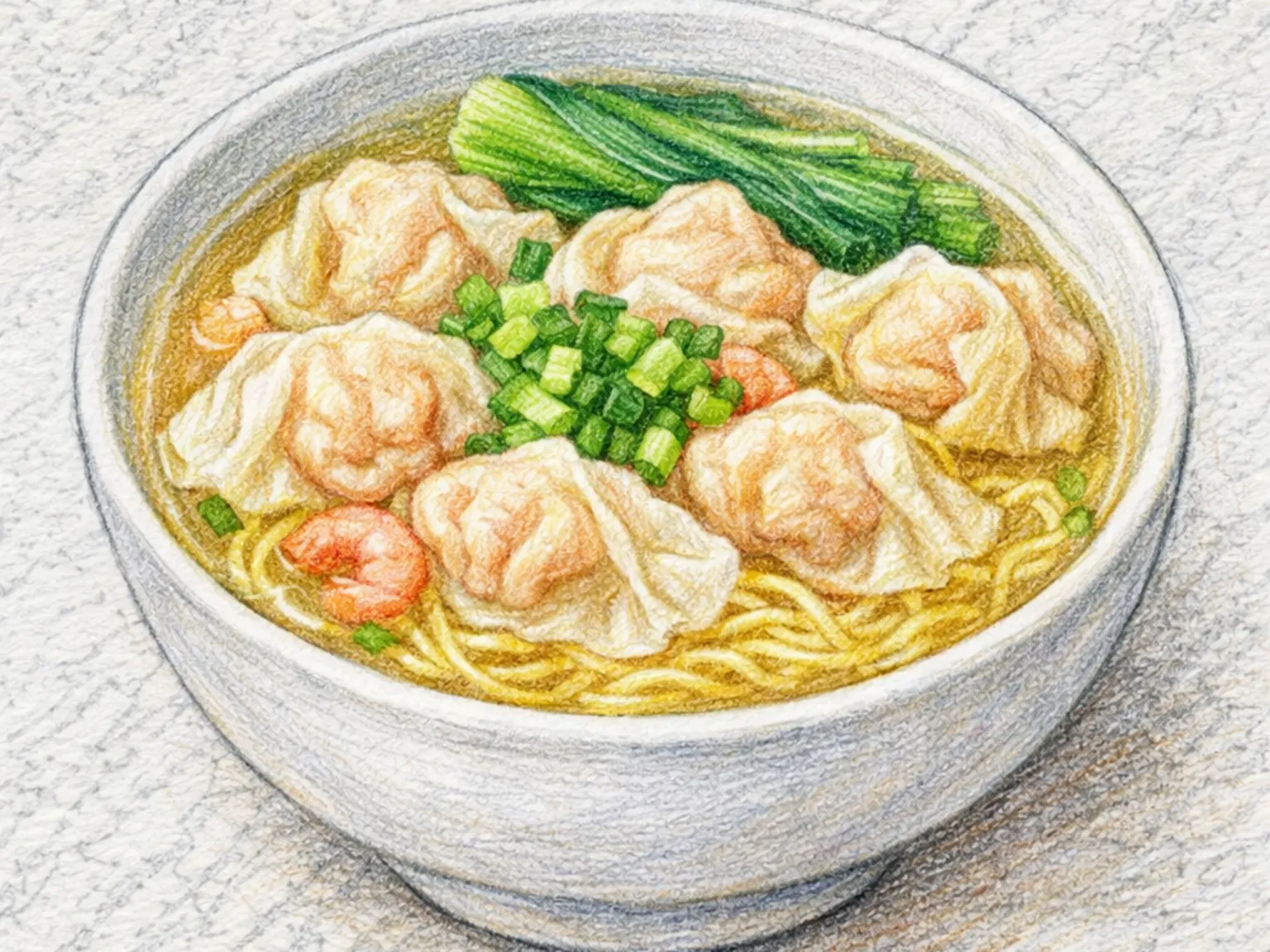
Wonton noodle soup is a Cantonese classic that pairs thin egg noodles with shrimp-and-pork wontons in a clear pork bone broth. The broth is deliberately kept light and clean, relying on long simmering rather than heavy seasoning for its flavor. Each wonton has a thin wrapper that barely conceals a filling with noticeable shrimp texture. The egg noodles are springy and slightly alkaline, a hallmark of Hong Kong-style noodle making. Wrapping wontons from scratch adds about 30 minutes of prep, though pre-made wontons shorten the process significantly.
Kadhi Pakora (Yogurt Curry with Fritters)
Kadhi pakora is a yogurt-based curry from North India, especially popular in Punjabi home cooking, where gram flour fritters are simmered in a tangy, spiced yogurt gravy. The pakoras are made by mixing a portion of gram flour with sliced onion, salt, and water into a thick batter, then deep-frying spoonfuls until golden. The remaining gram flour is whisked with yogurt, water, turmeric, and red chili powder to form the kadhi base, which must be stirred constantly in the early stages to prevent the yogurt from splitting. Cumin seeds are bloomed in oil to release their aroma before the kadhi mixture is poured in and simmered gently for twenty minutes, allowing the raw flour taste to cook out completely. Adding the fried pakoras near serving time preserves some of their texture, while longer simmering lets them absorb the gravy and turn soft throughout.
Japanese Stir-Fried Udon
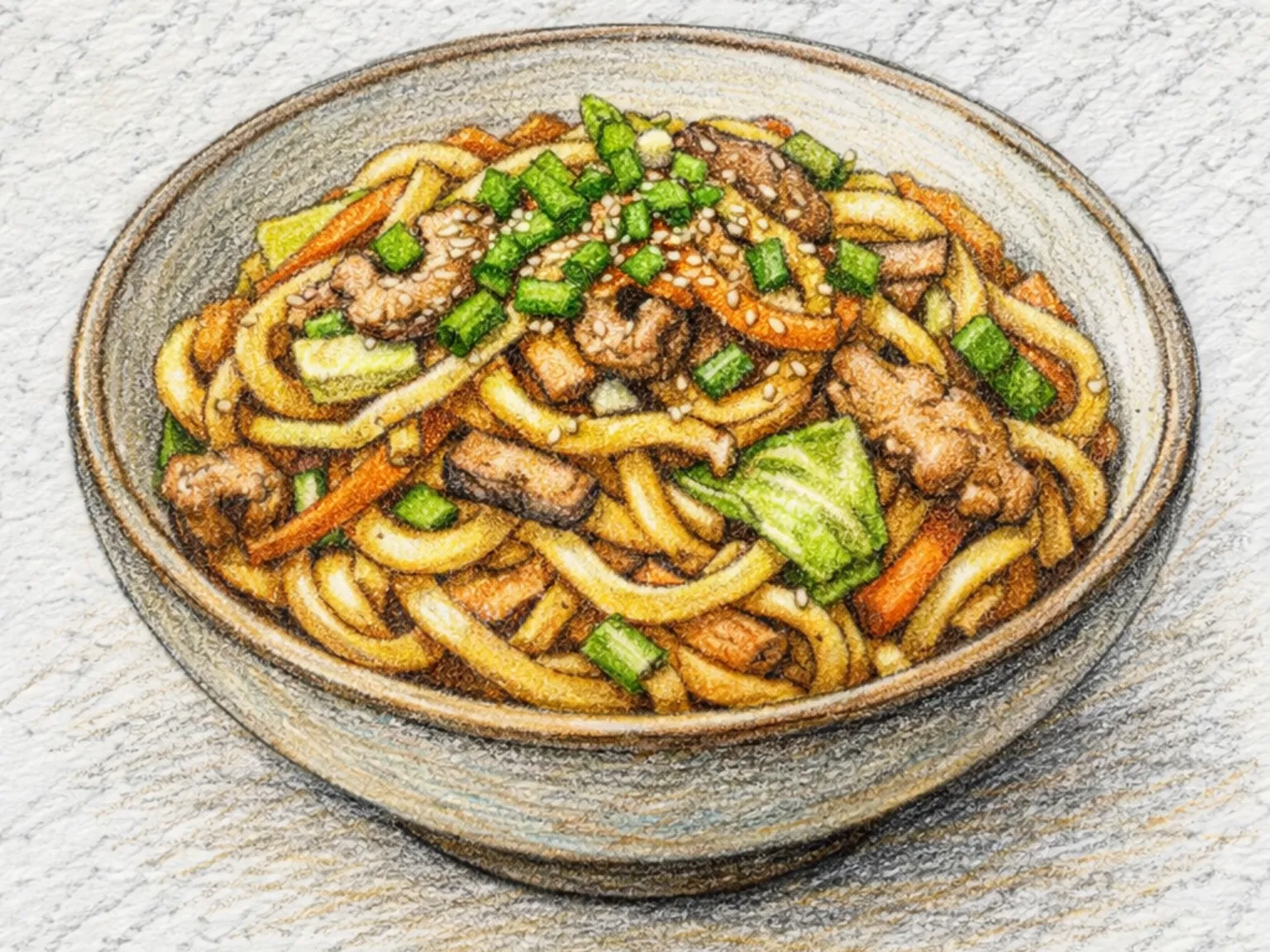
Yaki udon is a Japanese stir-fried noodle dish where thick udon noodles are tossed in a soy-based sauce over high heat with sliced pork or seafood and vegetables such as cabbage, carrot, and scallion. The high heat gives the noodles lightly charred edges while keeping their chewy center intact. Bonito flakes (katsuobushi) are often scattered on top just before serving, where they wave from the residual heat. The recipe takes about 25 minutes and depends on maintaining strong heat throughout the stir-fry to avoid steaming the noodles.
Kagoshima Tonkotsu (Pork Ribs Simmered with Barley Miso)
Kagoshima tonkotsu is a long pork-rib simmer with daikon, burdock, konnyaku, barley miso, brown sugar, and sweet-potato shochu. Rinse bone fragments from 800g bone-in pork ribs, dry them completely, and arrange them in a single layer in a heavy pot without oil. Brown every surface deeply over medium-high heat for 10 to 12 minutes. Lower the heat and check for any open flame before adding 100ml sweet-potato shochu. On a gas stove, move the pot off the burner while pouring and do not ignite the alcohol. Return it to high heat and turn the ribs until the sharp alcohol aroma and most of the liquid disappear, which takes 3 to 5 minutes. Add 1200ml water, bring it to a boil, and skim off foam and excess fat. Leave the lid slightly ajar and simmer gently for 60 minutes. Add 400g daikon, 150g burdock, 250g blanched konnyaku, and 60g brown sugar and cook for another 20 minutes. Dissolve 120g Kagoshima barley miso completely in 1 cup of hot broth before returning it to the pot. Adding the miso at the start would expose it to the entire long cook and make the thickened broth more likely to scorch. Cover with a drop lid and continue on the lowest heat for 50 to 70 minutes, adding hot water in small amounts if the ribs are no longer partly submerged. When the meat releases easily from the bone and its center is at least 71C, remove the drop lid and spoon the sauce over the ribs for a final 5-minute reduction.
Japanese Stir-Fried Noodles (Yakisoba)
Yakisoba is a classic Japanese stir-fried noodle dish made by tossing wheat noodles, pork, and vegetables in a tangy Worcestershire-based sauce. The preparation begins by stir-frying thinly sliced pork over high heat, followed by onions, carrots, and cabbage. Cooking the vegetables quickly at high heat keeps them crisp and prevents them from becoming soggy. The wheat noodles are briefly warmed to loosen them before being added to the pan. A savory-sweet yakisoba sauce is poured around the edges of the pan and quickly tossed to evenly coat every noodle strand. Once plated, hot noodles are topped with bonito flakes, which release a smoky aroma as they wave from the residual heat. Ensuring the noodles are not overcooked and adding the sauce near the end of the cooking process are key steps to maintaining the proper textures of both noodles and vegetables.
About Asian
Each country brings its own signature spices and sauces, so even the same ingredients can produce completely different flavors. With a few key pantry items - coconut milk, fish sauce, curry powder, doubanjiang - you can recreate the tastes of Asia at home.