Asian Recipes
806 recipes. Page 29 of 34
The Asian category gathers popular dishes from Japan, China, Thailand, Vietnam, India, and beyond. Curry, stir-fried noodles, mapo tofu, pad Thai, and pho are among the Asian favorites commonly enjoyed in Korean households.
Kai Jeow (Crispy Thai Omelette)
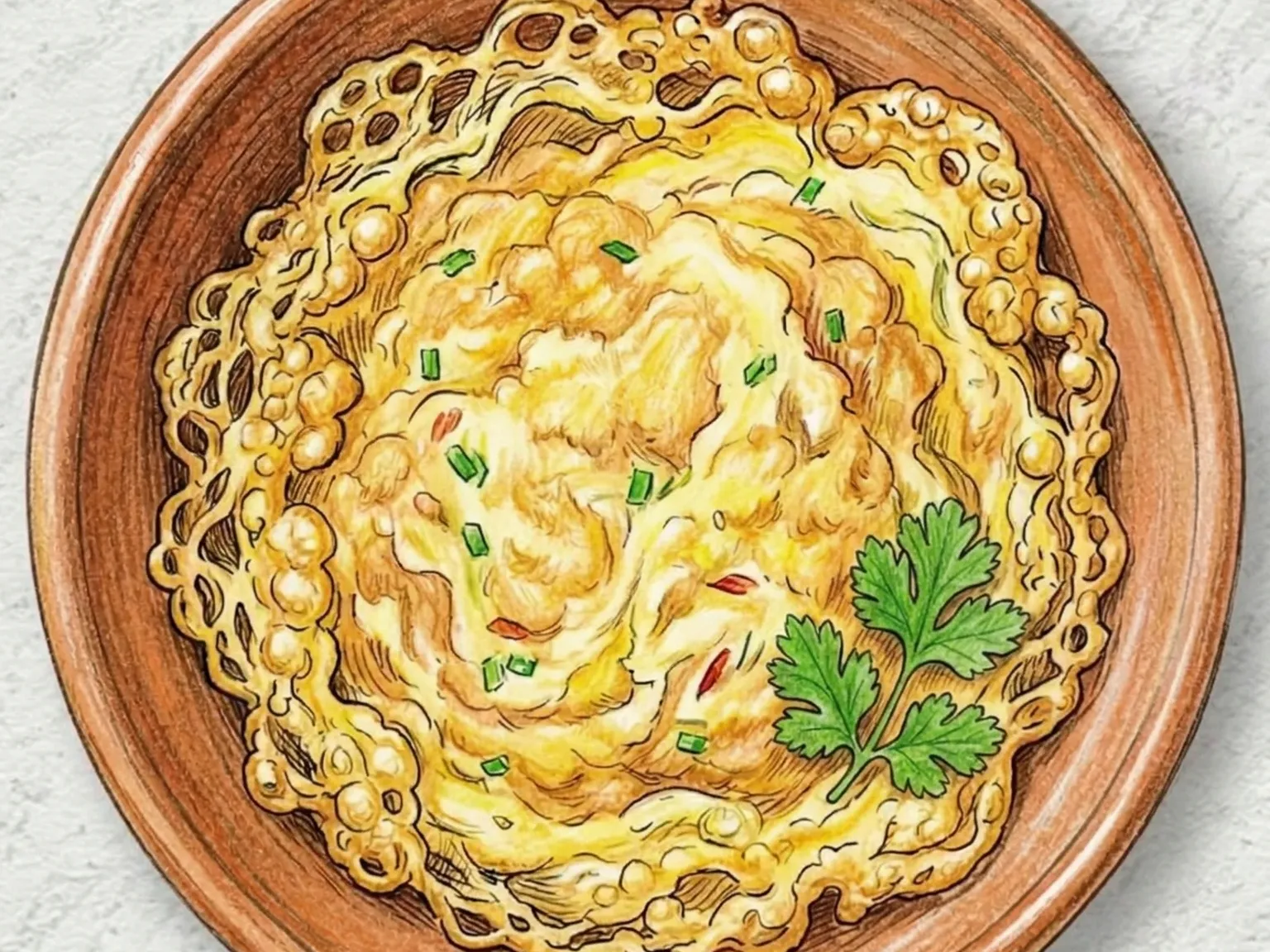
Kai jeow is a Thai home-style omelet that differs fundamentally from Western versions in its cooking method. Eggs seasoned with fish sauce and sugar are whisked until genuinely foamy, then poured into oil hot enough to be smoking. That contact heat makes the egg batter puff and blister on impact, creating lacy, deeply crisped edges while the center stays thick and pillowy. The amount of oil matters as much as the temperature -- use enough for shallow frying rather than a thin film, otherwise the egg sits flat and turns greasy instead of lifting. Ground pork or chopped shrimp can be mixed directly into the batter for a more filling meal, though a plain version with nothing added is just as common in everyday Thai cooking. After the omelet is done, it goes briefly on paper towels to drain, then lands on a mound of jasmine rice. The fish sauce does double duty as the sole seasoning, supplying salt along with a rounded, fermented depth that plain salt cannot replicate. The defining pleasure of kai jeow is the contrast -- a crackly perimeter giving way to a soft, almost custardy interior -- and that texture only happens when the oil temperature is exactly right.
Yakisoba Pan (Noodle Bread)
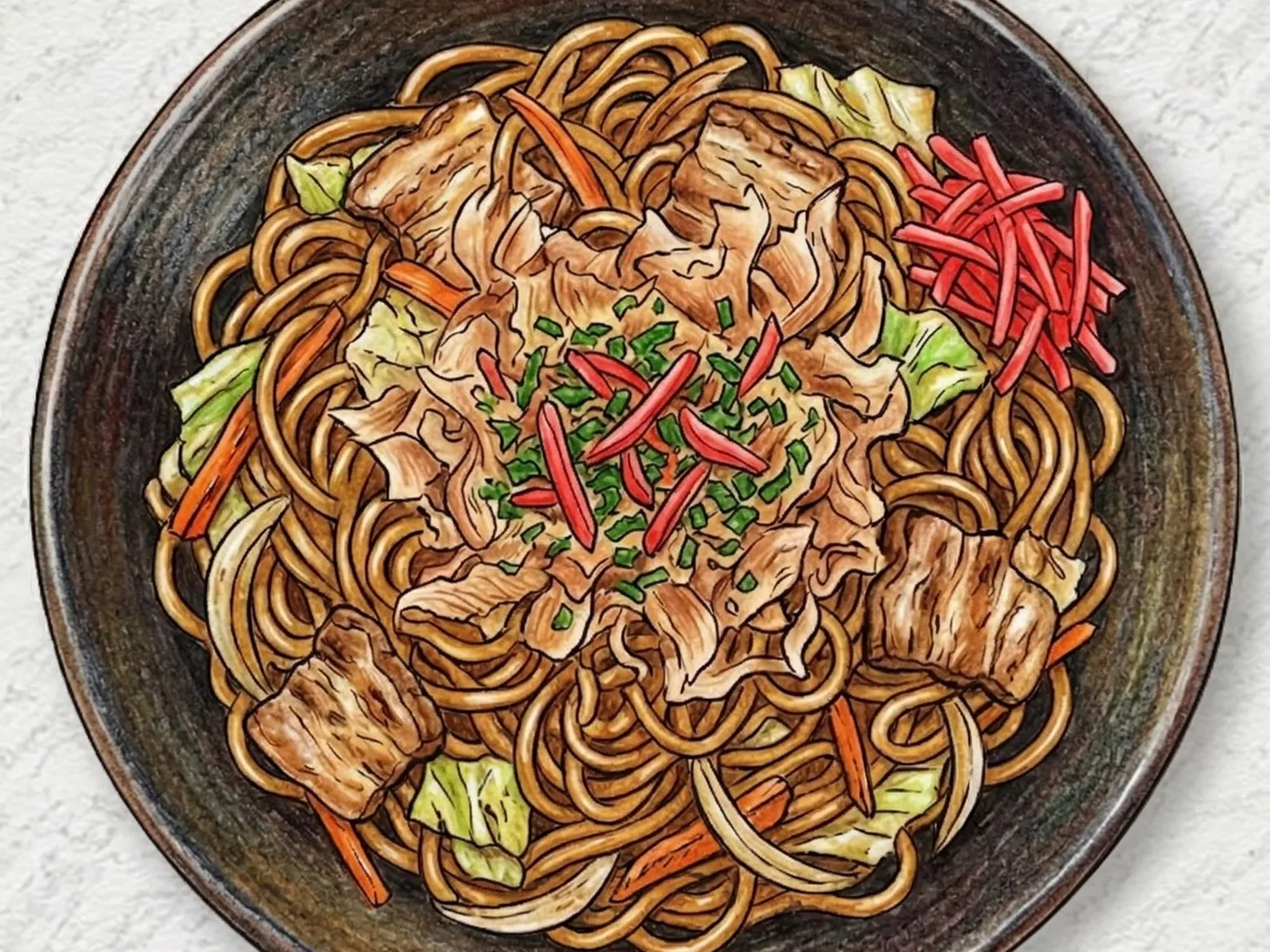
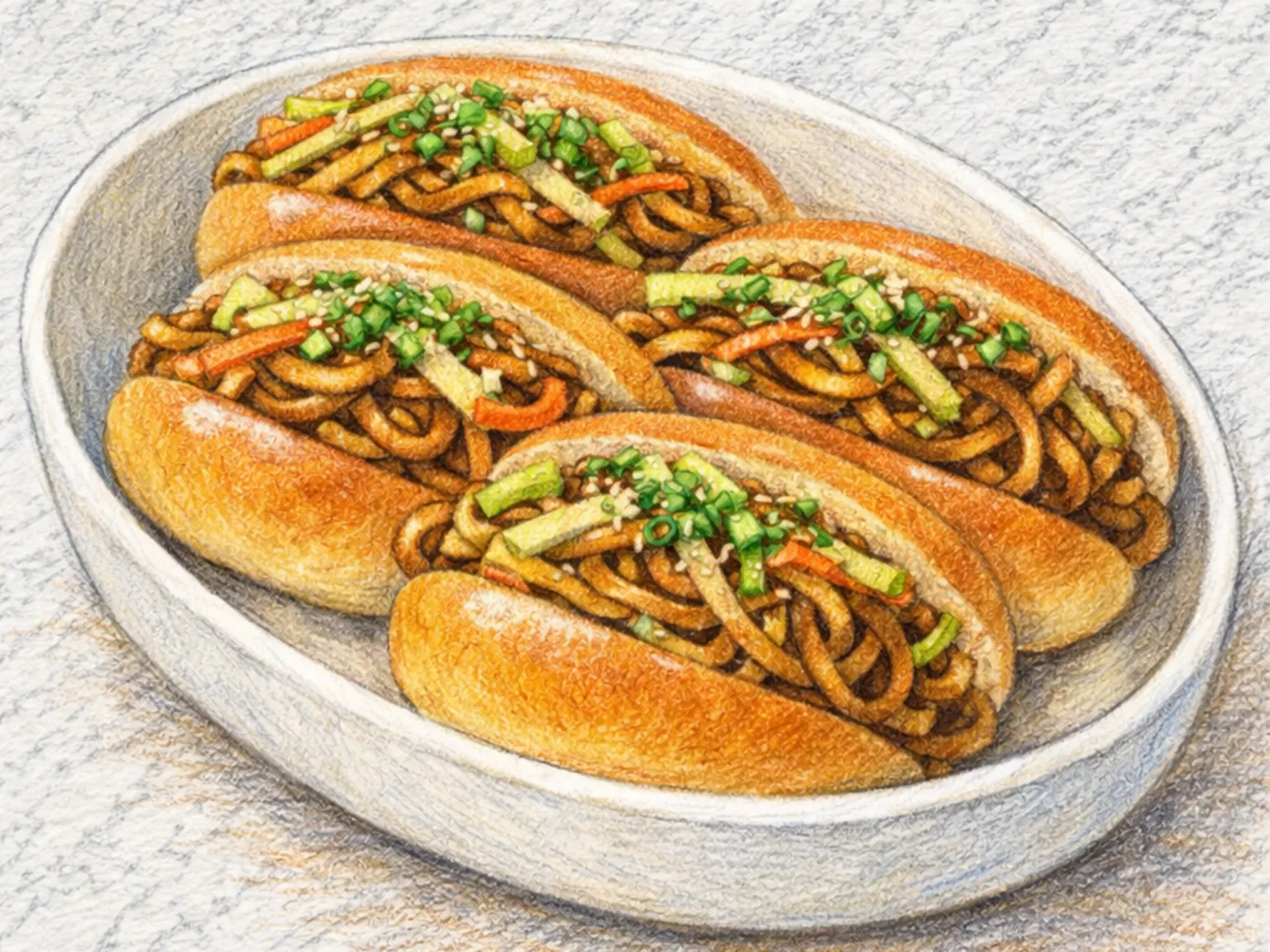
A staple of Japanese street food culture, Yakisoba-pan combines a toasted, buttered hot dog bun with a filling of stir-fried egg noodles seasoned with yakisoba and soy sauce. Shredded cabbage, onions, and carrots start in the pan over high heat for exactly two minutes before the noodles are added. This timing ensures the vegetables remain crisp and provide a textural contrast to the soft noodles rather than becoming limp during the cooking process. As the yakisoba sauce hits the hot metal, it caramelizes quickly to wrap every noodle strand in a glossy, sweet-savory glaze. The act of spreading butter on the interior of the bun and giving it a quick toast serves a functional purpose beyond flavor. This butter layer acts as a moisture barrier, preventing the sauce from soaking into the bread and keeping the bun from turning soggy as it sits. The subtle richness of the butter bridges the gap between the savory noodle filling and the soft crumb of the bun. Sprinkling dried parsley over the top introduces a mild herbal scent that balances the heavy, concentrated sauce. For a burst of acidity, a small amount of beni shoga pickled ginger is tucked into the noodles to cleanse the palate. Spreading a layer of Japanese mayonnaise inside the bun alongside the butter creates an additional creamy texture. Softening the noodles in hot water before they hit the pan prevents clumping and allows for easier separation during the stir-frying stage.
Chiba Kaisou Seaweed Jelly
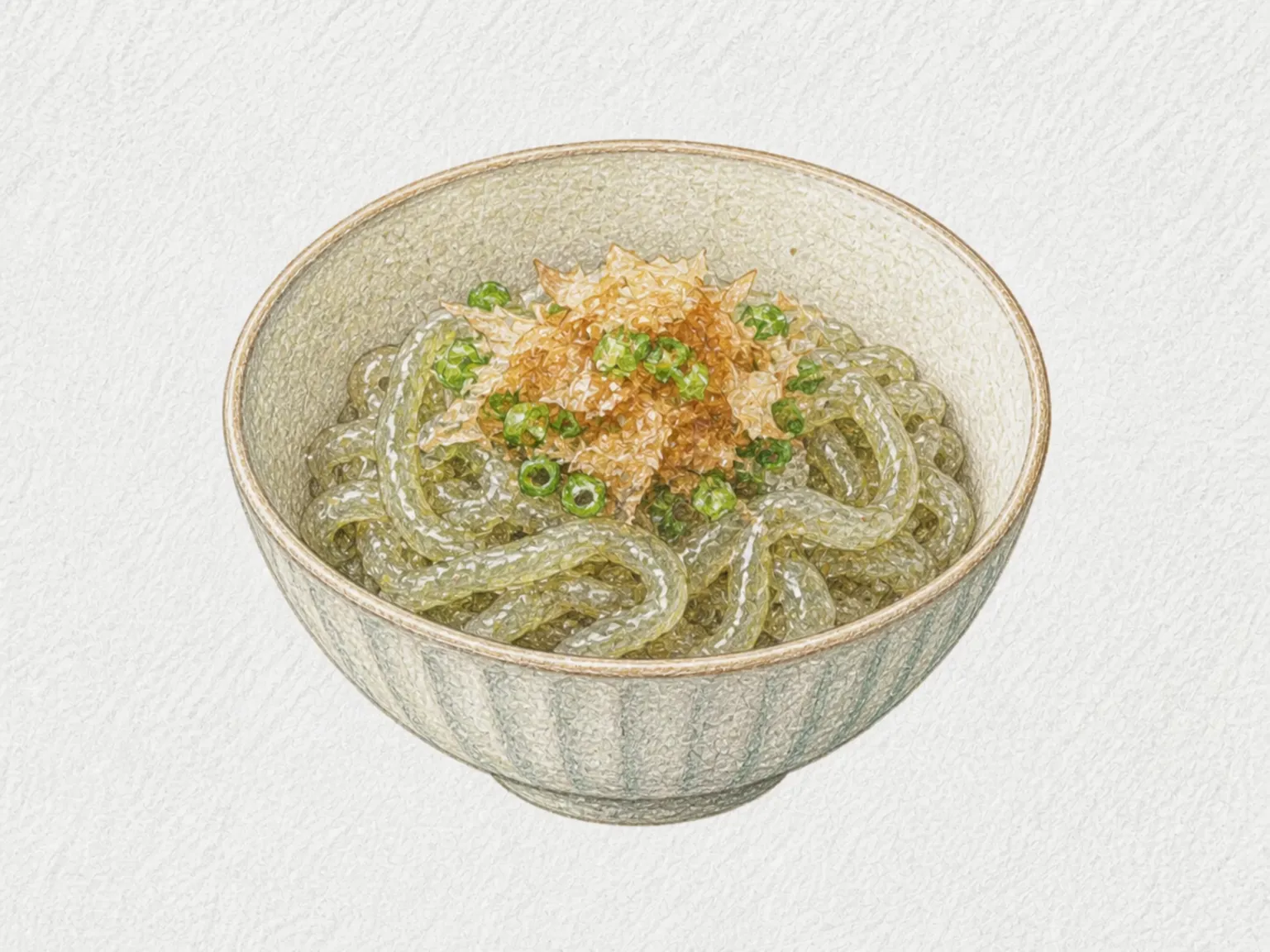
Chiba kaisou is a firm seaweed jelly from the Choshi and Kujukuri coasts, made by cleaning kotojitsunomata seaweed, soaking it, and simmering until it dissolves into a thick mass that sets as it cools. The seaweed's regular forked branches resemble the bridges supporting koto strings, which explains its name. Its natural thickening and setting properties once made it useful as an adhesive, while year-end merchants selling it for New Year helped establish it as a refreshing counterpoint to strongly seasoned osechi. This plain version preserves its marine aroma and light salinity and may be served alone or with soy sauce, bonito flakes, and scallion.
Yam Woon Sen (Thai Glass Noodle Salad with Shrimp)
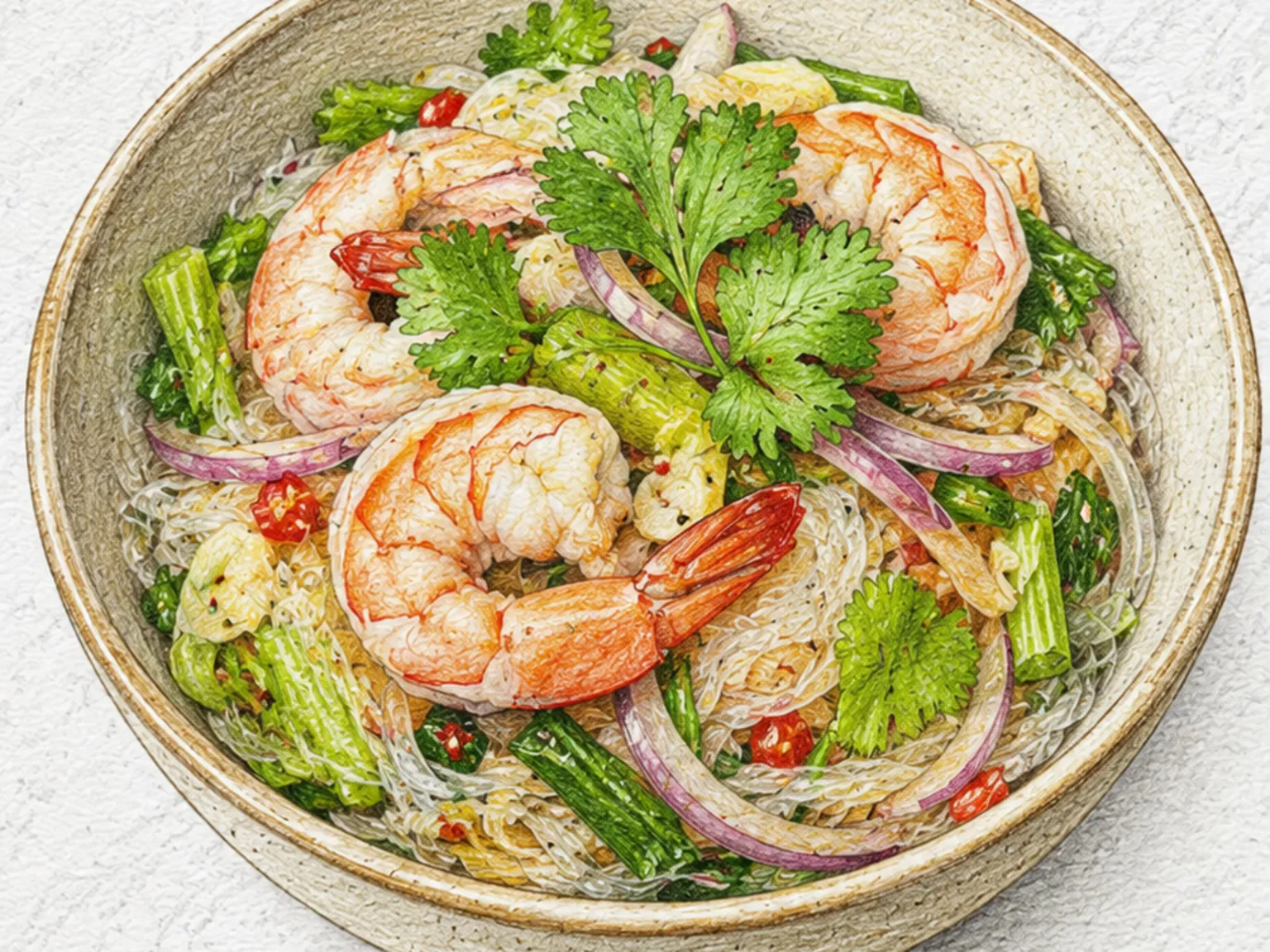
Yam woon sen is a Thai glass noodle salad made with shrimp, red onion, celery, and cilantro in a fish sauce, lime juice, and palm sugar dressing. Soak 90 g glass noodles in warm water for 10 minutes, until they bend but are not fully soft. Add them to boiling water and cook over medium heat for 2 minutes. Once the noodles look clear, drain them immediately, rinse them under cold water, and remove the water thoroughly. Add 140 g shrimp to the same boiling water and begin checking them at about 2 minutes. Shrimp size affects the required time, so remove them only after the centers have turned opaque, then drain them well. Thinly slice 50 g red onion, cut 60 g celery diagonally, and roughly chop 15 g cilantro without crushing the leaves. Mix 2 tbsp lime juice, 1.5 tbsp fish sauce, and 1 tsp palm sugar until the sugar dissolves. Add the drained noodles, shrimp, red onion, and celery to the dressing and toss quickly without breaking the noodles. Fold in the cilantro last and serve immediately. The cold rinse cools the noodles promptly so residual heat does not continue softening them. The shrimp's opaque center, rather than an exact two-minute promise, is the doneness check. Draining both components before mixing keeps cooking water from diluting the measured dressing.
Japanese Braised Pork Belly
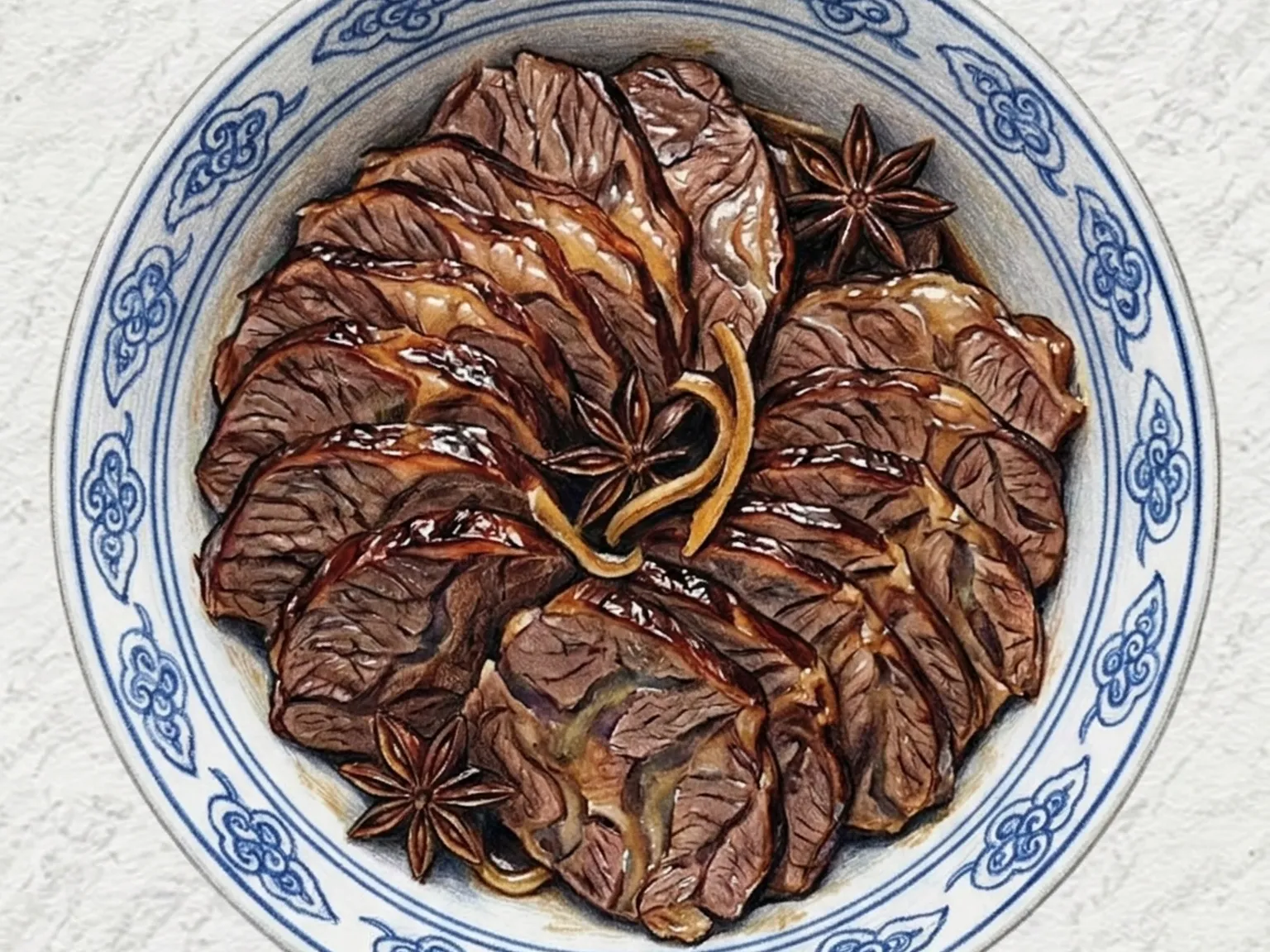
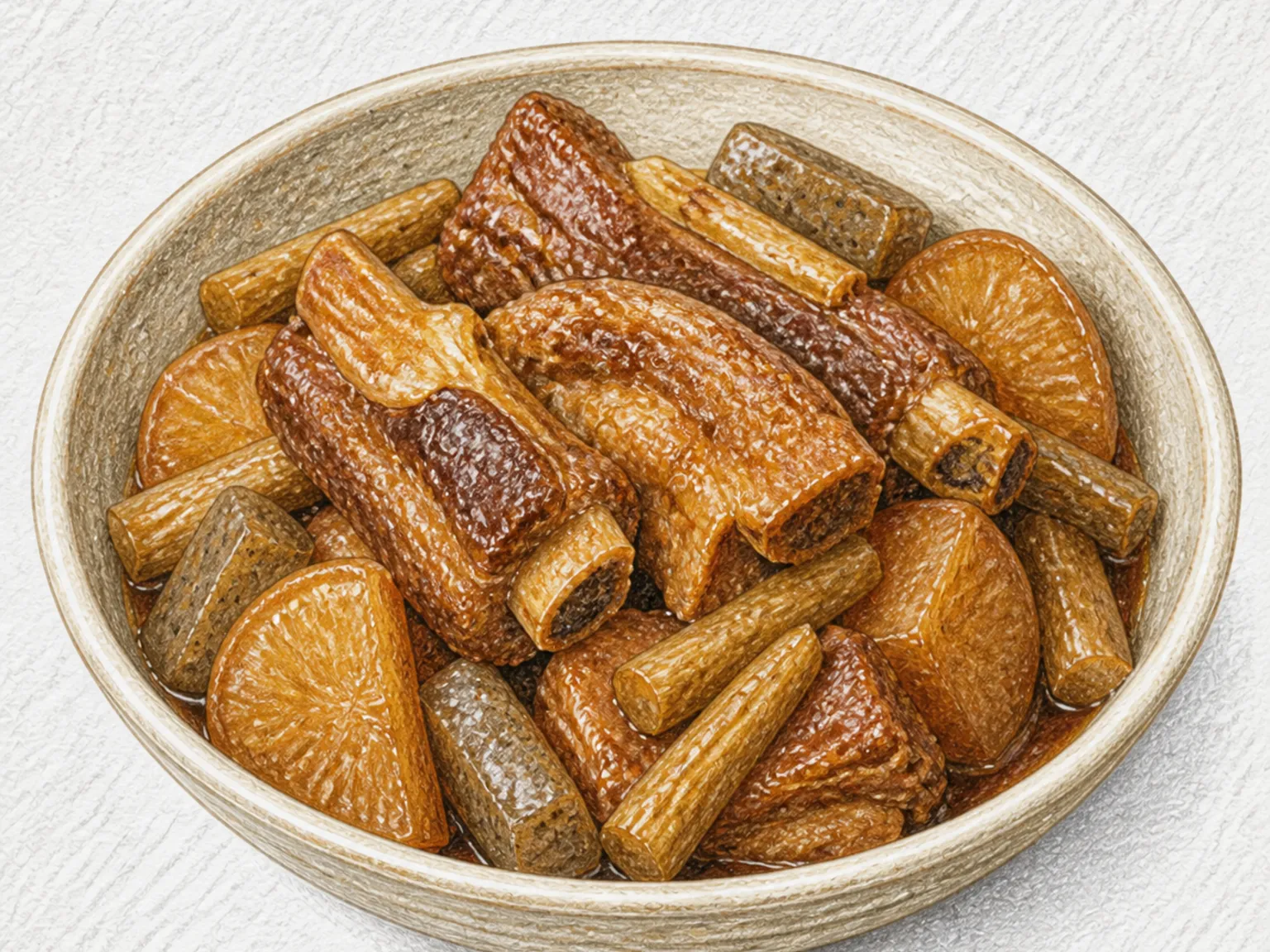
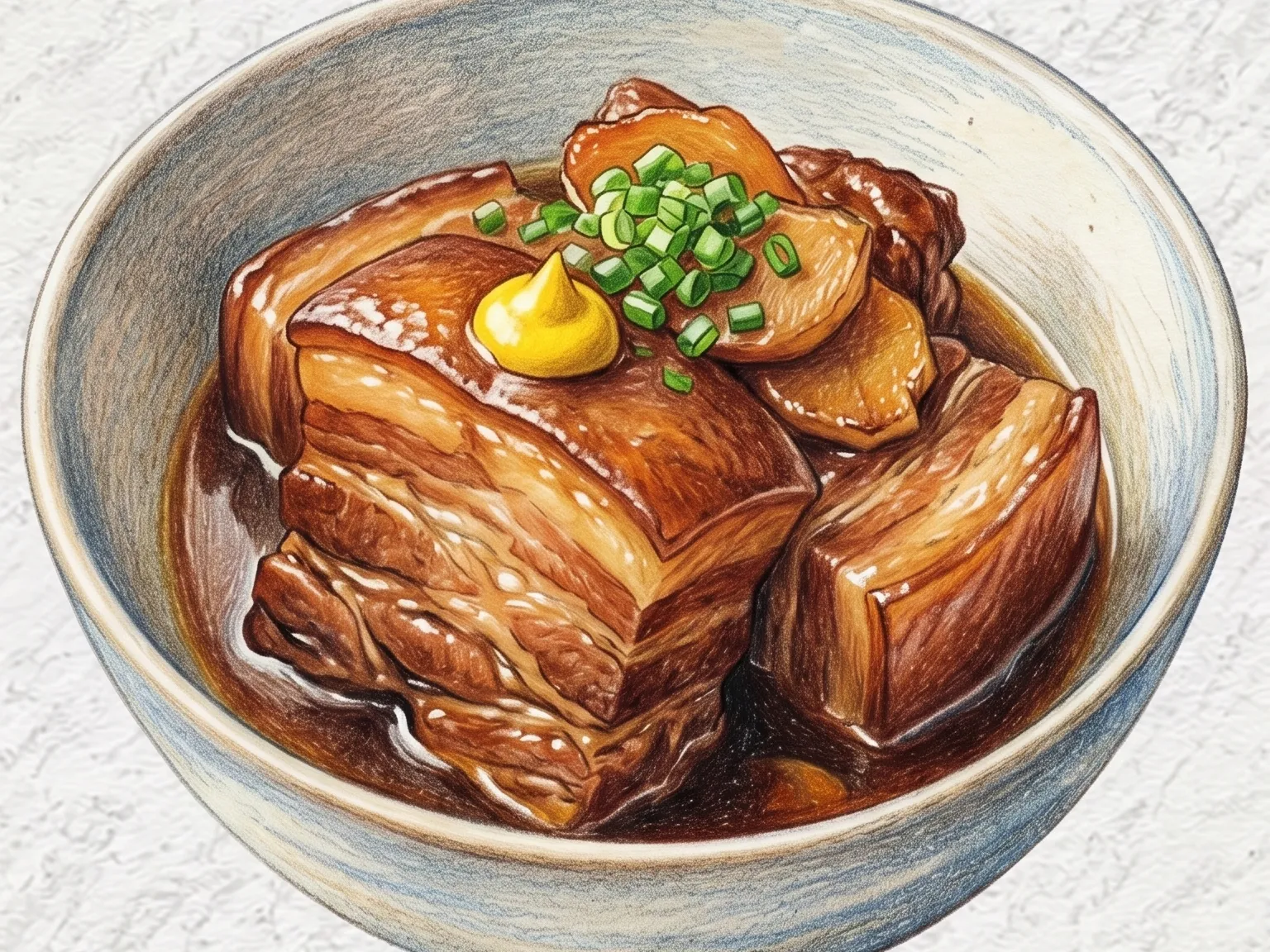
Kakuni is a Japanese braised pork belly in which thick slabs are simmered for two hours or more in soy sauce, mirin, sake, and ginger over the lowest possible heat. The fat layers slowly render into the surrounding meat, breaking down collagen until the pork yields completely to the faintest pressure of chopsticks. Mirin adds a mild sweetness that glazes the surface, while ginger neutralizes any gamey notes, keeping the flavor clean despite the extended cooking time. The reduced braising liquid coats each piece in a deep caramel-colored lacquer, which is one of the dish's defining visual qualities. Served over steamed rice with a spoonful of cooking liquid poured over, or paired with a small dab of hot Japanese mustard to contrast the sweet and salty glaze, kakuni is one of the most satisfying expressions of low-and-slow pork cookery.
Yangchunmian (Shanghai Clear Soy Broth Noodle Soup)
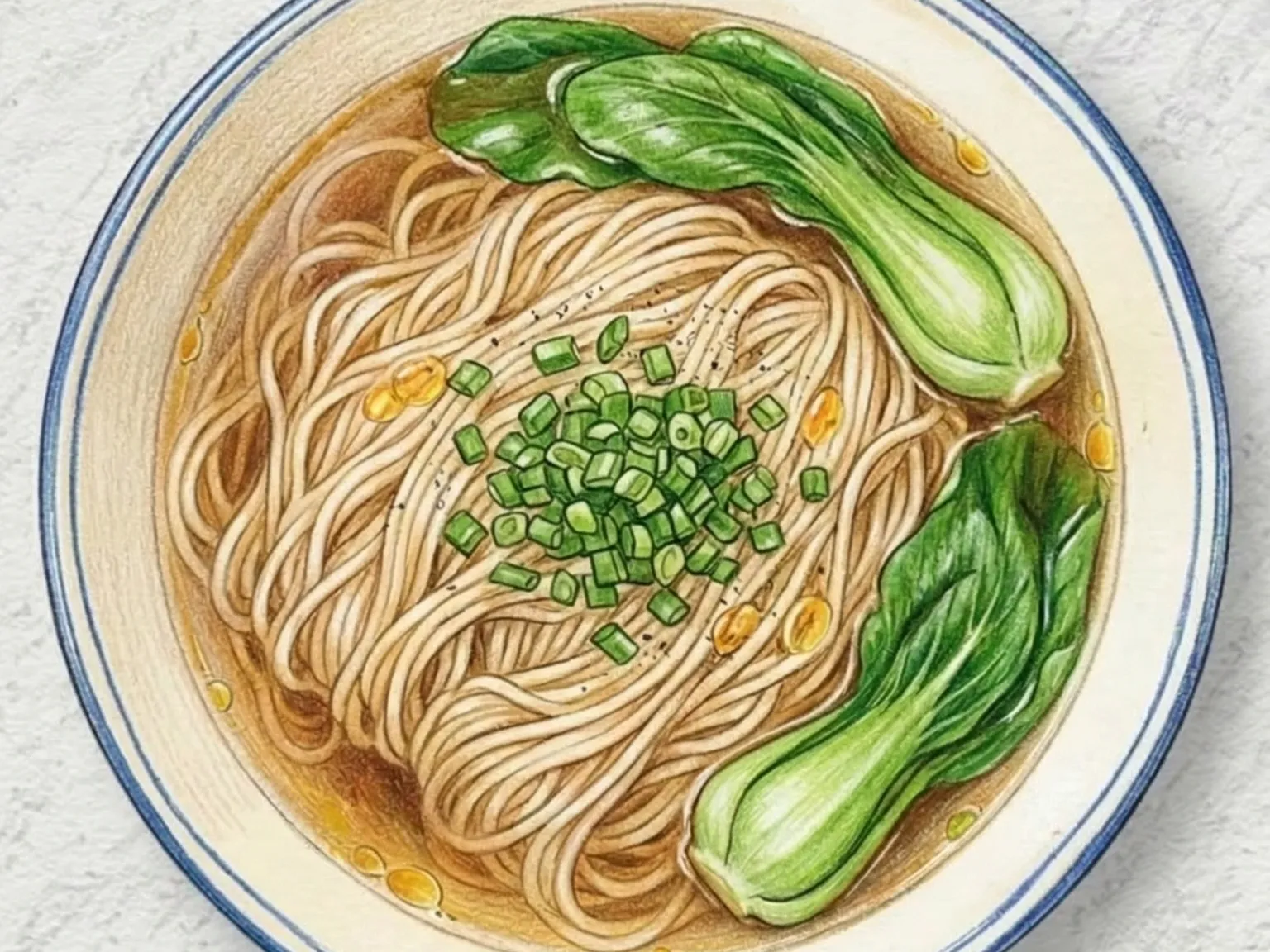
Yangchunmian is a Shanghai noodle soup that focuses on a clear, soy-seasoned broth and fresh wheat noodles. The broth uses a chicken stock base seasoned with light soy sauce and sugar, heated gently to remain clear. Fresh wheat noodles are boiled until tender yet springy, while bok choy is blanched briefly in the same water to keep its green color and crisp texture. The noodles are placed in bowls, seasoned with white pepper for a clean aroma, and submerged in the hot broth. Thinly sliced scallions and the blanched bok choy are added as simple garnishes, finished with a drizzle of sesame oil to provide a layer of nutty warmth. Without heavy toppings, the dish relies on the clean flavor of the seasoned broth. It is served immediately while hot to prevent the noodles from softening.
Kanko-yaki with Kabocha Filling
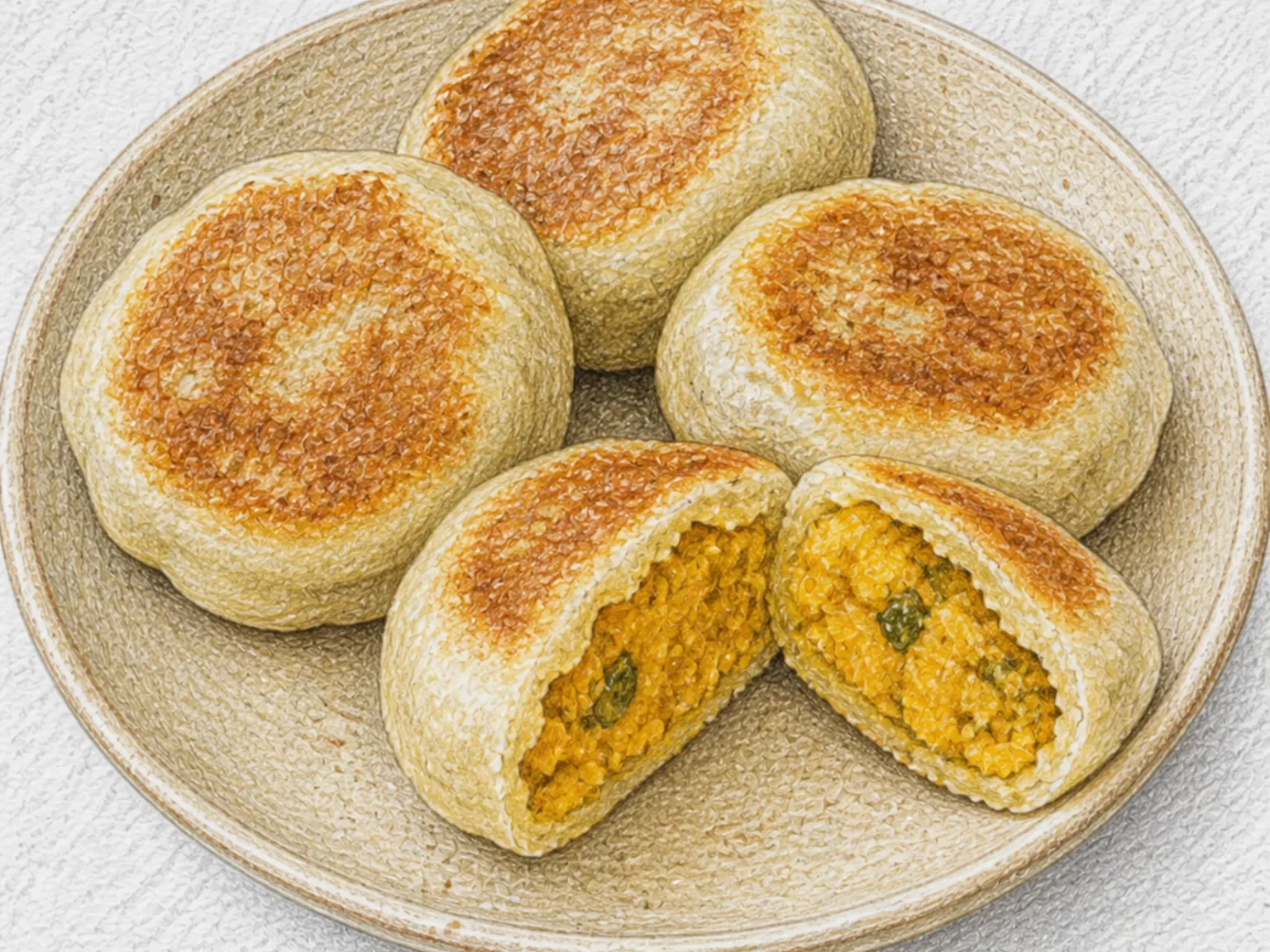
Kanko-yaki are filled buns from the Tsukui area of Kanagawa, where wheat dough raised with baking powder may enclose adzuki beans, pumpkin, dried daikon, mushrooms, or pickles. This version steams 500g kabocha cut into 3cm pieces for 15 minutes, then mashes it with the skin and cools it completely. For the wrapper, 500g flour and 10g baking powder are sifted twice before 260ml water, 1 egg, and 40g sugar are mixed in. Kneading for about 6 minutes and resting the covered dough for 1 hour produces a soft wrapper that is easier to flatten without cracking or springing back. The dough and filling are each divided into 12 portions, sealed firmly, and pressed slightly flat. Each bun browns in a dry pan over medium-low heat for 3 to 4 minutes per side, then steams for 10 minutes without touching its neighbors. A 2-minute rest off the heat followed by cooling on a rack releases surface steam instead of trapping it in the crust. The kabocha must be cool before wrapping so it does not wet the seam or trigger the baking powder too early. Browning first supplies the toasted color and aroma; steaming second cooks the wrapper through while keeping the pumpkin center moist.
Korean Chilled Udon with Yuzu Soy Sauce
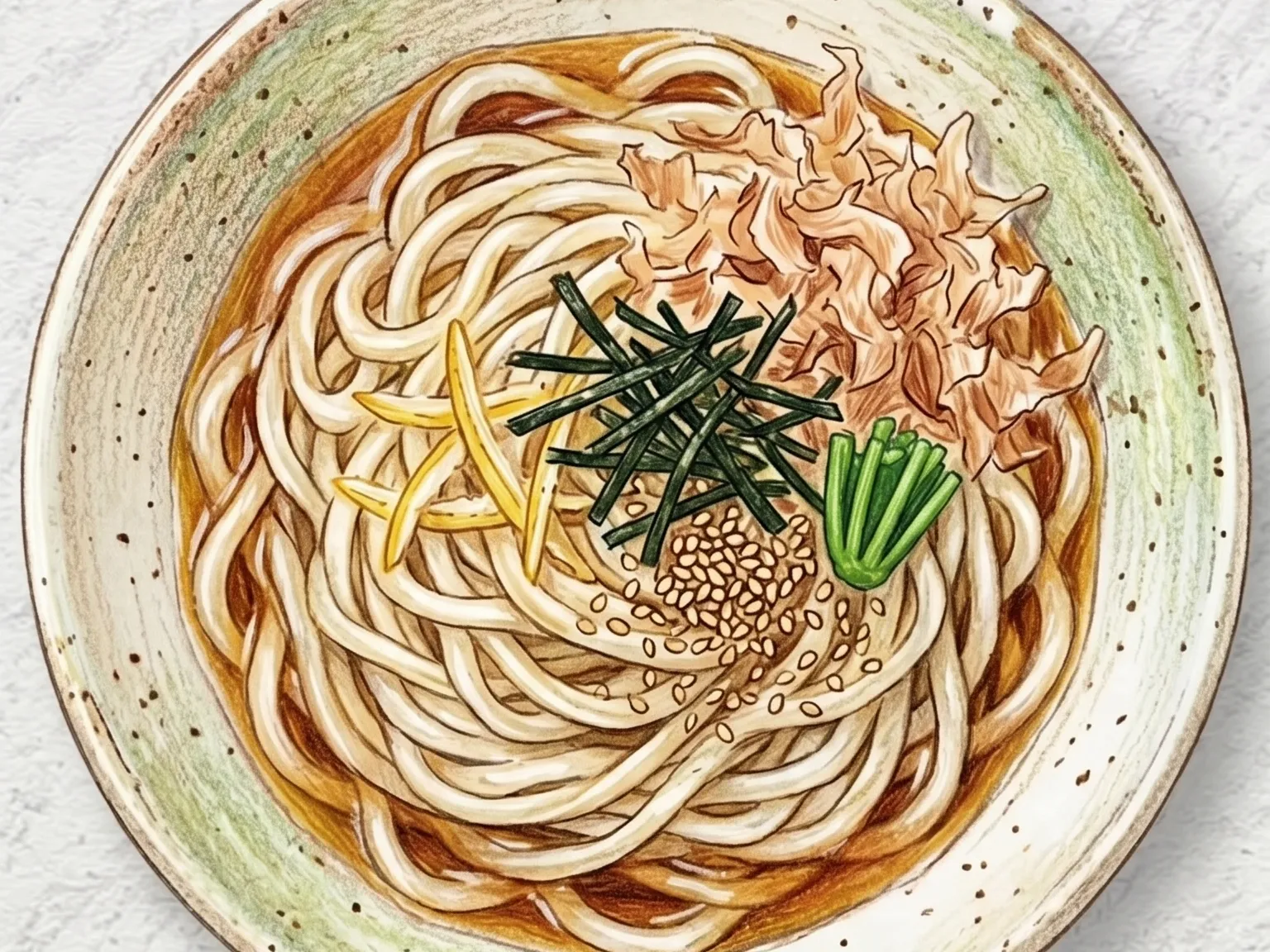
Yuja soy chilled udon serves cold udon noodles with a sauce made from yuja marmalade, soy sauce, tsuyu, lemon juice, and cold water, finished with cucumber, roasted seaweed, and sesame seeds. In a bowl, mix 2 tbsp yuja marmalade, 2 tbsp soy sauce, 1 tbsp tsuyu, 220 ml cold water, and 1 tsp lemon juice. Stir until no concentrated lumps of marmalade remain, then refrigerate the sauce for at least 20 minutes. Meanwhile, cut 60 g cucumber into thin strips and keep 6 g shredded roasted seaweed and 1 tsp sesame seeds separate from moisture. Put 400 g frozen udon directly into a generous pot of boiling water without thawing. Loosen the strands gently with chopsticks and cook for 2 to 3 minutes, removing them as soon as the centers are no longer icy. Rinse the noodles under cold water for 30 to 60 seconds while rubbing them lightly, then drain them in a sieve for about 1 minute and shake away water trapped between the strands. Place the fully cold noodles in bowls and pour over the refrigerated yuja soy sauce. Add the cucumber, seaweed, and sesame immediately before serving and mix once. Use the measured 220 ml water without adding or subtracting an unlisted amount. Thorough draining after the cold rinse prevents that water from changing the sauce concentration.
Kappodori (Bamboo-Steamed Chicken)
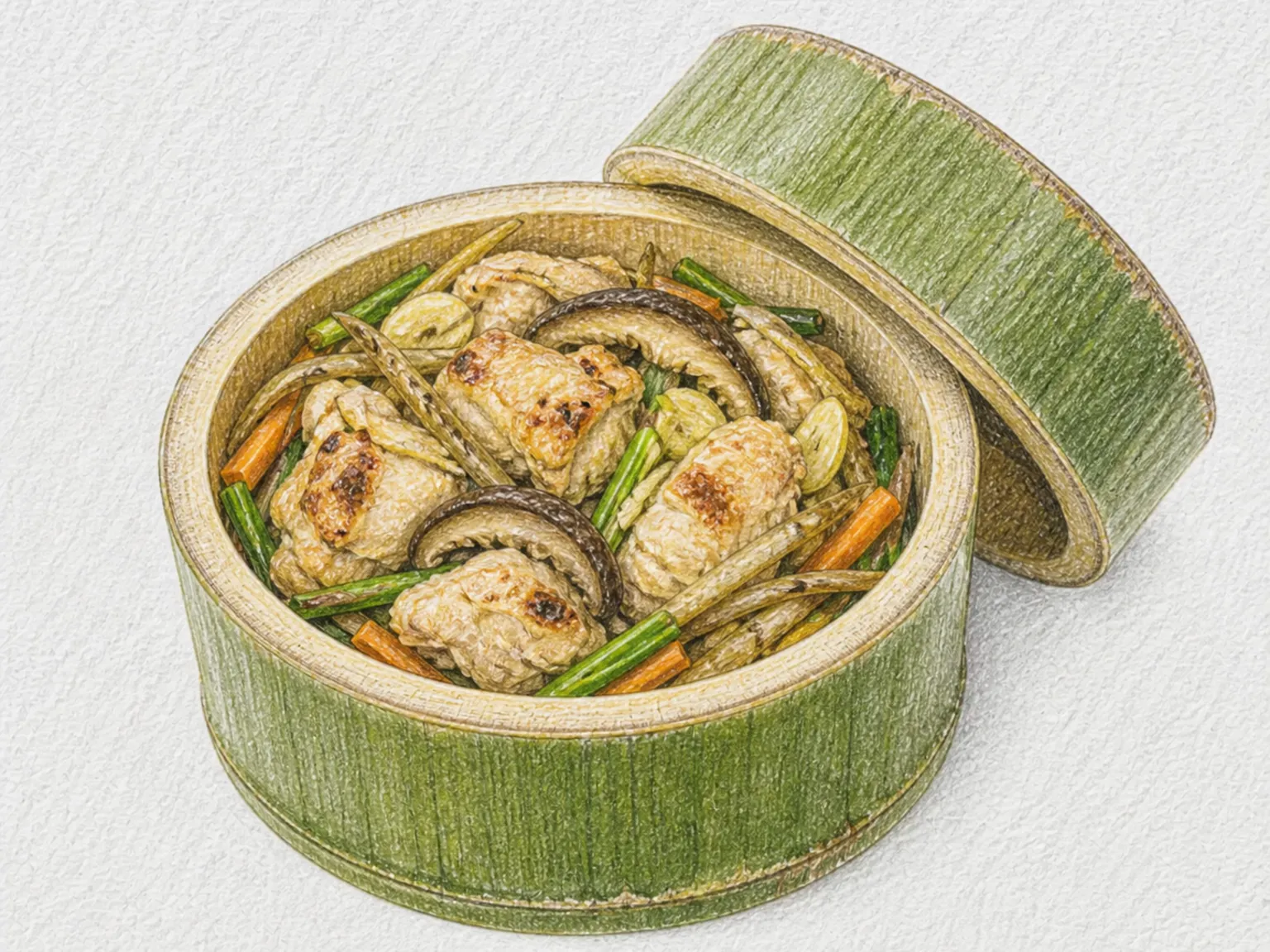
Kappodori is a bamboo-vessel chicken dish from the mountainous northern part of Miyazaki Prefecture, especially Takachiho. Bamboo is called kappo in this area. A section between the joints of young green bamboo is opened and filled with local chicken, burdock, shiitake, carrot, garlic chives, and garlic seasoned with soy sauce, salt, and pepper. The cut piece is returned as a lid, and the whole tube is heated slowly over charcoal so the ingredients steam in their own moisture while taking on the bamboo aroma. Prepare it outdoors on a stable heatproof grill with glowing coals rather than tall flames, and use only sound, untreated bamboo intended for cooking. Do not seal the opening airtight. Remove the tube when the thickest chicken pieces reach 75°C, then open the hot lid away from the face.
Yuzu Cold Soba (Chilled Buckwheat Noodles with Citrus Dipping Sauce)
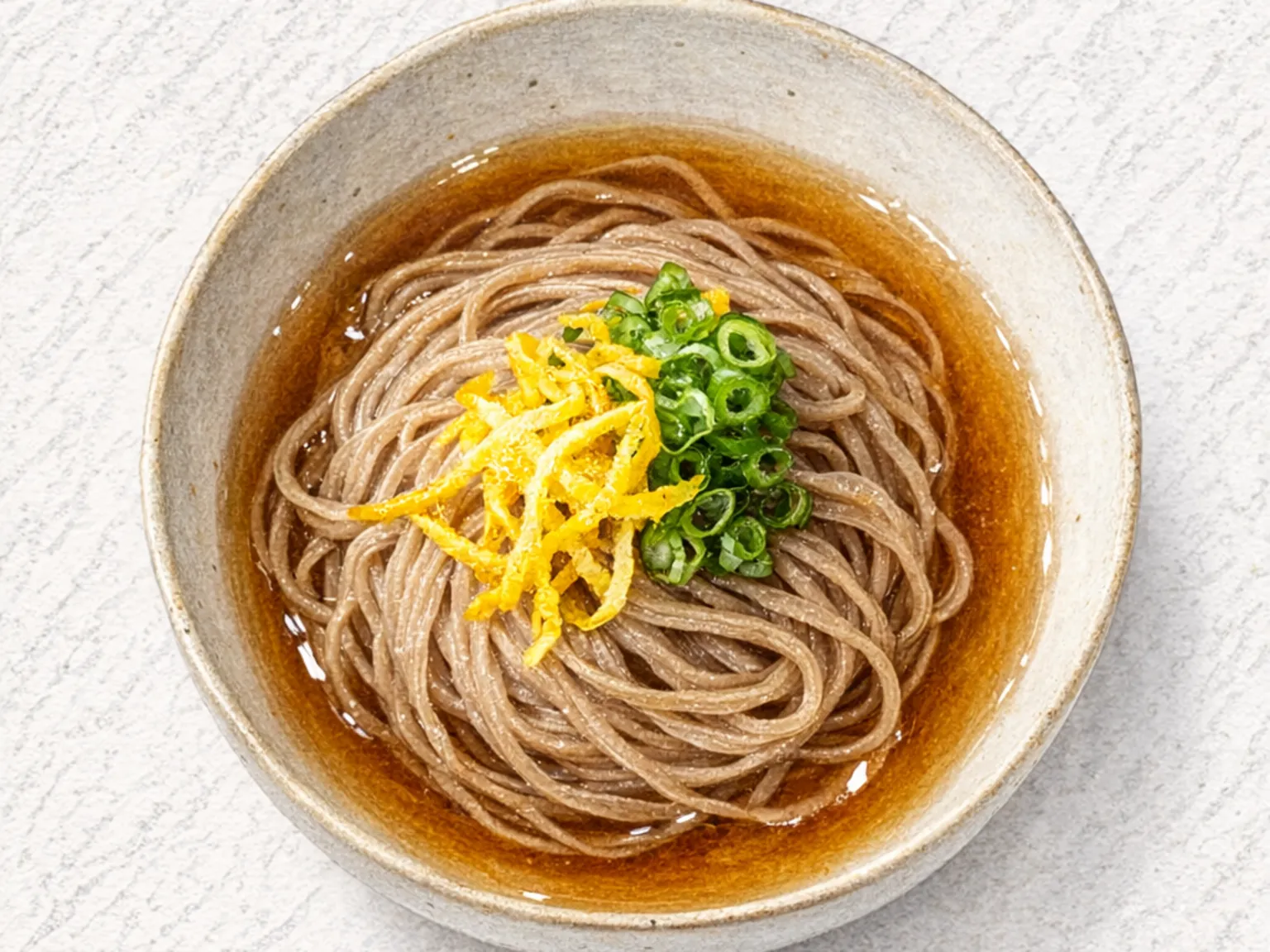
Yuzu cold soba serves chilled soba noodles with a dipping sauce made from tsuyu, cold water, and yuzu marmalade. Mix 120 ml tsuyu, 240 ml cold water, and 1 tbsp yuzu marmalade until no concentrated lumps remain, then refrigerate the sauce until thoroughly cold. Finely slice 20 g scallion and prepare 3 tbsp grated radish. Cook 220 g soba noodles in boiling water for the time stated on the package. Stir soon after adding them so the strands do not stick, and drain them as soon as their centers are no longer hard. Transfer the noodles directly to cold water and rub them gently by hand. Change the water and rinse at least three times. Leave the rinsed noodles in a sieve for about 1 minute, then shake away the water trapped between the strands. Arrange the noodles on a plate with 1/4 cup shredded seaweed. Add the grated radish, scallion, and the measured 0.5 tsp wasabi to the chilled yuzu tsuyu in small portions as you eat rather than loading the dipping bowl at once. Use the full measured 1 tbsp yuzu marmalade without an unlisted reduction. Repeated rinsing followed by thorough draining keeps cooking water from changing the concentration of the dipping sauce.
Japanese Karaage (Soy-Ginger Fried Chicken)
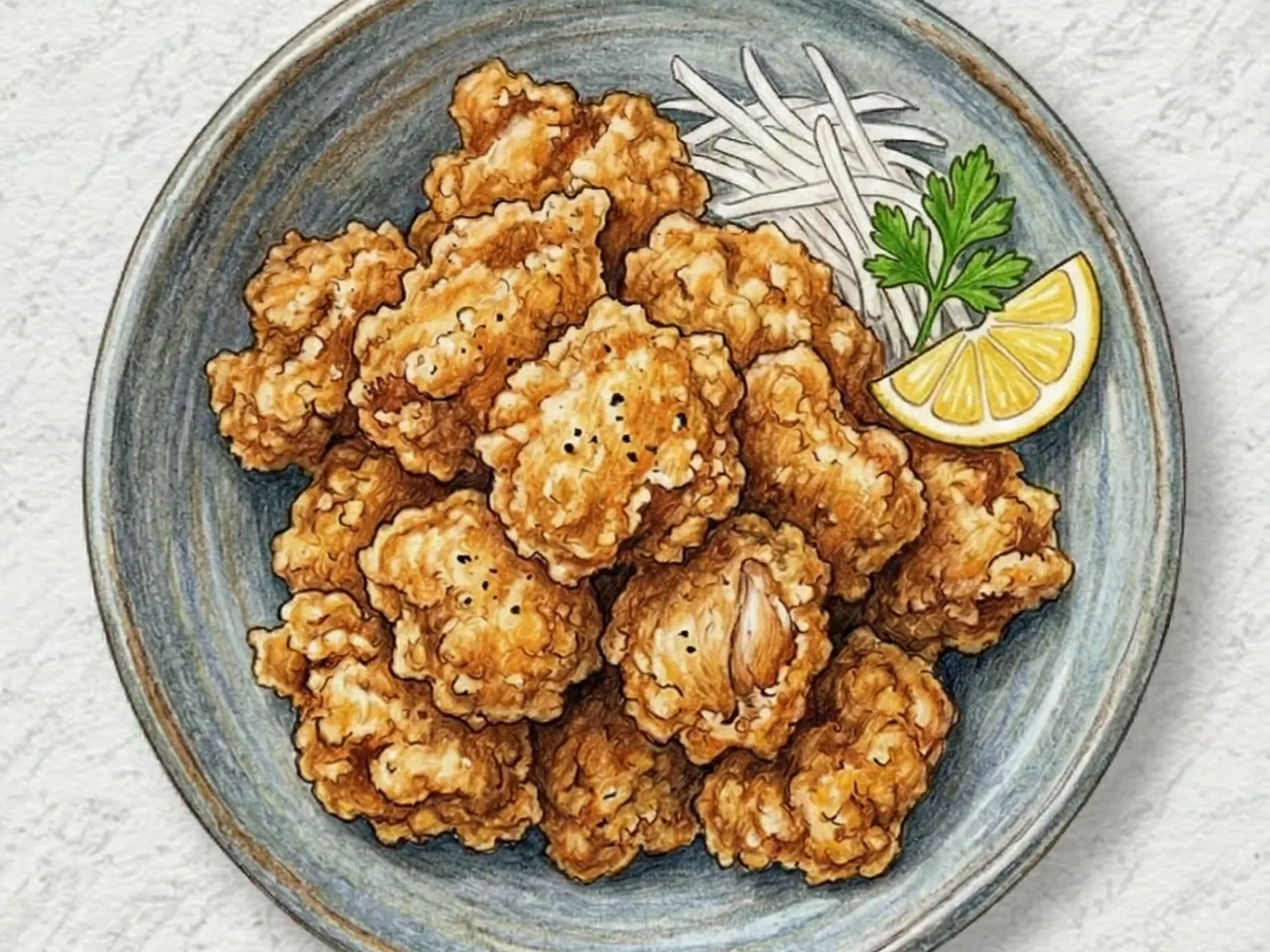
Karaage is Japanese fried chicken where boneless thigh pieces are marinated in soy sauce, mirin, grated ginger, and minced garlic for at least fifteen minutes before being coated in potato starch and double-fried. Ginger in the marinade counters the stronger gaminess of dark meat, and mirin contributes a mild sweetness and sheen to the finished crust. Potato starch produces a lighter and crispier shell than wheat flour or cornstarch, but any excess coating must be shaken off before frying or the surface sets unevenly. The first fry at 170 degrees Celsius runs for three to four minutes, cooking the chicken fully through. Pulled from the oil and rested for two minutes, residual heat equalizes the interior temperature. The second fry at 180 degrees for one to two minutes drives off remaining surface moisture, leaving a thin, shattering crust that holds its texture far longer than a single fry would. This is the central technique that keeps karaage crisp even as it cools. Squeezing lemon juice over the pieces just before eating cuts through the richness and sharpens the contrast between the crust and the juicy interior.
Zhajiangmian (Chinese Black Bean Paste Noodles with Ground Pork)
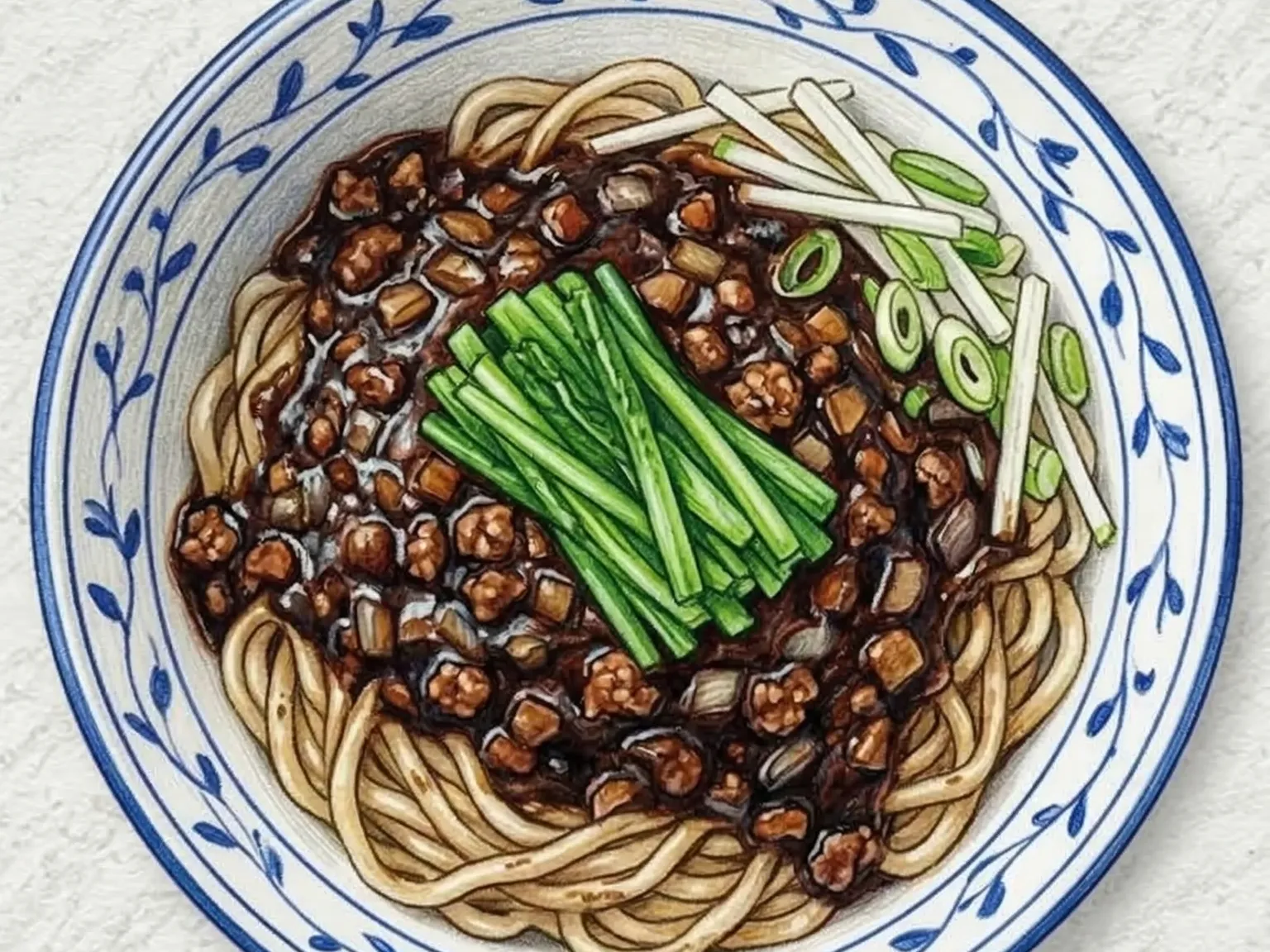
Zhajiangmian serves fresh wheat noodles with a sauce of ground pork, onion, and fried chunjang, finished with thin cucumber strips. Finely chop 80 g onion and julienne 70 g cucumber. Heat 1 tbsp cooking oil in a pan over medium heat, add 180 g ground pork, and break up the large clumps as it cooks. Begin checking it at about 3 minutes, but do not rely on the disappearance of pink color alone. Continue until all of the ground pork reaches at least 71C. Add the onion and cook for about 2 minutes, until its edges look translucent. Lower the heat to medium low and add 3 tbsp chunjang, stirring continuously so the paste does not stick to the pan. Fry it for about 2 minutes, until it looks glossy and its harsh aroma has softened. Add 1 tbsp soy sauce and 1 tsp sugar, reduce the heat to low, and cook for 5 minutes while stirring, until the sauce is thick enough to coat noodles. Cook 250 g fresh wheat noodles for the time on the package. Rinse them briefly under cold water and drain them thoroughly. Divide the noodles among bowls, add the hot pork chunjang sauce, and top with the cucumber immediately before mixing. No unlisted water is added to the sauce, so keep the heat low and monitor the pan while it reduces.
Karashi Renkon (Mustard Miso Lotus Root)
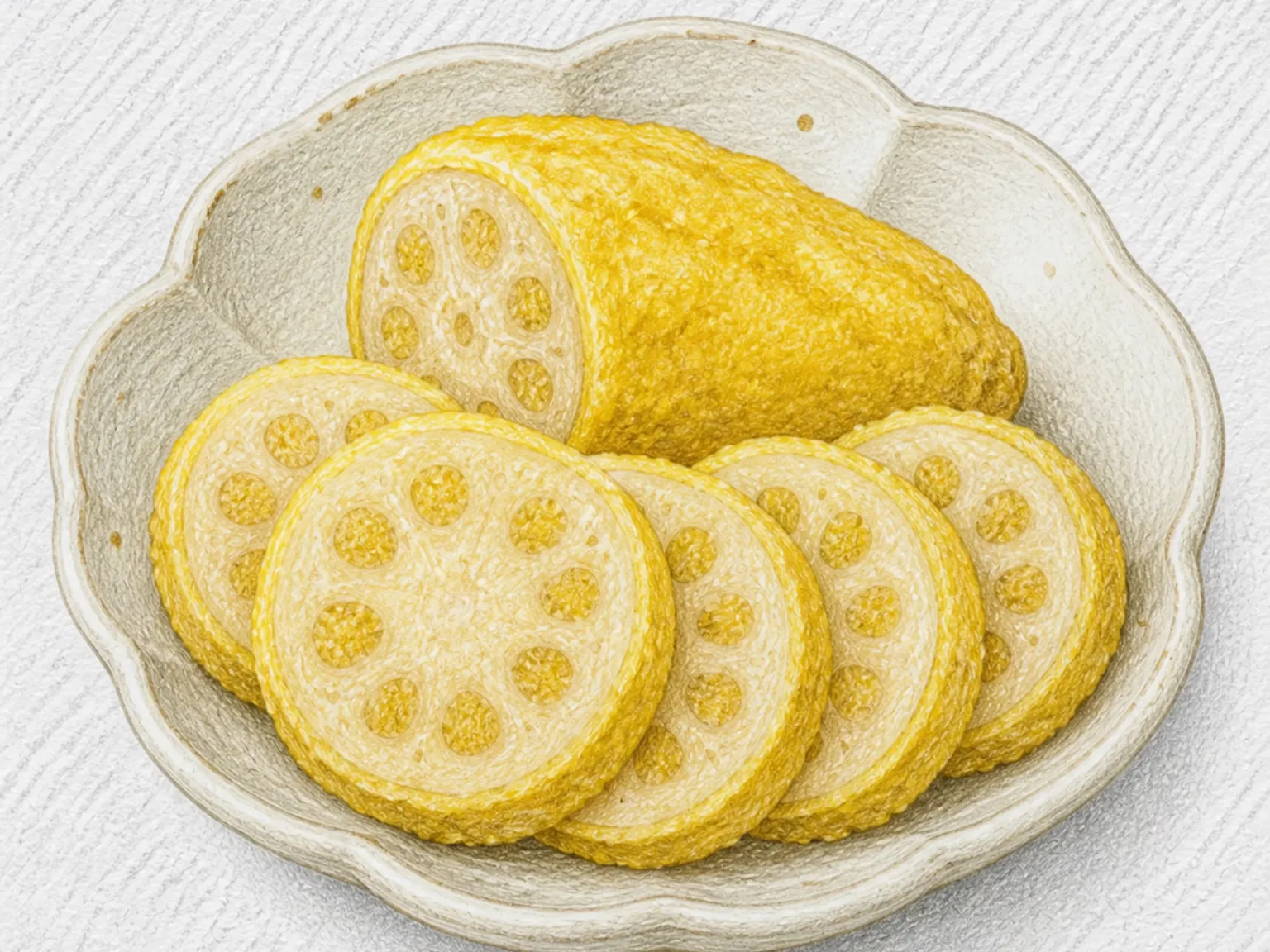
Karashi renkon is a whole fried lotus root from Kumamoto Prefecture, eaten as an everyday side dish, with sake, and in New Year osechi. The lotus roots are scrubbed, boiled for 10 to 13 minutes until still firm, and cooled. A pungent paste of barley miso and mustard powder is pushed through every channel by standing and turning each root in the paste until it rises from all the holes. Excess paste is removed, and the filled roots stand upright for 6 to 7 hours. A stiff yellow batter is made from flour, water, and edible turmeric. After the lotus root surface is wiped dry, each piece is coated and fried whole, slowly, with the oil held at 180°C or lower. Once the coating is firm and yellow, the roots are cooled and cut into 5 to 10 mm slices, revealing the mustard miso in every hole.
Kare-Kare (Filipino Peanut Beef Shank Stew)
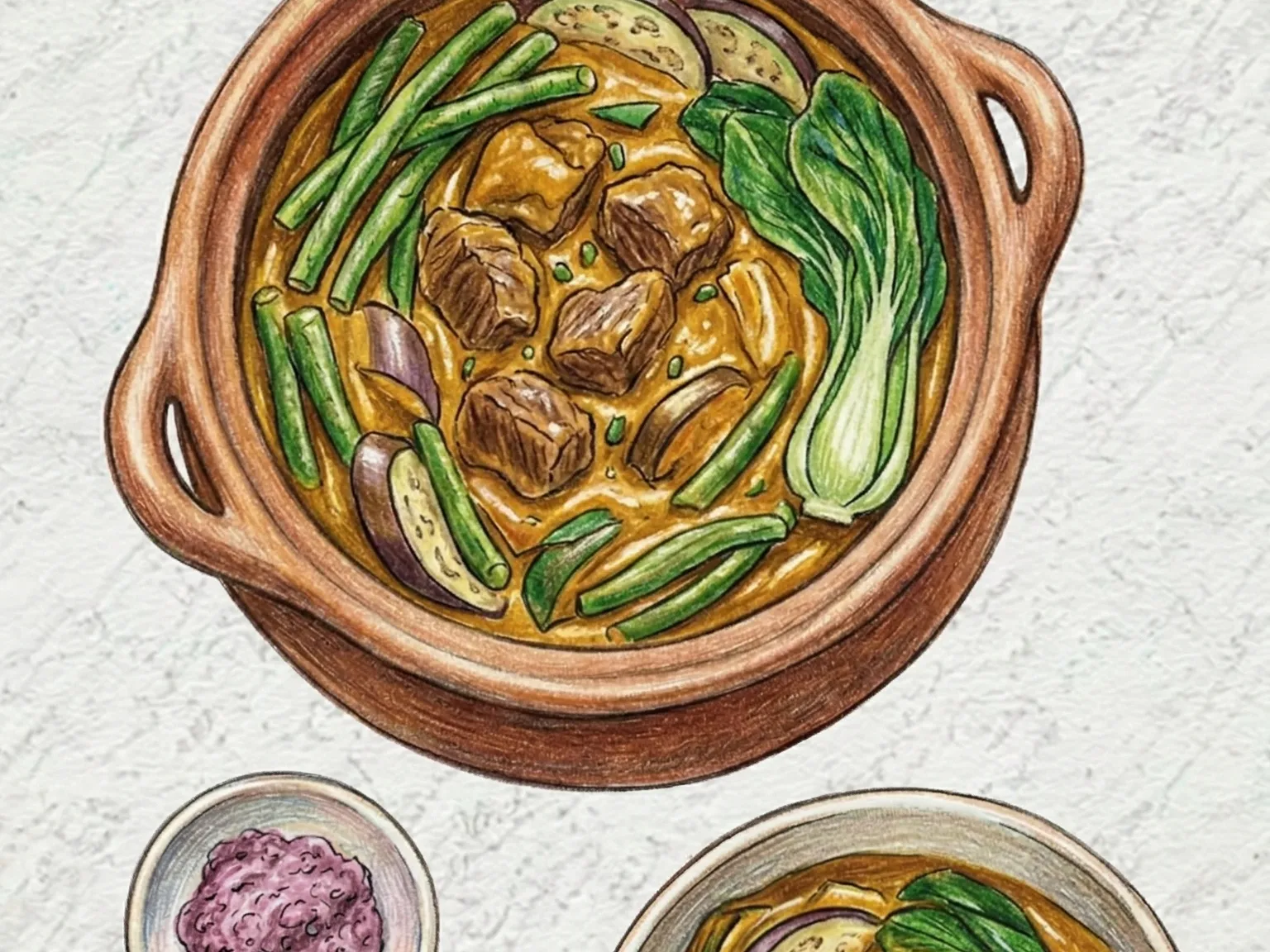
Kare-kare is a Filipino celebration stew built around beef shank braised until every strand of connective tissue has melted into gelatin, leaving meat that falls away from the bone at the touch of a spoon. The shank needs a minimum of sixty minutes at a steady simmer for this transformation to happen fully, and the resulting braising liquid becomes the backbone of the sauce. Glutinous rice flour is dry-toasted in a wide pan, stirred constantly until it turns pale gold and smells nutty, then whisked directly into the strained broth where it acts simultaneously as a thickener and a flavoring agent. Peanut butter is dissolved into the broth next, forming a sauce that is rich and creamy without any heaviness, because the toasted rice flour gives body more cleanly than cornstarch ever could. The braised meat goes back in and simmers together with the sauce for fifteen minutes so the flavors merge completely. Eggplant, yardlong beans, and bok choy are added in the final five to seven minutes, long enough to soften but short enough to keep their individual textures. The dish is always served alongside bagoong, a Filipino fermented shrimp paste, whose concentrated salt and pungent funk contrast forcefully with the mild, nutty sauce and elevate every spoonful.
Kochi Kashikiri
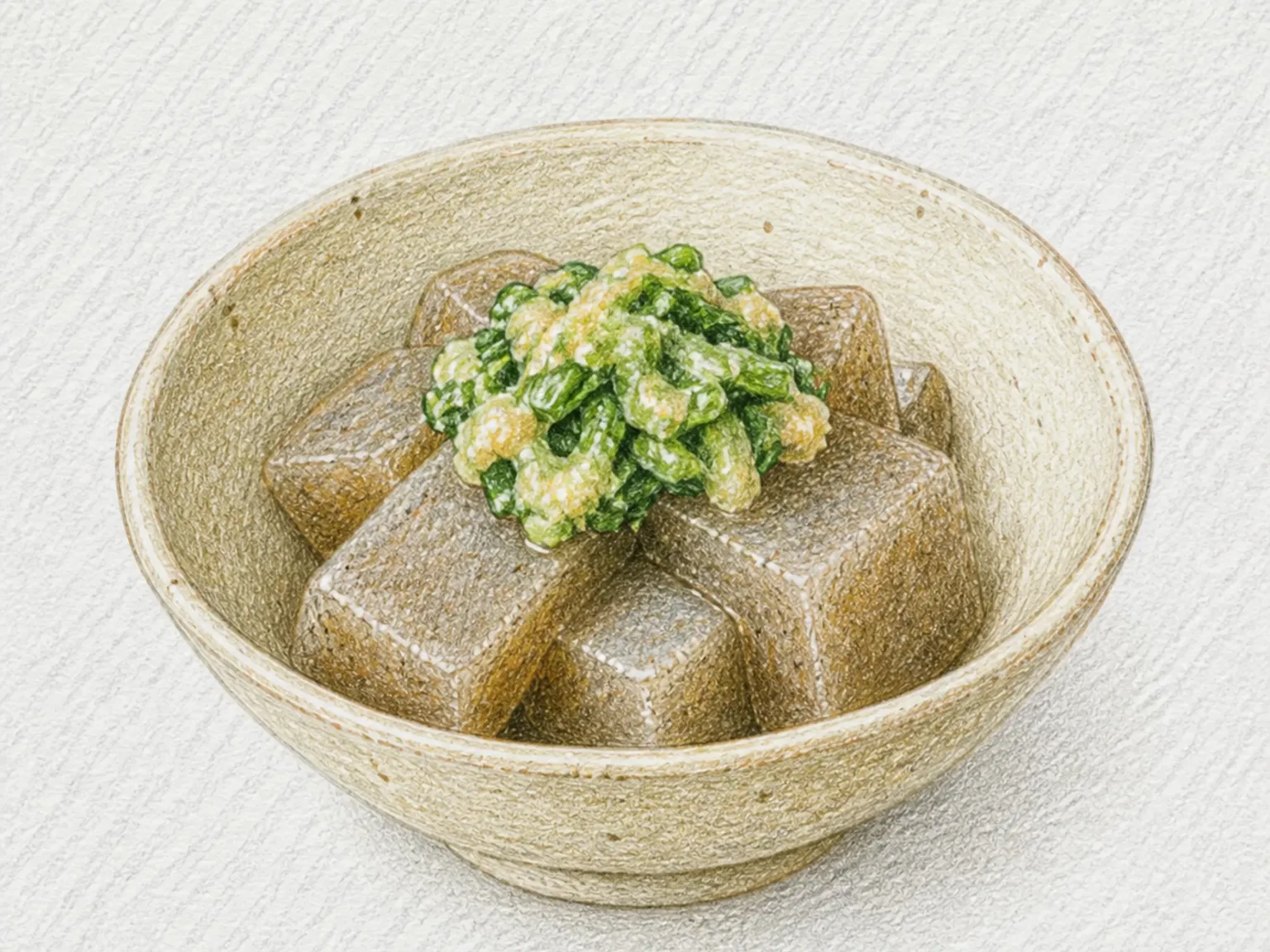
Kashikiri is an acorn jelly from southern Aki, Kochi. Arakashi acorns are sun-dried and shelled, coarsely ground, held in a cotton bag under running water for two days to remove astringency, ground again, and cooked with water until their starch becomes a thick paste that sets in a mold. Also called kashi-dofu, it was famine food in mountain areas poorly suited to cultivation, and its lengthy preparation was often entrusted to elders who remained at home. Once known across Kochi, it is now rare outside Aki. After three to four hours of setting, the firm jelly is cut and traditionally served with nuta made from leaf garlic, sesame, miso, and rice vinegar.
Katsu Sando (Japanese Crispy Pork Cutlet Sandwich)
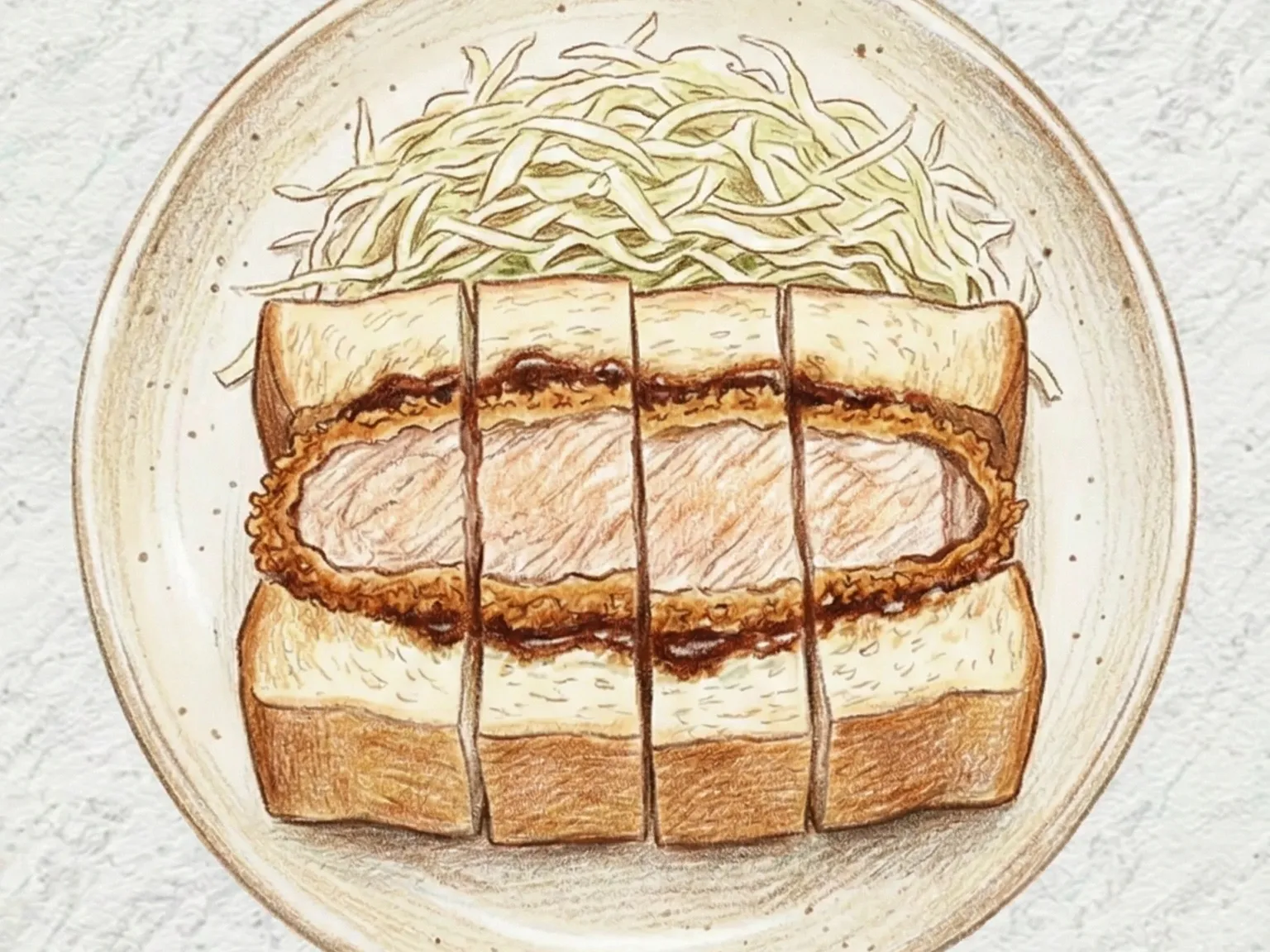
Katsu sando is a Japanese sandwich built around a thick, crispy pork cutlet pressed between slices of soft milk bread. The pork loin is sliced at least two centimeters thick, pounded lightly to tenderize, seasoned with salt and pepper, then coated in flour, beaten egg, and coarse panko breadcrumbs before being lowered into oil at 180 degrees Celsius. The result is a deep golden crust that shatters on the first bite while the interior stays moist and tender. Tonkatsu sauce, a thick condiment with a fruity, sweet-savory profile similar to Worcestershire, is spread generously on one side of the bread, while a thin layer of Japanese mayonnaise goes on the other. Finely shredded cabbage is layered beneath the cutlet, providing a fresh, watery crunch that cuts through the richness of the fried meat. The crusts are trimmed from the bread, the sandwich is pressed firmly and sliced cleanly in half, and the cross-section of pale bread, pale cabbage, and dark golden cutlet becomes the defining visual of the dish. Katsu sando works as a packed lunch, a picnic item, a late-night snack, or a quick meal at the counter of a butcher shop in Tokyo.
Pork Cutlet Sandwich
Katsu sando is a Japanese sandwich built around a thick pork loin cutlet breaded in flour, egg, and panko, then deep-fried at 170C until the exterior turns a deep, even gold. The cutlet rests on soft milk bread generously spread with tonkatsu sauce, and a layer of shredded cabbage dressed in mayonnaise goes in between. The contrast between the cutlet's rigid panko crust and the yielding bread is what defines the sandwich, while the mayo-dressed cabbage absorbs some of the richness and keeps the whole thing from feeling heavy. Wrapping the assembled sandwich firmly in plastic wrap and resting it for three minutes gives the sauce time to soak into the bread, producing a clean cross-section when cut. Draining the cutlet upright for a minute after frying removes surface oil and prevents the bread from going soggy. Using fine-ground fresh panko rather than dried gives the crust a slightly denser, more refined texture.
Kaya Toast (Singaporean Coconut Jam Butter Toast)
Kaya toast is the defining breakfast of Singaporean coffee shops, built from two slices of crisped white bread filled with kaya and a thick slab of cold butter. Kaya is a jam made by cooking coconut milk, eggs, sugar, and fresh pandan leaf over low heat with constant stirring until the mixture thickens into a pale green spread that smells of vanilla, coconut, and floral sweetness simultaneously. The bread is toasted directly over charcoal or in a grilling rack until it shatters at the edges. Cold butter placed inside the hot toast begins to soften immediately at the center while retaining its chill at the edges, so each bite delivers a different ratio of fat and sweetness. The traditional pairing is two soft-boiled eggs cracked into a shallow bowl, seasoned with dark soy sauce and a grind of white pepper, then loosely mixed into a thin custard for dipping or dunking. Alongside these, a glass of kopi - coffee brewed through a cloth sock filter and sweetened with condensed milk - completes the set. This breakfast combination has changed very little in decades and remains the first meal of the day for many Singaporeans, served at everything from old neighborhood kopitiams to national chains like Ya Kun Kaya Toast.
Keema Matar (Indian Spiced Minced Meat and Pea Curry)
Keema matar is a North Indian curry of seasoned minced meat and green peas cooked down into a thick, almost dry gravy. Onions are fried until deep golden to form a sweet, caramelized base, followed by garlic and ginger that release their sharpness into the fat. Ground lamb or beef is added and stirred continuously to break up clumps before the spices go in. Turmeric, cumin, garam masala, and chili powder build the spice profile, while diced tomatoes provide acidity and moisture that allow the spices to cook through without scorching. Green peas are added near the end of cooking so they retain a pop of texture and natural sweetness. Because the finished dish is relatively dry with little sauce, it clings well to flatbreads such as naan or chapati and also works as a topping over plain steamed rice. The whole preparation takes under forty-five minutes with minimal knife work, making it one of the more practical Indian curries for weeknight cooking. Blooming the cumin in hot oil at the start, using the tadka technique, deepens the aroma significantly and lifts the overall flavor of the dish.
Kencho Simmered Tofu and Daikon
Kencho is an everyday Yamaguchi dish of firm tofu, daikon, and carrot simmered in soy sauce and sake until almost no free liquid remains. Press 200g firm tofu under a plate for 20 minutes, blot it dry, and crumble it into irregular pieces about 2cm wide. Cut 400g daikon into 5mm quarter rounds and the firmer 40g carrot into thinner 2 to 3mm pieces so both vegetables soften at roughly the same time. Heat 2 teaspoons oil over medium heat for 30 seconds, then stir-fry the tofu for 3 to 4 minutes until its moisture no longer pools on the pot bottom. Add the vegetables and cook for 2 minutes before seasoning so their surfaces are evenly coated with oil. Pour in 2 tablespoons each soy sauce and sake, cover, and simmer over medium-low heat for about 10 minutes, turning the mixture once midway. The dish is ready when the daikon looks translucent and soy-colored and the bottom of the pot is nearly dry. Poorly drained tofu dilutes the seasoning, while small crumbles or forceful stirring make it disappear among the vegetables; broad turns preserve distinct pieces. Some households add taro, fried tofu, konjac, chicken, or shiitake, but this version keeps the focus on tofu, daikon, and carrot. Kencho was often made in a large pot and reheated for later meals, and it remains familiar in homes and school lunches across the prefecture.
Niigata Kirizai
Kirizai is an Uonuma-area side dish from Niigata that combines finely chopped Nozawana pickle, fresh daikon, miso-pickled daikon, and toasted sesame, with natto folded in immediately before eating. Kiri means cutting and zai refers to vegetables. In a snowy region where winter food was limited, households stretched valuable protein-rich natto with leftover pickles and vegetable trimmings, using every scrap carefully. Records even associate the preparation with warriors carrying it as provisions during the Sengoku period. Cutting every vegetable to a similar small size and squeezing it dry preserves crispness, while adding natto last keeps its sticky texture distinct.
Crispy Chili Garlic Chicken
Kkanpunggi is a Korean-Chinese chicken dish where bone-in or boneless thigh pieces are coated in potato starch and deep-fried until the crust is completely shatter-crisp, then tossed quickly over high heat in a sauce built from garlic, dried red chilies, soy sauce, rice vinegar, and sugar. The sauce must go on while the chicken is still hot from the fryer: the heat helps the thin glaze bond to the surface without softening the coating, while allowing the seasoning to penetrate just enough. Leaving the chicken in the sauce any longer causes the starch shell to absorb moisture and go limp, which destroys the entire point of the dish. The balance of salty, sour, and sweet in the sauce coats each piece evenly, and the assertive garlic aroma combined with the slow heat of dried chilies forms the flavor signature that makes kkanpunggi instantly recognizable. Additional sliced fresh chilies, green or red, can be added at the end to control heat intensity to personal preference. Crisping the skin side of the thigh thoroughly during frying deepens both the textural contrast and the roasted savory aroma. This is one of the most popular anju dishes in Korea, routinely paired with beer or soju, and it must be eaten immediately while the crunch is intact.
Koi no Arai (Chilled Carp Sashimi)
Koi no arai is a carp dish from Koriyama, Fukushima, made with carp professionally prepared for raw consumption. The skinned fillet is sliced about twice as thick as fugu sashimi, passed quickly through water near 42°C, and tightened in ice water. This brief washing reduces surface fat and odor while giving the flesh a crisp, springy texture; it does not cook the fish. Mustard vinegar miso is the customary dip, while young carp may be paired with ginger soy sauce or briefly swished through hot water and served with ponzu. Carp farming grew in Koriyama after the Asaka Canal made former reservoirs available, and carp dishes became special food for weddings, New Year, and guests.
Steamed Komatsuna and Tofu
Komatsuna mushi steams Japanese mustard greens and soft tofu on one plate, then finishes them with warm dashi soy sauce, sesame oil, and sesame seeds. Rinse 180g komatsuna, cut it into 5cm lengths, and separate the firm stems from the leaves. Cut 300g soft tofu into roughly 2cm cubes and rest them briefly on paper towels so surface water does not dilute the sauce. Arrange the stems on the steaming plate first, followed by the tofu and leaves, leaving small gaps for steam circulation instead of piling the ingredients tightly. Steam over medium heat for 7 to 8 minutes once the steamer is boiling. The leaves should look bright and wilted while the stems bend slightly but retain some bite. Longer steaming dulls the greens and makes the tofu more likely to break, so both cues matter. Warm 80ml dashi and 1.5 tablespoons soy sauce over low heat and remove the pan as soon as steam rises, before a hard boil flattens the aroma. Pour off excess liquid collected on the steaming plate, spoon over the warm sauce, and add 1 teaspoon each sesame oil and sesame seeds. Serving at once preserves the contrast between firm stems, tender tofu, and the fragrant dressing. Separating the stems from the leaves, draining the tofu surface, and avoiding a crowded plate are the practical details that keep the vegetables evenly cooked and the sauce distinct.
About Asian
Each country brings its own signature spices and sauces, so even the same ingredients can produce completely different flavors. With a few key pantry items - coconut milk, fish sauce, curry powder, doubanjiang - you can recreate the tastes of Asia at home.