
Drinks Recipes
132 recipes. Page 6 of 6
This category brings together Korean traditional beverages and drinking snacks (anju). Sweet classics like sikhye (rice punch) and sujeonggwa (cinnamon punch) sit alongside modern fruit smoothies and homemade drinks. For anju, find recipes for dubu-kimchi (tofu with kimchi), golbaengi-muchim (spicy whelk salad), and other bar-food favorites.
A well-made drink rounds off a meal or makes a refreshing snack, while great anju elevates any gathering. Browse these recipes for ideas you can prepare at home with ease.
Tomato Basil Juice
Tomato basil juice is a cold savory drink made by blending ripe tomatoes with fresh basil leaves and straining the result through a fine sieve to remove seeds and skins. The ripeness of the tomato determines much of the flavor: fully ripe tomatoes carry free glutamates that produce a natural umami depth, whereas underripe fruit tastes predominantly sour without the sweetness and savory body that makes the juice satisfying. Basil should be added to the blender immediately before blending rather than sitting cut or torn, because the volatile oils that produce its aroma begin oxidizing quickly once the leaves are damaged. After blending to a smooth consistency, passing the juice through a fine-mesh strainer or cheesecloth removes the solids and produces a texture smooth enough to drink without resistance. Salt and black pepper season the juice, and fresh lemon juice raises the acidity in a way that brightens the overall flavor rather than making it sour. A small addition of olive oil emulsifies into the juice and activates fat-soluble aromatic compounds in both the tomato and the basil, producing a fuller, rounder flavor than the unstrained version. The juice must be thoroughly chilled before serving, as warmth mutes the herbal freshness. It works well as a brunch drink, a light non-alcoholic aperitif, or a base for savory cocktails.
Korean Burdock Root Tea
Ueong-cha is a Korean burdock root tea made by dry-roasting thinly sliced unpeeled burdock in a pan for six minutes, then steeping it with ginger and jujube in boiling water for 15 minutes. The roasting caramelizes the root's starches, creating a deep, nutty aroma without any raw earthiness. Ginger contributes a subtle heat to the finish, while jujubes provide natural sweetness that softens the drink. A spoonful of rice syrup thickens the body, and a few drops of lemon juice at the end clean up the palate, making this caffeine-free tea suitable for any time of day.
Virgin Mojito
Virgin mojito is a non-alcoholic cocktail built by gently muddling lime wedges and fresh mint leaves in a glass with simple syrup, then filling with sparkling water and ice. The muddling must be light enough to press the essential oils from the leaves without breaking the stems, since bruised stems release a bitter flavor that takes over the drink. One lime is cut into wedges for muddling while a second is juiced separately, which gives the drink both the textural element of pulp and the clean, sharp acidity of fresh juice. A pinch of salt added before muddling amplifies the lime's tartness in a way that simply adding more lime cannot replicate. The carbonation from the sparkling water carries mint aroma upward as it rises, so the first sip delivers fragrance before the liquid even reaches the palate. Larger ice cubes melt more slowly than crushed ice, preserving the balance of the drink for longer. A second option is to clap a few mint leaves between the palms to wake up the aroma before placing them in the glass, which extracts fragrance without any muddling at all.
Korean Watermelon Mint Juice
Watermelon mint juice blends seedless watermelon flesh with honey and lime juice, then pulses in mint leaves for just five seconds to capture their fragrance without extracting bitterness. Straining the blend removes excess pulp, producing a light, clear-textured drink. The juice is poured over a full glass of ice and finished with sparkling water, whose bubbles amplify both the watermelon's sweetness and the mint's cooling sensation. Lime juice cuts through the melon's one-note sweetness with a bright acidity, and a sprig of fresh mint on top releases aroma with each sip.
Clear Korean Rice Wine (Traditional Fermented Yakju)
Yakju is a traditional Korean clear rice wine produced by steaming soaked glutinous rice for 35 minutes, then fermenting it with crushed nuruk starter, dry yeast, and water for seven to ten days at room temperature. Daily stirring distributes the yeast culture evenly, and sliced ginger and jujube are added during fermentation to suppress off-flavors and contribute subtle aromatics. After fermentation, the solids are allowed to settle completely so only the clear upper liquid is carefully decanted, giving yakju its transparent appearance and refined taste distinct from cloudy makgeolli. Two days of cold aging in the refrigerator rounds off the sharp alcohol edge, bringing forward a smooth, grain-forward character.
Korean Bitter Melon Jujube Tea
Yeoju-daechu-cha is a Korean herbal tea that steeps dried bitter melon, pitted jujubes, dried tangerine peel, and fresh ginger together for 25 minutes. The bitter melon provides a gentle, lingering bitterness that the jujubes counter with their natural sweetness, while the tangerine peel adds a citrus top note and ginger delivers a warm, peppery finish. Honey is dissolved after the heat is turned off to preserve its delicate fragrance, and a few pine nuts floated on the surface contribute a mild nuttiness. The tea is caffeine-free, and the bitter melon quantity can be reduced for those sensitive to its flavor.
Korean Lotus Root Tea (Warm Herbal Root Brew)
Yeongeun-cha is a Korean lotus root tea prepared by simmering peeled, thinly sliced lotus root with jujube, ginger, and a cinnamon stick over low heat for twenty-five minutes. As the root cooks, its natural starch gradually dissolves into the water, producing a tea that is clear but carries a subtle, silky body unlike most herbal brews. Jujubes contribute the primary sweetness; adding a small spoonful of honey and a single pinch of salt develops the flavor further without making it sugary. Cinnamon and ginger stay in the background, leaving a gentle warmth that lingers in the finish and makes the tea feel comforting without being sharp or medicinal. Soaking the lotus root slices in lightly acidulated water for ten minutes before cooking prevents oxidative browning and keeps the finished tea pale and clear. The flavor holds up equally well served hot in a ceramic cup or cooled down and poured over ice as a refreshing cold drink.
Korean Lotus Leaf Tea (Roasted Rice and Lotus Brew)
Yeonnip-cha is a Korean traditional tea brewed by simmering dried lotus leaf together with roasted brown rice, jujube, and ginger for fifteen minutes, then steeping covered for three more minutes to lock in the aroma. The fragrance of lotus leaf is understated and grassy, very different from the assertive herbal notes of Western tisanes, which makes it one of the more approachable traditional Korean teas for first-time drinkers. Roasted brown rice added to the pot contributes a toasty, nutty character that fills in the quiet gaps left by the lotus leaf and turns what might otherwise be a flat cup into something layered and satisfying. Jujube and ginger work together to sand down any rough vegetal edges and add a faint warmth and sweetness that carries through to the finish. Rice syrup can be stirred in to adjust sweetness, but only in small amounts, as too much drowns the delicate lotus fragrance that gives the tea its identity. Brewing time should be watched carefully; going beyond twenty minutes pulls out astringent tannins that make the tea bitter rather than clean. The tea contains no caffeine whatsoever, making it suitable before sleep or during pregnancy, and served cold over ice in summer it becomes a light, refreshing drink.
Korean Yuja Pear Sparkling Drink
Yuja-bae sparkling is a Korean non-alcoholic drink that pairs the bright, bittersweet citrus character of yuja marmalade with the gentle, round fruit sweetness of Korean pear juice, finished with sparkling water for a refreshing effervescence. The base is assembled by thoroughly mixing yuja marmalade, pear juice, lemon juice, and honey until the marmalade dissolves completely, then divided into ice-filled glasses. Sparkling water is poured on last, slowly and down the side of the glass to keep as much carbonation intact as possible. Lemon juice lifts the floral fragrance of the yuja and makes the citrus notes more vivid, while pear juice neutralizes excess tartness and leaves a clean, smooth finish on the palate. Pouring the sparkling water before adding the other ingredients collapses the bubbles immediately, so the order matters. A sprig of rosemary tucked into the glass releases a herbal aroma that drifts upward with the carbonation and pairs naturally with the citrus base, adding visual appeal at the same time. The sweetness can be adjusted by varying the amount of honey depending on how concentrated the yuja marmalade is.
Korean Citron Tea (Sweet Yuzu Marmalade Hot Drink)
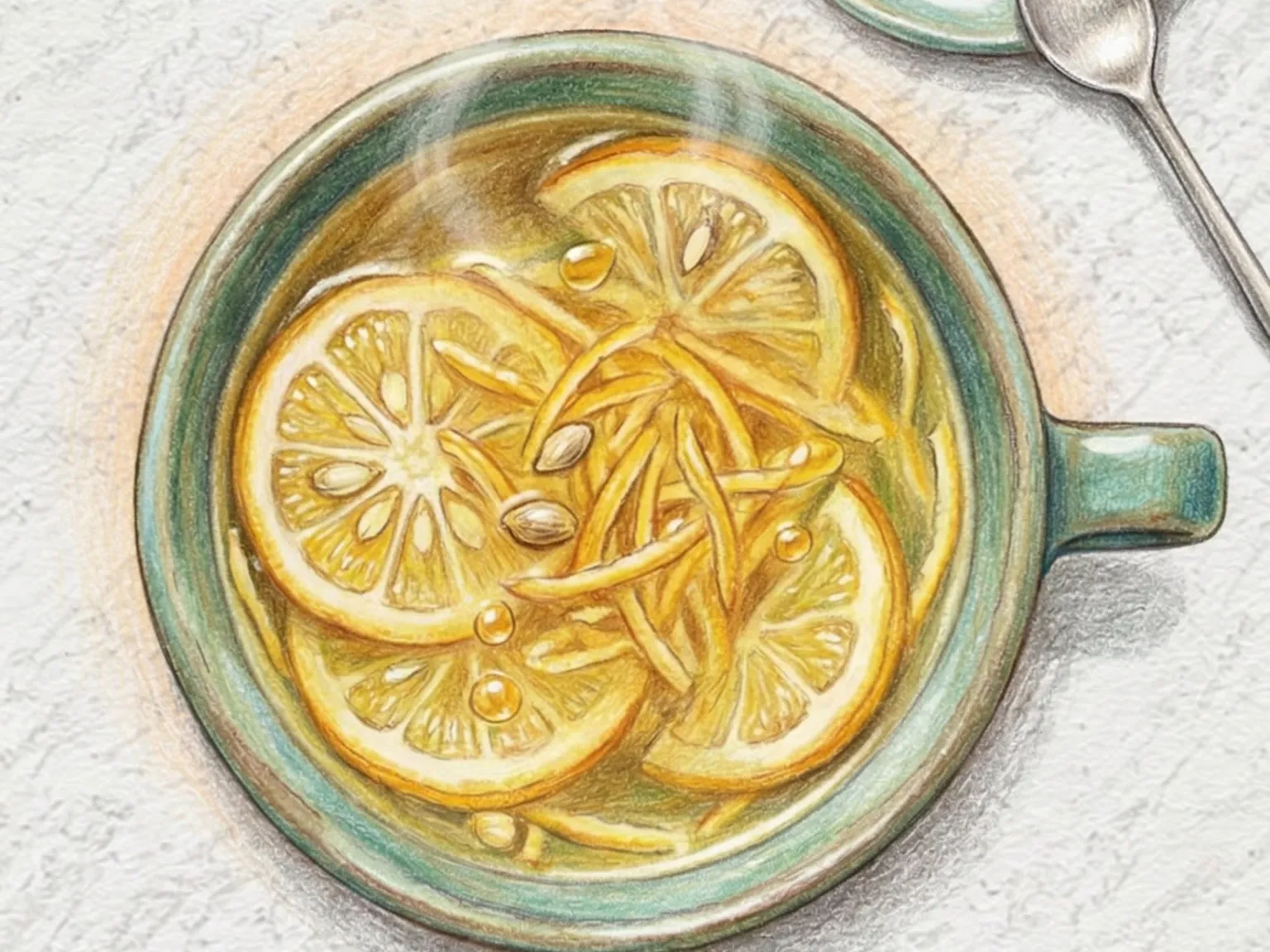
Yujacha is a Korean citron tea made by dissolving yuja marmalade in hot water, releasing the intense citrus fragrance locked in the candied peel. Honey deepens the sweetness beneath the marmalade's natural bitter edge, and a half teaspoon of fresh ginger juice introduces a warm, peppery sensation to each swallow. A few drops of lemon juice sharpen the acidity and make the citrus profile more vivid, while thin citron slices floating on top continue to release aroma as the tea cools. Water temperature between 85 and 90 degrees Celsius preserves the volatile aromatic compounds best, and rinsing the cup with hot water beforehand slows how quickly the drink loses heat. Yujacha has long been a household remedy for sore throats and the early stages of a cold, valued for the vitamin C in the citron peel and the warming effect of ginger working together.
Korean Job's Tears Tea (Creamy Grain Porridge Drink)
Yulmu-cha is a Korean grain tea made from Job's tears powder and glutinous rice powder, first dissolved in cold water to prevent lumps, then cooked on low heat with constant stirring. Once the mixture begins to thicken, milk is added for a creamier body, and honey with a pinch of salt balances the sweetness. Job's tears give the drink a distinctly nutty, toasted grain aroma that pairs smoothly with the milk, producing a texture thicker than typical tea but lighter than porridge. The glutinous rice powder contributes a subtle stickiness that coats the palate, and reducing the water ratio yields an even denser, more filling version.
Korean Job's Tears Walnut Latte
Yulmu-hodu latte is a traditional Korean grain-based beverage prepared by combining job's tears and walnuts with milk to create a thick and consistent texture. The preparation begins by soaking the job's tears in water for a minimum of two hours. This extended soaking period is necessary to soften the grains thoroughly, ensuring they pulverize completely during the blending process to avoid a gritty or sandy mouthfeel. Once softened, the job's tears are dry-toasted along with the walnuts in a pan. This heat application serves to caramelize the starches within the grains, which effectively removes the scent of raw grain and replaces it with a concentrated, roasted aroma. After the toasted ingredients are blended with milk, the liquid is passed through a fine strainer to achieve a smooth and silky finish. Sweetness is added using honey, accompanied by a small amount of salt to highlight the deep profile of the roasted nuts. A light sprinkle of ground cinnamon is applied to the surface to provide a subtle spice that balances the grounded flavor of the grain base. For cold servings, it is important to dissolve the honey while the liquid is still warm to ensure it distributes thoroughly throughout the drink instead of settling at the bottom of the container. The resulting beverage offers a depth of flavor and a rounded profile that is far more prominent than what is found in mass-produced, packaged versions of similar grain drinks.