Soups

Soups Recipes

434 recipes. Page 12 of 19

Soups and broths are the backbone of a Korean meal, served alongside rice at nearly every table. From clear seaweed soup (miyeokguk) to rich ox-bone broth (gomtang) and spicy beef soup (yukgaejang), the variety is enormous. Each season brings its own favorites - chilled soups in summer and piping-hot stews in winter.

Soups
Hot and Sour Soup
Soups Easy

Hot and Sour Soup

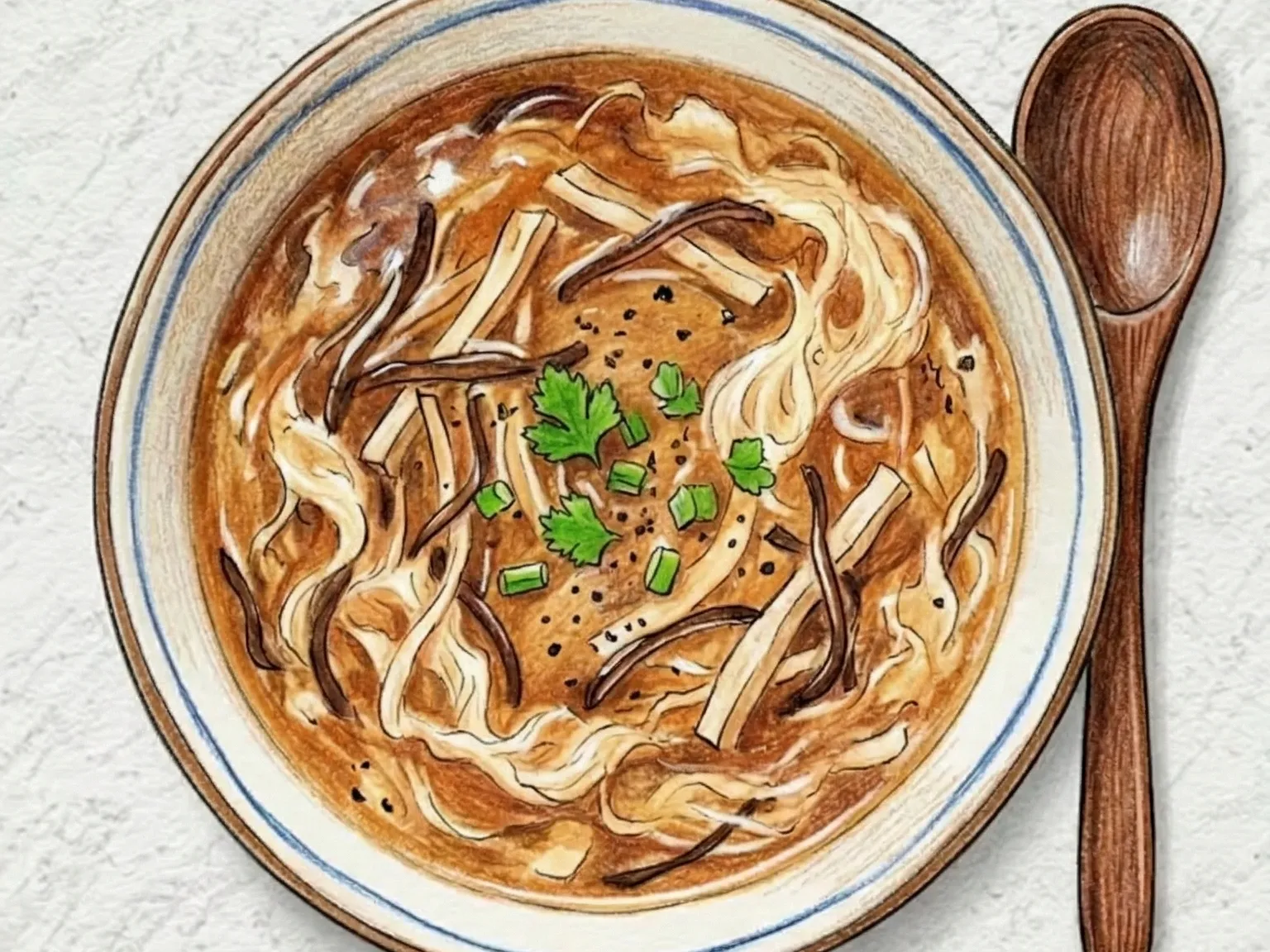
Hot and sour soup is among the most widely recognized Chinese soups, and its defining character comes not from chili but from two specific sources: black vinegar's sharp acidity and white pepper's slow, creeping heat. Chicken broth forms the base, simmered with cubed tofu, reconstituted wood ear mushrooms, and sliced shiitake. A cornstarch slurry is worked in gradually, small additions at a time, to build a lightly viscous consistency without tipping the broth into something gluey and heavy. Beaten egg is poured in a thin, steady stream while the soup is stirred, forming delicate ribbons that float throughout. Two timing rules matter: the slurry goes in slowly, and the vinegar goes in last, after the heat is reduced, because its volatile aroma dissipates quickly if boiled. Wood ear mushrooms provide a springy, almost cartilaginous chew that contrasts with the softness of the tofu and the wispy egg threads. The white pepper heat lingers and builds after each spoonful, arriving late rather than hitting immediately, which gives the soup its characteristic slow warmth.

🏠 Everyday 🥗 Light & Healthy
Prep 15min Cook 20min 4 servings
Mizu to Hoya no Mizumono Chilled Sea Squirt Soup
Soups Medium

Mizu to Hoya no Mizumono Chilled Sea Squirt Soup

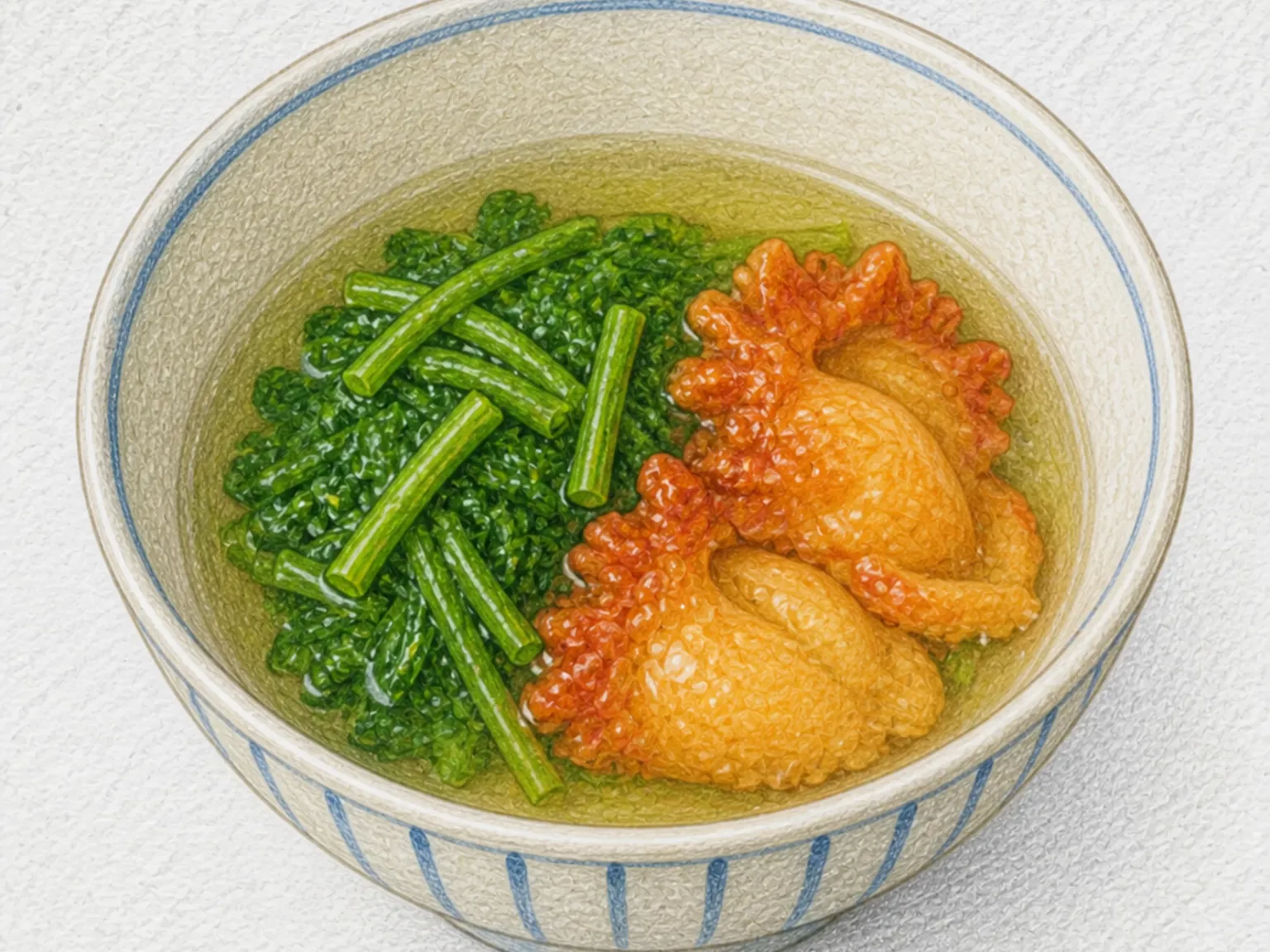
Mizu to hoya no mizumono is a Tsugaru summer soup from Aomori that combines blanched mizu mountain greens and freshly cleaned sea squirt with cold salted kombu stock. Locally shortened to hoya mizu, it brings together two ingredients at their best during northern Japan's brief summer. Mizu, also called uwabamiso, is blanched only briefly and cooled in ice water so its stems retain their clean fragrance and crisp snap. Kombu infuses the water slowly, is removed just before boiling, and the salted stock is chilled completely. Only very fresh sea squirt sold for raw consumption is suitable. Its aromatic inner liquid may be saved, but it is strained through a clean fine sieve before joining the stock. Every component remains cold, the bowls are assembled immediately before eating, and leftovers are not stored because the uncooked seafood deteriorates quickly.

🏠 Everyday 🥗 Light & Healthy
Prep 35min Cook 8min 5 servings
Korean Astragalus Chicken Soup
Soups Medium

Korean Astragalus Chicken Soup

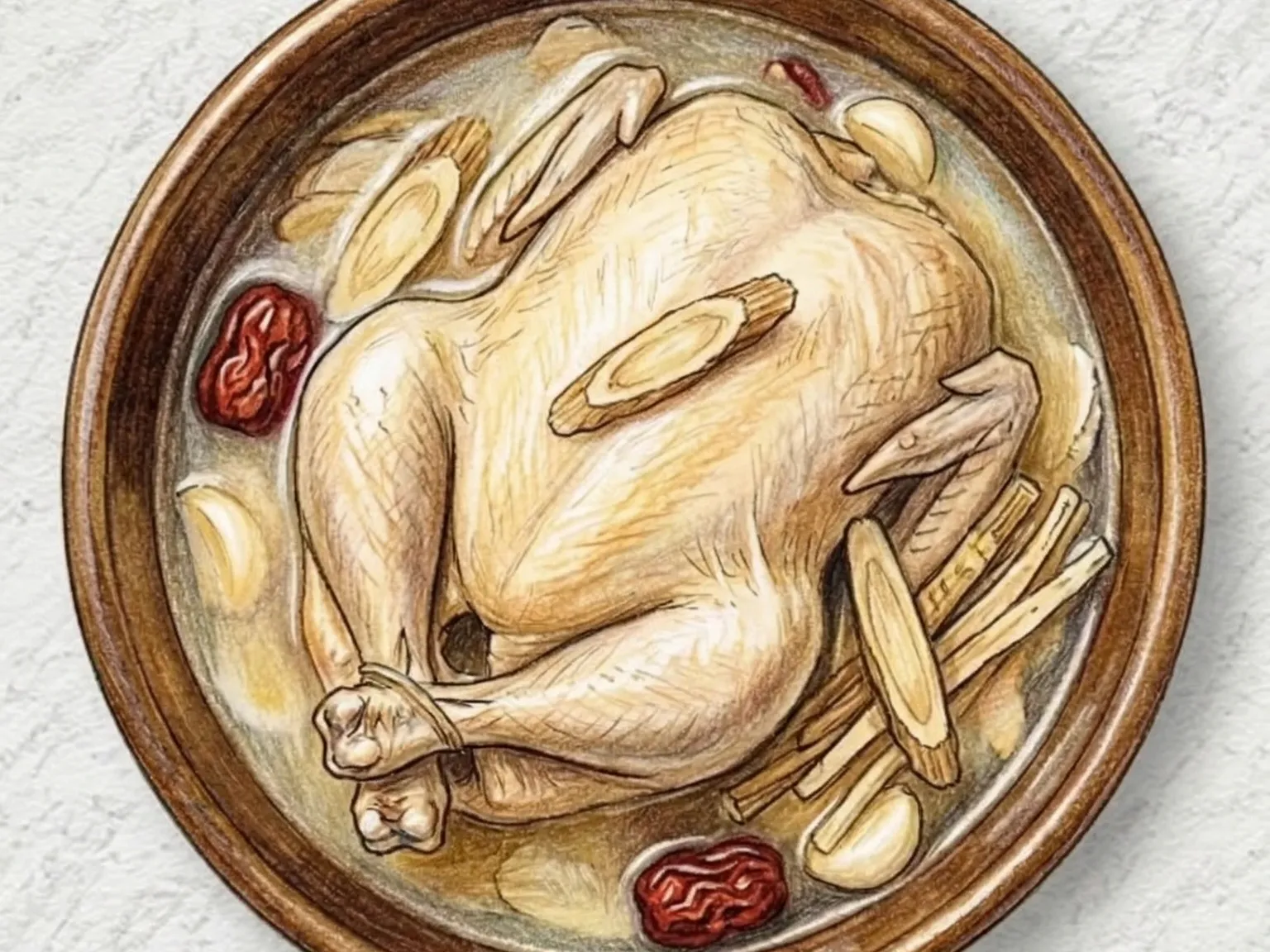
Hwanggi-dak-tang is a Korean herbal chicken soup built around astragalus root, a staple of traditional East Asian medicine long valued for its restorative and immune-supporting properties. The dried root, known in Korean as hwanggi, carries a faintly sweet, earthy flavor that is subtle enough to complement rather than dominate the broth. A whole chicken simmers for well over an hour with the dried root, jujubes, and garlic, producing a clear yet full-bodied liquid with a gentle herbal undertone that deepens as the pot reduces. The extended cooking dissolves collagen from the skin, cartilage, and joints, giving the broth a velvety weight that coats the palate without turning cloudy. The chicken meat, by the time the soup is ready, pulls apart with almost no resistance. Jujubes gradually soften into the broth over the long cooking time and add a subtle fruity sweetness that bridges the medicinal and culinary aspects of the dish without making it taste overtly medicinal. Seasoning is kept to salt alone so the herb-infused stock remains the focus. In Korea, this soup appears most often during the seasonal transitions of early summer and late autumn, or during recovery from illness, typically served steaming in a heavy stone pot.

🏠 Everyday
Prep 15min Cook 75min 4 servings
Korean Dried Pollock Potato Soup
Soups Easy

Korean Dried Pollock Potato Soup

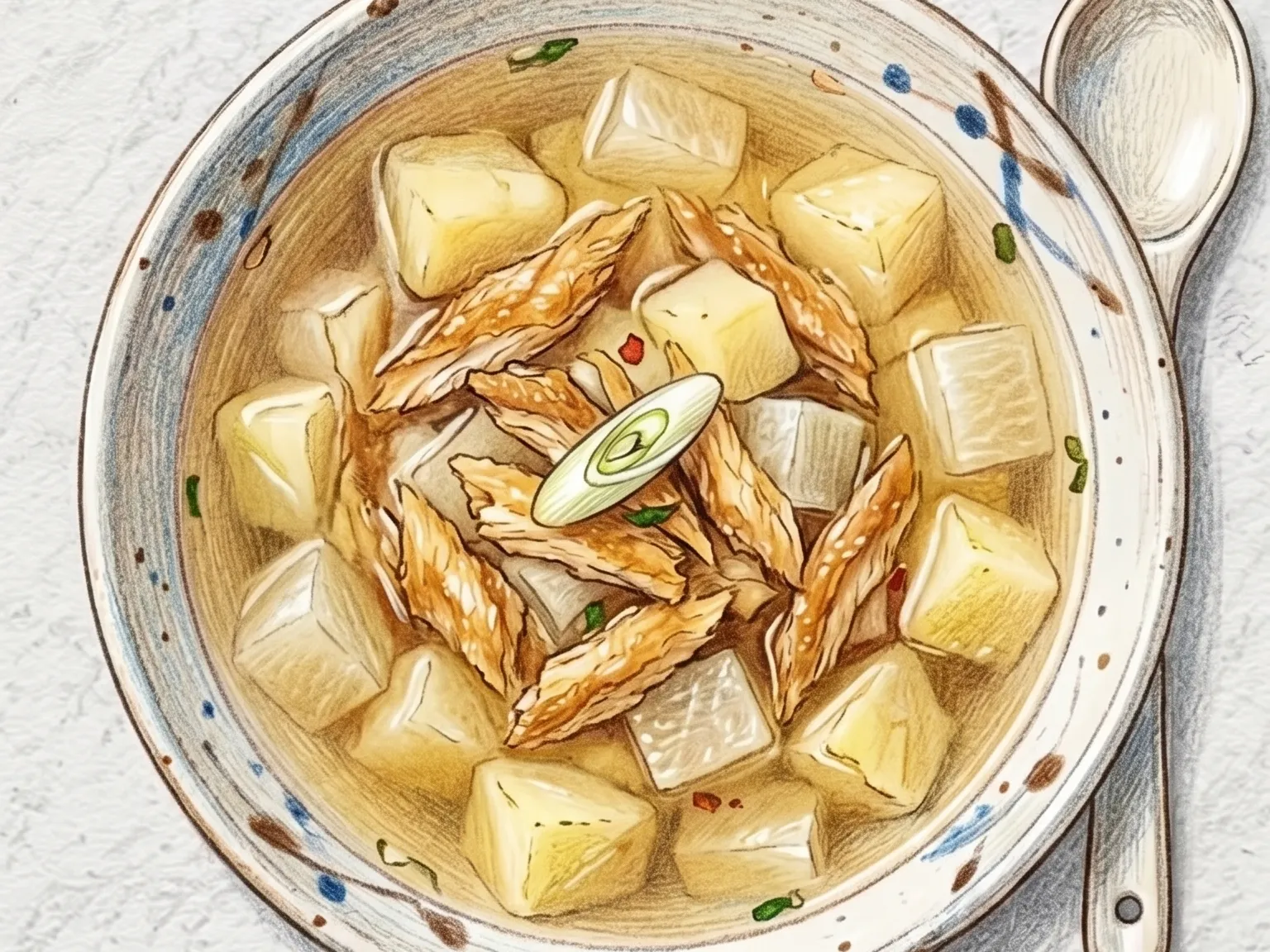
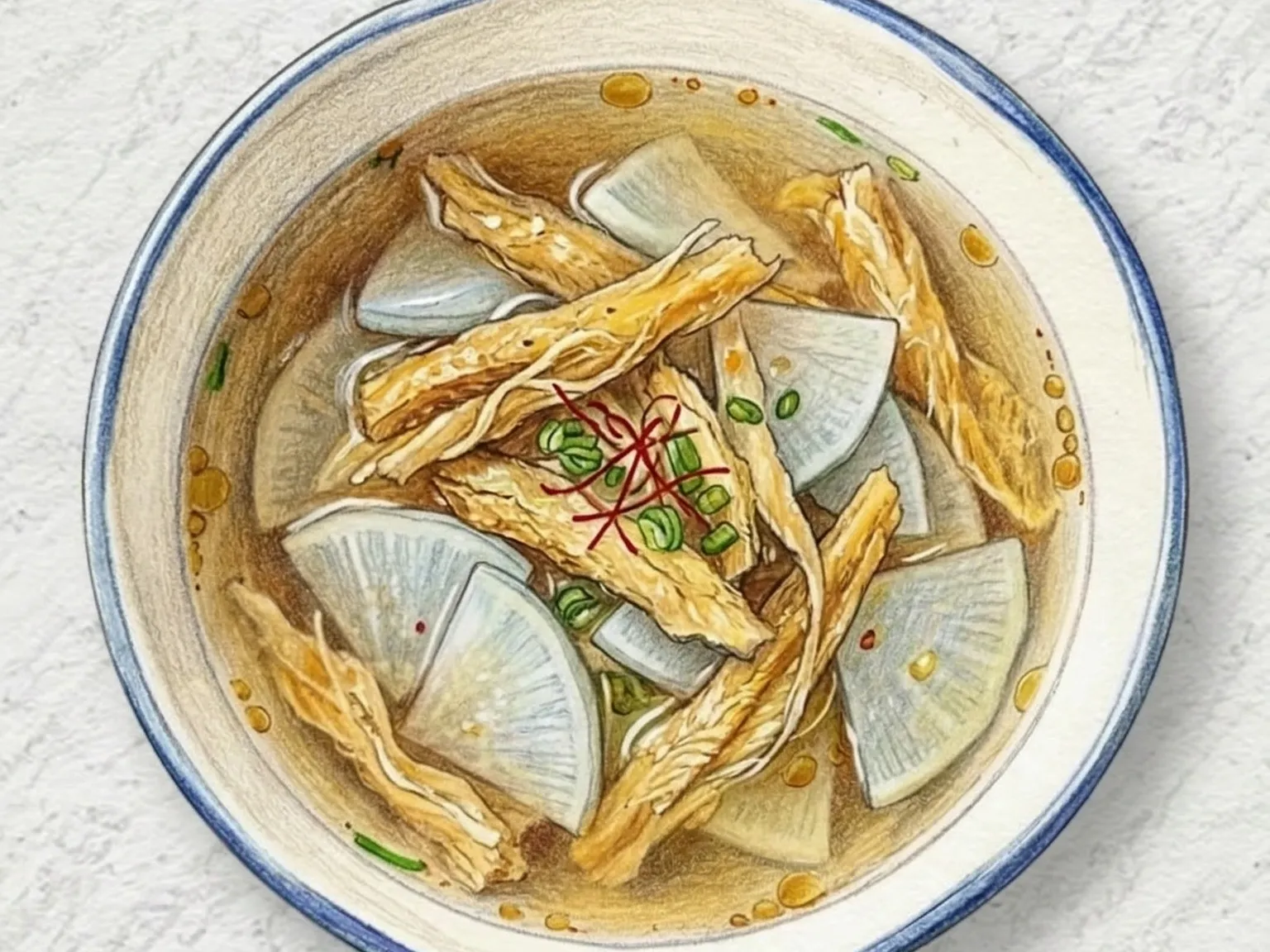
Hwangtae-gamja-guk is a clear Korean soup built around dried pollock strips that have been wind-dried and then sauteed in sesame oil before any liquid is added. That initial stir-fry step is what separates this soup from simpler broth dishes: the heat releases a toasty, nutty fragrance from the pollock that permeates the entire pot and melds with the anchovy-kelp stock poured in afterward. Potato slices simmer alongside radish, and as they soften their edges gradually break down, giving the broth a mild, natural body without the use of starch or thickener. Radish contributes a clean, cooling sweetness that tempers the concentrated umami of the dried pollock. Soup soy sauce and minced garlic handle the seasoning, keeping the flavor profile clear and uncluttered. The pollock itself stays pleasantly chewy even after prolonged simmering, providing a protein-rich bite that makes the bowl genuinely filling. This soup is a fixture on Korean breakfast tables, valued for its ability to settle the stomach and restore energy.

🏠 Everyday 🥗 Light & Healthy
Prep 15min Cook 30min 4 servings
Korean Dried Pollack Egg Soup
Soups Easy

Korean Dried Pollack Egg Soup

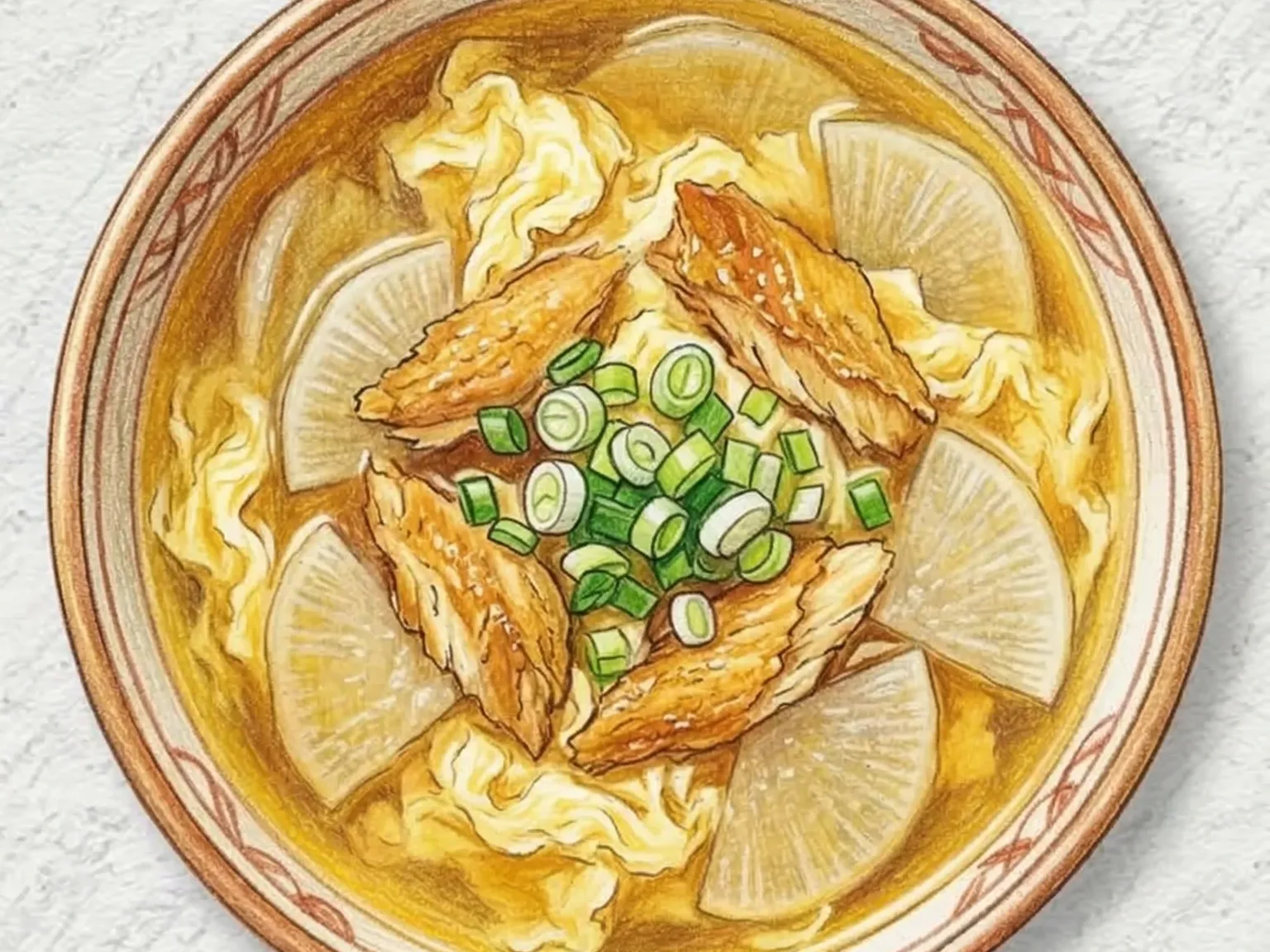
Hwangtae-gyeran-guk is a Korean clear soup that pairs dried pollock with silken egg threads in the same bowl. Toasting the pollock strips in sesame oil at the start is what gives the broth its foundation: the oil absorbs the nutty, roasted fragrance and carries it throughout the liquid as it simmers. Radish and green onion add a clean sweetness and mild sharpness, and once the broth is seasoned with soup soy sauce and garlic, beaten egg is streamed in slowly to form wispy, floating ribbons. The chewy pollock and the soft egg offer a changing texture from one spoonful to the next. Hwangtae is produced on outdoor racks in the Gangwon-do mountains through a winter-long cycle of freezing and thawing that breaks down the protein into a more digestible form and increases the amino acid content. In Korean households this soup appears at both the breakfast table and the post-drinking recovery meal, favored because the protein-rich pollock is gentle on a tired stomach and the whole pot comes together in under twenty minutes.

🏠 Everyday 🥗 Light & Healthy
Prep 10min Cook 18min 4 servings
Korean Dried Pollock Radish Soup
Soups Easy

Korean Dried Pollock Radish Soup

Hwangtae-muguk is an everyday Korean soup made with dried pollock strips and radish in a clean, clear broth. The pollock is first sautéed in sesame oil to coax out its characteristically nutty, savory fragrance, then water is added and the radish simmers until soft and sweet. Soup soy sauce and minced garlic provide the only additional seasoning, keeping the flavor profile transparent enough to let the pollock's concentrated umami and the radish's natural sweetness take center stage. The simplicity of the ingredient list belies the depth of the resulting broth, which tastes fuller than the sum of its parts. It is among the most frequently cooked soups in Korean homes, appearing on breakfast tables and as a reliable remedy on mornings after heavy meals. The pollock's tender, delicate flesh holds together well in the clear broth.

🏠 Everyday 🥗 Light & Healthy
Prep 12min Cook 22min 4 servings
Ichigo-ni Sea Urchin and Abalone Soup
Soups Medium

Ichigo-ni Sea Urchin and Abalone Soup

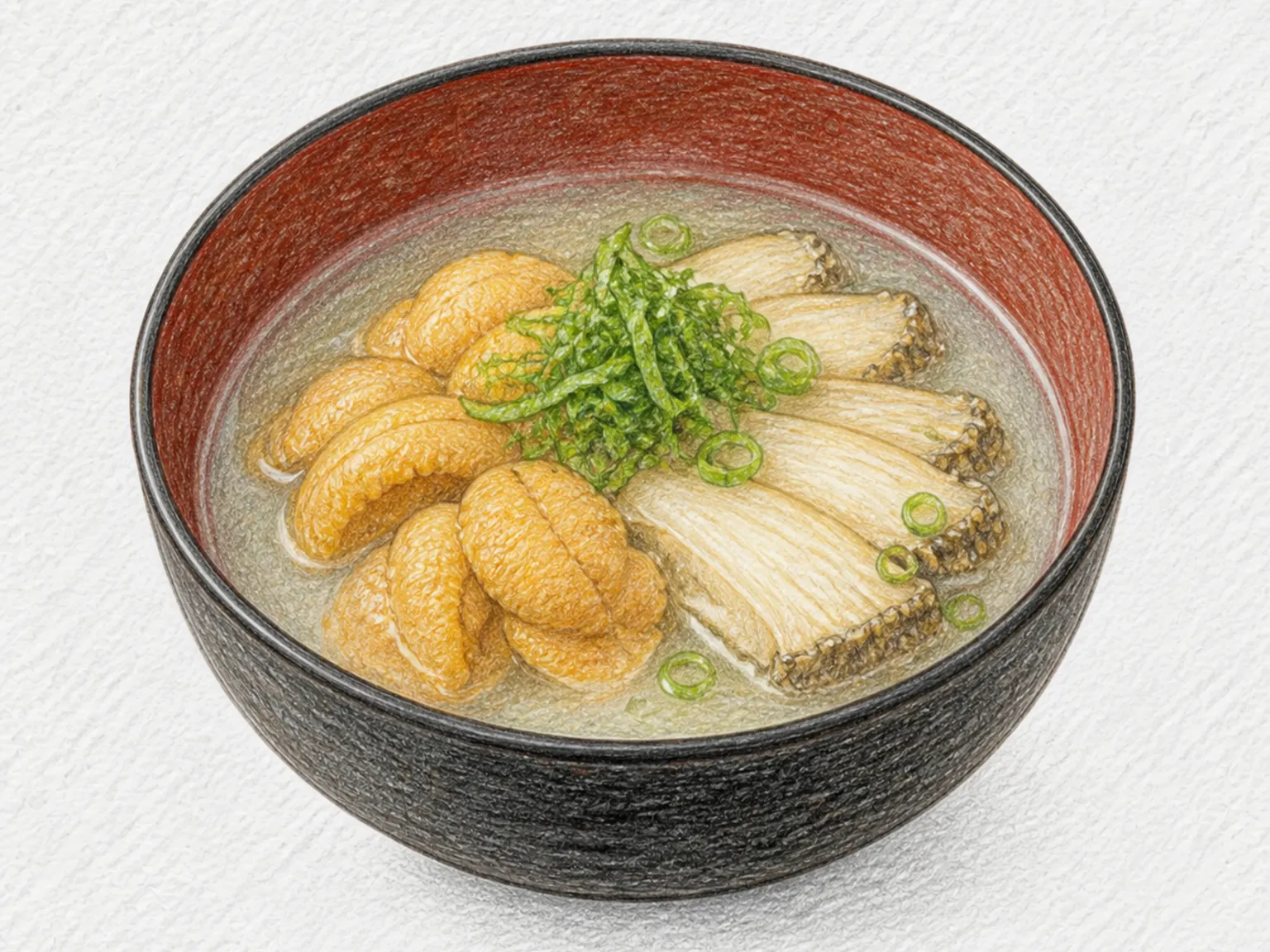
Ichigo-ni is a clear soup from southern Aomori in which fresh sea urchin and abalone are cooked briefly in water or bonito stock and seasoned with only a little salt, sake, and soy sauce. Extract from the abalone clouds the broth slightly, while the golden sea urchin floating on top suggested wild strawberries seen through morning mist and gave the dish its name. The sea urchin is heated only until its surface sets, and thin abalone slices keep a firm bite. Shiso and green onion finish a soup served at Bon, New Year, weddings, and other celebrations.

🎉 Special Occasion 🍺 Bar Snacks
Prep 15min Cook 10min 5 servings
Imja-sutang (Royal Chilled Pine Nut Soup)
Soups Hard

Imja-sutang (Royal Chilled Pine Nut Soup)

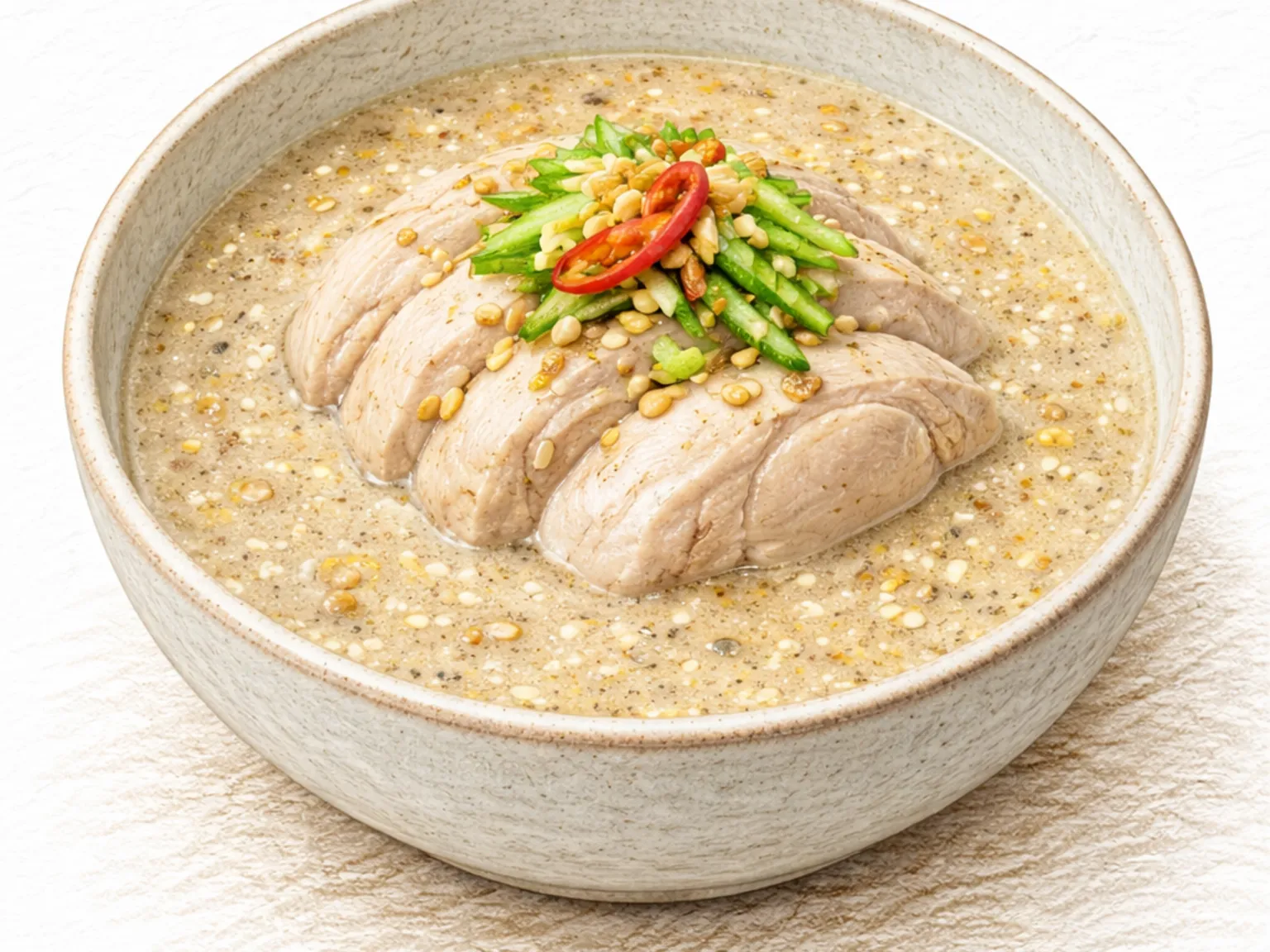
Imja-sutang is a royal Korean chilled soup that combines finely ground pine nuts and sesame seeds with chicken broth to create an opaque, creamy liquid of remarkable richness. The nut paste is blended with cooled chicken stock and a touch of milk until smooth, producing a porridge-like consistency that coats the palate with a gentle, lingering nuttiness. Poached chicken breast is shredded along the grain and submerged in the broth, and thin slices of cucumber are sometimes added for a cool, crisp contrast. The soup is traditionally served cold or at room temperature, making it especially refreshing in summer. Seasoning is minimal - just salt - because the natural oils in the pine nuts and sesame provide all the depth the dish needs. Imja-sutang traces its origins to Joseon dynasty court cuisine, where it was prepared for royal banquets, and it retains an air of elegance that elevates any table it appears on.

🏠 Everyday 🎉 Special Occasion
Prep 25min Cook 35min 2 servings
Inamudouchi Okinawan Pork Miso Soup
Soups Medium

Inamudouchi Okinawan Pork Miso Soup

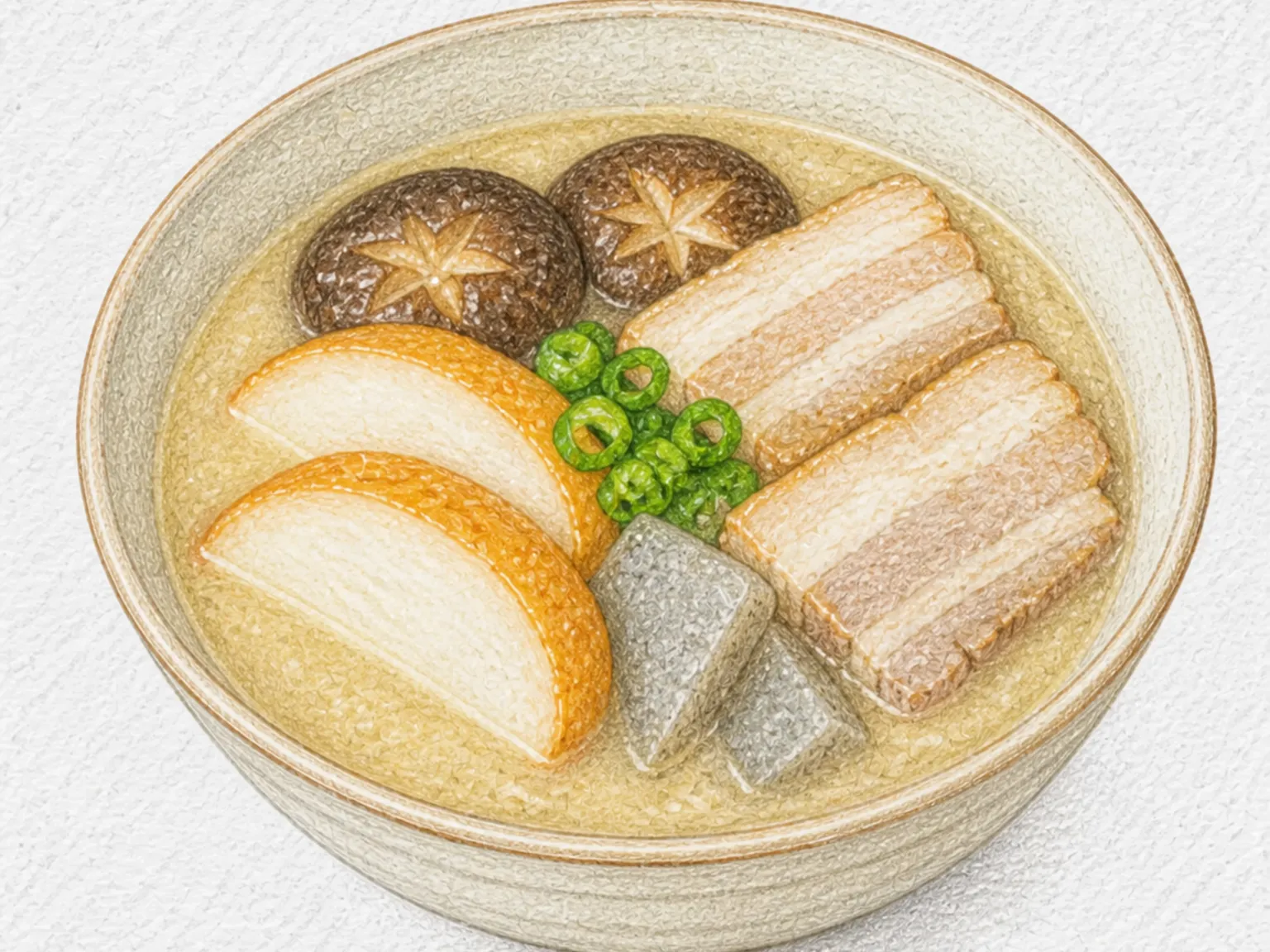
Inamudouchi is an Okinawan celebration soup of boiled pork belly, castella kamaboko, shiitake, and konnyaku in combined pork and bonito stocks, thickened gently with sweet white miso. Ina means wild boar and mudouchi means an imitation; the name arose when pork replaced increasingly scarce boar. Its prized castella kamaboko, made by steaming and frying a fish paste rich in surimi, connects the soup to Ryukyu court hospitality and to New Year, graduation, school entrance, and coming-of-age celebrations. The pork belly is boiled whole through the center, cut into short strips, and briefly blanched again to reduce excess fat and strong flavor. Kamaboko enters only at the end so its tender structure remains distinct.

🎉 Special Occasion 🏠 Everyday
Prep 35min Cook 60min 4 servings
Ishikari Nabe Salmon Miso Hotpot
Soups Hard

Ishikari Nabe Salmon Miso Hotpot

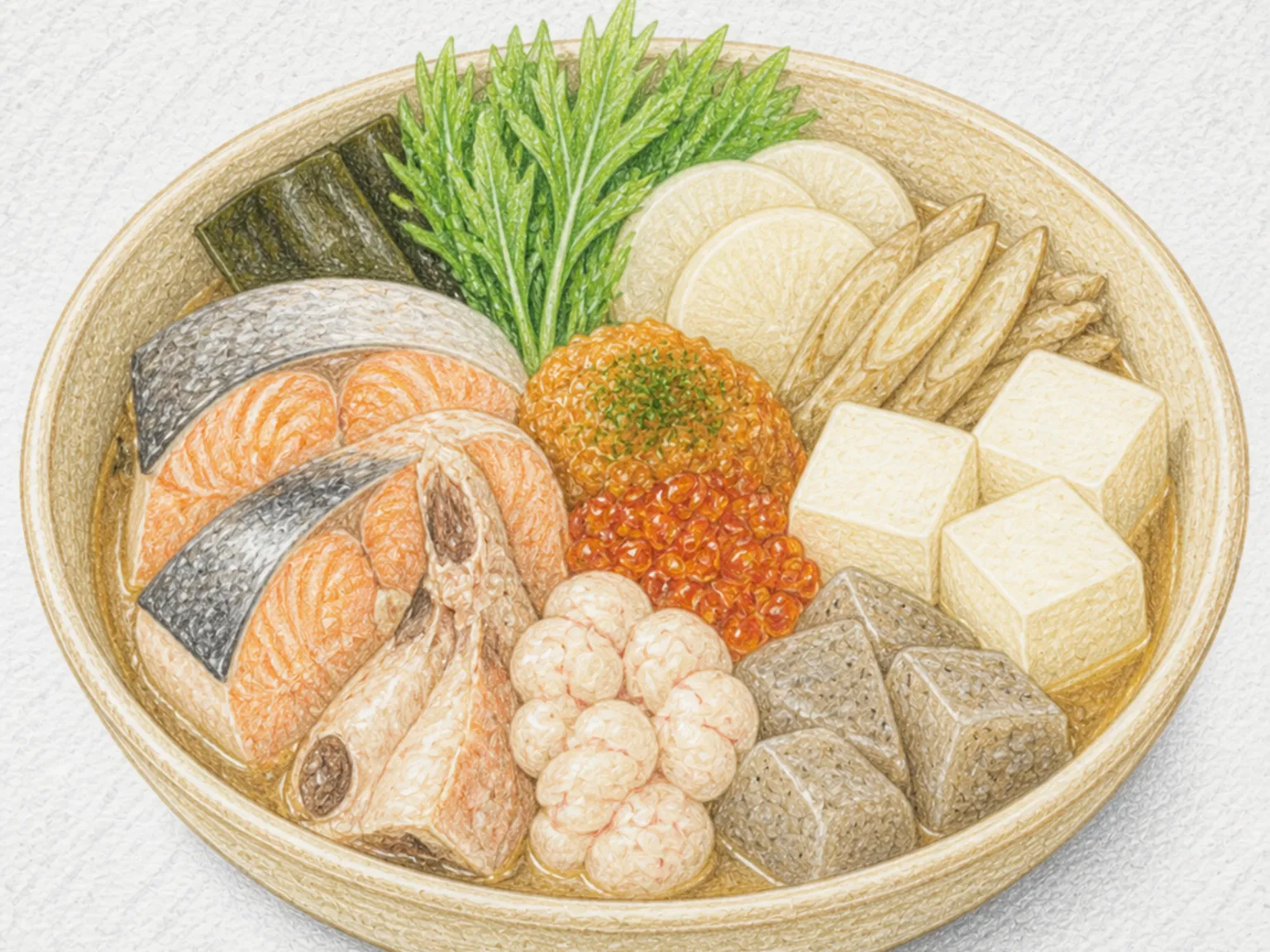
Ishikari nabe is a salmon miso hotpot from the Ishikari region of Hokkaido. Chunks of salmon with skin and bony parts, milt, loose roe, tofu, konnyaku, daikon, burdock, mushrooms, and leafy vegetables cook together in kombu broth, with ground sansho added at the finish. The dish is said to come from fishermen near the mouth of the Ishikari River, where salmon fishing had flourished since the Edo period. To celebrate a large catch, they put pieces and bony parts of fresh salmon directly into a pot of miso soup. Kombu lines the pot, seasoned miso sits in the center, and the ingredients cook around it for a hot winter meal now common in homes.

🏠 Everyday 🎉 Special Occasion
Prep 40min Cook 30min 4 servings
Itoko-jiru (Adzuki and Root Vegetable Miso Soup)
Soups Medium

Itoko-jiru (Adzuki and Root Vegetable Miso Soup)

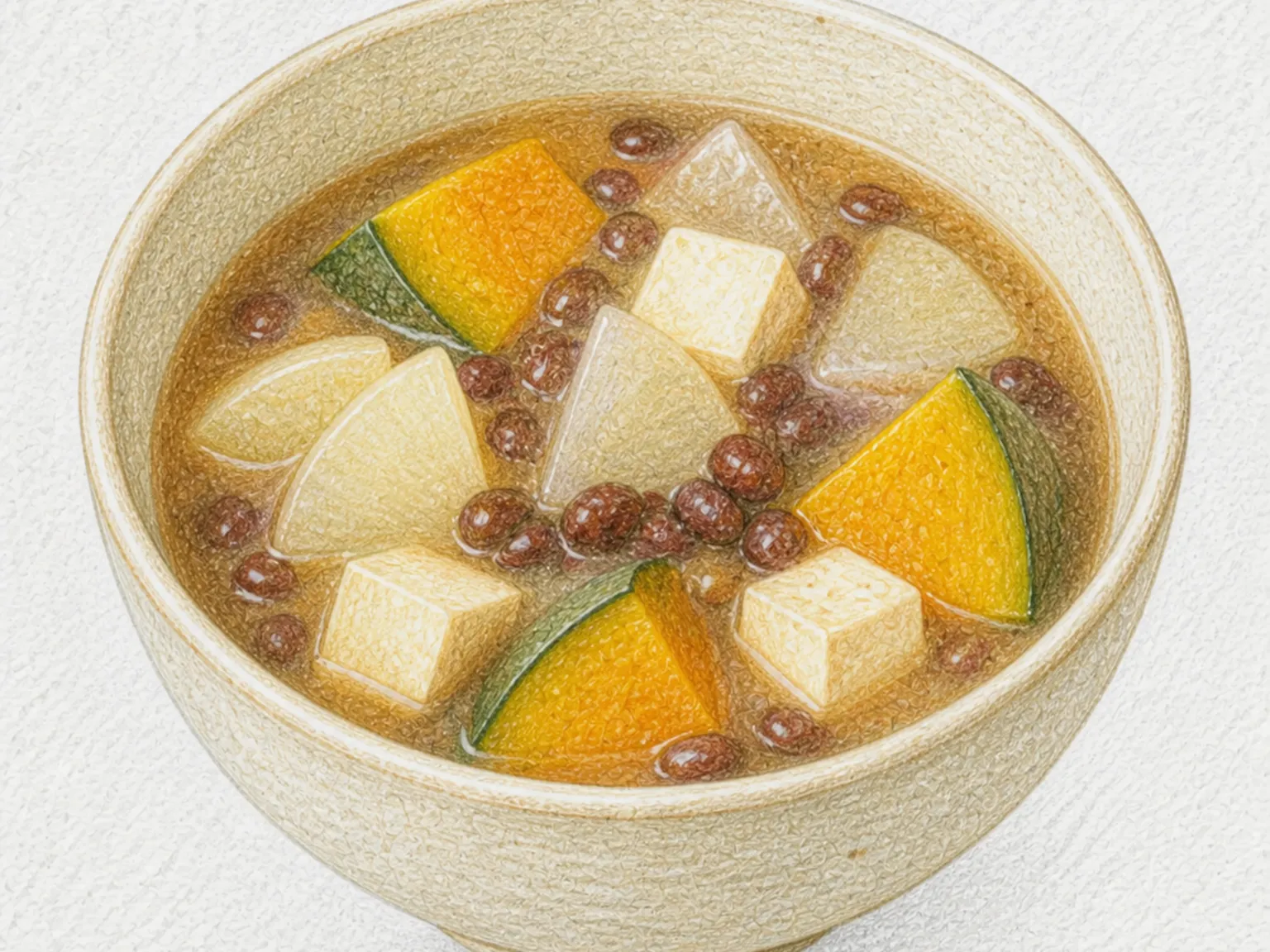
Itoko-jiru is an Ishikawa soup of adzuki beans, daikon, kabocha, and firm tofu seasoned with miso. It uses kombu dashi and reserved bean liquid, with no meat or fish stock. For four servings, rinse 50g dried adzuki beans, cover them generously with water, and boil them for 15 minutes. Discard that first water to reduce harshness and cloudiness. Add fresh water and keep the beans at a low simmer for 45 to 60 minutes, replenishing the water and skimming foam as needed. They are ready when one crushes easily between the fingers. Drain the beans but reserve 400ml of their cooking liquid. Cut 80g tofu and 80g daikon into 1cm cubes, and prepare 60g kabocha in small bite-size pieces. Combine the reserved liquid with 400ml kombu dashi and cook the daikon first. Once it is nearly tender, add the kabocha and give it another 7 to 10 minutes. Return the beans with the tofu and warm them for 2 minutes. Dissolve 24g miso in a ladleful of hot broth before stirring it into the pot, then stop the heat just before the edges begin to boil. Adding the fragile kabocha and tofu late keeps their pieces intact, while avoiding a hard boil after the miso preserves its aroma.

🏠 Everyday 🥗 Light & Healthy
Prep 15min Cook 85min 4 servings
Jaecheop-guk (Korean Marsh Clam Clear Soup)
Soups Easy

Jaecheop-guk (Korean Marsh Clam Clear Soup)

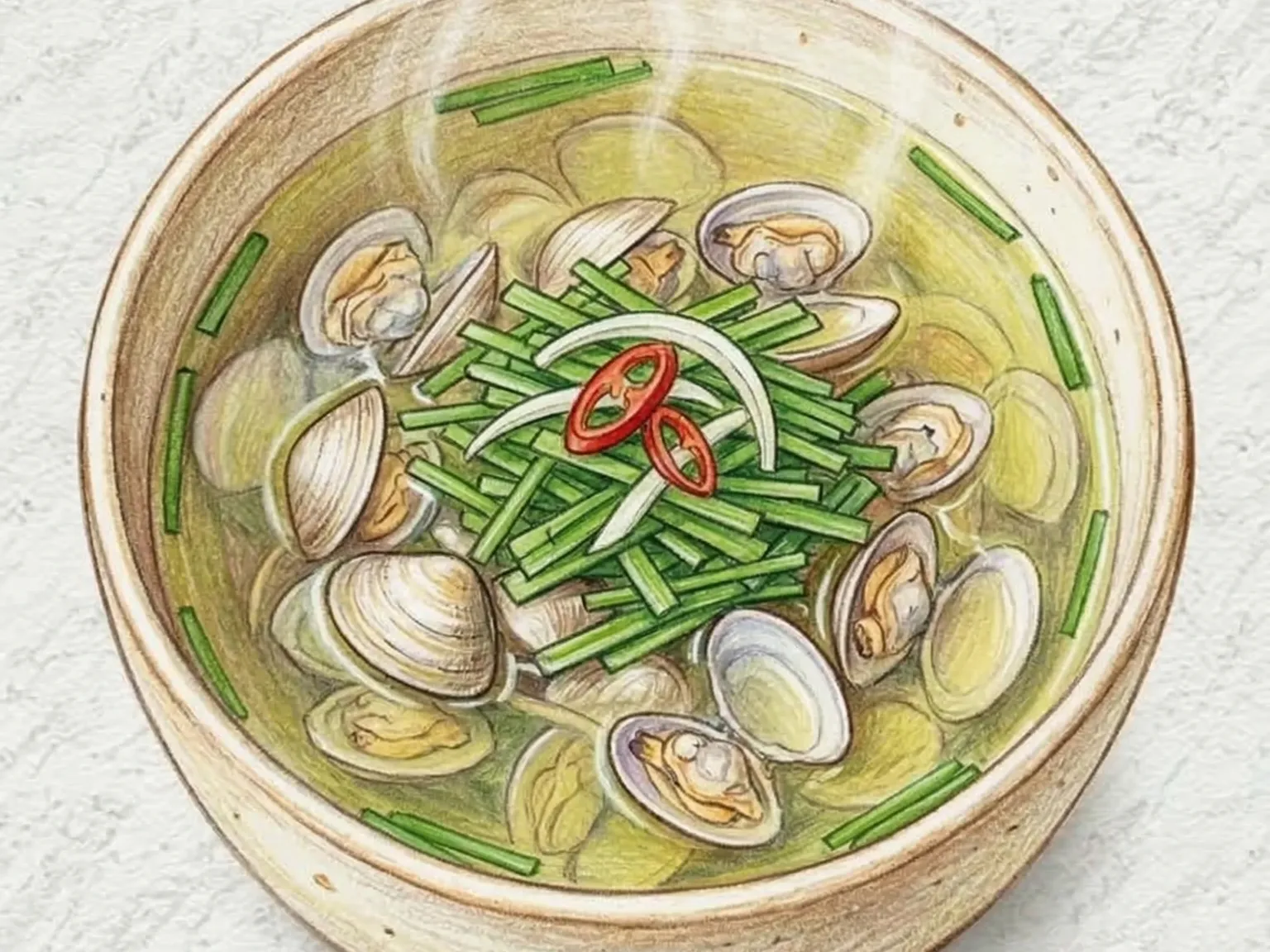
Jaecheop-guk is a clear broth soup made from tiny freshwater marsh clams caught in the Seomjin River near Hadong in South Gyeongsang Province. The clams are purged thoroughly in salted water before going into a pot of cold water over heat, and as they open they release a concentrated, clean-tasting umami into the broth that produces a liquid both translucent in color and remarkably deep in flavor. Soup soy sauce and minced garlic provide light seasoning once the clams have opened, and a handful of chives goes in at the very end to finish with fragrance. In Hadong the soup has such a strong identity that entire restaurants specialize in nothing else, drawing visitors who come specifically for this one bowl. It has a long reputation as one of the most effective hangover remedies in Korean food culture, and is commonly eaten as a morning meal. Because the clams themselves are so small, this is essentially a broth-forward soup, and finishing a bowl leaves a settled, calming feeling in the stomach.

🏠 Everyday 🥗 Light & Healthy
Prep 25min Cook 20min 4 servings
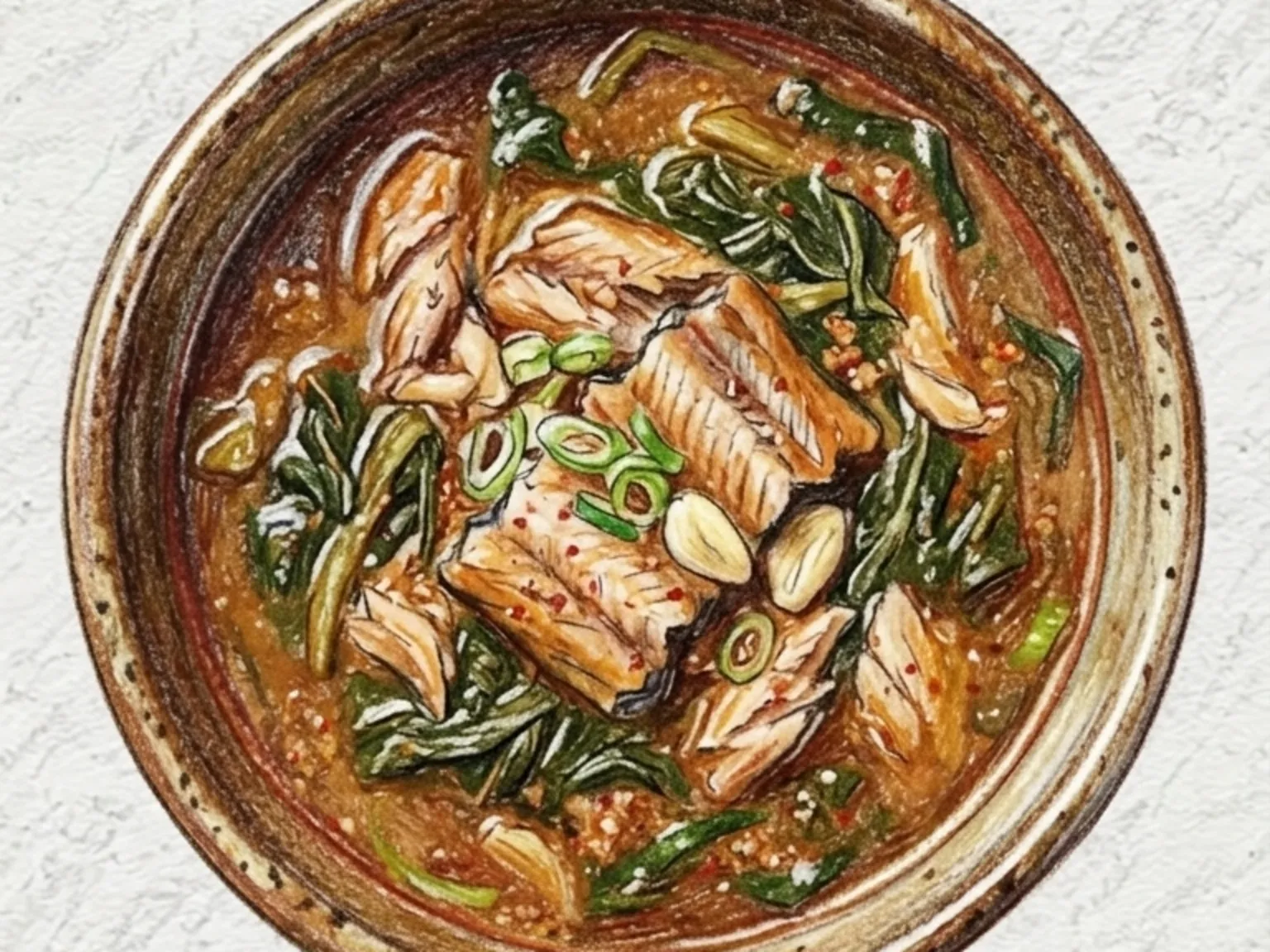
Jangeo-tang (Spicy Freshwater Eel Soup)
Soups Hard

Jangeo-tang (Spicy Freshwater Eel Soup)

Jangeo-tang is a nourishing Korean eel soup in which freshwater eel is boiled, deboned, and simmered in a seasoning base of doenjang and gochugaru. Dried radish greens (sirae-gi) are added to the pot for an earthy, faintly bitter depth that grounds the overall richness. Garlic and green onion work against any fishiness, leaving behind the clean, fatty character of the eel itself. What distinguishes this broth from a straightforward spicy soup is the interaction between the fermented weight of doenjang, the direct heat of gochugaru, and the rendered fat of the eel: the three together produce a complexity that neither doenjang nor chili achieves alone. The eel meat holds its grain even with extended cooking, remaining tender without falling apart. Rich in protein and unsaturated fats, this soup has long been categorized as a stamina-restoring food in Korean culinary tradition, consumed during the three hottest periods of summer or whenever the body needs rebuilding. Sliced green chili or perilla seed powder can be stirred in to shift the broth's profile.

🏠 Everyday 🎉 Special Occasion
Prep 30min Cook 45min 4 servings
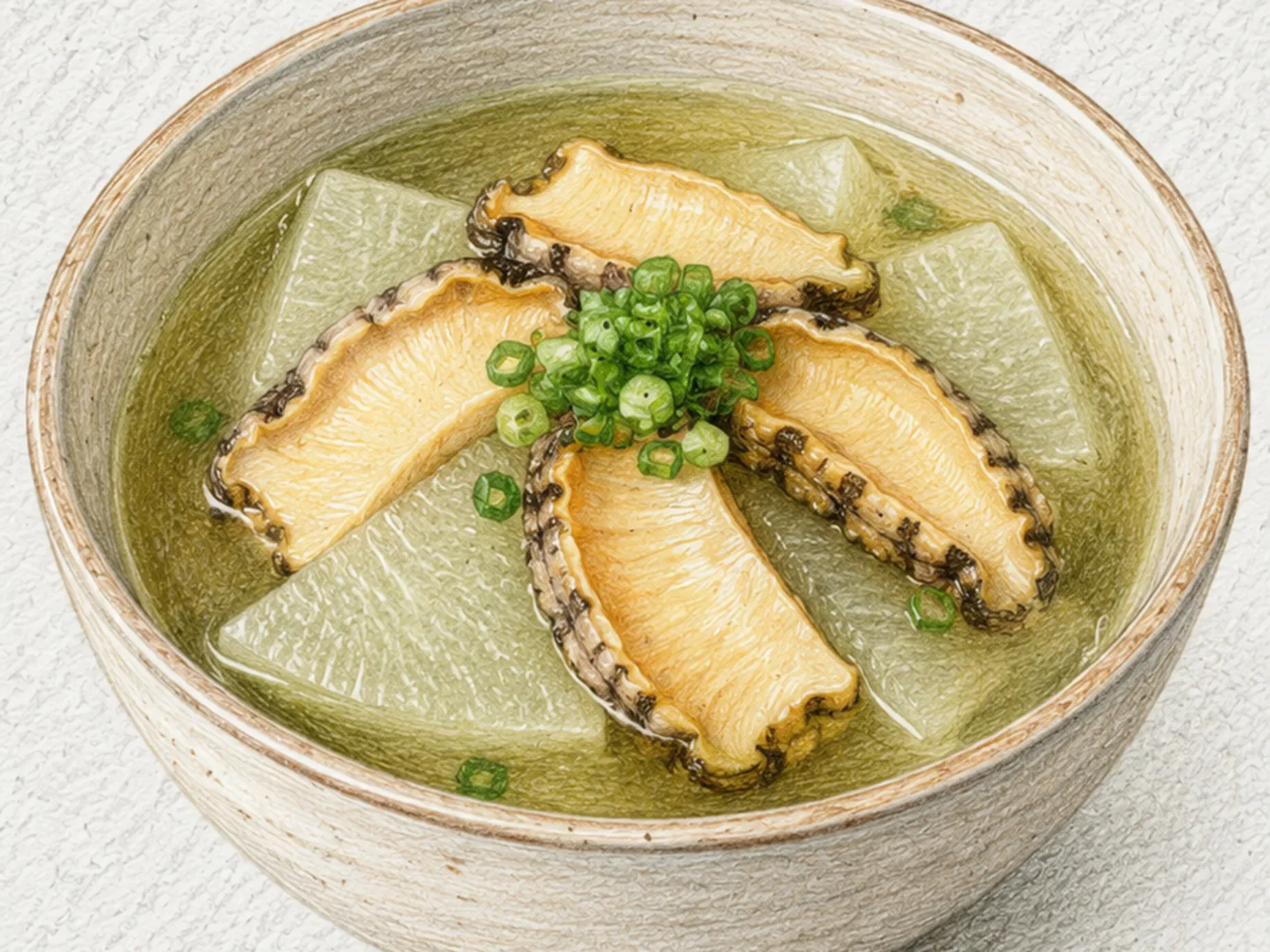
Korean Abalone Radish Soup
Soups Medium

Korean Abalone Radish Soup

Jeonbok-muguk is a refined Korean clear soup that simmers sliced abalone and radish in kelp broth, delivering a depth of flavor far beyond the simplicity of its preparation. The cooking begins by sauteing the abalone together with its viscera in sesame oil before any liquid is added. The innards, dark green and intensely flavored, dissolve into the oil and tint the eventual broth with a faint jade color while releasing a concentrated marine umami that kelp broth alone cannot provide. Radish sliced into thin rounds cooks alongside, softening steadily until translucent and releasing a natural sweetness that counterbalances the abalone's inherent salinity. Soup soy sauce and garlic are the only additional seasonings, deliberately minimal so the abalone's character defines the soup rather than the condiments. Adding the abalone too early toughens the meat; the right moment is when the radish has turned translucent, leaving the abalone just enough time to cook through while retaining its firm, chewy bite. In Korea, abalone carries cultural weight as a gift for new mothers, the ill, and guests at formal celebrations, making this soup a gesture of care as much as a recipe. The broth that results from this combination tastes far more expensive than the effort involved.

🏠 Everyday 🥗 Light & Healthy
Prep 20min Cook 25min 2 servings
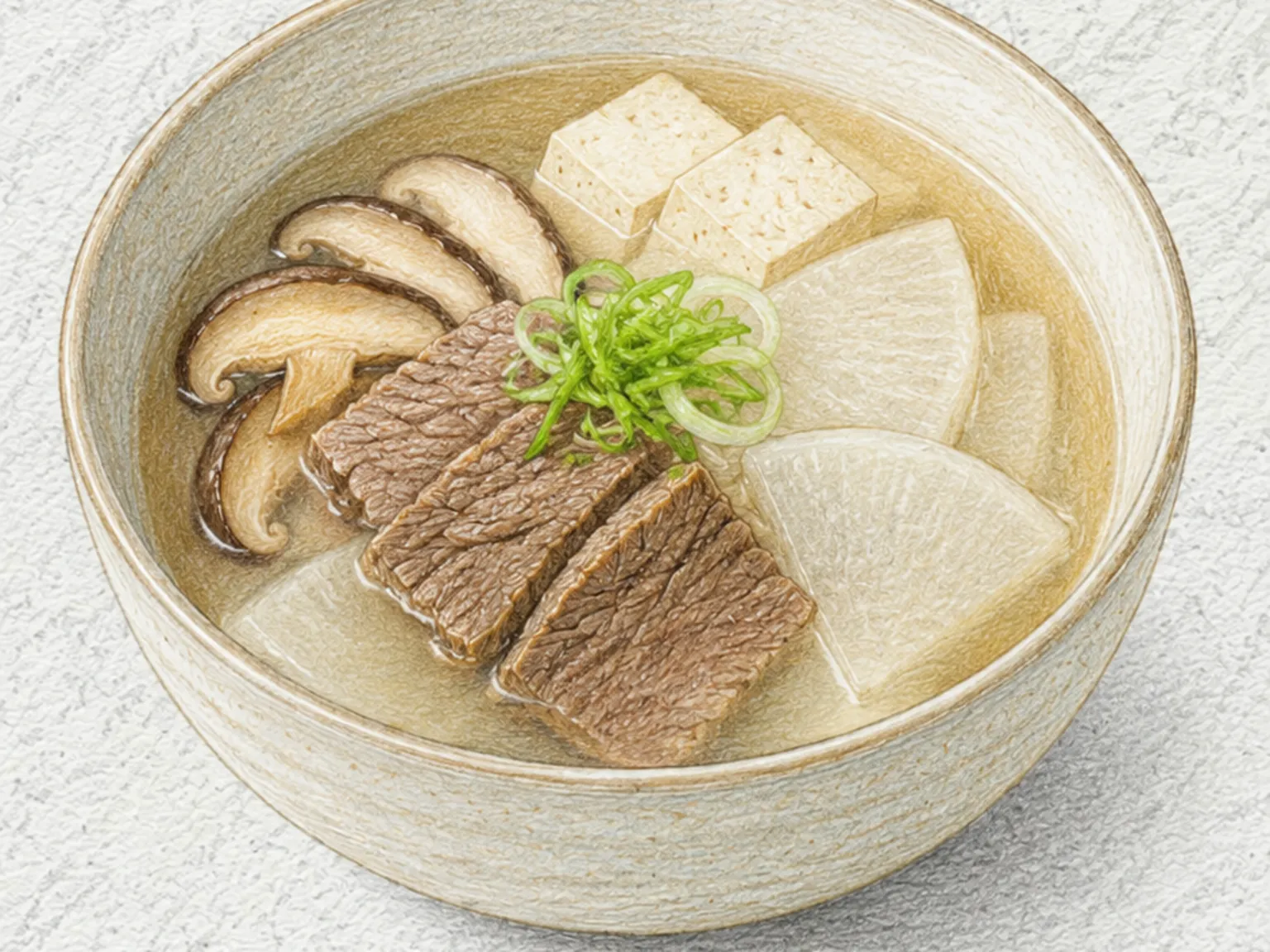
Jesa Tangguk (Ancestral Clear Beef Soup)
Soups Medium

Jesa Tangguk (Ancestral Clear Beef Soup)

Jesa-tangguk is a traditional Korean clear soup prepared for ancestral rites and formal family gatherings. Beef brisket is first soaked in cold water for at least an hour to draw out the blood, then simmered over medium heat for an extended time to produce a clear, deeply flavored stock that forms the foundation of the entire bowl. Skimming the surface regularly during cooking keeps the broth transparent and clean-tasting. Radish cooks until nearly translucent, releasing a gentle natural sweetness into the stock, while blocks of tofu and sliced shiitake mushrooms add contrasting textures. Seasoning is limited to soup soy sauce and garlic, preserving the purity of the broth and allowing each ingredient's flavor to come through undisguised. Fat is skimmed away before serving, producing the spotless, refined finish expected of ritual food. The aesthetic matters as much as the flavor: ingredients are cut into tidy, uniform shapes and arranged with deliberate care, reflecting the reverence that is central to the jesa ritual. Beyond ceremonial occasions, jesa-tangguk is a comforting home-style soup enjoyed at holidays and family meals for its clean, balanced warmth.

🏠 Everyday 🎉 Special Occasion
Prep 20min Cook 30min 4 servings
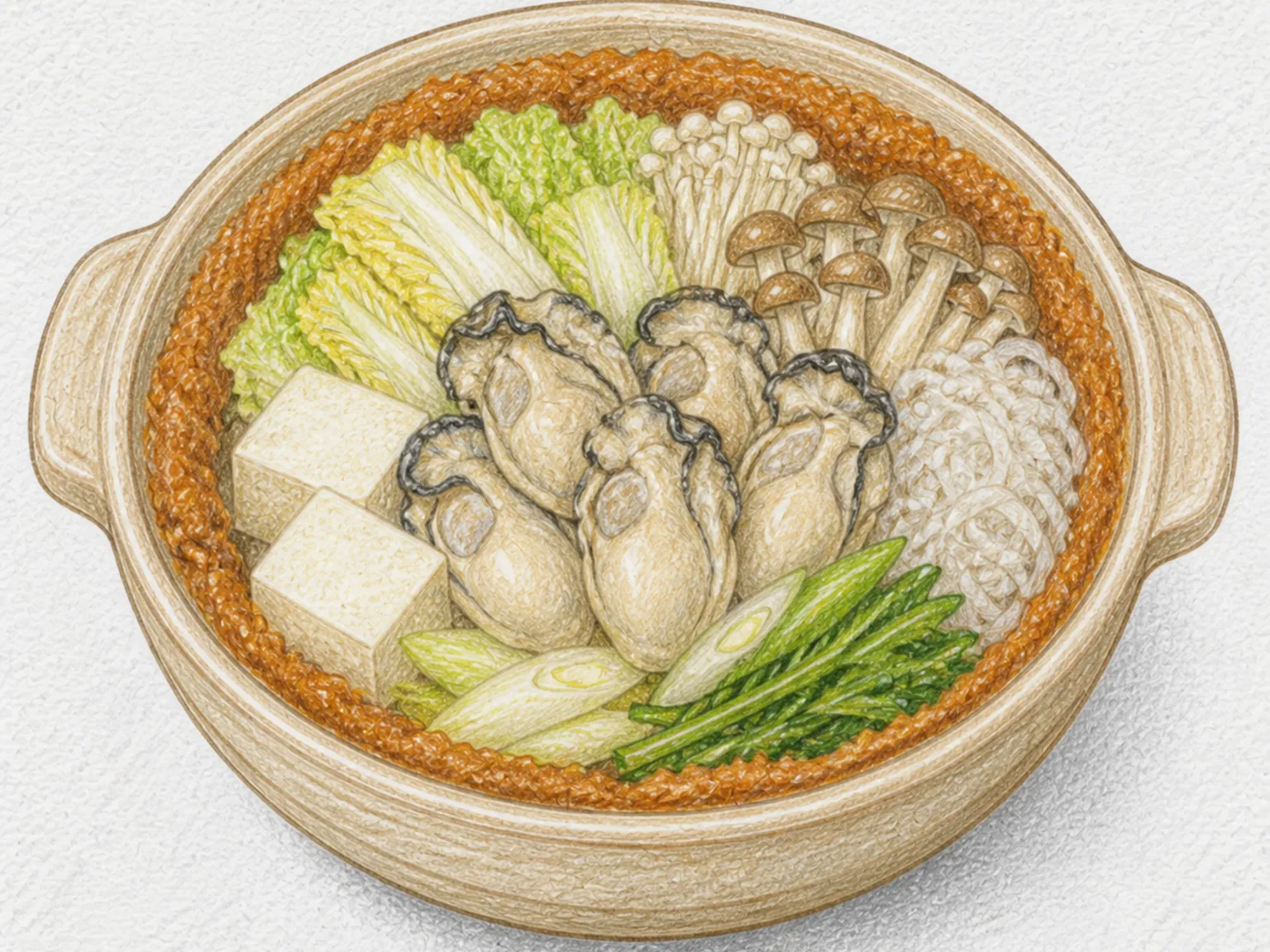
Kaki no Dotenabe (Oyster Miso Hot Pot)
Soups Medium

Kaki no Dotenabe (Oyster Miso Hot Pot)

Kaki no dotenabe is an oyster hot pot in which a seasoned miso paste is spread like a bank around the inside rim of the pot and dissolved gradually into dashi as the ingredients cook. Gently swish 300g raw oysters in cold water mixed with 1 teaspoon salt, rinse them once in clean water, and drain them thoroughly in a sieve. Mix 100g red miso and 100g white miso with 1 teaspoon each sake, mirin, and sugar, then spread the paste thickly around the inner rim of the pot. Separate the firm cores from 500g napa cabbage and use them to line the bottom. This layer reduces direct contact between the pot and the miso or other ingredients. Arrange the remaining cabbage, tofu, 4 fresh shiitake mushrooms, 100g enoki mushrooms, 60g briefly blanched carrot, 2 stalks white leek, 200g shirataki noodles, and 150g chrysanthemum greens over the cores. Place the drained oysters in the center and pour in 600ml dashi. Bring the pot to a simmer over medium heat, then dissolve the miso bank into the broth a little at a time instead of adding all of it immediately. This lets you judge the final strength after liquid from the oysters joins the stock. Cook for about 5 minutes after the broth begins to simmer. Serve as soon as the oysters look plump and opaque and the vegetables are tender, using the condition of the oysters rather than extra boiling time as the finishing cue.

🎉 Special Occasion 🍺 Bar Snacks
Prep 25min Cook 20min 4 servings
Kanimaki Jiru Freshwater Crab Miso Soup
Soups Hard

Kanimaki Jiru Freshwater Crab Miso Soup

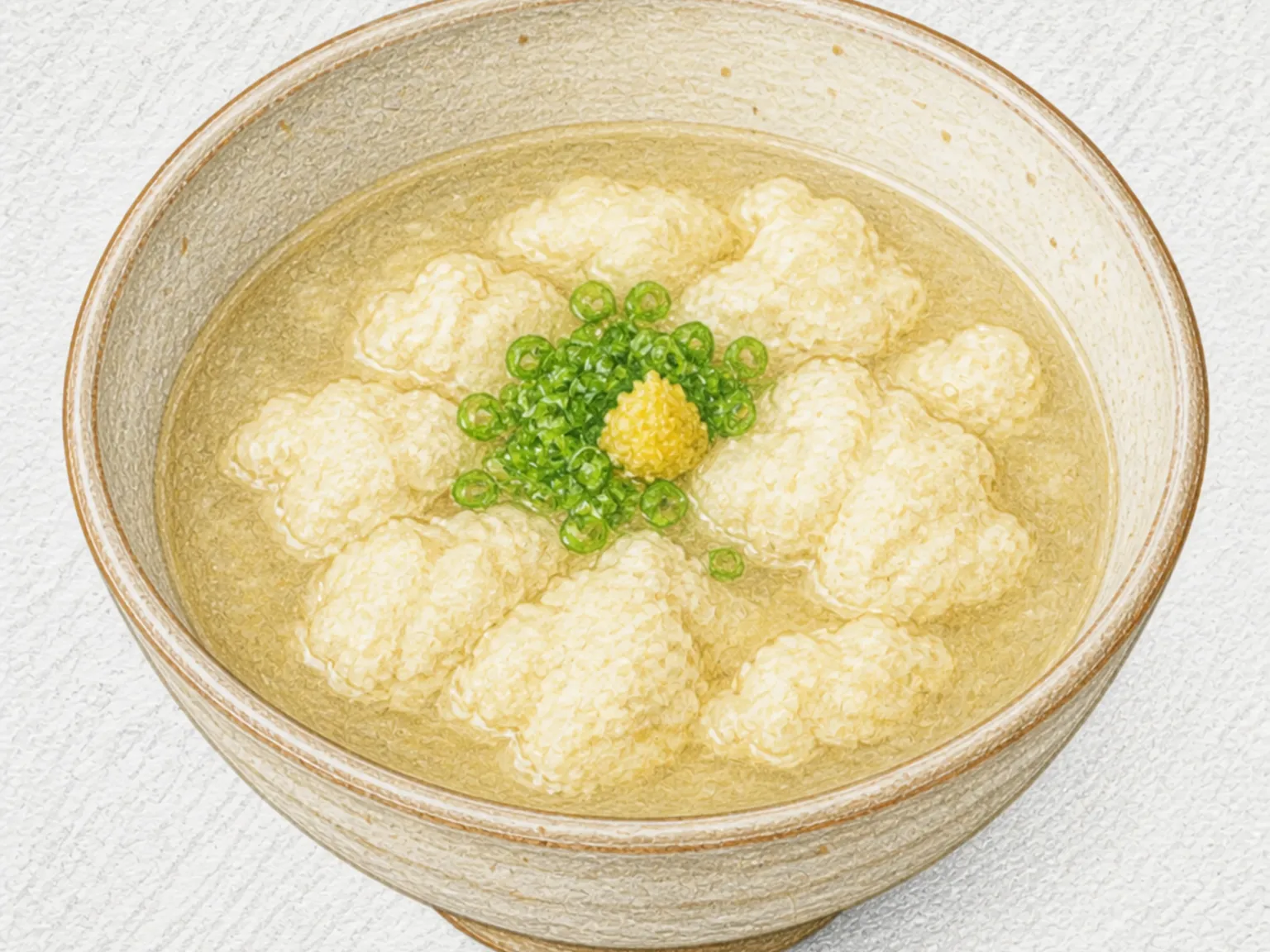
Kanimaki jiru is a soup from Kitago in southern Miyazaki. Thoroughly washed Yamataro freshwater crab with the carapace removed is crushed with miso, diluted gradually with water, and strained several times before heating. As the smooth crab liquid begins to boil and the heat is lowered, the crab protein and miso form soft, fluffy curds resembling oboro tofu in a clear broth. The dish uses the crab caught in the Sakatani and Hiroto rivers from autumn into winter, and it has traditionally been eaten especially from September to October. Ginger juice and green onion finish the concentrated crab flavor without obscuring the curds.

🏠 Everyday 🍺 Bar Snacks
Prep 25min Cook 15min 4 servings
Kasujiru Toyama Turnip Soup with Sake Lees
Soups Medium

Kasujiru Toyama Turnip Soup with Sake Lees

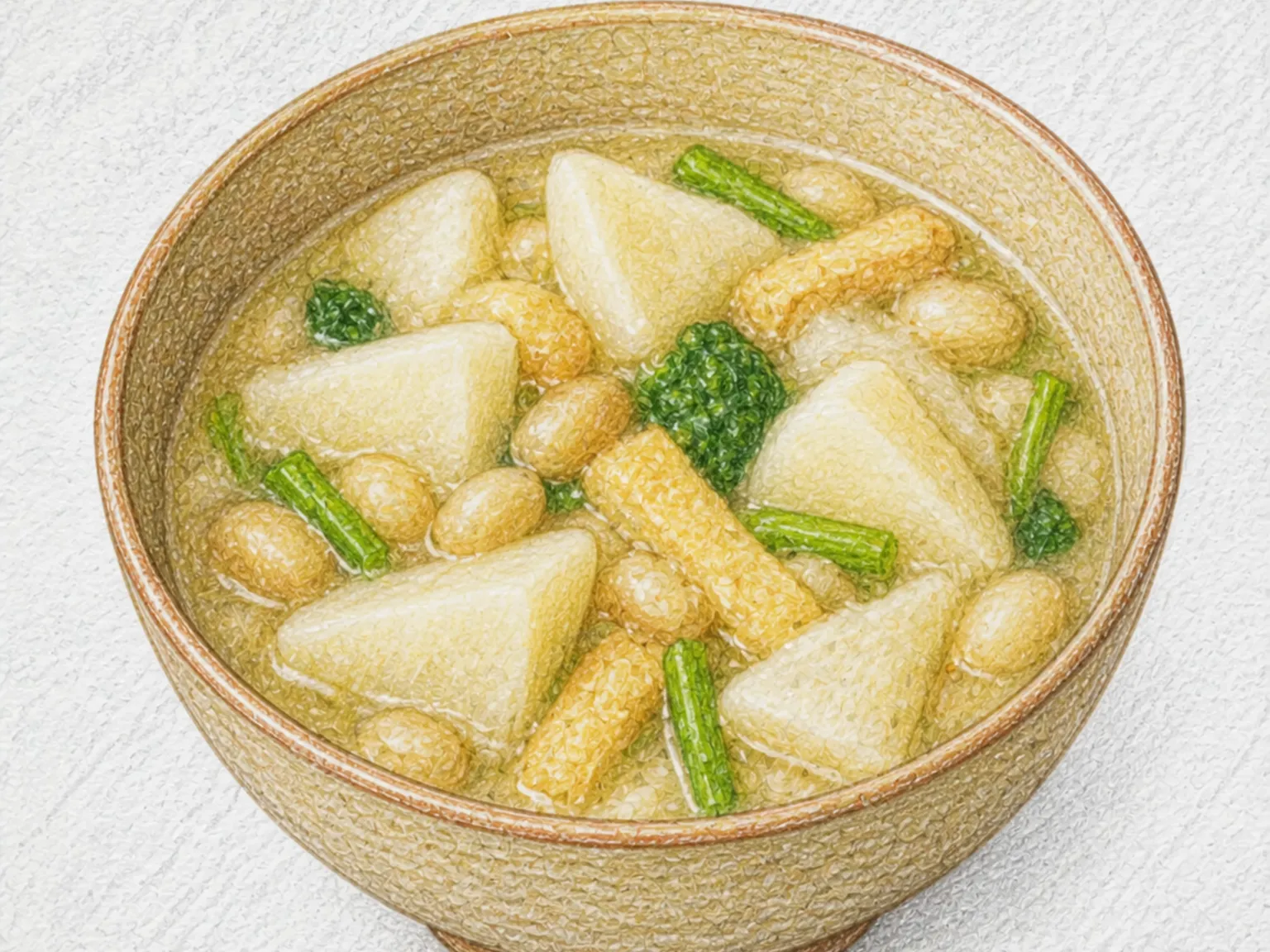
Kasujiru from Yonezawa in Yamagata simmers firm Toyama turnips with uchimame flattened soybeans and fried tofu in a miso-style broth, then dissolves a generous amount of sake lees for mellow fermented aroma and body. Toyama turnips are harder and sweeter than common turnips and store well through winter. Local cooks use a technique called bukkaku, levering irregular bite-size pieces from the root with the corner of a knife so the rough surfaces absorb broth. The turnip cooks first in dashi, followed by the tofu and dried flattened soybeans until everything softens. Miso, sake lees, and mirin are loosened separately with hot broth before returning to the pot, preventing dense lumps. Tender turnip greens enter only for the final boil. Cooling once and reheating helps seasoning penetrate the firm root, but soup made with sake lees should not be assumed completely alcohol-free.

🏠 Everyday
Prep 25min Cook 40min 4 servings
Keiran (Sweet Bean Rice Dumplings in Clear Soup)
Soups Hard

Keiran (Sweet Bean Rice Dumplings in Clear Soup)

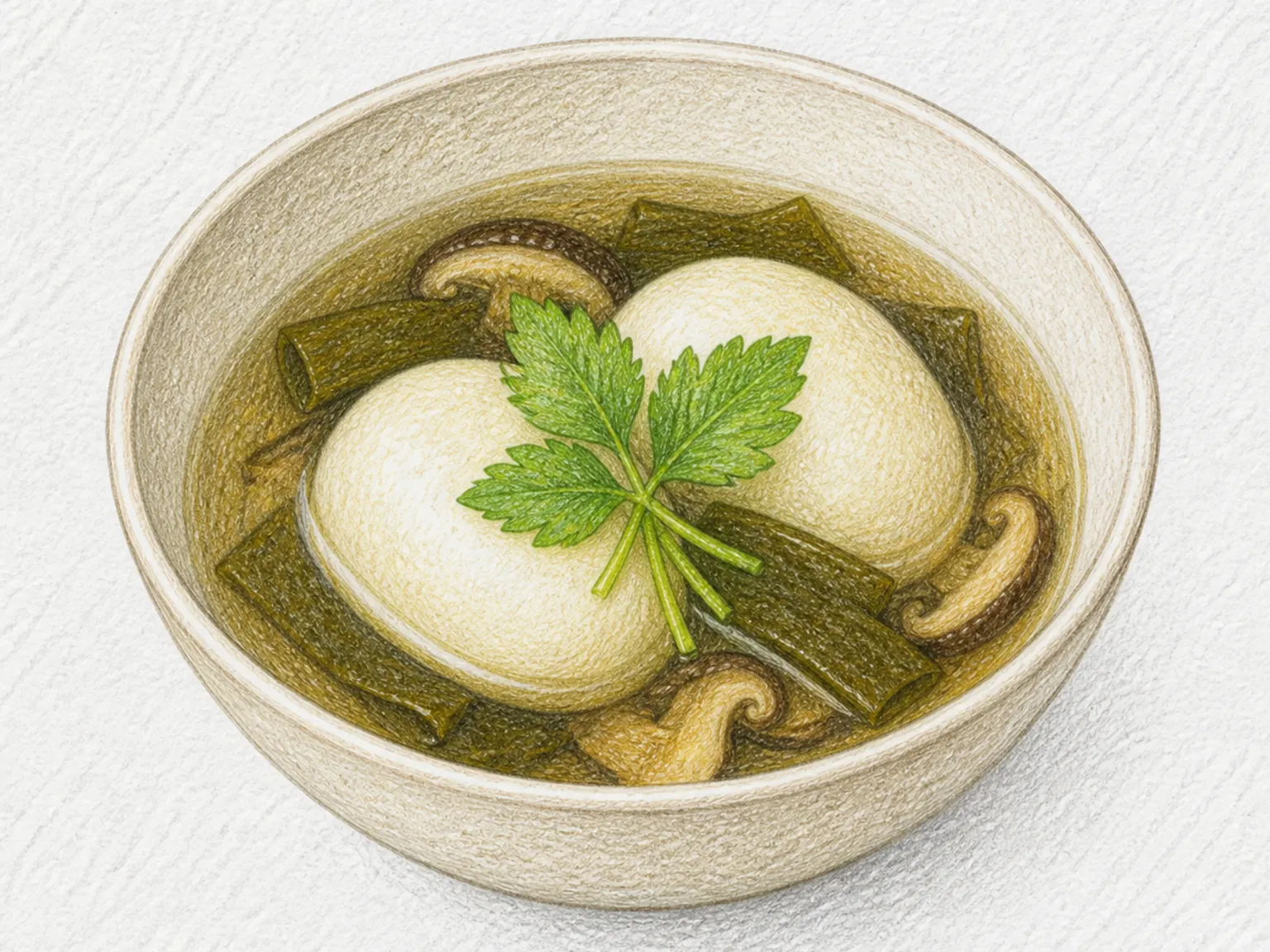
Keiran is a ceremonial soup from the Shimokita region of Aomori Prefecture, traditionally prepared during the autumn harvest and for auspicious gatherings. Glutinous rice flour is moistened gradually with warm water and kneaded until as soft as an earlobe. The dough is wrapped around smooth red bean paste and shaped like small eggs, which gives the dish its name. The dumplings are cooked gently in plenty of boiling water so they do not break, then touched with clean water and reshaped while still hot to create a glossy surface. Two dumplings go into each bowl with a clear broth made from dried shiitake, kombu, and soy sauce, finished with mitsuba. Sweet bean filling and savory broth meet in the same bite, while the neat egg shape gives the soup its festive character.

🎉 Special Occasion
Prep 40min Cook 25min 20 servings
Iwate Kenchin-jiru
Soups Hard

Iwate Kenchin-jiru

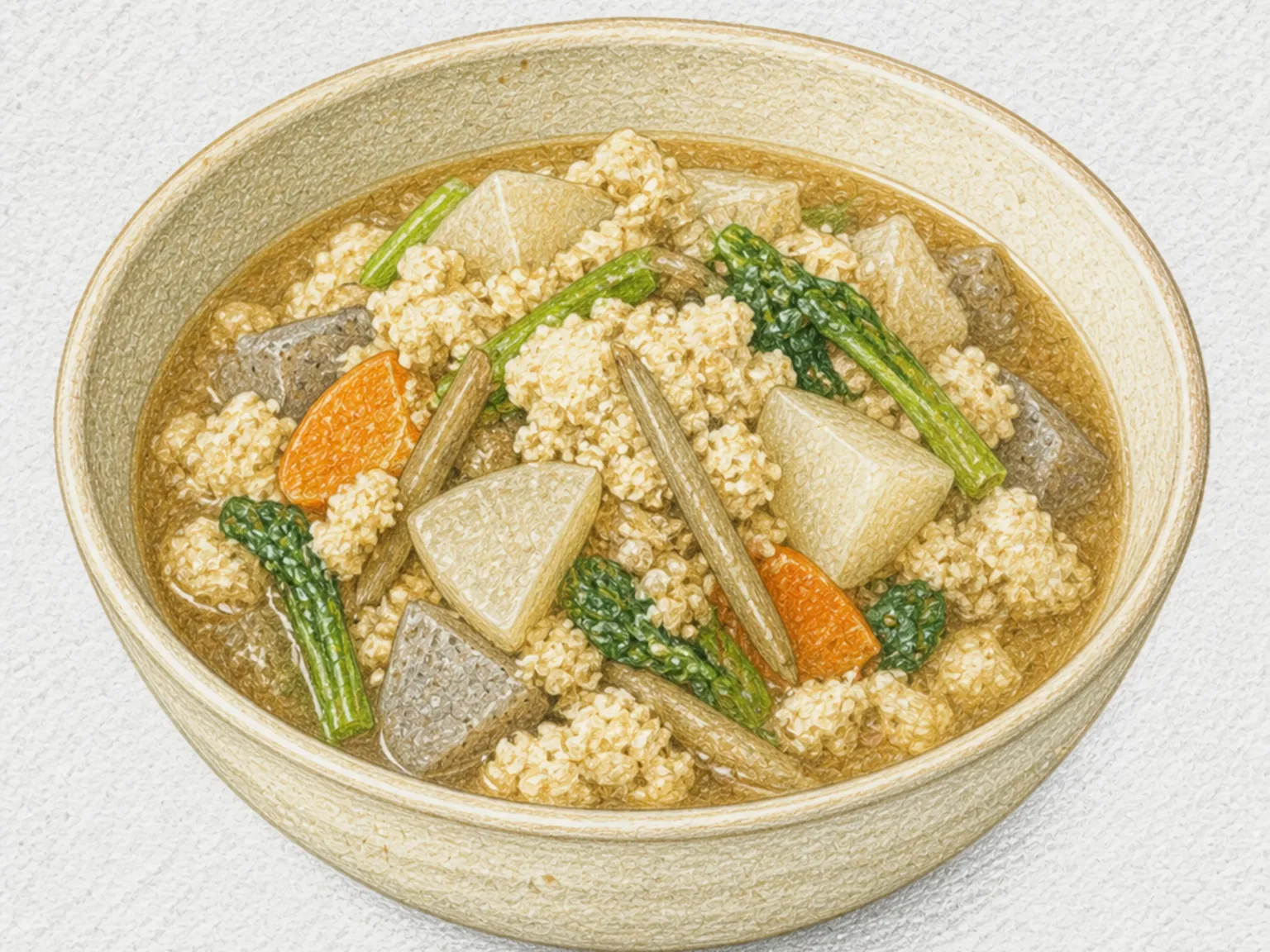
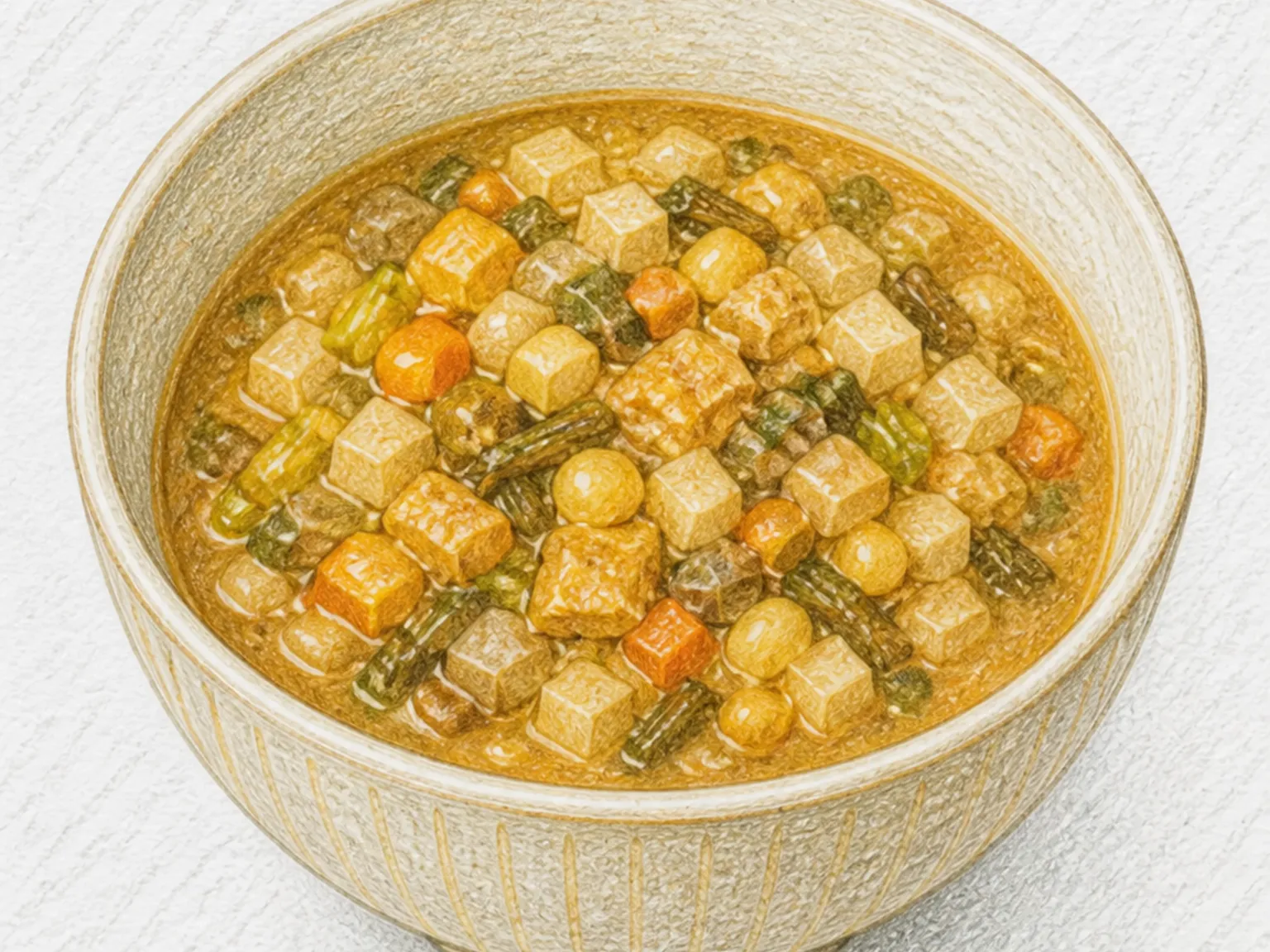
Iwate kenchin-jiru is a substantial soup in which firm cotton tofu is roughly crushed and fried in generous oil until most of its cloudy moisture cooks away. Daikon, carrot, burdock, konjac, preserved mountain vegetables, fried tofu, and bamboo shoot are then fried with it before a kombu, dried-sardine, and bonito broth is added. Unlike versions elsewhere, the northern Iwate style contains no meat and emphasizes tofu cooked into loose, crumbly pieces. It was prepared at the end of autumn farm work and for New Year, especially in large batches during the Little New Year period so women could rest and reheat it. An overnight rest lets the soy-seasoned broth penetrate the many vegetables more deeply.

🏠 Everyday 🎉 Special Occasion
Prep 45min Cook 70min 6 servings
Kenojiru (Tsugaru Root Vegetable and Soybean Soup)
Soups Hard

Kenojiru (Tsugaru Root Vegetable and Soybean Soup)

Kenojiru is a Little New Year soup from the Tsugaru area of Aomori. Daikon, carrot, burdock, prepared bracken and butterbur, aburaage, freeze-dried tofu, soybeans, and kombu are cut to about 5mm so several ingredients fit into every spoonful. For ten servings, soak 40g stock kombu in 7L water for 30 minutes and remove it just before the water boils. Add the firm roots first, including 2kg daikon, 600g carrot, and 350g burdock. Let them simmer for 25 minutes with the heat set to medium. Prepared greens, soaked soup kombu, oil-rinsed aburaage, pressed tofu, and whole soybeans then cook for another 20 minutes. Of the 600g cooked soybeans, leave 300g whole and coarsely mash the rest into zunda. Dissolve 400g red miso in 500ml hot broth before returning it to the pot, then add the zunda and cook on low for 10 minutes while stirring the bottom. Stop when all the small pieces are tender and the broth has slight body. Transfer leftovers to shallow containers and refrigerate within two hours. Use them within three days and boil each reheated portion throughout for at least one minute.

🎉 Special Occasion
Prep 120min Cook 100min 10 servings
Kimchi Dwaejigogi-guk (Kimchi Pork Tofu Soup)
Soups Easy

Kimchi Dwaejigogi-guk (Kimchi Pork Tofu Soup)

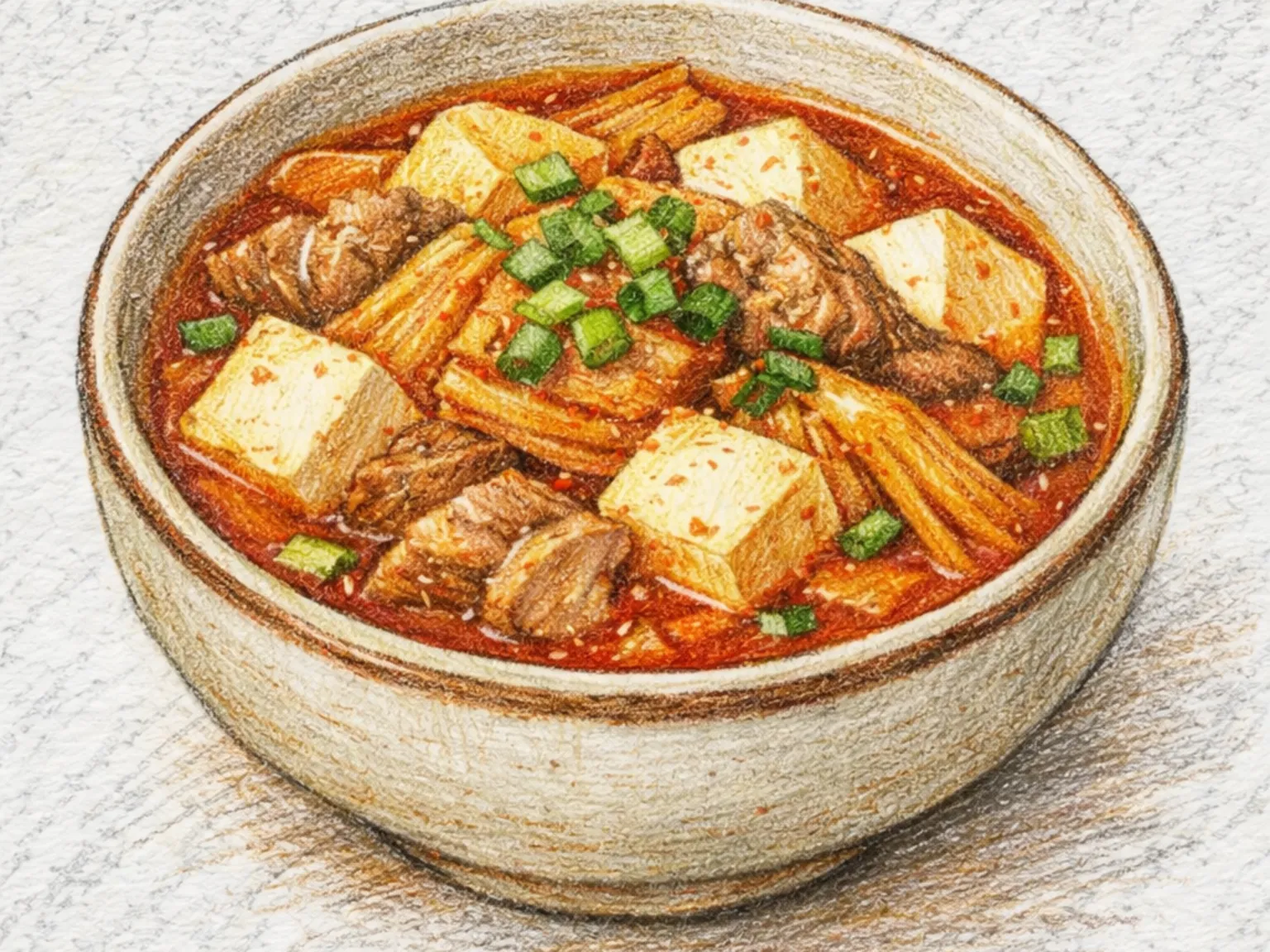
Kimchi-dwaejigogi-guk starts by stir-frying pork shoulder and well-fermented sour kimchi together in perilla oil. The pork is cooked first until its fat renders fully, then chili flakes join the pan for three more minutes of cooking alongside the kimchi. This initial stir-fry step is what gives the soup its depth - the caramelized kimchi acidity and rendered pork fat fuse into a base that a plain simmered broth cannot replicate. Water and sliced onion are added and simmered for fifteen minutes, then blocks of firm tofu go in near the end, soaking up the spicy, ruddy broth and providing a soft contrast to the chewy pork. The soup has considerably more liquid than a jjigae, making it well suited for pouring over rice in a bowl. Kimchi that has fermented longer delivers more lactic tang and a more complex broth. Pork belly can replace shoulder for a richer, fattier result.

🏠 Everyday 🥗 Light & Healthy
Prep 12min Cook 25min 2 servings
Kimchi Soegogi-guk (Fermented Kimchi Beef Soup)
Soups Easy

Kimchi Soegogi-guk (Fermented Kimchi Beef Soup)

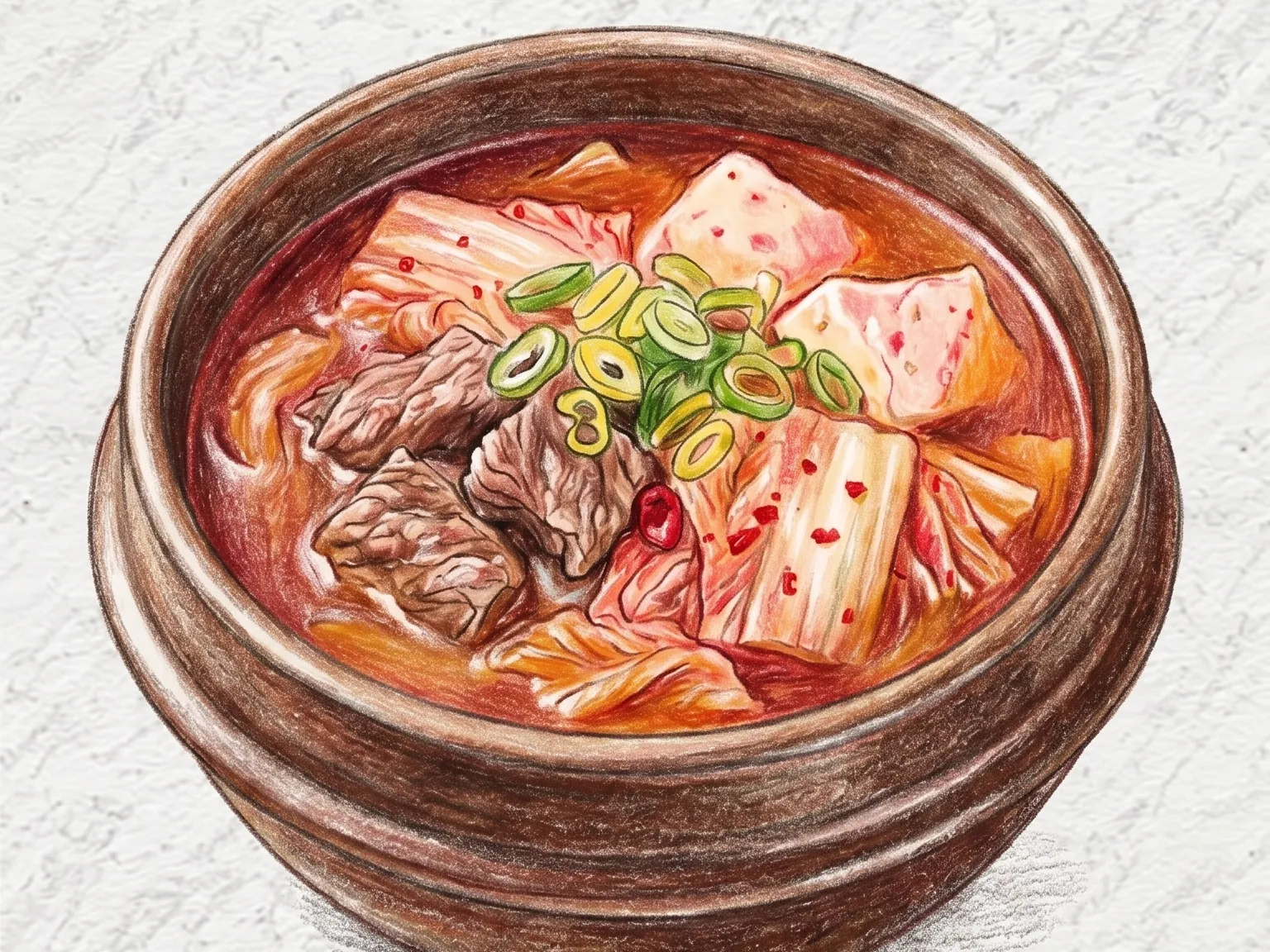
Kimchi-soegogi-guk is a Korean soup that unites two powerhouse ingredients, well-fermented kimchi and beef, in a ruddy, aromatic broth. The beef is stir-fried in sesame oil first, building a savory foundation, then chopped kimchi joins the pan and cooks until its acidity mellows and merges with the rendered fat. Water is added, and as the pot simmers, the kimchi continues to break down, thickening the liquid and staining it a deep red. Soup soy sauce and garlic adjust the seasoning, while blocks of tofu absorb the surrounding flavors and provide a soft counterpoint to the chewy beef. The finished soup is hearty and warming, with the tangy complexity of aged kimchi meeting the clean savoriness of beef in every spoonful. It pairs inseparably with a bowl of steamed rice, which soaks up the broth and balances the heat.

🏠 Everyday 🥗 Light & Healthy
Prep 10min Cook 30min 4 servings
Kiritanpo Nabe (Akita-Style Grilled Rice Stick Hot Pot)
Soups Hard

Kiritanpo Nabe (Akita-Style Grilled Rice Stick Hot Pot)

Kiritanpo nabe is a rustic hot pot from Akita Prefecture in northern Japan, built around grilled mashed-rice sticks simmered in chicken broth. Freshly cooked rice is pounded in a mortar until partially smooth and sticky, then wrapped around cedar skewers and toasted over charcoal until the surface develops a light char and a faint smokiness. The broth begins with bone-in chicken thighs cooked until the stock is rich and clear, seasoned simply with soy sauce and mirin, then loaded with burdock root, scallions, mushrooms, and Japanese parsley. The kiritanpo sticks are cut into segments and added to the simmering pot, where they absorb the rich broth and soften into a chewy, dumpling-like texture while still holding their cylindrical shape. Akita's harsh mountain winters gave this dish its purpose as a calorie-dense, warming meal built entirely from locally available ingredients. The faint smokiness from the charcoal grilling carries through into the finished broth, and this subtle background note is what distinguishes kiritanpo nabe from similar rice-cake hot pots made elsewhere in Japan.

🎉 Special Occasion 🍺 Bar Snacks
Prep 30min Cook 30min 4 servings

About Soups

The secret to a great Korean soup lies in building a flavorful stock from anchovies, kelp, or beef bones. This collection covers classic and modern soup recipes you can recreate at home.