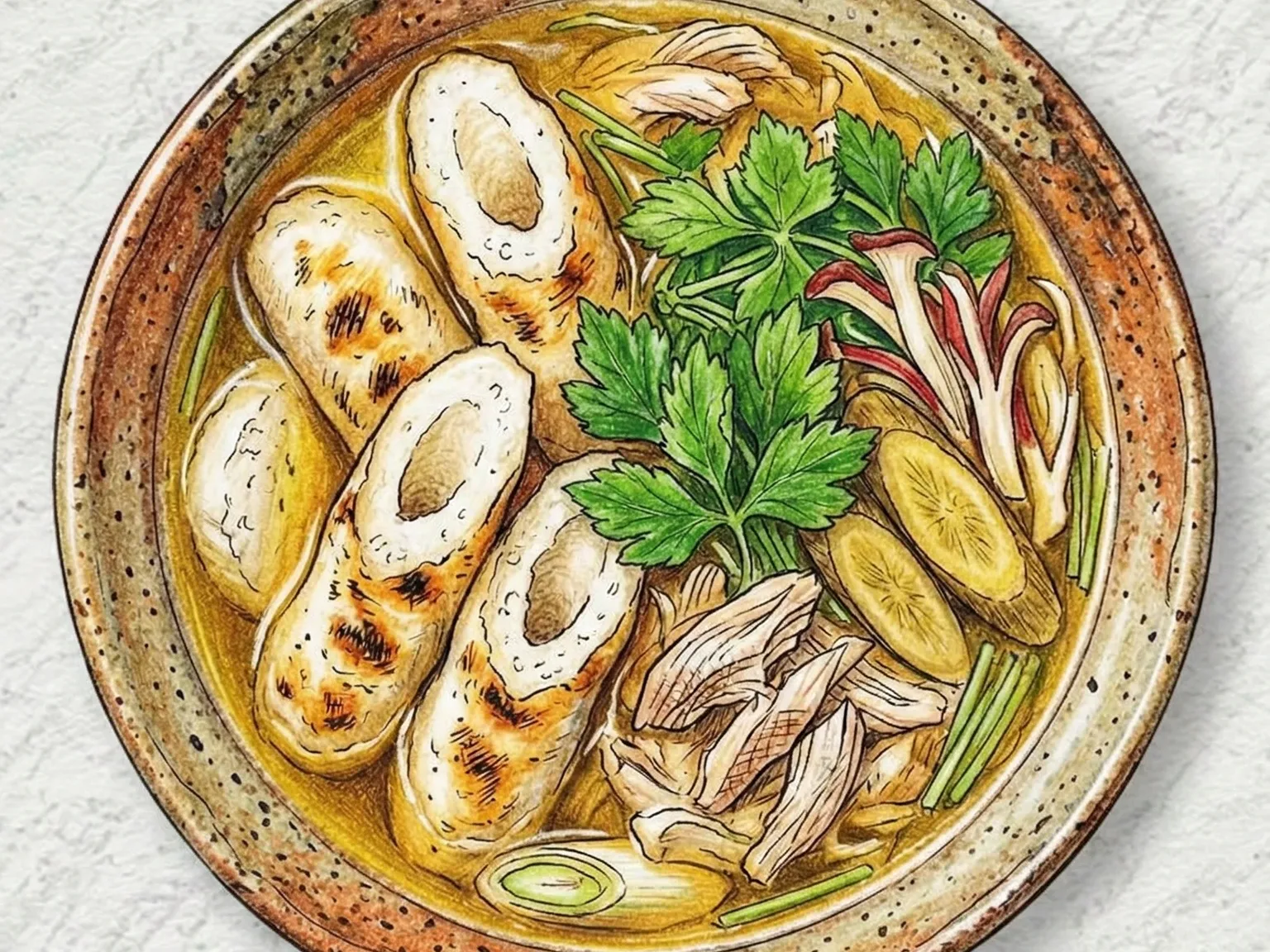
Soups

Soups Recipes

434 recipes. Page 13 of 19

Soups and broths are the backbone of a Korean meal, served alongside rice at nearly every table. From clear seaweed soup (miyeokguk) to rich ox-bone broth (gomtang) and spicy beef soup (yukgaejang), the variety is enormous. Each season brings its own favorites - chilled soups in summer and piping-hot stews in winter.

Soups
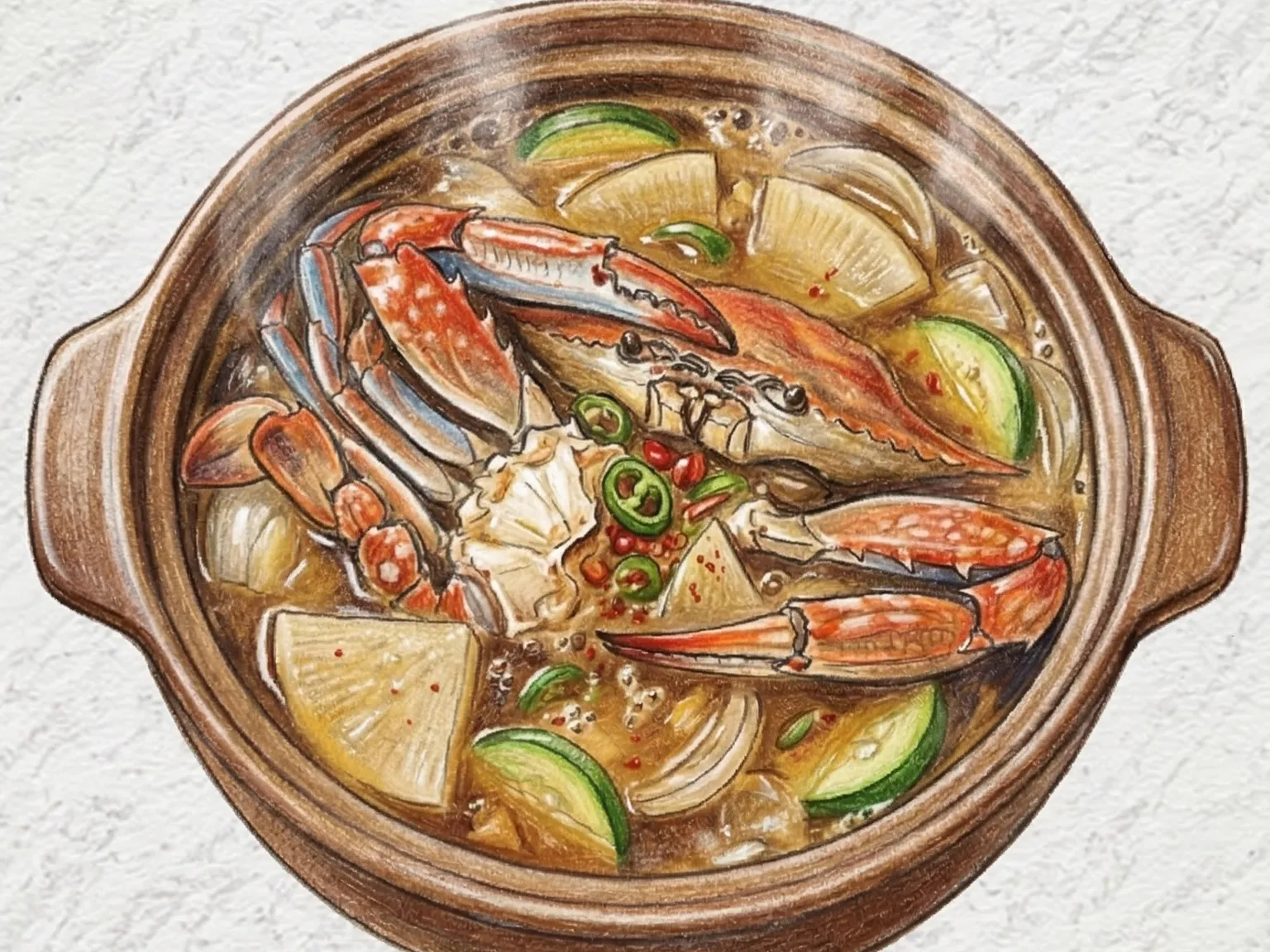
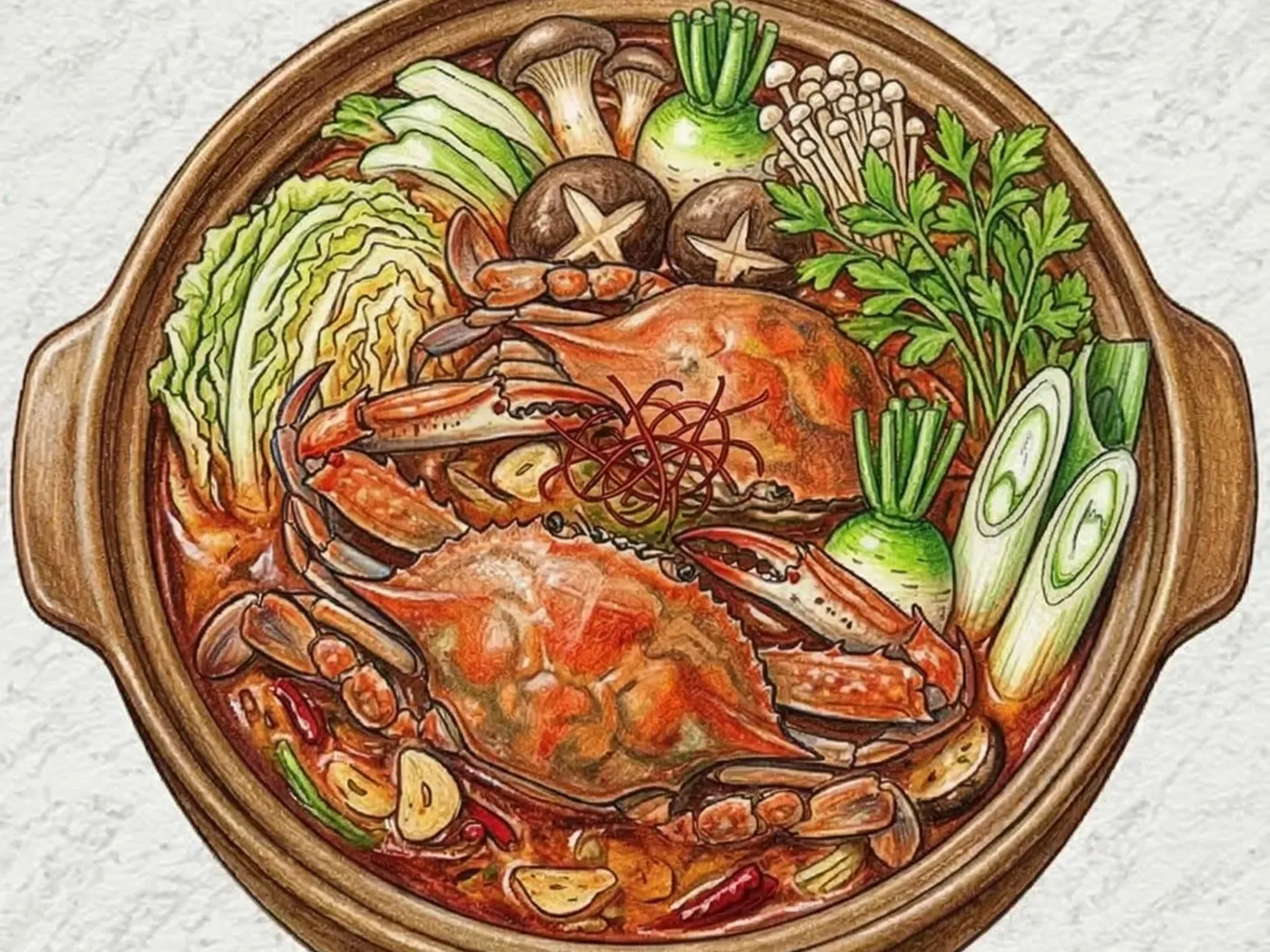
Korean Doenjang Kkotge Tang
Soups Medium

Korean Doenjang Kkotge Tang

Kkotge tang doenjang is a Korean blue crab stew that uses a full 800g of crab simmered in a doenjang-forward broth, where fermented soybean paste and the crab's natural essence are the two dominant flavors. As the shells cook, they release a deeply savory stock, and radish, zucchini, and onion simmer in that liquid and add layers of sweetness and body. Unlike the more common spicy gochujang-based crab stews, this version leads with doenjang's earthy depth and fermented complexity. Gochugaru and Cheongyang chili provide a secondary heat that balances the richness without taking over. Adding tofu keeps the texture varied and lightens the heaviness of the broth slightly. The crabs turn a vivid orange as they cook, a reliable visual cue that the meat is ready to pull cleanly from the shell. The fermented character of the doenjang suppresses any fishy edge from the crab, making the stew approachable even for those who do not normally gravitate toward shellfish. Served with rice to soak up the broth, it makes a satisfying complete meal.

🏠 Everyday 🎉 Special Occasion
Prep 20min Cook 22min 4 servings
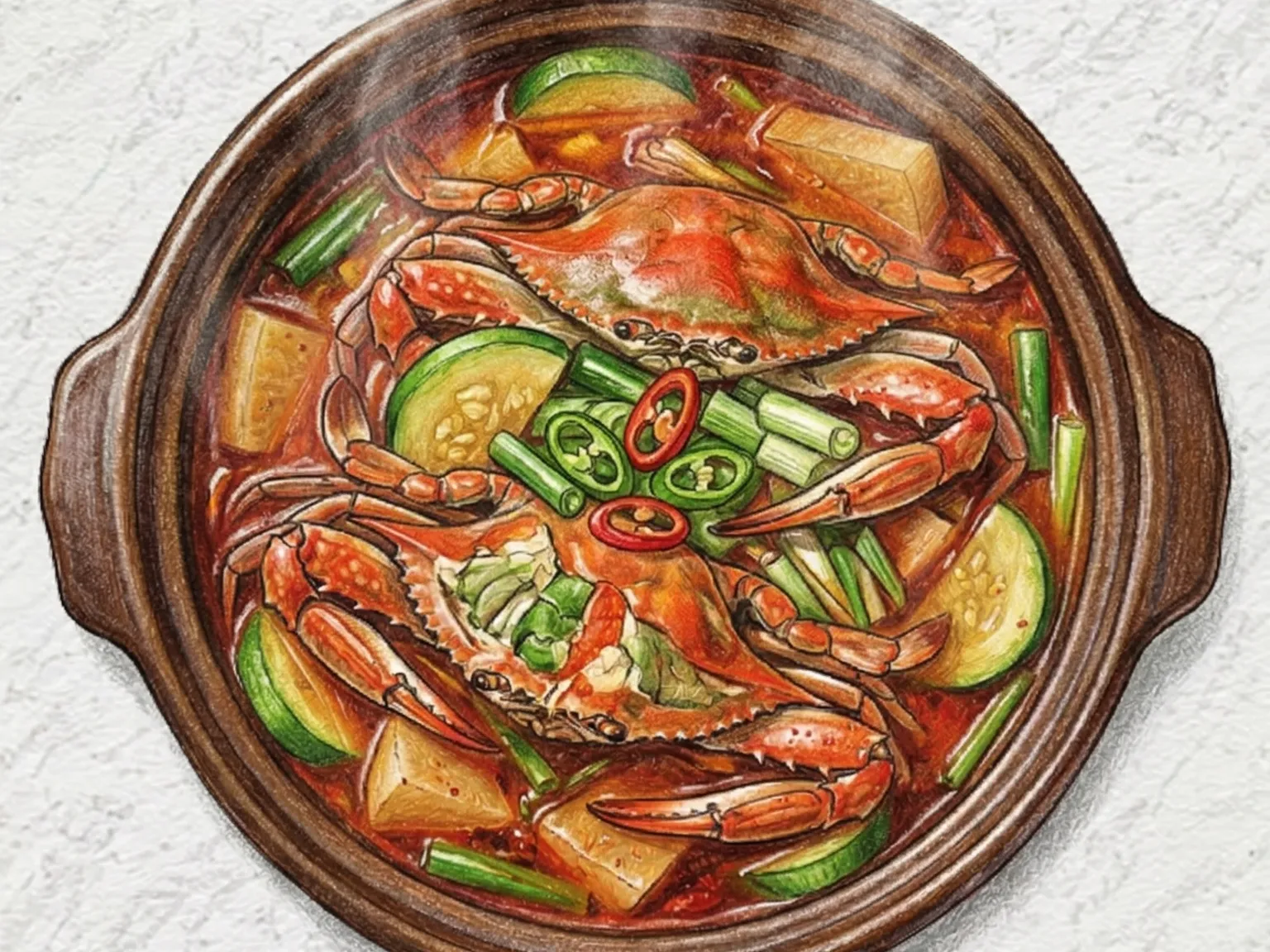
Korean Spring Blue Crab Stew
Soups Medium

Korean Spring Blue Crab Stew

Kkotgetang is a classic Korean spicy crab stew made with 600g of whole blue crab simmered until the shells release their full flavor into the broth. Gochugaru and a touch of doenjang season the liquid with heat and fermented depth, while radish and zucchini turn sweet as they absorb the crab-infused stock. Two Cheongyang chilies push the spice level higher, and green onion adds a fresh finish. Picking the crab meat from the shell while sipping the hot, briny broth is half the enjoyment. Spring blue crabs are prized for their fuller flesh, making that the ideal season to prepare this dish.

🏠 Everyday 🎉 Special Occasion
Prep 20min Cook 25min 2 servings
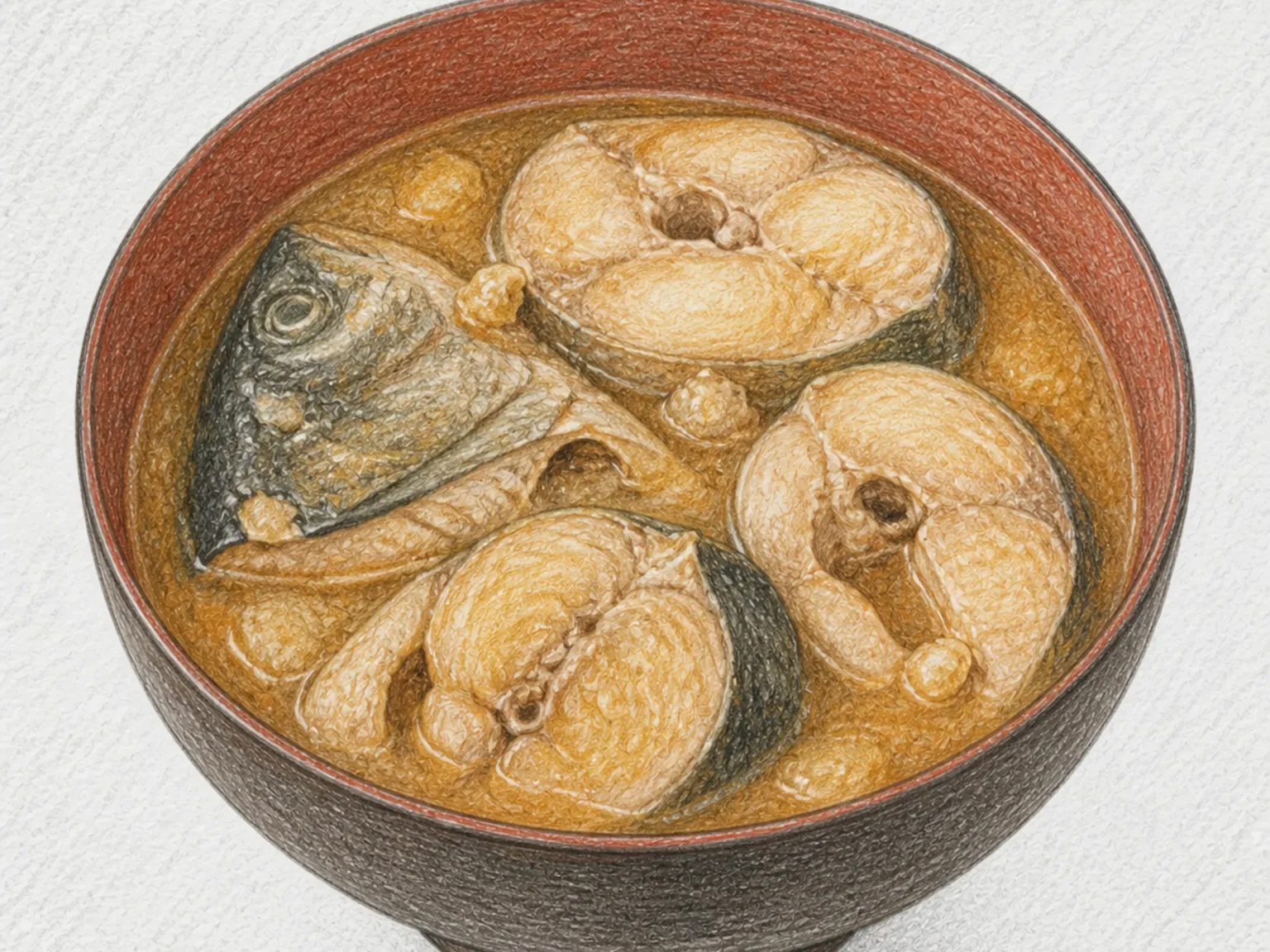
Koikoku (Long-Simmered Carp Miso Soup)
Soups Hard

Koikoku (Long-Simmered Carp Miso Soup)

Koikoku is a soup from the Saku region of Nagano in which thick cross-cut carp pieces and the head simmer for about 3 hours before a substantial amount of miso is added in stages. The fish first sits in hot water for 4 to 5 minutes so white coagulated residue and loose impurities can be rinsed away. It then boils with sake and water while foam is skimmed carefully; the flavorful oil is left in the pot. Part of the miso enters early with a little sugar to season the fish. Another portion is ground with 20g cooked rice and stirred in to give the broth body, while the remainder is dissolved near the end to preserve its aroma. Long cooking softens the flesh and enriches the soup, but bones remain and each serving must be eaten slowly.

🎉 Special Occasion
Prep 25min Cook 200min 6 servings
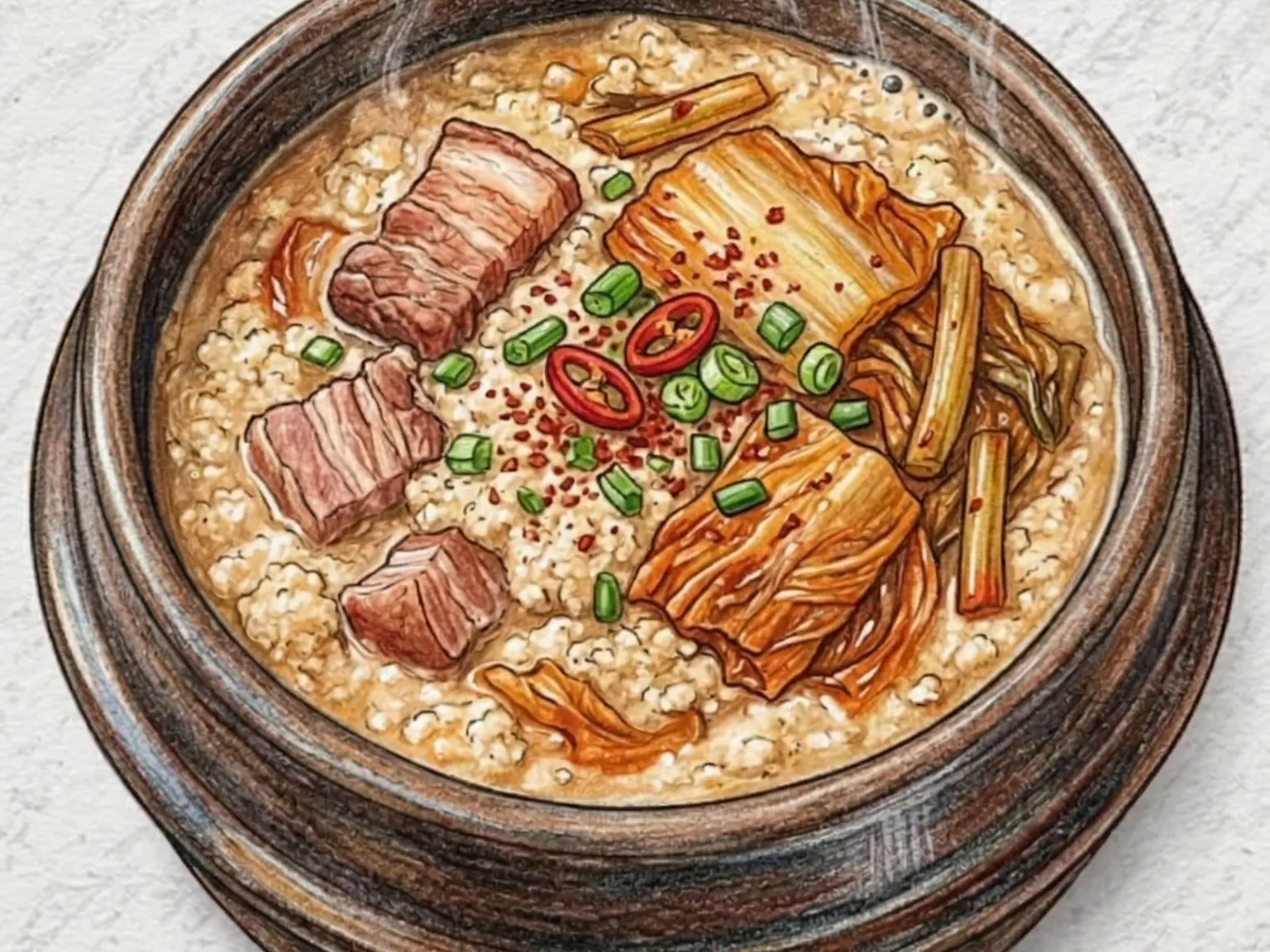
Kongbiji-tang (Soybean Pulp Kimchi Pork Soup)
Soups Easy

Kongbiji-tang (Soybean Pulp Kimchi Pork Soup)

Kongbiji-tang is a thick, porridge-like Korean soup made from ground soybean pulp-the byproduct of tofu production-simmered with pork and aged kimchi. The soy pulp gives the broth a creamy, almost grainy body and a pronounced nuttiness that coats the palate. Minced pork renders its fat into the liquid, adding a meaty richness, while the kimchi contributes a sharp acidity that cuts through the heaviness and keeps the flavor lively. Anchovy stock serves as the liquid base, layering an additional umami dimension beneath the soy and pork. The soup is seasoned with soup soy sauce, garlic, and finished with a swirl of sesame oil. It is a winter staple in Korean households, prized for its warmth and substance. The thick texture means it clings to rice rather than flowing around it, making each bite dense with flavor.

🏠 Everyday
Prep 15min Cook 35min 4 servings
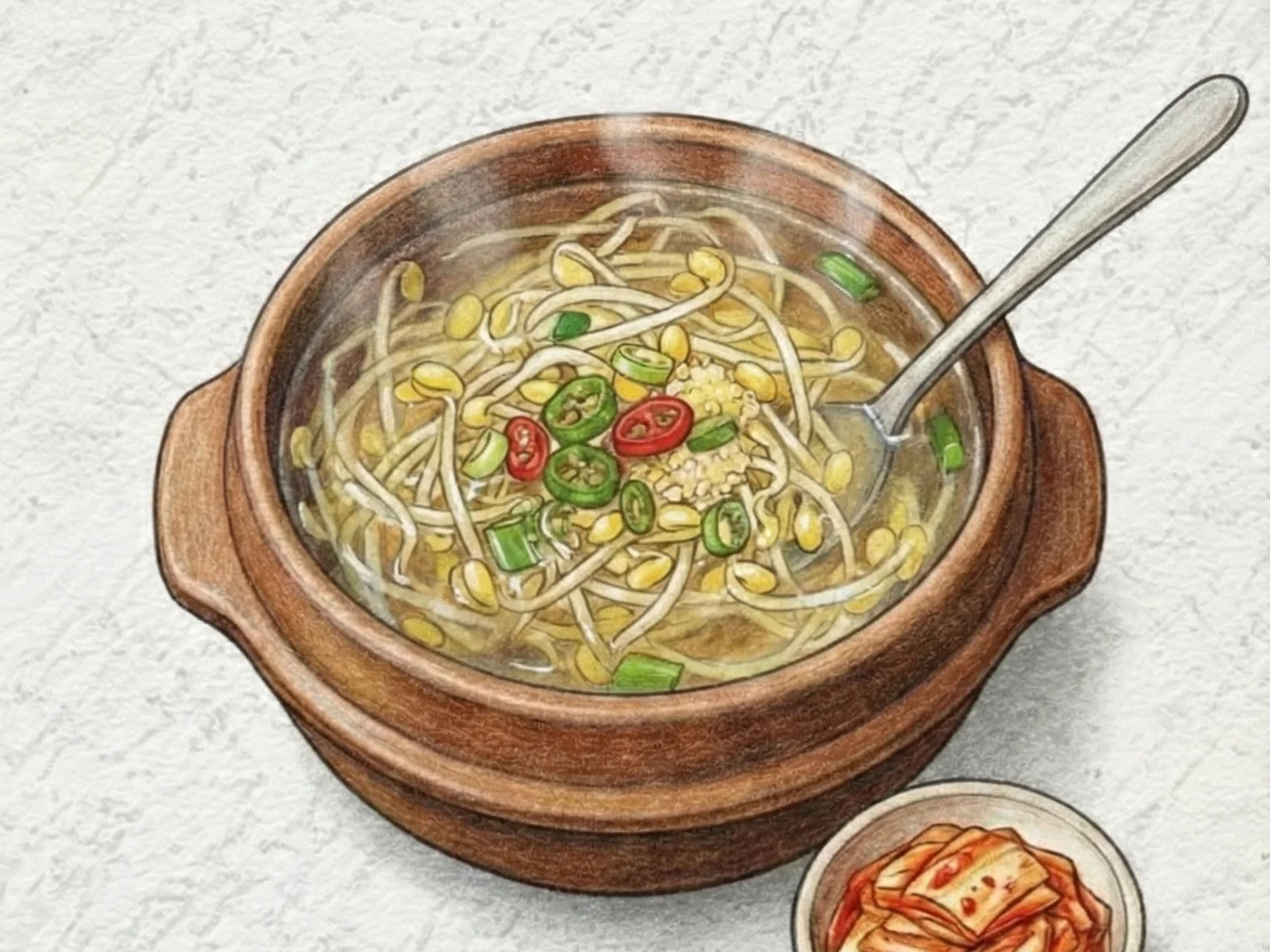
Kongnamul-guk (Bean Sprout Anchovy Soup)
Soups Easy

Kongnamul-guk (Bean Sprout Anchovy Soup)

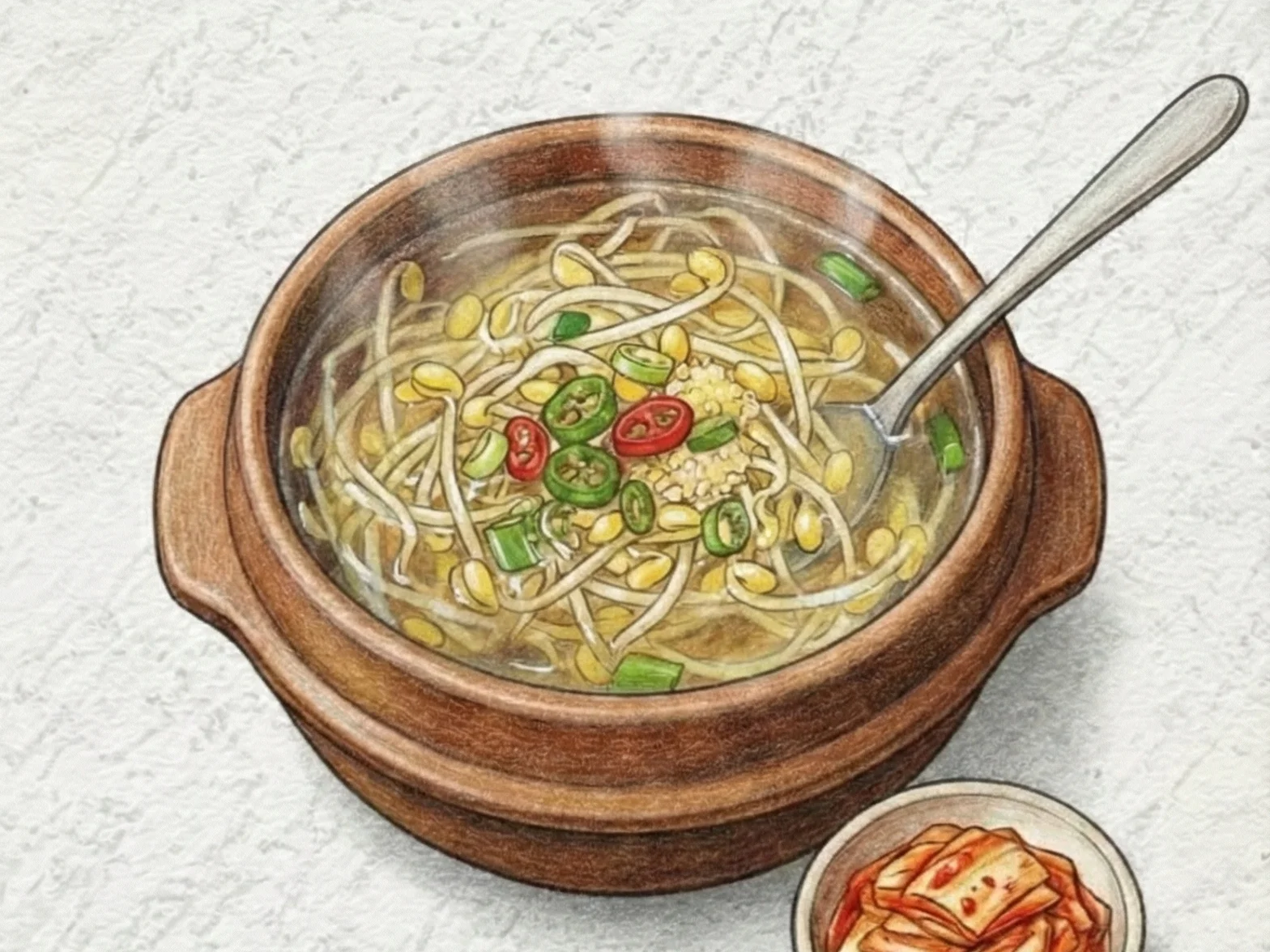
Kongnamul-guk is a clear Korean soup built on bean sprouts, water, soup soy sauce, and garlic, and its central technique is boiling the sprouts with the lid firmly closed for seven minutes. The reason behind the closed lid is a long-standing Korean kitchen belief: the compounds responsible for the raw, beany smell in soybean sprouts are volatile, and if the lid is left open, they do not escape with the steam but instead condense back into the pot. Whether the chemistry fully supports this, keeping the lid closed has been the standard method for generations and consistently produces a clean-tasting broth. Green onion goes in at the very end to keep its bright, mild bite without overcooking. Trimming the fine root tails from each sprout improves the texture and presentation, though it does not change the flavor and is often skipped on weekdays. Adding chili flakes and a cracked egg transforms the soup into a spicy, restorative hangover version, and a handful of clams deepens the broth with extra umami. From start to finish the soup takes about fifteen minutes, which makes it one of the fastest soups in the Korean repertoire, and the directness of its flavor -- clean, cool, and vegetal -- is exactly what makes it worth returning to.

🏠 Everyday ⚡ Quick
Prep 5min Cook 15min 2 servings
Korean Bean Sprout Dried Pollock Soup
Soups Easy

Korean Bean Sprout Dried Pollock Soup

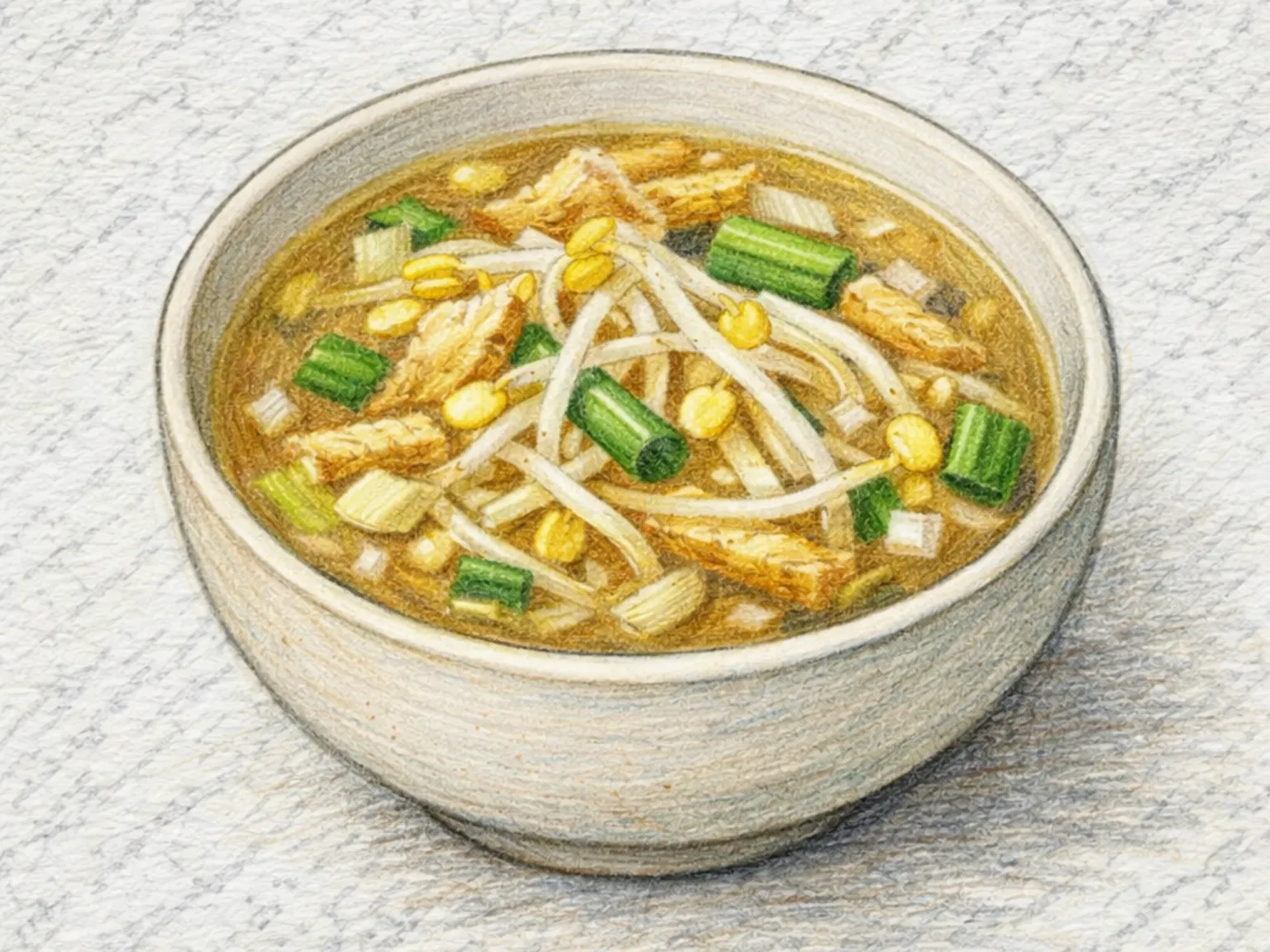
Kongnamul-hwangtae-guk pairs dried pollock strips with soybean sprouts in a clear broth that is widely eaten as a morning-after remedy. The pollock is toasted briefly in sesame oil to coax out a nutty, savory aroma before radish slices and water are added for ten minutes of simmering, which forms the foundational stock. Rinsing the pollock quickly in cold water rather than soaking it for a long time keeps the strands pleasantly chewy rather than soft and falling apart. Bean sprouts and minced garlic are added uncovered for five more minutes: leaving the lid off is essential, as the open steam carry away the raw beany smell while preserving the sprouts' characteristic crunch. Soup soy sauce and a pinch of salt finish the seasoning, and sliced green onion goes on just before serving. The broth turns a milky, pale white as the pollock proteins leach into the liquid, which is the visual marker of a properly cooked bowl.

🏠 Everyday 🥗 Light & Healthy
Prep 10min Cook 20min 2 servings
Korean Bean Sprout Kimchi Soup
Soups Easy

Korean Bean Sprout Kimchi Soup

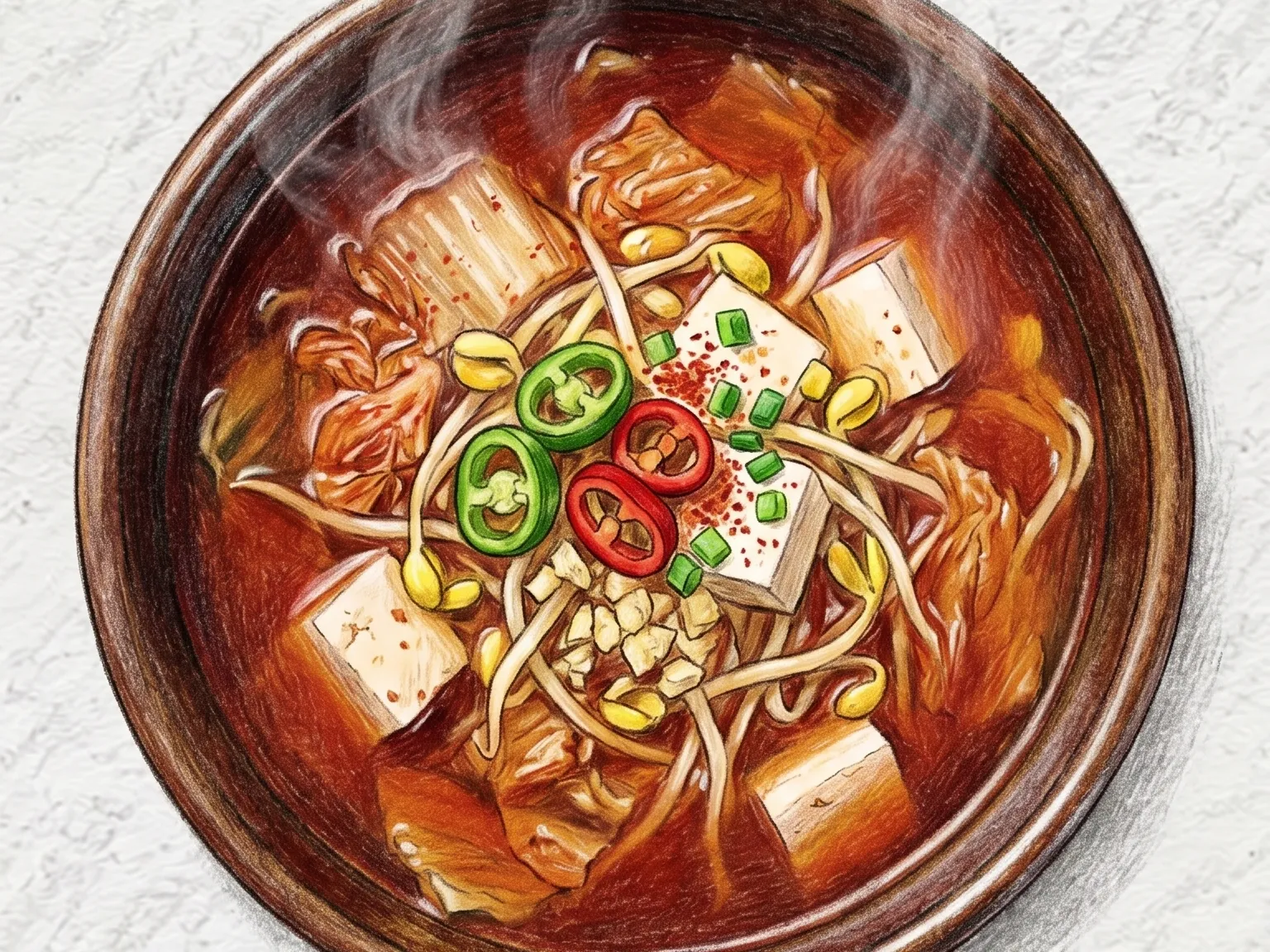
The preparation of this traditional Korean soup follows a two-part process designed to build layers of flavor by stacking different ingredients over time. The foundation begins with aged kimchi and a substantial amount of the fermented liquid from the kimchi jar. These ingredients are combined with anchovy stock and allowed to simmer together for a duration of eight minutes. This initial cooking period is essential for the broth to fully absorb the acidic depth of the fermented vegetables. As the mixture simmers, the liquid transforms into a deep shade of brick red, signaling that the base has reached the correct concentration for the next set of ingredients. After the initial simmering period is complete, bean sprouts are introduced to the pot along with gochugaru, minced garlic, and soup soy sauce. It is important to leave the lid off the pot for the remaining five minutes of the cooking process. Leaving the soup uncovered during this specific stage facilitates the removal of the raw scent that can sometimes be associated with fresh bean sprouts. Furthermore, this method prevents the liquid from being diluted by trapped steam, which allows the various flavors to concentrate and sharpen rather than becoming softened. In the final minute of preparation, sliced green onion is incorporated into the broth. This addition provides a fresh herbal element that lifts the profile of the soup and balances the heavier fermented notes of the kimchi base. If the kimchi used in the recipe is not sufficiently fermented, the resulting broth may lack the necessary sharpness. In such cases, adding half a teaspoon of vinegar can enhance the acidity to the desired level without changing the fundamental character of the broth. The combination of the deep flavors from the kimchi and the natural crispness of the bean sprouts results in a liquid that is both warming and restoring. Because of these properties, this dish has a long history as a reliable remedy for hangovers in Korea, and it remains a common staple for families to consume during the cold weather seasons.

🏠 Everyday 🥗 Light & Healthy
Prep 10min Cook 20min 2 servings
Aizu Kozuyu
Soups Medium

Aizu Kozuyu

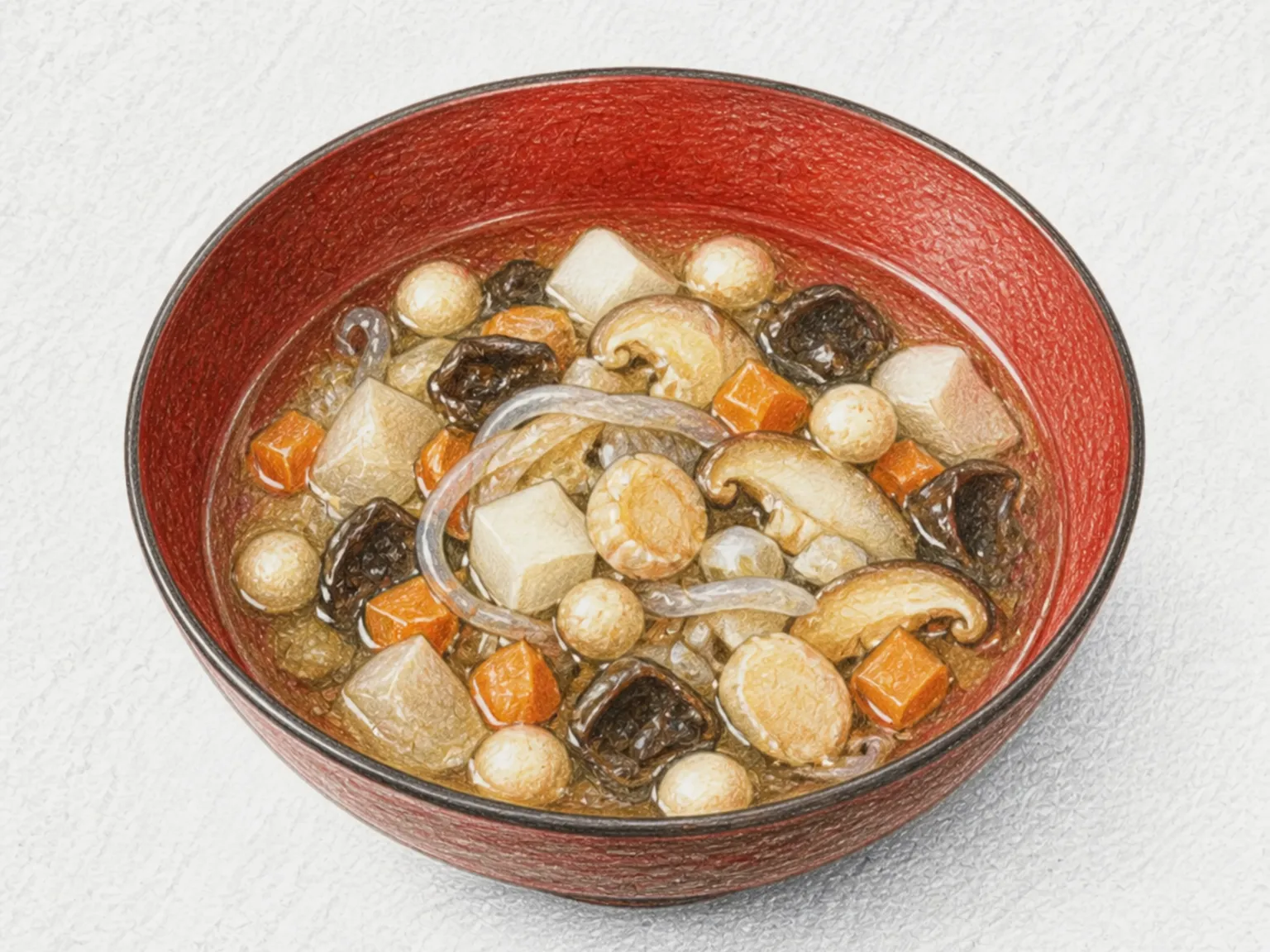
Kozuyu is an Aizu hospitality soup from Fukushima. Dried scallops and shiitake are soaked, their strained liquids are combined with bonito dashi, and small pieces of wood ear, shirataki, carrot, taro, warabi, and mame-fu are simmered into a clear broth. It is traditionally served in a shallow red Aizu-lacquer dish called a teshio-zara, and its name is said to have evolved from koju no tsuyu. For more than a century it has appeared at weddings, memorials, festivals, and other occasions for guests. Because it was also enjoyed with sake, diners were free to request repeated bowls. Households often choose an auspicious odd total of seven or nine ingredients while keeping shiitake restrained so the dried scallop remains distinct.

🎉 Special Occasion 🍺 Bar Snacks
Prep 480min Cook 35min 4 servings
Kuurijishi (Okinawan Pork, Winter Melon, and Egg Soup)
Soups Medium

Kuurijishi (Okinawan Pork, Winter Melon, and Egg Soup)

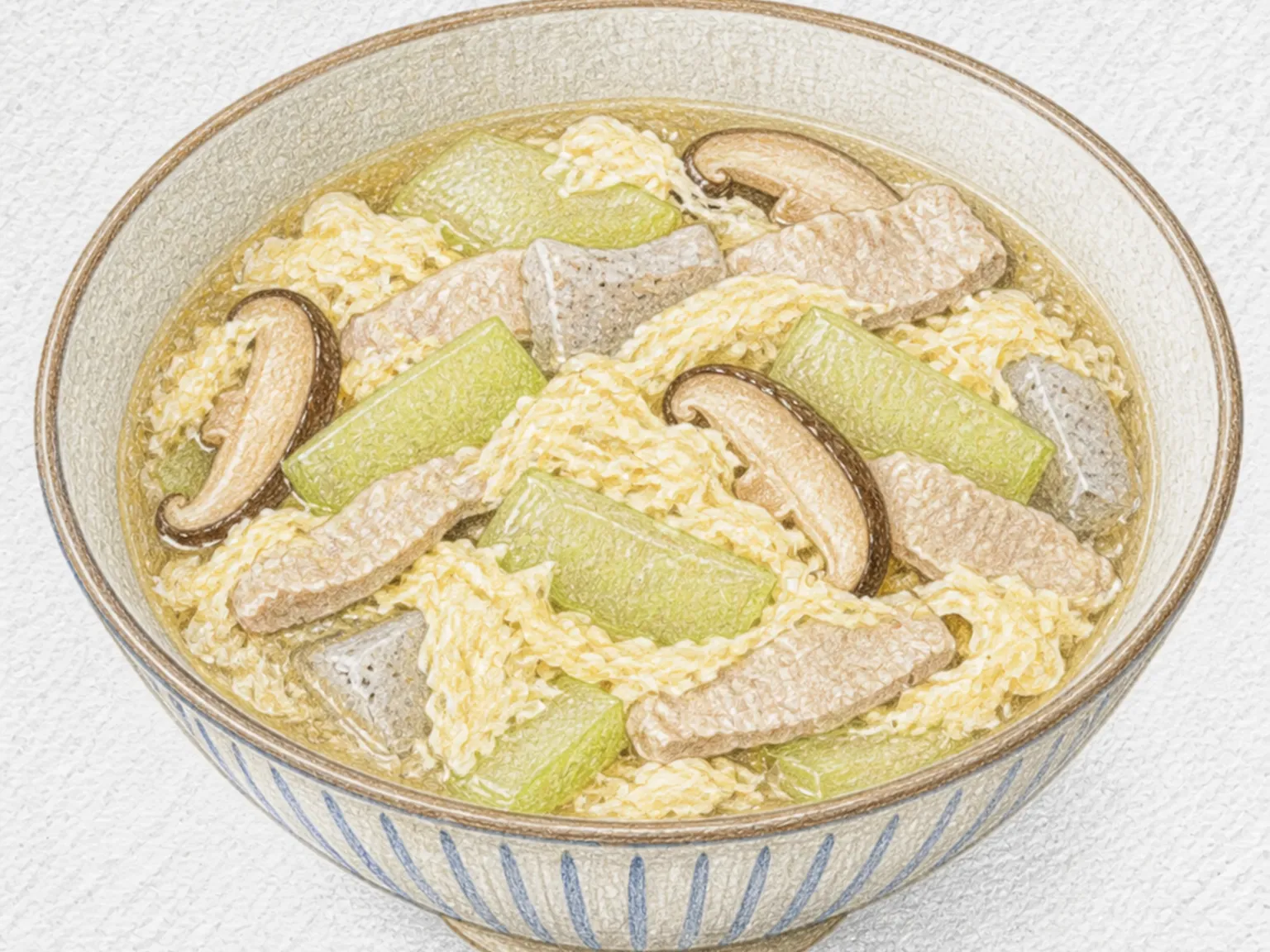
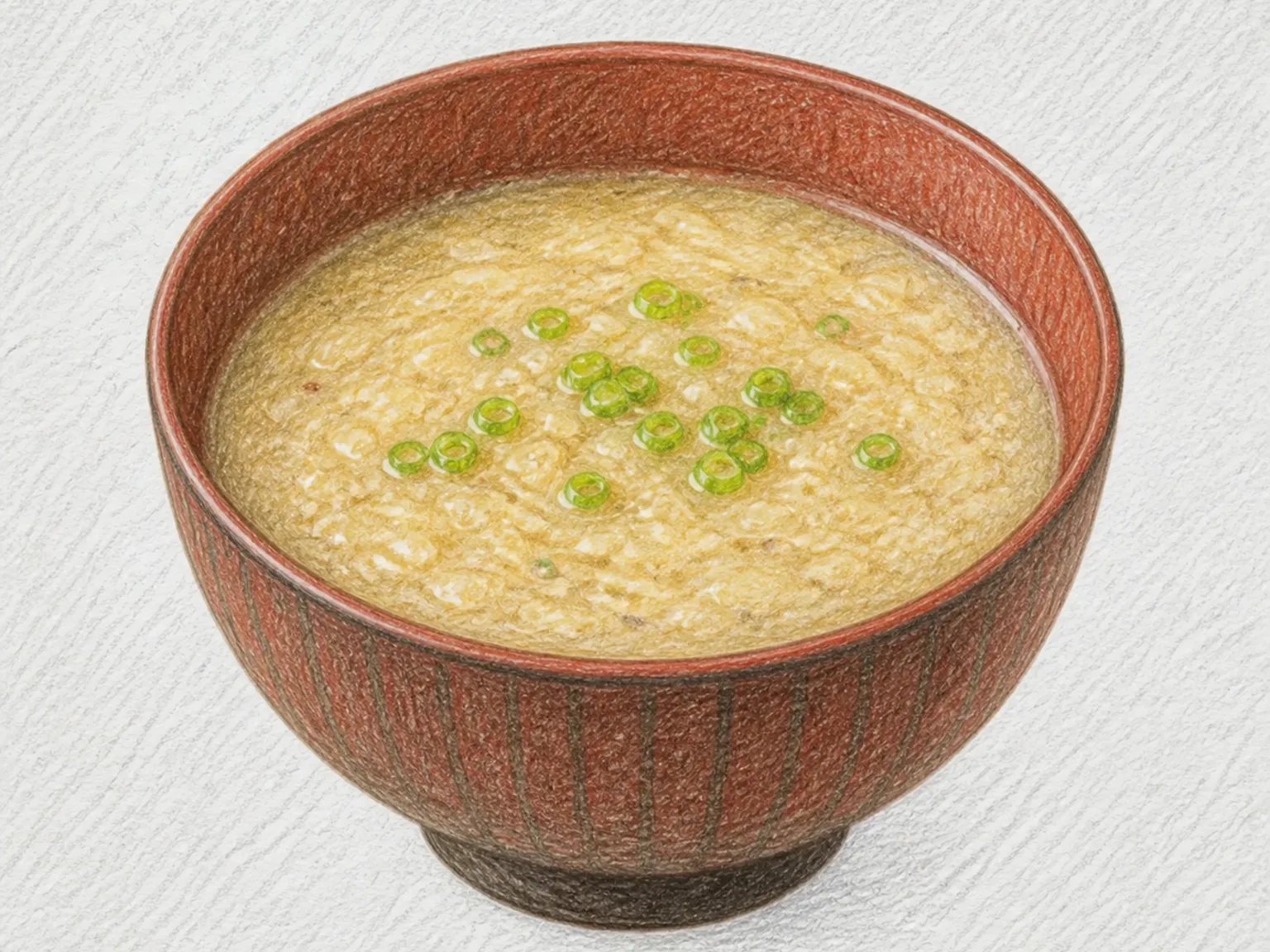
Kuurijishi is an Okinawan clear soup of boiled, thinly cut pork, winter melon, shiitake, and konnyaku in bonito stock, seasoned lightly with salt and soy sauce and finished with softly streamed egg. In the name, kuuri means ice and jishi means meat, but ice refers to the white egg spreading across the bowl like snow rather than to serving temperature. Before the war, when eggs were precious, families prepared it during Obon to express welcome for ancestral spirits. Firm winter-melon flesh near the skin is preferred because the soft portion around the seed cavity breaks down easily. The soup is served warm with the egg barely set and fluffy.

🏠 Everyday
Prep 20min Cook 30min 4 servings
Kyanokko-jiru (Akita Vegetable and Bean Soup)
Soups Hard

Kyanokko-jiru (Akita Vegetable and Bean Soup)

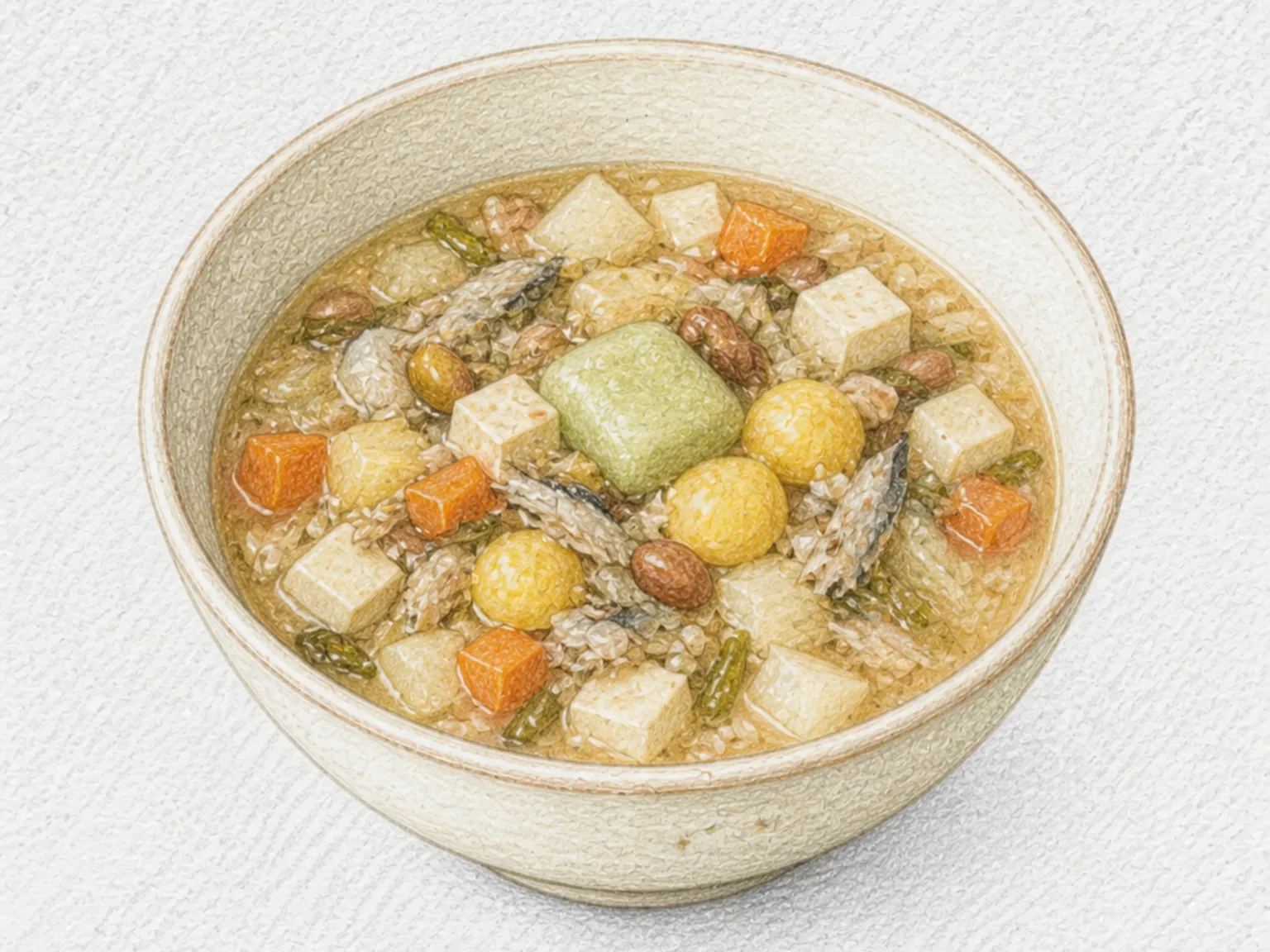
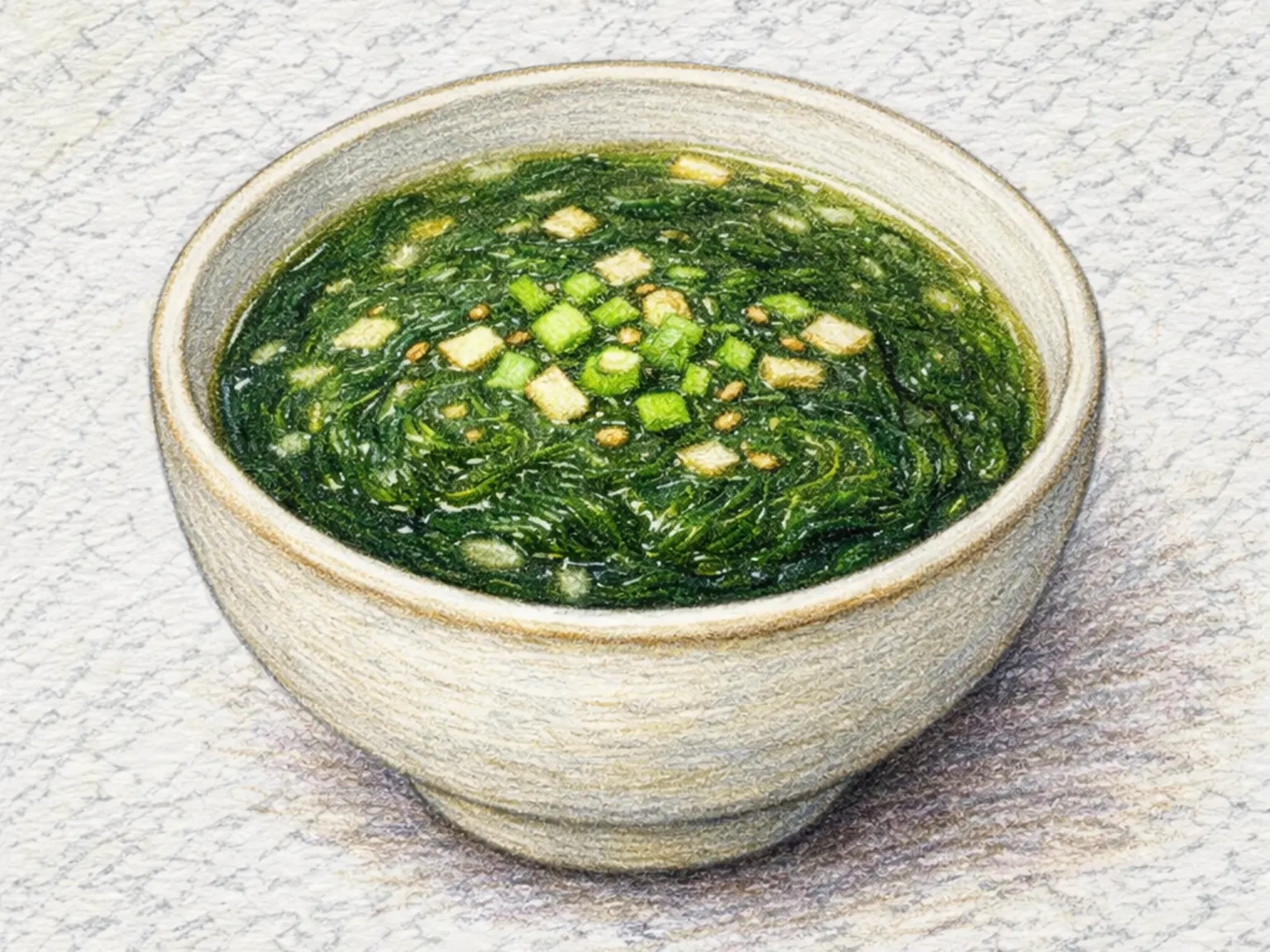
Kyanokko-jiru is an Akita Little New Year soup of daikon, carrot, potatoes, mountain yam, prepared mountain vegetables, tofu, kidney beans, and chestnuts in a kombu, dried sardine, and bonito stock seasoned with miso. This large recipe makes 20 servings and finishes with 30 grilled yaki-zunda cakes made from 500g green soybean flour and 100g glutinous rice flour. Soak 80g dried kidney beans for 8 hours, then cook them in fresh water for 45 to 60 minutes until tender inside but still intact. For the stock, soak 10g kombu and 15g cleaned dried sardines in 6L water for 30 minutes. Remove the kombu just before boiling, simmer the sardines for 5 minutes, add 15g bonito flakes, rest for 2 minutes, and strain. Dice 1kg daikon to 8mm and boil it separately for 15 minutes. Cut the potatoes and sweet potato to 1.5cm, and the mountain yam and carrot to 8mm. Use commercially prepared, desalted butterbur, bracken, and zenmai; do not improvise the processing of wild plants. Knead the yaki-zunda mixture with lukewarm water, shape 30 flat ovals, and cook each side on a dry pan for about 4 minutes. In the strained stock, cook the potatoes, yam, prepared greens, tofu, aburaage, and mushrooms for 25 minutes. Add the boiled daikon, sweet potato, beans, and drained candied chestnuts for another 12 minutes. Dissolve 180g miso in hot broth before returning it to the pot. Add the lily bulb and grilled cakes for the final 5 minutes so the yaki-zunda keeps its shape. Refrigerate leftovers in shallow containers within two hours and use them within three days. Reheat each portion to a vigorous boil throughout for at least one minute.

🎉 Special Occasion
Prep 90min Cook 150min 20 servings
Red Lentil Soup
Soups Easy

Red Lentil Soup

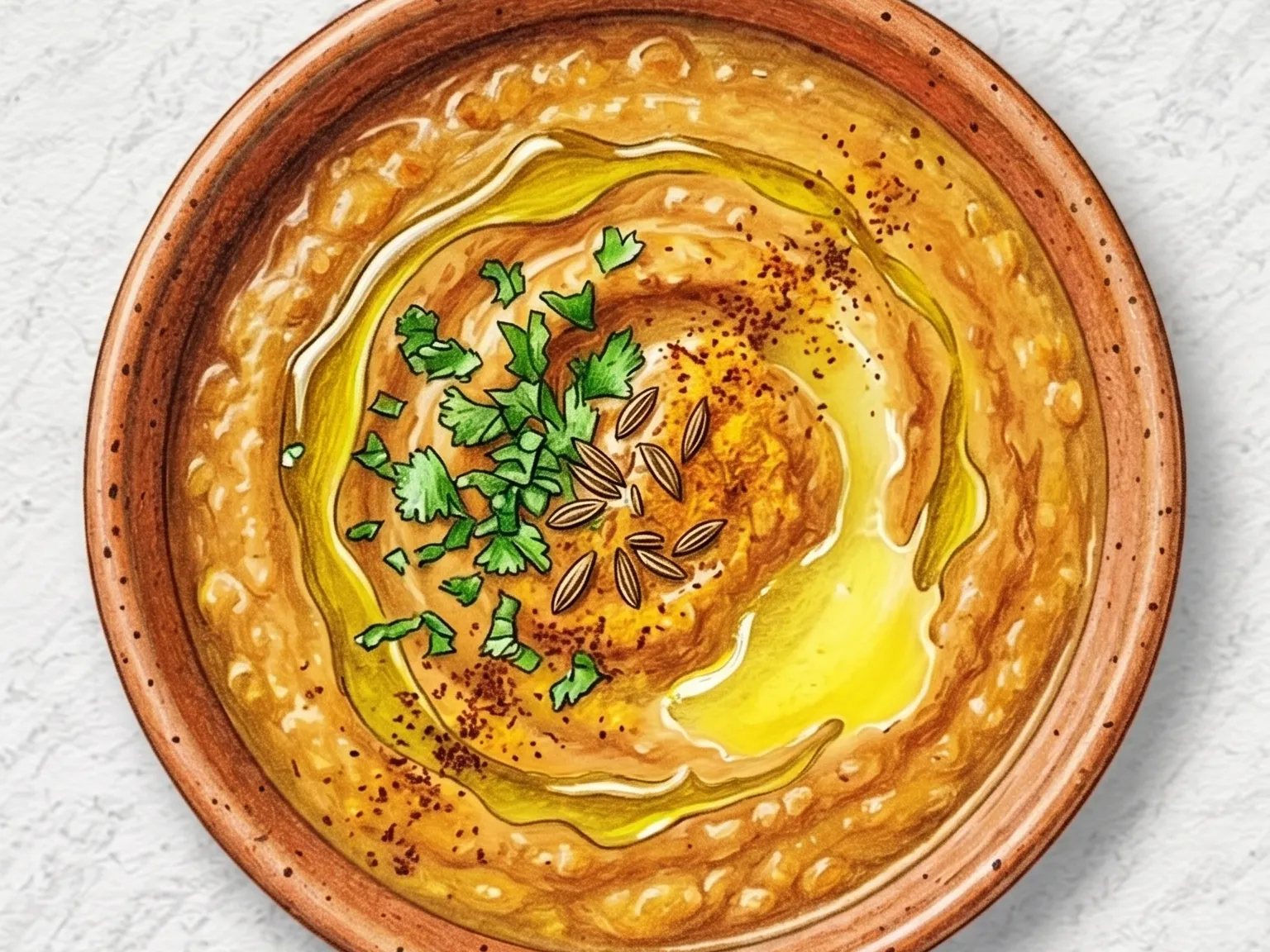
Red lentils split during about 20 minutes of gentle simmering, thickening this soup into a golden broth without a separate flour or starch mixture. Cumin and turmeric are briefly heated in the oil after the onion and garlic, while the lemon juice is held back until the pot is off the heat. For 4 servings, the recipe uses 300 g red lentils and 1000 ml vegetable stock. Rinse the lentils under running water until the water looks mostly clear, then drain them well. Finely chop 1 onion and 3 garlic cloves so they soften evenly throughout the soup. Of the 2 tablespoons olive oil, reserve a small portion for the finished bowls and put the rest in the pot. Cook the onion over medium heat for about 5 minutes, stirring often, until it becomes translucent without browning. Add the garlic and cook it for 1 minute, only until the raw smell fades. Stir in 1.5 teaspoons cumin and 0.5 teaspoon turmeric. Let the spices heat in the oil for 30 seconds to release their aroma, then move on before they scorch. Add the drained lentils, 1000 ml vegetable stock, and 1 teaspoon salt, and bring the pot to a boil. Reduce to gentle heat and simmer for about 20 minutes. Stir from time to time so the softening lentils do not stick to the bottom. The base is ready when the lentils have split and the soup has become thick and golden. If a smoother texture is wanted, use a hand blender on only half of the soup. Leaving the other half unblended preserves some body and avoids turning the entire pot into a gluey puree. Turn off the heat before stirring in 2 tablespoons lemon juice, then taste and adjust the salt if needed. Divide the soup among bowls and drizzle the olive oil reserved at the beginning over the surface. The final bowl combines the earthy cumin and turmeric with fresh acidity added after cooking, while the broken lentils supply the creamy texture.

🥗 Light & Healthy 🏠 Everyday
Prep 10min Cook 30min 4 servings
Lobster Bisque
Soups Hard

Lobster Bisque

Lobster bisque serves as a foundational dish within the French culinary tradition, specifically categorized as a smooth cream soup based on crustacean shells. The preparation begins by roasting the lobster shells in butter until they reach a dark, saturated color, a step that develops the base flavors of the dish. This is followed by a flambe process using cognac, which serves to eliminate any lingering bitterness from the shells while introducing a layer of smoky depth to the mixture. Once the shells are prepared, they are placed in a pot with fish stock, whole tomatoes, and a selection of aromatic vegetables to simmer for a minimum of thirty minutes. This extended simmering time allows for the maximum extraction of flavor from the lobster shells into the surrounding liquid. After the simmering process is complete, the mixture is passed through a fine sieve to remove all solid fragments and ensure a uniform consistency. The resulting broth is then combined with heavy cream, which provides a thick and velvety texture that characterizes the final soup. Fresh tarragon is incorporated to provide an herbal element that balances the concentrated richness of the cream and seafood. The lobster meat, which was set aside earlier in the process, is stirred into the hot liquid at the final stage of preparation to ensure that its texture remains tender and does not become tough. The final result is a soup that features a concentrated essence of the ocean and represents one of the most technical and polished preparations found in French cooking.

🎉 Special Occasion 🍺 Bar Snacks
Prep 30min Cook 60min 4 servings
Lotus Root Surinagashi Miso Soup
Soups Medium

Lotus Root Surinagashi Miso Soup

Lotus root surinagashi is a central Miyazaki miso soup made by coarsely grating unpeeled lotus root directly into gently heated dried-horse-mackerel stock. Its own starch and mucilage thicken the broth without added flour. Also called gorigori-jiru, it is a winter restorative dish associated with the stringy Suijin-sama lotus grown in the pond beside Mizunuma Shrine. Cultivation is said to have begun when the Takanabe domain encouraged planting a good Yamato variety to strengthen local finances. To preserve the lotus root's thread-forming viscosity, the surface is scrubbed clean but not peeled or soaked in vinegar water. Grating through a coarse oroshi over broth that is not boiling hard leaves both tiny pieces and a softly flowing body.

🏠 Everyday 🥗 Light & Healthy
Prep 480min Cook 20min 4 servings
Korean Seaweed Winter Soup
Soups Easy

Korean Seaweed Winter Soup

Maesaengi-guk is a winter soup featuring thread-like green seaweed cooked in a savory anchovy stock. The process starts by warming sesame oil over low heat and sautéing minced garlic briefly to release its aroma without browning it. Anchovy stock is then added to create a clean broth. The delicate seaweed is added when the stock simmers, and it is immediately loosened with chopsticks. Simmering the seaweed for only three to four minutes keeps its deep green color and sea scent intact, as overcooking will destroy its delicate structure. The soup is seasoned with soup soy sauce, salt, and black pepper. After adding green onions and cooking for another minute, the pot is covered and rested off the heat for two minutes to allow the flavors to distribute evenly throughout the silky soup.

🥗 Light & Healthy 🏠 Everyday
Prep 12min Cook 15min 4 servings
Korean Seaweed and Oyster Soup
Soups Easy

Korean Seaweed and Oyster Soup

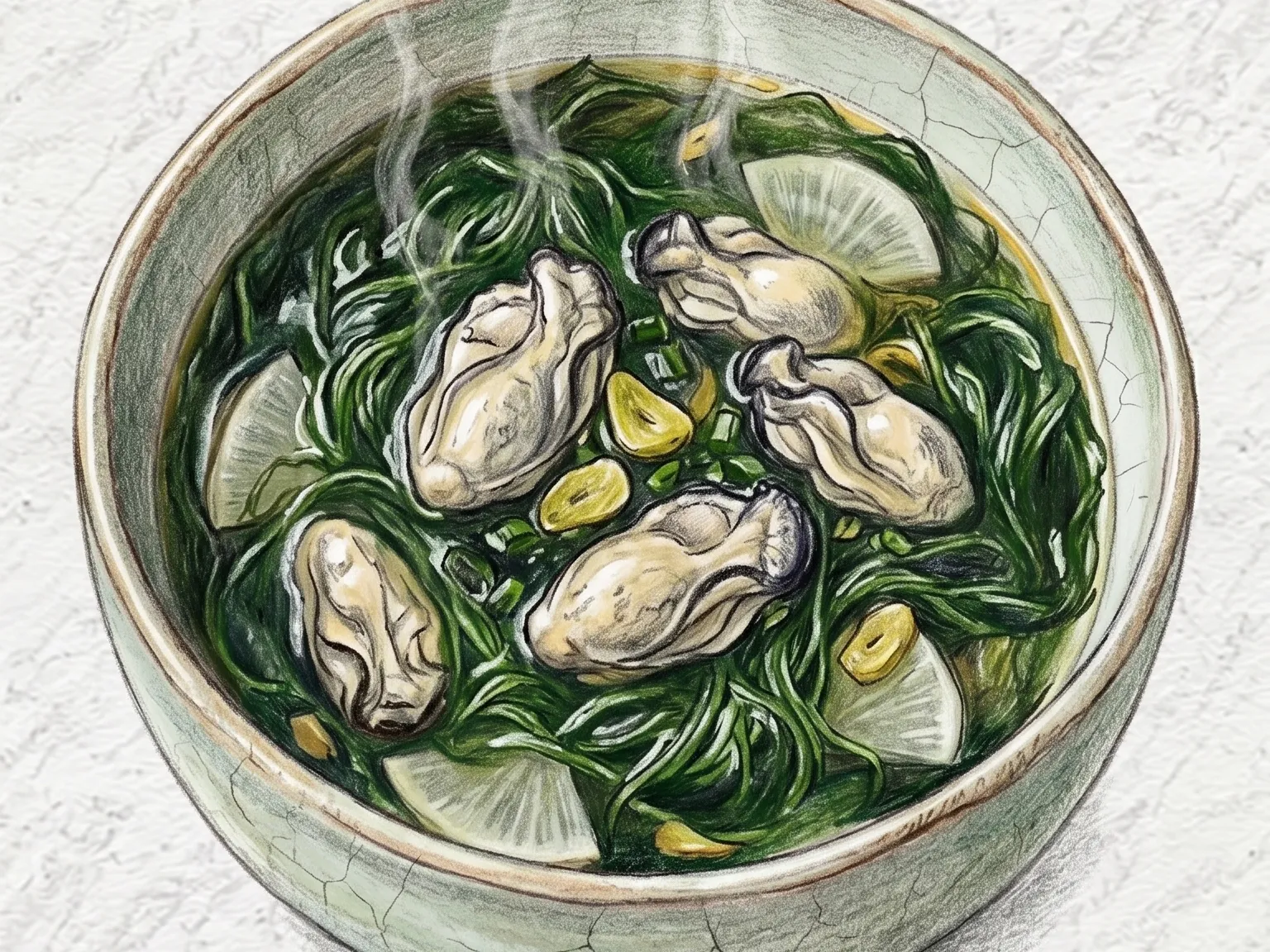
Maesaengi-gul-guk is a light winter soup pairing two peak-season ingredients, capsosiphon seaweed and fresh oysters, that together produce a broth with an intense marine character neither delivers alone. Julienned radish and garlic are sauteed in sesame oil first to coax out sweetness, then water is added and brought to a boil before the oysters go in for three minutes. The oysters release their brininess into the stock, building the flavor base without any additional seasoning beyond soup soy sauce and a pinch of salt. The seaweed is added last and simmered for only two minutes, just long enough for it to soften while retaining its silky texture and faint oceanic scent. Both ingredients are best from November through February, so the soup is at its peak during those winter months. Because the oysters contribute significant salt on their own, seasoning should be done gradually at the end to avoid oversalting. The soup is warming and easy to digest, making it a natural fit for recovery meals and winter breakfasts.

🏠 Everyday 🥗 Light & Healthy
Prep 15min Cook 12min 2 servings
Korean Spicy Blue Crab Hot Pot
Soups Medium

Korean Spicy Blue Crab Hot Pot

Maeun kkotge jeongol is a fiery blue crab hot pot made with two whole crabs broken down and simmered in a gochujang and gochugaru-laced broth. The crab shells and innards gradually release a deep, concentrated shellfish essence into the pot, which layers with the fermented chili paste to produce a broth that is bold and complex rather than simply hot. Daikon radish and tofu absorb the spicy liquid as they cook, becoming flavorful in their own right, while thick green onion stalks add fragrance near the end. This is a communal dish meant to be placed in the center of the table over a portable burner and shared as it simmers, with a little water added as the broth reduces to keep it going through the meal. Stirring the crab innards directly into the broth deepens the umami considerably.

🍺 Bar Snacks 🎉 Special Occasion
Prep 20min Cook 20min 2 servings
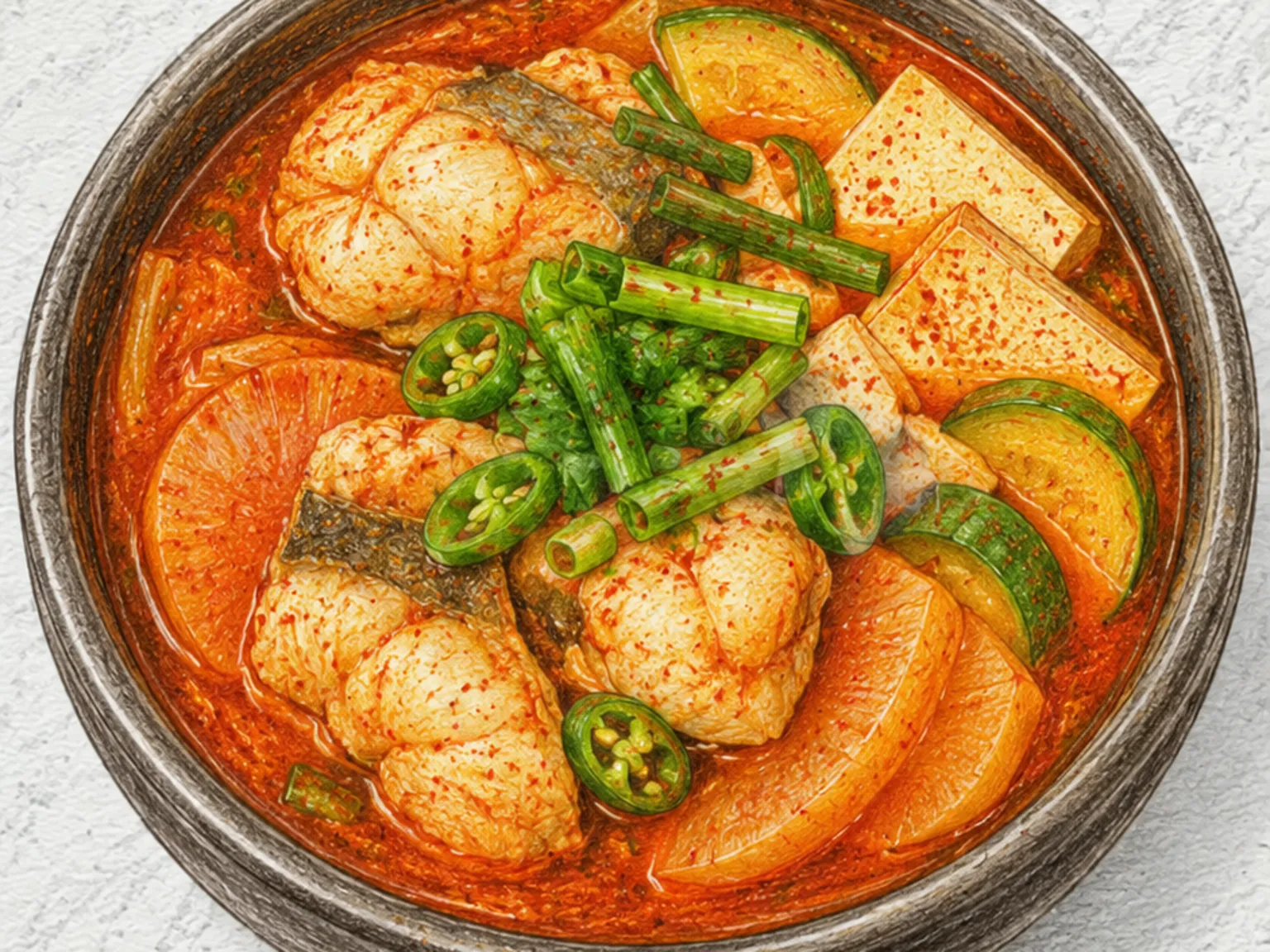
Maeuntang (Spicy White Fish Radish Stew)
Soups Medium

Maeuntang (Spicy White Fish Radish Stew)

Maeuntang is a traditional Korean spicy fish stew centered on white-fleshed fish such as cod or frozen pollock. The fish is salted for ten minutes before cooking, which draws out excess moisture and the compounds responsible for fishiness, resulting in a cleaner-tasting broth. Radish goes into the pot first and simmers until its clean, mild sweetness dissolves into the water, forming the base. Gochujang, gochugaru, soup soy sauce, and minced garlic are then stirred in to build the spiced, savory broth. The fish and tofu are added together and cooked for ten minutes without being turned over. Instead, hot broth is repeatedly ladled over the top surface so the fish cooks evenly without the flesh breaking apart. Zucchini, green onion, and cheongyang chili are added in the final three minutes to preserve their color and slight crunch. A half tablespoon of doenjang stirred in at the end adds a secondary layer of umami that deepens and rounds out the broth considerably.

🏠 Everyday 🥗 Light & Healthy
Prep 15min Cook 25min 2 servings
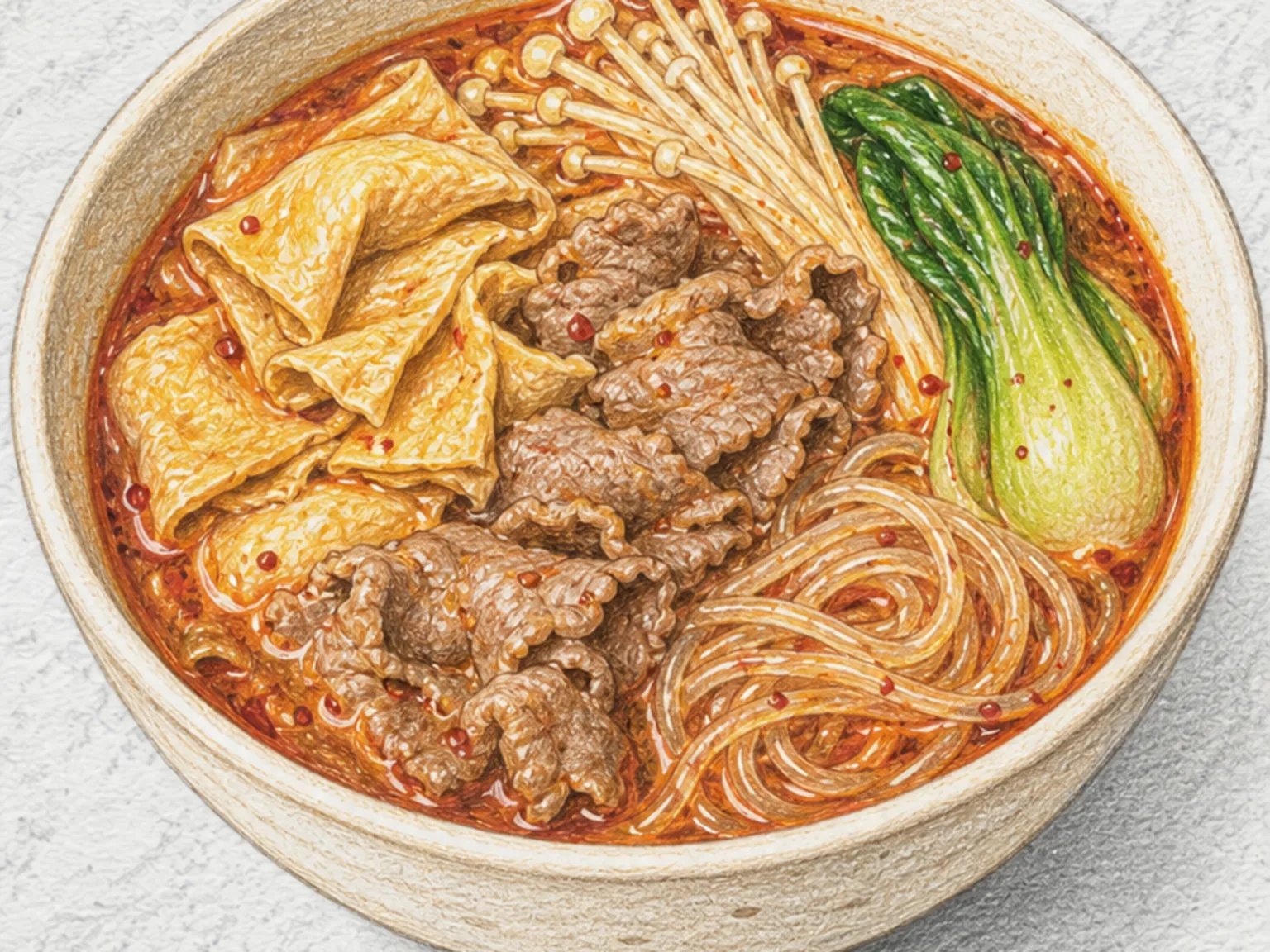
Mala Tang Hot Pot
Soups Medium

Mala Tang Hot Pot

Mala tang is assembled by simmering Chinese flat glass noodles, bean-curd sheets, enoki mushrooms, thin beef brisket, and bok choy in beef-bone broth seasoned with mala paste. The flat noodles need a thorough soak in lukewarm water before cooking; otherwise the exterior can swell while the dense center remains hard. Bring the broth to a boil and dissolve the mala paste with a ladle until no concentrated clumps of spice or oil remain. Commercial pastes differ substantially in salt and fat, so taste the seasoned broth before adding more rather than assuming that a larger amount will improve it. Ingredients enter the pot according to their cooking time. Begin with the soaked noodles, bean curd, and enoki, which tolerate a longer simmer and need time to take on the broth. When the noodles are turning translucent, add the thinly sliced beef, bok choy, minced garlic, and green chili. Cook until no raw red areas remain in the beef, but stop before the bok choy loses all of its crispness. Skim the foam from the surface and transfer the soup to a large bowl while it is still very hot. The broad noodles carry the numbing, chili-rich broth; bean curd provides a chewy layer, enoki and bok choy add lighter textures, and the beef-bone base gives enough savory body to support the forceful mala seasoning. Serving the components together rather than overcooking them into one texture is what keeps the bowl interesting from the first bite to the last.

🏠 Everyday 🔥 Trending Now
Prep 145min Cook 15min 2 servings
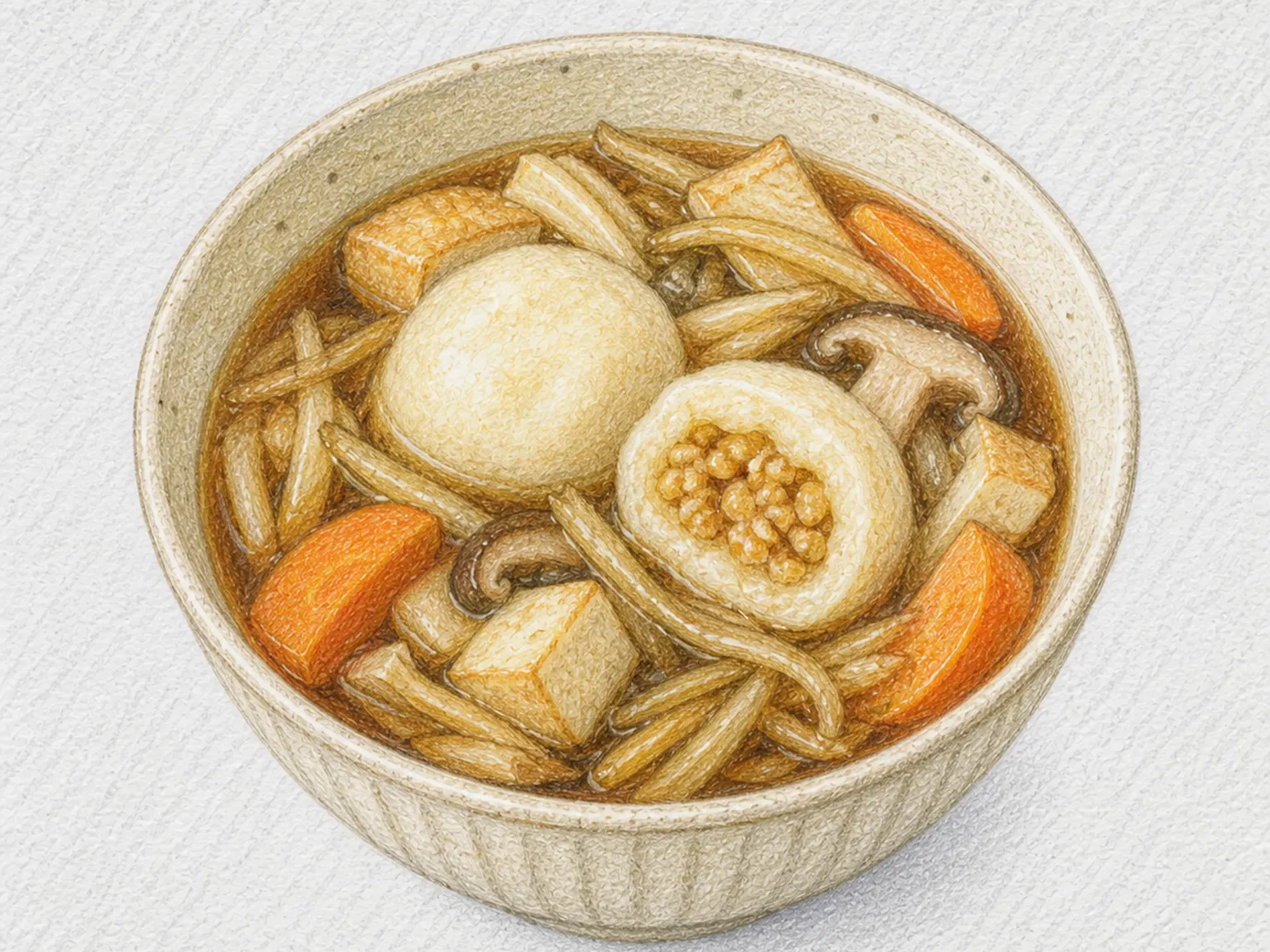
Mamebu-jiru (Walnut Dumpling Soup)
Soups Hard

Mamebu-jiru (Walnut Dumpling Soup)

Mamebu-jiru is a regional soup from Yamagata-cho in Kuji, Iwate, containing carrot, burdock, grilled tofu, kanpyo, mushrooms, and wheat dumplings filled with walnut. It is linked to flour dumplings that may have replaced celebratory noodles during poor Edo-period harvests, and it remains associated with New Year, ceremonial meals, and winter cooking. For four servings, soak one 15cm piece of kombu and six cleaned niboshi in 1400ml water for 20 minutes. Remove the kombu just before boiling, simmer the niboshi for 5 minutes, and remove them to leave a clear stock. Rehydrate 15g dried shimeji and 10g kanpyo separately for 20 minutes. Boil the kanpyo for 8 minutes, rinse it, and cut it to 1.5cm. For the mamebu, mix 200g flour with 1g salt, add 100ml water gradually, and knead for 7 minutes. Divide the dough into thumb-tip portions, enclose a small walnut piece in each one, pinch every seam fully closed, and dust the rounds lightly with potato starch. A small touch of water along a dry edge helps seal it so the walnut does not escape in the soup. Add 70g carrot, 80g burdock, the mushrooms, and kanpyo to the stock and cook for 12 minutes. Season with 45ml soy sauce and the remaining 2g salt, then add grilled tofu and blanched aburaage for 3 minutes. Keep the broth boiling as the dumplings go in one at a time so they do not stick together. After all of them float, cook for another 4 minutes. Split the largest one to confirm that no dry flour remains at the center and that its walnut is hot. Divide dumplings, roots, and tofu evenly among the bowls and serve hot. Move leftovers to shallow containers and refrigerate within two hours.

🎉 Special Occasion
Prep 40min Cook 35min 4 servings
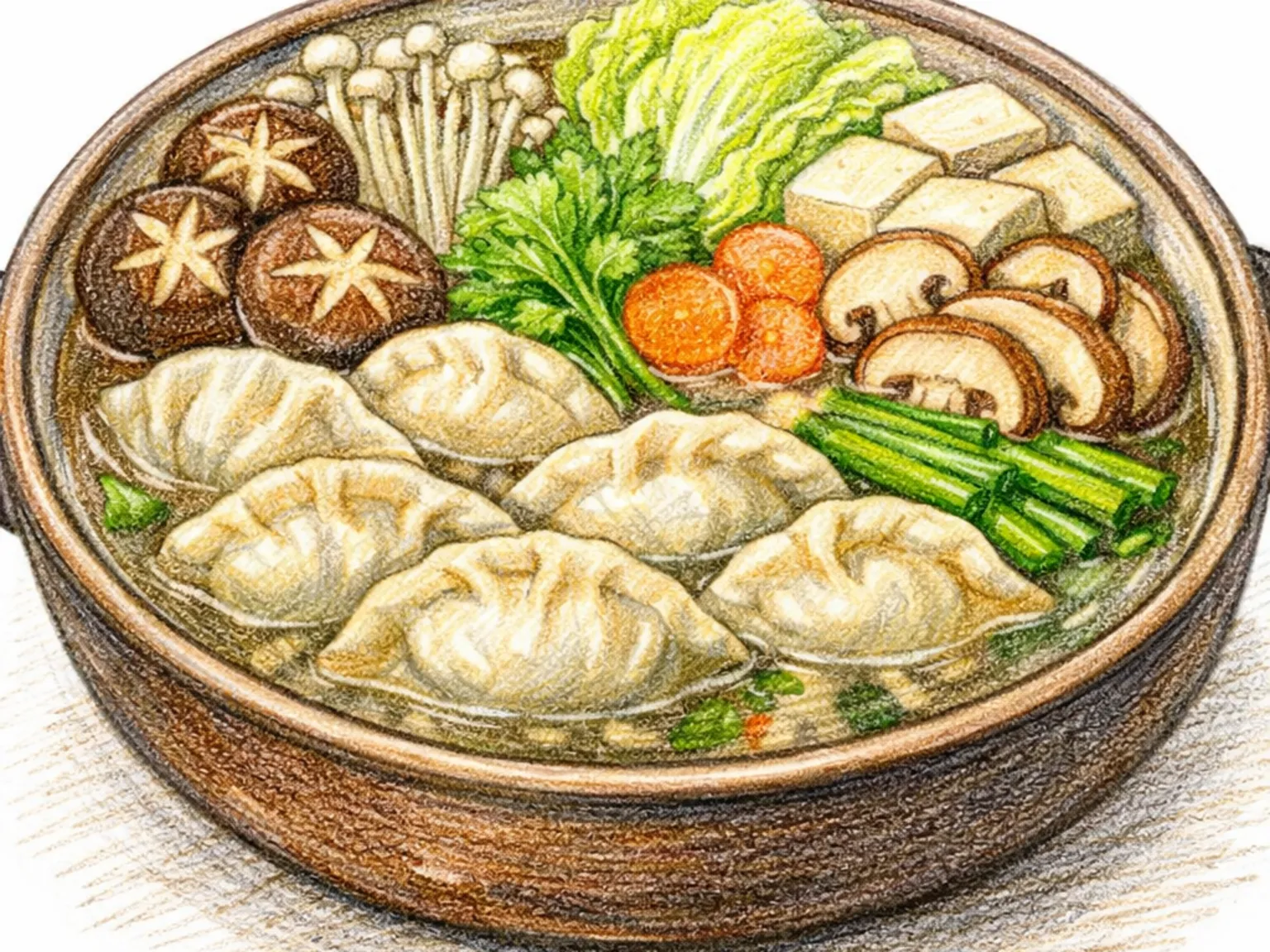
Korean Mushroom Dumpling Hot Pot
Soups Easy

Korean Mushroom Dumpling Hot Pot

Mandu jeongol is a generous hot pot of twelve large dumplings simmered with napa cabbage, shiitake mushrooms, oyster mushrooms, and bok choy in anchovy-kelp stock. The two varieties of mushroom add layers of umami to the clear broth, while the cabbage and bok choy soften and release their natural sweetness as they cook. The dumplings cook directly in the simmering stock, their wrappers gradually turning chewy as the filling flavors seep into the surrounding liquid. Soup soy sauce and garlic provide a clean, understated seasoning that keeps the broth from overshadowing any single ingredient. The right moment to eat is when the vegetables have wilted and the dumplings float to the surface, signaling they are cooked through. The absence of any spice or strong seasoning makes this one of the more universally approachable hot pots, suited for all ages. Leftover broth absorbs cooked rice or soaked glass noodles easily, turning what remains into a satisfying finish to the meal.

🏠 Everyday 🎉 Special Occasion
Prep 15min Cook 20min 4 servings
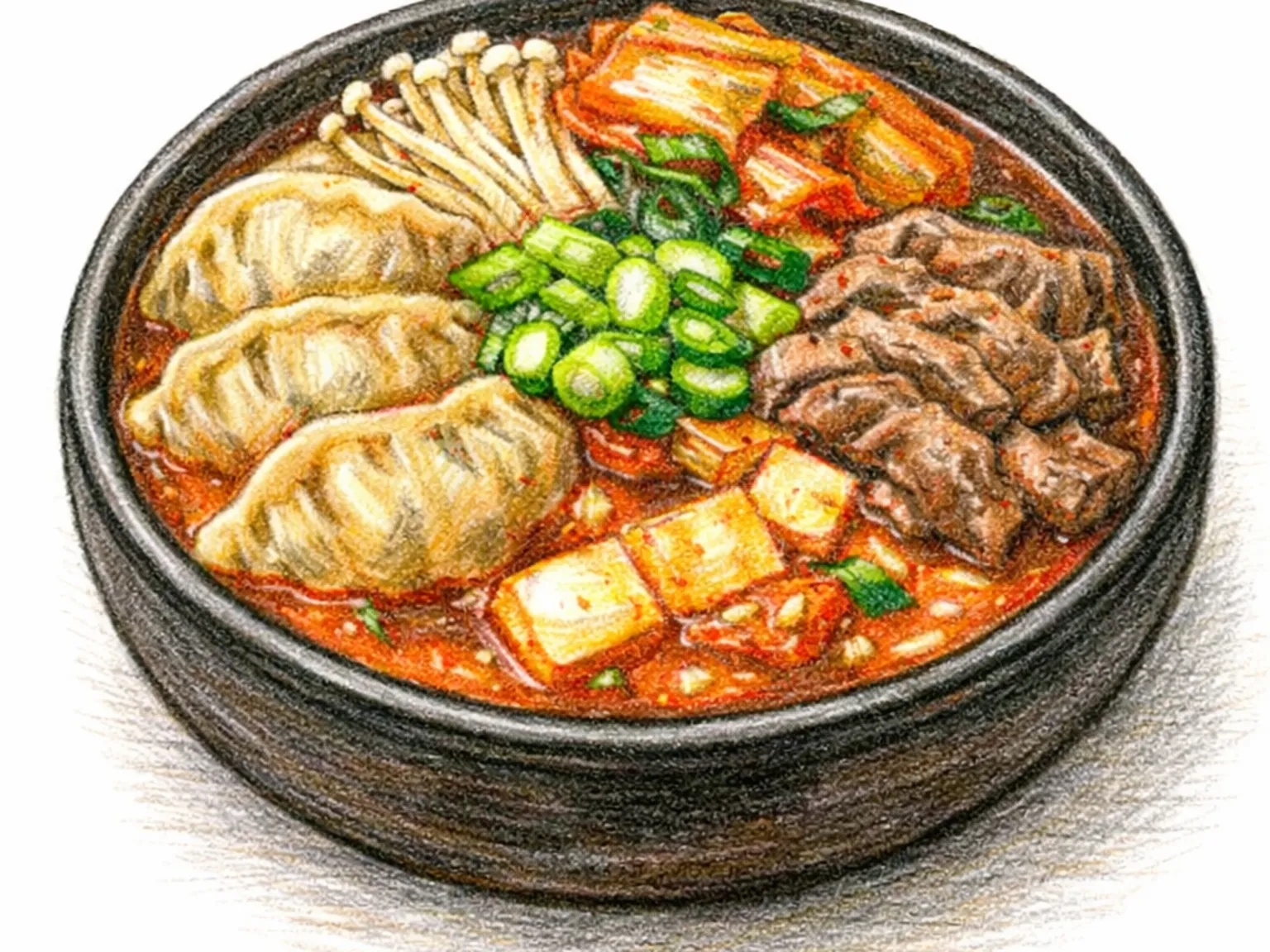
Korean Kimchi Beef Dumpling Hot Pot
Soups Medium

Korean Kimchi Beef Dumpling Hot Pot

Kimchi-beef mandu jeongol is a generous Korean hot pot that combines frozen dumplings, thinly sliced beef, and aged kimchi in anchovy stock seasoned with gochujang and soup soy sauce. As the pot bubbles, the meat filling inside each dumpling leaches its savory fat into the broth while the kimchi's fermented sourness and heat layer in on top, building a soup that grows more complex the longer it simmers. Napa cabbage leaves, enoki mushrooms, and firm tofu add contrasting textures to each spoonful. Blanching the beef briefly before adding it to the pot prevents the broth from clouding, and the tofu goes in last to keep it intact. The older and more pungent the kimchi, the deeper and more rounded the soup becomes, which is why well-fermented kimchi is worth seeking out for this dish specifically. A drop of perilla oil stirred in just before serving adds a nutty finish that ties the layers together. Eaten communally from the stove, with rice stirred in at the end to absorb the remaining broth, this pot feeds a table with minimal effort.

🎉 Special Occasion 🌙 Late Night
Prep 25min Cook 30min 4 servings
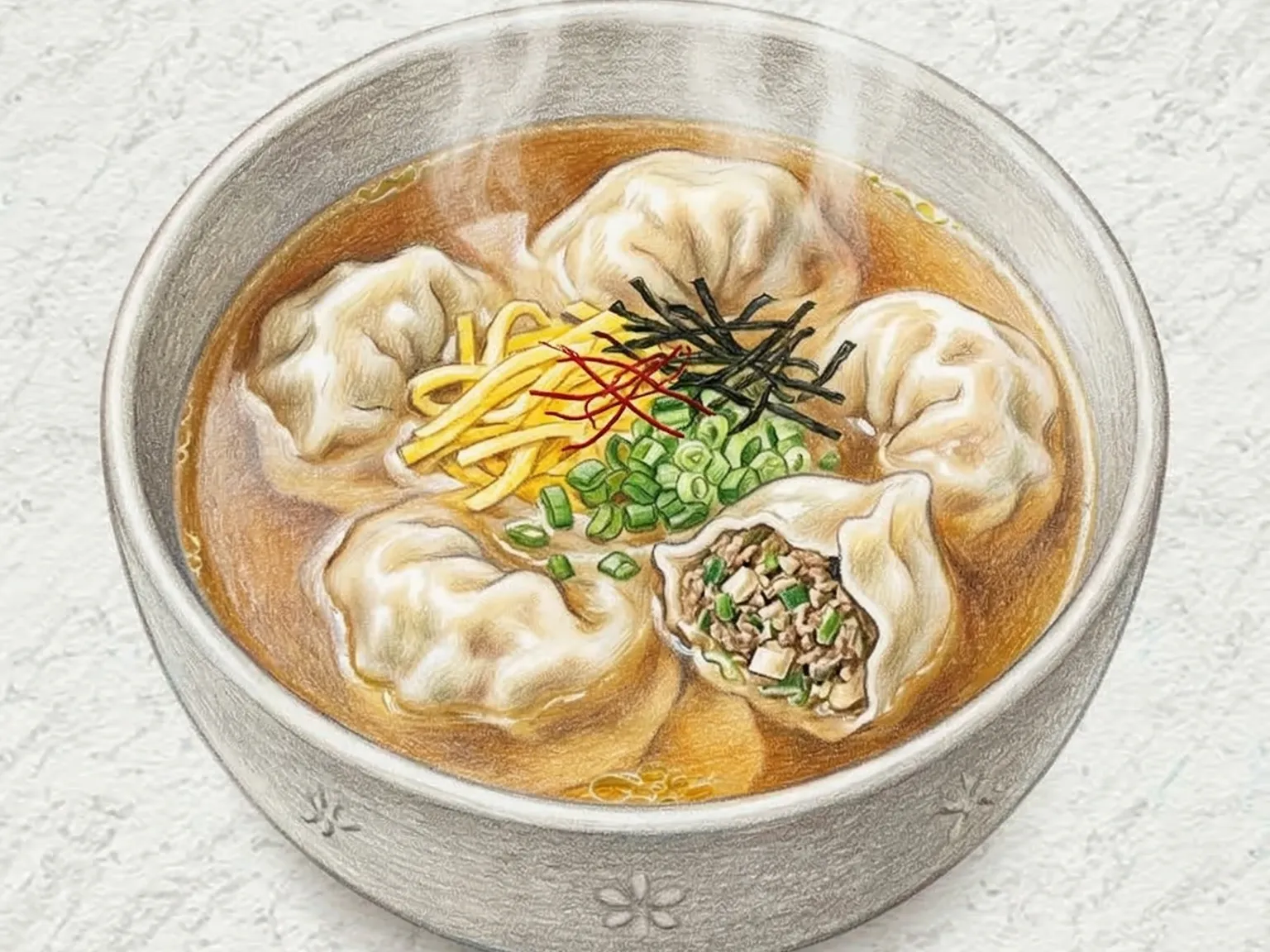
Manduguk (Korean Dumpling Clear Broth Soup)
Soups Easy

Manduguk (Korean Dumpling Clear Broth Soup)

Manduguk is a Korean dumpling soup in which hand-folded dumplings stuffed with ground pork, tofu, scallion, and garlic are dropped into a clear, simmering broth, typically anchovy-kelp stock or beef broth, and cooked until they float. As the dumplings cook, their thin wheat-flour wrappers release a subtle starch that gives the broth a barely perceptible body, while the filling leaks savory juices that enrich the liquid gradually. A thin drizzle of beaten egg stirred in near the finish creates silken wisps on the surface of the broth and gives the bowl a more finished appearance. Shredded egg strips and crumbled dried seaweed scattered on top add a pleasant contrast in color and a faint oceanic note to the flavor. Many Korean households serve manduguk on Lunar New Year as an alternative to tteokguk, and some combine the two by adding sliced rice cakes alongside the dumplings. Dumplings can be made in large batches and frozen raw, which means this soup can be pulled together quickly on weeknights without sacrificing any of the flavor that comes from homemade filling. A small dish of soy-vinegar dipping sauce served alongside lets each person adjust the seasoning at the table, and the light acidity of the sauce cuts through the mild broth in a way that makes the contrast between the two worth trying.

🏠 Everyday 🎉 Special Occasion
Prep 10min Cook 15min 4 servings
Spicy Catfish Stew
Soups Medium

Spicy Catfish Stew

Spicy catfish stew begins with a radish and dried-anchovy broth seasoned with gochujang, red pepper flakes, and garlic, then adds cleaned catfish, hand-torn dough, water dropwort, crown daisy, and scallion. Careful cleaning is essential for this freshwater fish: remove the innards and fins, rub the skin thoroughly with salt to lift away the slippery coating, and rinse before cutting the fish into sections. Simmer the radish with the anchovies first, remove the anchovies, and dissolve the chili seasonings completely so the broth has an even base before the fish goes in. Once the catfish is cooking, avoid aggressive stirring because the tender flesh can separate from the bones and cloud the soup. Gently ladle broth over exposed pieces instead. Thin pieces of wheat dough are added after the fish has had time to cook; they are ready when they float and have absorbed the red broth without a raw flour center. Water dropwort, crown daisy, and scallion belong at the end so they wilt while retaining their fresh aroma. The result combines moist, springy catfish, soft-chewy sujebi, sweet radish, and an assertive chili broth, with the green herbs clearing the palate between rich spoonfuls. Serve it bubbling hot in a wide pot so each bowl can receive fish, dough, vegetables, and broth.

🍺 Bar Snacks
Prep 20min Cook 40min 4 servings
Korean Buckwheat Jelly Cold Broth Bowl
Soups Easy

Korean Buckwheat Jelly Cold Broth Bowl

Memil-muksabal is a chilled Korean dish in which firm blocks of buckwheat jelly sit submerged in cold, seasoned broth. The broth is typically made from anchovy or beef stock, cooled to refrigerator temperature, and sharpened with soy sauce, rice vinegar, and a touch of sugar that balances the acidity. Buckwheat jelly has a neutral, slightly earthy flavor and a slippery, springy texture that absorbs the surrounding seasonings with each bite. Julienned cucumber adds crunch, crushed roasted sesame seeds contribute nuttiness, and shredded dried seaweed brings a gentle oceanic accent. The dish is almost calorie-free compared to noodle soups and digests easily, which is why it appears on Korean tables most frequently during the hottest weeks of summer. Making the jelly from scratch involves boiling buckwheat starch until thick and letting it set, but store-bought blocks simplify the process to little more than slicing and assembling. The cold broth hits the palate first, followed by the yielding texture of the jelly - a sequence that feels instantly cooling.

🥗 Light & Healthy 🏠 Everyday
Prep 20min Cook 10min 2 servings

About Soups

The secret to a great Korean soup lies in building a flavorful stock from anchovies, kelp, or beef bones. This collection covers classic and modern soup recipes you can recreate at home.