Korean Beef Bean Sprout Soup
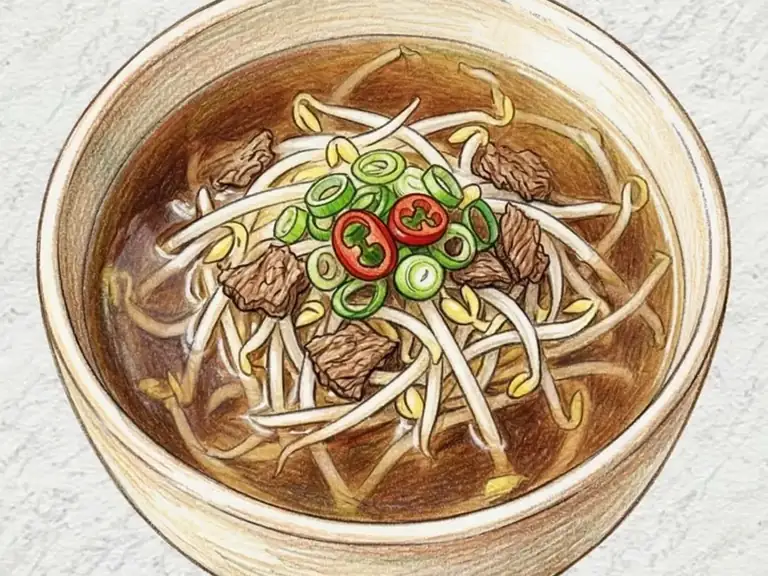
The broth starts from brisket browned in sesame oil, yet the sprouts keep it from feeling heavy. Cooked too long, mung bean sprouts give off a raw smell. The heat goes off while their heads still snap.
1573 recipes. Page 65 of 66
As an Amazon Associate, we may earn from qualifying purchases.
The broth starts from brisket browned in sesame oil, yet the sprouts keep it from feeling heavy. Cooked too long, mung bean sprouts give off a raw smell. The heat goes off while their heads still snap.
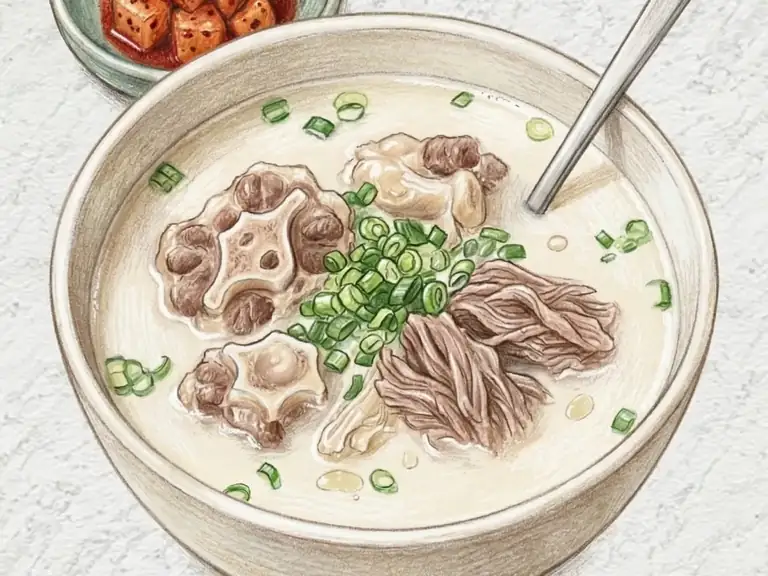
The oxtail soaks in cold water for an hour, gets a quick blanch, and then simmers over low heat for three hours. Left to cool overnight, the broth sets a layer of fat on top that lifts off easily, and the soup is lighter for it. Kkakdugi, cubed radish kimchi, goes on the table with it.
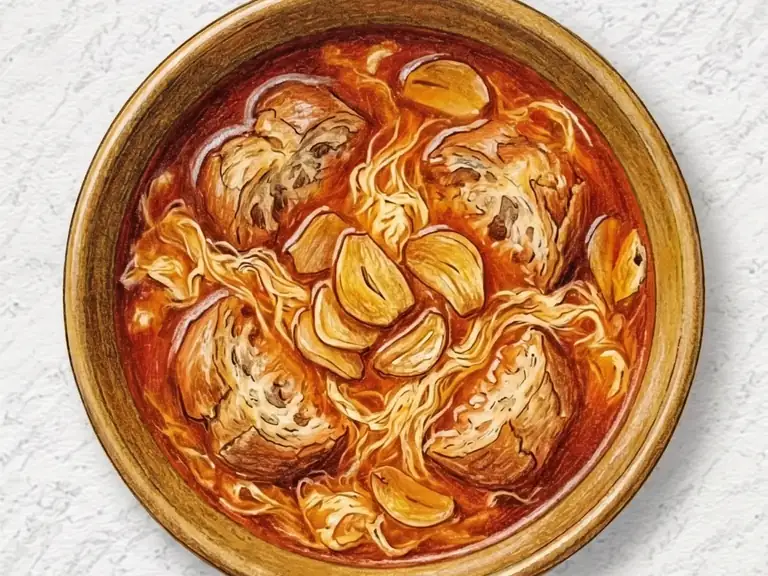
Thinly sliced garlic warmed slowly in olive oil until pale gold sets the flavor of the pot. Pushed further, it turns bitter and the whole pot tastes of it. Day-old baguette soaks up the chicken stock and partly dissolves, thickening the broth without flour, while smoked paprika tints it red and adds a faint smoky note. Beaten egg poured in a thin stream sets into soft ribbons rather than curds.
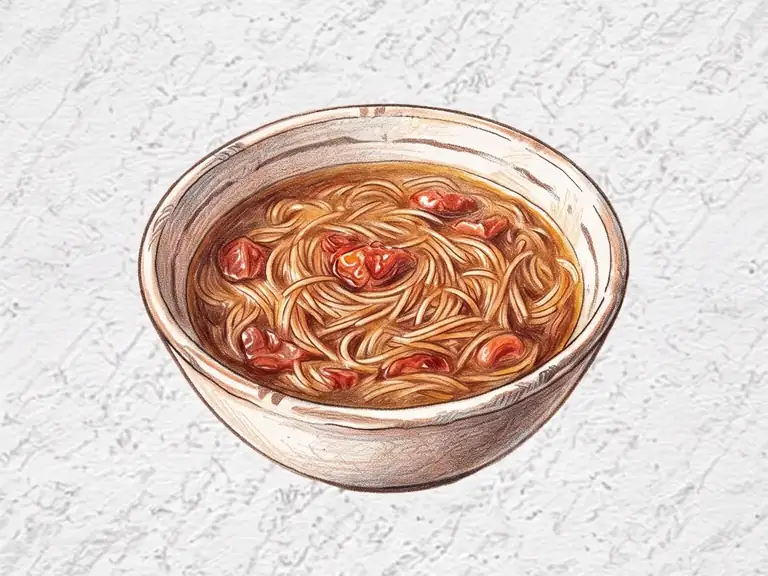
Toast the thin noodles dry in the oil until lightly browned; only then do the blended tomato base and broth join them. Nothing else gets sauteed, since the tomatoes, onion, garlic and spices are blended raw and cook in the 5 to 7 minutes the noodles take to turn tender.
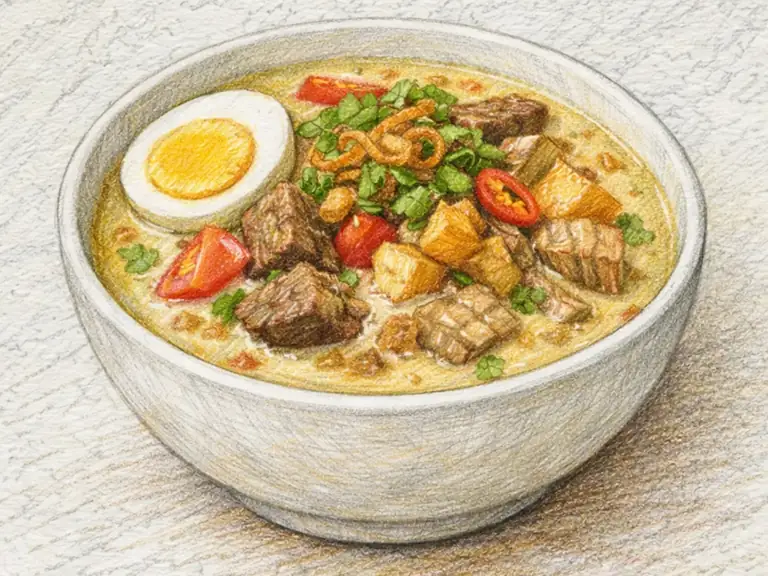
Instead of the offal and many garnishes found in fuller versions of this Jakarta soup, this home recipe makes its beef broth from brisket, coconut milk and a ground paste of onion, garlic and ginger cooked in oil. The milky color comes from the coconut milk added at the end, with no need to wait for a cloudy stock. Brisket is the slow part, and a cooked-looking surface says little; a fork should slide easily into the center. Rice is served on the side.
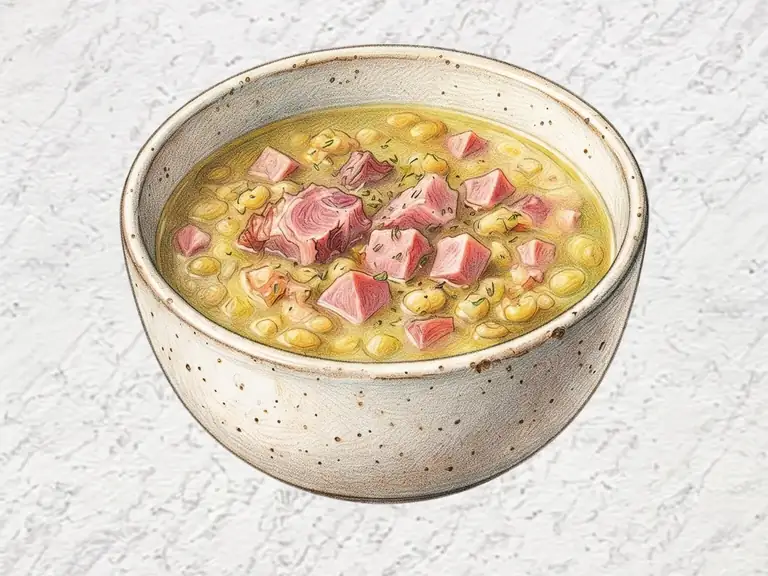
Split peas sink as they soften and catch easily on the bottom of the pot. Stir from the bottom every so often while the soup simmers. The ham hock and diced ham release salt as they cook, which is why only a little salt goes in with the peas and the rest waits until the soup is finished.
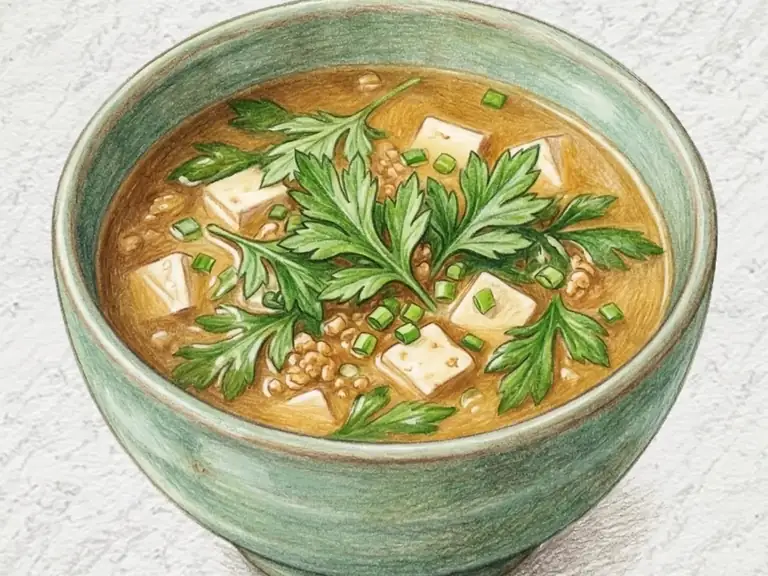
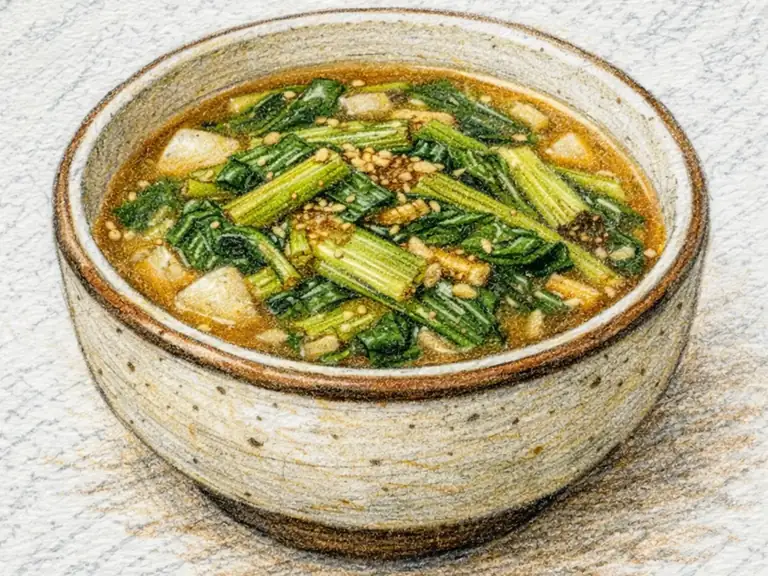
Young mugwort gives a doenjang broth a fresh, green spring aroma, but that aroma fades quickly with heat. The clam meat is cooked through first, so the leaves can be added last over low heat and ladled out the moment they wilt to a bright green.
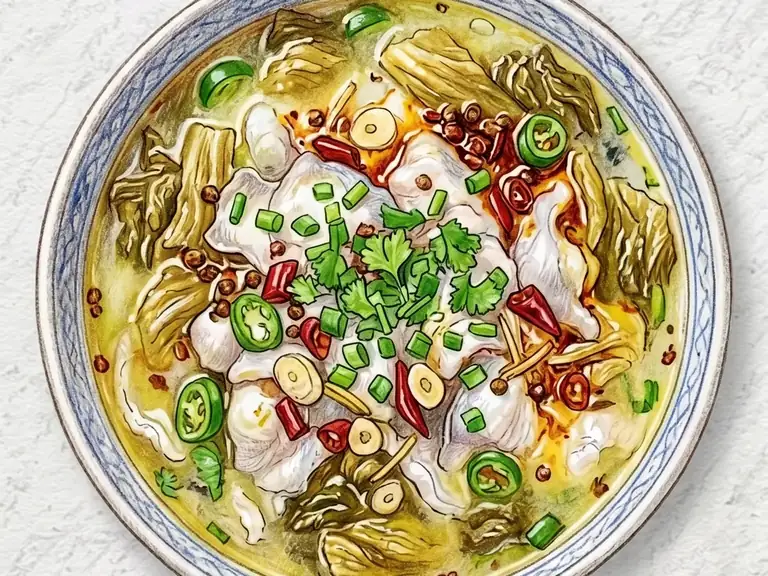
A Sichuan fish soup that gets its sourness from rinsed pickled mustard greens and its heat from dried chilies and chili oil. Thin slices of white fish, lightly coated in starch, turn silky and soft in the red broth.
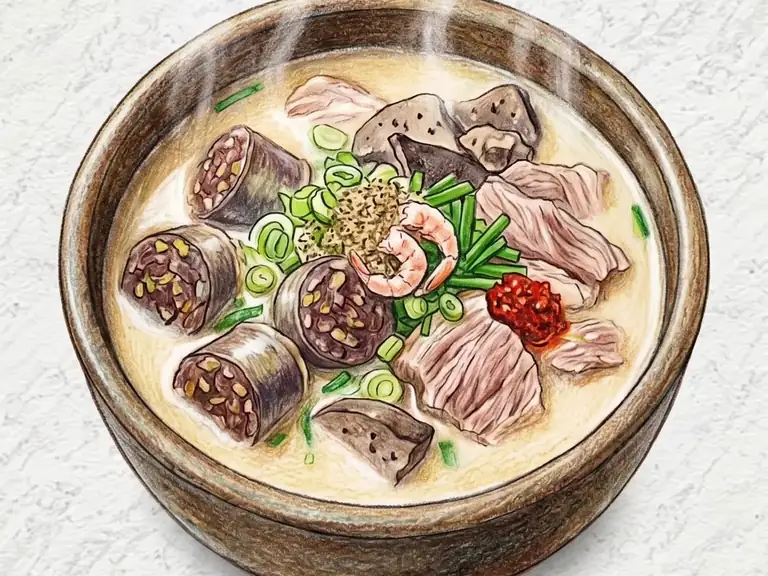
Salted shrimp and chili flakes stay out of the pot and go on the table, and each person sets the salt and heat. The boiled pork goes into the bone broth first to flavor it; the sundae follows and only warms through over low heat, which keeps the casings from splitting.
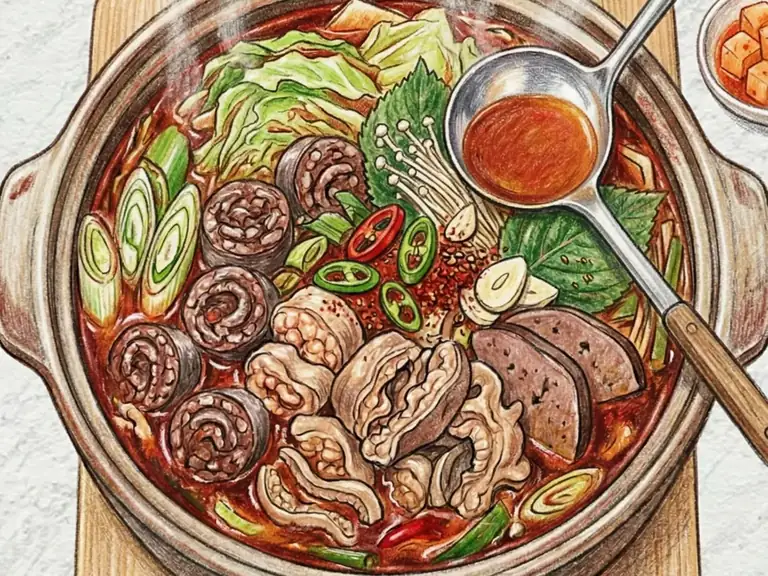
Half a spoonful of doenjang in the chili paste keeps the heat from turning sharp. The sundae sits on cabbage and onion and simmers at the table; the broth grows stronger as it reduces, and the flame comes down as you eat, with the perilla leaves added last.
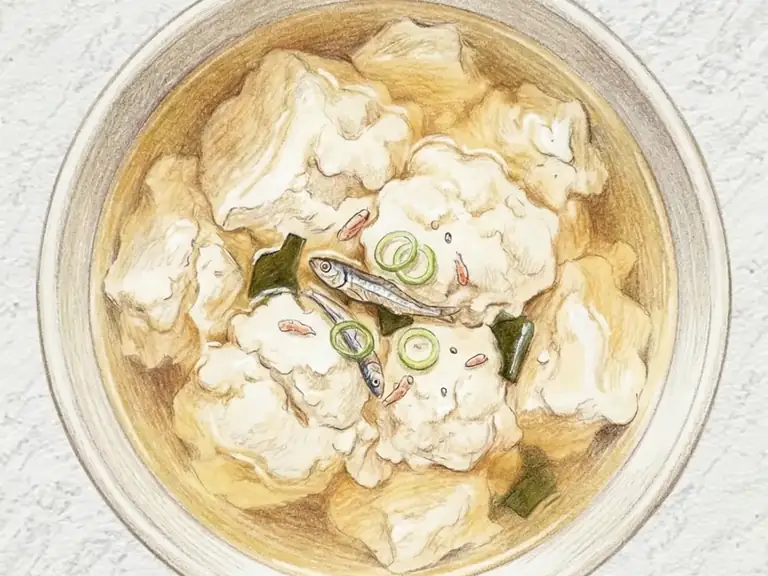
The same soft tofu as in sundubu-jjigae goes in here, but with no chili flakes or chili paste the broth stays clear. Big spoonfuls of tofu are slipped in and left unstirred, and the heating stops once they tremble on a spoon.
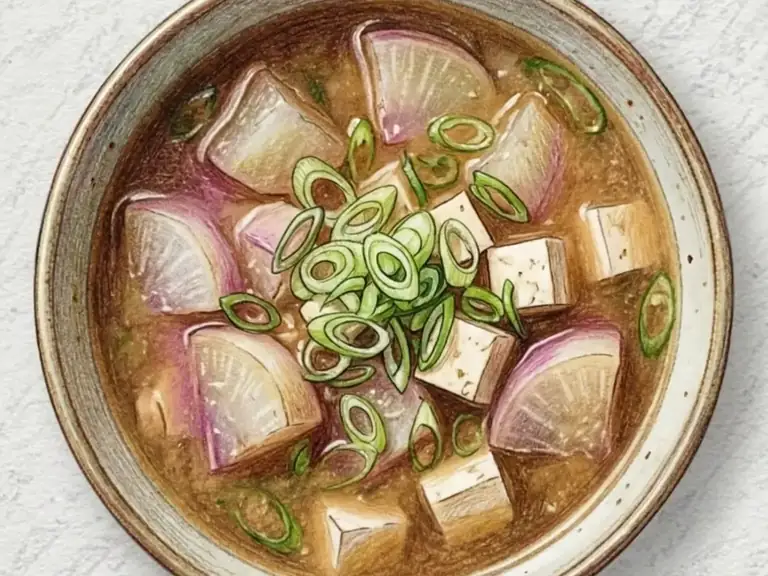
Leaving a little of the purple skin on the turnip gives the doenjang broth a soft tint. Turnip is more delicately sweet than Korean radish, with a faint peppery edge, and the soup tastes different from a radish version because of it. Turnips are in season from autumn into early winter.
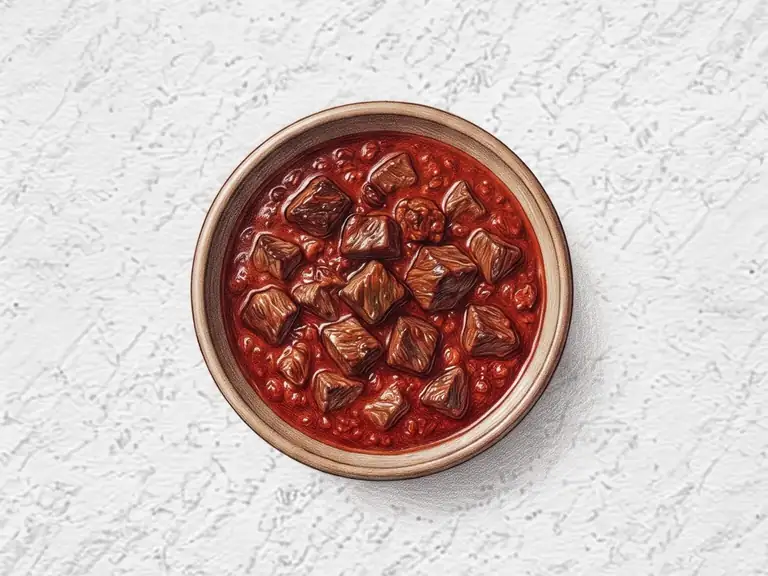
The seasoning starts with dried chiles: toasted in the oven, soaked, then blended smooth with cumin, onion, garlic and stock into a paste. The meat is chuck in 2 cm cubes, and there are no beans. Masa harina, brown sugar and vinegar go in only at the end, and the masa thickens the chili within a few minutes.
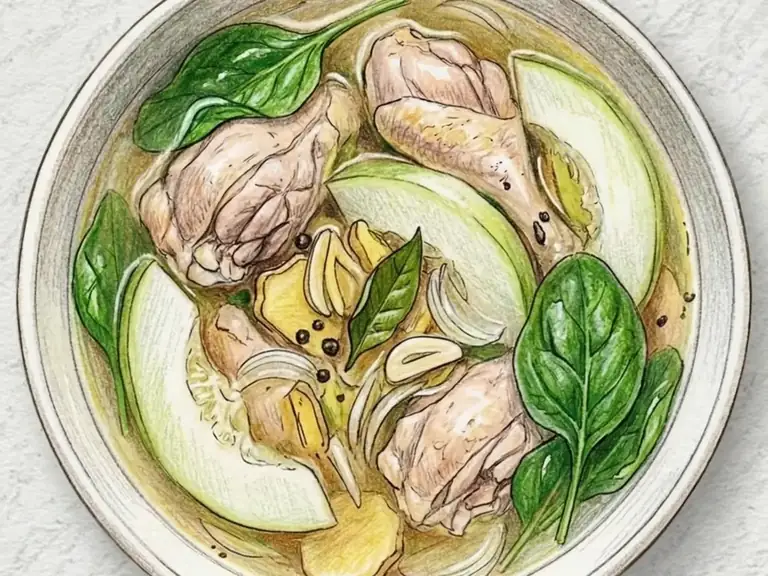
The papaya has to be green and firm, not the ripe fruit, and it is added only after the chicken has simmered, so it softens to fork-tender while keeping its shape. Plenty of julienned ginger, fried first with garlic and onion, gives tinola's clear broth a clean, sharp heat.
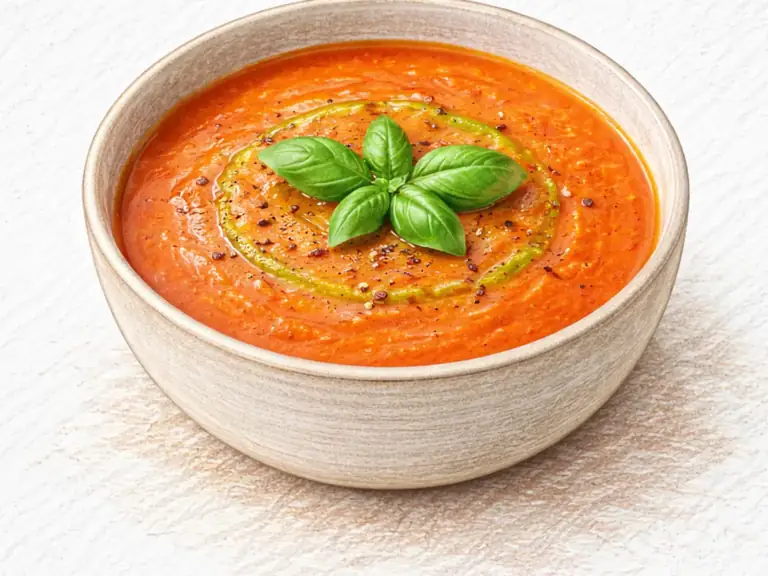
Canned whole tomatoes go in with their juice and are crushed with a spatula and fried first to drive off water. The cream gets only 3 minutes on the heat, and the soup keeps its bright tomato red.
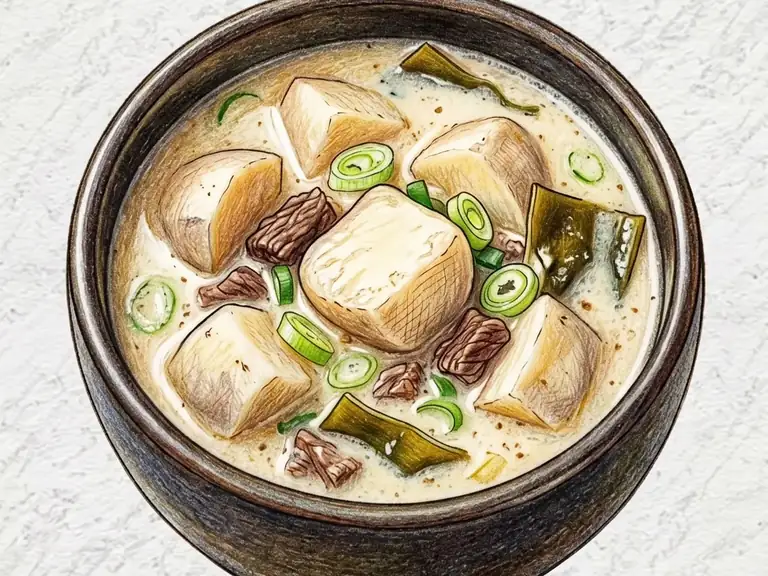
Taro comes into season around Chuseok, the Korean harvest holiday, and this soup often appears on the holiday table. Cooked taro has a finer grain than potato: it crumbles softly yet keeps a slight stickiness, and ground perilla seeds turn the broth milky and nutty. The taro is parboiled in its skin and then rubbed in salted water to wash off the slippery coating, which keeps the soup from turning cloudy or gluey.
Taro stems, the stalks of the taro plant, soak up broth like a sponge but keep a firm, springy chew. A generous amount of ground perilla seed, added in stages, makes the soup pale and thick, and when rice goes into the bowl the broth seeps between the grains.
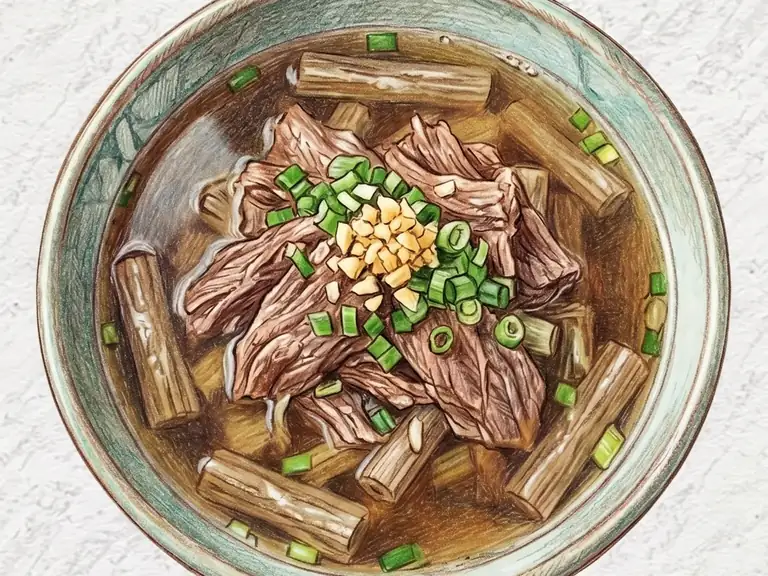
Only two spoonfuls of ground perilla go in, and even with taro stems in the pot this stays close to a clear soup rather than a thick perilla stew. The stems are peeled of their tough outer fibers and the thick ones split by hand, so the chew never turns stringy.
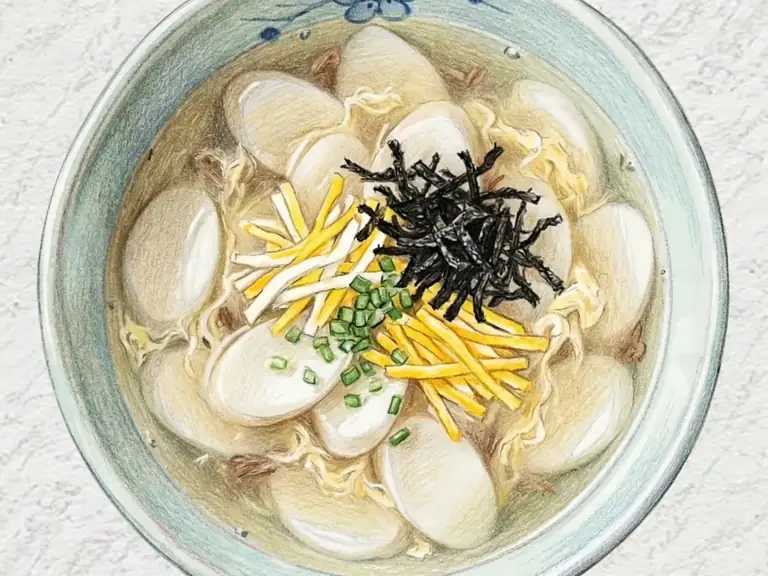
People in Korea still say that eating a bowl on New Year's Day adds a year to your age. In the hot broth the oval slices of rice cake loosen on the surface, giving the soup a little body, while the centers stay dense and chewy. This version simmers bite-sized beef straight in water instead of starting from bone stock, for a lighter broth.
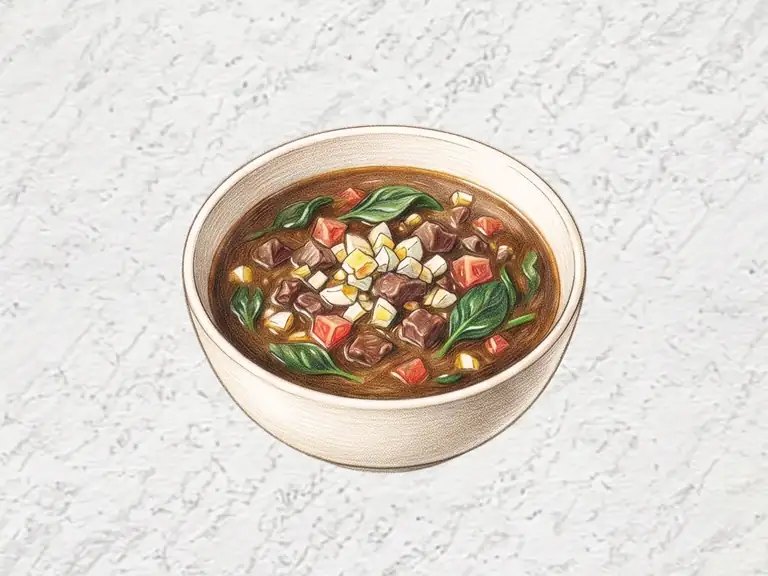
Turtle meat throws off a lot of liquid as it cooks, and it only starts to brown once that liquid has nearly boiled away. The soup's dark brown color is built while the meat and then the vegetables caramelize; the roux comes off the heat while still pale and is there to thicken. With sherry, lemon juice, chopped hard-boiled egg and spinach added at the end, it is hearty enough to serve as a main-course stew.
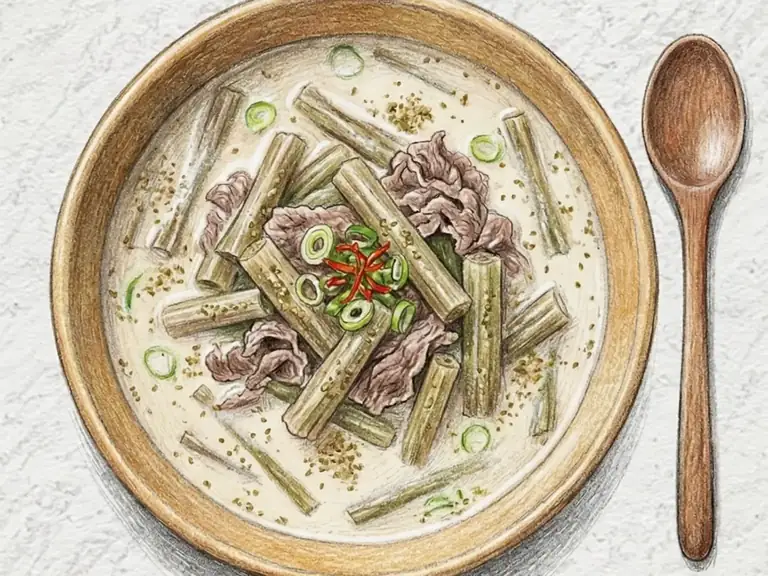
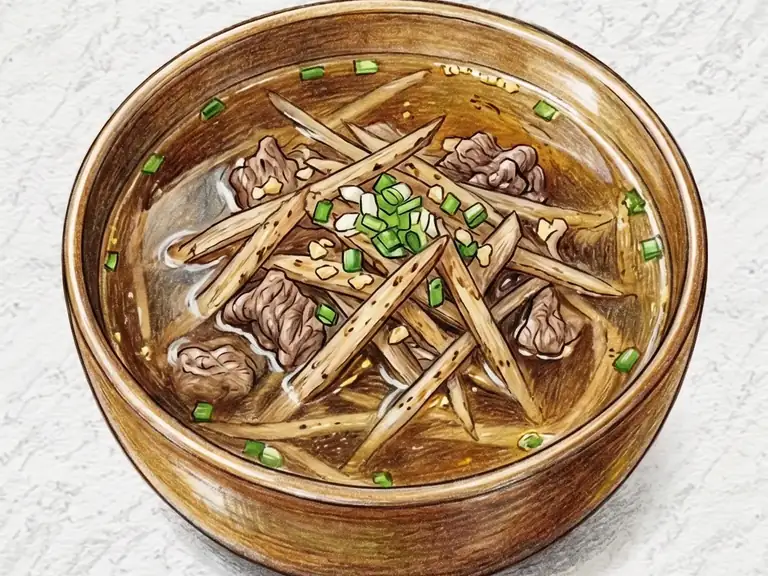
Stir-frying the beef and burdock in sesame oil before any water goes in gives the broth a toasted aroma and a light brown tint. Even after a long simmer the burdock never goes fully soft and keeps some chew. A short soak in cold water after slicing limits browning and astringency.
Doenjang stirred into rice-rinsing water gives this soup a softer, rounder broth. The tough outer napa leaves (ugeoji) simmer until they hang limp from a spoon, and a little cheongyang chili at the end leaves a sharp kick.
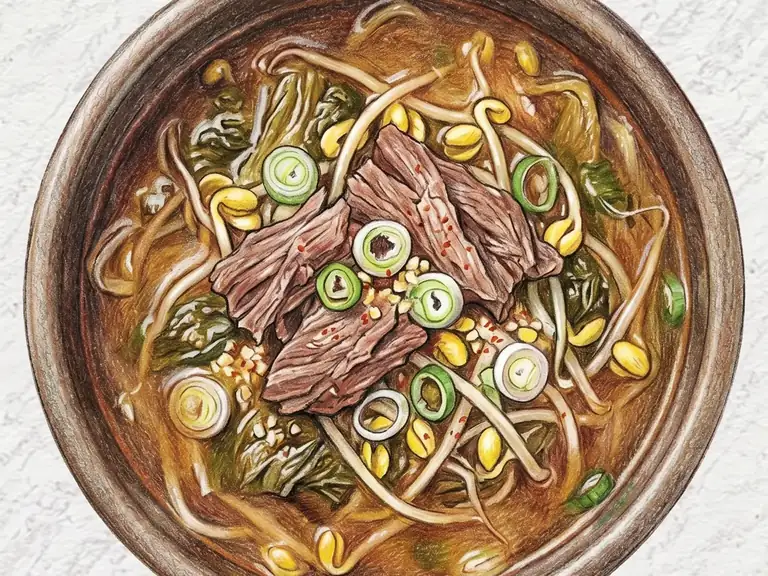
Napa outer leaves (ugeoji) tossed with doenjang go into the broth from boiled beef brisket along with soybean sprouts, and the brisket itself is torn along the grain and returned to the pot. A little chili flake brings mild heat over the doenjang, and the heat goes off while the sprouts still crunch.
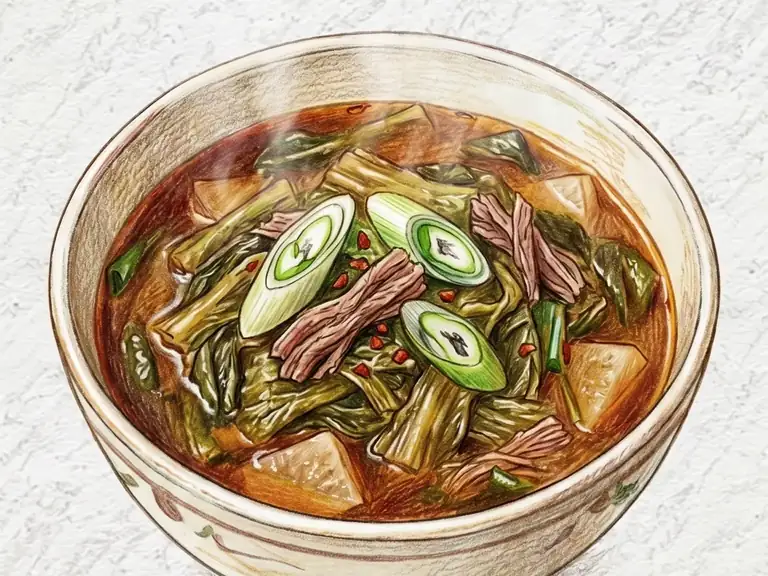
The broth is a ruddy brown, nutty from doenjang and spicy from chili flakes. The outer cabbage leaves (ugeoji) soak it up the longer they simmer, so each soft spoonful of greens comes up full of seasoned broth.