Mee Siam (Singaporean Tangy Tamarind Shrimp Rice Vermicelli)
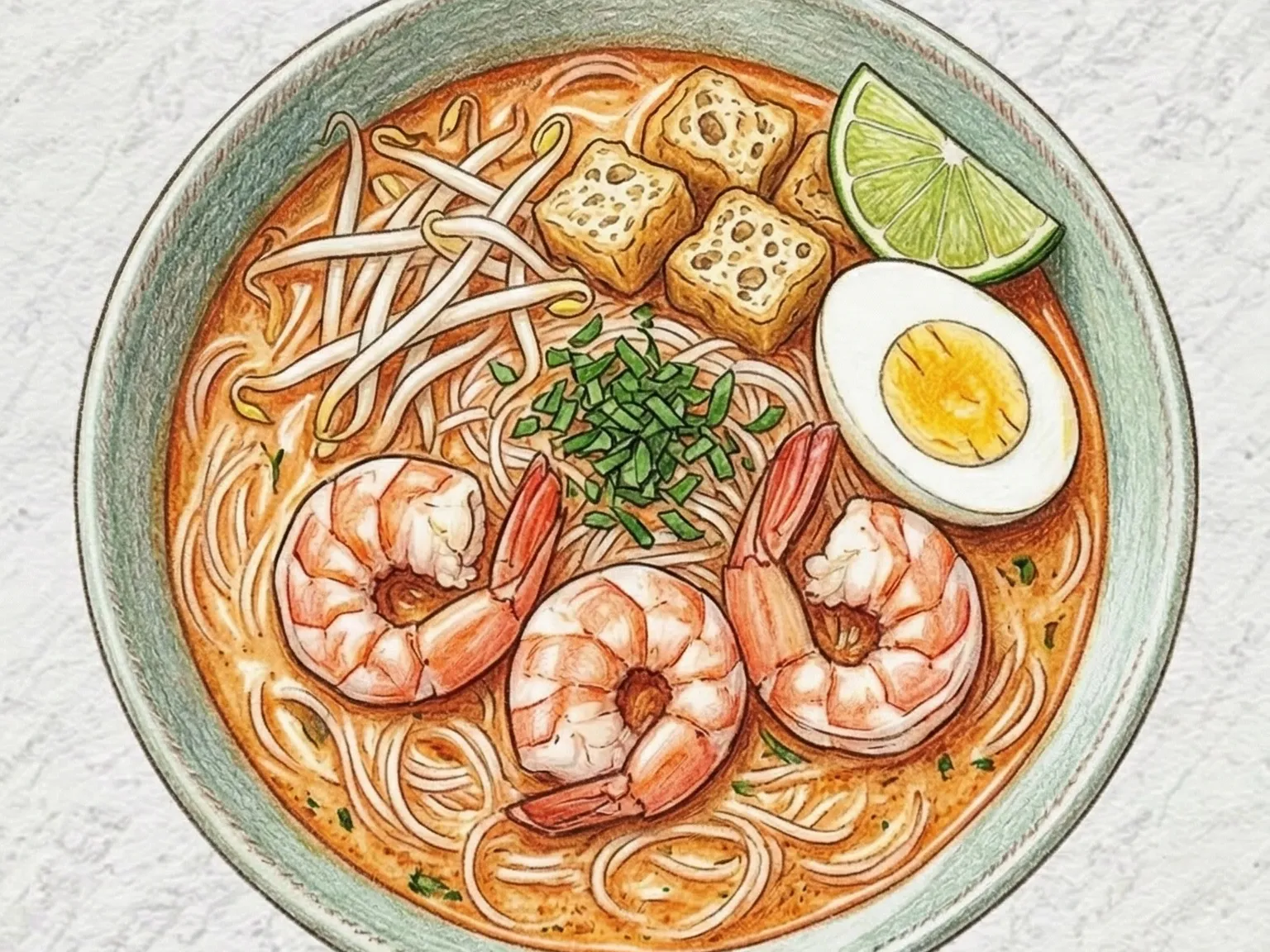
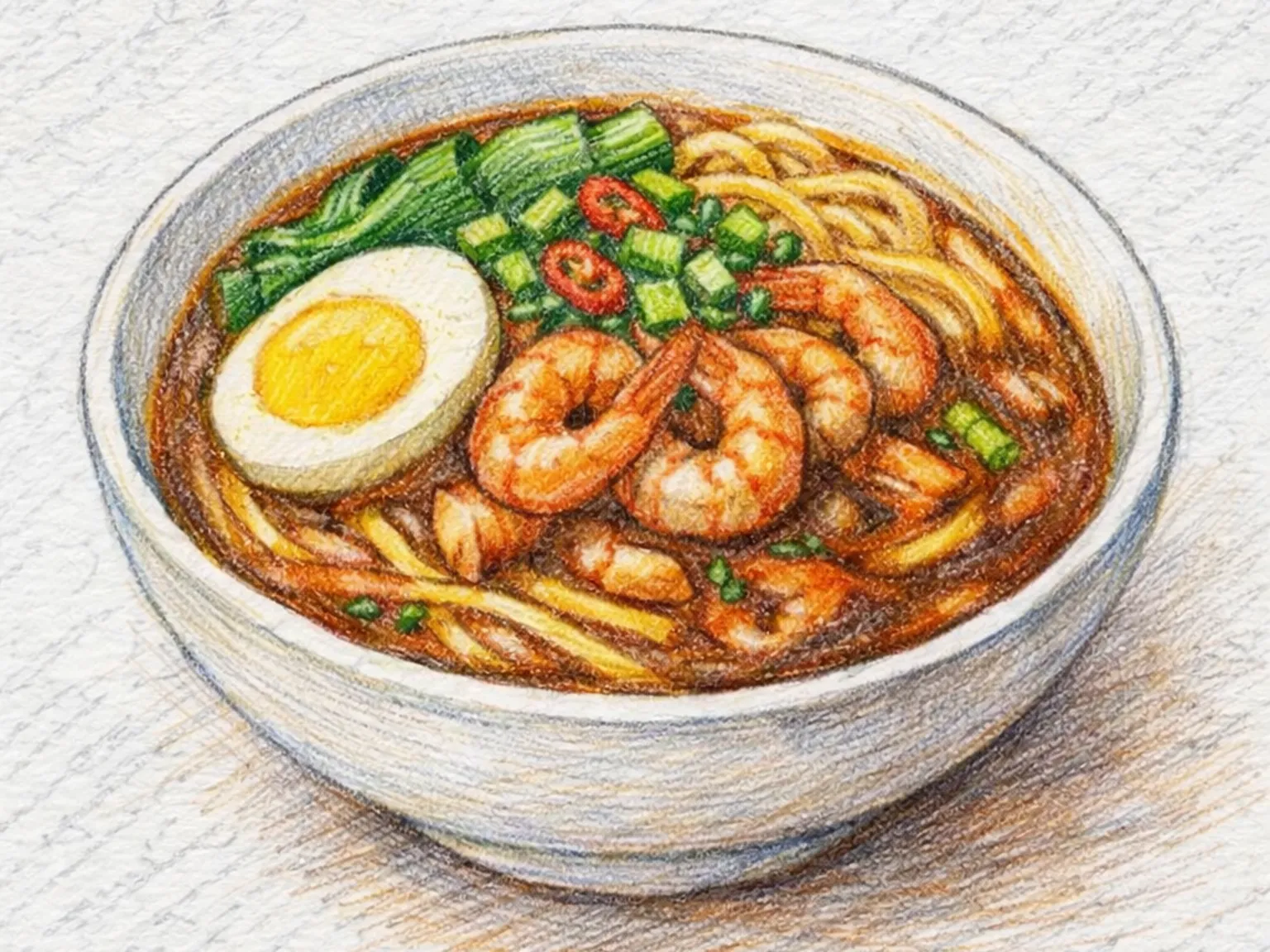
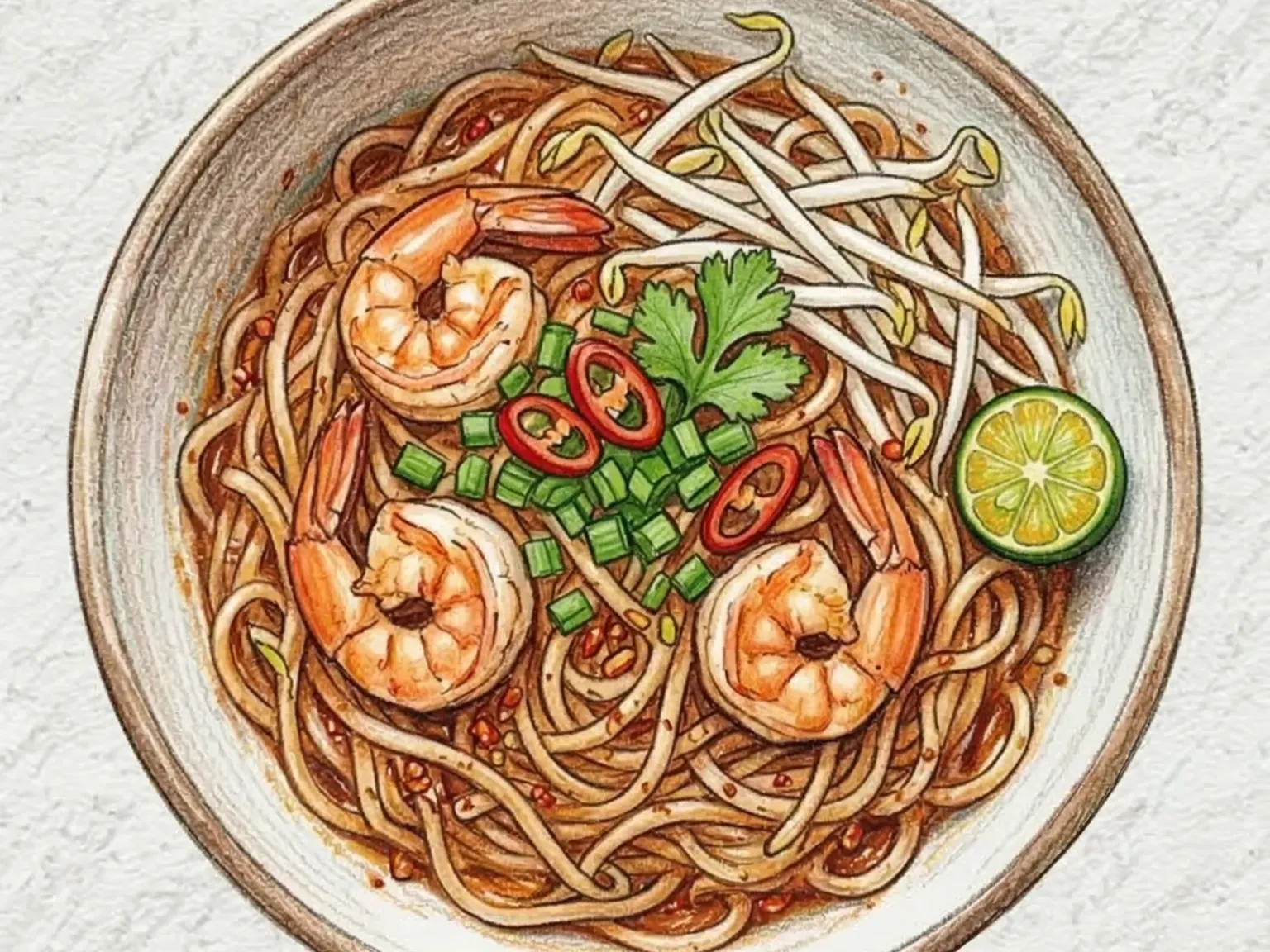
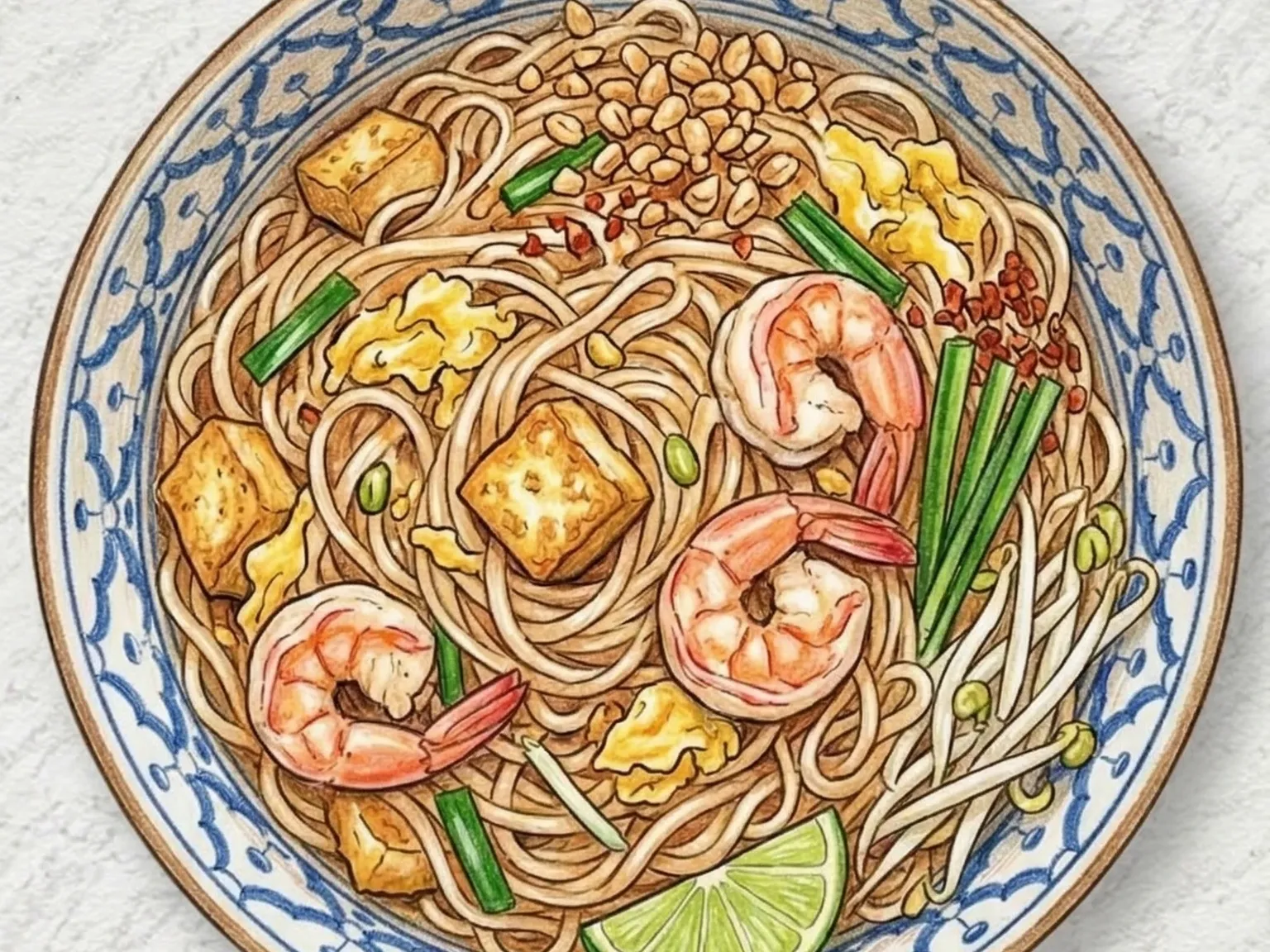
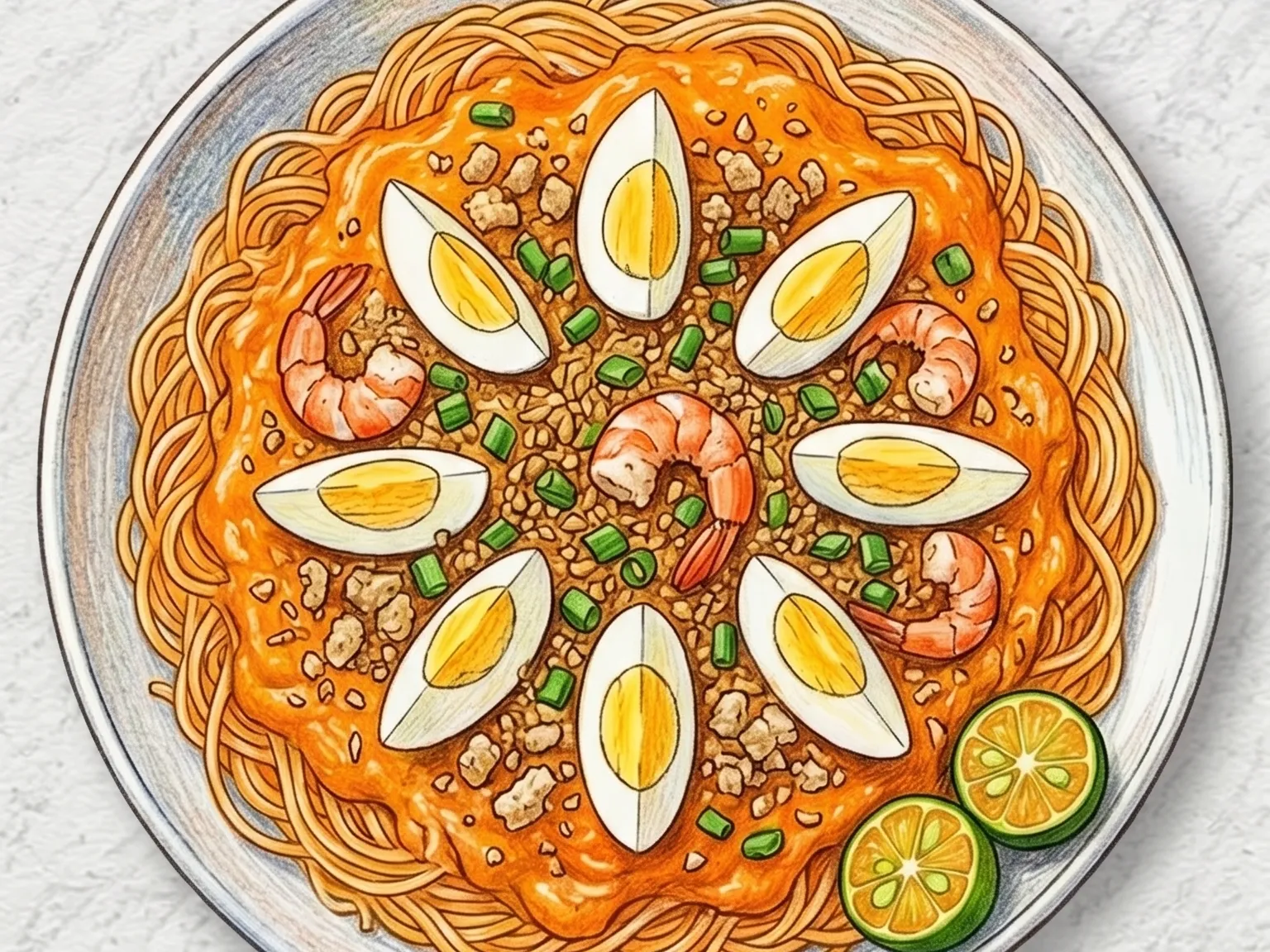
Mee siam is a rice vermicelli dish from Singapore and Malaysia defined by a tamarind-based sauce that balances sour, sweet, and spicy in one bowl. Thin rice noodles are stir-fried with a rempah, a pounded paste of dried shrimp, shallots, and chili, then finished with tamarind water, fish sauce, and sugar, with bean sprouts and tofu added near the end. A squeeze of fresh lime over the top introduces a bright acidity that cuts through the richness of the stir-fry. Despite the name referencing Siam, the dish is a distinctly Malay-Singaporean creation rather than Thai, most commonly eaten at breakfast or as a light meal at hawker centers. Soft-boiled eggs and whole shrimp are the standard toppings when the dish is served, and the heat level can be adjusted by varying the amount of chili in the rempah. Soaking the dried shrimp and pounding them finely before cooking deepens the umami in the rempah and spreads a consistent seafood richness throughout the sauce that whole or coarsely ground shrimp cannot achieve.
Nasi Goreng (Indonesian Sweet Soy Sauce Shrimp Fried Rice)
Nasi goreng is Indonesia's national dish and one of Southeast Asia's most recognized comfort foods. Day-old rice is tossed in a blazing-hot wok with kecap manis, a thick sweet soy sauce that gives each grain a dark, caramelized glaze. Shrimp paste adds a deep umami backbone, while sambal chili paste cuts through the sweetness with a sharp heat. A fried egg crowns each serving, its runny yolk acting as a rich, on-the-spot sauce when broken. Crispy prawn crackers on the side provide crunch against the soft rice. The dish appears at every hour of the day, from breakfast stalls to late-night street carts.
Pad Woon Sen (Thai Stir-Fried Glass Noodles with Shrimp and Egg)
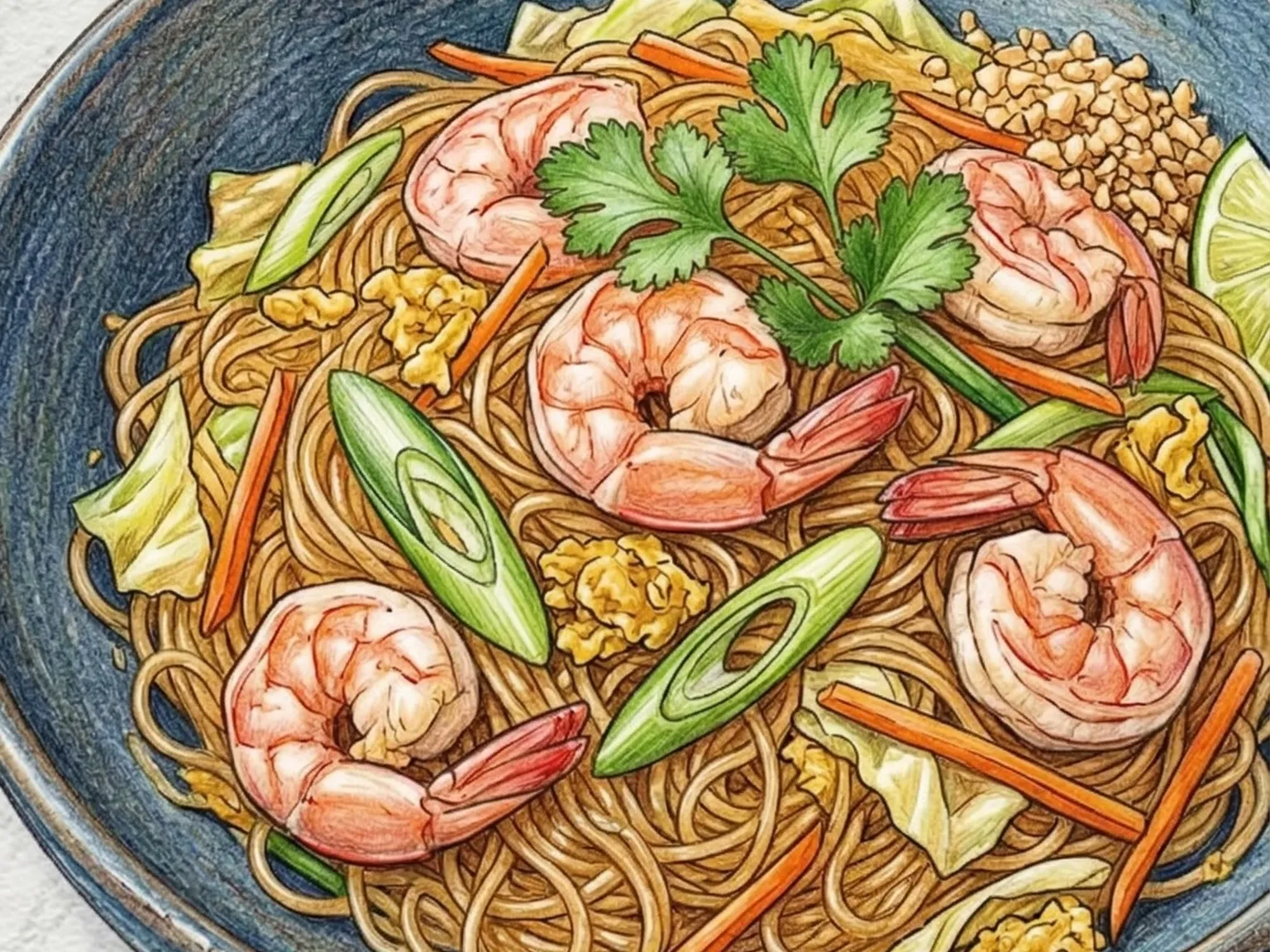
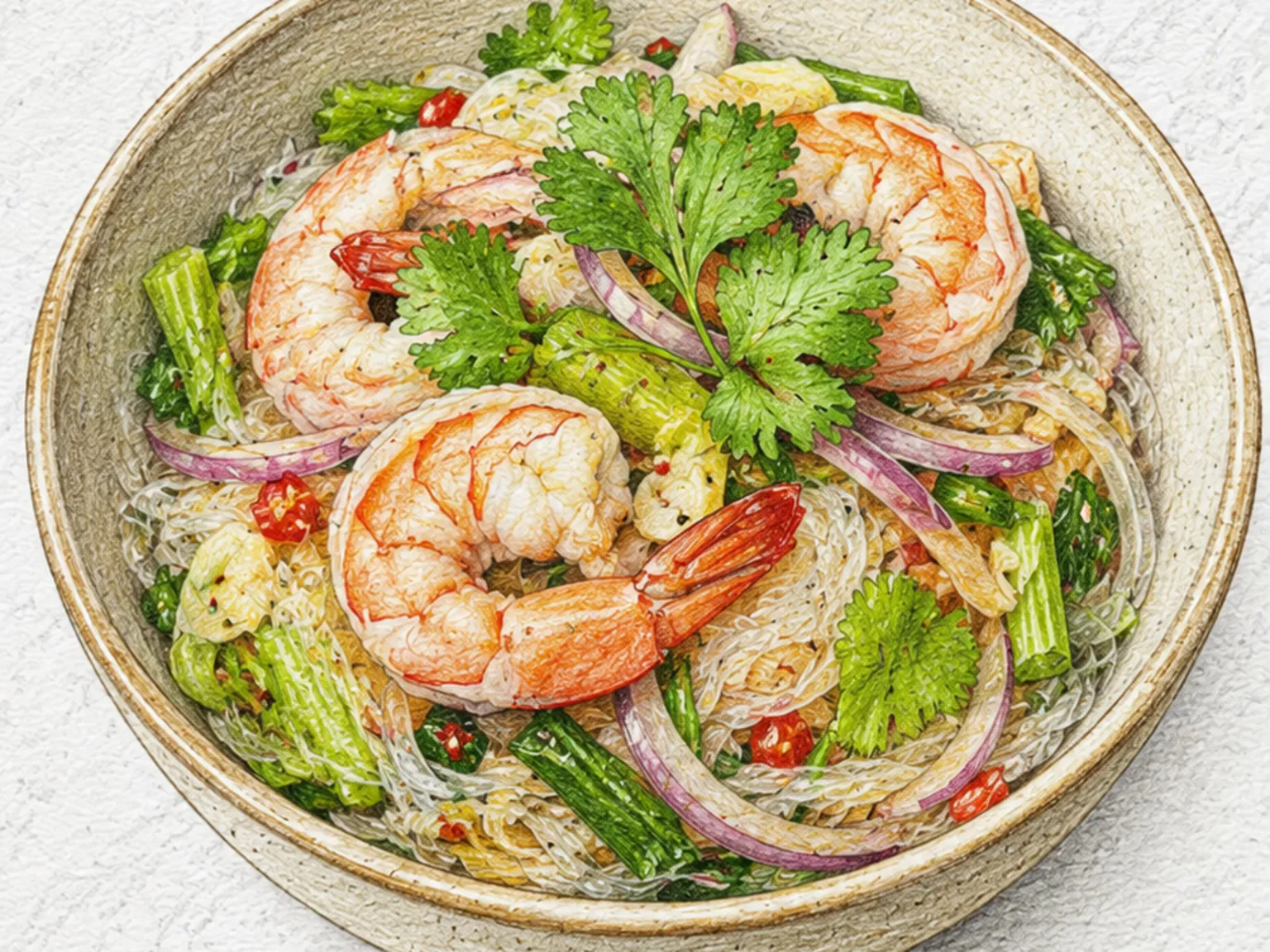
Pad woon sen is a Thai stir-fried glass noodle dish that comes together in minutes. The noodles, made from mung bean starch, turn translucent when soaked and have a springy, slippery texture that absorbs sauce without becoming mushy. Shrimp is cooked first until just pink, then vegetables - typically cabbage and carrot - are tossed in over high heat to keep their crunch. Eggs are scrambled to one side of the wok and folded into the noodles along with soy sauce and oyster sauce. The seasoning is deliberately simple, allowing the natural sweetness of the shrimp and the clean bite of the vegetables to come through.
Siu Mai (Cantonese Open-Top Steamed Pork and Shrimp Dumpling)
Siu mai is a Cantonese dim sum dumpling that wraps a seasoned filling of ground pork and chopped shrimp inside a thin wheat wrapper left open at the top. The filling is mixed vigorously with soy sauce, sesame oil, minced ginger, and cornstarch until it develops a sticky, springy texture that holds together when steamed. Shaped into small cylinders with the tops exposed, each dumpling reveals its filling like a tiny cup. A ten-to-twelve-minute stint in a bamboo steamer turns the wrappers translucent and lets the pork and shrimp meld their flavors-earthy pork fat meeting clean, briny sweetness. The cornstarch traps the juices inside so each bite releases a burst of savory liquid. Siu mai is a cornerstone of the yum cha table, eaten alongside tea and other small plates in an unhurried, communal style of dining.
Assorted Japanese Tempura
Tempura moriawase is an assorted platter of Japanese tempura featuring shrimp, sweet potato, eggplant, and shishito peppers, each coated in a light, shatteringly crisp batter. The batter is the heart of the technique: egg and ice-cold water are combined with cake flour and stirred only a few times with chopsticks, leaving visible lumps. This minimal mixing prevents gluten development, which is what keeps the coating featherlight rather than dense. Each piece is fried at 170 to 180 degrees Celsius for a short time-long enough to cook the interior while the batter puffs into an airy, lacy crust. Patting ingredients dry before dipping ensures the batter adheres properly. The tentsuyu dipping sauce, made from dashi, soy sauce, and mirin, is served with freshly grated daikon radish, whose mild sharpness cuts through the oil and refreshes the palate between bites. Tempura moriawase is meant to be eaten immediately after frying, when the contrast between the crackling exterior and the just-cooked filling is at its peak.
Edo-Style Tendon (Japanese Tempura Rice Bowl with Sweet Soy Tare)
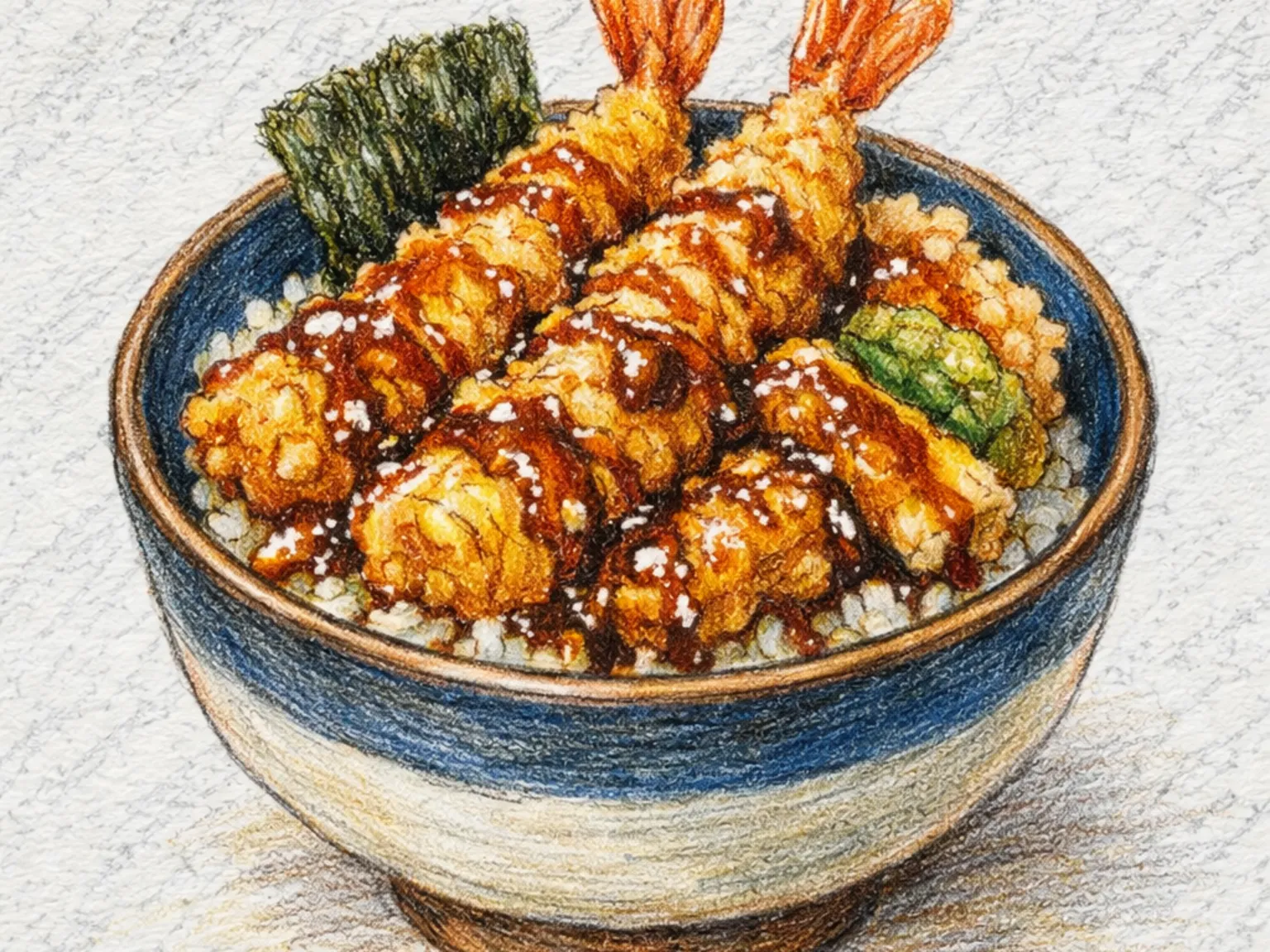
Edo-style tendon is a Japanese rice bowl that crowns steamed rice with freshly fried tempura-typically shrimp, sweet potato, and eggplant-glazed in a warm, sweet-salty tare sauce. The shrimp are scored along the belly to prevent curling, then dipped in a lightly mixed batter and fried at 170 degrees Celsius until the coating turns golden and crisp. The tare is a simple reduction of tsuyu, soy sauce, and sugar, simmered for just two minutes to concentrate its flavor into a glossy, mahogany liquid. The sauce is drizzled over the tempura the moment it lands on the rice, so the batter absorbs just enough to glisten without losing its crunch entirely. This tension between the crisp tempura coating and the sticky-sweet tare is the defining characteristic of the Edo style, which favors bold, direct flavors over subtlety. The rice beneath soaks up any sauce that runs off, becoming deeply seasoned and intensely satisfying in its own right.
Thai Green Curry with Shrimp
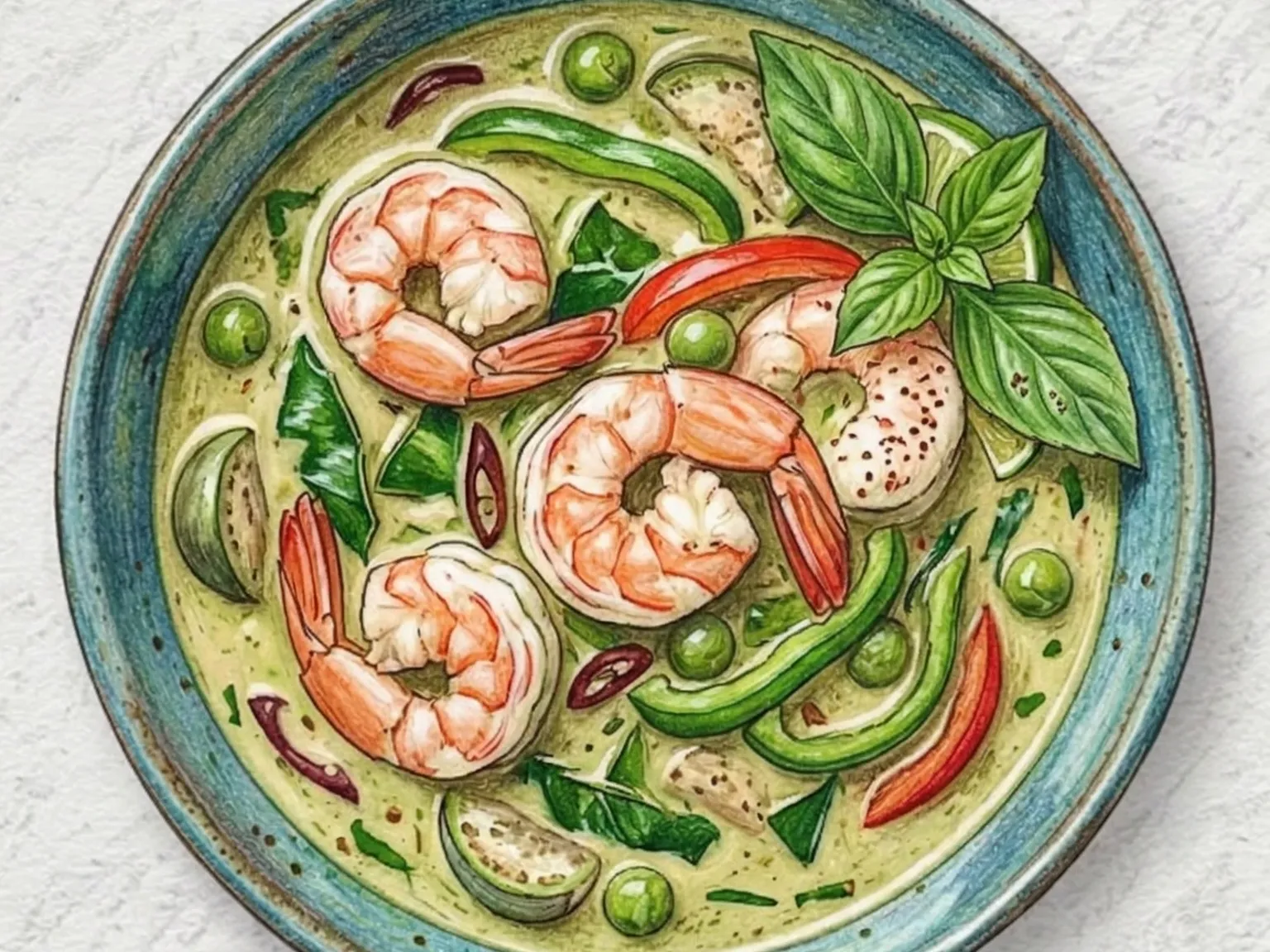
Thai green curry with shrimp is a dish built on a coconut milk base that combines the spicy and aromatic characteristics of green curry paste with the natural sweetness of fresh shrimp. The cooking process begins by splitting the coconut milk, which involves heating the thicker coconut cream in a pan until the oil begins to separate from the solids. The green curry paste is then fried directly in this extracted fat to allow the flavors of lemongrass, galangal, green chili, and kaffir lime to bloom and release their essential oils into the mixture. Once the aromatics are developed, the remaining coconut milk is poured into the pan along with pieces of eggplant. The eggplant is simmered in the liquid until it reaches a soft consistency. After the eggplant is cooked, bell peppers and shrimp are added to the curry for a brief period of approximately three to four minutes. This short cooking window ensures that the shrimp stay plump and maintain a curled shape without becoming tough. The seasoning is adjusted using fish sauce to provide salinity and palm sugar to round out the sharp edges of the spices. After removing the pan from the heat, a handful of fresh Thai basil is stirred into the curry, which introduces a scent reminiscent of anise. A squeeze of fresh lime juice is added just before the dish is served to provide a bright acidity that balances the richness of the coconut milk. The finished curry is traditionally served by spooning it over jasmine rice.
Thai Hot and Sour Shrimp Soup (Tom Yum Goong)
Tom yum goong is Thailand's iconic hot and sour shrimp soup, built on a clear broth that carries a bold punch of lemongrass, galangal, and kaffir lime leaves. Shrimp and mushrooms cook quickly in the aromatic liquid, keeping their natural sweetness and bite. Thai chili paste stains the broth a fiery reddish hue and delivers a slow-burning heat, while fish sauce anchors the flavor with deep umami. A final hit of fresh lime juice ties the sharp, sour, and spicy notes into a single cohesive taste. The broth is intentionally light in body so the aromatics dominate without any richness to soften their edges.
Korean-Chinese Seafood Gravy Noodles
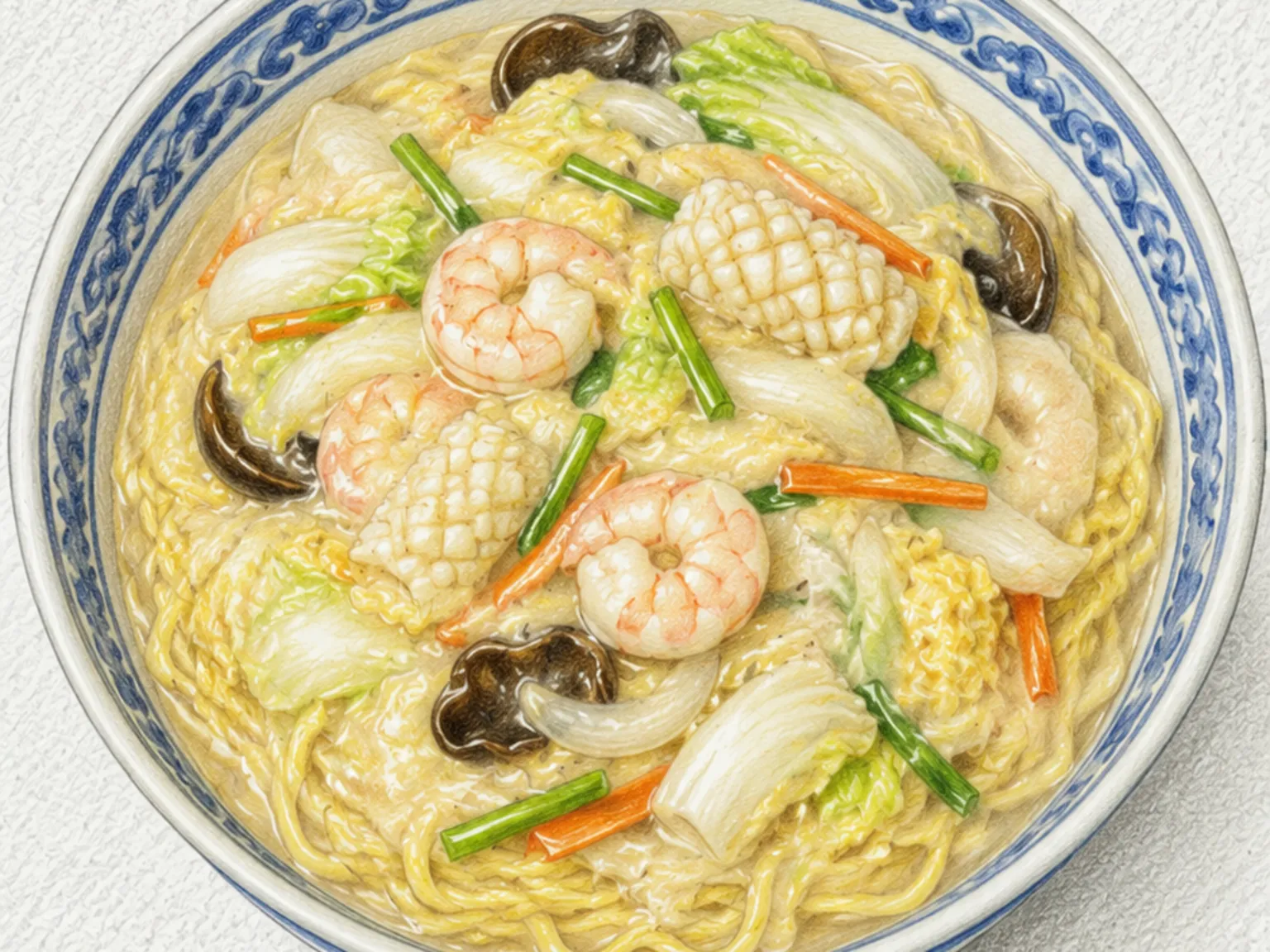
Ulmyeon is a Korean-Chinese noodle dish in which fresh wheat noodles are topped with a thick, white starch-thickened gravy loaded with seafood and vegetables. Shrimp, squid, and other shellfish give the gravy a pronounced umami backbone. Beaten egg is swirled into the sauce toward the end, adding body and soft curds throughout. Unlike jjamppong, the dish carries little to no chili heat. Preparation takes about 40 minutes, and getting the starch slurry to the right consistency is the most important step.
Fideua (Toasted Noodle Seafood Paella)
Fideua is a Valencian dish that mirrors paella in technique but replaces rice with short, thin pasta called fideos. The noodles are toasted in olive oil until golden before being cooked in a seafood broth made from shrimp shells, mussels, and fish stock. As the pasta absorbs the broth, it concentrates the flavor of the sea into each strand. The bottom layer develops a crispy crust called socarrat, prized for its caramelized, toasty crunch. Saffron colors the broth golden and contributes a subtle floral note. The dish is traditionally cooked in a wide, shallow pan to maximize surface area and crust formation. Served with alioli on the side, the garlic-infused mayonnaise adds richness and a pungent kick that amplifies the seafood character.
Cajun Shrimp Pasta
Cajun shrimp pasta belongs to the American culinary tradition and focuses on shrimp seasoned with a specific blend of spices known as Cajun seasoning. This seasoning mixture originates from the Louisiana Creole culinary heritage and typically includes a combination of paprika, cayenne pepper, dried oregano, thyme, garlic powder, and onion powder. This specific grouping of ingredients provides a distinct smoky quality and a moderate level of heat that separates it from the herb and spice traditions commonly found in Italian or Spanish cuisine. During the cooking process, the shrimp are first coated in the spice mix and then seared in butter for approximately one to two minutes on each side. It is necessary to remove the shrimp from the pan while they are still slightly underdone, as leaving them on the heat for too long results in a tough and rubbery texture. By taking them out of the pan early and only returning them at the final stage of preparation, the shrimp maintain their firm and snappy bite. Once the shrimp have been set aside, the butter and the spice-infused oil remaining in the pan serve as the primary flavor foundation for the sauce. A mixture of chopped onion, minced garlic, and bell peppers is sautéed in this residue until the vegetables soften and absorb the smoky heat left behind by the spices. The sauce is then constructed using both heavy cream and milk. The decision to use a combination of these two liquids, rather than heavy cream by itself, results in a lighter consistency that allows the sauce to coat the pasta strands more evenly without feeling excessively heavy during consumption. A small amount of the starchy water used to boil the pasta is added to the sauce before the noodles are introduced. This starch aids in the emulsification of the cream, which ensures that the sauce adheres to the pasta instead of separating or gathering at the bottom of the plate. The shrimp are added back into the pan at the very end, remaining on the heat only long enough to be warmed through. For individuals who would like a more intense level of spiciness, extra seasoning can be added to the finished dish at the table.
Gumbo
Gumbo is a Louisiana stew built on a dark roux - flour and oil stirred continuously over medium-low heat until the mixture reaches a deep chocolate brown. Cooking the roux to this stage breaks down the starch so it thickens less, but develops a complex, nutty smokiness that defines the dish. The Cajun holy trinity of onion, celery, and green bell pepper is sweated in the roux, followed by smoked sausage that renders its fat and smoky flavor into the base. Chicken stock, sliced okra, and cayenne pepper simmer together for forty minutes, during which the okra's natural mucilage adds body to the broth. Shrimp are stirred in only at the end to prevent overcooking, and the finished gumbo is traditionally ladled over steamed white rice.
Seafood Saffron Risotto
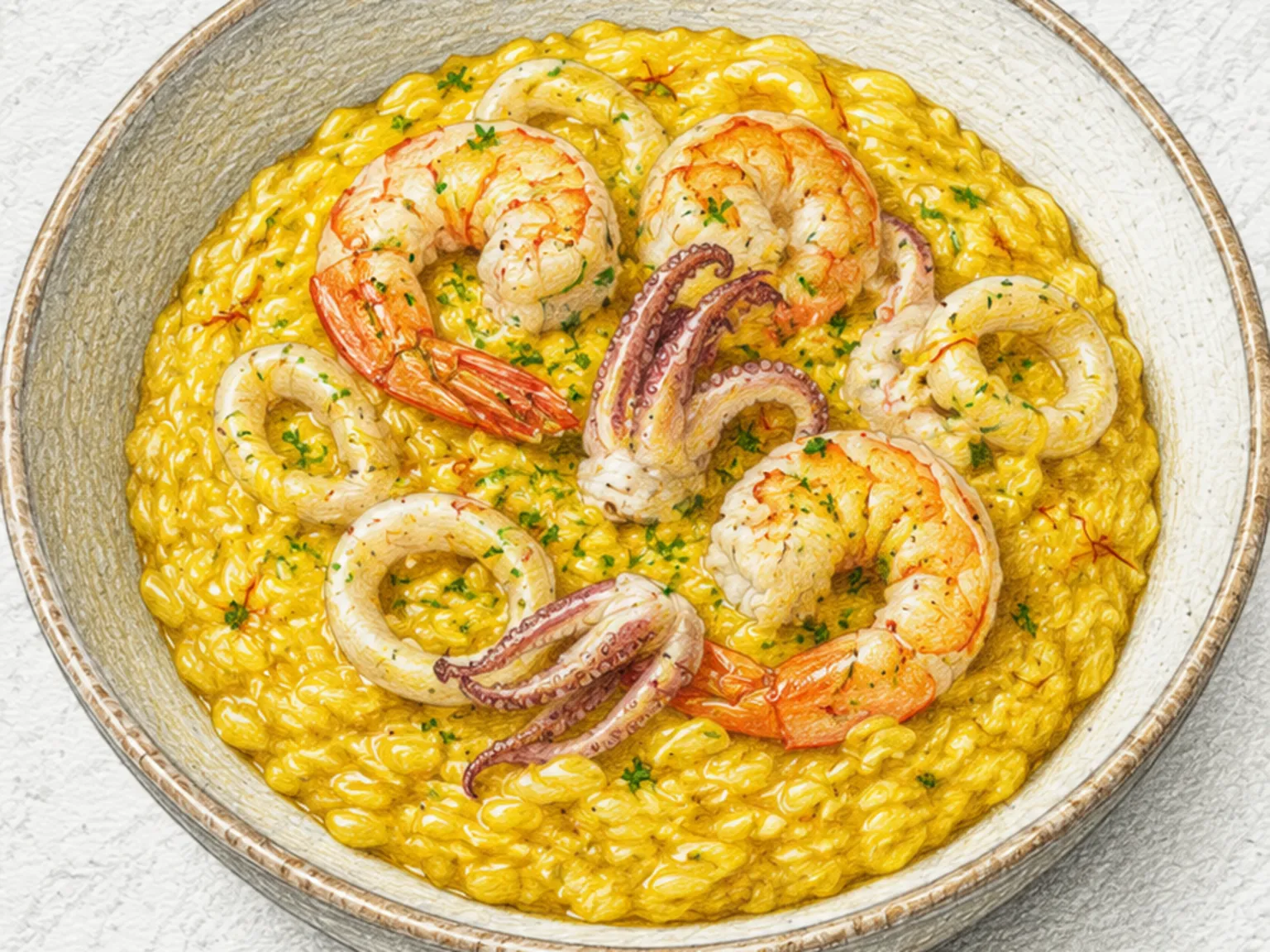
Seafood saffron risotto is built by stirring Arborio rice into warm seafood stock one ladle at a time, coaxing out starch until the grains are creamy yet intact. Saffron threads steeped in a small amount of warm stock release their golden color and floral, slightly metallic aroma evenly through the rice. Toasting the rice in olive oil before adding liquid coats each grain in fat, which controls starch release and prevents the risotto from turning gluey. White wine added early provides acidity that tempers the richness of the seafood. Shrimp and squid go in during the final minutes to keep their texture firm and springy. Butter and Parmesan folded in off the heat create the signature wave-like consistency that should flow slowly across a tilted plate.
Spicy Seafood Tomato Pasta
Spicy seafood tomato pasta starts by building a chili-infused oil base - garlic, onion, and red pepper flakes sauteed in olive oil until fragrant. Shrimp and squid are seared briefly until just opaque on the outside, then hand-crushed whole tomatoes are added and the sauce simmers for six to seven minutes, during which the tomato reduces and absorbs the juices released by the seafood. Cooking the seafood only until the surface turns white is critical, as the residual heat from the simmering sauce finishes them gently without making them rubbery. The spaghetti is boiled one minute short of al dente and tossed in the sauce pan with a splash of pasta water over high heat, which emulsifies the sauce and binds it to each strand. The chili heat cuts cleanly through the tomato's acidity and the seafood's brininess, and chopped parsley adds a final fresh herbal note.